New Podcast Episode: Frederick Douglass New York City Sites

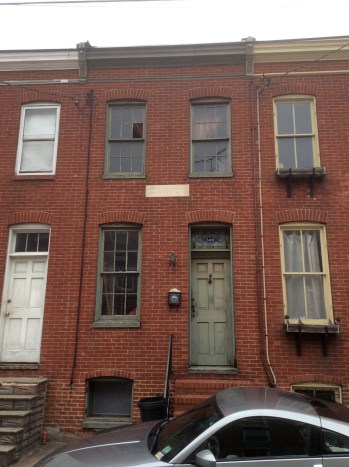
230 and 232 W. 135th St, Harlem, New York City, photo 2016 by Amy Cools

230 and 232 W. 135th St, Harlem, New York City

Listen to this podcast episode here or subscribe on iTunes

Fourth Day, Wednesday March 23rd

I arrived yesterday afternoon in New York City and had a good hangout with my friend with whom I’m staying (thanks, Devin!).

After doing more research and mapping out today’s journey, I head to my first destination. I take the subway to lower Manhattan to the Brooklyn Bridge stop, zigzag my way southeast to Wall and William Streets, then down to S. William St. Wall Street was the northern border of the city when it was still young, so I decide it’s as good a way as any to get a feel for the old city, though really, the truly old intact buildings in NYC are scattered, and few. I’m only looking back to the 1830’s for this trip, but as you may know or may remember from my earlier series on Ernestine Rose and Elizabeth Cady Stanton, this city has a long history of tearing everything down regularly and starting fresh…

… Read the original account here

Ordinary Philosophy and its Traveling Philosophy / History of Ideas series is a labor of love and ad-free, entirely supported by patrons and readers like you. Please offer your support today!

New Podcast Episode: Frederick Douglass Havre de Grace and Philadelphia Sites

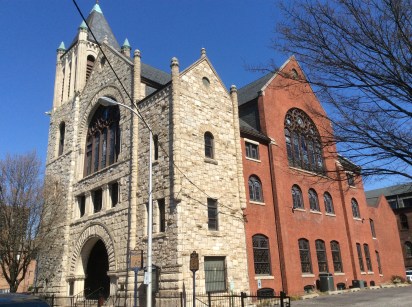
Mother Bethel A.M.E. Church, Old City Philadelphia

Mother Bethel A.M.E. Church, Old City Philadelphia

Listen to this podcast episode here or subscribe on iTunes

Third day, Tuesday March 22nd

I head north, the direction of freedom for the American slave of the antebellum south. Spoiler alert: so did Frederick Douglass! To his and all of our great benefit, he took his life and whatever fortunes he could hope to enjoy in Maryland into his own hands, and made his risky bid for freedom in September 1838 at age 20.

Douglass was a particularly clever young man, and by this time, had educated himself to an impressive degree for anyone his age, let alone one who had to get his learning on the sly while working more than full time. He had honed his skills, become more resourceful, and gained a wider circle of friends, and he counted on all of these to make this attempt more successful than the first…

… Read the original account here

Ordinary Philosophy and its Traveling Philosophy / History of Ideas series is a labor of love and ad-free, entirely supported by patrons and readers like you. Please offer your support today!

New Podcast Episode: Frederick Douglass’s Birthplace, Easton, and St Michaels, Maryland’s Eastern Shore Sites

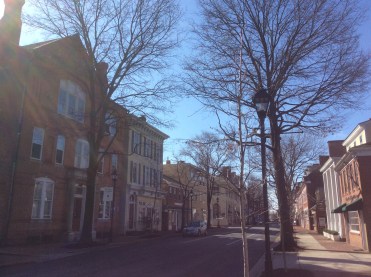
Easton, MD on a bright spring morning in March, photo 2016 by Amy Cools

Easton, MD on a bright spring morning in March

Listen to this podcast episode here or subscribe on iTunes

Second day, Monday March 21st

I wake up early, and make my way to Maryland’s east shore, looking forward to a beautiful day in the country. It’s windy and very cold, but clear and sunny. I head for downtown Easton: the route from there to my first destination is easiest to follow for a non-local like me. And I can use all the help I can get: this will be the first site I visit in any of my history travels where I will rely both on maps that predate the turn of the 20th century and natural landmarks to locate it.

… Read the original travel account here and here (originally published in two installments)

Ordinary Philosophy and its Traveling Philosophy / History of Ideas series is a labor of love and ad-free, entirely supported by patrons and readers like you. Please offer your support today!

New Podcast Episode: Frederick Douglass Baltimore Sites

Listen to this podcast episode hereDouglass Place with engraved marker, Fell's Point Baltimore MD, photo 2016 Amy Cools or subscribe on iTunes

First day, Sunday March 20th

So here I am on the East Coast, commencing my Frederick Douglass history of ideas travel adventure in earnest! I’m thrilled, and know I’ll learn and see a lot, since I have so many sites I plan to visit already and know I’ll discover more as I go along.

…In a very important way, it’s fitting to begin with Douglass’s life here in Baltimore, centered in the waterfront district of Fell’s Point, since this is where Frederick Douglass had one of the most formative experiences of his life.

… Read the original travel account here

Ordinary Philosophy and its Traveling Philosophy / History of Ideas series is a labor of love and is ad-free, entirely supported by patrons and readers like you. Please offer your support today!

New Podcast Episode: Sex, Gender, Surgery, and Freedom

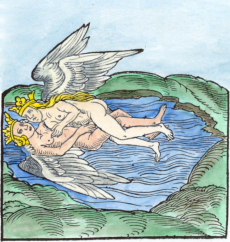
Illustration of fermentation in the Rosarium philosophorum, Frankfurt, 1550, public domain via Wikimedia CommonsListen to this podcast episode here or subscribe on iTunes

I believe that people should be free to express their tastes, preferences, and personalities without legal limits if little or no harm is done to others by doing so. Not including mere hurt feelings, however: if it did, no one would be free to do much of anything.

Likewise, I believe we have positive moral obligations to respect each other and ourselves, and to do so, we should work to free ourselves from harmful biases and distastes based on cultural, racial, religious, and gender stereotypes and narrow standards of beauty.

But when a popular social practice seems to promote one of these principles while betraying the other, it can be difficult to decide whether it’s right or wrong, good or bad…. Read the original piece here

Ordinary Philosophy and its Traveling Philosophy / History of Ideas series is a labor of love and is ad-free, entirely supported by patrons and readers like you. Please offer your support today!

New Podcast Episode: Communitarianism, Writ Large

Listen to this podcast episode here or subscribe on iTunes

I listened to Bill Moyers’ discussion with Michelle Alexander recently, about her book The New Jim Crow and her activism against the over-incarceration of black people here in the US. Something she said really struck me, as it relates to a problem I’ve been mulling over for some time. She said:

‘…I realize that as well-intentioned as all that work was, it was leading me to a place of relatively narrow thinking… Ought I not care equally for all? And that really was Dr. King’s insistence at the end of his life….’

Alexander’s reflection on her own work illustrates our need not only to grow more expansive in our thinking in order to achieve a more just society not just locally, but globally: we need to witness and internalize the sufferings faced by other human beings who are not like us in appearance and culture, so that our instincts for empathy and for justice expand as well… Read original essay here

Ordinary Philosophy and its Traveling Philosophy / History of Ideas series is a labor of love and is ad-free, entirely supported by patrons and readers like you. Please offer your support today!


New Podcast Episode: Frederick Douglass on the Constitution

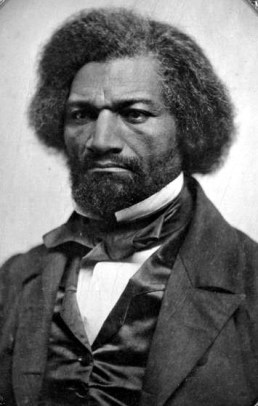
Frederick Douglass Ambrotype, 1856 by an unknown photographer, image public domain via Wikimedia CommonsListen to this podcast episode here or subscribe on iTunes

Early on his career as an abolitionist speaker and activist, Frederick Douglass is a dedicated Garrisonian: anti-violence, anti-voting, anti-Union, and anti-Constitution…

[But] by the early 1850’s, the abolitionist par excellence had come to disagree with Garrison, father of American radical abolitionism, and to agree with Lincoln, proponent of preserving the Union at all costs and of the gradual phasing out of slavery.

So how does Douglass come to make what seems such a counterintuitive change in his views on the Constitution and on the role of violence, voting, and the Union in bringing an end to slavery?… Read the original essay here

Ordinary Philosophy and its Traveling Philosophy / History of Ideas series is a labor of love and is ad-free, entirely supported by patrons and readers like you. Please offer your support today!

New Podcast Episode: O.P. Recommends: Landmark Cases and Injustices, Two Great Works on the Supreme Court

Listen to the podcast episode here  or subscribe on iTunes

This last couple of weeks or so, I’ve been packing in a lot more learning about the Supreme Court, and is it ever fascinating.

It began when I stumbled on Landmark Cases last month, a C-Span series about 12 Supreme Court cases chosen because they had a dramatic impact on the legal landscape in United States history, and because they likewise had a significant impact on the Court itself, as precedent and on its perceived legitimacy, for good or ill….  Read the original essay here

Ordinary Philosophy and its Traveling Philosophy / History of Ideas series is a labor of love and is ad-free, entirely supported by patrons and readers like you. Please offer your support today!

What Ordinary Philosophy’s All About: Clarifying the Vision

People in a Public Square, Image Creative Commons via PixabayIt’s been an especially busy few weeks for me: studying, researching, writing, planning for my upcoming traveling philosophy journey and for the expanded future of Ordinary Philosophy. This year so far, I’ve had the great good fortune to meet some inspiring new people: passionate, thinking, active, and creative. I’ve also gotten to know others better as well, and am opening new doors and making new contacts every day. Our conversations have been inspiring me to think more clearly and deeply about my vision for Ordinary Philosophy, about my hopes, dreams, and goals, and about the wonderful people who will work with me to accomplish them in the future.

So I’ve just been looking over my introductory statement about Ordinary Philosophy, and thought it needed some clarifying and expanding. Here’s my vision as it stands now, best as I can describe it, and it’s beautiful to me. I hope it is to you too!

~~~~~~~~~~~~~~~~~~~~~~~~~~~~~~

Ordinary Philosophy is founded on the belief that philosophy is an eminently useful endeavor as well as a fascinating and beautiful one, and that citizen philosophers and academic philosophers alike share in making it so.

So why the name Ordinary Philosophy?

The ‘Ordinary’ in Ordinary Philosophy means: Philosophy is not only pursued behind the walls of academia.

It’s an ordinary activity, something we can do regularly whatever our education, background, or profession, from our homes, workplaces, studies, public spaces, and universities. It’s applicable to ordinary life, since it’s about solving the problems we all encounter in the quest to pursue a good, happy, and meaningful one.

It’s about seeking answers to the ‘big questions’ we ask ourselves all the time: ‘What’s the right thing to do?’ ‘What’s a meaningful life, and how can I make mine so?’ ‘What’s the truth of the matter, what does truth mean anyway, and how do I know when I’ve found it?’ ‘What does it mean to have rights?’ ‘How did reality come to be as it is?’, and so on.

It’s also just as much about the ordinary, day-to-day questions: ‘Should I take this job, and will it help fulfill my highest aspirations?’ ‘It is wrong to put my interests first this time, even if it will harm someone else?’ ‘What’s the difference between just talking about other people and malicious gossip?’ ‘Why should I go out of my way to vote?’

And in the end, it’s about living philosophy, about philosophy in the public square, and the stories and histories of philosophy as it is realized, personified, lived out by activists, artists, scholars, educators, communicators, leaders, engaged citizens, and everyone else who loves what’s just, what’s beautiful, and what’s true.

All of this is philosophy.

~ Amy Cools, founder and editor of Ordinary Philosophy

Interview with Clay Jenkinson as Thomas Jefferson, Jan 16th 2016

I’m ple6759b-amy2band2bjeffersonased to announce that the 33rd episode of the podcast is a super special one, as it’s Ordinary Philosophy’s first interview, and my distinguished guest is Clay Jenkinson, humanities scholar, author, and creator of the Thomas Jefferson Hour radio show and blog.

I’m a long time listener of the show; in fact, I believe I’ve listened to just about every single episode, many of them more than once, and relied on Clay’s work to inform my own, especially in the two Traveling Philosophy / History of Ideas series I did following the life and ideas of Thomas Jefferson.

I highly, highly recommend you give the Thomas Jefferson Hour a listen, you can find it at www.jeffersonhour.com, along with many other resources on the life and ideas of Jefferson, and Clay’s other work in the humanities.

You can find the accounts of my two series on Jefferson, as part of the Traveling Philosophy / History of Ideas series, here and here.

I interview Clay here in character as Thomas Jefferson, as he does on the Thomas Jefferson Hour, discussing various issues as Jefferson himself might have viewed them, informed by Clay’s extensive scholarship on his life and expressed views.

I hope you enjoy our discussion as much as I did!

You can also subscribe to the Ordinary Philosophy and Thomas Jefferson Hour podcasts on iTunes.

*Thank you, Shane and David, for your help and technical support

Ordinary Philosophy and its Traveling Philosophy / History of Ideas series is a labor of love and is ad-free, entirely supported by patrons and readers like you. Please offer your support today!