O.P. Recommends: The Great Arab-American Painter, Poet, and Philosopher Kahlil Gibran on Why Artists Make Art, by Maria Popova

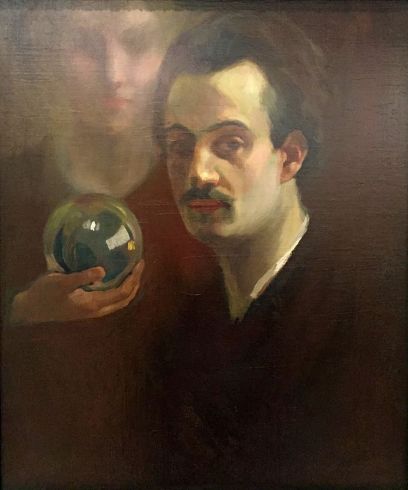
Khalil Gibran, Autorretrato Con Musa, 1911, public domain via Wikimedia Commons

Khalil Gibran, Autorretrato Con Musa, 1911, public domain via Wikimedia Commons

As happens so often, I’ve just discovered another wonderful thing because of the great Maria Popova of Brain Pickings. If there is only one website or blog you follow, I recommend that one be Brain Pickings. Literature, history, philosophy, art, poetry, children’s books, all of these and more are topics of discussion there, and the writing is beautiful.

This time, the discovery is the artist, writer, and philosopher Kahlil Gibran, and his take on a question I and I’m sure all other artists and writers ask ourselves from time the time: why we constantly feel the driving need to create things.

Popova writes:

The questions of why we humans create — why we paint caves and canvases, why we write novels and symphonies, why we make art at all — is so perennial that it might indeed fall within the scope of what Hannah Arendt considered the “unanswerable questions” central to the human experience. And yet some memorable answers have been given — answers like Pablo Neruda’s stirring childhood allegory of the hand through the fence.

Another exquisite answer comes from the great Arab-American artist, poet, and philosopher Kahlil Gibran (January 6, 1883–April 10, 1931) in Beloved Prophet (public library) — the collection of his almost unbearably beautiful love letters to and from Mary Haskell…

Read the article in full at Brain Pickings

Ordinary Philosophy and its Traveling Philosophy / History of Ideas series is a labor of love and ad-free, supported by patrons and readers like you. Please offer your support today!

Teach Kids Philosophy, It Makes Them Better at Math, by Drake Baer for New York Magazine

2993d-elementary_school_class_on_american_indian_cultureBut of course!

Drake Baer writes for New York Magazine:

‘The nature of truth. Theories of fairness. The essence of bullying. These are big, weighty subjects, and apparently 9- and 10-year-olds just eat them up.

As in, according to a Quartz piece by Jenny Anderson, placing grade-schoolers in weekly philosophical discussions has surprising effects on their academic performance. The program in question, called Philosophy for Children, led to improvements in math and reading scores on par with an extra two months of instruction, with bigger gains for disadvantaged kids. The 3quarksdaily blog highlighted it all earlier this week….read full article here

Ordinary Philosophy and its Traveling Philosophy / History of Ideas series is a labor of love and ad-free, supported by patrons and readers like you. Please offer your support today!
Should We Act on our Beliefs? The Vexing Nature of Responsibility, by Rik Peels

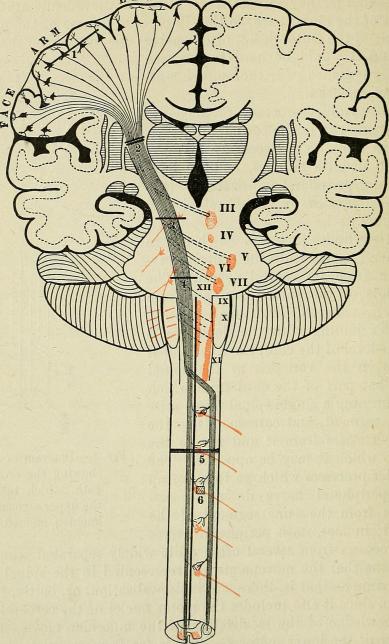
Brain illustration from The Principles and Practice of Medicine...' by W Osler, 1904, public domain via Wikimedia Commons

Brain illustration from The Principles and Practice of Medicine…’ by W Osler, 1904, public domain via Wikimedia Commons

Some people think that voting for Donald Trump was a detestable thing to do, whereas others are convinced that we had an obligation to vote for him in order to get rid of the political elite. Of course, in explaining why they voted the way they did, people will appeal to their beliefs. Some of those will be factive: beliefs about such things as whether someone paid his taxes or whether someone gave full disclosure of certain emails. Other beliefs will be normative: beliefs about such things as whether America should pursue international political leadership or about whether it is permissible to use water-boarding techniques to extract information from prisoners.

People act on their beliefs. Obviously, that, as such, does not get them off the hook for the ensuing actions. Those who voted for Clinton believe that adherents of Trump should know better and vice versa—when it comes to the facts, when it comes to certain moral norms, or, more likely, both. Or, to give a few examples on which most Westerners agree: we believe that ISIS fighters also act on their beliefs, but that they should know better, and we believe that climate skeptics act on their beliefs, but that they should know better. If people were not responsible for their beliefs, it would seem improper to blame them for the actions they perform on the basis of those beliefs.

However, the idea of responsibility for our beliefs faces two big challenges. First, how can we be responsible for our beliefs at all? I am responsible for whether I treat my neighbor kindly or rudely, because I can choose or decide to treat her kindly or rudely. But I do not choose or decide to hold a belief. Nobody ever wakes up in the morning and thinks: “Today, let me form this or that belief.” Beliefs are things that are not under the control of our will. How, then, are we responsible for them? This is a controversial issue in contemporary analytic philosophy. One way to think of it is this: we are responsible for our beliefs, because they are the consequences of things over which we do have control, such as whether we gather more evidence, whether we are humble and pay attention to our prejudices and biases, and whether we try to become more open-minded.

Second, assuming that the first challenge can be met and that we are indeed responsible for our beliefs, we still face a deep puzzle about responsibility. As I said, people normally act in accordance with their beliefs. And that, it seems, is the right thing to do. One should not act contrary to what one believes to be the facts or contrary to what one believes one ought to do. Philosophers have even come up with a name for situations in which one succumbs and acts against one’s better judgment. Ever since Aristotle, they call it akrasia. One is akratic, for instance, if one believes that eating an entire bag of chips is bad, but one still does it. We don’t want people to be akratic. Rather, they should act in accordance with their beliefs.

Now, here’s the problem. If we are to hold people responsible for their beliefs, then, given that belief is not under the control of the will, it must issue from an earlier culpable act: one neglected evidence, one failed to enter into conversation with certain people, one was not open-minded, or some such thing. But, presumably, at that earlier time, one believed it was alright to neglect that evidence, fail to enter into conversation, or not be open-minded on that occasion. Thus, how can we ever hold people responsible for their beliefs and the actions performed on the basis of those beliefs? We are unwilling to give up holding people accountable for their beliefs. But it seems we are equally unwilling to give up the principle that people should not act contrary to their beliefs.

I am not entirely sure how this challenge can be met. But here are at least a few things we ought to note that can help in solving the problem.

First, it seems that if people act on their beliefs and there was no way they could have changed those beliefs – for instance, because they have been thoroughly indoctrinated or they suffer from a psychosis – we cannot blame them for holding those beliefs and for the actions based on those beliefs. Maybe we should take protective measures and perhaps even incarcerate them, but they are not morally responsible for what they believe or what they do.

Second, intellectual virtues or, as philosopher Linda Zagzebski calls them, ‘virtues of the mind’, steadily grow over long periods of time: open-mindedness, curiosity, thoroughness. And so do intellectual vices, such as dogmatism, conformity, and sloppiness. They gradually arise out of choices we make on particular occasions, such as whether we listen to someone and try to understand what things would look like from their point of view. These intellectual virtues and vices heavily influence our beliefs and, consequently, our actions. Thus, the more evidence we have that someone has had enough opportunity to develop these virtues, the more we can hold them responsible for their beliefs.

Third, the flat-out principle that we should act on our beliefs might be too simplistic: it may need substantial qualification by taking into account serious doubts that one might have, whether or not one’s belief matches one’s emotions and desires, and whether or not there is substantial disagreement with others about the belief in question. This, as such, will not solve the problem, but such qualifications seem needed to do full justice to our intuitions about the plausibility of the akrasia principle.

The responsibility we bear for our beliefs is crucial for individual well-being and the flourishing of our societies. And yet, like so many things that are crucial in our lives, it is vexing and raises deep philosophical questions. We will need joint work by ethicists, epistemologists, psychologists, and sociologists to find satisfactory answers.

~ Originally published at OUP Blog: Oxford University Press’s Academic Insights for the Thinking World, on November 19th, 2016

~ Rik Peels is Assistant Professor in Ethics and Epistemology at Vrije Universiteit Amsterdam, the Netherlands. He is the author of Responsible Belief: A Theory in Ethics and Epistemology (OUP, 2016), editor of Perspectives on Ignorance from Moral and Social Philosophy (Routledge, 2016), and co-editor of The Epistemic Dimensions of Ignorance (CUP, 2016). You can read more on his personal website www.rikpeels.nl. (Bio credit: OUP Blog)

Ordinary Philosophy and its Traveling Philosophy / History of Ideas series is a labor of love and ad-free, supported by patrons and readers like you. Please offer your support today!
APA Member Interview: Amy Cools

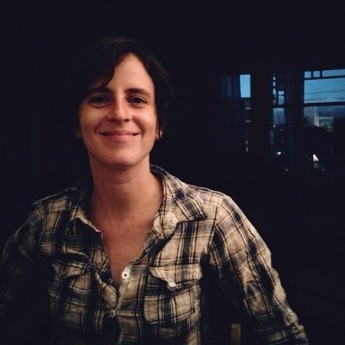
Amy Cools, Portrait by Alex Black, 2014October 21, 2016 by Skye Cleary for the American Philosophical Association Blog

What excites you about philosophy?

There’s something about discovering or realizing a truth about the world and about our inner experiences of it that’s more thrilling to me than anything else. When I first read Wilfred Seller’s definition of philosophy, the “aim…to understand how things in the broadest possible sense of the term hang together in the broadest possible sense of the term”, I recognized that his conception of philosophy is closest to my own. I believe philosophy is something that all human beings engage in, to one degree or another, and to feel that I’m part of this great human endeavor to understand and appreciate the world is also deeply satisfying…

Read the rest of this interview at the APA Blog

Ordinary Philosophy and its Traveling Philosophy / History of Ideas series is a labor of love and ad-free, supported by patrons and readers like you. Please offer your support today!


Developing the Virtues, by Darcia Narvaez

mothers-love-by-isaias-bartolomeu-public-domain-via-pixabay-croppedHelicopter parenting is denounced by onlookers (e.g., David Brooks) as babying children who should be self-reliant, a highly valued characteristic in the USA. Children should not need parents but should use their own capacities to get through the day. The notion of a good person is intertwined with this individualistic view of persons and relationships. Good people know how to behave. They stand on their own, with little dependency on others. They are given rules and obey them. Bad people don’t–they are whiny and weak.

It should be noted that when one applies this view to babies, to make them “independent,” one not only misunderstands baby development but creates the opposite result—a less confident, regulated and capable child (see Contexts for Young Child Flourishing).

This machine-like view of persons and relationships contrasts, not only with what we know about child development (kids’ biology is constructed by their social experience) but with longstanding theories of virtue and virtue development. A virtue-theory approach to persons and relationships emphasizes their intertwining. One always needs mentors as one cultivates virtues throughout life. Relationships matter for moral virtue. One must be careful about the relationships one engages in or they can lead one astray.

What does it mean to be virtuous? Virtue is a holistic look at goodness and, for individuals, involves reasoning, feeling, intuition, and behavior that are appropriate for each particular situation. Who the person is—their feelings, habits, thinking, perceptions—matters for coordinating internally-harmonious action that matches the needs of the situation. This holistic approach contrasts with theories of morality that emphasize one thing or another—doing one’s duty by acting on good reasoning and good will (deontology) or attending to short-term consequences (utilitarianism). (Most moral systems pay attention to all three aspects but emphasize one over the others.)

The high-demand definition of goodness in virtue theory suggests that few of us are truly good. Instead, most of us most of the time act against our feeling, behave in ways that counter our best reasoning, or completely miss noticing the need for moral action. In other words, our feelings/emotions, reasoning, inclinations are not harmonious but in conflict.

Some philosophers are particularly concerned with the inconsistencies in people’s behavior—for example, a person might be honest on taxes, but dishonest in business dealings or interpersonal situations.

However, among social-cognitive psychologists inconsistency is not a surprise. Each person has habitual patterns of acting one way in certain types of situations and a different way in another type of situation. Traits like honesty don’t adhere to a person like eye color but vary from situation to situation, e.g., outgoing with friends but shy with strangers. Individuals show consistent patterns of behavior for particular types of situations (person by context interaction). Thus, a person may have learned to be honest on taxes but not yet have learned how to be honest in business or has other priorities when with family. Expertise also plays a role in that when someone is new to a domain: behavior will be inconsistent as one learns the ins and outs of best behavior. All of us need mentors to help us learn good behavior for particular situations. Virtue is a lifelong endeavor.

This essay was originally published at OUPblog on Oct 22nd, 2016

~ Darcia Narvaez is Professor of Psychology at the University of Notre Dame. She brings evolutionary theory, neurobiology and positive psychology to considerations of wellbeing, morality and wisdom across the lifespan, including early life, childhood and adulthood and in multiple contexts (parenting, schooling). Bio credit: OUPblog

Ordinary Philosophy and its Traveling Philosophy / History of Ideas series is a labor of love and ad-free, supported by patrons and readers like you. Please offer your support today!

Philosophy as Love of Wisdom and in the Public Sphere

Sophia, goddess of wisdom

Sophia, goddess of wisdom

Some years ago, the economic downturn inspired me to put aside my business endeavors and return to school to study philosophy. I had loved philosophy for as long as I can remember, before I even knew what to call it, and later as I understood it in its broadest sense: the love and pursuit of wisdom. Wisdom was pursued through asking questions about everything, from the metaphysical and theological sort of questions that my religious and argumentative family used to debate around the dinner table and family gatherings (I credit these discussions and arguments, more than anything, with inspiring my philosophical curiosity) to all other questions about what’s true and false, just and unjust, good and bad, right and wrong. Wisdom was found through reading and learning as much as possible, then applying this learning to carefully thinking through possible answers to these questions. And wisdom was loved not because it brought understanding and meaning to life, but rather because its pursuit seemed beautiful to me.

Because my love of philosophy was formed prior to any introduction as a school of thought and my formal education was rather piecemeal, my approach was whimsical, idiosyncratic, unsystematic. Any and all subjects that aroused my curiosity and admiration could be brought to bear on what I understood as philosophical inquiry: literature, history, art, love of nature, social activism, law and justice, ethics, travel, architecture, science, in fact, every subject that involves human thought and appreciation…. Continue reading

This piece was written for the American Philosophical Association blog, originally published there on Sept. 22nd, 2016, and edited by Skye Cleary.

~ Ordinary Philosophy and its Traveling Philosophy / History of Ideas series is a labor of love and ad-free, entirely supported by patrons and readers like you. Please offer your support today!

Seneca to Lucilius: On Old Age, by Massimo Pigliucci

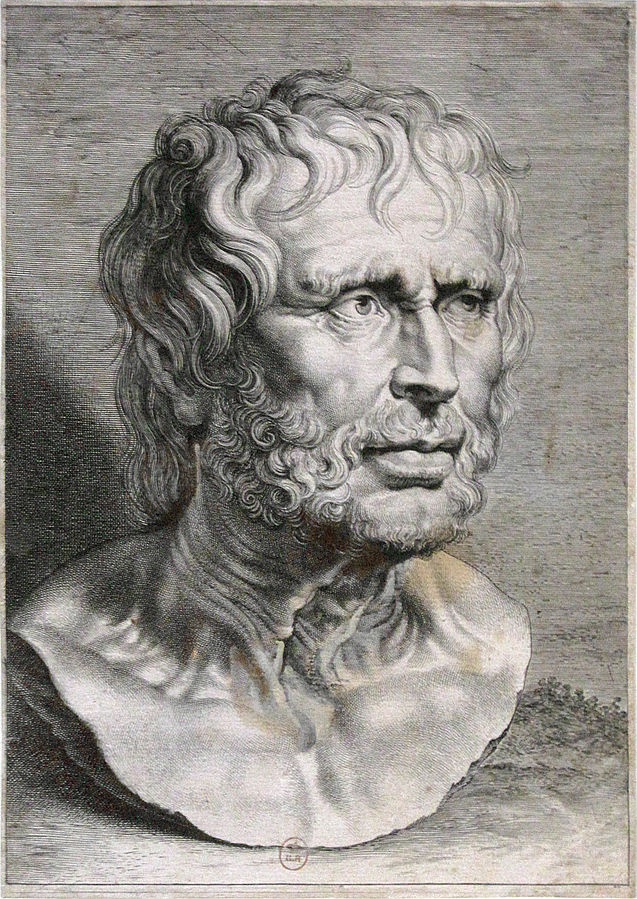
portrait-of-seneca-after-the-antique-the-pseudo-seneca-by-lucas-vorsterman-public-domain-via-wikimedia-commonsThis is the 12th letter to Lucilius, in the translation by Richard Mott Gummere published in the Delphi Classics edition of Seneca’s Complete Works, and it deals with an issue that an increasing number of people in the first world of today have to deal with: old age.

Seneca begins by recalling a recent visit to one of his country houses, during which he complained to one of his employees that too much money was being spent to keep it up. But his bailiff protested that the house was getting old, and the repairs were therefore entirely warranted. So Seneca writes to Lucilius: “And this was the house which grew under my own hands! What has the future in store for me, if stones of my own age are already crumbling?” (XII.1)

He then argues that there is much to be cherished in that stage of his life that the bailiff’s unchallengeable argument suddenly made him appreciate:

“Let us cherish and love old age; for it is full of pleasure if one knows how to use it. Fruits are most welcome when almost over; youth is most charming at its close; the last drink delights the toper, the glass which souses him and puts the finishing touch on his drunkenness. Each pleasure reserves to the end the greatest delights which it contains. Life is most delightful when it is on the downward slope, but has not yet reached the abrupt decline.” (XII, 4-5)

Notice the awareness of a coming “abrupt decline,” which Seneca is not foolish enough to argue will make for an enjoyable part of his life, should he live long enough (as it turns out, he didn’t). While not expressly mentioned here, this was the reason why the Stoics — including both Seneca and Epictetus, not to mention Zeno — thought that the wise man should make an exit, take “the open door,” as Epictetus memorably put it, when the appropriate time had come, no a moment sooner, but also not a moment later.

So what should be the wise person’s attitude toward old age? Seneca puts it very vividly to Lucilius:

“Let us go to our sleep with joy and gladness; let us say: I have lived; the course which Fortune set for me is finished. And if God is pleased to add another day, we should welcome it with glad hearts. That man is happiest, and is secure in his own possession of himself, who can await the morrow without apprehension. When a man has said: ‘I have lived!’, every morning he arises he receives a bonus.” (XII.9)

I am often struck by Seneca’s language, and this is one of many instances. “I have lived!, every morning I arise I receive a bonus.” Indeed.

As he frequently does in the early letters, Seneca parts from his friend with a “gift,” a meaningful quotation from another author, which in this case is: “It is wrong to live under constraint; but no man is constrained to live under constraint” (XII.10), another, more direct, reference to suicide to be chosen under certain circumstances.

The twist is that the above saying is from none other than Epicurus, the chief rival of the Stoic school at the time. Seneca, then, imagines Lucilius protesting: “‘Epicurus,’ you reply, ‘uttered these words; what are you doing with another’s property?’ Any truth, I maintain, is my own property.” (XII.11)

Again, a beautiful turn of phrase, and an example of real wisdom: it doesn’t matter where the truth comes from, once discovered, it is our collective property.

~ This piece was originally published at How to Be a Stoic on September 15, 2016

~ Massimo Pigliucci is K.D. Irani Professor of Philosophy at the City University of New York and member of the faculty at CUNY’s Graduate Center. Massimo has a background in evolutionary biology and philosophy of science. His most recent book, co-edited with Maarten Boudry, is Philosophy of Pseudoscience: Reconsidering the Demarcation Problem (Chicago Press).

~ Ordinary Philosophy and its Traveling Philosophy / History of Ideas series is a labor of love and is ad-free, entirely supported by patrons and readers like you. Please offer your support today!

Philosopher’s Way at John McLaren Park, San Francisco

Philosopher's Walk entry path, John McLaren Park, San Francisco

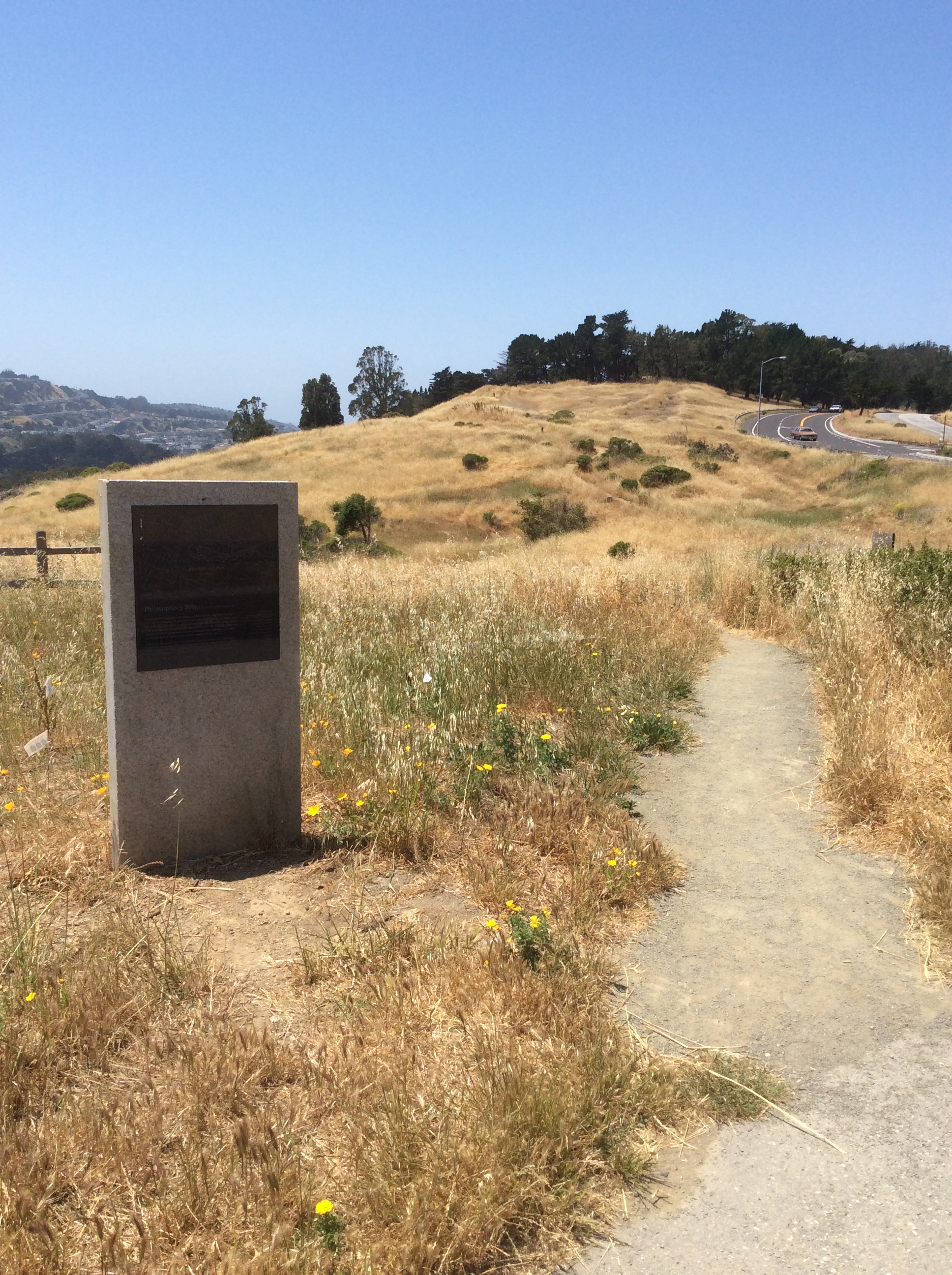
Philosopher’s Way entry trail, John McLaren Park, San Francisco. The plaque contains the trail map and text seen below

Earlier this summer, I walked the Philosopher’s Way in San Francisco. Between wrapping up the main portion of my Frederick Douglass history of ideas travel series (I have more essays in the works about his life and ideas which I’ll finish and publish over time), preparing to resume my formal education, a health issue, and a family trip, I’ve had less time to write other pieces, so I had to put this aside too. But finally, here it is.

The Philosopher’s Way is inspired by a tradition of such philosopher’s walks that are meant to inspire contemplation and an appreciation of the natural world and our place in it. I was reminded of the Hume Walk on Calton Hill in Edinburgh. In 1775, the great Scottish Enlightenment philosopher David Hume helped get a park built here so that the people of Edinburgh had a beautiful and accessible place to get exercise and admire nature.

Philosopher's Way

Philosopher’s Way downloadable trail map and article, by artists Peter Richards and Susan Schwartzenburg. Courtesy of the San Francisco Arts Commission / Public Utilities Commission

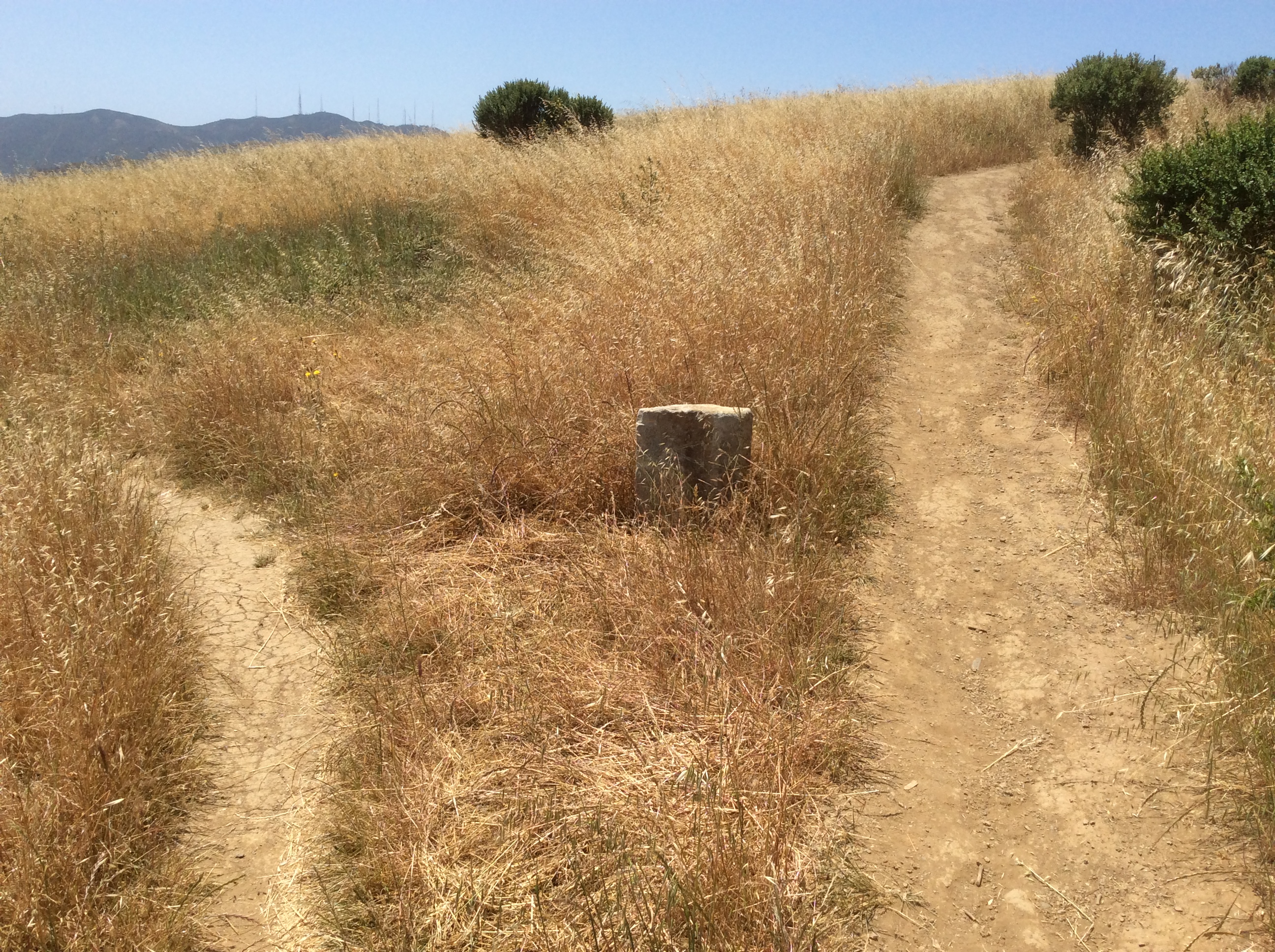
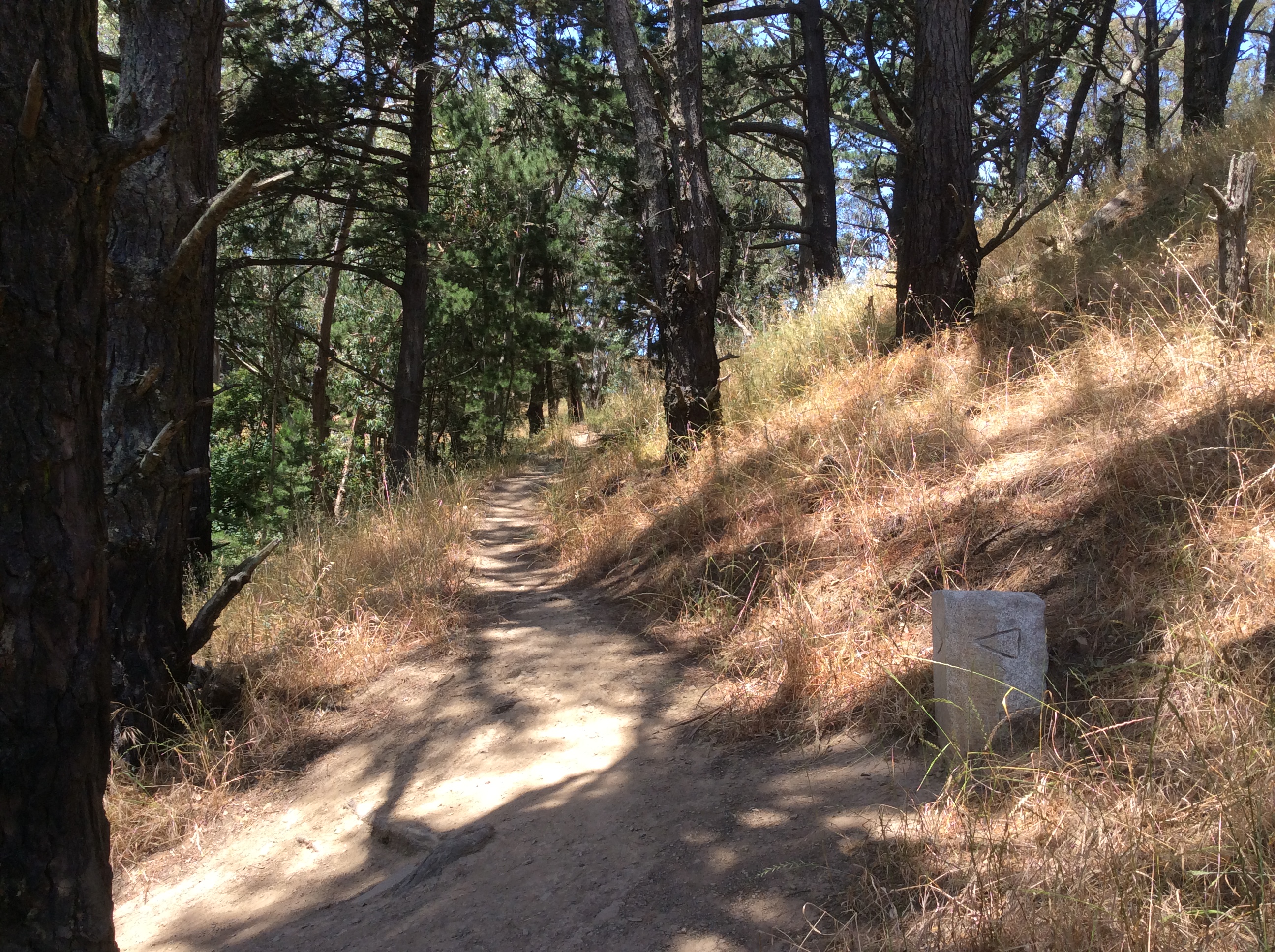
An arrow marker stone marks each fork and turnoff on Philosopher's Way

An arrow marker stone marks each fork and turnoff on Philosopher’s Way

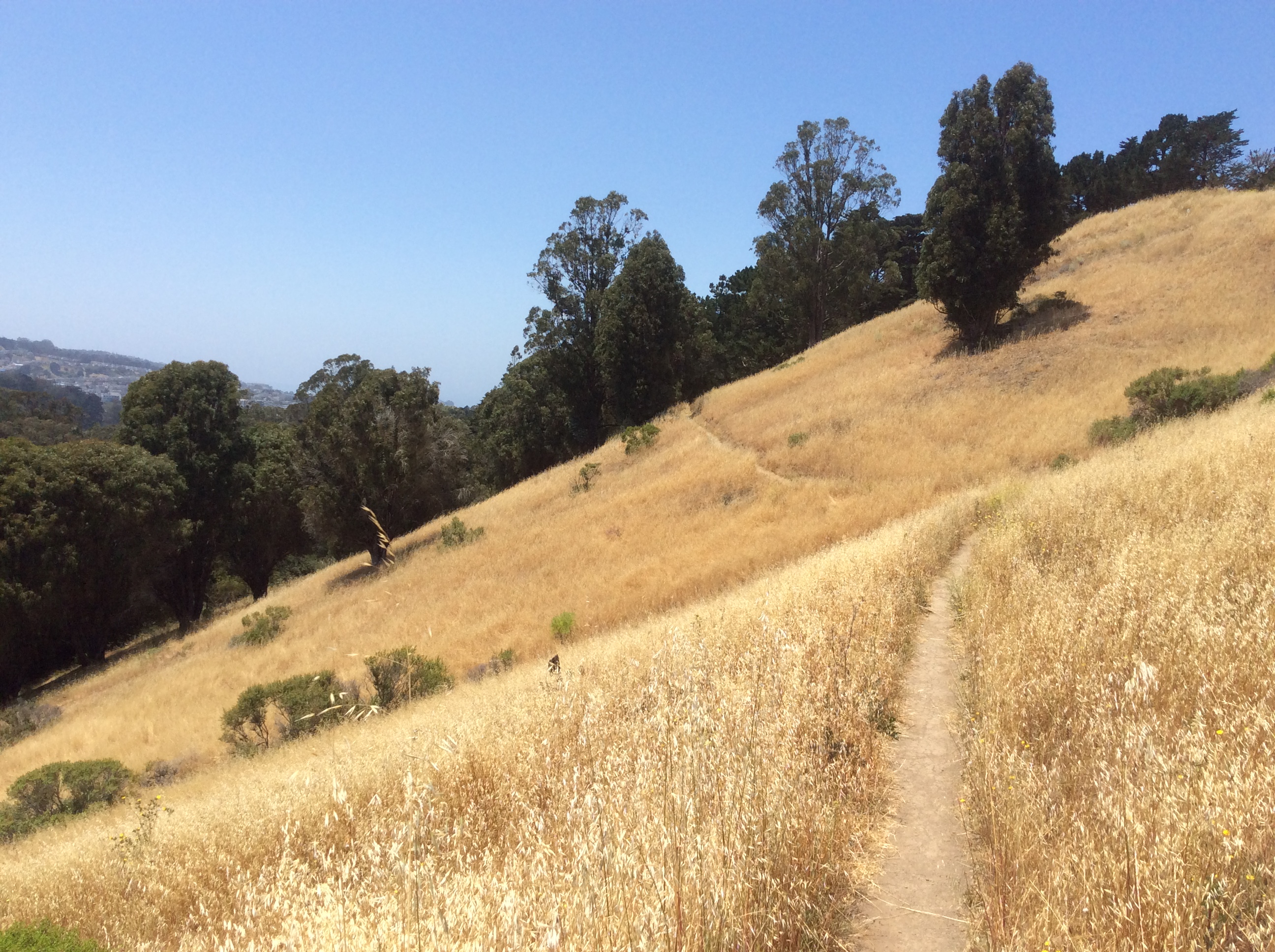
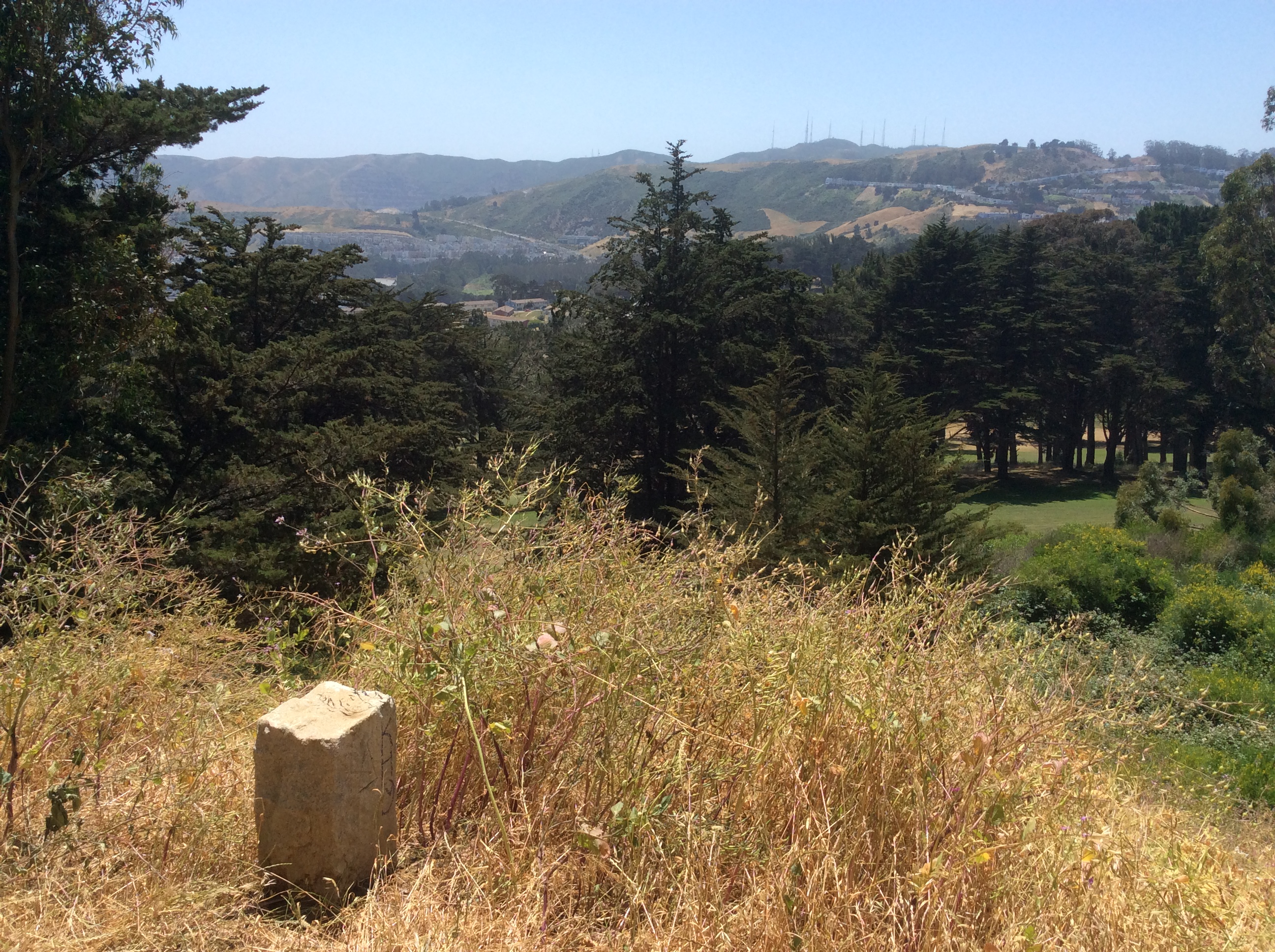
Though the parking lot is full of trash, including the largest pile of discarded whip-it canisters I’ve ever seen, the park is not. It has a wild look, only minimally pruned and landscaped. On the whole, I like it. The grassy hill leads to shady groves, that gold-and-green California look I love. Many of the overlooks of the city and the bay contain too many industrial-looking structures to be considered very beautiful in my view, but the park itself is nice. It’s only June, and already very dry. The drought’s still going strong.

mclaren-park-in-green-and-gold-san-francisco-ca-2014-amy-cools

John McLaren Park in green and gold.

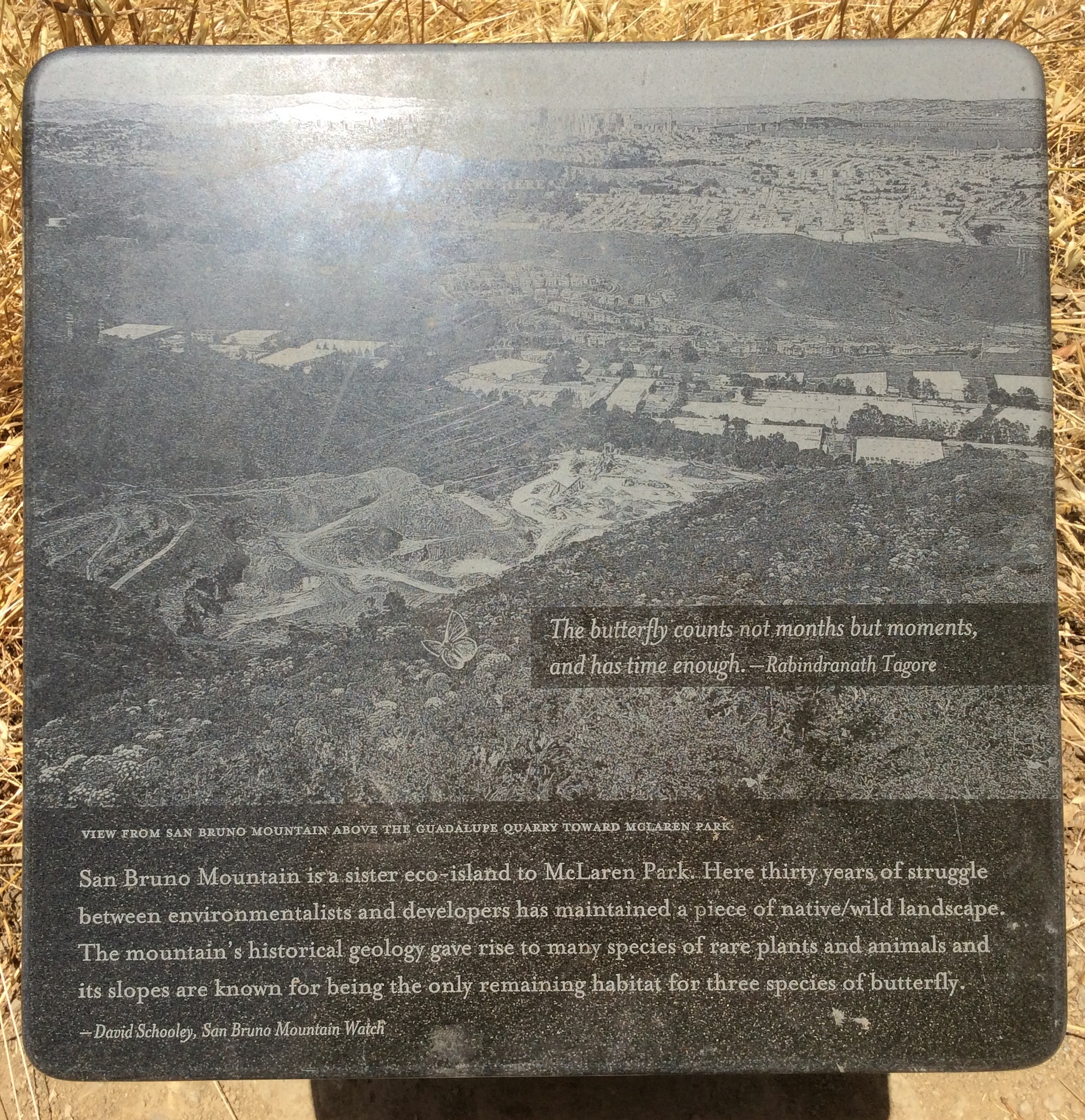
San Bruno Mountain marker

San Bruno Mountain marker

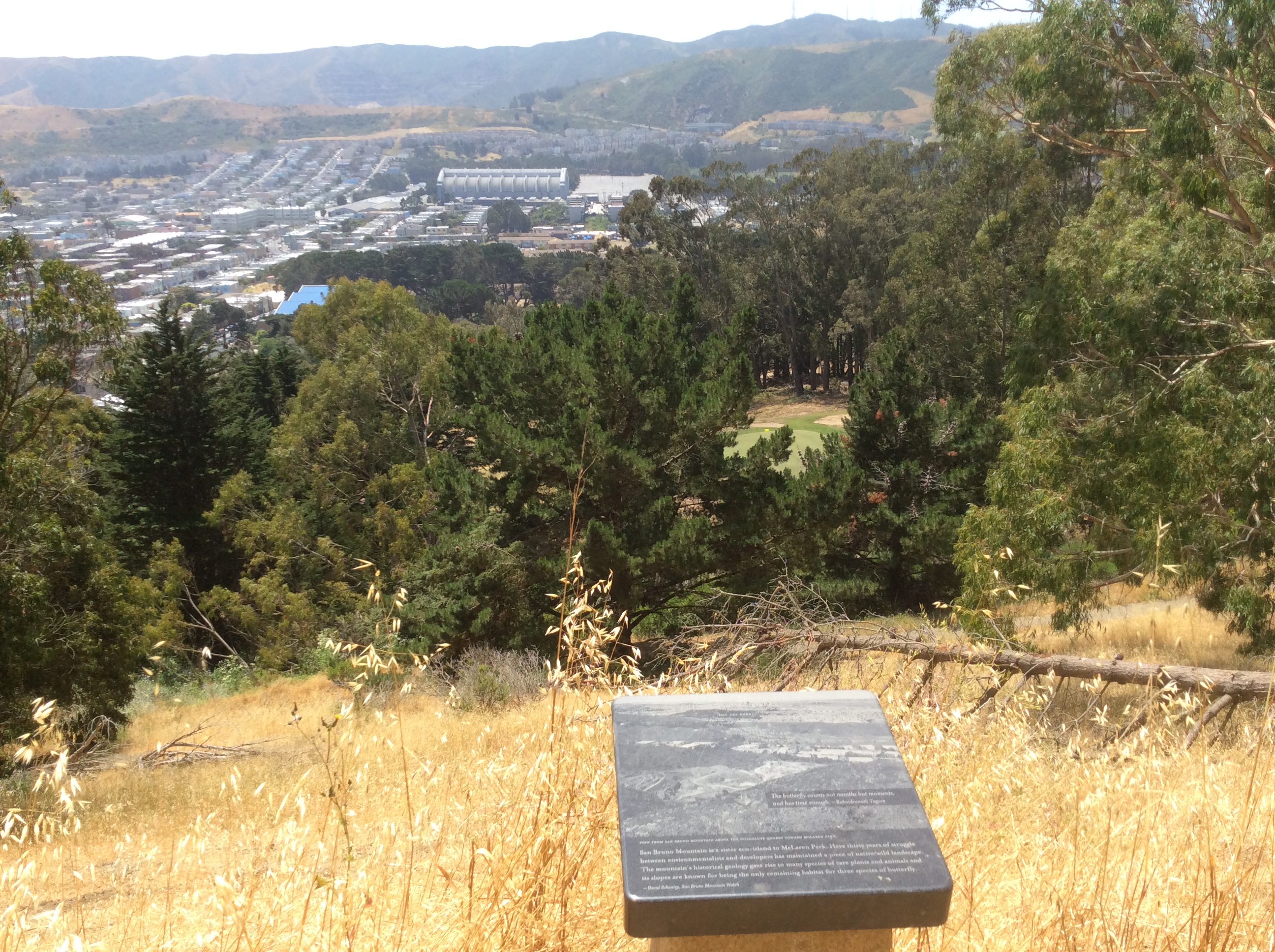
Each overlook and designated view has an etched stone plaque with information about the landscape and history, and a poetic, inspirational, or thought-provoking quote.

I wander, through shade and sun, sometimes seeing only the path and trees ahead and sometimes more open views, sometimes of the surrounding hills and sometimes of the flats and water below.

San Bruno overlook from Philosopher's Way

San Bruno overlook from Philosopher’s Way

Turn in the shady path. Note the helpfully arrowed stone marker.

Turn in the shady path. Note the helpfully arrowed stone marker.

A particularly pretty view from Philosopher's Way. Note one of the arrowed stone markers

A particularly pretty view from Philosopher’s Way.

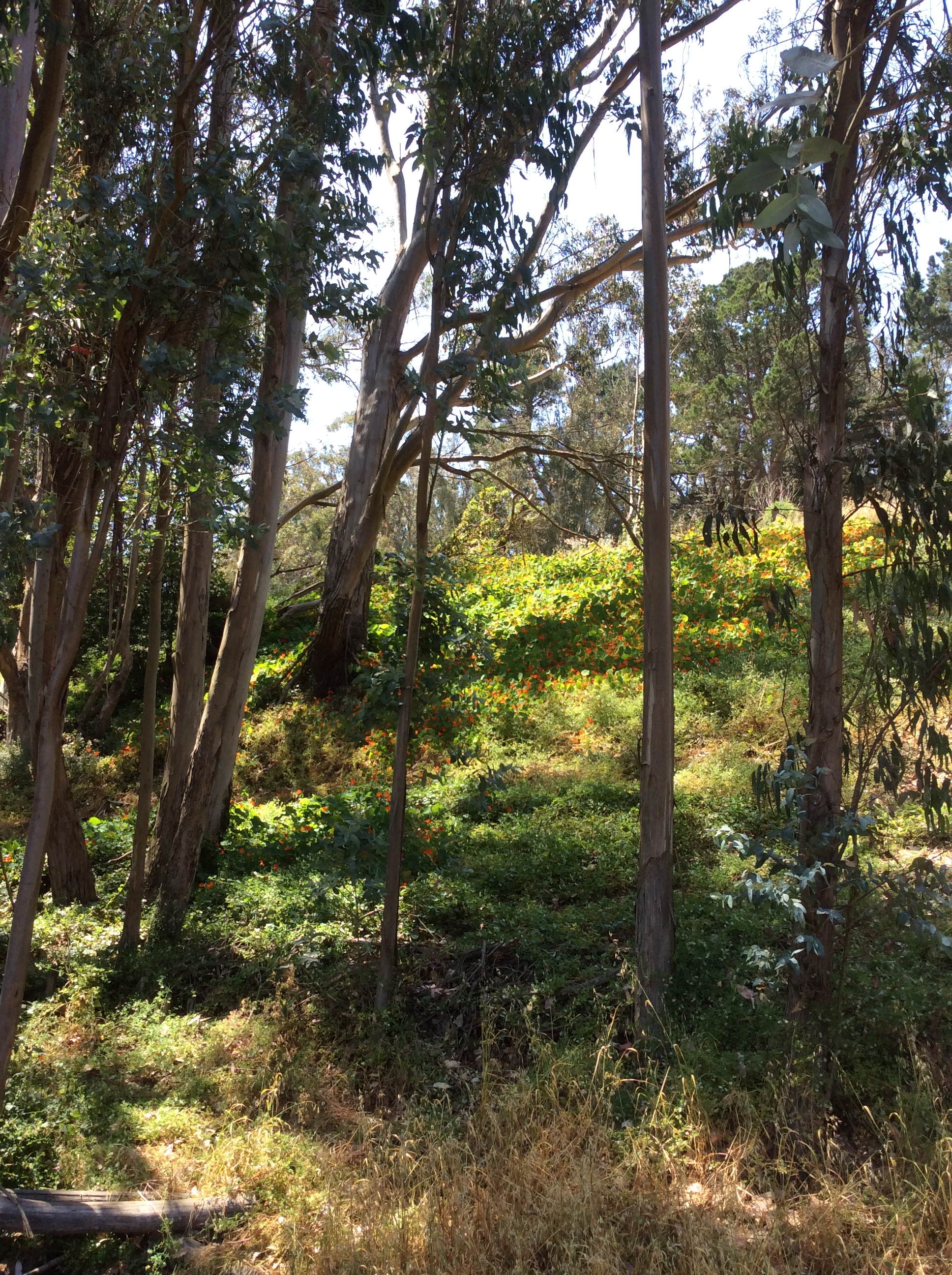
Eucalyptus, flowers, and greenery on a hillside

Eucalyptus, flowers, and greenery on a hillside

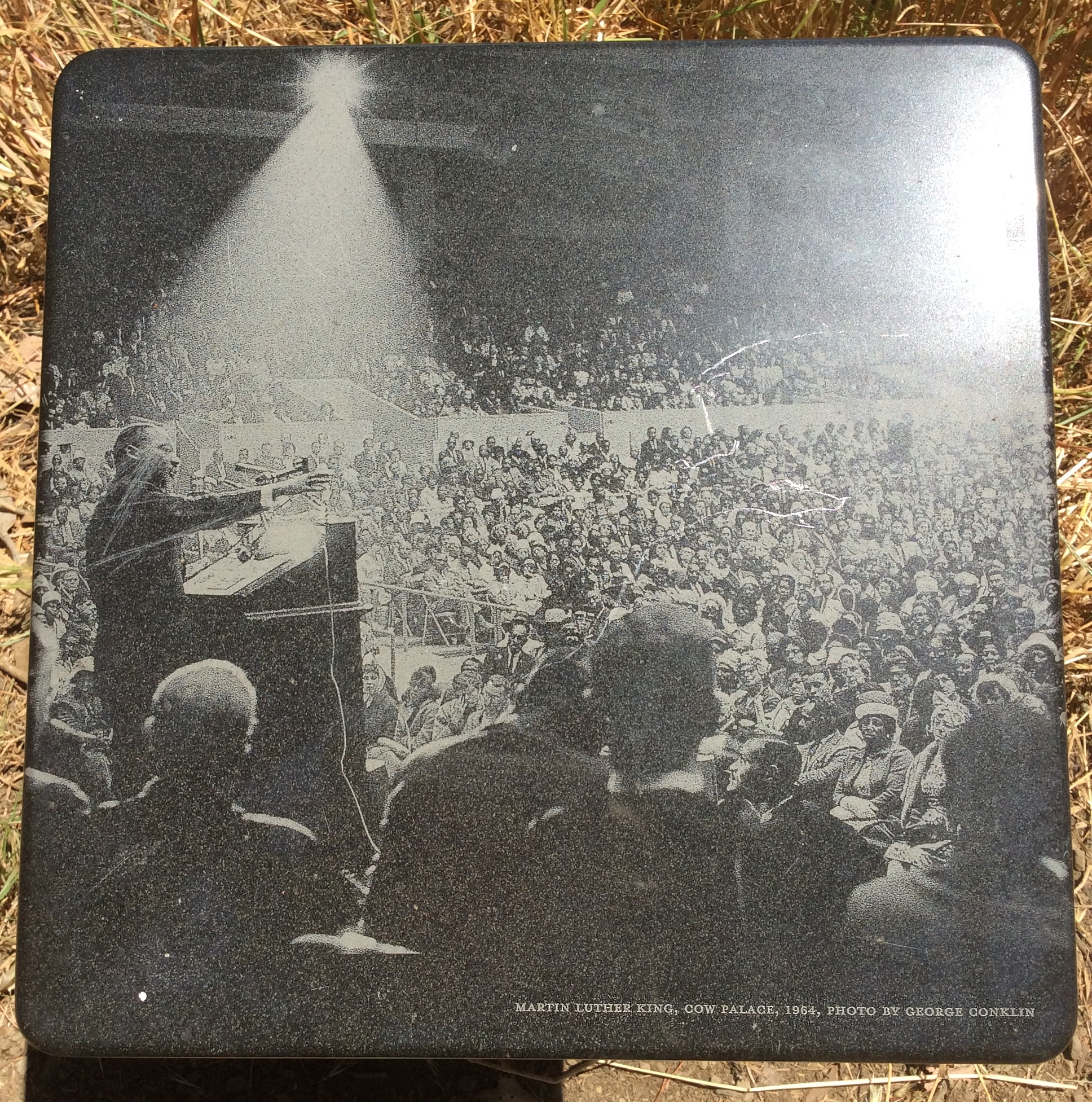
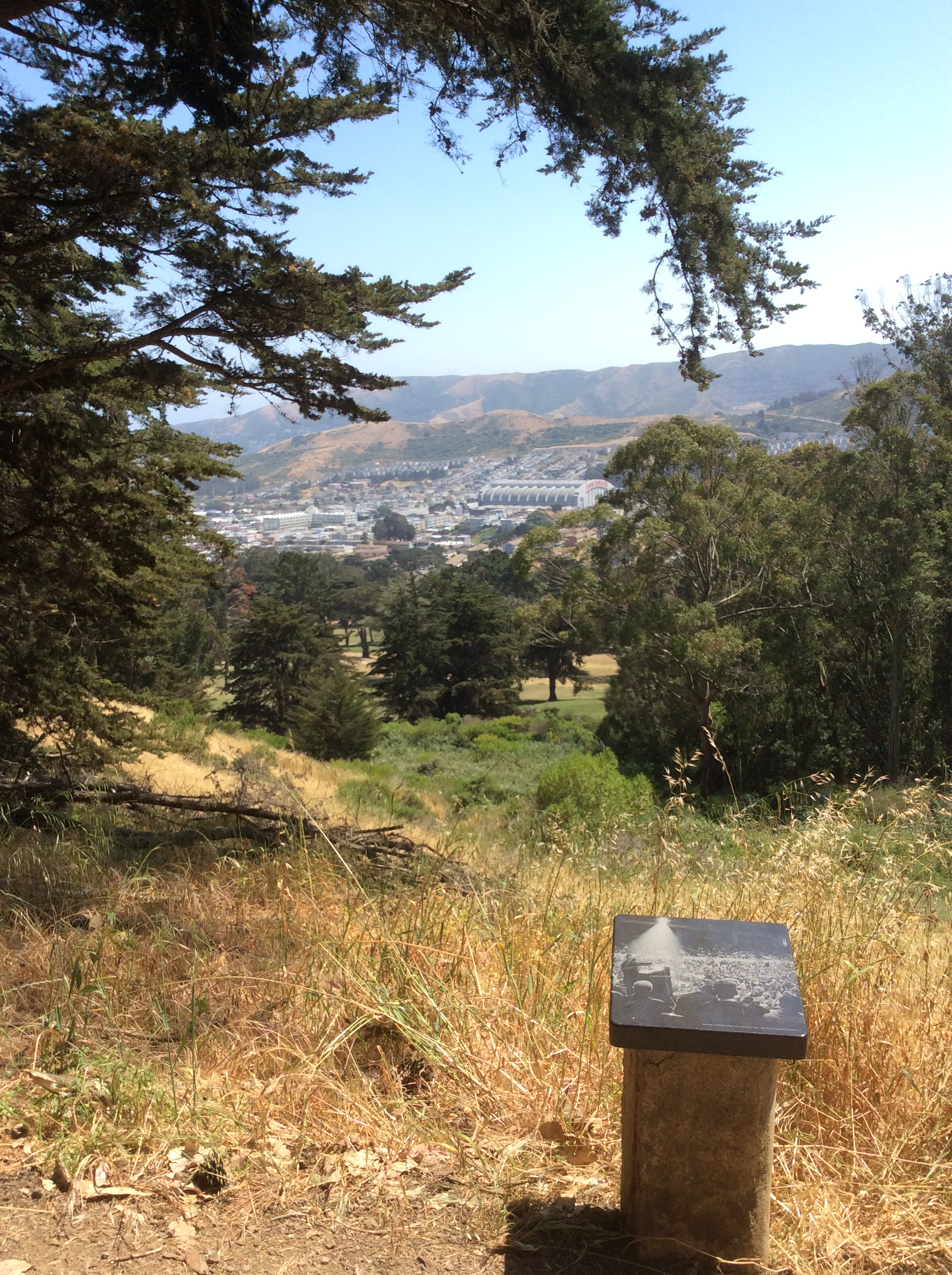
martin-luther-king-marker-at-cow-palace-overlook-philosophers-way-sf-2016-amy-coolsThere’s an overlook with a clear view of the large, sideways half-cylindrical shape of the Cow Palace, a large forum where, it turns out, Martin Luther King Jr. once spoke. An interesting tidbit of local history!

As I’ve explored much of the walk already, I sit here for a little while, then choose another spot more shielded from the sun glaring off the pages of my book. I read, and rest, and exchange messages with a faraway friend, and think a little, but mostly daydream.

After a couple of hours, I explore the rest of the trails. It’s a lovely, quiet way to spend an afternoon.

cow-palace-overlook-with-martin-luther-king-marker-philosophers-way-sf-2016-amy-cools

Cow Palace overlook with Martin Luther King, Jr. photographic marker

A hillside view from Philosopher's Walk

A hillside view from Philosopher’s Walk

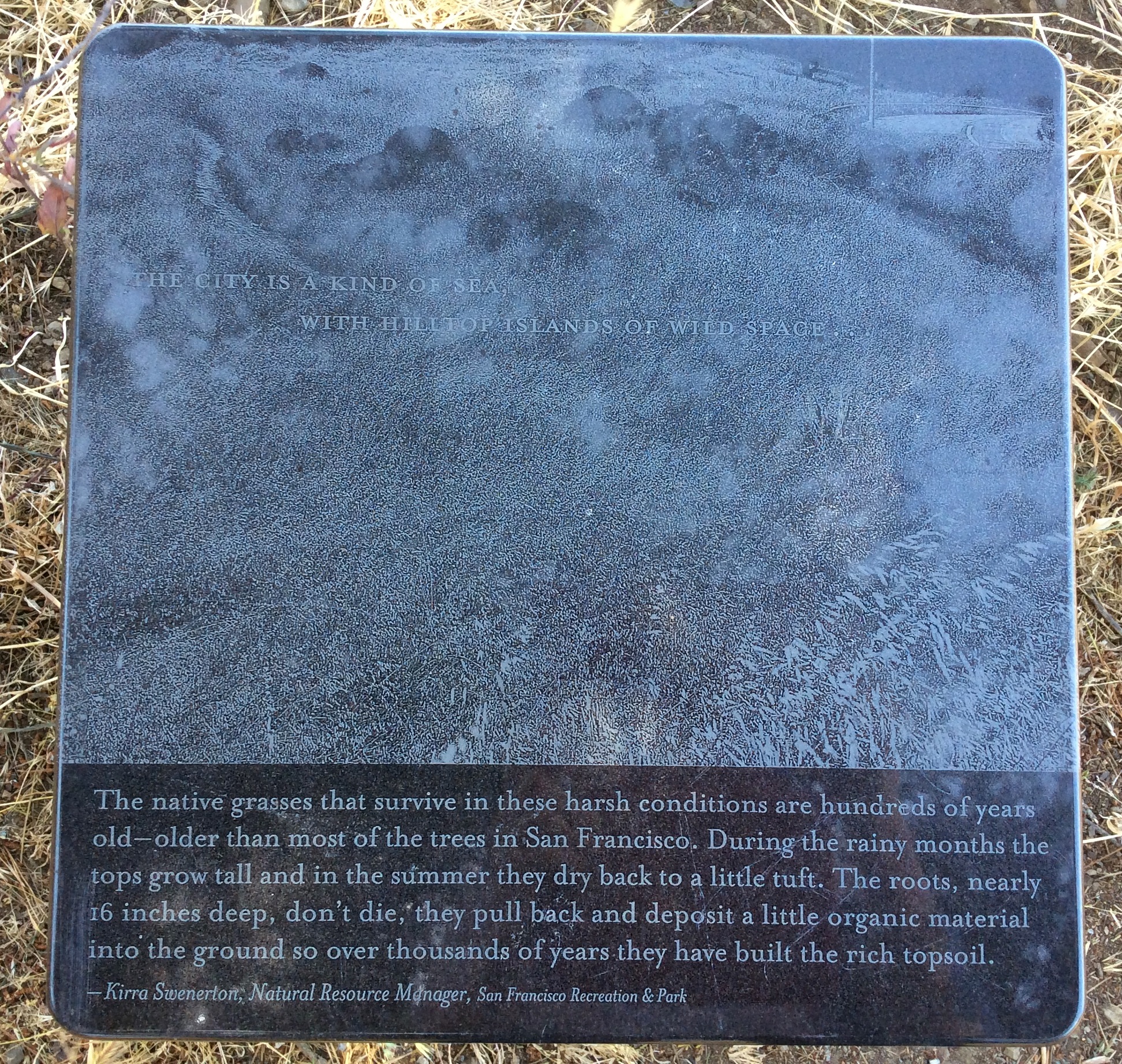
A marker which tells about the native San Francisco grasses here in McLaren Park

A marker which tells about the native San Francisco grasses here in McLaren Park

another-view-of-philosophers-way-trail-mclaren-park-sf-2016-amy-cools~ Thanks, Michelle, for telling me about this place!

Ordinary Philosophy and its Traveling Philosophy / History of Ideas series is a labor of love and ad-free, supported by patrons and readers like you. Please offer your support today!

~~~~~~~~~~~~~~~~~~~~~~~~~

Sources and Inspiration:

Philosopher’s Way: McLaren’s Contemplative Jewel‘. From SaveMcLarenPark.org

Richards, Peter and Susan Schwartzenburg. ‘Philosopher’s Way‘ trail map and article, San Francisco Arts Commission / Public Utilities Commission

Todd, Gail. ‘Philosopher’s Way in McLaren Park‘. June 5, 2013, SFChronicle.com

Is There Such a Thing as a Good Lie, and is Truth Merely a Tactic Anyway?

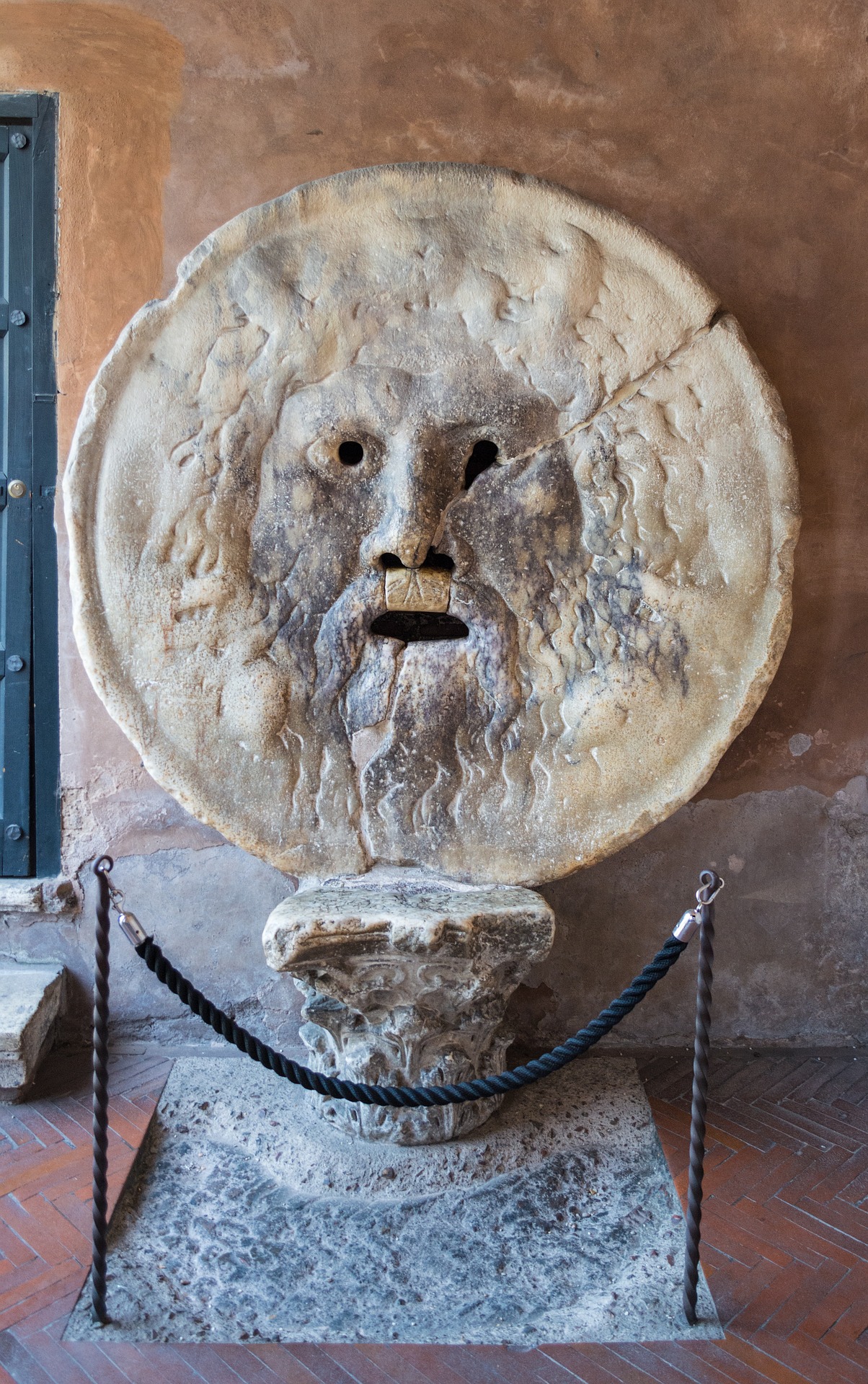
Mouth of Truth, Rome, Italy, by Serghei Topor, CC0 Public Domain

The Mouth of Truth, Rome, Italy, by Serghei Topor

‘A lie that serves a vital purpose, after all, is a lie that should be told. Whether we tell falsehoods or nothing but the truth, we all of us have the same objective: liars are always on the alert for the chance to profit by convincing others of their lies, just as those who tell the truth do so with the aim of ending up more trusted by everyone else, and thereby acquiring profit in their own manner. Different though our means may be, yet we have identical ends.’ (Histories, p 224)

In this passage from Herodotus’ Histories, Darius, a member of the royal guard and son of a Persian governor in Egypt, is justifying his plan to use trickery to enter the royal palace. He and six other Persians are planning the overthrow of Smerdis, a Magian who had taken the throne by deception after the death of Cambyses, son of Cyrus, king of Persia. Evidently, Darius takes the trouble to justify his plan of lying to the guards to gain entry because he knows his compatriots believe lying is wrong.

Darius is saying two very different things here. First, he suggests that there are some lies that are not only morally justified, but morally imperative. We’ve all heard the famous test case for when lying might be the right thing to do. Say you’re hiding a Jewish family from the Nazis under your floorboards, and they come up to your door and ask point blank if there are any Jews in your home. Other than remaining silent, which will likely be taken as a ‘yes’ and result in the Nazis storming the house and capturing the family, the only other options are to say ‘no’ and even to tell more elaborate lies which will convince the Nazis to move on. So even those who are generally committed to truth might allow that there are circumstances in which lying might not only be not wrong, but right, and furthermore, the only right thing to do, so long as it’s the only way to save the Jewish family from suffering and death. Darius is claiming that sort of thing here, but in his case, the vital purpose is to restore the Persian throne to its people, which had been stolen through deception in the first place and to whom it justly belongs. If he stopped here, I think many of us might agree he makes a fair point, even if we disagree with his assessment that there’s such a thing as a noble lie.

But he seems to doubt that his audience will accept will accept that this occasion justifies lying, so he goes on to say something far more radical. Darius claims that in fact, truth and lies are just two different ways of getting what you want anyway, and if that’s the case, the only reason you should choose truth over lies, or vice versa, is that it’s more effective. In this view, truth and lies are simply two means to an end, so the justification for their use is purely a matter of tactics. All we need to do, then, is figure out whether the end, the goal, is a worthy one, and what we say and in order to accomplish that end should be judged accordingly. Truth and lies are just as good, or just as bad, depending on the circumstances.

So what do you think? What do you think Darius gets right, if anything, and where do you think he goes wrong, if he does at all? Are truth and lies simply judged according to the intention of the speaker? According to how well they track available evidence? Are there different kinds of truth and lies, for example, ‘contingent’ versus ‘ultimate’ truth, and does that make a difference in Darius’ case, the case of saving the Jewish family, and other cases?

By the way, as Herodotus’ translator Tom Holland points out in his note to this passage, ‘Here Darius is made to speak like  a Greek rhetorician rather than a future Persian Great King, for whom any form of lying was officially anathema’.

~~~~~~~~~~~~~~~~~~~~~~~~~~~~~~~~~~~

Sources and inspiration:

Herodotus. Histories. Translated by Tom Holland, New York: Viking, 2013

Ordinary Philosophy and its Traveling Philosophy / History of Ideas series is a labor of love and ad-free, entirely supported by patrons and readers like you. Please offer your support today!

But My Brain Made Me Do It!

I’m on the home stretch of preparations for the GRE, studying hard in hopes that I only have to take it once. How I long to get in good writing time again and finish my beloved Douglass travel account series! Soon, soon. Until then, here’s a piece I published almost exactly two years ago today, which I just re-edited for clarity and flow, and re-illustrated with a beautiful drawing of a cross-section of brain and spinal column evocative of a flower.

Amy M Cools's avatarOrdinary Philosophy

Brain illustration from The Principles and Practice of Medicine...' by W Osler, 1904, public domain via Wikimedia CommonsThere’s a common idea which leads many people (myself included) to instinctively excuse our own or others’ less-than-desirable behavior because we were under the sway, so to speak, of one or another mental state at the time. This is illustrated especially clearly in our justice system, where people are routinely given more lenient sentences, given the influence of strong emotion or of compromised mental health at the time the crime was committed. “The Twinkie Defense” is a(n) (in)famous example of the exculpatory power we give such mental states, where Dan White claimed that his responsibility for the murder of two people was mitigated by his depression, which in turn was manifested in and worsened by his addiction to junk food. We routinely consider ourselves and others less responsible for our wrong actions if we’ve suffered abuse suffered as children, or because we were drunk or high at the time, or we…

View original post 1,523 more words