O.P. Recommends: Like the Oscars, #PhilosophySoWhite

School of Athens by Raphael [Public domain], via Wikimedia Commons (cropped)Eric Schwitzgebel, who authors the The Splintered Mind blog (a favorite of mine), recently co-wrote this excellent opinion piece about philosophy’s lack of diversity.

Like Hollywood, Schwitzgebel and Myisha Cherry find that there’s a set of preconceptions which underlie the way work is chosen and promoted which, in turn, virtually guarantees philosophy will remain non-diverse. Hollywood has its own set; for academic philosophy, the glorification of obscurantism is a primary factor. Schwitzgebel and Cherry write: ‘We admire philosophers whose central arguments are nearly impossible to understand, or who speak in paradoxes, who accept seemingly bizarre views, or who display dazzling skill with formal logical structures of no practical significance. Kant and Hegel are better loved than understood.’ Seeming smart, the authors explain, has long been confused by too many academics with being smart.

The piece goes on to show how this obscurantism has become the traditional province of white male academics, and is integral to keeping the field of philosophy so exclusionary, and to most people, so irrelevant.

This, of course, would be sad news for Ordinary Philosophy, dedicated as it is to philosophy in the public square, if it were news. But it’s not news, and that’s one of the main reasons O.P. exists. Philosophy should be, like good government, of, by, and for the people. While specialization is key to the development and exploration of complex ideas, obscurantism and jargon, despite assumptions to the contrary, are not necessary to that project. In fact, they accomplish little except ensuring that philosophy is tedious and unpleasant to read, that philosophers end up talking to nearly no-one but each other, and that the field as a whole ends up remaining oh-so-white, oh-so-male, and to most, oh-so-irrelevant.

Ordinary Philosophy and its Traveling Philosophy / History of Ideas series is a labor of love and is ad-free, entirely supported by patrons and readers like you. Please offer your support today!

Happy Birthday, Rosa Luxemburg!

Rosa Luxemburg, By unknown photographer around 1895-1900 [Public domain], via Wikimedia CommonsRosa Luxemburg, Mar 5 1871 – Jan 15 1919, is the great Marxist theorist, writer, economist, revolutionist, anti-war and anti-capital-punishment activist, and philosopher who was murdered during the German Revolution of 1918–1919.

Though she’s an anti-war activist, Luxemburg is also critical of the idea that a just society can be brought about by incremental reforms through established political systems. If she were to be involved in the 2016 Democratic primary race between Hillary Clinton and Bernie Sanders, she would very likely back Bernie, with his more revolutionary style and rhetoric: she’s sharply critical of the Social Democratic Party of Germany, to which she belongs (in its left wing) for favoring a Hillary-style reformist approach. However, her internationalism takes Marxist thinking beyond the point where leading Marxists of her day had progressed, with their focus on unique formulations of Marxist political theory tailored to their own particular national identities and histories. She would likely find fault, then, with Bernie’s protectionism.

Luxemburg’s other great contribution to Marxist thought is her theory about the accumulation of capital. Since capitalism’s primary fuel is constant and ever-increasing consumption, she thinks it’s a mechanism for the ultimate destruction of our material capabilities to sustain ourselves, starting with the ecosystems on which indigenous people, the poor, and the working class depend. Here as well, her progressive thinking takes her far beyond Marx himself, and her concerns in this timely issue makes her as relevant now as ever.

Read more about the brilliant and fearless Luxemburg:

‘Who’s Who – Rosa Luxemburg’ at First World War.com

‘The Dialectic of the Spatial Determination of Capital: Rosa Luxemburg’s Accumulation of Capital Reconsidered’ by Peter Hudis

The Crisis of German Social Democracy (The Junius Pamphlet) by Rosa Luxemburg, 1915

‘Rosa Luxemburg’, from Wikipedia, the free encyclopedia

Ordinary Philosophy and its Traveling Philosophy / History of Ideas series is a labor of love and is ad-free, entirely supported by patrons and readers like you. Please offer your support today!

Why We Need Citizen Philosophers

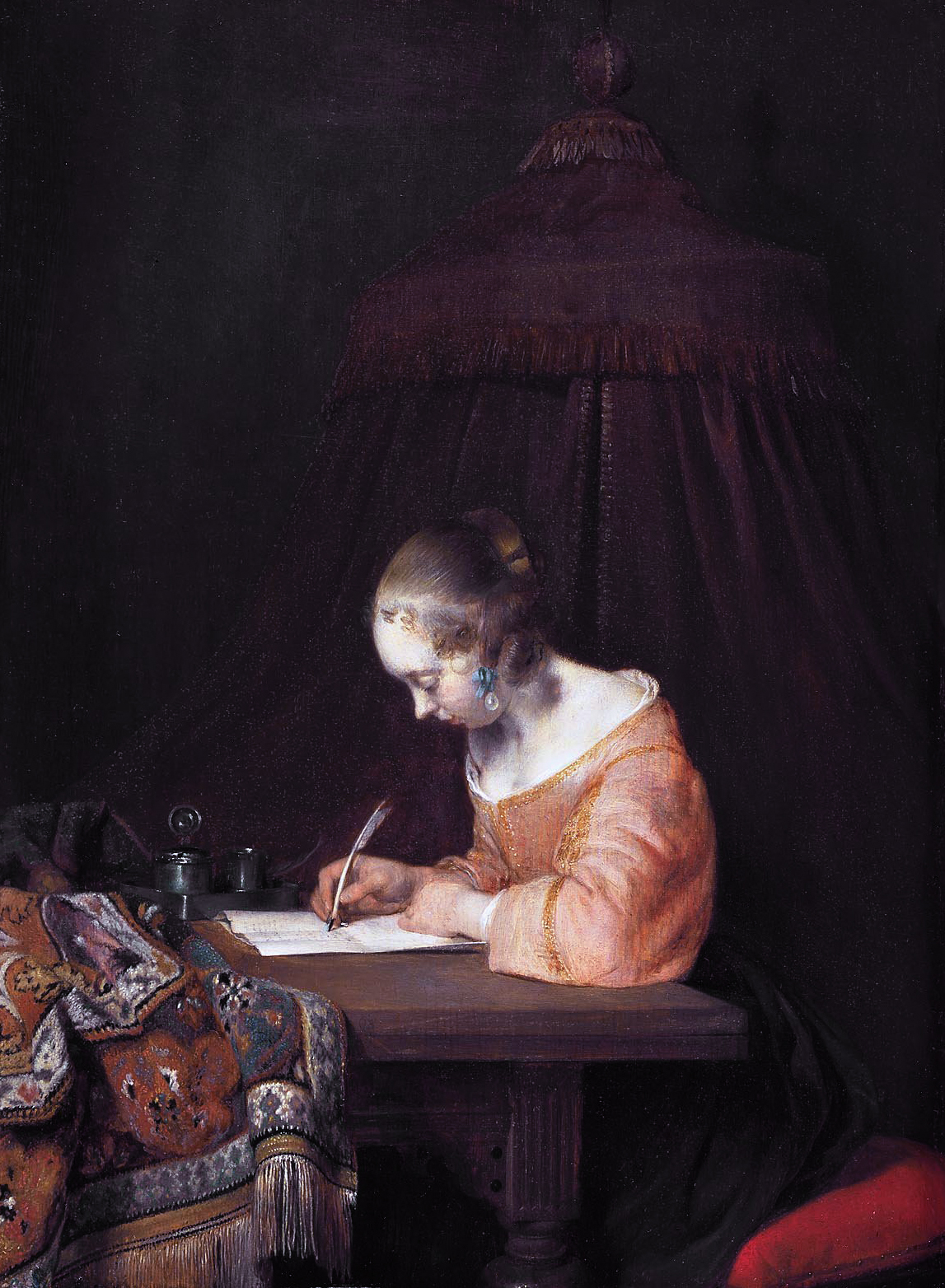
Writing a letter *oil on panel *39 x 29.5 cm *signed b.c.: GTB *ca. 1655I am a citizen philosopher, and very likely, so are you.

So what is citizen philosophy, why is it a useful concept, and what is its role in the world?

Let’s begin by considering what we mean by philosophy, generally speaking. For a long time, philosophy has been considered an almost exclusively academic pursuit, so highly specialized that only a very few experts can properly be called philosophers. As Eric Schwitzgebel points out, this is a relatively new development. In the Western world, it traces its origins to classical Greece; each region of the world has its own history of philosophy or its analogue, from Egypt to China to the Americas. As with all fields of inquiry, philosophy has branched out and specialized until much of it would be barely comprehensible to its first practitioners. Indeed, almost all fields of inquiry we know today started out as a branch of philosophy: mathematics, logic, science, medicine, theology, you name it.

But Philosophy, or ‘love of wisdom’, began in the home, the workplace, the market square, and the street corner with curious, intelligent people who, newly enjoying the luxury of free time accorded by advances in food-acquisition technologies, began to ponder on the whys and hows of the natural world and of the human experience. These people weren’t originally chosen or designated by some authority as the ‘thinkers’ as opposed to everyone else, the ‘doers’; instead, philosophy originated, grew, and specialized organically. We, as a species, began to ask and answer ever more complex questions about how to best live in the world as members of societies, what’s going on within our own minds and why, what are our roles in the universe, and what it all means… including the question ‘what is meaning?’. Over time, certain individuals came to be recognized as particularly adept at asking and answering these important questions, and came to be considered specialists and authorities in their fields of inquiry. But philosophy, broadly construed, remained a pursuit of many more people than that.Panthéon, Temple of Reason, Paris, France, Photo 2015 by Amy Cools

Philosophy has been demystified by re-entering popular culture, to a significant extent. There’s an ever-growing audience for popular philosophy books, articles, magazines, podcasts, and blogs. The term itself has also been re-broadened, so to speak. ‘Philosophy’ has taken on many new shades of meaning as it’s used to refer to a particular view of life, or aesthetic taste, or set of aspirations, or working theory of knowledge, or organization method, or substitution for the loaded term ‘spiritual’ …even a brand of skin care products (this one disgusts me somewhat, as it offends my aesthetic taste and sense of the ‘sacred’ by capitalizing on public respect for one of my most beloved, to me non-commodifiable things). Some of its newfound popularity is the result of advancing secularization accompanied by the desire to retain transcendence and meaning; some is the result of our newly data-centric lives brought to us by the word wide web, creating the need to make sense of the deluge of new information available to us; some is the result of the blending, annexing, and clashing of cultures in a world now widely and intimately connected through advanced media technologies and ease of travel, creating the need to find ways of communicating and living together in a world of new complexities. It’s all happening so fast that each of us is experiencing the urgency to make sense of it all right away, in a way that is practicable in our own communities and subcultures, and in a way each of us can understand and readily communicate.

In short, philosophy is enjoying a comeback in the public square. What I’m calling citizen philosophers are those who ask and answer questions there, about the nature of the universe and how to make sense of our experiences of it, who are not necessarily engaged in professional or academic philosophy. While citizen philosophers tend to spend a significant amount of time engaged in such inquiry and are motivated to educate themselves widely and systematically, many find academic philosophy too arcane and obscure to help the rest of us navigate our increasingly complex lives.

I, for one, love academic philosophy. I am continuously in awe of the work these men and women do, devoting their lives to hard study, to asking the most challenging questions, and to deep examination of the most nuanced and complex problems. This body of work is breathtaking in its scope, beautiful in the elegance of its arguments and solutions, satisfying in its wit and cleverness, fascinating in its intensive scholarship, and indispensable in its ability to help us figure out why and how to make a better world. I find it highly enjoyable and fulfilling, as well as challenging and frustrating, to grasp and wrangle with the work of academic philosophers. To be sure, academic philosophy has had its share of what David Hume calls sophistry and illusion, fit only to be consigned to the flames, and what Harry Frankfort more succinctly calls ‘bullshit’. But philosophy is not alone in this: science has had its phrenology and eugenics, medicine its humours and bloodletting, theology its justification for slavery and pogroms, and so on. Like these other disciplines, academic philosophy has some wonderfully effective built-in self-correctors, and continues to be an essential, I think preeminent, field of inquiry.

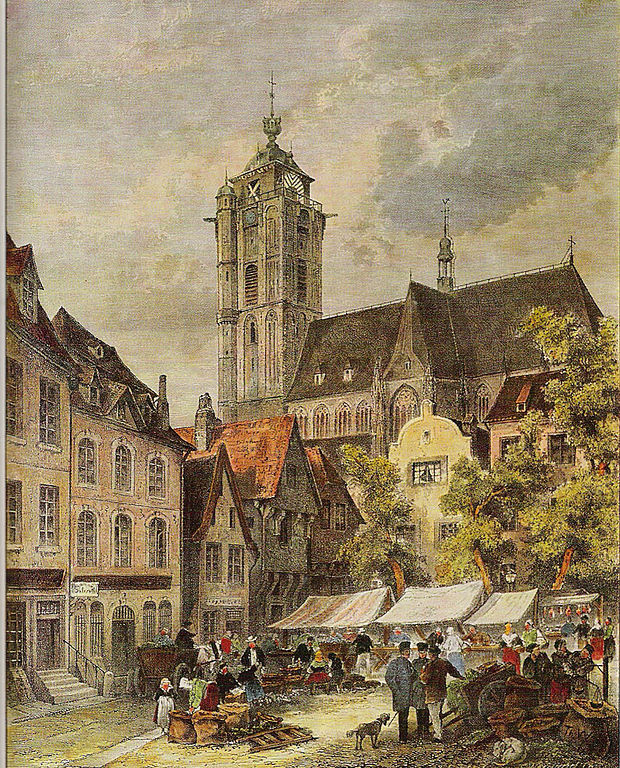
Marketplace in Duisburg by Theodor Weber, 1850, Public Domain via Wikimedia CommonsBut many of the most important and interesting questions don’t come down on us from on high, so to speak, originating from academia and revealed, as if a sort of holy writ, to the rest of us. In fact, most of the questions and problems we all wrangle with still originate in the public square, in the home, workplace, classroom, hospital, church, courtroom, political assembly, and so on. They bubble up from the challenges and uncertainties of our daily lives, are filtered through conversation and the arts, are swept up in social, legal, and political movements and institutions, and carried into the pool of academic philosophy, where they are further clarified and distilled in treatises, lectures, books, and so on.

And these questions don’t only originate with the public at large, we offer our first answers there. The answers range from fragmentary to nuanced, from intuitive to considered, from repetitions of received wisdom to original, from off-the-cuff to well-informed, by people from all walks of life with their own areas of expertise and unique capabilities of understanding born of particular experience. These citizen philosophers are on the first line of discovery and inquiry, and so called because they don’t participate in this process as a profession, but as a matter of personal interest and as a member of society at large, not subject to the demands and constraints of academic philosophy. Of course, the category of citizen philosopher does not exclude academic philosophers, because of course they, too, participate in the same process of question-creation and question-answering in the course of their everyday lives, separate from their academic pursuits.

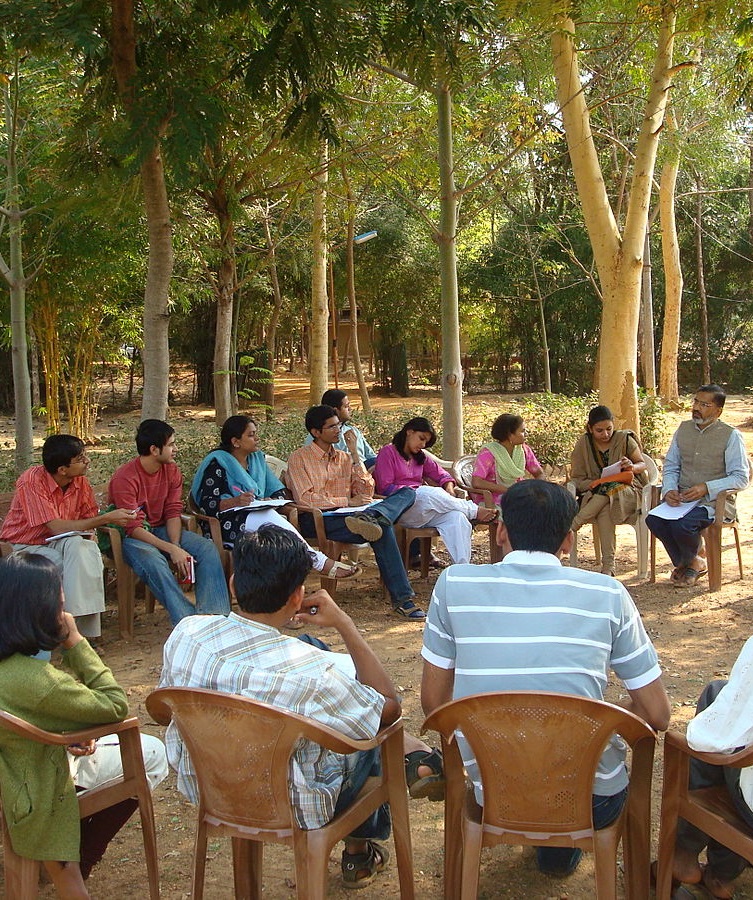
It’s the very lack of the demands and constraints of academic philosophy that gives citizen philosophy an important role to play in public life. The world as it is offers so many varieties of human experience, so many ways of seeing the world, so many challenges that academic philosophers, like the rest of us, never have the opportunity to confront directly. Yet the scope of academic philosophy, at least potentially, is as broad as the possibilities of human (even, perhaps nonhuman?) experience. So how can it be that academic philosophers can possibly access enough information to ask and answer all the important questions that could be addressed? It may be, if academic philosophers were endowed with immense powers of comprehension and imagination that would enable them to take all the information available in the world, to truly understand what it’s like to be a coal miner in China, a cardiologist experiencing a heart attack firsthand, a one and a half year old who just created their first sentence, a person with frontal lobe epilepsy experiencing a supernatural vision, or a terrorist who became so after their entire family was killed by a bomb, and then conceive of all of the social, epistemic, metaphysical, political, and every other sort of question that may arise from these experience. (À la the mythical Mary in Frank Jackson’s black and white room.) But of course, this is impossible, as even the most intelligent and informed human mind has its limits. Sometimes, raw data is the fodder of academic philosophical inquiry. But most often, it’s the questions, moral precepts, stories, works of art, aphorisms, dogmas, memories, narratives, and all other products of the human mind, already having undergone a first round of questioning and examination, that academic philosophers take up as topics of inquiry. Group discussion in the camps of Nirman (cropped), by Abhijeet Safai, Public Domain via Wikimedia Commons

I, for one, am glad to see philosophy ever more present in the public square. That’s because I perceive philosophy as the great quest for understanding that academic and citizen philosophers all engage in, and as I see it, each gives something of immeasurable and irreplaceable value to the other. We need only recall some philosophical forays that have failed, from hairsplitting quibbles of scholasticism to navelgazing-verging-on-masturbatory obscurantisms of postmodernism, to recognize that academic philosophy benefits enormously by maintaining a robust discourse with the broader human community of activists, artists, reporters, bloggers, protesters, discussion groups, and of all others who care enough to question.  The discipline and expertise of academic philosophers, and the broader set of experiences, challenges, and opportunities for new questions and unique ways of understanding of the larger community of citizen philosophers each serve to keep the other more honest, more challenged, and more informed, in the great world conversation we’re all having.

*Listen to the podcast version here or on iTunes

Ordinary Philosophy and its Traveling Philosophy / History of Ideas series is a labor of love and is ad-free, supported by patrons and readers like you. Please offer your support today!

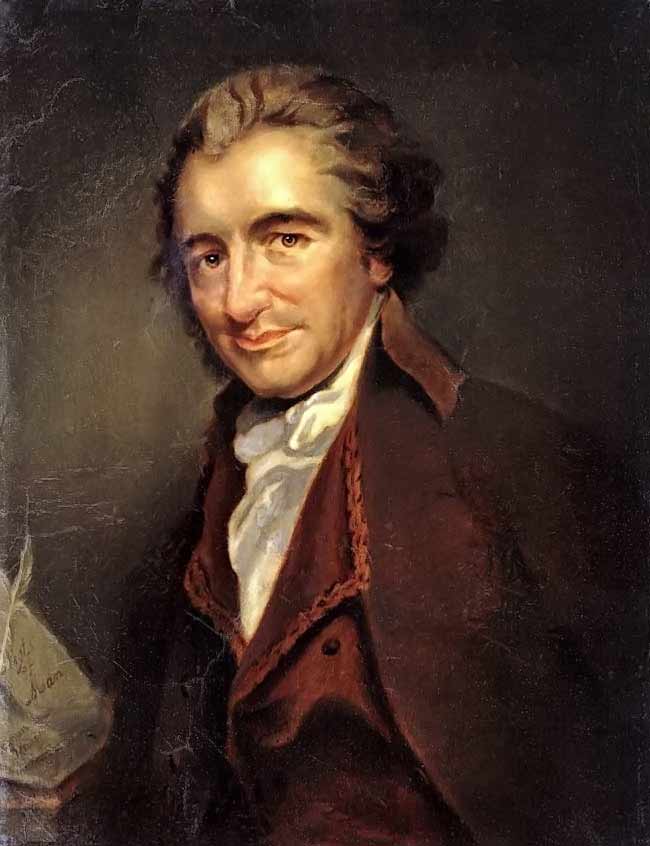
Thomas Paine on Basic Income, and Why Welfare is Compatible with an Individualist Theory of Human Rights

Thomas Paine, advocate of liberty par excellence, is an intellectual hero of all believers in democratic and accountable government. He’s also, especially, a hero of modern American conservatives and those of the libertarian persuasion.

But here’s a lesser known fact: he also argues in favor of what today we commonly call welfare.

Paine is, most famously, the author of Common Sense, The American Crisis, The Rights of Man, and The Age of Reason. These pamphlets are, in turn, an argument in favor of the American colonies’ cause for independence, a series of pamphlets of encouragement and calls for support for the struggling revolution, a rebuttal to Edmund Burke’s harsh critique of the French Revolution (and founding work of modern conservatism), and deist critique of Christianity and organized religion in general.

In Common Sense, Paine calls government a ‘necessary evil’, which we need only because of our flawed human nature, and he considers it legitimate only if it functions to benefit the people as a whole. But to do so, it must remain fully accountable and therefore not too large, or else it would do as governments had always done throughout the history of Europe: it would oppress, enslave, overly tax, and otherwise use its people for its own ends, making them suffer for the inevitable territorial, political, and ideological wars that all monarchs, power-hungry aristocrats, and high-ranking clergy embroiled themselves and their nations in. He also writes that commerce was one of the great pacifiers of the world by rendering people ‘useful to each other’, and as such, should not be interfered with. Thus far, his thinking is closely aligned with the political principles of libertarianism and modern American conservatism.

Yet libertarians and conservatives misunderstand Paine when they stop there: Paine very definitively argues that government should play some very important roles in public life beyond defense of life and private property and the enforcement of contracts. After all, it’s not only governments that oppress and neglect its citizens in all kinds of ways: it’s also other people.

One of these roles that government should take on is economic support of all citizens when they are the most vulnerable, especially the young, the elderly, and the infirm. As Paine observes, neither governments nor individuals sufficiently protect the rights of working people nor of the people to support themselves when they can’t yet work or can no longer work. He himself suffers at the hands of the government when in their employ as a tax officer: they routinely underpay and overwork him and his fellow tax officers, fire him for insufficient cause, and punish him for petitioning the government to improve their treatment of public employees.

Paine thinks government can do better, and go beyond just paying fair wages to its own representatives. He argues in favor of publicly funded welfare for all citizens, especially at the beginning and at end of life, and he outlines a concrete plan for its implementation. As he sees it, taxation and redistribution of wealth, within certain bounds, are just as essential for liberty as are the franchise, education, free trade, a constitution, and a bill of rights. For every person to have the chance at sustaining their life in a way compatible with their rights, the young should, at the very least, receive a free and full education and a sum of money with which to start out on their chosen profession, and a stipend to sustain them in health, comfort, and dignity when they can no longer work.

How is this possible? How can Paine be in favor of accountable government and individual rights while supporting a welfare system, often portrayed today as an enemy of both? His argument is an innovative one, and shows how a system of welfare is, in fact, not only consistent with an individualist theory of liberty and human rights, but is a necessary consequence of it.

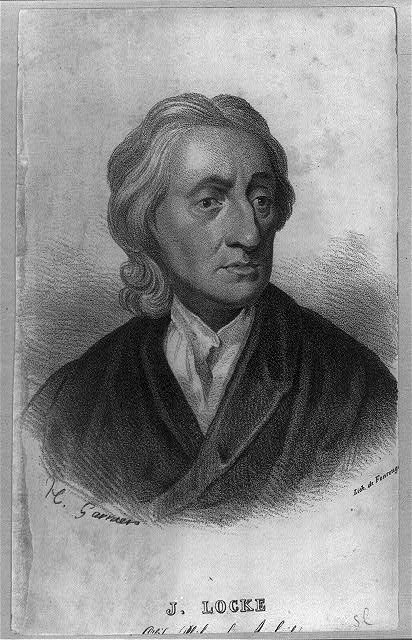
Like the writers of the Declaration of Independence, the Bill of Rights, and the United States Constitution, Paine is influenced by John Locke, author of Two Treatises on Government and therefore, indirectly, of American political theory. Paine bases his argument on a Lockean theory of rights: all human beings are born into the world with identical natural rights, including that to life and liberty. Everyone is also born with equal rights of access to the land and to its resources, since the latter two are necessary to the former, not only for sustaining life but for making it a free and happy one. The right of individuals to own property, therefore, is not a pure natural right like the others, since it allows particular people access to particular land and resources while denying it to others. Purely natural rights, by contrast, are equal in kind and in degree from individual to individual. Yet giving people the right to claim property as their own is valuable to everyone, since it provides incentives for individuals to create wealth through labor, improving what nature left on its own cannot provide: agriculture, technology, housing, art, and so on, and this wealth is shared by all through trade. Unlike the right to life and liberty, Locke’s labor theory of property rights is contingent, valid only if its original acquisition is ‘mixed’ with the owner’s labor. and only if enough is left so that others have not only enough, but just as good. (When the United States government drove the Native Americans of their ancestral land, they routinely and conveniently forgot the second part of Locke’s property rights theory as they grabbed the most resource-rich and most conveniently located land for themselves, driving the tribes into ever smaller and ever poorer places.) Even if it sometimes interferes with the ability of some to enjoy their purely natural rights, such as when certain people grab all the wealth for themselves while leaving others to suffer in poverty and even starve, Locke thinks that the right to own property benefits society on the whole to such a degree that it’s justified.

Paine, however, is not satisfied. He observes that property rights routinely benefit the few to a great degree and most relatively little. He looks not only at the world around him but at the whole of European history, seeing a world of immense wealth mostly enjoyed by a small number of people while most others earn just enough to sustain themselves, and the problem tends to grow worse over time. Paine tends to blame this state of affairs largely on a spoiled, despotic monarchy, aristocracy, and clergy, who use the law, assertions of ‘duty’, and enticements of salvation to wrangle most of the wealth out of the hands of people who actually create it. This leaves many of the young without the resources with which they could start creating wealth of their own for themselves and their families, and the impoverishment of the old who, after a lifetime of contribution through work, are left without resources when they can work no longer, having earned too little in their lives to save for their old age. So how can this be squared with Locke’s view that property rights should generally lead to the benefit of all, and that they are contingent on there generally being enough for everyone else to have what’s ‘just as good’?

He addresses this problem most thoroughly in his lesser-known pamphlet Agrarian Justice, written in 1795 and ’96 after he’s observed the success of the American revolution (except for enslaved Americans, of course) and the turmoil of the French one. The French Revolution, after all, was mostly driven by popular anger and despair over the widespread privation and suffering of the French people, condemned to a life of hard work, few prospects for social mobility, and a strict hierarchical class system in which most of the nation’s wealth was gobbled up by a very few.

Paine doesn’t just base his argument on sympathy for the poor, the hapless young, and the elderly, though his work is clearly driven by that emotion, occasioned partly by his hard-working parents’ and his own struggles to get by. Instead, his argument centers on justice; specifically, the principle of just recompense. Since every person is born into society denied of their birthright, which is the right of equal access to all land on earth and its resources, everyone is responsible for paying damages for that loss. What we now call welfare is really reparations, due to everyone, by all members of a society that enforces landed property rights.

But wait a minute, one might object: isn’t the very fact that society as a whole benefits from property rights recompense enough? Even if Paine is right, wouldn’t justice only demand we make sure that everyone has the same liberties, the same protection under the law, and the same access to basic public goods such as infrastructure and education? That way, outcomes in wealth will generally apportion themselves fairly according to the hard work and ingenuity of individuals. This idea, commonly called equality of opportunity, is especially popular with those who fall into the modern conservative and libertarian portions of the political spectrum. Anything else looks like an injustice in this view. After all, is it really just to take away wealth from some, especially those who earned it through their own labor, and give it to those who have not earned it?

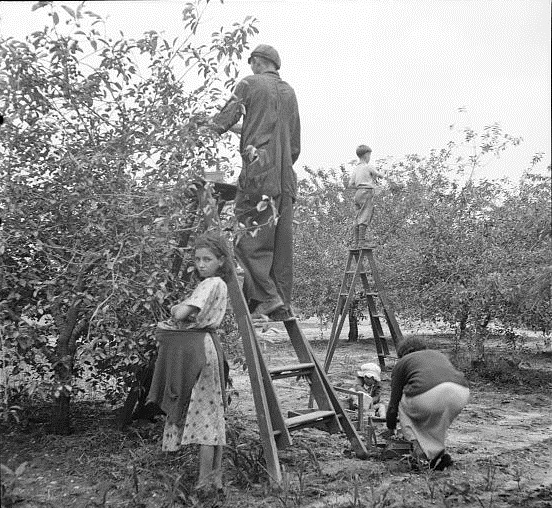
Remember that Paine offers the facts of history to show that fair wealth distribution just never seems to happen in societies that privatize land rights: the average person who works the hardest and does the most to benefit society very often does not accumulate even a fraction of the wealth as the relatively idle monarch, aristocrat, or member of the clergy. Well, then, how about today’s democratic market societies, where there is no monarch, aristocracy, or clergy empowered by the law to plunder most of the wealth from the working people for their personal use? We have only to pay attention to the news a short while to be aware that extreme inequality and unfairness of wealth distribution is as bad or nearly as bad as it’s ever been. The people doing the hardest and arguably most important jobs, such as teaching our children, manufacturing goods, cleaning up our cities, or harvesting the crops that sustain our lives earn anywhere from a pittance to a decent, but not stellar wage. Yet the CEO, the career politician, the idle children and grandchildren of millionaires, the trader and inventor of exotic financial products, and the tech whiz who invents the newest fad internet game often pile up money almost faster than they can stuff it into tax shelters.

Many like to say that unskilled, low-paid jobs are a stepping-stone to something else, but this is belied by the facts in the United States and around the world. While some do work their way up to more highly skilled and highly paid jobs, there are many, many more who never do. The fact that our economy depends on there being a certain number of those low-wage jobs in existence guarantees they will keep existing, at least until technology renders them obsolete. And when and if that happens, what will all those unemployed people do then? Even if every single one received an education and job training sufficient for employment as a skilled worker, there will only be a certain proportion of jobs that will be decently paid, leaving the rest in the same predicament. And there very well may be far fewer jobs in existence than there are people in this technological age. What then?

The reason why the whole equality of opportunity idea never works out may be that it’s a mythical concept, incompatible with the laws of nature, or if it were at least theoretically possible, undemonstrable.

In the real world, competition among workers for jobs necessarily leaves a huge number of people out when it comes to the ability to earn decent or even any money whether or not they do work hard, whether or not they’re willing but don’t have the opportunity, or whether or not they can at all. There are countless reasons for this due to the variety inherent in human nature and in the human experience. Some never had access to a good education, or they lack the network of patrons and mentors that the offspring of successful people rely on to get their own start in life. Others are simply not as intelligent, or tall, or graceful, or otherwise good-looking enough according to the whimsical and capricious standards of society, or of the ‘right’ race, ethnicity, religion, or don’t have the ‘right’ accent, and so on. There are jobs that disappear from the market due to advances in technology, with suddenly unemployed middle-aged or older people with now useless job skills in a society that heavily favors youth. There are people who are born with medical problems that make it difficult or nearly impossible to get well-paying jobs in a competitive market: skin disorders, genetically-imposed obesity, missing limbs, compromised immune systems, cancers, heart conditions…. the list is very long. And there are countless numbers of people for whom the ‘rat race’ is painful or self-destructive, as they have personalities that are shy, contemplative, independent, gentle, non-competitive, ‘weird’, and otherwise totally unsuited to that whole competition thing, and therefore terrible at it. The list goes on and on.

And the reason why equality of opportunity is undemonstrable, at least as something that can be implemented through public policy, can be recognized when we compare it to the gold standard of demonstrating the truth or usefulness of a theory: the scientific experiment. Consider a group of scientists who say, we are sure this theory is true because of this, that, and the other thing. They have an assortment of facts, they have arguments to show why, given the facts, certain things should result, so they make a prediction. Then they run the experiment and… what do you know, the results of the experiment fail to support the hypothesis. They say, oh yes, we see the flaws with the experiment and/or with the participants, they compose new arguments, they formulate a new hypothesis, they run a new experiment and… oops, it failed again! And again, and again. Now, consider every democratic market economy ever in existence and see if any of them actually achieved actual equality of outcome. These actual economies are analogous to the scientific experiments, and the equality of opportunity-based sets of policies are analogous to the hypotheses being tested. Even if, hypothetically, some system based on the ideal of equality of opportunity would actually achieve equality of outcome in a world of identical beings who are not born with or given extra advantages by others, we’ll never know. Asking us to ascribe to indemonstrable political strategies based on equality of opportunity is like asking us to believe the truth of hypotheses that are never proven by scientific experiment. That’s why I, for one, don’t buy it, and am more interested in focusing on equality of outcome, which Paine’s basic income idea seeks to resolve in a practical and just way.

Returning to the original point regarding the fairness of redistributing income from the wealthy to the un- or under-employed: Paine foresees this objection by calling for a universal basic income. In other words, he thinks that it should not be granted on the basis of need. That’s because, for one thing, he bases his whole argument on the equality of natural rights. All human beings alike are deprived of their natural right of free and full access to all of the land and its resource in societies that enforce landed property rights. Even those who own land are still deprived of the right of access to other land, so they are still owed the same damages. If they are wealthy enough to throw the money back into the public fund since they don’t need it, that’s up to them, and very much to their credit, but it’s still owed to them, same as anyone else.

For another thing, and perhaps most importantly for its being popularly acceptable enough for implementation, Paine recognizes that basic human psychology instinctively abhors unfairness. The whole idea of giving welfare to some and not others, even based on need, might seem charitable but still feels unfair, especially when the funds are taken away from people who earned it through their own labor and given to the un- or under-employed. Human beings simply do not need any more sources of strife and division than they already contend with: politics, ideology, and religion do enough mischief on that account already. Therefore, Paine says, basic income should be equally distributed regardless of need so that no-one is given, by society at least, an excuse to resent or look down on anyone else.

*This essay has also been published at the Thomas Paine National Historical Association website (under a different title)

~ Ordinary Philosophy is a labor of love and ad-free, supported by patrons and readers like you. Any support you can offer will be deeply appreciated!

~~~~~~~~~~~~~~~~~~~~~

Sources and Inspiration:

“Labor Theory of Property.” Wikipedia, The Free Encyclopedia, 22 Sep. 2015. Web. 30 Sep. 2015.
https://en.wikipedia.org/w/index.php?title=Labor_theory_of_property&oldid=682304595

Locke, John. Two Treatises of Government, 1689
http://socserv2.socsci.mcmaster.ca/econ/ugcm/3ll3/locke/government.pdf

Paine, Thomas. Agrarian Justice, 1796.
http://piketty.pse.ens.fr/files/Paine1795.pdf

Paine, Thomas. The Rights of Man, 1791.
http://www.ucc.ie/archive/hdsp/Paine_Rights_of_Man.pdf

Third Day in Paris Following Thomas Paine, Mary Wollstonecraft, and Thomas Jefferson

Front view of the Old Courtyard / Colonnade of the Louvre facing Rue du Louvre, Paris, France

Monday, August 17th, 2015

Last night, I arrive a bit late, having cheered on my husband on as he set off on the Paris-Brest-Paris ride in Saint Quentin en Yvellines, a suburb near Versailles. I’m back from Berlin and Saint Quintin, staying this time at 136 rue Montmartre, another Airbnb bargain. The red front door of my room enters a narrow white building decorated from top to bottom with two rows of classical statues in niches, and opens to a shabby, ancient spiral stairway. Though my room is plain with ugly and mismatched furniture, it’s roomy and spic-and-span, with a big comfortable bed with crisp clean bedclothes. My thoughtful host has every basic need stocked: bottles water of water chilled in the fridge (bubbly and still), decent coffee, soap and shampoo, even band aids (I can’t be the first traveler to have stayed here who have walked too far in shoes that are too new for a full day of walking. Two painful blisters are the inevitable result). I settle in happily, get a good night’s sleep, and then…

I head towards the Seine, towards the wonderful Saint-Germaine-des-Pres neighborhood and its environs across the river where many sites associated with my subjects are; I’m really looking forward to spending the bulk of my day here. On my way down towards the Seine down the rue de Louvre, I pass by the colonnade of the older part of the Louvre, which Thomas Jefferson admired very much.

Colonnade of the Louvre facing the rue du Louvre, Paris, France

Old Courtyard behind the Colonnade of the Louvre, facing the rue du Louvre

A panoramic view of the Old Courtyard behind the Colonnade of the Louvre

Jefferson was forward thinking in science and human rights theory, but looked more to the past for his politics, art, and architecture. He thought, up to his time, that the ancients Greeks and Romans had reached the pinnacle of architectural and the artistic achievement up to that point, just as they had done in politics by with their democratic and republican forms of government (though he believed that ancient Germanic tribes were actually the first to govern in the spirit of respect for human rights) and in philosophy with their focus on reason and the development of virtue. He loved the Greek and Roman-revival art and architecture the most, all the rage in Paris at the time of his visit, and believed it inspired virtuous sentiments in all who beheld its beauty and symmetry. Jefferson spent his five years here drinking it all in, seeking inspiration for great new public buildings for his own country and well as for his own home.

Street view of the Monnaie de Paris on the Quai de Conti, once the Hôtel des Monnaies

hotel de monnais, sophie de grouchie salon site, paris, france, 2018 amy cools, 1

Hotel de Monnais, entry to Sophie de Grouchie salon site on rue Guénégaud, Paris, France

Thomas Paine and Thomas Jefferson were both regular guests, along with Adam Smith and Benjamin Franklin, of the famous salon of Sophie de Grouchie and her husband, the great Marquis de Condorcet, at the Hôtel des Monnaies. It’s the French Royal Mint, and Condorcet held the position of Inspecteur general des monnaies (chief currency inspector), so he and his family were given a suite of rooms there, on therue Guénégaud. The Monnaie is a grand building facing the Seine, on quai Conti between rue Guenegaud and the impasse de Conti in the 6th Arrondissement, not far to the east of the Institut de France. I peeked inside the gate to see one of the grand entryways, but I can’t back up quite enough get a good picture of the front of the building without falling off the wall onto the Seine walkway, so you’ll have to visit the Monnaie website if you’d like to see the entire facade. There’s also a statue of Condorcet just a block away, also on the quai Conti facing the Seine, near the corner of the quai and the impasse de Conti.

De Grouchie was an embodiment of the successful Parisian society woman of the 18th century, very fashionable and an accomplished intellectual. She translated Smith’s Theory of Moral Sentiments into French, and her salon was well attended by the best minds in Paris.

Statue of Condorcet on the Quai de Conti, France, Photo 2015 by Amy Cools

Statue of Condorcet on the Quai de Conti

The Marquis de Condorcet was a mathematician, philosopher, and author, and he lived at the Hôtel des Monnaies. He was an ardent supporter of the American Revolution and hoped its influence would lead to similar forms of government to spread throughout Europe as well. He shared the Enlightenment belief, along with Paine, Wollstonecraft, and Jefferson, in the perfectibility of humankind through education and through civic participation in a democratic state founded on human rights, and also believed the inevitable triumph of the human race against government oppression and usurpation of the right of self-rule.

Like Paine and unlike Jefferson, Condorcet was unequivocal on the subject of full and equal rights for people of all races, and with, Paine, declared the concept of human rights meaningless if it did not apply to all, so he called for the immediate and full emancipation of all slaves. Like Wollstonecraft, he was what came to be called feminist, though he was more ardent and unequivocal in his belief that women were full intellectual equals with men and should have the exact same political rights. Of course, all of these were among the topics of discussion at the salons, along with the meaning of French Revolution itself and the direction it was going.

Condorcet held onto his faith in the ultimate benefit of the Revolution to his country despite the extremist faction that had taken over and plunged it into violence. Since he believed that, once awakened, the people would ultimately triumph in their fight for human rights, he saw the Terror as a temporary setback, a bump in the road to liberty. Condorcet would become one of its most tragic martyrs. He hid out at a friend’s house for eight months, then fled to the woods, after the Robespierre’s Jacobins ordered his arrest in 1793. He was captured when he left the woods three days later, famished, attempting to purchase a meal. He was found in his prison cell two days later, the victim of an apparent suicide.

Looking down rue Bonaparte south of the Quai De Conti

On my way to my next destination, I walk a short way west and turn left down rue Bonaparte, keeping an eye out for a site which two of my sources describe as near this end of this street, but neither give an exact address.

Thomas Jefferson stayed here for a short time in August 1784, when he moved to the more comfortable Hôtel d’Orléans from a smaller one he first stayed at upon arrival in Paris. This street, called rue des Petits-Augustins in Jefferson’s time, is also in the 6th Arrondissement. Despite looking carefully, I don’t see a marker identifying the site of the Hôtel. I do see a grand entryway with a historic plaque describing 5 Rue des Petits-Augustins, near the north end of the street, as a former residence of many famous people, especially artists. This is a bustling arts district, crowded with wonderful and elegant little galleries. Anne-Sophie Duval, Galerie de Vos, and Lawrence Esnol Gallery share the ground floor of that Hotel. I consider it a possible candidate for the location I seek, since it’s a grander hotel than the others I see within these two blocks, but since I can’t confirm it, I move on.

Grand entryway with a historic plaque describing 5 Rue des Petits-Augustins as a former residence of many famous people

At rue Jacob and rue Bonaparte

My next confirmed destination (at least, a specified address, without reference to whether the street numbers ever changed) is a house that Mary Wollstonecraft often visited and later lived at for awhile. In September 1793, she returned from her sojourn in Neilly-sur-Seine to Paris. She had become pregnant with Imlay’s child and moved in with him to Faubourg Saint-Germain, to a house of her close friend Ruth Barlow, wife of Joel Barlow, Paine’s and Jefferson’s friend, statesman, and poet (more on Mr. Barlow shortly). At the time they moved in together here, it was still a happy stage in Wollstonecraft and Imlay’s relationship. Wollstonecraft was described by friends and acquaintances as glowing and never so lovely as at this time, and Imlay was temporarily dazzled enough by his intellectual, unconventionally lovely, and emotionally intense lover to put his womanizing on hold. The small house the Barlows owned here was rue Jacob, number 22. If this address address matches its modern location, it’s near the Musée National Eugene Delacroix in the 6 Arrondissement. Now there’s a jazz club / cabaret and Galerie Eberwein on the ground floor of this place.

22 rue Jacob, former home of the Barlows near the Musée National Eugene Delacroix

Street view of 10 rue de L’Odeon, Nicholas de Bonneville / Thomas Paine House

I continue my trek farther south and a little to the east in this oh-so-charming neighborhood, among my favorites, especially as I’ve gotten a little deeper in and away from the crush of tourists and tacky souvenir shops. I head down rue de l’Odeon, below Boulevard Sainte-Germain.

Thomas Paine moved in with printer and writer Nicholas de Bonneville in the spring of 1797, after the Monroes had left Paris, and lived in his place for five years, until 1802. While here, Paine wrote a series of articles for Bonneville’s paper promoting the invasion of Britain by France for the purposes of overthrowing the corrupt monarchical system there. Napoleon Bonaparte visited Paine there, interested in the strategies for doing so that Paine had outlined. At first, they were friends, but Paine became disillusioned with Bonaparte and didn’t end up trusting that his intentions were anything other than self-serving. He moved out of this house and back to the United States in September of 1802, at the invitation and with the help of newly elected President Thomas Jefferson, to the latter’s credit. Paine’s reputation had been seriously undermined in the United State after the publication of The Rights of Man and with his involvement in the French Revolution.

Plaque Over Librairie Guenegaud awning of 10 Rue De L’Odeon, Nicholas de Bonneville / Thomas Paine House, Paris

I find that the street number to this house has definitely changed with the name. The plaque that identifies the house as the former residence of Paine and Bonneville is at number 10, while the biographies I referenced for this site list 4 rue du Theatre Francais, the former name of rue de l’Odéon. It’s above the Librairie (bookstore) Guelegaud. I discover a fun fact: it’s next to the building where Sylvia Beach published James Joyces’ Ulysses in 1922.

Odeon Theater, Paris, France

Arched and vaulted walkway along the Odeon Theater

As I’ve mentioned in this series already, Thomas Jefferson was quite the theater-goer, and from 1784 and onwards, he often attended performances at Theatre Francais, later the Theatre Odeon. He saw the 16th performance of Baumarchais’ Mariage de Figaro there on Aug 4th, 1786. The Odeon is at 2 rue Corneille near the convergence of place, rue, and currefour de l’Odeon. The front door of the theater opens to a lovely foyer, but almost immediately after I go inside, the guard at the front door pounces on me, informing me that taking photos inside is forbidden. I explain the object of my trip and he becomes a little friendlier, but still says no, since the video cameras would reveal he let me take photos without official permission, which I could seek by writing to the building’s administrators when they return on September 1st. Oh well. There’s always the website!

I go around to the side to see if I could find a historical marker or plaque, passing through an elegant vaulted promenade lined with hanging lamps, then walk all around the building. No luck. It’s a very lovely theater, someday I hope to go inside.

La Fontaine Medicis, Luxembourg Gardens, Paris

I head down to the Luxembourg gardens and palace. After I do a little photography of the informational signs and before I do my historical explorations, I sit down to eat my lunch and do a little writing at La Fontaine Medicis, a beautiful little rectangular pool below an ornate fountain. It’s a lovely day, balmy with a cool breeze blowing and partly cloudy, a relief after the first week of oppressive heat, though the warm evenings were a definite upside. Today’s the day that many Parisians open up shop again, having been away for vacation for the last month, and I’m sure they’re very glad at being welcomed back home by the beautiful weather. The Jardin de Luxembourg is a very happy place, a mix of formal geometric gardens and meandering paths among beautiful trees and flowers, more like botanical gardens. People are picnicking and sunning themselves by the dozens, and children are sailing their little boats in the big reflecting pool.

A front view of the Luxembourg Palace, now the Senate Building

Children sailing boats in the Luxembourg Gardens reflecting pool, Paris, France

Colorful flowerbeds at the Luxembourg Gardens

It’s a far cry from the dark days of the Terror when the Luxembourg became a prison, albeit one of the better ones, reserved for prisoners who even the architects of the Terror felt deserved some respect. Paine, after all, was still one of the revered fathers and authors of the Revolution of France as well of the United States. Robespierre turned against him because he was growing increasingly paranoid and suspicious, as his overweening pride of power turned to bloodlust for the Revolution’s enemies, real or imagined. This came to include all foreigners, so despite his status as an honorary citizen of France, off to prison went Paine. He spent over ten months there, watching in horror as old friends, and new ones he made while in prison, were carted off to the guillotine. Mary Wollstonecraft visited her good friend Paine her, along with other friends and like-minded people imprisoned here at this time.

Another view of the Luxembourg Palace, now the Senate Building

Paine was popular with his prison mates and made a lot of friends. This was a good thing, too, since Paine eventually fell seriously ill with typhoid for the second time, and again nearly died from it, probably only saved because of the good care taken of him by his new friends, one of which was a prison guard. There’s a story, probably though not certainly true, that Paine was finally assigned his turn for the guillotine. The doorway was marked with chalk accordingly, but because Paine was boiling with fever, the guard allowed the door to remain open to cool the room. When the man came to collect those condemned to die, the door had since been closed, concealing the chalk mark, so Paine was passed over. Why the mistake was never remedied is never explained, which casts some doubt on the story. Perhaps the author of Common Sense and The Rights of Man was still just too valued and his would-be executioners lost their nerve, who knows? It’s a great story nonetheless.

Looking down the street at the entryway to the Pantheon, Paris, France

Looking up in the entryway to the Pantheon

I head for my last historical excursion for the day: the Pantheon. I had seen the building’s exterior when in Paris seven years ago, and had promised myself to go inside next time. Today is the day!

Formerly the basilica of Saint Genevieve, it was decommissioned as a reliquary for the bones of this beloved and ancient patron saint of Paris and made a temple dedicated to the intellectuals and great people of France during the French Revolution. Thomas Jefferson greatly admired this incredible monument, modeled on the classical ‘temple of all the gods, and visited with his new friend and platonic lover, the beautiful and consummate conversationalist Maria Cosway.

Interior of the Pantheon under the dome

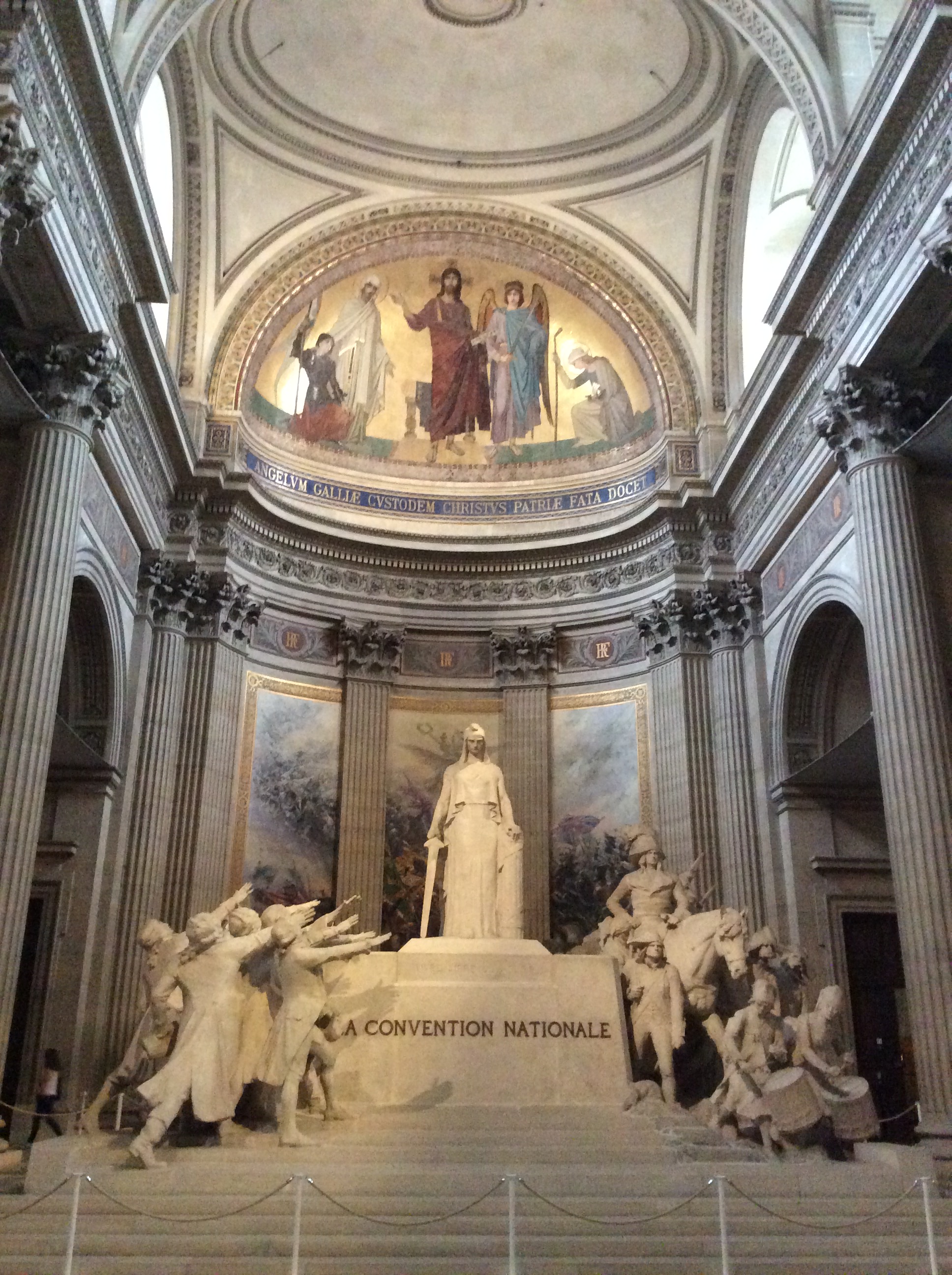
Convention Nationale Sculpture in the Pantheon

As beautiful and perfectly designed as it is on the outside, the inside is stunning. The dome soars high overhead, but right now it’s covered on the inside by a screen showing the faces of people from around the world. It’s currently being renovated, as you can see from the scaffolding and supports around the dome from the outside. It’s massive, and the enormous frescoes add color and light to the place, which is otherwise maybe just a little too dark and somber. It had originally been designed to let in a lot of light, but many of its windows and open spaces were walled up since 1793, four years after Jefferson’s time in Paris, because the architect charged with transforming into a mausoleum thought it should have a more solemn look and feel. The Pantheon was never restored to its original open design, and perhaps the walls remain because the frescoes they contain are just too beautiful to tear out.

Condorcet’s and Abbe Gregoire’s tombs in the crypt of the Pantheon

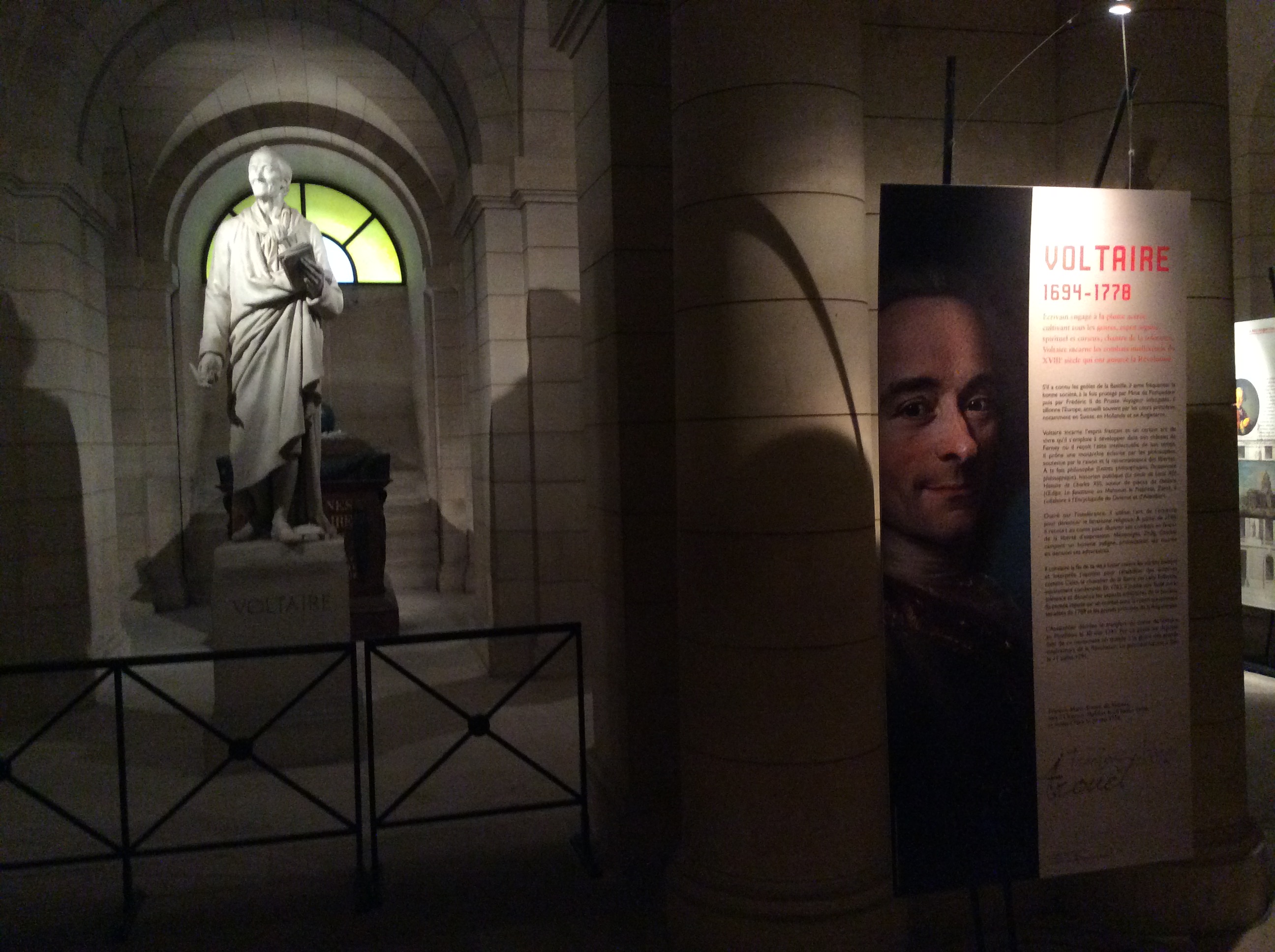
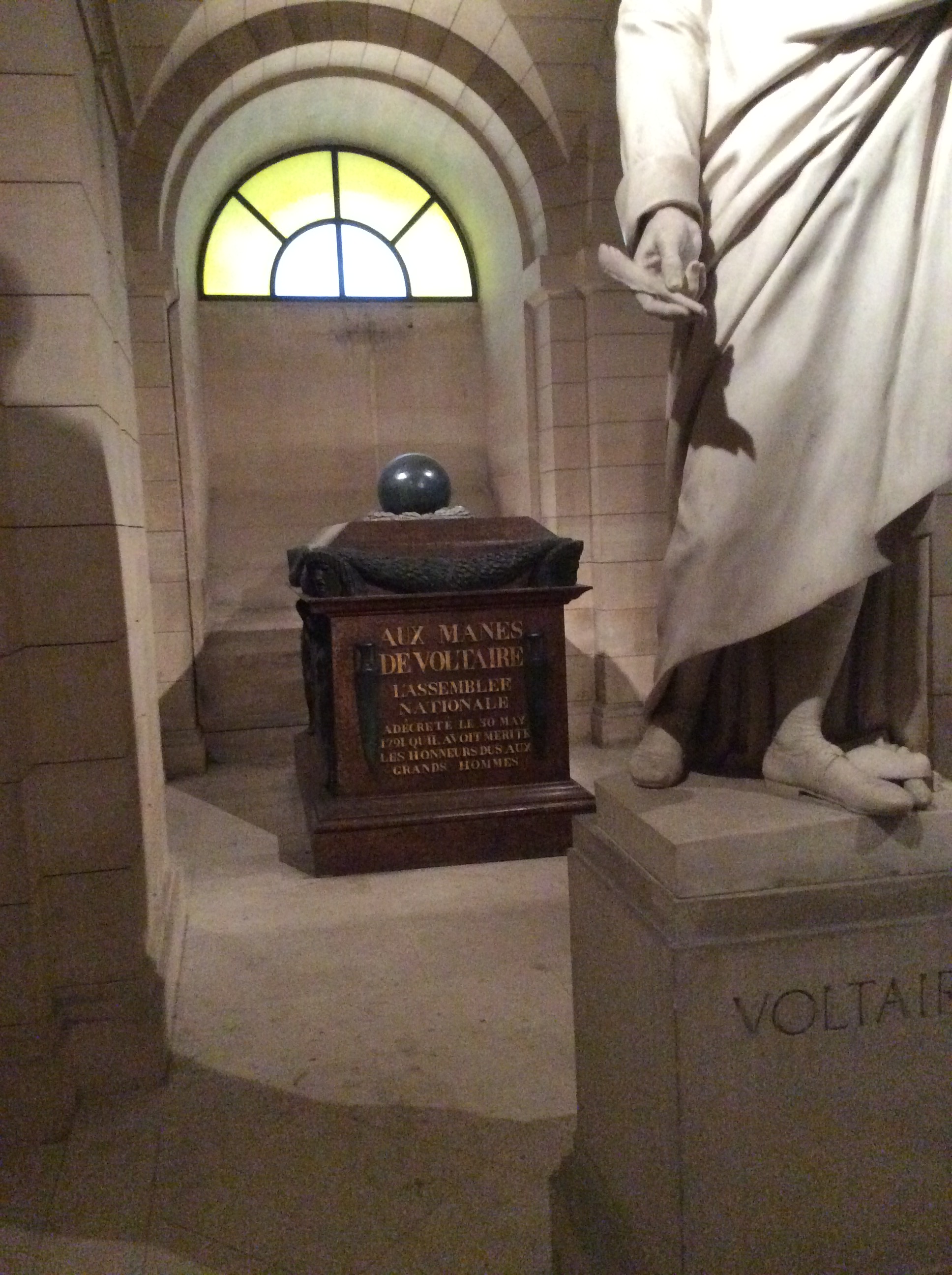
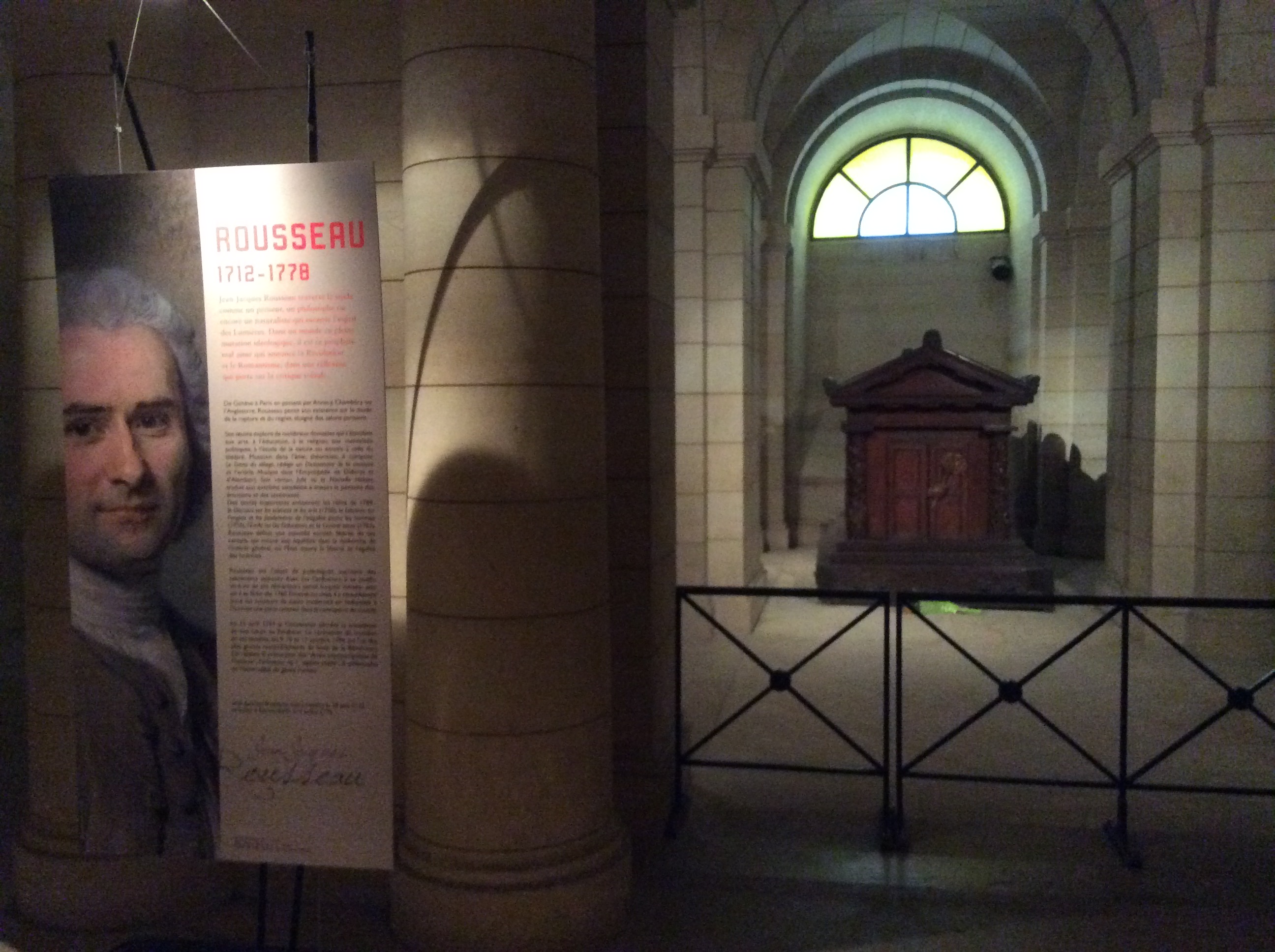
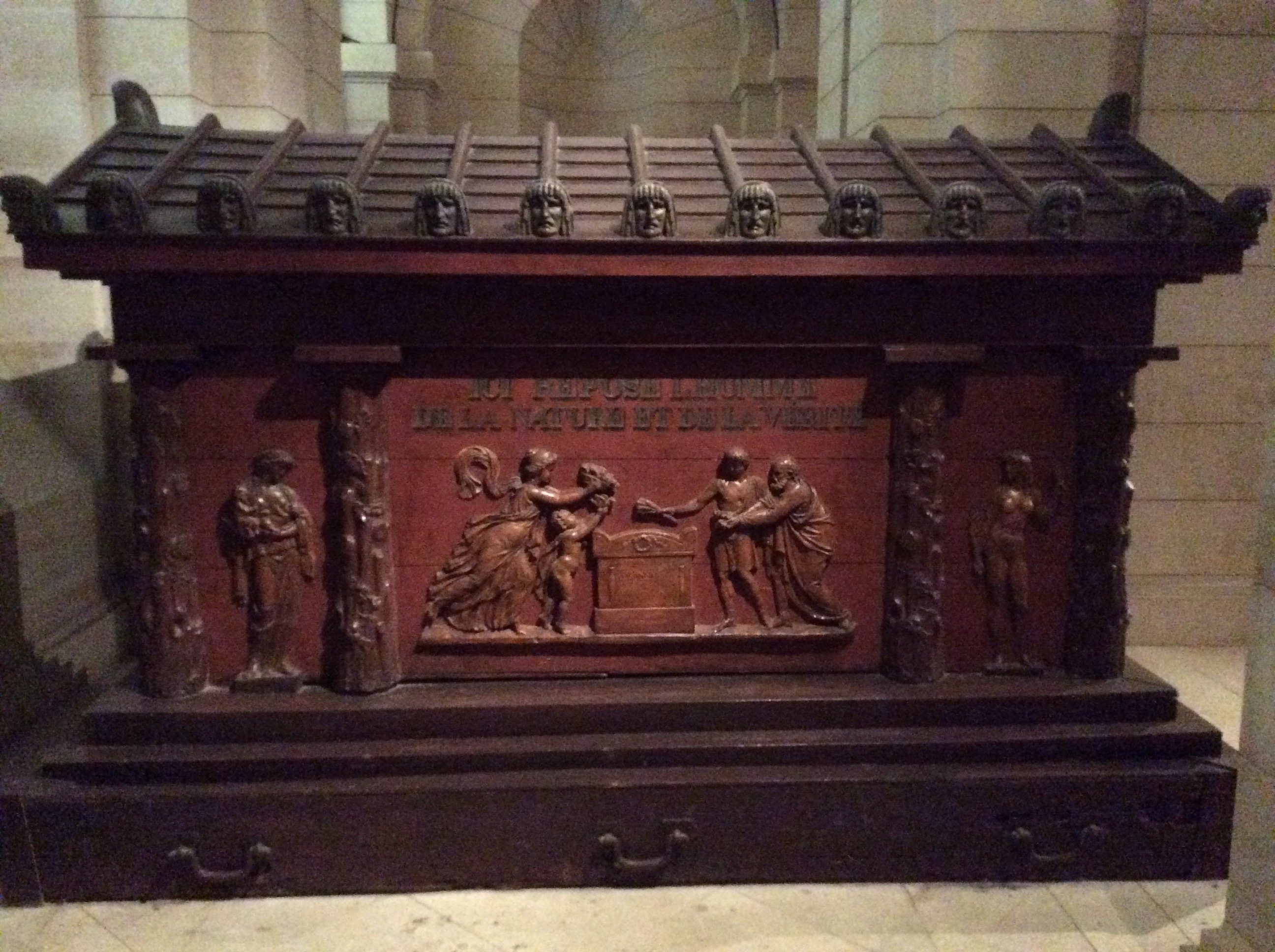
Condorcet’s tomb is here, though his actual remain are lost. Voltaire and Rousseau are actually interred here: their tombs are placed opposite of one another, on either side of the central main aisle of the crypt. They were in many ways opposites in thought: in general, Voltaire emphasized the Head, Rousseau the Heart; Voltaire was a satirist, Rousseau a romantic; Voltaire critiqued all religions, Rousseau though being religious was important but also though all were equally valid: Voltaire loved science and culture, Rousseau thought that all that removed human beings from their raw ‘natural’ selves was corruption, and so on. I love how well thought out their final resting places are arranged: the statue of Voltaire has a genial expression, as if looking around the room, ready to enter into witty repartee with one who has the time to stop and chat. Rousseau has no statue, but the tomb of this incurable romantic is carved with a facsimile of his hand reaching out to offer the world a bouquet of flowers.

All three of my subjects, Paine, Wollstonecraft, and Jefferson, read Voltaire and Rousseau and were very much influenced by them. Wollstonecraft, in particular, was very critical of Rousseau’s views on women, especially regarding education and their ‘natural’ roles in society. Like the others, however, she admired his defense of the natural origins of human rights.

Voltaire’s alcove with statue and tomb in the crypt of the Pantheon, Paris

Voltaire’s tomb in the crypt of the Pantheon

Rousseau’s alcove with tomb in the crypt of the Pantheon

Side view of Rousseau’s tomb in the crypt of the Pantheon

Well, this has been a particularly long, fascinating, and beauty-filled day, yet there is still much more to come of my journeys in Paris. To be continued in Part 4….

~~~~~~~~~~~~~~~~~~~~~~~~~~~

Sources and inspiration:

Adams, William Howard. The Paris Years of Thomas Jefferson. New Haven/London: Yale University Press, 1997.

Bell, David. ‘5 Myths About the French Revolution‘, New York Post, Jul 9th, 2015.

French Revolution.’ Wikipedia, the Free Encyclopedia

Gordon, Lyndall. Vindication:  A Life of Mary WollstonecraftNew York: Harper Collins, 2006.
http://www.harpercollins.com/9780060957742/vindication

Jacobs, Diane. Her Own Woman: The Life of Mary Wollstonecraft. New York: Simon & Schuster, 2001.

Jacoby, Susan. Freethinkers: A History of American Secularism. New York: Owl Books, 2004.

Jenkinson, Clay. ‘The Magna Carta‘. The Thomas Jefferson Hour podcast, episode 1141.

Monnaie de Paris, website.

 Morgan, George. The Life of James Monroe. Boston: Small, Maynard, and Co., 1921
Nelson, Craig. Thomas Paine: Enlightenment, Revolution, and the Birth of Modern Nations. New York: Viking Penguin, 2006.
Soufflot: The Pantheon, Paris.’ Khan Academy
Todd, Janet. Mary Wollstonecraft: A Revolutionary Life. New York: Columbia University Press, 2000
Tomalin, Claire. The Life and Death of Mary Wollstonecraft. London: Weidenfield & Nicholson, 1974.
Williamson, Audrey. Thomas Paine: His Life, Work, and Times. New York: St. Martin’s Press, 1973.

What Philosophical Work Could Be, by Eric Schwitzgebel

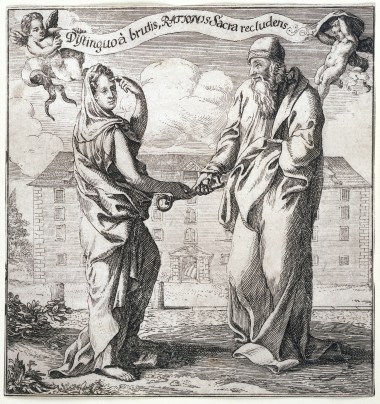
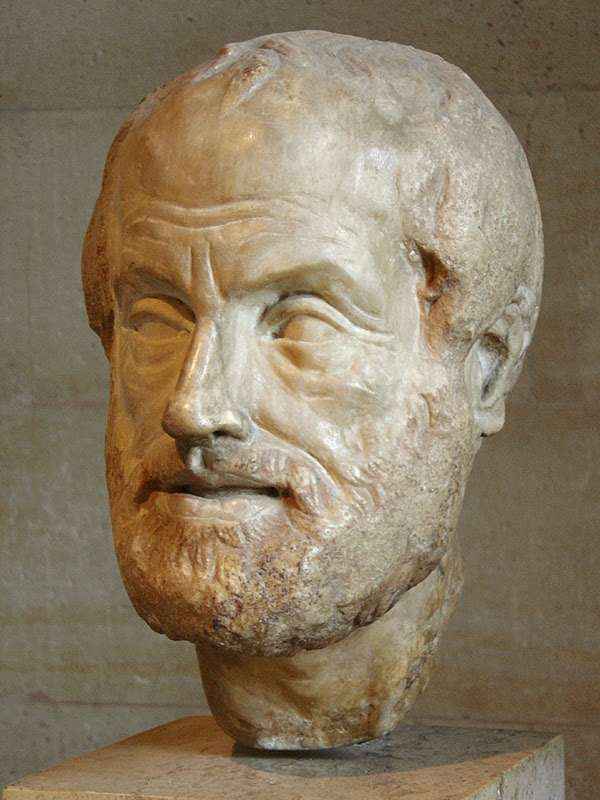
A woman representing Wisdom giving to Aristotle the key to the treasure-house of Reason, to distinguish man from the beasts. Etching. Image public domain via Wikimedia Commons.jpgAcademic philosophers in Anglophone Ph.D.-granting departments tend to have a narrow conception of what counts as valuable philosophical work. Hiring, tenure, promotion, and prestige turn mainly on one’s ability to write an essay in a particular theoretical, abstract style, normally in reaction to the work of a small group of canonical historical and 20th century figures, on a fairly constrained range of topics, published in a limited range of journals and presses. This is too narrow a view.

I won’t discuss cultural diversity here, which I have addressed elsewhere. Today I’ll focus on genre and medium.

Consider the recency and historical contingency of the philosophical journal article. It’s a late 19th century invention. Even as late as the mid-20th century, leading philosophers in Western Europe and North America were doing important work in a much broader range of styles than is typical now. Think of the fictions and difficult-to-classify reflections of Sartre, Camus, and Unamuno, the activism and popular writings of Russell, Dewey’s work on educational reform, Wittgenstein’s fragments. It’s really only with the generation hired to teach the baby boomers that our conception of philosophical work became narrowly focused on the academic journal article, and on books written in that same style.

Consider the future of media. The magazine is a printing-press invention and carries with it the history and limitations of that medium. With the rise of the internet, other possibilities emerge: videos, interactive demonstrations, blogs, multi-party conversations on social media, etc. Is there something about the journal article that makes it uniquely better for philosophical reflection than these other media? (Hint: no.)

Nor need we think that philosophical work must consist of expository argumentation targeted toward disciplinary experts and students in the classroom. This, too, is a narrow and historically recent conception of philosophical work. Popular essays, fictions, aphorisms, dialogues, autobiographical reflections, and personal letters have historically played a central role in philosophy. We could potentially add, too, public performances, movies, video games, political activism, and interactions with the judicial system and governmental agencies.

Philosophers are paid to develop expertise in philosophy, to bring that expertise in philosophy into the classroom, and to contribute that expertise to society in part by further advancing philosophical knowledge. A wide range of activities fit within that job description. I am inclined to be especially liberal here for two reasons: First, I have a liberal conception of philosophy as inquiry into big-picture ontological, normative, conceptual, and broadly theoretical issues about anything (including, e.g., hair and football as well as more traditionally philosophical topics). I favor treating a wide range of inquiries as philosophical, only a small minority of which happen in philosophy departments. And second, I have a liberal conception of “inquiry” on which sitting at one’s desk reading and writing expository arguments is only one sort of inquiry. Engaging with the world, trying out one’s ideas in action, seeing the reactions of non-academics, exploring ideas in fiction and meditation — these are also valuable modes of inquiry that advance our philosophical knowledge, activities in which we not only deploy our expertise but cultivate and expand it, influencing society and, in a small or a large way, the future of both academic philosophy and non-academic philosophical inquiry.

Research-oriented philosophy departments tend to regard writing for popular media or consulting with governmental agencies as “service”, which is typically held in less esteem than “research”. I’m not sure service should be held in less esteem; but I would also challenge the idea that such work is not also partly research. If one approaches popular writing as a means of “dumbing down” pre-existing philosophical ideas for an audience of non-experts whose reactions one does not plan to take seriously, then, yes, that popular writing is not really research. But if the popular essay is itself a locus of philosophical creativity, where philosophical ideas are explored in hopes of discovering new possibilities, advancing (and not just marketing) one’s own thinking, furthering the community’s philosophical dialogue in a way that might strike professional philosophers, too, as interesting rather than merely familiar re-hashing, and if it’s done in a way that is properly intellectually responsive to the work of others, then it is every bit as much “research” as is a standard journal article. Analogously with consulting — and with Twitter feeds, TED videos, and poetry.

I urge our discipline to conceptualize philosophical work more broadly than we typically do. A Philosophical Review article can be an amazing, awesome thing. Yes! But we should see journal articles of that style, in that type of venue, as only one of many possible forms of important, field-shaping philosophical work.

~ Eric Schwitzgebel is a Professor of Philosophy at University of California at Riverside. This piece was originally published on June 11 at his excellent blog The Splintered Mind and re-published here with the author’s permission.

Ordinary Philosophy and its Traveling Philosophy / History of Ideas series is a labor of love and ad-free, supported by patrons and readers like you. Please offer your support today!

Jefferson and Slavery

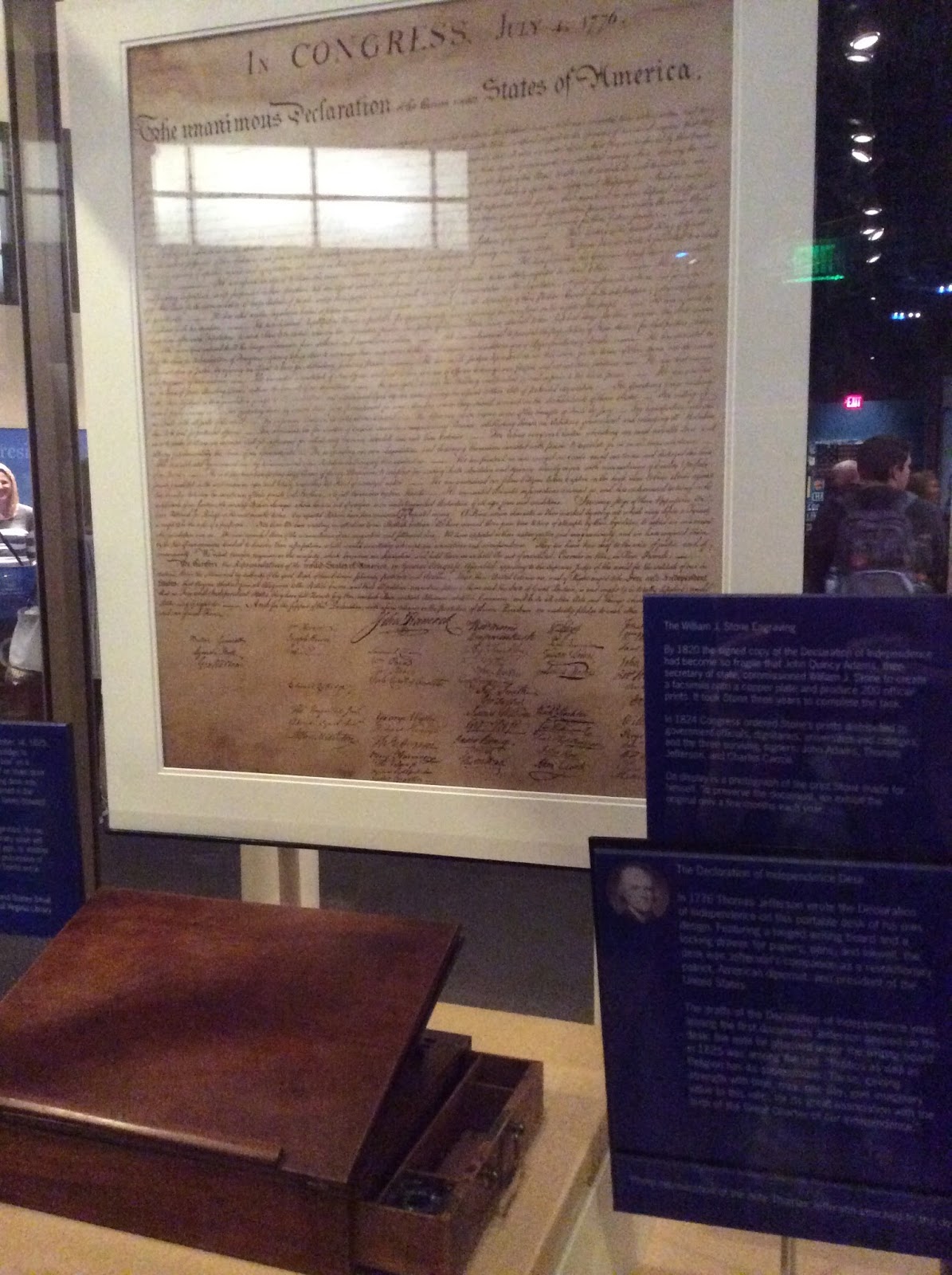
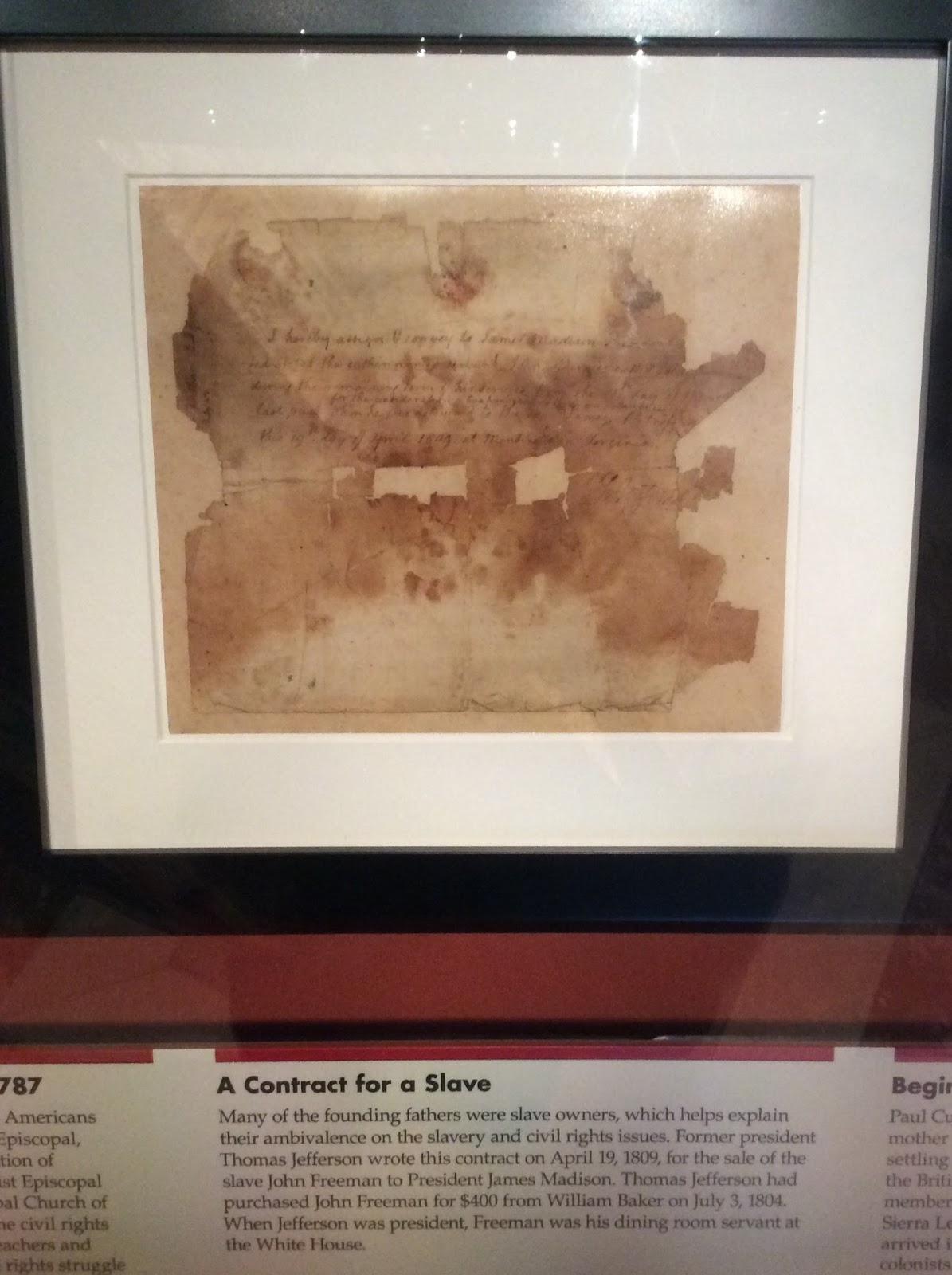
Throughout my history of ideas travel series following Thomas Jefferson, slavery was on my mind a lot: the institution as a whole, and Jefferson’s relationship to it. I was reminded of it constantly: by an original book from his own collection titled ‘The Horrors of Slavery’ now in the Library of Congress, which also displays a slave sale contract between himself and James Madison from 1809; the slave quarters and artifacts at Monticello; museum displays and plaques in D.C., Williamsburg, and Philly; and signs telling the story of his brief but telling correspondence with Benjamin Banneker.

As every student of American history learns early on, Jefferson’s words in the Declaration of Independence and his stated beliefs contrast sharply with his life as a slaveowner. And nearly every place I find something written about Jefferson, this contradiction is addressed but never really resolved.

Jefferson was in favor of the abolition of slavery early in his career as a lawyer and member of Virginia’s House of Burgesses. Having made little headway in the antislavery cause as a younger statesman, he rather abruptly gave up the fight in the 1790’s, proclaiming it unwinnable in his generation. While he continued to argue now and again that slavery was a moral and political evil, he chose to continue the expensive lifestyle of traveling, entertaining, building, and collecting fine wine, books, and art that he loved. This kept him in debt, so he funded it all the the familiar way: he remained a slaveowner for the rest of his life.

When I was in Philadelphia’s Old City, I visited the site of the President’s House and read the posted stories of the enslaved people who lived and worked there during George Washington’s tenure. As I read, I thought of how often I’d heard and read excuses made for Jefferson, Washington, and their fellow slaveowners, another common theme I encountered throughout my trip. Some sought to minimize their moral responsibility for slaveowning on the grounds they were ‘stuck’ in the institution already so they just had to ‘make the best of it’; others claimed that many were actually working on the problem in their own way but had to go slowly because of how entrenched the institution was, and so on. The most common excuse I encountered was that they weren’t really all that bad as slaveowners; in fact, they were benevolent because ‘they treated their slaves so well’, and their slaves were really better off than many free people of the laboring classes.

These ring hollow to me: they all sound like pretty lame attempts to make sense to ourselves of our history as self-professed champions of liberty who have simultaneously oppressed racial, ethnic, and ideological minorities throughout our history. I had read accounts before of Jefferson’s, Washington’s, and others’ so-called benevolent brands of slaveowning, but when I look around at these artifacts and displays, I really can’t see how true benevolence can ever coincide with that institution. As Jefferson himself wrote in his Notes on Virginia, The whole commerce between master and slave is a perpetual exercise of the most boisterous passions, the most unremitting despotism on the one part, and degrading submissions on the other. Our children see this, and learn to imitate it.’

The real answer to that conundrum is: it never made sense, and it never will. Jefferson knew it, evident not only in his embarrassed response to Benjamin Banneker, he said so over and over again, explicitly in some cases, between the lines in others. George Washington knew it too, as evidenced by his changing attitudes on slavery; indeed, all of our nation’s founding generation knew it.

That’s why they fought over the words of the Declaration of Independence, especially the original draft which more plainly revealed the stark contradiction between the colonies’ demand for liberty for themselves while they remained enslavers of others. That’s why they fought over slavery again during the Constitutional Convention and how that weird three-fifths clause got in, because they couldn’t solve the problem of how slaves could be persons deserving representation while neither free nor citizens. That’s why debates over how to treat black Revolutionary war veterans were never satisfactorily resolved, why the John Brown plot happened, why the Missouri Compromise and the Dred Scott decision and the Civil War and the Plessy vs Ferguson decision and the 1963 firehosing of the Baltimore Children’s Crusade and the Baptist Church bombing and the riots in Baltimore in 1968 and again this spring happened, and so on and so on.

The only excuse I’ve heard in defense of slaveowners like Jefferson and Washington that makes a particle of sense on the face of it is that freed slaves would likely have a worse time of it on their own than they might have under their protection. Free black people often did suffer terrible mistreatment, including terrible wages, racist criminal codes, segregation, kidnapping, and re-enslavement; freed slaves often had to choose between living where they had few prospects and leaving their still enslaved loved ones behind. Therefore, the argument goes, the attempts of some conscience-stricken slaveowners to keep their slaves while treating them more humanely were really quite benevolent. 

While there’s evidence indicating some good intentions on the part of some slaveowners, this argument just doesn’t hold up that well either when examined in the full light of history. To his credit, Washington kept more slaves on his plantation than was financially healthy for him so that families would not have to be split up, and tried to work out a way to eventually emancipate all of them with some financial provisions. Jefferson was squeamish about allowing slaves to be beaten in front of him and rarely allowed it, and paid many of them bonuses for good work. It seems on the whole, Washington has a far better record when it comes to gentler treatment and concern for the slaves’ own interests, and he freed all of them in his will though he couldn’t bring himself to do it during own his lifetime. It turns out there’s plenty of evidence Jefferson often had others whip his slaves when he wasn’t there to see it, especially when the profits from his nail business dropped off. And Jefferson’s habit of accruing large debts by his habit of living far beyond his means caused almost all of his slaves to all be sold at his death, and many slave families to be broken up, parents, children, brothers and sisters, wives and husbands torn away from one another. 

And many freed slaves actually did do quite well for themselves, or at least as well as they might have otherwise. Plenty of other plantation owners freed their slaves, and many free black people did very well for themselves in the North, West, and even in some areas of the South. Jefferson and Washington could also have allowed their slaves to make the choice for themselves whether or not they wanted to remain under their protection. They had both (Jefferson earlier in life, Washington later) come to the firm conclusion that slavery was morally wrong. They just couldn’t bring themselves to make the hard choices and personal sacrifice to fully act on their convictions.

So it’s not that, as the cliche goes, that we’re judging Jefferson, Washington, and other slaveowners by the standards of our own time, not theirs. Here’s what makes it all the more painful and injurious to our American self-image as bearers of the standard of liberty: we’re judging these Founding Fathers by their own standards, and by the standards of others in their own time, those principled lovers of freedom who did free their slaves, who decided to do the difficult but the right thing, according to the principles of the Declaration and those Washington professed later in life.

As to the issue of ‘treating their slaves so well’: consider what really went into keeping people enslaved besides whippings.

Slaves were denied the chance to make their own decisions and to enjoy the full range of human relationships that free and happy people need. The marriages of slaves were not held sacred by their masters and they could not enjoy the security of family bonds and affection. At any time, wife, husband, sister, brother, parent, and worst of all, children could be taken and sold elsewhere, never to be seen again. This happened all the time, since there was no plantation large enough to hold exponentially increasing slave families. They were provided no incentive to enjoy fulfilling occupations, since they are denied the fruits of their labor, they had a narrow field of roles to choose from or none at all (surely noone chose to be a field hand!) and there was not much personal reward for a job well done. They could be and very often were whipped, denied food and other necessities, and otherwise punished for any infraction, despite wishful hypotheses that slaves were too financially valuable to be treated badly. (Sorry, Pollyannas, history’s not on your side). They often were treated harshly even if the plantation owner didn’t desire or order it because slaveowners relied on their overseers, which they couldn’t watch most of the time, to get results.

And worst of all, because it left slaves most vulnerable to every sort of oppression and robbed them of great solace, slaves were denied education, especially higher education. Enforced ignorance was one of the surest ways to keep slaves from plotting escapes and revolts, to keep them from learning about the wider world they could wish to be a part of, from learning moral and religious arguments against slavery, and from the prospect of a good job if they ran away.

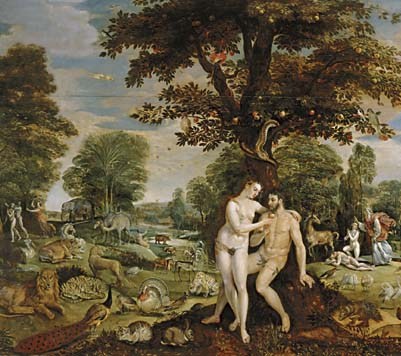
The Bible was often used to justify slavery: there are many instances of slavery in the Old Testament that Yahweh seems perfectly comfortable with, and Paul advises slaves to be obedient to their masters and to return to them if they ran away. Paul does say you should be nice to your slaves, but that’s the farthest his morals go in the matter. Like the myth of the Garden of Eden, Paul tries to instill in his readers a particular moral virtue. But if Jefferson, Washington, and their fellow slaveowners had read their Genesis a little more carefully, they might have discovered that there’s more there than a simple morality tale about obedience.A closer reading of the Garden of Eden story reveals a much deeper insight: human beings of spirit and will, of wit and intelligence, of curiosity and integrity always have, and always will, long for knowledge and self-determination. And they must and will have it, even if danger, privation, suffering, or destruction be the price.

~~~~~~~~~~~~~~~~~~~~~~~~~~~~~~~~~~~~~~~~

Sources and Inspiration:

‘Benjamin Banneker’, Africans in America, PBS.org
http://www.pbs.org/wgbh/aia/part2/2p84.html
Letter to Jefferson: http://www.pbs.org/wgbh/aia/part2/2h71t.html
and Jefferson’s response: http://www.pbs.org/wgbh/aia/part2/2h72t.html

Gordon-Reed, Annette. Thomas Jefferson and Sally Hemings: An American Controversy.
Charlottesville: University of Virginia Press, 1997. https://books.google.com/books/about/Thomas

Meacham, Jon. Thomas Jefferson: The Art of Power. New York: Random House, 2012.
http://www.jonmeacham.com/books/thomas-jefferson-the-art-of-power/

Thompson, Mary V. “The Private Life of George Washington’s Slaves”, Frontline, PBS.org
http://www.pbs.org/wgbh/pages/frontline/shows/jefferson/video/lives.html

Wiencek, Henry. ‘The Dark Side of Thomas Jefferson’, Smithsonian Magazine, Oct 2012.
http://www.smithsonianmag.com/history/the-dark-side-of-thomas-jefferson-35976004/

Welcome to the Podcast Edition of Ordinary Philosophy!

Hello dear readers, and welcome to the
podcast version of Ordinary Philosophy!

You can listen to the podcast here, on Google Play, or subscribe in iTunes.

Like many of you, I’m a big fan of podcasts, mostly because my life is very busy. One day in the future, I hope to have a lot more time to do each task one at a time, to really be present, as they say, as I wash the dishes, straighten the house, do the laundry, and perform all those other tasks that take up time, but not much thought.

But at this time in my life, between my day jobs, my creative projects, and spending time with friends and family (which I don’t do enough of these days, sadly), I don’t have enough time to keep up the world of ideas as nearly much as I’d like to by sitting down and reading. Instead, I keep myself informed and increase my education by listening to lots of podcasts: discussions with my favorite authors and thinkers, audio renditions of books and essays, debates, recordings of classes on my favorite subjects, and so on. I listen to these podcasts while doing those aforementioned chores, and let me tell you: as one who is not fond at all of household chores like doing the dishes and washing the floor, the podcast is a marvelous invention: they transform boring chore time into great opportunities for learning and exploration. I’m also an avid hiker, and it’s a wonderful thing to be able to immerse myself in some fascinating ideas or discussion as I immerse myself in the beauties of nature.

To begin with, this podcast will simply consist of audio recordings of my Ordinary Philosophy pieces. Over time, I may add commentary and who knows, perhaps interviews and discussions with guests. We’ll see how it goes. In the meantime, here’s Ordinary Philosophy in audio form: I hope you find it interesting and enjoyable!

… And here’s episode 2: Is the Market Really the Most Democratic Way to Determine Wages?
Originally published as an essay Feb 6th, 2014

Hume, Aristotle, and Guns

Photo 2014 by Amy Cools

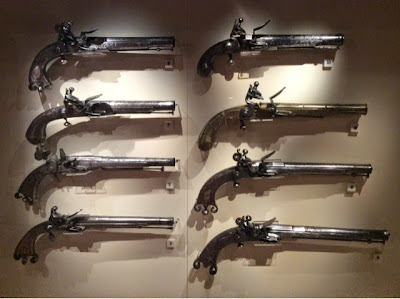
Antique firearms at the Scottish National Museum, Edinburgh

I’ve been mulling over the issue of ‘gun rights’ for some time now. It’s a pressing issue here in the United States, since more people are injured and killed by citizens wielding guns than in any other state with a stable government and a thriving economy.

It’s also a divisive issue, as it’s generally argued in terms of liberty, a core value in our culture and politics. One side emphasizes the right to self-defense, the other the right to freedom from fear and from the pressure to join the arms race. And whether or not people chose to arm themselves, their fellow citizens feel that they are placed under some kind of obligation or burden as a result.

From the anti-gun perspective: if at least some of your fellow citizens are armed, then you are forced into a position where you must arm yourself too whether you’d like to or not, or remain at their mercy. After all, in a moment of greed, anger, zeal, fear, mental illness, hate, or accident, one person with a gun can permanently remove all freedoms that another could ever enjoy, within seconds, with the simple squeeze of a trigger. When another is armed, they have the potential power to wield complete control as to whether you live or die, and to force you to act according to their will, and against your own.

From the pro-gun perspective: if your fellow citizens choose not to arm themselves, you leave all the work of crime deterrence up to gun owners. Not only that: since a gun is the most effective weapon which can be wielded by a person of nearly any degree of strength, it’s the only available method for many who feel the need to defend themselves and others. In other words, it’s the one real equalizer: anyone with a gun has as much power as any other, so long as they know how and when to use it.

What would help us decide how to settle this, since the freedom to live the life we want, and the freedom to live at all, are in direct conflict here? We’re still figuring it out here in the US. Some nations have chosen in favor of individual gun rights, and others have disarmed their citizens, with varying results. While, generally speaking, nations and states with low gun ownership rates have much lower rates of gun violence, there are some exceptions. The gun rights dilemma, therefore, is not simply and immediately solved through legislation designed in favor of one set of rights issues over another.

Putting the conflicting liberty and rights issues aside for the moment, perhaps it would help to consider the relevant moral issues. Here, we can look beyond local, cultural considerations to a broader source of guidance as to what we should do about guns. What does it mean to be a good person, a virtuous person, and how do we cultivate that in ourselves and in each other? How does a society cultivate that in its citizens? Can these and other considerations help us decide what’s right, morally, when it comes to the rights and responsibilities of owning a gun? What should we do about it? Is it right or good for people to hold so much power over life and death? Permissive gun laws, which make it easy for responsible gun owners to trade in guns, also make it easier for members of drug cartels and other criminals to get their hands on them, too; that being known, are those laws right?

I think two of the greatest thinkers on morality and virtue, David Hume and Aristotle, can do much to help us discover some answers to these questions. Let’s explore their ideas, look for some answers there, and see how they fit with modern discoveries in behavioral science, psychology, and neuroscience.
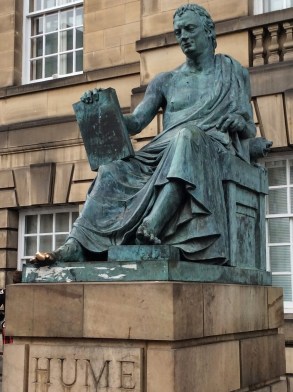
According to David Hume, morality originates in the ‘passions’, or feelings. We can see ourselves as naturally moral creatures, since we come equipped with those emotions, those motivations, that make morality possible. We demonstrate altruistic, ‘pro-social’ (not Hume’s term, a more modern one), even as children, though we develop our moral character as we grow, through life experience, conversation with other moral beings, and by acquiring and developing the use of reason. For example, from the earliest age, we approve of kindness and disapprove of cruelty. We desire happiness, love, and generosity, and detest pain and avoid selfish people; we crave learning, and enrichment, and the approval of others. Those ‘sentiments’ ennoble us, and are responsible for that which is best in our characters. Yet the emotions we come equipped with are not sufficient, in themselves, for a morally developed person. Reason also plays a key role, enabling us to universalize and expand morals, and to apply these needed in any given situation.

Yet morality cannot be founded on reason alone: as Hume points out, reason is the means to means to link one true proposition with another, but cannot, on its own, show us what to value, or make us care about each other or anything else. It’s moral feeling, the passions, that provide the motivations, and provide reason the materials to work with to develop our morality. So as we grow up, we learn to develop our moral instincts, to ‘expand our moral circle‘ through conversation and the use of reason. By spending time with others, by being exposed to diverse ways of thinking and being, we learn that others have emotions and interests just like we do, that are just as important to them as ours are to us. Emotionally, we empathize with others; rationally, we know that what we expect of others is no more or less than what we must demand of ourselves. A very young person has the instincts for morality, but prior to experience of the world and the use of reason, it’s a very limited morality, or can even be considered a sort of proto-morality. Experience of other moral agents, through discourse with them, reveals there are others whose feelings and interests matter just as much to them as ours do to us, and finally reason shows that there is not particular reason to favor oneself over another when determining moral rules and guides of behavior. A morally good person, then, will seek to be pleasant and generous, to make others happy and improve their well-being, to respect and protect their interests as much as possible, just as we desire and expect they will do for us.

Hume’s account of how morality works, combined with the body of knowledge we’ve discovered since his time, reveals that it’s as much a natural part of the makeup of the human personality as any other, as are creativity, romantic passion, mother love, curiosity, and hunger, as well as (sadly!) rapacity and cruelty. A natural explanation of morality does not require a complex suite of arguments to found its origins in logic and reason, nor does it require some cause outside of ourselves, as traditional explanations claimed. To find out what morality is and how it works, we observe human beings, how they act and how they desire themselves and each other to act; we explain how and why morality developed as a natural adaptation for human beings; and we apply reason to determine what kinds of mindsets, rules, and behaviors lead to their flourishing.

Behavioral, biological, and evolutionary sciences have, over the years, lent support to Hume’s explanation of morality. Rebecca Saxe and Alison Gopnik, among others, has closely observed the behavior of infants and very young children over time, and has gathered a large body of evidence that people demonstrate moral instincts from the very earliest age, recognize that others are moral beings with their own interests and emotions just like us, and make moral judgments accordingly. Evolutionary psychology (Darwin considered Hume one of his great influences), in which morality is considered as much an adaptation as our opposable thumbs and long limbs, inherit much from Hume’s account. In fact, Hume is widely considered a founder of naturalistic moral theory, and a father to modern cognitive science.
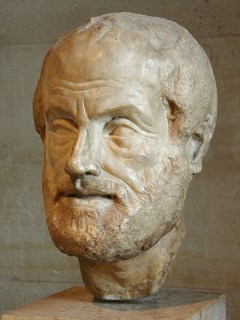
Aristotle’s grounds the origin of morality more on reason, though his theory is founded, like Hume’s, from his observation of the world and how people behave. His elegant ‘function argument’ is the centerpiece of his moral theory. When you consider what something is for, and observe what it does and how it functions, you’ll know where to start. The quality of goodness in material things is closely related to the quality of goodness when it comes to actions and moral feelings. A musical instrument is for making music; therefore, an excellent, or good, musical instrument is that which produces the best music. Further, if we consider a case in which we’re deciding who the musical instrument should belong to, it would be the right thing to do to give it to the best musician. Not to the nicest person, or the one who can pay the most for it, or even to the person who made it; those considerations are irrelevant since none of those have anything to do with the proper function of the instrument.

To Aristotle, reason is the one definitive human trait that no other creature on earth possesses. That’s what we do uniquely, and what we’re best at, or at least, that’s what we do when we’re at our best. So what we should do, the moral thing to do, is what’s most reasonable, what’s most in keeping with our nature as reasonable beings. What helps us recognize that, in turn, is called the ‘Golden Mean’: consider all those traits we have, see how they fall on a spectrum, and we will see that the virtue consists of the happy medium between extremes. For example, bravery would be the virtuous golden mean between cowardice and recklessness, love between disdain and fawning or obsession, and so on. (Fun fact: Hume himself placed great importance on moderation, temperance, and fairness, eschewing divisive party politics, for example, as if it was part of his mission to live out the ideal of the Golden Mean!)

Making the leap from the function of a thing which is an artifact of intentional human creation, to the function of a human being itself, is quite a leap. Aristotle recognized this and sought to address it, but did not yet have the modern knowledge of the theory of evolution, and of evolutionary psychology, and how well they account for the origin and development of moral virtues such as kindness, sympathy, generosity, bravery, and so forth. Nor did Hume, but he did not consider it justified to form conclusions by building a logical case as far removed from original observations as many who followed Aristotle later. Hume saw human beings as much a product of the natural world as any other, and their nature as fully explicable in those terms. So leaving the function argument aside for the time being, let’s consider another important contribution of Aristotle’s to moral philosophy: the importance of habit.To Aristotle, habit is essential to the practice of virtue. By emulating virtue, we habituate ourselves to it. Over time, morality, the practice of virtue, becomes second nature. Here, Aristotle proves himself a keen observer of human psychology, and his emphasis on habit as a central driving force behind human thought and behavior, as well as something which can be deliberately instilled through practice, is confirmed by the findings of modern psychologists and neuroscientists. A recent article in Scientific American outlines some of the ways in which habits are formed, and how necessary they are if we wish to improve our behaviors systematically. Cognitive behavioral therapy, now widely considered among the most effective ways to overcome addiction and anxiety-depression, among other disorders, is also founded on these scientific discoveries.

Here’s where I find a link between these two moral theories: Aristotle’s emphasis on habit works hand in hand with Hume’s account of how moral sentiments arise from human psychology. Whether it be from habit or other mental processes we are naturally equipped with when we achieve consciousness, moral behavior is largely a spontaneous reaction to the situation at hand. Early in our development, as Saxe and Gopnik describe, a basic set of moral instincts are included in human consciousness in its earliest stages. As Hume observes, experience and reason help us expand, develop, and perfect our moral characters over time; the moral character, as Aristotle recognizes, is the set of, and relationships between, the virtuous habits we’ve cultivated through practice.

This also consistent with other findings of modern neuroscience and psychology. The way we tend to act in any given situation, the emotions and motivations that arise in us as we respond to stimuli, are formed as we react to circumstances, and by engaging in patterns of action, reactions, thoughts, behavior, we create mental channels, so to speak, or ‘paths of least resistance’, which predict our reactions, our thoughts and behavior, given similar circumstances. We usually act and think in accordance with how we’ve been given to act and think before, and only change when some new consideration(s) arises that makes us stop and consider whether to do something else this time. These considerations, the combination of reason and emotion (how do I act that will make me feel good about it, given the consequences of my actions for myself and others? How did the decisions I made last time the sort of thing came effect me and the world around me? How do others act in these situations, and what are the effects then?) inform how we habituate ourselves to new and improved moral actions and reactions.

Let’s pause for a moment. So far, we have these two thinkers’ descriptions of morality and virtue, supported by the findings of modern psychology and neuroscience.  Hume and Aristotle show us where they think we should look for virtue, how to recognize it, how to describe and explain it, and where it originates. In other words, they are engaged in metaethics. But as you may have noticed, this tells us only how people actually do think and behave; what about telling us what we should do? What are the criteria for deciding what’s right and what’s wrong?
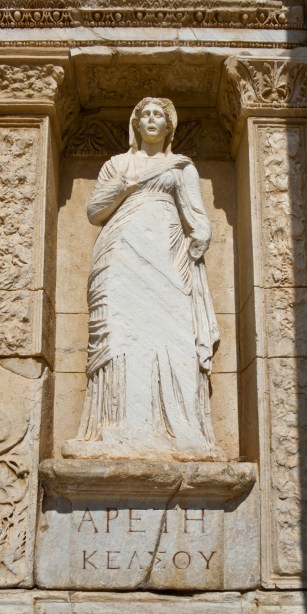
Arete (Virtue)

I think Hume and Aristotle point us in this direction: human beings not only do, but should habituate themselves to those practices which form in us the best moral character. While both men don’t explicitly tell how we can definitely say what’s right and wrong, they go to great lengths to show us what an admirable character looks like, and how they think and behave. I think they do so in order to reveal to us not only how we could be, but how we should be. In his writings as well as by example (he was widely known to have a particularly admiral character), Hume emphasizes such virtuous sentiments as sympathy, sociability, amiability, beneficence, generosity, and so on, and advocates the cultivation of these traits, especially through conversation and spending time in the company of others, especially those who can broaden your understanding of the world, and by avid reading and study of philosophy, literature, and history. Aristotle emphasizes the virtue of moderation in all things, of wisdom, self-control, courage, and nobility. Both men emphasize, to the highest degree, the use of reason, and the value of its careful and consistent application in all matters of life. It appears that they go through all this trouble not only to show us what a good person looks like, but to offer us something to aspire to: the formation of an excellent, moral character, which leads to the best life a person can achieve.

So, finally, we return to the gun issue. What does all this have to do with owning them, and using them? What does this have to do with what we observe in human behavior when people own guns? How about when people value, or even glorify, guns?

Let’s return to the consideration of the evidence, which can reveal how attitudes and practices relating to guns manifest themselves in human behavior; in other words, what habit or habits does a gun-owning society promote?

There are conflicting statistics to when it comes to gun-related behavior. For example, people in the United States own almost twice as many guns per-capita as Canadians and Germans. Canada and Germany, in turn, have a much higher rate of gun ownership compared to most other developed nations. Yet among these three nations, the United States has a far higher gun-related death rate, about four times that of Canada, and about 8 times that of Germany, though the three share many key cultural and political traits: they are democratic, capitalistic, and culturally and historically Christian. There are also examples where lower gun-related death rates correlate with higher per-capita gun ownership. This is the case for some states in the U.S, and for Switzerland, a country that, interestingly, imposes a requirement on all households to own a gun.Yet given such outliers, most states in the US, and most countries in the world, see a strong correlation between lower rates of gun-related death and injury and lower rates of gun ownership. The U.S. ranks near the top in gun-violence rates, just under Mexico’s, a country overrun with trigger-happy drug cartels, and outranked almost entirely by countries with weak, unstable governments, poor human-rights records, and high rates of poverty and income inequality. The very lowest rates of all, by contrast, are enjoyed by those countries who possess a high degree of personal liberty and human-rights protections while at the same time restrictive gun-ownership privileges, or none at all. Even in Switzerland, often cited by gun-rights advocates as an example of how high rates of gun ownership can correlate with low levels of violence, there are 16 times as many gun deaths as in the U.K, and 64 times as many as Japan. The rates are low in Switzerland only as compared with the most violent countries, but not in comparison with the least violent.

Photo 2014 by Amy Cools

Antique long guns at the Scottish National Museum, Edinburgh

Returning to the liberty issue for a moment, it seems that overall, since you must be alive to enjoy any liberty at all, liberty is best served when there aren’t many guns around. When a fight ensues, or the home is broken into, or a child has figured out how to get into a locked cabinet, or a person goes on a violent rampage due to mental illness, few, if any, people actually end up dying or disabled when there’s no guns nearby to reach for. It’s relatively difficult and messy to kill someone with a knife and other non-gun weapons, and the planning that goes into other kinds of homicide, like poisoning, gives people more time to consider the consequences of their action, decreasing the chance they’ll go through with it, or decreasing the chances of success at homicide.

As we’ve seen, however, the liberty issue can’t be the only determining factor in deciding the gun issue, since liberty considerations conflict so sharply when one’s liberty interests run counter to another’s. There are still compelling arguments to be made that individual liberty requires the right for each person to make their own decision in the matter, from the right to self-protection and self-determination. There’s also the fact that there are some states and countries where higher rates of gun ownership do correlate with low gun violence, especially in places where the population is more homogeneous, ethnically, religiously, racially, economically, and so on, even if they are relatively few. Conversely, there’s the liberty considerations of those who wish to be free from the fear of coercion and bodily harm, ever-present dangers that usually result from a heavily armed population, as the statistics reveal.

This is where the law comes in. One main purpose of the law is to defend the rights and liberties of the citizenry at large, and this involves protecting citizens from each other. A population is always composed of people who have conflicting interests, needs and desires, so to keep a society functioning, prosperous, and harmonious as possible, the law (ideally) is crafted to balance the rights, responsibilities, and interests of each citizen, impartially, with the other.Another purpose of the law is to codify, universalize, and enforce the mores of a given society, or at least those that harmonize with the principles of justice, equality, liberty, and so on that are central to the political system of that society.And last but not least, the law encodes a system of rights, responsibilities, and prohibitions, the practice of which is requisite to being a good citizen. In other words, the law is a society’s (in a democracy, the people’s) way to habituate its citizens to those practices which form a virtuous, a good citizen.

Gun law is no exception. Prior to passing laws relating to gun ownership, there are societal attitudes towards guns that people possess, cultivate, and enforce not only through custom and discourse, but eventually through law. Famously, in the 1990’s, the Australian government, with widespread support from its citizens, collected and destroyed a large proportion of the country’s firearms, and imposed restrictive gun laws. These laws were a direct result of the public’s horrified reaction to a series of gun-related mass murders that had happened in the decade prior. The public’s new attitude towards guns was made manifest in the law. It’s still in debate whether the sharp decline in gun violence that followed the new laws were a result of the laws, or vice-versa. It appears most likely that it’s some combination of the two: after all, as we’ve observed throughout history, there’s a feedback loop between the law and a society’s moral progress.
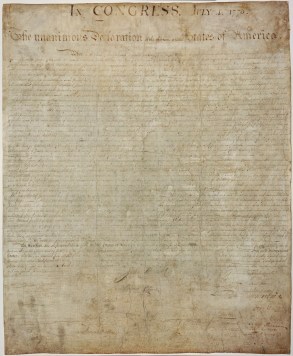
Consider the history of civil rights legislation in the United States: desegregation and other civil rights protections happened gradually, with each disenfranchised group demanding the full rights of citizenship, despite the current will of the majority to keep those groups subjugated and oppressed. Over time, the use of reason (in these cases, legal reasoning) and consideration of the values underpinning the foundational political philosophy and documents (in this case, the Declaration of Independence and the Constitution) led to new laws which not only enforced better practices, but habituated citizens to more virtuous thought and behavior, often in spite of themselves. We see this time and time again in American history: the disenfranchisement and oppression of black people, religious minorities, the poor and non-landowners, women, Jews, gay people, and so on, once common practice, came to be looked upon with righteous distaste, worthy of contempt. In so many of these cases, it was the law that changed commonly held attitudes, more than the other way around, and the change in attitudes and behavior often happened far more quickly than it would have otherwise if the practice of virtue wasn’t inculcated through law.

In sum: Considering the lessons of history, the evidence of the current states of affairs in which high gun-ownership rates correlate strongly with destructive attitudes and behavior when the entirety of the evidence is considered, and how the wisdom of two of the greatest moral thinkers is confirmed by the findings of modern science, I think that laws restricting, even eliminating, gun ownership by most individuals help lead to a wiser, more prudent, more beneficent, more amiable, more free society.

What do you think?

Ordinary Philosophy and its Traveling Philosophy / History of Ideas series is a labor of love and ad-free, entirely supported by patrons and readers like you. Please offer your support today!

– I’d especially like to thank Guy Fletcher, Lecturer in Philosophy at the University of Edinburgh, who kindly gave me some of his valuable time (despite it’s being finals week), invaluable insights, and excellent pointers regarding the subjects covered in this essay, especially in reminding me to make clearer the distinctions between meta-ethics, morality, and ethics.

~~~~~~~~~~~~~~~~~~~~~~~~~~~~~~~~~~~~~

Sources and inspiration:

Aristotle. Nichomachean Ethics. About 350 BC. 

Boseley, Sarah. ‘High gun ownership makes countries less safe, US study finds‘. The Guardian, Sep 18, 2013.

De Waal, Francis. The Bonobo and the Atheist : In Search of Humanism Among the Primates, 2013.

Gopnik, Alison. The Philosophical Baby, 1998.

Haidt, Jonathan. The Righteous Mind, 2013.

Hume, David. A Treatise of Human Nature, Volume III – Of Morals. Printed for Thomas Longman in London, England, in 1740. (I had a glorious time referring to versions published in Hume’s own lifetime during my trip to Edinburgh!) Online version: http://www.gutenberg.org/files/4705/4705-h/4705-h.htm

David B. and Stephen D’Andrilli. “What America can learn from Switzerland is that the best way to reduce gun misuse is to promote responsible gun ownership.” American Rifleman, Feb 1990

Kraut, Richard, ‘Aristotle’s Ethics‘. The Stanford Encyclopedia of Philosophy, 2014 

Morris, William Edward. ‘David Hume‘. The Stanford Encyclopedia of Philosophy, 2009.

Saxe, Rebecca. ‘How We Read Each Other’s Minds‘. TED talk, 2009

Tucker, Abigail. ‘Are Babies Born Good?’ Smithsonian Magazine, Jan 2013.