Happy Birthday, Rosa Luxemburg!

Rosa Luxemburg, By unknown photographer around 1895-1900 [Public domain], via Wikimedia CommonsRosa Luxemburg, Mar 5 1871 – Jan 15 1919, was the Marxist theorist, writer, economist, revolutionist, anti-war and anti-capital-punishment activist, and philosopher who was murdered during the German Revolution of 1918–1919.

Though she was an anti-war activist, Luxemburg was also critical of the idea that a just society can be brought about by incremental reforms through established political systems. If she was to be involved in the 2016 Democratic primary race between Hillary Clinton and Bernie Sanders, she would very likely have backed Bernie, with his more revolutionary style and rhetoric: she was sharply critical of the Social Democratic Party of Germany, to which she belonged (in its left wing) for favoring a Clinton-style within-the-system, gradual reformist approach. However, Luxemburg’s internationalism takes Marxist thinking beyond the point where leading Marxists of her day had progressed, with their focus on unique formulations of Marxist political theory tailored to their own particular national identities and histories. She would likely find fault, then, with Sanders’ protectionism.

Luxemburg’s other great contribution to Marxist thought is her theory about the accumulation of capital. Since capitalism’s primary fuel is constant and ever-increasing consumption, she thinks it’s a mechanism for the ultimate destruction of our material capabilities to sustain ourselves, starting with the ecosystems on which indigenous people, the poor, and the working class depend. Here as well, her progressive thinking takes her far beyond Marx himself, and her concerns in this timely issue make her as relevant now as ever.

Read more about the brilliant and fearless Luxemburg:

The Crisis of German Social Democracy (The Junius Pamphlet) ~ by Rosa Luxemburg, 1915

‘The Dialectic of the Spatial Determination of Capital: Rosa Luxemburg’s Accumulation of Capital Reconsidered’ ~ by Peter Hudis for Logos: A Journal of Modern Society & Culture

Rosa Luxemburg: Polish-German Revolutionary ~ by Helmut Dietmar Starke for Encyclopædia Britannica

‘Who’s Who: Rosa Luxemburg’ ~ at First World War.com

Ordinary Philosophy and its Traveling Philosophy / History of Ideas series is a labor of love and ad-free, supported by patrons and readers like you. Please offer your support today!

Happy Birthday, Watsuji Tetsurô!

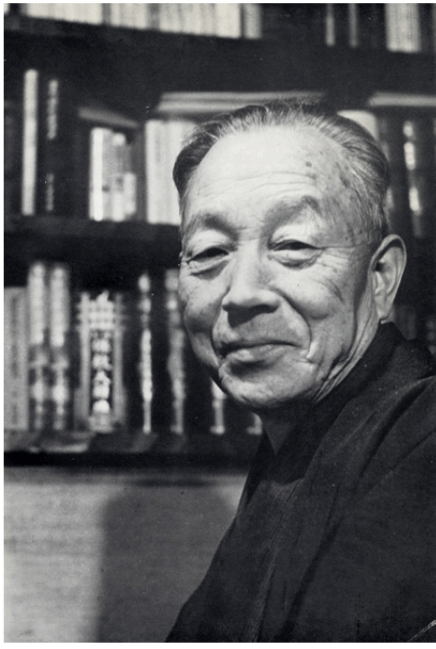
Tetsuro Watsuji, photo via Alchetron, Creative Commons CC BY-SA

Tetsuro Watsuji, photo via Alchetron, Creative Commons CC BY-SA

Let us remember the philosopher Watsuji Tetsurô on the anniversary of his birth, March 1, 1889.

Robert Carter and Erin McCarthy write for The Stanford Encyclopedia of Philosophy:

Watsuji Tetsurô was one of a small group of philosophers in Japan during the twentieth century who brought Japanese philosophy to the world. He wrote important works on both Eastern and Western philosophy and philosophers, from ancient Greek, to Schopenhauer, Nietzsche, Kierkegaard and Heidegger, and from primitive Buddhism and ancient Japanese culture, to Dōgen (whose now famous writings Watsuji single-handedly rediscovered), aesthetics, and Japanese ethics. His works on Japanese ethics are still regarded as the definitive studies.

Influenced by Heidegger, Watsuji’s Climate and Culture is both an appreciation of, and a critique of Heidegger. In particular, Watsuji argues that Heidegger under-emphasizes spatiality, and over-emphasizes temporality. Watsuji contends that had Heidegger equally emphasized spatiality, it would have tied him more firmly to the human world where we interact, both fruitfully and negatively. We are inextricably social, connected in so many ways, and ethics is the study of these social connections and positive ways of interacting…

Read the full SEP bio of Watsuji Tetsurô here

… and learn more from and about this philosopher who thought and wrote so deeply about personhood and our place in the world, and one who bridged Eastern and Western thought:

Climate and Culture: A Philosophical Study – by Watsuji Tetsurô

Summary / SUNY Press page for Rinrigaku (Ethics) by Watsuji Tetsuro (translation by Seisaku Yamamoto and Robert E. Carter) – The Cambridge Encyclopedia of Philosophy describes Tetsurô’s Ethics as ‘the premier work in modern Japanese moral theory [which] develops a communitarian ethics in terms of the “betweenness” (aidagara) of persons based on the Japanese notion of self as ningen, whose two characters reveal the double structure of personhood as both individual and social.’ (p 449)

Watsuji Tetsurō: Japanese Philosopher and Historian – in Encyclopædia Britannica

Watsuji Tetsuro – in New World Encyclopedia

~ Ordinary Philosophy is a labor of love and ad-free, supported by patrons and readers like you. Any support you can offer will be deeply appreciated!

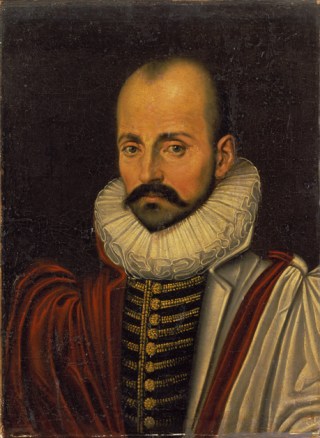
Happy Birthday, Michel de Montaigne!

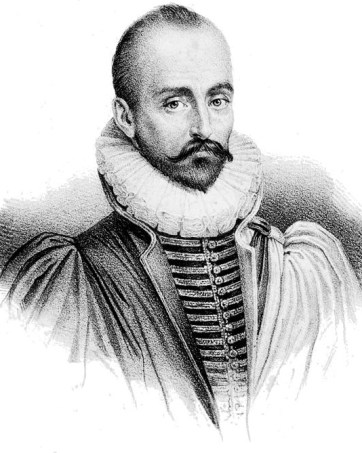
Michel de Montaigne, public domain via Wikimedia Commons

Michel de Montaigne, public domain via Wikimedia Commons

Michel de Montaigne, born on February 28, 1533, was a thinker after my own heart.

Montaigne was a deeply philosophical thinker, though he never developed a complete philosophical system or moral theory. He invented, or at least popularized, a revolutionary way of writing: the essay. In his essays, he wrote about anything and everything he found interesting enough to observe and think deeply about which was …well, just about everything, especially his inner life. His Essays are a rich source of wonderful philosophical and moral insights. As the Stanford Encyclopedia of Philosophy describes: “… under the guise of innocuous anecdotes, Montaigne achieved the humanist revolution in philosophy. He moved from a conception of philosophy conceived of as theoretical science, to a philosophy conceived of as the practice of free judgment’. Judgment, in this sense, involves applying both our cultivated moral sense and our reason, enriched with knowledge, to navigating the complexity and variety of situations we face throughout our lives; it also refers to the expansive, tolerant attitude we should display towards each other and towards the whole of reality.

While Montaigne highly valued education, he also recognized that it can be overemphasized to the detriment of learning from our own experiences. In his day, education often consisted largely, even mostly, of rote memorization of a vast quantity of facts. This learning method can stifle our ability to exercise practical judgment and serve to blunt social skills as well, preventing us from learning from and about each other, which is essential for cultivating moral understanding. We should learn as much about the world and each other as possible, Montaigne thought, through interpersonal interaction as well as through more formal types of education.

Montaigne also thought that sometimes, our big, smart brains can even hinder our quest for wisdom. For example, we can become ashamed, insecure, even hateful of our own bodies when we contrast the refinements of education and the arts to the material, often messy, even disgusting reality of caring for the body and satisfying its needs. This distaste for our bodies is ungenerous and ungrateful, said Montaigne, considering how we rely on our bodies for so much. In fact, even to this Catholic Christian man who believed in the soul, we are our bodies in an essential way. Our bodies are much more than just meat that our souls inhabit, they are intimate partners of souls, and together, they comprise whole human beings. As such, our bodies deserve our compassion, gratitude, love, and respect.

Our big brains can make also make us too proud, unable to recognize wisdom in humble or unexpected places. Those of little or no education, Montaigne maintains, sometimes display more wisdom than the most rigorous scholar. This includes animals, who, especially, are sometimes wiser than we are; for example, they live their whole lives with the natural, unembarrassed, proper attitudes towards their own bodies that allows them to unapologetically enjoy the pleasure of being alive. Montaigne believed that we should learn from them and imitate them in these respects. Those who have the most wisdom to teach us, then, can come from all walks of life, and the wisest person will be receptive to the lessons that can be learned anywhere.

Furthermore, we shouldn’t limit our exposure merely to our own cultures, but should learn about as many other cultures and beliefs as possible. Montaigne, like Confucius, believed that before you can be a philosopher or a moral theorist, you must first be an anthropologist. A wide-ranging education and exposure to the world has two major advantages. First, the information you have to work with will be much more vast, your scope much wider, than if you merely stuck to the received wisdom of your own culture. Secondly, you will cultivate in yourself the very virtues that characterize the wise and moral person: tolerance, benevolence, respect, kindness, generosity, understanding, and so forth. Conversely, narrowness of outlook and xenophobia lead to hatred, violence, and so on, as the horrific stories coming back from the conquest of the New World made him all too aware. Montaigne believed we shouldn’t base our attitudes about right and wrong on habit, which is morally lazy and which a narrow education can easily lead us to do; rather, we should temper our moral attitudes with reason, and our reason, in turn, should be informed by an expansive and ever-expanding body of knowledge.
michel-de-montaigneThis can make Montaigne seem like a moral relativist, but I don’t think that this is so. He was a committed Catholic, which seems to rule that out. Yet he did recognize that some things society traditionally recognized as wrong are in fact both bad and good, sometimes one or sometimes the other depending on the circumstances, sometimes both at the same time. For example, consider drunkenness. It can be bad, such as when it gets you fired or leads you to violence. But, it can also be good, such as promoting sociability or artistic disinhibition. Montaigne recognized that if there are universally true moral maxims, they’re likely to be few. Rather, his approach to philosophy is a skeptical one: he recognized that an attitude of uncertainty and doubt is a fruitful one for gaining wisdom. When you don’t easily accept the first easy answers that come along, when you’re always waiting for more information to come in, when you generally accept that there’s a possibility you are wrong, you are practicing a wise skepticism; otherwise, you cheat yourself out of the opportunity to learn.

Ethically, Montaigne espoused some behaviors as universally preferable: those that are inspired by tolerance, joyfulness, sociability, generosity, benevolence, curiosity, a good-humored attitude towards other people and their varied ways of living, and so on; he specifically denounced cruelty and narrowness in thinking and feeling. He described his ethical theory not by outlining a rigorous system, however, but by enacting and describing a moral attitude that inspired moral behavior in others. In sum, he may or may not have been a relativist when it comes to a specific theory or set of maxims, but he was definitely not relativistic in the overarching value he placed on the art of being a good, complete human being, and on promoting the same in others.

Montaigne’s Essays demonstrate that the most well-reasoned advanced moral theory may never be quite as convincing, effective, or influential when spelled out as that which is lived out. Montaigne showed us how we can all be philosophers, how we can live ethically, and how we can discover it all for ourselves.

Philosophers, if they’re doing it right, will be the happiest of all people since philosophy can and should be a joyful enterprise, and we should all be philosophers.

Listen to the podcast version here or on Google Play, or subscribe on iTunes

~ I wrote this essay in 2012 and edited it substantially for Ordinary Philosophy in 2017

Learn more about this great master of introspection here:

Essays ~ by Michel de Montaigne

Me, Myself, and I: What Made Michel de Montaigne the First Modern Man? ~ by Jane Kramer for The New Yorker

Michel de Montaigne ~ by Marc Foglia for The Stanford Encyclopedia of Philosophy

Michel de Montaigne ~ Melvin Bragg discusses Montaigne’s life and thought with David Wootton, Terence Cave, and Felicity Green (my Intellectual History advisor!) for the BBC’s In Our Time

Michel de Montaigne ~ from The Book of Life

Michel de Montaigne (1533—1592) ~ by Christopher Edelman for Internet Encyclopedia of Philosophy

Michel de Montaigne (1533-1592) ~ by Terence Green for Philosophy Now

Michel de Montaigne: French Writer and Philosopher ~ by Tilde A. Sankovitch for Encyclopædia Britannica

Montaigne on Death and the Art of Living ~ by Maria Popova for Brain Pickings

Can We Have More Than One Friend? According to Montaigne, No ~ by Manuel Bermudez

Philosophy: A Guide to Happiness – Montaigne on Self-Esteem ~ by Alain de Botton

Ordinary Philosophy and its Traveling Philosophy / History of Ideas series is a labor of love and ad-free, supported by patrons and readers like you. Please offer your support today!

Happy Birthday, Angelina Weld Grimké!

angelina-weld-grimke-image-public-domain

Angelina Weld Grimké

El Beso

Twilight—and you
Quiet—the stars;
Snare of the shine of your teeth,
Your provocative laughter,
The gloom of your hair;
Lure of you, eye and lip;
Yearning, yearning,
Languor, surrender;
Your mouth,
And madness, madness,
Tremulous, breathless, flaming,
The space of a sigh;
Then awakening—remembrance,
Pain, regret—your sobbing;
And again, quiet—the stars,
Twilight—and you.   (via Poets.org)

Let us celebrate the memory of the wonderful and far-too-unknown author of this gorgeous poem and so many other wonderful works of art and literature on her birthday!

Alix North of Island of Lesbos writes of Grimké:

Angelina Weld Grimké was born [on February 27th, 1880] in Boston, the only child of Archibald Grimké and Sarah Stanley. Angelina had a mixed racial background; her father was the son of a white man and a black slave, and her mother was from a prominent white family. Her parents named her after her great aunt Angelina Grimké Weld, a famous white abolitionist and women’s rights advocate.

Angelina received a physical education degree at the Boston Normal School of Gymnastics in 1902. She worked as a gym teacher until 1907, when she became an English teacher, and she continued to teach until her retirement in 1926. During her teaching career, she wrote poetry, fiction, reviews, and biographical sketches. She became best known for her play entitled “Rachel.” The story centers around an African-American woman (Rachel) who rejects marriage and motherhood. Rachel believes that by refusing to reproduce, she declines to provide the white community with black children who can be tormented with racist atrocities. “Rachel” was the only piece of Angelina’s work to be published as a book; only some of her stories and poems were published, primarily in journals, newspapers, and anthologies.

Only her poetry reveals Angelina’s romantic love toward women. The majority of her poems are love poems to women or poems about grief and loss. Some (particularly those published during her lifetime) deal with racial concerns, but the bulk of her poems are about other women, and were unlikely to be published for this reason. Only about a third of her poetry has been published to date…  (The orginal site at http://www.sappho.com/poetry/a_grimke.html is no longer active, please see below to learn more)

…and learn more about the luminous Angelina Weld Grimké at:

Angelina Weld Grimké, American journalist and poet, 1880-1958, public domain via Wikimedia Commons

Angelina Weld Grimké, American journalist and poet 1880-1958, public domain via Wikimedia Commons

Angelina Weld Grimké – in Encyclopedia of African American Women Writers, edited by Yolanda Williams Page

Angelina Weld Grimké – by Judith Zvonkin for The Black Renaissance in Washington, D.C.

Angelina Weld Grimké – from Encyclopædia Britannica

Grimke, Angelina Weld (1880-1958) – by Claudia E. Sutherland for Blackpast.org

Grimkè’s Life and Career: The Introduction to The Selected Works of Angelina Weld Grimké – by Carolivia Herron for Modern American Poetry at the Department of English, University of Illinois at Urbana-Champaign

Further reading: Selected Women Writers of the Harlem Renaissance: A Resource Guide – Angelina Weld Grimké 

~ Ordinary Philosophy is a labor of love and ad-free, supported by patrons and readers like you. Any support you can offer will be deeply appreciated!

Happy Birthday, W.E.B. Du Bois!

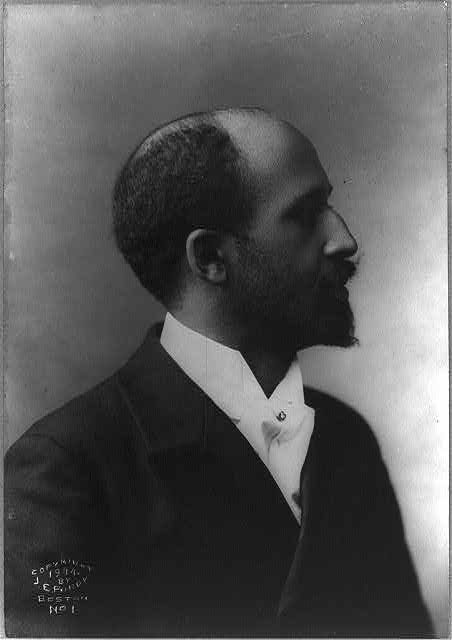
W.E.B. Dubois, Photograph taken by J.E. Purdy in 1904, public domain via Library of Congress

W.E.B. Dubois, photograph taken by J.E. Purdy in 1904, public domain via Library of Congress

Let us honor the life and legacy of the great American writer, historian, journalist, professor, activist, philosopher, and race theorist W.E.B. Du Bois, born on February 23, 1868.

The NAACP (of which he was a founder) writes of Du Bois:

‘William Edward Burghardt Du Bois (February 23, 1868 – August 27, 1963) was an American civil rights activist, leader, Pan-Africanist, sociologist, educator, historian, writer, editor, poet, and scholar. He became a naturalized citizen of Ghana in 1963 at the age of 95.

…In 1891 Du Bois got his master of arts and in 1895 his doctorate in history from Harvard. His dissertation, The Suppression of the African Slave Trade to the United States of America, 1638-1870, was published as No. 1 in the Harvard Historical Series. This important work has yet to be surpassed. In 1896 he married Nina Gomer, and they had two children. …[A]t the University of Pennsylvania… he conducted the pioneering sociological study of an urban community, published as The Philadelphia Negro: A Social Study (1899). These first two works assured Du Bois’s place among America’s leading scholars.

Du Bois’s life and work were an inseparable mixture of scholarship, protest activity, and polemics. All of his efforts were geared toward gaining equal treatment for black people in a world dominated by whites and toward marshaling and presenting evidence to refute the myths of racial inferiority’ …

Read his NAACP bio in full here

Donald J. Morse writes of Du Bois for the Internet Encyclopedia of Philosophy:

‘W. E. B. Du Bois was an important American thinker: a poet, philosopher, economic historian, sociologist, and social critic. His work resists easy classification. This article focuses exclusively on Du Bois’ contribution to philosophy; but the reader must keep in mind throughout that Du Bois is more than a philosopher; he is, for many, a great social leader. His extensive efforts all bend toward a common goal, the equality of colored people. His philosophy is significant today because it addresses what many would argue is the real world problem of white domination. So long as racist white privilege exists, and suppresses the dreams and the freedoms of human beings, so long will Du Bois be relevant as a thinker, for he, more than almost any other, employed thought in the service of exposing this privilege, and worked to eliminate it in the service of a greater humanity. Du Bois’ pragmatist philosophy, as well as his other work, underlies and supports this larger social aim. Later in life, Du Bois turned to communism as the means to achieve equality. He envisioned communism as a society that promoted the well being of all its members, not simply a few. Du Bois came to believe that the economic condition of Africans and African-Americans was one of the primary modes of their oppression, and that a more equitable distribution of wealth, as advanced by Marx, was the remedy for the situation ….

Read the full IEP bio here

You will find another good short bio and list of Du Bois’ writings at The Pennsylvania Center for the Book’s website

…and click here for pieces about or featuring Du Bois at Ordinary Philosophy

~ Ordinary Philosophy is a labor of love and ad-free, supported by patrons and readers like you. Any support you can offer will be deeply appreciated!

Happy Birthday, Nicolaus Copernicus!

Nicolaus Copernicus portrait from Town Hall in Toruń, ca.1580, public domain via Wikimedia Commons

Nicolaus Copernicus portrait from Town Hall in Toruń, ca.1580, public domain via Wikimedia Commons

Let us remember and salute the visionary Nicolaus Copernicus on his birthday.

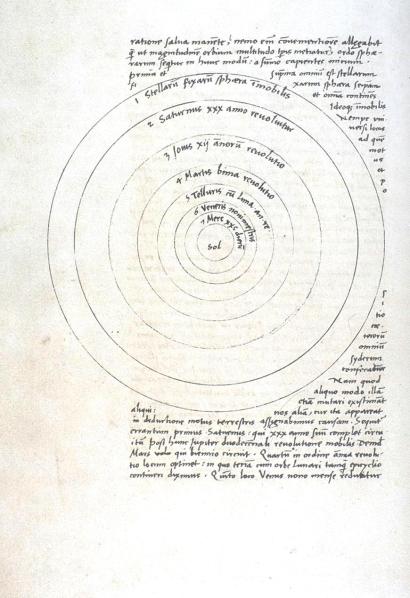
Born on February 19th, 1473, Copernicus gave our modern world the heliocentric theory of the solar system. He credited the ancient Greek astronomer and mathematician Aristarchus of Samos with originally describing how Earth and her sister planets orbit around the sun and took it upon himself to make the observations and work out the mathematics to prove it. Copernicus reintroduced the heliocentric theory so convincingly that it overcame the dominant earth-centered model preferred by the powerful Christian Church for theological reasons. His rigorous and clear reason simply could not accept the clumsy, assumption-laden model that Claudius Ptolemy had devised in the second century A.D. to explain why the planets did not behave as expected if the earth-centered model was accurate. Copernicus was a religious man, but he did not believe that his faith required him to believe something that his reason and his own eyes demonstrated was untrue.

de-revolutionibus-manuscript-p9b-by-nicolas-copernicus-www-bj-uj-edu-pl-public-domain-via-wikimedia-commons

De Revolutionibus manuscript, page 9b by Nicolaus Copernicus (www.bj.uj.edu.pl) Public domain via Wikimedia Commons

For emphasizing the primacy of observation-driven reason over theology when it comes to describing and explaining the natural world, Copernicus is widely credited with starting the Scientific Revolution.

Here’s a short list of excellent resources to learn more about the great Nicolaus Copernicus:

Nicolaus Copernicus – by Sheila Rabin for The Stanford Encyclopedia of Philosophy

Nicolaus Copernicus – by J.J. O’Connor and E.F. Robertson for the MacTutor History of Mathematics Archive, School of Mathematics and Statistics University of St. Andrews, Scotland

Nicolaus Copernicus – From Wikipedia, the free encyclopedia

Copernicus – episode 2 of the BBC series The Beauty of Diagrams, hosted by mathematician Marcus du Sautoy

Ordinary Philosophy and its Traveling Philosophy / History of Ideas series is a labor of love and ad-free, supported by patrons and readers like you. Please offer your support today!

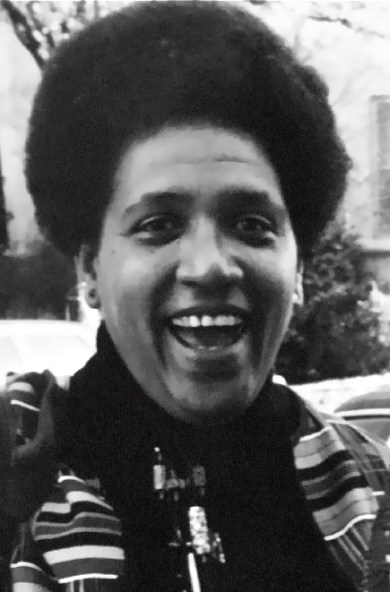
Happy Birthday, Audre Lorde!

Audre Lorde, 1980

Audre Lorde, 1980

Poet and civil rights activist Audre Lorde was born on February 18, 1934. In remembrance of this powerful and eloquent woman on her birthday, I’ll share the bio I found at the Poetry Foundation:

‘A self-described “black, lesbian, mother, warrior, poet,” Audre Lorde dedicated both her life and her creative talent to confronting and addressing the injustices of racism, sexism, and homophobia. Her poetry, and “indeed all of her writing,” according to contributor Joan Martin in Black Women Writers (1950-1980): A Critical Evaluation, “rings with passion, sincerity, perception, and depth of feeling.” Concerned with modern society’s tendency to categorize groups of people, Lorde fought the marginalization of such categories as “lesbian” and “black woman,” thereby empowering her readers to react to the prejudice in their own lives. While the widespread critical acclaim bestowed upon Lorde for dealing with lesbian topics made her a target of those opposed to her radical agenda, she continued, undaunted, to express her individuality, refusing to be silenced. As she told interviewer Charles H. Rowell in Callaloo: “My sexuality is part and parcel of who I am, and my poetry comes from the intersection of me and my worlds… [White, arch-conservative senator] Jesse Helms’s objection to my work is not about obscenity…or even about sex. It is about revolution and change.” Fighting a battle with cancer that she documented in her highly acclaimed Cancer Journals (1980), Lorde died of the illness in 1992…. Read more about Audre Lorde and her poetry here

and the wonderful articles about Lorde by Maria Popova for Brain Pickings

~ Ordinary Philosophy is a labor of love and ad-free, supported by patrons and readers like you. Any support you can offer will be deeply appreciated!

Happy Birthday, Frederick Douglass!

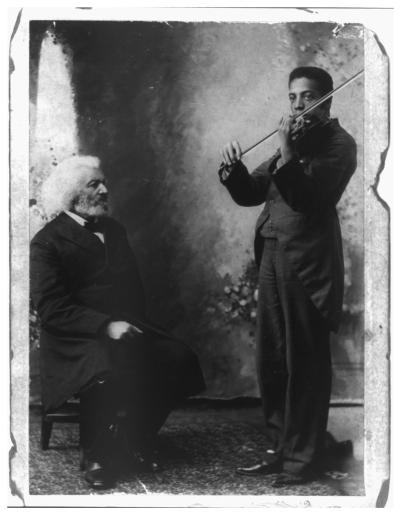
Frederick and Joseph Douglass, from the Library of Congress archives, via Lion of Anacostia b

Frederick Douglass and his grandson Joseph, concert violinist who inherited his love of music from his grandparents, from the Library of Congress archives

Let us remember and salute the great human rights activist Frederick Douglass on the bicentennial anniversary of his birth.

…well, close to it, anyway. The exact day of Douglass’ birth is unknown. We know the year, 1818, from his entry in the slave ledger of his master Aaron Anthony. His likely birth month, February, is an estimate. In his later years, Douglass chose to celebrate his birthday on February 14th because, he said, his mother Harriet once called him ‘my Valentine’.

Douglass is among my favorite people that ever inhabited the earth. He was born into slavery in Maryland, was mostly self-educated, escaped to freedom when he was 20, married the loving and strong Anna Murray, and became one of the most eloquent and influential advocates for civil rights in American, and, indeed, world history. He was an author, orator, preacher, activist, statesman, patriarch, musician, and world traveler. I had the joy of following the life and ideas of this motivated, resourceful, brilliant, complicated, and incredibly fascinating person through the United States, and now I’m continuing my research in Scotland, where he spent a relatively brief but very influential part of his life. Stay tuned for my next traveling of ideas series once again starring Douglass!

Here are a few links to some articles and works of art by, about, and inspired by the great Frederick Douglass, including my own work.

7 Haunts of Frederick Douglass in New York City – by Amy Cools for Untapped Cities

Frederick Douglass ~ by Melvyn Bragg and guests Karen Salt, Nicholas Guyatt, and Celeste-Marie Bernier for In Our Time

Frederick Douglass – by Ronald Sundstrom for Stanford Encyclopedia of Philosophy

Frederick Douglass at In Our Time ~ by BBC Radio 4 with Melvin Bragg and Guests

Frederick Douglass: In Progress ~ by Leigh Fought

Frederick Douglass Papers ~ at the Library of Congress

Frederick Douglass: United States Official and Diplomat~ by the Editors for Encyclopædia Britannica

Frederick Douglass and a Valentine, Emily Dickinson and a Snake – by Rob Velella for  The American Literary Blog

Frederick Douglass in Washington, D.C.: The Lion of Anacostia – by John Muller

Frederick’s Song– Douglass’ words arranged and set to music by SayReal and Richard Fink

From Oakland to Maryland, New York, and Massachusetts I Go, in Search of Frederick Douglass – History of ideas travel series by Amy Cools for Ordinary Philosophy

Interview with Ken Morris, Anti-Slavery Activist – by Ken Morris and Amy Cools for Ordinary Philosophy Podcast

Interview with Leigh Fought on Anna and Frederick Douglass – by Leigh Fought and Amy Cools for Ordinary Philosophy Podcast

Ordinary Philosophy and its Traveling Philosophy / History of Ideas series is a labor of love and ad-free, supported by patrons and readers like you. Please offer your support today!

Happy Birthday, Abraham Lincoln!

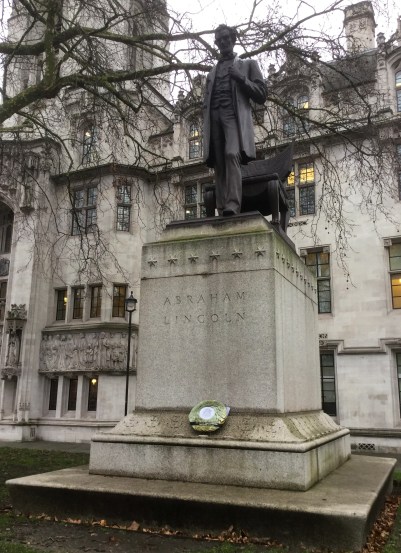
Abraham Lincoln statue near Westminster Abbey, London, on a winter day, photo 2018 by Amy Cools

Let’s remember and salute the great Abraham Lincoln, father of our nation painfully reborn through the Civil War, on his birthday.

Born on February 12th, 1809, this child of a poor Kentucky farm family was largely self-educated yet rose to become our most revered President since George Washington. He was a hard-working man, from farm laborer and rail splitter to flatboat operator on the Mississippi River, then shop owner, militia captain, postmaster, lawyer, politician, then President of the United States. A popular man revered for his storytelling, conversation, intelligence, and general reputation for high integrity, Lincoln won his second campaign for political office and entered the House of Representatives in 1834. He was a successful and innovative lawyer and revered for his speechmaking. His series of debates with Democratic senator Stephen Douglas in 1858 thrust him into the national spotlight, and while he lost the race to replace Douglas in the Congress that year, his reputation continued to grow, and he defeated Douglas in the presidential race two years later. He won the Presidency as head of the newly formed anti-slavery Republican party.

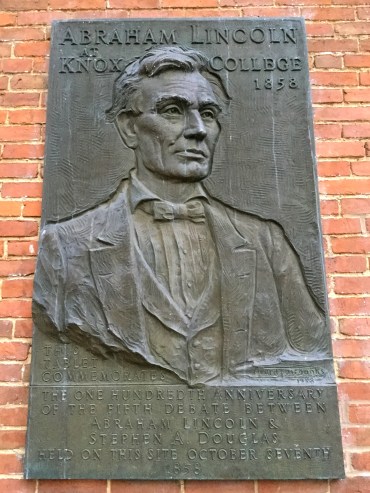
Lincoln plaque on Old Main, Knox College, Galesburg, Illinois, photo 2017 by Amy Cools

Lincoln’s antipathy to slavery was heightened by a memory from his flatboat trip to New Orleans, where he witnessed its horrors first hand. Over the years, his political antislavery position fluctuated although the institution of slavery disgusted him personally. For most of his political career, he advocated the moderate policy of stopping slavery’s spread to the new territories, leaving it in place where it already existed in the expectation that economic and cultural changes would naturally lead to its demise. But the intransigence of the slave states and the contingencies of the Civil War, combined with his own moral hatred of slavery, caused him to change his mind. Lincoln’s Emancipation Proclamation of January 1, 1863 freed all slaves in those states in rebellion, and nearly 200,000 freed black men fought for the Union Army, helping to ensure its eventual success.

Even given his childhood poverty and lack of education, I find Lincoln’s success even more remarkable in light of the recurrent and severe depression he suffered throughout his life. While it can be crippling, it can also make sufferers that much more attuned to the suffering of fellow human beings, deepening the understanding of human nature and increasing the capacity for sympathy. Lincoln was one of these, and his suffering refined his sensitivities and strengthened him, helping to make him the great man he became.

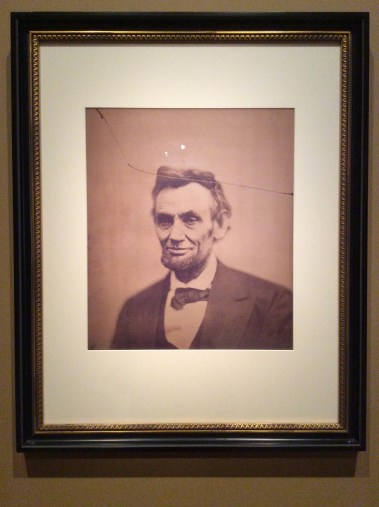
Abraham Lincoln by Alexander Gardner, Feb 5, 1865, National Portrait Gallery in D.C., 2016 Amy Cools

Abraham Lincoln by Alexander Gardner, Feb 5, 1865, National Portrait Gallery in D.C., photo 2016 by Amy Cools

Having led the nation through the trauma and horror of the Civil War, Lincoln was assassinated only a month after his re-inauguration to the Presidency in 1964, shot in the head on April 14th by pro-slavery actor John Wilkes Booth while attending a play at Ford’s Theater.

Here some writings and works of art by, about, featuring, and inspired by Abraham Lincoln, including some of my own work.

Abraham Lincoln: audiobooks of speeches and other writingsat Librivox

Abraham Lincoln: speeches, letters, and other writingsdigitized by the Northern Illinois University Libraries

Abraham Lincoln: President of the United States ~ by Richard N. Current for Encyclopædia Britannica

April the 14th, Part I ~ song by Gillian Welch

Lincoln’s Great Depression ~ by Joshua Wolf Shenk for The Atlantic: Abraham Lincoln fought clinical depression all his life, and if he were alive today, his condition would be treated as a “character issue”—that is, as a political liability. His condition was indeed a character issue: it gave him the tools to save the nation

To the Great Plains and Illinois I Go, in Search of Crazy Horse, Sitting Bull, Abraham Lincoln, and Other American Histories ~ by Amy Cools for Ordinary Philosophy

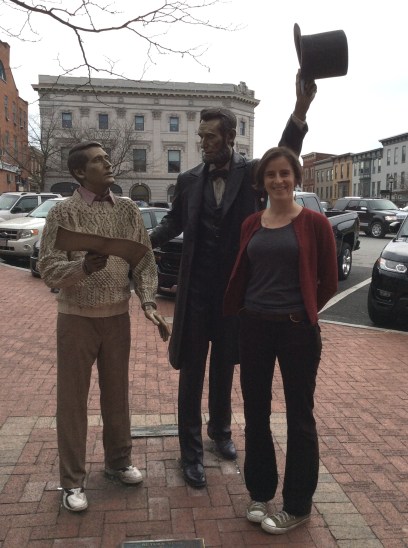
Me with Abraham Lincoln’s sculpture near David Wills house where he stayed in Gettysburg, PA, the night before giving his great Address. I visited Gettysburg during my 2016 journey following Frederick Douglass

Abraham Lincoln also features prominently in my traveling history of ideas series about the life and ideas of Frederick Douglass. Here are the pieces in that series which feature Lincoln:

Frederick Douglass Lynn Sites, Part 2: Historical Society & Hutchinson Scrapbook
Frederick Douglass, Rochester NY Sites Day 2
Frederick Douglass Seneca Falls, Canandaigua, Honeoye, and Mt Hope Cemetery Sites
Frederick Douglass Chambersburg and Gettysburg PA Sites
Frederick Douglass Washington DC Sites, Day 1, Part 1
Frederick Douglass Washington DC Sites, Day 1, Part 2
Frederick Douglass Washington DC Sites, Last Day

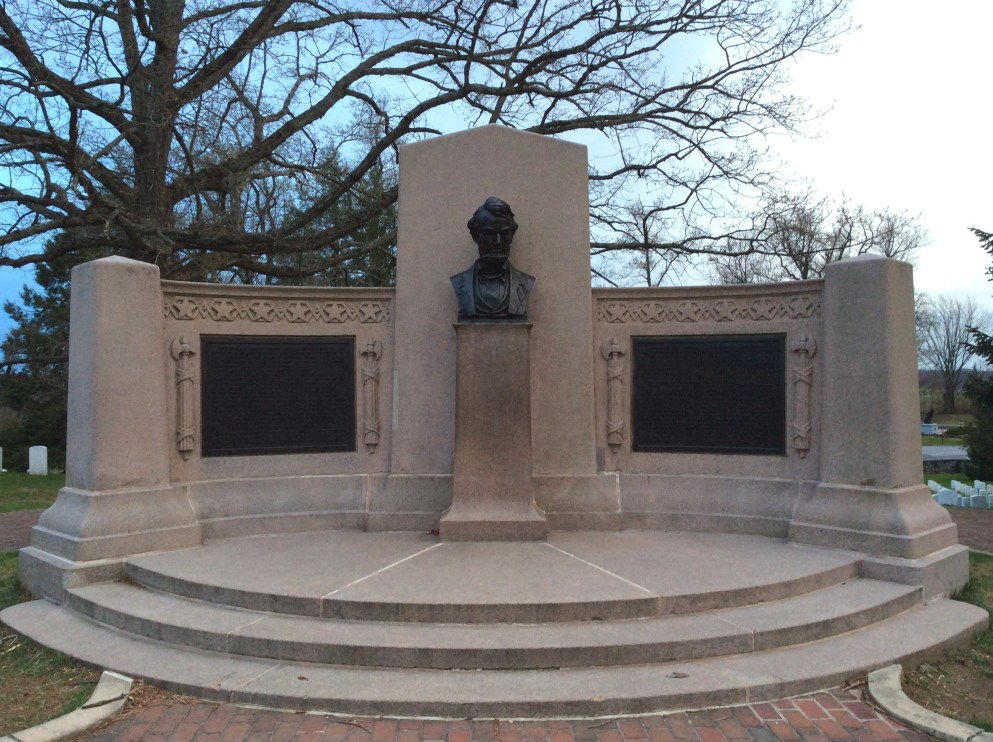
Lincoln's Gettysburg Address Memorial at Soldier's National Cemetery

Lincoln’s Gettysburg Address Memorial at Soldier’s National Cemetery, photo 2016 by Amy Cools

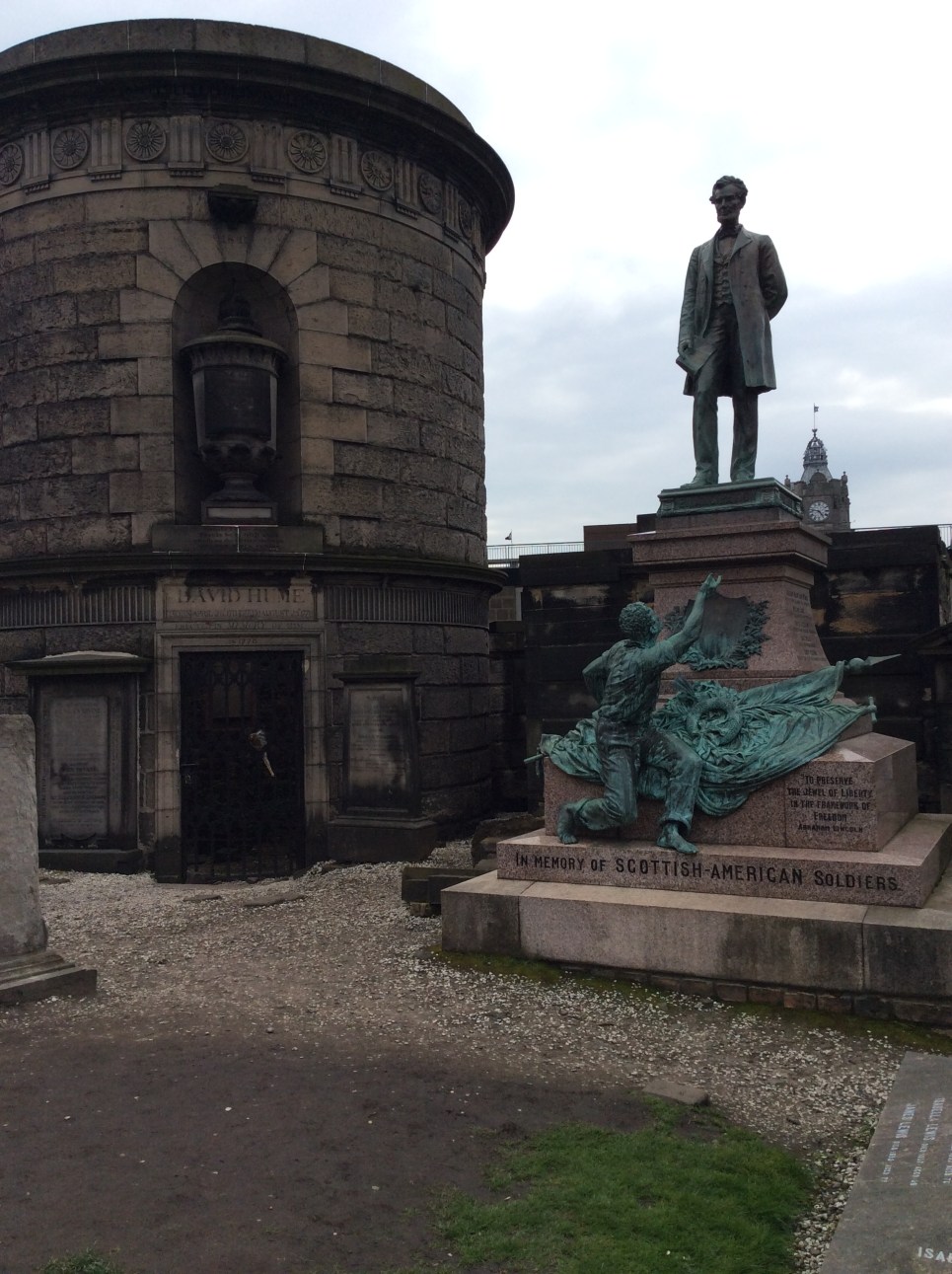
Hume's and Abraham Lincoln Scottish soldier monuments,

Hume’s grave and Abraham Lincoln sculpture on a monument to Scottish American soldiers, Calton Hill Cemetery, Edinburgh, Scotland, photo 2014 by Amy Cools

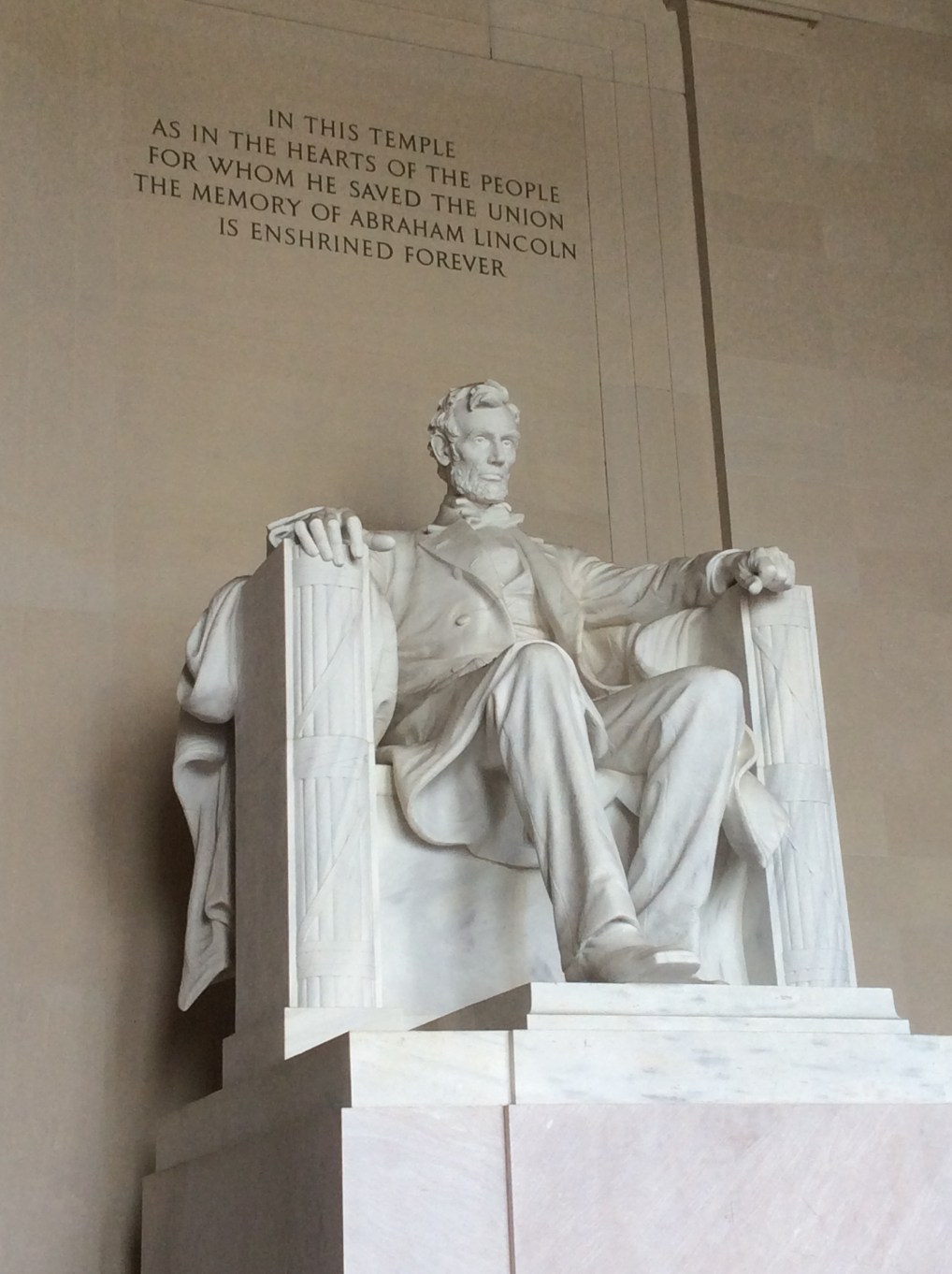
Sculpture of Abraham Lincoln in the Lincoln Memorial, Washington DC, photo 2015 by Amy Cools

Sculpture of Abraham Lincoln in the Lincoln Memorial, Washington DC, photo 2015 by Amy Cools

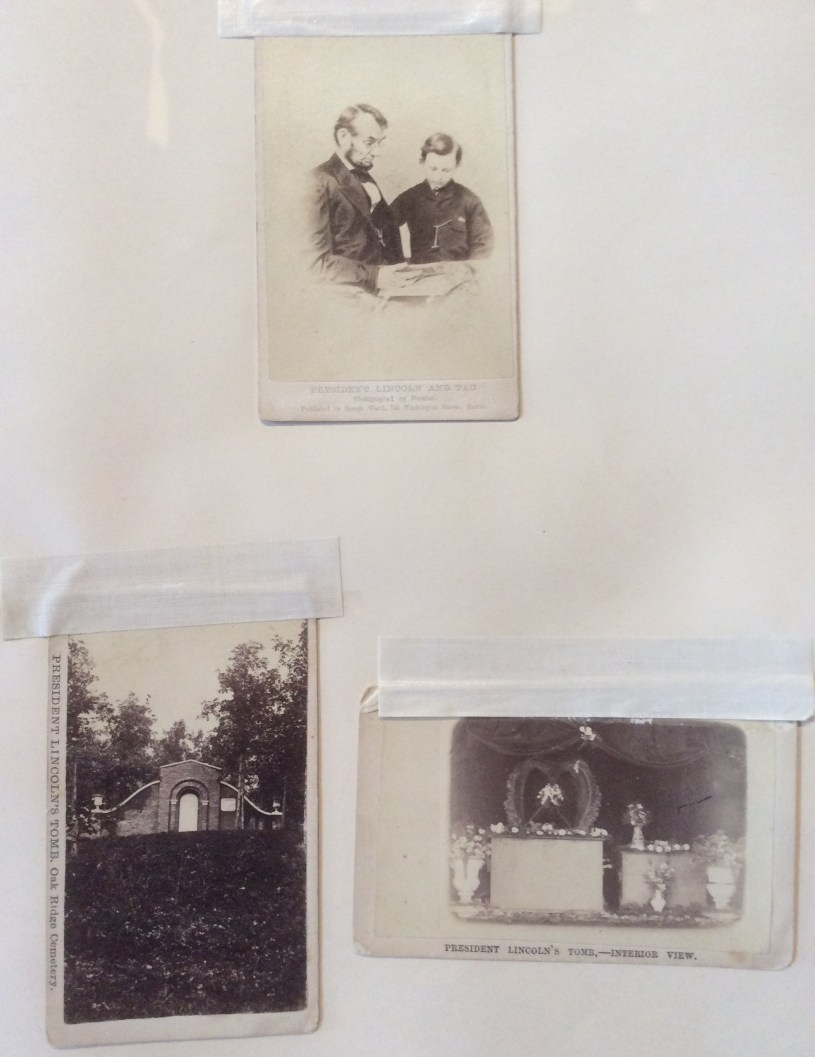
Abraham Lincoln with his son and 2 views of his tomb, from Hutchinson scrapbook at Lynn Museum

Abraham Lincoln with his son and two views of his tomb, from the Hutchinson scrapbook at Lynn Museum, photo 2016 by Amy Cools

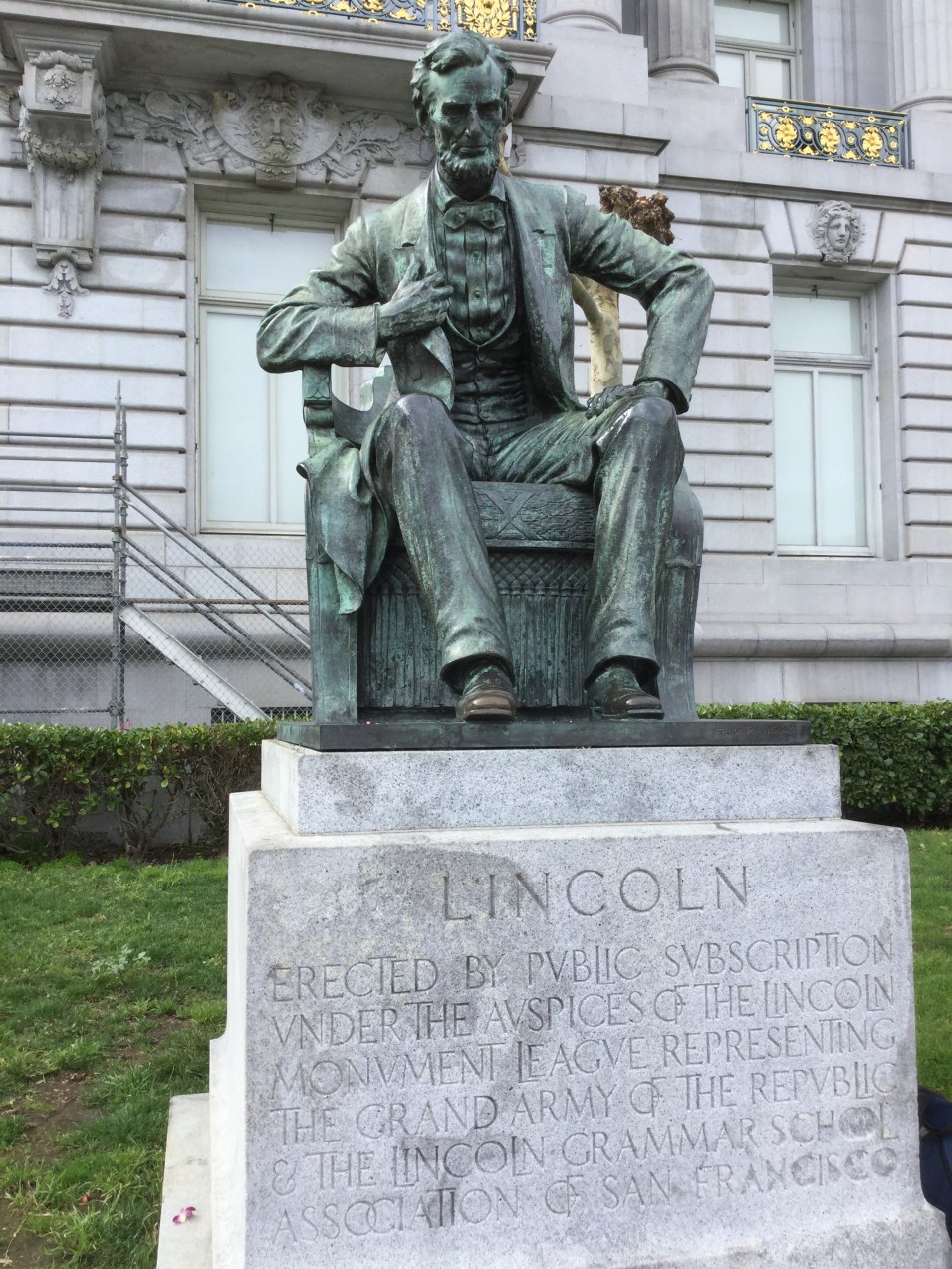
Statue of Abraham Lincoln outside of San Francisco's City Hall, photo 2017 by Amy Cools

Statue of Abraham Lincoln outside of San Francisco’s City Hall, photo 2017 by Amy Cools

Ordinary Philosophy and its Traveling Philosophy / History of Ideas series is a labor of love and ad-free, supported by patrons and readers like you. Please offer your support today!

Happy Birthday, Charles Darwin!

A Charles Darwin display at the Kelvingrove Museum, Glasgow, Scotland

Let’s remember and salute Charles Darwin, the thinker who came to understand the basic mechanism by which we and all other species on earth come to be.

Born on February 12, 1809, Darwin was the grandson of Enlightenment physician, poet, and botanist Erasmus Darwin, who posited his own theory of evolution, as had many others, who observed its effects but had not successfully formulated a theory to explain how it worked. Given that his father was also a physician, it seemed natural that young Charles would take up the family profession. He studied medicine at the University of Edinburgh (my university!) from the age of 16 to 18. Darwin would have attended classes in the original building on South Bridge, now called the Old College, beautifully designed by Robert Adam (it didn’t yet have the dome it has now). While he loved the excellent science education he received there, Darwin decided being a physician was not for him.

Old College Building on South Bridge, University of Edinburgh, where Darwin attended classes

His father then sent Darwin to Christ’s College, Cambridge, with the idea that he could be a minister instead. Darwin did well at Christ’s College, but it was his pursuits as a naturalist that really captured his imagination and into which he poured his best efforts. After he completed his Bachelor of Arts degree in 1831, he continued his scientific study of animals and geologic formations. When the opportunity arose to travel to South America on the HMS Beagle later that year, Darwin took it, and spent the next five years gathering specimens and making detailed notes of his observations of the natural world. Among the wealth of valuable scientific information he amassed, Darwin’s observations of the appearance of apparently designed adaptations in living things; fossils of known and unknown animals sometimes found in the most unexpected places (remains of ancient sea life embedded in rocks at high elevation?!?); and the incredible amount of waste and suffering throughout the natural world, from wasps who laid their eggs in living caterpillars so that the growing grubs would devour them slowly from within to the genocide and slavery routinely practiced against the native people there, gave him much to think about.

Finches in a Charles Darwin display case at the Kelvingrove Museum, Glasgow, Scotland. The adaptations of finch beaks to food sources provided Darwin a perfect example of how natural selection works to produce the appearance of design.

With his experience broadened, his understanding deepened, and his body strengthened by the rigors of his expeditions, Darwin returned to England a wiser, stronger, more serious man. The first publications of his findings, together with his friendships with influential scientists such as the geologist Charles Lyell, made him famous. Darwin had found his profession. He began to pull together the evidence of his own eyes with the work of other naturalists and scientists to formulate a theory that would explain it all. What would explain a world of living things replete with beauty and waste, some joy and contentment but far more suffering, animals marvelously wrought but more often than not hidden from the human eye either by remoteness, incredibly tiny size, or time through extinction? It was the work of Edinburgh’s own self-made geologist James Hutton, popularized and developed by Lyell, which gave Darwin one key to the mystery. Since it had become clear that the earth was indeed ancient, not young as popular interpretations of the Bible would have it, species had plenty of time to adapt and change to their environment as needed, just as the earth itself had plenty of time to form as it is.

Hutton’s Section near the foot of Salisbury Crags, Holyrood Park, Edinburgh, Scotland. On my twice-weekly hikes, I regularly pass by this rock formation. It sparked James Hutton’s realization that the earth must be ancient indeed to give the rocks time to layer, fold, and bend as they do here.

Another key to the mystery was the mass suffering and death Darwin observed. While he mourned it, it was no doubt a comforting realization that it was not designed into the natural world by a divine mind that he was nonetheless bound to worship. Rather, Darwin realized that the living things that could not survive in the environment they found themselves in left those better equipped to do so to reproduce and pass on their adaptations. This realization, this theory of natural selection, Darwin recognized to be explosive as well. It took him about twenty years of careful thought and self-questioning to publish this theory. He knew, for one, that his theory went against people’s natural squeamishness and desire to think of the earth as a friendly home. More than that, Darwin knew perhaps better than anyone what a profound challenge this theory was to orthodox Christianity. But when another naturalist, Alfred Russel Wallace, independently arrived at the same theory, Darwin was galvanized to publish his findings in 1859. His On the Origin of Species went on to become one of the most influential works in the history of thought.

Another Charles Darwin display at the Kelvingrove Museum, Glasgow, Scotland

Darwin’s life is a fascinating one in so many more ways outside of the scope of this piece. To learn more about this husband, father, writer, and restless seeker for truth, I recommend the excellent works I’ve linked to below.

Before that, one more thing: I’ve always hated the term ‘Social Darwinism’ because I think it’s terribly misleading. It refers to the idea that societies can be structured so as to direct evolution in some way, for example, by allowing the weakest or least able, as defined by that society, to die off so that the strongest and most able are the most likely to survive and reproduce. But Darwin did not espouse that idea, nor do scientists now understand him to have implied it. For Darwin, as for those who understand the theory of evolution by natural selection as an explanation of a natural process rather than a policy of action, the reason why human beings have become such a successful species is precisely our capacity for empathy and solidarity. It’s the fact that we care about each other as individuals, that we help each other survive and develop our unique capacities that makes us so adaptable, so creative, so able to get by in such a wide variety of environments. Social Darwinism, then, is contrary to Darwin’s own theories about human evolution. Eugenics, ‘survival of the fittest,’ and other such ideas that later thinkers claimed as part of Darwin’s intellectual legacy are not, in fact, his, or ideas that he would endorse given what he actually wrote. The shameful thing about putting Darwin’s name in the term ‘Social Darwinism’ is that it misleads people into thinking that he came up with it, and therefore to think of him as a cruel and heartless thinker, responsible for ideas which have caused much suffering and death. He was nothing of the sort.

Charles Darwin’s gravestone in Westminster Abbey, London, England. I was naughty and snuck in a quick photo, though photography is not allowed in the city’s places of worship.

Charles Darwin placard at the Kelvingrove Museum, Glasgow, Scotland

Learn more about this most influential of scientists and thinkers:

Charles Darwin: British Naturalist ~ by Adrian J. Desmond for Encyclopædia Britannica

Charles Darwin: Evolution and the Story of Our Species ~ iWonder at the BBC

Charles Darwin: various articles ~ by Maria Popova for Brain Pickings

Darwin Correspondence Project ~ at the University of Cambridge website

Darwin’s Influence on Modern Thought ~ by Ernst Mayr for Scientific American, November 24 2009

Darwin Online ~ read Charles Darwin’s books, articles, and other publications online

The Evolution of Charles Darwin ~ by Frank J. Sulloway for Smithsonian Magazine, December 2005

The Origin of the Thesis ~ by Claire Pettitt for The Times Literary Supplement

Ordinary Philosophy and its Traveling Philosophy / History of Ideas series is a labor of love and ad-free, supported by patrons and readers like you. Please offer your support today!