Happy Birthday, Voltaire!

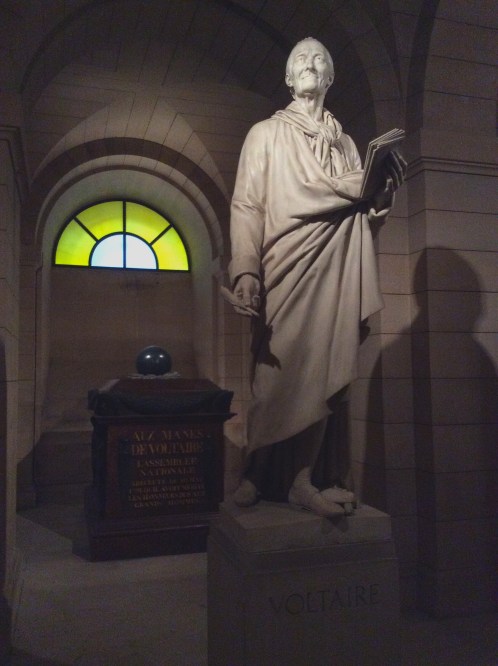
Voltaire’s statue and tomb in his crypt in the Pantheon, Paris, France

Voltaire was born on November 21, 1694, in Paris, France, where he died 83 1/2 years later. He’s buried in that great city of his birth and death, in a crypt below the beautiful Pantheon. He was a philosopher, playwright, poet, and much, much more; a generally prolific, wide-ranging, and creative writer. In his long life, Voltaire used his wealth of learning, urgent sense of justice, and merciless and ready wit to make the case for religious and intellectual tolerance, forbearance, science, and social reform. He is still considered one of the most influential and memorable thinkers the world has ever seen.

Learn more about the great Voltaire at:

Voltaire – an animated video by Alain de Botton and Nicholas Cronk for The School of Life

Voltaire ~ by J.B. Shank for The Stanford Encyclopedia of Philosophy

Voltaire ~ by René Henry Pomeau for the Encyclopædia Britannica

Voltaire and the One-Liner ~ by Nicholas Cronk for OUPBlog

Voltaire’s Candide ~ Melvin Bragg talks with David Wootton, Nicholas Cronk, and Caroline Warman for In Our Time

Voltaire’s Garden: The Philosopher as a Campaigner for Human Rights ~ by Adam Gopnik for The New Yorker (book review for Ian Davidson’s Voltaire in Exile

The Voltaire Foundation: a world leader for eighteenth-century scholarship

Broken on the Wheel: A Gruesome Legal Case turned Voltaire into a Crusader for the Innocent ~ by Ken Armstrong for the Paris Review

The Philosopher and the Prodigy: How Voltaire Fell in Love with a Remarkable Woman Mathematician ~ by Michelle Legro for Brain Pickings

Ordinary Philosophy and its Traveling Philosophy / History of Ideas series is a labor of love and ad-free, supported by patrons and readers like you. Please offer your support today!

Happy Birthday, Elizabeth Cady Stanton!

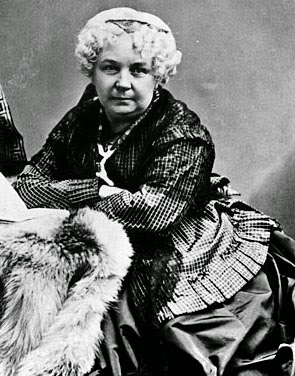
In honor of the great feminist Elizabeth Cady Stanton’s birthday, I’m re-sharing the stories of some of my explorations of her life and ideas in the places she lived and worked, often in conjunction with her fellow feminists Ernestine Rose and Frederick Douglass.

To New York City I Go, In Search of Ernestine Rose and Elizabeth Cady Stanton

Enjoy, and I hope you find her story as fascinating, informative, and inspiring as I do!

Ordinary Philosophy and its Traveling Philosophy / History of Ideas series is a labor of love and ad-free, supported by patrons and readers like you. Please offer your support today!

Happy Birthday, John Jones!

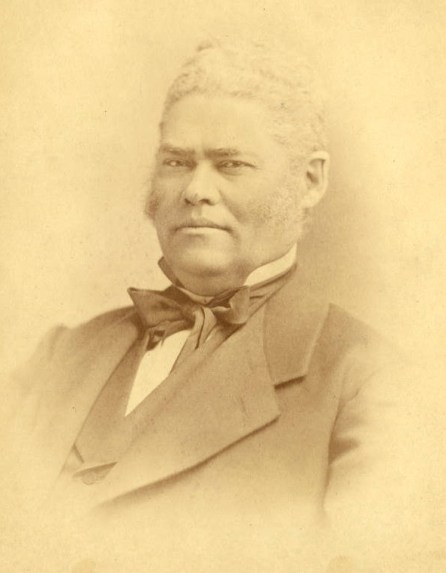
John Jones, portrait by Mosher & Baldwin, 1882, courtesy of the Chicago History Museum

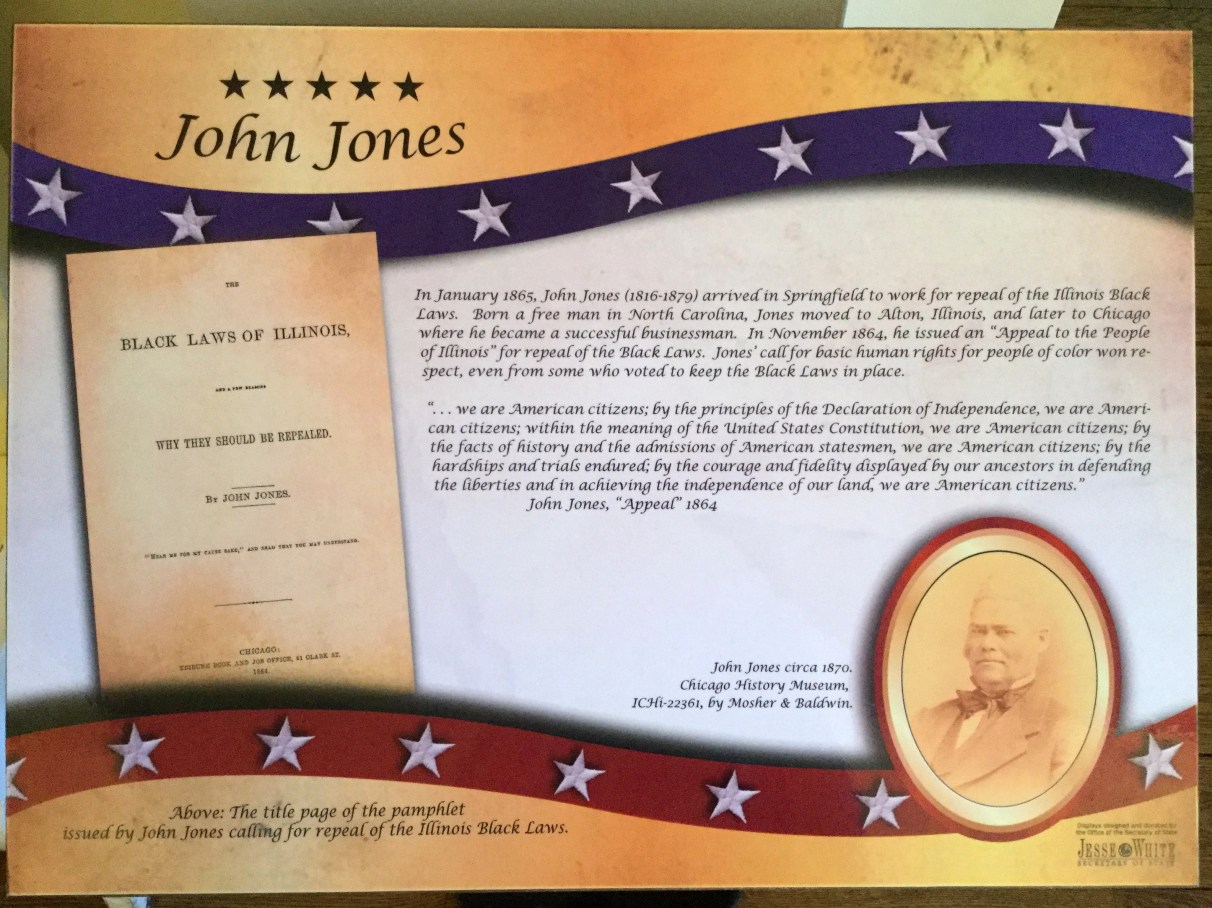
When I visited Springfield, Illinois this summer, I found a very interesting plaque at the Old State House downtown. It told the story of John Jones and his activism against Illinois’s Black Laws, a set of legal codes that pertained only to black people, and, as you likely and immediately supposed,  were terribly oppressive. Such laws have a long history in the United States and as long as they’ve been around, lovers of justice have been around to fight them. John Jones was one such person.

Born on November 3rd, 1816 to an American black mother and German white father, Jones had to make his own way early in the world. Jones’ mother did not trust his father to do right by his son so she apprenticed him to a tailor when he was very young. The resourceful Jones taught himself to read and write and, having learned what he needed to, he released himself from the tailor’s service by age 27. He then obtained official free papers for himself and his wife, née Mary Jane Richardson, and secured their freedom to live and travel by posting a $1,000 bond in 1844. While he and his wife were both born free, they had to worry about the numerous ‘fugitive’ slave catchers and kidnappers prowling around, all too happy to capture as many black persons as they could get ahold of, passing them off as escaped slaves in exchange for a substantial payoff.

The Joneses moved to Chicago from Alton, Illinois in 1845, where there was an established community of black entrepreneurs and therefore, more opportunities for families such as theirs. Jones worked hard and savvily, building up a very successful tailoring business and amassing an impressive fortune within just a few years. The Joneses used their success to help their fellow black citizens, making their home one of the key Chicago stops on the Underground Railroad. Jones poured much of his money and time into civil rights activism, working for the abolitionist cause and to overturn the Fugitive Slave Act of 1850 and the already decades-old Black Laws of Illinois, sometimes with his fellow autodidact and activist Frederick Douglass. For the rest of his life, Jones was a prominent intellectual, moral, religious, and political leader in the black community of Chicago and beyond.

Learn more about the courageous civil rights leader John Jones at:

John Jones (1816–1879): Activist, politician, tailor, entrepreneur  ~ by Jessie Carney Smith for Encyclopedia.com

Jones, John ~ by Cynthia Wilson for Blackpast.org

Historical placard for John Jones, Old State House, Springfield, Illinois

Ordinary Philosophy and its Traveling Philosophy / History of Ideas series is a labor of love and ad-free, supported by patrons and readers like you. Please offer your support today!

Happy Birthday, John Adams!

John Adams by John Trumbull, 1793, National Portrait Gallery, Washington, D.C.

Like many who watched the excellent 2008 miniseries John Adams with Paul Giamatti in the title role and Laura Linney as Abigail Adams, my interest in the United States’ second president increased quite a bit after watching it. And when I read John Ellis’ Passionate Sage: The Character and Legacy of John Adams last year, I found myself thoroughly engrossed. I read of a man who was brilliant, insecure, honest, vain, visionary, retrograde, loving, selfish… all character traits which I believe are often found in the most interesting and accomplished people. The same traits that drive people to do wonderful and unusual things are often the same as, or found in conjunction with, those which make people thoroughly insufferable. For example, the insecure egoist’s need to be loved and admired provides the drive for accomplishment, and those who are intelligent enough to surpass most others in this regard are also intelligent enough to recognize it, resulting in vanity. Perhaps because I don’t have to put up with him personally, I can freely admire and even feel affection for Adams as the sensitive, flawed human being  revealed in his massive correspondence; an egoist who nevertheless was obsessed with justice and did his best to see it done in the world, who sacrificed his own posterity and a second term in office to preserve his new country from the existential threat of an ill-conceived war; whose dignity was far too easily wounded but at times proved himself a loyal friend even to those that betrayed him – Thomas Jefferson being a prime example.

Americans may have more easily forgiven all of this if he hadn’t championed the Alien and Sedition Acts and signed them into law, parts of which are seen today as contrary to essential American principles. In his fear that the bond between the states in his newly united country would break apart under the strain of war and the spiraling controversies of party politics, Adams overreached. But his legacy shouldn’t be overshadowed by this one, though admittedly significant, mistake. As Ellis writes for Encyclopædia Britannica,

Although Adams was regarded by his contemporaries as one of the most significant statesmen of the revolutionary era, his reputation faded in the 19th century, only to ascend again during the last half of the 20th century. The modern edition of his correspondence prompted a rediscovery of his bracing honesty and pungent way with words, his importance as a political thinker, his realistic perspective on American foreign policy, and his patriarchal role as founder of one of the most prominent families in American history.

Learn more about our oh-so-human, brilliant president John Adams at:

John Adams ~ Miniseries by HBO, 2008

John Adams As He Lived: Unpublished Letters to Dr. Benjamin Waterhouse, Professor of Physic at Harvard College ~ published in The Atlantic, May 1927

John Adams: The Case of the Missing John Adams Monument ~ Lillian Cunningham for the Presidential podcast series presented by The Washington Post

John Adams: President of the United States ~ Joseph J. Ellis for Encyclopædia Britannica

Plain Speaking: In David McCullough’s Telling, the Second President is Reminiscent of the 33rd (Harry Truman) ~ by Pauline Maier for The New York Times: Books, May 27, 2001

Sorry, HBO. John Adams Wasn’t That Much of a Hero ~ Jack Rakove for The Washington Post, April 20, 2008

~ Ordinary Philosophy is a labor of love and ad-free, supported by patrons and readers like you. Any support you can offer will be deeply appreciated!

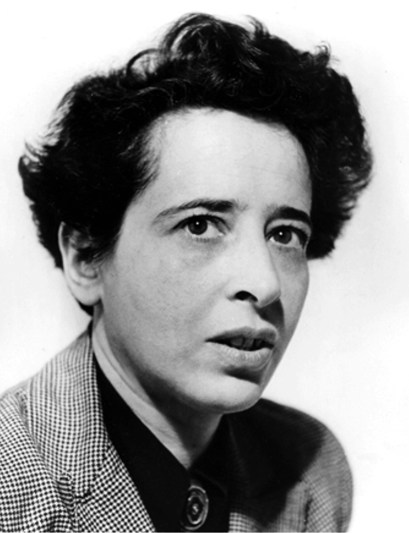
Happy Birthday, Hannah Arendt!

Hannah Arendt, born on October 14, 1906 in Hanover, Germany, was one of the twentieth century’s leading thinkers about political philosophy and the nature of evil. In the one and only filmed interview with her that survives, Arendt objected to being called a philosopher; she said she doesn’t feel like a philosopher, and that she thinks she has not been accepted in the philosophical community. We’re still hashing out what she meant by these statements to this day: some believe that she didn’t feel, as a woman, that the traditionally male-centric philosophical circle had room for her, so she did her work in another arena of thought; some believe since she emphasizes action and responsibility in her ethics and political thought, she felt this did not fit into the abstract nature of the accepted philosophical canon. However, her latter remark has proved no longer true, if it ever was: she is not only accepted into the philosophical circle, she has earned a prominent place in it.

Arendt completed her doctoral degree in philosophy in 1928. By 1940, she was forced to flee the Nazi’s persecution of intellectuals, first as a refugee to Paris, then to the United States, where she arrived in 1941. She settled in the U.S. for good, became a naturalized citizen, and taught at the University of Chicago and then at New York City’s New School for Social Research. Arendt established herself as a major political thinker with her 1951 book Origins of Totalitarianism, and a controversial one with her series of articles for The New Yorker about the Nazi war criminal Adolf Eichmann’s 1961 trial. She used this series as the basis for her 1963 book Eichmann in Jerusalem.

Among Arendt’s major themes is the idea that evil is not so much the result of an active malevolence but of thoughtless complacency. She distills this idea in her concept the banality of evil, which made people very uncomfortable at that time and ever since. Many hate this idea in part because they detect in it an element of victim-blaming, such as in Arendt’s including in her discussion the supposed cooperation of many Jewish community leaders in the massive and efficient deportation of the Jews to Nazi concentration camps and gas chambers. But I believe people hate Arendt’s concept more because of its implication that it’s so very easy for every single one of us to participate in great evil through our own carelessness and laziness.

Arendt’s philosophy of action and personal responsibility, problematic as it might be in some particulars, presents an important challenge even as it lays on all of us what might feel like an intolerable burden. She demands that we shake off complacency every moment of our lives, that we resist the temptation to thoughtlessly participate in harmful practices and ways of thinking. In an age where mass consumption has become the norm, even the source of meaning and impetus for most of our actions, regardless of its ravages on the beautiful world that gives us life, there are few ideas that are more timely or more important.

Learn about the life and thought of the courageous and brilliant Hannah Arendt:

Hannah Arendt ~ Interview with Gunter Gaus for Zur Person

Hannah Arendt ~ by Maurizio Passerin d’Entreves for The Stanford Encyclopedia of Philosophy

Hannah Arendt ~ Melvyn Bragg talks to Lyndsey Stonebridge, Frisbee Sheffield, and Robert Eaglestone for In Our Time

Hannah Arendt: American Political Scientist ~ by the editors for Encyclopædia Britannica

Hannah Arendt and the Hierarchy of Human Activity ~ by Finn Bowring for The Times Literary Supplement

Film Review: Hannah Arendt ~ Yasemin Sari for Philosophy Now

The Trials of Hannah Arendt ~ Corey Robin for The Nation, May 12, 2015

Why Do Hannah Arendt’s Ideas about Evil and the Holocaust Still Matter? ~ An interview with Michael Rosenthal for the Stroum Center for Jewish Studies at the University of Washington

Various articles ~ by Hannah Arendt for The New Yorker magazine

Various articles featuring Hannah Arendt ~ Maria Popova for Brain Pickings

Ordinary Philosophy is a labor of love and is ad-free, supported by patrons and readers like you. Please offer your support today!

Happy Birthday, Gwendolyn Marie Patton!

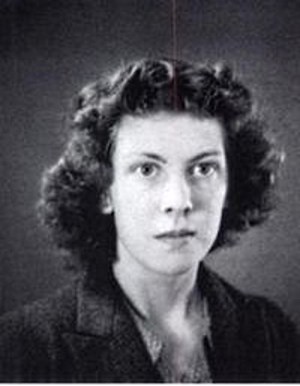
Gwendolyn Marie Patton, photo from Trenholm State Community College Libraries

To celebrate the memory of activist and scholar Dr. Gwendolyn Marie Patton, born October 14, 1943, I share here an excellent article by Ashley Farmer, assistant professor at Boston University and a regular contributor to the African American Intellectual History Society’s blog Black Perspectives. By the way, if you also seek to learn more about the contributions of great thinkers like Dr. Patton who are not widely known or celebrated enough in popular culture, Dr. Farmer is an excellent author to follow.

Remembering Gwen Patton, Activist and Theorist, by Ashley Farmer

“Ideas are powerful,” Dr. Gwendolyn Patton used to say when she talked to the younger generation about civil rights and political organizing. This simple but powerful notion undergirded Patton’s incredible activist life, one that spanned much of the late 20th century and many different facets of the Black Freedom Struggle. Patton always contended that access to knowledge, and in particular, theoretical frameworks for understanding oppression and liberation, were key sites of protest and contestation. Weaving together a powerful life of theorizing and activism, she was and remains one of the most profound black thinkers of our lifetimes.

Patton was born outside Detroit, Michigan in 1943. Her early childhood was characterized by the dialectic between the trappings of middle-class life and insurgent black politics. She grew up in a comfortable black neighborhood and spent her summers with her grandmother in Montgomery, a hotbed of civil rights activism in the early 1950s. In 1960, after her mother passed away, she became a full-time Montgomery resident. As a teenager, she volunteered with the Montgomery Improvement Association (MIA), the organization responsible for the Rosa Parks-led boycott in 1955. When Patton went off to college at nearby Tuskegee University, she brought this zeal for activism with her. She joined several student-led organizations and protests and eventually became the first woman student body president of the university.

At Tuskegee, Patton was part of what she called a “close-knit, intellectual student movement” that engaged in public accommodation desegregation battles and voter registration work…’ Read more:

And to learn more:

Dr. Gwendolyn Marie Patton, 1943-2017 ~ by Brian Jones via Academia.edu

Gwendolyn M. Patton ~ Interview for the Civil Rights History Project conducted by Joseph Mosnier in Montgomery, Alabama, 6/1/2011 for the Library of Congress

Gwendolyn M. Patton ~ Bio and interview at The HistoryMakers website

Ordinary Philosophy and its Traveling Philosophy / History of Ideas series is a labor of love and ad-free, entirely supported by patrons and readers like you. Please offer your support today!

In Memory of Lucrezia Marinella

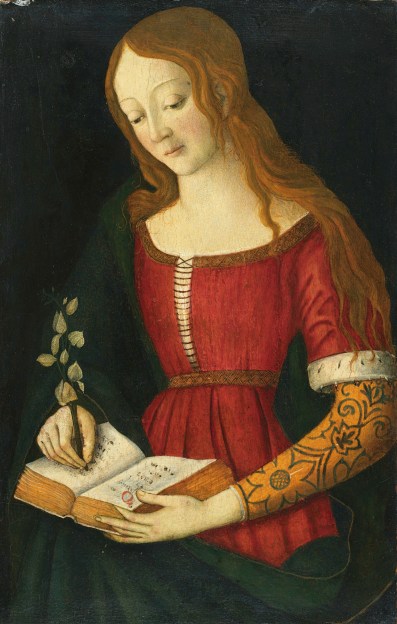
Young Lady Writing in a Hymnal by Giacomo Pacchiarotto, turn of 16th c, Siena, Italy

Lucrezia Marinella was an Italian Renaissance writer of poetry, devotional literature, and philosophy. She was born in Venice on an unknown date in 1571, and lived a richly intellectual, family-oriented, long life there until her death on October 9th, 1653.

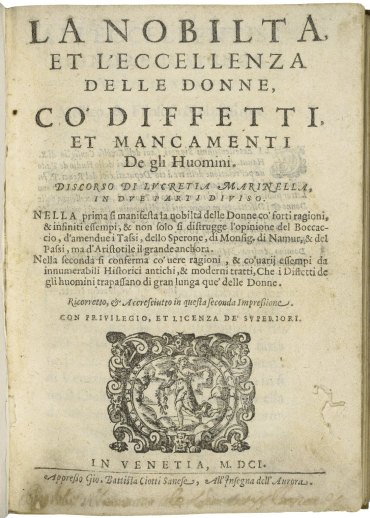
She wrote on a wide range of subjects, including Mary, the mother of Jesus Christ, and Mary and her parents’ life family as she imagined it: happy, virtuous, a model for all families to emulate. She identified Mary closely with her beloved native Venice, that lovely city of elegance and refinement, incubator of knowledge and beauty, and welcome refuge to the traveler and those fleeing hardship and strife, referring to both as ‘La Serenissima’ (the Serene) and ‘Star of the Sea.’ Her Life of the Virgin Mary, Empress of the Universe was written two years after her most famous and influential work The Nobility and Excellence of Women and the Defects and Vices of Men, published in 1600. Her book about the natural and superior virtues of women no doubt inspired her, in turn, to write another about the woman who most exemplified Christian and Renaissance ideals of femininity. Marinella’s conception of feminine virtue included those typical of her religion and culture, such as modesty and dedication to home and family, but went far beyond that, as it did later feminist thinkers and activists such as Mary Wollstonecraft and Ernestine Rose.

Marinella’s Nobility was a response to Giuseppe Passi’s anti-woman polemic The Defects of Women, published the year before. Anti-woman treatises such as Passi’s had become a literary tradition at that point, but his stood out for its harshness, to the point that he advocated treating women as little better than other animals since they were likewise naturally devoid of reason and self-control. Defenses of womankind against such attacks had, in turn, also become a literary tradition, but Marinella’s stands out for its clarity, systematicity, and intellectual rigor, so much so that it achieved its standing as a foundational work in feminist philosophy.

Title page of 1601 edition of Lucrezia Marinella’s La Nobilita, et L’eccellenza delle Donne

One element of Marinella’s fascinating and innovative defense of femininity that stood out for me was her case for how the female body itself demonstrated the moral and intellectual superiority of women. Many anti-woman polemicists referred to Aristotle for their arguments to demonstrate the natural inferiority of women, and Aristotle bases many of his arguments on women’s supposedly inferior physical makeup. No doubt, such biological arguments stood out for Marinella; she was the daughter, sister, and wife of physicians, and she was an accomplished and virtuous intellectual, a living counterfactual to the negative conceptions of women of Passi, Aristotle, and their anti-woman ilk. So, she was not going to put up with silly arguments based on such demonstrably untrue empirical claims, from Aristotle or from anyone else. She uses Aristotle’s own arguments, invoked by Passi, against both of them, demonstrating how misogynistic ideas about women as the weaker, less rational, and less virtuous component of the human species are both inconsistent with Aristotle’s other arguments and with observable reality.

For example, Aristotle claims that women’s lower average body temperature revealed their weakness and passivity. Yet Aristotle elsewhere associates heat with vices such as anger and rashness. Marinella grants that women’s average temperatures were lower than men’s (we now know that this isn’t necessarily true), but she argues that this doesn’t at all show that women are less virtuous. In fact, according to Aristotle’s own ethical system, that would imply that women are more virtuous: more temperate, moderate, reasonable, and able to control their passions. For another thing, Aristotle argues that financial well-being, physical attractiveness, and other circumstances that promote happiness are important for promoting virtue. Financial security promotes and enables generosity; exterior beauty inspires appreciation of that which is noble, orderly, balanced, good. Well, Marinella replies, women are generally more beautiful than men, as poets and artists attest, and the beauty of their bodies both reflect the natural superiority of their inner natures as expressed by their divine designer, and the love and passion they evoke echo the love and passion of the soul’s for the ultimate Good.

Learn more about the brilliant and fascinating Lucrezia Marinella’s case for the excellence of women, and about her life, ideas, and accomplishments at:

Lucrezia Marinella ~ by Marguerite Deslauriers for The Stanford Encyclopedia of Philosophy

Lucrezia Marinella ~ by Maria Galli Stampino for Oxford Bibliographies

Lucrezia Marinella ~ by Lindsay Smith for ProjectContinua.org

Who Is Mary?: Three Early Modern Women on the Idea of the Virgin Mary ~ by Vittoria Colonna, Chiara Matraini, and Lucrezia Marinella

~~~~~~~~~~~~~~~~~~~~~~~~~

More sources and inspiration:

Bodnar, Istvan, ‘Aristotle’s Natural Philosophy‘, The Stanford Encyclopedia of Philosophy

‘Normal oral, rectal, tympanic and axillary body temperature in adult men and women: a systematic literature review’, by Märtha Sund-Levander, Christina Forsberg, and Lis Karin Wahren. Scandinavian Journal of Caring Sciences, Vol. 16, Issue 2, pages 122–128, June 2002

Parry, Richard, ‘Ancient Ethical Theory‘, The Stanford Encyclopedia of Philosophy

Price, A W. ‘Moral Theories: Aristotle’s Ethics.’ Journal of Medical Ethics, 1985, Vol. 11, p. 150-152

Ordinary Philosophy is a labor of love and is ad-free, supported by patrons and readers like you. Please offer your support today!

Happy Birthday, Philippa Foot!

‘Philippa Foot [, born on October 3rd, 1920, was] a philosopher who argued that moral judgments have a rational basis, and who introduced the renowned ethical thought experiment known as the Trolley Problem…’ William Grime’s New York Times obituary of this philosopher, far less widely known than she is influential, is an excellent introduction to the life and ideas of the brilliant Foot.

You can also learn more about Philippa Foot at

Philippa Foot – by Martin L. White for Encyclopædia Britannica

Philippa Foot ~ Interview by Rick Lewis for Philosophy Now, conducted in the autumn of 2001

Philippa Foot (1920-2010) ~ by Lawrence Solum for Legal Theory Blog

Philippa Foot Obituary: A ‘Grande Dame of Philosophy’, She Pioneered Virtue Ethics – by Jane O’Grady for The Guardian, October 5th, 2010

Philippa Foot: Trolleys and Natural Goodness ~ by Edward Harcourt for Prospect magazine, Oct 7, 2010

Professor Philippa Foot: Philosopher Regarded as Being Among the Finest Moral Thinkers of the Age ~ by Peter J Conradi and Gavin Lawrence for The Independent, Oct 18th, 2010

and a multitude of citations in Stanford Encyclopedia of Philosophy entries

Ordinary Philosophy and its Traveling Philosophy / History of Ideas series is a labor of love and ad-free, supported by patrons and readers like you. Please offer your support today!

Happy Birthday, Mahatma Gandhi!

Mahatma Gandhi spinning yarn in the late 1920's. Gandhi started the ultimate 'Shop Local' movement, in which he called on his fellow Indians to wear only homespun, locally made fabrics to counteract the British colonialist's exploitation of Indian textile worker

Mahatma Gandhi spinning yarn in the late 1920’s. Gandhi started the ultimate ‘Shop Local’ movement in which he called on his fellow Indians to wear only homespun, locally made fabrics to counteract British colonialist’s policies which impoverished and nearly destroyed India’s textile industry. I founded an apparel and accessory line and boutique in the early 2000’s based on the same principles, carrying only locally and US-made products as an alternative to buying goods made in overseas sweatshops whose workers were unprotected by labor laws. Gandhi’s and my own approach were nationalistic and protectionist, which I no longer believe goes far enough in promoting equal human rights for all. While such approaches may be a good place to start in some circumstances, a better way to go about improving the lives and prospects of workers around the world is to require our governments to institute more comprehensive labor laws and rigorously enforce them. This must include holding companies responsible for the abuses of their contractors, of course, to actually be effective. But Gandhi did, I think, point us down the right path, towards consciousness about what we buy, why we buy it, and how our market decisions effect others.

There are very few non-Americans, outside of our mother country of Britain and our godmother France, who have had a greater impact on the history of the United States and our attitudes towards human rights than the incomparable Mahatma Gandhi. For someone who preached simplicity, often wearing nothing but a loincloth, weaving his own fabric, and living a severely rustic lifestyle to exemplify his own teachings, Gandhi was a very complicated person.

He was a human rights activist, politician, journalist, social and religious reformer, and to many, a sort of messiah. Originally a British loyalist, Gandhi’s studies and personal observations led him to change his own views, often radically, many times over the course of his long life. His beliefs in the revolutionary and morally suasive power of civil disobedience and nonviolent resistance were and continue to be particularly influential in the United States, beginning with the mid-20th century civil rights movement. Martin Luther King, Jr, Gandhi’s intellectual and spiritual descendant, emerged as the leader of this movement following his role in the 1955 Montgomery bus boycott. King’s and Gandhi’s ideas about the civil disobedience and non-violence, in turn, both incorporate Henry David Thoreau’s ideas from his landmark essay ‘Civil Disobedience’.

Here are excerpts on Gandhi’s influence on the American civil rights movement from the encyclopedia of the Martin Luther King, Jr. Research and Education Institute at Stanford University:

‘Upon his death, Mohandas K. Gandhi was hailed by the London Times as ‘‘the most influential figure India has produced for generations’’ (‘‘Mr. Gandhi’’). Gandhi protested against racism in South Africa and colonial rule in India using nonviolent resistance. A testament to the revolutionary power of nonviolence, Gandhi’s approach directly influenced Martin Luther King, Jr., who argued that the Gandhian philosophy was ‘‘the only morally and practically sound method open to oppressed people in their struggle for freedom’’ (Papers 4:478)…

Gandhi was born 2 October 1869, in Porbandar, in the western part of India, to Karamchand Gandhi, chief minister of Porbandar, and his wife Putlibai, a devout Hindu. At the age of 18, Gandhi began training as a lawyer in England. After completing his barrister’s degree he returned to India in 1891, but was unable to find well-paid work. In 1893, he accepted a one-year contract to do legal work for an Indian firm in South Africa, but remained for 21 years. It was in South Africa that Gandhi was first exposed to official racial prejudice, and where he developed his philosophy of nonviolent direct action by organizing the Indian community there to oppose race-based laws and socioeconomic repression.

Gandhi returned to India in 1914. In 1919, British authorities issued the Rowlatt Acts, policies that permitted the incarceration without trial of Indians suspected of sedition. In response, Gandhi called for a day of national fasting, meetings, and suspension of work on 6 April 1919, as an act of satyagraha (literally, truth-force or love-force), a form of nonviolent resistance. He suspended the campaign of nonviolent resistance a few days later because protestors had responded violently to the police.

Within the next few years, Gandhi reshaped the existing Indian National Congress into a mass movement promoting Indian self-rule through a boycott of British goods and institutions…’ (Continue reading)

I’ve included a list of links of many excellent online sources on Gandhi below, including journalist and social critic Christopher Hitchen’s critique. Gandhi did, at times, express ideas and make decisions that many regard as problematic to this day, such as his early rhetoric on black Africans and his relations with some of the women in his life, including his wife Kasturba. Gandhi was no plaster saint: like the rest of us, he struggled to find truth and meaning in a world of mutually contradictory yet worthy-seeming values, principles, and goals; sometimes, like the rest of us, he didn’t get it right, and sometimes, he was very, very wrong. True understanding, I believe, is never reached through uncritical hero worship, even of one as influential, internationally revered, and I believe ultimately beneficial to the intellectual, activist, and political history of human rights as Gandhi.

Appreciating Gandhi Through His Human Side ~ by Hari Kunzru for the New York Times‘ Books of the Times, Mar 29, 2011

Civil Disobedience ~ by Kimberley Brownlee for The Stanford Encyclopedia of Philosophy.

Gandhi and Civil Disobedience ~ from the Constitutional Rights Foundation.

In Search of Gandhi ~ by Lalit Vachani, from BBC’s Radio Four Storyville Why Democracy? series

Life of Gandhi ~ a documentary by GandhiServe Foundation: Mahatma Gandhi Research and Media Service.

Gandhi, Mohandas Karamchand (1869-1948) and India Trip (1959)two entries from Martin Luther King, Jr. and The Global Freedom Struggle: Encyclopedia of the MLK Research and Education Institute at Stanford University

Mohandas Gandhi ~ by Salman Rushdie for Time magazine, Apr 13, 1998

The Real Mahatma Gandhi: Questioning the Moral Heroism of India’s Most Revered Figure ~ by Christopher Hitchens for The Atlantic, July/August 2011 issue.

Ordinary Philosophy and its Traveling Philosophy / History of Ideas series is a labor of love and ad-free, supported by patrons and readers like you. Please offer your support today!

Happy Birthday, Confucius!

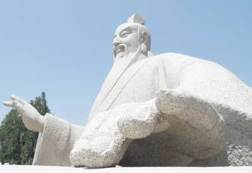
Confucius_Sculpture,_Nanjing

In honor of Confucius’ birthday on September 28th, 551 BCE*, I’m republishing a piece originally published here last year by one-time regular contributor Eric Gerlach. Following his interesting piece, you’ll find a list of great online sources and articles for learning about this seemingly timeless sage: so many of his words of wisdom seem as pertinent today as in his own time.

Confucianism & Daoism: The Basics, by Eric Gerlach

The following is a lecture I composed for teaching Confucianism and Daoism to my sister’s 6th grade History class at Star of the Sea School in San Francisco.

Confucius and Laozi, the philosophers who founded Confucianism and Daoism, lived just before the Warring States Period of ancient China (476 – 221 BCE), a time of war, tragedy and interest in philosophy.  Unfortunately, people’s lives are full of problems, but fortunately problems make people think about their lives, question the answers of authorities and experts, and reason beyond their understandings.
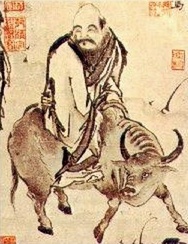
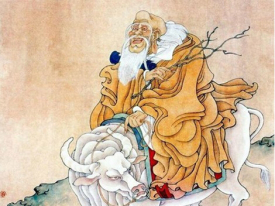
Laozi

Each of us, as individuals, should use both belief and doubt to become better, wiser people, but how should we go about doing this?  Confucianism and Daoism, the two great philosophies of ancient China, gave people opposing ways to gain wisdom.  Many in ancient and modern times used both to compliment and extend each other.

The Confucians say we should build ourselves up to be educated, compassionate and civilized, while the Daoists say we should clear ourselves out to become open-minded, patient and peaceful.  The Confucians say we should learn from others, reason for ourselves, and do what we know to be right.  The Daoists say we should seek less for ourselves and gain perspective beyond our own interests, reasons and actions.

Confucius, the Golden Rule & Learning from Everyone
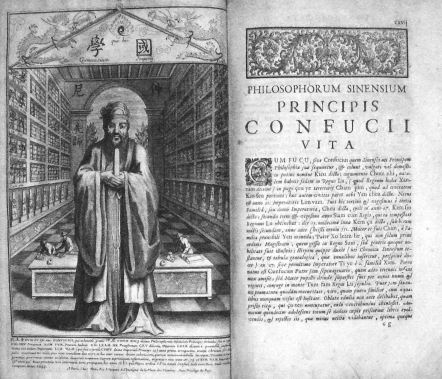
Confucius Latin

When Catholic Jesuit missionaries arrived in China in the 1600s, they were astounded to find that Confucius, the most influential and central Chinese philosopher, was incredibly similar to Jesus in his sayings and teachings.  First and foremost, like Jesus, Buddha, Muhammad and other revered teachers, Confucius taught what has been called the Golden Rule: Do for others what you would want them to do for you, and do not do to others what you do not want done to yourself.  Confucius said that this was the single thing that should guide one’s life, and that compassion is the central thread running throughout his thinking.
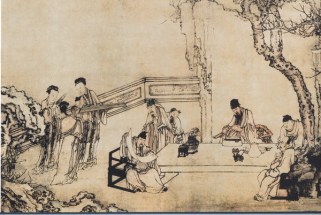
chinese-scholars1

Confucius’ student Zigong once told his teacher, “I do not want to do to others what I do not want them to do to me.”  Confucius replied, “You have not come that far yet”, probably because none of us want others to simply tell us that they are amazing. Another time, Confucius heard Zigong criticizing other people, and said, “Zigong must have already reached perfection, which affords him leisure I do not possess.”  Confucius is being sarcastic, as he often said that no one is perfect, but anyone can be excellent by continuously working to become better.
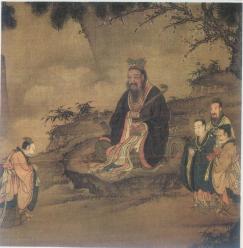
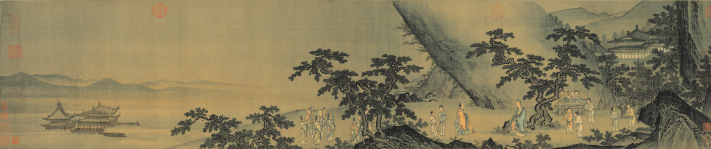
confucius-teaching-hillside-painting

Not only can anyone be excellent, but we can each learn from anyone about how to be better ourselves.  Confucius taught that when we see great people, we should seek to be like them, but when we see horrible people, we should seek how we are like them by examining ourselves.  Confucius said, “Put me with any two people at random and they will always have something to teach me, as I can take their qualities as a model and their defects as a warning.  Clearly, Confucius believed that we all share the same set of strengths and faults, no matter how talented (or horrible) we happen to individually be or where our talents are.
emperor-shun-of-china

Because no one is perfect and everyone can learn from anyone, there is no one who is above criticism, not even the prince of the state.  When asked by a duke if there is a single thing that could ruin a country, Confucius said that if the prince is never told when he is in error or contradicted, it could be the ruin of everyone.  About himself, Confucius said, “I am fortunate indeed… Whenever I make a mistake, there is always someone who notices it.”
chinese-painting-inquiring-about-the-dao

laozi-water-buffalo

Daoism, Perspective & Less is More

The legendary Daoist sages Laozi, Zhuangzi and Liezi taught that human perspectives are limited, and we should always keep this in mind.  Because we only have partial perspectives, we should keep in mind that others have their own perspectives which may not be the same as ours.  In one famous story, a turtle comes across a frog living in a well, and tells the frog about the sea, water that goes beyond the horizon with no walls in sight.  The frog refuses to believe the turtle, arguing that he has lived in water all his life and knows perfectly well that it comes in wells that are only so wide and have walls.  In Zhuangzi’s book, it says:
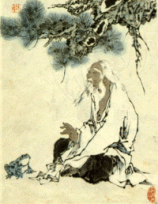
frog-with-zhuangzi

You can’t discuss the ocean with well frogs.  They’re limited by the space they live in.  You can’t discuss ice with summer insects.  They’re bound to a single season.  You can’t discuss the greater way of things with cramped scholars.  They’re shackled by their doctrines.  Now you have come out beyond your banks and borders and have seen the great sea, and so you realize how small you are.  From now on it will be possible to talk to you about the greater way of things.
japanese monkey painting

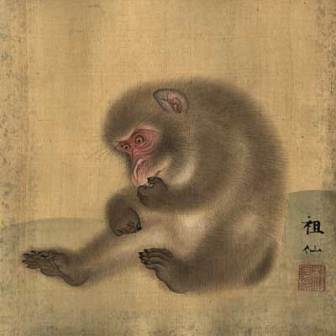
If someone sleeps in a damp place, their back aches and they ends up half paralyzed, but is this true of a carp?  If someone lives in a tree, they are terrified and shake with fright, but is this true of a monkey?  Of these three creatures, which knows the proper place to live?  We eat the flesh of grass-fed and grain-fed animals, deer eat grass, centipedes find snakes tasty, and hawks and falcons love mice.  Of these four, who knows how food ought to taste?  Monkeys pair with monkeys, deer go out with deer, and fish play around with fish.  Men claim that Mao-Qiang and Lady Li were beautiful, but if fish saw them they would dive to the bottom of the stream, if birds saw them they would fly away, and if deer saw them they would break into a run.  Of these four, which knows the standard of beauty for the world?
samurai-on-horseback-statue

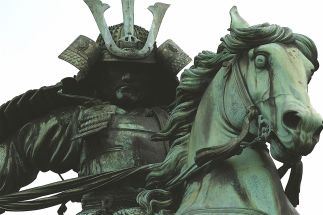
Daoists also teach the idea of wu-wei, or non-action.  This does not mean that one should not act at all, but that often doing less is doing more.  Being patient and paying attention can save us from doing too much or having to do things over again.  In a Japanese story that illustrates this well, a local lord has three sons and must decide who should inherit his position.  He tests them by placing a pillow on the door to his room and calling them one at a time.  The eldest son enters and annihilates the pillow in a frenzy of skilled sword strikes.  The middle son draws his sword but sees the pillow in mid-air and catches it.  The youngest son sees the pillow on the door, tucks it under his arm and enters the room to the joy of his father.  The youngest son was paying attention, and so he did not even need to pull out his sword.

walking-in-nature-chinese-painting

There are many passages In the Dao De Jing and Zhuangzi, the two central texts of Daoism, that similarly teach that wanting too much and trying too hard is the wrong way to be:

Sages do not boast, and are thus admired by everyone, do not want to shine, and thus will be enlightened, do not seek excellence, and are thus excellent, and because they do not argue, no one can argue with them.

chinese-mountain-painting-stairs

Those who know do not speak.  Those who speak do not know.

Whoever knows how to lead well is not warlike.  Whoever knows how to fight well is not angry.  Whoever knows how to conquer enemies does not fight them.  Whoever knows how to use others well keeps themselves low.

Those who divide fail to divide.  Those who judge are bad at judging.  What does this mean, you ask?  The sage embraces things.  Ordinary people judge between things and parade their judgements in front of others.  So I say, those who judge fail to see.
archer-china

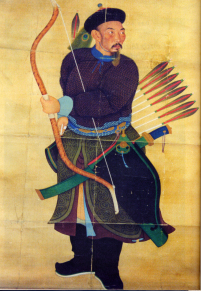
When you’re betting for cheap prizes in an archery contest, you shoot with skill.  When you’re betting for fancy belt buckles, you worry about your aim, and when you’re betting for real gold, you’re a nervous wreck.  Your skill is the same in all three cases, but because one prize means more to you than another, you let outside considerations weigh on your mind.  They who look too hard on the outside get clumsy on the inside.

~~~~~~~~~~~~~~~~~~~~~

Learn more about the great Confucius:

Confucius ~ by Jeffrey Riegel for The Stanford Encyclopedia of Philosophy

Confucius ~ by the editors for the Encyclopædia Britannica

Confucius (551—479 B.C.E.) ~ by Jeff Richey for the Internet Encyclopedia of Philosophy

Why Is Confucius Still Relevant Today? His Sound Bites Hold Up ~ by Simon Worrall for the National Geographic, March 25, 2015

*By the way, it may seem rather amazing that we’d have an exact date for Confucius’ birthday. I’m just guessing that there might have been a cultural reason to assign this date to his birth later on. Here’s the source for that date: Confucius: A Guide for the Perplexed by Yong Huang, 2013, p. 3.

~ Ordinary Philosophy and its Traveling Philosophy / History of Ideas series is a labor of love and ad-free, supported by patrons and readers like you. Please offer your support today!