Review: Tierra Mia Coffee

Rode a different way from work today, in hopes of stumbling across a new coffee shop to try out, in my ongoing search of homey, comfy, friendly places to sip and munch while I write, complete with wi-fi. away from the distractions of home.                                                            I’ve been finding this search to be a challenge, since it seems the trend in coffee shops is sleek, overpriced establishments with an edgy, painfully hip, even clinical feel, where apparently it’s a job requirement for baristas to give the distinct impression that they’re too cool for you and everyone else. And these cafes are usually filled to the rafters with affected self-conscious hipster types who pose together, coldly looking you up and down as you enter to see if you’re wearing one of five or so approved hipster uniforms, and that it passes muster.                                                                                   Fortunately, I discovered that the new coffee shop I stumbled upon today, Tierra Mia Coffee, is decidedly not one of these places. It’s roomy and airy, with high ceilings, classic European-style decor, plenty of seating, and a straightforward selection of classic espresso drinks and pastries, along with a wide assortment of pour-over specialty coffees to choose from. Not cheap, but not too expensive either. My mocha Mexicana was rich and delicious, though I was disappointed that it arrived in a paper cup. They do have mugs, you just have to remember to specifically request one. 
The clientele was refreshingly diverse, people from various age groups, socioeconomic statuses, and personal styles, like a cosmopolitan city downtown cafe, just on a smaller scale. That’s how I like it.
I would have stayed longer, but the wi-fi was glitchy. I didn’t hold that against them, though, it’s a common problem that I’m sure they’ll fix soon. I’ll be back next time I need a place to write when I’m in Uptown Oakland..

Who, What, Why, How: http://www.tierramiacoffee.com/

Where: 2001 Broadway, Oakland, CA 94612

When: Mon – Thu 6:30 am – 8:00 pm Fri 6:30 am – 9:00 pm Sat – Sun 8:00 am – 8:00 pm

Perhaps I’ll see you there sometime!


‘Flaunting’ is a Terrible Excuse for Crime

Have you ever heard the argument: ‘Well, she shouldn’t have worn that skimpy outfit / got drunk / flirted at that party. It’s (also) her fault she was raped / assaulted.’?

Compare that argument with this one: ‘Well, he shouldn’t have been wearing that Rolex / Versace suit / driven that Lexus. It’s (also) his fault he was held up / beaten to the ground and robbed.’

These are equally terrible arguments.

While one might have a point saying that a person acted impractically by wearing something in a situation where there might be predators around, that has nothing to do with the fact that it’s entirely the fault of the criminal for committing the crime.

Personal Responsibility and Collective Action Problems

In a recent essay, ‘But My Brain Made Me Do It!‘, I argue that many attempts to evade or minimize personal responsibility for one’s actions are misguided. The concept of personal responsibility exists not only to impart personal and societal meaning to human behavior, but to assign accountability. After all, if human beings can not be required to fulfill responsibilities or make retribution for harms done, societies could not function and group living would be impossible. Many attempts to evade personal responsibility only consider the reasons why one might easily have acted one way or another, and ignore two other key factors which lend weight and force to it in the first place: whether the person could have acted otherwise, and whether the person was in fact the one who performed the action. Therefore, attempts to isolate only deliberate intention, and to disregard other factors in matters of personal responsibility, undermine the nature and utility of the whole concept.

In the United States, debates about the meaning and ramifications of personal responsibility surround not only crime and punishment issues, but also public policy dealing with collective action problems, such as pollution, overpopulation, gun control, defense, law enforcement, and access to health care. These types of problems result from individual choices en masse, so that personal responsibility may be difficult to assign to any one individual. Yet, these problems would not exist unless all of those individuals choose to act they way they do. Collective action problems affect so many people, are so complex, and are so expensive, that a solution to them requires mass participation: many individuals each required to take part in solving the problem.

Yet solutions are often difficult to find because of the personal responsibility problem: how do we hold particular people responsible for solving a collective action problem when their individual choice is merely a ‘drop in the bucket’, so to speak? If personal responsibility is so narrowly conceived that one is only held responsible when there is a clear and direct link from the act in question to the entirely of the consequence, and they that they must have (mostly) understood the consequence of their action beforehand, than we must allow that no-one can be held responsible for most collective actions problems. But if we take a more robust view, that people can be held responsible for what they do and the consequences that flow from it, even if the consequences cannot be foreseen or intended, then we do have the right to call on the community to do what they can to fix the problem, be it through contributions of money or effort, through reparations, through accepting (just) punishment, or through other means.

In my ‘Brain’ essay, many of my arguments supporting a robust view of personal responsibility are consistent with a typically American conservative viewpoint, though some of my conclusions relating to particular public policies may differ. (For example, when it comes to criminal justice, I favor a reparative/restorative system over a punitive one, and restraint over zeal in enforcement of all but the most serious crimes, but those are topics for other essays.) When I apply the same arguments to collective action problems, however, the result is more consistent with a progressive approach to public policy as well as to morality.

A robust view of personal responsibility, I find, entails that individuals are morally obligated to contribute, through taxes or otherwise, to programs that preserve and promote the health, protection, and basic well-being of society as a whole. I argue this for two reasons: one, it is individual choices, be it in the aggregate, that create collective action problems (I address this issue in a past essay, in my example of the Dust Bowl crisis in mid-century United States, where the individual decisions of farmers to ‘get rich quick’ created a crisis for everyone, including those others who decided to farm more prudently and responsibly.) Therefore, members of a society should contribute to solutions or to make reparations, for the harms to others that result, directly or indirectly, as a result of their choices, Secondly, individuals, as well as society as a whole, often enjoy wealth, comfort, improved health, and other benefits that are derived from the reduced circumstances of others. A robust view of personal responsibility would also require that those who enjoy these benefits should pay their fair share for them when they have not adequately contributed for them otherwise (for example, in the marketplace).

Consider the issue of health care, and the debate over whether it should be publicly subsidized.

A typically American conservative position on this issue is that health care should be a free market commodity, because it should be a reward for honest work and its contribution to society. If one is personally responsible for their own actions, then if they do their fair share and work hard, they earn the right to access health care. The market is the mechanism, therefore, that limits the access to health care only to those people who have contributed to society through work. People who do not do their fair share, on the other had, should not get health care as a freebie, coercively paid for via taxation, by wage earners. If people feel like freely donating health care to the poor, fine and good, but they should not be forced to do so.

I sympathize with that position to a limited degree. I now work in the health care industry and see people who I have good reason to believe are gaming the system, quite often, in fact. (I address this issue in another recent essay.) If some people are cheating the system, I agree, they oftne are doing the wrong thing, but, I think, not necessarily. Consider this example: a pair of aging parents find their nest egg, carefully scrounged together through a lifetime of hard work, suddenly threatened by the wife’s recent diagnosis of breast cancer. These parents may be faced with this set of choices a) let the wife die without treatment, b) pay for the treatment, wiping out the life savings with which they would have paid for their retirement and the care of their children c) hide their assets to access free public health care assistance. These parents may feel justified making the third choice, since they feel that their primary moral duty is to save the life of their spouse and to care for their children, that their lifetime of hard work contributed enough to society to earn the moral right to this public assistance, and that they do little wrong gaming a system made corrupt and expensive by greed and political chicanery. I, for one, would find it difficult to condemn such a choice, and in some circumstances, may agree that it’s the most morally justifiable choice.

In my work in the medical office as well as in my years in the work force, I’ve seen far more examples of situations that bear a closer resemblance to the hypothetical situation I presented (closely inspired by a real life one) than to simple cheating out of greed or laziness. I work for a good doctor, who is the only local one in his specialty to see low-income patients on public health care assistance. (The reimbursement rates from many public health care assistance programs are very, very low, and physician’s offices have a hard time keeping their doors open at all if they accept many patients with that insurance.) Therefore, our office cares for many of the working poor as well as the suspected cheaters. Every day, I see elderly people who carry the signs of their past lifetime of hard work as well as people who currently work long, hard hours for little pay, whose health care is paid for through taxation because they can’t afford it otherwise. And I think: that’s how it should be.

That’s because all of us enjoy the benefits that come from the hard work of so many low-income people. We get to eat plentiful, cheap food because other people toil long hours with little pay in fields, restaurants, and factories. We get to wear comfortable, well-made clothing and stuff our wardrobes to a degree that no-one but the wealthiest of aristocrats used to enjoy, again, because others work in miserable, boring, depressing conditions working practically for nothing. I live in Oakland’s Chinatown, where I am surrounded by the hardest-working people I’ve seen in my life, other than the (largely immigrant and children of immigrant) people I worked with in the food industry, and these people, too, receive pitiful remuneration for the vast contributions they make to your life and mine.

When you and I pay a few cents for an apple, or a few bucks for a shirt, or a couple hundred for a computer, we do not pay our fair share, to my mind. The market may have driven prices and wages down, but when we’ve purchased those things, we’ve only fulfilled our part of the bargain between the buyer and the seller. We have not, however, fulfilled our personal responsibility towards all those other people who made our wealth possible. We have paid for our own life of comparative wealth and ease in an exchange that buys a life of privation for another.

So when you and I buy that cheap apple, that cheap shirt, that cheap computer, our decision to do so creates an economic situation in which many other people earn poor wages. And those poor wages, in turn, mean that people can’t afford to buy health care, or indeed, enjoy those benefits of society that their work makes possible in the first place. In the long run, it’s our fault, even if indirectly, that other people can’t buy health care, because this situation arises as a consequence of our own choices, our own actions. And this is only one example in which individual actions cause collective action problems. Other examples are pollution, overpopulation, natural resource depletion, systematic racism, traffic jams…. The list goes on and on.

So here’s a question with which I would challenge those who don’t like to feel responsible, or to hold other people responsible, for such collective action problems, including so many American conservatives: why is it that you should be personally responsible for your economic well-being by choosing to do your part and work hard, but you should not be held personally responsible for the consequences of your choices in the marketplace for others who work hard? As an example we’ve already considered shows, we can follow the chain of consequences readily from our own market choices to their collective impact on the lives of others. People, out of self-interest, choose to pay less for food if they can, usually without questioning why it’s cheap. But for food to be cheap, it’s generally because wages are low (in combination with improved technology, which can increase efficiency; but sometimes, new technology means workers have to compete with it, again lowering wages). Individual choices to buy cheaper produce cause wages to be low: they benefit from the reduced circumstances of others. And healthcare, even in more efficient, less corrupt systems than ours, tends to be expensive, because of the high cost of the education of doctors and of research and development, and because it’s labor intensive (each doctor’s visit often requires a significant input of time to be effective), so low wage earners usually cannot afford adequate health care. Therefore, our personal decision to buy cheap produce causes many others not to be able to afford health care. Why, then, would we not be held to any level of responsibility for the consequences of our actions when it comes to access to health care?

We already accept the idea of personal responsibility for individual contributions to collective action problems in many other areas of life. In order to enjoy the legal right to drive, for example, we’re required to purchase driver’s insurance. That’s because our own decision to drive can have debilitating and fatal consequences for others, even if they are entirely accidental. Almost no-one intends to maim or kill another when getting behind the wheel, yet we accept that when we choose to drive, we are still personally responsible, in one way or another, for what happens as a consequence. We also accept that since we desire and enjoy such benefits and freedoms as the right to go our way unmolested by other people, to vote, to travel on public roads and bridges, and so on and so forth, we are responsible for contributing to those institutions that solve collective action problems, and contribute to the maintenance of the military, the police, infrastructure, legal system, and so forth, thorough our tax contributions and otherwise.

As intelligent social creatures, human beings have conceived and developed societies organized according to and supported by robust conceptions of personal responsibility, demonstrated by such human products as morality and law. Instead of operating primarily from a ‘me and mine’ outlook, the most successful and long-lasting, and I argue, the happiest persons and societies operate from a predominantly ‘us and ours’ mentality, with the ‘me and mine’ enjoying even greater benefits than pure self-interest could produce. (The earliest Christian communities adopted this influential philosophy and practice, with great success and to their great credit; consider the tale of Ananias, who, out of greed, did not contribute the same percentage as others towards the welfare of all. Contrast this with the later incarnations of the Church, which retained the rhetoric and abandoned the practice of equal personal responsibility for, and equals enjoyment of, the public good.)

In sum, a robust view of personal responsibility leads us to act more responsibly in our day to day actions and, in turn, to generally behave in such a way that has the best outcomes. We come to act as Immanuel Kant’s categorical imperative would have us do, to ‘Act only according to that maxim whereby you can, at the same time, will that it should become a universal law’. When each of us realizes that our day to day actions often have not only immediate and personal but wide-reaching consequences, our behavior changes. And when we wish that the consequences of our actions are beneficial or at the least not harmful, our behavior changes for the better, our imagination expands, and the world becomes a richer and safer place for us all.

Review: Farley’s East

I love to write essays, and I also have the tendency to be easily distracted by having all the comforts and hobbies of home surrounding me, as well as the tendency to justify laziness after a day at work. Therefore, to avoid stopping off at home, I’m often on the hunt to find a workspace, a great coffee-shop / cafe that’s more or less on my way from work to the hills for my early evening hike, a place that’s homey, friendly, reasonably priced, has tasty small meals and snacks, and has wi-fi. 

 
Farley’s East has just joined the list of my favorite such places. 
 
Who, What, Why, How: http://www.farleyscoffee.com
 
Where: 33 Grand Ave, Oakland, CA 94612
 
When: Mon – Fri 7:00 am – 9:00 pm Sat – Sun 8:00 am – 9:00 pm
 
Perhaps I’ll see you there!

Stop Pretending ‘The Law’ is Not Racist!


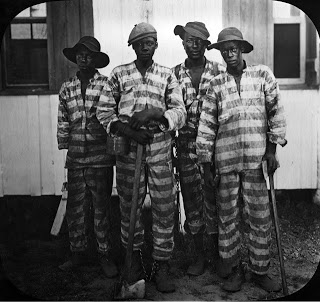
Victims of convict leasing, from an earlier era of selective law enforcement

Everybody’s talking these days about the killing of Michael Brown in Ferguson, Missouri. And the protests following the shooting. And the host of other recent killings and use of force against black people by police officers.

I’ve also heard many pundits, commentators, and counter-protesters (in support of the officer who shot Brown) say that all this controversy is pointless, unfounded, just plain wrong. The laws are not racist, they say. Neither are officers expressly told (most of the time) to target minorities. They also say that they themselves never have trouble with police officers as long as they cooperate and just do what the officer says, as they’re supposed to, which just goes to show that as long as you behave yourself, you have nothing to worry about.

As a generally ‘well-behaved’ (mostly so, but then again, I rarely got caught when I wasn’t) white woman who has never felt unfairly targeted by law enforcement, I say to this second group of people, if you are an adult yet you think the law is ‘color-blind’, either you systematically let your biases filter out too much of the available information out there, you live under a rock, or you’re lying. Or something like one of these.

Because I had never been unfairly targeted by police, I was mostly, blissfully unaware, until my very early adulthood, that such things were still going on. I thought this sort of behavior on the part of the police largely a relic of the past, of the Jim Crow and Civil Rights era that I became so fascinated by in my schoolgirl years (and remain so to this day). We all love hero stories, and I thought of Rosa Parks and Martin Luther King (and my favorite fictional hero, Atticus Finch) as among the greatest, ordinary people who stood up for the oppressed and the outcast, who triumphed against the tyrannical and the cruel, and most of all, the unjust: I always have been rather obsessed with issues of justice. I thought police had mostly changed their racist ways like most of us, and now usually did the right thing, especially because, of course, they make it their mission to stop those who don’t do the right thing.

My rather childish ignorance was first revealed to me when I witnessed my then boyfriend, a young Mexican man, pulled over by a police officer for no good reason at all.  Usually, if we were driving, we were driving together unmolested, but that day, I was following his car in mine because we had met up after work. A police car passed me after a stoplight and to my surprise, I found that his flashing lights and siren were intended for my boyfriend! We were not speeding, and it was daytime so car lights were not an issue… I could not think of a reason he would be pulled over. After the questioning ended and the cop had left, I asked my boyfriend what had happened. He admitted, embarrassed, that this happened to him all the time, it was just a regular part of his life. A young Mexican man in an old car must, necessarily, be up to no good, or if he wasn’t now, he must recently have been or was about to.

I was angry and shocked at the injustice of it all, and tried to imagine what it would feel like, and the effect it would have on my character, if I were regularly treated as a criminal, or a potential criminal, based entirely on what I look like, from the time I was young. I don’t think I could imagine, fully, what it would truly be like, but it seems a reasonable expectation that many people’s moral characters could be damaged from an early age, if many of the adults around them, especially those who set themselves up as authorities and moral leaders, act so unjustly. These young people are taught that ‘the law’ is used to protect others but punish them, that the police are not there to protect them, and that justice has a different meaning depending on what color you are, or worse, that it doesn’t really exist.

As I’ve gone through life, as I’ve had friends, co-workers, and fellow students of many races and ethnicities, as I have followed the news, and have done some study and research on matters of criminal justice, I’ve encountered countless instances of minorities unfairly and systematically targeted by law enforcement. I have a dear friend who used to travel though Colorado and Utah to go visit her family, who had to allow time for the inevitable police stop or two on each trip, no matter how carefully she drove. Yes, as you may have guessed, my friend is black. (My brother regularly travels a route in more or less the same geographical region, and has never had that problem).

These related issues, of racial profiling and selective law enforcement, has bothered me so long that when I had the opportunity a few years ago to take a criminal justice class, I jumped at the chance. I chose this subject  as the topic of my final paper, and my research uncovered a wealth of information on the subject. Study after study, public record after public record, revealed that minorities are pulled over, stopped and frisked, or arrested even for incredibly minor infractions that I had no idea that were ever enforced, at disproportionately high rates, commonly double or more than the rate of white people, in jurisdiction after jurisdiction, all over the United States. And even when minorities and whites are charged with the same or similar crimes, they get very different treatment: whites are shown leniency far, far more often than anyone else: they are, on average, sentenced to fewer years in prison or are routed to treatment instead; they are sent to state courts instead of federal courts. Minorities generally get the book thrown at them.

And in case you’re one of those who think that the law is color-blind, no, the objection you might make, that minorities commit more of the crimes so of course they’re targeted and go to jail more, is not valid. This vast accumulation of evidence that minorities are disproportionately targeted holds true for all kinds of crimes, the ones that whites commit at the same or higher rates, as well as ones that different minority groups commit at higher rates. Especially drug crimes: while whites commit most drug crimes at the same or higher rates than other groups, they are arrested far less, and if caught, don’t tend to be punished nearly as often.

Much of this information, many of these stories, have been featured in news story after news story over the years. This includes the seemingly ever-increasing recent stories in which black people are shot and/or killed for trying to get into their own house they locked themselves out of, or for being mentally ill and having a breakdown in public, or for selling single cigarettes on a street corner, or for having a fight with a bullying wannabe self-appointed ‘lawman’ on his way home. Have these pundits and ‘color-blind’ pollyannas been sticking their fingers in their ears and shouting ‘nah-nah-nah-nah-nah, it’s not happening!’ as black and brown people are being shot, beaten, and arrested, by the score, for the kinds of mistakes and indiscretions that most of us have engaged in at one time or another without permanent repercussion, while minorities are being caged at a rate that puts those old Jim Crow regions to shame?

I would say to these people, especially parents: imagine what would have happened to you, and what the life chances would be for your kids, if you and they were stopped and frisked, pulled over and your car searched, constantly throughout your life. If all those times you were a little naughty and had a drink while underage or too soon before you drove, or you or your friends had a little weed or coke in your car or pocket, or had sassed a cop when you were immature and raging with hormones and gleeful with youthful irresponsibility, or committed a petty theft…. Imagine that instead of getting away with it at the time, as most of us have, you would almost surely be caught and suffer permanent consequences (jail time, a criminal record, or worse) because everywhere you go, you are likely to be followed around by someone who assumes you probably belong in jail because of what you look like, has the power to throw you in there, and in extreme cases, even beat, choke, or shoot you, with impunity.

I and most of the white people that I, and I expect that you, know would all have been arrested or jailed at least once if the laws were enforced equally for everyone. But those of us lucky enough to go through life untargeted probably have forgotten most of the stupid things we’ve done because we haven’t had to suffer permanent harm for it; instead, we grew up, and had the chance to live a decent life, get an education and good housing, and get a decent job because we don’t have a criminal record. I fear for my nephew when I remember that he has to grow up as a young black man in this society, that he has far less wiggle room to make the mistakes that most of us make as we grow up and struggle through life. I got away, and still do, with my indiscretions and mistakes, easily, because I’m not targeted. That is not likely to be the case for my nephew.

Give that a ponder, put yourself in other’s shoes. If you are honest, I think you’ll admit that we still live in a racist, unjust, and all to much un-free society, especially for those of us with darker skin. Stop pretending now, if you are doing so, that racism is over just because the letter of the law is no longer racist. As long as law enforcement is racist, the reforms of the Civil Rights era have very limited practical meaning, and the struggles of our great social reformers continue to be, largely, in vain.

But My Brain Made Me Do It!

Brain illustration from The Principles and Practice of Medicine...' by W Osler, 1904, public domain via Wikimedia CommonsThere’s a common idea which leads many people (myself included) to instinctively excuse our own or others’ less-than-desirable behavior because we were under the sway, so to speak, of one or another mental state at the time. This is illustrated especially clearly in our justice system, where people are routinely given more lenient sentences, given the influence of strong emotion or of compromised mental health at the time the crime was committed. “The Twinkie Defense” is a(n) (in)famous example of the exculpatory power we give such mental states, where Dan White claimed that his responsibility for the murder of two people was mitigated by his depression, which in turn was manifested in and worsened by his addiction to junk food. We routinely consider ourselves and others less responsible for our wrong actions if we’ve suffered abuse suffered as children, or because we were drunk or high at the time, or we were ‘overcome’ with anger or jealousy, and so on.

But when we think about it more carefully, there’s something a little strange about excusing ourselves and others in this way for doing wrong. What we’re saying is, in a nutshell, “But my brain made me do it!”

It’s strange because no matter what we do, our brains always ‘made me do it’.

Perhaps these kinds of excuses are a relic of the ‘ghost in the machine’ variety of traditional belief, in which we are a kind of meat-machine body ‘possessed’ by a soul. In that view, the strong emotion or mental illness, then, could be yet another kind of possession which overrides the rational and moral soul.

Yet, even if one believes that sort of explanation, that’s not a very satisfying justification of why we would accept some mental states as exculpatory and not others. Why does extreme anger, such as that of a wronged lover or a frustrated driver, excuse or partially excuse an attack, but lust does not? Both are powerful emotions that all too often promote the worst behavior. Why is jealousy so often considered an acceptable excuse, but greed is not? And the ramifications of this view go beyond relieving ourselves from the burden of responsibility: it means we can’t take or give credit for our good actions, for the most part. Emotions and states of mental health inspire and make us capable of doing those things, too, in just the same way. But we generally don’t tend to have the same sort of intuitions or apply the same sort of reasoning to credit as we do to blame.

So whatever theory or philosophy of mind we ascribe to, we need to explain why we are so inconsistent on this issue. Of course, much of it is explained in cultural terms: in an honor-driven culture, for example, anger and jealousy result as an affront to one’s honor, so to feel those emotions is just and right for an honorable person. A crime committed under the sway of these emotions, then, is mitigated by the justness and rightness of the feelings, even if they inspired wrong action. On the other hand, greed and lust are not considered a just or right emotional reaction in any case in a culture underpinned by fairness, equality, and individual rights; therefore, any crime committed under their influence would, of course, be contrary to those values and not be mitigated

Yet culturally-derived explanations, of course, aren’t the same as a justification. They just explain why people in different times and places happen to react and feel the way they do; they don’t offer a justification of why anyone should accept one emotional state and not another as mitigating factors, nor do they explain why we should think some emotions somehow make one less responsible or able to control their actions than other emotions do.

The latter, of course, is an empirical question: a neuroscientist may be able to detect that the processes that produce some emotions make it impossible or at least highly unlikely that a person can engage in rational thought, or ‘put on the brakes’, so to speak, when certain provocations occur. But until we find out otherwise, it appears evident, from the fact that most people are generally cooperative and don’t purposefully harm one another, that adult people above a certain basic intelligence level are generally capable of forming good and responsible habits, which makes it unlikely that they would react wrongly or criminally when provoked or titillated. This is especially true when the people involved in their upbringing, and the society in which they live, expect good behavior from all, and hold people responsible for bad behavior.

This is true whether or not behaving in the right way is easy. Many of the excuses offered in defense of people who do wrong sound, to me, simply as evidence that it was harder for the person to behave well than to behave badly at the time. Yet mores and laws don’t exist because it’s always easy for people to get along, respect one another, to help one another and avoid harm. They exist because it’s often hard to be a good person and a good citizen. So many of these excuses, then, do much to illustrate why mores and laws need to exist, and not so much to demonstrate why the offender was less responsible for their own behavior at the time.

The reasons that we can hold people responsible for their own actions, whether or not they occurred in an emotionally stormy moment, are the same reasons that people can be admired and given credit for them. The acts and thoughts which we judge praiseworthy as well as blameworthy are those which the person could conceivably have chosen to do otherwise, even if we grant it’s unlikely that they would have chosen otherwise, and that the person did in the capacity of themself. Personal responsibility is a burden, but even more so, it’s an honor. It means that what you do is you, in a very important sense, since the mind is the author and seat of consciousness, and all of its activity is a form of doing. We, in the sense of being a person, a self, are what our brain does.

The brain is not like a pre-determined computer program; within certain parameters, it can be molded and formed, by influences from others but even more so by our own choices, which over time form habits. So it’s up to each one of us to use our judgments, surround ourselves with good influences, and to form good habits: in any given day, in any given life, each person is faced with myriad options in thought and behavior. For those important matters, we stop and reflect, though there are simply too many to judge carefully for each one; most of the time, it’s best to purposely form good habits so that in those countless reactions we have and choices we make, we’ll tend, more easily, to go for the better rather than the worse.

There are, of course, special circumstances to consider in matters of wrongdoing or crime committed by the young, or by a person with a debilitating mental illness, or a person mature in age with undeveloped mental capacities. All of these involve some diminished or absent capacity for exercising judgment in making a choice, and the degree of consciousness the person possesses. Young people, for example, lack the structures of the physically mature brain which makes it capable of making considered decisions and of putting the brakes on powerful-emotion-driven impulses. The prefrontal cortex, where much of the capacity to exercise self-control resides, doesn’t fully develop until after puberty. It seems, then, to make sense that we generally don’t hold the young as responsible for their actions in the way we do adults. Yet, with all we know about how the brain works, I find it astonishing and often horrifying that in the United States we often try the young as adults, teens and even pre-teens, when they commit particularly heinous crimes. I’d argue not only are they incapable of controlling their emotions and of reasoning as fully as adults are and therefore shouldn’t be considered responsible in the same way, but the very heinousness of the crime is evidence of the lack of maturity, of the ability to make rational judgments, which forms the basis of any coherent concept of personal responsibility. The trying of youths as adults in the courts reveal that all too many people haven’t given enough thought to what personal responsibility really means, and don’t have the proper respect for it.

Since it’s always your brain that makes you do anything, culpability should be assessed according to whether or not your brain is capable of making a different choice, again, even if it’s unlikely you might have done so. That even holds true even in many cases of so-called ‘temporary insanity’ or ‘acting under the influence’. Generally, the brain of an adult person who maintains their own survival and enjoys the liberty of an independent adult is also functioning at a level of responsibility. For example, if you run someone down in your car while drunk or texting on your phone, you are probably also a person capable of arranging for a taxi to take you home from the bar or refusing that last drink, or are aware of the huge amount of very widely published evidence we now have that texting is strongly correlated with auto accidents.

In sum: the issue of personal responsibility should not hinge on whether or not it was easy for us to make one choice, to behave one way instead of another, but on whether we ourselves, always the product of a living brain, are capable of doing otherwise.

Ordinary Philosophy and its Traveling Philosophy / History of Ideas series is a labor of love and ad-free, entirely supported by patrons and readers like you. Please offer your support today!

*This piece, originally published Aug. 6, 2014, was edited lightly on Aug. 5, 2016 for clarity and flow

Great Thing About Family Is….

I belong to a large family. Like, very large. On my mom’s side, I am one among a pool of 18 first cousins, a number not too out of the ordinary, but last I heard, I am one of a whopping 70 or so cousins on my dad’s side (If that number is out of date, dear relation who may be reading this, let me know and I’ll update!) I have twenty-one (living) aunts and uncles, not including my dad and mom, and when it comes to my siblings’ and my cousins’ kids, their spouses, the great aunts and uncles and their families… you can imagine the sheer numbers of people I count among my relations.

And yet, I actually do know a substantial majority of them, though not necessarily well. But a great many of them I do know well.

Here’s another thing: I am very different than many, probably even most, members of my family, in temperament, habits, and beliefs, as is the case with most extended families, I expect. I even find many of the beliefs and opinions held by some of my relations distasteful or sometimes even downright abhorrent, as I suspect they do mine.

Regardless of this, I love and respect almost all of them, and I really like to spend time with them when I can.

People sometimes find it necessary to distance themselves from family for their own protection, to preserve their mental health and peace of mind, for example, or because their family members’s beliefs cause them to reject their atheist, or gay, or interracially-married, or religiously converted, or otherwise non-conformist relations. Some people abuse their family members, too, sometimes in most horrific ways. Every situation is different, and of course, many people really should sever ties when the relationships they have to family is destructive.

But I think it’s so important to preserve family relations if you can, because what they have to offer can be of immeasurable value.

First, there’s the wealth of love and support that comes with family. You acquire a posse of friends and allies just through the simple fact of being born. And as you go through life, you grow together with them, and get to share in their history, in a way unique from any other kind of relationship. A member of your family can understand you in a particular way that few others can, by virtue of each of you accompanying another as each grow and change. You, in turn, can have that particularly intimate sort of insight into what makes them tick.

But secondly, and I think at least as importantly, you have the opportunity to keep your mind that much more able to imagine and to understand other ways of seeing the world. For example, here in the Bay Area where I’ve made my home for well over a decade now, I live in a liberal, artsy, worldly, well-read, foodie, moderately out-doorsy, rather cosmopolitan ‘bubble’. My friends would all be readily characterized as such, and I love these things about them, as we share so many points of view in common, and enjoy doing and talking about the same sorts of things.

But there are other ways of experiencing the world,  and as we share our city, state, country, and planet, and therefore in many ways our fate with very different kinds of people, it’s imperative that we all be able to talk to each other. But how to do overcome these often vast differences, and bridge that gap, in order to be able to understand how others think? This problem is illustrated most strikingly in our public discourse, where in the media and on internet forums, citizens, pundits, and politicians shout past each other, and instead of convincing their ideological opponents, almost always just end up ‘singing to the choir’.

And that’s where the bonds of family loyalty and shared history can come in, to help you increase your patience and expand your understanding. Family is one of the few spheres where very different people can come together in mutual love and respect, overcoming their differences in order to preserve something even more important than simply agreeing with one another about everything.

I consider my dad, for example, the most important moral influence in my life, though the few times we’ve specifically talked about the issue, we find we have very different accounts about the nature and origin of morality. Yet, I find he embodies that which morality ultimately is for, and how it molds a genuinely, habitually virtuous person that I would recommend everyone emulate and admire.

Another example: one of my uncles, dear that he is, calls me regularly in an effort to convert me back to the Catholic religion of my upbringing. (He was my confirmation sponsor, a Catholic rite of passage somewhat like a Bat Mitzvah, and he takes it very seriously, though I’ve assured him time and again that I consider him released from that obligation: I was far too young, and lacked the relevant information, to make such a vow of fealty to any religion.) We end up having many frank, lengthy discussions and debates on all manner of religious, philosophical, and political topics, and rarely agree on anything beyond the most basic moral principles and standards of reason. But we end every conversation, no matter how heated it had gotten, on the friendliest of terms, and say good-bye amidst good-humored banter.

Most of the time, it feels as if there’s just not enough time and energy to go around spending a lot of time with people that don’t share many of your interests and beliefs. But without family, it’s unlikely that many of us would have the opportunity to really get to know people that are substantially different than we are. I’ve spent countless happy and enriching hours in friendly companionship eating, hiking, swimming, playing sports and games, and just chatting with relatives with whom I have few things even common, who disagree with me philosophically, politically, and aesthetically about so many things, and I with them. But ultimately, none of that mattered at the time: we were sharing time as fellow beings sharing a kind of close human relationship that could transcend all of that.

Funnily enough, that same family loyalty that historically has led so so much tribalism and in-group, insular thinking, can also be among the most important avenues for opening us up to a more tolerant, cosmopolitan mindset, so long as we have family that are open to maintaining a system of love and support while being very different in habit and thought. So if you can, stay close to family, keep the lines of communication open. You may very well become a much bigger person as a result.

My family has done so much for me in that line, even if unintentionally, and for that, among so many other things, I thank them, and owe them a great debt.

Our Kids Don’t Want Our Legacy of Bigotry, Thank You Very Much

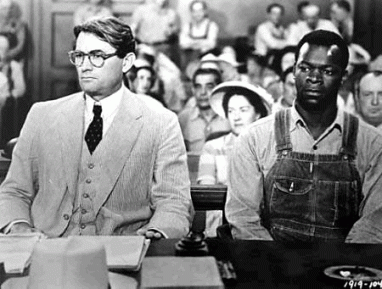
Atticus Finch defends Tom Robinson from false rape charges in To Kill a Mockingbird

I just finished reading Michelle Alexander’s The New Jim Crow: Mass Incarceration in the Age of Colorblindness. It made me good and mad all over again.

I had been reading it a week or so ago when I came across a Facebook post of a young man (I’d guess about 15 years old) who started making videos, on his cell phone, of salespeople following him around in stores. You can make a pretty good guess what color his skin is. In a temper, I made a comment on that post, perhaps an incautious one, in that it could have been interpreted as too broadly accusatory. I called out anyone who was reading it, who might be engaged in that sort of behavior, to just stop it!

The thing is, I could be a target of my own comments. Even though I don’t remember ever following anyone around a store because of their skin color, I know my thoughts and actions are sometimes influenced by unjustly negative biases too, and I’ve caught myself, from time to time, automatically having low expectations of people, based on their appearance, before I’ve spoken with them or had a chance even to observe how they actually behave.

But that makes me mad too. I remember when I was very small, when I first became aware of (often subtly) bigoted comments and attitudes, in some of the grown-ups around me, be it towards people of another race, religion, sex, or sexuality. There was a black family next door, for example, and we played and chatted with those kids blissfully unaware of race issues. Over time, I realized that there was some sort of divide, some awkwardness, between ‘my’ people and ‘their’ people. I won’t say who, but I have quite a few relatives and family friends who are quite bigoted, and many more who are but less so. It made me uncomfortable, and the way the adults answered my questions often sounded dishonest, and were unsatisfying. That may be why, when I was in sixth and seventh grade especially, I was obsessed with the civil rights movement and the whole issues of American racism. I’m sure I checked out every single book in our school library on the subject, and I remember when I was assigned to read ‘To Kill A Mockingbird’ a few years later, I had already read it several times. It’s still one of my favorite books.

So why am I mad at other people when I, too, catch myself in biased thinking? I’m mad on behalf of myself and every single other young person who inherited that unwanted baggage from each previous generation. And I’m willing to bet that, all things being equal, those adults who passed on those bigoted attitudes wouldn’t have chosen to inherit them either, since they are good in other ways.

Although I’m so conscious of that bias that creeps in, I’ll often adopt an exaggeratedly non-bigoted attitude (even if a person of color is behaving suspiciously or badly, I’ll sometimes pretend they’re not, for example), and for all of us who feel a little bigoted against our own wills and fight against it, young people pick up on subtle cues with astonishing insight. They pick up on those awkwardnesses, those little changes in the way you hold yourself, in the way you think and speak, in the presence of different people, and they all too often internalize it, adopting those attitudes themselves over time, even becoming more racist themselves in an attempt to justify those adopted instincts.

I feel that for every one of these kids who inherit racism, their innocence has been violated: not the kind of innocence that, I think, is often just idealized ignorance (like that regarding sex), but the good kind, where people are just people and they’re all equal candidates for companions and playmates. Little kids treat each other more or less the same when it comes to color, once they’ve asked those funny getting-to-know-you questions that, to adult ears, sound racist, though they reflect only honest curiosity (hence the lack of self-consciousness). The racial divide happen later, when the awkwardness creeps in, as you grow and realize that your very thoughts have become tainted with the quality of injustice that is bigotry. In these subtle little ways, people pass on those old nasty habits of thought and behavior, robbing the next generation of that kind of inner peace that justice brings, and of so many opportunities to have a wider circle of friends, companions, and allies.

That’s how I remember it happening.

Going back to the teen and his cell phone videos: while I felt defensive on his behalf, I was also disturbed that he called one of the women following him around ‘bitch’. Then I felt doubly sorry about how this kid is being betrayed: not only are adults around him behaving badly in treating him preemptively, and therefore unjustly, as a criminal, but he’s been inculcated with at least some degree of sexism already, in that he’s comfortable with calling women ‘bitch’. An epithet on his part would be warranted, I grant, but ‘bitch’? That’s as sexist as those women following him are racist.

In every way, as with the one before, and those before that, the older generation is letting this kid down, as we do all other kids we’re subjecting to our bad example.

But I’m hopeful. I think the internet, even as it’s making our kids more sophisticated and worldly-wise than we might be comfortable with, are also bringing kids in constant contact with others of all races and cultural backgrounds, and they’re communicating freely with them clear of adult interference. They’re learning that others, whose bodily appearance may be different, have the same sort of thoughts and emotions that they do, just as we did on the playground. Now, however, the adults are not present to infuse those interactions with their racism, purposefully or not. Mr. Barack Obama was right, when he observed of his daughters and their friends ‘…when I talk to Malia and Sasha and I listen to their friends and I see them interact, they’re better than we are. They’re better than we were on those issues.’

Kids these days: they’re becoming cosmopolitan, in spite of all of those adults around them who justify their own bigotry by trying, unconsciously or not, to pass it on to their kids. Fortunately for the kids, I don’t think that’ll work this time around.


Hume, Aristotle, and Guns

Photo 2014 by Amy Cools

Antique firearms at the Scottish National Museum, Edinburgh

I’ve been mulling over the issue of ‘gun rights’ for some time now. It’s a pressing issue here in the United States, since more people are injured and killed by citizens wielding guns than in any other state with a stable government and a thriving economy.

It’s also a divisive issue, as it’s generally argued in terms of liberty, a core value in our culture and politics. One side emphasizes the right to self-defense, the other the right to freedom from fear and from the pressure to join the arms race. And whether or not people chose to arm themselves, their fellow citizens feel that they are placed under some kind of obligation or burden as a result.

From the anti-gun perspective: if at least some of your fellow citizens are armed, then you are forced into a position where you must arm yourself too whether you’d like to or not, or remain at their mercy. After all, in a moment of greed, anger, zeal, fear, mental illness, hate, or accident, one person with a gun can permanently remove all freedoms that another could ever enjoy, within seconds, with the simple squeeze of a trigger. When another is armed, they have the potential power to wield complete control as to whether you live or die, and to force you to act according to their will, and against your own.

From the pro-gun perspective: if your fellow citizens choose not to arm themselves, you leave all the work of crime deterrence up to gun owners. Not only that: since a gun is the most effective weapon which can be wielded by a person of nearly any degree of strength, it’s the only available method for many who feel the need to defend themselves and others. In other words, it’s the one real equalizer: anyone with a gun has as much power as any other, so long as they know how and when to use it.

What would help us decide how to settle this, since the freedom to live the life we want, and the freedom to live at all, are in direct conflict here? We’re still figuring it out here in the US. Some nations have chosen in favor of individual gun rights, and others have disarmed their citizens, with varying results. While, generally speaking, nations and states with low gun ownership rates have much lower rates of gun violence, there are some exceptions. The gun rights dilemma, therefore, is not simply and immediately solved through legislation designed in favor of one set of rights issues over another.

Putting the conflicting liberty and rights issues aside for the moment, perhaps it would help to consider the relevant moral issues. Here, we can look beyond local, cultural considerations to a broader source of guidance as to what we should do about guns. What does it mean to be a good person, a virtuous person, and how do we cultivate that in ourselves and in each other? How does a society cultivate that in its citizens? Can these and other considerations help us decide what’s right, morally, when it comes to the rights and responsibilities of owning a gun? What should we do about it? Is it right or good for people to hold so much power over life and death? Permissive gun laws, which make it easy for responsible gun owners to trade in guns, also make it easier for members of drug cartels and other criminals to get their hands on them, too; that being known, are those laws right?

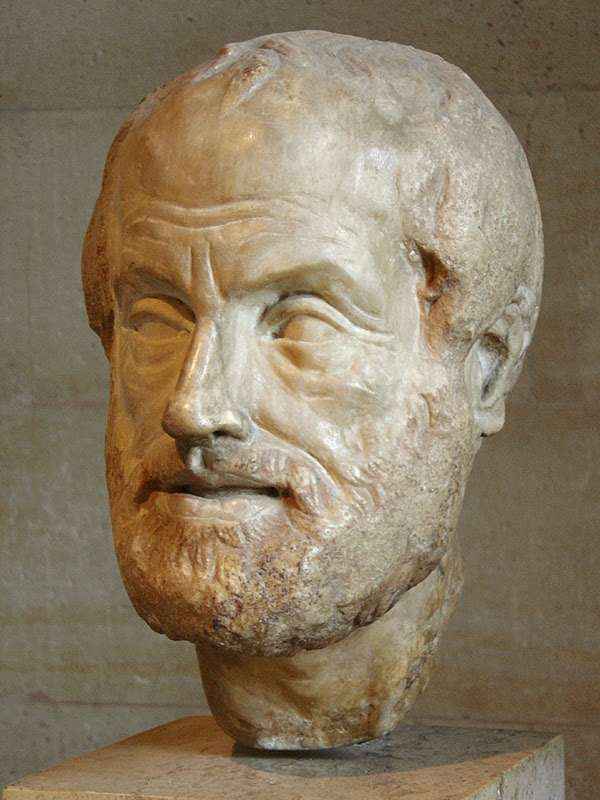
I think two of the greatest thinkers on morality and virtue, David Hume and Aristotle, can do much to help us discover some answers to these questions. Let’s explore their ideas, look for some answers there, and see how they fit with modern discoveries in behavioral science, psychology, and neuroscience.

According to David Hume, morality originates in the ‘passions’, or feelings. We can see ourselves as naturally moral creatures, since we come equipped with those emotions, those motivations, that make morality possible. We demonstrate altruistic, ‘pro-social’ (not Hume’s term, a more modern one), even as children, though we develop our moral character as we grow, through life experience, conversation with other moral beings, and by acquiring and developing the use of reason. For example, from the earliest age, we approve of kindness and disapprove of cruelty. We desire happiness, love, and generosity, and detest pain and avoid selfish people; we crave learning, and enrichment, and the approval of others. Those ‘sentiments’ ennoble us, and are responsible for that which is best in our characters. Yet the emotions we come equipped with are not sufficient, in themselves, for a morally developed person. Reason also plays a key role, enabling us to universalize and expand morals, and to apply these needed in any given situation.

Yet morality cannot be founded on reason alone: as Hume points out, reason is the means to means to link one true proposition with another, but cannot, on its own, show us what to value, or make us care about each other or anything else. It’s moral feeling, the passions, that provide the motivations, and provide reason the materials to work with to develop our morality. So as we grow up, we learn to develop our moral instincts, to ‘expand our moral circle‘ through conversation and the use of reason. By spending time with others, by being exposed to diverse ways of thinking and being, we learn that others have emotions and interests just like we do, that are just as important to them as ours are to us. Emotionally, we empathize with others; rationally, we know that what we expect of others is no more or less than what we must demand of ourselves. A very young person has the instincts for morality, but prior to experience of the world and the use of reason, it’s a very limited morality, or can even be considered a sort of proto-morality. Experience of other moral agents, through discourse with them, reveals there are others whose feelings and interests matter just as much to them as ours do to us, and finally reason shows that there is not particular reason to favor oneself over another when determining moral rules and guides of behavior. A morally good person, then, will seek to be pleasant and generous, to make others happy and improve their well-being, to respect and protect their interests as much as possible, just as we desire and expect they will do for us.

Hume’s account of how morality works, combined with the body of knowledge we’ve discovered since his time, reveals that it’s as much a natural part of the makeup of the human personality as any other, as are creativity, romantic passion, mother love, curiosity, and hunger, as well as (sadly!) rapacity and cruelty. A natural explanation of morality does not require a complex suite of arguments to found its origins in logic and reason, nor does it require some cause outside of ourselves, as traditional explanations claimed. To find out what morality is and how it works, we observe human beings, how they act and how they desire themselves and each other to act; we explain how and why morality developed as a natural adaptation for human beings; and we apply reason to determine what kinds of mindsets, rules, and behaviors lead to their flourishing.

Behavioral, biological, and evolutionary sciences have, over the years, lent support to Hume’s explanation of morality. Rebecca Saxe and Alison Gopnik, among others, has closely observed the behavior of infants and very young children over time, and has gathered a large body of evidence that people demonstrate moral instincts from the very earliest age, recognize that others are moral beings with their own interests and emotions just like us, and make moral judgments accordingly. Evolutionary psychology (Darwin considered Hume one of his great influences), in which morality is considered as much an adaptation as our opposable thumbs and long limbs, inherit much from Hume’s account. In fact, Hume is widely considered a founder of naturalistic moral theory, and a father to modern cognitive science.

Aristotle’s grounds the origin of morality more on reason, though his theory is founded, like Hume’s, from his observation of the world and how people behave. His elegant ‘function argument’ is the centerpiece of his moral theory. When you consider what something is for, and observe what it does and how it functions, you’ll know where to start. The quality of goodness in material things is closely related to the quality of goodness when it comes to actions and moral feelings. A musical instrument is for making music; therefore, an excellent, or good, musical instrument is that which produces the best music. Further, if we consider a case in which we’re deciding who the musical instrument should belong to, it would be the right thing to do to give it to the best musician. Not to the nicest person, or the one who can pay the most for it, or even to the person who made it; those considerations are irrelevant since none of those have anything to do with the proper function of the instrument.

To Aristotle, reason is the one definitive human trait that no other creature on earth possesses. That’s what we do uniquely, and what we’re best at, or at least, that’s what we do when we’re at our best. So what we should do, the moral thing to do, is what’s most reasonable, what’s most in keeping with our nature as reasonable beings. What helps us recognize that, in turn, is called the ‘Golden Mean’: consider all those traits we have, see how they fall on a spectrum, and we will see that the virtue consists of the happy medium between extremes. For example, bravery would be the virtuous golden mean between cowardice and recklessness, love between disdain and fawning or obsession, and so on. (Fun fact: Hume himself placed great importance on moderation, temperance, and fairness, eschewing divisive party politics, for example, as if it was part of his mission to live out the ideal of the Golden Mean!)

Making the leap from the function of a thing which is an artifact of intentional human creation, to the function of a human being itself, is quite a leap. Aristotle recognized this and sought to address it, but did not yet have the modern knowledge of the theory of evolution, and of evolutionary psychology, and how well they account for the origin and development of moral virtues such as kindness, sympathy, generosity, bravery, and so forth. Nor did Hume, but he did not consider it justified to form conclusions by building a logical case as far removed from original observations as many who followed Aristotle later. Hume saw human beings as much a product of the natural world as any other, and their nature as fully explicable in those terms. So leaving the function argument aside for the time being, let’s consider another important contribution of Aristotle’s to moral philosophy: the importance of habit.To Aristotle, habit is essential to the practice of virtue. By emulating virtue, we habituate ourselves to it. Over time, morality, the practice of virtue, becomes second nature. Here, Aristotle proves himself a keen observer of human psychology, and his emphasis on habit as a central driving force behind human thought and behavior, as well as something which can be deliberately instilled through practice, is confirmed by the findings of modern psychologists and neuroscientists. A recent article in Scientific American outlines some of the ways in which habits are formed, and how necessary they are if we wish to improve our behaviors systematically. Cognitive behavioral therapy, now widely considered among the most effective ways to overcome addiction and anxiety-depression, among other disorders, is also founded on these scientific discoveries.

Here’s where I find a link between these two moral theories: Aristotle’s emphasis on habit works hand in hand with Hume’s account of how moral sentiments arise from human psychology. Whether it be from habit or other mental processes we are naturally equipped with when we achieve consciousness, moral behavior is largely a spontaneous reaction to the situation at hand. Early in our development, as Saxe and Gopnik describe, a basic set of moral instincts are included in human consciousness in its earliest stages. As Hume observes, experience and reason help us expand, develop, and perfect our moral characters over time; the moral character, as Aristotle recognizes, is the set of, and relationships between, the virtuous habits we’ve cultivated through practice.
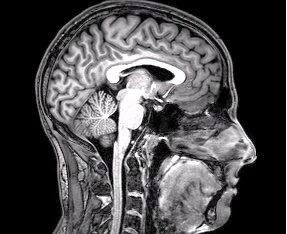
This also consistent with other findings of modern neuroscience and psychology. The way we tend to act in any given situation, the emotions and motivations that arise in us as we respond to stimuli, are formed as we react to circumstances, and by engaging in patterns of action, reactions, thoughts, behavior, we create mental channels, so to speak, or ‘paths of least resistance’, which predict our reactions, our thoughts and behavior, given similar circumstances. We usually act and think in accordance with how we’ve been given to act and think before, and only change when some new consideration(s) arises that makes us stop and consider whether to do something else this time. These considerations, the combination of reason and emotion (how do I act that will make me feel good about it, given the consequences of my actions for myself and others? How did the decisions I made last time the sort of thing came effect me and the world around me? How do others act in these situations, and what are the effects then?) inform how we habituate ourselves to new and improved moral actions and reactions.

Let’s pause for a moment. So far, we have these two thinkers’ descriptions of morality and virtue, supported by the findings of modern psychology and neuroscience.  Hume and Aristotle show us where they think we should look for virtue, how to recognize it, how to describe and explain it, and where it originates. In other words, they are engaged in metaethics. But as you may have noticed, this tells us only how people actually do think and behave; what about telling us what we should do? What are the criteria for deciding what’s right and what’s wrong?

Arete (Virtue)

I think Hume and Aristotle point us in this direction: human beings not only do, but should habituate themselves to those practices which form in us the best moral character. While both men don’t explicitly tell how we can definitely say what’s right and wrong, they go to great lengths to show us what an admirable character looks like, and how they think and behave. I think they do so in order to reveal to us not only how we could be, but how we should be. In his writings as well as by example (he was widely known to have a particularly admiral character), Hume emphasizes such virtuous sentiments as sympathy, sociability, amiability, beneficence, generosity, and so on, and advocates the cultivation of these traits, especially through conversation and spending time in the company of others, especially those who can broaden your understanding of the world, and by avid reading and study of philosophy, literature, and history. Aristotle emphasizes the virtue of moderation in all things, of wisdom, self-control, courage, and nobility. Both men emphasize, to the highest degree, the use of reason, and the value of its careful and consistent application in all matters of life. It appears that they go through all this trouble not only to show us what a good person looks like, but to offer us something to aspire to: the formation of an excellent, moral character, which leads to the best life a person can achieve.

So, finally, we return to the gun issue. What does all this have to do with owning them, and using them? What does this have to do with what we observe in human behavior when people own guns? How about when people value, or even glorify, guns?

Let’s return to the consideration of the evidence, which can reveal how attitudes and practices relating to guns manifest themselves in human behavior; in other words, what habit or habits does a gun-owning society promote?

There are conflicting statistics to when it comes to gun-related behavior. For example, people in the United States own almost twice as many guns per-capita as Canadians and Germans. Canada and Germany, in turn, have a much higher rate of gun ownership compared to most other developed nations. Yet among these three nations, the United States has a far higher gun-related death rate, about four times that of Canada, and about 8 times that of Germany, though the three share many key cultural and political traits: they are democratic, capitalistic, and culturally and historically Christian. There are also examples where lower gun-related death rates correlate with higher per-capita gun ownership. This is the case for some states in the U.S, and for Switzerland, a country that, interestingly, imposes a requirement on all households to own a gun.Yet given such outliers, most states in the US, and most countries in the world, see a strong correlation between lower rates of gun-related death and injury and lower rates of gun ownership. The U.S. ranks near the top in gun-violence rates, just under Mexico’s, a country overrun with trigger-happy drug cartels, and outranked almost entirely by countries with weak, unstable governments, poor human-rights records, and high rates of poverty and income inequality. The very lowest rates of all, by contrast, are enjoyed by those countries who possess a high degree of personal liberty and human-rights protections while at the same time restrictive gun-ownership privileges, or none at all. Even in Switzerland, often cited by gun-rights advocates as an example of how high rates of gun ownership can correlate with low levels of violence, there are 16 times as many gun deaths as in the U.K, and 64 times as many as Japan. The rates are low in Switzerland only as compared with the most violent countries, but not in comparison with the least violent.

Photo 2014 by Amy Cools

Antique long guns at the Scottish National Museum, Edinburgh

Returning to the liberty issue for a moment, it seems that overall, since you must be alive to enjoy any liberty at all, liberty is best served when there aren’t many guns around. When a fight ensues, or the home is broken into, or a child has figured out how to get into a locked cabinet, or a person goes on a violent rampage due to mental illness, few, if any, people actually end up dying or disabled when there’s no guns nearby to reach for. It’s relatively difficult and messy to kill someone with a knife and other non-gun weapons, and the planning that goes into other kinds of homicide, like poisoning, gives people more time to consider the consequences of their action, decreasing the chance they’ll go through with it, or decreasing the chances of success at homicide.

As we’ve seen, however, the liberty issue can’t be the only determining factor in deciding the gun issue, since liberty considerations conflict so sharply when one’s liberty interests run counter to another’s. There are still compelling arguments to be made that individual liberty requires the right for each person to make their own decision in the matter, from the right to self-protection and self-determination. There’s also the fact that there are some states and countries where higher rates of gun ownership do correlate with low gun violence, especially in places where the population is more homogeneous, ethnically, religiously, racially, economically, and so on, even if they are relatively few. Conversely, there’s the liberty considerations of those who wish to be free from the fear of coercion and bodily harm, ever-present dangers that usually result from a heavily armed population, as the statistics reveal.

This is where the law comes in. One main purpose of the law is to defend the rights and liberties of the citizenry at large, and this involves protecting citizens from each other. A population is always composed of people who have conflicting interests, needs and desires, so to keep a society functioning, prosperous, and harmonious as possible, the law (ideally) is crafted to balance the rights, responsibilities, and interests of each citizen, impartially, with the other.Another purpose of the law is to codify, universalize, and enforce the mores of a given society, or at least those that harmonize with the principles of justice, equality, liberty, and so on that are central to the political system of that society.And last but not least, the law encodes a system of rights, responsibilities, and prohibitions, the practice of which is requisite to being a good citizen. In other words, the law is a society’s (in a democracy, the people’s) way to habituate its citizens to those practices which form a virtuous, a good citizen.

Gun law is no exception. Prior to passing laws relating to gun ownership, there are societal attitudes towards guns that people possess, cultivate, and enforce not only through custom and discourse, but eventually through law. Famously, in the 1990’s, the Australian government, with widespread support from its citizens, collected and destroyed a large proportion of the country’s firearms, and imposed restrictive gun laws. These laws were a direct result of the public’s horrified reaction to a series of gun-related mass murders that had happened in the decade prior. The public’s new attitude towards guns was made manifest in the law. It’s still in debate whether the sharp decline in gun violence that followed the new laws were a result of the laws, or vice-versa. It appears most likely that it’s some combination of the two: after all, as we’ve observed throughout history, there’s a feedback loop between the law and a society’s moral progress.
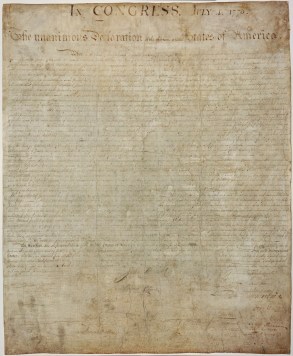
Consider the history of civil rights legislation in the United States: desegregation and other civil rights protections happened gradually, with each disenfranchised group demanding the full rights of citizenship, despite the current will of the majority to keep those groups subjugated and oppressed. Over time, the use of reason (in these cases, legal reasoning) and consideration of the values underpinning the foundational political philosophy and documents (in this case, the Declaration of Independence and the Constitution) led to new laws which not only enforced better practices, but habituated citizens to more virtuous thought and behavior, often in spite of themselves. We see this time and time again in American history: the disenfranchisement and oppression of black people, religious minorities, the poor and non-landowners, women, Jews, gay people, and so on, once common practice, came to be looked upon with righteous distaste, worthy of contempt. In so many of these cases, it was the law that changed commonly held attitudes, more than the other way around, and the change in attitudes and behavior often happened far more quickly than it would have otherwise if the practice of virtue wasn’t inculcated through law.

In sum: Considering the lessons of history, the evidence of the current states of affairs in which high gun-ownership rates correlate strongly with destructive attitudes and behavior when the entirety of the evidence is considered, and how the wisdom of two of the greatest moral thinkers is confirmed by the findings of modern science, I think that laws restricting, even eliminating, gun ownership by most individuals help lead to a wiser, more prudent, more beneficent, more amiable, more free society.

What do you think?

Ordinary Philosophy and its Traveling Philosophy / History of Ideas series is a labor of love and ad-free, entirely supported by patrons and readers like you. Please offer your support today!

– I’d especially like to thank Guy Fletcher, Lecturer in Philosophy at the University of Edinburgh, who kindly gave me some of his valuable time (despite it’s being finals week), invaluable insights, and excellent pointers regarding the subjects covered in this essay, especially in reminding me to make clearer the distinctions between meta-ethics, morality, and ethics.

~~~~~~~~~~~~~~~~~~~~~~~~~~~~~~~~~~~~~

Sources and inspiration:

Aristotle. Nichomachean Ethics. About 350 BC. 

Boseley, Sarah. ‘High gun ownership makes countries less safe, US study finds‘. The Guardian, Sep 18, 2013.

De Waal, Francis. The Bonobo and the Atheist : In Search of Humanism Among the Primates, 2013.

Gopnik, Alison. The Philosophical Baby, 1998.

Haidt, Jonathan. The Righteous Mind, 2013.

Hume, David. A Treatise of Human Nature, Volume III – Of Morals. Printed for Thomas Longman in London, England, in 1740. (I had a glorious time referring to versions published in Hume’s own lifetime during my trip to Edinburgh!) Online version: http://www.gutenberg.org/files/4705/4705-h/4705-h.htm

David B. and Stephen D’Andrilli. “What America can learn from Switzerland is that the best way to reduce gun misuse is to promote responsible gun ownership.” American Rifleman, Feb 1990

Kraut, Richard, ‘Aristotle’s Ethics‘. The Stanford Encyclopedia of Philosophy, 2014 

Morris, William Edward. ‘David Hume‘. The Stanford Encyclopedia of Philosophy, 2009.

Saxe, Rebecca. ‘How We Read Each Other’s Minds‘. TED talk, 2009

Tucker, Abigail. ‘Are Babies Born Good?’ Smithsonian Magazine, Jan 2013.

On Morality: Objective or Subjective?

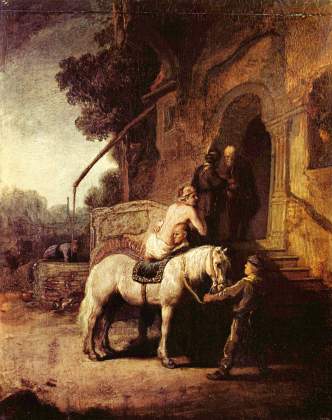
The Good Samaritan by Jean de Jullienne, 1766, after, public domain via Wikimedia CommonsIs morality objective, or subjective?

If it’s objective, it seems that it would need to be something like mathematics or the laws of physics, existing as part of the universe on its own account. But then, how could it exist independently of conscious, social beings, without whom it need not, and arguably could not, exist? Is ‘objective morality’, in that sense, even a coherent concept?

If it’s subjective, how can we make moral judgments about, and demand moral accountability from, people of times, backgrounds, belief systems, and cultures different than our own? If it’s really subjective and we can’t make those kinds of moral judgments or hold people morally accountable, then what’s the point of morality at all? Is ‘subjective morality’ a coherent concept either?

Take the classic example of slavery, which today is considered among the greatest moral evils, but until relatively recently in human history was common practice: could we say it was morally wrong for people in ancient times, or even two hundred years ago, to own slaves, when most of the predominantly held beliefs systems and most cultures supported it, or at least allowed that it was acceptable, if not ideal? Does it make sense for us to judge slave owners and traders of the past as guilty of wrongdoing?

From the objective view, we would say yes, slavery was always wrong, and most people just didn’t know it. We as a species had to discover that it was wrong, just as we had to discover over time, through reason and empirical evidence, how the movements of the sun, other stars, and the planets work.

From the subjective view, we would say no. We can only judge people according to mores of the time. But this is not so useful, either, because one can legitimately point out that the mere passage of time, all on its own, does not make something right become wrong, or vice versa. (This is actually a quite common unspoken assumption in the excuse ‘well, those were the olden days’ when people want to excuse slavery in ancient ‘enlightened, democratic’ Greece, or in certain pro-slavery Bible verses.) In any case, some people, even back then, thought slavery was wrong. How did they come to believe that, then? Was the minority view’s objections to slavery actually immoral, since they were contrary to the mores their own society, and of most groups, and of most ideologies?

Morality can be viewed as subjective in this sense: morality is secondary to, and contingent upon, the existence of conscious, social, intelligent beings. It really is incoherent to speak of morality independently of moral beings, that is, people capable of consciousness, of making and understanding their own decisions, of being part of a social group, because that’s what morality is: that which governs their interactions, and makes them right or wrong. Morality can be also viewed as subjective in the sense that moral beliefs and practices evolved as human beings (and arguably, in some applications of the term ‘morality’, other intelligent, social animals) evolved.

Morality can be viewed as objective in this sense: given that there are conscious, social beings whose welfare is largely dependent on the actions of others, and who have individual interests distinct from those of the group, there is nearly always one best way to act, or at least very few, given all the variables. For example, people thought that slavery was the best way to make sure that a society was happy, harmonious, and wealthy. But they had not yet worked out the theoretical framework, let alone have the empirical evidence, that in fact societies who trade freely, have good welfare systems, and whose citizens enjoy a high degree of individual liberty, are in fact those that end up increasing the welfare of everyone the most, for the society as well as for each individual. So slavery was always wrong, given that we are conscious, social, intelligent beings, because as a practice it harmed human beings in all of these aspects of human nature. Slavery is destructive to both the society and the individual, but many people did not have a reasonable opportunity to discover that fact, other than through qualms aroused by sympathetic observation of so much suffering.

In sum: it appears that in many arguments over morality, where people accuse each other of being ‘dogmatic’, or of ‘moral relativism’, or various other accusations people (I think) carelessly throw at each other, is due to a basic misunderstanding. To have an ‘objective’ view does not necessarily entail one must have a fixed, eternal, essentialist view of morality which does not allow for moral evolution or progress. Likewise, to have a ‘subjective’ view of morality does not entail thinking that ‘anything goes’, or that morality is entirely relative to culture, religion, or belief system. Here, as is the case with so many important issues, simplistic, black-and-white explanations do not lead to understanding, nor to useful solutions to life’s most pressing problems.

* Also published at The Dance of Reason, Sac State’s philosophy blog

Ordinary Philosophy and its Traveling Philosophy / History of Ideas series is a labor of love and ad-free, supported by patrons and readers like you. Please offer your support today!