Happy Birthday, Abraham Lincoln!

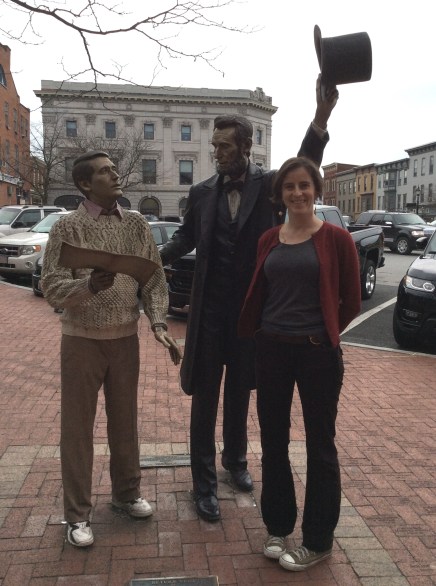
Me with Abraham Lincoln's sculpture near David Wills house where he stayed in Gettysburg, PA, the night before giving his great Address.

Me with Abraham Lincoln’s sculpture near David Wills’ house where he stayed in Gettysburg, PA, the night before giving his great Address.

Let’s remember and salute the great Abraham Lincoln, father of our nation reborn in liberty, on his birthday.

Born on February 12th, 1809, this child of a poor Kentucky farm family was largely self-educated yet rose to become our most revered President since George Washington. He was a hard-working man, from farm laborer and rail splitter to flatboat operator on the Mississippi River, then shop owner, militia captain, postmaster, lawyer, politician, then President of the United States. A popular man revered for his storytelling, conversation, intelligence, and general reputation for high integrity, Lincoln won his second campaign for political office and entered the House of Representatives in 1834. He was a successful and innovative lawyer and revered for his speechmaking. His series of debates with Democratic senator Stephen Douglas in 1858 thrust him into the national spotlight, and while he lost the race to replace Douglas in the Congress that year, his reputation continued to grow, and he defeated Douglas in the presidential race two years later. He won the Presidency as head of the newly formed anti-slavery Republican party.

Lincoln’s antipathy to slavery originated with his flatboat trip to New Orleans, where he witnessed its horrors first hand. Over the years, his political antislavery position fluctuated though it always disgusted him personally. For most of his political career, he advocated the moderate policy of stopping slavery’s spread to the new territories, leaving it in place where it already existed in the expectation that economic factors would naturally lead to its demise. But the intransigence of the slave states and the contingencies of the Civil War, combined with his own moral hatred of slavery, caused him to change his mind. Lincoln’s Emancipation Proclamation of January 1, 1863 freed all slaves in those states in rebellion, and nearly 200,000 freed black men fought for the Union Army, helping to ensure its eventual success.

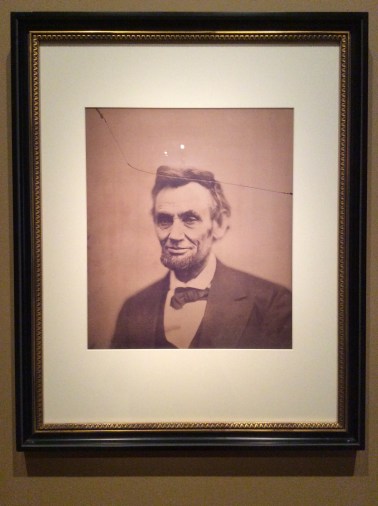
Abraham Lincoln by Alexander Gardner, Feb 5, 1865, National Portrait Gallery in D.C., 2016 Amy Cools

Abraham Lincoln by Alexander Gardner, Feb 5, 1865, National Portrait Gallery in D.C., photo 2016 by Amy Cools

Even more than his childhood poverty and lackof education, I find Lincoln’s success even more remarkable in light of the recurrent and severe depression he suffered throughout his life. While it can be crippling, it can also make sufferers that much more attuned to the suffering of fellow human beings, while deepening the understanding of human nature and increasing the capacity for sympathy. Lincoln was one of these, and his suffering refined his sensitivities and strengthened him, helping to make him the great man he became.

Having led the nation through the trauma and horror of the Civil War, Lincoln was assassinated only a month after his re-inauguration to the Presidency in 1964, shot in the head on April 14th by pro-slavery actor John Wilkes Booth while attending a play at Ford’s Theater.

Here are a few links and images of writings and works of art by, about, featuring, and inspired by Abraham Lincoln, including some of my own work.

Audiobooks of speeches and other writings of Abraham Lincoln at Librivox

Speeches, letters, and other writings by Abraham Lincoln digitized by the Northern Illinois University Libraries

Abraham Lincoln – in Wikipedia

April the 14th, Part I – by Gillian Welch

The Gettysburg Address – by Abraham Lincoln

Lincoln’s Great Depression – by Joshua Wolf Shenk for The Atlantic: Abraham Lincoln fought clinical depression all his life, and if he were alive today, his condition would be treated as a “character issue”—that is, as a political liability. His condition was indeed a character issue: it gave him the tools to save the nation

Abraham Lincoln also featured prominently in Frederick Douglass’s life and ideas which I wrote about in a history of ideas travel series I wrote last year. Here are the pieces which feature Lincoln:

Frederick Douglass Lynn Sites, Part 2: Historical Society & Hutchinson Scrapbook
Frederick Douglass, Rochester NY Sites Day 2
Frederick Douglass Seneca Falls, Canandaigua, Honeoye, and Mt Hope Cemetery Sites
Frederick Douglass Chambersburg and Gettysburg PA Sites
Frederick Douglass Washington DC Sites, Day 1, Part 1
Frederick Douglass Washington DC Sites, Day 1, Part 2
Frederick Douglass Washington DC Sites, Last Day

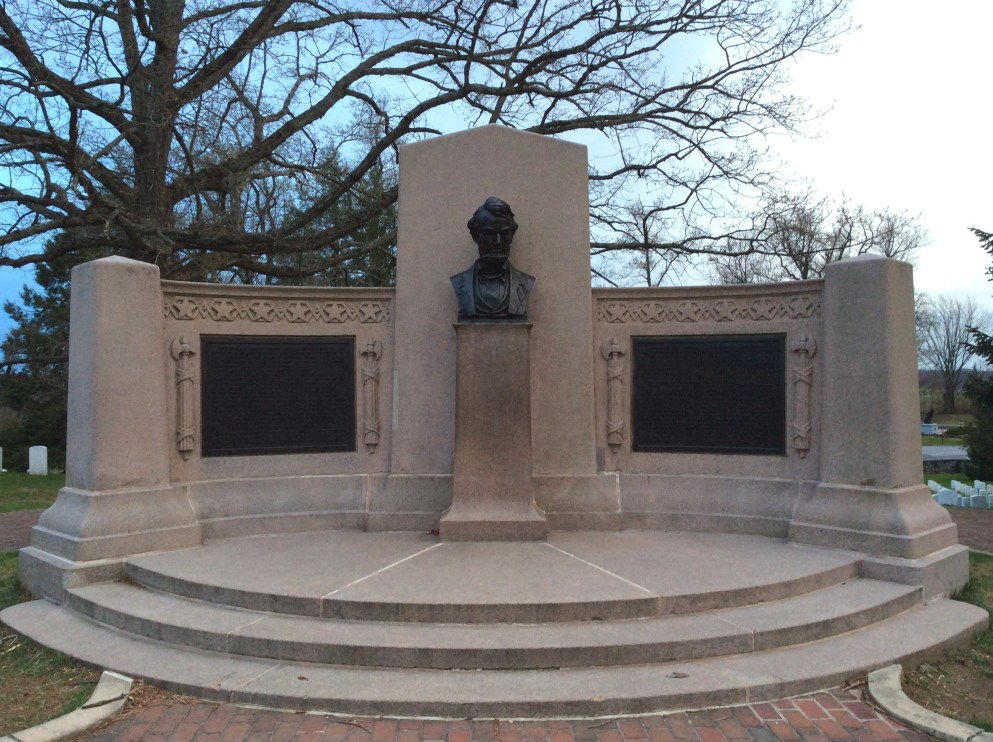
Lincoln's Gettysburg Address Memorial at Soldier's National Cemetery

Lincoln’s Gettysburg Address Memorial at Soldier’s National Cemetery, photo 2016 by Amy Cools

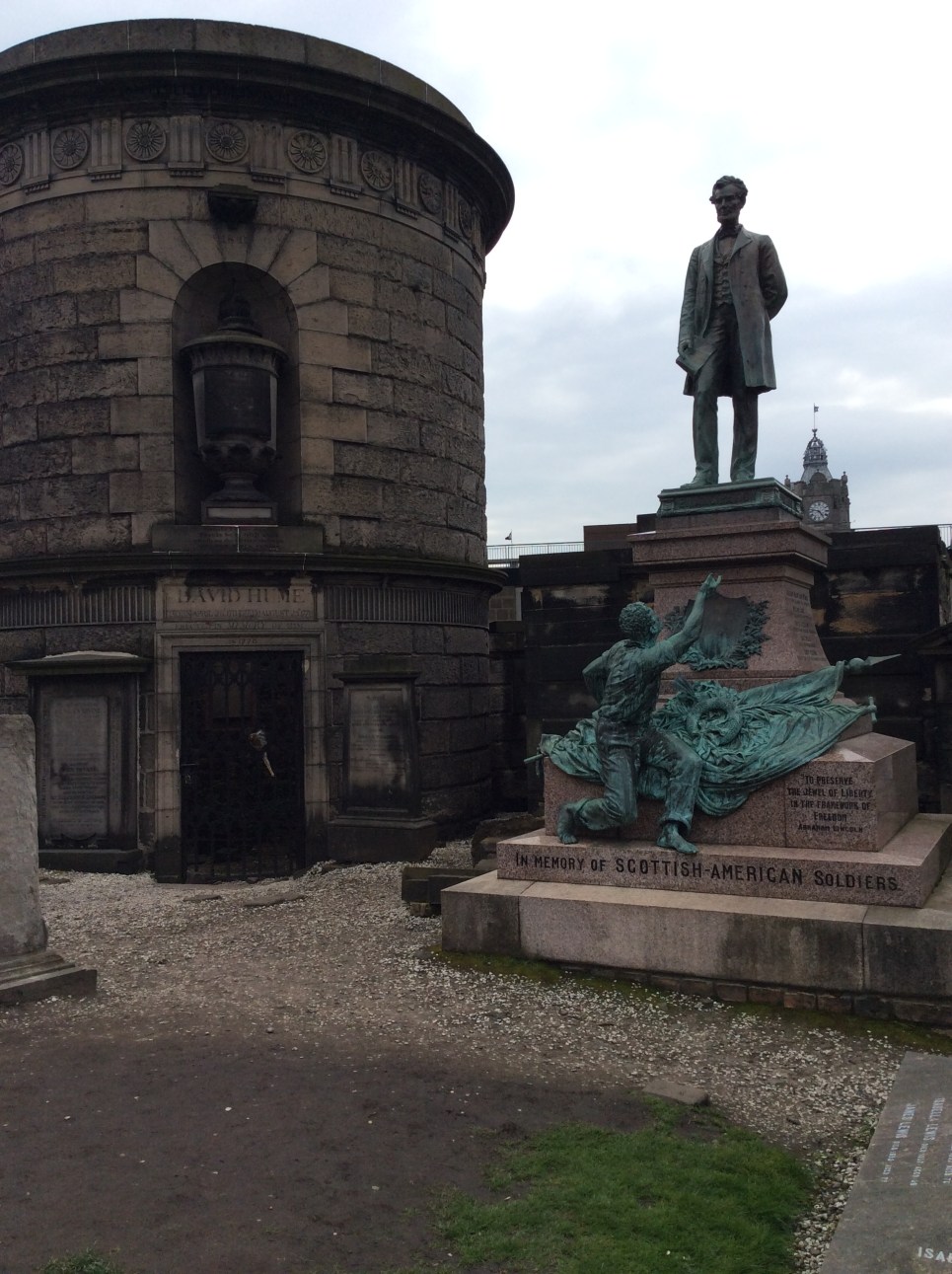
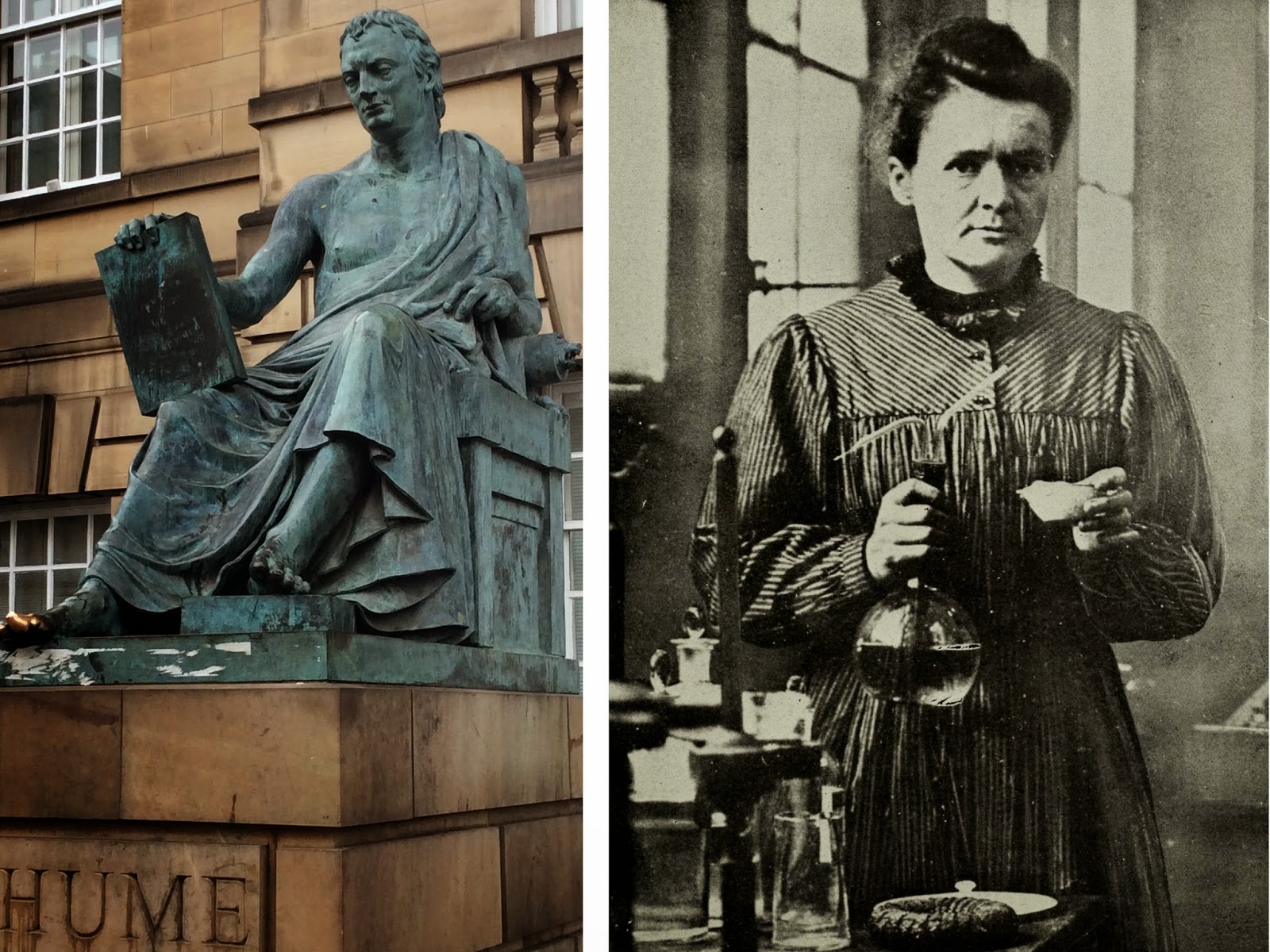
Hume's and Abraham Lincoln Scottish soldier monuments,

Hume’s grave and Abraham Lincoln sculpture on a monument to Scottish American soldiers, Calton Hill Cemetery, Edinburgh, Scotland, photo 2014 by Amy Cools

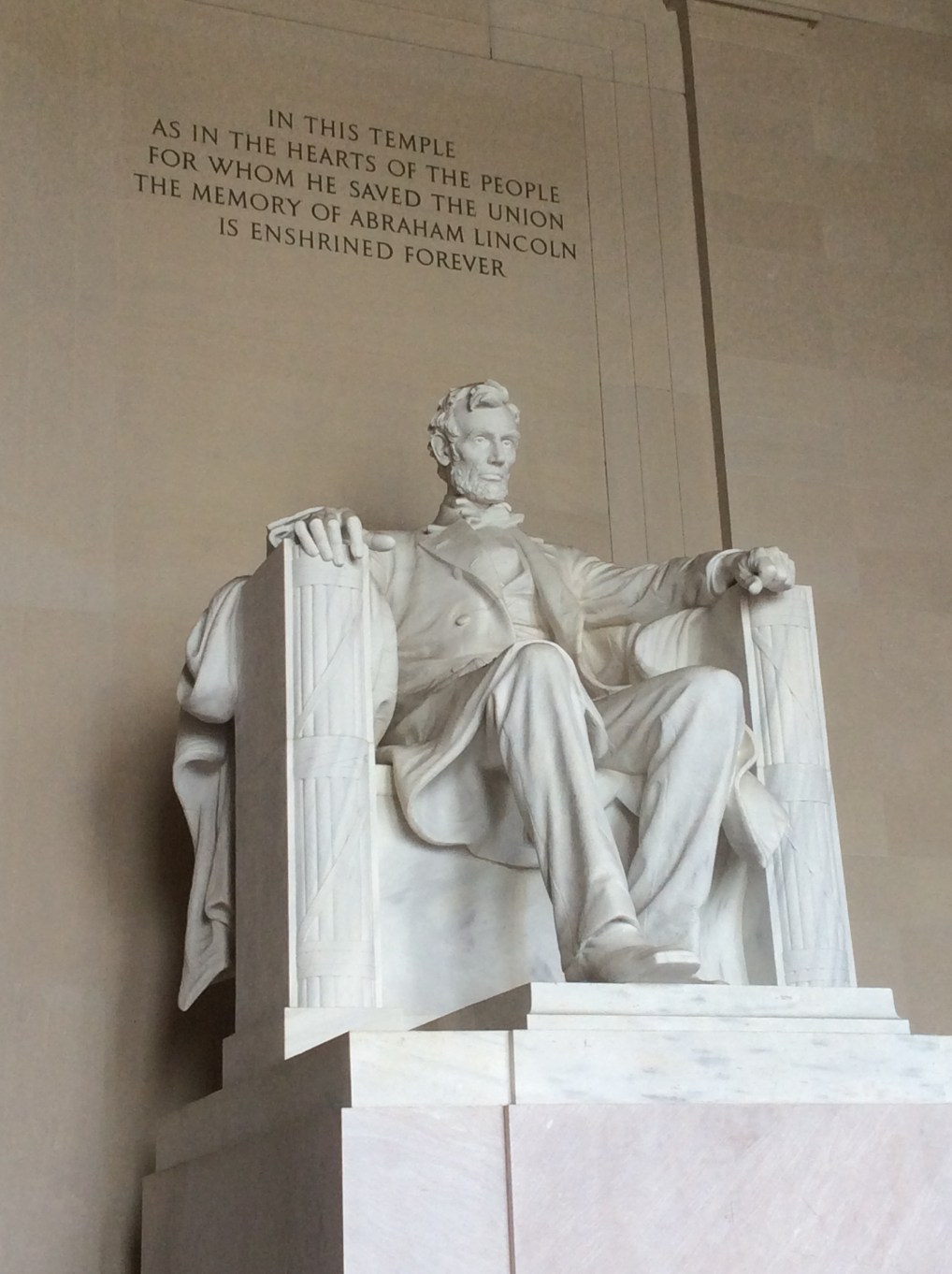
Sculpture of Abraham Lincoln in the Lincoln Memorial, Washington DC, photo 2015 by Amy Cools

Sculpture of Abraham Lincoln in the Lincoln Memorial, Washington DC, photo 2015 by Amy Cools

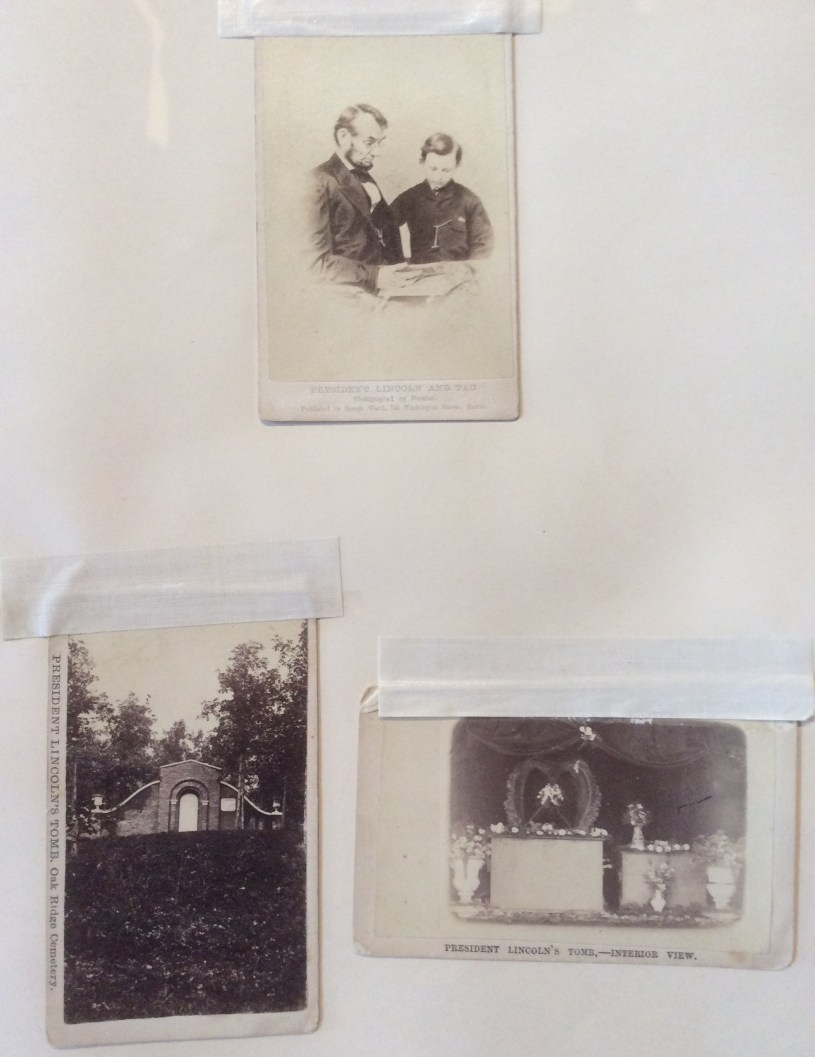
Abraham Lincoln with his son and 2 views of his tomb, from Hutchinson scrapbook at Lynn Museum

Abraham Lincoln with his son and two views of his tomb, from the Hutchinson scrapbook at Lynn Museum, photo 2016 by Amy Cools

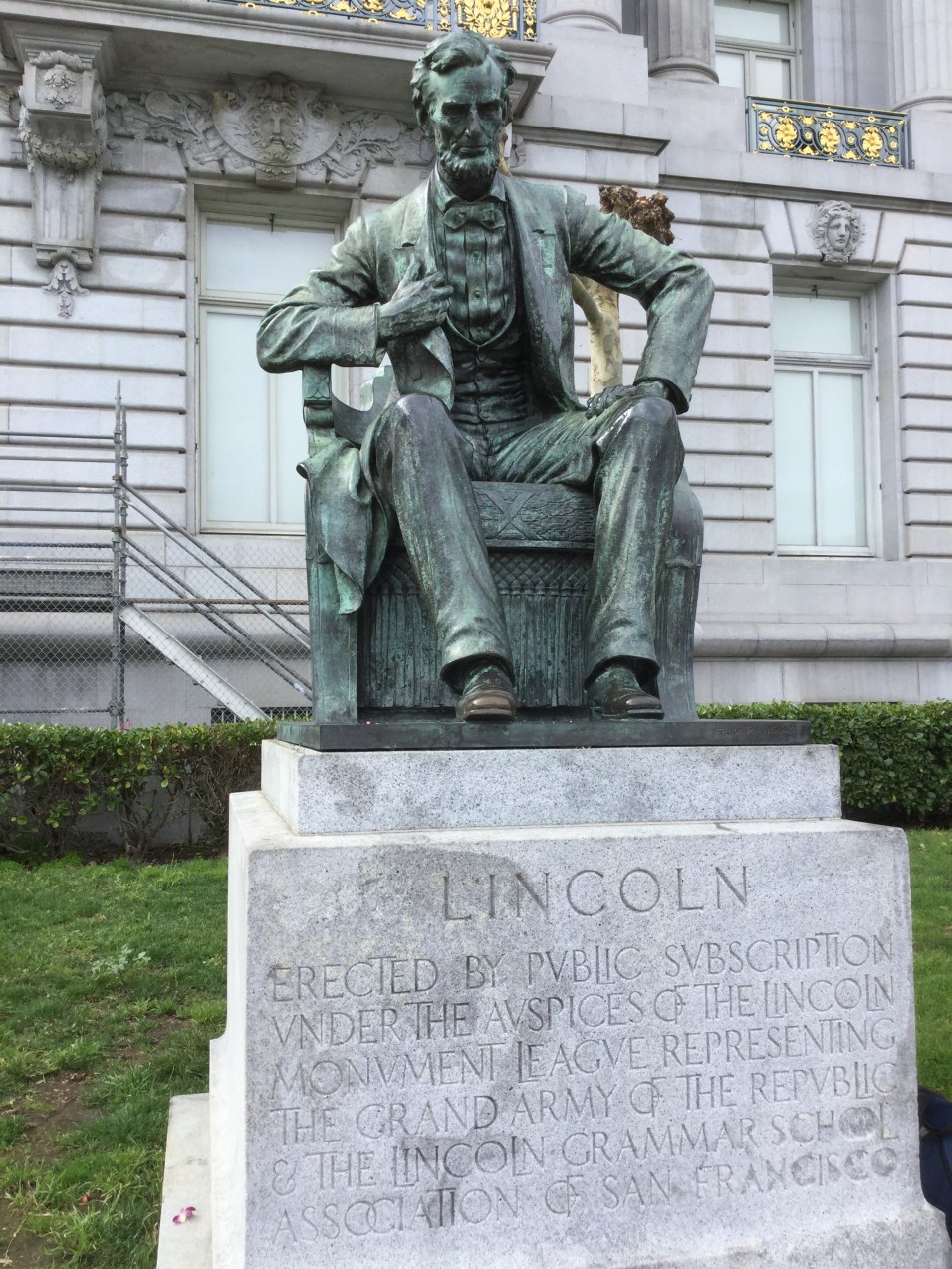
Statue of Abraham Lincoln outside of San Francisco's City Hall, photo 2017 by Amy Cools

Statue of Abraham Lincoln outside of San Francisco’s City Hall, photo 2017 by Amy Cools

Ordinary Philosophy and its Traveling Philosophy / History of Ideas series is a labor of love and ad-free, supported by patrons and readers like you. Please offer your support today!

O.P. Recommends: Bettany Hughes At 5×15 – Socrates And The Good Life

One of my favorite historians, broadcasters, and speakers, Bettany Hughes, gives a wonderful talk here on Socrates. Enjoy!

~ Ordinary Philosophy is a labor of love and ad-free, supported by patrons and readers like you. Any support you can offer will be deeply appreciated!

*All views and opinions expressed by guest writers are their own and do not necessarily reflect those of Ordinary Philosophy’s editors and publishers

Margaret Sanger and Race

Dr Dorothy Ferebee - Planned Parenthood as a Public Health Measure for the Negro Race, speech for Birth Control Federation of America, 1942

Dr Dorothy Ferebee – Planned Parenthood as a Public Health Measure for the Negro Race, speech for Birth Control Federation of America, 1942

Since the earliest days of her birth control activism, Margaret Sanger has been often accused of being a racist, among other things. To many of her critics, her birth control advocacy must be understood as a nefarious plot to undermine human morals and decency, and any means of twisting her message to convey this are fair game. As I discuss in an earlier piece, a favored method of attack, which persists to this day, is to present a sentence or phrase of Sanger’s out of context to ‘prove’ her ‘true’ beliefs about people of other races. Her detractors even claim that she was on a genocidal mission to reduce or even exterminate black people, Jews, and other immigrant groups by destroying future generations. Never mind that Martin Luther King, Jr. praised her work on behalf of his beleaguered people. Never mind that she worked closely with civil rights leaders such as Mary McLeod Bethune and W.E.B. DuBois. Never mind that she opened clinics to serve black and other minority women because so many existing clinics refused to serve anyone but whites. Never mind that she wrote in 1944:

‘We must protect tomorrow’s Chinese baby and Hindu baby, English and Russian baby, Puerto Rican, Negro and white American babies who will stand side by side… to bring promise of a better future’.
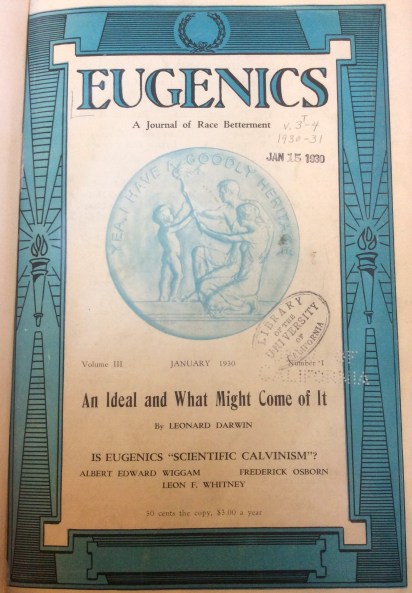
Eugenics journal, photo 2017 by Amy CoolsNow, as a eugenicist, Sanger did make herself an easy target for her accusers despite her decades of work with underserved and marginalized people, first as a nurse in the slums of the Lower East Side of New York City and then as a birth control pioneer. Eugenics, enthusiastically adopted by many who considered themselves scientific, progressive, and enlightened in the first half of the 20th century, is now recognized as pseudoscience, (mis)applying the evolutionary process of (unguided) natural selection to utopian social engineering theories. Eugenicists believed that the ills of humanity could be cured preemptively by breeding them out of existence while breeding in favor of ‘desirable’ traits. Despite the rosy vision of transforming humanity into the most vigorous, hyper-intelligent, and disease free race the world had ever seen, eugenics principles actually produced very ugly results when instituted as social policy. Here in the United States, government programs incarcerated mentally ill, disabled, and socially maladjusted people and forcibly sterilized them. Then the world’s most infamous eugenicists, the Nazis, took those principles to their most extreme logical conclusion, borrowing a page from the United States’ eugenics book in instituting the most horrific, murderous selective-breeding process the world has ever seen, inflicting untold and untellable quantities of human suffering and bloodshed.

Little wonder, then, that eugenics has a very bad name. Though the desire to reduce human suffering caused so many to embrace it, eugenics was based on a fundamental misunderstanding of Darwin’s great theory. Its proponents understood natural selection just well enough to appreciate its power for change but missed the greater point: the wide variety of human traits and capabilities is itself a long-evolved, complexly-balanced, and very very successful web of adaptations developed and attuned over hundreds of thousands of years. Human beings, necessarily self-centered and short-sighted, are very inept judges of trait selection in comparison with Nature itself.

Buck v Bell Virginia Historical Marker Q 28, Courtesy of Historical Collections, Claude Moore Health Sciences Library, University of VirginiaSanger, like many other eugenicists, was inconsistent in her attitudes about who should have children, when, and who should decide. Generally, she advocated for the right to self-determination in reproductive matters, calling for mass education and for cheap, reliable, widely available methods of birth control. In many instances, however, she advocated coercive sterilization for violent criminals and for those who she believed could not make this important decision for themselves, such as the mentally ill and cognitively disabled. She backed away from the latter, though, as the Nazis rose to power and instituted coercive, violent eugenics practices on a grand scale. Sanger was an early, ardent, and very vocal opponent of Nazism, and its policies alerted her to the problems of her short-sighted views on forced sterilization for anyone. As the logical-extreme beliefs of Nazism revealed, eugenics had its limits, and even the most non-coercive, most benign brands of eugenics were discarded by most of its former proponents over time.

But there are two other things Sanger was very consistent about.

One was her dismay at the sheer quantity of human suffering in the world and her desire to reduce it if she could. I find that oft-cited Sanger quotes, particularly from her book Woman and the New Race, refer to her observation that poor immigrants were especially likely to have more children than they could afford, and her claim that they were more likely therefore to produce ‘unfit’ children. ‘Unfit’, as Sanger described them, are those who are malnourished, diseased, undereducated, and in countless other ways ill-equipped to lead happy, flourishing lives. Yet, as is often the case with politically- and ideologically-motivated attacks, Sanger’s words are presented out of the context in which she wrote them, inspired by the plight of the immigrants she had in mind, mostly the Eastern Europeans she worked with in New York City’s Lower East Side. Before her time as a birth control activist, Sanger worked for them as a visiting nurse. As a Socialist activist and as a health care provider, she was driven by her special concern for the working poor that she observed were abused, often taken advantage of, in their desperation, by rapacious employers who offered them meager wages and terrible working conditions in exchange for backbreaking hours of miserable labor. These families were broken down from disease, hard labor, malnutrition, and, for the women, numerous pregnancies that often ended disastrously from these very health-destroying circumstances. One of Sanger’s most infamous quotes from Woman and the New Race, ‘The most merciful thing that the large family does to one of its infant members is to kill it’, so often used to ‘prove’ that Sanger was both racist and genocidal, is understood as a sarcastically-despairing remark when presented within the chapter in which it appears. That chapter describes the horror and suffering that preceded the all-too-frequent deaths of the immigrant poor, especially children and their mothers, and laments society’s lack of concern in preventing all this suffering and death. Even the next sentence alone will do: ‘The same factors which create the terrible infant mortality rate, and which swell the death rate of children between the ages of one and five, operate even more extensively to lower the health rate of the surviving members.’
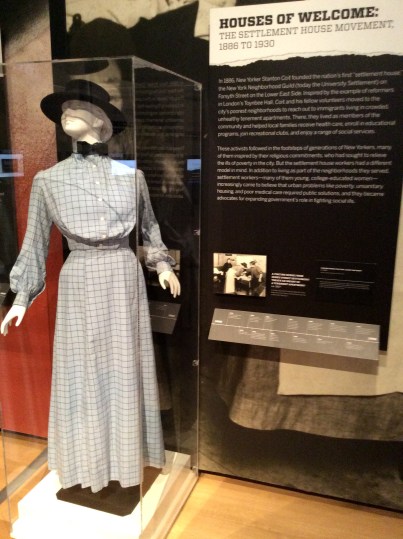
Nurse's uniform, ca. 1905, of Lilian Wald visiting service to the Lower East Side tenements of NYC

Nurse’s uniform, ca. 1905, of Lilian Wald visiting service to the Lower East Side tenements of NYC. Sanger would likely have worn an updated version of this uniform when she worked there in 1911

Second, Sanger believed all human beings should be given the same care and opportunities as everyone else. That’s why she opened her first birth control clinic in the racially diverse Brownsville neighborhood of Brooklyn in 1916, opened clinics to serve black and Latina women in Columbus Hill and Harlem neighborhoods in the late 1920’s and early 1930’s, and expanded her mission to help black communities in the American South in 1939. While there might be more than a shade of paternalism (maternalism?) in these efforts, her own writings, as well as the support of black civil rights leaders, demonstrate that her motives were, at least on the whole, motivated by her concern that justice be done for these underserved people.

As Sanger wrote to her friend Albert Lasker in 1939:

‘You are quite right in assuming that poor white people down South are not much better off than the Negroes, but there has been at least a start in several states to help the poor whites and as there is not sufficient time for a nurse, nor the material left over, for the Negroes, they are just left out of the service in most of the states. That is why I was anxious to have a special fund directed for the Negroes…’

Returning to Woman and the New Race, Sanger gave another reason why she was driven to improve lives in the disadvantaged communities she worked with and advocated for:

‘They would not be here if they did not bear within them the hardihood of pioneers, a courage of no mean order… And they have something else. The cell plasms of these peoples are freighted with the potentialities of the best in the Old World civilization. They come from lands rich in the traditions of courage, of art, music, letters, science, and philosophy… The immigrant brings the possibilities of all these things to our shores, but where is the opportunity to reproduce in the New World the cultures of the old? What opportunities have we given to these peoples to enrich our civilization? We have greeted them as “a lot of ignorant foreigners,” we have shouted at, bustled, and kicked them… What hope is there for racial progress in this human material, treated more carelessly and brutally than the cheapest factory product?’

In other words, America’s immigrants carry greatness in their very genetics, which our factories and farms have too often exploited, quashed, and wasted over the centuries by treating them as little more than wealth-generating fodder before kicking them to the curb or the ditch.

And in her article ‘Love or Babies: Must Negro Mothers Choose?’ Sanger wrote:

‘The Negro race has reached a place in its history when every possible effort should be made to have every Negro child count as a valuable contribution to the future of America. Negro parents, like all parents, must create the next generation from strength, not from weakness; from health, not from despair.’

Civil rights leader W.E.B. Dubois shared this view with Sanger: that if oppressed people were to overcome the social forces arrayed against them, they needed to forge their way from a position of strength: of health, of education, of increased wealth, and birth control was one of the ways to get there. And Sanger and DuBois both believed that they all could get there because they were just as capable of greatness as anyone else, given the same chances.

This doesn’t sound like racism to me.

*Listen to the podcast version here or on Google Play, or subscribe on iTunes

Ordinary Philosophy and its Traveling Philosophy / History of Ideas series is a labor of love and ad-free, supported by patrons and readers like you. Please offer your support today!

~~~~~~~~~~~~~~~~~~~~~~~~~~~~~~~~~~~

Sources and inspiration:

Another Look at Margaret Sanger and Race‘, Feb 23, 2012. From The Margaret Sanger Papers Project at NYU

Birth Control or Race Control? Sanger and the Negro Project‘ The Margaret Sanger Papers Project Newsletter #28 (Fall 2001)

Ferebee, Dorothy Boulding, d. 1980, “Speech by Dorothy Boulding Ferebee, M.D. entitled “Planned Parenthood as a Public Health Measure for the Negro Race,” January 29th, 1942,” Smith Libraries Exhibits

Margaret Sanger and the African American Community‘, compiled by Anna Holley, SisterSong Intern, July 2010, TrustBlackWomen.org

Marlin, George. ‘Margaret Sanger: “Abortion is Dangerous and Vicious”‘ Dec 14, 2011, The Catholic Thing blog

A Negro Number, June 1932 edition of Birth Control Review, by various authors.

Reed, Miriam. ‘Margaret Sanger: Correcting the False Narratives of Racism‘, June 30, 2016. Church and State

Sanger, Margaret, 1879-1966, “Letter from Margaret Sanger to Albert Lasker, November 12, 1939,” Smith Libraries Exhibits, Margaret Sanger Papers, Sophia Smith Collection.

Sanger, Margaret. ‘Love or Babies: Must Negro Mothers Choose?‘ Source: Negro Digest, August 1946, pp.3-8, via The Margaret Sanger Papers Project at NYU

Sanger, Margaret. ‘Population – Everybody’s Business,’ Published Article. Source: Tomorrow, 1944, pp. 16-18, Margaret Sanger Microfilm S72:0480, via The Margaret Sanger Papers Project at NYU

The Truth About Margaret Sanger‘, Blackgenocide.org

Science and Philosophy, a Beautiful Friendship: A Response to Michael Shermer

From the archives, two years ago…

Amy M Cools's avatarOrdinary Philosophy

There’s been some very public dig-taking between the science and philosophy camps lately. Lawrence KraussNeil DeGrasse TysonStephen Hawking, and other scientists are saying philosophy’s become irrelevant, little more than an esoteric old boy’s club. On the other hand, philosophers, theologians, politicians, and others criticize ‘scientism‘, the conviction that science, and only science, can and should be the ultimate source for all human knowledge; that all truth claims, that all ethical, metaphysical, and political beliefs, should not only be informed by or founded on, but entirely determined by, empirical evidence.

Michael Shermer’s article ‘A Moral Starting Point: How Science Can Inform Ethics‘ (Scientific American, February 2015) doesn’t dismiss philosophy so directly. He includes philosophy in a list of three other arenas of human thought, with religion and political theory, as those to which most people turn for answers in matters of right and…

View original post 3,485 more words

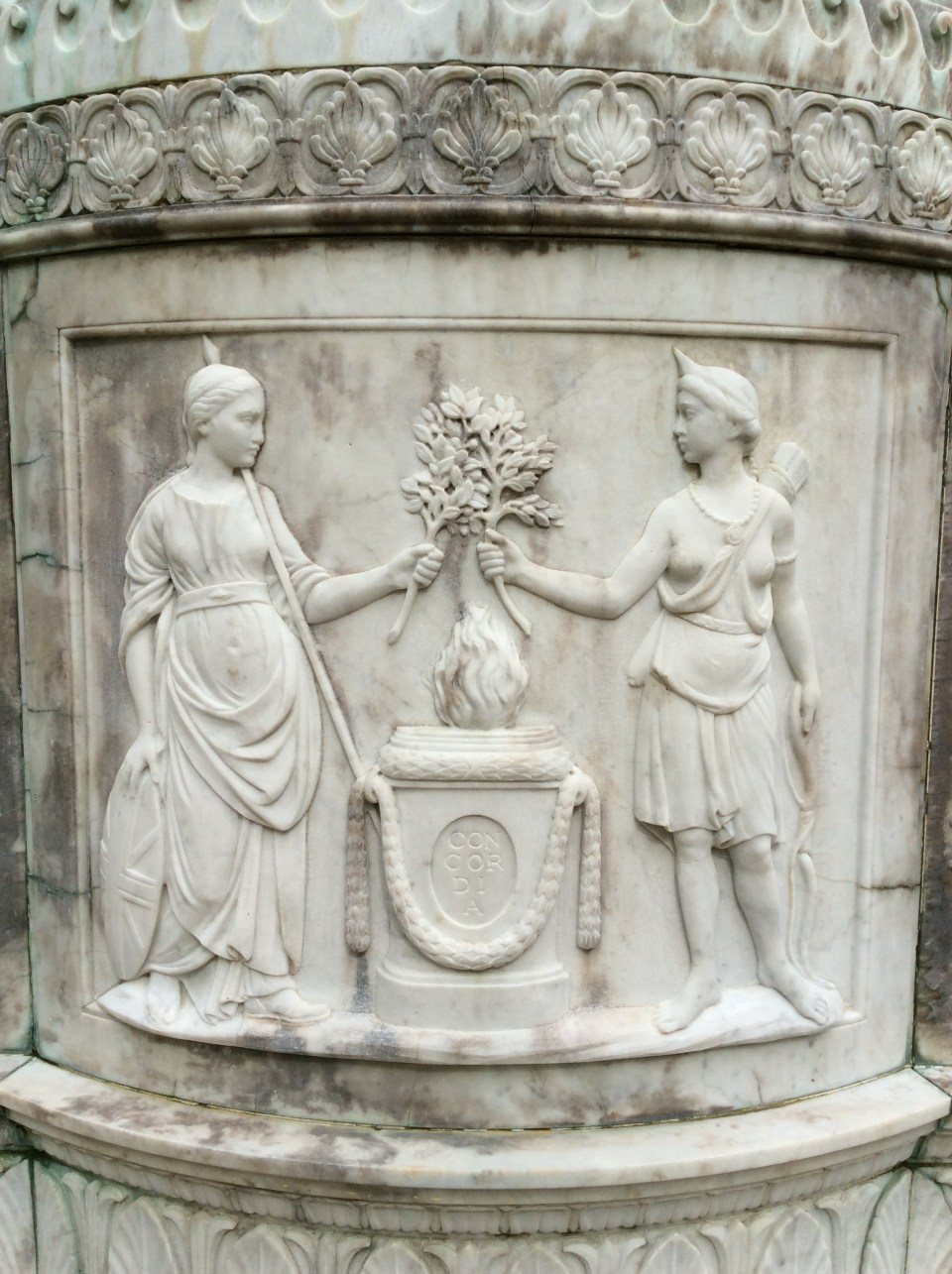
Photobook: Concordia Sculpted Pedestal, College of William and Mary, Williamsburg, Virgina

Concordia, sculpted pedestal of Lord Botetourt statue in front of the Christopher Wren building, College of William and Mary, photo by Amy Cools, 2015

Concordia, a beautifully sculpted vignette on the pedestal of Lord Botetourt’s statue in front of the Christopher Wren building at the College of William and Mary. Norborne Berkeley, the 4th Baron Botetourt, was the governor of the Virginia Colony from 1768 to 1770. The sculpture portrays two young women, one a European representing Britannia, one a Native American representing Virginia, holding olive branches of peace out to one another, mingling them together. I took this photo during my trip to Williamsburg following the life and ideas of Thomas Jefferson in Washington DC, Virginia, and Philadelphia in April of 2015.

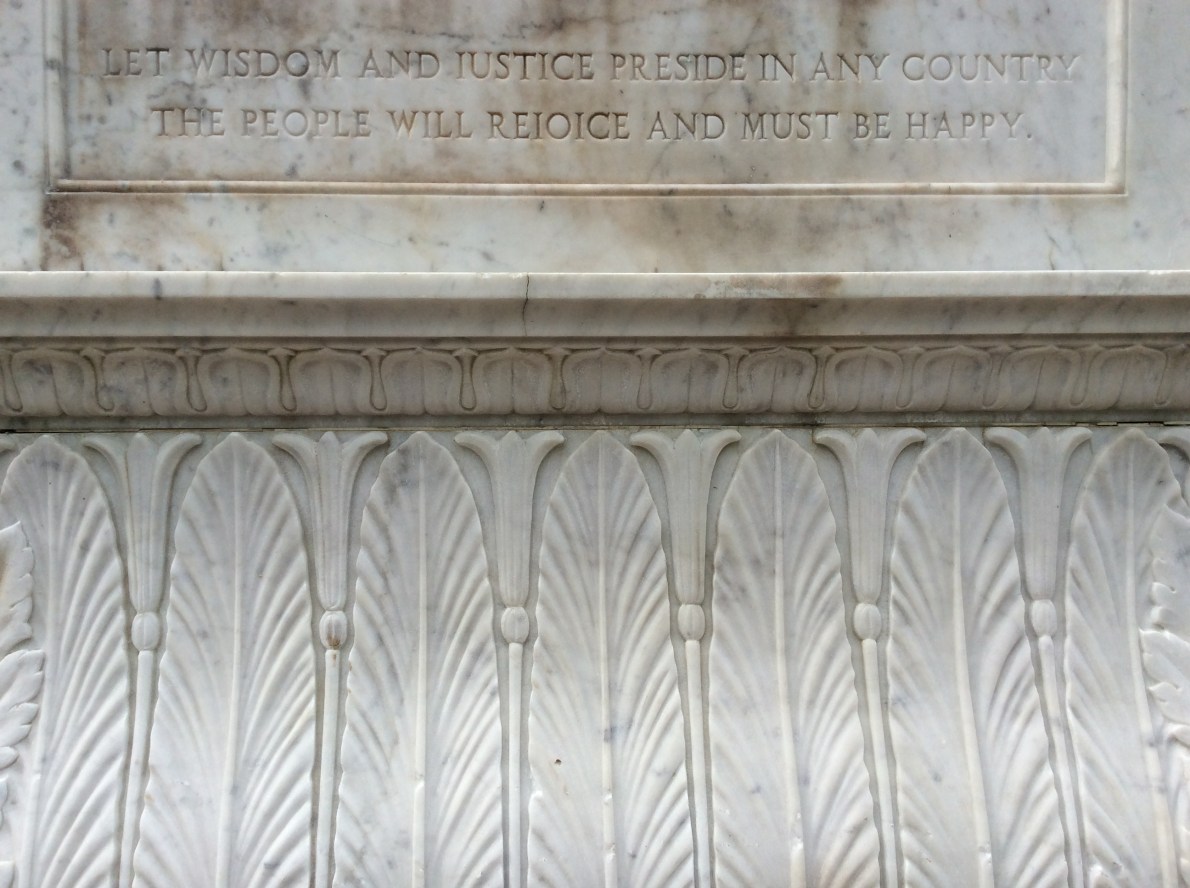
Inscription on the other side of the Concordia pedestal

Another inscription on the Lord Botetourt pedestal

Ordinary Philosophy and its Traveling Philosophy / History of Ideas series is a labor of love and ad-free, supported by patrons and readers like you. Please offer your support today!

New Podcast Episode: Margaret Sanger NYC Sites, Day 3, Part 1

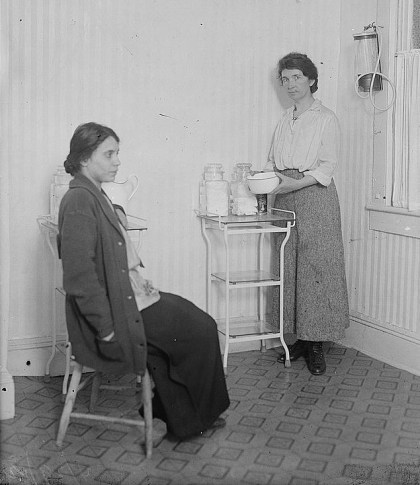
Margaret Sanger with Fania Mindell inside Brownsville clinic, forerunner of Palanned Parenthood, Oct. 1916, public domain via Library of Congress

Margaret Sanger with Fania Mindell inside Brownsville clinic, forerunner of Palanned Parenthood, Oct. 1916, public domain via Library of Congress

Listen to this podcast episode here or on Google Play, or subscribe on iTunes

Thursday, October 20th, 2016

I get out in decent time to start the day’s explorations, just after eight, but it’s not long before I realize I’m tired and hence, a little cranky. My friends and I watched the third Hillary Clinton and Donald Trump debate last night and some of the commentary which followed, then finally went to sleep very late after we talked about what we just watched, and other things. I’m mostly on New York time now, but not quite.

The abortion issue came up almost immediately in the debate since the first question from the moderator was about the Supreme Court and the appointment of justices. Trump pledged to nominate only strongly anti-abortion candidates. Clinton was adamant that Roe v. Wade and laws protecting women’s access to birth control and abortion (with appropriate limitations) be upheld. Clinton also strongly endorsed Planned Parenthood, praising the services it provides and criticizing all efforts to defund it. I, for one, am grateful to Planned Parenthood, the organization that Margaret Sanger founded…. Read the written version here

Ordinary Philosophy and its Traveling Philosophy / History of Ideas series is a labor of love and ad-free, supported by patrons and readers like you. Please offer your support today!

Untapped Cities piece about Frederick Douglass in NYC

The hymnal Frederick Douglass had with him when he escaped from slavery in 1838

The hymnal Frederick Douglass had with him when he escaped from slavery in 1838. It would have been in his bag he carried when he arrived in New York City, newly free.

Hello friends of Ordinary Philosophy!

The travel site Untapped Cities just published a piece of mine about Frederick Douglass in New York City: 7 Haunts of Abolitionist Frederick Douglass in NYC

Hope you find it of interest!

– Amy

Ordinary Philosophy and its Traveling Philosophy / History of Ideas series is a labor of love and ad-free, supported by patrons and readers like you. Please offer your support today!


History As A Communal Act: The History of Black History Month, by Stephen G. Hall

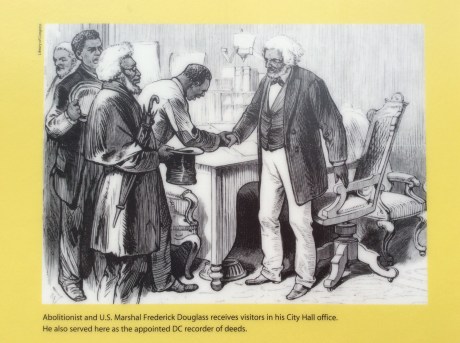
Frederick Douglass as US Recorder of Deeds, Library of Congress image, sign at D.C. Court of Appeals

Frederick Douglass as US Recorder of Deeds, Library of Congress image, sign at D.C. Court of Appeals

African Americans have always imagined and constructed history as a communal act. At the inception of the African American historical enterprise in the early 19th century, Jacob Oson’s Search for Truth (1817), one of the first examples of a textual African American historical production, offers insights into these communal sensibilities. Oson delivered the address in New Haven and New York, the locations of two dynamic free black communities, addressing communal concerns such as the African past, contemporary treatment, and identity. He also received help in publishing the address from Christopher Rush, Bishop in the African Methodist Episcopal Zion Church, one of the largest black church organizations in the country. From inception to publication, history existed not as the purview of the few, but as a communal product.

Oson’s work was no mere isolated incident. Writers were largely community advocates: ministers, abolitionists, autodidacts, and bibliophiles. James W.C. Pennington’s A Textbook of the Origin and History of the Colored People (1841)  offered important insights into African American history. Maria Stewart’s speeches blended piety with calls for communal action and awareness of racial injustice. Robert Benjamin Lewis’s interracial heritage (Native American and African) served as a springboard for his humanistic and universal history of African-descended people titled Light and Truth (1844). Black writers also envisioned their community as transnational. They engaged the African past as well as the complexities of the African Diaspora. They ruminated on the history of Haiti and Latin America. For these writers, African Americans were more than mere products of North American slavery. Their history was intertwined with the social, political, and cultural fabric of Africa and the Diaspora. In short, African American intellectuals understood their unique role as African-descended people whose history shaped the global experience.

Communal engagement proved central in dramatizing and reflecting the sentiments of historical periods. As African Americans laid the groundwork in the nation’s transition from slavery to freedom, Black history heralded these changes. William Wells Brown’s The Black Man (1863) and The Negro in the American Rebellion (1867) provided the first blueprints for the future. William Still’s The Underground Railroad (1871) reconstructed black heroism in the fight to end slavery. Black remembrance of the past focused less on individual achievements and more on the community’s collective ability to overcome obstacles to achieve clear goals. Freedom’s advent emanated from and served communal purposes.

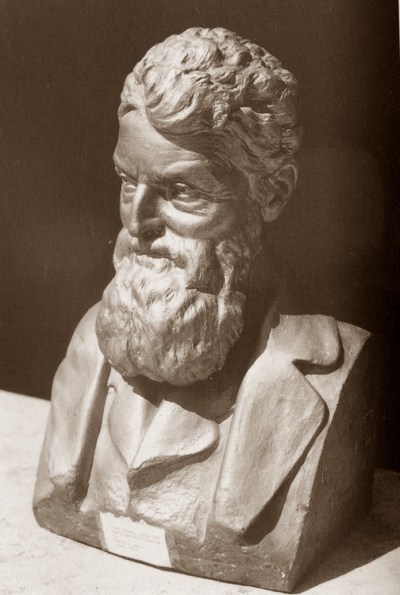
Sculpture of John Brown by Edmonia Lewis

Sculpture of John Brown by Edmonia Lewis

Black history’s communal manifestations were not merely textual. West Indian Independence Day and Juneteenth and Emancipation Day Celebrations, to name a few, permeated the communal landscape throughout the 19th and into the 20th centuries. Artistic representations, especially the work of Edmonia Lewis and Meta Vaux Warrick Fuller, were very important. Both of these women used sculpture to powerfully reconstruct the black past. Lewis’s John Brown (1864–65) and Robert Gould Shaw (1867–68, marble) depict historical figures subsequently revered in black communities. Her communal representation, Forever Free (1867, marble), celebrated the ratification of the 13th Amendment. The original title of the piece was “Morning of Liberty.” Fuller’s Ethiopia Awakening (1914), Mary Turner (Silent Protest Against Mob Violence) (1919) and Ethiopia Awakening (1930) highlight themes of racial pride, cultural awareness, and awakening and resilience in the face of adversity.

The outgrowth of these communal sensibilities naturally impacted the growth of the professionalized African American history project. Carter G. Woodson’s establishment of the Association of the Study of Negro Life and History (ASNLH) in 1915, the Journal of Negro History (1916), and the Associated Publishers in 1916 built on preexisting traditions of communal engagement and representation. These traditions were already extant in the African American historical enterprise for at least a century prior to their professionalization. Woodson used the “Documents” and “Notes” sections of the JNH to present communal offerings, the living and breathing history found in the attics and basements of African Americans around the country. Due to the small number of professionally trained historians, Woodson understood that the African American historical project must embrace the larger community as well as the professional and lay classes. Woodson utilized the broadest cross-section of the black community, drawing on everyone from K-12 educators and administrators to physicians, politicians, and pastors and ordinary people who displayed an interest in the historical past.Black literary and historical societies, bibliophiles, and collectors were also prominent in this regard. Groups such as the American Negro Academy, the Negro Society for Historical Research, and the Mu-So Lit Club played a prominent role in promoting the study of history. Their efforts were complimented by bibliophiles such as Arthur Schomburg and Jesse Moorland. Schomburg, a Puerto-Rican immigrant, collected books about the global black experience in his Harlem apartment. His extensive collection was purchased by the New York Public Library in 1925. Today it comprises the nucleus of the Schomburg Collection in Harlem, New York. Jesse Moorland, an avid bibliophile, YMCA activist, and close friend of Carter G. Woodson, donated his sizable collections to the institution, which today are housed at Howard University’s Moorland-Springarn Room.

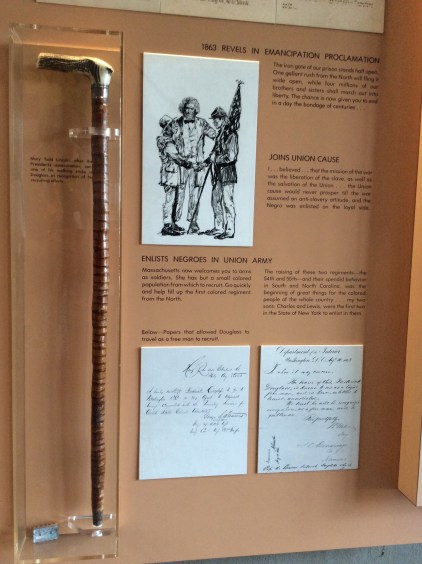
Abraham Lincoln's walking stick, Mary Todd Lincoln's gift to Frederick Douglass

Abraham Lincoln’s walking stick, Mary Todd Lincoln’s gift to Frederick Douglass

Given more than a century of deep engagement with history in black communities in textual, commemorative, artistic, organizational (literary and historical societies and libraries and repositories), and professional projects, it is not surprising that Negro History Week (1926) and later Black History Month (1980) emerged. Instituted as a communal celebration of black possibility and reality, Negro History Week continued earlier themes of accentuating black communal achievements, charting communal possibility and using institutional spaces to shape historical understanding within black communities and more important, in the national and global spheres. Its celebration in February acknowledges its communal roots. February is the birth month of two revered figures in African American life and history in the 19th and early 20th centuries: Frederick Douglass and Abraham Lincoln. Douglass and Lincoln loomed large in the black imagination because of their associations, tangible and symbolic, with Emancipation. The commemorative celebrations of the Emancipation Proclamation and the 13th Amendment, as well as the long communal struggle to eradicate slavery from the order of things, resonated in the chords of memory in African-descended populations well into the 20th century.

In 1926, the Annual Meeting of the ASNLH was held at Morgan State College (now university) in Baltimore. A “Negro History Week Roundtable” featured educators primarily from the State of Maryland and the District of Columbia. Given the prominence and activism of the black communities in these two locales, they serve as a representative sample for how “the movement,” as it was commonly labeled, impacted black communities. The comments of the educators, one of whom was Dr. Otelia Cromwell, Head of the Department of History and English in the public schools in the District of Columbia, emphasized the importance of the work. They also highlighted the impact of the celebration on young people in urban and rural communities. According to Cromwell, the observance of Negro History Week not only proved of great interest to students, faculty, and staff in the District of Columbia, but it also “had the effect of improving the tone and atmosphere of the school room.” The summation of Cromwell’s remarks unquestionably demonstrates the immeasurable nature of history’s communal reach. The report read: “These results which cannot be easily set forth in words or mathematically measured she believed to be the most important of all.” Cromwell knew that history’s import and meaning transcended the solidarity of a single moment in time. It permeated the classroom and seeped into the collective strivings of untold generations. It informed one hundred years of historical engagement and interrogation. It gave rise to textual writing, commemorative celebrations, artistic representations, literary and historical societies, black bibliophiles and collectors, and finally the professionalization of African American history in the first half of the twentieth century.

These same communal sensibilities informed the rise of the African American museum movement in the 1960s: The DuSable Museum of African American History (1961), the International Afro-American Museum in Detroit (1965), the Anacostia Community Museum in Washington (1967), and the African American Museum of Philadelphia (1976). Other community-inspired projects include The Blacks in Wax Museum in Baltimore (1983) and the National Afro American Museum and Cultural Center in Wilberforce, Ohio (1987). All of these museums used history and historical artifacts to dramatize the black past and present it to the community. These efforts culminated in the creation of the National African American Museum on the National Mall in 2016.

Our contemporary moment has witnessed the continuation of these communal projects. It has spawned the use of digital spaces (Internet and social media such as Twitter, Facebook, Tumblr, Pinterest, Snapchat, Instagram) to present African American history and historical ideas in new and dynamic ways. The construction of syllabi to educate diverse publics about contemporary events is a direct outgrowth of this communal focus. These efforts are too numerous to name them all, but a few examples will suffice: Dr. Marcia Chatelain’s #Ferguson Syllabus and the work of Drs. Chad Williams, Kidada Williams, and Keisha Blain with the #CharlestonSyllabus, The D.A.TT Freedom Summer 2015 Syllabus, the #BlackPantherSyllabus, the #The Baltimore Syllabus, the BlackLivesMatter Syllabus, the Welfare Reform Syllabus, the Trump Syllabus 2.0, and the Trump Syllabus 2.0: Supplementary List.

Black History Month, then, is more than a month-long celebration or an obligatory relic of an outmoded past. Rather it is and continues to serve as the catalyst for the transmission of a dynamic historical memory embedded in the collective striving of a global people to celebrate their historical past, affirm their humanity, and share the richness and vibrancy of their history as a communal act.

This piece was originally published at The African American Intellectual History Society (AAIHS) blog

Stephen G. Hall is the Program Coordinator of History at Alcorn State University. He is the author of A Faithful Account of the Race: African American Historical Writing in Nineteenth-Century America (UNC Press, 2009).  He is currently completing an edited book entitled History as A Communal Act: African American Historians and Historical Writing Past and Present (Routledge Press, forthcoming). His second book project is entitled Global Visions: African American Historians Engage the World, 1885–1960. (Bio credit: AAIHS)

Ordinary Philosophy and its Traveling Philosophy / History of Ideas series is a labor of love and ad-free, supported by patrons and readers like you. Please offer your support today!

O.P. Recommends: The Great Arab-American Painter, Poet, and Philosopher Kahlil Gibran on Why Artists Make Art, by Maria Popova

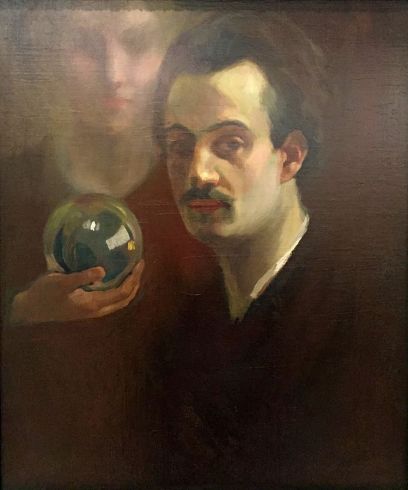
Khalil Gibran, Autorretrato Con Musa, 1911, public domain via Wikimedia Commons

Khalil Gibran, Autorretrato Con Musa, 1911, public domain via Wikimedia Commons

As happens so often, I’ve just discovered another wonderful thing because of the great Maria Popova of Brain Pickings. If there is only one website or blog you follow, I recommend that one be Brain Pickings. Literature, history, philosophy, art, poetry, children’s books, all of these and more are topics of discussion there, and the writing is beautiful.

This time, the discovery is the artist, writer, and philosopher Kahlil Gibran, and his take on a question I and I’m sure all other artists and writers ask ourselves from time the time: why we constantly feel the driving need to create things.

Popova writes:

The questions of why we humans create — why we paint caves and canvases, why we write novels and symphonies, why we make art at all — is so perennial that it might indeed fall within the scope of what Hannah Arendt considered the “unanswerable questions” central to the human experience. And yet some memorable answers have been given — answers like Pablo Neruda’s stirring childhood allegory of the hand through the fence.

Another exquisite answer comes from the great Arab-American artist, poet, and philosopher Kahlil Gibran (January 6, 1883–April 10, 1931) in Beloved Prophet (public library) — the collection of his almost unbearably beautiful love letters to and from Mary Haskell…

Read the article in full at Brain Pickings

Ordinary Philosophy and its Traveling Philosophy / History of Ideas series is a labor of love and ad-free, supported by patrons and readers like you. Please offer your support today!

Anger and Hypocrisy, by Clay Jenkinson

Obamas on Inauguration Day 2013 by P. Souza, Public domain via Wikimedia Commons

Obamas on Inauguration Day 2013 by P. Souza, public domain via Wikimedia Commons

I find it interesting that for eight years the anti-Obama legions kept their eyes open at all times for signs that Barack Obama was “an angry black man.” If at any time he showed the slightest impatience or raised his voice above a certain level, or spoke in something that could be thought to resemble black street English, the conservative punditry accused him of being an “angry black man.” They had slightly better luck with the First Lady Michelle Obama, who seemed to have a slightly more volatile temperament than her famously self-controlled husband. The academic papers of her young womanhood were examined for any sign that she hated white people, hated America, or sought radical revolution. Her statement in Milwaukee on February 18, 2008, that “For the first time in my adult lifetime, I am really proud of my country,” was cited as proof that she hated white America.

That sentence was proof positive to millions of Obama detractors that we had somehow put into the White House a couple bent on destroying America, or at least the America we know and love. Every Obama association, no matter how ancient and no matter how thin–the Reverend Wright, Bill Ayes, Saul Alinsky–was routinely trotted out to prove that the President of the United States was a dangerous radical, and perhaps a treasonist.

Apparently all black men are angry and violent. You can go to Harvard or Princeton, speak in perfect grammar, dress with great elegance, exhibit ceremonial decorum not seen in the White House since Jack and Jackie, write thoughtful and eloquent books (by yourself), and exhibit an analytical capacity that even Bill Clinton rarely exhibited, and still be regarded by the yahoos as a Black Power Radical likely to reveal his core rage at any moment. Apparently, you cannot be a black President of the United States unless you have built up no resentment about the historic and ongoing oppressions of White America, and never reveal anything but a sunny minstrel temperament.That sentence was proof positive to millions of Obama detractors that we had somehow put into the White House a couple bent on destroying America, or at least the America we know and love. Every Obama association, no matter how ancient and no matter how thin–the Reverend Wright, Bill Ayes, Saul Alinsky–was routinely trotted out to prove that the President of the United States was a dangerous radical, and perhaps a treasonist.

Now, in 2016, we elect not just an angry white man, but an almost continuously angry white man. I doubt that a day went by on the two-year campaign in which Donald Trump did not lash out at some one or some group. At times he slavered in his rages. At times he became incoherent as he tried to find words sufficient for the level of anger and denunciation he felt. From the podium he singled out individuals for ridicule and abuse. He heaped abuse on American war heroes, parents of young men fallen in America’s battles, journalists just doing their job, women who had tearfully and reluctantly confessed that he groped them in public.

When was the last time in American politics when a major candidate was so angry, so often, and with such a mean-spirited manner?

If you are a student of history, you can think of only two obvious examples. Remember in 1980 when Ronald Reagan was upset by the logistics of a Republican debate in New Hampshire? His face darkened, and he said, with unmistakable anger, “I am paying for this microphone?” The reason we all remember that minor incident is because it was essentially the only time the even-tempered, genial, and happy Reagan ever lost his temper in public.

The only other modern politician worthy of comparison with Donald Trump is former Alabama Governor George Wallace in the 1960s–with his famous leer and sneer–a vicious southern racist whose every pronouncement during those years was “dripping with the words of ‘interposition’ and ‘nullification,’” as Martin Luther King, Jr., put it.If you are a student of history, you can think of only two obvious examples. Remember in 1980 when Ronald Reagan was upset by the logistics of a Republican debate in New Hampshire? His face darkened, and he said, with unmistakable anger, “I am paying for this microphone?” The reason we all remember that minor incident is because it was essentially the only time the even-tempered, genial, and happy Reagan ever lost his temper in public.

The only other modern politician worthy of comparison with Donald Trump is former Alabama Governor George Wallace in the 1960s–with his famous leer and sneer–a vicious southern racist whose every pronouncement during those years was “dripping with the words of ‘interposition’ and ‘nullification,’” as Martin Luther King, jr., put it.

Think about it. Barack Obama was routinely accused of being an angry black man, but he wasn’t. He was about as gracious a human being as you could ever put into the Presidency (whether you like his policies or not). Donald Trump is perhaps the most angry man ever installed in the Presidency. Barack Obama had a great deal to be angry about: the history of American racism, oppression, racial profiling, segregation, lynching, belittlement. But he was invariably professional and often serene. What does Donald Trump have to be angry about? He has always been one of the most mollycoddled, indulged, and privileged of Americans, a man who can afford to install gold faucets in his homes. (Try as I might, I have never been able to find gold faucets at Home Depot).

Angry White Man with no reason to be angry: OK.

Gracious Black Man with plenty to be angry about, but beyond anger: Dangerous radical.

But as the far right likes to say, “I ain’t racist, ain’t no racism or prejudice in my body.” – CSJ

Originally published at clayjenkinson.com

– Clay S. Jenkinson is the author, educator, and scholar who created The Thomas Jefferson Hour, and is a sought-after historical impersonator, speaker, and media commentator, providing a deep but playful context to today’s events. (Bio credit: The Thomas Jefferson Hour) To discover more about Clay and his work, please visit http://www.clayjenkinson.com/

Ordinary Philosophy and its Traveling Philosophy / History of Ideas series is a labor of love and ad-free, supported by patrons and readers like you. Please offer your support today!