New Podcast Episode: Fort Robinson, Nebraska, in Search of Crazy Horse

Portrait of Crazy Horse, Tasunke Witko in Lakota, fresco on the interior wall of Wounded Knee museum, Pine Ridge Reservation, South Dakota

Listen to this podcast episode here or on Google Play, or subscribe on iTunes

Fort Robinson, Nebraska, July 26th, 2017

I wake up at Fort Robinson, just a little ways east of the village of Harrison in northwest Nebraska. I drove here last night from Wounded Knee, which takes about one hour and forty-five minutes. I camped out in the backseat of the car, where I continue to keep my sleeping bag, camp pad, and coats ready to make a cozy nest, in a parking lot behind one of the museum’s lodges. It’s a soft pinkish-blue morning, a little warm with a cool breeze blowing. It rained a little last night and everything feels fresh and clean, except me. I’ll soon find a place to wash my face, brush my teeth, and change into clean clothes. But right now, all I want to do is stretch my legs, drink my little thermos of coffee, and go out exploring in this calm and lovely early summer morning.

I drive the car around the fort, getting a good look at the layout and buildings until I find what I seek: a historical marker near apparent early fort buildings from the eighteenth century… Read the written version here

Ordinary Philosophy and its Traveling Philosophy / History of Ideas series is a labor of love and ad-free, supported by patrons and readers like you. Please offer your support today!

OP Recommends: The Best Philosophy Books of 2017, Recommended by Nigel Warburton at Fivebooks

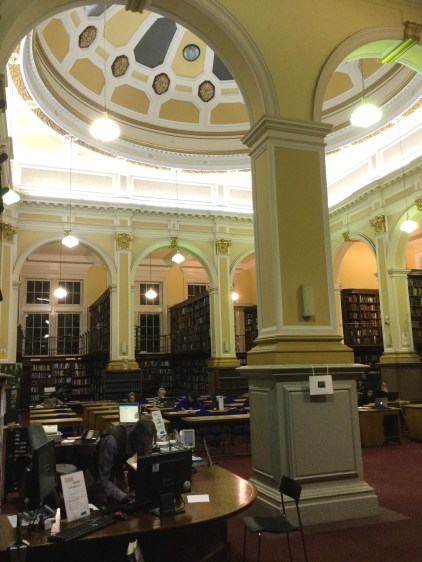
A view of Edinburgh Central Library’s Reading Room

Now that my papers are done and I have five weeks or so to choose my own reading, I’m heading to Edinburgh’s beautiful Central Library to pick up some books I’ve been itching to get into. One of them was already on my list: Dennis Rasmussen’s The Infidel and the Professor: David Hume, Adam Smith, and the Friendship That Shaped Modern Thought (one of my goals for the year is to learn as much about Scotland’s intellectual history as I can while I’m here). Nigel Warburton has made a list of his five favorite philosophy books of 2017, and Massimo Pigliucci’s book is among them. These are two excellent philosophers in the public square I’ve been following for a long time, and their philosophy podcasts are among my favorites.

Looks like I have four more books to add to my list; better get to it!

Ordinary Philosophy and its Traveling Philosophy / History of Ideas series is a labor of love and ad-free, supported by patrons and readers like you. Please offer your support today!

Welcome to the Podcast Edition of Ordinary Philosophy!

Amy Cools listening to podcast on a hike in Joaquinn Miller Regional Park, Oakland, CA, Oct 15, 2016, square

Podcasts: the perfect hiking accompaniment! Amy Cools listens to one on a hike in Joaquin Miller Regional Park, Oakland, CA, Oct 15, 2016

My first podcast episode was published three years ago today!

Amy M Cools's avatarOrdinary Philosophy

Hello dear readers, and welcome to the
podcast version of Ordinary Philosophy!

You can listen to the podcast here, on Google Play, or subscribe in iTunes.

Like many of you, I’m a big fan of podcasts, mostly because my life is very busy. One day in the future, I hope to have a lot more time to do each task one at a time, to really be present, as they say, as I wash the dishes, straighten the house, do the laundry, and perform all those other tasks that take up time, but not much thought.

But at this time in my life, between my day jobs, my creative projects, and spending time with friends and family (which I don’t do enough of these days, sadly), I don’t have enough time to keep up the world of ideas as nearly much as I’d like to by sitting down…

View original post 200 more words

Which is More Fundamental: Processes or Things? by Celso Vieira

Glass Half Full or Half Empty by Sealle, public domain via Wikimedia Commons

Metaphysics is the attempt to understand how existence works by examining the building blocks of reality, the distinctions between mental and physical entities, and the fundamental questions of being and reality. But metaphysics is not only an arcane branch of philosophy: human beings use metaphysical assumptions to navigate the world. Assumptions about what exists and what is fundamental exert a powerful influence on our lives. Indeed, the less aware we are of our metaphysical assumptions, the more we are subject to them.

Western metaphysics tends to rely on the paradigm of substances. We often see the world as a world of things, composed of atomic molecules, natural kinds, galaxies. Objects are the paradigmatic mode of existence, the basic building blocks of the Universe. What exists exists as an object. That is to say, things are of a certain kind, they have some specific qualities and well-defined spatial and temporal limits. For instance: Fido is my dog, he is grey, and was born one year ago. (It’s worth noting that such a simple statement will give rise to a litany of metaphysical disputes within substance metaphysics: realists believe that universals, such as the natural kind ‘dogs’, exist while nominalists believe them to be only intellectual abstractions.)

Though substance metaphysics seems to undergird Western ‘common sense’, I think it is wrong. To see this, consider the cliché about the glass of water: is it half-empty or half-full? The question assumes a static arrangement of things serving as a basis for either an optimistic or a pessimistic interpretation. One can engage in interminable disputes about the correct description of the physical set-up, or about the legitimacy of the psychological evaluations. But what if the isolated frame ‘a glass of water’ fails to give the relevant information? Anyone would prefer an emptier glass that is getting full to a fuller one getting empty. Any analysis lacking information about change misses the point, which is just what substance metaphysics is missing. Process philosophers, meanwhile, think we should go beyond looking at the world as a set of static unrelated items, and instead examine the processes that make up the world. Processes, not objects, are fundamental.

The pre-Socratic Greek philosopher Heraclitus provides the most famous image of process metaphysics. ‘It is not possible,’ he says, ‘to step twice into the same river’ – because existence depends on change; the river you step into a second time is changed from the river you stepped into originally (and you have changed in the interval, too). And while substance philosophers will tend to search for the smallest constituent objects in order to locate reality’s most fundamental building blocks, process philosophers think this is insufficient. So do modern physicists. Electrons are now understood as bundles of energy in a field, and quantum vacuum fluctuations prove that there are fields without bundles but no bundles without fields. Things seem to be reducible to processes – and not the reverse. (As the philosopher Alfred North Whitehead put it, we should think about ‘occurrences’ instead of ‘things’.)

Change poses a recurring problem for substance metaphysics. Universals have traditionally been a popular way to circumvent it. These static entities are difficult to define precisely, but can be thought of as ‘hyper-things’ that are instantiated in many different particular things. A universal is the thing that particulars have in common, such as types, kinds and relations. Universals are essentially different from particulars: Aristotle, for instance, argued that particulars – such as Fido my dog – are subject to generation and corruption, while species – the universal – are eternal. This particular example provides another instance in which science seems to favour process metaphysics. Thanks to the theory of evolution, the Aristotelian view that species are unchanging and eternal was proven wrong. Species evolve. They change. Dogs, after all, evolved from wolves to constitute a whole different kind. Once again, we’re better off using the paradigm of change rather than substance.

Process metaphysics leads to a re-evaluation of other important philosophical notions. Consider identity. To explain why things change without losing their identity, substance philosophers need to posit some underlying core – an essence –that remains the same throughout change. It is not easy to pin down what this core might be, as the paradox of Theseus’ ship illustrates. A ship goes on a long voyage and requires significant repairs: new planks to replace the old, fresh oars to replace the decayed, and so on, until, by the time the ship returns to port, there is not one single piece that belonged to the ship when it departed. Is this the same ship, even though materially it is completely different? For substance philosophers, this is something of a paradox; for process philosophers, this is a necessary part of identity. Of course it is the same ship. Identity ceases to be a static equivalence of a thing with itself. After all, without the repairs, the ship would have lost its functionality. Instead, as the German philosopher Nicholas Rescher argues in Ideas in Process (2009), identity just is a programmatic development. That is, the identity of a process is the structural identity of its programme. Other things being equal, every puppy will turn out to be a dog. (This programme need not be thought of as deterministic. The interactions between processes, Rescher argues, open room for variations.)

Processes are not the mere intervals between two different states of affairs or two objects, as the paradox of the heap exemplifies: take a heap of sand and remove one grain. It remains a heap; one grain doesn’t make a difference. But if you repeat the subtraction enough times, eventually there will be just one grain. Clearly, this isn’t a heap. Where did it become a non-heap? By looking at the process, and not the end-states of affairs, you’ll realise the impossibility of pinpointing the boundary between heap and non-heap. (Similarly, no individual was the exact turning point between wolves and dogs.) At the very least, this gives us a warning about the unnoticed abstraction operating on our division of natural kinds. Process philosophers such as Henri Bergson stop at this negative conclusion, believing that processes cannot be known but only experienced. Regardless, as the Danish philosopher Johanna Seibt notes, it might just be the case that focusing on the process requires a whole new perspective.

Looking at the world as a manifold of interconnected processes has scientific and philosophical advantages, but there are more prosaic benefits too. Process philosophy invites us to look at longer stretches of time, blurred boundaries and connected relations. Identity as a programmatic – but not deterministic – process welcomes innovation through small, recurring changes. Under these metaphysical assumptions, a meaningful life is less about finding your ‘real’ self than expanding its boundaries. Aeon counter – do not remove

This article was originally published at Aeon and has been republished under Creative Commons.

Celso Vieira has a PhD in philosophy from the Federal University of Minas Gerais in Brazil. He lives in Belo Horizonte where he started the first Brazilian chapter of the effective altruist group The Life You Can Save. (Bio credit: Aeon)

~ Ordinary Philosophy and its Traveling Philosophy / History of Ideas series is a labor of love and ad-free, supported by patrons and readers like you. Please offer your support today!

*All views and opinions expressed by guest writers are their own and do not necessarily express those of Ordinary Philosophy’s editors and publishers

Happy Birthday, Mark Twain!

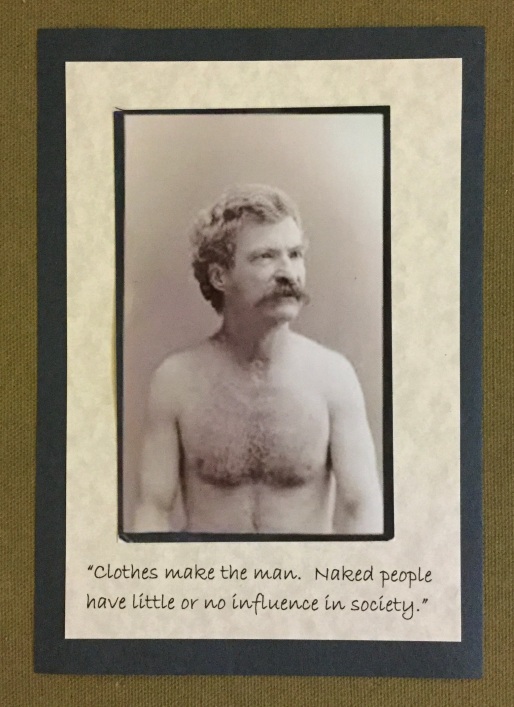
Mark Twain and ‘clothes make the man’ quote, at Mark Twain Birthplace State Historic Site, Florida, Missouri

As I work frantically on organizing my thoughts and assembling my notes for my three final semester papers (all due in a little over a week, gulp!), I can chuckle amid the stress when I think of Mark Twain’s quote ‘I have never let my schooling interfere with my education.’ In fact, he had a rib-tickling, snarky, or sarcastic witticism for just about any occasion.

But there’s so much more to Twain than his one-liners and his incredible body of work. This summer, on my way to Scotland to continue my university education, I crossed (and crisscrossed) the United States between Oakland and Chicago. My journey included following in the footsteps of the young Samuel Clemens, as he was named upon his birth on November 30, 1835, in Florida, Missouri. I have lots of notes and photos but alas, I haven’t been able to write up those parts of my journey in time to commemorate his birthday today. But I’ve found a way to work him into my studies in intellectual history here at the University of Edinburgh (I delivered a presentation on his work on Joan of Arc for one of my classes) and have gotten some additional reading done. I’ll turn the notes for that oral presentation into a written piece for Ordinary Philosophy as well as write up my travel pieces as soon as I can after turning in my papers, please stay tuned!

In this meantime, here’s the link to a bio of Twain by Thomas V. Quirk for Encyclopædia Britannica (my favorite online general encyclopedia) and to the webpage for Ken Burn’s excellent Twain documentary. And a shirtless (or shall I say, birthday suit?) photo of Twain captioned with a quote which I came across on one of my stops following his early life. Enjoy!

Ordinary Philosophy and its Traveling Philosophy / History of Ideas series is a labor of love and ad-free, supported by patrons and readers like you. Please offer your support today!

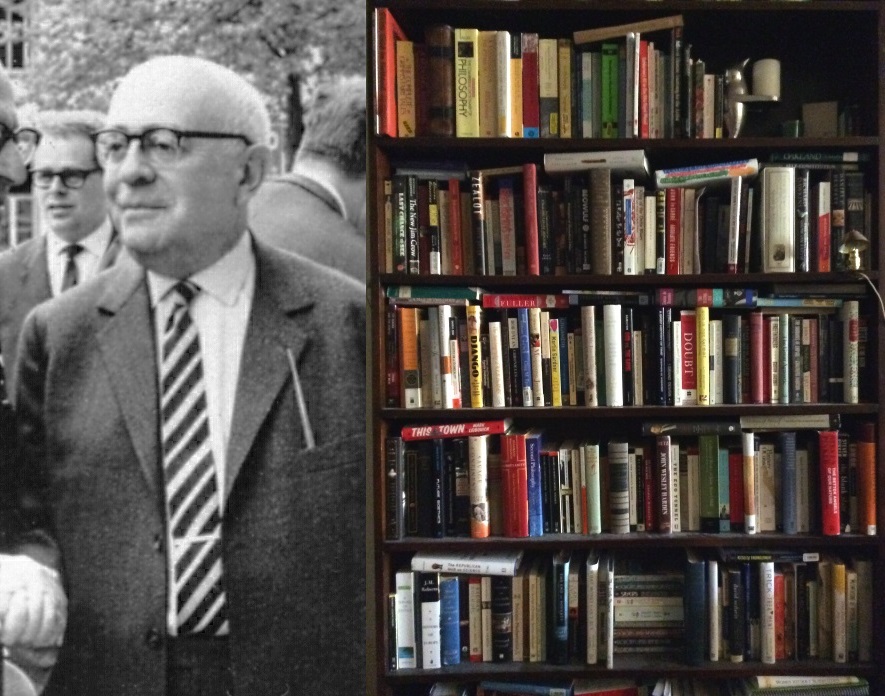
Say What? Adorno on Thinking, Oppression, and Happiness

‘The happiness that dawns in the eye of the thinking person is the happiness of humanity. The universal tendency of oppression is opposed to thought as such. Thought is happiness, even where it defines unhappiness: by enunciating it. By this alone happiness reaches into the universal unhappiness. Whoever does not let it atrophy has not resigned.’
~ Theodor W. Adorno, Critical Models: Interventions and Catchwords

Ordinary Philosophy and its Traveling Philosophy / History of Ideas series is a labor of love and ad-free, supported by patrons and readers like you. Please offer your support today!


Happy Birthday, Baruch Spinoza!

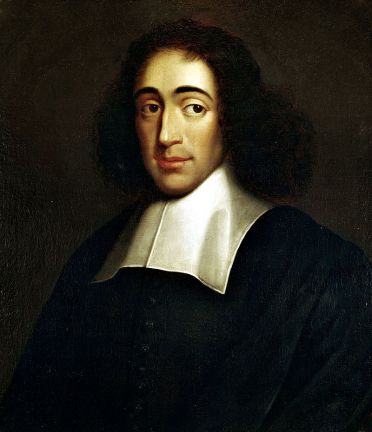
Portrait of Baruch de Spinoza (1632-1677), ca. 1665, by an unknown artist

Baruch Spinoza was born on November 24, 1632, in Amsterdam, the Netherlands. He was the son of Michael and Hannah Spinoza, Portuguese Jews who were forced to convert to Christianity, then imprisoned and tortured by the Inquisition, then fled to relatively tolerant Amsterdam. The Spinozas became successful and respected members of Amsterdam’s Jewish community.

Their son Baruch (also called by his Latinized name Benedicto, also meaning ‘blessed’), was a precocious and brilliant boy who became an intellectually rigorous, curious, and free-thinking man. He wrote prodigiously, profoundly, and often obscurely while earning a humble living as a scientific instrument lens-grinder. He was excommunicated for his unorthodox beliefs (rather surprising still given the relative broad-mindedness of that synagogue), shunned and condemned by his fellow Jews and by Christians alike, and lived the rest of his too-short life in near-solitude, though in rich correspondence with a wide circle of friends and intellectuals.

His idea of God as a unified substance which, in some sense, can be understood as being the same as Nature or the Universe itself, is still widely beloved (the great physicist Albert Einstein and eloquent, outspoken atheist Christopher Hitchens, for example, were among his biggest fans), hated, and debated widely, especially insofar as it can be difficult to grasp the exact nature of Spinoza’s metaphysical and ethical ideas. Spinoza refused to repudiate his ideas despite the intense social pressure he had to deal with for the rest of his life. But however much his correspondents argued, cajoled, threatened with hellfire, or otherwise tried to convince him to abandon his beliefs, Spinoza responded with firmness, constancy, thoroughness, and courtesy.

Learn more about the integrious Baruch Spinoza at:

Baruch Spinoza ~ by Steven Nadler for The Stanford Encyclopedia of Philosophy

Baruch Spinoza (1632 – 1677) ~ in the Jewish Virtual Library

Benedict De Spinoza (1632—1677) ~ by Blake D. Dutton for the Internet Encyclopedia of Philosophy

Betraying Spinoza ~ Rebecca Goldstein on her book Betraying Spinoza: The Renegade Jew Who Gave Us Modernity

Benedict de Spinoza: Dutch-Jewish Philosopher ~ by Richard H. Popkin for the Encyclopædia Britannica

From Baruch to Benedicto! (Spinoza pt. 1) and Spinoza Part 2 ~ by Stephen West for Philosophize This! podcast

God Intoxicated Man – The Life and Times of Benedict Spinoza ~ by Michael Goldfarb for the BBC’s Sunday Feature

Spinoza ~ Melvin Bragg discusses Spinoza’s life and thought with Jonathan Rée, Sarah Hutton, and John Cottingham for In Our Time

The Heretic Jew ~ by Harold Bloom, book review of Rebecca Goldstein’s Betraying Spinoza: The Renegade Jew Who Gave Us Modernity for The New York Times

The Writings of Spinoza ~ at Internet Sacred Text Archive

Ordinary Philosophy and its Traveling Philosophy / History of Ideas series is a labor of love and ad-free, supported by patrons and readers like you. Please offer your support today!

Happy Birthday, Abigail Adams!

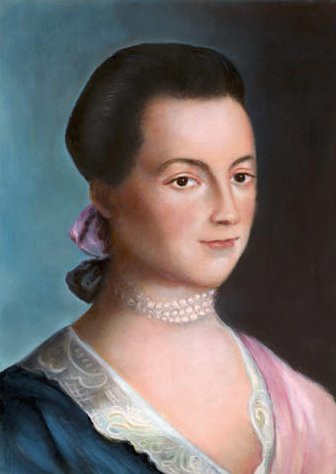
Abigail Adams, the earliest known image of her painted near the time of her marriage in 1764

Abigail Adams, born on November 22, 1744 in Weymouth, Massachusetts, was wife and chief advisor to John Adams, American founding father and second president; early advocate for women’s rights and opponent of slavery; self-taught intellectual; mother to many children including another American president; and something I just learned today, a savvy and successful financial speculator. She is one of the most well-known figures in American history because of the voluminous and well-preserved correspondence between her and her husband John. While she remained at home raising the children and managing their home, John was frequently away for extended periods on matters of revolution and state. Their letters are famous: they were loving and forthright with one other on a rare level, and the ideas and advice these two brilliant people shared with one another illuminate and inspire readers still.

Learn more about our wise and indefatigable founding mother Abigail Adams at:

Abigail Adams ~ by Beckett Graham and Susan Vollenweider for The History Chicks podcast

Abigail Adams (1744 – 1818) ~ bio for the Adams National Historical Park, National Park Service website

Abigail Adams: American First Lady ~ by Betty Boyd Caroli for Encyclopædia Britannica

Abigail Adams: Revolutionary Speculator ~ Liz Covart interviews Woody Holton for Ben Franklin’s World: A Podcast About Early American History

Abigail Smith Adams ~ by Debra Michals for the National Women’s History Museum website

First Family: Abigail and John Adams ~ by Joseph J. Ellis for the Philadelphia Free Library

How Abigail Adams Proves Bill O’Reilly Wrong About Slavery ~ by David A. Graham for The Atlantic

John Adams ~ Miniseries by HBO, 2008

Ordinary Philosophy and its Traveling Philosophy / History of Ideas series is a labor of love and ad-free, supported by patrons and readers like you. Please offer your support today!

Happy Birthday, Voltaire!

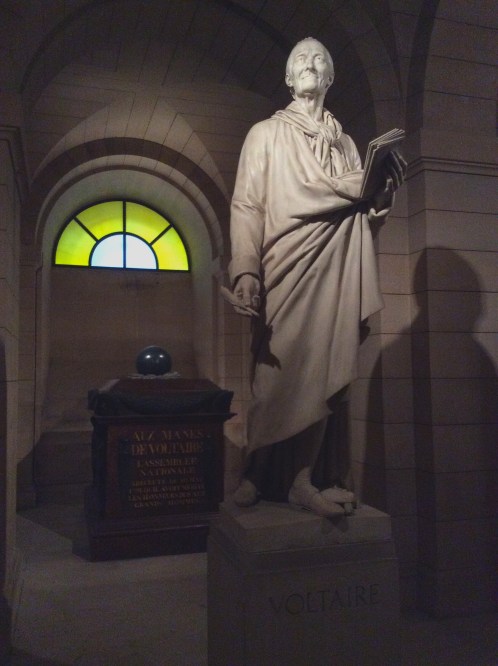
Voltaire’s statue and tomb in his crypt in the Pantheon, Paris, France

Voltaire was born on November 21, 1694, in Paris, France, where he died 83 1/2 years later. He’s buried in that great city of his birth and death, in a crypt below the beautiful Pantheon. He was a philosopher, playwright, poet, and much, much more; a generally prolific, wide-ranging, and creative writer. In his long life, Voltaire used his wealth of learning, urgent sense of justice, and merciless and ready wit to make the case for religious and intellectual tolerance, forbearance, science, and social reform. He is still considered one of the most influential and memorable thinkers the world has ever seen.

Learn more about the great Voltaire at:

Voltaire – an animated video by Alain de Botton and Nicholas Cronk for The School of Life

Voltaire ~ by J.B. Shank for The Stanford Encyclopedia of Philosophy

Voltaire ~ by René Henry Pomeau for the Encyclopædia Britannica

Voltaire and the One-Liner ~ by Nicholas Cronk for OUPBlog

Voltaire’s Candide ~ Melvin Bragg talks with David Wootton, Nicholas Cronk, and Caroline Warman for In Our Time

Voltaire’s Garden: The Philosopher as a Campaigner for Human Rights ~ by Adam Gopnik for The New Yorker (book review for Ian Davidson’s Voltaire in Exile

The Voltaire Foundation: a world leader for eighteenth-century scholarship

Broken on the Wheel: A Gruesome Legal Case turned Voltaire into a Crusader for the Innocent ~ by Ken Armstrong for the Paris Review

The Philosopher and the Prodigy: How Voltaire Fell in Love with a Remarkable Woman Mathematician ~ by Michelle Legro for Brain Pickings

Ordinary Philosophy and its Traveling Philosophy / History of Ideas series is a labor of love and ad-free, supported by patrons and readers like you. Please offer your support today!

Enlightenment Scotland: Adam Smith’s Grave at Canongate Kirkyard

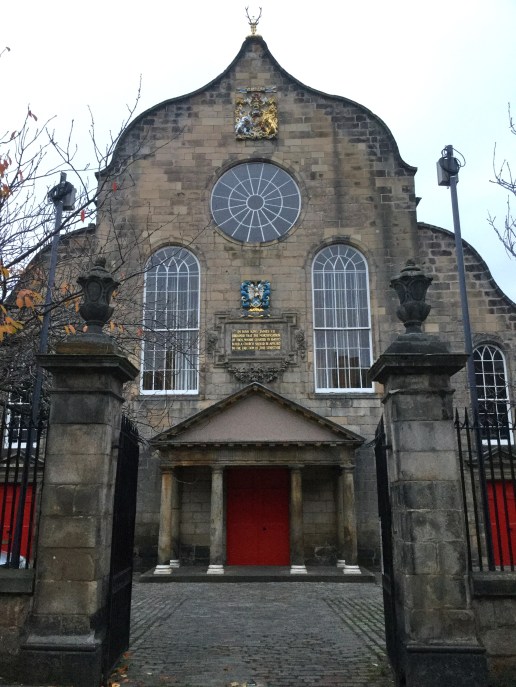
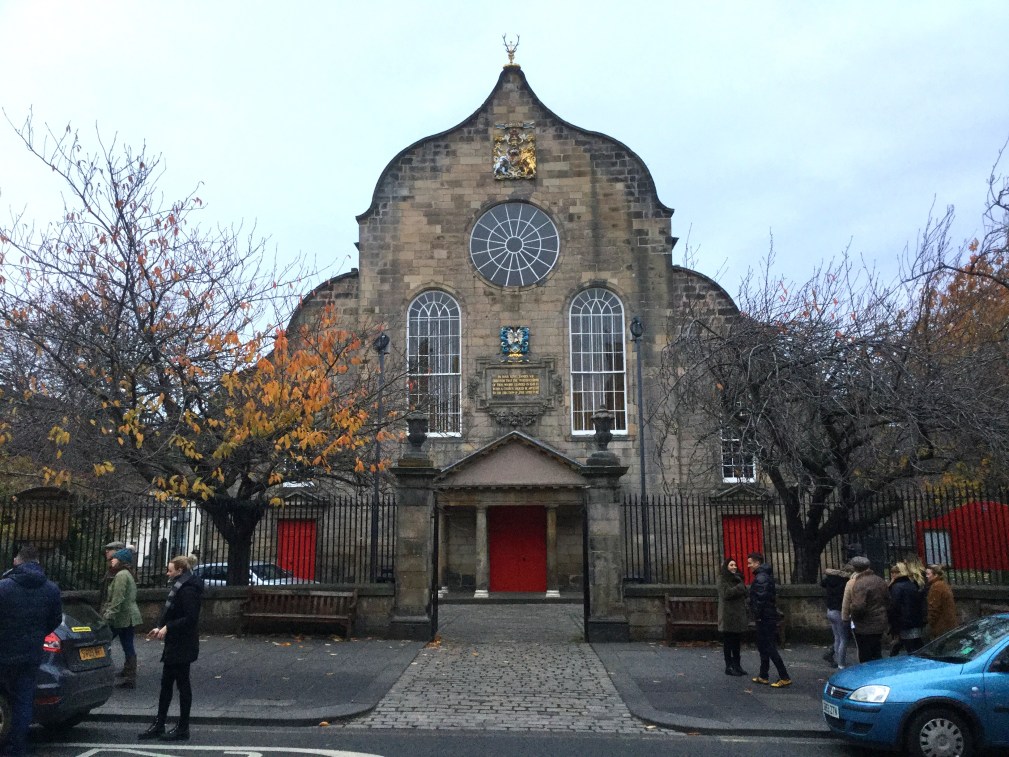
Canongate Kirk on the Royal Mile, Edinburgh, Scotland

Here in Edinburgh, where I’ve returned to University to earn my Master’s degree, I love to visit sites and monuments associated with the Enlightenment. As a lover of philosophy, the rich intellectual history of this city first brought me here: I followed (and still do) in the footsteps of David Hume for my first traveling philosophy/history of ideas series for O.P. I think it’s high time I share more of my explorations with you!

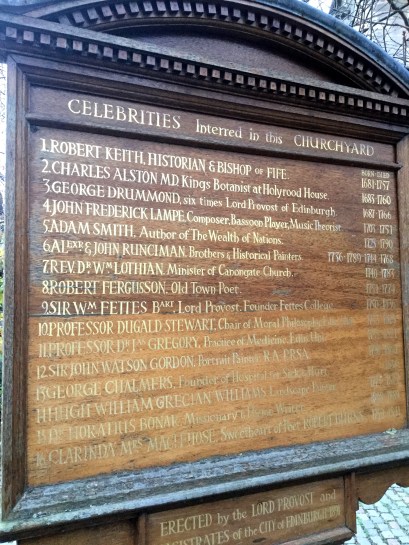
I’ll start with my visit yesterday afternoon to the great moral philosopher and economist Adam Smith‘s grave in Canongate Kirkyard on the Royal Mile. The lovely Kirk of the Canongate was built form 1688-1691, and is quite different in style than the other buildings on the Royal Mile. The graveyard behind it, however, is very like many others to be found behind kirks all over and around this great city, and includes the gravesites of many great Scots.

Canongate Kirkyard on the Royal Mile with Adam Smith’s grave center-left, Edinburgh, Scotland

Adam Smith’s grave in Canongate Kirkyard on the Royal Mile, Edinburgh, Scotland. Many of Adam Smith’s moral and political theories, and his ideas on trade and economics, were developed from the ideas of his great friend and mentor David Hume.

Canongate Kirk on the Royal Mile, Edinburgh, Scotland

List of famous people buried at Canongate Kirkyard on the Royal Mile, Edinburgh, Scotland

Ordinary Philosophy and its Traveling Philosophy / History of Ideas series is a labor of love and ad-free, supported by patrons and readers like you. Please offer your support today!