
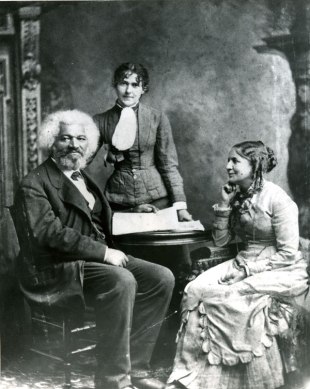
 As you may know, dear readers, I’m embarking on the travel portion of my fifth philosophical-historical themed adventure in mid to late March. I’m off to Baltimore, MD, New York, Washington DC, and other East Coast sites to follow in the footsteps of Frederick Douglass.
Ordinary Philosophy and its Traveling Philosophy / History of Ideas series is a labor of love and ad-free, supported by patrons and readers like you.
Every single bit helps, from $1 on up: directly through your contribution, and indirectly by inspiring confidence and enthusiasm in others who see the support already given.
As always, I count on you to help me accomplish what I do here; thanks to all who have contributed in the past, and thanks in advance to all who contribute in the future!
What the Frederick Douglass Traveling Philosophy / History of Ideas Series project will produce:
– A series of essays on the ideas of Frederick Douglass, how they relate to his time and ours
– A series of travel accounts of sites associated with Douglass’ life and ideas throughout the East Coast. I’ll be seeking insights into how the places informed the man, and vice versa. These will double as historical-philosophical investigations to bring Douglass to life in the mind of the reader, and as inspiration for other traveling history enthusiasts
– A series of downloadable walking tours to accompany the travel series: just subscribe and download in iTunes, and you’ll have your own travel guides to East Coast places I travel to for this series
– Free educational resources: supplementary teaching materials on the life and ideas of Douglass
– And if all goes as planned, a book!
Budget: In the interests of transparency and so you know exactly where your hard-earned, generously donated funds go, here’s the breakdown:
Primary Goal: $2,500 – To cover airfare, lodging, ground transportation, and advertising for Frederick Douglass’ Traveling Philosophy / History of Ideas series
– Airfare: to DC or NYC about $500 (w/taxes and fees)
– Car Rental: average $28 / day = $392
– Lodging: average $50 per night, will be staying with friends some nights = $700
– Parking / Fuel / Public Transportation: average $25 per day = $350
Subtotal = $1,942
Any amount I’ve saved on the above costs or amount collected in excess will be spent on paid advertising (Facebook, Google Adwords, Bing, Pinterest, etc, even a radio spot if funds allow!), which will be listed here, so that the total spent comes to $2,500. (I also advertise in a wide array of free venues)
Secondary Goal: $1,500 – Monthly wages
This year, O.P. is making a big push to include an expanded and more in depth history of ideas travel series, more regularly published podcast with downloadable history of ideas travel guides, interviews with fascinating people, scholarship and educational materials, more great guest posts, and so much more! To accomplish all this, O.P. will need to pay its own expenses and if possible, wages, so I can throw spend less time at other occupations, throwing myself into O.P. with all the heart, time, and energy I long to dedicate to this project.
Please visit the Subscribe, Submit, and Support page to help me fund this project.
I thank you in advance, from the bottom of my heart, for any support you can offer
Sincerely,
Amy Cools
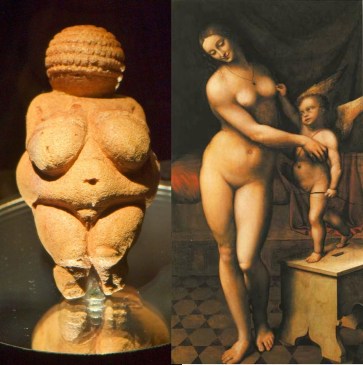 ‘Beautiful’ has always been a battleground in feminist discussions of representation. While it may seem counterintuitive to argue that we should consider more women as beautiful while also arguing that a woman’s capabilities are worth more than her appearance, tackling the rigid definition of beautiful has been important for intersectional feminism. A traditionally beautiful woman is white; women of colour are more likely to be sexualised instead. A beautiful woman is also normally able-bodied. She usually does not appear to be economically below the middle-class, something that is subtly but pervasively inherent in our ideas of the ideal body shape (too slender for manual labour) and the current trend of tanning (demonstrating leisure time and disposable income). A beautiful woman often also has long hair, a delicate face, and big eyes; she is vulnerable, not strong. So renegotiating this limited meaning of beautiful is a powerful act. Great progress has made with it, which should be cause for optimism. However, recent redefinitions are more troubling than empowering.
 Ordinary Philosophy