
 Fifth day, April 23rd
I map out my route, then make a timely departure from my temporary home this morning: I have lots to do before I meet up with someone very special this evening, and I don’t want to be late.
I’ll be traveling today by car, since I have so many places to go throughout the day that aren’t close to one another, but that’s okay, none of my destinations are downtown.
I start with Kalorama, site of an opulent home belonging to Thomas Jefferson’s friend and fellow statesman Joel Barlow, who purchased the property on Jefferson’s advice in 1807. Barlow made extensive additions and improvements to the house originally on the site, and Jefferson, always the enthusiastic gardener and improver of homes, offered his advice for the gardens and orchards too, and visited the estate many times. Kalorama, by the way, is Greek for ‘fine view’.
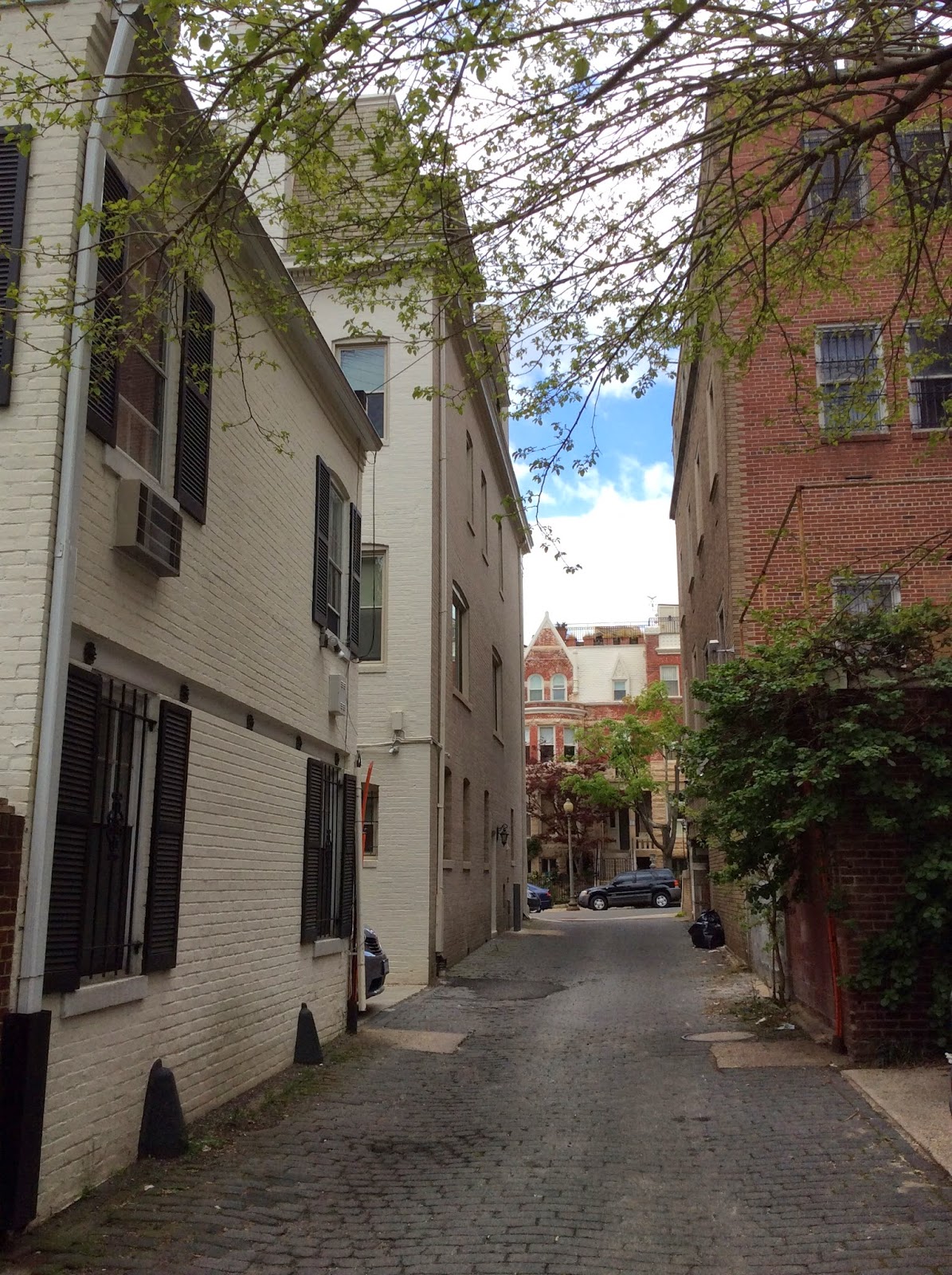
The mansion and its associated buildings are long gone, the main house finally torn down in the late 1800’s to make way for city expansion in that area. The intersection of Massachusetts and Florida Avenues where I was directed to by one source, and where I park, turns out to be closer to where the gatehouse stood at the entrance to the grounds. The main house actually stood closer to 23rd and S Streets. I explore the streets and alleys about a block radius to the north and west of where my car is, and an alley I photograph seems to be oriented in the same direction as the gatehouse used to be, but south about a block.
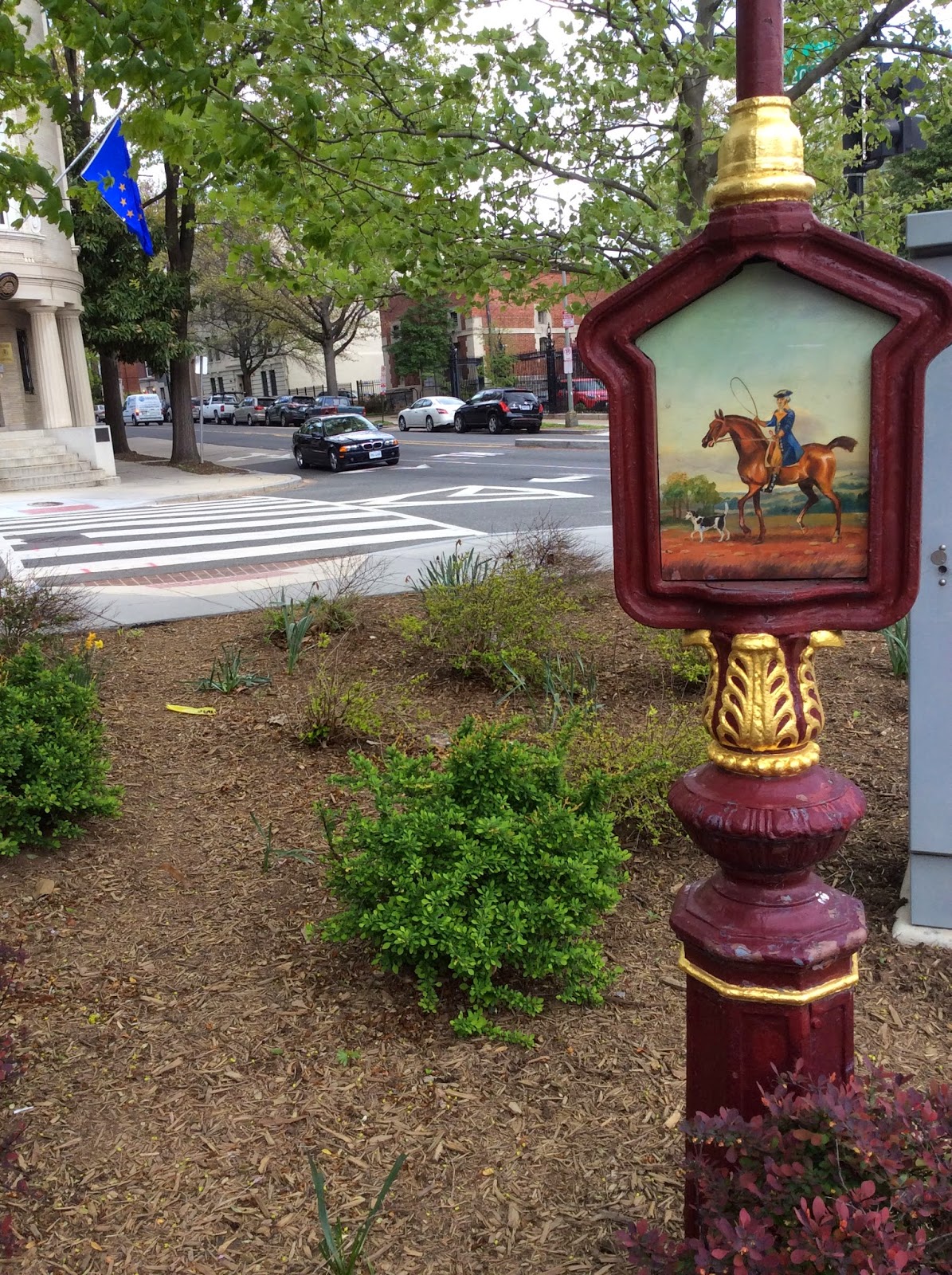
In my poking around, I find this great little antique call box, painted by Peter Waddell, who specializes in images of 18th and 19th century Washington’, according to the little plaque on the back. It portrays George Washington, who never lived in D.C.; his nephew, however, is the man Barlow bought Kalorama from.
My next destination is Georgetown, formerly known as George Town before it became a district of D.C.. It’s now known for the university of the same name, its history as a commercial and industrial center for the area, its canal, and its elegant shops and restaurants.
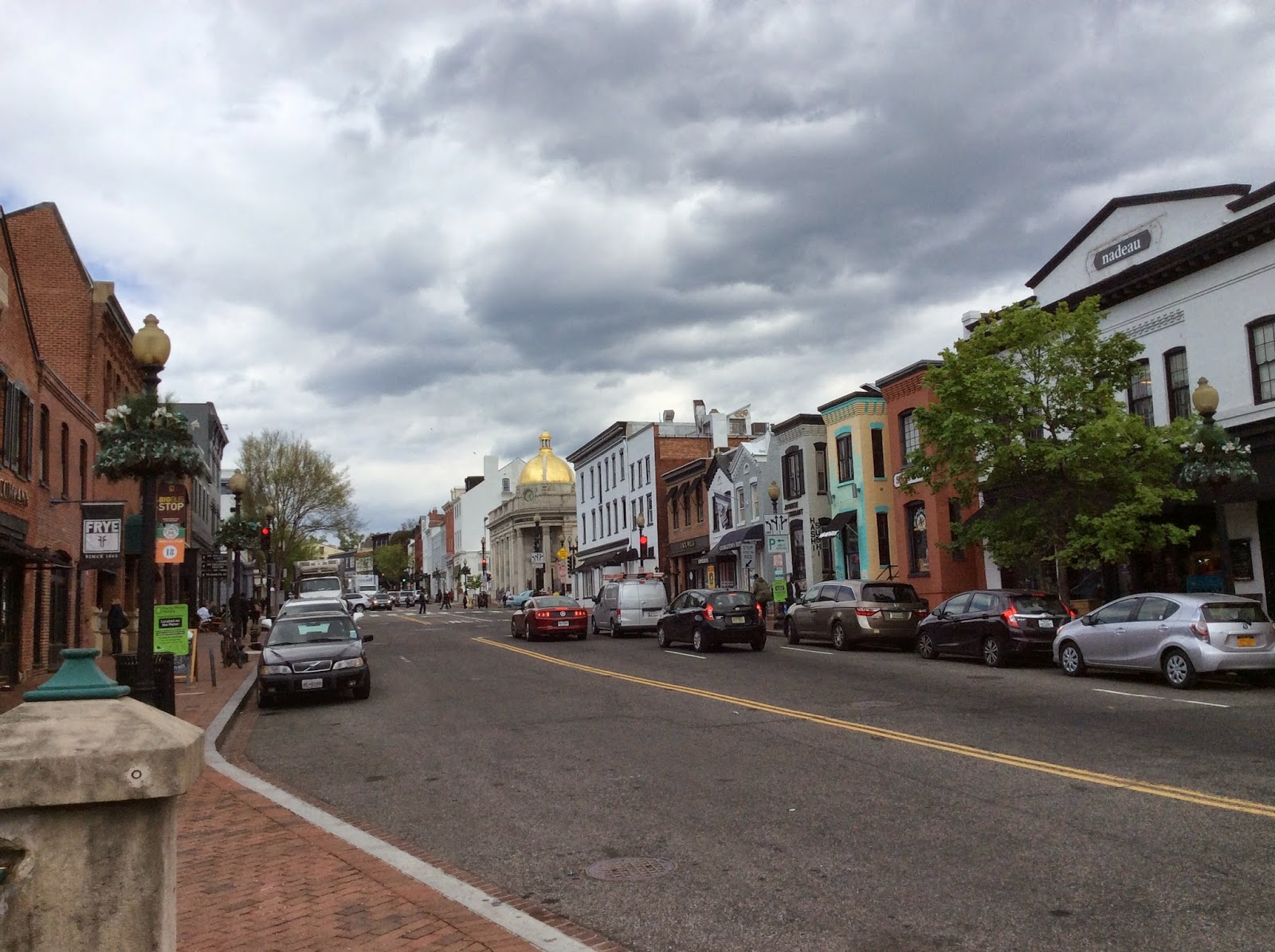
I’m headed first for the site of Suter’s tavern, where Jefferson stayed on his travels back and forth from Philadelphia, and wrote of the delicious glasses of wine he enjoyed there (Jefferson loved wine). There’s nothing apparently left of that building, either, except many stories, since it was a very popular inn at the time and many famous people stayed there. There are also many claims that it’s actually still standing (including one made by a business that’s in the building in question. Marketing tool?). There’s an old photo, supposedly of Suter’s tavern in the Library of Congress, but it seems that neither the photo nor the rest of these claims can be substantiated. John Suter, the proprietor, didn’t actually own the building, so there are no property records to back any of these claims up. From what I can find, it seems there’s a consensus that it was probably on or near what’s now Wisconsin Ave just north of the canal.
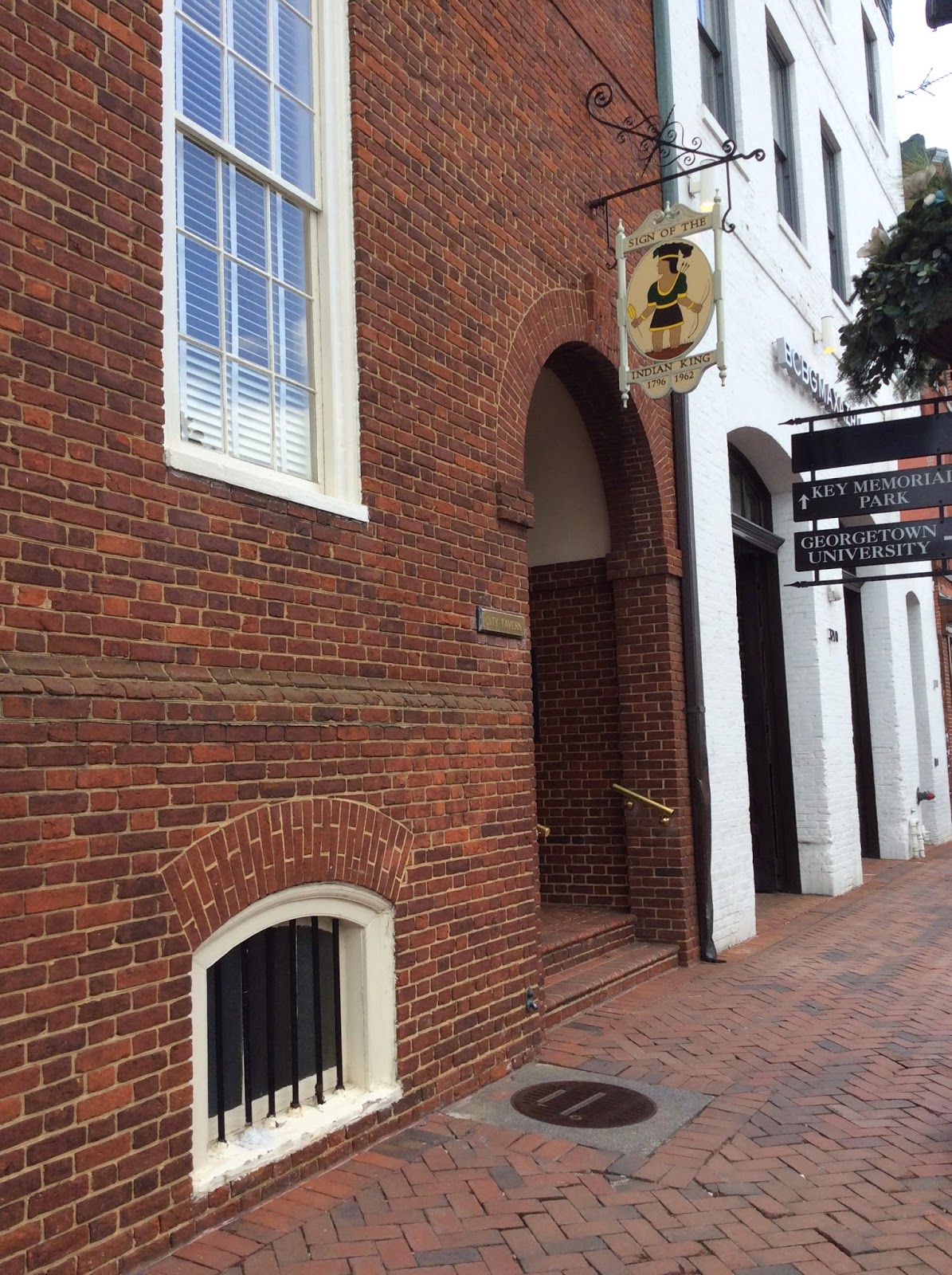
As I head west on M Street to make my way to my next destination just a few blocks away, I’m scanning the scene as I’ve been doing the whole trip, looking for markers indicating historical sites and buildings that appear to date to the right time period.Here, it pays off. To my left, I spot a sign with a stylized old-fashioned image of a Native American on it, with the dates 1796 and 1962. I look up and, yes, the building looks promising. I quickly locate the plaques that identify it as The City Tavern and date its original construction to 1796. Great! It’s the right place, the right time …even the right name: as you may remember, Jefferson frequented the City Tavern in Philadelphia too. Okay, okay, the name doesn’t matter, it’s so generic that any city Jefferson visited is fairly likely to have a tavern of that name. Seriously, though, I think it likely that he’d be associated with it for the same reasons I came up with that Jefferson version of the Six Degrees of Kevin Bacon game: he seemed to know just about everyone, or have professional or social connections with everyone.Sure enough, it turns out Jefferson is associated with this City Tavern too: he probably came here to at least to dine and attend events, since around this time he lived close to the White House while he was Vice President (the White House was still called the President’s House at the time) and then in the White House. He may even have had occasion to stay the night now again, even if it was not far from home: he was a busy, social man with lots of friends, and even short distances to us seemed a lot farther in Jefferson’s time of travel by horse and carriage
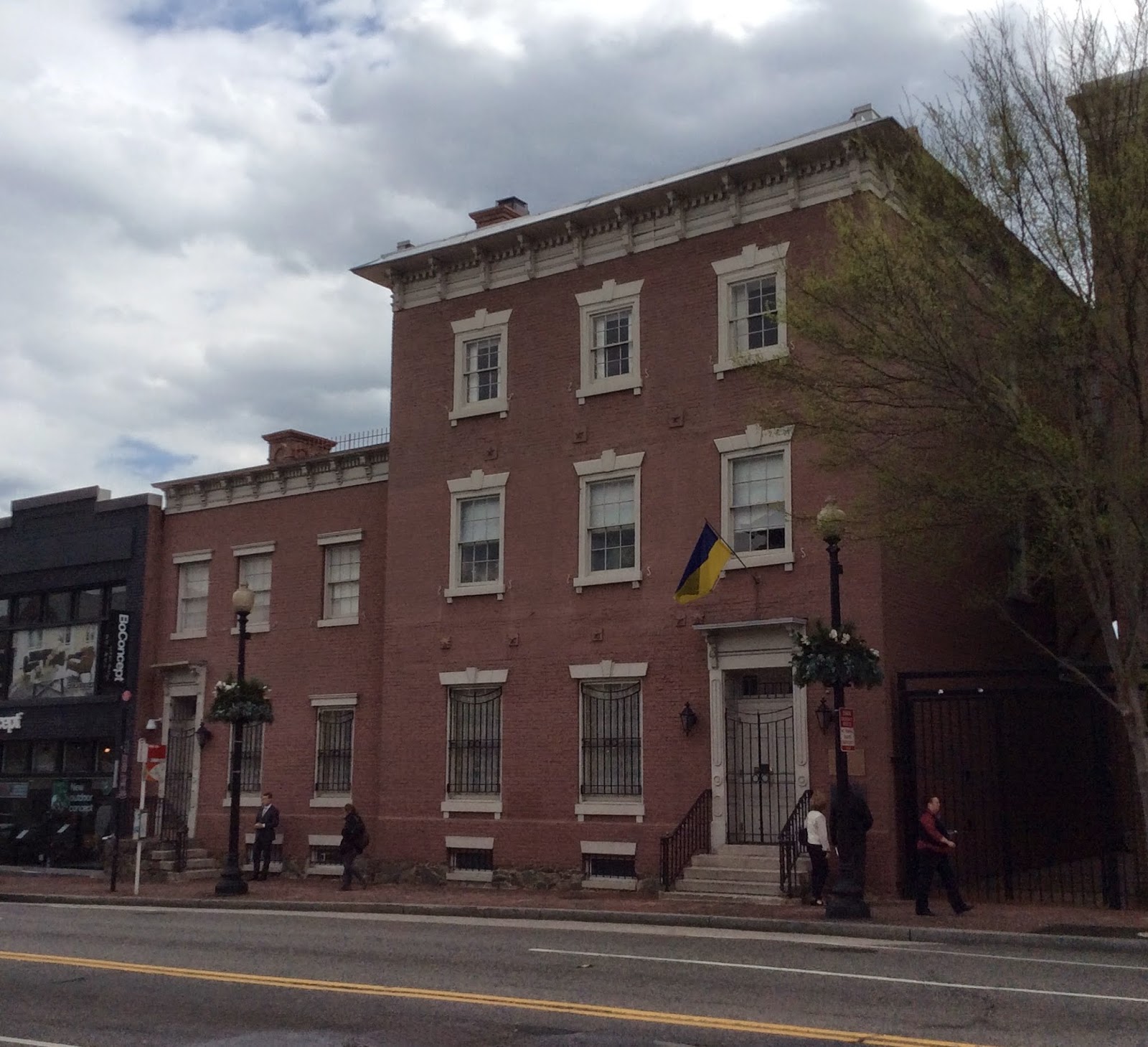
I continue on my way to my next stop: Uriah Forrest’s house, AKA the Forrest-Marbury House, AKA the Ukranian Embassy. Jefferson dined at Forrest’s house and apparently stayed the night, along with Madison and others (though my primary source for this indicates that Jefferson spent the night in Georgetown, it’s not clear whether it was elsewhere, such as nearby Suter’s, or this house). They were on that same trip that took them to nearby Notley Young’s house visiting local landowners in preparation for building the new capital city there. Jefferson and company took the time for a little pleasure trip, to take a tour of the area and visit some small waterfalls about four miles away, according to a letter of a contemporary describing the day’s outings.
While the house is named for Uriah Forrest, who was one of the party when Jefferson was there in 1790, he actually didn’t live in that house yet; he moved in in 1792. Another member of the group did, the original owner who had it built in 1788, Secretary of the Navy Benjamin Stoddert. Like so many of the other Federal style buildings featured in this series, it’s a tall, somewhat plain but still handsome house of red brick. It’s one of the few buildings that date before the turn of the 19th century still standing in Georgetown.
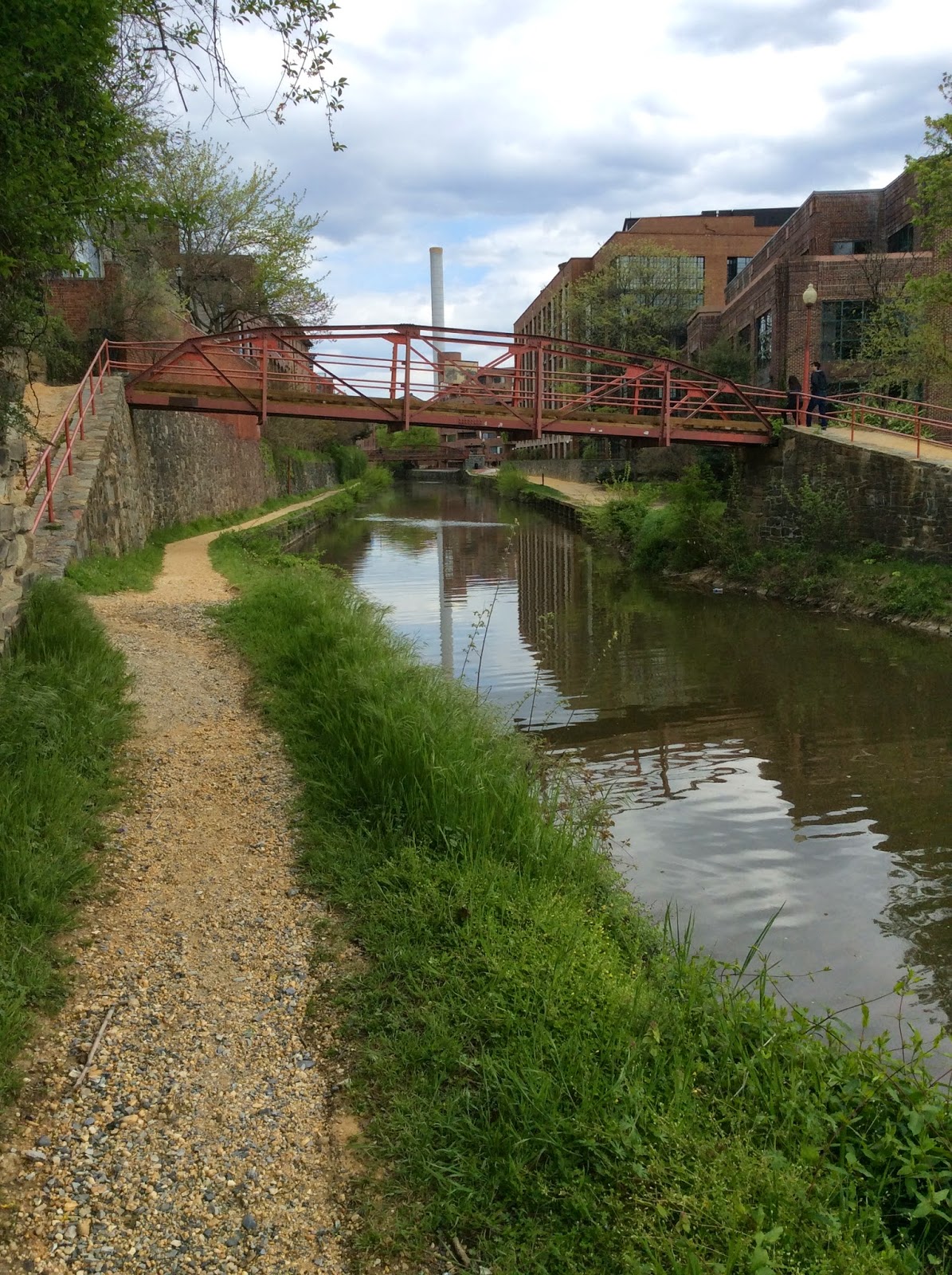
I decide to take the long way back to my car, via Francis Scott Key Park and the canal walk (I’ll add a photobook with more images of Georgetown soon). It’s a lovely stroll, via simple gravel paths along either side of the grass-lined canal, crossed by steel bridges painted that same rusty-red color of the Golden Gate bridge in San Francisco, and hemmed by old red brick warehouses, industrial buildings, and stone walls. Georgetown, originally a port town and trading center along the Chesapeake & Ohio Canal, became a bustling industrial center in the 19th century. Over time, the railroads and then flooding rendered the canal useless as a shipping route.
After my happy stroll, I continue on to my final destination of the afternoon before the person I’m going to meet arrives. I’m heading for Analostan Island, which I had stood over, but not on, when I attempted to reach it by the Interstate 66 bridge footpath a few days before. This time I’m successful, but reach it very circuitously, as I miss the turn at the other end of the Francis Scott Key Memorial Bridge that would put me on George Washington Parkway, and end up going around and through Arlington National Cemetery. But I’m okay with that: I like getting lost sometimes, I find out interesting things that way.
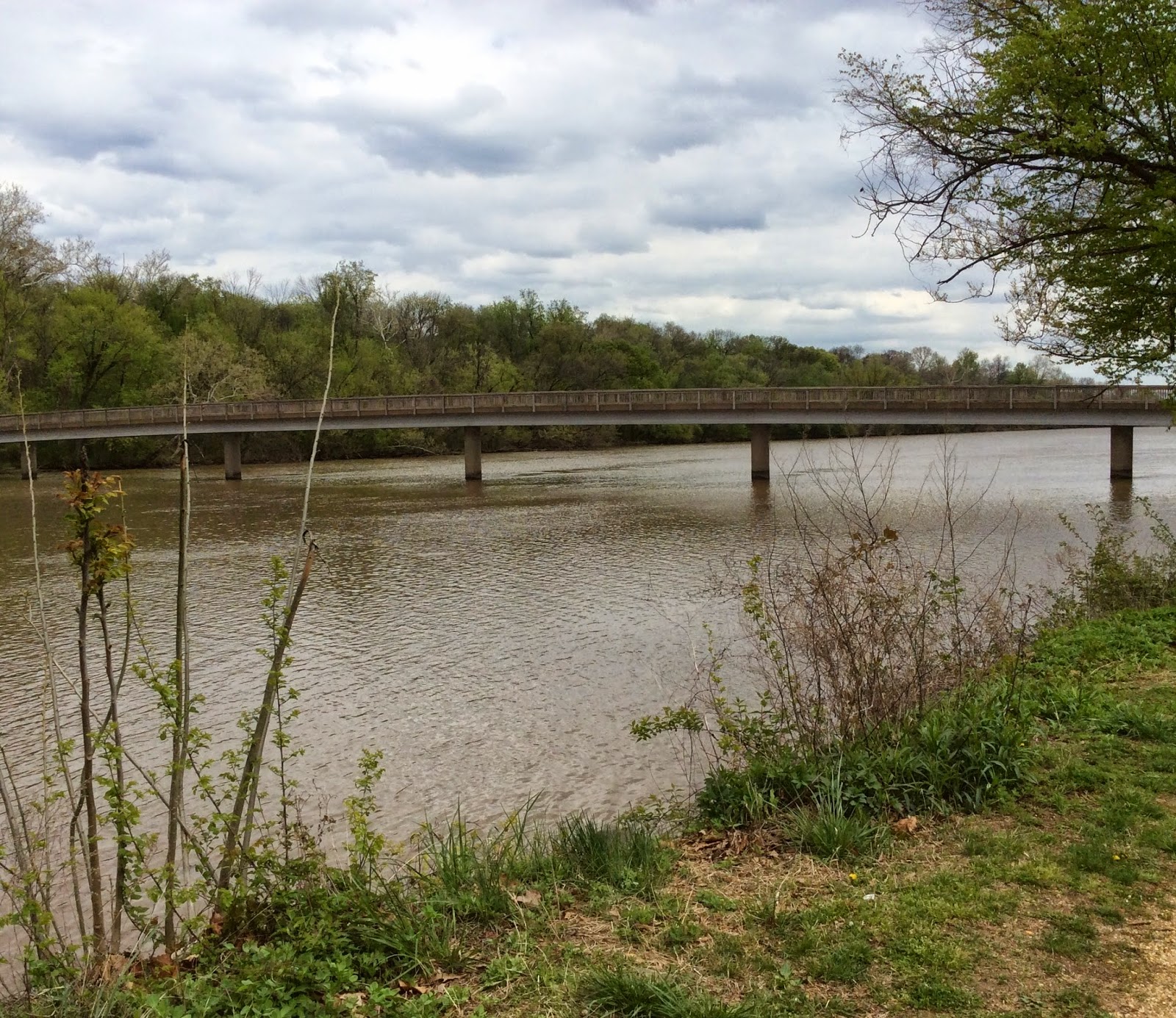 As I mentioned earlier in this series, Jefferson visited Analostan Island many times. His friend John Mason, son of George Mason (who was a member of the Constitutional Convention and contributed to the writing of the Constitution, but in the end, refused to sign it), built a mansion on Analostan in the 1790’s. The island, now named Theodore Roosevelt Island, retains no apparent traces of its history as the site of a plantation, luxury home, and getaway spot. It’s mostly grown wild, except for the hiking paths that crisscross its perimeter, length, and breadth, and the Theodore Roosevelt Memorial perhaps half a mile from the island end of the footpath that reaches it.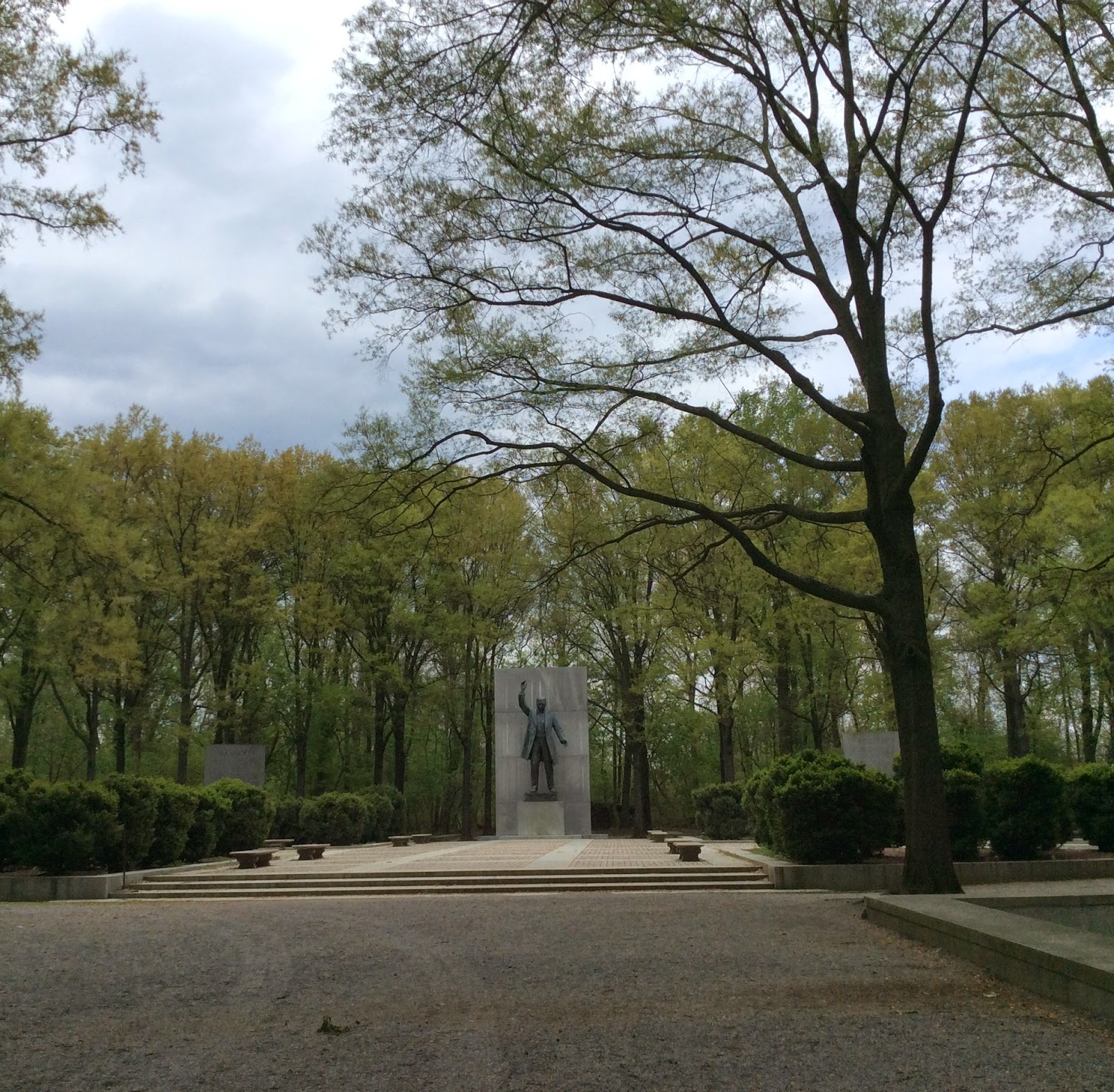
The memorial appears just a little neglected: there are weeds growing through the spaces between the flagstones, and the fountain is waterless and scattered with debris, mostly just dead plant stuff. Theodore Roosevelt’s likeness, large and a little menacing-looking (calls to mind the phrase ‘bully pulpit’, though more in today’s sense of the term than his), is portrayed in the act of delivering some impassioned speech, one arm upraised. If there were a crowd here, the statue’s demeanor would be fitting; the island being nearly empty this afternoon, it looks oddly out of place with its peaceful surroundings, with no sound but birds chirping and the wind blowing through the trees (it’s another blustery day).
There are large stones carved with phrases praising bold, courageous ‘manliness’ which I find a bit annoying; my feminist side protests that I and many of my fellow women are more bold and courageous than many men, and that these are human traits, not ‘manly’ ones. I’m also aware of the warmongering, reckless side of his personality, which I don’t find admirable. I prefer Jefferson’s philosophy, which places a far higher value on courtesy, reason, and compromise, with war a measure of absolute last resort (though not so for spontaneous revolution of the people when they find their natural rights are being trampled upon, that’s another matter; he considered this a desirable thing sometimes). I remember, however, that Roosevelt often used his power to promote the rights of the poor and to protect our natural resources. Parks like this, for example, as are many of the places I’ve visited this trip, are an extension of his legacy, publicly funded preservations of natural beauty and historical places that market forces nearly caused the destruction of. I forgive him and move on.
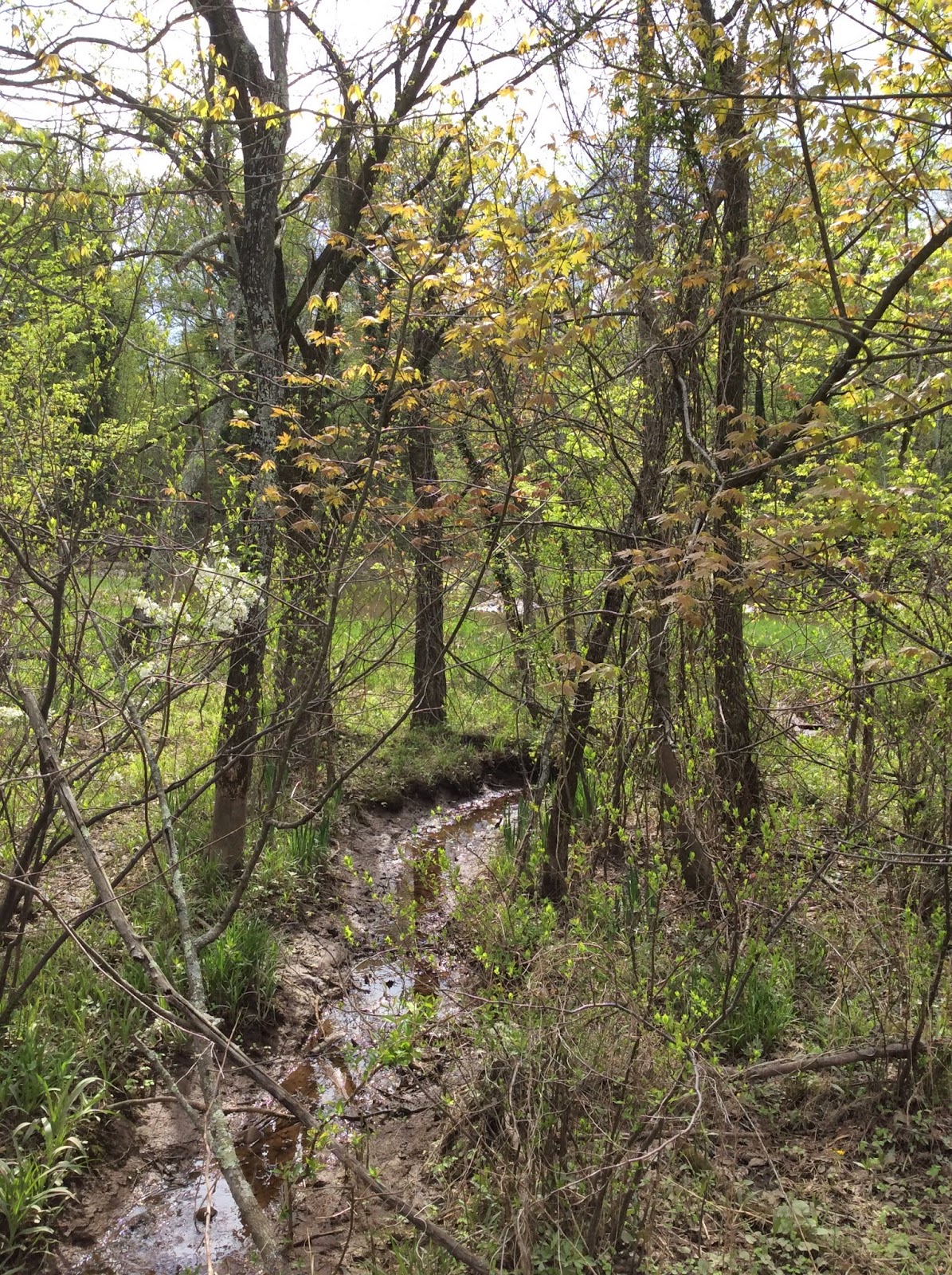
My main goal for this island hike is to find some remnant of the Mason house, since it’s the artifact directly associated with Jefferson here, and then skedaddle and swing by Alexandria, home of Gadsby’s tavern where Jefferson stayed once, on my way to the place I’m meeting someone later. But once I start tramping round the island, my inner hiker, having been starved of her exercise and natural scenery for over a week now, demands a longer stay. So I forego the Alexandria stop (which I never end up making, oh well) and hike vigorously for a couple of hours.
It’s mostly forest, with large area of marshland along its south and eastern end; I start my hike on the trail that goes through it from end to end, counterclockwise around the island. Much of this path consists of a wooden boardwalk to keep the hiker out of the water. There are birds galore, many of which I’ve never seen before and whose unusual calls I try to memorize so I can find out more about them later.
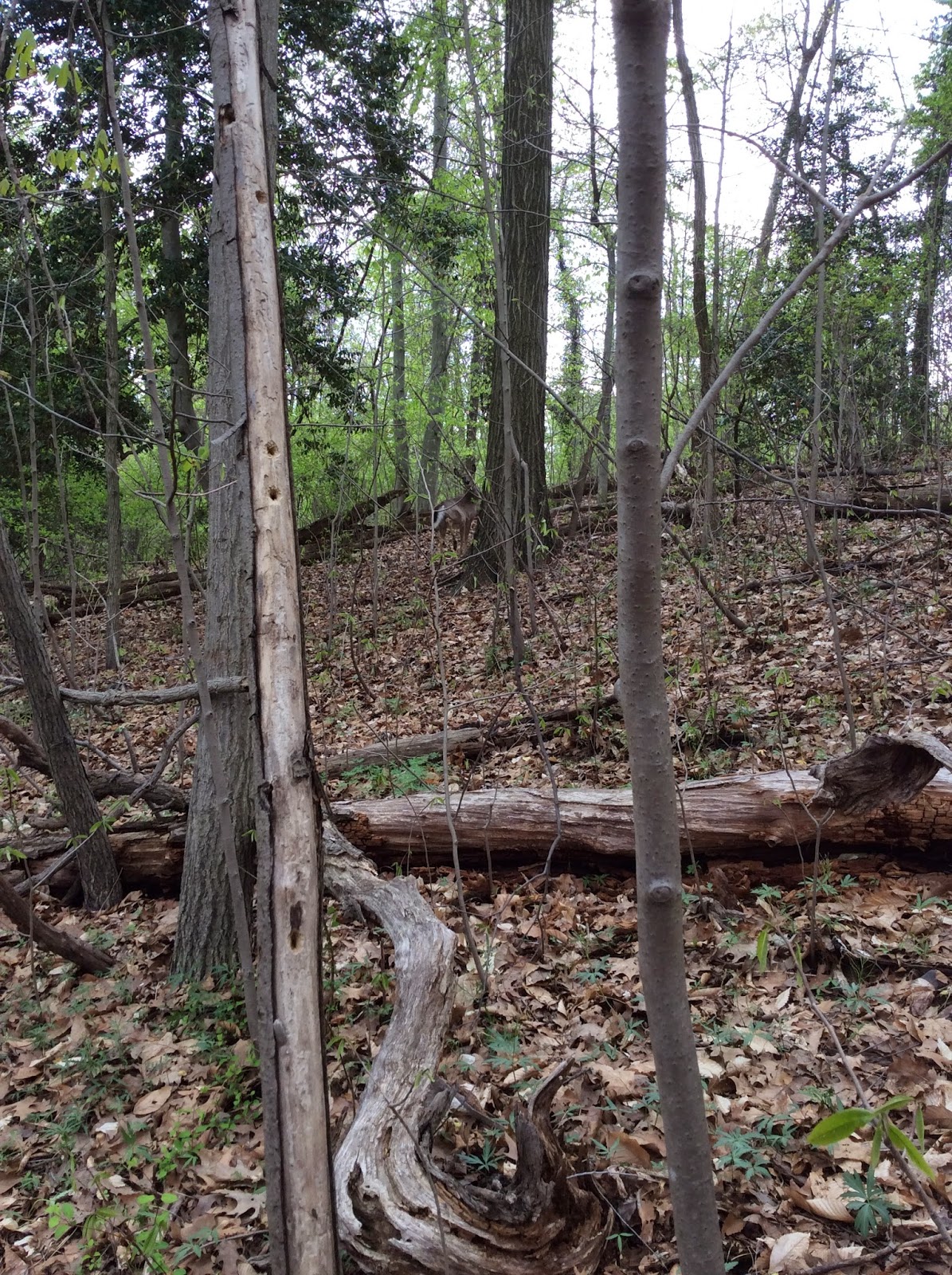
At the end of the marsh walk, I return to the woods, and I crisscross the entire island time and again. I think I walked every single official trail on the island, some more than once, and some unofficial little narrow ones as well. A herd of deer and I spooked one another when I was on one of these little narrow ones. Most bounded away to my left toward the marsh, but one bounded across my path and ended up very close to me on my right. We stared at one another for awhile, then she moved on.
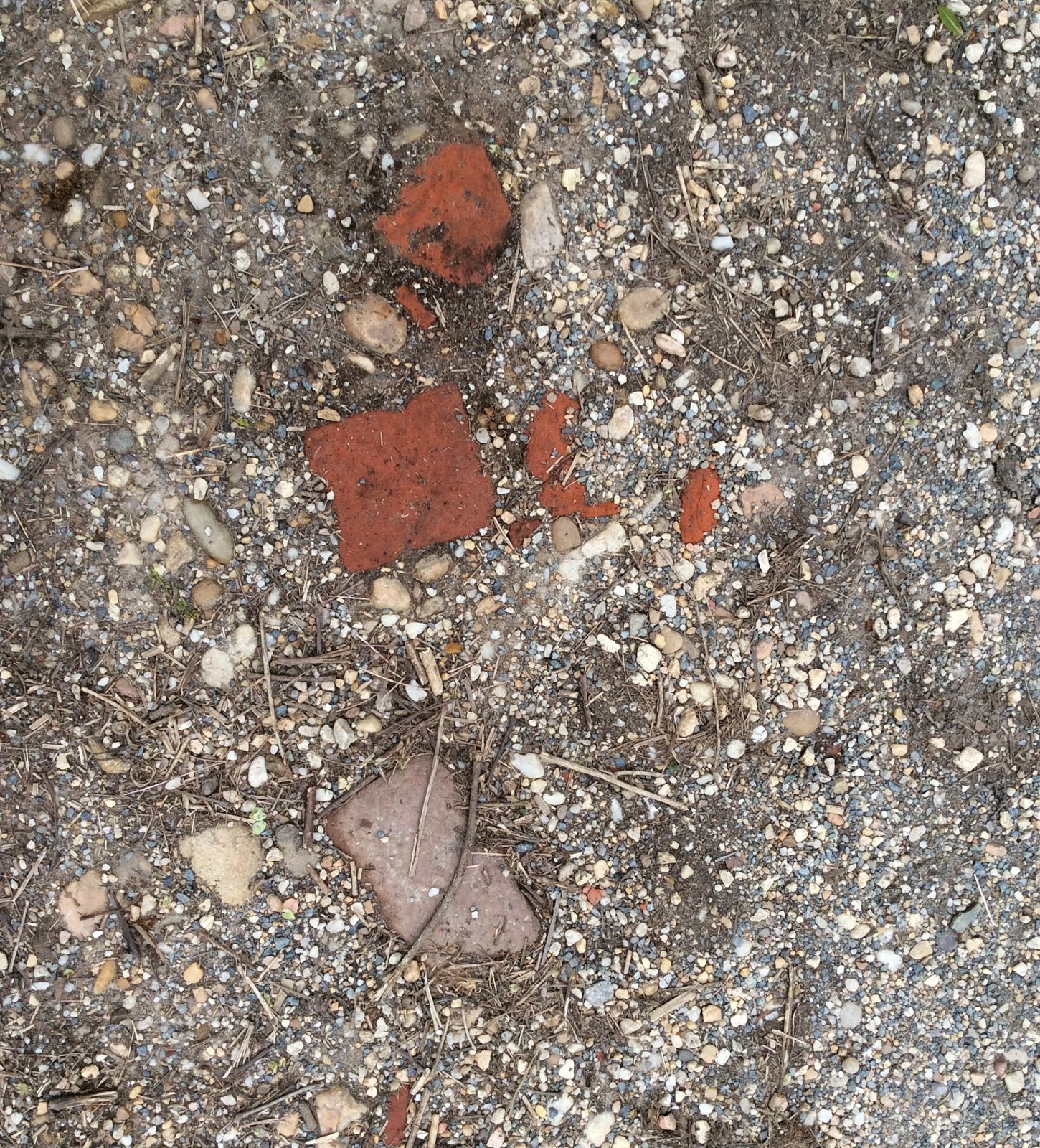
Finally I come across what I’m looking for, sort of. I find a National Park Service Sign indicating the little rise where the mansion stood. I ascend the rise, and among the trees, find the only sign that indicates there was once a structure here: a few broken remnants of old brick. Perhaps there’s some remains below ground; how fun it would be to dig it up, if so! However, since I never did fulfill that childhood dream of becoming an archaeologist, I suppose I better not.
I find the site just in time, since the time has come to leave the island for the meeting I spoke of. But you’ll have to wait ’til the next installment of my Jefferson adventure to find out who with!
Stay tuned….
*Listen to the podcast version here or on iTunes.
Sources and Inspiration:
‘Analostan Island’, George Mason’s Gunstan Hall website.
http://www.gunstonhall.org/georgemason.…
‘City Tavern Club: History’, City Tavern Club website.
http://www.citytavernclubdc.org/Default.aspx?p=DynamicModule&pageid=335988...
DeFerrari, John. Lost Washington, Part 3. Charleston, SC: The History Press, 2011
http://books.google.com/books/about/Lost_Washington.html?id=NTvO0u1JzK8C
Hansen, Stephen A. ‘General John Mason House, Analostan Island’
http://analostan.dchistoricdesigns.com/
and ‘The Kalorama Estate: A Brief History’
http://kalorama.dchistoricdesigns.com/
‘History of the Forrest-Marbury House’, Embassy of Ukraine website.
http://usa.mfa.gov.ua/en/embassy/history
Jacoby, Susan. Freethinkers: A History of American Secularism. New York: Owl Books, 2004.
http://us.macmillan.com/freethinkers/susanjacoby
Jefferson, Thomas. Writings. Compiled by The Library of America, New York: Penguin Books.
http://www.loa.org/volume.jsp?RequestID=67
Jenkinson, Clay. The Thomas Jefferson Hour. Podcast.
http://www.jeffersonhour.com/listen.html
Meacham, Jon. Thomas Jefferson: The Art of Power. New York: Random House, 2012.
http://www.jonmeacham.com/books/thomas-jefferson-the-art-of-power/
Shippen, Thomas Lee. ‘Letter to William Shippen, Sep. 15. 1790’. Founders Online, website
http://founders.archives.gov/documents/Jefferson/01-17-02-0136-0004
‘Timeline of Jefferson’s Life’. Monticello.org. Website of the Thomas Jefferson Foundation.
http://www.monticello.org/site/jefferson/timeline-jeffersons-life
‘Washington, D.C.’ Thomas Jefferson Encyclopedia, Monticello.org website.
http://www.monticello.org/site/research-and-collections/washington-dc
 Fourth day, April 22nd
 I’m heading to G Street between 9th and 10th,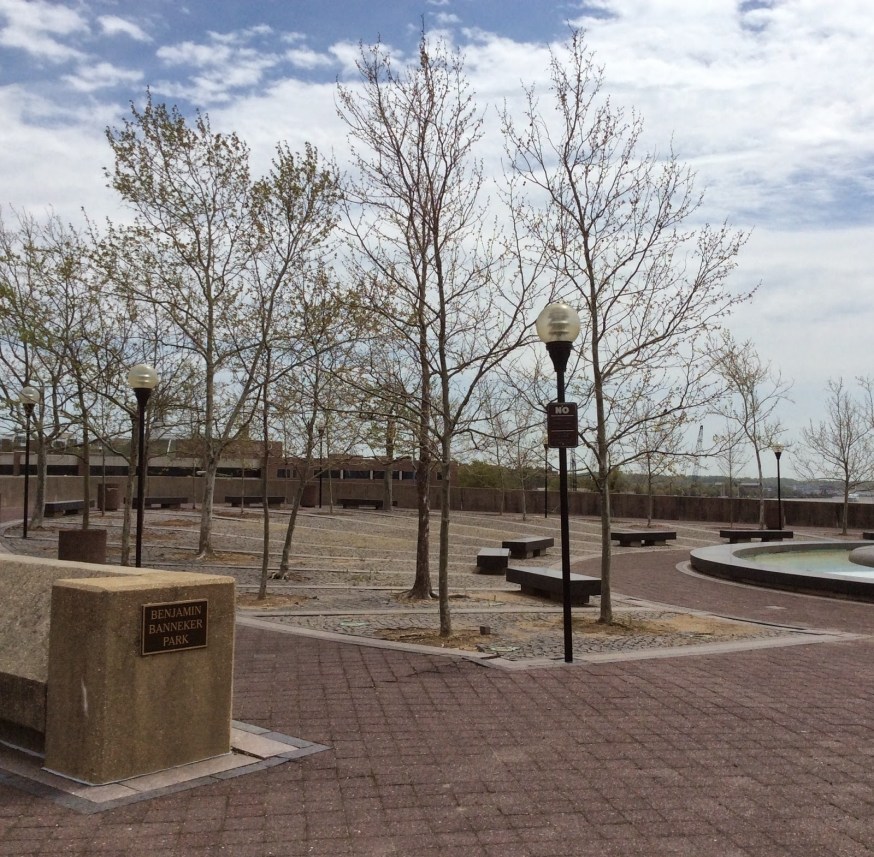
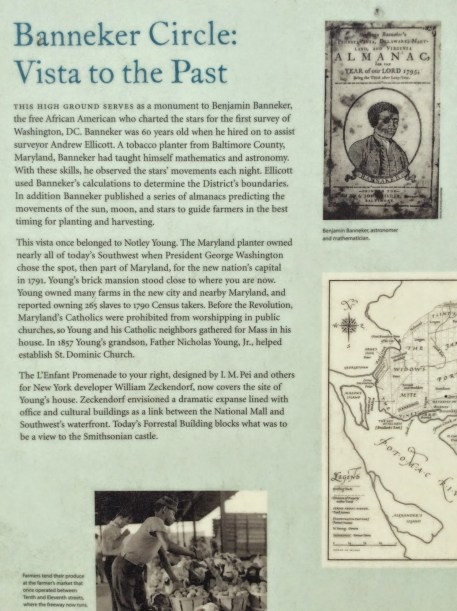

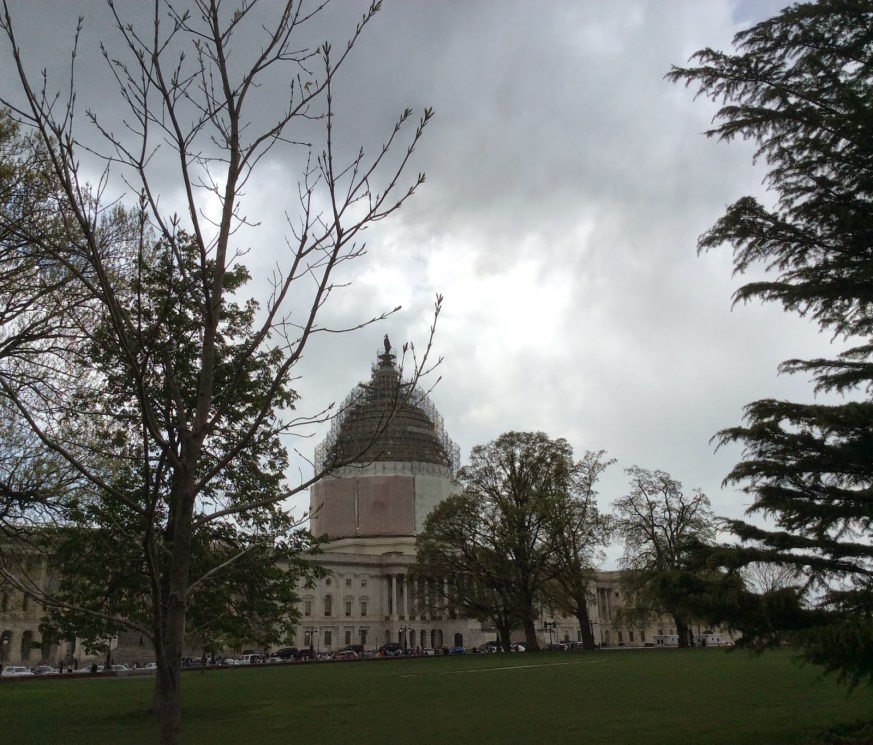

 Jefferson and President George Washington held a contest for the design, but none of the original entries won. A later entry by a doctor was approved, and many of Jefferson’s classical design elements, especially those inspired by the Pantheon, were included.
 It’s fitting that the largest private book collection of Jefferson’s time would become the seed collection of what’s now the largest library in the world. As for me, the LOC is my go-to source for published images in the public domain with which to illustrate my essays, as well as material for research.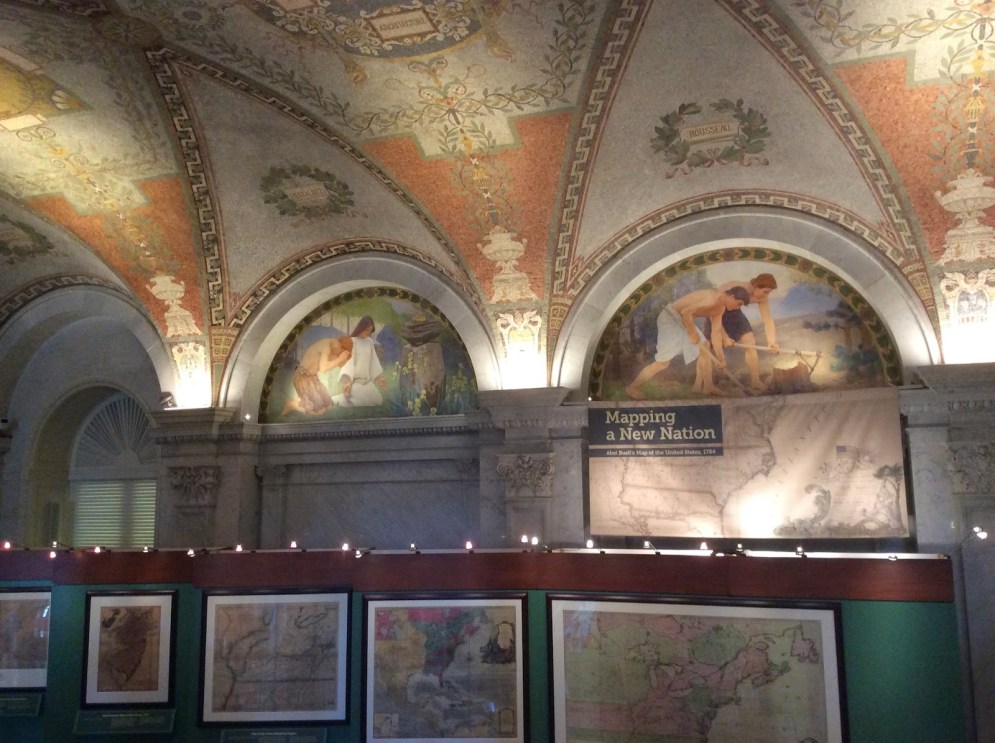
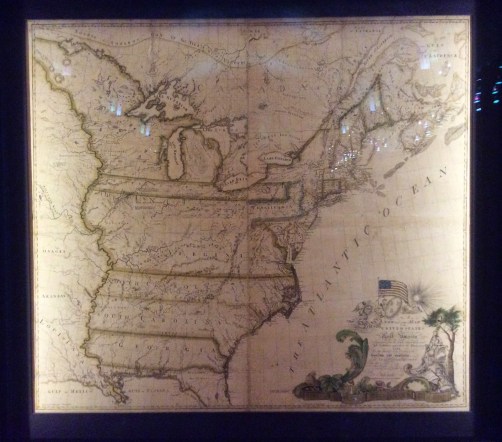 After my first good, long gaze at the atrium and first floor hallway, a sign caches my eye, and I follow it to an exhibit which features the first published map of the United States.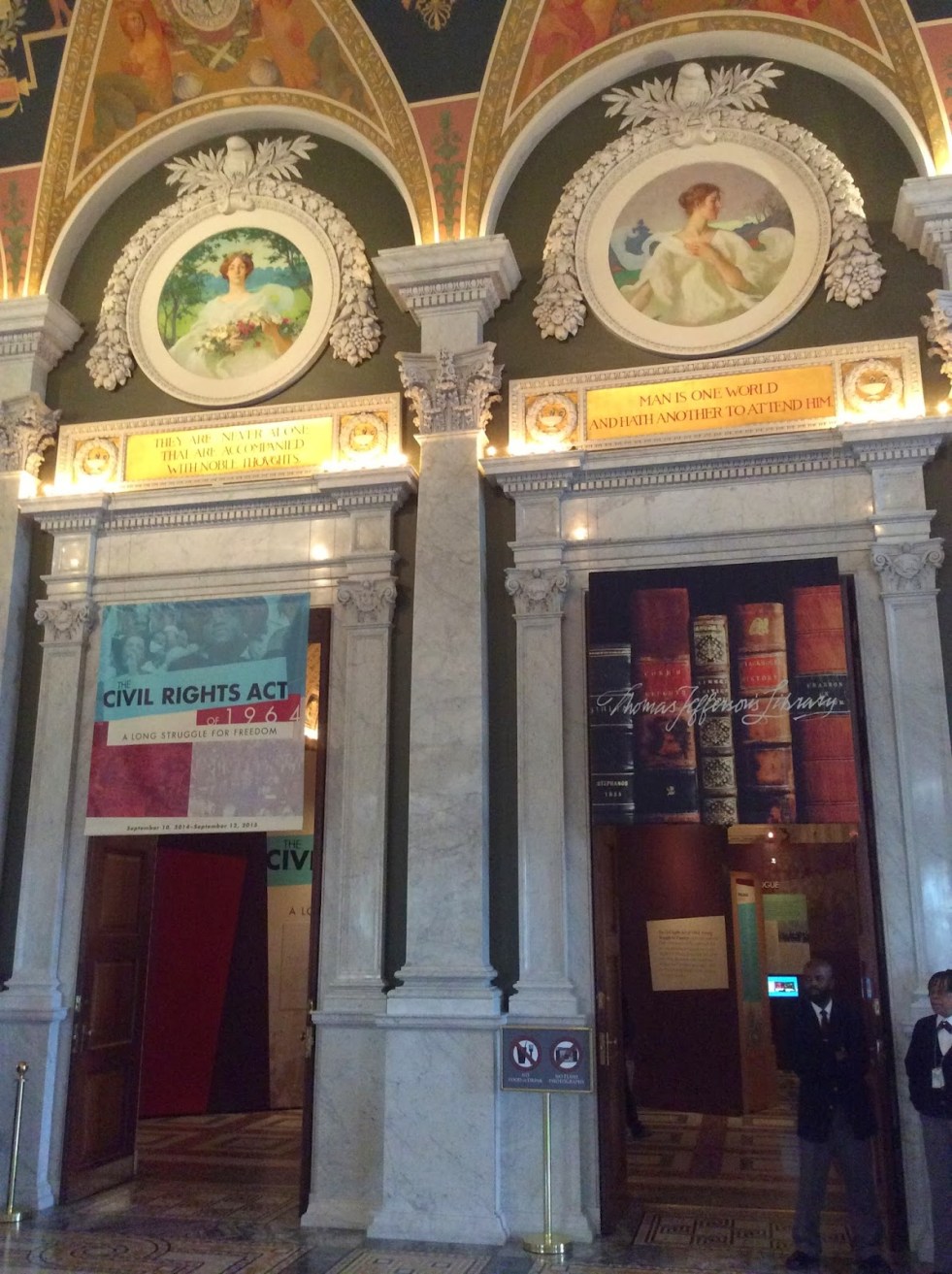
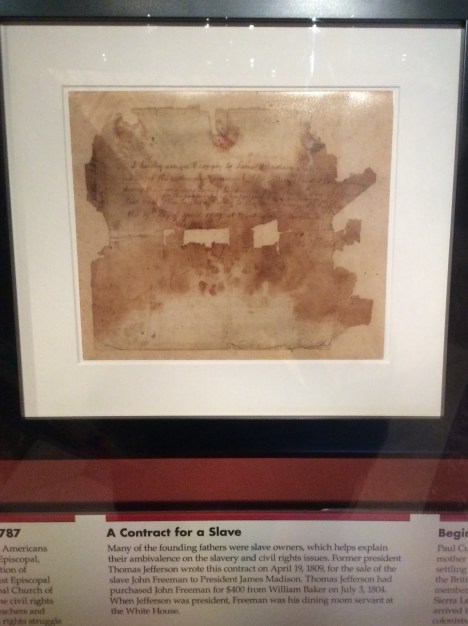 The gallery at the southwest corner of the second floor is really what I’m looking for, and I head upstairs.
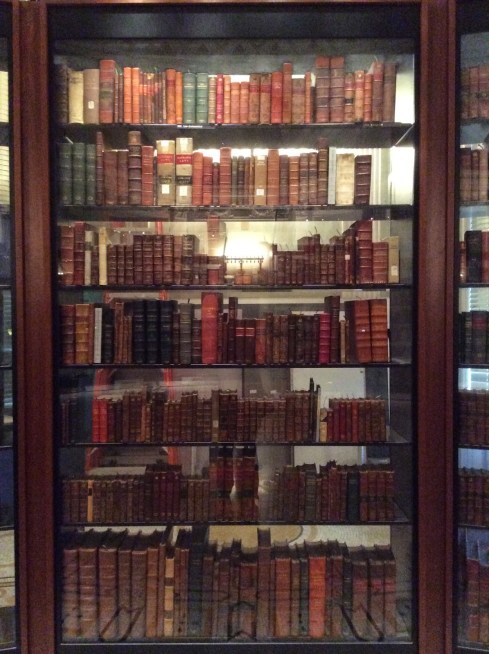 The Jefferson Gallery holds what remains of the original Jefferson collection; about two-thirds of it was lost in a fire in 1851. The LOC is currently rebuilding the original collection, seeking out original copies, in sufficiently good condition, of the same books in the same edition that Jefferson originally collected, if they can be obtained.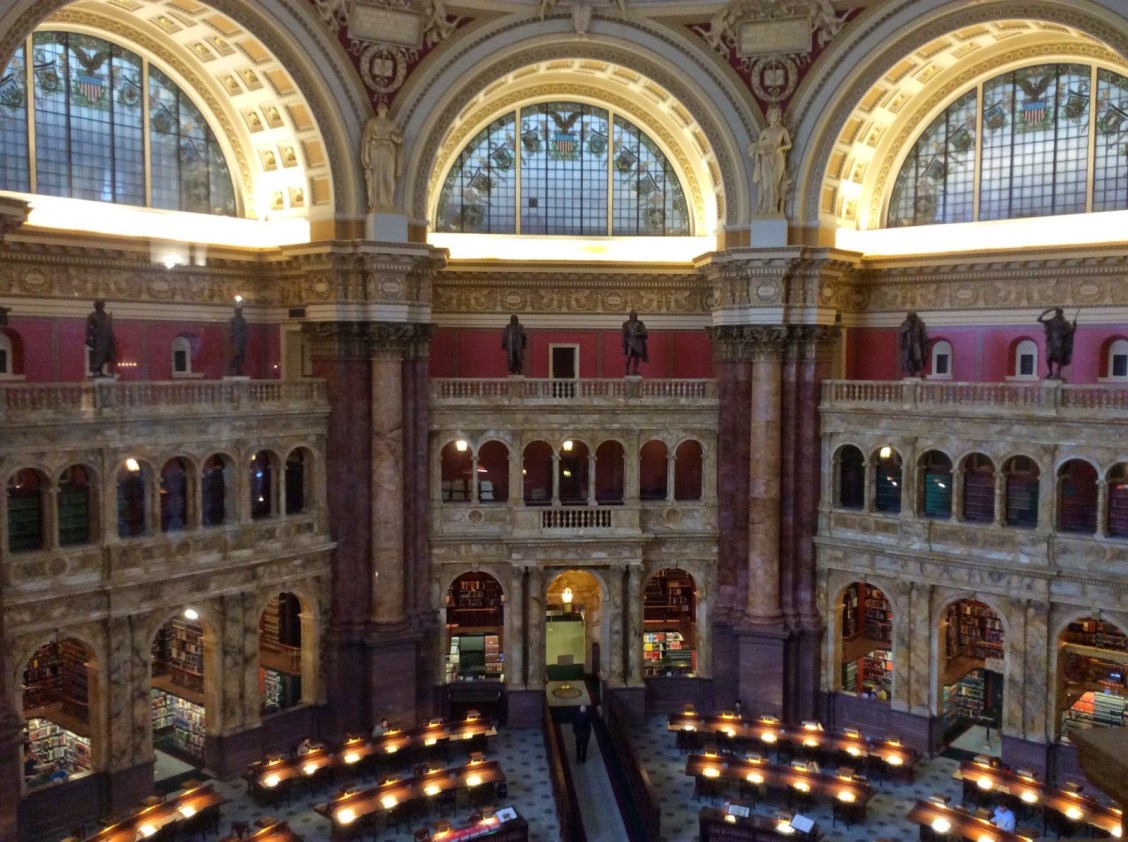
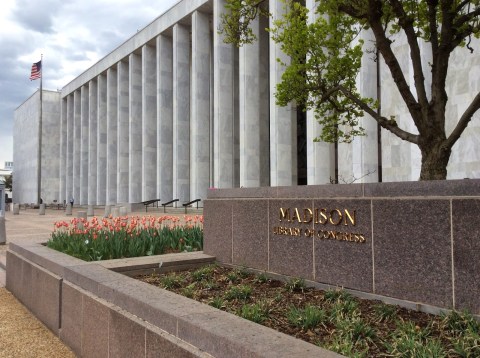 I pore over the shelves for a good long while, then decide I needed to take a break and look at something purely decorative for a moment again while I walk around. I see a little crowd gathering and think, oh, yes, whatever it is, I’ll look at it too. It turns out it’s the line to get to the balcony that overlooks the Main Reading Room. Great. It was my plan all along to find out more about how I could access the collection and do some research. So I stand in line, get onto the balcony, and see a vaulted, domed library room, the most gorgeous I’ve ever seen. Through thick protective plexiglass.
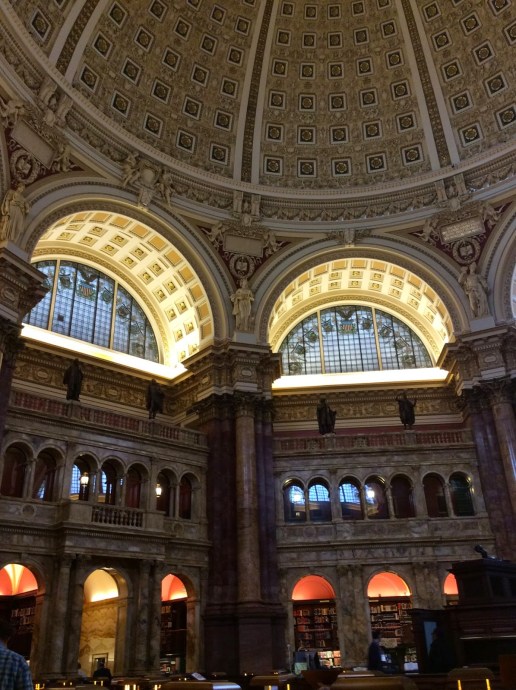 I return to Jefferson Building through the tunnel which shortcuts under the street (there was a little rain falling when I had left it earlier) and turn in all my things, except writing materials, to the coat check.
 Ordinary Philosophy