New Podcast Episode: Philosophy as Love of Wisdom and in the Public Sphere

Sophia, goddess of wisdom

Sophia, goddess of wisdom

Listen to this podcast episode here or on Google Play, or subscribe on iTunes

Some years ago, the economic downturn inspired me to put aside my business endeavors and return to school to study philosophy. I had loved philosophy for as long as I can remember, before I even knew what to call it, and later as I understood it in its broadest sense: the love and pursuit of wisdom. Wisdom was pursued through asking questions about everything, from the metaphysical and theological sort of questions that my religious and argumentative family used to debate around the dinner table and family gatherings (I credit these discussions and arguments, more than anything, with inspiring my philosophical curiosity) to all other questions about what’s true and false, just and unjust, good and bad, right and wrong. Wisdom was found through reading and learning as much as possible, then applying this learning to carefully thinking through possible answers to these questions. And wisdom was loved not because it brought understanding and meaning to life, but rather because its pursuit seemed beautiful to me.

Because my love of philosophy was formed prior to any introduction as a school of thought and my formal education was rather piecemeal, my approach was whimsical, idiosyncratic, unsystematic. Any and all subjects that aroused my curiosity and admiration could be brought to bear on what I understood as philosophical inquiry: literature, history, art, love of nature, social activism, law and justice, ethics, travel, architecture, science, in fact, every subject that involves human thought and appreciation…. Continue reading

This piece was written for the American Philosophical Association blog, originally published there on Sept. 22nd, 2016, and edited by Skye Cleary.

~ Ordinary Philosophy and its Traveling Philosophy / History of Ideas series is a labor of love and ad-free, entirely supported by patrons and readers like you. Please offer your support today!

Philosophy as Love of Wisdom and in the Public Sphere

Sophia, goddess of wisdom

Sophia, goddess of wisdom

Some years ago, the economic downturn inspired me to put aside my business endeavors and return to school to study philosophy. I had loved philosophy for as long as I can remember, before I even knew what to call it, and later as I understood it in its broadest sense: the love and pursuit of wisdom. Wisdom was pursued through asking questions about everything, from the metaphysical and theological sort of questions that my religious and argumentative family used to debate around the dinner table and family gatherings (I credit these discussions and arguments, more than anything, with inspiring my philosophical curiosity) to all other questions about what’s true and false, just and unjust, good and bad, right and wrong. Wisdom was found through reading and learning as much as possible, then applying this learning to carefully thinking through possible answers to these questions. And wisdom was loved not because it brought understanding and meaning to life, but rather because its pursuit seemed beautiful to me.

Because my love of philosophy was formed prior to any introduction as a school of thought and my formal education was rather piecemeal, my approach was whimsical, idiosyncratic, unsystematic. Any and all subjects that aroused my curiosity and admiration could be brought to bear on what I understood as philosophical inquiry: literature, history, art, love of nature, social activism, law and justice, ethics, travel, architecture, science, in fact, every subject that involves human thought and appreciation…. Continue reading

This piece was written for the American Philosophical Association blog, originally published there on Sept. 22nd, 2016, and edited by Skye Cleary.

~ Ordinary Philosophy and its Traveling Philosophy / History of Ideas series is a labor of love and ad-free, entirely supported by patrons and readers like you. Please offer your support today!

On Plastic Surgery and Other Cosmetic Interventions

I published this essay about a year ago today. Cosmetic medical intervention is a subject of special interest for me, and problems associated with it, especially those performed for non-functional or non-reconstructive purposes, are often brought to mind at the medical practice I work in.

Amy M Cools's avatarOrdinary Philosophy

I work for a dermatologist who focuses his practice on medical dermatology. While all treat many of the same medical conditions, an ever-increasing percentage of dermatologists devote a substantial portion of their time to performing cosmetic procedures, from Botox and filler injections, chemical peels, and laser treatments to surgeries: facelifts, chin implants, eyelid modifications, and so on. The sign on the door of the medical practice I work for, however, reads ‘Diseases of the Skin’.

To me, this is a reassuring message, as if to say to all who enter ‘We are here to try and cure what ails you.’ It contrasts sharply with the message I get from cosmetic dermatology and surgery ads: ‘We agree that you’re ugly and need to be altered.’

Now, of course, this is only what I read into those ads, especially in my more sensitive moods. I don’t for a moment speak for anyone…

View original post 4,456 more words

Seneca to Lucilius: On Old Age, by Massimo Pigliucci

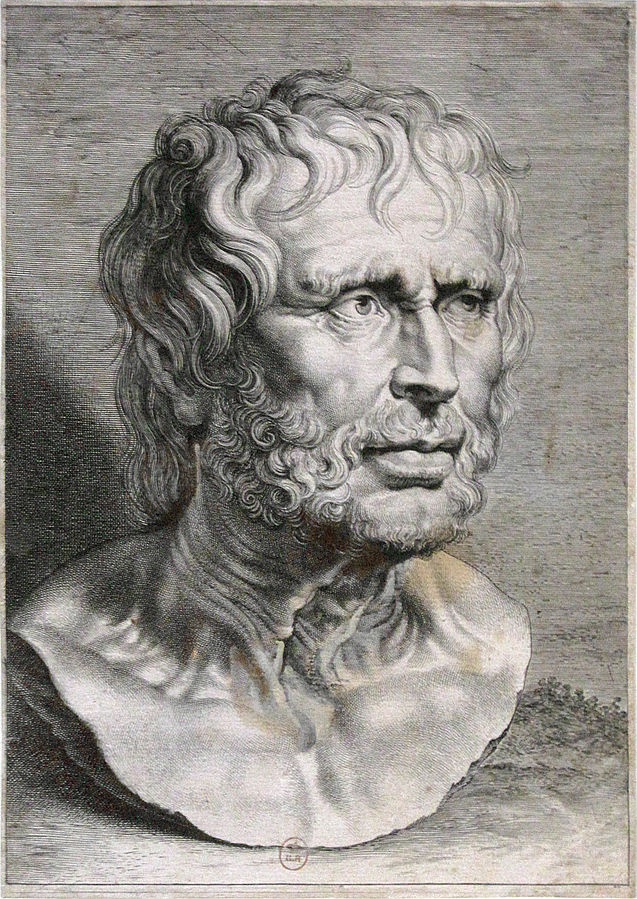
portrait-of-seneca-after-the-antique-the-pseudo-seneca-by-lucas-vorsterman-public-domain-via-wikimedia-commonsThis is the 12th letter to Lucilius, in the translation by Richard Mott Gummere published in the Delphi Classics edition of Seneca’s Complete Works, and it deals with an issue that an increasing number of people in the first world of today have to deal with: old age.

Seneca begins by recalling a recent visit to one of his country houses, during which he complained to one of his employees that too much money was being spent to keep it up. But his bailiff protested that the house was getting old, and the repairs were therefore entirely warranted. So Seneca writes to Lucilius: “And this was the house which grew under my own hands! What has the future in store for me, if stones of my own age are already crumbling?” (XII.1)

He then argues that there is much to be cherished in that stage of his life that the bailiff’s unchallengeable argument suddenly made him appreciate:

“Let us cherish and love old age; for it is full of pleasure if one knows how to use it. Fruits are most welcome when almost over; youth is most charming at its close; the last drink delights the toper, the glass which souses him and puts the finishing touch on his drunkenness. Each pleasure reserves to the end the greatest delights which it contains. Life is most delightful when it is on the downward slope, but has not yet reached the abrupt decline.” (XII, 4-5)

Notice the awareness of a coming “abrupt decline,” which Seneca is not foolish enough to argue will make for an enjoyable part of his life, should he live long enough (as it turns out, he didn’t). While not expressly mentioned here, this was the reason why the Stoics — including both Seneca and Epictetus, not to mention Zeno — thought that the wise man should make an exit, take “the open door,” as Epictetus memorably put it, when the appropriate time had come, no a moment sooner, but also not a moment later.

So what should be the wise person’s attitude toward old age? Seneca puts it very vividly to Lucilius:

“Let us go to our sleep with joy and gladness; let us say: I have lived; the course which Fortune set for me is finished. And if God is pleased to add another day, we should welcome it with glad hearts. That man is happiest, and is secure in his own possession of himself, who can await the morrow without apprehension. When a man has said: ‘I have lived!’, every morning he arises he receives a bonus.” (XII.9)

I am often struck by Seneca’s language, and this is one of many instances. “I have lived!, every morning I arise I receive a bonus.” Indeed.

As he frequently does in the early letters, Seneca parts from his friend with a “gift,” a meaningful quotation from another author, which in this case is: “It is wrong to live under constraint; but no man is constrained to live under constraint” (XII.10), another, more direct, reference to suicide to be chosen under certain circumstances.

The twist is that the above saying is from none other than Epicurus, the chief rival of the Stoic school at the time. Seneca, then, imagines Lucilius protesting: “‘Epicurus,’ you reply, ‘uttered these words; what are you doing with another’s property?’ Any truth, I maintain, is my own property.” (XII.11)

Again, a beautiful turn of phrase, and an example of real wisdom: it doesn’t matter where the truth comes from, once discovered, it is our collective property.

~ This piece was originally published at How to Be a Stoic on September 15, 2016

~ Massimo Pigliucci is K.D. Irani Professor of Philosophy at the City University of New York and member of the faculty at CUNY’s Graduate Center. Massimo has a background in evolutionary biology and philosophy of science. His most recent book, co-edited with Maarten Boudry, is Philosophy of Pseudoscience: Reconsidering the Demarcation Problem (Chicago Press).

~ Ordinary Philosophy and its Traveling Philosophy / History of Ideas series is a labor of love and is ad-free, entirely supported by patrons and readers like you. Please offer your support today!

Does Death Rob Our Lives of Meaning? by Richard Pettigrew

Headstones in Gettysburg National Cemetery 2 (cropped), photo 2016 Amy CoolsIn the previous post, we met the argument with which Epicurus hoped to cure our fear of death and, with that, our fear of everything else. But we found it wanting. Epicurus assumed that only that which can harm you may be feared; and only that which causes pain can harm you. But we saw that both of these assumptions are false. Along the way, we met one specific reason to fear our death, namely, its effect on those we love. But I suggested that, while this might justify certain responses to the fact of our own mortality, it does not seem to support the sort of response that people often report – the halting existential terror felt in the pit of the stomach. This sort of response, it seems, comes from somewhere else. In this post, we consider a conjecture as to its source: I fear death, you might think, because the fact that I will die robs the things I do in my life of their meaning or their value or their worth. This, if it were true, would justify the feeling of vertigo and emptiness that comes when we reflect that we will die. To remind ourselves that all we have done is meaningless is to have the basis for all we do pulled out from under us.

As so often, Bill Watterson’s six-year old philosopher, Calvin, has been here before us. In the first pane of one comic strip, Calvin is at his school-desk: “Miss Wormwood, I have a question about this math class”; “Yes?”; “Given that sooner or later, we’re all just going to die, what’s the point of learning about integers?” Calvin’s thought seems to be based on an assumption that many of us make about what makes it worthwhile to do the things that we do in our lives. We assume that an activity can only get meaning or value by contributing to some larger goal that we pursue. Death, then, robs our lives of meaning or value by interrupting our ultimate over-arching goals before they can be fully achieved.

But this is based on a mistaken view of how things get their meaning or their value or their worth. Of course, some things get their meaning from how they contribute to some larger project (the philosopher Kieran Setiya calls these ‘telic activities’). I sharpen my pencil in order to draft this blog; and if I don’t finish the blog, the pencil sharpening becomes devoid of worth – doing it will have added no value to my life. I make a birthday card for a friend in order to make her laugh; if I drop it down a drain on my way to her party, there was no value in the making of it. But other things I undertake not because they contribute to a larger project – or not only for that reason – but because I value them as they are; they are, for me, sources of value in themselves (Setiya calls these ‘atelic activities’). For example, this blog might be part of a larger project I have to think through the effect on our lives of knowing of our own mortality. But I don’t value writing it only for its contribution to that goal. The process of thinking through these questions is itself something of value for me; something that gives my life meaning in and of itself. I might listen to my friend’s woes as part of a larger project of supporting her and living my life as connected to some extent to hers; but I value each particular part of that project, each evening talking to her, and not just because of their contribution to the whole; they are ends in themselves. What’s more, as philosopher Frances Kamm points out, much of what gives value to our lives is not any activity, such as thinking through a philosophical issue or connecting my life to that of my friend, but a way of being, such as being wise or being virtuous; and these ways of being are complete in themselves whenever you have them. The value that being wise or being virtuous add to your life does not increase the longer you live, though of course the longer you live, the more chance you have of achieving them.

In another comic strip, Calvin is sitting with his friend Hobbes, the tiger, under a tree. He turns to Hobbes: “I don’t understand this business about death. If we’re all going to die, what’s the point of living?” After a moment, Hobbes replies: “Well, there’s seafood.” And he’s right. Much of what we do in life – spending time with friends or family, taking in the beauty of the natural world, writing, reading, campaigning, or eating seafood – we value for its own sake. We don’t value it because of its contribution to some larger project that is curtailed by our death, thereby robbing our actions and lives that contain them of meaning. So, this aspect of death – that it truncates some of our projects, and frustrates some of our goals – gives us cause for sadness, perhaps, or disappointment or regret; but not fear, and not halting existential terror in the pit of our stomach. After all, there’s seafood.

~ Richard Pettigrew is Professor of Philosophy at the University of Bristol. He completed his PhD in mathematical logic in 2008. Since then, he has worked in logic, philosophy of mathematics, the epistemology of uncertainty, and the theory of rational choice. (Bio credit: OUPblog)

~ This piece was originally published at OUPblog

Ordinary Philosophy and its Traveling Philosophy / History of Ideas series is a labor of love and ad-free, supported by patrons and readers like you. Please offer your support today!

Philosophie Sans Frontières, by Graham Priest

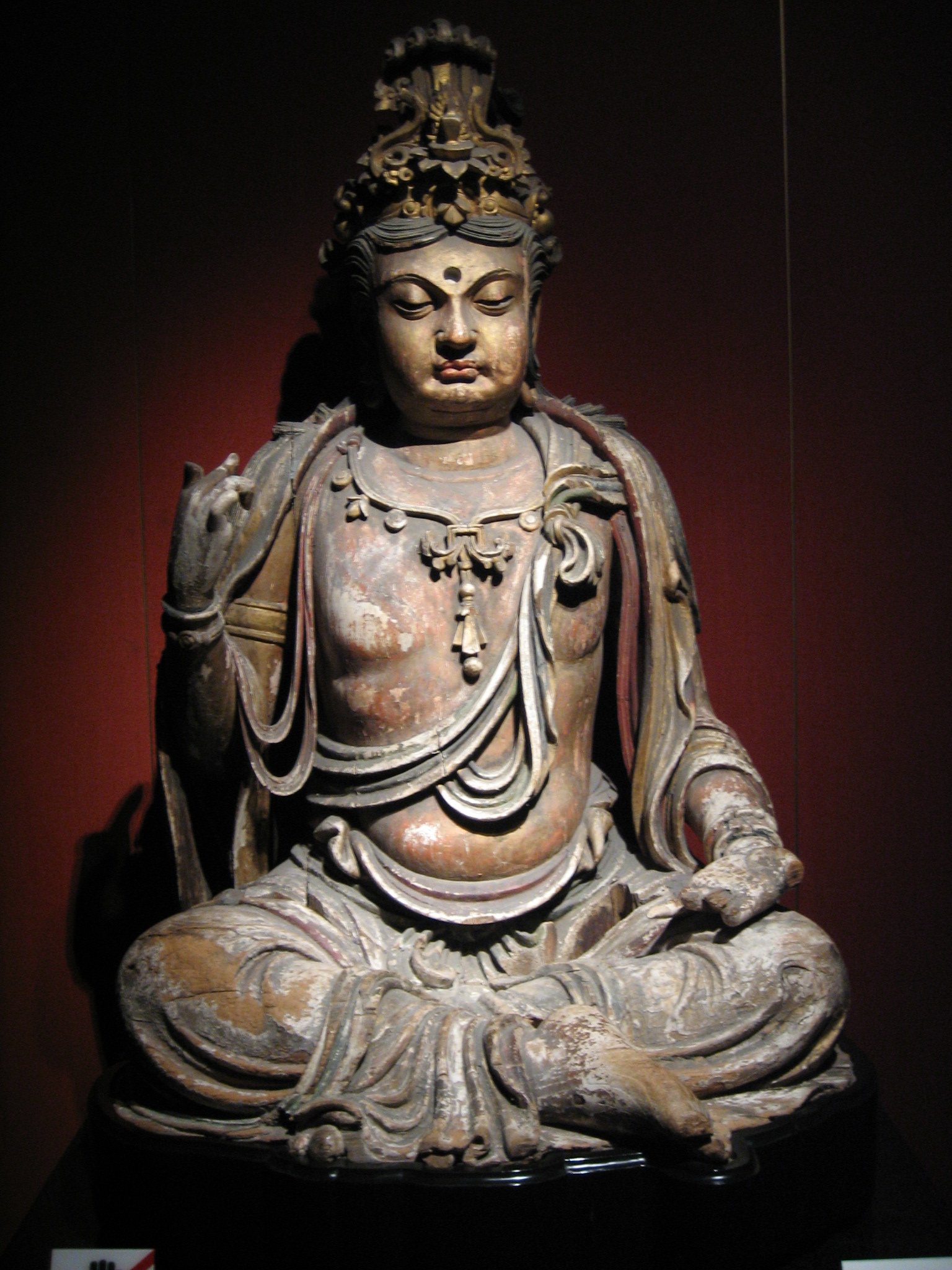
Wood Bodhisattva, Jin Dynasty (1115-1234 AD), by Mountain at Shanghai Museum, CC BY-SA 3.0 US via Wikimedia Commons“East is East and West is West, and ne’er the twain shall meet.”

Well, no. Kipling got it wrong.

The East and the West have been meeting for a long time. For most of the last few hundred years, the traffic has been mainly one way. The West has had a major impact on the East. India felt the full force of British imperialism with the British East India Company and the British Raj. Japan fell in love with German culture — especially military culture — after the Meiji restoration. The French colonization of Vietnam drew it inexorably into the Vietnam War.

In the last 40 years, however, a lot of the trade has been going the other way. The post-war developments in Japanese electronics and motorbikes came to dominate the West. Many global IT developments — not to mention call-centers — are now firmly based in India. And it is impossible for Westerners to miss all the garments now bearing the label “Made in China.”

Economy moves at the speed of money. Philosophy moves at the speed of ideas, which is somewhat slower. But the story is similar. In the last 150 years, Western philosophy has made a major impact on the East. The British Raj brought German Idealism — or at least the British take on it — to 19th and early 20th century Indian philosophy. The Japanese Kyoto school absorbed influences from Bergson, James, and — above all — Heidegger. And the influence of Marx on Chinese thinkers hardly needs emphasis.

The influence in the reverse direction is still nascent, but it is now gathering pace. As little as 30 years ago, there was hardly a course on an Eastern philosophical tradition in any Western philosophy department. In fact, it was common to hear Western philosophers claim that the Eastern traditions were merely religion, mysticism, or simply oracular pronouncements. That view was held by philosophers who had never taken the trouble to engage with any of the texts. Had they read them, with care, they would have realized that the philosophy behind them is clear, once one has learned to see beyond the cultural and stylistic differences.

Now, however, many good Western philosophy departments teach at least one course on some Eastern philosophical traditions (at least in the English-speaking world). Good translations of Asian texts are being made by Western philosophers with the appropriate linguistic skills (in the past, translation was firmly in the domain of philologists and scholars of religion). Articles which draw on Eastern ideas are starting to appear in Western philosophy journals. PhD theses are being written comparing Confucius and Aristotle, Buddhist ethics and Stoic ethics, Nyāya and contemporary metaphysical categories. Introductory text books are appearing.

There is still a long way to go until the institution of Western philosophy understands that it is just that — Western philosophy. But at least the movement is under way, though it will certainly take time to overcome the current marginalization of the other half.

What will happen to Western philosophy when full realization sets in? Of course, if we knew what philosophy was going to emerge, it would already have done so. And predictions in this area are worth little. However, I will venture a theory.

We are in the situation that arises when different cultures meet. This has happened before in philosophy. It happened when Greek philosophy met the ideas of the Jewish break-away sect based on the life and death of Yeshua Bar-Yosef. The result was the remarkable development of Christian philosophy. It happened when the ideas of Indian Buddhism came to infuse Chinese thought in the early years of the Common Era. The result was the remarkably distinctive forms of Chinese Buddhisms, such as Chan (Zen). It happened when the new scientific culture which developed in Europe around the Scientific Revolution impacted late Medieval Philosophy, to give us the wealth of Modern Philosophy. I predict that we will witness a similar progressive moment in the present context.

Why do these meetings of culture deliver such progress? It is hard to answer this question without talking about what progress in philosophy amounts to. I can only gesture at an answer here. Progress in philosophy is not like progress in science — whatever that is: as philosophers of science know, this is not an easy question either. One way to see this is to note that philosophers still read Plato, Augustine, Hume. No scientist, qua scientist, reads Newton, Darwin, or even Einstein. Nor is this because the philosophers are simply doing the history of philosophy. They read because the texts contain ideas from which one can still learn.

Cynics might say that what this shows is that there is no progress in philosophy. I demur. Progress in philosophy certainly arises when we become aware of new problems and new arguments. But old problems of importance rarely go away. Yet even here there is still progress in the depth of our understanding. We see new ways to articulate ideas, new aspects of problems, new possible solutions to them.

Now, there are at least two reasons why the impact of a new culture promotes such progress. First, it is a truism that the best way to understand your native tongue is to learn another; and the best way to understand your culture is to become familiar with a radically different one. The contrast throws into prominence things so obvious as to have been invisible. So it is in philosophy. And when these assumptions become visible, they can be scrutinized in the cold hard light of day, to expose any shortcomings.

Secondly, there is genuine innovation in philosophy, but it does not arise ex nihilo. Philosophers draw on their philosophical background for ideas, problems, solutions. The more they have to draw on, the greater the scope for creation and innovation. In the same way, when good Western chefs learn about Eastern cuisine (ingredients, preparations, dishes), they do not simply reproduce them — though of course they can do this, and they do. The most creative draw on the Eastern and Western traditions is to produce entirely new dishes. Call this “fusion cuisine” if you like, but the name is not a great one, since what emerges is not simply merging two cuisines, but creating genuinely novel fare. So it is with philosophy. An understanding of Eastern traditions, when added to an understanding of Western traditions will allow creative philosophers to come up with philosophical ideas, questions, problems, which we cannot, as yet, even imagine.

Over the last couple of decades, it has been my privilege — and that of a small band of other Western-trained philosophers — to help bring the Asian philosophical traditions to the awareness of Western philosophers. For all of us, I think it is true to say, our own philosophical thinking has been enriched by an understanding of Eastern philosophical traditions. If we can enrich the thinking of our Western philosophical colleagues in the same way, our time will have been well spent.

Graham Priest is Distinguished Professor of Philosophy at the Graduate Center, City University of New York, and Boyce Gibson Professor Emeritus at the University of Melbourne. (Bio credit: OUPblog)

~ This piece was originally published at OUPblog

Ordinary Philosophy and its Traveling Philosophy / History of Ideas series is a labor of love and ad-free, entirely supported by patrons and readers like you. Please offer your support today!

O.P. Recommends: Delaware Artist Inspired by Philosophy and Music to Make Beautiful Artwork, by Brian Drouin

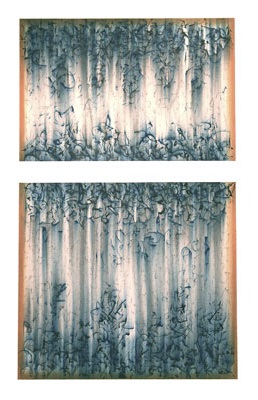
Moment in a Forest of Words, image credit Michael Krausz, used by permission

Moment in a Forest of Words, image credit Michael Krausz, used by permission

I just came across this great story about Michael Krausz, a professor of philosophy and an

‘..artist [who] weaves music, art, and philosophy together as one.

Swiss born Michael Krausz was destined for a life of music, the son of professional musicians, he later discovered philosophy and in a moment that changed his life he discovered his love of painting…’

Read Krausz’s story and watch the video by Brian Drouin. I think you’ll love what you see and hear.

You can learn more about Krautz at his Bryn Mawr faculty page as well.

~~~~~~~~~~~~~~~~~~~~~~~~~~~

Ordinary Philosophy and its Traveling Philosophy / History of Ideas series is a labor of love and ad-free, supported by patrons and readers like you. Please offer your support today!

Happy Birthday, W.V.O. Quine!

WVO Quine on the Bluenose II in Halifax, Nova Scotia, photo courtesy of Douglas Quine (cropped)

WVO Quine on the Bluenose II in Halifax, Nova Scotia, photo courtesy of Douglas Quine

The emphases in my own education in philosophy were Ethics, Politics, and Law, so I didn’t spend as much time studying Willard Van Orman Quine’s great contributions to philosophy as I would like. However, if my focus was Mathematical Logic, Epistemology, Philosophy of Language, or Philosophy of Science, I would have spent a lot of time with the prodigious output of his remarkable intelligence. But one of his important observations is brought up in introductory philosophy classes generally, an epistemological (having to do with knowledge) quandary: Given that science continuously makes new discoveries, sometimes in the process overturning and replacing earlier theories, how can we ever say that we actually know anything about the world? Science relies on the fact that all theories are subject to revision, expansion, and being proved wrong. Does this mean, then, there’s no such thing as knowledge, since, in theory, anything we claim to know may be disproved by later discoveries?

For Quine, there is no dividing line between science and philosophy; they are interconnected ways of discovering and understanding the world. As the Stanford Encyclopedia of Philosophy puts it, Quine ‘denies that there is a distinctively philosophical standpoint, which might, for example, allow philosophical reflection to prescribe standards to science as a whole. He holds that all of our attempts at knowledge are subject to those standards of evidence and justification which are most explicitly displayed, and most successfully implemented, in the natural sciences. This applies to philosophy as well as to other branches of knowledge.’ The Internet Encyclopedia of Philosophy says further, ‘…Quine often appeals to [Otto] Neurath’s metaphor of science as a boat, where changes need to be made piece by piece while we stay afloat, and not when docked at port. He further emphasizes that both the philosopher and scientist are in the same boat (1960, 3; 1981, 72, 178). The Quinean philosopher then begins from within the ongoing system of knowledge provided by science, and proceeds to use science in order to understand science. …his use of the term “science” applies quite broadly referring not simply to the ‘hard’ or natural sciences, but also including psychology, economics, sociology, and even history (Quine 1995, 19; also see Quine 1997). But a more substantive reason centers on his view that all knowledge strives to provide a true understanding of the world and is then responsive to observation as the ultimate test of its claims…’

Oh, and he played the mandolin and piano, and learned a lot of languages just so he could deliver his lectures in the native language of the audience. Whatta guy!

For more about the great W.V.O. Quine, please visit the excellent sources below; a good place to start is the New York Times article.

Ordinary Philosophy and its Traveling Philosophy / History of Ideas series is a labor of love and ad-free, supported by patrons and readers like you. Please offer your support today!

~~~~~~~~~~~~~~~~~~~~~~~~

Sources and inspiration:

Hylton, Peter, ‘Willard van Orman Quine‘, The Stanford Encyclopedia of Philosophy

Sinclair, Robert. ‘Willard Van Orman Quine: Philosophy of Science‘, in The Internet Encyclopedia of Philosophy

Willard Van Orman Quine. In The Basics of Philosophy: A huge subject broken down into manageable chunks

Willard Van Orman Quine. In Wikipedia, The Free Encyclopedia.

Willard Van Orman Quine, 1908-2000: Philosopher and Mathematician. Website

W. V. Quine, Philosopher Who Analyzed Language and Reality, Dies at 92.’ New York Times, Dec 29, 2000

O.P. Recommends The Stronger Sex: Women Scholars and Islam, by Peter Adamson

Bint al Shati, image credit AchetronI just listened to a podcast episode I had missed a year and a half or so ago, from my go-to podcast for discovering the gaps in my knowledge (of which there are so many! sigh) about Ancient Greek, Islamic, Medieval, and Indian philosophy from Peter Adamson’s History of Philosophy Without Any Gaps. As you may remember, I had the privilege of having a conversation with him not that long ago for Ordinary Philosophy’s podcast.

The podcast episode I just listened to that I’m recommending today is called The Stronger Sex: Women Scholars and Islam (#192). In it, ‘Fatema Mernissi and others challenge the long-standing (but not complete) exclusion of women from the intellectual traditions of Islam.’ It was altogether fascinating, and much of what I heard surprised me. It made me very curious to learn more about women in Islamic philosophy.

Enjoy!

Ordinary Philosophy and its Traveling Philosophy / History of Ideas series is a labor of love and ad-free, entirely supported by patrons and readers like you. Please offer your support today!

An Excellent Sentiment from John Dewey, Found on a Library Wall

John Dewey quote inscribed on the Rundel Building of the Rochester Public Library, New York, photo 2016 by Amy Cools.jpg

‘Education is more than preparation for life, it is life itself.’ A rewording of a John Dewey quote inscribed on the Rundel Building of the Central Library of Rochester and Monroe County, New York. The original quote reads: ‘Cease conceiving of education as mere preparation for later life, and make it the full meaning of the present life.’ From “Self-Realization as the Moral Ideal” (Early Works 4:50)

Sources: Center for Dewey Studies: FAQ at Southern Illinois University and ‘Rundel Memorial Library Building‘ at RocWiki

Ordinary Philosophy and its Traveling Philosophy / History of Ideas series is a labor of love and ad-free, supported by patrons and readers like you. Please offer your support today!