Hume, Aristotle, and Guns

Photo 2014 by Amy Cools

Antique firearms at the Scottish National Museum, Edinburgh

I’ve been mulling over the issue of ‘gun rights’ for some time now. It’s a pressing issue here in the United States, since more people are injured and killed by citizens wielding guns than in any other state with a stable government and a thriving economy.

It’s also a divisive issue, as it’s generally argued in terms of liberty, a core value in our culture and politics. One side emphasizes the right to self-defense, the other the right to freedom from fear and from the pressure to join the arms race. And whether or not people chose to arm themselves, their fellow citizens feel that they are placed under some kind of obligation or burden as a result.

From the anti-gun perspective: if at least some of your fellow citizens are armed, then you are forced into a position where you must arm yourself too whether you’d like to or not, or remain at their mercy. After all, in a moment of greed, anger, zeal, fear, mental illness, hate, or accident, one person with a gun can permanently remove all freedoms that another could ever enjoy, within seconds, with the simple squeeze of a trigger. When another is armed, they have the potential power to wield complete control as to whether you live or die, and to force you to act according to their will, and against your own.

From the pro-gun perspective: if your fellow citizens choose not to arm themselves, you leave all the work of crime deterrence up to gun owners. Not only that: since a gun is the most effective weapon which can be wielded by a person of nearly any degree of strength, it’s the only available method for many who feel the need to defend themselves and others. In other words, it’s the one real equalizer: anyone with a gun has as much power as any other, so long as they know how and when to use it.

What would help us decide how to settle this, since the freedom to live the life we want, and the freedom to live at all, are in direct conflict here? We’re still figuring it out here in the US. Some nations have chosen in favor of individual gun rights, and others have disarmed their citizens, with varying results. While, generally speaking, nations and states with low gun ownership rates have much lower rates of gun violence, there are some exceptions. The gun rights dilemma, therefore, is not simply and immediately solved through legislation designed in favor of one set of rights issues over another.

Putting the conflicting liberty and rights issues aside for the moment, perhaps it would help to consider the relevant moral issues. Here, we can look beyond local, cultural considerations to a broader source of guidance as to what we should do about guns. What does it mean to be a good person, a virtuous person, and how do we cultivate that in ourselves and in each other? How does a society cultivate that in its citizens? Can these and other considerations help us decide what’s right, morally, when it comes to the rights and responsibilities of owning a gun? What should we do about it? Is it right or good for people to hold so much power over life and death? Permissive gun laws, which make it easy for responsible gun owners to trade in guns, also make it easier for members of drug cartels and other criminals to get their hands on them, too; that being known, are those laws right?

I think two of the greatest thinkers on morality and virtue, David Hume and Aristotle, can do much to help us discover some answers to these questions. Let’s explore their ideas, look for some answers there, and see how they fit with modern discoveries in behavioral science, psychology, and neuroscience.

According to David Hume, morality originates in the ‘passions’, or feelings. We can see ourselves as naturally moral creatures, since we come equipped with those emotions, those motivations, that make morality possible. We demonstrate altruistic, ‘pro-social’ (not Hume’s term, a more modern one), even as children, though we develop our moral character as we grow, through life experience, conversation with other moral beings, and by acquiring and developing the use of reason. For example, from the earliest age, we approve of kindness and disapprove of cruelty. We desire happiness, love, and generosity, and detest pain and avoid selfish people; we crave learning, and enrichment, and the approval of others. Those ‘sentiments’ ennoble us, and are responsible for that which is best in our characters. Yet the emotions we come equipped with are not sufficient, in themselves, for a morally developed person. Reason also plays a key role, enabling us to universalize and expand morals, and to apply these needed in any given situation.

Yet morality cannot be founded on reason alone: as Hume points out, reason is the means to means to link one true proposition with another, but cannot, on its own, show us what to value, or make us care about each other or anything else. It’s moral feeling, the passions, that provide the motivations, and provide reason the materials to work with to develop our morality. So as we grow up, we learn to develop our moral instincts, to ‘expand our moral circle‘ through conversation and the use of reason. By spending time with others, by being exposed to diverse ways of thinking and being, we learn that others have emotions and interests just like we do, that are just as important to them as ours are to us. Emotionally, we empathize with others; rationally, we know that what we expect of others is no more or less than what we must demand of ourselves. A very young person has the instincts for morality, but prior to experience of the world and the use of reason, it’s a very limited morality, or can even be considered a sort of proto-morality. Experience of other moral agents, through discourse with them, reveals there are others whose feelings and interests matter just as much to them as ours do to us, and finally reason shows that there is not particular reason to favor oneself over another when determining moral rules and guides of behavior. A morally good person, then, will seek to be pleasant and generous, to make others happy and improve their well-being, to respect and protect their interests as much as possible, just as we desire and expect they will do for us.

Hume’s account of how morality works, combined with the body of knowledge we’ve discovered since his time, reveals that it’s as much a natural part of the makeup of the human personality as any other, as are creativity, romantic passion, mother love, curiosity, and hunger, as well as (sadly!) rapacity and cruelty. A natural explanation of morality does not require a complex suite of arguments to found its origins in logic and reason, nor does it require some cause outside of ourselves, as traditional explanations claimed. To find out what morality is and how it works, we observe human beings, how they act and how they desire themselves and each other to act; we explain how and why morality developed as a natural adaptation for human beings; and we apply reason to determine what kinds of mindsets, rules, and behaviors lead to their flourishing.

Behavioral, biological, and evolutionary sciences have, over the years, lent support to Hume’s explanation of morality. Rebecca Saxe and Alison Gopnik, among others, has closely observed the behavior of infants and very young children over time, and has gathered a large body of evidence that people demonstrate moral instincts from the very earliest age, recognize that others are moral beings with their own interests and emotions just like us, and make moral judgments accordingly. Evolutionary psychology (Darwin considered Hume one of his great influences), in which morality is considered as much an adaptation as our opposable thumbs and long limbs, inherit much from Hume’s account. In fact, Hume is widely considered a founder of naturalistic moral theory, and a father to modern cognitive science.
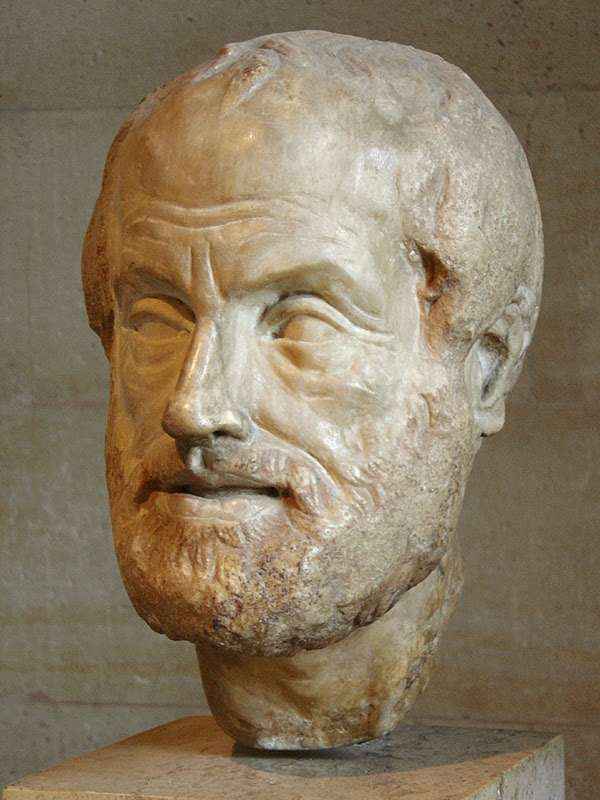
Aristotle’s grounds the origin of morality more on reason, though his theory is founded, like Hume’s, from his observation of the world and how people behave. His elegant ‘function argument’ is the centerpiece of his moral theory. When you consider what something is for, and observe what it does and how it functions, you’ll know where to start. The quality of goodness in material things is closely related to the quality of goodness when it comes to actions and moral feelings. A musical instrument is for making music; therefore, an excellent, or good, musical instrument is that which produces the best music. Further, if we consider a case in which we’re deciding who the musical instrument should belong to, it would be the right thing to do to give it to the best musician. Not to the nicest person, or the one who can pay the most for it, or even to the person who made it; those considerations are irrelevant since none of those have anything to do with the proper function of the instrument.

To Aristotle, reason is the one definitive human trait that no other creature on earth possesses. That’s what we do uniquely, and what we’re best at, or at least, that’s what we do when we’re at our best. So what we should do, the moral thing to do, is what’s most reasonable, what’s most in keeping with our nature as reasonable beings. What helps us recognize that, in turn, is called the ‘Golden Mean’: consider all those traits we have, see how they fall on a spectrum, and we will see that the virtue consists of the happy medium between extremes. For example, bravery would be the virtuous golden mean between cowardice and recklessness, love between disdain and fawning or obsession, and so on. (Fun fact: Hume himself placed great importance on moderation, temperance, and fairness, eschewing divisive party politics, for example, as if it was part of his mission to live out the ideal of the Golden Mean!)

Making the leap from the function of a thing which is an artifact of intentional human creation, to the function of a human being itself, is quite a leap. Aristotle recognized this and sought to address it, but did not yet have the modern knowledge of the theory of evolution, and of evolutionary psychology, and how well they account for the origin and development of moral virtues such as kindness, sympathy, generosity, bravery, and so forth. Nor did Hume, but he did not consider it justified to form conclusions by building a logical case as far removed from original observations as many who followed Aristotle later. Hume saw human beings as much a product of the natural world as any other, and their nature as fully explicable in those terms. So leaving the function argument aside for the time being, let’s consider another important contribution of Aristotle’s to moral philosophy: the importance of habit.To Aristotle, habit is essential to the practice of virtue. By emulating virtue, we habituate ourselves to it. Over time, morality, the practice of virtue, becomes second nature. Here, Aristotle proves himself a keen observer of human psychology, and his emphasis on habit as a central driving force behind human thought and behavior, as well as something which can be deliberately instilled through practice, is confirmed by the findings of modern psychologists and neuroscientists. A recent article in Scientific American outlines some of the ways in which habits are formed, and how necessary they are if we wish to improve our behaviors systematically. Cognitive behavioral therapy, now widely considered among the most effective ways to overcome addiction and anxiety-depression, among other disorders, is also founded on these scientific discoveries.

Here’s where I find a link between these two moral theories: Aristotle’s emphasis on habit works hand in hand with Hume’s account of how moral sentiments arise from human psychology. Whether it be from habit or other mental processes we are naturally equipped with when we achieve consciousness, moral behavior is largely a spontaneous reaction to the situation at hand. Early in our development, as Saxe and Gopnik describe, a basic set of moral instincts are included in human consciousness in its earliest stages. As Hume observes, experience and reason help us expand, develop, and perfect our moral characters over time; the moral character, as Aristotle recognizes, is the set of, and relationships between, the virtuous habits we’ve cultivated through practice.
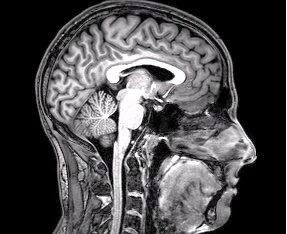
This also consistent with other findings of modern neuroscience and psychology. The way we tend to act in any given situation, the emotions and motivations that arise in us as we respond to stimuli, are formed as we react to circumstances, and by engaging in patterns of action, reactions, thoughts, behavior, we create mental channels, so to speak, or ‘paths of least resistance’, which predict our reactions, our thoughts and behavior, given similar circumstances. We usually act and think in accordance with how we’ve been given to act and think before, and only change when some new consideration(s) arises that makes us stop and consider whether to do something else this time. These considerations, the combination of reason and emotion (how do I act that will make me feel good about it, given the consequences of my actions for myself and others? How did the decisions I made last time the sort of thing came effect me and the world around me? How do others act in these situations, and what are the effects then?) inform how we habituate ourselves to new and improved moral actions and reactions.

Let’s pause for a moment. So far, we have these two thinkers’ descriptions of morality and virtue, supported by the findings of modern psychology and neuroscience.  Hume and Aristotle show us where they think we should look for virtue, how to recognize it, how to describe and explain it, and where it originates. In other words, they are engaged in metaethics. But as you may have noticed, this tells us only how people actually do think and behave; what about telling us what we should do? What are the criteria for deciding what’s right and what’s wrong?

Arete (Virtue)

I think Hume and Aristotle point us in this direction: human beings not only do, but should habituate themselves to those practices which form in us the best moral character. While both men don’t explicitly tell how we can definitely say what’s right and wrong, they go to great lengths to show us what an admirable character looks like, and how they think and behave. I think they do so in order to reveal to us not only how we could be, but how we should be. In his writings as well as by example (he was widely known to have a particularly admiral character), Hume emphasizes such virtuous sentiments as sympathy, sociability, amiability, beneficence, generosity, and so on, and advocates the cultivation of these traits, especially through conversation and spending time in the company of others, especially those who can broaden your understanding of the world, and by avid reading and study of philosophy, literature, and history. Aristotle emphasizes the virtue of moderation in all things, of wisdom, self-control, courage, and nobility. Both men emphasize, to the highest degree, the use of reason, and the value of its careful and consistent application in all matters of life. It appears that they go through all this trouble not only to show us what a good person looks like, but to offer us something to aspire to: the formation of an excellent, moral character, which leads to the best life a person can achieve.

So, finally, we return to the gun issue. What does all this have to do with owning them, and using them? What does this have to do with what we observe in human behavior when people own guns? How about when people value, or even glorify, guns?

Let’s return to the consideration of the evidence, which can reveal how attitudes and practices relating to guns manifest themselves in human behavior; in other words, what habit or habits does a gun-owning society promote?

There are conflicting statistics to when it comes to gun-related behavior. For example, people in the United States own almost twice as many guns per-capita as Canadians and Germans. Canada and Germany, in turn, have a much higher rate of gun ownership compared to most other developed nations. Yet among these three nations, the United States has a far higher gun-related death rate, about four times that of Canada, and about 8 times that of Germany, though the three share many key cultural and political traits: they are democratic, capitalistic, and culturally and historically Christian. There are also examples where lower gun-related death rates correlate with higher per-capita gun ownership. This is the case for some states in the U.S, and for Switzerland, a country that, interestingly, imposes a requirement on all households to own a gun.Yet given such outliers, most states in the US, and most countries in the world, see a strong correlation between lower rates of gun-related death and injury and lower rates of gun ownership. The U.S. ranks near the top in gun-violence rates, just under Mexico’s, a country overrun with trigger-happy drug cartels, and outranked almost entirely by countries with weak, unstable governments, poor human-rights records, and high rates of poverty and income inequality. The very lowest rates of all, by contrast, are enjoyed by those countries who possess a high degree of personal liberty and human-rights protections while at the same time restrictive gun-ownership privileges, or none at all. Even in Switzerland, often cited by gun-rights advocates as an example of how high rates of gun ownership can correlate with low levels of violence, there are 16 times as many gun deaths as in the U.K, and 64 times as many as Japan. The rates are low in Switzerland only as compared with the most violent countries, but not in comparison with the least violent.

Photo 2014 by Amy Cools

Antique long guns at the Scottish National Museum, Edinburgh

Returning to the liberty issue for a moment, it seems that overall, since you must be alive to enjoy any liberty at all, liberty is best served when there aren’t many guns around. When a fight ensues, or the home is broken into, or a child has figured out how to get into a locked cabinet, or a person goes on a violent rampage due to mental illness, few, if any, people actually end up dying or disabled when there’s no guns nearby to reach for. It’s relatively difficult and messy to kill someone with a knife and other non-gun weapons, and the planning that goes into other kinds of homicide, like poisoning, gives people more time to consider the consequences of their action, decreasing the chance they’ll go through with it, or decreasing the chances of success at homicide.

As we’ve seen, however, the liberty issue can’t be the only determining factor in deciding the gun issue, since liberty considerations conflict so sharply when one’s liberty interests run counter to another’s. There are still compelling arguments to be made that individual liberty requires the right for each person to make their own decision in the matter, from the right to self-protection and self-determination. There’s also the fact that there are some states and countries where higher rates of gun ownership do correlate with low gun violence, especially in places where the population is more homogeneous, ethnically, religiously, racially, economically, and so on, even if they are relatively few. Conversely, there’s the liberty considerations of those who wish to be free from the fear of coercion and bodily harm, ever-present dangers that usually result from a heavily armed population, as the statistics reveal.

This is where the law comes in. One main purpose of the law is to defend the rights and liberties of the citizenry at large, and this involves protecting citizens from each other. A population is always composed of people who have conflicting interests, needs and desires, so to keep a society functioning, prosperous, and harmonious as possible, the law (ideally) is crafted to balance the rights, responsibilities, and interests of each citizen, impartially, with the other.Another purpose of the law is to codify, universalize, and enforce the mores of a given society, or at least those that harmonize with the principles of justice, equality, liberty, and so on that are central to the political system of that society.And last but not least, the law encodes a system of rights, responsibilities, and prohibitions, the practice of which is requisite to being a good citizen. In other words, the law is a society’s (in a democracy, the people’s) way to habituate its citizens to those practices which form a virtuous, a good citizen.

Gun law is no exception. Prior to passing laws relating to gun ownership, there are societal attitudes towards guns that people possess, cultivate, and enforce not only through custom and discourse, but eventually through law. Famously, in the 1990’s, the Australian government, with widespread support from its citizens, collected and destroyed a large proportion of the country’s firearms, and imposed restrictive gun laws. These laws were a direct result of the public’s horrified reaction to a series of gun-related mass murders that had happened in the decade prior. The public’s new attitude towards guns was made manifest in the law. It’s still in debate whether the sharp decline in gun violence that followed the new laws were a result of the laws, or vice-versa. It appears most likely that it’s some combination of the two: after all, as we’ve observed throughout history, there’s a feedback loop between the law and a society’s moral progress.
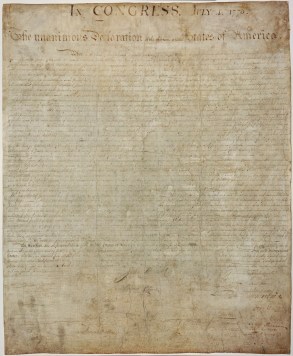
Consider the history of civil rights legislation in the United States: desegregation and other civil rights protections happened gradually, with each disenfranchised group demanding the full rights of citizenship, despite the current will of the majority to keep those groups subjugated and oppressed. Over time, the use of reason (in these cases, legal reasoning) and consideration of the values underpinning the foundational political philosophy and documents (in this case, the Declaration of Independence and the Constitution) led to new laws which not only enforced better practices, but habituated citizens to more virtuous thought and behavior, often in spite of themselves. We see this time and time again in American history: the disenfranchisement and oppression of black people, religious minorities, the poor and non-landowners, women, Jews, gay people, and so on, once common practice, came to be looked upon with righteous distaste, worthy of contempt. In so many of these cases, it was the law that changed commonly held attitudes, more than the other way around, and the change in attitudes and behavior often happened far more quickly than it would have otherwise if the practice of virtue wasn’t inculcated through law.

In sum: Considering the lessons of history, the evidence of the current states of affairs in which high gun-ownership rates correlate strongly with destructive attitudes and behavior when the entirety of the evidence is considered, and how the wisdom of two of the greatest moral thinkers is confirmed by the findings of modern science, I think that laws restricting, even eliminating, gun ownership by most individuals help lead to a wiser, more prudent, more beneficent, more amiable, more free society.

What do you think?

Ordinary Philosophy and its Traveling Philosophy / History of Ideas series is a labor of love and ad-free, entirely supported by patrons and readers like you. Please offer your support today!

– I’d especially like to thank Guy Fletcher, Lecturer in Philosophy at the University of Edinburgh, who kindly gave me some of his valuable time (despite it’s being finals week), invaluable insights, and excellent pointers regarding the subjects covered in this essay, especially in reminding me to make clearer the distinctions between meta-ethics, morality, and ethics.

~~~~~~~~~~~~~~~~~~~~~~~~~~~~~~~~~~~~~

Sources and inspiration:

Aristotle. Nichomachean Ethics. About 350 BC. 

Boseley, Sarah. ‘High gun ownership makes countries less safe, US study finds‘. The Guardian, Sep 18, 2013.

De Waal, Francis. The Bonobo and the Atheist : In Search of Humanism Among the Primates, 2013.

Gopnik, Alison. The Philosophical Baby, 1998.

Haidt, Jonathan. The Righteous Mind, 2013.

Hume, David. A Treatise of Human Nature, Volume III – Of Morals. Printed for Thomas Longman in London, England, in 1740. (I had a glorious time referring to versions published in Hume’s own lifetime during my trip to Edinburgh!) Online version: http://www.gutenberg.org/files/4705/4705-h/4705-h.htm

David B. and Stephen D’Andrilli. “What America can learn from Switzerland is that the best way to reduce gun misuse is to promote responsible gun ownership.” American Rifleman, Feb 1990

Kraut, Richard, ‘Aristotle’s Ethics‘. The Stanford Encyclopedia of Philosophy, 2014 

Morris, William Edward. ‘David Hume‘. The Stanford Encyclopedia of Philosophy, 2009.

Saxe, Rebecca. ‘How We Read Each Other’s Minds‘. TED talk, 2009

Tucker, Abigail. ‘Are Babies Born Good?’ Smithsonian Magazine, Jan 2013.
On Morality: Objective or Subjective?

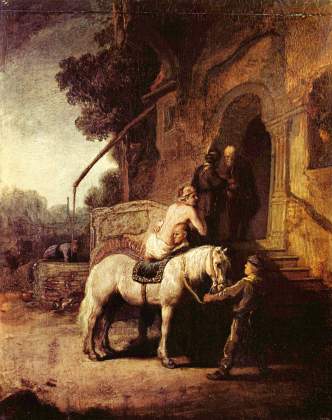
The Good Samaritan by Jean de Jullienne, 1766, after, public domain via Wikimedia CommonsIs morality objective, or subjective?

If it’s objective, it seems that it would need to be something like mathematics or the laws of physics, existing as part of the universe on its own account. But then, how could it exist independently of conscious, social beings, without whom it need not, and arguably could not, exist? Is ‘objective morality’, in that sense, even a coherent concept?

If it’s subjective, how can we make moral judgments about, and demand moral accountability from, people of times, backgrounds, belief systems, and cultures different than our own? If it’s really subjective and we can’t make those kinds of moral judgments or hold people morally accountable, then what’s the point of morality at all? Is ‘subjective morality’ a coherent concept either?

Take the classic example of slavery, which today is considered among the greatest moral evils, but until relatively recently in human history was common practice: could we say it was morally wrong for people in ancient times, or even two hundred years ago, to own slaves, when most of the predominantly held beliefs systems and most cultures supported it, or at least allowed that it was acceptable, if not ideal? Does it make sense for us to judge slave owners and traders of the past as guilty of wrongdoing?

From the objective view, we would say yes, slavery was always wrong, and most people just didn’t know it. We as a species had to discover that it was wrong, just as we had to discover over time, through reason and empirical evidence, how the movements of the sun, other stars, and the planets work.

From the subjective view, we would say no. We can only judge people according to mores of the time. But this is not so useful, either, because one can legitimately point out that the mere passage of time, all on its own, does not make something right become wrong, or vice versa. (This is actually a quite common unspoken assumption in the excuse ‘well, those were the olden days’ when people want to excuse slavery in ancient ‘enlightened, democratic’ Greece, or in certain pro-slavery Bible verses.) In any case, some people, even back then, thought slavery was wrong. How did they come to believe that, then? Was the minority view’s objections to slavery actually immoral, since they were contrary to the mores their own society, and of most groups, and of most ideologies?

Morality can be viewed as subjective in this sense: morality is secondary to, and contingent upon, the existence of conscious, social, intelligent beings. It really is incoherent to speak of morality independently of moral beings, that is, people capable of consciousness, of making and understanding their own decisions, of being part of a social group, because that’s what morality is: that which governs their interactions, and makes them right or wrong. Morality can be also viewed as subjective in the sense that moral beliefs and practices evolved as human beings (and arguably, in some applications of the term ‘morality’, other intelligent, social animals) evolved.

Morality can be viewed as objective in this sense: given that there are conscious, social beings whose welfare is largely dependent on the actions of others, and who have individual interests distinct from those of the group, there is nearly always one best way to act, or at least very few, given all the variables. For example, people thought that slavery was the best way to make sure that a society was happy, harmonious, and wealthy. But they had not yet worked out the theoretical framework, let alone have the empirical evidence, that in fact societies who trade freely, have good welfare systems, and whose citizens enjoy a high degree of individual liberty, are in fact those that end up increasing the welfare of everyone the most, for the society as well as for each individual. So slavery was always wrong, given that we are conscious, social, intelligent beings, because as a practice it harmed human beings in all of these aspects of human nature. Slavery is destructive to both the society and the individual, but many people did not have a reasonable opportunity to discover that fact, other than through qualms aroused by sympathetic observation of so much suffering.

In sum: it appears that in many arguments over morality, where people accuse each other of being ‘dogmatic’, or of ‘moral relativism’, or various other accusations people (I think) carelessly throw at each other, is due to a basic misunderstanding. To have an ‘objective’ view does not necessarily entail one must have a fixed, eternal, essentialist view of morality which does not allow for moral evolution or progress. Likewise, to have a ‘subjective’ view of morality does not entail thinking that ‘anything goes’, or that morality is entirely relative to culture, religion, or belief system. Here, as is the case with so many important issues, simplistic, black-and-white explanations do not lead to understanding, nor to useful solutions to life’s most pressing problems.

* Also published at The Dance of Reason, Sac State’s philosophy blog

Ordinary Philosophy and its Traveling Philosophy / History of Ideas series is a labor of love and ad-free, supported by patrons and readers like you. Please offer your support today!

Pornography

Recently, I read a post on Facebook where my cousin’s wife woefully reported that my cousin’s new anti-pornography site had to be taken down due to a huge negative reaction (though he received much support as well). The site is (was?) called ‘Her Name’, and it’s a forum where you assign a name (first name only) to a woman whose dignity had been affronted through pornography: women you know, women you’ve seen but not met, and so on. By naming these women, their humanity, their individual worth is re-affirmed, and all are reminded that each woman a life and a story beyond the simple object of gratification that pornography portrays them as.

That was what I was able to gather from the description of the website and from  my cousin’s wife’s post. But I didn’t find many details of why many objected strongly to the website, in the blog review and discussion of ‘Her Name’ I found on Patheos, nor on Facebook. Nor was I able to discern clear arguments in support of the claim that women are, in fact, dehumanized or injured in other ways by pornography.

Here’s what I gathered about the nature of the angry comments: by providing a forum to name these women, my cousin was (inadvertently, I believe) also creating a handy tool for ideologues to shame women taking part in pornography, or to ‘out’ women who want to keep their porn careers private. And here’s what I gathered from the discussion overall: pornography is bad, especially for women, period.

I’m glad that my cousin feels passionately about the issue insofar as he is concerned with promoting the dignity and freedom of women. And I’m glad that he’s taking part in the public discussion that we should all continue to have about pornography. It’s such a complicated subject, to which the blog reviewer doesn’t do justice: she offers no arguments to support her assertion that porn dehumanizes women. She simply claims that it’s a tool of the devil to destroy souls by denying their existence without explanation as to why or how.

Another thing: the overall characterization of porn, on the site and the blog post, was almost exclusively about the victimization of women, yet both sexes are involved in its production as well as the consumption, to one degree or another. I presume that the assumption is that men are making most or all of the decisions, and the women are all victims and dupes. I have serious doubts about both of these claims, if they really are such. Be that the case, let’s keep in mind that while I offer primarily offer women as examples in the discussion here for consistency’s sake in comparing the arguments, most of the points made apply to all sexes involved.

Based on his replies to the blog review comments, my cousin’s objections also appear to be based primarily on his religious beliefs: lust is sinful, tempting another to lust is sinful, sexual intercourse outside of marriage is sinful, and so on. These claims will have little meaning for those not adherents to particular dogmas. Yet we can infer broader points from what he has to say. For one, the anonymity and secrecy surrounding pornography, of the actors and the viewers, indicate that shame, an instinctive reaction to pornography, indicates there’s something wrong with it. Secondly, porn, by its very nature, dehumanizes the participants by reducing them to a collection of parts that have no purpose other than to gratify sexual desire. And thirdly, supporting the sexual gratification market that is porn, also supports awful practices as sex slavery and rape by validating the general idea that it’s okay to view some women, or all women, as nothing but objects of lust.

Those who subscribe to the ideas of the growing sex-positive movement, however, would not recognize this wholly negative portrayal of pornography. Sexuality, they say, is not only natural, but as valuable a characteristic of the human personality as reason or creativity. It originates from the best parts of human nature: empathy, sympathy, cooperation, our rich emotionality, the urge to create new life. It’s one of the most exciting ways that humans can bring each other joy, and unite in one of the most emotionally intense, intimate ways that we can. In short, sex is beautiful, and the ways in which we enjoy it can be, and should be, as variable as is the range of human personality itself. It’s precisely because of patriarchy and religion, in fact, that human sexuality has been shamed, perverted, twisted, and portrayed as ugly and exploitative in all contexts outside of the confines of male-dominated monogamy. That type of sex-negative religious view, in turn, is a regrettable inheritance from our evolutionary ancestors, who felt the need to exert control of women’s sexuality in the competition to successfully procreate with limited resources. When religion and patriarchy lose their influence, sexuality can again be freely expressed in all its joy and beauty, and the religiously-imposed shame will melt away. After all, as Mark Twain says, ‘Nature knows no indecencies; man invents them.’ 

Pornography, then, in this view, is to sexuality as academia and the scientific community are to intelligence, and sculpture and novels are to creativity: an expression of our sexual nature. There’s bad pornography, and good pornography, just as there are harmful scientific theories such as eugenics, and clunky, tacky, poorly written novels such as ‘Atlas Shrugged’ and ‘Naked Came the Stranger’, and lousy art such as Dan Lacey’s pancake and unicorn paintings (though hilarious!)

So why is sex the one part of the human nature whose expression and gratification we consider most taboo even as it’s most alluring? Why single it out this way? We don’t consider gratifying hunger and thirst as shameful, nor other needs and desires such as art, music, or intellectual stimulation. What is it about sex that engaging in it, and portraying it, is considered dehumanizing in all but the very narrow context of marriage, when it’s such a very human thing for all to do and to desire? Why is considered so good and yet so bad? 

Let’s explore the problem of treating sex differently than other aspects of human nature by considering a rather extreme example. I read an opinion piece the other day about Somaly Mam and her apparently now-dubious credentials as an advocate against sex trafficking. The author makes what I think is an excellent point: Mam would ‘liberate’ sex-workers only to place them in what many might call ‘honest’ work: jobs in the apparel industry, where in Cambodia, as in many other places where sex-trafficking is a big problem, it’s a free-for-all. There are few to no human rights protections or regulations, and the women work long, back-breaking hours for little pay in awful conditions. It’s that, or starve, so there’s no real choice for most of these women. So what makes the sweatshop job more ‘dignified’? In both cases, the women have little to no autonomy, and are treated with contempt (perhaps, one might argue, more so in the sweatshop job, since the woman is not even considered a ‘possession’, and therefore of some personal value to the owner!) Is it the only the fact that it’s there’s sex involved that makes the latter condition of miserable servitude somehow better than the former? We would probably hear many on the anti-pornography side of the argument say that, of course, both are examples of terrible behavior of the slavers and of the sweatshop owners, but I would wager that they would not be impassioned advocates of labor unions, minimum wage laws, and regulations as they might be anti-sex-work activists.

The porn industry does not, for the most part, resemble the terrible practice of sex slavery, so considering them side by side is only useful insofar as it helps us recognize our own often inconsistent attitudes about sex and respect for our fellow human beings. So let’s return to a less dramatic example, where autonomy is not in question. Does the dehumanization lie in portraying a woman in such a way as to present only one aspect of her nature for the satisfaction of the audience, in this case her sexuality? How about when she is ‘reduced’ to another aspect of her person, say her physical appearance? Let’s take the example of a model for fine art, or for fashion photography. She is chosen because she is beautiful (or interesting-looking, for fits the chosen profile, or whatever), and is paid to stay still while the artist captures the outward appearance of her body, and is dismissed when the work is complete. Is she dehumanized then? How about any interaction in which a human being is only considered in the light of the narrow role they play in the other’s life in that moment, the waiter, the conversationalist at the bar, the cashier, the barista, the taxi driver, the person who makes the clothes one buys, the arms dealer? They are anonymous, or will be except during that particular transaction, and they will never be seen again. Are they dehumanized too? Why is it that interacting with another person in only their role as a sexual being more dehumanizig than interacting with them only insofar as they play a different role?

One may reply, that sex is deeply intimate and meaningful, where a painting a portrait is not (necessarily, anyway), nor is ordering food or coffee or buying stuff, nor chatting up a stranger at a bar. But why must sex always be intimate and meaningful? Just as conversation can be intimate and meaningful, it can also be casual, or meaningful but not lasting (that fascinating, intelligent fellow traveler on an overnight flight who shared the best stories and ideas you ever heard which stayed for you for life, while you never see them again), or baby talk that the infant will not remember, or part of the larger conversation a committed pair have over their shared lifetime. Yet all of those types of communication are an important part of a full life. So it goes with all other parts and products of human nature. Just because it can be deeply intimate and meaningful and long-lasting, doesn’t mean it has to be; there’s room for simple, easy, non-committed encounters as well, isn’t there?

Again, what’s so special about sex?

For the last half-dozen paragraphs, I’ve offered arguments and counter-examples from the sex-positive perspective against the anti-pornography view I (admittedly briefly) summarized at the outset. (Since I outlined only those arguments I could muster that have a broader-than-religious applicatio, it was necessarily relatively brief). Intellectually, I sympathize with the latter, since they not only harmonize best with a naturalistic philosophy most informed with verifiable evidence, but are more consistent with the values of autonomy and liberty. Yet anti-pornography advocates makes some valuable points, too, as we shall see.  

Thus far, we’ve considered arguments in favor of anti-pornography and pro-pornography (or at least anti-anti-pornography) ideas. But how do they play out in real life? Is pornography really as nasty, destructive, and shameful as some say, or as pro-human, life-affirming, nature-celebrating as others say? What does porn really look like out there, and what is its actual effect?

Here’s where I think the anti-pornographers have a point: much of the actual, mainstream pornography doesn’t seem to celebrate the same degree of respect for autonomy, diversity, and positive-body-image values that the sex-positive community has. Mainstream porn seems to chew women (and men) up and spit them out in the same way as Hollywood and the tabloids do (and these days, even Fox News and CNN!). The only people that are considered sexy enough to be featured are the hard-bodied, perfectly evenly tanned, straight and/or blonde haired, fake-white-teeth, heavily made up, simultaneously tiny-waisted and big-titted (or -cocked) stars of Barbie and Ken’s dreams. If you want to be a porn star and aren’t born with this set of attributes, under the knife and chemicals you go! There is porn made for people with other body types who wish to act in it, but as of yet, it’s generally of the boutique, Good Vibrations variety (G.V. is like Whole Foods, for the socially-conscious and horny). As of now, the body-positive attitudes celebrated in those wonderful You-Tube manifestos have not yet influenced the mainstream porn industry, just as they have not influenced Hollywood or news outlets.

I wish the porn industry overall actually looked more like the sex-positive activists’ vision, I really do! One day it may, when people grow tired of the monotony of seeing people of a only very few body types represented. Real-girl-next-door, all-natural, widows, Wallendorf Venuses, seniors, divorcees with empty nest syndrome, all of these may one day be represented as widely, and more personally, in mainstream porn as they are in people’s actual day to day fantasies and moments of curiosity. But I doubt it will happen anytime soon, if beauty magazine covers and increasing rates of plastic surgery are any indication. When it comes to body-shaming, it seems the narrow conception of beauty that informs mainstream pornography, as in all those other aforementioned public arenas: the only beauty that is celebrated is of such a rare type, and so many slice and paint themselves to artificially achieve it, that most women and girls are left to feel self-conscious and in some way not valued, since most don’t look like that standard. So they binge and purge, cut and paste, and smash themselves into ill-fitting clothing and tottering shoes.

Yet it’s not all bad news with mainstream pornography. When women are supposedly more dehumanized than ever through its unprecedented consumption as well as its extreme appearance standards, it’s also the era of unprecedented levels of legal protection of pornography actors, and of moral attitudes against the their oppression, in all categories of sex work. State by state, country by country, developed nations are instituting health regulations, labor unions, and laws that protect sex workers from the disease, exploitation, coercion, and violence that plagued them as long as sex work as existed (as the ‘oldest profession’, that’s a long time!). Sex workers, from pornography actors to prostitutes, need to worry less and less that they will be further victimized by the police or by the courts when they report crimes done against them, and sex trafficking, sex with minors, pimping, and other crimes of coercion (and patriarchy!) are less and less morally and legally acceptable than the sex-for-pay itself. 

So on the whole, I find must side with the sex-positive community in the matter of pornography. Their arguments, as I interpret them, are not only more logically consistent with what we observe in human nature and behavior, but are better aligned with what we actually see happening when it comes to protecting and caring for women and everyone else in porn. But we must keep in mind the nastier elements that are still very characteristic of the market overall, that I think my cousin and some others in the discussion recognized. There is a significant level of disrespect for our fellow human beings in the industry at large, and we must keep up the good fight against all manner of body-shaming, violence, exploitation, and coercion that are still endemic in porn.

P.S. It may seem odd that, throughout this post, I never refer to my cousin and his wife by their names, though they made their names public in the blog post discussion. My purpose is (somewhat smart-alecky, my apologies if my little joke offends!) to illustrate the point: perhaps it’s best to let people make their names public when and if they want to, when it comes to such a still-delicate subject. While it’s true that many porn actors have published their names, it’s often with the understanding that the only people likely to notice are in the porn-making and porn-watching communities, not likely to be seen by grandmas and co-workers who may not understand or agree with their choices due to the stigma that remains. The choice should be left to the porn actors publish their names more widely; it’s up to the rest of us to make the public sphere a more welcome, less harmful place to do so.

************************************************************************

Sources and inspiration:

– Thanks to my cousin and his wife for starting such a fascinating and complex discussion of pornography in the context of naming versus anonymity, which brings to bear so many important and practical issues: human nature, sexuality, morality, the meaning of dignity, autonomy, and so much more

– My husband Bryan, whose intelligent conversation inspired and informed this piece throughout, besides being the most beautiful and sexy man I’ve ever had the pleasure to behold both naked and clothed.

– My sister Therese and my dear buddy Kristin, who also offered valuable insights, and patiently put up with my pestering them with counterexamples and devil’s-advocacy

– Dan Savage http://www.savagelovecast.com/

– Greta Christina http://freethoughtblogs.com/greta/

– All whose work I linked to throughout the article

Scotticisms

There’s this great little addendum to an edition of Hume’s Political Discourses, a first edition printed in Edinburgh by R. Fleming in 1752, called Scotticisms, that I came across in my research.


It ‘translates’ and compares phrases in Scotch to their corresponding phrases in English (English spoken in London and by academics, I suppose). David Hume was among the Scottish authors of his time who tried to make his writing more accessible to a wider British and European audience, who often had difficulty understanding Scotch. So he made of habit of using the English phrases and/or including a glossary like this one.

Interestingly, there’s a surprising number of cases where the Scotch phrases are the same as we use in the US today, while the English version has died out. Makes sense, I guess, since we have had such a large Scotch-Irish population throughout our history, but I would have thought the English influence would have been even more pervasive at the time, through governance, literature and commerce. Overall, more of the English versions persisted here, but not many more, and those seem to be the more common phrases or single words. Of course, being that this list is from so long ago, even more of the phrases in both have fallen out of use entirely, at least in the US.

Here are some examples, with the Scotch first, and the English second

 – conform to / conformable to
– friends and acquaintances / friends and acquaintance
– incarcerate / imprison
– tear to pieces / tear in pieces
– in the long run / at long run
– out of hand / presently
– a park / an enclosure
– ’tis a question if / ’tis a question whether (of course we say ‘it’s’ instead of ‘ ’tis’ )
– nothing else / no other thing
– there, where / thither, whither
– compete / enter into competition
– a chimney / a grate
– deduce / deduct

There are some cases where I wish we kept the Scotch version, more fun, though we use the English, or something closer to it

 – notour / notorious
– to be difficulted / to be puzzled
– dubiety / doubtfulness
– superplus / surplus
– yesternight / last night
– to extinguish an obligation / to cancel an obligation
– to condescend upon / to specify (is this indicative of pride to easily wounded, where even to give details is offensive?)
– butter and bread / bread and butter (different priorities, I suppose!)

Ordinary Philosophy and its Traveling Philosophy / History of Ideas series is a labor of love and ad-free, entirely supported by patrons and readers like you. Please offer your support today!

What is a ‘Natural’ Medicine, Anyway?

I’ve often found that many people aren’t aware of the difference between herbal medicines and homeopathic remedies, perhaps because these terms have come to be used more and more interchangeably. There are many herbal, or ‘natural’, medicines, that are proven to work for many conditions: aspirin, quinine, ginger, marijuana, and so on. Homeopathy refers to nothing of this sort. Rather, homeopathy makes two claims: 1. like cures like (for example, a substance that makes a stomach ache will also cure it) as long as it’s greatly diluted, and 2. water has a ‘memory’, and it can be ‘imprinted’ by adding such a substance to it. Neither of these claims can be substantiated by any scientific means, and to my mind, they’re preposterous.

Homeopathic businesses, just like peddlers of many other ‘natural’ cures, wish to remain immune from demonstrating, through studies and testing, that they actually work and are not harmful. Yet they are both multi-billion dollar industries with the potential to do massive harm. To my mind, their efforts to remain immune from regulation and oversight are just as corrupt as those of some pharmaceutical companies and other industries that seek to shield themselves from public accountability. There are other ‘natural’ medicines which are proven to work, offered by honest practitioners who care enough to demonstrate effectiveness, that the health-conscious consumer can opt for instead.

I use the word ‘natural’ in quotes because I think there’s something odd about qualifying certain medicines as natural, and some as not. Since I don’t believe in anything ‘supernatural’, by default, everything is natural. The difference between all these medicines, then, is whether they’re effective or not, or whether they’re harmful or not.

~ This little essay is a reflection inspired by Jerry Coyne’s article ‘Why Do Liberals Tolerate Pseudoscience at Whole Foods?

Happy Thomas Paine’s Birthday!

It’s January 29th, the date commonly chosen to commemorate the birth of the great freethinker and author of the American revolution, Thomas Paine. (His exact birthdate is unknown.) Paine offered eloquent political and moral arguments in support of the colonies’ right to break away and form independent states, using ordinary language accessible to all. He probably did more than any other individual to rally popular support to that cause. But Paine not only offered compelling arguments in favor of freedom from tyranny in politics: he was a staunch deist and opponent of religion, and considered the clergy as oppressive as any monarch could be.

Paine, whom Theodore Roosevelt once referred to as a ‘filthy little atheist’ died in poverty and obscurity, yet many of us quote him frequently without even knowing it. He shared with Thomas Jefferson the uncanny ability to encapsulate ideas into perfectly turned phrases so well, that they remain in common usage today.

If you’re intrigued, find out more about Thomas Paine here
http://plato.stanford.edu/entries/paine/
here,
http://en.wikipedia.org/wiki/Thomas_Paine
and, very briefly, here
http://www.npr.org/templates/story/story.php?storyId=1592233

The Problem of the One and the Many

I think that the majority of what I’ve been mulling over for quite some time now either relates to, or boils down to, this one problem.

What does it mean to be an individual, when one is composed of so many parts? What does it mean to be an individual when one can do so little without the input and support of others? How can a group, or a society, look out for its best interests as a whole, without calling on each member to give up so much that the whole is made of up impoverished individuals?

What do you think?

New Year’s Day, a Resolution, and Writing as ‘Stepping Back’

For some reason, my eyes flew open a little before 8 am this morning, even though I didn’t go to bed ’til 2. I was at a house party with good friends, and spent a good deal of it by the fire pit in the backyard, and my hair smells deliciously like smoke. Bryan’s still sleeping, the house is quiet, and I’m here on the sofa with my coffee, obeying the first of my New Year’s resolutions on my list: to write at least 500 words a day.

I love the New Year holiday, and as I rediscovered when I returned to college a three (or so) years ago, I love writing. So this is an excellent way to start the year!

I feel that I can express myself so much better, sometimes, through writing, even better than with my artwork, and I’m always trying to find a way to communicate better with people. I’m a social person, who needs the feel the love and companionship of others in order to feel happy and satisfied. In fact, I’m very needy in this way. (Funnily enough, even more so than Bryan, who’s perfectly happy and comfortable spending a lot of time alone; he’s very self-possessed. But in social situations, Bryan’s the one who’s most at ease, who can find a way to connect with everyone, so funny and entertaining in conversation, and everyone loves him!) But I’m also very shy, and within the last couple of years, I’ve let many of the good habits I built up in my early 20’s fall away. When I was a child and into my teens, I was extremely shy and awkward, and had few friends, since the strange circumstances of my upbringing kept me somewhat isolated. But when I went to junior college, I enjoyed the company of so many new people and craved it constantly, so I learned how to be social and agreeable, mostly by listening and asking a lot of questions (this was not mere politeness, I was really interested! People are especially fascinating when you’ve spent most of your life rarely getting to know anyone outside of your own family). But in the last couple of years, I’ve become much more introverted in my habits, and have discovered, to my dismay, that there are so many people I care about that I haven’t really talked to at all, or in depth, in a long time. I even find myself retreating into myself when the people I actually want to talk to are right there in the room with me! That will change, I am determined.

So many of my introverted habits, I think, come from trying to figure out who I am and why, and how to be the kind of person I want to be, the kind of person worthy of respect, admiration even. I’ve been immersed in the past couple of years one of those existential crises that fall upon so many in their thirties, when one suddenly finds that they are well on their way through adulthood and there’s just not longer an ocean of time left. While these crises are inevitable and provide a valuable opportunity to take stock, it’s also important not to let them go on too long, since they can lead to that internal, doubt-driven wheel-spinning that impedes action. It’s a time to get it together and pick some goals to pursue and things to excel at, but then the time comes where you need to just get out there and actually do something about it.

Writing is an excellent tool to that end, and a way to really get to know one’s self, what one’s core values are, what are the best uses of one’s time and energy. It’s reflection and action all at once. I often feel that I really don’t know myself that well in many ways, and suspect that, through writing, I’ll be able to discover more. I think it’s often hard to understand oneself, to know certain things about one’s own personality and motivations, because it’s so hard to judge one’s own actions objectively, to see patterns in behavior, to get the ‘big picture’ view. One’s just just too close of an observer, too immersed in the instincts and emotions of the moment, to really ‘get’ why one’s doing, or thinking, or saying, whatever it is, at the time. I think writing is a process very like the ‘stepping back’ I do when creating an artwork or a piece of craft: I take a moment, or a few, to take some steps back from the work, to look at the overall effect, and to see how everything is hanging together, what needs to be changed, and what is working well.

When I write down what I’m thinking, I can get that big-picture view in a way that I rarely can otherwise, except perhaps in depthy conversation. Yet, writing is very like good, depthy conversation, because you’re calling on yourself to explain and describe something to an audience, and you’re conscious of other minds and how they may be perceiving what you have to say. And, you’re calling to mind the things other people have written or said concerning whatever it is you’re writing about. So writing also helps me to figure out what I really think and believe about things out there in the world.

That’s because, through writing, you can put together all those elements to craft a bigger picture, a more complete story, as opposed to just experiencing the daily stream of reactions to what’s going on out there. These reactions are important in themselves, the emotional responses, the internal arguments, the stockpiling of information about the world. But when you write, as when you converse, you’re putting it all together for yourself as well as for the person you’re talking to. What writing has over conversation is that you can go back and look over what you’re saying, and revise it, and perfect it much more thoroughly, and it’s not subject to lapses of memory. You become accountable to the ideas you expressed before, much like politicians are now accountable for those things they do and those words they spout off, since everything’s recorded these days. The more you write, and share what you write, you become more accountable to yourself, and to your readers. It places you firmly on a path of regular self-discipline, and self-improvement, as you strive to improve the quality and cohesiveness of your ideas. This ‘stepping-back’ process can do for your mind what it can do for the things you create: it shows you what’s missing, what you need to do in order to complete a more perfect, more beautiful, more unified whole.

So on this New Year’s morning, I affirm my resolution to be a better writer, and, through that, a better thinker and a better person. And I thank you, dear reader, for participating in this endeavor with me.


Review / critique: Frans De Waal’s The Bonobo and the Atheist: In Search of Humanism Among the Primates

I’ve just finished Frans De Waal’s excellent new book, which is a combination of a popular science exploration of primatology and the origins of human morality, and a critique of the ‘New Atheist’ movement. De Waal, a nonbeliever himself (as a scientist, he finds the question of whether or not God exists ‘uninteresting‘), nevertheless finds the confrontational style of the New Atheist movement ill conceived, counterproductive, and probably futile.

Anchoring the themes of his book is a series of reflections on Hieronymus Bosch’s famous triptych The Garden of Earthly Delights. Traditional interpretations of the painting, De Waal writes, are generally based on the view that human beings, ever since the ‘fall’ of Adam and Eve in the Garden of Eden, are naturally wicked, prone to cruel and hateful behavior, and it’s only by straining hard against our sinful nature that human beings can hope for redemption by adhering the moral code provided by God through religion .

De Waal has a different interpretation, seeing the painting thorugh the lens of his own understanding of human nature. His lifelong study of primate behavior, especially of bonobos and chimpanzees, reveal a tendency to prosocial behavior that strongly resembles human morality in many important ways. De Waal concludes that not only does morality predate religion, since it’s rooted in the same social instincts we share with our cousins the great apes (as well as other social animals), but it’s most accurately viewed as a key component of human nature. Based on modern findings of human psychology and evolutionary biology, ‘It is now widely assumed that we are designed in body and mind to live together and to take care of each other, and that humans have a natural tendency to judge others in moral terms. Instead of being a thin veneer, morality comes from within.’ (De Waal, p 42).

Image Source: http://en.wikipedia.org/wiki/File:The_Garden_of_Earthly_Delights_by_Bosch_High_Resolution.jpgBosch’s painting, De Waal thinks, actually reveals his humanism, the idea that the human race is naturally good and worthy of admiration in it own right. The figures frolicking in the garden in the center panel enjoy the best that the world has to offer, especially the joys of one another’s company. The figures being punished in the hell of the right panel, revealingly, are not being punished for sins against religion. Rather, they have trangressed the moral laws pertaining to just and fair treatment of one another, such sins as greed, gambling, and cheating, and those pertaining to the proper care and comportment of our own bodies, such as gluttony and drunkenness.

In this, De Waal agrees with the bonobo (in this book, the bonobo represents the naturally moral side of all social creatures), the humanist Bosch, and the atheist: human beings are moral beings, and ‘sins’ are those tendencies and behaviors which lead individuals to act against the interests and moral codes of the group. He provides a wealth of evidence, from his own years of fieldwork, experimentation, and research, that prosociality and morality are natural phenomena without which human beings and their social cousins would fail as a species. Morality originates as an evolutionary adaptation, giving us the ability to transcend our individual limitations, to thrive as a species through cooperation, sharing, and mutual protection.

However, De Waal has found himself disturbed by the militancy (as he sees it) of the so-called New Atheist movement: their rhetoric that disparages religion, calling for its immediate demise, ridiculing it as entirely outdated, useless, stupid, and destructive, and for their ‘dogmatic’ God-denial, and their tactics of anti-religious propaganda and political activism. He quotes A.C. Grayling, who compares militant atheism to ‘sleeping furiously’, asking: ‘What does atheism have to offer that’s worth fighting for?’ (De Waal, p. 84) He finds that the New Atheist movement shares this with religious fundamentalists: they both misunderstand the origins and nature of religion, which originated and still functions as an evolutionarily useful social tool, encoding and helping to enforce moral behavior.

I found De Waal’s book a refreshing and entirely approachable summary of the best of our current knowledge of human psychology, evolutionary biology, and animal behavior. I also admire the evidence of his knowledge and understanding of philosophy, which he applies to and compares with the findings in his own field. He admires Hume, the prosocial moral philosopher, and both agrees and disagrees with Kant: the moral law is indeed within, as Kant says, but altruism is not confined to those behaviors that are devoid entirely of self-interest, as Kant defines it. It’s actually a good thing that altruism, though it does carry a personal cost, also benefits the altruist, as De Waal sees it: it firmly grounds altruism as a natural product of a human nature that is more social than selfish. (This is not to say that human nature is not selfish as well. It’s rather that we have methods of making sure selfishness does not run amuk and result in mutually assured self-destruction of the human species.) All in all, De Waal offers a compelling and persuasive view of the natural origins of morality and that the good rules human nature more than the bad.

It’s De Waal’s critique of the New Atheist movement and of atheists overall with which I find myself only in partial agreement. I do agree that too many prominent atheists refuse to publicly acknowledge that religion appears to be a product of natural adaptations, and a historically (and prehistorically) useful one at that. Many other atheists, however, do acknowledge this, notably Daniel Dennett, who De Waal sometimes lumps in with the New Atheists, though he does give Dennett some credit for his view of religion as a natural phenomenon. (De Waal, p 94) I also agree with him that an overly confrontational attack-oriented approach is unlikely to be overall as effective as a more humanism-positive, common-ground seeking approach, based on what we know about human psychology and belief formation (Kahneman, Haight, Ariely, and others have done extensive work on this recently; even in antiquity, Aristotle revealed how well he understood this aspect of human psychology).

But contrary to De Waal, I think that atheism, as a movement, does have some important things to offer. When he criticizes atheism as lacking in substance or utility since it’s an ‘anti-‘ stance, he fails to account for the historical abusive and destructive applications of religion. As well as promoting good behavior and bonding within groups, it’s also been used to persecute out-groups of religious minorities and non-believers, to oppress women, children, and the poor, to prop up and protect corrupt regimes and clergy (dictatorships and absolutist monarchs, the sale of undulgences, murderous popes, rapist priests), and as a justification of cruel and oppressive practices (the institution of race-based slavery, the punishment of heretics). There are plenty of ‘anti-‘ groups and ideologies that have plenty to offer precisely because they arise out of opposition to destructive or morally repugnant institutions, belief systems, and natural forces: the abolitionist movement (anti-slavery), the feminist movement (anti-oppression of women), various organizations that combat disease (anti-AIDS, anti-cancer, etc). To ignore what the atheist movement as a whole has to offer is to ignore the history of how and why the atheist movement originated, and that it’s generally united in humanism-derived values and goals (equal social and political rights and protections for non-believers and religious minorities, for example). In his blanket dismissal of atheism as ideologically empty, De Waal fails to adhere to the same standards of applying evidence and history to this issue as he does for the rest of the scientific and philosophical issues he discusses in his otherwise excellent book.

Work Cited:

De Waal, Francis. The Bonobo and the Atheist: In Search of Humanism Among the Primates, 2013.

In An Argument, Give Your Opponent the Benefit of the Doubt and You Will Always Win

….in the sense that, you will be more likely to win your opponent’s trust and respect, your own arguments will be better, and you will surely learn something, even if you fail to convince the other.

Among the feedback to a recent essay (a critique), I came across this sort of statement: ‘well, what do you expect? Of course, the author’s a so-and-so, and therefore, you can expect them to be full of it.’

That’s pure intellectual laziness, let alone empty bigotry. Here’s one of the single most valuable lessons I’ve learned over the years, and practiced and honed in my return to university: always, always listen to your opponent’s arguments carefully and respectfully, and examine them from the viewpoint that they might be right. You will then be in a position to actually understand the argument. And, if it turns out to be wrong, then you will really understand why, and your rebuttal will be more likely to be a quality one, less prone to fallacies.

Generosity pays off for everyone in the end.