Review: Blue Danube in Alameda, CA

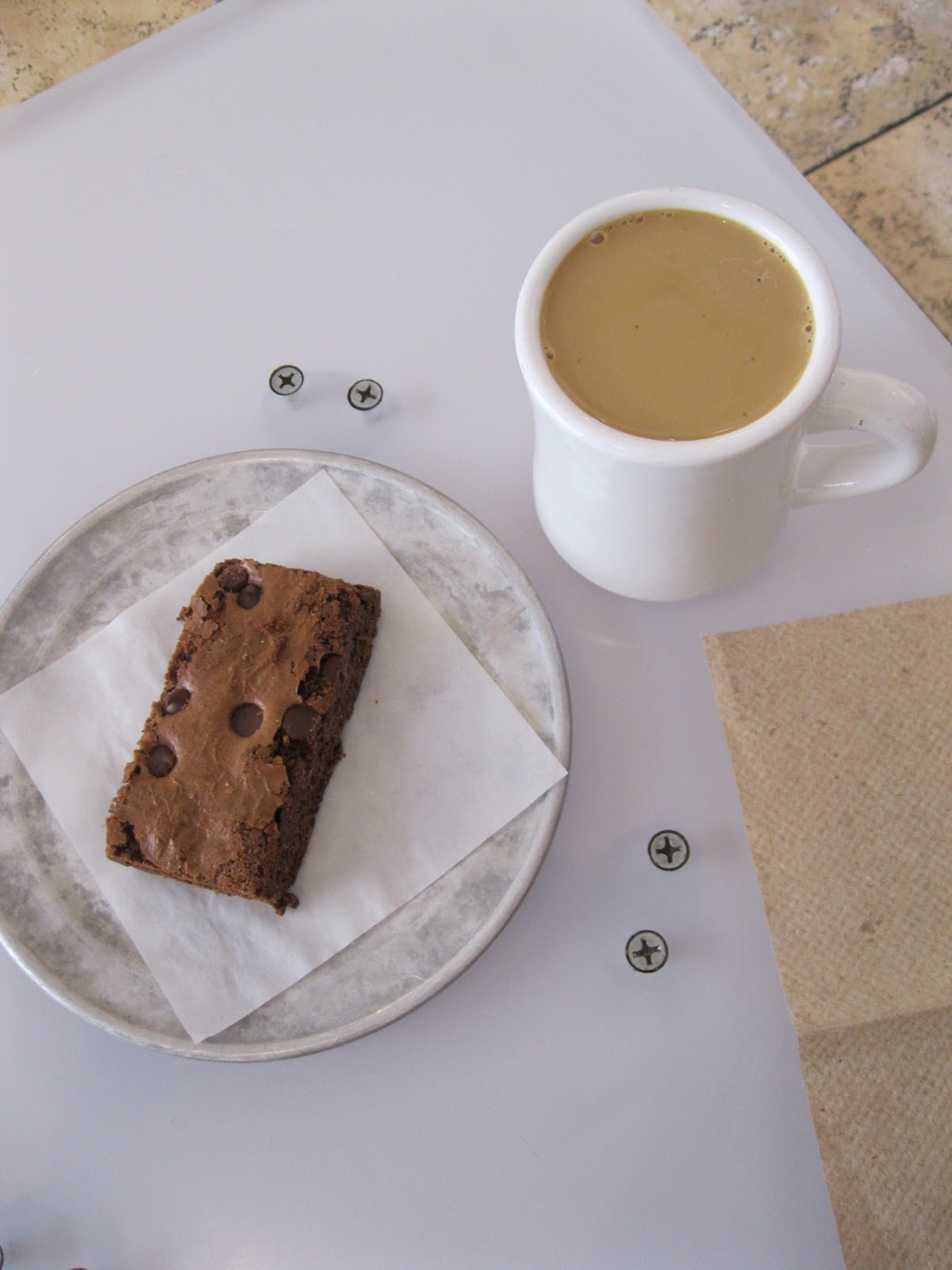
Hungarian Coffee Cake and House Coffee
at Blue Danube, Alameda

Coffee Shop: Blue Danube, downtown Oakland

What I had: mug of house coffee, a slice of ‘Hungarian Coffee Cake’, and a bagel melt with tomatoes and cheese

Prices: Reasonable

Decor: Cozy, painted walls, rugs, a rather antique home-y feel, a world traveler’s aesthetic combined with shabby chic. Nice Eastlake door pull!

WiFi: Yes, two hour time limit; they’ll give you more time so long as you order another item

Seating: oodles of comfy places to sit

Would I come back: Yes

Bagel Melt at Blue Danube, Alameda


I am not in the best position at the moment to offer a qualified assessment as to the taste of the items I ordered, since I’m in the healing phase of a nasty chest cold and my sense of taste is almost entirely gone. What I could taste of the coffee is nice and earthy, as I like it, and the coffee cake seemed fine too. A little quibble: the cake came out of a refrigerated case, which is good for freshness, I know, but a cold slice of cake is a less tasty slice, and it spoils the texture a bit. If I wasn’t so hungry (I woke up early to get my teeth cleaned and then came straight here, so this is my breakfast) I would have let it reach room temperature before I gobbled it up. The bagel melt was perfectly toasted, the real cheddar cheese had that lovely crispy bubbly outside and melty inside that a melt should have. All in all, a pleasant experience. 

Piece I’m working on: Free Market Fundamentalism’: A Moral Objection
July 17th, 2013

The Value of People’s Lives Versus Our Love of Stuff

The more thuggy-minded among us seem to be taking the verdict in the Trayvon Martin case as cultural validation of their ‘tough-guy’, violence-glorifying, trigger-happy, vigilante mindset, as evidenced by some of the reactions I’ve seen.

And it’s not just the culture of violence that’s being celebrated by so many that concerns me. Racism permeates this case, from the circumstances that led to the original confrontation, to the killing itself, to the conduct of the court case, to the public’s perception of it all. It’s all-important we confront the issue of racism and figure out how to solve the problem, and there are countless passionate and thoughtful people taking this on right now. Here, however, I’d like to address another little-discussed American prejudice exemplified by this case and by the controversy surrounding it.


George Zimmerman may have been suspicious of Trayvon Martin simply because he hadn’t seen him before and he fit the description of burglars recently in the neighborhood, or Zimmerman may have profiled Martin as a criminal just because he’s a malicious racist. No one can read his mind, and he may not even know his own; we can only base our judgments of his motivations on our interpretation of the evidence. Since race was a factor in this case and racism has long been endemic in American culture, this has been among the hottest subjects of debate from the outset. But there’s another assumption implied in the public discourse that I wish was also a prominent part of the discussion. Even if Zimmerman really thought that the young man he saw might be a burglar, even if he knew for certain that he was one, why would chasing him down with a gun, provoking a potentially deadly confrontation, be justified in the first place? Since there had been burglaries reported in Zimmerman’s neighborhood prior to the Martin killing, Zimmerman and his defenders claim Zimmerman’s sole motive in pursuing and confronting Martin was to protect the community. Other more enthusiastic Zimmerman defenders try to make the point that Martin was a troublemaker, implying that if Martin had committed property and/or drug crimes before, Zimmerman’s suspicions and actions are somehow validated. Perhaps they see these rumors about Martin’s past as evidence that he was probably given to acting like a stereotypical troublemaker or criminal? But, again, even if Zimmerman has good reason to suppose that the young man he saw was a burglar or a petty criminal, why would this, in any way, justify the actions he took that night?

It seems to be that Americans are so obsessed with property rights, are so attached to and in love with the stuff we own, that we assume that anyone who messes with it is ‘asking for it’: deserving of physical harm and even death.  Another controversial case, of a man who picked up a knife and chased down a man for stealing his car radio , killing him, then being excused on the basis of ‘Stand Your Ground’ legislation, provides another telling example of this common American attitude. The controversy over the latter case, it’s true, does include more dismay over the fact that a man lost his life over the comparatively minor infraction of stealing such non-essential luxury items as radios. And the stabber’s argument, that he feared for his life because the thief swung a bag of radios at him, appears ludicrous to most, myself included.

To be clear, there are times when theft can mean life-or-death to the victim of it, such as horse-stealing in the frontier days when a horse was essential to one’s livelihood, or when someone’s life-saving drugs or medical equipment is stolen. In this sort of case, there is much more justification for aggressive defense from thieves. But I’m quite certain such cases are relatively rare. And, of course, there’s armed robbery, which is different, because in this sort of situation the thief is the one who first introduced the life-threatening element to the situation. I would agree there’s much more justification for self-defense here. But, when you consider two important pieces of evidence, that widespread gun ownership does not correlate world-wide with low rates of gun deaths (as deterrence theories would predict), and that most people, in conditions of stress, are terrible shots and often mistakenly hit innocent people, it seems clear that avoiding confrontation, if possible, is more often the way to preserve the lives of everyone involved. But, we do have a strong instinct for self-preservation and for defending the lives of our loved ones, and I argue, the right to do so, so self-defense cases such as these are not what I’m talking about here.

I’m talking about the very idea that it’s okay for people to defend their non-essential property in such a way that someone might be killed as a result. If evidence was presented that the burglaries in Zimmerman’s neighborhood resulted in a life-threatening situation because of the thieves, we can place this in the frontier-horse-stealing category. Same would go for the second case, if we found out that there was some crazy science-fiction scenario going on where the radio in the man’s car was the one thing that kept him alive. Now, no-one, myself included, would argue that thieves should be allowed to go on stealing to their heart’s content, unmolested by anyone. They should be captured, put on trial, made to pay restitution, and jailed if that’s what it takes to protect others from being preyed on. We rely on our police force rather than vigilantes to make sure people are forced to take responsibility for their actions, so that the protectors of society are well-trained to preserve human life whenever possible, and are publicly accountable if they abuse their power. (As we’ve seen with some historically corrupt police forces, such as the LAPD, we sometimes need to do a much better job at keeping them accountable. Most police officers, however, I think are in fact honorable and do care about the well-being of their communities. But we don’t hear about the good ones in the news, just the bad ones, so many have a distorted view of the police community as a whole.)

I hope the DOJ does prosecute Zimmerman, as the NAACP is urging, for the very reason that Zimmerman took it on himself to go out and chase down a man he suspected of stealing, with a gun at his side. This was a grown man, who should have been old enough to know better, who made decisions that resulted in a minor’s death. Zimmerman disregarded the instructions of the police, our trained and accountable public representatives, not to confront anyone. He thought that his own private evaluation of the situation was more important than other considerations, and it appears to me that he placed Martin’s, his own, and potentially, innocent passers-by’s lives at risk because he thought that some stuff being stolen justified his doing so. And not enough people, it seems to me, are willing to question this one aspect of Zimmerman’s whole mess of unjustified assumptions.

But, sadly, Americans as a whole are just too obsessed with stuff, and so much so that we’re not likely to consider whether getting and keeping the stuff we want is worth the cost to others. (I can’t speak for other cultures as well as I can for my own, perhaps we’re not unique in this sort of perverted set of priorities. Some cultures tolerate or promote killing to preserve their own honor, for example.) It’s not only these ‘stand your ground’ cases. We all thoughtlessly consume products that we know or suspect are made in conditions where the workers are treated horribly and work in dangerous, even deadly, circumstances. We buy our cheap fashions and chat on our smartphones, never demanding that companies that make these things improve their factory conditions and stop polluting, and even worse, keep giving our tacit consent to the whole system by pouring our consumer dollars into it without a murmur. I just went and checked right now in my underwear drawer, and confirmed that some panties I bought were indeed made in Bangladesh, even though I have several pairs I started making and set aside. Sewing underwear is tedious, and it was so much easier to just run out a buy a few cheap pairs. I bought them as thoughtlessly and innocently, American-style, as anyone else, even though I should know better. I’ve been an indie fashion designer for years and decided I didn’t want to be part of the mainstream fashion industry after my research revealed that cheap fashion is among the most polluting, wasteful, and human-rights-violating industries in the world, worse than coal, I’d argue. But there it is, I bought those panties anyway.

I’m not making the point that buying a smartphone or panties made in Bangladesh is like gunning a young man down. I’m making the point that perhaps we Americans, indeed, all human beings a little too obsessed with stuff, need to reassess our priorities. I’m making the point that our attitude about stuff, that we are entitled to have as much as we want and can afford, has led us to make some very misguided moral judgments. I think it’s made us too blind to the various ways in which our love of stuff, from everyday purchasing of goods we suspect but don’t know are made in miserable sweatshops, to the well-phrased philosophical argument that there’s an essential link between property rights and liberty, have made us thoughtlessly accept some things we shouldn’t accept. Whether we think we can or can’t condemn Zimmerman because we think he’s a racist or lawless vigilante, I think we absolutely should condemn his and all of our attitudes that place the acquisition and protection of our stuff as more important that the lives and safety of our fellow human beings. Trayvon Martin was not, arguably, only a victim of racism and vigilantism: he may also be a victim of our love of stuff.

Anxiety and Depression: An Experiential Account

Anxiety and depression have been recurring themes throughout my life, ravaging my emotional life now and again and causing me quite a bit of trouble when they do. It’s often called ‘Mixed anxiety-depressive disorder‘ when people are generally prone to suffer from both at once, and is actually quite common, about 8 in a 1,000 people. There’s still some debate among professionals as to whether this tendency should have its own diagnostic category, or whether these are really two separate health problems people just often have together for other reasons. Anyway, the clinical distinctions not really what I’m interested in today, though I’m very grateful to professionals who have helped me get through it in the past. I’ve been diagnosed with this and one or the other separately at different times (more often anxiety), and the descriptions and risk factors are present: a family history of anxiety, depression, and other mental issues, substance abuse, lack of socialization in youth, emotional and behavioral characteristics, and so forth. But I don’t think of myself as a broken person, or as having a ‘condition’, or as a victim, or anything like that, because I’m really a very lucky person who has lots of joy, and love, and beauty in my life. I’m also a very optimistic and happy person generally, often goofily so, who loves life. I just think of myself as having certain darker tendencies that I need to deal as they arise, placing myself in a more nurturing and peaceful environment as my emotional state requires.

Its prevalence in my life has been lessened significantly for many years now, since I’ve been in a loving, stable, supportive relationship with one who has a most beautifully healthy and balanced mind. (Such a ray of sunshine and constant comfort to me!) I’ve also learned many tools over the years to keep it at bay, instilling habits and practicing behaviors that keep me from falling back into that anxious state. I recently listened to a talk by Temple Grandin describing how important it is for people with emotional and other issues to diligently practice good, learned social behaviors, and I was struck by how well her recommendations for some autistic people fit with the set of practices I’ve developed for getting through an episode and staving off another one. Like many on the autism spectrum, anxious-depressive people can suffer from debilitating social awkwardness that makes it difficult to conduct one’s public life successfully. However, anxiety-depression is not a constant state like autism or some other emotional disorders: rather, it’s more like a recurring medical condition which requires diligent care and healthy practices to lessen the frequency and impact of flare-ups. Since I hadn’t dealt with a major anxious-depressive episode in such a long time, I had forgotten to be diligent with my good habits, and some stressful circumstances combined in such a way as to kick off a new round. Anyway, it’s been gradually coming on for months, and within the last month or so, I’ve experienced the worst of this particular episode. It really does derail one’s life in so many ways, causing one to miss opportunities and lose jobs, relationships, a sense of purpose, and hope, and so much time and energy that could be spent productively or simply enjoying life is wasted on the enormous effort of just trying to get by and not screw up another day.

This time around, though, I want to openly, publicly describe what it’s like to experience anxiety-depression while I’m actually going through it. Once I’ve gotten through an episode, I’ve always avoided thinking about it at all. It’s just too easy to slip back in again if I dwell on it, and I want to avoid the whole thing like the plague because it’s really, really awful. So I’m not writing about it to be depressing, I assure you, I wouldn’t ever try to spread that feeling to anyone! And this is not a complaint, either: again, my life is full of beauty and joy and love, and I know I’m one of the fortunate ones of the earth, living without real poverty, disease, or oppression, and living with the most beautiful man I’ve ever known. But I thought an account of the experience might be of interest to three groups of people. First, to those who have friends who suddenly seem distant or ‘weird’ and they’re at a loss to understand why (perhaps some of my friends feel this way about me!). Second, to the medical professional or researcher who just might stumble on this account and value these tidbits of information, who knows? But this is mostly written for others like me who have their own struggles with anxiety-depression, because they (perhaps you, dear reader!) know the loneliness that accompanies this state, a really crushing, deep loneliness, and maybe you’ll read this and feel as if you have an ally and companion.

When I first recognized I was not just ‘in a mood’ that day, but had slipped back into an anxious-depressive state, it was because I realized I’ve been, gradually, avoiding more and more people and events. ‘Avoiding’ becomes a habit, a way of life, when you’re anxious and depressed, because like so many times before, I find that my emotions, normally so useful and meaningful, have gathered into one large, undifferentiated, super-sensitive mass in the center of myself, easily wounded, flinching at the merest touch.

So dramatic outbursts, quarrels, and gossip of friends, family, and co-workers, which I normally might find amusing or interesting, whose jokes and teasing I normally find funny or silly, whose clique-ish behavior I normally view as a natural expression of the clannishness of human nature, whose criticisms I would take in stride and learn from, are all transformed into sources of pain. The rational, friendly, easygoing side of myself recognizes, as always, that these traits and behaviors are interesting and often delightful foibles of human nature. But in my anxious state they’re alienating, and appear to be destructive attacks, indicative of the darker side of human beings who seek to exclude and tear each other down. Social events are often, therefore, overwhelming, protracted exercises in excruciating awkwardness. In the very worst episodes in the past, I’d want to avoid almost everyone, even strangers, since they’d inevitably bring up a painful subject, or I’d feel them look at me oddly, or even worse, they’d ask me what’s wrong; it was just too painfully tedious, embarrassing, and confusing for me to explain. But this time around, I mostly just feel the need to avoid everyone except strangers and the nearest, dearest, and gentlest people I know. The presence of the near, dear, and gentle are comforting, and strangers are company with whom I can remain delightfully anonymous. Even as the anxious-depressive state subsides, I still, as always, remain cautious for awhile with relationships and other situations in my life, until the episode is a distant memory and I feel my robust self again.

But this avoidance is never because I want to separate myself from people, it’s precisely the opposite: I long for companionship and a sense of belonging all the more as the sense of alienation grows. All that avoiding leads to such a deep sense of loneliness, that the divide between myself and everything else feels like I’ve been physically ripped apart from the world I need. The ache is physical, sometimes just as a tightness in my chest or like muscles straining around and behind my eyes and throat, sometimes involving my whole body. Other times (thankfully, not so much this time around!) my heart skips or beats out of rhythm, accompanied by a strange hot wave that flows out to my hands and feet, and a sudden wave of dizziness that lasts from a few seconds to a several minutes at a time. These opposing needs, to avoid pain and to grasp for human connection, is extremely confusing, and leads to an awful, awful self-consciousness. I’ve always had a shy side to my personality, but is blown up into a such a all-pervasive self-consciousness that I feel immensely awkward most of the time. I mean, how can you talk or act naturally when you want to flee, and cry, and embrace, and explode, or some combination of these, all at the same time whenever you’re with people?

This leads to the incredibly odd, frightening, awful sense of being separated my own personality.

It’s not as if I feel like I’m totally disassociated from myself, or that I have a split personality, or anything like that. It’s just that the parts of myself that I know and like and love best, the personality that I identify with, is not accessible, or is just not coordinating at all with my anxious self. My emotions so askew that I don’t and can’t react in a natural way. So conversations feel forced, and because the ordinary emotional responses that prompts human interactions are working together, I often can’t think of a single thing to say besides trite commonplaces, and the awkwardness builds up to unbearable levels. I’m a person who’s no good at small talk anyway, preferring more direct and in-depth conversation, and not particularly big on pop culture either, so I don’t have the these handy discursive tools to hide my confusion behind. (I guess I could ‘fake it’ and, weekly, try to memorize examples of pop culture to talk about, but I’m not so good at this sort if dissembling either, dammit.) My usual, easygoing self finds it easy to ask questions about what my companion of the moment is up to, what they care about and what it’s like, and what experiences we share. But my anxious self freezes and can’t readily formulate questions, because the flurry of conflicting emotional responses leads to such confusion that organized thought becomes almost impossible. So I flee and hide, or I blurt out a long enough series of commonplaces that the mere appearance of conversation gradually assuages the awkwardness, or, if I’m really lucky, the other person just wants to talk to a good listener.

Because I don’t feel the ordinary sense of connectedness to other people at these times, I lose my sense of belonging to a community. I get the feeling, even, that I have no place in the world, that I’m not needed by anyone, that talents that I once thought I had don’t exist, or that they don’t have any value for anyone else. So in this anxious-depressive state I feel adrift, with no sense of purpose, and I start to spin my wheels. Making decisions is nearly impossible when every effort feels pointless, futile, when I’m certain that there isn’t a thing I can do that’s meaningful to anyone. This general feeling of being disconnected from people as well as from my own personality and sense of purpose also leads to a general spacey-ness. It becomes very difficult to pay attention to people when they’re talking, or to stick with a task and finish it, or to even to take in and understand an idea or system of much complexity. Concentration becomes a matter of will, but much of the time, the will to concentrate is just not there because being present in the moment is scary. Any given moment is just too full of people and circumstances likely to trigger more pain. And so, I am ashamed to say, I become selfish and withdrawn, and I hate it. All I really want, at these times, is to find the will and the strength to be happy, busy, and engaged with the rest of the world once again.

So that’s what it feels like to be in the throes of anxiety-depression. I suspect this all sounds very dark, and it does feel that way. But as I write this, and even in my worst moments, I recognize that what I experience at these times is only what the world is like in my own mind at the moment, and not what it’s like ‘out there’.

And even when all else appears dark, it’s also part of my personality that I love the feeling of being alive! Not just the joy of experiencing the rest of the world, but the actual feeling of seeing with my eyes, of moving my limbs, of the sensation of something touching my skin, of the life in my body, and I retain this feeling even when I’m at my most depressed. In this way, among others, I am incredibly lucky. I also feel that having these experiences gives me an understanding and strong empathy for people who have a hard time in the world. I feel the deepest sympathy for those who are depressed, like me, but don’t have this visceral love of life to sustain them through the worst times. I also sympathize with socially awkward and disconnected people of all sorts, who are sometimes shunned or even mocked by emotionally healthy, balanced people who just can’t understand (lucky them!) the actual experience of how hard it really is to be unable to connect to others.

Just the act of writing this down is such a relief! I hope this has been a help and not a burden to you, dear reader, and I thank you for making it all the way through such a somber account. It helps me feel a sense of control over my own mind, which is almost inaccessible to me when I’m anxious and depressed, and helps me to distance myself from those dark feelings that surround and choke me at these times. And if you, like me, are burdened with anxiety and depression sometimes, I hope, once again, that reading this makes you feel that you’ve found a friend.


Review: Modern Coffee in Downtown Oakland

Just for fun, I’ve decided to start writing little reviews of coffeeshops and other venues I visit to work on my writing. This is the first in the series.

********************************************************************************

coffee of the day & a brownie at Modern Coffee

Coffee Shop: Modern Coffee, downtown Oakland

What I had: mug of house coffee (the chalkboard identifies it as ‘Streetlevel’) and a brownie

Prices: totally reasonable

Decor: Sleek, modern, large windows

WiFi: Yes, and no time limit

Seating: Ample for the size of the shop

Would I come back: Yes!

A lovely, tall, blonde woman with a friendly (direct, not gushing) manner was at the counter, and it was a lovely start to my visit. The coffee is delicious, strong but not overly so, of the earthy, chocolately sort I like. (The trend in Bay Area coffee shops over the last couple of years, I’ve noticed, has been to serve coffee of the tart, even sour variety, which I detest, but which is popular with the aficionados, I hear.) The brownie is tasty, of the lighter cake-y sort, and tastes like a cross between a classic homemade chocolate cake and a brownie

Piece I’m working on: Anxiety-Depression: An Experiential Account

The Fetishization of Suffering

In the art on the walls of my childhood home, the theme of suffering was pervasive: crosses with sculptures of hanging, tortured Christs, Marys with torn and bleeding hearts, saints in various imploring poses, as if pleading for relief from the awful plight of living in this world. Suffering also popped up regularly as key to understanding reality. Why do the good and the innocent suffer as well as the wicked? Well, the wicked suffer because they are being punished, of course, but the good and the innocent suffer because they are loved, because it provides a God-given opportunity to conquer it and become even better in the conquering. So to better our characters, us kids were required to endure some sort of self-inflicted suffering from time to time, however mild: to give up candy during Lent, or or to spend an uncomfortably long time on our knees reciting rosaries. This view of suffering was held by many cultures throughout history (remember the Spartans?), and became common in modern Western societies through Christian influence. Suffering, regarded as both the indicator of and the creator of goodness in the world, and eventually became something to be desired and admired for its own sake. It became fetishized. As I grew and began to puzzle over the matter, this glorification of suffering seemed more and more strange, especially as I observed that, while suffering appears to strengthen and nobilify some, many more people tend to be broken down by it, especially if it’s pervasive in their lives, and rendered more desperate, less empathetic, less hopeful, less dignified, more scarred. I began to wonder if, on the whole, it’s a mistake to fetishize suffering.

So why do so many people so often glorify such a seemingly nasty thing as suffering? Well, for one thing, a beloved philosophy professor of mine pointed out once, there’s a distinct difference between suffering of the constructive sort and suffering of the destructive sort. There should be separate terms for different sorts of suffering as there is in ancient Greek. If there was a separate discussion concerning each kind, many of my objections to the fetishization of suffering should be rendered moot. Examples of constructive sorts of suffering is the burning sensation felt in hard exercise and the healing of wounds, the squirming mental misery of trying to finish a paper or book on time and still do quality work, or the tearing pain of bittersweet grief at the loss of a dearly loved one. Destructive suffering, such as the despair of watching children suffer from illness or starvation, the maddening confusion of feeling one’s mental acuity and individuality eroded by Alzheimer’s disease, or the disgust of watching others ruin their own and other’s lives through crime, political machinations, or thoughtlessness, is not so self-evidently beneficial, to say the least. But I don’t remember  this distinction being made clear to me at any point. Any sort of suffering can be explained away as destructive or constructive as conceived in the mysterious, unknowable mind of the creator, for example. This treatment is especially convenient in attempts to resolve the infamous ‘problem of evil’. But for those not satisfied with the ‘mysterian’ explanation and really want to understand the matter, the problem remains: how does one justify the fetishization of suffering via a reliable method of distinguishing between its destructive and constructive forms? 
 
Perhaps the distinction between these forms of suffering exists but is just too hard for individuals to distinguish most of the time because the emotions get in the way. It’s hard to recognize suffering as constructive when you feel compassion for other sufferers, or you feel discouragement or weariness in the face of your own. Or, even more encouragingly for proponents of this view, one type of suffering can be transformed into the other based on the attitude of the sufferer. There is some truth to be found in this characterization of certain experiences of suffering. There does seem to be sorts of suffering that’s unavoidable and necessary given the current state of evolution (or of a fixed human nature, for those who don’t believe in evolution, *sigh*): the helpful warning that pain provides, or the fear of death, strangers, or inexplicable noises that aids in self preservation. But upon reflection, the category of suffering of the entirely beneficial sort is really not very large compared to suffering of the harmful sort or suffering that seems to be some mixture of the two. The pain of exercise and of mental exertion seems to deter far too many people from consistent rigorous physical and intellectual exercise (I’m certainly among these!); the pain of grief leads far too many to resort to such comforting tactics as justifying the injustices of the world with flimsy excuses or to believing in flimsy or patently false metaphysical claims, or to vengeance; and so on. When I consider various sorts of suffering, I’m hard put to find any that most of the time and for most people, the result of experience it is entirely beneficial in the long run.

Perhaps the difference between constructive and destructive suffering is a matter of degree and duration, then, rather than of kind. The kind of suffering experienced in sport or in military training and combat, for example, are experienced in limited blocks of time and have a foreseeable end, allowing hope and the expectation of a better time to come mitigate the potential bad effects of suffering and strengthen the good effects. But this answer isn’t entirely satisfactory either. While it can seem true in some circumstances, it’s not for many others. People can become obsessed with and addicted to suffering, for one thing, as in the case of  over-zealous religious who become sado-masochistically addicted to corporal punishment (sadistic ruler-wielding teaching nuns of yore, anyone?) Or, suffering can burrow deep into a person’s psyche and undermine their entire personality, as in the case of post-traumatic stress disorder suffered by veterans and victims of  sustained bullying. It appears, then, it’s not the degree or duration of the suffering that makes it constructive or destructive: rather, it’s more feasible that the constructiveness or destructiveness is a feature of the effects on the sufferer, not of the suffering itself.
 
I think one of the most important reasons that more kinds of suffering is destructive than not it that it tends to  draw people into themselves and away from others. For example, I’ve noticed this in some athletes: as the pain of exertion accompanies the achievement of higher levels of physical fitness, the pain becomes an addiction, an obsession, and the greater the to suffering, the greater the tendency to self-absorption. This may be an explanation for the behavior of athletes who self-destruct with steroids. I’ve also noticed this, as aforementioned, in some whose religious beliefs hold say that suffering is necessary for redemption, and so attempts to avoid it, for oneself or for others, is fruitless or even evil. Martyrdom is, then, a virtuous state of mind and even the ultimate goal. Yet, I think this tendency to lose oneself in these forms of self-absorption, of attitudes of martyrdom and addiction to suffering, can be antithetical to human flourishing, because human beings are intensely social creatures. Now, it’s true that human beings also have an individualistic side. So some level of self-absorption, some level of obsessive and addictive behavior, is not necessarily negative to the human personality taken as a whole, and when balanced against other personalty traits, can be part of an interesting and dynamic personality. They can even be more sensitive and empathetic. This goes for many creative people, political people, and other idealists. (As a working artist and daydreamer myself, and an enthusiastic fan of the arts, I’m intimately familiar with self-absorption: a certain level of it is necessary for the visions to arise, the ideas to take shape, and the drive to realize them.) It’s also a defining characteristic of “drama queens”, who can be exciting people at some level. But, there’s a real danger that this addiction to suffering, when it starts to dominate, can undermine the social instincts and emotions of a healthy personality. Consider highly neurotic people, for example, whose internal suffering can become so all-absorbing that, after a while, they reach a point where they can’t see much else in the world besides it. Also, consider the aforementioned ‘drama queens’ who sometimes become so addicted to conflict and the suffering that accompanies, it that they end up needing to create conflict and ‘drama’ where none exists. In a very real sense, very neurotic people and other suffering addicts can separate themselves from society, since they eventually find it difficult to identify closely with others, and in fact, end up imposing their need for suffering on others.

So it seems to me that, in the end, the healthiest attitude to have toward suffering is that it’s an evil to be mitigated and avoided if possible, and if neither is possible, it’s the ability to endure it and triumph over it that’s desirable, not the suffering itself. It’s true that suffering accompanies and is even an integral element to many worthy endeavors, such as athletic training, and humanitarian efforts that involve placing oneself in the same horrific surroundings as the sufferers. But it’s best seen as a tool and a means to an end, not an end in itself. It’s just too easy to allow the high that sometimes accompanies it to become an addiction that can lead from obsession and self-absorption to alienation from others, and, far worse, to a complacent attitude towards the suffering other people. Human beings are most generous, most expansive, most supportive, when free from suffering because they are happy, they are unburdened with personal cares and so are able to look outside of themselves and possess the energy to give of themselves to others. By contrast, people who have a more sacrificial, suffering-infused world outlook don’t, in the end, do so well when it comes to helping others, even if the feeling of sacrificing oneself makes it seem more difficult and therefore more virtuous than helping out of an easy-going feeling of well-being. (Daniel Gilbert’s work provides an excellent explanation of the current research on emotion and how it effects human behavior). The habit of viewing suffering as an evil and not a good does far more, overall, to help human beings flourish as the social creatures we are, In the end, I do think it’s a mistake to fetishize suffering.

The New Pope Says Something Nice About Atheists! Is This Really A Big Deal?

I’ve seen a lot of news stories, opinion pieces, critiques, and other buzz regarding the new pope’s comments about atheists and other non-Catholics, to this effect: that all can do good, and that doing good is what should bring us all together. Sounds nice, right?

While there are many prominent atheists, secular humanists, and others who are gladdened by the pope’s remarks, many others are skeptical or dismissive, as exemplified by participants in a recent online discussion I took part in. They point out that the Pope’s historical positions on many important issues is aligned with the officially systematized bigotry of the church he leads: opposition to gay marriage, women banned from the priesthood, and so on. With this, I agree. They also think it’s a mistake to ‘hope for acceptance’ from the Catholic Church, or that atheists are ‘eagerly’ ‘falling for’ a positive interpretation of the pope’s actual stance on atheism. This is the part of the discussion where I think it veered off into treating some hypotheticals about what the glad atheists are thinking as fact. I think the skeptical reactions may be based on misunderstanding the reasons behind the positive reaction.

My point in the discussion, and my understanding of why there was such a glad reaction to the pope’s comments, was this: the pope’s current tendency to use more peaceful and ecumenical rhetoric is more likely to inspire better behavior in his followers, who generally look to him for an example to follow, not Vatican officials who issue a legalistic statement later. So, even if it’s true that the pope is still a bigot and his church is still an organization that promotes hateful and untrue doctrines, it’s still the case that if the words that come from his mouth are of a more peaceful and ecumenical tone, those who look primarily to him as their role model are more likely to adjust their own attitudes accordingly. That’s one point. There is nothing in this having anything to do with caring whether the pope or any other church members personally approve of atheists, or whether official church doctrine has changed regarding the afterlife and how it pertains to atheists, or any of the other red herrings such as charges of ‘hoping for acceptance’ that came up in the discussion. The positive response of many atheists, especially prominent ones, focus on whether or not the pope’s words signal a positive shift in attitude, and whether his words will provide a good example to his followers.

But another point I didn’t make, which upon reflection I think is more important, is this: the single most influential moral leader in the world just publicly classified atheists (and others) in the same moral category as Christians and Catholics. Christians do good. Atheists do good too. So both are good! Big deal, an atheist, a cosmopolitan, indeed, any reasonably informed or empathetic person might say. That’s as obvious as saying: atheists think and have emotions and are competent language users, therefore, they must be human too! I mean, c’mon! Duh!

But remember: atheists have been distrusted and marginalized for so long, since most Christian religions claim that belief in Christ’s divinity is necessary for deliverance from evil, that the idea that atheists can be good people is a novel one for countless religious people all over the world. Yet these are same people who adjust their beliefs to align with the pope’s, and his words constituted a sort of permission to consider atheists and non-Christians good people too. In my own family there are still those who use the word ‘atheist’ as an epithet for one who’s wicked, stupid, or depraved! The previous pope’s hyper-conservative, dogmatic, and divisive rhetoric did nothing to help matters. This pope’s remarks, by contrast and for the first time at this level of authority and clarity that I’m aware of, places atheists in the same moral category as religious people: those who do good. It humanizes atheists for those who simply don’t understand atheists, who think atheists are evil and have rejected the good since they don’t believe in any gods. And this is important because of what we know about human psychology: people are kinder to others when they identify with them, when they think they’re on the ‘same team’, when they’re humanized and no longer ‘the other’. 

I think that the Pope, with these few remarks, just helped a whole lot of people all over the world to really believe that when it comes to doing good, most human beings believe in the same and most important thing. Thomas Paine described it best: ‘The world is my countryall mankind are my brethren, and to do good is my religion.’ (The Age of Reason, 1794) Whether the Pope himself really shares the conviction that atheists are worthy people, I think his remarks will lead a whole lot of other people to believe so.

Draft – Gun Control Debate in America: Some Double Standards From the Right and From the Left

In the heated debate over gun control, with extremist rhetoric proliferating from those on the liberal left and those on the conservative right, I’m finding that many from each of these two sides hold inconsistent views. (The libertarian arguments on this matter are more consistent, but aside from their devotion to liberty, incorporate some of the worst ideas from both sides, in my view.) To paraphrase the main points of each sides’ position:

From the right: A society is engaged in an moral endeavor when it governs itself, and as the arbiter of social rights and responsibilities, social institutions such as the government, the family, and the native religion(s), are an inherently moral institutions. Morality involves the shared code of behavior that every individual is required to follow. The distinction between ‘morals legislation’ and other laws is, therefore, meaningless, since morality is involved in everything we do. As a member of society, just as in a family, each individual has certain rights and responsibilities. Therefore, it is right and just that the laws enforce and support our moral code, and prohibit those actions which would threaten the survival of our social institutions, be it the family or the state. At the same time, each individual has a personal dignity and inherent worth which must also be protected from harm and from the encroachments of others. For example, it’s right that that law punishes rapists, murderers, child abusers, and thieves, since it is the proper role of law to discourage individuals from transgressing the moral order which is essential for familial and societal cohesiveness. The law also should punish these transgressors since they trample on individual liberties, such as rights to life, personal property, and freedom of speech and belief. Since human beings are fallible and prone to error, our social institutions

But it’s not enough that the law should just prohibit us from doing certain things. Besides imposing punishments on immoral behavior, the law should enforce certain duties, certain moral obligations, we should fulfill in order to deserve and enjoy the benefits of living in a society. For example, the law should require everyone to contribute to the overall welfare by paying taxes, to pay for such essential public goods such as  infrastructure, defense, and some additional degree of support and protection of the most vulnerable members of society, such as children, the disabled, the elderly, and the very poor. It also includes such reasonable obligations as registering ownership of our motor vehicles, obeying traffic laws, and purchasing auto insurance. These legal obligations should not only enforce the moral duty of citizens to fairly contribute to society, they should also enforce some degree of taking responsibility for some of the costs and and hazards we may potentially impose on others in the course of enjoying out personal liberties. For example, driving a motor vehicle is widely considered a personal choice, but it can easily result in harm to others if not enjoyed wisely. Without such legal requirements listed above, for example, a careless or drunk driver could run down and kill or maim innocent bystanders without fear of suffering any consequences. A road full of vehicles driven without traffic laws would result in severe traffic jams, severely impeding each individual’s liberty to travel, let alone the innumerable deadly crashes that would result.

A certain amount of prudent regulation, therefore, is actually necessary for protecting liberties. After all, when an individual exercises their liberty to fire a gun, they can potentially nullify every single liberty of another with a single shot. When the American Constitution says ‘Congress shall make no law… abridging the freedom of speech, or of the press…’ this does not mean that each and every action which could be categorized as speech cannot be limited or regulated if the speech of one can substantially infringe on the liberties of others. For example, Bradley Manning’s right to free speech and Julian Assange’s freedom of the press should be curtailed if their speech substantially threatens the security of other Americans. Therefore, regardless of the literal wording of the First Amendment, there can and should be laws abridging the freedoms of speech and of the press. We recognize that at least some of the Founding Fathers recognized this. For example, President John Adams championed the Alien and Sedition Acts which made it a crime to criticize the government, just a few years after he participated in the formulation of the Constitution.

From the left: Society and its governing institutions are constrained by morality, as is true for the conservative view; the government should never engage in immoral actions, such as infringing on essential liberties of citizens, engage in exploitative and unjust warfare, or be complicit in oppression anywhere in the world. Individuals also have public responsibilities, just as in the conservative view, such as paying taxes and obeying wise regulation. However, it is not the role of government to decide on intimate matters of personal liberty and expression of personality, since such governments have historically oppressed and even killed entire populations of people, such as religious and ethnic minorities, women, and political and other dissenters. Rather, it’s the role of government to protect the life, health, and liberty of individuals from the encroachment of others, such as powerful exploitative monetary interests or religious or ideological orthodoxy. Therefore, government should regulate commerce, since shortsighted financial interests of some can and often do harm the public as a whole, such as environmental polluters and makers of dangerous auto vehicles. But, the government should not not engage in ‘morals legislation’, since this infringes on the rights of individuals to control their own bodies and minds.

Where the right is inconsistent: So American conservatives, like other conservatives throughout the world, agree with the basic principles of political thinker Edmund Burke, who held that a society is a natural, organic institution (rather than a rationally constructed artificial entity), whose traditions must be respected and whose citizens are properly bound by moral duties and prohibitions. Yet, somehow, so many American conservatives argue as if all of these principles evaporate in the matter of gun control. In other parts of the world, the arguments for gun control often come from conservatives, who take the view that morality is the business of society, and people should not have the right to just run around doing whatever they want when and if it’s clear that what they want to do results in a moral wrong. For example, Australia adopted stricter gun control laws following the horrific massacre at Port Arthur, Tasmania, in the mid-nineties, and the arguments in favor of these new restrictions were traditionally conservative ones: the individual has moral responsibilities to society as well as morally determined limits to their behavior. Freedom does not mean people can just do whatever they want and have whatever they want: a responsible, moral member of society expects that some smaller liberties can and should be limited if such limitations lead to an overall more morally sound, liberty-enhancing society. The evidence shows that when weapons proliferate among a population, more people tend to die violent deaths, while populations that are less heavily armed tend to have low homicide rates. For example, consider the low homicide rates in Japan or Great Britain, where private gun ownership rates are also low, compared with the high gun ownership and violent death rates in the United States. Consider also the high death toll of mass attacks in the US, where mentally unhinged people easily possessed themselves of guns capable of killing many people within seconds, compared with mass attacks in China where it’s very difficult to obtain a gun, so the total of deaths and injuries inflicted with far less lethal weapons is a fraction of the US totals. Even if individual gun owners are responsible, the argument goes, it is their moral obligation to give up the particular liberty of owning certain weapons since the proliferation of such weapons undermines the security and stability of society as a whole. Many American conservatives say that individuals owning such weapons should actually make society safer, but this theory is simply not borne out by the evidence. In a morally good society, the right to one’s life is considered prior to and more precious than the right to own property, so the prevention of the moral evil of homicide takes precedence over personal desires to possess powerful weapons.

The American conservative stance against gun control but in favor of proscriptions against birth control and abortion, therefore, is incomprehensible to liberals, who rightly point out that if the right to life and the primacy of the procreative role of sex are greater than all other considerations, then the ‘pro-life’ movement should be at the forefront of the gun control effort, as it is for conservatives in other countries. Yet, the rhetoric of the conservative gun rights movement in the United States centers on a particular reading of the text of the 2nd amendment to the U.S. Constitution and an emphasis on property rights; the pro-life arguments are out the window for conservatives on this one. Therefore, American liberals consider the conservative gun rights position at best inconsistent, and at worst, hypocritical.

Where the left is inconsistent: The liberal left in America, however, does not consider it the primary role of a society and its governing institutions to promote and enforce personal morality. Rather, society’s role towards in the life of individuals is to protect them from harm from one another, and to ensure that each individual enjoys the same opportunities as any other to accomplish their goals and live a satisfying and meaningful life. Yet, arguments against so-called ‘morals legislation’ and arguments in favor of laws that prevent harm and promote equality are all based on moral considerations: that harm is worse than non-harm, that individual liberty is better than oppression, that human rights are sacred and that trespassing on them is wrong. There is no societal rule or proscription that is not derived from one moral precept or another: a human society is an inherently moral endeavor. When American liberals argue for laws that limit gun control but against laws that regulate other activities, such as abortion or sexual behavior, on the grounds that the government’s only task is to prevent harm, the arguments are often so inconsistent on that it’s no wonder that conservatives, in turn, consider liberal arguments to be inconsistent and hypocritical.

Where does the confusion originate? While American conservative arguments are generally based on a foundationalist moral system, which holds that all of morality is derived from a single founding principle (for example, Aristotle’s function-based system, or the divine command theory espoused by evangelicals), American liberal arguments seem to hold that, while the law is based on the foundationalist ethic of utilitarianism, personal behavior is governed by a pluralist moral system, which can differ from society to society. The various and often conflicting values we hold, such as liberty, compassion, beneficence, and so forth, must be weighed and balanced against one another in each matter under consideration. The law and issues of personal morality, then, should be determined separately, because utilitarian considerations are more readily determined and amenable to democratic consensus and evidence than value considerations. For example, it’s easier to find and present evidence regarding rates of gun ownership and crime statistics, and argue that high homicide and suicide rates    by gun reveal that the current system in the United States results in more harm than systems in other countries, or vice versa, than to demonstrate clearly that the value of liberty is more important than the value of safety, or vice versa.

I agree overall with the liberal position that the law should be utilitarian, and that moral pluralism seems to be a fact of human nature: I think that there is more evidence that morality is in fact based on a pluralism of values, and that a utilitarian ethic has done more to inform laws that promote human flourishing than laws based on other moral systems. Yet, American liberals so often argue as if their positions are only about harm and fairness, as Jonathan Haidt points out, when really there is and should be a more rich moral system that informs them (I think that Haidt has too simplistic a view of liberal morality, though I agree with his assessment of most mainstream liberal arguments, taken at face value). It seems to me that the choice of utilitarianism as the dominant theory in law formulation is a moral choice, based on the higher valuation of liberty over obedience, individual freedom from harm over social convenience or enrichment, knowledge over ‘blissful ignorance’ (soon to come: my critique of ‘innocence’ as a prized value), etc. The distinction between the harm/fairness basis of legal utilitarianism and the pluralistic basis of personal morality is, then, an artificial one, and American liberals would be well served to take the moral high ground, proudly trumpeting their commitment to moral excellence and responsibility rather than trying to hide it under the relatively dry and uninspiring rhetoric of mere consent and fairness.


Libertarianism and Me

You may perceive in my recent essays and remarks a tendency to argue against libertarian positions. If you’ve known me very long, this may surprise you, since I’ve long taken libertarian arguments very seriously. I’m sympathetic to the libertarian instinct because I share many aspects of it in my personality: I’m very independent, have always liked to go my own way and do my own thing. (To a fault: if something’s popular, if everyone who’s hip is wearing it, listening to it, eating it, etc, I have a strong instinct to immediately run off and do the opposite, since cliques, to me, since childhood, have represented oppressive communities that, in their own way, demand deference to their codes, behaviors, and aesthetics just as thoroughly as the dogmatic and hierarchical religious community I was brought up in. My libertarian instincts are so strong, in fact, they tend run amok, and I have to chase them down to rein them in constantly! Pesky things!)

Yet, as I’ve studied and closely examined my positions and beliefs, I’ve found that many of those arguments I took seriously and even espoused, such as the position that morality is a personal matter and not a societal or governmental one, or that individual considerations are separate from and always take precedence over the desires and needs of the many, are flawed or entirely incorrect. My recent tendency to argue against libertarianism, then, is not based on a desire to pick on this philosophical and political viewpoint, or that I think it’s worse than all others. Rather, I’m sharing with you aspects of my own journey, and where I am so far when it comes to my endeavor of seriously considering each philosophical school and each argument, on its own merits, before I accept it, discard it, or keep in in mind for future consideration if I don’t have enough information on hand to make a sound judgement.

So there you go. I’m very fond of you libertarians in many ways, and agree with you more in instinct and sympathy than I do in logic. It’s a mark of my affection and respect that I wrangle, so often, with your arguments.

IRS Targets Conservative Groups

This story is deeply disturbing to me. 

When any concerned citizens, be it individuals or groups, from Communists to Tea Party subscribers, are harassed or silenced, the people are cheated out of hearing arguments that enrich their understanding of the world and of what moves people to think and act as they do. 


A most invaluable lesson instilled in me, informally through listening to political and philosophical discussions around the dinner table, and more formally in my education in philosophy, is how invaluable it is to always learn the arguments presented in a positive and sympathetic manner, no matter how alien to your own, so that you come away understanding the actual arguments, not some amalgam or distortion infused with your own prejudices. In this way, the position you reach on the matter is likely to be informed, and honest.

Review: The Great Agnostic: Robert Ingersoll and American Freethought, by Susan Jacoby

Just read Susan Jacoby’s biography of Robert Ingersoll: America’s eloquent and passionate mid-19th century orator who was a popularizer of science, an early champion of full equal rights for women, an abolitionist, a booster of Thomas Paine, a critic of anti-immigrant policies and religion… a man who was obsessed with justice, a believer in the intrinsic goodness of human nature, and promoter of universal human rights. It’s relatively brief, but if you’d like a quality introduction to one of America’s greatest, I highly recommend this book!

What’s especially impressive about Ingersoll was that his views on immigration, women’s and immigrant’s rights, and religious liberty (both from and of) were nearly wholly untarnished by the prejudices of his time, unlike many of his contemporaries. For example, even the great Elizabeth Cady Stanton used racist and anti-immigrant rhetoric in her advocacy for women’s rights, and Herbert Spencer used his interpretation of Darwinism to promote eugenicist policies. In contrast, Ingersoll’s commitment to justice ran so deep that he rejected such bigoted ideas, instead promoting Darwin’s own view that human beings, in a state of civilization, thrive precisely because we are cooperative, altruistic, and empathetic, and that the theory of evolution reveals that the human race is one big family.

Jacoby, Susan. The Great Agnostic: Robert Ingersoll and American Freethought. New Naven: Yale University Press, 2013.