A Bit About Who I Am, and Why I Bother With All This Musing and Writing Stuff

I’ve long been obsessed with ideas and arguments, why people do and say the things they do, why people believe what they do, and so forth., as I’ve already discussed in an earlier piece. This curiosity and drive to understand, at least a little, the workings of the universe outside my own mind has not diminished over the years in the slightest. So a few years ago, when the job market dried up, my business partially failed, and my artistic pursuits provided me with much satisfaction but little income, I decided to more fully immerse myself in one of my greatest loves, philosophy, by going back to college.

It was a dream of mine that I had never seriously pursued in my early youth, though I eagerly attended junior college as soon as I was able. In my family, the goal of pursuing higher education was not discussed much. Most of my closest relatives are honest, hardworking people, generally blue-collar, hand-on work, and that was for the most part true of myself too, though I worked more in customer service jobs that had some sort of idealist or artistic element. I also have a strong affinity for blue-collar work, and really enjoyed the physically labrious aspects of my long-time intermittent job at a salvage yard.

Many of my relatives were and are suspicious of much of higher education too, seeing it as an array of dangerous temptations away from a life immersed in a particularly conservative brand of religious faith. Also, as a woman, higher education was less of a priority in my family. I felt it was always implied, but rarely said outright, that a good girl got married and stayed at home, perhaps after a stint at junior college, even a bachelor’s degree maybe, before settling in to homemaking while still young enough to make lots of babies. That’s it, unless I wanted to become a nun. All that sounds like a lovely, happy, fulfilling life for many, and I am fortunate to be a fond and proud auntie and cousin many, many times over precisely because so many women in my family find this lifestyle right for them. But never felt right for me, and over the years, I felt annoyed and a little resentful that other options were never discussed or encouraged, and that I never had a mentor intellectually. But I also realize that I may very well be unfair in this assessment. For one thing, my dad and other close family members never resented my constantly badgering them with questions and were always willing to answer them fully, and one of my dear uncles and I regularly engage in honest, no-holds-barred. lengthy debate and discussion to this day, and I thank him for that. It was also really entirely up to me to stop gadding around and instead of gleefully following my whims, to focus on the goal of completing a degree, applying the creativity I applied to other pursuits to the task of fundraising for school.

But why not keep all this to myself? Why have I taken this previously mostly internal process and dumping it out into the world? (With the full realization that few, at this point, even read this stuff.) I’ve often gotten the sense that philosophers, amateur and professional, are usually irritating to most other people besides fellow philosophers, and even these pick on each other at least as often as they engage in fruitful debate. (At least, it appears so from the public discourse, but my evidence for this is merely anecdotal.) But I think that this sense of philosophy being this annoying form of snobbery is based only on the archness with which some philosophers deliver their musings, and on a particular perception of what philosophy is. Many professional philosophers display a seemingly protectionist attitude toward their craft, preferring to share their ideas mostly or only with other professionals in highly arcane language. (Arcane: mysterious, secret. Arcane language: jargon) I actually think that this largely closed-off, rarified realm of philosophy is invaluable: it’s a place where ideas can be invented and pursued as far as they can go, by a community entirely devoted to this task. The untold riches that have emerged from this level of discourse is wonderful astounding. I just wish I and most of the public had the ability to fully understand and appreciate it, and the bit I’ve had the good fortune to experience left me amazed and entranced, and humbled.

But I also think that everyone, or almost everyone, engages in philosophical thinking of one sort or another, hence my blog’s byline. We not only react in moral matters but often make some sort of attempt to justify them to others. We all seek to describe or define, at times, the essential nature of reality. When it comes to aesthetics, to visual art and music and literature, we try to add a description of the idea(s) or driving force behind them, placing them within a context, rarely letting works of art speak entirely for themselves. Every one of us who has engaged in conscious reflection on anything has done some philosophy.

When it comes to writing and applying this sort of thinking, curiously enough, I’m almost entirely drawn to most areas of philosophy except philosophy of art. It seems kind of weird for a person who’s always been immersed in the arts, who has been drawing, sewing, sculpting, and so forth, and who loves music, for a lifetime. I think it’s because I do happen to be the sort of artist who likes to let my art speak for itself, and if I try to politicize or contextualize it, than it loses its immediacy and power for me. I’d rather let others do that, to read into my artwork whatever they’re compelled to read into it, or to discover some truths about me that I can’t since I lack the objectivity. But philosophy of science and of law, political and metaphysical, and most of all, moral philosophy… those I just can’t get enough of. And as I touched on in the aforementioned piece I wrote a month or so ago, I’ve been thinking on these things outside of academia for so long that I’m still far more comfortable doing philosophy in laypersons’ terms. But I still need that sharing and expressing of ideas without which a fuller understanding is impossible.

So I keep thinking about how the universe works, based on the information I receive about what’s going on in the world, and keeping writing about the process of figuring it out because it’s fascinating to me for its own sake. But not only that. I really feel a sense of deepest connection to the human family in its entirely, and feel a deep sense of responsibility towards it and gratitude to it. For me, that means I don’t feel satisfied simply by expressing my instinctive reactions to the occurrences and ideas I encounter in the world, such as simple anger, or disgust, or joy, or love. That’s because I don’t feel an isolated individual whose thoughts, feelings, and actions are as worthwhile or interesting on their own as they are within the larger realm of shared human experience.

For example, the blaming, the finger-pointing, the shaming I see going on in the public sphere over political matters seems like a giant room with a lot of people screaming and no one listening, because too many people forget that their ideological opponents are people with needs and interests and beliefs too. I feel the need to explore and explain what’s behind all this as well as expressing righteous approval or indignation because I feel that the screaming is not only not accomplishing anything, it’s just not that interesting, and reveals little about the world besides a very narrow set of facts about human psychology. I think that when we remember to sit back and reflect on why we feel and believe as we do, and patiently explain ourselves in an honest manner, with a generous spirit of always assuming the best of motives in your ideological opponent, it’s only then that we are justified in our beliefs, and have earned the right to feel that we are, indeed, in the right. But of course, this must always be provisional, because as it so happens, so one has all the needed information at any one time to know everything about everything. We must always be ready to acknowledge when we’ve been wrong, and always be ready to learn.

I look forward to what I will continue to learn from all of you out there, and always welcome your thoughts and your honest debate!

Hate Crime: First Amendment Issue?

mirrored from http://bplolinenews.blogspot.com/2012/11/bpl-archives-opens-robert-e-chambliss.html

Not too long ago, perhaps three or four years past, I was of the opinion that, as a whole, the idea of a ‘hate crime’ was a bad one, mainly as a result of the following argument:

According to the law, we determine the nature of a crime by what was actually done. If we re-classify it as a hate crime, we’re punishing the criminal for the very thoughts in his/her head, or the content of their speech. At the very least, this is a violation of First Amendment rights. At worst, we’re legitimizing the Orwellian idea of ‘thoughtcrime’.

Upon reflection, however, I realized that this argument misses the point of what I think is the most important reason that some crimes should be classified as hate crimes. When the law is applied to an act to determine its criminality, we already do consider the motivations and thoughts of the actor in the case. For example, if one person causes the death of another, we ask whether the act was purposeful, whether it arose from a moment of extreme provocation or planning, and so on. In other words, intent, which is what was going on in the actor’s mind at the time, is essential for determining the criminal nature of the act.

One of the main reasons for this, why, for example, we consider intentional, deliberate violent crimes worse than off-the-cuff or accidental violent crimes, is how much of a threat the criminal presents to the community. The law says that a person who kills someone out of anger upon catching them cheating with a romantic partner, for example, is considered far less dangerous to a community than a person who plans and then executes a shooting spree in a public place. A person who kills someone after planning the crime ahead of time also presents a larger danger to a community than the ‘heat of the moment’ killer, since they reveal themselves capable of killing at least one person even after sustained reflection. While the danger is still mainly confined to a single target, the killer’s still a potential threat to the wider community in this sort of case since they might become homicidally angry at someone else.

A person who commits a hate crime, however, presents a wider danger to the community because their intent or wish to harm is not aimed at a single target. The target of their hate or anger is an entire class of people, as the evidence of their own expressed intent and beliefs reveal. The harm that they do, or intend to do, or wish to do, is likely to be far more widespread.

In this way, the way the law determines whether or not a crime is a hate crime is very similar, or even nearly identical, to the way it determines whether a homicide is first degree murder, second degree murder, or manslaughter. I think this sort of deliberation is necessary and appropriate, and therefore, I think that the separate classification of hate crime is likewise appropriate. We just need to be careful, as a society, that we don’t become hasty or overzealous in over-applying the term to thoughts and speech alone, or to philosophically or morally repulsive but relatively harmless actions.

* Also published at The Dance of Reason, Sac State’s philosophy blog

Equal Opportunity Vs. Equal Outcome

How many pundits and political candidates have you heard express this sentiment over the years: ‘I believe in equality of opportunity, not of outcome!’?

But wait a minute! If the outcome is usually or always unequal, where’s the evidence that the opportunity is equal?

Saying that a society should worry only about opportunity but not outcome sounds a lot like a scientist wanting to proclaim a theory true without wanting to worry about the findings of experiments that seek to prove it.

What do you think?

Free Market Fundamentalism: A Moral Objection, and What Should Take Its Place (Short Form)

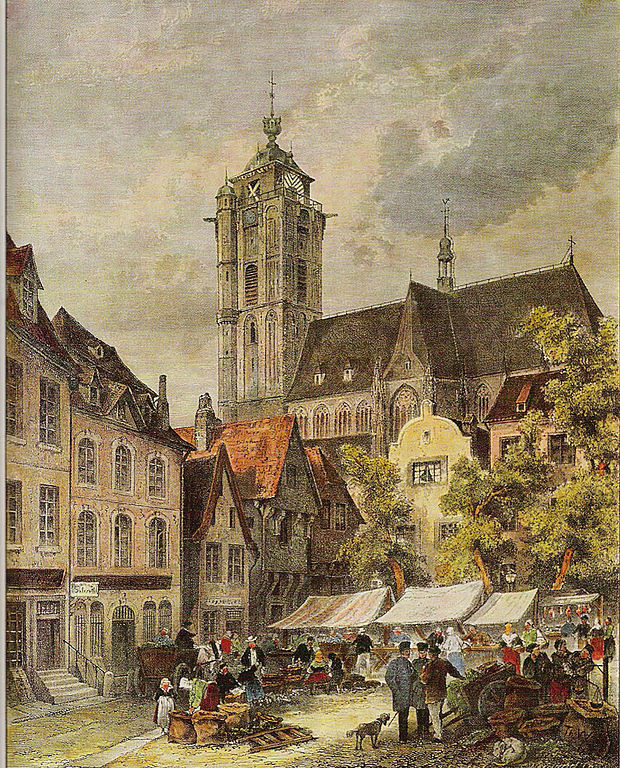
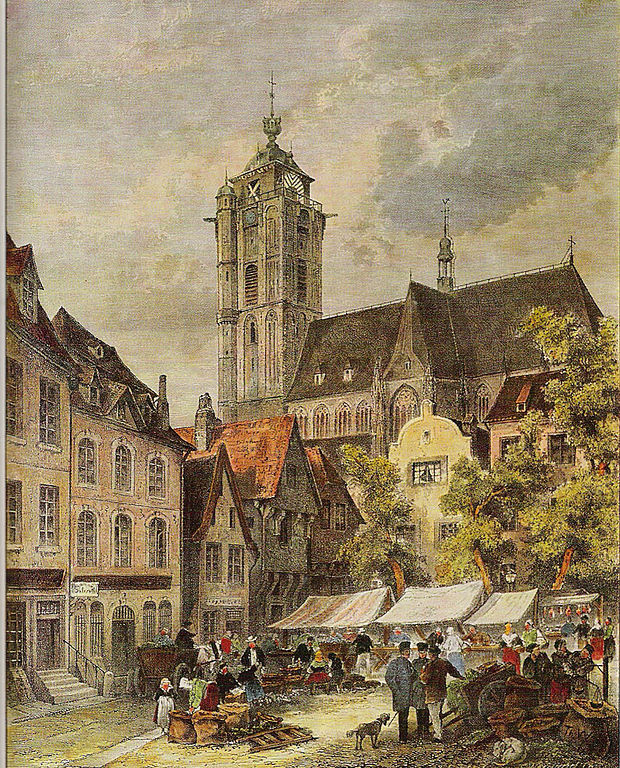
Etching of the view on the marketplace in Duisburg by Theodor Weber, 1850‘Free market fundamentalism?!? What do you mean by that? Isn’t that a loaded term?’

Yes, it is a loaded term! I’m sure you’re aware that the phrase, as commonly used, implies a negative attitude towards the idea that strict adherence to free market principles is the best economic path for a society to follow. And it also implies that proponents of a strict laissez-faire economic approach possess a blind faith in the power of the market. According to this view, Adam Smith’s ‘invisible hand’, operating only in a free market, is the only force or principle in the universe that will assure the best overall outcome for both personal liberty and the fair distribution of goods. But if you detect a certain…. skepticism on my part towards belief in that hypothesis, well, you’re right.

Because all economic choices are based primarily on self-interest, so the free market fundamentalist argument goes, no one will purposefully decide to act against their own self-interests. Even if it’s true that one’s choices result in satisfying only short-term self interests but are harmful over the long term, over time and in the aggregate, these choices with balance each other out in the marketplace. The tendency to make harmful choices will wane and eventually cease when the harm becomes apparent and other choices are observed to be better options. Self-interest will, therefore, inevitably cause people to make better economic decisions over time.

One example of people making very harmful decisions on a large scale, based on short-sighted self interests put into practice in a free market, is the Dust Bowl disaster in 1930’s United States. Farmers, en masse, planted high-market-value crops that impoverished the soil and led to widespread erosion problems. These, combined with unusual weather conditions, caused a massive dust storm and drought that caused hundreds of thousands of farms to fail, thousands of people to die from dust pneumonia and other drought- and famine-related illnesses, and millions to become homeless. These people were hard-working and did not lack in that enterprising, pull-yourself-up-by-the-bootstraps work ethic lauded by the free market fundamentalist. They also made a rational choice: to make a success of the farm right away. So most farmers chose to forgo more prudent, sustainable methods of farming and chose instead to lift themselves out of their current state of debt and poverty by planting wheat. And in the end, this strategy soon proved disastrous to almost everyone’s long-term self-interest, including many prudent farmers who had made wiser choices.

So even though it’s true people sometimes and even often make self-destructive decisions due to short-sighted self-interest, the free market fundamentalist might point out that the ‘invisible hand’ force of the free market will correct this tendency overall. After all, we haven’t had another Dust Bowl (well, not exactly), and even if we’ve gotten ourselves into similar messes for similar reasons, each episode serves to correct our tendencies to make those particular unwise decisions. The individual might choose irrationally, but the system overall is rational.

But human beings are not just economic actors who allow our choices to be judged and corrected in the long run by the impartial and heartless forces of nature. We are moral agents: we judge each other’s actions, as well as our own, according to a(n) intuitive and/or written code of conduct, and hold each person accountable, in real time, for acting in accordance with that code. We also consider the potential consequences of our actions and choose to act according to how morally acceptable they are.

Here’s where our roles as ‘rational’, self-interested economic actors and as moral agents conflict. The corrective force of the free market, like biological natural selection, is an amoral force, which doesn’t ‘care’ who flourishes and who does not, who suffers and who does not, who lives or who dies. Human beings, as moral agents, do care about these things, both on a rational and on an emotional level. (I am convinced that the sharp distinction between emotion and reason is artificial and largely misleading, but that’s a topic for another essay. Here, I’ll use this distinction as it’s colloquially used, as two ways of looking at things, one that’s instinctive and one that’s more considered

So should humans, as moral beings, leave the weeding out of bad economic decisions mostly or entirely up to the amoral force of the free market? Is it morally right, or even acceptable, to allow the chips to fall as they may, so that bad effects (or the morally neutral term ‘inefficiencies’ of economics) end up correcting the whole system on its own? The corrective force of the free market, like natural selection, needs inefficiencies to correct against, in order to work its magic. But, the moral agent objects, these ‘inefficiencies’ that die out are, all too often, human lives! I argue that we, as moral, social beings, don’t consider the loss of human life an acceptable risk, and must hold ourselves and each other accountable if we don’t act to save lives if we can. And this commitment to moral excellence only begins at saving lives.

A general commitment to being a good citizen and a morally worthy human being should replace free market fundamentalism as the driving force behind one’s political and social views.  The facts of observation and of history reveal that the market is a force for ill as well as for good, and the morally committed, good citizen relies all of the evidence, to correct and sustain their beliefs and to inform their actions, and welcomes a system of checks and balances to keep them honest and on the right course between self-interest and concern for the common good.

The full text of my original essay can be found here:

Morality Evolves, Thank Goodness! Or, ‘Survival of the Moral-est’

What is a moral community? To whom do we owe love, respect, allegiance, and caring, and why? What does it mean to be ‘good’?

As communications technology progresses at an exponential rate, we’re all coming into closer and more constant contact with people from all over the world. One result of this: some clashes between people of disparate cultures and belief systems seem particularly violent and extreme, but such partisan violence is commonplace throughout history. Yet we’re also cooperating as a worldwide community as never before, adapting practices and beliefs, with an increase in tolerance and mutual respect between people who might have had trouble finding enough common ground for fruitful interaction in times past. Since we can now see the faces, hear the voices, and observe the lives of people far away as if they’re next door, we identify with them more, perceive them no longer as abstractions but as people like ourselves, and come to care for them nearly as much, and sometimes just as much, as people that just so happen to live their whole lives geographically near to us. Conquest, colonialism, ethnic cleansing, eugenics, holy war: all of these violate moral beliefs now common throughout the world. We seem, as a whole, to be enlarging our moral communities.

So what binds these moral communities, and where so the morals by which they live come from?

As a direct result of this new virtual cosmopolitanism (in a sociological rather than a philosophical sense), many are now convinced that morality is relative to cultures and belief systems. All ethic and cultural peoples have moral systems, and while most contain a few common prohibitions and values (child murder is wrong, health is good), all vary on at least some points, and some widely (women should / should make important decisions independent of men; sexual liberty is / is not good).

While the relativistic view of morality is understandable and generally comes from a generous spirit of tolerance, I believe this theory is, for one thing, ultimately of little use in solving the problem of how the worldwide community is to live together. If morality is entirely relevant to belief system, for example, how can we be justified in claiming that a man does wrong when he kills his wife accused of adultery, if his belief system teaches that this is right? How can we be justified in claiming that a trader in finance does wrong when she gambles her clients’ life savings away, when the business culture she works in operates on the premise that this is the right way to do business? A moral theory which explains the nature and workings of human morality  needs to demonstrate that it works, that it offers compelling answers and workable solutions to such challenges, in order to qualify as a candidate for a true theory. If the global human community wants some firm moral grounds on which to promote human flourishing, we need to look elsewhere than moral relativism.

Most importantly, the current evidence from the findings of clinical psychology and other disciplines that study human behavior just don’t appear to support the theory of moral relativism.

Thomas Aquinas

Another moral theory is moral realism, which many believe is the only acceptable alternative to moral relativism. Mores (moral conventions or laws), according to the moral realist, need to be fixed, immutable, and eternal in order to be true or binding. A highly influential, widely accepted version of this view was thoroughly described and explained by theologian and philosopher Thomas Aquinas in the 13th century, which in turn is an interpretation of Aristotle, the great philosopher and logician of 4th century Greece. Aquinas argues that morality is built-in to reality and can be discovered in the “natural law”. Natural law is the totality of the observed, predictable workings of the universe: just as the law of gravity is an unchanging feature of the universe, so is the moral law, and to discover either, we need only carefully observe the world without and within us. To put Aquinas’ view most succinctly: we can derive the ‘ought’ directly from the ‘is’. This is a compelling theory, in my view, reassuring in its promise to deliver concrete and universal results.

David Hume

Yet David Hume, the great Scottish skeptic philosopher, famously overturned this view in the 18th century, pointing out that there is no direct logical connection between the ‘is’ and the ‘ought’. To say something is the case is not the same as saying it should be the case.

One example that illustrates why I think Hume is right is the set of complex issues regarding human reproduction. As Aquinas, modern evolutionary biologists, and indeed most of us, would agree: human beings, and indeed all living creatures, generally have strong instincts to mate, and the biological equipment which most individuals have makes it so that the result of frequent mating is the production of offspring. You could even say that we mate because we are equipped to make offspring, both physically and instinctively.

Here’s the presumed logical connection between the ‘is’ and the ‘ought’ in this case: Aquinas (and many modern evolutionary biologists) would say that because human beings generally reproduce, one of the main, if not the primary, purposes of the human race and therefore, all individual human beings, is to reproduce. Since we’re generally equipped to make offspring, both physically and instinctively, individual human beings should have sex only to reproduce.

‘But wait a minute!’ one might say, with Humean skepticism. The scientific evidence reveals to us that at least half, and probably more, of all offspring who are conceived are naturally aborted by the mother’s body well before birth, sometimes because of genetic defects, the current state of health of the mother, or some other reason. And that’s just before birth. In some places in the world today, and especially in Hume’s day, a very large proportion of all children born die before the age of five because they have no access to effective treatments for most diseases. If you put that number together with still births and natural abortions, you end up with a very, very large number of unsuccessful reproductions, a majority, in fact.

So if you try to derive the ‘is’ from the ‘ought’ in the case of human reproduction, you can just as well end up, logically, with the weird result that since attempts to successfully create offspring are usually unsuccessful, well, then, human beings ought not to reproduce! Most would find this conclusion not only weird but unacceptable, I think for the very good reason that people generally place a high value on continuing the human species and on the individual’s right to decide whether or not to have children.

Now, to be fair to Aquinas, it’s still the case that, despite so many failed instances of reproduction, the human race generally is successful at reproduction. Added to that, say some evolutionary biologists, the fact that all living beings evolved some sort of  reproductive capacity, it’s still the case that every being that has a choice should try to reproduce, whether or not individuals fail. But how if you belong to a species where reproduction is so successful that if everyone reproduces, the species as a whole is threatened from overcrowding? Or, as it is in the case of a highly social species such as humans, the young do very well in a community where there’s plenty of individuals around who don’t have offspring of their own? In fact, the human species (unusually) far outlive their mating years, and biologists believes it’s a survival mechanism for children to also have grandparents to help rear them. Aunts and uncles, cousins, and friends fulfill the same roles in society, as auxiliary parents and as overall contributors to the flourishing of the human race as a whole.

Perhaps Aquinas was only partially mistaken, and instead should have said that we should place a high moral value on the reproductive function of the human species as a whole: maybe having children is one among many virtuous choices we can make. He did allow that some instances of refraining from procreation are good (he was a celibate monk, after all!) but he also used procreative instinct arguments to say that any and all sex acts that don’t involve reproductive intent are immoral This, to me, represents an attempt to derive a universal moral law, then apply it to get a predetermined result: people who don’t fulfill their ‘procreative purpose’ when they do have sex do wrong, and people who don’t fulfill their ‘procreative purpose’ when they don’t have sex do right. (Hmmm… did he accidentally end up a moral relativist here, in this matter at least?)

http://content.time.com/time/nation/article/0,8599,2021519,00.htmlThis is only one of countless examples where we find that morally committed, good people disagree on the fundamentals of what constitutes goodness and virtue. We find that this disagreement is among individuals and communities not only across space, but also across time. A classic example of this in Middle Eastern and Western cultures is the contrast between the moral precepts of the Old and the New Testaments, and also between the morals in the whole Bible compared to the morals of today. According to the New Testament, after all, it was still acceptable to own slaves and prevent women from speaking in church, which would be morally impermissible according to the mores of  most societies and religions today.

It could be that the moral relativist and the moral realist theories are both implausible. Maybe morality is not relative nor immutable: maybe it evolves. Maybe you can say something is true about morality just as you can say something is true about the human species itself: although the human race is neither immutable or eternal, it still evolved. Yet human beings all descend from a common ancestry and are identifiable in that they share in a distinctive spectrum of traits, so the criteria for being human is not relativistic either.

I think that human sexuality, in fact, also provides an excellent example of not only how a species, but how morality itself, evolves.

Originally, for human beings as for most other creatures, sex evolved for the purposes of reproduction, but over time, as our brains got bigger and our behavioral, emotional, and cultural capacities became more and more complex, sexuality began to be expressed for other purposes as well. As our ancestors became more social and formed larger and larger supportive groups, the young were better protected and better fed and therefore, were more likely to survive. The pressure for individuals to reproduce as often as possible was greatly reduced. Human beings (like our large-brained and social cousins the bonobos and dolphins) also began to enjoy sex for its own sake and re-purposed it: using sex to court potential mates, express friendship love, and dominance, use it for recreation, politics, and so forth. Some of these purposes of sexual expression have, over time, come to be recognized as beneficial, some have not, and some are still debated.

Just as sexuality evolved, so have the moral precepts surrounding sexuality. With the exception of certain

Photo: Wikimedia Commons
The Warren Cup

groups who seek enforce a traditional sexual moral code (usually for religious reasons), over the centuries and millennium sexuality has been appreciated as a much more rich and complex domain of human social relations. As we look back in history, a favored few in society have enjoyed a more liberal set of sexual mores (Greek and Roman elite males enjoyed gay sex without fear, and European nobility and royalty not only regularly enjoyed the company of paramours, they were expected to), but as societies became more democratic and open, these liberal moral codes were extended to the general public. Overall, people are now more prone to judge the morality of sexual behavior according to principles of consent, honesty, reciprocity, and respect, rather than a traditional list of prohibitions.

Here’s a story of how the larger evolution of morality could have happened:

In prehistoric times, human social groups were very small, since survival depended both on strong social cohesion to feed and protect everyone, especially the young, and on not exhausting natural resources. Over time, as the body of human knowledge increased and new technologies were created and perfected, human societies grew to include larger numbers of people. So new adaptations, institutions, and practices arose to create and cement human solidarity in these new larger groups who were less homogenous, even though many general characteristics still tended to remain the same (skin tone, hair color, bodily morphology, etc).These adaptations, institutions, and practices included languages, epic stories, religions, national and ethnic identity, cultural practices, political affiliations, and so on. All of these were constantly being invented, were growing, changing… evolving. And as we’ve already seen, the size of our social groups are growing as rapidly as the communicative capacities of technology. To a cosmopolitan (in the philosophical sense this time), it’s likely only a matter of time before the human race will and should consider itself one large community, with a commitment to upholding basic shared moral principles, though particular or localized secondary moral systems could add their own restrictions or requirements.

Morality is not immune to evolution, and I think doesn’t need to be in order to be capable of being understood in terms of true and false. Again, many things change over time, often drastically, and still can be correctly or incorrectly described and referred to. Not only do I think that morality evolves, I’m also glad that it does, comparing some ancient moral codes to some modern ones. Again, we can look to the Bible for examples of this: consider the ancient Biblical endorsements of slavery and genocide, and compare that with their modern near-total rejection. And the Old Testament notion that women and children were chattel that could be killed for any number of transgressions fills most people today with righteous horror.

These and other changes in moral convictions could be entirely attributed to conditioning, of course. Yet, such conditioning that informs the behavior of most individuals can, perhaps, constitute a form of social evolutionary pressure over time. Whatever the precise mechanism(s), when I consider what history and archaeology tells us about moral attitudes over time, and when I put that together with the fact that human beings evolved from small-brained, non-moral creatures, it seems that morality must have evolved too.

For an organism to evolve, it must be a dynamic system, composed of multiple parts that can be added, subtracted, or changed. If morality evolves, it appears that it likewise can’t be reducible to a single foundational principle. If it’s a traditional monist system, there’s no room or impetus for change, since there’s only one, continuous element or substance that determines the nature of the subject at hand. It’s partly for this reason, and partly based on other evidence (such as how human actually make moral decisions), that I suspect that human morality is actually a pluralist system. Our moral judgments result from balancing various norms against one another, combining, elevating, or rejecting one or more depending on the situation at hand. For example, most cultures place a high moral value on personal integrity, reciprocity, mercy, punishing the guilty, love, protecting the innocent and vulnerable, and more, and consider at least a few of these while making each moral judgment. There are many that I just don’t think are reducible to a more basic principle or value.

So where do these moral values come from? How do we justify judgments based on them? How do we

Photo: Wikimedia Commons
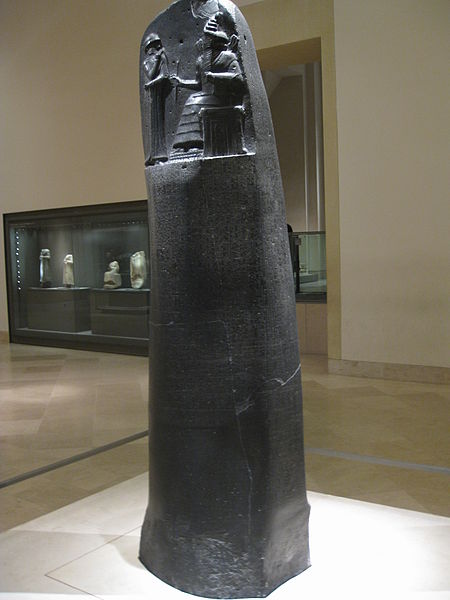
The Code of Hammurabi

know how, when, and to whom to apply them?

Morality not only appears to be based on more than one value or principle, it also involves more than one type of mental processes or cognitive tools. Daniel Kahneman provides one account: a fast, instinctive, emotional process, and a slower, reflective one; Daniel Dennett provides a related explanation of the human mind, originally less capable, enhanced by a ‘toolkit for thinking’. We can apply such a tiered or multilevel system to this story of moral evolution. One is instinctive or more basic, where morality appears to originate. The social instincts, such as empathy and cooperation in humans and other intelligent social creatures, belong to the set variously described as Kahneman’s ‘system one’, or as Hume’s ‘passions’.  The slower ‘system two’, Aristotle and Kant’s ‘reason’, is the part of us that self-consciously reflects on our own emotions and thoughts. So far as we know, only human beings engage in this sort of multi-level mental activity. What the research of social psychologists as Jonathon Haidt reveal is that most of us, most of the time, make our moral judgments quickly and emotionally, and only justify ourselves afterwards, selecting those arguments that best support our own case and neglecting other concerns. This evidence favors Hume’s theory of ‘passion’-centric morality over Kant’s almost wholly rationalistic theory. Yet, we do apply rationality to create, universalize, and enforce a more consistent, regularized moral system on communities, to the benefit of most.

So the basic, foundational instincts that fostered increased cooperation and a drive toward reciprocity were, over time, bolstered by conscious reflection and perfected, enforced, and made more sophisticated through culture. Sounds to me a little bit like the selective, ‘ramping-up’ natural process of evolution by natural selection!

The evolution of morality can be illustrated by analogizing our moral instincts as the genetic mutations, and the use of our slower reasoning process as the selective pressure that allows the instincts to be enacted, or overrides them in order to create a system that best leads to our flourishing. Consider racism and ethnic hatred, instincts that, even today, seem unhappily all too pervasive. The instinct to bigotry might still be a part of our ‘moral DNA’, so to speak, arising as they probably did in the aforementioned circumstance of reinforcing solidarity in small communities struggling to survive. But over time, as we’ve seen race and ethnic hatred lead to suffering and mass slaughter that need not have occurred, the selective pressure of reason, aware of the lessons of history, overrides these ancient instincts and motivates us to value the widely beneficial attitudes of empathy, tolerance, and a sense of shared dignity instead. We used our reason first to regularize moral instincts into rules that apply to the community at large instead of just to the beneficently inclined. Then, we used our technology to widen the spheres of our moral communities, and these spheres are widening as moral communities absorb into ever larger ones.

Over time, we have developed a concept of goodness as that which fosters human flourishing, those instincts, guided and perfected by a natural-selection-like process and by reason, that inspire nurturing and just behavior on the largest scale possible. We can credit goodness, that expanded, instinct-derived and rationally-perfected sense of justice, reciprocity, and beneficence, as the driver of the human race’s ever more cosmopolitan sense of morality.


The Weird Concept of Nothing in A Universe Full of Somethings

‘Why is there something rather than nothing?’.

Most of us, I think, have been challenged with this question, usually as a preface to an attempt to convert us or to to convince us of the truth of one belief system or another.

But I’ve wondered for quite some time why so many consider this a compelling question. Why assume that ‘nothing’ is the default state in a universe that’s chock-full of ‘somethings’: objects with mass, properties, forces, the space-time continuum, subatomic particles, and so on?

It seems to me that ‘nothing’, unaccompanied by the existence of somethings, is the hypothetical state in need of explanation.

What do you think?

A Mind Like A Dog Endlessly Chasing Its Tail: Confessions of an Obsessive Thinker

I’ve always been a person with a lot of existential anxiety, but in a good way, I think. Ever since childhood, I obsessively think about the things I observe people say and do, about what I see around me, about the beliefs I and other people hold, and so on, and wonder what they mean and what they’re really like outside of my own perception.

I feel this driving urgency to question what I’ve been told, to understand what myself and what other people are really like, what they think, and why they think it (including, especially, our heroes: I want to know their flaws as well as their strengths, otherwise I know what I’m getting is not the full richness of a personality, but a glittering, hollow icon), and what is going on out there that I’m missing out on right now. I’m endlessly curious, and need change and adventure to keep me from becoming miserably restlessness. I like to mix it up, to, and hang out with people who are very different than me, since they present me with new and interesting viewpoints (including disturbing ones!), challenge my assumptions, and broaden my understanding of human nature. I use the dog chasing its tail analogy, in short, because I just can’t seem to stop endlessly evaluating and reevaluating every idea that’s every been in my mind, new or old.

I’m also an obsessive explainer: I find it very difficult to make simple statements of fact or opinion, without fully explaining what I really mean or describing the full set of circumstances surrounding the issue at hand. Although I’ve no doubt the latter is often a source of annoyance for my friends and family (in fact, I’ve been told as much), it’s something I really like about myself. Discovering what this world is like, both within and and without my own mind, is a project that I find endlessly fascinating and fulfilling, and I have no plans to break these habits anytime soon. (I call all of this ‘nerding’.)

But all of this often makes me an uncomfortable companion to have and even, sometimes, a shitty friend. When half your life is an existential crisis and you’re constantly chasing some new ideas around, you end up so scattered that it’s very unlikely you’ll make the decision nearly often enough to sit down and make that phone call, or write that email, or plan that group trip, or invite people over for dinner or a movie or a board game. Which is ridiculous of me, really, because I think that the human race, and its features and products (such as consciousness, and morality, and culture), is the most interesting phenomenon of the whole world! And not just the human race in the abstract: I mean the actual people in my life too. One of these days, I hope to settle down and improve my habits, all you loved ones out there that I neglect, and I am always glad when you’re a good influence on my flibbertigibbet self.

Anyway, I hope I’m reasonably adept at thinking some things through in an intelligent and capable fashion, but not because I’m at all brilliant. If so, I would have come up with some amazing original ideas long before now: the great minds, I’ve often heard, come up with their best ideas before they’re thirty. I’m most definitely nowhere near their league. I’m just hoping that in my case, the constant practice might be fruitful at some point, and in any case, I’ll keep myself busy and amused ’till I die.

One thing I think I’m okay at is explaining, in plain enough language, those complex or obscure ideas that I have managed to wrap my mind around. Another thing I like to do and might not be half bad at sometimes is to put together the disparate things I’ve learned into a larger, coherent picture or narrative, to reconcile or unify those aspects of reality that seem to exist contradictorily. For example, why do human beings, whose evolutionary success is due to highly developed social instincts, so often display such violent tendencies? (Still, like so many others, figuring that one out.)

So that’s what I’ll do: I’ll keep thinking, and thinking, and thinking, but now, since I’ve subjected my thoughts to the discipline of writing them down and sharing them with all of you out there on a regular basis, hopefully, my ideas and scribblings will improve in quality and even, I dare to hope, become useful for something other than my own amusement and satisfaction.

Free Market Fundamentalism: A Moral Objection, and What Should Take Its Place

‘Free market fundamentalism?!? What do you mean by that? Isn’t that a loaded term?’

Well might you ask! And yes, it is a loaded term! I’m sure you’re aware that the phrase, as commonly used, implies a negative attitude towards the idea that strict adherence to free market principles is the best economic path for a society to follow. And it also implies that proponents of a strict laissez-faire economic approach possess a blind faith in the power of the market.

According to this view, Adam Smith’s ‘invisible hand’, operating only in a free market, is the only force or principle in the universe that will assure the best overall outcome for both personal liberty and the fair distribution of goods. But if you detect a certain…. skepticism on my part towards belief in that hypothesis, well, you’re right. I think that the term ‘free market fundamentalism’ accurately conveys the sense of an unshakable and all-encompassing belief in free market principles that I want to critique. Devotees of laissez-faire economics are commonly referred to as libertarians here in the US, but I’m not using that term here because it’s too broad for my purpose here: libertarianism also includes very liberal attitudes towards free speech rights, gun ownership, drug use, sex work, and so on. Here, I’m focusing on the economic issues only. In this essay, I’ll be using the acronym FMF to refer both to these common terms for strict free market philosophy (free market fundamentalism) and its proponents (free market fundamentalists), and speaking in general terms; of course, there are individual takes on the specifics of each issue, but I think my summaries of the arguments reflect the beliefs of the average FMF (free market fundamentalist).

Because all economic choices are based primarily on self-interest, so the FMF argument goes, no one will purposefully decide to act against their own self-interests. Even if it’s true that one’s choices result in satisfying only short-term self interests but are harmful over the long term, over time and in the aggregate, these choices with balance each other out in the marketplace. The tendency to make harmful choices will wane and eventually cease when the harm becomes apparent and other choices are observed to be better options. Self-interest will, therefore, inevitably cause people to make better economic decisions over time. There are many parallels between the ‘invisible hand’ of the free market and the biological force of natural selection, as Michael Shermer points out in his The Mind of the Market. (Disclaimer: I haven’t yet read it, and may never get around to it, but I’m familiar with many of the central arguments he makes in the book from his talks and interviews.)

A prime example of people making very harmful decisions on a large scale, based on short-sighted self interests put into practice in a free market, is the Dust Bowl disaster in 1930’s United States. Farmers, en masse, planted high-market-value crops that impoverished the soil and led to widespread erosion problems. These, combined with unusual weather conditions, caused a massive dust storm and drought that caused hundreds of thousands of farms to fail, thousands of people to die from dust pneumonia and other drought- and famine-related illnesses, and millions to become homeless. These people were hard-working and did not lack in that enterprising, pull-yourself-up-by-the-bootstraps work ethic lauded by the FMF. They also made a rational choice: to make a success of the farm, to achieve the American dream as well as to pay debts necessarily incurred by a self-starting farmer, which do you plant: a crop that will bring in more money, like wheat, or a far less profitable, more sustainable one? Of course, the one that brings in more money! And how much of your land do you plant: just part of it (leaving the rest covered by that prairie grass that kept the topsoil in place, or planted with crops that must be plowed under to repair the soil), or all of it? You can guess which rational, short-sighted self-interest will lead one to choose.

So most farmers chose to forgo the more prudent methods of farming and chose instead to lift themselves out of their current state of debt and poverty by planting wheat. And in the end, this strategy soon proved disastrous to almost everyone’s long-term self-interest, including many prudent farmers who had made wiser choices. This pattern of harmful economic behavior considered in the long term, based on short-sighted self-interest, is endemic in the human species. From casino gambling to trading in high-risk derivatives, from daily eating at fast-food restaurants to choosing ‘natural, alternative’ treatments for usually curable cancer, from choosing great-looking, gas-guzzling, highly polluting cars to instituting a system of health care coverage that’s highly profitable to a few but unobtainable to many, market choices abound that lead to disastrous results for life, health, and financial well-being.

So even though it’s true people sometimes and even often make self-destructive decisions due to short-sighted self-interest, the FMF might point out that the ‘invisible hand’ force of the free market will correct this tendency overall. After all, we haven’t had another Dust Bowl (well, not exactly), and even if we’ve gotten ourselves into similar messes for similar reasons, each episode serves to correct our tendencies to make those particular unwise decisions. So the corrective force of the free market even renders moot recent studies by behavioral economists that indicate that human beings usually make irrational but emotionally satisfying economic decisions. Irrational choices that only negatively effect the individual on a small scale may happen all the time, but in the long run, the tendency to make truly harmful economic decisions will be weeded out by the market equivalent of natural selection. The individual might choose irrationally, but the system overall is rational.

But human beings are not just economic actors who allow our choices to be judged and corrected in the long run by the impartial and heartless forces of nature. We are moral agents: we judge each other’s actions, as well as our own, according to a(n) intuitive and/or written code of conduct, and hold each person accountable, in real time, for acting in accordance with that code. We also consider the potential consequences of our actions and choose to act according to how morally acceptable they are. The code might be a universal one, such as that which requires all human beings to respect each other’s right to freely make decisions for themselves, or it might be a particular one, which specifically prevents a doctor from selling her patients’ private health information to an interested third party. These moral codes make it possible for human beings to live and thrive together in a society, attaining the maximum level of flourishing and personal liberty while limiting the opportunities of others to infringe on these. As moral agents, we are not only driven by such self-interested concerns as satiating our own hunger and thirst, obtaining and defending property, and so on. We are also driven by wider social instincts and concerns, such as helping those in danger or in need, earning the approval of our peers, and improving the future prospects of our children and friends. The latter is often partly driven by self-interest: so the saying goes, we sink or swim together. But much of our human moral character is quite selfless: throughout history (and even pre-history) and in every culture, human beings perform acts of kindness that provide no immediate or foreseeable benefit to ourselves.

Here’s where our roles as ‘rational’, self-interested economic actors and as moral agents conflict. The corrective force of the free market, like biological natural selection, is an amoral force, which doesn’t ‘care’ who flourishes and who does not, who suffers and who does not, who lives or who dies. Human beings, as moral agents, do care about these things, both on a rational and on an emotional level. (I am convinced that the sharp distinction between emotion and reason is artificial and largely misleading, but that’s a topic for another essay. Here, I’ll use this distinction as it’s colloquially used, as two ways of looking at things, one that’s instinctive and one that’s more considered.)

So should humans, as moral beings, leave the weeding out of bad economic decisions mostly or entirely up to the amoral force of the free market? Returning to the example of the bad decision to farm intensively and unsustainably: time and the evidence revealed that these farming practices were harmful and actually against one’s rational self-interest, though the opposite had initially appeared to most to be true. But the harm was revealed by the resulting death of thousands and the financial ruin of millions. Is it morally right, or even acceptable, to allow the chips to fall as they may, so that bad effects (or the morally neutral term ‘inefficiencies’ of economics) end up correcting the whole system on its own? Is this true for everything in the economic sphere, from polluting cars and industries to the health care system in the United States? The corrective force of the free market, like natural selection, needs inefficiencies to correct against, in order to work its magic. But, the moral agent objects, these ‘inefficiencies’ that die out are, all too often, human lives! And I hold that most moral agents, most morally committed human beings, consider death and the risk of death to human persons to be a morally unacceptable result of our choices. And not only do we, as moral, social beings, do and should hold ourselves accountable, we hold each other accountable.

The FMF might allow that this is true, but  while the damage to individual finances, health, and life are regrettable, the corrective force of the free market is a better alternative to any other to ensure the greatest outcome to preserve human life and health. From Stalin and Mao’s communist regimes to Cuba’s socialist system, the FMF says, we’ve proved time and again that laissez-faire may sometimes look bad, but interference is almost always worse. Yet for every one of these cautionary tales of coercive top-down economic systems, there’s another tale of the horrors of laissez-faire: the Dust Bowl famine, the Industrial Revolution’s Manchester and other factory towns where the laboring poor were deformed and died from harsh working conditions and disease, child labor, the factory collapse in Bangladesh and the Triangle Shirtwaist Factory Fire and the exploded fertilizer plant in Texas whose owners ignored regulations…. who’s right?

Well, we can start with the observation that there’s a massive difference between a totalitarian regime ruled by a single unchecked despot who’s more often than not a deranged sociopath (a mentally healthy person is not one who desires unchecked power, I presume I’m in agreement with the public and with mental health professionals on this one) and a representative government whose powers are wisely limited by a bill of rights. I will betray my American prejudices (‘United-Statesian’ is just too clumsy an expression to use, so I apologize to Mexicans and Canadians, I’m not forgetting about you!) and proclaim that I’m a huge, HUGE fan of the checks-and-balances theory of government of Aristotle, Montesquieu, and Madison, in which several branches of government share power and so act as a check on any one person, branch of government, or set of interests holding too much power. But I’m not just a fan because I’m an American, I’m a fan because of how well it works. But it’s evident that a system of checks and balances not only works in government, it works marvelously in a multitude of other domains as well, from the worldwide scientific community to organizations to families to the inner and public life of each individual person. In all of these domains, the conflicting needs and interests are balanced against one another so that no one single interest or factor holds unchecked sway and potentially lead the whole into ruin for lack of a corrective mechanism. For example, the scientific community is rife with individuals who hold conflicting theories, who know disparate facts, and who wish to triumph over their colleagues by formulating the best theory or by cleverly debunking a seemingly established one. Over time, faulty theories are amended or are weeded out as science is ‘kept honest’, its theories constantly put to the test by the growing body of evidence.

The FMF focuses on the marketplace as the overarching system that’s subject to the corrective forces provided by the competition which animates the ‘invisible hand’. I think this is, at least partially, where the mistake lies. What corrects the marketplace itself when it comes to moral concerns? For example, in a free market, a worker’s wages are determined by how easy it is to replace them, according to the principle of supply and demand. As we’ve seen throughout history, the wages of relatively unskilled labor remains very low, since there’s usually a very large supply of it. The result, as it is in most of the world today, is that the people who pick the harvests on which our health and lives depend make very little money, and in fact can often hardly keep food on the table for themselves and their families. In contrast, a computer programmer, which requires a higher level of education and more technical skill, can make a very high salary developing video games or apps, a fun but relatively frivolous pursuit, which all too often encourages a sedentary lifestyle and poor attention span, negatively affecting health. (I’m not hating on video games, which bring joy and relaxation to many, though I have no interest in playing them myself; I’m making the point that they’re luxury items that are often addictive and misused). I think that for most people, other than the most extreme FMF, this is a regrettable result, at the very least. That’s because our morality includes a strong sense of justice and fairness, which indicates that people who do the most difficult and most beneficial jobs should be rewarded more than people who do the less difficult and less essential jobs.

It appears, then, that the market might better be regarded as one of the components of society that needs to be checked by and balanced with others. It needs, for one, to be checked by the essential practical needs of a community, such as a legal system, infrastructure, and defense, which is generally done by government (which, in turn, should be representative of and accountable to the people as a whole). But above all, it’s our moral commitments that should keep the market in its place (for an excellent explanation and defense of this, read Michael Sandel’s ‘What Money Can’t Buy: The Moral Limits of Markets‘). The marketplace has proven to be an excellent and efficient institution for bringing goods to the people who want them, providing social mobility, and driving and funding technological innovation. It’s also been a very handy tool for oppressive and greedy institutions and individuals to exploit others, as earlier discussed, even being co-opted for these purposes by tyrannical regimes. I believe that it’s a mixed economy that can provide the best overall results for a society, that provides the most goods for the most people while ensuring that no-one (or as few as possible, realistically) goes without or is oppressed by the unscrupulous. By a mixed economy, I mean one that is free within limits, regulated wisely so as to prevent harm but not enough to stifle trade, and where those goods essential for life are not subject to the vagaries of market forces, but are provided by and for the people as a whole, again, through accountable and representative government. These essential goods, such as water, power, and health care are as essential as any infrastructure of roads or system of laws, and should be re-categorized and treated as such. It makes no more sense to me that a citizen, which enjoys the protections and other benefits of society, can complain about being ‘forced’ to pay taxes for health care that they may or may not use, while not complaining about being ‘forced’ to pay taxes to support the police force that may or may not actually have to catch a burglar in their home, or to pay for a murder trial where they have no relation to the murdered victim. That’s because societal goods, from health care to the criminal justice system, are not only based on the practical needs of individuals within a society. They arise from our moral concerns, which apply to everyone in a society. It’s no less acceptable, I submit, that we let people die because they could afford no health care provider to diagnose and treat their illnesses, than we let people die because they couldn’t pay for private security to protect themselves from armed burglars. That’s because our moral commitments to justice and the value we place on empathy demand that we look out for the welfare of the poor as well as the rich, and that we place on ourselves the public responsibility of relieving the suffering of everyone as best we can.

A general commitment to being a good citizen and a morally worthy human being should replace free market fundamentalism as the driving force behind one’s political and social views. I have no doubt that many who espouse FMF have, in fact, made this commitment and that’s what led to their beliefs. But clinging fiercely to the idea that there’s one and only one chief principle behind the betterment of society is no more defensible than believing there’s one and only one true theory in science, or one and only one branch of government that works. The facts of observation and of history reveal that the market is a force for ill as well as for good, and the morally committed, good citizen relies on the evidence, all of the evidence, to correct and sustain their beliefs and to inform their actions, and welcomes a system of checks and balances to keep them honest and on the right course.

Empathy for Immigrants

M.S. St. Louis, 1939, which carried 930 Jewish refugees who were turned away from the U.S, Canada, and Cuba

M.S. St. Louis, 1939, which carried 930 Jewish refugees who were turned away from the U.S, Canada, and Cuba

To those hard-liners against amnesty for people who immigrated here illegally:

Remember that many, perhaps most, have done so because they’re rescuing themselves and their children from dire poverty, from murderous drug cartels, or from other dangers. They aren’t able to immigrate legally, even if they wanted to, due to the long wait times, high cost, and stringent requirements.

Do you think that all people, morally, should always place a higher value on obeying immigration laws than on the lives and well-being of themselves and their children?

This brings to my mind a famous example of people denied entrance to this country who were fleeing danger and oppression, and were forced to return to Nazi-terrorized Europe. Untold numbers of people died as a result.

Think of your own children, family, and loved ones, and of what you would be willing to do to save them from harm. I’m betting every one of you would break a law or two.

Ordinary Philosophy and its Traveling Philosophy / History of Ideas series is a labor of love and ad-free, entirely supported by patrons and readers like you. Please offer your support today!

Believing in a ‘Grand Plan’ to Comfort Oneself

When facing the news of yet another disaster taking place in the world (a devastating earthquake, a genocide, an epidemic, the murder of schoolchildren, wrongdoers escaping justice, and so forth), who hasn’t heard a thought of this sort follow the initial horrified reaction: ‘Well, we must remember that in the end, it’s all a part of the Grand Design / God’s Plan / The Will of God…’ and so on and so forth. It’s pretty much always implied, and often said, that this means we must resign ourselves, on some level at least, to the situation. And everyone who expresses this sort of explanation seems to find it comforting.

I know I’m not the only one who finds this tendency disturbing, I can’t be the only one who’s discomfited at the idea that so many people think there must be some sort of justification, a ‘grand plan’ that makes all the suffering and death that occur in the world okay, just so they can feel better about it and move on. When someone who’s suffered such a blow themselves, the death of friends or family, the loss of their own health, the destruction of their community, I understand needing an immediate source of comfort to get through the worst of it as they try to carry on living, faced with such burdens. But for others who make such comments, I must ask: is it really a good thing to comfort yourself in this way?

I’ve never found this sort of thing helpful or good. Putting aside the weird idea of ‘choosing to believe’ something (this doesn’t square with my notion of belief as a spontaneous reaction to personal observation, or to an argument, or to scientific evidence, not something I can just adopt like a new style of dress), the very idea of trying to comfort myself in this way seems pretty selfish. I don’t want to feel better about the fact that there’s suffering in the world. I don’t want to think that death and disease and pain have some sort of ultimate moral justification. I want to feel awful about suffering because I want to keep that fire lit under me to spur me to do something about it, even if I can only help in small ways. I want to always feel that I and the rest of humanity can and should do as much about relieving suffering and correcting injustices as we can, because we’ve decided those things are bad. Trying to justify the wrongs in the world as a necessary part of ‘something greater’ can end up sabotaging the best in ourselves, the empathy and righteous anger that we need to drive us to make the world a better place.

That ‘Grand Plan / God’s Will’ excuse, in the end, sounds to me like a trite phrase, a Hallmark-card-worthy empty sentiment, a platitude, little more than a thumb to suck.