President Trump’s speech to the United Nations was well delivered. But it was a strange mishmash of topics and tones, in parts celebrating realpolitik but then also asserting the importance of freedom and democracy. There was, however, one overriding theme — the embrace of nationalism. And in striking that chord, Trump did something unusual, perhaps unique for a U.S. president: He encouraged, even embraced the rise of a post-American world.
First, the mishmash. Early in his speech, Trump asserted, “In America, we do not seek to impose our way of life on anyone.” But then, a few minutes later, Trump proceeded to castigate North Korea, Iran, Venezuela and Cuba for their undemocratic political systems, virtually demanding that they all become Western-style liberal democracies.
The danger of this kind of lofty rhetoric is that it has been selectively applied, so it is seen cynically…
Justice et Inégalité – Les Plateaux de la Balance, by Frachet, 2010, public domain via Wikimedia Commons
Consider a syllogism:
There is now a science of well-being.
Scientists are experts in their field.
Therefore there are now experts on well-being.
I submit this argument is sound–which is to say the premises are true and the conclusion follows validly. But it does not imply that there is a scientific way to live your life and does not imply that science should supersede your own judgment or the judgment of your therapist, rabbi, or wise friend. There are different ways of knowing well-being and none is superior to another in every way.
The “science of well-being” (aka positive psychology, quality of life or happiness studies) applies scientific method to what was previously personal, inscrutable, philosophical–happiness and good life. These scientists say that today measures and methods are so much improved, that happiness and good life are no longer hidden, no longer elusive. They also tout great practical payoffs–typically evidence-based therapies and truly scientific self-help. Increasingly the discoveries of this field are picked up by businesses, human resources managers, life coaches, and indeed governments.
As citizens, employees, and clients we would be wise keep our eye on this new development–knowledge is power and power over happiness is far from innocent. But here I pose the question purely from an individual’s point of view – is it wise to arrange your life in accordance with the findings of this science?
Consider some things scientists of well-being claim to know:
“Unemployment and loss of mate are the hardest to adapt to.”
“Rise in income only predicts rise in well-being in the presence of other factors.”
“Pro-social behavior increases the givers’ subjective well-being.”
If you want to know whether to avoid unemployment and loneliness, pursue better income, volunteer, or do whatever else the science recommends, you need to notice two things. First, these claims are value-laden. Second, they are about kinds of people, not individuals. These two features imply two ways in which this knowledge might fail to fit you – first, because you reasonably disagree with the value judgments these scientists make and, second, because their claims are not about you. Let me take each in turn.
When I say that the claims of this science are value-laden, I mean simply that a value-judgment about good life is needed to identify a questionnaire as valid, or a given data point as relevant. ‘Answers to a life satisfaction questionnaire are valid indicators of well-being’ is a value judgment because it presupposes that it is good for a person to judge her life as living up to some ideal she has adopted.
The process of arriving at a good measure of well-being is the process of making such judgments at many stages: what questions to include, to whom to pose them, which other questionnaires are related, and so on. Following much statistical testing, questionnaires that emerge are complex amalgamations of the factual and the evaluative. This is totally normal and legitimate – there would be no science as we know it if scientists did not use metaphors, analogies, judgments – all seats of commitments about morality, politics, beauty, and culture.
But scientists are not the only authority on values. Judgments about good life are familiar to all of us. My nine year old wants to make YouTube videos and wants help to record his gaming sessions and upload them online. I want to encourage his creativity, but worry about exposing him to the world of ‘likes’ and anonymous comments earlier than need be. Many of my everyday decisions are decisions about well-being: mine, my family’s, my students’. Sometimes I make a mess of things but I still have some expertise about living my life. Classic liberals, such as John Stuart Mill, held the extreme view that only the individual is an authority on their own well-being. This flies in the face of facts – we can be blind to things that people who know and care about us can plainly see. Equally scientists who validate questionnaires of well-being can also make decent value judgments on this matter – clinical researchers usually go to great lengths to ensure that when they measure, say, frailty they define this value-laden concept properly and comprehensively. Most likely there is more than one authority on values, including on well-being.
It follows that claims about validity of a given well-being measure can be challenged by challenging the value judgments on which they depend. ‘You used life satisfaction data in your study, Dr. Scientist, but I have reasons to believe that life satisfaction is not well-being’. No special expertise is necessary to raise such challenges. They need to be made in good faith, with attention to why scientists choose a given measure, and with due reflection, but they can be made. And this is one way in which the claims of well-being science can fail to be relevant you.
The second way stems from the inevitable and justifiable focus on kinds rather than on individuals. My point is not just the familiar idea that scientific hypotheses are about averages and any individual may deviate from average (of course most of us often wrongly believe we are well above it). This is true but unsurprising and can only justify ignoring science if you have strong evidence regarding which side of the distribution you are on. Rather when checking that a given claim of science is properly about us, we should check whether ‘the kind’, that is the class of people, about whom this claim is made, is the kind to which we belong.
Positive psychologists who write books with happiness formulae sidestep this issue and advertise their findings as applying to humans in general – pick a job you love, maintain positive relationships, do your gratefulness exercises, volunteer, find meaning in life. But such vague generalities only take you that far in life. Better grounded is research that zeros in on people in specific circumstances – caretakers of the chronically ill, single mothers on welfare, refugees, adopted children, psychosis patients, and so on. People in these similar circumstances people tend to face similar challenges, or at least more similar than when you consider humanity as a whole. As a result they yield more informative evidence. Clinical research and social work is a treasure trove of knowledge about how to live well with a particular illness, particular disability, or particular challenge. In contrast with positive psychology, these are more modest and more local findings.
To make the same point with pictures, science that promises this:
Is far less reliable for individuals than science that promises this:
Image courtesy of the author.
If there are findings on well-being relevant to the kind to which you belong, good, use them. Nevertheless, because each of us is a member of many different kinds, the authority of these findings will again quickly run. What do you do when you have psychosis and you are a single parent, and when studies exist about well-being of each, but not at the same time? You think for yourself and you ask for advice (of which science is but one source).
Mine is not a criticism, just an observation that well-being as an object of science is not well-being as an object of personal reflection. Living well is as big of a riddle as ever, even in the age of positive psychology.
~ Anna Alexandrova is a Senior Lecturer in Philosophy of Science at University of Cambridge and a Fellow of King’s College, having previously taught at the University of Missouri St Louis. She writes on philosophy of social sciences, especially economic modelling, explanation, and the sciences of well-being. She was a recipient of the Philosophy of Science Association Recent PhD Essay Prize. Her book, A Philosophy for the Science of Well-Being has recently been published by OUP.
I came across this excellently clear and succinct piece by Chris Cameron on intellectual history, which discipline I’m currently studying at the University of Edinburgh:
‘My view of what intellectual history, as I noted in the chat, is that it is the sub-discipline of history that deals with the ideas and symbols that people use to make sense of the world. A guiding assumption of this sub-discipline is that human beings depend upon the use of language, which gives meaning to individual lives. Another assumption of intellectual historians is that human beings cannot live in the world without theories about what they are doing. These theories may be explicit or implicit, but they are always present and make up our cultural construction of reality, which again, depends upon symbols and language. So intellectual history is not about what people did, necessarily, but more about what they thought they were doing.
By nature, intellectual history is an interdisciplinary field, and there are many approaches that scholars take to studying the history of ideas. I would like to outline five of the most prominent of these approaches…’
Exploding Raphaelesque Head, 1951, Salvador Dali, Scottish National Gallery of Modern Art, Edinburgh, Scotland
Philosophers have a love-hate relationship with the imagination. René Descartes, for one, disparaged it as ‘more of a hindrance than a help’ in answering the most profound questions about the nature of existence. Trying to imagine one’s way towards metaphysical truth, he wrote in Meditations on First Philosophy (1641), is as foolish as falling asleep in the hope of obtaining a clearer picture of the world through dreams.
Yet Descartes also relied heavily on imagination in scientific and mathematical essays such as The World (1633), in which he tried to conjure up the details of the basic building blocks for structures such as humans, animals and machines. According to the philosopher Dennis Sepper at the University of Dallas, Descartes relied upon a kind of ‘biplanar’ imagination, pioneered by Plato, in which one level of reality could embody and display relations that existed on a different level, and vice versa.
The Scottish philosopher David Hume was equally conflicted about the imagination – especially when compared with perception and memory. ‘When we remember any past event, the idea of it flows in upon the mind in a forcible manner,’ he wrote in A Treatise of Human Nature (1738-40). But imagined images and sensations, he continued, are ‘faint and languid, and cannot without difficulty be preserved by the mind steady and uniform for any considerable time’. However, Hume also claimed that humans are most free when they’re engaging in imagination. Perception can show us only the actual, he said, but imagination can go beyond that, to the realm of the maybe, the what-if and if-only. Indeed, ‘nothing we imagine is absolutely impossible,’ Hume said.
What’s behind this apparent tension at the heart of the imagination? Hume put his finger on it when he talked about how our facility for fantasy helps us to move beyond and change our present reality. One need only think of how Leonardo da Vinci’s fantastical flying machines paved the way for the Wright brothers, or how H G Wells’s novel The War of the Worlds (1898) inspired the first liquid-fuelled space rocket, to see the truth of this insight. But imagination is also restricted by the extent of our previous perceptions and experiences, Hume said. ‘Let us chase our imagination to the heavens, or to the utmost limits of the Universe; we never really advance a step beyond ourselves,’ he wrote.
One way to resolve such ambivalence would be to divide the imagination into different kinds. Along these lines, towards the end of the 18th century, Immanuel Kant distinguished two forms of imagination: the productive imagination and reproductive imagination. The productive faculty is what helps to synthesise and transform sensory content into a meaningful whole. So the identification of something with pointy ears and fur, which meows and rubs itself against your legs, is brought together via the productive imagination into the form of a cat. This unifying tendency is implanted in every human mind irrespective of experience. For Kant, our productive imagination is what makes perception possible.
By contrast, the reproductive imagination is largely about recollection. When a story comes on the radio about a long-lost cat who has found its way home, you draw from the many cats you’ve seen before to picture the heartwarming scene; this would be the reproductive imagination at work. Because the reproductive faculty works only with materials previously provided to someone’s senses, it is subject to the kind of limits Hume discussed.
Kant’s bifurcation hints at why philosophers treat the imagination with both despair and delight. Perhaps the kind of imagination we despise is totally different from its more useful cousin. But in accepting this subdivision, we give up on the possibility of seeing the imagination as a unified mental faculty – which is perhaps more how we experience it.
When I think of all the wondrous things we can do with the imagination, I’m inclined towards a different way of unravelling its enigmatic duality. Rather than slicing up the imagination into distinct kinds, we might think about its distinct uses. I like to call these the transcendent and the instructive functions of the imagination. On the one hand, when we pretend, or fantasise, or escape into an engrossing work of literary fiction, imagination can take us beyond the here and now. On the other hand, when we imagine in an attempt to make sense of what other people are thinking, or to problem-solve or to make decisions, our speculations are used to help us understand the here and now. Whereas our transcendent uses of the imagination tend towards whimsy and fancy, its instructive functions point towards the practical and the concrete.
In both these modes, the secret to success seems to lie in the application of a kind of imaginative constraint. But what’s right for one use might not be fitting for the other. Perhaps the reason why philosophers have been conflicted about the imagination is that they haven’t grasped how limitations need to be tailored to circumstances. When we are writing fiction, or playing games of pretend, or making art, arguably we do our best imagining by setting the boundaries widely or removing the shackles entirely. In contrast, when we employ imagination in the context of scientific or technological discovery, or any other real-world problem-solving, we must allow our imaginations to be framed by the situation at hand.
Figuring out where to draw these lines isn’t easy. It can be extraordinarily tricky to know which factors should stay in play, and which should be eliminated. But by looking at how such constraints operate, not only can we see our way towards imaginative greatness – perhaps we can also purge philosophy of its anxiety about the idea. After all, as Hume observed, humans ‘are mightily govern’d by the imagination’.
~ Amy Kind is professor of philosophy at Claremont McKenna College in California. She is the author of Persons and Personal Identity (2015). (Bio credit: Aeon)
“George Bernard Shaw near St Neots from the Millership collection” from the Birmingham Museums Trust, CC BY-SA 4.0 via Wikimedia Commons.
In times of populism, soundbites, and policy-by-Twitter such as we live in today, the first victims to suffer the slings and arrows of the demagogues are intellectuals. These people have been demonised for prioritising the very thing that defines them: the intellect, or finely reasoned and sound argument. As we celebrate the 161st birthday of Bernard Shaw, one of the most gifted, influential, and well-known intellectuals to have lived, we might use the occasion to reassess the value of intellectuals to a healthy society and why those in power see them as such threats.
Born in Dublin on 26 July 1856 to a father who held heterodox religious opinions and a mother who moved in artistic circles, Shaw was perhaps bound to be unconventional. By age 19 he was convinced that his native Ireland was little more than an uncouth backwater–the national revival had yet to see the light of day–so he established himself in London in order to conquer English letters. He then took his sweet time to do it. In the roughly quarter of a century between his arrival in the metropole and when he finally had a modicum of success, Shaw wrote five novels–most of which remained unpublished until his later years–and eked out a living as a journalist, reviewing music, art, books, and theatre. That eminently readable journalism has been collected in many fine editions, and we see in it an earnest individual not only engaged in assessing the qualities of the material before him–much of which was dreadfully insipid–but eager to raise standards and to cultivate the public. He prodded people to want more and gave them the tools to understand what a better art would look and sound like. And he did so in an inimitable voice that fashioned his renowned alter ego: the great showman and controversialist, GBS.
“George Bernard Shaw, circa 1900” from the Library of Congress, Public Domain via Wikimedia Commons.
Shaw became more widely known as a playwright in late 1904, when King Edward broke his chair laughing at the Royal Command performance of Shaw’s play John Bull’s Other Island. He was no longer a journalist by trade, now being able to live by his plays, but Shaw continued to write essays, articles, and letters-to-the-editor in leading papers to set the record straight, to denounce abuses of power, and to suggest more humane courses of action. When he published his plays, he wrote polemical prefaces to accompany them that are sometimes longer than the plays themselves. These prefaces, written on an exhausting range of subjects, are equally learned and entertaining. Indeed, it has been said by some wags that the plays are the price that we pay for his prefaces.
In many ways continuing his fine work as the Fabian Society’s main pamphleteer in the 1890s, his prefaces suggest remedies for the great injustices of his time. And, what’s more, the vast majority of his prescriptions are as topical and provocative today. For example, if you’re American, should you opt for Trumpcare or Obamacare? Read The Doctor’s Dilemma and its preface and you’ll have a compelling case for neither, but rather a comprehensive and fully accessible public healthcare system, the sort now common in Canada and most European countries. That’s right, people were feeling the Bern–we might say the original Bern–well before Mr. Sanders was born.
Some of Shaw’s opinions came at a great cost. When he published Common Sense About the War, which was critical of both German and British jingoism at the outset of the Great War, he ran too much against the grain of the hyper-patriotic press and government propaganda, thereby becoming a pariah to many. But his star gradually returned into the ascendant as the body count mounted and a war-weary population came to share his point of view. The run-away international success of Saint Joan brought him the Nobel Prize for Literature in 1925 and, as Shaw said, gave him the air of sanctity in his later years.
“George Bernard Shaw with Indian Prime Minister Jawaharlal Nehru, May 1949”, from Nehru Memorial Museum & Library. Public Domain via Wikimedia Commons.
However, Shaw always maintained that he was immoral to the bone. He was immoral in the sense that, as a committed socialist in a liberal capitalist society, he didn’t support contemporary mores. Instead, he sought to change the way that society was structured and to do so he proposed absolutely immoral policies. A good number of these beyond universal healthcare have seen the light of day, such as education that prioritises the child’s development and sense of self-worth, the dismantling of the injustices of colonial rule, and voting rights for women. But those in power continue the old tug-of-war, and the intellectuals of today must be as vigilant, courageous, and energetic as Shaw in the defence of liberal humanist and social democratic values. Witness the return of unaffordable tertiary education in the UK, made possible by both Labour and Conservative policies. We might recall that Shaw co-founded one of these institutions–the renowned London School of Economics–because he believed in their public good.
Whenever Shaw toured the globe in his later decades–he died in 1950 at age 94–he was met by leading politicians, celebrities, and intellectuals who wanted to bask in his wit, wisdom, and benevolence (Jawaharlal Nehru, Charlie Chaplin, and Albert Einstein are a few such people). Time magazine named him amongst the ten most famous people in the world–alongside Hitler and the Pope. Everywhere he went, the press hounded him for a quote. Yet despite the massive fees he could have charged, he never accepted money for his opinions, just as he had declined speaking fees in his poorer days when he travelled Britain to give up to six three-hour lectures a week to praise the benefits of social democracy. He would not be bought–or suffer the appearance of being bought.
On his birthday, then, we would do well to think of Shaw and maybe even read some of his plays, prefaces, or journalism. We might also cherish the service and immorality of intellectuals. And we should always question the motives of those who denigrate their value.
~ Brad Kent is Professor of British and Irish Literatures at Université Laval in Quebec City. His recent publications include Bernard Shaw in Context (Cambridge University Press, 2015) and The Selected Essays of Sean O’Faolain (McGill-Queen’s University Press, 2016). He is currently general editor of an eight-volume series of Shaw’s writings that will be published by Oxford World’s Classics in 2021, and is the author of the Oxford Bibliographies in British and Irish Literature article “George Bernard Shaw.” Bio credit: OUPBlog
As is so often the case, Fareed Zakaria’s analysis is the best I’ve read on this subject. As Bill Maher recently pointed out, sure, there was violence on both sides in World War II as well, but one side was still right
Much of the United States has reacted swiftly and strongly to President Trump’s grotesque suggestion that there is a moral equivalence between the white supremacists who converged last weekend on Charlottesville and those who protested against them. But the delayed, qualified and mealy-mouthed reactions of many in America’s leadership class tell a disturbing story about the country’s elites — and the reason we are living in an age of populist rebellion.
The least respected of today’s leaders are, of course, politicians. The public largely views them as craven and cowardly, pandering to polls and focus groups. And that is how too many Republican officials have behaved in the face of Trump’s words and actions. With some honorable exceptions, men and women who usually cannot stop pontificating on every topic on live TV have suddenly gone mute on the biggest political subject of the day.
Miniature room by Mrs. James Ward Thorne portraying a French salon from about 1780, ca. 1930’s, Art Institute of Chicago
In a global culture that appears increasingly obsessed with radical individualism, narcissistic presentations of self, and incendiary political rhetoric, it is hard to imagine that society once cared about the beauty of the soul. But, in the late 18th and early 19th centuries in Germany and across Europe, the pursuit of a ‘beautiful soul’ became a cornerstone of philosophical thought and popular discourse, advanced by some of the most important intellectuals of the time, including Johann Wolfgang von Goethe, Friedrich Schiller and Wilhelm von Humboldt. To these thinkers, the pursuit of inner perfectibility responded to the horrors of the French Revolution’s irrational mass action culminating in The Terror of the 1790s. Nascent notions of democracy, they believed, could be developed only if each individual achieved liberation from what Immanuel Kant described as the ‘self-incurred tutelage’ of intellectual immaturity by developing cognitive and emotional faculties through aesthetic experiences.
At the core of the beautiful soul is the idea that the individual possesses an innate cognitive potential. Subject to the right environmental and educational conditions, this latent potential can be developed to reach a more perfect state of intellect, morality, character and conduct. The beautiful soul is an aesthetic concept focused on developing human capacities and advancing knowledge and culture. It entails the pursuit of personal cultivation to create a convergence of the individual aesthetic impulse with a collective ethical ideal. The beautiful soul is a virtuous soul, one that possesses a sense of justice, pursues wisdom, and practises benevolence through an aestheticised proclivity for the ‘good’.
Inspired by ancient Greek philosophy, the beautiful soul reflects Plotinus’ imperative to cultivate the self in the same way that the sculptor works:
Withdraw within yourself, and examine yourself. If you do not yet therein discover beauty, do as the artist, who cuts off, polishes, purifies until he has adorned his statue with all the marks of beauty. Remove from your soul, therefore, all that is superfluous, straighten out all that is crooked, purify and illuminate what is obscure, and do not cease perfecting your statue until the divine resplendence of virtue shines forth upon your sight …
Sculpting the soul and creating what Goethe referred to as ‘a more beautiful humanity’ is achieved through the internalisation of the Platonic triad of beauty, truth and goodness. Beauty is conceived as the integration of intellectual and aesthetic faculties in the encounter with art and nature. Truth is the result of the logical exercise of rational faculties and the elevating sense of curiosity derived from experiences in the world. Goodness is found in the human capacity to feel compassion for others and thereby contribute to the betterment of society.
The Platonic triad is realised within the soul by exploring ideas through lived experiences, not by blindly following abstract principles or dogma dictated by a church or political system. The concept requires that the individual actively engage her senses to navigate the material world in which beauty acts as her guide. The ineluctable indeterminateness of aesthetic, sensory experience is precisely what makes it valuable in expanding one’s consciousness in order to explore the ultimate questions of reality. Watching a lark’s parabolic trajectory in the sky, observing the fractal patterns found in nature, contemplating the concentric circles produced by rain droplets in pools of water become opportunities to understand the universe and reach a heightened cognitive-affective state. As Goethe observed: ‘A man should hear a little music, read a little poetry, and see a fine picture every day of his life in order that worldly cares may not obliterate the sense of the beautiful which God has implanted in the human soul.’
The concept affirms that, in its universality, beauty offers a means of engaging with the world, providing a common basis upon which positive social relationships can be developed, acting as a lexicon for communicative exchange. Since it is a natural human inclination to share sensory experiences, beauty provides an opportunity to bond individuals in a moment of ultimate meaning, conveying ineffable feelings that cut to the core of existence. By opening one’s perceptual horizons, a person is elevated beyond ego and self-absorption into a realm of universal concern and contemplation. Beauty achieves the good by strengthening faculties of empathy that induce deeper compassion for others and attentiveness to the wellbeing of the social collective. Thus, the marriage of the beautiful, the true and the good is for the beautiful soul more than the metaphysical meditations of antiquity but the very basis of a more just and equitable society.
Although the philosophy was never realised in the way that its theorists envisioned, the beautiful soul is far more than a beautiful idea. In turning towards aesthetics, the philosophers of the German Aufklärung (Enlightenment) did not naively evade political realities. Instead, they offered a holistic theory that recognised the long-term horizon for the flourishing of reason and human understanding. In doing so, they developed a poetic conception of politics that took inspiration from ancient Greek notions of an aesthetic state. In working towards her own self-improvement and fearlessly venturing into society, the beautiful soul was a revolutionary figure, at the vanguard of Enlightenment progress.
Self-cultivation was not an idle, vainglorious pursuit of the wealthy, but rather a radical reformulation of what it meant to be human and how to harmoniously exist in society. The beautiful soul anticipated the problems of instrumental reason, overcoming the dangers of mere utility, disenchantment and social isolation by offering an aesthetic world view that facilitated positive human interactions and a multidimensional understanding of human experience. She epitomised Enlightenment values of equality, fraternity and rationality, serving as the model of a citizen who lived up to the responsibilities associated with democracy.
The contemporary turn towards nihilism that lionises the individual at the expense of the collective has made the idea of cultivating a more beautiful soul appear hopelessly idealistic and disconnected from ‘hard realities’. In a realist’s world, we seek utilitarian ends under the guise of pragmatism, turning away from the illusiveness of an immaterial and ultimately unattainable ideal. The mystery and poetry of human nature has been stripped from our daily experience at the expense of our imaginations and our will to envision a more beautiful world. Yet, the social and environmental ills induced by our unfettered economy of instrumentality are proving anything but pragmatic for the long-term sustainability and wellbeing of our species. If we still harbour hope in the human propensity for goodness, then we ought to contemplate anew the poetic, revolutionary figure of the beautiful soul that might once again provide a vision for deepening our intellectual, moral and emotional faculties in the service of a more just and progressive future for us all.
~ Justine Kolata is the founder and director of The Public Sphere, and the co-founder and co-director of The Bildung Institute. She is currently pursuing a PhD in the German department at the University of Cambridge on enlightenment salon culture.
On this day, President Harry Truman took one more step towards realizing the idea, central to the founding documents of the United States, that all persons are created equal.
In 1840, Edgar Allan Poe described the ‘mad energy’ of an ageing man who roved the streets of London from dusk till dawn. His excruciating despair could be temporarily relieved only by immersing himself in a tumultuous throng of city-dwellers. ‘He refuses to be alone,’ Poe wrote. He ‘is the type and the genius of deep crime … He is the man of the crowd.’
Like many poets and philosophers through the ages, Poe stressed the significance of solitude. It was ‘such a great misfortune’, he thought, to lose the capacity to be alone with oneself, to get caught up in the crowd, to surrender one’s singularity to mind-numbing conformity. Two decades later, the idea of solitude captured Ralph Waldo Emerson’s imagination in a slightly different way: quoting Pythagoras, he wrote: ‘In the morning, – solitude; … that nature may speak to the imagination, as she does never in company.’ Emerson encouraged the wisest teachers to press upon their pupils the importance of ‘periods and habits of solitude’, habits that made ‘serious and abstracted thought’ possible.
In the 20th century, the idea of solitude formed the centre of Hannah Arendt’s thought. A German-Jewish émigré who fled Nazism and found refuge in the United States, Arendt spent much of her life studying the relationship between the individual and the polis. For her, freedom was tethered to both the private sphere – the vita contemplativa – and the public, political sphere – the vita activa. She understood that freedom entailed more than the human capacity to act spontaneously and creatively in public. It also entailed the capacity to think and to judge in private, where solitude empowers the individual to contemplate her actions and develop her conscience, to escape the cacophony of the crowd – to finally hear herself think.
In 1961, The New Yorker commissioned Arendt to cover the trial of Adolf Eichmann, a Nazi SS officer who helped to orchestrate the Holocaust. How could anyone, she wanted to know, perpetrate such evil? Surely only a wicked sociopath could participate in the Shoah. But Arendt was surprised by Eichmann’s lack of imagination, his consummate conventionality. She argued that while Eichmann’s actions were evil, Eichmann himself – the person – ‘was quite ordinary, commonplace, and neither demonic nor monstrous. There was no sign in him of firm ideological convictions.’ She attributed his immorality – his capacity, even his eagerness, to commit crimes – to his ‘thoughtlessness’. It was his inability to stop and think that permitted Eichmann to participate in mass murder.
Just as Poe suspected that something sinister lurked deep within the man of the crowd, Arendt recognised that: ‘A person who does not know that silent intercourse (in which we examine what we say and what we do) will not mind contradicting himself, and this means he will never be either able or willing to account for what he says or does; nor will he mind committing any crime, since he can count on its being forgotten the next moment.’ Eichmann had shunned Socratic self-reflection. He had failed to return home to himself, to a state of solitude. He had discarded the vita contemplativa, and thus he had failed to embark upon the essential question-and-answering process that would have allowed him to examine the meaning of things, to distinguish between fact and fiction, truth and falsehood, good and evil.
‘It is better to suffer wrong than to do wrong,’ Arendt wrote, ‘because you can remain the friend of the sufferer; who would want to be the friend of and have to live together with a murderer? Not even another murderer.’ It is not that unthinking men are monsters, that the sad sleepwalkers of the world would sooner commit murder than face themselves in solitude. What Eichmann showed Arendt was that society could function freely and democratically only if it were made up of individuals engaged in the thinking activity – an activity that required solitude. Arendt believed that ‘living together with others begins with living together with oneself’.
But what if, we might ask, we become lonely in our solitude? Isn’t there some danger that we will become isolated individuals, cut off from the pleasures of friendship? Philosophers have long made a careful, and important, distinction between solitude and loneliness. In The Republic (c380 BCE), Plato proffered a parable in which Socrates celebrates the solitary philosopher. In the allegory of the cave, the philosopher escapes from the darkness of an underground den – and from the company of other humans – into the sunlight of contemplative thought. Alone but not lonely, the philosopher becomes attuned to her inner self and the world. In solitude, the soundless dialogue ‘which the soul holds with herself’ finally becomes audible.
Echoing Plato, Arendt observed: ‘Thinking, existentially speaking, is a solitary but not a lonely business; solitude is that human situation in which I keep myself company. Loneliness comes about … when I am one and without company’ but desire it and cannot find it. In solitude, Arendt never longed for companionship or craved camaraderie because she was never truly alone. Her inner self was a friend with whom she could carry on a conversation, that silent voice who posed the vital Socratic question: ‘What do you mean when you say …?’ The self, Arendt declared, ‘is the only one from whom you can never get away – except by ceasing to think.’
Arendt’s warning is well worth remembering in our own time. In our hyper-connected world, a world in which we can communicate constantly and instantly over the internet, we rarely remember to carve out spaces for solitary contemplation. We check our email hundreds of times per day; we shoot off thousands of text messages per month; we obsessively thumb through Twitter, Facebook and Instagram, aching to connect at all hours with close and casual acquaintances alike. We search for friends of friends, ex-lovers, people we barely know, people we have no business knowing. We crave constant companionship.
But, Arendt reminds us, if we lose our capacity for solitude, our ability to be alone with ourselves, then we lose our very ability to think. We risk getting caught up in the crowd. We risk being ‘swept away’, as she put it, ‘by what everybody else does and believes in’ – no longer able, in the cage of thoughtless conformity, to distinguish ‘right from wrong, beautiful from ugly’. Solitude is not only a state of mind essential to the development of an individual’s consciousness – and conscience – but also a practice that prepares one for participation in social and political life. Before we can keep company with others, we must learn to keep company with ourselves.
~ Jennifer Stitt is a graduate student in the history of philosophy at the University of Wisconsin-Madison. Bio credit: Aeon
The latest revelations about Russia and President Trump’s campaign are useful because they might help unravel the mystery that has always been at the center of this story. Why has Trump had such a rosy attitude toward Russia and President Vladimir Putin? It is such an unusual position for Trump that it begs for some kind of explanation.
Unlike on domestic policy, where he has wandered all over the political map, on foreign policy, Trump has held clear and consistent views for three decades. In 1987, in his first major statement on public policy, he took out an ad in several newspapers that began, “For decades, Japan and other nations have been taking advantage of the United States.” In the ad, he also excoriated “Saudi Arabia, a country whose very existence is in the hands of the United States,” and other “allies who…





 I came across this excellently clear and succinct piece by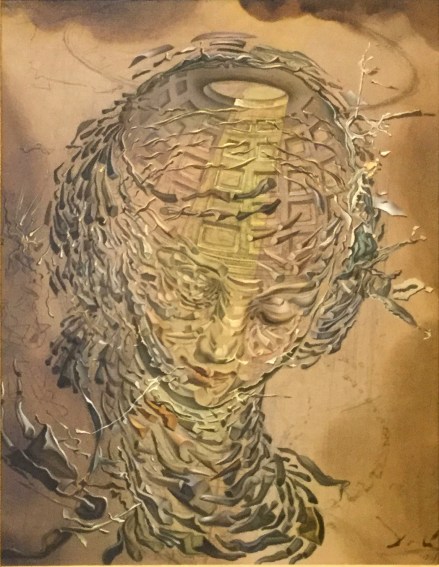






 In 1840, Edgar Allan Poe described the ‘mad energy’ of an ageing man who roved the streets of London from dusk till dawn. His excruciating despair could be temporarily relieved only by immersing himself in a tumultuous throng of city-dwellers. ‘He refuses to be alone,’ Poe wrote. He ‘is the type and the genius of deep crime … He is the man of the crowd.’
 Ordinary Philosophy