Personal Responsibility and Collective Action Problems

In a recent essay, ‘But My Brain Made Me Do It!‘, I argue that many attempts to evade or minimize personal responsibility for one’s actions are misguided. The concept of personal responsibility exists not only to impart personal and societal meaning to human behavior, but to assign accountability. After all, if human beings can not be required to fulfill responsibilities or make retribution for harms done, societies could not function and group living would be impossible. Many attempts to evade personal responsibility only consider the reasons why one might easily have acted one way or another, and ignore two other key factors which lend weight and force to it in the first place: whether the person could have acted otherwise, and whether the person was in fact the one who performed the action. Therefore, attempts to isolate only deliberate intention, and to disregard other factors in matters of personal responsibility, undermine the nature and utility of the whole concept.

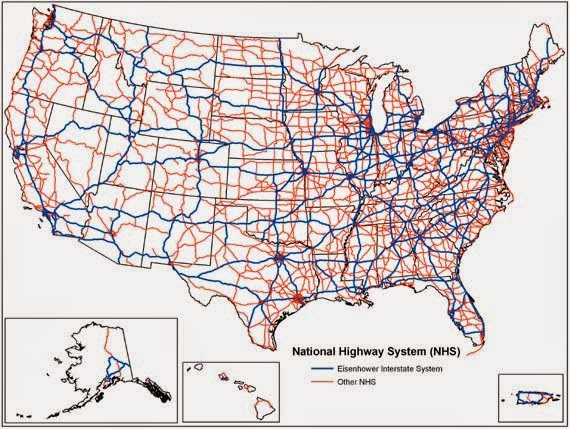
In the United States, debates about the meaning and ramifications of personal responsibility surround not only crime and punishment issues, but also public policy dealing with collective action problems, such as pollution, overpopulation, gun control, defense, law enforcement, and access to health care. These types of problems result from individual choices en masse, so that personal responsibility may be difficult to assign to any one individual. Yet, these problems would not exist unless all of those individuals choose to act they way they do. Collective action problems affect so many people, are so complex, and are so expensive, that a solution to them requires mass participation: many individuals each required to take part in solving the problem.

Yet solutions are often difficult to find because of the personal responsibility problem: how do we hold particular people responsible for solving a collective action problem when their individual choice is merely a ‘drop in the bucket’, so to speak? If personal responsibility is so narrowly conceived that one is only held responsible when there is a clear and direct link from the act in question to the entirely of the consequence, and they that they must have (mostly) understood the consequence of their action beforehand, than we must allow that no-one can be held responsible for most collective actions problems. But if we take a more robust view, that people can be held responsible for what they do and the consequences that flow from it, even if the consequences cannot be foreseen or intended, then we do have the right to call on the community to do what they can to fix the problem, be it through contributions of money or effort, through reparations, through accepting (just) punishment, or through other means.

In my ‘Brain’ essay, many of my arguments supporting a robust view of personal responsibility are consistent with a typically American conservative viewpoint, though some of my conclusions relating to particular public policies may differ. (For example, when it comes to criminal justice, I favor a reparative/restorative system over a punitive one, and restraint over zeal in enforcement of all but the most serious crimes, but those are topics for other essays.) When I apply the same arguments to collective action problems, however, the result is more consistent with a progressive approach to public policy as well as to morality.

A robust view of personal responsibility, I find, entails that individuals are morally obligated to contribute, through taxes or otherwise, to programs that preserve and promote the health, protection, and basic well-being of society as a whole. I argue this for two reasons: one, it is individual choices, be it in the aggregate, that create collective action problems (I address this issue in a past essay, in my example of the Dust Bowl crisis in mid-century United States, where the individual decisions of farmers to ‘get rich quick’ created a crisis for everyone, including those others who decided to farm more prudently and responsibly.) Therefore, members of a society should contribute to solutions or to make reparations, for the harms to others that result, directly or indirectly, as a result of their choices, Secondly, individuals, as well as society as a whole, often enjoy wealth, comfort, improved health, and other benefits that are derived from the reduced circumstances of others. A robust view of personal responsibility would also require that those who enjoy these benefits should pay their fair share for them when they have not adequately contributed for them otherwise (for example, in the marketplace).

Consider the issue of health care, and the debate over whether it should be publicly subsidized.

A typically American conservative position on this issue is that health care should be a free market commodity, because it should be a reward for honest work and its contribution to society. If one is personally responsible for their own actions, then if they do their fair share and work hard, they earn the right to access health care. The market is the mechanism, therefore, that limits the access to health care only to those people who have contributed to society through work. People who do not do their fair share, on the other had, should not get health care as a freebie, coercively paid for via taxation, by wage earners. If people feel like freely donating health care to the poor, fine and good, but they should not be forced to do so.

I sympathize with that position to a limited degree. I now work in the health care industry and see people who I have good reason to believe are gaming the system, quite often, in fact. (I address this issue in another recent essay.) If some people are cheating the system, I agree, they oftne are doing the wrong thing, but, I think, not necessarily. Consider this example: a pair of aging parents find their nest egg, carefully scrounged together through a lifetime of hard work, suddenly threatened by the wife’s recent diagnosis of breast cancer. These parents may be faced with this set of choices a) let the wife die without treatment, b) pay for the treatment, wiping out the life savings with which they would have paid for their retirement and the care of their children c) hide their assets to access free public health care assistance. These parents may feel justified making the third choice, since they feel that their primary moral duty is to save the life of their spouse and to care for their children, that their lifetime of hard work contributed enough to society to earn the moral right to this public assistance, and that they do little wrong gaming a system made corrupt and expensive by greed and political chicanery. I, for one, would find it difficult to condemn such a choice, and in some circumstances, may agree that it’s the most morally justifiable choice.

In my work in the medical office as well as in my years in the work force, I’ve seen far more examples of situations that bear a closer resemblance to the hypothetical situation I presented (closely inspired by a real life one) than to simple cheating out of greed or laziness. I work for a good doctor, who is the only local one in his specialty to see low-income patients on public health care assistance. (The reimbursement rates from many public health care assistance programs are very, very low, and physician’s offices have a hard time keeping their doors open at all if they accept many patients with that insurance.) Therefore, our office cares for many of the working poor as well as the suspected cheaters. Every day, I see elderly people who carry the signs of their past lifetime of hard work as well as people who currently work long, hard hours for little pay, whose health care is paid for through taxation because they can’t afford it otherwise. And I think: that’s how it should be.

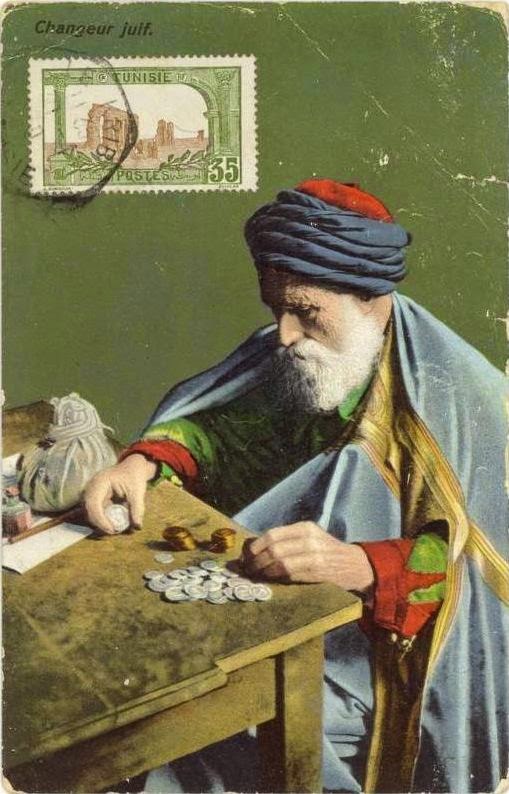
That’s because all of us enjoy the benefits that come from the hard work of so many low-income people. We get to eat plentiful, cheap food because other people toil long hours with little pay in fields, restaurants, and factories. We get to wear comfortable, well-made clothing and stuff our wardrobes to a degree that no-one but the wealthiest of aristocrats used to enjoy, again, because others work in miserable, boring, depressing conditions working practically for nothing. I live in Oakland’s Chinatown, where I am surrounded by the hardest-working people I’ve seen in my life, other than the (largely immigrant and children of immigrant) people I worked with in the food industry, and these people, too, receive pitiful remuneration for the vast contributions they make to your life and mine.

When you and I pay a few cents for an apple, or a few bucks for a shirt, or a couple hundred for a computer, we do not pay our fair share, to my mind. The market may have driven prices and wages down, but when we’ve purchased those things, we’ve only fulfilled our part of the bargain between the buyer and the seller. We have not, however, fulfilled our personal responsibility towards all those other people who made our wealth possible. We have paid for our own life of comparative wealth and ease in an exchange that buys a life of privation for another.

So when you and I buy that cheap apple, that cheap shirt, that cheap computer, our decision to do so creates an economic situation in which many other people earn poor wages. And those poor wages, in turn, mean that people can’t afford to buy health care, or indeed, enjoy those benefits of society that their work makes possible in the first place. In the long run, it’s our fault, even if indirectly, that other people can’t buy health care, because this situation arises as a consequence of our own choices, our own actions. And this is only one example in which individual actions cause collective action problems. Other examples are pollution, overpopulation, natural resource depletion, systematic racism, traffic jams…. The list goes on and on.

So here’s a question with which I would challenge those who don’t like to feel responsible, or to hold other people responsible, for such collective action problems, including so many American conservatives: why is it that you should be personally responsible for your economic well-being by choosing to do your part and work hard, but you should not be held personally responsible for the consequences of your choices in the marketplace for others who work hard? As an example we’ve already considered shows, we can follow the chain of consequences readily from our own market choices to their collective impact on the lives of others. People, out of self-interest, choose to pay less for food if they can, usually without questioning why it’s cheap. But for food to be cheap, it’s generally because wages are low (in combination with improved technology, which can increase efficiency; but sometimes, new technology means workers have to compete with it, again lowering wages). Individual choices to buy cheaper produce cause wages to be low: they benefit from the reduced circumstances of others. And healthcare, even in more efficient, less corrupt systems than ours, tends to be expensive, because of the high cost of the education of doctors and of research and development, and because it’s labor intensive (each doctor’s visit often requires a significant input of time to be effective), so low wage earners usually cannot afford adequate health care. Therefore, our personal decision to buy cheap produce causes many others not to be able to afford health care. Why, then, would we not be held to any level of responsibility for the consequences of our actions when it comes to access to health care?

We already accept the idea of personal responsibility for individual contributions to collective action problems in many other areas of life. In order to enjoy the legal right to drive, for example, we’re required to purchase driver’s insurance. That’s because our own decision to drive can have debilitating and fatal consequences for others, even if they are entirely accidental. Almost no-one intends to maim or kill another when getting behind the wheel, yet we accept that when we choose to drive, we are still personally responsible, in one way or another, for what happens as a consequence. We also accept that since we desire and enjoy such benefits and freedoms as the right to go our way unmolested by other people, to vote, to travel on public roads and bridges, and so on and so forth, we are responsible for contributing to those institutions that solve collective action problems, and contribute to the maintenance of the military, the police, infrastructure, legal system, and so forth, thorough our tax contributions and otherwise.

As intelligent social creatures, human beings have conceived and developed societies organized according to and supported by robust conceptions of personal responsibility, demonstrated by such human products as morality and law. Instead of operating primarily from a ‘me and mine’ outlook, the most successful and long-lasting, and I argue, the happiest persons and societies operate from a predominantly ‘us and ours’ mentality, with the ‘me and mine’ enjoying even greater benefits than pure self-interest could produce. (The earliest Christian communities adopted this influential philosophy and practice, with great success and to their great credit; consider the tale of Ananias, who, out of greed, did not contribute the same percentage as others towards the welfare of all. Contrast this with the later incarnations of the Church, which retained the rhetoric and abandoned the practice of equal personal responsibility for, and equals enjoyment of, the public good.)

In sum, a robust view of personal responsibility leads us to act more responsibly in our day to day actions and, in turn, to generally behave in such a way that has the best outcomes. We come to act as Immanuel Kant’s categorical imperative would have us do, to ‘Act only according to that maxim whereby you can, at the same time, will that it should become a universal law’. When each of us realizes that our day to day actions often have not only immediate and personal but wide-reaching consequences, our behavior changes. And when we wish that the consequences of our actions are beneficial or at the least not harmful, our behavior changes for the better, our imagination expands, and the world becomes a richer and safer place for us all.

Review: Farley’s East

I love to write essays, and I also have the tendency to be easily distracted by having all the comforts and hobbies of home surrounding me, as well as the tendency to justify laziness after a day at work. Therefore, to avoid stopping off at home, I’m often on the hunt to find a workspace, a great coffee-shop / cafe that’s more or less on my way from work to the hills for my early evening hike, a place that’s homey, friendly, reasonably priced, has tasty small meals and snacks, and has wi-fi. 

 
Farley’s East has just joined the list of my favorite such places. 
 
Who, What, Why, How: http://www.farleyscoffee.com
 
Where: 33 Grand Ave, Oakland, CA 94612
 
When: Mon – Fri 7:00 am – 9:00 pm Sat – Sun 8:00 am – 9:00 pm
 
Perhaps I’ll see you there!

Stop Pretending ‘The Law’ is Not Racist!


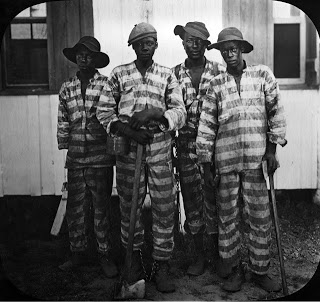
Victims of convict leasing, from an earlier era of selective law enforcement

Everybody’s talking these days about the killing of Michael Brown in Ferguson, Missouri. And the protests following the shooting. And the host of other recent killings and use of force against black people by police officers.

I’ve also heard many pundits, commentators, and counter-protesters (in support of the officer who shot Brown) say that all this controversy is pointless, unfounded, just plain wrong. The laws are not racist, they say. Neither are officers expressly told (most of the time) to target minorities. They also say that they themselves never have trouble with police officers as long as they cooperate and just do what the officer says, as they’re supposed to, which just goes to show that as long as you behave yourself, you have nothing to worry about.

As a generally ‘well-behaved’ (mostly so, but then again, I rarely got caught when I wasn’t) white woman who has never felt unfairly targeted by law enforcement, I say to this second group of people, if you are an adult yet you think the law is ‘color-blind’, either you systematically let your biases filter out too much of the available information out there, you live under a rock, or you’re lying. Or something like one of these.

Because I had never been unfairly targeted by police, I was mostly, blissfully unaware, until my very early adulthood, that such things were still going on. I thought this sort of behavior on the part of the police largely a relic of the past, of the Jim Crow and Civil Rights era that I became so fascinated by in my schoolgirl years (and remain so to this day). We all love hero stories, and I thought of Rosa Parks and Martin Luther King (and my favorite fictional hero, Atticus Finch) as among the greatest, ordinary people who stood up for the oppressed and the outcast, who triumphed against the tyrannical and the cruel, and most of all, the unjust: I always have been rather obsessed with issues of justice. I thought police had mostly changed their racist ways like most of us, and now usually did the right thing, especially because, of course, they make it their mission to stop those who don’t do the right thing.

My rather childish ignorance was first revealed to me when I witnessed my then boyfriend, a young Mexican man, pulled over by a police officer for no good reason at all.  Usually, if we were driving, we were driving together unmolested, but that day, I was following his car in mine because we had met up after work. A police car passed me after a stoplight and to my surprise, I found that his flashing lights and siren were intended for my boyfriend! We were not speeding, and it was daytime so car lights were not an issue… I could not think of a reason he would be pulled over. After the questioning ended and the cop had left, I asked my boyfriend what had happened. He admitted, embarrassed, that this happened to him all the time, it was just a regular part of his life. A young Mexican man in an old car must, necessarily, be up to no good, or if he wasn’t now, he must recently have been or was about to.

I was angry and shocked at the injustice of it all, and tried to imagine what it would feel like, and the effect it would have on my character, if I were regularly treated as a criminal, or a potential criminal, based entirely on what I look like, from the time I was young. I don’t think I could imagine, fully, what it would truly be like, but it seems a reasonable expectation that many people’s moral characters could be damaged from an early age, if many of the adults around them, especially those who set themselves up as authorities and moral leaders, act so unjustly. These young people are taught that ‘the law’ is used to protect others but punish them, that the police are not there to protect them, and that justice has a different meaning depending on what color you are, or worse, that it doesn’t really exist.

As I’ve gone through life, as I’ve had friends, co-workers, and fellow students of many races and ethnicities, as I have followed the news, and have done some study and research on matters of criminal justice, I’ve encountered countless instances of minorities unfairly and systematically targeted by law enforcement. I have a dear friend who used to travel though Colorado and Utah to go visit her family, who had to allow time for the inevitable police stop or two on each trip, no matter how carefully she drove. Yes, as you may have guessed, my friend is black. (My brother regularly travels a route in more or less the same geographical region, and has never had that problem).

These related issues, of racial profiling and selective law enforcement, has bothered me so long that when I had the opportunity a few years ago to take a criminal justice class, I jumped at the chance. I chose this subject  as the topic of my final paper, and my research uncovered a wealth of information on the subject. Study after study, public record after public record, revealed that minorities are pulled over, stopped and frisked, or arrested even for incredibly minor infractions that I had no idea that were ever enforced, at disproportionately high rates, commonly double or more than the rate of white people, in jurisdiction after jurisdiction, all over the United States. And even when minorities and whites are charged with the same or similar crimes, they get very different treatment: whites are shown leniency far, far more often than anyone else: they are, on average, sentenced to fewer years in prison or are routed to treatment instead; they are sent to state courts instead of federal courts. Minorities generally get the book thrown at them.

And in case you’re one of those who think that the law is color-blind, no, the objection you might make, that minorities commit more of the crimes so of course they’re targeted and go to jail more, is not valid. This vast accumulation of evidence that minorities are disproportionately targeted holds true for all kinds of crimes, the ones that whites commit at the same or higher rates, as well as ones that different minority groups commit at higher rates. Especially drug crimes: while whites commit most drug crimes at the same or higher rates than other groups, they are arrested far less, and if caught, don’t tend to be punished nearly as often.

Much of this information, many of these stories, have been featured in news story after news story over the years. This includes the seemingly ever-increasing recent stories in which black people are shot and/or killed for trying to get into their own house they locked themselves out of, or for being mentally ill and having a breakdown in public, or for selling single cigarettes on a street corner, or for having a fight with a bullying wannabe self-appointed ‘lawman’ on his way home. Have these pundits and ‘color-blind’ pollyannas been sticking their fingers in their ears and shouting ‘nah-nah-nah-nah-nah, it’s not happening!’ as black and brown people are being shot, beaten, and arrested, by the score, for the kinds of mistakes and indiscretions that most of us have engaged in at one time or another without permanent repercussion, while minorities are being caged at a rate that puts those old Jim Crow regions to shame?

I would say to these people, especially parents: imagine what would have happened to you, and what the life chances would be for your kids, if you and they were stopped and frisked, pulled over and your car searched, constantly throughout your life. If all those times you were a little naughty and had a drink while underage or too soon before you drove, or you or your friends had a little weed or coke in your car or pocket, or had sassed a cop when you were immature and raging with hormones and gleeful with youthful irresponsibility, or committed a petty theft…. Imagine that instead of getting away with it at the time, as most of us have, you would almost surely be caught and suffer permanent consequences (jail time, a criminal record, or worse) because everywhere you go, you are likely to be followed around by someone who assumes you probably belong in jail because of what you look like, has the power to throw you in there, and in extreme cases, even beat, choke, or shoot you, with impunity.

I and most of the white people that I, and I expect that you, know would all have been arrested or jailed at least once if the laws were enforced equally for everyone. But those of us lucky enough to go through life untargeted probably have forgotten most of the stupid things we’ve done because we haven’t had to suffer permanent harm for it; instead, we grew up, and had the chance to live a decent life, get an education and good housing, and get a decent job because we don’t have a criminal record. I fear for my nephew when I remember that he has to grow up as a young black man in this society, that he has far less wiggle room to make the mistakes that most of us make as we grow up and struggle through life. I got away, and still do, with my indiscretions and mistakes, easily, because I’m not targeted. That is not likely to be the case for my nephew.

Give that a ponder, put yourself in other’s shoes. If you are honest, I think you’ll admit that we still live in a racist, unjust, and all to much un-free society, especially for those of us with darker skin. Stop pretending now, if you are doing so, that racism is over just because the letter of the law is no longer racist. As long as law enforcement is racist, the reforms of the Civil Rights era have very limited practical meaning, and the struggles of our great social reformers continue to be, largely, in vain.

But My Brain Made Me Do It!

Brain illustration from The Principles and Practice of Medicine...' by W Osler, 1904, public domain via Wikimedia CommonsThere’s a common idea which leads many people (myself included) to instinctively excuse our own or others’ less-than-desirable behavior because we were under the sway, so to speak, of one or another mental state at the time. This is illustrated especially clearly in our justice system, where people are routinely given more lenient sentences, given the influence of strong emotion or of compromised mental health at the time the crime was committed. “The Twinkie Defense” is a(n) (in)famous example of the exculpatory power we give such mental states, where Dan White claimed that his responsibility for the murder of two people was mitigated by his depression, which in turn was manifested in and worsened by his addiction to junk food. We routinely consider ourselves and others less responsible for our wrong actions if we’ve suffered abuse suffered as children, or because we were drunk or high at the time, or we were ‘overcome’ with anger or jealousy, and so on.
But when we think about it more carefully, there’s something a little strange about excusing ourselves and others in this way for doing wrong. What we’re saying is, in a nutshell, “But my brain made me do it!”

It’s strange because no matter what we do, our brains always ‘made me do it’.

Perhaps these kinds of excuses are a relic of the ‘ghost in the machine’ variety of traditional belief, in which we are a kind of meat-machine body ‘possessed’ by a soul. In that view, the strong emotion or mental illness, then, could be yet another kind of possession which overrides the rational and moral soul.

Yet, even if one believes that sort of explanation, that’s not a very satisfying justification of why we would accept some mental states as exculpatory and not others. Why does extreme anger, such as that of a wronged lover or a frustrated driver, excuse or partially excuse an attack, but lust does not? Both are powerful emotions that all too often promote the worst behavior. Why is jealousy so often considered an acceptable excuse, but greed is not? And the ramifications of this view go beyond relieving ourselves from the burden of responsibility: it means we can’t take or give credit for our good actions, for the most part. Emotions and states of mental health inspire and make us capable of doing those things, too, in just the same way. But we generally don’t tend to have the same sort of intuitions or apply the same sort of reasoning to credit as we do to blame.

So whatever theory or philosophy of mind we ascribe to, we need to explain why we are so inconsistent on this issue. Of course, much of it is explained in cultural terms: in an honor-driven culture, for example, anger and jealousy result as an affront to one’s honor, so to feel those emotions is just and right for an honorable person. A crime committed under the sway of these emotions, then, is mitigated by the justness and rightness of the feelings, even if they inspired wrong action. On the other hand, greed and lust are not considered a just or right emotional reaction in any case in a culture underpinned by fairness, equality, and individual rights; therefore, any crime committed under their influence would, of course, be contrary to those values and not be mitigated

Yet culturally-derived explanations, of course, aren’t the same as a justification. They just explain why people in different times and places happen to react and feel the way they do; they don’t offer a justification of why anyone should accept one emotional state and not another as mitigating factors, nor do they explain why we should think some emotions somehow make one less responsible or able to control their actions than other emotions do.

The latter, of course, is an empirical question: a neuroscientist may be able to detect that the processes that produce some emotions make it impossible or at least highly unlikely that a person can engage in rational thought, or ‘put on the brakes’, so to speak, when certain provocations occur. But until we find out otherwise, it appears evident, from the fact that most people are generally cooperative and don’t purposefully harm one another, that adult people above a certain basic intelligence level are generally capable of forming good and responsible habits, which makes it unlikely that they would react wrongly or criminally when provoked or titillated. This is especially true when the people involved in their upbringing, and the society in which they live, expect good behavior from all, and hold people responsible for bad behavior.

This is true whether or not behaving in the right way is easy. Many of the excuses offered in defense of people who do wrong sound, to me, simply as evidence that it was harder for the person to behave well than to behave badly at the time. Yet mores and laws don’t exist because it’s always easy for people to get along, respect one another, to help one another and avoid harm. They exist because it’s often hard to be a good person and a good citizen. So many of these excuses, then, do much to illustrate why mores and laws need to exist, and not so much to demonstrate why the offender was less responsible for their own behavior at the time.

The reasons that we can hold people responsible for their own actions, whether or not they occurred in an emotionally stormy moment, are the same reasons that people can be admired and given credit for them. The acts and thoughts which we judge praiseworthy as well as blameworthy are those which the person could conceivably have chosen to do otherwise, even if we grant it’s unlikely that they would have chosen otherwise, and that the person did in the capacity of themself. Personal responsibility is a burden, but even more so, it’s an honor. It means that what you do is you, in a very important sense, since the mind is the author and seat of consciousness, and all of its activity is a form of doing. We, in the sense of being a person, a self, are what our brain does.

The brain is not like a pre-determined computer program; within certain parameters, it can be molded and formed, by influences from others but even more so by our own choices, which over time form habits. So it’s up to each one of us to use our judgments, surround ourselves with good influences, and to form good habits: in any given day, in any given life, each person is faced with myriad options in thought and behavior. For those important matters, we stop and reflect, though there are simply too many to judge carefully for each one; most of the time, it’s best to purposely form good habits so that in those countless reactions we have and choices we make, we’ll tend, more easily, to go for the better rather than the worse.

There are, of course, special circumstances to consider in matters of wrongdoing or crime committed by the young, or by a person with a debilitating mental illness, or a person mature in age with undeveloped mental capacities. All of these involve some diminished or absent capacity for exercising judgment in making a choice, and the degree of consciousness the person possesses. Young people, for example, lack the structures of the physically mature brain which makes it capable of making considered decisions and of putting the brakes on powerful-emotion-driven impulses. The prefrontal cortex, where much of the capacity to exercise self-control resides, doesn’t fully develop until after puberty. It seems, then, to make sense that we generally don’t hold the young as responsible for their actions in the way we do adults. Yet, with all we know about how the brain works, I find it astonishing and often horrifying that in the United States we often try the young as adults, teens and even pre-teens, when they commit particularly heinous crimes. I’d argue not only are they incapable of controlling their emotions and of reasoning as fully as adults are and therefore shouldn’t be considered responsible in the same way, but the very heinousness of the crime is evidence of the lack of maturity, of the ability to make rational judgments, which forms the basis of any coherent concept of personal responsibility. The trying of youths as adults in the courts reveal that all too many people haven’t given enough thought to what personal responsibility really means, and don’t have the proper respect for it.

Since it’s always your brain that makes you do anything, culpability should be assessed according to whether or not your brain is capable of making a different choice, again, even if it’s unlikely you might have done so. That even holds true even in many cases of so-called ‘temporary insanity’ or ‘acting under the influence’. Generally, the brain of an adult person who maintains their own survival and enjoys the liberty of an independent adult is also functioning at a level of responsibility. For example, if you run someone down in your car while drunk or texting on your phone, you are probably also a person capable of arranging for a taxi to take you home from the bar or refusing that last drink, or are aware of the huge amount of very widely published evidence we now have that texting is strongly correlated with auto accidents.

In sum: the issue of personal responsibility should not hinge on whether or not it was easy for us to make one choice, to behave one way instead of another, but on whether we ourselves, always the product of a living brain, are capable of doing otherwise.

Ordinary Philosophy and its Traveling Philosophy / History of Ideas series is a labor of love and ad-free, entirely supported by patrons and readers like you. Please offer your support today!

*This piece, originally published Aug. 6, 2014, was edited lightly on Aug. 5, 2016 for clarity and flow

Great Thing About Family Is….

I belong to a large family. Like, very large. On my mom’s side, I am one among a pool of 18 first cousins, a number not too out of the ordinary, but last I heard, I am one of a whopping 70 or so cousins on my dad’s side (If that number is out of date, dear relation who may be reading this, let me know and I’ll update!) I have twenty-one (living) aunts and uncles, not including my dad and mom, and when it comes to my siblings’ and my cousins’ kids, their spouses, the great aunts and uncles and their families… you can imagine the sheer numbers of people I count among my relations.

And yet, I actually do know a substantial majority of them, though not necessarily well. But a great many of them I do know well.

Here’s another thing: I am very different than many, probably even most, members of my family, in temperament, habits, and beliefs, as is the case with most extended families, I expect. I even find many of the beliefs and opinions held by some of my relations distasteful or sometimes even downright abhorrent, as I suspect they do mine.

Regardless of this, I love and respect almost all of them, and I really like to spend time with them when I can.

People sometimes find it necessary to distance themselves from family for their own protection, to preserve their mental health and peace of mind, for example, or because their family members’s beliefs cause them to reject their atheist, or gay, or interracially-married, or religiously converted, or otherwise non-conformist relations. Some people abuse their family members, too, sometimes in most horrific ways. Every situation is different, and of course, many people really should sever ties when the relationships they have to family is destructive.

But I think it’s so important to preserve family relations if you can, because what they have to offer can be of immeasurable value.

First, there’s the wealth of love and support that comes with family. You acquire a posse of friends and allies just through the simple fact of being born. And as you go through life, you grow together with them, and get to share in their history, in a way unique from any other kind of relationship. A member of your family can understand you in a particular way that few others can, by virtue of each of you accompanying another as each grow and change. You, in turn, can have that particularly intimate sort of insight into what makes them tick.

But secondly, and I think at least as importantly, you have the opportunity to keep your mind that much more able to imagine and to understand other ways of seeing the world. For example, here in the Bay Area where I’ve made my home for well over a decade now, I live in a liberal, artsy, worldly, well-read, foodie, moderately out-doorsy, rather cosmopolitan ‘bubble’. My friends would all be readily characterized as such, and I love these things about them, as we share so many points of view in common, and enjoy doing and talking about the same sorts of things.

But there are other ways of experiencing the world,  and as we share our city, state, country, and planet, and therefore in many ways our fate with very different kinds of people, it’s imperative that we all be able to talk to each other. But how to do overcome these often vast differences, and bridge that gap, in order to be able to understand how others think? This problem is illustrated most strikingly in our public discourse, where in the media and on internet forums, citizens, pundits, and politicians shout past each other, and instead of convincing their ideological opponents, almost always just end up ‘singing to the choir’.

And that’s where the bonds of family loyalty and shared history can come in, to help you increase your patience and expand your understanding. Family is one of the few spheres where very different people can come together in mutual love and respect, overcoming their differences in order to preserve something even more important than simply agreeing with one another about everything.

I consider my dad, for example, the most important moral influence in my life, though the few times we’ve specifically talked about the issue, we find we have very different accounts about the nature and origin of morality. Yet, I find he embodies that which morality ultimately is for, and how it molds a genuinely, habitually virtuous person that I would recommend everyone emulate and admire.

Another example: one of my uncles, dear that he is, calls me regularly in an effort to convert me back to the Catholic religion of my upbringing. (He was my confirmation sponsor, a Catholic rite of passage somewhat like a Bat Mitzvah, and he takes it very seriously, though I’ve assured him time and again that I consider him released from that obligation: I was far too young, and lacked the relevant information, to make such a vow of fealty to any religion.) We end up having many frank, lengthy discussions and debates on all manner of religious, philosophical, and political topics, and rarely agree on anything beyond the most basic moral principles and standards of reason. But we end every conversation, no matter how heated it had gotten, on the friendliest of terms, and say good-bye amidst good-humored banter.

Most of the time, it feels as if there’s just not enough time and energy to go around spending a lot of time with people that don’t share many of your interests and beliefs. But without family, it’s unlikely that many of us would have the opportunity to really get to know people that are substantially different than we are. I’ve spent countless happy and enriching hours in friendly companionship eating, hiking, swimming, playing sports and games, and just chatting with relatives with whom I have few things even common, who disagree with me philosophically, politically, and aesthetically about so many things, and I with them. But ultimately, none of that mattered at the time: we were sharing time as fellow beings sharing a kind of close human relationship that could transcend all of that.

Funnily enough, that same family loyalty that historically has led so so much tribalism and in-group, insular thinking, can also be among the most important avenues for opening us up to a more tolerant, cosmopolitan mindset, so long as we have family that are open to maintaining a system of love and support while being very different in habit and thought. So if you can, stay close to family, keep the lines of communication open. You may very well become a much bigger person as a result.

My family has done so much for me in that line, even if unintentionally, and for that, among so many other things, I thank them, and owe them a great debt.

Our Kids Don’t Want Our Legacy of Bigotry, Thank You Very Much

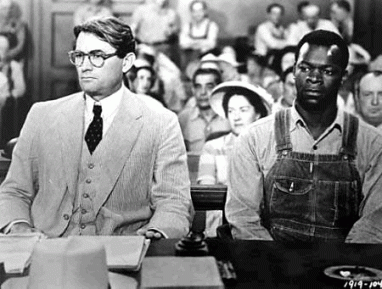
Atticus Finch defends Tom Robinson from false rape charges in To Kill a Mockingbird

I just finished reading Michelle Alexander’s The New Jim Crow: Mass Incarceration in the Age of Colorblindness. It made me good and mad all over again.

I had been reading it a week or so ago when I came across a Facebook post of a young man (I’d guess about 15 years old) who started making videos, on his cell phone, of salespeople following him around in stores. You can make a pretty good guess what color his skin is. In a temper, I made a comment on that post, perhaps an incautious one, in that it could have been interpreted as too broadly accusatory. I called out anyone who was reading it, who might be engaged in that sort of behavior, to just stop it!

The thing is, I could be a target of my own comments. Even though I don’t remember ever following anyone around a store because of their skin color, I know my thoughts and actions are sometimes influenced by unjustly negative biases too, and I’ve caught myself, from time to time, automatically having low expectations of people, based on their appearance, before I’ve spoken with them or had a chance even to observe how they actually behave.

But that makes me mad too. I remember when I was very small, when I first became aware of (often subtly) bigoted comments and attitudes, in some of the grown-ups around me, be it towards people of another race, religion, sex, or sexuality. There was a black family next door, for example, and we played and chatted with those kids blissfully unaware of race issues. Over time, I realized that there was some sort of divide, some awkwardness, between ‘my’ people and ‘their’ people. I won’t say who, but I have quite a few relatives and family friends who are quite bigoted, and many more who are but less so. It made me uncomfortable, and the way the adults answered my questions often sounded dishonest, and were unsatisfying. That may be why, when I was in sixth and seventh grade especially, I was obsessed with the civil rights movement and the whole issues of American racism. I’m sure I checked out every single book in our school library on the subject, and I remember when I was assigned to read ‘To Kill A Mockingbird’ a few years later, I had already read it several times. It’s still one of my favorite books.

So why am I mad at other people when I, too, catch myself in biased thinking? I’m mad on behalf of myself and every single other young person who inherited that unwanted baggage from each previous generation. And I’m willing to bet that, all things being equal, those adults who passed on those bigoted attitudes wouldn’t have chosen to inherit them either, since they are good in other ways.

Although I’m so conscious of that bias that creeps in, I’ll often adopt an exaggeratedly non-bigoted attitude (even if a person of color is behaving suspiciously or badly, I’ll sometimes pretend they’re not, for example), and for all of us who feel a little bigoted against our own wills and fight against it, young people pick up on subtle cues with astonishing insight. They pick up on those awkwardnesses, those little changes in the way you hold yourself, in the way you think and speak, in the presence of different people, and they all too often internalize it, adopting those attitudes themselves over time, even becoming more racist themselves in an attempt to justify those adopted instincts.

I feel that for every one of these kids who inherit racism, their innocence has been violated: not the kind of innocence that, I think, is often just idealized ignorance (like that regarding sex), but the good kind, where people are just people and they’re all equal candidates for companions and playmates. Little kids treat each other more or less the same when it comes to color, once they’ve asked those funny getting-to-know-you questions that, to adult ears, sound racist, though they reflect only honest curiosity (hence the lack of self-consciousness). The racial divide happen later, when the awkwardness creeps in, as you grow and realize that your very thoughts have become tainted with the quality of injustice that is bigotry. In these subtle little ways, people pass on those old nasty habits of thought and behavior, robbing the next generation of that kind of inner peace that justice brings, and of so many opportunities to have a wider circle of friends, companions, and allies.

That’s how I remember it happening.

Going back to the teen and his cell phone videos: while I felt defensive on his behalf, I was also disturbed that he called one of the women following him around ‘bitch’. Then I felt doubly sorry about how this kid is being betrayed: not only are adults around him behaving badly in treating him preemptively, and therefore unjustly, as a criminal, but he’s been inculcated with at least some degree of sexism already, in that he’s comfortable with calling women ‘bitch’. An epithet on his part would be warranted, I grant, but ‘bitch’? That’s as sexist as those women following him are racist.

In every way, as with the one before, and those before that, the older generation is letting this kid down, as we do all other kids we’re subjecting to our bad example.

But I’m hopeful. I think the internet, even as it’s making our kids more sophisticated and worldly-wise than we might be comfortable with, are also bringing kids in constant contact with others of all races and cultural backgrounds, and they’re communicating freely with them clear of adult interference. They’re learning that others, whose bodily appearance may be different, have the same sort of thoughts and emotions that they do, just as we did on the playground. Now, however, the adults are not present to infuse those interactions with their racism, purposefully or not. Mr. Barack Obama was right, when he observed of his daughters and their friends ‘…when I talk to Malia and Sasha and I listen to their friends and I see them interact, they’re better than we are. They’re better than we were on those issues.’

Kids these days: they’re becoming cosmopolitan, in spite of all of those adults around them who justify their own bigotry by trying, unconsciously or not, to pass it on to their kids. Fortunately for the kids, I don’t think that’ll work this time around.


Money and Deservingness

A little while ago, I took part in a discussion about how medical care is paid for. It took a negative turn, as you would expect, since American health care is the world’s most expensive and the medical insurance field is highly dysfunctional. But the complaints were aimed especially at patients, since a couple of people I was talking to were jaded by observing apparent Medi-Cal fraud too many times over the years

I’ve been working in a medical office for nearly a year now, my first job in the medical field, and for the first time am getting a close look at what goes on behind the scenes at a doctor’s office: how many things can go wrong with skin (it’s a dermatologist’s office), how much patients are cheered and made to feel better by the simple act of talking with someone who can perhaps heal them, the complexities of billing and navigating the disparate requirements of insurance companies, the difficulties of receiving adequate medical care when one is disabled or poor, and so on.

The limits on what one can earn while receiving Medi-Cal, a free (to the patient, of course) state-run health care, are quite low, set at only 138% of the federal poverty level. For a state like California, with its relatively high cost of living, those limits are very much a low-ball estimate of what one can actually live on in an average California city. The qualifying limit on the yearly wage for a household of two, for example, is roughly the same as an average year’s rent alone.

Anyway, in the aforementioned conversation, anecdotes were passed around of people who present with Medi-Cal insurance, yet own expensive smartphones (data plans are not cheap, either!), nice clothes, talk about their vacations and nice cars, have tattoos and elaborate salon hairdos, and so on. This, of course, raised the question: how could they afford these things if they’re actually poor enough to qualify for Medi-Cal? Putting aside obvious objections, that they may have purchased those things before losing their jobs or becoming disabled, or that their family and friends supply the ‘luxuries’ as gifts, etc, the implication was that applying for taxpayer-funded health care should be an option of last resort, only after the smartphone is returned and the data contract expired, the nice clothes worn out, the valuable car sold.

One person proposed this solution: those too poor to afford health care insurance and other necessities of life should be given a one-time check. If they choose fritter it away and don’t spend it wisely, let them suffer the consequences. People who are responsible enough to have the money to pay for health care when they need it, should be the ones who get it; the rest are on their own.

I understand the frustration of those fellow conversationalists. We all know people who chronically don’t (can’t?) ‘keep it together’: they don’t (can’t?) get and keep decent jobs; they squander their money on junk food and useless luxuries and cheap trendy things that don’t last more than a season; they date or marry or make babies with ‘losers’ who drain their finances and don’t contribute; they don’t have a savings account for emergencies, and so on. Those habits are maddening, and don’t endear the possessor to those around them. Many of those habits drive their family and friends crazy, and arouse much resentment in others who end up paying the costs.

But I never hear the opposite argument: some people who have the money to pay shouldn’t get the healthcare resources. We know that some people who have money don’t contribute anything of value to society, and even do a lot of harm. There are some who make their money polluting or from sweatshop labor; there are some who are the lazy, spoiled, entitled children of wealthy parents; there are some who defraud their customers or knowingly sell toxic drugs to addicts; and so on. Why should they get to use up valuable, finite healthcare resources, then, if they, too, have lousy habits and are a drain or a bane to society?

So why the discrepancy? Does having money make one, generally, more deserving somehow? I think the discrepancy in our attitudes toward who should get health care, and who should not, reveal what most of us in the United States implicitly, unquestioningly accept, as a core value of American culture. It’s not so much that might makes right. Cash does. If you have the money to pay for something, you not only should get it, you deserve to get it. Period.

It’s not hard to see why we assume that this is so. We are a capitalist society, founded on the values of our country’s Calivinist founders. Money is the reward for our labor, and a sure sign, described as such in earliest Biblical times, of God’s approval. To accept money-as-deservingness as a core value is to encourage hard work, thrift, and innovation. Money is the surest way that a capitalist society automatically rewards its most productive, contributive members; obviously, those who work hard deserve the most money.

And very often, this is the case: doctors and other healthcare professionals, leaders of industry, civil-rights and defense lawyers as well as prosecutors, scientists, judges, professors and leading public intellectuals, and so on, do vastly important work, and they are, justly, well rewarded.

But wait a minute. How about those examples we just considered, of people who have money that don’t work hard or don’t contribute? There are myriad exceptions to the rule that the most deserving get the most money. A money-centric society also encourages theft, cheating, lying, fraud, ‘let-the-buyer-beware’ selling tactics… the list goes on and on.

And how about all those people we know whose work is among the hardest and most contributive, but who don’t make much money? In our country as in much of the world, for example, we are awash in a wealth of ready accessible, super cheap, delicious, quality food, such as the world has never seen before. That’s largely because masses of people work for subsistence wages, often in harsh conditions, for most of their waking hours, for years if not all of their life. In fact, the health and wealth of our society absolutely depend on these people’s labor, since without it, we are all impoverished, and would have little time and energy to expend in innovation, the arts, all the best things society a society produces, without a steady, high quality food supply.

But of course, the wages of field workers are not mostly determined by deservingness in accordance with the importance or value of the work done or the contribution made, and neither are the wages of most people. Wages are determined by supply and demand, or by how easy it is to replace one worker with another. Laboring in a field requires stamina and the will to work, but not education or highly skilled work experience. There are a seemingly endless supply of people who are willing to work in the fields for low wages in order to escape even worse living conditions or starvation, or increase the chances of success in their children’s future. The same conditions determine wages for myriad other areas of work, such as factories, restaurants, in-home and facility care for children and the elderly, and so on. And of course, there are those who did valuable work all their lives, until advances in technology rendered a lifetime of experience and skill useless. The stenographer, the postal worker, the journalist, the machinist, the autoworker, are seeing their jobs replaced by robots, computers, pundits, and overseas low-paid workers, and they are left middle-aged, suddenly unemployable, with large bills and children still demanding they make decent salaries, to start all over again in a job market that doesn’t need them anymore, with depressed wages for the entry-level work they must now accept when and if they can get it.

In contrast, there are those whose work is in demand because the product of their work is desirable, such as luxury goods, but the people who produce them are in short supply. Designers and developers of video games and movies, including violent and misogynistic ones, can make a great deal of money. Same goes for high-end fashion designers, CEOs of pharmaceutical companies, speculative bankers, plastic surgeons, lobbyists, and so on. The product of these people’s work range from the most beneficial, beautiful, and life-enhancing, to the most useless, harmful, and ugly; either way, the work they do can be highly lucrative, since their work is in high demand.

As we can see, the value of money-as-deservingness may originate from some of our best instincts and desires, such as justice in compensation, the liberty to pursue our own goals, and the drive to better the lives of ourselves and our children. But in the real world, things don’t play out that way, not by a long shot. The cynic, the cheat, the liar, the predator, is all too often more adept at making money than the honest, hard worker. The possession of money is not a reliable reflection of character, nor of the actual value of one’s contribution to society.

So as we’ve just seen, money-as-deservingness is deeply problematic at best, and nearly useless at worst. Money is a tool, nothing more, and the fickleness and vaguaries of the market, not worthiness of the work done, mostly determines who get the most.

So to return to the example we opened with: what conclusions should we have reached in our conversation about health care and who should have access to it?

It’s hard to say, exactly. It seems that collective action problems (the tragedy of the commons, for example) are part-and-parcel of every real-world society, and capitalism is one way around them, as it’s an (ideally) impartial, and therefore fair, way of allocating resources. This may solve many efficiency problems, but to my mind, it doesn’t solve a far too many other, even more important problems, including those that arise from our concern with justice, human flourishing, dignity, the value we place on individual human lives, and so on.

And we haven’t even considered the dilemma of how we are to care for people who are not ‘marketable’: constituted in such a way that they can’t contribute in the ways the market rewards: they don’t have the health, mental capacity, or perceived attractiveness that make them likely to get a decent job, even if they are able to try. Do we return to a society that depends only on elective charities to care for them, reneging on the commitment we’ve made over the years to take their care on as a collective responsibility? Remember, public assistance programs arose precisely because elective charities weren’t doing the job: if they were, there would have been no-one to need public assistance. Do we return to a eugenics-based belief system, where only the ‘fit’ deserve to survive? But this ignores that which makes human beings simultaneously the most intelligent, capable, and successful species: our highly developed social skills, in which we cooperate, pool our resources, and build on on the work and ideas of others to invent language, technology, and culture such as the world had never seen or likely will again if we eventually go the way of the dinosaurs. If we undermine our own moral sense and hard-heartedly ignore and dispose of the ‘unfit’, we blunt our moral sense and head down the path of mutually assured destruction, where it takes more and more qualifications to remain in the category of the ‘fit’. We’ve gone down that slippery slope before, have already caught a glimpse of such a dystopia in mid-century Europe.

My proposed solution? Re-classify and institute healthcare as the same sort of infrastructure as our system of roads and bridges, the military, the water supply, food-safety administration, our currency, and so forth, as all of these are basic necessities of life, communication, and trade. Collective action problems always have and always will exist, in the free market as well as in public welfare systems, and to give healthcare over to the vaguaries of the free market as if it’s an elective luxury, is a failure of our society’s commitment to the value of the life and liberty of each individual person. Our free-market healthcare system, which leaves so many without the care they need, is not a solution, it’s the result of a lack of political will and imagination, and a moral disgrace to boot.

*****************************************************************************

Sources and inspiration:

Ariely, Dan. Multiple works on behavioral economics, including his TED talks, lectures, and articles.
http://danariely.com/

Heath, Joseph. Economics Without Illusions, 2010.
http://books.google.com/books/about/Economics_Without_Illusions.html?id=4V8cvQo1Dw8C

Free Will and the Self

Free will and the self. What are they? While they are the two most important phenomena to each and every one of us, they’re notoriously hard to describe. Of course, we ‘know’ what they are: respectively, they are the experience, the feeling, of being in control of our own actions, of our thoughts and behaviors, and of having an identity and a personality that exists over time. Without them, our lives seem pointless: if we have no free will, then we are mere automatons, and we can take no credit and no responsibility for anything we do. If we have no self, then there is no we, no ‘I’, at all.

Experiments and scholarship by neuroscientists, biologists, psychologists, and others have revealed some starling things about the workings of the brain and how human beings think, behave, and make decisions. The field of neuroscience has grown by leaps and bounds in the past few decades since the advent of technologies that allow us to observe the living brain at work, though we’ve been learning much about the brain over the last few centuries by observing the results of damage to its various parts. These results have, in turn, thrown traditional accounts of the self and free will into question.

Many have gone so far as to say that since we’ve discovered that our actions result from the cause-and-effect processes of a physical brain, then we have no free will: our actions and all our thoughts are determined by the cause-and-effect laws of nature. And since we’ve discovered that the sense of self arises from the confluence of the workings of the parts of the brain, and damage or changes to those parts can cause radical changes to our personalities and the ways we feel about the world and ourselves, that the self is an illusion too.

Yet, how can free will and the self not exist when we experience them throughout our lives? Since we can talk about them to one another, they must exist in some sense, at least. And it’s not that they exist in the way that fictional characters in a story exist, for example, or other artificial creations. We experience these phenomena intimately, from the time we attain consciousness early in life, until the time our brains are so aged or damaged that we are conscious no longer. The concepts of free will and the self are ubiquitous in our language, our culture, the very way we think. Read this paragraph again, review all the thoughts you’ve had in the last hour (and ever had, in fact) and you’ll find that the concepts of ‘I’, ‘you’, ‘we’ (distinct selves in the world), combined with the concept of some action or thought purposely performed by one’s self, are a constant theme. In fact, almost everything we talk and think about would be incoherent without these concepts, and all the purposes that drive us would disappear and render all we do meaningless.

So what gives? How do modern discoveries about the workings of the brain jibe with traditional concepts of free will and the self?

It appears the confusion results from the way we use the terms. There are actually two things we’re referring to. One is the actual experience of the phenomena we call ‘the self’ and ‘free will’. The other is how we account for them, how we define them and explain how they work.

Consider what we mean by other terms, such as ‘disease’. At one time or another, we had various explanations as to what these things are, and how they are caused. One popular explanation that convinced people for hundreds of years: disease is the result of the imbalance of the four humours of the body: blood, black and yellow bile, and phlegm. A physician’s job is to restore the balance and so bring about cure. Other explanations are vitalist (life and health are the result of the interaction between some sort of non-physical spiritual ‘force’ or ‘energy’ and a physical body), such as chiropractic and traditional Chinese medicine. Disease is cause by some sort of disruption in the body, and a physician’s job is to correct the alignment and communication channels of the parts of the body so that the vital force can flow freely and restore health. And the most pervasive and popular explanation of disease throughout human history, of course, is that it’s caused by the vengeance of an angry god or the maleficence of evil spirits (witch-burnings, anyone?).

Over time, human beings invented and developed the scientific method pioneered by Francis Bacon, and began to more carefully examine the correlations of disease symptoms with the circumstances in which they occurred (outbreaks of cholera mapped so that the epidemic was revealed to center on a polluted source of drinking water in 1830’s London; the correlation of damage to a particular parts of the brain to the symptoms of brain damaged patients; the dissection of corpses, comparing diseased organs to healthy ones). With the discoveries of the physical causes of disease, by pathogens and by damage to parts of the body, effective cures were finally able to be developed.

Given that the explanations for the origins of disease are based on the understanding that they’re natural, the result of physical processes, and traditional explanations, does that mean that disease can no longer be said to exist? Does that mean we have to come up with an entirely new terminology? I don’t think it does. The term ‘disease’ refers to instances of the body suffering in some way, not functioning as a healthy body does. What we do when we are confronted with the phenomenon of disease is the same as it ever was: we seek to avoid it, we detest being afflicted by it and seeing others afflicted by it, we seek to understand its causes, and we seek to cure it.

Similarly, the denial of the existence of free will and the self is based on the misguided assumption that understanding the inner workings of a thing, in a way incompatible with traditional explanations, is to deny that the phenomena exist at all. To understand that the mind is the product of a physical brain obeying the laws of nature rather than a sort of spirit or soul inhabiting a machine-body is not to say the mind doesn’t exist. The experience of free will and the self is the same either way, and whether what makes the ‘I’ an ‘I’ is better explained naturally or supernaturally makes no difference. We are still agents, it’s still what’s going on in our brains that cause everything we do, and we still make choices, and it’s still ‘we’ that make them.

In sum, discovering how the phenomena we experience that we’ve dubbed ‘free will’ and the ‘self’ really work doesn’t mean that they don’t exist; it just means we understand more about them now. And to me, as to other lovers of knowledge and understanding, that’s a good thing.

* Also published at Darrow, a forum on the cultural and political debates of today

~~~~~~~~~~~~~~~~~

Sources and inspiration:

Dennett, Daniel. ‘On Free Will Worth Wanting’. Interview on Philosophy Bites by David Edmunds and Nigel Warburton. http://philosophybites.com/2012/08/daniel-dennett-on-free-will-worth-wanting.html

Klein, Jürgen, “Francis Bacon”, The Stanford Encyclopedia of Philosophy (Winter 2012 Edition), Edward N. Zalta (ed.) http://plato.stanford.edu/entries/francis-bacon/

‘John Snow’, from BBC History series. http://www.bbc.co.uk/history/historic_figures/snow_john.shtml

Kean, Sean. Interview on Inquiring Minds podcast by Indre Viskontes and Chris Mooney, published June 12, 2014 https://soundcloud.com/inquiringminds/38-sam-kean-these-brains-changed-neuroscience-forever

Metzinger, Thomas. The Ego Tunnel: The Science of Mind and the Myth of the Self. New York: Basic Books, 2009 http://www.goodreads.com/book/show/5895503-the-ego-tunnel

Sharif, Azim F. and Kathleen D. Vohs. ‘What Happens to a Society That Does Not Believe in Free Will?’ Scientific American, June 2014. http://www.scientificamerican.com/article/what-happens-to-a-society-that-does-not-believe-in-free-will/

 Wikipedia (various authors): ‘Daniel David Palmer’ (founder of chiropractic), ‘Humorism’, and ‘Traditional Chinese Medicine’
http://en.wikipedia.org/wiki/Daniel_David_Palmer
http://en.wikipedia.org/wiki/Humorism
http://en.wikipedia.org/wiki/Traditional_Chinese_medicine

Water of Leith

Among my very favorite discoveries in Edinburgh is the walkway along the Water of Leith, a small river that runs through the city a little south of the center of town. You duck down below the city into a little ravine, and as you walk, you find spectacular series of the prettiest views you’ll ever see, so lush and green and full of the sound of rushing water and birdsong. The mills where they ground the town’s flour used to be here, and now and again you can see the remnants of the old structures; look for them in the stone wheels, waterfalls, and other stone artifacts in and near the water.

On Sunday night, I took the very long way home, and walked the river path, which runs mostly uninterrupted, from Stonebridge to Roseburg Gardens, a walk of a few miles. I had visited the river a few times at this point, but this time I wanted to see the length of it all at once. I went again on Tuesday, my last day in Edinburgh, and stretched the route a little, this time starting at Murrayfield Stadium (where I came across the heron) and ending at Canonmills.

Here’s a series of photos, in no particular order, except for the first few. I first visited the riverside below the Dean Bridge, where there’s a cozy little village that looks like this

And here it is, the Water of Leith

See the heron?


The Debate Over Government and Freedom

As I read, do research, and reflect during my philosophy-themed travel to Edinburgh, I come across more or less the same issues as I do in contemporary discussions in the United States. David Hume argued in favor of a greater degree of freedom of commerce than was afforded people in his time, because as he observed, trade and its accompanying flow of information was a sure road to greater prosperity and liberty for the people as a whole.

Yet Hume hadn’t had the opportunity to observe how in a free market, the gradual accumulation of capital and the forming of monopolies could also be used to oppress and even enslave people, and rob individuals of fair opportunity and their share of the fruits of their labor. (His friend Adam Smith, however, predicted some of this.) Both correctly described what, in fact, did happen in the free market: it brought people out of serfdom, and led to greater prosperity for a larger number of people than ever before.

Market considerations also created the slave trade and made slavery last as long as it did; it’s causing the despoilation and ruination of the homes and lives of people around the world who live where they have rich natural resources but no political power; it’s causing the US to head towards a state of oligarchy, where misguided conservatives and libertarians are pushing through legislation that allows the rich to effectively buy the government that was intended to represent others as well; it’s destroying the environment through the reckless overproduction and overconsumption by manufacturers and consumers who usually make shortsighted, imprudent decisions, as behavioral economists observe and predict.

The fact that certain individuals and moneyed interests have and do oppress people as much as governments do, is what’s missing from much of the political discourse today. I have an essay in the works regarding government, the people, and liberty, but this fact seems obvious to me: the whole point of the US system of government (as well of those of other free countries in the world today) was that it’s supposed to be us, in a representative sense.

In that case, it shouldn’t be a matter of ‘making government small enough to drown in a bathtub’, or however that Grover Norquist quote goes. If that were the case, slavery never would have ended, for example: it was we the people, through our government, that forced slaveowners and the entrenched moneyed interests that depended on slavery for their profits, to give up some of their power, and freed millions of people to pursue their own happiness. We, via the government, championed human rights against encroachments on the part of both other individuals and government: suffrage for women and minorities, religious freedom, reproductive rights, you name it. Why on earth would we want to drown ‘we the people’ in that metaphorical bathtub? That would destroy individual liberty as surely as crushing the free market would.

Re-read, then take to heart, the intro to the Constitution, Grover.

My solution: take back the government from the few moneyed interests and individuals that are buying it up bit by bit, and make it ‘we the people’ again. Individual freedom, as well as the public interest and most businesses, would thus be best served. Remember, if plurality of interests disappears, swallowed up in mega business and monopolies that end up controlling the majority of resources, we would end up, effectively, just as much in a state of serfdom as anyone was before the free market was invented.