Encourage a More Progressive Islam: The Peaceful Muslim Majority Should Dominate the Conversation

The debates around the Charlie Hebdo shooting have been raging hot and fast: should there be a stronger military response to militant Islamists? Does the Quran promote or at least allow violence, and if so, is Islam really a religion of peace? Are principles of the right to free speech and basic respect for the feelings of religious people compatible?
We’ve tried, and mostly failed, the military response tactic. Even where gains appear to have been made in the short term, a new crop of fanatics soon rise up to strike, as they feel their country’s honor has been violated by invaders who have no right to dictate what they should believe, what laws they should make, or what form of government they should create. It’s a fact of history that invasion, real or perceived, by foreign armies invariably provokes those disposed to violence to take up arms; these, in turn, convince the young, the aimless, and the self-righteous to join them in their ‘sacred’ cause. Even if the intention of the ‘invaders’ is to liberate or to protect (though I’m not convinced that’s entirely or even usually the case on the part of governments), these military interventions usually turn out worse for everyone in the long run. Consider the domino effect from our early intervention in Afghanistan against the Russians to our seemingly endless war(s) in the Middle East. While each intervention on its own seemed justified to many in the short term, the deeper all parties dig themselves in with more fighting, the more the bodies pile up and the deeper the tensions run, generating yet more conflict.
So how about the religion itself, and its holy book? The Quran indeed contains violent passages, allowing and even commanding its readers to kill those who violate certain commandments or who don’t believe. The Bible is also chock-full of both divinely tolerated and divinely commanded violence, including rape, murder, mutilation, and lots of genocide. Christians, for centuries, invaded other countries, overthrew rulers, tortured and killed heretics and ‘witches‘ (including little girls), and harshly oppressed the Jews, from baptizing and kidnapping their babies to murderous pogroms. All this with consent, by silence or by instruction, of religious authority figures, including the Pope.

So why does the western world widely consider Christianity a religion of peace, and Islam a religion of genocide? Well, Christianity has undergone a pretty thorough reformation through the influence of better philosophical and evidence-based ideas, starting with the Protestants, continuing with the Enlightenment, and up to the Age of Science and Human Rights. With widespread literacy and open trade came the awareness that the old dogmatic, sin-obsessed, holy-war-glorifying ways are actually quite awful for human well-being, and that hey, if God loves us, maybe he doesn’t actually want us to live that way. Now, except for abortion clinic bombers, the odd Timothy McVeigh or Anders Behring Breivik, and certain pundits, fundamentalists, and warmongers who seem to long for the days of the Crusades, Christianity is now, in comparison, mostly a benign family of religions of tolerance, peace, and good works. Even if, as I believe, they get a lot of stuff wrong (mostly the metaphysical stuff; otherwise, many of the ethical systems they promote are not half bad), Christian religions bear little resemblance to their forebears who enacted Old Testament values with gusto. Same goes for (most of) the Jewish family of religions.

This takes to our modern Age of Human Rights, in which the rights and interests of individual persons are of primary concern, so that any and all human institutions, be it religion, corporation, community, or government, is judged by how well it serves to protect and expand human rights. Is Islam compatible with this new understanding of the importance of human rights, in that they are at least on equal footing with religion, if not taking precedence over it? (From the religious viewpoint, of course: most modern, reformed, and mainstream religions seem to promote a robust conception of the centrality of human rights in their moral systems, and see no real conflict. The most progressive believers, as well as atheists and secularists, think that too many religions are still retrograde and unjust in their beliefs regarding gay, women’s, and children’s rights.) Should the threat of offending religious people be sufficient to limit that most sacred of human rights to the western world, free speech? We’re still figuring that one out when it comes to extreme cases, such as those that specifically incite violence, or ‘hate speech’. But for the most part, I think the general attitude of the western world towards free speech is the correct one: it should rarely be constrained, except when’s demonstrable that severe and direct harm will almost surely result from it. Even the speech of people with the most disgusting views must be tolerated in the interests of being an informed person, since it’s important to know who they are and what the bad ideas are that influence them. Most religions in the western world have become pretty comfortable with the idea of free speech and have come to value it highly, including the more moderate forms of Islam.

So how to stop the seeming spiral of parts of the Muslim world into an orgy of violence and the ideological dominance of its most extreme and retrograde forms? Encourage and promote those who stand against those violent ideologues. Most Muslims belong to this category of believers, and number among the most humane, thoughtful, and decent people you may care to meet. These are the Muslims who feel most, and most justifiably, beleaguered. They are as horrified as anyone else at all the atrocities committed in the name of the religion they identify with, perhaps more so since it’s other Muslims committing these crime, and like most Christians today, emphasize the nice parts of their holy book and interpret away the rest. And I’m sure they feel, as this thoughtful piece successfully argues, that it’s as ridiculous to blame Muslims as a group for the actions of Muslim killers, as it is to blame all Catholics for child-raping clerics, all Jews for the ultra-Orthodox few slinging feces at schoolgirls, or all atheists for Stalin’s genocide. It’s as ridiculous to expect all Catholics, Jews, and atheists to apologize and justify themselves following such atrocities, as it is to expect all Muslims to.

While there are still large parts of the Muslim world living under the rule of governments whose laws still carry out a retrograde understanding of justice, it’s just not true that most Muslims condone terrorist acts. Indeed, while doing research for this piece, I had a far harder time finding Muslim leaders who justify any kind of violence, even physical punishment for ‘apostates’ and criminals, than those that do. Outside of the rantings of pundits, who jump on the relatively rare examples of communities where a significant demographic believe violence is justified, it’s just not the case that Islam necessitates violence any more than Christianity does. Both revere holy books rife with passages promoting violence, but few Muslims and Christians are guided more by those passages than the peace-promoting ones. Yet it seems the pundits’ rantings dominate the major media outlets, while the voices of the peaceful majority of Muslims are all too often drowned out.

So if you’re one of those screaming and pointing fingers at ‘The Muslims’, let’s all stop being so damned self-righteous and smug in our own ‘enlightened’ point of view (yes, you too, my fellow atheists). Those of us who are interested in living in a more just, peaceful, tolerant, and free world should encourage such progress wherever it’s found, by praising it and trumpeting it from the rooftops. While I, too, feel that the world will be a better place when religion has lost its still too widespread dominance over the human heart and mind, I also know that many religious people feel a deep sense of identity with whatever faith they were brought up in, and this rarely changes quickly.

Who, then, will change the minds of those Muslims who hold beliefs contrary to principles of human rights and personal liberty? Will it be vitriolic Christians who point out the speck in their eye while ignoring the historical plank in their own? Will it be atheists who shout ‘Look, I told you so, that’s what happens when you consider ancient tribal texts the source of your morals’? I don’t think so, if history and a large body of research into why and how humans form their beliefs are any indication. The people who will change the mind of Muslims will generally be other Muslims.

So share widely every story of Muslims who hate violence and love tolerance, knowledge, and freedom, and let it it drown out the fundamentalists; I, for one, am rooting for their side in the fight over what broadly defines their religion. After all, they have the credentials and the inside knowledge of how it is to be a Muslim, to demonstrate to their fellow believers that the best way to be Muslim is to believe in a God of peace, tolerance, and justice. If you support these good people, you will become a help, and not a hindrance, on the journey of the human race, religious and secular alike, towards a more peaceful, tolerant, just, and wise world.

Here are prominent and influential Muslims and Muslim groups who stand against violence, to which I’ll keep adding as I discover them… and there are plenty to discover. Please share as widely as you can!

The Arab League and Al-Azhar condemn the Charlie Hebdo shooting:

The Council on American-Muslim Relations condemns the Charlie Hebdo shooting:
The Grand Mosque of Paris condemns the Charlie Hebdo shooting:
Imam Hassen Chalghoumi condemns the Charlie Hebdo shooting:
Imam Imtiaz Ahmed condemns the Charlie Hebdo shooting:
President Abdel Fattah al-Sisi condemns the Charlie Hebdo shooting: 
 
The Union of Islamic Organizations of France condemns the Charlie Hebdo shooting:

What Leaving Religion Has Done for Me

I grew up as a member of a large and generally very religious, very conservative Catholic family. As I describe in an earlier piece, both sides of my family are close-knit and traditional, with a tendency to insularity. When I was much younger, I loved it. Religion, especially in its more traditional and fundamentalist forms, has many upsides: a strong sense of community, a feeling of intimate belongingness in a group that shares a creed, a mythology, a history, and an identity. There are things I remember fondly: the warmth that suffuses family faith-based rituals, like putting on a fresh new dress for Easter morning, or the excitement of Christmas midnight mass, with its rich decorations, solemn rituals, and stirring hymns. We would return and light the tree, a luminous and dream-like vision to a child who just woke up from the wee-hours car ride home. There were pancake breakfasts and coffee socials after Mass, Sunday school friends, singing in the choir, and suppression of giggles as my brother, sisters, and I pulled faces at each other during the hour-plus long service.

I also remember that religious fervor, that soaring feeling, that high, that rush of heart-swelling emotion that would come over me sometimes as I sought connection with the divine. In my mid-teens, Jesus was my ‘drug’ of choice. (Not that I did much in the way of drugs later, ahhh-hem.) The Catholic religion has many elements that suit a romantic temperament: prayers and chants, candles and incense, a baroque artistic sense, a preoccupation with death, suffering, and self-sacrifice, and a deep veneration for martyrdom. And no-one is more romantic than a teenager.

But that feeling of belongingness can also lead to insularity, so that you feel removed to some degree from the broader human community and from the wider world of ideas. There was a feeling of loneliness sometimes, of separation from the world. I remember times when my religious compatriots and I would bad-mouth secular people: their music, clothing, slang, history, practices, and beliefs and ideas (I later learned we were mostly wrong about what they actually think and believe). It felt satisfying, in a way, as it made me feel part of some exclusive club, but it felt a bit mean too. We portrayed the rest of the world to ourselves as a lost, sad, evil place compared with what our religion had to offer. We could rest easy, satisfied that we knew the truth and could lead more meaningful, ‘holy’ lives, here on earth and after death. (Though, oddly enough, I feared death terribly in those years, and thought of it often. Try as I might, the always vague promise of the joys of heaven failed to console me. I thought perhaps God was testing me: tests of faith are an important theme in Catholicism.)

As I approached adulthood, and began to meet people from different backgrounds, with different beliefs, faith faded and gave way to doubt. I’d always been a curious person, but my youthful shyness and anxiety, combined with my insular upbringing, kept me mostly isolated from the world beyond family and church. It wasn’t until I entered the workforce, and then attended junior college, that I discovered the wider world, one of dazzling variety, and found it suited my personality to a T.

Slowly, I began to emerge from my religious shell. I began to let down my guard, thinking: if my religion is true, my faith will survive running the gauntlet of questions, challenges, and opposing ideas, gaining strength along the way. After all, if integrity and love of knowledge are virtues and God is good, God would prefer even an honest atheist to an intellectually lazy believer. So I opened myself up to discovery, to an enthralling diversity of beliefs, ideas, cultures, and practices, a world with a rich and varied history. Science, literature, philosophy, history, art, culture, religion itself, all became available to me to explore, to consider, and to critique, honestly, in its own terms, and on its own merits. There were no more heresies and dogmas: now, there were facts and theories, truth and falsehood, useful ideas and otherwise. There was no more sin and redemption: now, there were systems of ethics and self-improvement, and considered moral judgments derived from considerations of good and bad, help and harm, beneficence and selfishness, virtue and non-virtue. The supernatural gave way to the natural, certitude to a healthy skepticism, blanket acceptance of creed to understanding, faith to belief ‘wisely apportioned to the evidence’.

I came to value the sense of belonging to humanity as a whole over the sense of belonging to a narrower community of belief. My newfound cosmopolitanism broadened my sense of care for and responsibility to my fellow human beings beyond the scope of any one ideology. The world was no longer divided into ‘Us’ (in my case, Catholics) and ‘Them’, the poor benighted souls wandering this world lost, hopeless, and forlorn. Instead, I came to understand that all of these tools we’ve developed, from morality to literature to government to art to religion, are products of the great quest to better ourselves, to attain the happiness and fulfillment that all humans seek. Religion, like culture, language, and so on, I came to understand as a human creation, and no more or less important, sacred, or immune to change and criticism than any other artifact. Religion lost its magic: since humans made religion, humans can reform or unmake it. I could glean the best of what it has to offer, and explore its history, appreciate its role in moral progress, gain insight from its ethical and metaphysical theories, enjoy the creativity which gave rise to its fables and rituals, and discard the rest.
Likewise, the whole of the great treasure trove of human thought became available to me for study and consideration. There is no list of banned books, no heresies. Instead, there are good ideas and bad ideas: theories that better explain the workings of the universe, and those that do not; beliefs that accord with reality and with reason, and those that do not; ideologies that lead people to do good and to lead better lives, and those that do not; literature and art that arouse the best emotions and enrich understanding in us, and those that do not.

Many religions, including the brand of fundamentalist Catholicism in which I was raised, lead many adherents to restrict the education of their children to a cherry-picked, often distorted or flat-out-wrong, circumscribed array of ideas, scientific theories, and historical accounts that accord with the doctrines of their faith. Many of these children remain ignorant of the wider world of human thought and history until something in their experience or personality compels them to look beyond the teachings of their youth. For example, my own dear grandmother, out of love but misguided by her piety, did a disservice to the education of her grandchildren by attempting, and in some cases succeeding, to restrict our education in this way. Her religious beliefs led to her conviction that a broad, liberal education offered too many temptations to disbelief, so she felt compelled keep us from learning anything other than that which would accord with her fundamentalist Catholic faith. As I later discovered, she was right, not for the reasons she thought. Truth, in my opinion, holds fast in the face of challenges; it does not give way as easily as error does. Each new thing I learned, then, was not a temptation: it was a window of opportunity for growing in understanding, and for replacing bad ideas with better ones. Fortunately, I inherited, and was inspired by, her adventurous side, her love of people. Over time, I encountered and fell in love with the wider world of ideas, through the people I came to meet and the broader education I eventually received.
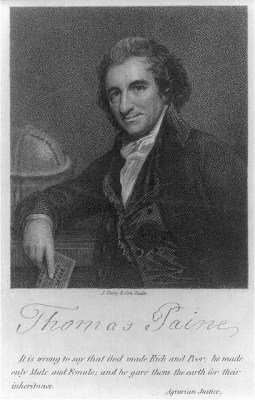
Now, in place of memorizing and reciting the Apostle’s Creed, I immerse myself in Aristotle and Mill, in Hume and Kant, in Wollstonecraft, Rose, Stanton, Jefferson, and Paine, in Avicenna and Aquinas, in Rawls, Pinker, Newberger Goldstein, and Hitchens. I can immerse myself in the teachings of religious founders as well, including the historical Jesus, endlessly more complex, fascinating, and inspiring than the blonde, haloed icon of the Baltimore Catechism. I have the opportunity to explore what all of these thinkers and reformers have to offer, to seek to understand their ideas on their own terms, putting aside those distorted accounts produced by religious rivalry. I can also, without fear of divine censure, explore the bad ideas people have conceived, from belief in witchcraft and satanic possession to the defense of torture, to racist ideologies, to ‘holy war’ and terrorism to social Darwinism (a sadly misleading term, does a disservice to a great thinker by associating his name with eugenics, a pseudoscientific theory contrary to his own ideas). I can try to enter the minds of those who created these dangerous and immoral ideas, in order to really understand how they came up with them, and to better explain why they are so terrible.

These days, I think of myself as a happier, more morally responsible, more intellectually honest, and more informed person than I would have been if I had remained religious. In that, I speak for myself only. Yet I know that this is true for many others, whose accounts celebrate the benefits of their own religious deconversions. It’s my impression that the most joyful, most passionate, and yes, the most resentful converts from religion are those who were brought up in more restrictive, fundamentalist belief systems. Critics say that such people gave up their religion because it was too hard, so they took the easy way out; or, that they just wanted to be able to ‘sin’ freely. I’ve had these accusations thrown at me many times. In a sense, they’re right, but not for the reasons they think. Many of these religions are too hard because their restrictions and demands are contrary to human nature since they’re based on deeply flawed accounts of it, and much of what they deem ‘sin’ is not wrong after all.

Many people attribute their own best qualities, of character, of behavior, of outlook on life, to religion, whether it’s the one they were brought up with or one they converted to. While I recognize the fact that religion can give a deep sense of fulfillment, the evidence indicates religiosity is not more of a predictor for good behavior than secularism. Study after study, personal account after personal account reveal that religious people commit most crimes at about the same rate, are about as generous, and behave about as morally overall than secular people.

My own observation is that people use religion to justify whatever way they are inclined to behave, good or bad. As the physicist Steven Weinberg points out, good people do good things, and evil people do evil things, regardless of religion. Many of the kindest, wisest, and most wonderful people I know are religious, and credit their religion with their moral successes. I’ve also known plenty of religious people use their beliefs to dodge responsibility for their bad behavior with excuses such as ‘the devil made me do it’ and ‘well, of course, I’m just a sinner’. They use this get-out-of-jail-free-card, such as this particular one available to Catholics (but of course, not necessarily endorsed by all Catholics): ‘I’ll just go to Confession later’. Some are otherwise good people who hold what I think are immoral beliefs, because they were taught to believe this way, and threatened with eternal punishment if they don’t. Others aren’t morally praiseworthy people in any sense of the term, and go through life doing only that which serves their own short-term self-interest. Religion, for these, is a matter of convenience or habit.

All of these things are basically true of the non-religious people I’ve come across, including my secular community of friends, family, and co-workers. Some are kinder than others, some are morally committed to doing good, some have a more nihilistic, selfish, or jaded view of the world. Yet here’s why I generally prefer a secular brand of morality over the religious: secular people generally take goodness more for granted. While this might sound counter-intuitive as an indicator of a better moral character or as a way of habituating oneself to better behavior, I think it’s excellent for both.

For example, when complimented on a good deed, a secular response is generally something along these lines: ‘well, obviously, it’s the right thing to do’, or, ‘it just feels right / good’, or, ‘of course, that’s how decent people behave’. These sorts of responses indicate that they see goodness as the default position, as required by reason, as a basic human instinct, or both. After all, human beings go through day to day life being decent to one another: we pay the asking price for the things we want, we step aside to let others pass on the sidewalk, we obey the rules of traffic, we say please and thank you, we lavish food, money, and medical care on strangers as well as family and friends, we spend huge amounts of our time communicating complex thoughts and ideas, and so on and so on. We take all this for granted, to our credit. When we compare the human species with all others, even to our closest relatives the chimpanzees, we find that our level of cooperation, generosity, and tolerance is quite remarkable. In all other species, some combination of predation, raiding, warfare, murder, infanticide, and/or indifference to suffering and the welfare of anyone besides close kin and allies are par for the course. With humans, however, such behavior makes the news.

Since goodness is the default, it’s badness has to be explained: by mental illness, alcohol or drugs, a bad upbringing, a momentary selfishness that overcame one’s better side, or by faulty ideology or culture. Therefore, most good deeds are not terribly remarkable: they are a natural product of sociability combined with reason. Sociability gives us the instincts to cooperate and help others; reason shows us that the more widely we extend our cooperation and good-naturedness, the better off everyone is in the long run.
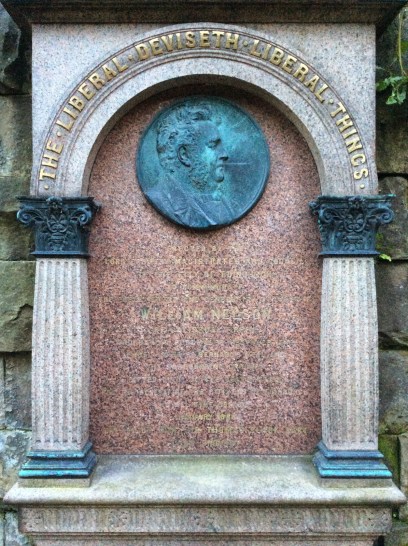
Since secular people (as well as many liberal and progressive religious people) tend to believe in the basic goodness of human nature, they tend to be liberal in politics and morality, and broad in their conception of human nature. For example: since it’s everyone’s basic duty to help one another out, it’s right and just that we all pay taxes to create public welfare systems for those less fortunate than ourselves. To not institute public welfare systems is to say that it’s right that people should enjoy the benefits of civilized society, while being permitted to shirk their responsibility to care for those whom it hasn’t benefited. Another example: since most kinds of human behavior are good or at least morally neutral, there’s only a narrow range of behaviors that should be prohibited, namely those that actively harm others. Human nature, with its unique combination of advanced intelligence and strong social instincts, has evolved to include a wide variety of ways of being that are not only valid, but worthy of celebration, as they are indicative of the wonderfully fascinating, complex, endlessly inventive creatures that we are.

It’s no surprise, then, that secularists and adherents of the more liberal religions, which share this belief in basic human goodness and the broadness of human nature, have been on the forefront of reform and civil rights movements throughout history. Abolition of slavery, religious liberty, women’s, worker’s, and gay rights, indeed all of the great movements for reform and freedom, originated with the dissidents, the broad-minded, and the humanists. Religion is made for human beings, not the other way around.

An aside: there are certain leading secularists, such as Richard Dawkins and Sam Harris, who claim that the only ‘true’ religious believers are fundamentalists. They argue that liberal and reformed believers just want to pick and choose the ‘nice’ parts and discard the rest, which constitutes a betrayal of their religion. I think this view is not only historically inaccurate, it’s based on a more basic categorical error. Religions are not, and have never been, eternally ‘fixed’ systems that do, or ‘should’, remain constant over time. They are better understood as belonging to a category of things that include culture and language, all of which come gradually into being from thoughts and practices that are products of human nature, and change over time. Culture, language, and religion evolve as human nature evolves and as the totality of human knowledge and wisdom expands and is applied to current circumstances. It’s no more true to say that the only ‘true’ religion is that which remains wedded to a particular holy book or creed established by a synod, or a particular interpretation of these, than it is to say that the only ‘true’ communicator of English language is one who strictly adheres to the first Webster’s dictionary, or considers the Canturbury Tales or the works of Shakespeare as the eternal exemplar of ‘true’ English grammar and style.

Let’s contrast the more liberal, progressive, humanist views of secularists and moderate believers with the views of some of the more fundamentalist and hierarchical religions, usually descendants of tribal belief systems. This includes the brand of conservative Catholicism I grew up with (which is not reflective of all variants of Catholicism, some of which are quite tolerant and emphasize social justice). In these belief systems, humans are born in sin, ‘fallen’, weak and corrupt, and it’s only through the greatest struggle, and never without divine help, that we can achieve goodness. Their view of human nature is narrow: people are created to fulfill one of a number of comparatively few, narrowly defined roles, and behavior and proclivities that aren’t in accordance with these are sinful. Their view of life is one of spiritual warfare: we are beset on all sides by Satan and his agents as they vie with God for dominance over our souls. The way to redemption, then, is a lifetime of constant prayer, diligence, and suffering, battling one’s way to an eventual union with God that relatively few can achieve.

Secularism and the liberal religions, with their naturalist view of morality, emphasize the ordinariness of human goodness and the value of habitual, systematic, readily achievable goodness. The more rigid, fundamentalist religions, on the other hand, emphasize the difficulty of defeating evil and the value of relatively rare exploits of good deeds through heroic self-denial. While the latter may be more romantic and exciting, I think that the secularist and humanist view of human nature has been more conducive to human flourishing overall. It promotes a greater quantity of goodness in the world by making it understandable and accessible. This is readily apparent when we examine the evidence throughout history and up to the present time. Where we find tolerant governments and secular or progressive religious belief systems, we find less warfare, a higher standard of living, and a system of laws that protect all citizens from oppression, from each other as well as from government itself. Where we find civilizations dominated by religious fundamentalism, rigid ideologies, and aristocratic and ‘ordained’ hierarchies, on the other hand, we find the opposite.

In sum: leaving religion behind, for me, has proved not only emancipatory, but has provided a wonderful opportunity for learning, for critical thought, and for personal growth that I may never had had otherwise. I still have a residual distaste for religion, especially for its more ritualistic trappings, as one has a distaste for imbibing a substance one has overindulged in, or for fire after one has been burned. I shy away from churches, am creeped out by rote prayers, and feel depressed when listening to Gregorian chants and solemn hymns. (I feel very differently about other forms of sacred music, and wouldn’t you know it, I never heard any of them in the church of my youth.) Yet I seek wisdom from any source in which it may be found, and since I know that there is much to be found in religious traditions as there is in any arena of human thought, I look for it there, too, despite the inclinations I sometimes have against it. And one day, when my residual aversion to religion has finally worn away, I’ll be that much less in the sway of the kind of bias that blinds the intellect and blunts the understanding.

*Listen to the podcast version here or here on iTunes
*Also published at Darrow http://darrow.org.uk/2015/04/12/what-leaving-religion-has-done-for-me/

Activism is Not Enough: As Long As We Keep Shopping and Don’t Vote, It’s Our Fault Too!

I live in the San Francisco Bay Area, a wonderful place to live. It has a rich culture and a thriving music and arts scene and nightlife. It’s surrounded by great natural beauty in all directions: from oak forests to redwood groves, from chaparral to sandy beaches and sea cliffs. It has a fascinating history, plentiful and delicious food, beautiful architecture, and balmy weather. It’s also a liberal ‘bubble’, with an appetite for activism and, for better and for worse, a penchant for righteous outrage.

I admire and identify with the history and the culture of activism. Like the reformers of history and of today, the brave people who fight to create a more just world are among the finest the human race has ever produced. But I’ve been feeling something a bit lacking in activist movements lately. They still march in the streets, and we join them there and online by signing petitions for reform, posting blog pieces, and sharing videos bursting with righteous indignation. It’s exciting, it’s attention-getting, it makes the news. Historically, take-it-to-the-streets activism has been key in achieving the most important reforms (and breaking away to form our own nation in the first place!). The Occupy Movement, for one, was inspiring, and exciting, and it appeared that we were finally witnessing a harbinger of real change.

Sadly, it seemed to fizzle out before any substantial reform was achieved. Why? Because it wasn’t followed by practical action, which, of course, is much less exciting. Demonstrations of protest don’t do much lasting good unless they’re backed up by real, widespread change in attitudes, behavior, and civic engagment. Right now, the activist community is mainly pouring its energy into marches, inspiring songs, signs, slogans, and speech, and a few into blocking highways, smashing windows, and taunting riot police. But for actual reform to happen, we need to turn our collective accusatory gaze back on ourselves and realize we are the problem too…

How can we be the problem while we’re working and calling for reform? Because we keep supporting bad business through what we choose to buy, and we’re not reforming government by showing up at the polls.

It’s like protesting an assassination after we pitched in to pay the hit man and did nothing to stop him as he stole the getaway car.

For example, we’ve long known that many of our smartphones, tablets, and other gadgets are made in factories where people work terribly long hours for little pay, in conditions we’d never put up with ourselves. And we know that many or even most of our discarded electronics end up in some country, state, or town unprotected by regulations, or whose ‘recycling’ systems are really not effective in keeping up with the deluge, at keeping toxic heavy metals and chemicals out of the water supply, the ground, and the air. So we’ve signed online petitions and shared testimonies of abused workers on YouTube and Facebook. Yet we buy every new gadget as fast as they come along, throwing away our ‘old’ ones (cracked screen? doesn’t have the new games on it? too thick now since the new ones are 1/4″ thinner?) and buying a new one whether we ‘need’ it or not. When we purchase these things, we fund all operations of the companies that make them, and we send them the signal that we’ll buy them no matter how much their products pollute and how they treat their workers.

We also know, from the wealth of scientific information gathered and presented by the Intergovernmental Panel on Climate Change (IPCC) and our own National Climate Assessment, that we’re polluting our air to levels that present great threats to the health and future food security of ourselves and our progeny. We’ve also seen how air and other pollution causes respiratory ailments and even death in humans and animals, from pre-1970’s, pre-Clean Air Act Los Angeles, California, to Beijing, China of today. So again, we sign online petitions and share videos and speeches, and call on regulators to crack down on corporate polluters, on factories (industrial and farming), auto manufacturers, and the trucking industry. Yet it’s the commuter cars we drive and the emanations from animals we eat every day that pollute the most. We drive everywhere we want to go whether or not we need our car to get there, and gobble up more meat than is healthy for us and for the planet, all the while insisting that gas and meat stay cheap.

And so on, and so on, and so on. We want one thing, but do another. We say we want the world to be one way, but our actions help guarantee it won’t come to pass. It’s a hard pill to swallow, but here it is: we can’t justifiably blame corporations and the government for institutionalized racism, radical income inequality, pollution, climate change, poor wages and working conditions, poverty, and other social ills while at the same time we’re funding their operations, and are too politically apathetic to send more than a symbolic message by voting in the change we want.

There are two main ways we are undermining our own calls for reform:

We are a market-driven society, for better or for worse, and the market will always deliver what we want to buy, eventually. If we keep buying it, it will keep being made, whatever the good it does, or the harm. If we want things that cause harm, they will be made, ever more so as we keep buying them. And if we shop around for the lowest price, down prices will go, whether by benign means (improved technology) or not (driving down wages). Capitalism brings us wonderful things: safer and better machines for all kinds of purposes, warm comfortable clothing and plentiful food, information-sharing devices to educate and entertain, and best of all, technology that can better our lives while reducing waste. But it brings awful things as well: the supply and demand for plastic bottles and convenient packaging is trashing rivers and seas and killing fish; electronics, designed to quickly become obsolete and full of heavy metals, turns into masses of polluting trash our limited recycling systems can’t keep up with; plentiful, cheap meat pollutes the air and water and encourages animal cruelty; cheap fuel drives climates change and wars; cheap goods of all kinds drive down wages, degrades working conditions, and lead to overconsumption and massive waste. We know this, yet keep the demand going by gobbling it all up as quickly as they supply it.

Here’s an aside to my fellow progressives, liberals, and everyone who loves our world and don’t want to trash it: don’t pretend that recycling bins and boutique ‘green’ products will do the trick. Currently, recycling programs are akin to a cheap plastic Band-Aid applied to a gaping wound. Most recycling processes create nearly as much, sometimes even more, pollution than new products and packaging created in the first place. (Read this fantastic article by Andrew Handley: informative, succinct, and eloquent.)

Secondly, we are allowing the few, most moneyed interests to take over our government with scarcely a murmur. The ballot box, historically the most powerful tool for voicing our collective will, is being abandoned. We are voting in fewer and fewer numbers every year, with depressing results. I understand the Russell Brand type of argument, to ‘drop out’ of politics as an act of protest against systemic government corruption. But I don’t agree with his conclusion. It may be the case, as he points out and as we discover anew every voting season, that many or all of the candidates aren’t terribly inspiring. We may find that many of the initiatives won’t seem to do all the good we’d wish. But consider these facts: historically, the reforms sought by the great activist movements mostly became law because they continued their march right to the polls, and either voted in those laws themselves through referendums, and the rest were achieved indirectly, by voting better leaders into office. And think of what happens when we don’t vote. As someone who considers myself politically progressive, I’ve been dismayed as here in California, such laws as Prop 8 passed, banning gay marriage, because more people opposed to this unjust law (later overturned by the courts as unconstitutional) didn’t bother to get to the polls; ideologues, lavishly funded by a few interest groups, voted in droves while believers in liberal and progressive values (including many who held protest signs, I’ll bet) stayed home. For the same reason, capital punishment is still legal in California and marijuana use (other than medical) is not. I was also dismayed by the most recent general election, in which candidates that are aggressively status-quo and anti-reform were elected to office in droves. Why? Again: those who poll in favor of reform did not show up at the polls.

It’s true that too many candidates are overly motivated to please the interest groups that fund them, and don’t pay enough attention to the rights and the will of the average citizen. But that’s not just because of the money (initially provided by us, by the way, via the market): these candidates have been made well aware that we’ve grown a little too comfortable to make the effort to vote them out. So they make speeches to please us, and then we pass them around online and think we’ve done our duty. On election day, we stay home, and the next day, it’s business as usual.

In sum: so long as we put our own ease, comfort, and desire for luxuries ahead of our principles, we are stuck with the world that results. If our political system continues to grow ever more corrupt and our laws fail to protect the vulnerable, the poor, the immigrant, the disenfranchised, and the environment, yet we don’t vote the bad politicians out and the good laws in, we are to blame too. If corporations and other businesses make harmful products, endanger and underpay their workers, funnel all profits to a few at the top, and pollute, deforest, drive species to extinction, and hasten global warming, yet we keep buying their products, it’s our fault too. If police precincts become ever more militarized and continue to employ overly violent and coercive tactics on the streets and in the interrogation rooms, and we don’t vote them or those that appoint them, out of office, then we’re giving our tacit consent. If our political leaders, prosecutors, and judges continue to make, enforce, and uphold laws that are contrary to our constitutional rights, our best interests, and scientific evidence, and we keep putting them in office (or do nothing while special interest groups put them in office), then we aid and abet them with our neglect.

So what do we do about it? Do we all become ascetics, deny ourselves all pleasures that might conceivably cause harm, subsist in ‘hobbit homes’? Do we obsess over politics, wring our hands in despair daily or cast them in air as we give up in hopelessness? This doesn’t seem tenable: we want an easy, pleasant life filled with hope, comfort and plenty for ourselves, our loved ones, our children, for everyone.

Yet if we want our progeny and the rich, vibrant, diverse world of living things to survive and flourish, we need to change our habits. Our main stumbling block is this fact about human psychology: it’s extremely difficult for us to act idealistically when the long-term ramifications of our actions are not emotionally, immediately apparent at the time. But be it easy or be it hard, we need adopt new and better practices, or the world we love will suffer from our neglect. I’m as stuck in bad habits as much as anyone else, so I’m not playing a blame game here. When it comes to consumer waste: I’m lucky in that I worked in a salvage and recycling operation for some years, and that experience turned me off from enjoying shopping for cheap gadgets, and made me more frugal and more likely to preserve the tools I have for as long as I can repair them and make them work. (There’s nothing like working in a resale warehouse, or salvaging quality reusable goods from a mound of broken cheap crap and trash at the dump, to change one’s perspective on material goods. Now, in the rare occasions I go to Target or a department store, I perceive mostly a mound of thinly disguised future garbage.) But I continue to buy too many things with unnecessary packaging, I still drive my car more often than I really need to, and I buy and eat too much factory-farmed meat. When it comes to politics and law enforcement: I usually don’t do nearly enough homework on the issues or on candidates before I vote, and I miss valuable opportunities to make a difference by engaging in local politics, where individuals can have the most influence.

Let’s make a pact to honor our activists, and to join their ranks as true ones, by living out our desired reforms. Let’s stop buying water and drinks in plastic bottles and packaged goods so long as there’s an alternative; if enough people do this, companies will pay heed and provide their goods through better delivery methods. Let’s stop buying so much stuff, period, and divert our money to businesses and institutions that deliver quality goods that last and public goods that all can enjoy. (Less malls and big box and discount retailers, more small businesses, quality goods made to last, public works, humanitarian projects, and museums.) Let’s stop glorifying wealth and the trappings of wealth more than its due. Let’s vote in every election, for candidates and referendums that best represent our values: if we demonstrate that we will only vote for those that deliver on their promises for reform and will vote them out if they fail, the political arena of competition will shift as it favors less corruption.

Let’s put the act back in activism.

*Listen to the podcast version here or here on iTunes

Ordinary Philosophy and its Traveling Philosophy / History of Ideas series is a labor of love and ad-free, supported by patrons and readers like you. Please offer your support today!

~~~~~~~~~~~~~~~~~~~~~~~~~~~~~~~~~~

Sources and inspiration:

Ariely, Dan. ‘The Long-Term Effect of Short-Term Emotions‘. Mar 23, 2010. DanAriely.com

Brand, Russell. ‘On Revolution: “We No Longer Have the Luxury of Tradition”‘ Oct 24, 2013. TheNewStatesman.com

FlorCruz, Jaime. ‘Listen Up Beijing. This is What You Can Learn From Los Angeles About Fighting Smog‘. Dec 9th, 2014. CNN.com

Handley, Andrew. ‘10 Ways Recycling Hurts the Environment‘. Jan 27th, 2013. Listverse.com.

Parsons, Sarah.’Electronics Recycling 101: The Problem With E-Waste‘. Inhabitat.com

Silverman, Jacob. ‘Do Cows Pollute As Much as Cars?HowStuffWorks.com

Welcome to the Podcast Edition of Ordinary Philosophy!

Hello dear readers, and welcome to the
podcast version of Ordinary Philosophy!

You can listen to the podcast here, on Google Play, or subscribe in iTunes.

Like many of you, I’m a big fan of podcasts, mostly because my life is very busy. One day in the future, I hope to have a lot more time to do each task one at a time, to really be present, as they say, as I wash the dishes, straighten the house, do the laundry, and perform all those other tasks that take up time, but not much thought.

But at this time in my life, between my day jobs, my creative projects, and spending time with friends and family (which I don’t do enough of these days, sadly), I don’t have enough time to keep up the world of ideas as nearly much as I’d like to by sitting down and reading. Instead, I keep myself informed and increase my education by listening to lots of podcasts: discussions with my favorite authors and thinkers, audio renditions of books and essays, debates, recordings of classes on my favorite subjects, and so on. I listen to these podcasts while doing those aforementioned chores, and let me tell you: as one who is not fond at all of household chores like doing the dishes and washing the floor, the podcast is a marvelous invention: they transform boring chore time into great opportunities for learning and exploration. I’m also an avid hiker, and it’s a wonderful thing to be able to immerse myself in some fascinating ideas or discussion as I immerse myself in the beauties of nature.

To begin with, this podcast will simply consist of audio recordings of my Ordinary Philosophy pieces. Over time, I may add commentary and who knows, perhaps interviews and discussions with guests. We’ll see how it goes. In the meantime, here’s Ordinary Philosophy in audio form: I hope you find it interesting and enjoyable!

… And here’s episode 2: Is the Market Really the Most Democratic Way to Determine Wages?
Originally published as an essay Feb 6th, 2014

On Empathy, Sympathy, and Compassion

I was listening to an episode of Inquiring Minds podcast the other day, and in it, cognitive scientist Paul Bloom discusses his and others’ research on the earliest manifestations of morality in human babies, a hot topic in psychology and neuroscience these days.

Near the end of the (fascinating) interview, Bloom discusses the difference between compassion and empathy, as he sees it:

‘..I’m writing a book on empathy now, and I’m against it. I’m arguing that empathy’s a poor moral guide. And it’s… it’s like saying you hate kittens, or you’re in favor of Ann Coulter… it just sounds really weird. But I would make a distinction between empathy and compassion, where empathy is putting yourself in someone’s shoes and feeling their pain. And I think empathy can do good in the short term, but it tends to distort things. It’s racist and parochial, it’s a lot easier for me …to feel empathy for someone who looks like me and is adorable, than someone who scares me or lives far away and doesn’t look like me.

Empathy is innumerate, it tends to focus on the plight of individuals, not on groups. It’s because of empathy that societies like ours tend to care much more about a little girl stuck in a well than we do about global warming. Because I can empathize with the girl and her family. Global warming is some abstract thing. Yeah, it might kill billions of people, but show me one… and if you can’t, empathy has no moral pull. Compassion is valuing people, it’s valuing human life, and in a distant sort of way. And I think in every possible way, compassion trumps empathy. Even at the local level. So it’s not just contemporary doctors, but it’s actually Buddhist theologians [who] have long pointed out that feeling empathy for suffering people will exhaust you and will burn you out and make you useless, while a more distanced compassion, where they [people] have value, and you care about them and you want them to be better, but you don’t feel their pain, is actually better to be a good person.So I’m a big champion of compassion and very down on empathy.’ – Paul Bloom, ‘Babies and the Origins of Good and Evil’, Inquiring Minds #60, 46:38 – 48:24

I was edified by Bloom’s remarks: a few times over the last several months, I thought over what I’d written in a previous mini-essay, ‘Empathy for Immigrants‘. In it, I appealed to those who take a hard-line stance against amnesty for illegal immigrants, challenging them to imagine having to choose between obeying the law and trying to procure health, safety, and access to a better life for themselves and their children.

While I continue to think it important to be able to put ourselves in others’ shoes, to take their emotional perspective, to realize that their interests are just as important to them as ours are to us insofar as we can feel with them, I’ve been doubting that this is of primary importance. To think it is, is to imply that if we don’t feel emotionally attached to others’ interests, then they might not be important. Empathy, it seems, is too narrow, too dependent on us happening to feel like being good to others. What leads to empathy in the first place?
As I was thinking about it, over time, I realized that what I was really calling for in that piece was more like sympathy, or compassion. But let’s take a moment here to consider an objection that probably already arose in your mind, or was about to: isn’t it just a question of semantics to be picky about the meanings of empathy, sympathy, and compassion? Aren’t they more or less interchangeable terms? Or aren’t they close enough to the same that the differences aren’t worth worrying about?

It’s true that they are often used interchangeably, and in some cases, it doesn’t matter which term is used, if what’s being said comes across clearly enough through context. Other times, though, they’re used interchangeably and confusingly, as in the Wikipedia article which seems to mix up the meanings of ‘sympathy’ and ’empathy’ multiple times in the first paragraph alone, and the Dictionary.com article which contradicts psychotherapist Stephen Crippen. In any case, it’s not the semantics of the words themselves which are so important (though for clarity’s sake it helps to distinguish the differences, and use accordingly), of course: it’s the ideas these terms are meant to convey.

So how do these three terms differ, and why is it important to understand the difference?

Keeping in mind that it’s the ideas behind the words, not the semantics, that are important, I’ll be using the word empathy in the way that academics and researchers such as Bloom, Rebecca Saxe, and Steven Pinker tend to use it, to refer to a state of internalizing anothers’ mental state, of ‘putting yourself in their shoes’, of experiencing, if only for a moment, another’s pain, joy, or perplexities as your own. Sympathy, while a related concept, is more often used (according to my own experience and my admittedly rather perfunctory research) to refer to a state of general concern for or identification with anothers’ experience, without necessarily internalizing it. Pinker describes it as ‘aligning another entity’s well-being with one’s own, based on a cognizance of their pleasures and pains’ (576). In other words, when we sympathize, we still identify with another’s internal experiences and care about them, but it’s enough to know they have them: we don’t necessarily have to feel them ourselves. Sympathy, then, is more like compassion, which is to care about the well-being of others and desire to help them as a result of our convictions, regardless of whether we feel like it at the time.

So to go back to my objection about empathy: it seems too narrow, too contingent, to be more than a starting point, morally speaking. It can give us the original impetus to do good, but doesn’t go far enough. Empathy gives us patriotism, local-sports-team-fandom, a feeling of religious, racial, ethnic, cultural, and ideological identity. These can all be important; David Hume points out how central the passions or ‘sentiments’ are to human morality, including empathy (in his time, termed sympathy). (Book III, Sect 1, Pt 1) Without our empathetic responses first toward our families, then our immediate social circles, then our wider community, morality would probably not exist. Those instincts first show us in life how to care about other people, as it did our earliest pro-social ancestors. Caring about people like ourselves is relatively easy.

That’s because, as Bloom points out and as history shows us, our empathetic response is usually aroused by the cute and the familiar. Just about everyone wants to help big-eyed babies, dimpled little children, good-looking people, and members of our racial, national, religious, cultural, political party, or sports team ‘tribe’.

Yet, empathy does little for us when we encounter people from other groups. We don’t like to think about it, but we rejoice when we watch someone we don’t identify with take a fall; we don’t really want to help them most of the time. This is so common, we take it for granted so much, that we don’t even notice it happening. Gun enthusiasts rejoice when George Zimmerman is set free and mock Trayvon Martin’s defenders, and anti-gun activists feel a thrill when yet another school shooting adds weight to their argument, even as both groups speak regret for the victims. Conservatives gloat over Bengazi and liberals over Iran-Contra, and act as if each occurrence is a ‘proof’ of the rightness of their party and of the evilness of the other; we say little or nothing about the dead unless it serves to bolster our talking points. We beat up fans wearing the wrong sports jersey as we leave the game, ‘our’ team victorious, and we turn up our noses as we find ourselves having to share space with unsophisticated, poor, ‘uncool’, awkward, or otherwise ‘outsider’ people. We can’t, really, imagine what it would be like if ourselves or our children belong to groups who are more routinely beaten, imprisoned, or shot while committing the sort of petty crimes and youthful indiscretions, or having a public outbreak of mental illness, that our group routinely goes through unscathed. We bomb, declare war on, execute, allow to starve and die of illness in refugee camps and across the border, and otherwise treat our fellow human beings with an abundance of neglect and destruction, because we happen to not feel like caring for them. Empathy fails all the time.

It takes that leap of the imagination, inherent in sympathy or compassion, to want to help those who are not like us. Sympathy and compassion make us want to help people not just because we feel like it but because we believe in it for its own sake, for philosophical, religious, or other ideological reasons. Experiencing more kinds of people who are not like us, personally through travel and virtually through media, expands our opportunities and our instincts for empathy to some extent. Hume made this case somewhat controversially in his time, and our experience in our new cosmopolitan, digitally connected world bears this out. Yet sympathy/compassion can extend this capacity orders of magnitude more: it leads us to universalize the kindness and generosity that we naturally extend to our members of our close communities. Sympathy/compassion is the habit of  extending our concern for others based on our beliefs about justice, community, human rights, human flourishing, and so on. When we base our convictions on the right way to treat others on reason at least as much as on our pro-social instincts, we expand our moral characters, and not only increase our sympathy/compassion, we develop and expand our capacity for empathy as well.

*Also published at Darrow, a forum for culture and ideas

Ordinary Philosophy and its Traveling Philosophy / History of Ideas series is a labor of love and ad-free, supported by patrons and readers like you. Please offer your support today!

~~~~~~~~~~~~~~~~~~~~~~~~~~~~~~~~~~~~~

Sources and Inspiration:

Bloom, Paul. ‘Babies and the Origins of Good and Evil‘, Inquiring Minds podcast episode #60

Crippen, Stephen. ‘Empathy, Sympathy, and Compassion 101‘.

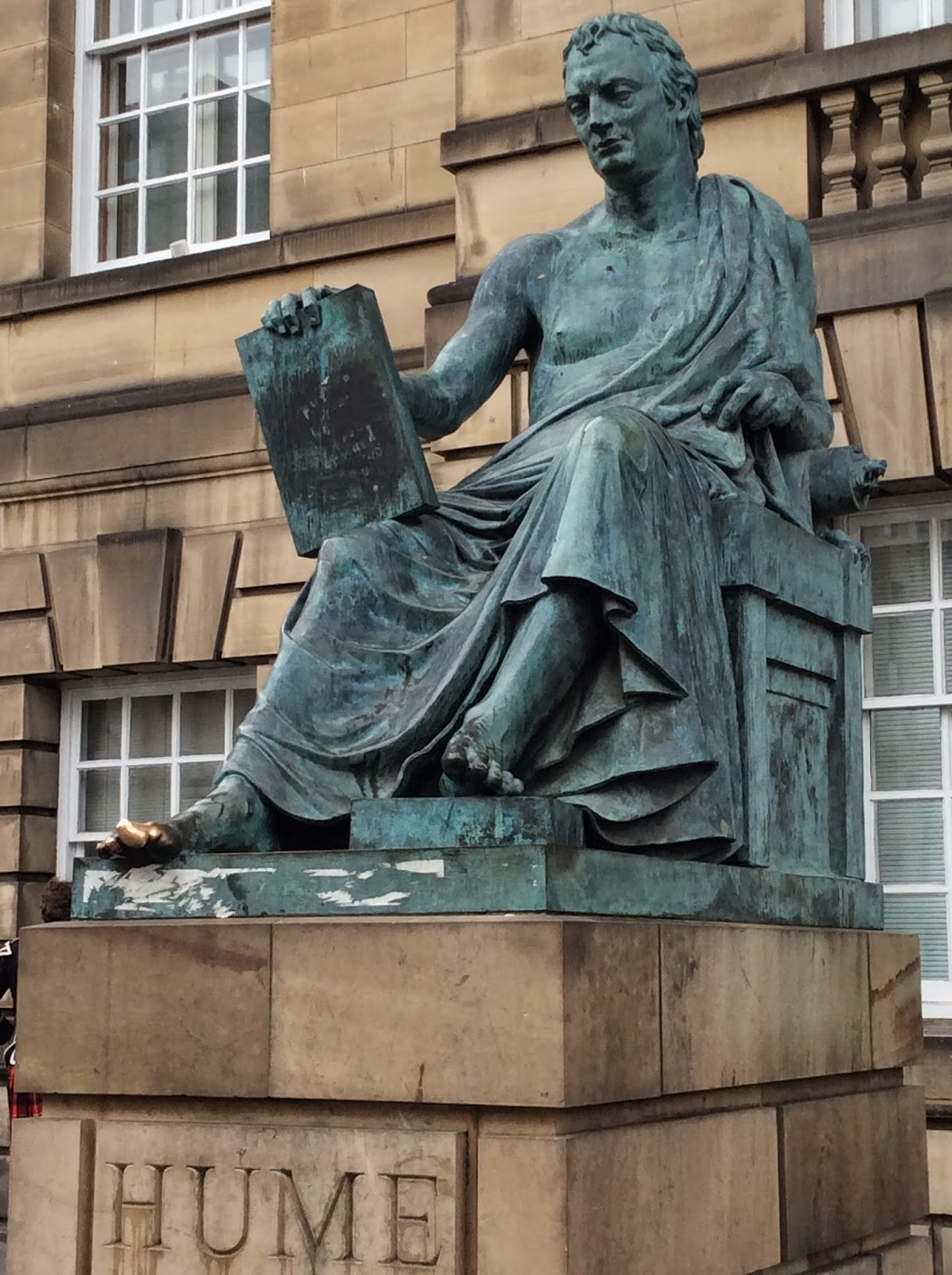
Hume, David. A Treatise of Human NatureVolume III – Of Morals (online). Originally printed for Thomas Longman in London, England, in 1740. (I had a glorious time referring to versions published in Hume’s own lifetime during my trip to Edinburgh!) 

Pinker, Steven. The Better Angels of Our Nature: Why Violence Had Declined. New York: Viking Penguin, 2011.

Saxe, Rebecca et al. ‘Finding Empathy‘, Video

Stueber, Karsten, “Empathy“, The Stanford Encyclopedia of Philosophy (Spring 2014 Edition), Edward N. Zalta (ed.)

What is the Difference Between Empathy and Sympathy?‘, Dictionary.com Word FAQs.

Philosophy and Early Feminist Thought

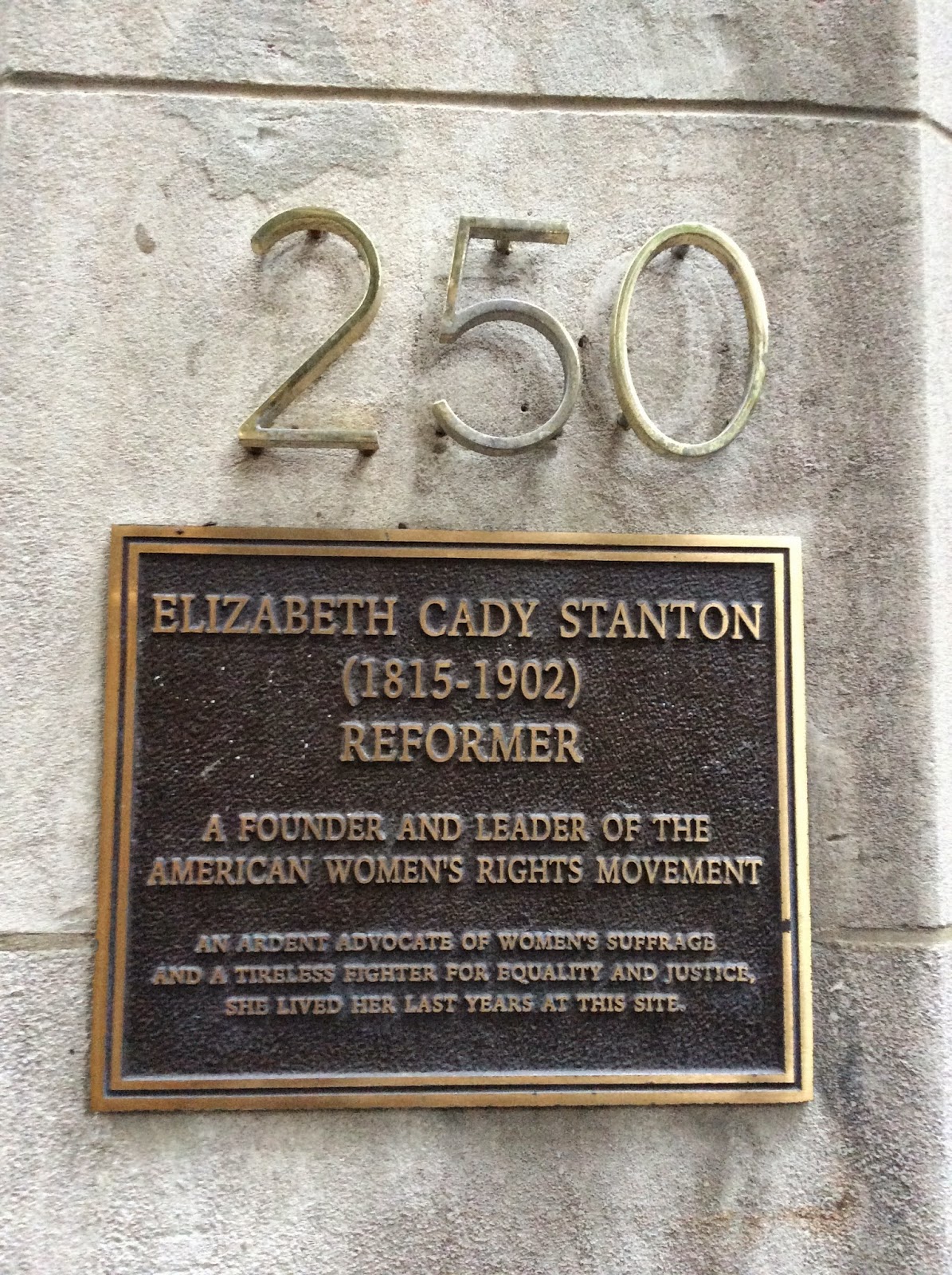
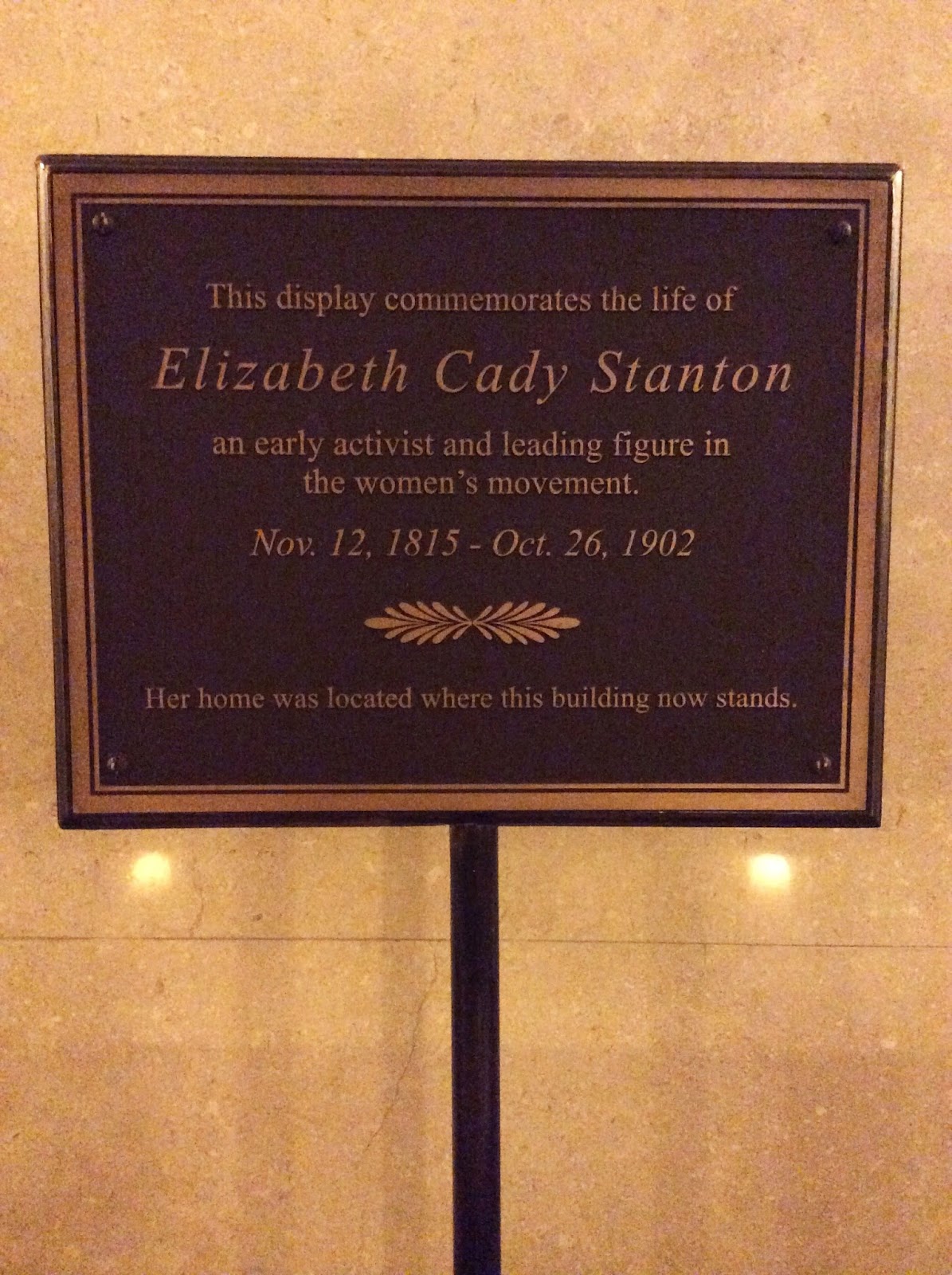
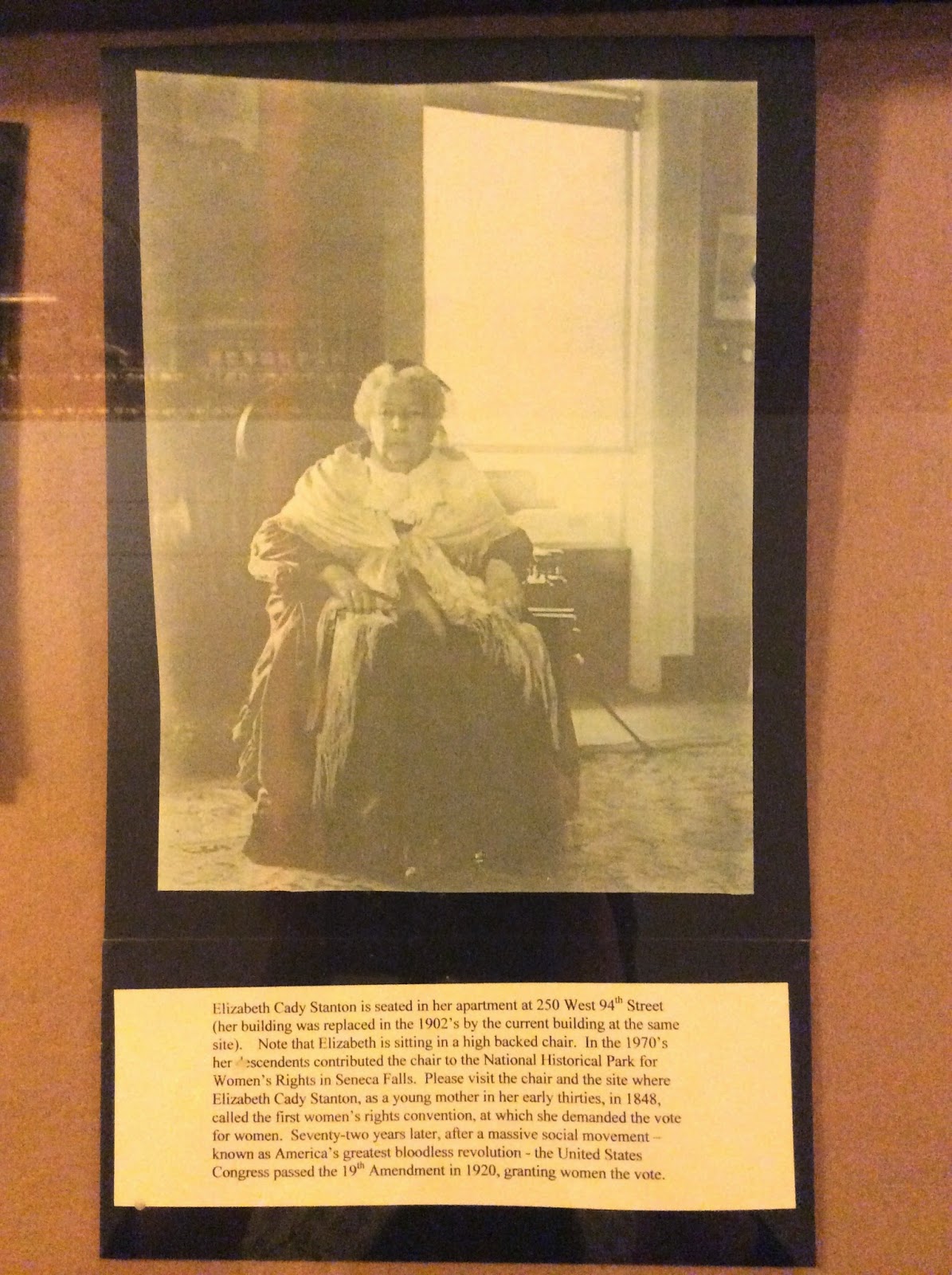
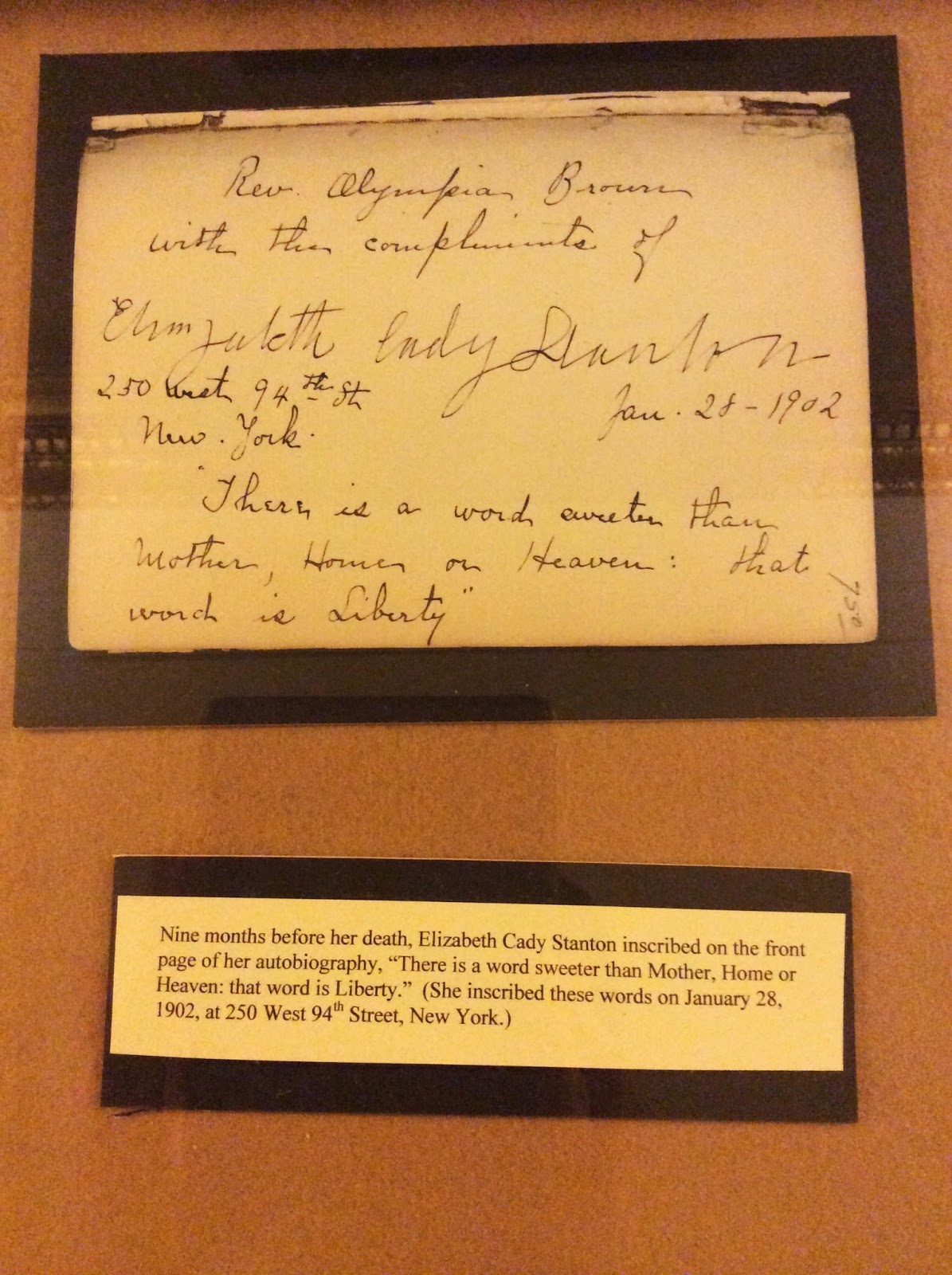
Ernestine Rose and Elizabeth Cady Stanton, two founders of modern feminism, are the subjects of my recent traveling philosophy series. While their advocacy for women’s rights, abolition of slavery, religious liberty, and other human rights issues was so important, wasn’t their work more about politics than anything else?

Why write about feminist activists for a philosophy blog?

It’s true, their focus was on achieving political goals: to establish laws protecting and empowering women and other classes of human beings in their property, their person, their range of opportunities, and their enfranchisement. But to accomplish this, they needed ideas: not only of their own, personal beliefs about the world and the way it should be, informed by facts and supported by reason; they needed to convince others that their ideas were not only interesting and desirable to themselves but good, true, and conducive to flourishing for all human beings.

The laws of their time, which barred most women from owning any property, which subjugated them and their children to husbands, fathers, and male relatives, and which failed to protect women as they sought to engage in traditionally ‘unwomanly’ activities such as voting, receiving a full education, pursuing any occupation other than housekeeping or teaching, speaking in public, taking leadership roles, and so on, were based on certain widely held ideas and beliefs about the nature and proper roles of women. 

Women in some states, especially married women, had few political rights in the era when Rose and Stanton began to agitate for them. In fact, many women in the United States, legally, had as few rights as many slaves did, which may surprise many of us today; I know it surprised me as I did my research. Not to suggest that slaves were better off: far from it. Cultural expectations required better behavior toward and treatment of (non-slave) women. Most husbands, then as now, treat their wives with respect and try to make them happy, and they had a degree of power and influence in the home in her position as mother and keeper of the house. Many states had laws protecting women in cases of abuse, and some had laws requiring men to provide for their wives in a ‘decent’ manner. And adult single women legally enjoyed a degree of personal liberty a slave could only dream of. But it was extremely difficult for any woman to earn a decent wage or find an interesting, full-filling, non-menial job, and women were generally denied access to a full education. 

While some states offered better protections for women than others with fairly liberal laws (for the standards of that time, not necessarily ours) concerning divorce, remarriage, and a woman’s right to some control of property she brought into a marriage, in many other states, women lost their individual identity upon marriage under coverture. The legal doctrine of coverture meant that a women’s identity was absorbed into, or ‘covered by’, that of her husband, and her rights were subsumed under those of her husband. In other words, they disappeared. As a result of coverture and other laws, if a married woman felt the desire or need to leave her husband for any reason, including abuse, cruelty, neglect, etc, she had no right whatsoever to her children, to any of her property besides the clothing she wore and utensils to cook with, or to keep any wages she would earn. Not only that, if she was apprehended, she could legally be forced to return, echoing the cruelty of the Fugitive Slave Law (Mistress of Herself, p 93-94, 185-86). It’s no wonder, then, that the early feminist movement rose out of, and in partnership with, the abolitionist movement, since many of the arguments in favor of emancipation of slaves applied to the liberation of women as well. Rose and Stanton’s sister feminists identified with their enslaved fellow women in this: married women had no identity as individual persons under the law, and all women were barred from choosing their own professions, fulfilling their intellectual and other capacities, and subject to laws to which they could not consent because they were not full citizens, or citizens at all.

And nowhere were women of any status permitted to vote. So how could they better their situation?

Rose, Stanton, and other human rights activists and reformers of their era recognized that laws and practices of their time that oppressed women, blacks and other racial minorities, religious dissenters, and immigrants, were all there, more or less, because of the same ideas. So to change the law, they had to change minds, not only with logical, well-supported, eloquent arguments, but with passion, which revealed the conviction behind the words. Their ideas inspired them, and in turn, inspired others. That’s where their philosophy comes in.

So what were these old ideas they wished to supplant? Why did they wish to supplant them? And with what?

Here are some of the most important ideas that underlie Ernestine Rose and Elizabeth Cady Stanton’s work; not comprehensive, to be sure, but central to their goals of attaining legal and cultural liberty and equality, and to their beliefs about human nature and what constitutes the good:

~ The nature of rights, and where they come from

Ernestine Rose and Elizabeth Cady Stanton both have similar, though not identical, views on the nature of human rights. Stanton believes in a divine creator*, and that all human beings are created with certain endowments and dignities, so to transgress against human nature was to transgress the divine will. Rose doesn’t believe in a divine creator, and doesn’t think it an important question in matters of ethics, law, or everyday life, as it would involve understanding a reality incomprehensible to the human mind. Since we can only comprehend this world, we are only responsible for life within it, and we must put all of our effort in making this life the best we can. For Rose, human nature is a product of nature, no supernatural explanation useful or necessary. To both of these thinkers, however, human rights are indissolubly linked to human nature, and one could no more be legitimately denied than the other, by the simple fact of the existence of human beings whose qualities and aspirations are clearly discernible to anyone. And both think that reason is all we need to describe these rights and put them into law. As Stanton says, ‘…Viewed as a woman, an equal factor in civilization, her rights and duties are still the same; individual happiness and development. ‘(Solitude Of Self)

Whether Rose and Stanton think human nature is primary and human rights are derived from it, or whether they think both exist equally as qualities or attributes of a human person, I haven’t been able to discern. For myself, I think human nature is primary, and rights are derived from it; that’s why we must formulate, fight for, and protect human rights, not merely observe them as facts of nature. Either view is consistent with Rose and Stanton’s writings, yet I suspect they perhaps would agree with me, or at least see my point, if we ever had a chance to sit down and thrash it out. What a delightful and invigorating afternoon that would be!

In any case, Rose says, one needs only to observe the world to discover the truth of the matter, and the evidence is available to anyone, anywhere, whatever one’s culture or belief system. In fact, one needs no education at all (though it helps!) to recognize what to her is so plain, if only one would put aside their biases for a moment. A young man once challenged Rose during a speech, claiming that divine revelation and authority are in opposition to the Women’s Rights movement platform and supportive of the traditional view of women’s rights and women’s ‘sphere’ in the home. Rose replied: ‘…I will show him the revelation from which we derive our authority, and the nature in which it is written, in living characters. It is true we do not go to revelations written in books… That revelation is no less than the living, breathing, thinking, feeling, acting revelation manifested in the nature of woman…Books and opinions, no matter from whom they came, if they are in opposition to human rights, are but dead letters’ (MOH, 227)

~ Individual identity

The legal doctrine of coverture, inherited from British law, remained more or less unchallenged in the United States until the early feminists, with Rose and Stanton, agitated for and finally pushed through laws protecting the property rights of married women in the mid-nineteenth century. Rose began the petition to the New York State Assembly in the 1930’s, where she was soon joined by other activists; Stanton’s efforts led to success in 1848, when the first Married Woman’s Property Act was passed into law in New York (MOH, 12). Coverture was widely justified on a Biblical basis: passages such as Ephesians 5:22-5:24 ‘Wives, submit yourselves unto your own husbands, as unto the Lord. For the husband is the head of the wife, even as Christ is the head of the Church…Therefore as the Church is subject unto Christ, so let the wives be to their own husbands in everything’ was used to demonstrate divine support for complete control of husbands over their wives. And not only wives: Stanton goes through the Bible line by line, and finds and critiques a multitude of verses in support of the idea that all women should be subjugated to men (The Woman’s Bible).

As we have seen, Rose does not accept the idea that any sort of ‘revelation’ trumps the evidence of nature, so she scorns the idea that a woman’s identity could be absorbed in another’s. ‘From the cradle to the grave she is subject to the power and control of man…At marriage she loses her entire identity, and her being is said to have become merged in her husband. Has nature thus merged it? Has she ceased to exist and feel pleasure and pain?…What an inconsistency, that from the moment she enters that compact, in which she assumes the high responsibility of wife and mother, she ceases legally to exist…’ (MOH, p 93). Since a woman feels her own feelings, thinks her own thoughts, and experiences her own selfhood, she is fully an individual as a man, whatever her relation to him. And since she is an individual person, she should have all the rights of an individual person, to the same extent as a man, and for the same reasons. Stanton concurs: ‘The point I wish plainly to bring before you on this occasion is the individuality of each human soul; our Protestant idea, the right of individual conscience and judgment; our republican idea, individual citizenship’ (SOS)

What drive Rose and Stanton is that same idea that drive all feminists to seek full human rights protections: the inner experience of our own selves as human persons in the fullest sense of the term. The differences between women and men, as they repeatedly point out, are of minor significance compared to the similarities.

~ The intellectual, emotional, and moral equality of women and men

All able human persons, say Rose, Stanton, and their fellow feminists, enjoy and experience an inner life made up of the same components: reason, emotion, and the moral instincts chief among them. While there is some difference in degree and quality from person to person, and some minor differences in tendencies between male and female, women and men are the same kind of being. Rose, again, appeals to the evidence of experience: ‘What has man ever done, that woman, under the same advantages, could not do? …Even now, where her mind has been called out at all, her intellect is as bright, as capacious, and as powerful as his…And do you ask for fortitude, energy, and perseverance? Then look at woman under suffering, reverse of fortune, and affliction…’ (MOH,  99). She recognized, as her fellow reformers did, that the intelligence and ability they found in their own selves contradicted the claims underlying the rigid belief system of her day regarding the ‘proper spheres’ of men and women. 

Instead of thinking of intelligent, ambitious, entrepreneurial, and independent women as ‘unwomanly’ freaks of nature, and women as subservient mother and housewife as ‘natural’, Rose and Stanton think of women as complex and rich in their interior lives as men, and have similar needs. For example, Stanton reveled in motherhood and was one seven times over, but she often felt stifled by the way motherhood, in her day, relegated her to a narrower arena of activity and intellectual stimulation than suited her. She is restless and curious thinker, deeply intelligent and active by nature, and while her family lived in Boston, her busy social life kept her satisfied in mind and body. When her family moved to Seneca Falls, a small town in upstate New York, however, her new life of a full-time homemaker often made her feel trapped (Jacoby, 88). Stanton doesn’t recognize herself as confined to a ‘sphere’, or conforming to the ideal of ‘true womanhood’ of the time. She thinks these ideas are not divinely inspired, but are human creations, derived from men’s need to carry on their legacy and keep the mothers of their children obediently at home under their control (TWB, Jacoby 195). Instead, like Rose, Stanton recognizes in herself and her fellow woman the full human intelligence that needs to be satisfied and developed, and the range of needs, desires, and challenges in life that, like men, can only be addressed by protecting and furthering their chances of pursuing their own goals, in law and cultural practice.

(I felt this very same way, growing up, regarding ideas about women I was brought up to believe. Beginning in my mid- to late teens, the ideal of the ‘proper sphere of women’ of the very traditional, conservative religion I was brought up in, felt alien to me. I just couldn’t believe that most, let along all, women wanted more or less the same things, and though I recognized that lifestyle made many women happy, it was not so for all women. As an adult, I’m much more interested in the experiences, the day-to-day joys and challenges of my friends and family who are mothers, yet I still don’t feel the desire to live that life myself, especially that of a homemaker, and it’s increasingly undesirable to me personally as the years pass. Yet I’m glad that so many women now have a choice: they are not forced into it, or out of it, by the state, and less and less by overbearing families or isolationist, fundamentalist communities.)

~ Women, men, and their capacities

In the period in which Ernestine Rose and Elizabeth Cady Stanton lived, the ‘myth of true womanhood’ held that each woman naturally has a specific and narrow set of capacities and tastes, all of which confine her to the choice of a few roles, the first two being primary: wife, mother, homemaker, and/or teacher (of children and other women, not of men), craftsperson in the ‘daintier’ arts, and nurse. But Rose and Stanton see things differently: while they allow there may be some differences in temperament and ability on the average, especially when it comes to physical strength, as we have seen, men and women are far more alike than they are different (intellectually, emotionally, and morally). Since women and men have similar capacities and aspirations in accordance with their human nature and their individual proclivities, so each individual should have equal opportunity to make the fullest use of them. The first and arguably most important method of developing ones capacity is a quality education, and the goal of their education should be to expand and fulfill the intellectual capacity of each individual person to the utmost.

And all persons should have full and equal access to engage in any occupation that suits their own tastes. As Rose says, in response to an influential lecturer who argues that women’s natural talents were confined to the ornamental arts, housekeeping, and the care and education of children, ‘…the great difficulty is, that …certain taste and adaptation or peculiar faculties are required for proficiency in any art or science…then it would be just as reasonable to expect all men to be painters, sculptors, or chemists, as to ask all women to be scientific cooks [chefs]. If men and women were educated in accordance with their predilections and tastes, it might so happen that some men might have the best capacity for the science of cooking, and some women for the science of government…’ (MOH, 115). In other words, preordaining and then imposing narrowly defined roles is, in fact, unnatural, and systematically wastes human potential.

~ Marriage and relationships between women and men

Rose and Stanton both believe that the traditional hierarchical view of marriage was wrong. It was still generally believed in their time that a marriage could only survive harmoniously if one partner was ultimately the authority figure, and many people in the world still believe that today (as in Paul’s doctrine of men as the ‘head’ of the family, for example, outlined in the Ephesians quote we considered earlier). Rose and Stanton, to the contrary, believe that sort of arrangement to be not only non-conducive to harmony (since it builds resentment, reduces serious consideration of the wishes and solutions to problems of the ‘subject’ partner, and encourages bullying in one and passivity in the other), but a to vow of obedience in marriage is to renege on one’s responsibilities as a moral agent:

Ernestine Rose has much to say about this subject. She was happily married for 57 years to a man who, like her, was radically egalitarian for the time, and also considered marriage a partnership between equals. She says, ‘But I assert that every woman …is bound to maintain her own independence and her own integrity of character; to assert herself, earnestly and firmly, as the equal of man, who is her only peer. This is her first right, her first duty: and if she lives in a country where the law supposes that she is to be subjected to her husband, and she consents to this subjection, I do insist that she consents to degradation: that this is sin…Marriage is a union of equals’ (MOH 275-276). She critiques the idea that blanket submission is a virtue: ‘Blind submission in woman is considered a virtue, while submission to wrong is itself wrong, and resistance to wrong is virtue alike in woman as in man’ (MOH 93). And she considers the vow of obedience in marriage not only wrong, but a lack of civilization:‘…who knows but the time may come when man and woman will be so far civilized as to agree to differ in an amicable and friendly way whenever they should not be able to agree?’ (MOH 119)

Stanton demonstrates her own commitment to the idea of marriage as a full and equal partnership not only in her writing, espousing the same principles as Rose, but likewise through action. She kept her own name upon marriage, adding her husband’s at the end. She thinks that referring to a married woman by ‘Mrs’ tacked onto the husband’s name, while leaving out hers, was a much a symbol of denigration and ownership as it was to refer a bondsperson by the name of their plantation or master. She agrees wholeheartedly that the vow of obedience was retrograde and against the true ideal of marriage as an equal partnership (Eighty Years 72). She lived a life of as much independence as her situation would allow during her years raising dependent children, and reveled in her freedom in later years, becoming more active than ever in her work for women’s rights.

~ The role of reform and progress in morality

Rose and Stanton hold somewhat different views of religion: to Rose, most religions oppressed women for so long, and their holy books contained so many anti-woman passages, that religions, in general, could only be considered more harmful than helpful, and were pretty much all antithetical to the women’s rights movement. Stanton is mildly religious, in the sense that she doesn’t identify with any particular sect of Christianity, and openly criticizes most of them for their support of retrograde laws and practices in respect to women. Yet she admires Jesus Christ himself, as a friend to the poor and oppressed, as a revolutionary, and as a promoter of tolerance (the story of Magdalene’s interrupted stoning, the Good Samaritan parable, and apostleship of the tax collector are some examples.) Both of them, in their day, would have been called freethinkers, and Stanton would also have been called an atheist by many, since that term was often used to refer to anyone who did not agree with orthodox ideas about God.

Many of the major religions go through more or less the same cycle: inspired by one (probably) historical figure 
who was some sort of inspirational radical (Abram, Siddhārtha Gautama, Jesus of Nazareth, Muḥammad ibn `Abd Allāh), evolving oral traditions and hagiography transformed these figures into gods or sacred beings with special moral authority (Abraham, the Buddha, Christ, The Prophet). As well as encouraging good behavior in their believers and often radically changing cultures for the better with their progressive ideas, eventually these belief systems rigidified, and were pressed into political service to enforce power structures which adopted them. Over time, culturally and legally, these religions were transformed from their reformist roots to dogmatic systems which enforced othodoxy of belief and rigidly proscribed behavior, with promises of reward and/or threats of punishment, by the divine and by the state. Sometimes this was beneficial to promoting pro-social behavior and attitudes; sometimes it led to such evils as religious wars, persecution of heretics, witch-hunts, and pogroms. Rose cites the cruel treatment of dissenters as one of her main criticisms of religion (MOH 76-77).

Over time, new reformists would spring up, challenging the more ugly, oppressive, or retrograde beliefs and practices religions had accumulated over time. Dissenters came from the fringes of that tradition (in the West, liberal anti-clerical Protestants such as Stanton, Deists such as Thomases Paine and Jefferson, Quakers such as Lucretia Mott and Susan B. Anthony, and Unitarians* such as William Lloyd Garrison) as well as from the outside (freethinkers, atheists, and agnostics such as Rose, Robert Ingersoll, and Charles Darwin). Time and time again, it would take these reformers, and the moral and rational arguments with which they won over popular opinion, to convince these the old religions to reform themselves, to become more liberal and to adopt more humanistic beliefs and practices, in order to stay relevant. This process has advanced much more with some religions than with others; it’s not hard to recognize which ones, by the standard of living and the human rights protections in those countries in which those religions are most dominant.

Rose and Stanton, despite their differences of opinion of the existence of the divine, think that dogma is antithetical to morality, properly understood. The capacity of a culture or a belief system to be reformed from outside, or better yet, contain within it ideas that generate self-reform, is a sign of its superiority, since it can adapt to solve problems in a changing world. A rigid, ‘eternal’ system, by contrast, is necessarily harmful, since it’s immune to new evidence, and attempts to solve new problems with old ideas that don’t apply. In Rose’s and Stanton’s day, science had made a major breakthrough, illuminating how natural laws can explain the evolution of human nature and in turn, human morality. In Biblical times, for example, a relatively rigid, harsh moral code, centered on sexual dominance, tribal loyalty, and the accumulation of property (be it through farming, herding, dowry, or plunder) evolved to aid the survival of small nomadic tribes in a similarly harsh landscape. In a modern industrial society, such a code no longer appropriate. But aside from the usefulness of a moral code, Rose and Stanton think that morality should be drawn from observations of human nature, and as human nature expands and evolves, so does morality. Religion, they think, has this backward: it codifies some idea about what human nature is and should be in relation to a wider reality, and this rigid system is then imposed upon everyone, regardless of how poorly it’s equipped to deal with any particular circumstance or new problem that arises, or how poorly it fits with the personality, interests, or abilities of particular individuals.

In sum: Rose, Stanton, and the ideas of the early feminists are as relevant and as important today as they ever were, since they so eloquently and convincingly make the case for the equality of legal rights for women, and for a cultural and religious reexamination of the predominant ideas about women in their time. The debate over the ideas that they opposed, and the better ideas with which they convinced most of the Western world, is still raging today. In many parts of the world, women are still subjugated to men, for many of the same reasons as they were in Rose and Stanton’s time, though the holy book these oppressive laws are often based on now is more often a different one.
And in the modern Western world, the rights of women to control their own bodies and their own minds is still under attack from some quarters. For example, traditional views about women still lead many to attack President Obama’s recent remarks on such reform by deliberating misrepresenting his views based on a grammatical unclarity in one sentence of a speech that otherwise promoted the economic rights of mothers. The reforms he was calling for in that speech would ultimately support a women’s right to choose to be a full-time stay at home mother, by limiting the negative economic impact such a choice would have on her future prospects. But the fervor of some traditionalists against the idea that a women’s choice to remain childless, or to be a working mother, or pursue other goals altogether, is a valid one, can lead to blanket opposition to all women’s rights reform, however just such reform appears on its face. Opposition to full rights for women is alive and kicking, as is opposition to full human rights for immigrants, prisoners, atheists, and other minority groups, so it’s important to keep the ideas of Rose, Stanton, and the early feminists alive since they still apply, in essence, to all of these.
~~~~~~~~~~~~~~~~~~~~~~~

*Note: it’s a little tricky to pin down Stanton’s religious views: she was, from early life, a liberal Protestant Christian, a believer in God and an admirer of Jesus Christ. Yet she was a fierce critic of the mainstream organized religions of her day which opposed rights for women, which were most of them, and did not consider the Bible the ultimate authority on questions of human rights or on morality generally. As she once remarked to Susan B. Anthony, she grew more radical in her opinions over the years, and later in life, may have been closer to a Deist or freethinking Theist than a Protestant (Eighty Years 44, Jacoby 194)

~ Listen to the podcast edition of this essay here or here in iTunes

Ordinary Philosophy and its Traveling Philosophy / History of Ideas series is a labor of love and ad-free, supported by patrons and readers like you. Please offer your support today!

~~~~~~~~~~~~~~~~~~~~~~~~~~~~~~~~
Sources and inspiration:

The Bible, King James version

Cassidy, Jessie J. ‘The Legal Status of Women’. New York, The National-American Woman Suffrage Association, 1897. Obtained from the Library of Congress website

Dorress-Worters, Paula. Mistress of Herself: Speeches and Letters of Ernestine Rose, Early Women’s Rights Leader.  The Feminist Press at CUNY, 2008

Duke, Selwyn. ‘Just Say No to Stay-At-Home Moms‘. The New American. Nov 2nd, 2014.

Elizabeth Cady Stanton‘. (2014, November 4). In Wikipedia, The Free Encyclopedia

Ernestine Rose‘. (2014, July 7). In Wikipedia, The Free Encyclopedia

Gordon, Ann D. ‘Elizabeth Cady Stanton‘. American Natinal Biography Online.

Jacoby, Susan. Freethinkers: A History of American Secularism. New York: Owl Books, 2004.

Married Women’s Property Laws‘, American Memory: American Women. Library of Congress website. http://memory.loc.gov/ammem/awhhtml/awlaw3/property_law.html

Obama, Barack. ‘On Women and the Economy‘ speech, Oct 30th, 2014. Retrieved from the White House website, Office of the Press Secretary

Salmon, Marylynn. ‘The Legal Status of Women, 1776–1830‘. Gilder Lehrman Institute of American History (website)

Stanton, Elizabeth et al. Declarations and Sentiments / Proceedings of the First Women’s Rights Convention at Seneca Falls, New York, 1848.

Stanton, Elizabeth Cady. Eighty Years And More: Reminiscences 1815-1897 New Jersey: Mershon Company Press, 1897.

Stanton, Elizabeth. ‘Solitude of Self‘. Address Delivered by Mrs. Stanton before the Committee of the Judiciary of the United States Congress, Monday, January 18, 1892.

Stanton, Elizabeth et al. The Woman’s Bible, 1898.

Review: Sweet Bar Bakery

Found another new cafe with wi-fi, plenty of space to write, and an excellent assortment of tasty treats; and apparently, so have many other others! This rainy afternoon drove a lot of people indoors, but I was still able to find a great window seat, of which there are many. They offer a bottomless cup of coffee for two bucks, perfect for those like me who intend to stay awhile, and I started with a delicious slice of apple crumble pie with whipped cream. The coffee is good, the pie better, and people behind the counter were even sweeter than the pie. And while the people who work here and who frequent this establishment, the warm and friendly atmosphere give it a significant advantage to a certain way-too-cool-for-you vibe of another nearby one which will remain unnamed, though you locals may easily guess.

Besides pies, cakes, cookies, and other sweets, they have plenty of savory snacks and smaller meals to choose from, too.

All around, a tasty experience, highly recommended! I got one of those stamp cards where you can earn a free drink, since I’ll most definitely be back.

Who: Sweet Bar Bakery
What and Why: Baked sweets and savories, coffee, tea, soup, pizza, and more
Where: 2355 Broadway, Oakland CA 94612 
When: Mon – Fri 8am – 8pm, Sat 8am – 7pm, Sun 9am -7 pm

Ernestine Rose and Elizabeth Cady Stanton Sites, NYC, Part 3

Jerome Ave Gate of Woodlawn Cemetery, NYC

Sunday, November 2nd, 2014

This is my last day in NYC on my Ernestine and Elizabeth pilgrimage.

First, I head north on the number 4 train, to the last stop at Woodlawn. It takes me right across the street from the gate to Woodlawn Cemetery, at 517 E 233rd St, The Bronx, New York City, NY 10470, where Elizabeth Cady Stanton is buried.

It’s a cold, windy day, and I’m so glad I piled on all the wool clothes I brought with me; Californian that I am, I was overly optimistic about the weather when I packed for the trip, as I am wont to do. But the sky is a beautiful azure blue, and Woodlawn is a beautiful place, the fall leaves adding vibrancy to a scene of serene green lawns and gray marble. Elizabeth is buried here with her husband and other family.

From the Jerome Avenue gate, I walk down Central, with one beautiful view before me after another, after another…

A View at Woodlawn Cemetery, NYC

A View at Woodlawn Cemetery, NYC

Observatory and Central Sign at Woodlawn Cemetery, NYC

A friendly man who works here had given me directions, and after I walk for a little while, he’s about to pass me in his little work car. He’s driving around the park grounds, clearing the drives and paths of the large branches that the strong winds were knocking off the trees. He pulls up and offers me a ride to a spot nearer Elizabeth’s grave, since he sees me apparently looking around and wondering if I’m going the right way. I accept his offer so I can hear any stories he might have to tell about the cemetery and those resting there. Instead, we chat a little about sports and the weather, between stops now and again to clear another branch, and about California, about which he has a lot of questions.

He drops me off near her final resting place between Observatory and Lake, a few plots east of Observatory, on the north side of the road.


Elizabeth Cady Stanton and Family Gravestones at Woodlawn Cemetery, New York City, Photo 2014 by Amy Cools

Stanton Family Monument, Woodlawn Cemetery, NYC

As you can see in the photo above, the simple stone between Henry Brewster Stanton’s on the left (her husband) and Daniel Cady Stanton’s on the right (her son) is Elizabeth’s, with her initials and years of life etched on the top. Some of her story, of her seven children, and other descendants, is etched into the large monument:

As you can see, many of her female descendants felt free and inspired to pursue careers and interests that were closed to women on Elizabeth’s time, and were unusual even in theirs, decades later. Harriet Stanton Blatch, as told in my previous piece, carried on her mother’s work as a suffragette, as did her granddaughter, Nora Stanton Blatch, who became a civil engineer as well.

As I stand at Elizabeth’s grave, and call to mind all that she did to make my life and all the lives of my fellow women free and independent, I feel deeply moved.

Stanton Family Monument, Woodlawn Cemetery, NYC

I am so, so grateful, and humbled by her boldness and bravery when she took such a stand against centuries of oppression of women, when few stood with her on that side of the struggle. Every woman, be she single, coupled, or married, professional or full-time homemaker, a mother or without children, have her to thank, because she did so much to make it possible for her to choose her own way, and to prevent men from forcing her to live according

to their whims and desires.

She did it all: she was a stay-at-home mother of a large brood of seven children for many years before she became a professional public speaker and author; she was a wife who pursued her own interests independently of her husband when her children were sufficiently grown, and had a vibrant and active single life after his death; she was an intellectual outside of academia; she was a fierce critic of religion who was a close ally of religious leaders so long as their beliefs supported the cause for women’s liberty.

Stanton Family Monument, Woodlawn Cemetery, NYC

Elizabeth, in short, was a powerhouse.

Then onto the last visit of my trip: the site of the original Church of the Puritans, where the ‘old Tiffany store’ stood, which I had missed on my second day of site-hunting. of 15th St and Broadway (download the PDF to see the 1911 New York Times article showing the original church and its location at the southeast corner).

There’s a series of bronze plaques embedded into the sidewalk around the perimeter of the park, with scenes of the park in its various phases. This one shows the southeast corner of Union Square, and if you compare the image of the central building portrayed in the plaque, the tallest one with the pointy tower on the left and the flat-top tower on the right, you can see it’s the same Church of the Puritans that would have stood there in 1866 convention, at the time of the convention.

Union Square Park, Showing View From 1850, New York

The southeast section of Union Square Park, near the George Washington Equestrian Statue and to the left if you’re heading southward, was built where the church stood; as you can see from the 1911 New York Times article and the plaques, Union Square Park changed in size and shape many times over its history.

As you may recall, the Church of the Puritans (it’s also referred to as Dr. Cheever’s church in many of the old sources) was the site of the eleventh Women’s Rights National Convention, where the American Equal Rights Association was formed, where Elizabeth discussed her plans to run as the first female candidate for Congress, and both Ernestine and Elizabeth were featured speakers. (See my previous piece for more of the story.)

In Union Park, NYC, facing south, photo 2014 Amy Cools

Union Square Park, NYC, facing south

Thus ends my voyage of discovery in New York City, and again, I’ve had the most marvelous time, and learned so much, following in the footsteps of some of my favorite thinkers. There really is something about visiting actual locations where these important things happened and these wonderful people went about their lives; it centers you, focuses you, in much the same way religious idols or artifacts inspire the believer and the archaeologist. But I’ll soon be returning to Ernestine and Elizabeth’s most important legacy: their ideas, and the story of their work on behalf of the liberation of all women and of all dispossessed and disenfranchised people. Until then….

~~~~~~~~~~~~~~~~~~~~~~~~~

Sources and Inspiration:

“American Equal Rights Association (AERA)”. Encyclopædia Britannica. Encyclopædia Britannica Online. Encyclopædia Britannica Inc., 2014.
http://www.britannica.com/EBchecked/topic/19648/American-Equal-Rights-Association-AERA

Belden, E. Porter. New York, Past, Present, and Future: Comprising a History of the City of New York. New York, 1849. http://books.google.com/books/about/New_York_Past_Present_and_Future.html?id=Jv-nXd8W8b0C

The Church of the Puritans, Presbyterian: 130th Street, near 5th Ave, New York. Anonymous. 1889. https://archive.org/details/churchofpuritans00chur

‘Contrasts in New York City Development Strikingly Seen Around Union Square’. New York Times, May 21st 1911. (Download PDF to see full article)http://query.nytimes.com/gst/abstract.html?res=9B0DEFDA1431E233A25752C2A9639C946096D6CF

Dorress-Worters, Paula. Mistress of Herself: Speeches and Letters of Ernestine Rose, Early Women’s Rights Leader. The Feminist Press at CUNY, 2008

http://wikipedia.org/wiki/Elizabeth_Cady_Stanton” target=”_blank” rel=”noopener”>Elizabeth Cady Stanton. (2014, November 4). In Wikipedia, The Free Encyclopedia

Ernestine Rose. (2014, July 7). In Wikipedia, The Free Encyclopedia

Find A Grave (website)  http://www.findagrave.com/cgi-bin/fg.cgi?page=gr&GRid=73495804

Freedman, Janet. ‘Ernestine Rose.’ Jewish Women’s Archive. 
http://jwa.org/encyclopedia/article/rose-ernestine“Harriot Stanton Blatch,” Biography.com (website) 2014

http://www.biography.com/people/harriot-stanton-blatch-9215141

‘Nora Stanton Blatch’. IEEE Global History Network (website) 
http://www.ieeeghn.org/wiki/index.php/Nora_Stanton_Blatch

Burns, Ken. Not For Ourselves Alone: The Story of Elizabeth Cady Stanton and Susan B. Anthony. Documentary film (1999, November 7). ” href=”http://en.wikipedia.org/wiki/Not_for_Ourselves_Alone”>http://en.wikipedia.org/wiki/Not_for_Ourselves_Alone
Stanton, Elizabeth Cady, Susan B. Anthony, and Matilda Josyn Gage. History of Woman Suffrage, volumes 1 and 2. Rochester, N.Y., 1881 and 1887
https://archive.org/stream/historyofwomansu01stanuoft#page/n11/mode/2up

https://archive.org/stream/historyofwomansu02stanuoft#page/n5/mode/2upThe Woodlawn Cemetery (website) http://www.thewoodlawncemetery.org/” target=”_blank” rel=”noopener”>http://www.thewoodlawncemetery.org/”>http://www.thewoodlawncemetery.org/

Ernestine Rose and Elizabeth Cady Stanton Sites, NYC, Part 2

Central Stairway of the Metropolitan Opera House

Central Stairway of the Metropolitan Opera House

I commence my second day in New York City from mid-Manhattan, and work my way up.

I begin with the Metropolitan Opera House, where a grand celebration of the life and work of Elizabeth Cady Stanton was held on her eightieth birthday, November 12th, 1895, arranged by the National Council of Women and Susan B. Anthony, her fifty-year partner in the cause of women’s rights.

The Met is currently located at the Lincoln Center for Performing Arts, several blocks west of the south end of Central Park, between 62nd and 65th Streets and Amsterdam and Columbus Avenues.

As you can no doubt recognize from its decidedly mid-20th century style, this is not the original building, and as I later discover, not the site of the original one. With this series, as with my first on David Hume, I research sites to visit only briefly before I set out since I want these journeys to lead me to new and unexpected discoveries.

New York City's Metropolitan Opera House

New York City’s Metropolitan Opera House today

As I mention in the previous piece in this series, I learn about New York City’s penchant for tearing down and building anew in the course of this travel series. My sister Therese described it best, after reading my account of the first day: ‘Sounds like you went on the most fun scavenger hunt ever!’ That’s really what this series is intended to be, a hunt for the sense of the places and times of these heroes of thought that I admire, so I hope you don’t mind the twists and turns in the story as I occasionally discover myself at the wrong location the first time around.

Here’s the original Met where Elizabeth’s birthday celebration was held, at 39th and Broadway Streets:

Old Metropolitan Opera House, New York City, image public domain via Library of Congress

Old Metropolitan Opera House, New York City, image public domain via Library of Congress

On the first day of my trip, I pass by this spot, since I walk to the Lower East Side from Chelsea via Broadway, but I take no pictures of it since I only learn later that the Met had been relocated from its original site.

Elizabeth was deeply moved to be honored in such spectacular fashion during this event. In the early years of her activism, when she was obliged to stay home with her seven children, she was often frustrated that she was unable to be present in person as the women’s rights movements progressed and grew. She had worked closely with Susan B. Anthony through several decades, writing speeches, letters, and articles, and devising campaign tactics to introduce and pass legislation to expand the rights of women. While she was widely published and she wrote prodigiously on its behalf, she had often felt removed from the movement, a ‘caged lion’, as Susan would say. At this birthday celebration, however, Elizabeth could have no doubts any longer at the instrumental role she played, and the gratitude of countless women for the freedoms she had helped them win.

St. Anthony’s, once the Church of the Puritans, Harlem, NYC

Next, I go to Harlem, the northernmost of my destinations planned for the day, to work my way south since I want to end up at the Metropolitan Museum of Art (for a lovely art-filled evening; though I inquire, I find no images or artifacts associated with Ernestine or Elizabeth at the Met).

This time, I’m seeking the Church of the Puritans, site of the first Women’s Rights convention after the Civil War in 1866, where both Elizabeth and Ernestine Rose were featured speakers, Elizabeth’s campaign as the first woman to run for Congress in 1866 was discussed (she received 24 votes!) , and the American Equal Rights Association was formed. The AERA would hold its first annual meeting the next year there in 1867. The AERA was formed in order to focus on a broader agenda: to seek expansion not only of women’s rights, but to equal rights ‘irrespective of race, color, or sex’.

The Church of the Puritans I visit is at 15 W. 130th St near 5th Ave, Harlem, a neo-Gothic style church that looks very like it originally did when it was built in the 1870’s…. what!?! I exclaim to myself, when I’m at the New York City Public Library the next morning, doing more research for this piece. The meeting was held in 1866, so it couldn’t be the same building! Sigghhh. That’s the second site in a row that I visit that day, it turns out, that wasn’t the original one.

Though I’m disappointed for a moment, I get over it pretty quickly. To begin with, I enjoyed my bus ride to Harlem, I’ve never been there before and I’m really enjoying learning more about New York City.

Secondly, I meet this really nice lady in front of the church (it’s now called St. Ambrose) who I approach out front, to see if I can take a look inside. She’s evidently waiting for a man to return who was doing some work there. I ask her if the church is open to the public, and she said yes, but only during services. She asks me if I live around there and I tell her, briefly, about the women’s rights movement history associated with the Church of the Puritans, its former name. She’s friendly, and we chat a bit; she invites me to come to church on Sunday and meet the minister. The church is pretty, is on a lovely street, and has an interesting history of its own.

Museum of the City of New York, photo 2014 by Amy Cools

Museum of the City of New York

Main stairway and light installation at the Museum of the City of New York

Then I head for the Museum of the City of New York, a small and lovely museum, with lovely natural light (even in its windowless areas, it’s beautifully lit) and nicely curated, well-proportioned galleries. It’s at 1220 Fifth Avenue at 103rd St, nearer the north end of Central Park on the east side.

In 2009 the Museum of the City of New York recognized Ernestine Rose on its NYC400 list of those who have had the greatest impact and influence on the world’s greatest city.’ The MCNY also hosted a celebration of Ernestine’s life on April 27th, 2010, the most significant event I could find in recent years in New York City, for this woman who did so much in the cause of human rights, but has been so long mostly forgotten.

As I mention in a previous post in this series, it appears clear from my reading and research thus far that Ernestine was largely forgotten as a major figure in any of the various human’s rights causes she championed because she was such a controversial figure: not only were her campaigns and public speaking for women’s rights and abolition radical for the time, but her uncompromising egalitarianism and unapologetic atheism were practically unheard of. Though such giants in the feminist movement as Elizabeth Cady Stanton (who carried through the campaign Ernestine had begun to obtain property rights for women) to Susan B. Anthony (who traveled with Ernestine on speaking tours and kept a portrait of her on her wall) considered her work a primary inspiration for theirs, later feminists downplayed her legacy due to her controversial, very publicly aired beliefs. Elizabeth was among the few who admired and emulated Ernestine’s outspoken freethought and arguments for complete religious freedom, and was no doubt inspired by her when she herself, in her later years, offered a scathing critique of the Bible’s despicable passages about women.

Nothing of the Ernestine Rose exhibit remains, but there’s another wonderful one dedicated to New York City’s radical movements, from activism for immigrants’ and religious minorities’ rights (Quakers and Catholics were two religious groups especially persecuted in NYC’s early history) to women’s, ethnic minorities’, workers’, and cyclists’ rights. The women’s rights movement is also covered in this exhibit, and Elizabeth Cady Stanton and especially her daughter, Harriet Stanton Blatch, are prominently featured.

Here are some photos of plaques and pictures from the exhibit telling the story of Elizabeth, her daughter Harriet, and the great feminists who carried on their work:

In the museum’s other New York City history exhibits and in my research the next day, I learn more about the city leaders and planners’ rebuilding projects, to make the city’s layout more orderly, its architecture more modern and state-of-the-art, but in the process, much of the city’s historical character was lost. One of the movements that the Activist New York exhibit covered was the efforts of people who fought to keep more of the city’s oldest, most beautiful, and most historically significant structures from being torn down.

The Stanton Building, New York City

From the MCNY, I head across Central Park (so beautiful in the fall!) in a south-westerly direction, to visit the last site of the day.

The building where Elizabeth Cady Stanton lived the last years of her life, and where she died, is also no longer standing. The Stanton is located at 250 W 94th St, New York, NY 10025, between West End Ave and Broadway, several blocks west of Central Park. The original building is gone, torn down and another built in its place shortly after she died, and the new building was named for her.

Her granddaughter, Nora Stanton Blatch, also lived here as a high school student and graduated as the first female civil engineer from Cornell University. No doubt, her grandmother would have been extra proud; both her daughter and her granddaughter carried on her legacy of breaking down barriers for women.

In addition to the building name itself, there’s an exhibit in the main lobby in tribute to Elizabeth, with photographs and some information about her life and work:

To be continued…

~~~~~~~~~~~~~~~~~~~~~~~~~~~~~~~~~~~~~~

Sources and Inspiration:

About Ernestine Rose‘. Ernestine Rose Society, Brandeis University (website)

Activist New York. Exhibit at the Museum of the City of New York, Fall 2014.

American Equal Rights Association (AERA)‘. Encyclopædia Britannica. Encyclopædia Britannica Online. Encyclopædia Britannica Inc., 2014.

An Introduction to the Metropolitan Opera.’ (2012, July)  The Metropolitan Opera (website).

Belden, E. Porter. New York, Past, Present, and Future: Comprising a History of the City of New York. New York, 1849.

Burns, Ken. Not For Ourselves Alone: The Story of Elizabeth Cady Stanton and Susan B. Anthony. Documentary film (1999, November 7). Also listed on IMDB

The Church of the Puritans, Presbyterian: 130th Street, near 5th Ave, New York by Church of the Puritans (New York, N.Y.) Published 1889. Retrived from the New York Public Library digital collections

Dorress-Worters, Paula. Mistress of Herself: Speeches and Letters of Ernestine Rose, Early Women’s Rights Leader.  The Feminist Press at CUNY, 2008

EC’s 80th Birthday Celebration, 1895‘.(Updated 2010, August). The Elizabeth Cady Stanton and Susan B. Anthony Papers Project. (website).

Elizabeth Cady Stanton. (2014, November 4). In Wikipedia, The Free Encyclopedia

Elizabeth Cady Stanton Dies At Her Home.’ On This Day, New York Times. Oct 7th, 1902

Ernestine Rose‘. (2014, July 7). In Wikipedia, The Free Encyclopedia

The First Metropolitan Opera House‘ (2013, March 25) Topics in Chronicling America. Newspaper and Current Periodical Reading Room, Library of Congress (website).

Freedman, Janet. ‘Ernestine Rose.’ Jewish Women’s Archive. 

Kolmerten, Carol. The American Life of Ernestine L. Rose. Syracuse, N.Y., 1999

Gaylor, Annie Laurie. ‘Ernestine L. Rose Lives!‘ Freedom From Religion Foundation website, 2010, April 9th.

Gordon, Ann. The Selected Papers of Elizabeth Cady Stanton and Susan B. Anthony: An Awful Hush, 1895 – 1906, Volume 6. Rutgers University Press, 2013.

New York City Landmarks Preservation Commission‘. (2014, October 8). In Wikipedia, The Free Encyclopedia

Stanton, Elizabeth Cady.Eighty Years And More: Reminiscences 1815-1897New York: T. Fisher Unwin, 1898.

Stanton, Elizabeth Cady, Susan B. Anthony, and Matilda Josyn Gage. History of Woman Suffrage, Volume 1 and Volume 2Rochester, N.Y., 1881 and 1887

Stanton, Elizabeth Cady. The Woman’s Bible. New York, 1895

Ernestine Rose and Elizabeth Cady Stanton Sites, NYC, Part 1

To start my journey, I set out from where I’m staying, in Manhattan near where Chelsea and Flatiron neighborhoods meet, bound for the Lower East Side. That’s where newly married Ernestine and William Rose made their first home in New York City, at 484 Grand St near Willett, near the Williamsburg Bridge. The house is no longer standing, nor are any other nearby buildings from their time, except for the synagogue behind where it probably stood.

In fact, as I visited places associated with their lives over the course of four days, I found not a single building still standing that I could be sure Ernestine or Elizabeth set foot in. As I was to learn more throughout the course of my trip, New York has systematically pulled down and rebuilt itself over and over again through the centuries, with its restless culture of self-reinvention, innovation, and progress, until a movement in the 1960’s arose and reminded New York that its history was important too. But that’s another (fascinating) story, which I’ll return to later.

Despite the lack of extant sites, seeking them out led to me to discover not only more about the lives and times of Ernestine Rose and Elizabeth Cady Stanton, but more about how they influenced others, more about other people doing great work for the same or related causes, and more about New York City’s history. I also learned more about other movements, not only political and ideological but of people: migrations of those seeking better opportunities for themselves and their children when their homeland had less to offer. In visiting this first site, for example, I stumbled upon a treasure trove of fascinating parallels between the builders and inhabitants of the current structures, and the lives and philosophies of Ernestine and Elizabeth.

Henry Street Settlement and Playhouse, Lilian Wald Site, New York City, 2014 Amy Cools

The Abron Arts Center, adjacent to the Harry De Jur playhouse now stands near the probable original site of the Roses’ first New York home. The Center is one of the buildings that comprise the Henry Street Settlement, founded by Lillian Wald. She, like Ernestine Rose herself, was a human rights activist of Jewish descent. She was also a dedicated and tireless humanitarian: Henry Street Settlement provides health care and educational and recreational services for underserved communities.

In both Ernestine Rose and Lilian Wald’s days, the Lower East Side was crowded with immigrants who, lacking opportunities in their native countries, flocked to New York City’s factories to seek jobs and a chance at a better life. From the early 1800’s onwards, NYC was an industrial powerhouse, with many of its entrepreneurs and investors amassing great wealth, while the greater number suffered the worst effects of an industrial city before the age of  reform and regulation: overcrowding, disease, grinding poverty, and crime. Between the time Ernestine and Lilian arrived in the lower east side, conditions had become quite dire; Henry Street Settlement was founded as a solution to many of these social problems. No doubt, Ernestine, a radical egalitarian and human rights advocate, would have approved of the building that stood on the site of her old home, and of its founder’s mission.

(Note: in visiting another Ernestine Rose site the next day, coincidentally, I had the opportunity to learn more about H.S.S. and its founder, Lilian Wald. Stay tuned!)

Behind the Abron Arts Center and the probable site of the first Rose home, there’s also a synagogue and Jewish education center (the Daniel Potkorony Building). The Bialystoker Synagogue, built as a Christian church in 1826, predates the Rose’s moving there in 1837 by 11 years, so she would have been familiar with the building. Of course, I have no way of knowing one way or the other definitively, but since the Roses, especially Ernestine, were eempahically non-religious, it’s improbable that they would have visited the church much, unless it was the site of social events unrelated to worship.

Bialystoker Synagogue, coincidentally or not, was organized by Polish Jews in 1865, who purchased the former church as its new and permanent home. Ernestine was a Polish Jew by birth, and while she was quite open about the fact that she rejected the religion of her youth, she also very much identified with many aspects of her Jewish heritage. Her excellent education was, at least in large part, a result of her father’s being a rabbi and her consequent desire to learn ancient Hebrew, history, and the arts of theological and textual discussion. She also defended the Jewish community vigorously when they became the target of anti-Semitic attacks in the Boston Investigator newspaper (Dorress-Worters pp 42-44, 311-333). The synagogue also operated as a stop on the Underground Railroad; Ernestine was an ardent and committed abolitionist. Another coincidence, perhaps!

Right across the street, on the same side of Grand as the Rose house would have stood, and across Willett, stands the Cooperative Village. Built by trade unions, the Village and its sister establishments were designed to improve living conditions for its working class, lower income inhabitants by including gardens, sunlight in all apartments, attractive design, good views, and other amenities, as well as being reasonably priced and, best of all, democratically run, with each tenant getting an equal vote regardless of the property value of any given unit.

Rose was a dedicated Owenite, so I suspect she would have heartily approved of such an establishment. Robert Owen, her inspiration and mentor, was a social reformer who believed that shared goals in work, daily life and politics would ennoble the human mind and rid the human race of the hatred, violence and ignorance that results from the selfish pursuit of personal wealth. While Owen’s philosophy may appear, today, to be based on an overly optimistic unrealistic idealism (he believed that human nature was mostly or entirely good, and it was people’s surroundings which could support and inspire them in their good traits, or could cause them to fall into bad habits, become greedy or selfish, commit crimes, etc), he derived it from his personal experiences working in the horrific mill and factory conditions in mills in early Industrial England. (Observations of the miserable living and working conditions of industrial workers would later inspired Engels and Marx.) His New Lanark community was a resounding success for many years: its mill was profitable and its workers and their families comfortably housed and well fed, their children educated, and their surroundings, already in a lovely river valley, clean and beautified by gardens.

Despite my best efforts, I could find no plaque or anything else marking the site of the original Rose home. Yet, I felt I had found something better: in searching for the site, I learned that within just a few city blocks from that site, many others had lived and worked to accomplish the same excellent goals that Ernestine had pursued in her time there: the freedom of enslaved people, the improvement of the lives of working people, community-building for Polish Jews and other immigrant people.

Next, I head over towards Park Row and City Hall Park.

Frankfort Street no longer exists either. It’s located somewhere underneath or alongside the place where the foot of the Brooklyn Bridge now rests, across from Pace University. Ernestine and William Rose owned a perfume and silversmith / jewelry shop there, called ‘Fancy and Perfumery’. Their rooms over the shop was their second home in New York City.

William was an accomplished jewelry maker and fine-metal worker, and while Ernestine had supported herself for many years up to that time and her perfume inventions contributed significantly to the family income, he was happy to help finance her public speaking and human rights work over the next few decades.

Here’s where the Brooklyn Bridge ends, where Frankfort ends and Park Row begins. 9 Frankfort would have been near the intersection of those two streets.

The last site I visit today is 37 Park Row, where, on January 8, 1868, in a room on the fourth floor of 37 Park Row in downtown Manhattan, Susan B. Anthony and Elizabeth Cady Stanton published the first issue of Revolution, a newspaper dedicated to advancing the cause of women’s suffrage, among other social reform issues. Although the newspaper survived in its original form for just slightly over two years, it helped gain public exposure for the women’s suffrage movement and for Anthony and Stanton, two of the movement’s most influential leaders.

Elizabeth and Susan established their own feminist newspaper, The Revolution, after the split in the women’s rights movement over the 15th Amendment, which extended the right to vote to men of all races while, for the first time, specifically excluding women as it used the word ‘male’. Because they felt betrayed by the majority of the men, and many of the women, in the movement for giving up the fight for universal suffrage so easily (as they saw it), Elizabeth and Susan felt that the movement must now be run exclusively by women, for women, in order to retain the revolutionary spirit and singleness of purpose necessary to accomplish their key goal. Every contributor to the paper was a woman, as well as every single employee of the paper.

37 Park Row also no longer exists; I write my search notes in the Starbucks at 38 Park Row, across from City Hall Park. The street sign on the corner of the park dedicated to these ladies is directly across the street, and since it’s the corresponding even number across, the sign probably stands near or at the actual site where the newspaper was published. Here’s an illustration from 1868, which shows the original buildings comprising Printing House Square, where so many of New York’s major periodicals were produced:

Thus ends my first day following in Ernestine and Elizabeth’s footsteps in New York City.

To be continued…

~~~~~~~~~~~~~~~~~~

Sources and Inspiration:

‘Bialystoker Synagogue: History’. http://www.bialystoker.org/history.htm

Brawarsky, Sandee. ‘Safe Havens on the Freedom Line.’ New York Times. January 19, 2001. 

http://www.nytimes.com/2001/01/19/arts/safe-havens-on-the-freedom-line.html

Burns, Ken. Not For Ourselves Alone: The Story of Elizabeth Cady Stanton and Susan B. Anthony. Documentary film (1999, November 7). 

http://en.wikipedia.org/wiki/Not_for_Ourselves_Alone
http://www.imdb.com/title/tt0220253/

Cooperative Village: History. (website) http://coopvillage.coop/history.php

Dorress-Worters, Paula. Mistress of Herself: Speeches and Letters of Ernestine Rose, Early Women’s Rights Leader. The Feminist Press at CUNY, 2008


Elizabeth Cady Stanton. (2014, November 4). In Wikipedia, The Free Encyclopedia. http://wikipedia.org/wiki/Elizabeth_Cady_Stanton


Elizabeth Cady Stanton Dies At Her Home.’ On This Day, New York Times. Oct 7th, 1902.

http://www.nytimes.com/learning/general/onthisday/bday/1112.html


Ernestine Rose. (2014, July 7). In Wikipedia, The Free Encyclopedia.


Freedman, Janet. ‘Ernestine Rose.’ Jewish Women’s Archive. 

Henry Street Settlement, website. 


Kolmerten, Carol. The American Life of Ernestine L. Rose. Syracuse, N.Y., 1999. 

http://books.google.com/books?id=0JkRzTh7QUsC&printsec=frontcover&source=gbs_atb#v=onepage&q&f=false


Lillian Wald. (2014, September 28). In Wikipedia, The Free Encyclopedia
http://en.wikipedia.org/wiki/Lillian_Wald

New York City Landmarks Preservation Commission. (2014, October 8). In Wikipedia, The Free Encyclopedia
 
‘Robert Owen’ and ‘New Lanark: An Introduction’. Undiscovered Scotland: The Ultimate Online Guide
Scanlon, Breanne. ‘Revolution, the Feminist Periodical’. Place Matters.


Stanton, Elizabeth Cady, Susan B. Anthony, and Matilda Josyn Gage. History of Woman Suffrage, volumes 1 and 2. Rochester, N.Y., 1881 and 1887 

https://archive.org/stream/historyofwomansu01stanuoft#page/n11/mode/2up