New Podcast Episode: Margaret Sanger NYC Sites, Day 2, Part 1

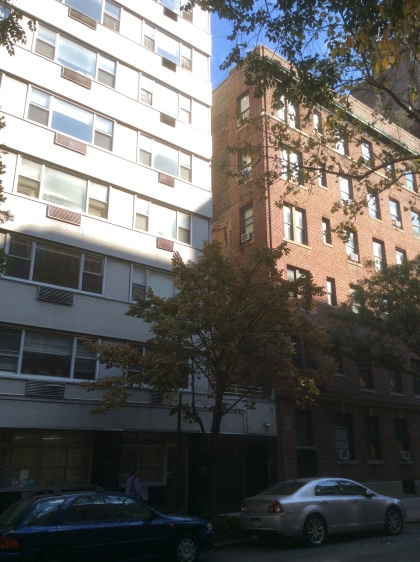
Waverly Pl and University at Washington Square, Manhattan, NY

Waverly Pl and University at Washington Square, Manhattan, NY

Listen to this podcast episode here or on Google Play, or subscribe on iTunes

Wednesday, October 19th, 2016

I take the E train north from where I’m staying in NYC’s Soho neighborhood of Manhattan to Washington Square. It’s a lovely, warm, and soft day, the sky blue and thickly scattered with puffy, small, wispy clouds like spilled cheap cotton balls.

On March 1, 1926, Margaret Sanger delivered a lecture titled ‘The Need for Birth Control in America’ to New York University’s Liberal Club. It takes a bit of digging to find out where the Liberal Club met at this time, but I finally discover it in a letter written to Sanger’s supporter and sometimes collaborator W.E.B. DuBois…. Read the written version here:

Ordinary Philosophy and its Traveling Philosophy / History of Ideas series is a labor of love and ad-free, supported by patrons and readers like you. Please offer your support today!


Happy New Year, and a Personal Reflection at the Close of My Fourth Decade

Signs on a post off Mountain View Road, rising out of the Anderson Valley, California

Today is the last day of 2016, and my last day in my 30’s.

It feels significant, somehow, turning 40.

Perhaps it’s because my love of history and my long background in collecting, buying and selling vintage goods. They’ve put me in the habit of organizing things into chunks of time: decades, centuries, eras. It’s a useful tool, even if a blunt one, since of course events and styles don’t come into and out of existence based on the turn of a calendar page. But the human mind looks for patterns existent in nature, which leads to the impulse to impose more precise ones on top of those, artificial even as they’re based on natural phenomenon. The calendar year traces the earth’s yearly rotation around the sun, and units of ten reflect the number of fingers we’ve used to count since our infancy.

As I enter my fifth decade of life, I’m looking forward to big changes. It’s been my habit generally to follow my whims, whatever sparked my interest and excited my imagination at the moment, wherever they’ve led, much as the Native Americans of the plains (which I’m reading about now) followed wherever the buffalo herds, fresh water, and new grasses led them. This free-spirit predisposition has given me a varied life, often an exciting one. But my tendency to take the short view has also hampered me in many ways, since pursuing a meaningful career, achieving larger goals, and making enough money to fund them usually demands strategic planning and sacrificing short term needs and desires. And the lack of long term strategy and planning has often severely frustrated my deeper desires for the former. Sometime luck smooths our way and facilitates our talents and passions, such as landing the right job, meeting the people who can help us, inheriting money or having the knack for making it, or hitting upon the right invention or idea which meets the need or captures the imagination of the public. But sometimes, we need to make our own luck in other ways.

I love what I do and pursue my interests as avidly as time allows, but I’ve found myself driven and bothered by a sense of ambition new to me. I suppose I’m one of those late bloomers, at least I hope so. I wish, no, need, to bloom. I’m not satisfied any longer cramming the pursuit of my deepest interests into the scraps of time left to me before and after the hours I’m busy making a living. Don’t get me wrong, I value what I do for a living: I believe I’ve done good, honest work, I’ve learned so much from my jobs, and I’m grateful for the opportunities. But I also believe I can accomplish some things more in line with my particular talents and passions if I impose more and much-needed discipline upon myself, and place myself in situations where I can meet others who share my passion for this kind of learning. I have so much learning to do, knowing only enough to realize I know so little.

So I’ve prepared for my return to academic studies and applied to many grad schools, casting my nets widely and ambitiously, waiting with baited breath to see what comes of it. My education is drawn out and rather piecemeal, but I’m hoping some great institution(s) of learning will do me the honor of finding my body of work, both academic and independent, compelling enough to place their faith in me. The last time I returned to university was one of the richest, most exciting, and most satisfying parts of my life, and I’m looking forward to my next immersion in learning with the greatest excitement.

In the meantime, I’m celebrating the turn of the year and of the next decade of my life quietly on a little camping trip, one of my favorite things to do. I’m feeling reflective so I’m not partying, which I’ve so enjoyed doing for past New Years’. I love carefree conversation, carousing a little, and dancing with my friends. But somehow, this feels like a different sort of occasion.

Happy New Year, my dear friends, family, and all of you who take an interest in my work. I thank you all sincerely, and with much love. I hope this year satisfies the deepest needs and desires of your minds and hearts.

~ Amy Cools

Margaret Sanger NYC Sites, Day 3 Part 1

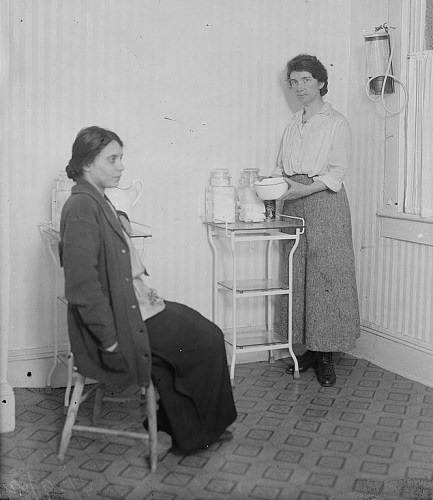
Margaret Sanger with Fania Mindell inside Brownsville clinic, forerunner of Palanned Parenthood, Oct. 1916, public domain via Library of Congress

Margaret Sanger with Fania Mindell inside Brownsville clinic, forerunner of Planned Parenthood, Oct. 1916

Thursday, October 20th, 2016

I get out in decent time to start the day’s explorations, just after eight, but it’s not long before I realize I’m tired and hence, a little cranky. My friends and I watched the third Hillary Clinton and Donald Trump debate last night and some of the commentary which followed, then finally went to sleep very late after we talked about what we just watched, and other things. I’m mostly on New York time now, but not quite.

The abortion issue came up almost immediately in the debate since the first question from the moderator was about the Supreme Court and the appointment of justices. Trump pledged to nominate only strongly anti-abortion candidates. Clinton was adamant that Roe v. Wade and laws protecting women’s access to birth control and abortion (with appropriate limitations) be upheld. Clinton also strongly endorsed Planned Parenthood, praising the services it provides and criticizing all efforts to defund it. I, for one, am grateful to Planned Parenthood, the organization that Margaret Sanger founded. Like the women Sanger made it her mission to help, I needed health care that I could not yet afford when I was still in my late teens and early twenties. I found it at Planned Parenthood. I’m grateful to the warm and caring providers there, and I simply did not find what many of the organization’s opponents describe: a ruthlessly pro-abortion, anti-life organization. Instead, I met women who gave me wise and medically-correct advice on all aspects of women’s health, including ways to prevent the need for abortion. That’s entirely in keeping with Sanger’s mission. She was, in fact, anti-abortion, with certain qualifications.

201 and 207 E 57th St, Manhattan NYC, former site of Bandbox Theater, 2016 Amy Cools

201 and 207 E 57th St, Manhattan NYC, former site of the Bandbox Theatre

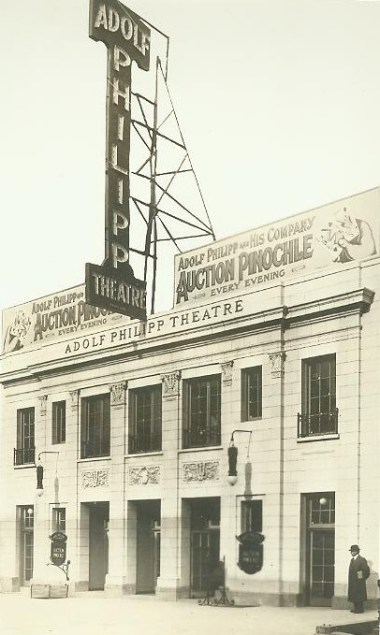
Adolph Phillip's Fifty-Seventh Street Theater, later the Bandbox Theater, courtesy of Schubert Archives

Adolph Phillip’s Fifty-Seventh Street Theater, later the Bandbox Theater, courtesy of Schubert Archives

I plan to head all the way to White Plains today, but as I’m preparing to buy the ticket at Grand Central Station, I pause to reconsider my day’s plans. In the end, I decide to put the trip on hold: it wouldn’t put my funds and time to best use since I was unable to discover the White Plains site location I sought at the New York Public Library yesterday. I’ll see if I’m more successful when I do more research tonight and perhaps go tomorrow. Instead, I decide to cover the northernmost Manhattan sites on my list after I hit up a few near the southwest end of Central Park that I didn’t get to yesterday.

I walk north towards Central Park and then east, and stop first at 205 E. 57th St near 3rd Ave where the Bandbox Theatre used to stand. Originally named Adolf Philipp’s Fifty-Seventh Street Theatre, the theater that became the Bandbox was built in 1912, closed in 1926, and demolished in 1969. Now there’s a Design Within Reach store and a high rise apartment building here.

On Feb 20th, 1916, Sanger and her supporters held a victory celebration at the Bandbox Theatre. The court had just dismissed the obscenity charges against her for publishing The Woman Rebel that had caused her to flee to Europe the year beforeWhile she was away, many papers had begun to discuss birth control and sex a little more openly, and as you may remember, her daughter had just died suddenly the previous November, soon after Sanger’s return from Europe. Public opinion was swinging to Sanger’s side, and the court no longer had the appetite to pursue a case against her. What had once seemed a public defense against immorality would more likely be perceived as an attack on free speech and emerging modern, scientific attitudes about human sexuality. Even without the court case, however, the arrest and indictments proved an enormous boost to Sanger’s cause. She was portrayed, by herself as well as others, as a sort of free speech and humanitarian martyr, a persecuted champion of the cause of women, especially the poorest and most downtrodden.

14 E 60th Street, with the green awning, NYC, photo 2016 Amy Cools.JPG

14 E. 60th Street, Manhattan, New York City

Then I head northwest to 14 E. 60th St between 5th and Madison Aves. It’s a 13-floor building erected in 1903. Two restaurants, Rotisserie Georgette and Avra Madison Estiatorio, occupy the ground floor, and apartments above. Sanger had been staying at the Ambassador Hotel but moved to one of the apartments at this address on December 17, 1936. Her move here followed on the heels of the birth control movement’s victory in the Dec 7th decision in the One Package case, and not long before Sanger attended the Conference on Contraceptive Research and Clinical Practice that met at the Roosevelt Hotel which, as you may remember, I visited on my first day following Sanger here in New York City.

1935 and 1936 were busy years for Sanger. In addition to the One Package trial, she toured India, speaking to women’s groups and conferences and debating Gandhi there in December of 1935. She continued on to Hong King, then Japan. In Japan, she visited Tokyo’s fledgling birth control clinic founded by her Japanese counterpart Shidzue Ishimoto, and reviewed birth control methods that had been developed in that country since her 1922 visit. While the birth control movement was also beleaguered in that country by law and custom, many Japanese health care professionals were working on new and effective methods of birth control in that island nation where population growth was a constant and pressing concern. In 1932, she had met a Japanese physician at a birth control conference who had developed a new type of diaphragm. He had sent her that package which was intercepted in customs and led to the One Package case finally litigated three years later. She planned to continue her travels in China and Malaysia but had to cut her trip short due to recurring gallbladder trouble, then a broken arm. She stopped for a short visit in Hawaii, then returned to mainland U.S. to rest and recuperate.

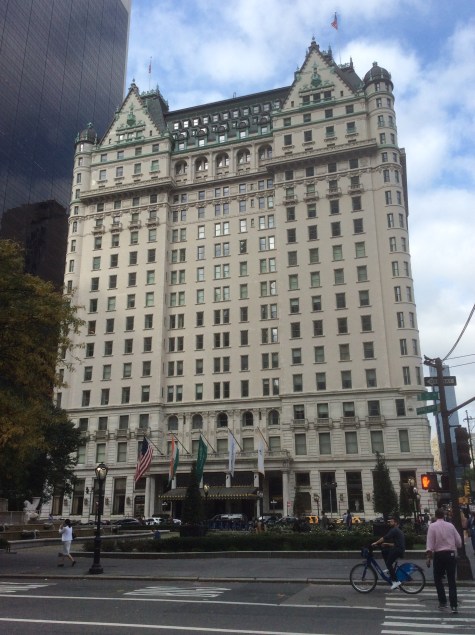
The Plaza Hotel, Manhattan, New York City, photo 2016 by Amy Cools

The Plaza Hotel, Manhattan, New York City

I head west towards Central Park then veer south towards its southeast corner to 768 Fifth Ave at 59th St. Three occasions bring me here to the grand Plaza Hotel.

On March 15th, 1917, the National Birth Control League held a luncheon for her here in celebration of her release from Queens County Penitentiary. She had been imprisoned there for 30 days, convicted of violating anti-obscenity laws while operating her birth control clinic in Brownsville, Brooklyn.

Then from November 11th – 13th, 1921, the First American Birth Control Conference, organized by Sanger, was held here. The conference was widely attended by medical professionals, social scientists, humanitarians, authors, suffragists, socialists, and socialites. Its list of sponsors was likewise distinguished, including famed Parliamentarian and future Prime Minister Winston Churchill. Sanger gave the opening address, in which she called on the medical profession to join social workers and birth control activists in addressing the sexual dimensions of problems of hunger, poverty, and overpopulation. As she often pointed out, there were plenty of people working hard to alleviate poverty and disease, but there were very few paying attention to their primary root causes: the human need for love and sex. This was the conference which launched the future Planned Parenthood and concluded with the Town Hall event which turned into a police raid. Between the conference and the publicity following the raid, Sanger was firmly placed as the United States’, and indeed the world’s, preeminent birth control activist and spokesperson.

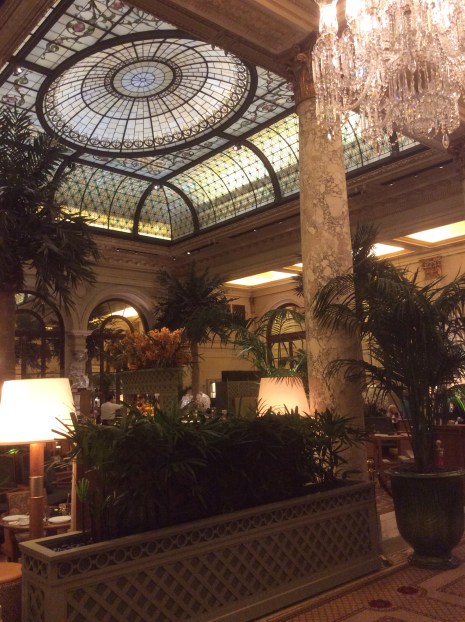
An interior view of the beautiful Plaza Hotel, Manhattan, NYC, 2016 Amy Cools

An interior view of the beautiful Plaza Hotel, Manhattan, NYC

Several years later, on February 26th, 1929, Sanger presided over a dinner promoting the Birth Control Clinical Research Bureau. In her opening speech, Sanger outlined the history of her own birth control activism and the struggles and legal battles of the birth control movement in the United States from 1915 until that day. She also credited John Stuart Mill and Francis Place as founders of the modern birth control movement, about a century before her own activism began. Like Sanger, Mill was moved to support birth control by personal horror at the worst effects of children conceived in poverty: at age 17, he came across the corpse of a strangled infant discarded in a park. And like Sanger, Mill believed that when the poor had more children to help make money for the family, wages were inevitably driven down by the glut of laborers seeking employment, leading to a downward spiral of impoverishment and immiseration. So in 1823, young Mill and a friend distributed birth control pamphlets written by his father’s friend and social reformer Francis Place, and were arrested and imprisoned for their trouble.

The Park Lane Hotel and adjoining buildings, Manhattan, New York City, 2016 Amy Cools

The Park Lane Hotel (with the blue flags) and adjoining buildings

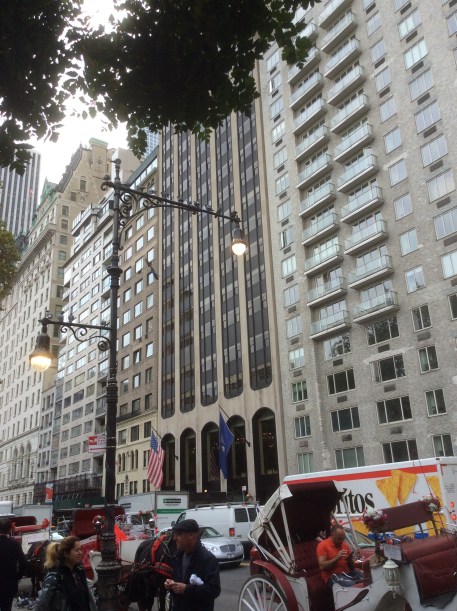
I walk a little ways west along the southern end of Central Park to 36 Central Park South, a.k.a. 59th St. Here at the Park Lane Hotel, Sanger delivered her speech ‘My Way to Peace’ to the New History Society on January 17, 1932. In my view, it’s a nasty speech. While Sanger generally insisted that birth control be entirely voluntary, the result of education and the right of women to have control over their own bodies, in this speech she called for coercive sterilization of ‘the unfit’. As Nazism was developed and implemented in the years to come, Sanger opposed it staunchly, sharply criticizing its racial doctrines and opposing its coercive practices. Though she justified it on the grounds of improving public health and decreasing mortality rates, to my mind she was never able to sufficiently explain how her earlier call in ‘My Way to Peace’ for coercive sterilization of ‘mental defectives’, people with certain diseases, and convicted criminals was morally superior to Hitler’s fascist system when it came to these unfortunate and marginalized groups.

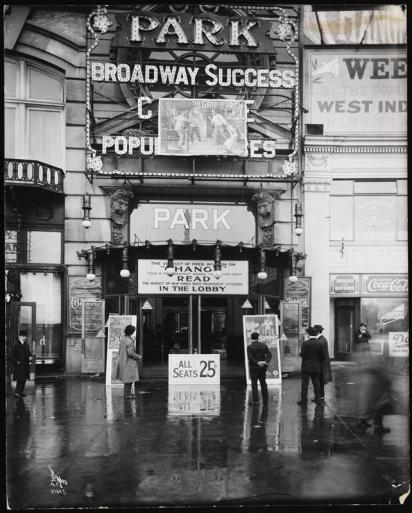
New York Tribune Fri Nov 18 1921, Park Theater Cox Speech

New York Tribune, Fri Nov 18 1921, Announcement of Park Theater Margaret Sanger and Harold Cox appearance

One place I miss on this trip is the former site of the nearby Park Theater, near the southwest corner of Central Park, where Harold Cox delivered the Sanger speech he was prevented from making at the Town Hall five days earlier. A New York Tribune announcement describes the location as ‘Columbus Circle near 59th and B’way’ (Broadway). As I consult the 1923 Bromley atlas I’ve been consulting for much of this series, I don’t find the Park Theater. Later, I search through an earlier edition of the Bromley Atlas and this time, I’m in luck. The Park Theater, renamed the Cosmopolitan Theater by 1923, was on 58th St, the second address to the west of Eighth Ave, its northeast corner at Columbus Circle at the southwest edge of Central Park. It stood where the Time Warner Center now faces onto 58th St, about where Google Maps identifies 322 W. 58th St.

In 1944, Sanger reminisced:

‘…Birth control, fifteen, twenty years ago was a lurid and sensational topic… The very term was one not mentioned in polite society, thanks to Anthony Comstock who had Congress classify it with “obscene, and filthy literature”… Our struggles lacked the dignity they have today. Back in 1921, Harold Cox, brilliant member of the English Parliament and Editor of the Edinburgh Review was to speak with me at that early forum of free speech, Town Hall. Our subject was “Birth Control: Is it Moral?”

Entrance of the Park Theater, formerly the Majestic, Columbus Circle, 59th St, NY, courtesy of MCNY

Entrance of the Park Theater, formerly the Majestic, at Columbus Circle, photo courtesy of MCNY

With astonishing directness Roman Catholic Archbishop Patrick J. Hayes, through his emissary Monsignor Joseph P. Dineen, closed the meeting before it even opened. We had grown accustomed to opposition, from the combination of the Comstock group …with the Roman Catholic hierarchy, but never had the interference been so brutally direct before. Time and again theatres, ballrooms where I was to speak were ordered closed before the meeting could be held. In city after city this occurred during the years 1916, ‘17 and ‘18, but the climax was the now famous Town Hall incident which raised the issue throughout the country. Can one in public office use the power of that office to further his personal religious beliefs?

Mr. Cox and I were met at the steps of the Town Hall that evening by policemen, barred from entering and told, “There ain’t gonna be no meeting. That’s all I know…

We had the hierarchy to thank for so publicizing our meeting that the second held shortly after, at the big Park Theatre in Columbus Circle was packed fifteen minutes after a single door was opened. Two thousand people, many of whom had never heard of birth control before Cardinal Hayes gave it nation-wide publicity, stood outside clamoring to get in…”

I descend into the subway station at Columbus Circle and take the A train north, almost to the top of Manhattan Island. There are many sites on my list from Inglewood all the way back down to the southern end of Central Park, so I decide to visit them from north to south…

To be continued….

*Listen to the podcast version here or on Google Play, or subscribe on iTunes

~~~~~~~~~~~~~~~~~~~~~~~~~~~

Sources and inspiration: 

14 East 60th Street‘, from 42Floors website

About Sanger: Biographical Sketch‘, from The Margaret Sanger Papers Project at New York University.

Another Look at Margaret Sanger and Race‘, Feb 23, 2012. From The Margaret Sanger Papers Project at NYU

Bandbox Theatre: East 57th Street near Third Avenue, New York, NY‘, International Broadway Database

Blake, Aaron. ‘The Final Trump-Clinton Debate Transcript, Annotated.’ Oct 19, 2016, The Washington Post: The Fix

Bromley, G.W. and Co. Atlas of the Borough of Manhattan, City of New York. Desk and Library edition, 1916, Plate 87 . Retrieved from Lionel Pincus and Princess Firyal Map Division Digital Collection, The New York Public Library.

Bromley, G.W. and Co. Atlas of the City of New York, 1921 – 1923, Plate 82 and Plate 87. Retrieved from Lionel Pincus and Princess Firyal Map Division Digital Collection, The New York Public Library.

Chesler, Ellen. Woman of Valor: Margaret Sanger and the Birth Control Movement in America. New York: Simon & Schuster, 1992

Eig, Jonathan. The Birth of the Pill: How Four Crusaders Reinvented Sex and Launched a Revolution. W.W. Norton & Company, New York, 2014.

Gopnik, Adam. ‘Right Again: The Passions of John Stuart Mill‘. Oct 6 2008, The New Yorker

Grimaldi, Jill. ‘The First American Birth Control Conference‘, Nov 12, 2010. The Margaret Sanger Papers Project at NYU

Guillin, Vincent. Auguste Comte and John Stuart Mill on Sexual Equality. Brill: Boston, 2009.

International Theatre: 5 Columbus Circle (W. 58th & 59th), New York, NY‘, International Broadway Database

Mrs. Sanger Glad She Was Indicted‘, New York Tribune, Feb. 21, 1916, p. 2, via The Margaret Sanger Papers Project, NYU

New-York Tribune, two selections from Nov 18, 1921, page 11: ‘Birth Control Appeal Fails to Move Enright‘ and ‘You Are Invited to Hear Margaret Sanger… New York, New York. Via Newspapers.com

On the Road with Birth Control‘, Newsletter #21 (Spring 1999) of The Margaret Sanger Papers Project at NYU

Pokorski, Robin. ‘Mapping Margaret Sanger‘ from The Margaret Sanger Papers Project at NYU

Regan, Margaret. ‘Margaret Sanger: Tucson’s Irish Rebel.Tucson Weekly, Mar 11, 2004.

Sanger, Margaret. ‘Birth Control: Then and Now,’ 1944, Typed Article. Source: Margaret Sanger Papers, Sophia Smith Collection

Sanger, Margaret. ‘Gandhi and Mrs. Sanger Debate Birth Control,’ Recorded by Florence Rose, published in Asia magazine, Vol. 26, no. 11, Nov. 1936, pp. 698-702

Sanger, Margaret. ‘My Way to Peace,’ Jan. 17 1932. From The Margaret Sanger Papers Project at NYU

Sanger, Margaret. Margaret Sanger, an Autobiography. Cooper Square Press: New York 1999, originally published by W.W. Norton & Co: New York, 1938

Sanger, Margaret. ‘Opening Address for Birth Control Clinical Research Bureau Dinner‘, Feb 26, 1929. Source: Margaret Sanger Papers, Sophia Smith Collection, Smith College, Margaret Sanger Microfilm S71:153.

Sanger, Margaret. The Pivot of Civilization, 1922. Free online version courtesy of Project Gutenberg, 2008, 2013

Sanger, Margaret. Woman and the New Race, 1920. Free online version courtesy of W. W. Norton & Company

New Podcast Episode: Margaret Sanger NYC Sites, Day 1 Part 3

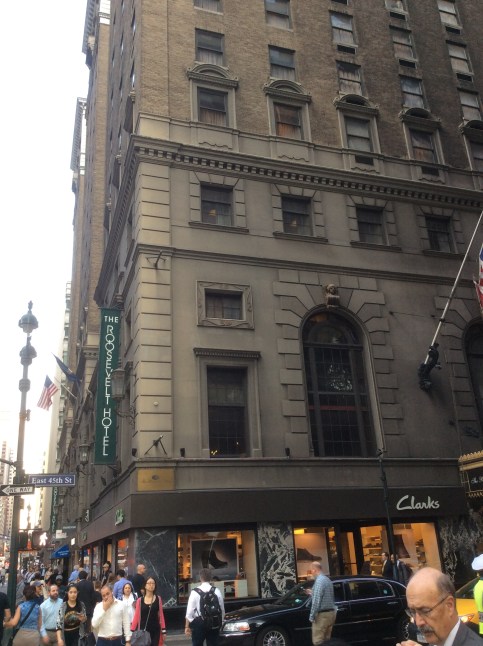
roosevelt-hotel-exterior-view-manhattan-nyc-photo-by-amy-cools-2016

Listen to this podcast episode here or on Google Play, or subscribe on iTunes

Tuesday, October 18th, 2016, continued

I continue north to the Roosevelt Hotel at Madison Ave and E. 45th Street. Margaret Sanger attended the Conference on Contraceptive Research and Clinical Practice that met here on December 29th and 30th, 1936. She delivered a welcoming speech on the 29th and spoke on a panel the next day which discussed technical and medical birth control issues. While The New York Times reported optimistically on the effectiveness of birth control methods available at the time and Sanger spoke proudly of the ‘56,000 women who have voluntarily appealed to us for help’, she and many of the attendees knew that the lack of access to and effectiveness of birth control remained big problems. It was still fairly expensive; anti-obscenity laws were barriers to access and information in those pre-Griswold years; and too many of the methods were only moderately effective since they were not always easy to use correctly, especially in well, you know, the heat of the moment…. Read the written version here:

Ordinary Philosophy and its Traveling Philosophy / History of Ideas series is a labor of love and ad-free, supported by patrons and readers like you. Please offer your support today!

Activism is Not Enough: As Long As We Keep Shopping and Don’t Vote, It’s Our Fault Too!

I’m out of town visiting family, and though I’m having a wonderful time, I miss you all and I’m anxious to get some new writing done. In the meantime, here’s a piece I wrote a couple of years ago, I hope you find it of interest!

Amy M Cools's avatarOrdinary Philosophy

I live in the San Francisco Bay Area, a wonderful place to live. It has a rich culture and a thriving music and arts scene and nightlife. It’s surrounded by great natural beauty in all directions: from oak forests to redwood groves, from chaparral to sandy beaches and sea cliffs. It has a fascinating history, plentiful and delicious food, beautiful architecture, and balmy weather. It’s also a liberal ‘bubble’, with an appetite for activism and, for better and for worse, a penchant for righteous outrage.

I admire and identify with the history and the culture of activism. Like the reformers of history and of today, the brave people who fight to create a more just world are among the finest the human race has ever produced. But I’ve been feeling something a bit lacking in activist movements lately. They still march in the streets, and we join them there and online by signing petitions…

View original post 2,290 more words

O.P. Recommends: Professor Watchlist Could Make McCarthyism Look Like a Picnic, by Ellen Schrecker

2993d-elementary_school_class_on_american_indian_cultureI heard of Professor Watchlist a little while ago and when I glanced at it, it creeped me out a little: it looked like Yelp for cranks, but I didn’t think much of it. But when I read this letter, I realized it’s an example of something more serious: the sort of self righteous tendency to witch-hunt, on the left and on the right, that the Internet fosters, and that can all too easily destroy reputations and careers. I’m a believer in free speech and the marketplace of ideas, but we all need to keep it a place that fosters liberty too, by keeping a diligent watch on our own and others’ excesses. Let’s make sure that the court of public opinion is not allowed to turn into a kangaroo court.

Ordinary Philosophy and its Traveling Philosophy / History of Ideas series is a labor of love and ad-free, supported by patrons and readers like you. Please offer your support today!

On Empathy, Sympathy, and Compassion

Here’s a little essay I wrote about two years ago.

Amy M Cools's avatarOrdinary Philosophy

I was listening to an episode of Inquiring Minds podcast the other day, and in it, cognitive scientist Paul Bloom discusses his and others’ research on the earliest manifestations of morality in human babies, a hot topic in psychology and neuroscience these days.

Near the end of the (fascinating) interview, Bloom discusses the difference between compassion and empathy, as he sees it:

‘..I’m writing a book on empathy now, and I’m against it. I’m arguing that empathy’s a poor moral guide. And it’s… it’s like saying you hate kittens, or you’re in favor of Ann Coulter… it just sounds really weird. But I would make a distinction between empathy and compassion, where empathy is putting yourself in someone’s shoes and feeling their pain. And I think empathy can do good in the short term, but it tends to distort things. It’s racist and parochial, it’s a lot easier for me…

View original post 1,660 more words

New Podcast Episode: A ‘Light’ That Obscures: The Misrepresentation of Secular Thought in Pope Francis’s First Encyclical

foot-washing-255x212Listen to this podcast episode here or on Google Play, or subscribe on iTunes

Like many, I’ve found myself pleasantly surprised and impressed by many of the sayings and doings of the new Pope. He emphasizes helping the needy and is critical of over-judgmentalism and of hyper-materialism (he practices what he preaches by driving a cheap car and living in a simple apartment). He also goes out of his way to spend time with ordinary people, be it in a correctional facility, in processions, or on the phone. Often dubbed ‘The People’s Pope’, he’s making the most of his promotion, on a mission to do real good in the world. Catholic or not, most people are thrilled that such an influential person is providing such an excellent example of how to live a life of service and of mercy.

But I wasn’t quite as pleased the author of an article in the Huffington Post about Pope Francis’ first encyclical Lumen Fidei (The Light of Faith) co-authored with the previous Pope, Benedict XVI. The author says that the encyclical ‘…reflects Francis’ subtle outreach to nonbelievers’. While I consider myself an atheist, I’m a cultural Catholic, brought up with that religion. Since so many of my loved ones are observant Catholics and the Catholic church is so influential in the world, I’m very interested in what goes on in it. The first encyclical of a new Pope is a big deal, and this encyclical does a good job of promoting Catholic teaching with inspirational language and metaphors. However, the authors also resort to bad arguments to make their point… Read the written essay here:

Ordinary Philosophy and its Traveling Philosophy / History of Ideas series is a labor of love and ad-free, supported by patrons and readers like you. Please offer your support today!

Margaret Sanger NYC Sites, Day 2, Part 2

79 and 71 W. 12th Street, New York City. 77 woy

79 and 71 W. 12th Street, New York City. There’s no longer a building with that address; the person in the blue shirt is passing by where it would have been. A NYC city atlas from the era seems to show that it was a residential building.

Wednesday, October 19th, 2016, continued

The next site I seek is right across the street from the New School on W. 12th St near 6th Ave. The address was number 77, but as you can see, there’s no building with that number here anymore. According to Robin Pokorski of the Margaret Sanger Papers Project, Sanger made her first public appearance here on January 6th, 1916 after returning from her self-imposed exile in Europe to escape obscenity charges. She eventually decided to return and face them, however: her husband had already done so on behalf of her cause the month before, and her chances in court were better now since birth control had become a much more regular topic in the press. I find no record of her talk nor a history of a public venue here. I do find a listing for 77 W 12th St in the Catalogue of the First Exhibition of the Society of Independent Artists, Volume 1, published in 1917. It’s the address of Caroline Speare, who has two pieces of art pictured in the catalogue. Looking through it for more about Speare, which I don’t find, I stumble across an early charcoal work by Georgia O’Keeffe, which is a delightful find. Perhaps talks were held at Speare’s place as well as displays of her art, but I can find no evidence of this at this time.
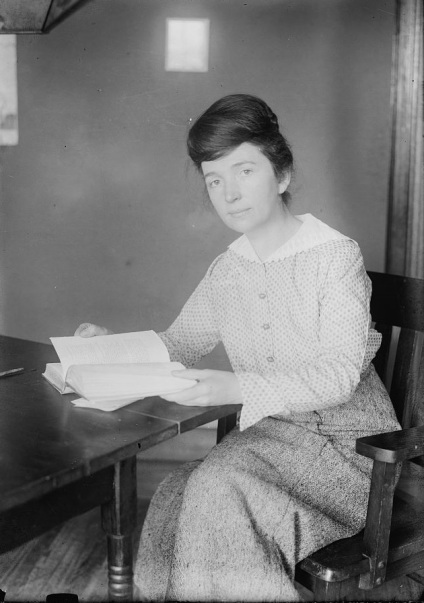
Margaret Higgins Sanger, Jan 1916 by Bain News Service, public domain via LOC

Margaret Higgins Sanger, Jan 1916 by Bain News Service, public domain via LOC

I do find a form letter which Sanger had written the previous day, on Jan. 5th, 1916, to send out to friends. In it, she writes about the indictments against her over her distribution the year before of her magazine The Woman Rebel and its so-called obscene subject matters: the sexual liberty of women and birth control.

She also shared the news in the letter, briefly, of the death of her ‘little daughter’ from pneumonia two months before. Five-year-old Peggy’s death was very hard on Sanger, and the brevity of her announcement in this letter betrays her feelings. She mourned her daughter for the rest of her life, sometimes in the shape of panicked dreams that her little girl needed her help but couldn’t be found, sometimes by looking into systems of spirituality that might put Sanger in touch with little Peggy somehow, be it Rosicrucianism or spiritualism. Sanger likely felt some degree of guilt that she left her daughter behind for so long, though Peggy was well cared for by family and friends. Her young son Grant also blamed Peggy’s illness on Sanger’s being away. This was a sore spot in their relationship for years to come, as were Sanger’s frequent and long absences from the lives of her children generally.
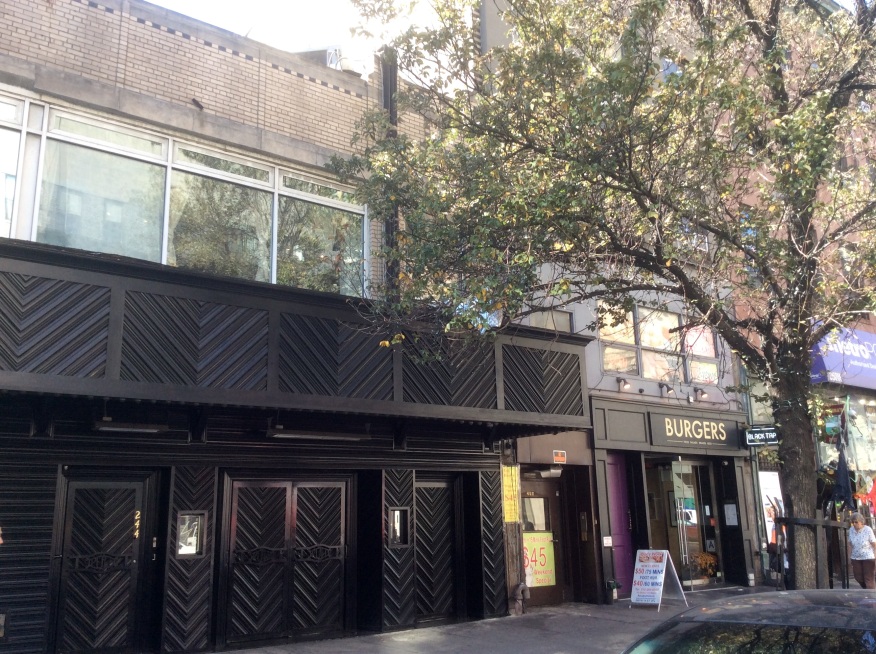
246 W. 14th Street, New York City, photo 2016 by Amy Cools

246 W. 14th Street, New York City, is on the right-hand side of the building with the chevron-patterned facade, where Up & Down and Stash night clubs are now. It used to be one nightclub called Nell’s, then Darby’s.

I head two blocks north on 6th Ave and turn left (west) on W 14th to number 246. Sanger lived here in December of 1916. The building I find here now, with a nightclub with a marquee and theater style doors painted a deep glossy black on its ground floor, is numbered 244, and the beer and burger shop next door is numbered 248. It appears 246 and 248 W. 14th St. used to be one address not too long ago before it split into two smaller spaces. There are apartments above the burger shop. It’s a five-story building with a store on the ground floor as a contemporary atlas indicates was there, but if it is original to Sanger’s time, it’s hard to tell given the changes to the exterior over the years.
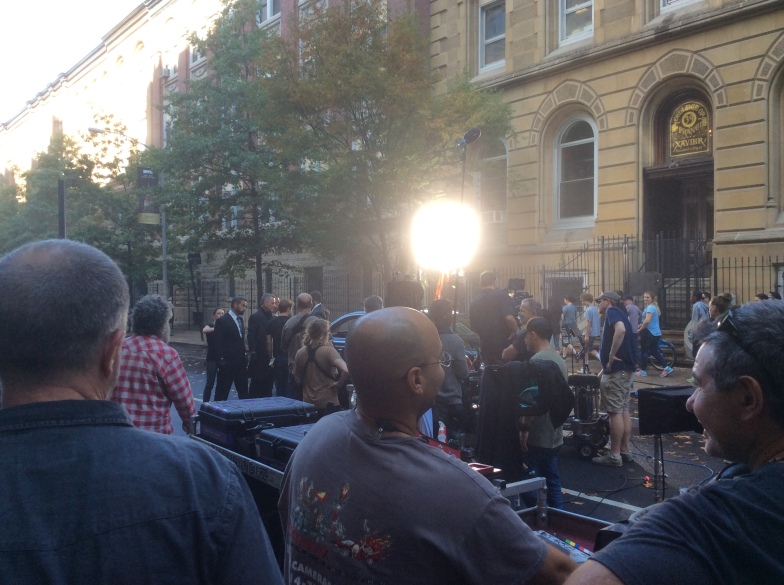
Gotham shoot on 15th St in NYC, photo 2016 by Amy Cools

Gotham shoot on W. 15th St in NYC

Then I turn back east, then north, towards 46 W. 15th St. between 5th and 6th Aves. This stretch of 15th turns out to be the set for a scene from Gotham, as a sign taped to a lamppost says, which is presumably the TV show of that name. I’m allowed to pass by quickly but not stop at my destination until the scene is shot. So I watch the action while I wait. There’s a man of middle age, handsome, wearing slicked-back gray hair, a long black coat, and a serious expression, who stoops to attend to something near the rear driver’s side tire of a black car as the cameras record. Then, next take, he’s behind the wheel, parked, and he ‘flings’ a man aside who’s just leaned into the driver’s side window by shoving open the door, then leaps out and ‘punches’ another man who runs at him from the rear of the car. As I wait, the actors take breaks while they ready the car for another take. I find myself standing next to the actor who plays the protagonist of the scene. He looks on, bored, but smiles pleasantly when he catches my eye.
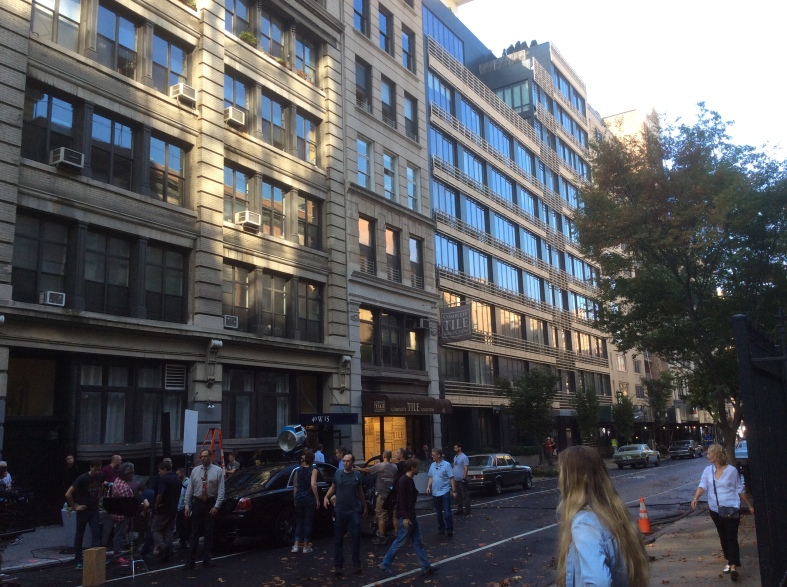
 42 and 50 15th St, New York City, photo 2016 by Amy Cools

Numbers 42 and 50, 15th St, Manhattan, NYC. They’re taping scenes from Gotham on this street. Number 46 would have been about where the glassy building next to the tile company is now

I return to take my photos in a pause between takes when they allow people to pass by. Again, the address I seek no longer belongs to any building. The tile company numbered 42 is next to a large, sleek, glassy building numbered 50. The Birth Control Clinical Research Bureau opened its third, expanded location here at 46 W. 15th Street in early 1929. (Pokorski gives the year of the move as 1930, but this photo and other evidence I find place it in the year before.) I find an image of the BCCRB, but it’s owned by Getty Images. The licensing fee is expensive so I won’t use it to illustrate this account, but you can see it online. In the background of that photo, you can see a W. 15th St address printed on an awning, so we know what’s happening in the foreground was at this location: the police raid of the BCCRB on April 15th, 1929.
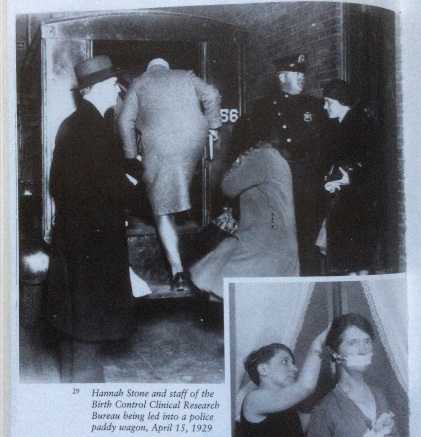
Birth Control Clinical Research Bureau raid 4-15-1929, photo of photo in Chesler's Sanger biography, 2016 Amy Cools

Birth Control Clinical Research Bureau raid at 46 W. 15th St, April 15th 1929, photo of photo in Chesler’s biography of Sanger

An undercover policewoman, Ann McNamara, posing as a patient, gave her medical history, received a pelvic exam, and was fitted with a diaphragm at the BCCRB. She reported the details of her visit to Mary Sullivan, administrator of the New York Police Department Women’s Bureau who led the raid, on the assumption that the clinic’s practices which McNamara observed were illegal. The police officers rounded up the clinic’s medical director Dr. Hannah Stone, assistant medical director Dr. Elizabeth Pissort, and nurses Antoinette Field, Marcella Sideri, and Sigrid H. Brestwell. The raid ended up garnering a lot of support for the BCCRB and for the birth control cause in general. As it turned out, the clinic was operating in accordance with state laws since it was run by physicians, and the police had overstepped their legal bounds by improperly seizing and reading confidential medical records. Physicians all over the United States and beyond were outraged at this violation of doctor-patient confidentiality and public support flooded in. The case was dropped, the five women were vindicated, and detective Sullivan was demoted.

It looks like they’re about to film another action scene here: the car is rigged with cameras and a machine nearby is dramatically pumping out steam. I have too many places to go today to stay and see what happens. But if you’re watching Gotham one day and see a woman in the background wandering with a red-covered tablet and a brightly printed Thai cotton shirt, that’s me. I wasn’t exactly good about staying put the whole time.
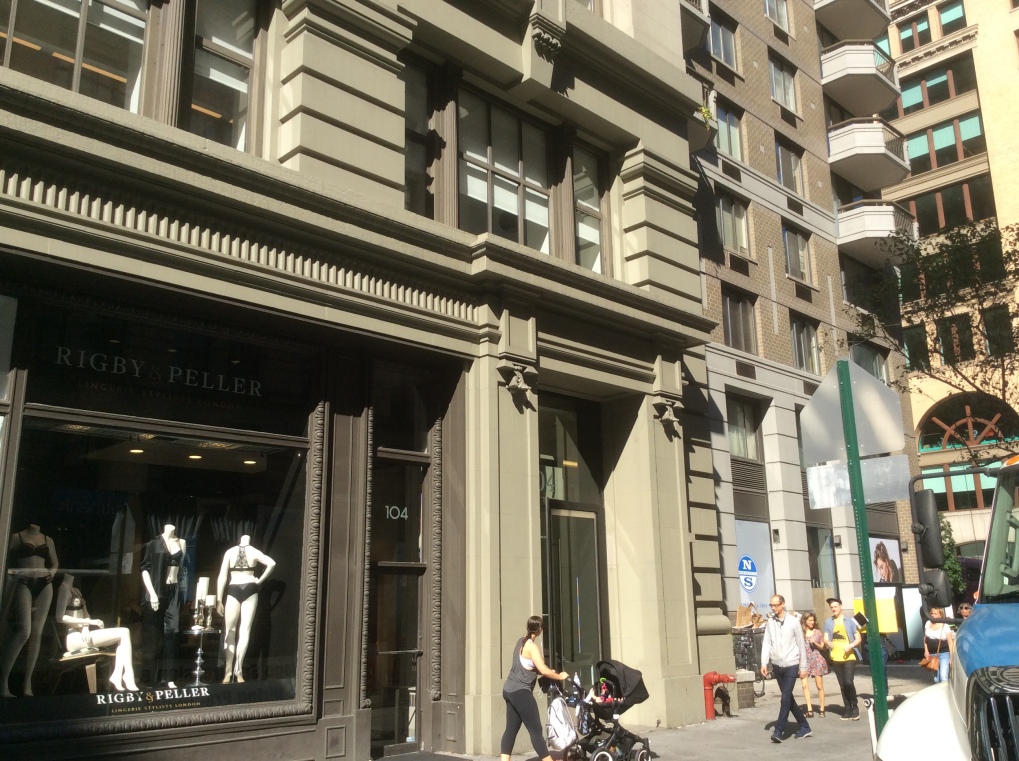
104 Fifth Ave, the first location of the American Birth Control League and the BCCRB, photo 2016 Amy Cools

104 Fifth Ave, the first location of the American Birth Control League, first opened here in 1921, and the Birth Control Clinical Research Bureau, which opened across the fall from the ABCL on Jan 1st, 1923.
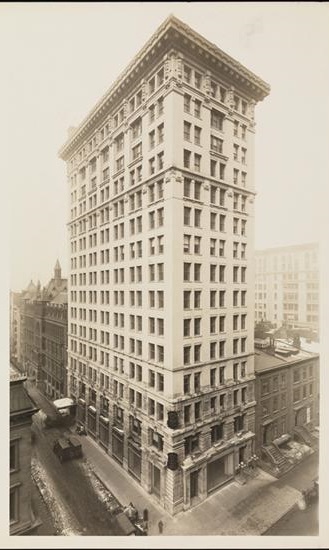
Stuyvesant Building, 100 Fifth Ave, at East 15th Street ca. 1910, photo courtesy of the Museum of the City of New York

Stuyvesant Building, 100 Fifth Ave, at East 15th Street ca. 1910, photo courtesy of the Museum of the City of New York

I walk just around the corner and a little ways north on Fifth Ave to number 104 between 16th and 15th Streets. 104 Fifth Ave was added to the already existing Stuyvesant Building at 100 Fifth Ave, built in 1906, in a style to match.

This was the first home of the Birth Control Clinical Research Bureau, founded here on January 1st, 1923 across the hall from the first offices of the American Birth Control League. The ABCL, as you may remember, was conceived of in Juliet Rublee’s home in 1921, then instituted here later that same year. The American Birth Control League would join forces, or in a sense, reunite, with the Birth Control Clinical Research Bureau and become Planned Parenthood in 1942. More on Planned Parenthood to follow in an upcoming account.

And just around the corner from 104 park Ave, north and then left at W. 16th St, at number 17 between 5th and 6th Aves, is the Margaret Sanger Clinic House. The actor’s trailers and equipment trucks from the Gotham shoot I just passed through a block over on W 15th are parked along this street, and one is so placed that it blocks a clear shot of the front of the building. So I take some closeup photos and one at a sharp angle which shows its location next to the Center for Jewish History. This seems fitting, since Sanger’s early work as a nurse in the Lower East Side and her birth control clinics served so many Jewish immigrant women struggling to make a new start in the United States.
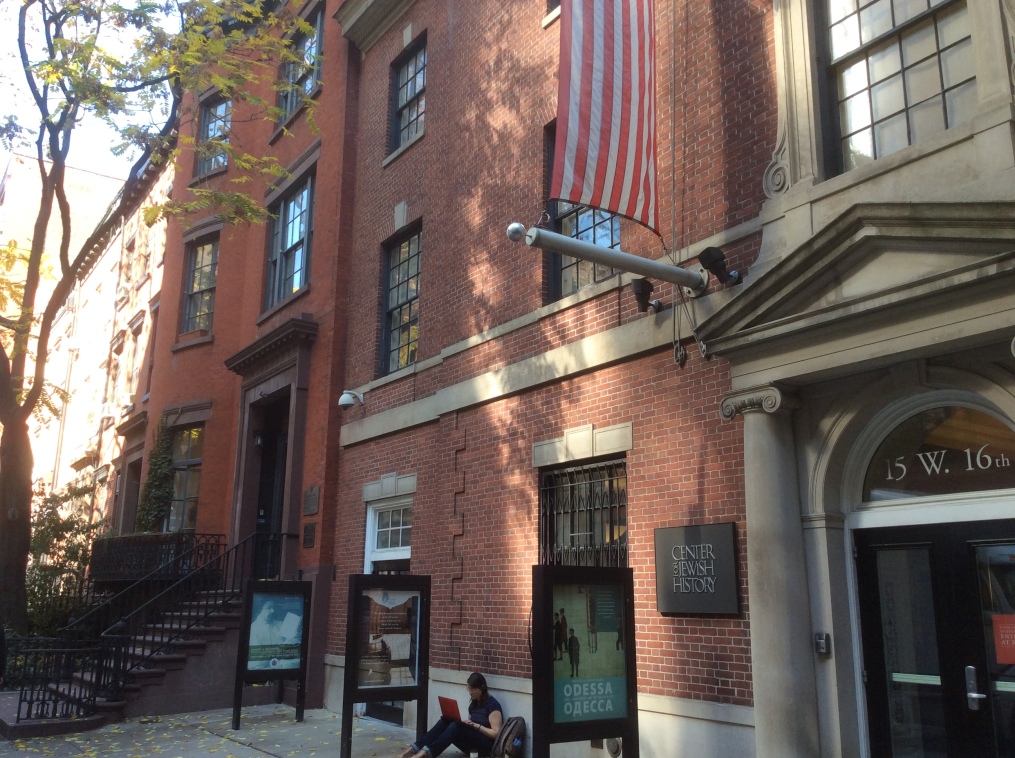
Margaret Sanger Clinic House at 17 W. 16th St next to the Center for Jewish Studies, 2016 Amy Cools

Margaret Sanger Clinic House at 17 W. 16th St, next to the Center for Jewish History
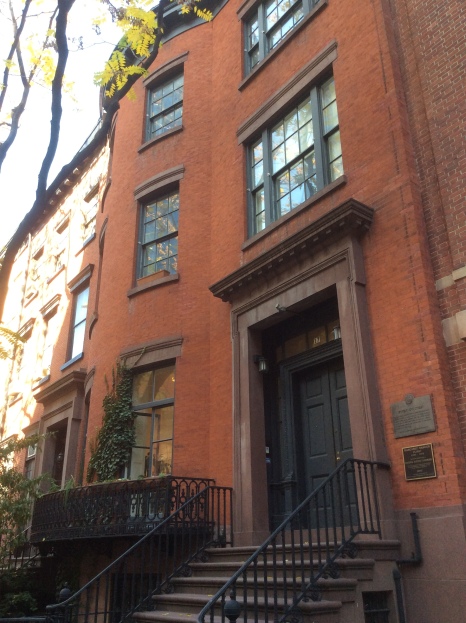
Margaret Sanger Clinic House at 17 W 16th St, New York City, photo 2016 Amy Cools

Margaret Sanger Clinic House at 17 W 16th St, Manhattan, New York City

The Margaret Sanger Clinic House at 17 W. 16th St, originally the second home of the Birth Control Clinical Research Bureau, was the first legal birth control clinic to open in the United States. That’s because, as discussed above, Sanger took care to run this one within the parameters of the law by placing it under the direction of physicians. Sanger was ambivalent about legally limiting all birth control services to physician-run clinics. For one thing, physicians were not yet in general agreement about the medical and moral effectiveness and desirability of birth control, for many reasons. Many physicians opposed it on religious grounds, others on positive eugenics grounds. And many more simply recognized that there was far too little known as yet about the processes of reproduction and how to control it.

Sanger knew the latter all too well, so often frustrated by her inability to help women control their fertility as much as she would like too. Most birth control methods had a fairly high failure rate even when used correctly, but using them correctly was time-consuming and awkward, especially, of course, in times of passion, so the failure rates overall were very high. Many of the best contraceptive devices were expensive and many other women, the very ones who needed birth control the most, could not afford doctor’s visits. And because the supply of artificial contraception was driven into the black market, all manner of dubious, ridiculous, and even outright dangerous methods proliferated. Sanger and the BCCRB staff knew this all too well and kept a curio cabinet full of these junk devices and potions at the clinic as examples of what not to use (which the police seized in the raid as well, in their ignorance). However dangerous, however dubious, women still continued to use them, as they were often safer than the other alternatives: self-inflicted or illegal abortions, or carrying a pregnancy to term. Maternal and infant mortality rates were very high at the time, especially among the poor.

Birth Control Clinical Research Bureau in New York, photo via the Margaret Sanger Papers, no known restrictions on use

Birth Control Clinical Research Bureau in New York, photo via the Margaret Sanger Papers

But Sanger’s more pressing doubts about restricting birth control services to physicians sprung from her feminist concerns over women’s right to control their own bodies and destinies. Many physicians believed that women should have as many babies as their bodies conceived, whether or not their patients believed this too. This subordinated women’s decisions about sex, reproduction, and family planning to those of their doctors, whose opinions on the matter often had nothing to do with medical concerns. And even more concerning since the ramifications were wider, much of the ignorance about reproduction stemmed from the indifference or squeamishness of the male-dominated medical and research science professions. Most were simply unwilling to risk their reputations and professional careers in the search for knowledge about human reproduction, still considered a distasteful, messy side of humanity best kept under a discreet veil of sentimentality and ignorance.
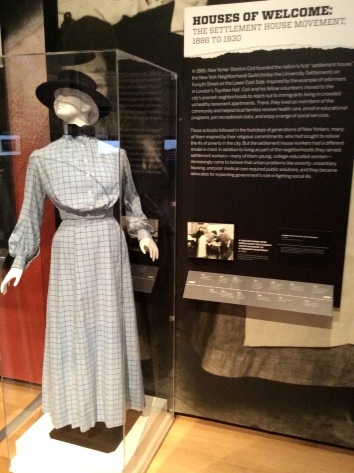
Nurse's uniform, ca. 1905, of Lilian Wald visiting service to the Lower East Side tenements of NYC

Nurse’s uniform, ca. 1905, of Lilian Wald visiting service to the Lower East Side tenements of NYC. Sanger likely wore a uniform very like this.

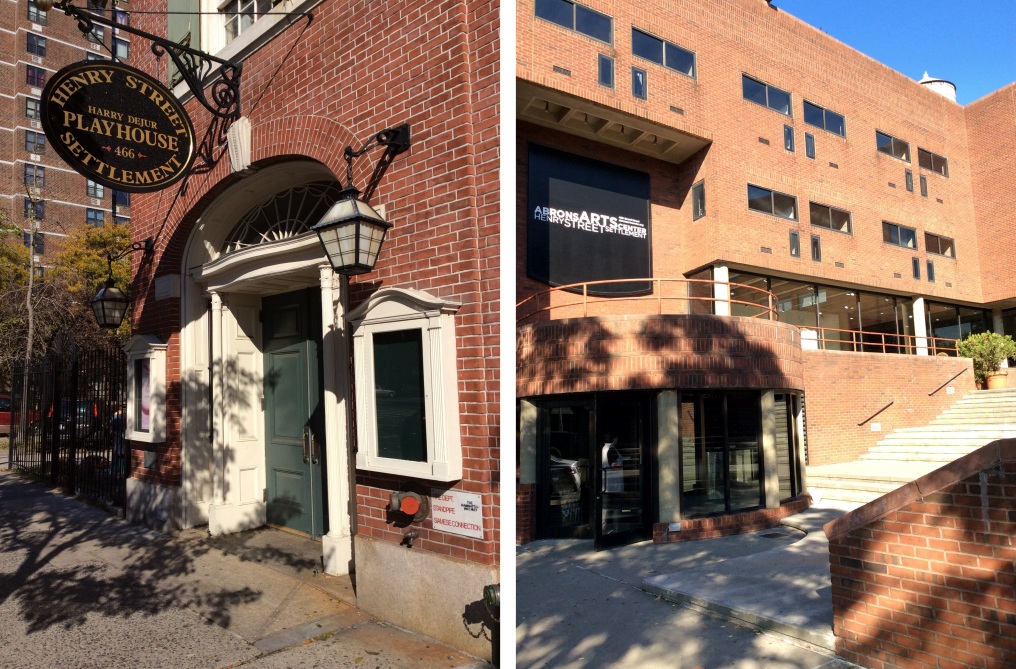
I take the subway north and return to the New York City Public Library. First, I consult Ellen Chesler’s excellent Sanger biography for more details of discoveries I’ve made and to refresh my memory on some other things. As I read page 62 of Woman of Valor, I’m reminded that Sanger worked for awhile as a nurse with Lilian Wald’s Visiting Nurses Association. I first learned about Lilian Wald’s nursing service at the Henry Street Settlement House site when I visited the Lower East Side for my Ernestine Rose and Elizabeth Cady Stanton series in 2014. It was right around the corner from the former site of Rose’s 1836 home at 484 Grand Street and the nearby Bialystoker Synagogue.henry-street-settlement-and-lilian-wald-display-activist-new-york-exhibit-2014-amy-cools
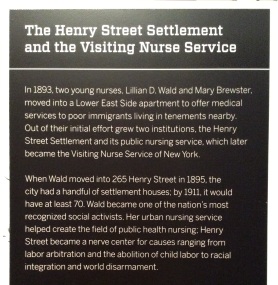
 

Henry Street Settlement and Playhouse, Lilian Wald Site, New York City, 2014 Amy Cools

Henry Street Settlement and Playhouse, Lilian Wald Site, New York City

Selfie in the beautiful Rose Room of the New York Public Library, 2016 Amy Cools

Selfie in the beautiful Rose Room of the New York Public Library

Coincidentally, I’m reminded of Ernestine Rose here in the beautiful Rose Room of the New York Public Library. I love this library. I read and make notes, my feet grateful for the rest, then I head down to the Lionel Pincus and Princess Firyal Map Division, Room 117, where I confirm the location of some sites that are no longer there. Some of the maps are original paper ones, and you’ll find photos of these throughout this series. Others are scanned into the online system, and the librarian helps familiarize me with the website’s digital collection.
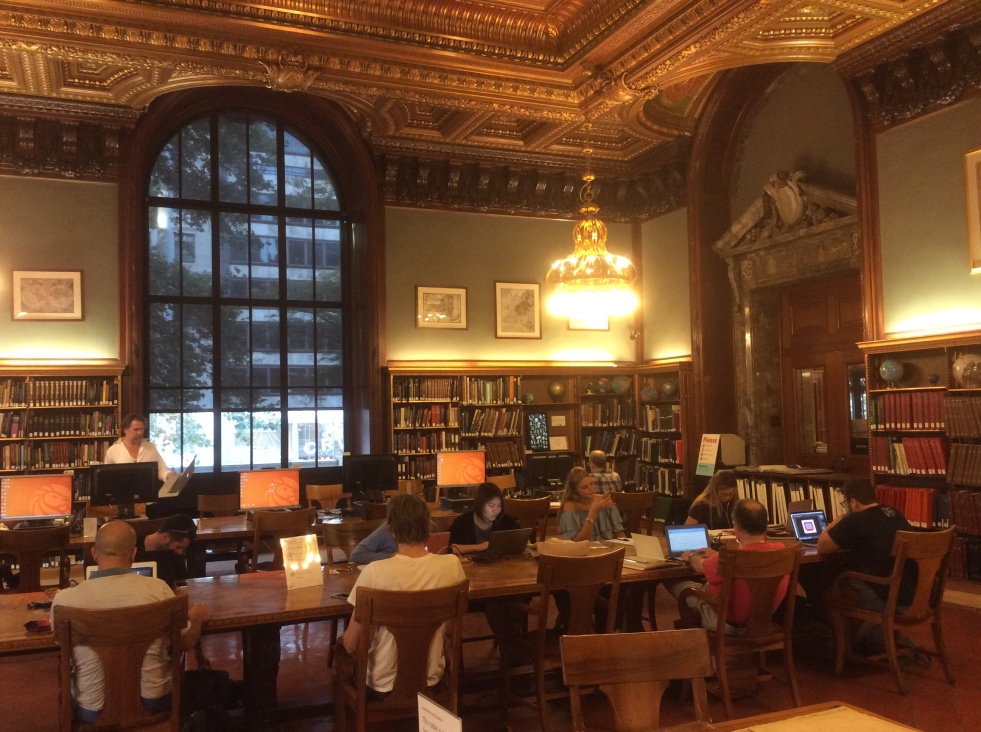
Pincus and Princess Firyal Map Division, Room 117 of the New York Public Library, 2016 Amy Cools
Another gorgeous room in the NYPL: Pincus and Princess Firyal Map Division, Room 117

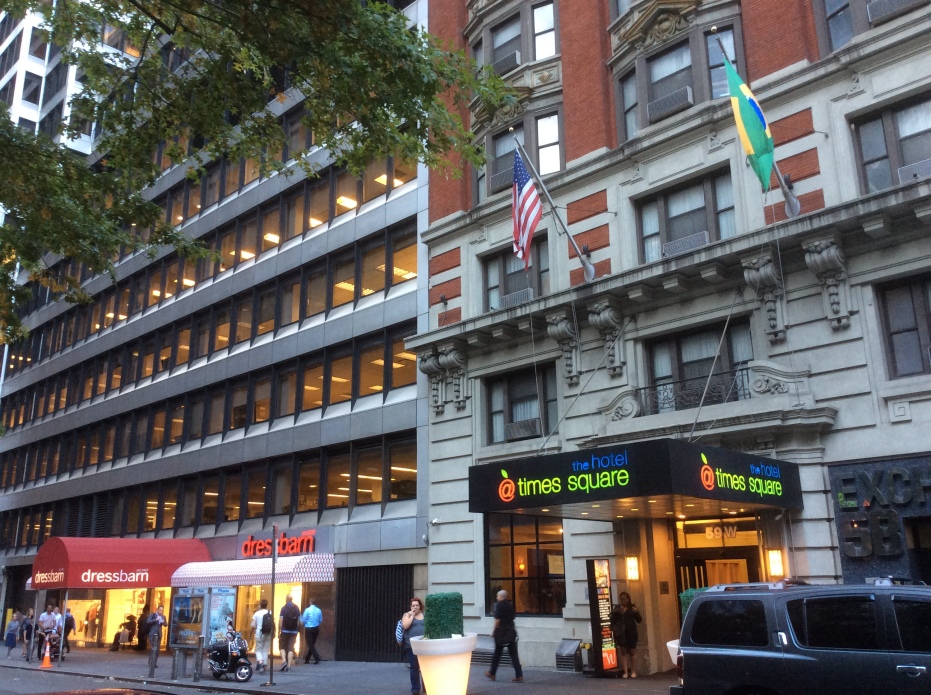
69 West 46th Street, NYC, photo 2016 by Amy Cools

69 West 46th Street, NYC. The Gamut Club would have been about where the Dress Barn is now
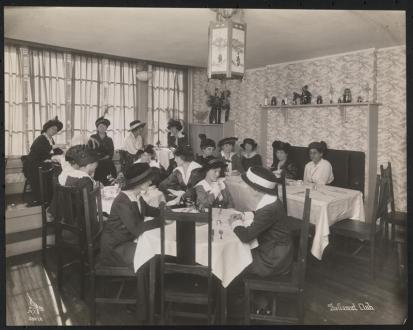
Women seated at tables in the dining room at the Gamut Club at 69 West 46th Street ca. 1914, courtesy of the Museum of the City of New York

Women seated at tables in the dining room at the Gamut Club at 69 West 46th Street ca. 1914, courtesy of the Museum of the City of New York

I walk north on 5th Ave then turn left at 46th, to 69 W. 46th St, just east of 6th Ave near Times Square. Again, there is no longer a building with that address here, but in the 1920’s it was the site of the Gamut Club, founded by feminist actress Mary Shaw in 1913. She thought other women’s clubs she belonged to had become little more than sessions of ‘tea table tattle, bridge, and banalities’. Her Gamut Club would devote itself instead to intelligent discussion and the support of socially conscious arts. The club hosted dinner discussions, guest speakers, and feminist-themed plays. There are two occasions which lead me to follow Sanger here. On January 21st, 1920, as recorded in the February edition of The Birth Control Review of that year, Sanger was a speaker at one of the weekly Tuesday dinner meetings. As the Review tells it, these women-only events were intimate enough to allow the attendees to discuss the issues much more fully and freely than they might have in mixed company. And on March 26, 1924, she lectured with Dr. Dorothy Bocker on the topic ‘Should All Women be Mothers?’ As of the time I write this, I find no record of the lecture, but my guess is that their answer to that questions was ‘no’.
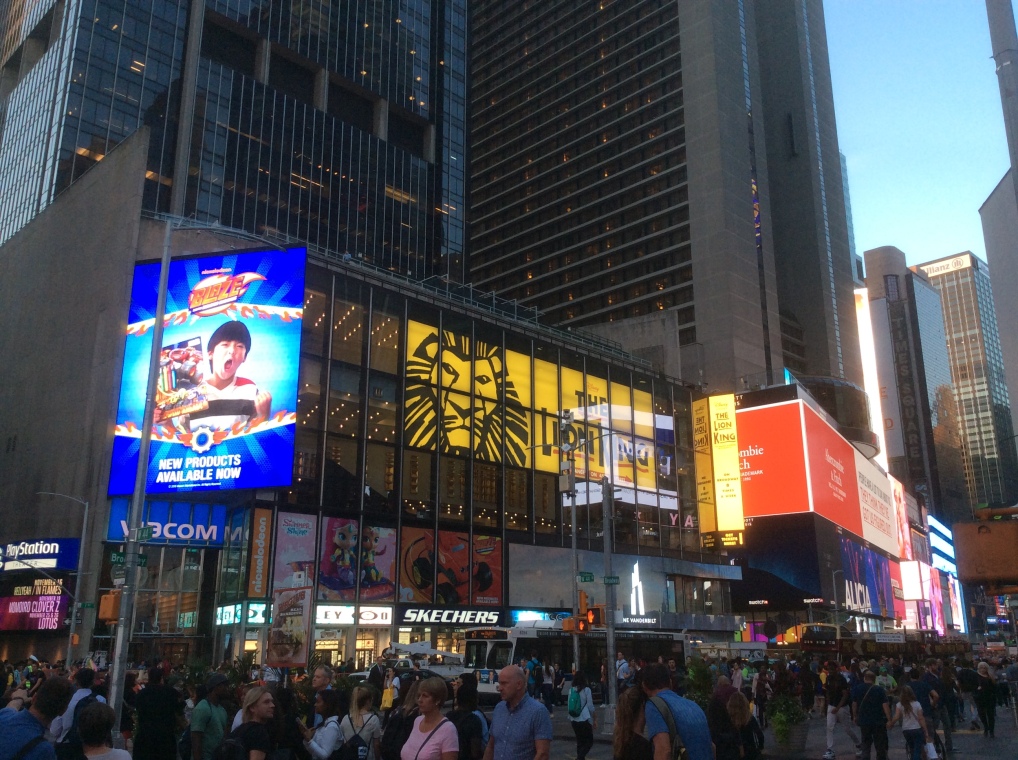
Hotel Astor behind row of lighted billboards on Times Square, NYC, photo 2016 by Amy Cools

Hotel Astor behind row of lighted billboards on Times Square, NYC
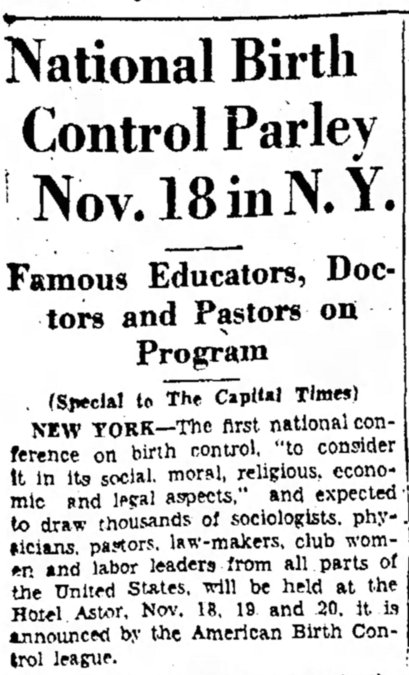
The Capital Times, Thu Oct 3, 1929, ABCL National Convention clipping, from Newspapers.com

Clipping from The Capital Times of Oct 3, 1929 announcing ABCL’s National Birth Control Convention. Click to read in full.

Then I head to Hotel Astor at One Astor Plaza at the intersection of 44th St and 7th Ave. The Astor faces onto Times Square. It’s a weekday rush hour and the throng is thick. I take a deep breath and plunge in.

According to Robin Pokorski’s Mapping Margaret Sanger, ‘The Hotel Astor was the site of the National Birth Control Conference of November 19 and 20, 1929. The conference was sponsored by the American Birth Control League.’ I find few contemporary references online to the talks and attendees of this conference other than a few remarks in some contemporary newspapers and a brief excerpt from Eugenics: A Journal of Race Betterment, Volumes 3-4, 1930, published by the American Eugenics Society. An article from The Capital Times of Madison, Wisconsin, outlines some of the topics of discussion, such as the Comstock laws and the current science of reproduction, and lists some of the headliners of the conference, which included ‘famous educators, doctors, and pastors.’

I see there’s a copy of the American Eugenics Society journal in the collections of the University of California. This now gives me two topics to research there for this series. I’ll return to fill in the details of this story as soon as I can.
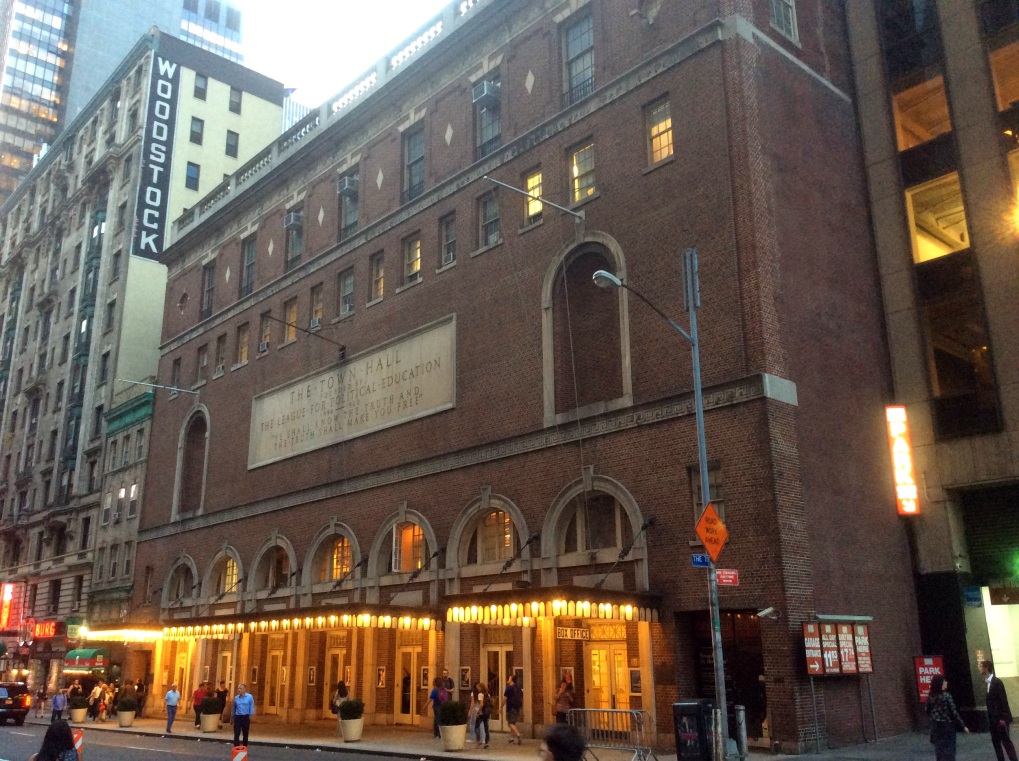
The Town Hall Building, New York City, photo 2016 by Amy Cools

The Town Hall Building, New York City

The Town Hall Building historical plaque, New York City, photo 2016 by Amy Cools

The Town Hall Building historical plaque

The last Sanger site I visit for the day is at 123 W. 43rd St between 6th and 7th Aves. It’s now early evening but I have just enough light left to photograph the Town Hall Building. It’s an attractive red brick building in a federal revival style, with modest decorations in pale stone and its name and humanitarian purposes carved into a huge pale stone placed horizontally and prominently along its façade. It was built in 1921, earlier in the same year of the event that brings me here.

On, Nov 13, 1921, a meeting was scheduled here to close the First American Birth Control Conference which saw the public launch of the American Birth Control League, which, in turn, was to become Planned Parenthood. Sanger’s friend Harold Cox was to deliver a speech called ‘The Morality of Birth Control‘, which Sanger authored. He was scheduled to speak after Mary Shaw, founder of the aforementioned Gamut Club. However, to their surprise (though perhaps not total surprise) a squadron of police officers blocked their entrance at the door.  After some wrangling, Sanger, Cox, and attendees managed to make their way inside. The police, however, would not allow Cox to speak, dragging him from the stage.

As it turns out, the police claimed to be there at the request of Archbishop Patrick Hayes. They carried Cox and Sanger off to the station followed by a crowd of protesting attendees. As a generator of publicity for her cause, Sanger couldn’t have planned it better. She had long opposed the Catholic church as backward, unscientific, and oppressive of women’s rights, and this debacle, in the eyes of many, proved her point. The American Civil Liberties Union, prominent New Yorkers, and newspapers from all over roundly criticized this trespass on free speech rights. While Hayes was ultimately never found officially responsible, we’ll likely never know for certain whether he did request police intervention. Who knows, it may have been a simple case of ‘Will no one rid me of this turbulent priest?’ except, of course, the other way around. Hayes’ friends and sympathizers may have just wanted to help him out by putting a stop to this turbulent woman, at least in his city.

But Sanger triumphed in public opinion in this case not once, but twice. On Jan 15th, 1937, Sanger was presented here at the Town Hall with the Award of Honor by the Town Hall Club in honor of her bravery and contributions to society.

Thus ends another fascinating day’s journey in the footsteps of Margaret Sanger. Stay tuned for my adventures on Day Three!

*Listen to the podcast version here or on Google Play, or subscribe on iTunes

Ordinary Philosophy and its Traveling Philosophy / History of Ideas series is a labor of love and ad-free, supported by patrons and readers like you. Please offer your support today!

~ Special thanks to the Museum of the City of New York, a wonderful institution with an extensive collection of photographs and documents which tell the story of New York City and its people

~~~~~~~~~~~~~~~~~~~~~~~~~~~

Sources and Inspiration:

100 Fifth Avenue‘, from 42Floors website

About Sanger: Biographical Sketch‘, from The Margaret Sanger Papers Project at New York University.

Achievements in Public Health, 1900-1999: Healthier Mothers and Babies‘. Morbidity and Mortality Weekly Report, Oct 01, 1999. From the Center for Disease Control website

Bromley, G.W. and Co. Atlas of the City of New York, 1921 – 1923, Plate 32 and Plate 37. Retrieved from Lionel Pincus and Princess Firyal Map Division Digital Collection, The New York Public Library.

Catalogue of the First Exhibition of the Society of Independent Artists, Volume 1, published 1917

Chesler, Ellen. Woman of Valor: Margaret Sanger and the Birth Control Movement in America. New York: Simon & Schuster, 1992

Diversity of the Desirable‘, The Evening Journal, Nov 21, 1929 page 6, Wilmington, Delaware

Eig, Jonathan. The Birth of the Pill: How Four Crusaders Reinvented Sex and Launched a Revolution. W.W. Norton & Company, New York, 2014.

Garrett, Y. ‘Jan. 2, 1923 First Legal Birth Control Clinic Opens in U.S.‘ From The Margaret Sanger Papers Project at NYU

Johnson, Ben. ‘Thomas Becket.’ Historic UK: The History and Heritage Accomodation Guide

Krich Chinoy, Helen and Linda Walsh Jenkins. Women in American Theatre, 1981, 1987, 2006. New York: Theatre Communications Group

Lepore, Jill. ‘Birthright: What’s Next for Planned Parenthood?‘, Nov 14, 2011. The New Yorker – American Chronicles

Margaret Sanger Is Dead at 82; Led Campaign for Birth Control‘. The New York Times: On This Day, Obituary Sep 7, 1966

Miller, Tom. ‘The 1847 “Margaret Sanger Clinic” House – 17 West 16th Street‘, Sep 18, 2010, Daytonian in Manhattan blog

National Birth Control Parley Nov 18 in N.Y.The Capital Times, Madison, Wisconsin, Oct 3, 1929

Nell’s‘. In Wikipedia, The Free Encyclopedia.

Pokorski, Robin. ‘Mapping Margaret Sanger‘ from The Margaret Sanger Papers Project at NYU

Raid Sanger Clinic on Birth Control‘. New York Times Apr 16, 1929

Regan, Margaret. ‘Margaret Sanger: Tucson’s Irish Rebel.Tucson Weekly, Mar 11, 2004.

Sanger, Margaret. ‘The Birth-Control Raid‘, May 1, 1929, The New Republic, from The Margaret Sanger Papers Project at NYU

Sanger, Margaret (ed.) The Birth Control Review, Volumes 1-3, 1917,  Volume 2; Volumes 4-5, 1920, and Vol 5, 1921

Sanger, Margaret. ‘Birth Control: Then and Now,’ 1944. Margaret Sanger Papers, Sophia Smith Collection

Sanger, Margaret. ‘Form Letter to Friend(s)‘, from Samples from The Margaret Sanger Papers Project for the Model Editions Partnership

Sanger, Margaret. Margaret Sanger, an Autobiography. Cooper Square Press: New York 1999, originally published by W.W. Norton & Co: New York, 1938

Sanger, Margaret. ‘The Morality of Birth Control,’ Nov 18, 1921. Published Speech. Source: The Morality of Birth Control, (New York, 1921)The Margaret Sanger Papers Project

Sanger, Margaret. The Pivot of Civilization, 1922. Free online version courtesy of Project Gutenberg, 2008, 2013

Sanger, Margaret. Woman and the New Race, 1920. Free online version courtesy of W. W. Norton & Company

The Town Hall Raid‘, Newsletter #27 (Spring 2001) of The Margaret Sanger Papers Project

Troublemakers!‘ Nov 28, 2012. From The Margaret Sanger Papers Project at NYU
New Podcast Episode: Why So Much Hatred for Margaret Sanger?

Margaret Sanger, photo probably taken Jan 30th 1917, photo courtesy of the Library of Congress

Margaret Sanger, photo probably taken Jan 30th 1917, photo courtesy of the Library of Congress

Listen to this podcast episode here or on Google Play, or subscribe on iTunes

There’s been a widespread and concerted effort to vilify Margaret Sanger and remove her name from the public roll of great contributors to human rights history. In my research for the Sanger project I’m working on, I find scores of examples of this effort every single time I do an internet search using her name.

Last year, for example, Ted Cruz and other conservative senators called for her portrait to be removed from the Smithsonian’s National Portrait Gallery in Washington DC, where her portrait bust is included in the Struggle for Justice exhibition. In justification of his campaign, Cruz used part of a quote lifted from its original context and presented it as saying something nearly opposite of what it was originally meant to say. In a letter to a friend, Sanger expressed her worry that her birth control clinic project in the South might be misperceived and misrepresented as racist; Cruz lifted a few words from this letter to ‘prove’ that it was. He may have borrowed this idea from Michael Steele, former chairman of the Republican Party, and Ben Carson and Herman Cain, one-time Republican presidential hopefuls. These three influential conservative men, in turn, received this bit of distorted wisdom from Angela Davis and some others in the black power movement who, concerned that the reproductive justice movement might have ill effects in the long run on the empowerment of black people, (mis)represented Sanger’s words, works, and character in the worst possible light…

….So let’s first consider Margaret Sanger’s [actual] beliefs and whether they justify her inclusion among the great freedom leaders. Then, let’s consider her beliefs in the light of her own time and whether they deserve admiration today, on the whole, or are at least understandable given the circumstances of her time…. Read the written version here:

Ordinary Philosophy and its Traveling Philosophy / History of Ideas series is a labor of love and ad-free, supported by patrons and readers like you. Please offer your support today!