The Myth of the Divide Between Individualism and Collectivism

Mirrored from http://halftimemag.com/articles/web-exclusives/encore-magazine-extras/top-10-marching-moments-of-2008-Details-photos-and-videos.html

What!?‘ you may well ask.

These are diametrically opposed, are they not? Those in favor of one of these views of personal identity, the economy, and public life generally despise the other. Proponents on one side of the ideological divide often shudder at the very thought of being identified with the other. So what could I mean by this?

I’ll start, then, by defining my terms.

Individualism, I think, is easier to define in a way that’s generally acceptable. In this view, protecting the rights and liberties of the individual is the ultimate aim of morality and politics. It holds that each human person has their own integrity of mind and body (and by extension, property) and should not be subject to coercion, harm, or theft. Individualism is preeminent in American culture, and the values associated with this worldview are emphasized by most modern democratic, capitalistic societies. It’s also, at first glance, most consistent with the ideals of the Age of Rights, which places the highest value on the rights of individuals, which should not be infringed on by the state nor by others.

Collectivism is harder to define. The 20th century saw the rise of collectivist, or socialist, states, the largest and most influential of which (ostensibly) valued the society more than individuals. When many think of collectivist societies, they think of Chairman Mao’s China, Kim Jong Il’s North Korea, or Joseph Stalin’s Soviet Union. To my mind, however, these societies were collectivist in name only: since it was the will and interests of one individual or few individuals that were imposed on those societies, usually to the detriment of everyone else. There was little or no willing collective effort for the collective’s sake, little to no public input regarding the collective’s rights and interests, and little to no collective benefit.

For the purposes of this piece, I define collectivism more broadly as the idea that a good society, in which people flourish and live as freely as possible, can only be achieved by some significant level of collective action. In this view, there is such a thing as the public good, and morality demands that everyone should do their part to sustain it. The full details of what the public good consists of and how it can be achieved should be debated by the public, but its characteristics include the idea that all human persons have as much moral worth as much as any other, that all have rights regardless of ‘merit’ (real or perceived) and wealth (or the lack thereof), that all are morally accountable when they fail in their responsibility to protect and nurture those rights, and that the fates of all are intertwined.

It may seem to you, as it does to me, that these conceptions of individualism and collectivism each have their attractions, and each contain some level of truth. Both are ultimately concerned with the well-being of all people, even if they might seem to start from a different end of the spectrum in deciding where the foundation of values should be (with the individual, or with the group). Both focus on human rights. So why are people so divided in their views on this matter, at least as presented in the mainstream media and by political parties?

Perhaps it’s because the arguments that we hear so often present a distorted view. Not only do public figures, pundits, commentators, and even educators offer caricatures of others’ views, they often present a misleading, even simplistic view of their own. Here are some ways I see the how we make [non]sense of the tension between individualism and collectivism, between the one and the many, as manifested in public discourse:

From libertarians and the far right:

– A tendency to systematically overemphasize the individualness of individuals. In other words, they represent individual achievement as attributable entirely, or almost entirely, to the innovation, creativity, and hard work of the individual. But in almost every case, each great ‘individual’ achievement is possible because they had the infrastructure of ideas, innovations, inventions, technologies, and discoveries of those who came before available to build on. Bill Gates and Steve Jobs, for example, were able to accomplish what they did because their admirable hard work and creativity enabled them to take the discoveries of mathematicians, physicists, metallurgists, etc, to the next level of technological advancement. The widely-mocked (and admittedly clumsily worded) ‘you didn’t build that’ quote from a 2012 Barack Obama speech was a cynical reaction of the radicalized right against any sort of public recognition that while individual talent and effort are crucial, we also rely heavily on each other in achieving what we do.

– A tendency to underestimate the degree to which a robust morality of social responsibility makes individual freedom not only more expansive, but possible in the first place. Without morality, without a social framework of cooperation, self-restraint from plunder and violence, and the generosity that’s more the rule than the exception in any human group, individual human beings would be left in the narrowly circumscribed situation of the forager and lonely hunter. We would have little time and leisure left to such luxurious pursuits as the acquisition of knowledge, the sharing of ideas, artistic creation, and technological innovation that human beings are so uniquely good at, if we are constantly busy simply feeding ourselves, warming ourselves, and fighting each other off of what little stash of goods we’ve managed to obtain. It may be objected that since human beings naturally desire to better their situation, self-interest would lead to cooperation through the desire to trade. But that only begs the question of why we would engage in fair trade, and not simply plunder if we are the strongest. Why has this instinct for reciprocity has become part of the fabric of the human personality?

From 20th century-style communists and socialists

– A tendency to devalue the importance of the individual out of proportion, and even divorced from, the importance of society. The major autocratic socialist regimes ruthlessly quashed opposition, disposed of enemies, and systematically repressed all but the most insipid, and most propagandist, forms of the arts (and still do! Though not so many). Societies ended up in the odd state of being glorified by their leaders as the greatest in the world, while simultaneously made up of citizens that were each so worthless that any one of them could be legitimately disposed of like so much garbage, if it seemed in the best interests of the state.

From liberals:

– A tendency to declare that government should not be in the business of ‘legislating morality’, while at the same time demanding that government demand accountability for some forms of wrong-doing. Government is a moral enterprise by definition. For example, when a law is made that one person may not kill or injure another, it’s made because of a society’s moral position that life is better than death, and that it’s wrong to infringe on another person’s right to live and thrive. Morality, and law, have everything to do with a society’s deciding what people should or should not do; in other words, it’s normative. There are many who try to downplay the relationship between law and morality, including this blogger who described the law as simply a set of rules to ensure that society is ‘harmonious and safe’, while morality has to do with your ‘personal sense of right and wrong’. But this is not at all how law works now, and not at all how law emerged as a product of human psychology as a social. From the beginning, the law has always had to do with retributive, distributive, and restorative justice, though the balance of these three differ from society to society. Laws that attempt to harmonize society, for example, are based on the notion that harmony is better than discord, that people ‘ought’ to maintain harmony by refraining from violence and disturbing the peace. Laws that govern parking originate with the idea that public spaces ought to be used and maintained for the benefit of everyone. Laws that protect people from assault originate from the idea that people have a right to life and health.

– Closely related to the above, a tendency to incoherence as to whether they themselves view government as moral, or morally neutral. Many liberal people decry any governmental attempts to interfere with some behaviors, such as those pertaining to sexuality and drug use, on the basis that these are moral, and therefore strictly personal, issues. But at the same time, they will demand that government regulate or prohibit other behaviors, such as fraud committed by financial institutions, or in the use of torture and the targeting of minorities in stop-and-frisk policies, on the basis that the latter practices are wrong or unfair. Yet all of these issues have everything to do with morality: what we ought and ought not to do, and why. For example, a democratic government is based on the moral norms that every individual has rights and that every individual’s well-being matters. Therefore, a good government is based on the moral norm that every individual should have a say in what their government does. A society with such a government also, by the very fact they have a government at all, think that all members of society have responsibilities to one another. After all, if there is no moral accountability, there are no norms, no law, no society. We end back up where the radical individualists left us: lonely scavengers or predators, without the vast resources social cooperation offers.

So how do we reconcile these seemingly disparate views?

I think we need to realize that the very idea that there is a sharp dividing line between individualism and collectivism is an illusion. In fact, individualism is not only reliant on collectivism, but is a product of it. We get to pursue such energy-expensive, extravagant projects as music, literature, art, government, architecture, and the rest because at some point we started banding together in a network of support rarely seen in other creatures. We rallied to protect our big-brained, long-vulnerable young, share the fruits of the hunt and of foraging, and invented such social-cohesion-strengthening practices as making music, telling stories, taking part in rituals of marriage and burial, and creating art.

And how do we craft societal practices that promote the rights and interests of the free individual, without undermining the collectivism that makes individual freedom possible?

As we have seen, 20th-century-style ‘socialist’ governments revealed how a society is undermined when it 
under-emphasizes the individual and overemphasizes the collective. But given the utter disregard for individual human life, and individual human rights, it’s not so hard to recognize how badly they got it all wrong. When your ideology holds that a great society is made up of individuals that are so worthless that they can be eliminated at the whim of the government, or have no personal rights or value outside of their value as laborers or fulfillers of some pre-determined role, or have no say in what their government or their autocratic ruler does, than the whole society is undermined by being made up of powerless, dehumanized, devalued, uninspired, unmotivated people.

It’s also the case that those social instincts that make us such successful cooperators combine with other instincts sometimes in a way that leads to atrocious behavior. Anti-Jewish pogroms, racially motivated massacres such as those in Rwanda and the former Yugoslavia, and rampages following sports games are such example of violent mass-hysteria. The tendency of people to ‘follow the leader’ in heartless behavior is as thoroughly documented in laboratory studies as it is in the history books. Democracy and reason are the two best tools human beings have come up with to correct the excesses of our strong social instincts. The secret ballot box allows us to participate in governance without coercion or in-the-moment peer pressure, and reason allows us to step back and reflect on whether or not we we’re doing, or what we’re about to do, is really in our own, and everyone else’s, interests. 

Independent-minded individuals, less prone to coercion, herd instinct, and social pressure, are also absolutely essential corrective not only to mass cruelty, but to to entrenched laws and norms that have outlived their usefulness, and whose immorality have been overlooked, explained away, or overridden due to other social interests. Slavery is a classic example of this: a popular desire for attaining personal wealth combined with entrenched racism (the ugly side of tribalism), led a majority in many societies to ignore their own moral sense of sympathy, justice, and beneficence in favor of policies that catered to their baser instincts. It was a few dissenters that reminded society of what morality is for, and how institutionalizing cruelty and indifference to the interests of other human beings harms everyone, that led societies to reform themselves and change their policies to better serve both individual and collective interests.

On the other hand, oligarchic, fascist, and other ultra-capitalist societies, which hold that government’s only job is to enforce contracts, prevent invasion, and prevent people from assaulting one another, also undermine themselves, because they have only a negative conception of freedom as their moral foundation. When a government is structured according to the idea that human beings have few responsibilities to each other than fulfilling contracts and respecting property rights, they become a society where fewer and fewer people are enjoying the fruits of everyone’s labor. For example, monopolies develop (as Adam Smith pointed out), which set prices and wield most of the power over legislators. You have fewer and fewer wealthy individuals and organizations that pay to influence the halls of power, that 
monopolize the dissemination of information trough mass media, while the voices of those that have little or no money to do so are drowned out. You get societies made up that look like the early industrial towns when capitalism first flourished without regulation, where many got rich, while a great bulk of others ended up doing crippling labor in squalid conditions, withe the empty ‘choice’ of accepting such work, or facing privation or starvation. You end up a society that drives down wages for most people while fewer and fewer funnel all or most of the gains made by an economic system to a few, more ruthless individuals that are left at ‘the top’

Because I see individualism and collectivism as intertwined, I’m in favor of a strong democracy and a mixed economy. In a healthy, democratic society, it’s the innovators, the creative geniuses, the ‘weirdos’, that ensure that a society is adaptable, rich in ideas, technologies, and creativity, and does not stagnate and wither away. Human beings succeed not only because we are social, we succeed because we are adaptive and innovative, and it’s the freedom of the individual to come up with new art forms, technologies, ideas, etc, that make a society dynamic. The incentive of improving one’s lot in life through one’s own hard work also fuels the drive to better ones’ self.

A ready analogy for this is the necessity of genetic mutations in evolving a successful, adaptive species. While not all mutations (innovations, new ideas) are beneficial, there are some that are, and without those pioneering one-offs, a population cannot adapt to meet new and challenging circumstances, and does not possess that wonderful variety of traits that make it both capable of much, and fascinating to behold. A society of individuals free to pursue their own goals and protect their own interests, so long as they contribute to the public good and don’t harm others, is that which is likely not only to survive, but thrive. For example, free trade, sometimes derided by modern liberals, is an excellent tool that is both highly individualistic and highly socialistic. It incentivizes and rewards individual innovation and hard work, though an elaborate framework of cooperativeness that includes, but is not limited to, a strong commitment to fairness and reciprocity, a conception of justice that demands recompense for hard work, and a distaste for theft and exploitation. But like all tools, it must be used wisely and well, and within certain parameters.

And this this is why I also believe in such collective projects and institutions as publicly-funded roads, public education, and health care. I believe in regulations such as gun control and strict regulations for drivers, since these don’t prioritize the rights of some individuals to put others in danger for insufficient cause. I don’t believe in society-aggrandizing, anti-individualist enterprises such as war (in most circumstances). After all, you have few rights when you are incapacitated by injury and disease, and none at all when you’re dead. A society that places few restrictions and responsibilities on gun owners and operators of motor vehicles make it all to easy for one individual, in a moment of temper, carelessness, or mental instability to permanently remove all or most rights from fellow human beings. As we can see from (most) heavily-armed, hyper-individualistic societies such as the United States, we kill and injure one another at enormous rates with our guns and our cars. A more morally robust concept of civic duty would lead to the creation of laws based on the premise that a right which bears greater risks engenders a greater burden of responsibility. And since government is a moral enterprise, its laws should not only hold people accountable for doing wrong to one another, but demand some responsibility to do right by each other. 

Why morality requires both accountability and responsibility is another Big Question. Sounds to me like a great topic for another essay…

****************************************************************************

Some sources and inspiration:

Anderson, Elizabeth. ‘Tom Paine and the Ironies of Social Democracy’, 2012 Dewey Lecture in Law and Philosophy
Darwall, Stephen. ‘Moral Accountability’, 2014, Philosophy Bites podcast

Ellis, Joseph. Revolutionary Summer, 2013

Heath, Joseph. Economics Without Illusions, 2010

Pinker, Steven. The Better Angels of Our Nature: Why Violence Has Declined, 2011

Sandel, Michael. ‘A New Citizenship’, 2009 Reith Lectures


Communitarianism, Writ Large

I listened to Bill Moyers’ discussion with Michelle Alexander recently, about her book The New Jim Crow and her activism against the over-incarceration of black people here in the US. Something she said really struck me, as it relates to a problem I’ve been mulling over for some time. She said:

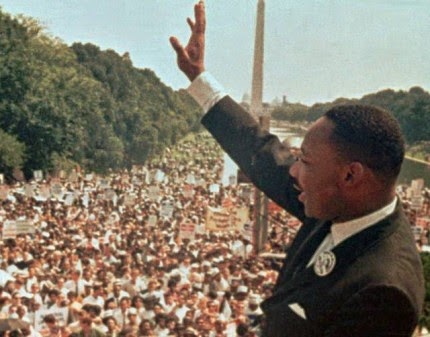
I realize that as well-intentioned as all that work was, it was leading me to a place of relatively narrow thinking… If I care about a young man serving, you know, 25 years to life for a minor drug crime… If I care about him and care about his humanity, ought I not also care equally about a young woman who’s facing deportation back to a country she hardly knows and had lived in only as a child and can barely speak the language? And ought I not be as equally concerned about her fate as well? Ought I not be equally concerned about a family whose loved ones were just killed by drones in Afghanistan? Ought I not care equally for all? And that really was Dr. King’s insistence at the end of his life. That we ought to care about the Vietnamese as much as we care and love our people at home.’

Alexander’s reflection on her own work illustrates our need not only to grow more expansive in our thinking in order to achieve a more just society not just locally, but globally: we need to witness and internalize the sufferings faced by other human beings who are not like us in appearance and culture, so that our instincts for empathy and for justice expand as well. 

The problems associated with the organization and implementation of an ordered society is the central topic of political philosophy; the problems associated with making societies just is the concern of ethical philosophy. Two philosophers whose work I especially admire in these fields are John Rawls and Michael Sandel. They are both concerned with justice, how to recognize a just society, and how we select the criteria for ethical decision-making. (I’m also a fan of Sandel’s because he’s engaged in a cause that’s dear to my heart: the great project of philosophy is not, and should not be, confined to academia. With his freely accessible lectures and discussions, and his popular philosophy books, he is among those reintroducing philosophy to the public square. Philosophy originated in the public square, after all, and as it addresses the concerns of the whole of humanity, then it should be a concern of, and the conversation should be accessible to, the whole of humanity as well.)

Yet Rawls and Sandel are at odds in some key ways. Among other things, Rawls’ theory of justice is classically liberal, in the tradition of John Locke, and focused on universalizability: a just system is one that must be applicable to all human societies, in all times and places. Sandel focuses more on the importance of community and tradition in matters of justice, and the answers are found more in solutions to ethical dilemmas based on particular society’s evolved norms. Rawl’s famous ‘veil of ignorance’ is his method for discerning whether or not a society is just: if each and every person were to be randomly assigned a role in society and had no way to know ahead of time who they would be (woman, man, CEO, employee, black, white, rich, poor, etc), and knowing this, they had to design a social arrangement, what would they all agree on? Then, we can look at how that veil-of-ignorance social design compares with an actual society to help us assess how just it is, and in turn, help us create s social system that will benefit everyone as much as possible. Seems a method that should obtain pretty fair, democratic results, right? But for Sandel, the veil of ignorance seems incoherent even as a mere thought experiment, since morals originate in, or emerge from, particular societies. Therefore, what is just is derived from how actual societies work, how they’ve grown and evolved to solve their own sets of problems, and cannot be derived from hypotheticals. So Rawls’ and Sandel’s ideas seem, on the face of it, irreconcilable. Who’s right?

Sandel’s views are generally described as communitarian, though he’s not entirely comfortable that characterization in that it can go too far in allowing community to trump the individual in all things moral. According to the Stanford Encyclopedia of Philosophy, ‘…communitarians argued that the standards of justice must be found in forms of life and traditions of particular societies and hence can vary from context to context’. In other words, communitarianism is the philosophy that ethics have more to do with particular societal morals and traditions, so the claim that there can be a universal definition of justice, such as Rawls’, is dubious at best.

When it comes to explaining how cultural traditions evolve to make a society more just, communitarianism has something to offer. For example, it’s among America’s most self-identifiable traditional ideals that individual liberty is of highest value and should be promoted as long as the freely chosen actions of one person don’t infringe on the freedom of another. The ideal of individual liberty has long roots in American society, and evolved and expanded over time through political upheavals, case law, and interpersonal disputes. But when we consider the traditional American ideal of individual liberty (by no means unique to America, of course) and compare it to our social history, it’s clear that it’s not no simple: it’s also been a tradition in the US to enslave other people. When that particular tradition was slowly, painfully overturned, there were many other ways that people, legally or illegally but commonly practiced, infringed on the freedoms of others: by denying women the vote, imposing Black Codes and Jim Crow laws, segregating the military, preventing workers from forming unions, and so on.

So a communitarian could argue that while the moral ideal of freedom is traditional in the US, it’s the broader implementation of it that took a long time as traditional practices caught up.

But how about societies that don’t have traditions of individual freedom, who believe there are some classes of people that should have all the power and wealth, and that it’s proper and right that others live in impoverishment and misery, lacking rights of citizenship, for their entire lives? Such is the caste system of India, for example, or the traditionally influential political philosophy of Aristotle which holds that there ‘natural’ slaves. Are we, then, not to be concerned that people of those cultures are suffering from injustice, if they belong to a community with different traditional views of justice? After all, according to the caste system, and to Aristotle and those communities that hold like views, it is just that certain people are slaves and certain people are not, that some people have power and some do not, that some live in wealth and comfort and others in misery, because all of this is justified by their society’s traditional concept of human nature.

Many people, myself included, have the same problem with communitarianism as I am sure Michelle Alexander does, given her quote which opens this essay: why should our sense of empathy, of moral obligation, be limited to the concerns and traditions of our own communities? That may have been prudent, even necessary, for our ancient ancestors, when human groups became large enough to need to compete for resources, but didn’t have the sophistication or technology to facilitate cooperation on such a large scale.

But now, our situation is very different: people’s ideas and actions, thanks to advanced technologies in communication, production, and travel, can have worldwide consequences, for ill and for good. We have access to centuries of the best products of human thought from disparate traditions all over the world, which are gradually coming to a consensus on some key issues in ethics and politics: the value of individual liberty, the benefits of equality, the necessity of having and fulfilling civic duties, and how to recognize a just society, for example.We have access to centuries of historical evidence which demonstrate the benefits of ever-more widespread cooperation, and the ineffectiveness of violent conflict, so that the immense suffering caused by war ends up wasted and unnecessary. And finally, now that people spend a lot of time ‘face-to-face’ with others from all over the world via computer, we feel a sense of real global community. Familiarity with people of different habits, different appearances, and different interests removes our sense of discomfort, and breeds not contempt, but empathy, compassion, and friendliness.

So perhaps the conflict between communitarian and modern liberal accounts of what constitutes a just society will lessen over time. After all, communitarianism must contain within it the idea that traditions change, grow, and evolve, since there have always been so many different traditions with mutually exclusive ethical codes. (I, too, think that morality is not fixed and eternal; rather, it’s a product of evolving, social, cooperative creatures.) And if the world’s communities are merging into one moral community, than the basic ideas of communitarianism will harmonize ever more with the universalizable ethical goals of liberal thought. While communitarians and liberals might still argue over the origins(s) of morals (tradition? reason? emotions?), our conception of justice, our ethical systems and the political institutions with which we realize them (governments, laws, and so on) will look more and more alike all over the world.

Listen to the podcast version here or subscribe on iTunes

~ Also published at Darrow, forum for ideas and creative commons webzine

~ Re-edited slightly in Feb/Mar 2016

~~~~~~~~~~~~~~~~~~~~~~~~~~~~~~

Sources and inspiration:

Alexander, Michelle. ‘Incarceration Nation’. Interview with Bill Moyers, December 20, 2013. http://billmoyers.com/episode/incarceration-nation/

Alexander, Michelle. The New Jim Crow. 2012. New York: New Press Books.

Anderson, Elizabeth. ‘Tom Paine and the Ironies of Social Democracy‘, University of Chicago Law School Dewey Lecture 2012

Bell, Daniel. ‘Communitarianism‘, Stanford Encyclopedia of Philosophy.

Rawls, John. A Theory of Justice. Cambridge: Harvard University Press, 1971.

Sandel, Michael. Various works and lectures, including his books What Money Can’t Buy: The Moral Limits of Markets and Justice: What’s the Right Thing to Do?

Schneider, Greig and Egon Zehnder, Boston, and Ulrike Krause. ‘Interview with political philosopher Michael J. Sandel’, The Focus magazine. http://www.egonzehnder.com/the-focus-magazine/topics/the-focus-on-family/parallel-worlds/interview-with-political-philosopher-michael-j-sandel.html

The Value of a Liberal Education, and Two Risks of an Ideologically Narrow One

I grew up in a large, pretty close-knit extended family. There was a lot of dysfunction, as with many families, but a lot of love too. While I was often frustrated by the choices of some relatives (such as the tendency to enable bad behavior by sheltering the ‘sinner’ from consequences, or pretending it wasn’t happening), I was also secure in the knowledge that I belonged to a large, loving circle of people who would never abandon each other.

We were also a very insular family. We mostly hung out with each other and a few close family friends, pretty much all from church and pretty much all holding similar beliefs. Many of us kids, especially the older ones, had little contact with people outside of family and church. Many of us were (and some still are) home-schooled with a very conservative, fundamentalist Catholic curriculum, and many others attended all or mostly religious schools.

Given the state of much of the public school system, at least in the working class neighborhoods where many of us grew up, a part of me sympathizes with this choice. American public schools often leave much to be desired, to say the least. Since we have such a rotten system in America of funding public schools, with funding determined by the local tax base, we create a classist school system where the kids who need the most help don’t get the funding. So much for the non-aristocratic, egalitarian, freedom-of-opportunity ideal of America! But I digress…

But it seemed that the choice to limit our schooling to a strict Catholicism-centric education was usually based less on the concern with education quality as on a concern with raising children to replicate their parent’s beliefs and lifestyles. This makes sense in a certain way: parents want what’s best for their children, and people generally believe their own beliefs are the best, so, it’s logical parents want their children to believe and live as the parents see fit.

But here’s the way in which that doesn’t make sense: children are not replicants of their parents. They have their own thoughts, their own personalities, and their own sets of experiences. The world is full of different beliefs systems and lifestyles, often incompatible with those of the parents, that fulfill people, that suit them and make them happy. Every child, however they were raised, will inevitably confront that fact, and in today’s world of rapid, comprehensive access to data from all over the world, it will not take long.

Many parents recognize these facts, and are comfortable raising their children in a cosmopolitan fashion.

They want to equip their children with all the information they might require to navigate the world successfully in any community they may end up being a part of. To this end, they want children to truly understand not only their own beliefs, but the beliefs of others. While these parents may explain to their children why they think their own beliefs are better, they know that understanding the alternatives strengthens their capacity for critical thought. These patents also understand that their children should be comfortable interacting with people who believe and behave differently than they do, and familiarity with other faiths and cultures is the best way to accomplish this. Last but not least, these parents have the epistemic humility to admit that there’s a possibility that they are wrong, and they want to afford their children the opportunity to discover for themselves if that’s the case.

Such wise parents would agree, as I do, with Daniel Dennett, the philosopher who promotes the idea that a study of world religions should be a basic part of childhood education. Since religion is so central to both private and public life for most inhabitants of the world, he argues, children require this information to be wise and informed citizens. I think the same applies to science, politics, history, literature, and other disciplines relating to how people go about sharing, navigating, and understanding this world together.

For those parents who insist on providing an ideologically narrow education for their children, I’d ask them to consider this questions: when children grow up and confront different beliefs, customs, and lifestyles for the first time, as they inevitably will, what happens? What happens, for example, to the child of Biblical fundamentalists who finds out that almost all scientists, besides the half-dozen quoted in their textbooks, believe the Earth is billions of years old? Or that prayer doesn’t, statistically, prove to be effective in healing people? Or that people of other belief systems often live as harmonious, happy, fulfilled, ‘blessed’ lives as they do? Or even better? What happens to the barely educated woman, married off in her early teens and taught to be submissive to her husband, when she discovers that other women have the opportunity enjoy a rich intellectual life, a successful career, or a partnership with a spouse that respects her as an independent person?
For some children educated in this narrow way, whether their parents’ intentions were benign or otherwise, they will mostly reject alternative beliefs and ideas they come across out of hand. (‘That can’t be true, Dad would never lie to me.’ ‘I feel deep in my heart I know the truth, so I don’t need to question it.’ ‘Those poor Buddhists, they didn’t learn about Jesus. When they do, then they’ll truly be happy.’ ‘That’s the Devil talking, better not listen or I’ll be tortured in hell.’ ‘Liberals don’t believe in anything, but I do, so they must not have anything of value to say.’ ‘Environmentalists should just trust God instead of the government to protect the earth.’) They will grow up to more or less replicate the lives of their parents, happy in the security of knowing that they know the truth, what life’s really all about.
Others (I think very much a minority, but some) will thoroughly question the beliefs they were raised with in light of new ideas they’ve confronted, and in the end retain their parents’ beliefs because, to them, those beliefs ‘held up’ to the scrutiny. They might make some modifications here and there, but overall, stay convinced. These few are among the happiest of people, even happier than the unquestioning believers, I think, because they enjoy not only a sense of security in their beliefs, but intellectual satisfaction.

Still others will end up with a smorgasbord of beliefs, considering some sacred and unquestionable, discarding others, and adopting new ones. (Conservative Catholics derisively call others ‘cafeteria Catholics’ for engaging in this sort of picking and choosing.)

Many more will engage in ‘doublethink’, holding two or more contradictory beliefs at the same time. To take another example from the religion of my childhood, one might believe that it’s ‘spiritually true’ that the body and blood of Jesus is present in the eucharistic wafer, but also believe it’s scientifically impossible for a thing to have all the qualities of bread while simultaneously being composed of human tissue. (The psychological phenomenon of cognitive dissonance, how pervasive it is and the ways we deal with it, is discussed thoroughly and fascinatingly in Carol Tavris and Elliot Aronson’s book Mistakes Were Made, but Not By Me. I highly, highly recommend it.)

But there are two big risks for the hopeful yet, I think, misguided parents who seeks to shelter their children from knowledge that could contradict their own cherished beliefs. And I think parents would do well to consider these risks carefully before embarking on this project of transforming education into something more akin to indoctrination.
Risk #1: Your children might grow up to challenge you on your perceived deception. They will ask: What did you have to hide? Why did you feel you had to shelter me from thinking through these matters in an informed way? If what you taught me was really, evidently true, than why did you go to such lengths to keep me from learning about opposing ideas? And why would you undermine my ability to defend the beliefs you wanted to pass on, by keeping me ignorant of the challenges to those beliefs?
I went through that process myself, resenting my education which as narrow and limited until I took it into my own hands and chose a public college rather then the very conservative one my family would choose for me. Initially, I questioned the motives of my family, and was very angry that I was years behind in many subjects, especially science and history. Over time, I’ve come to realize that it was their tactics, not their motivations, that were at fault. But the damage had been done.

Risk #2: But by fair the largest danger is raising children with the potential to be bigots, even violent ones. While most children brought up to strictly conform to the beliefs of their parents will not turn out that way, of course, too many do. Consider this: what inspires oppression, warfare, and terrorists attacks? They come from the ideologically ‘pure’, from those who think it’s their job to make sure the world conforms to their ideology, from religious dogmatism to racial ideology to political utopianism. And the more isolated people are in their minds from the ideas and beliefs of others, the more sure, the more committed they are, that they are right, so everyone else must be wrong. And if others are wrong, if they are different, they are the enemy.

Since people are rarely convinced to convert to a whole new set of beliefs overnight, the ideologue often resorts to violence as a means of forcibly imposing those beliefs. Ironically, violence, though a popular tool
throughout history for trying to impose change, it’s the least effective, as psychologist Steven Pinker and other researchers reveal. To this day, religiously and politically motivated terror attacks and assassinations continue to make headlines.

Yet despite this, things on that front are getting better all the time. I recently heard Pete Seeger say, pertaining to the environment, that the world will be saved by people working in their communities. I think the world will also be saved by children who grow up in this new era where information about the world is not so easily hidden from them. Despite some parent’s best efforts, children can no longer so easily be sheltered in little bubbles of idealized ignorance, sentimentally dubbed ‘innocence’. Since information flows so freely, children now grow up exposed to media that brings others’ experiences so vividly to life, and are now more comfortable in the presence of people who look and think differently then they do. Familiarity with ‘others’ humanizes them, and communities will come to be determined mostly by shared interests, not by geographic location or ideological isolationism.

So parents, teach your children not only how to be good people, but to be informed citizens of the world. It will be a safer and more wondrous place for them and their progeny, and I bet they’ll thank you for it.

The Problem of the One and the Many

I think that the majority of what I’ve been mulling over for quite some time now either relates to, or boils down to, this one problem.

What does it mean to be an individual, when one is composed of so many parts? What does it mean to be an individual when one can do so little without the input and support of others? How can a group, or a society, look out for its best interests as a whole, without calling on each member to give up so much that the whole is made of up impoverished individuals?

What do you think?

Healthcare: A Matter of Public Interest, or a Consumer Good?

http://www.learnersdictionary.com/definition/bandage

Looks like this uneasy compromise between private moneyed interests and our national commitment to the life and health of our citizens is off to a rocky start, and I’m afraid it may fail.

I wish Obamacare was the title of a single-payer national healthcare system, or at the very least, a public option (freedom to choose!). Healthcare should be considered essential infrastructure like roads and bridges, or a national defense of the citenzenry like the military, not a mere consumer or luxury good. This is because it is the hyper-social, cooperative side of human nature, where we band together to protect and nourish each other, that makes us a successful species. This, in turn, is what makes the other freedoms we enjoy possible. Remember, we have no freedoms when we’re dead or incapacitated. Human liberty requires human cooperation in order to exist at all.

That is, if we consider preserving human life of greater importance than the license to grab as much money as we want regardless of the harm we cause doing so.

Equal Opportunity Vs. Equal Outcome

How many pundits and political candidates have you heard express this sentiment over the years: ‘I believe in equality of opportunity, not of outcome!’?

But wait a minute! If the outcome is usually or always unequal, where’s the evidence that the opportunity is equal?

Saying that a society should worry only about opportunity but not outcome sounds a lot like a scientist wanting to proclaim a theory true without wanting to worry about the findings of experiments that seek to prove it.

What do you think?

Free Market Fundamentalism: A Moral Objection, and What Should Take Its Place (Short Form)

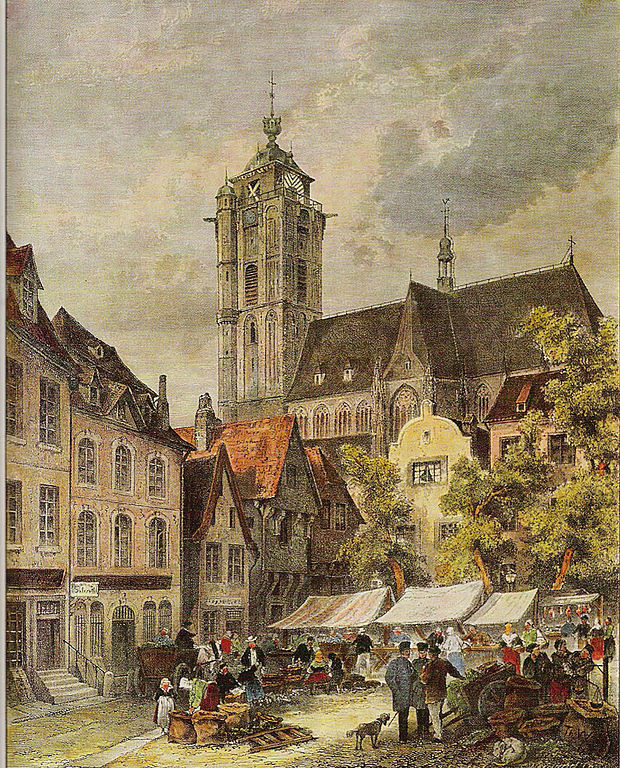
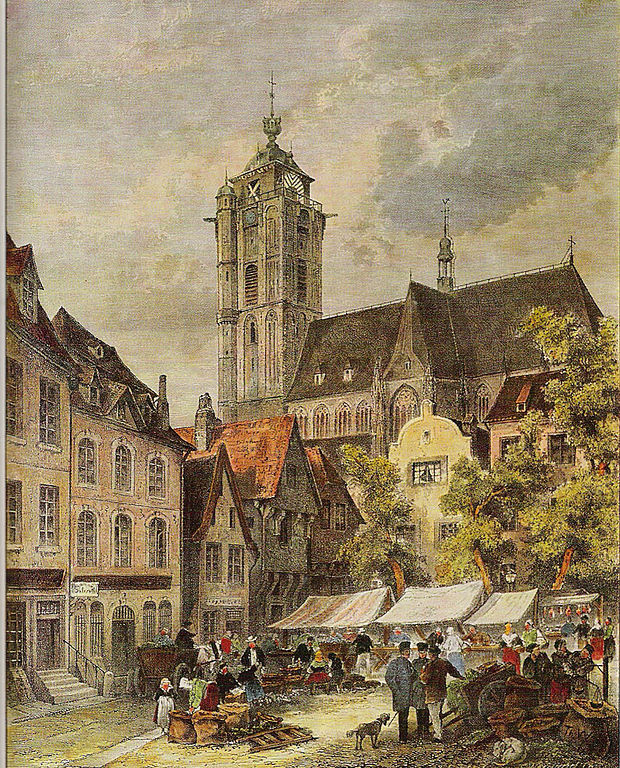
Etching of the view on the marketplace in Duisburg by Theodor Weber, 1850‘Free market fundamentalism?!? What do you mean by that? Isn’t that a loaded term?’

Yes, it is a loaded term! I’m sure you’re aware that the phrase, as commonly used, implies a negative attitude towards the idea that strict adherence to free market principles is the best economic path for a society to follow. And it also implies that proponents of a strict laissez-faire economic approach possess a blind faith in the power of the market. According to this view, Adam Smith’s ‘invisible hand’, operating only in a free market, is the only force or principle in the universe that will assure the best overall outcome for both personal liberty and the fair distribution of goods. But if you detect a certain…. skepticism on my part towards belief in that hypothesis, well, you’re right.

Because all economic choices are based primarily on self-interest, so the free market fundamentalist argument goes, no one will purposefully decide to act against their own self-interests. Even if it’s true that one’s choices result in satisfying only short-term self interests but are harmful over the long term, over time and in the aggregate, these choices with balance each other out in the marketplace. The tendency to make harmful choices will wane and eventually cease when the harm becomes apparent and other choices are observed to be better options. Self-interest will, therefore, inevitably cause people to make better economic decisions over time.

One example of people making very harmful decisions on a large scale, based on short-sighted self interests put into practice in a free market, is the Dust Bowl disaster in 1930’s United States. Farmers, en masse, planted high-market-value crops that impoverished the soil and led to widespread erosion problems. These, combined with unusual weather conditions, caused a massive dust storm and drought that caused hundreds of thousands of farms to fail, thousands of people to die from dust pneumonia and other drought- and famine-related illnesses, and millions to become homeless. These people were hard-working and did not lack in that enterprising, pull-yourself-up-by-the-bootstraps work ethic lauded by the free market fundamentalist. They also made a rational choice: to make a success of the farm right away. So most farmers chose to forgo more prudent, sustainable methods of farming and chose instead to lift themselves out of their current state of debt and poverty by planting wheat. And in the end, this strategy soon proved disastrous to almost everyone’s long-term self-interest, including many prudent farmers who had made wiser choices.

So even though it’s true people sometimes and even often make self-destructive decisions due to short-sighted self-interest, the free market fundamentalist might point out that the ‘invisible hand’ force of the free market will correct this tendency overall. After all, we haven’t had another Dust Bowl (well, not exactly), and even if we’ve gotten ourselves into similar messes for similar reasons, each episode serves to correct our tendencies to make those particular unwise decisions. The individual might choose irrationally, but the system overall is rational.

But human beings are not just economic actors who allow our choices to be judged and corrected in the long run by the impartial and heartless forces of nature. We are moral agents: we judge each other’s actions, as well as our own, according to a(n) intuitive and/or written code of conduct, and hold each person accountable, in real time, for acting in accordance with that code. We also consider the potential consequences of our actions and choose to act according to how morally acceptable they are.

Here’s where our roles as ‘rational’, self-interested economic actors and as moral agents conflict. The corrective force of the free market, like biological natural selection, is an amoral force, which doesn’t ‘care’ who flourishes and who does not, who suffers and who does not, who lives or who dies. Human beings, as moral agents, do care about these things, both on a rational and on an emotional level. (I am convinced that the sharp distinction between emotion and reason is artificial and largely misleading, but that’s a topic for another essay. Here, I’ll use this distinction as it’s colloquially used, as two ways of looking at things, one that’s instinctive and one that’s more considered

So should humans, as moral beings, leave the weeding out of bad economic decisions mostly or entirely up to the amoral force of the free market? Is it morally right, or even acceptable, to allow the chips to fall as they may, so that bad effects (or the morally neutral term ‘inefficiencies’ of economics) end up correcting the whole system on its own? The corrective force of the free market, like natural selection, needs inefficiencies to correct against, in order to work its magic. But, the moral agent objects, these ‘inefficiencies’ that die out are, all too often, human lives! I argue that we, as moral, social beings, don’t consider the loss of human life an acceptable risk, and must hold ourselves and each other accountable if we don’t act to save lives if we can. And this commitment to moral excellence only begins at saving lives.

A general commitment to being a good citizen and a morally worthy human being should replace free market fundamentalism as the driving force behind one’s political and social views.  The facts of observation and of history reveal that the market is a force for ill as well as for good, and the morally committed, good citizen relies all of the evidence, to correct and sustain their beliefs and to inform their actions, and welcomes a system of checks and balances to keep them honest and on the right course between self-interest and concern for the common good.

The full text of my original essay can be found here:

Free Market Fundamentalism: A Moral Objection, and What Should Take Its Place

‘Free market fundamentalism?!? What do you mean by that? Isn’t that a loaded term?’

Well might you ask! And yes, it is a loaded term! I’m sure you’re aware that the phrase, as commonly used, implies a negative attitude towards the idea that strict adherence to free market principles is the best economic path for a society to follow. And it also implies that proponents of a strict laissez-faire economic approach possess a blind faith in the power of the market.

According to this view, Adam Smith’s ‘invisible hand’, operating only in a free market, is the only force or principle in the universe that will assure the best overall outcome for both personal liberty and the fair distribution of goods. But if you detect a certain…. skepticism on my part towards belief in that hypothesis, well, you’re right. I think that the term ‘free market fundamentalism’ accurately conveys the sense of an unshakable and all-encompassing belief in free market principles that I want to critique. Devotees of laissez-faire economics are commonly referred to as libertarians here in the US, but I’m not using that term here because it’s too broad for my purpose here: libertarianism also includes very liberal attitudes towards free speech rights, gun ownership, drug use, sex work, and so on. Here, I’m focusing on the economic issues only. In this essay, I’ll be using the acronym FMF to refer both to these common terms for strict free market philosophy (free market fundamentalism) and its proponents (free market fundamentalists), and speaking in general terms; of course, there are individual takes on the specifics of each issue, but I think my summaries of the arguments reflect the beliefs of the average FMF (free market fundamentalist).

Because all economic choices are based primarily on self-interest, so the FMF argument goes, no one will purposefully decide to act against their own self-interests. Even if it’s true that one’s choices result in satisfying only short-term self interests but are harmful over the long term, over time and in the aggregate, these choices with balance each other out in the marketplace. The tendency to make harmful choices will wane and eventually cease when the harm becomes apparent and other choices are observed to be better options. Self-interest will, therefore, inevitably cause people to make better economic decisions over time. There are many parallels between the ‘invisible hand’ of the free market and the biological force of natural selection, as Michael Shermer points out in his The Mind of the Market. (Disclaimer: I haven’t yet read it, and may never get around to it, but I’m familiar with many of the central arguments he makes in the book from his talks and interviews.)

A prime example of people making very harmful decisions on a large scale, based on short-sighted self interests put into practice in a free market, is the Dust Bowl disaster in 1930’s United States. Farmers, en masse, planted high-market-value crops that impoverished the soil and led to widespread erosion problems. These, combined with unusual weather conditions, caused a massive dust storm and drought that caused hundreds of thousands of farms to fail, thousands of people to die from dust pneumonia and other drought- and famine-related illnesses, and millions to become homeless. These people were hard-working and did not lack in that enterprising, pull-yourself-up-by-the-bootstraps work ethic lauded by the FMF. They also made a rational choice: to make a success of the farm, to achieve the American dream as well as to pay debts necessarily incurred by a self-starting farmer, which do you plant: a crop that will bring in more money, like wheat, or a far less profitable, more sustainable one? Of course, the one that brings in more money! And how much of your land do you plant: just part of it (leaving the rest covered by that prairie grass that kept the topsoil in place, or planted with crops that must be plowed under to repair the soil), or all of it? You can guess which rational, short-sighted self-interest will lead one to choose.

So most farmers chose to forgo the more prudent methods of farming and chose instead to lift themselves out of their current state of debt and poverty by planting wheat. And in the end, this strategy soon proved disastrous to almost everyone’s long-term self-interest, including many prudent farmers who had made wiser choices. This pattern of harmful economic behavior considered in the long term, based on short-sighted self-interest, is endemic in the human species. From casino gambling to trading in high-risk derivatives, from daily eating at fast-food restaurants to choosing ‘natural, alternative’ treatments for usually curable cancer, from choosing great-looking, gas-guzzling, highly polluting cars to instituting a system of health care coverage that’s highly profitable to a few but unobtainable to many, market choices abound that lead to disastrous results for life, health, and financial well-being.

So even though it’s true people sometimes and even often make self-destructive decisions due to short-sighted self-interest, the FMF might point out that the ‘invisible hand’ force of the free market will correct this tendency overall. After all, we haven’t had another Dust Bowl (well, not exactly), and even if we’ve gotten ourselves into similar messes for similar reasons, each episode serves to correct our tendencies to make those particular unwise decisions. So the corrective force of the free market even renders moot recent studies by behavioral economists that indicate that human beings usually make irrational but emotionally satisfying economic decisions. Irrational choices that only negatively effect the individual on a small scale may happen all the time, but in the long run, the tendency to make truly harmful economic decisions will be weeded out by the market equivalent of natural selection. The individual might choose irrationally, but the system overall is rational.

But human beings are not just economic actors who allow our choices to be judged and corrected in the long run by the impartial and heartless forces of nature. We are moral agents: we judge each other’s actions, as well as our own, according to a(n) intuitive and/or written code of conduct, and hold each person accountable, in real time, for acting in accordance with that code. We also consider the potential consequences of our actions and choose to act according to how morally acceptable they are. The code might be a universal one, such as that which requires all human beings to respect each other’s right to freely make decisions for themselves, or it might be a particular one, which specifically prevents a doctor from selling her patients’ private health information to an interested third party. These moral codes make it possible for human beings to live and thrive together in a society, attaining the maximum level of flourishing and personal liberty while limiting the opportunities of others to infringe on these. As moral agents, we are not only driven by such self-interested concerns as satiating our own hunger and thirst, obtaining and defending property, and so on. We are also driven by wider social instincts and concerns, such as helping those in danger or in need, earning the approval of our peers, and improving the future prospects of our children and friends. The latter is often partly driven by self-interest: so the saying goes, we sink or swim together. But much of our human moral character is quite selfless: throughout history (and even pre-history) and in every culture, human beings perform acts of kindness that provide no immediate or foreseeable benefit to ourselves.

Here’s where our roles as ‘rational’, self-interested economic actors and as moral agents conflict. The corrective force of the free market, like biological natural selection, is an amoral force, which doesn’t ‘care’ who flourishes and who does not, who suffers and who does not, who lives or who dies. Human beings, as moral agents, do care about these things, both on a rational and on an emotional level. (I am convinced that the sharp distinction between emotion and reason is artificial and largely misleading, but that’s a topic for another essay. Here, I’ll use this distinction as it’s colloquially used, as two ways of looking at things, one that’s instinctive and one that’s more considered.)

So should humans, as moral beings, leave the weeding out of bad economic decisions mostly or entirely up to the amoral force of the free market? Returning to the example of the bad decision to farm intensively and unsustainably: time and the evidence revealed that these farming practices were harmful and actually against one’s rational self-interest, though the opposite had initially appeared to most to be true. But the harm was revealed by the resulting death of thousands and the financial ruin of millions. Is it morally right, or even acceptable, to allow the chips to fall as they may, so that bad effects (or the morally neutral term ‘inefficiencies’ of economics) end up correcting the whole system on its own? Is this true for everything in the economic sphere, from polluting cars and industries to the health care system in the United States? The corrective force of the free market, like natural selection, needs inefficiencies to correct against, in order to work its magic. But, the moral agent objects, these ‘inefficiencies’ that die out are, all too often, human lives! And I hold that most moral agents, most morally committed human beings, consider death and the risk of death to human persons to be a morally unacceptable result of our choices. And not only do we, as moral, social beings, do and should hold ourselves accountable, we hold each other accountable.

The FMF might allow that this is true, but  while the damage to individual finances, health, and life are regrettable, the corrective force of the free market is a better alternative to any other to ensure the greatest outcome to preserve human life and health. From Stalin and Mao’s communist regimes to Cuba’s socialist system, the FMF says, we’ve proved time and again that laissez-faire may sometimes look bad, but interference is almost always worse. Yet for every one of these cautionary tales of coercive top-down economic systems, there’s another tale of the horrors of laissez-faire: the Dust Bowl famine, the Industrial Revolution’s Manchester and other factory towns where the laboring poor were deformed and died from harsh working conditions and disease, child labor, the factory collapse in Bangladesh and the Triangle Shirtwaist Factory Fire and the exploded fertilizer plant in Texas whose owners ignored regulations…. who’s right?

Well, we can start with the observation that there’s a massive difference between a totalitarian regime ruled by a single unchecked despot who’s more often than not a deranged sociopath (a mentally healthy person is not one who desires unchecked power, I presume I’m in agreement with the public and with mental health professionals on this one) and a representative government whose powers are wisely limited by a bill of rights. I will betray my American prejudices (‘United-Statesian’ is just too clumsy an expression to use, so I apologize to Mexicans and Canadians, I’m not forgetting about you!) and proclaim that I’m a huge, HUGE fan of the checks-and-balances theory of government of Aristotle, Montesquieu, and Madison, in which several branches of government share power and so act as a check on any one person, branch of government, or set of interests holding too much power. But I’m not just a fan because I’m an American, I’m a fan because of how well it works. But it’s evident that a system of checks and balances not only works in government, it works marvelously in a multitude of other domains as well, from the worldwide scientific community to organizations to families to the inner and public life of each individual person. In all of these domains, the conflicting needs and interests are balanced against one another so that no one single interest or factor holds unchecked sway and potentially lead the whole into ruin for lack of a corrective mechanism. For example, the scientific community is rife with individuals who hold conflicting theories, who know disparate facts, and who wish to triumph over their colleagues by formulating the best theory or by cleverly debunking a seemingly established one. Over time, faulty theories are amended or are weeded out as science is ‘kept honest’, its theories constantly put to the test by the growing body of evidence.

The FMF focuses on the marketplace as the overarching system that’s subject to the corrective forces provided by the competition which animates the ‘invisible hand’. I think this is, at least partially, where the mistake lies. What corrects the marketplace itself when it comes to moral concerns? For example, in a free market, a worker’s wages are determined by how easy it is to replace them, according to the principle of supply and demand. As we’ve seen throughout history, the wages of relatively unskilled labor remains very low, since there’s usually a very large supply of it. The result, as it is in most of the world today, is that the people who pick the harvests on which our health and lives depend make very little money, and in fact can often hardly keep food on the table for themselves and their families. In contrast, a computer programmer, which requires a higher level of education and more technical skill, can make a very high salary developing video games or apps, a fun but relatively frivolous pursuit, which all too often encourages a sedentary lifestyle and poor attention span, negatively affecting health. (I’m not hating on video games, which bring joy and relaxation to many, though I have no interest in playing them myself; I’m making the point that they’re luxury items that are often addictive and misused). I think that for most people, other than the most extreme FMF, this is a regrettable result, at the very least. That’s because our morality includes a strong sense of justice and fairness, which indicates that people who do the most difficult and most beneficial jobs should be rewarded more than people who do the less difficult and less essential jobs.

It appears, then, that the market might better be regarded as one of the components of society that needs to be checked by and balanced with others. It needs, for one, to be checked by the essential practical needs of a community, such as a legal system, infrastructure, and defense, which is generally done by government (which, in turn, should be representative of and accountable to the people as a whole). But above all, it’s our moral commitments that should keep the market in its place (for an excellent explanation and defense of this, read Michael Sandel’s ‘What Money Can’t Buy: The Moral Limits of Markets‘). The marketplace has proven to be an excellent and efficient institution for bringing goods to the people who want them, providing social mobility, and driving and funding technological innovation. It’s also been a very handy tool for oppressive and greedy institutions and individuals to exploit others, as earlier discussed, even being co-opted for these purposes by tyrannical regimes. I believe that it’s a mixed economy that can provide the best overall results for a society, that provides the most goods for the most people while ensuring that no-one (or as few as possible, realistically) goes without or is oppressed by the unscrupulous. By a mixed economy, I mean one that is free within limits, regulated wisely so as to prevent harm but not enough to stifle trade, and where those goods essential for life are not subject to the vagaries of market forces, but are provided by and for the people as a whole, again, through accountable and representative government. These essential goods, such as water, power, and health care are as essential as any infrastructure of roads or system of laws, and should be re-categorized and treated as such. It makes no more sense to me that a citizen, which enjoys the protections and other benefits of society, can complain about being ‘forced’ to pay taxes for health care that they may or may not use, while not complaining about being ‘forced’ to pay taxes to support the police force that may or may not actually have to catch a burglar in their home, or to pay for a murder trial where they have no relation to the murdered victim. That’s because societal goods, from health care to the criminal justice system, are not only based on the practical needs of individuals within a society. They arise from our moral concerns, which apply to everyone in a society. It’s no less acceptable, I submit, that we let people die because they could afford no health care provider to diagnose and treat their illnesses, than we let people die because they couldn’t pay for private security to protect themselves from armed burglars. That’s because our moral commitments to justice and the value we place on empathy demand that we look out for the welfare of the poor as well as the rich, and that we place on ourselves the public responsibility of relieving the suffering of everyone as best we can.

A general commitment to being a good citizen and a morally worthy human being should replace free market fundamentalism as the driving force behind one’s political and social views. I have no doubt that many who espouse FMF have, in fact, made this commitment and that’s what led to their beliefs. But clinging fiercely to the idea that there’s one and only one chief principle behind the betterment of society is no more defensible than believing there’s one and only one true theory in science, or one and only one branch of government that works. The facts of observation and of history reveal that the market is a force for ill as well as for good, and the morally committed, good citizen relies on the evidence, all of the evidence, to correct and sustain their beliefs and to inform their actions, and welcomes a system of checks and balances to keep them honest and on the right course.

Empathy for Immigrants

M.S. St. Louis, 1939, which carried 930 Jewish refugees who were turned away from the U.S, Canada, and Cuba

M.S. St. Louis, 1939, which carried 930 Jewish refugees who were turned away from the U.S, Canada, and Cuba

To those hard-liners against amnesty for people who immigrated here illegally:

Remember that many, perhaps most, have done so because they’re rescuing themselves and their children from dire poverty, from murderous drug cartels, or from other dangers. They aren’t able to immigrate legally, even if they wanted to, due to the long wait times, high cost, and stringent requirements.

Do you think that all people, morally, should always place a higher value on obeying immigration laws than on the lives and well-being of themselves and their children?

This brings to my mind a famous example of people denied entrance to this country who were fleeing danger and oppression, and were forced to return to Nazi-terrorized Europe. Untold numbers of people died as a result.

Think of your own children, family, and loved ones, and of what you would be willing to do to save them from harm. I’m betting every one of you would break a law or two.

Ordinary Philosophy and its Traveling Philosophy / History of Ideas series is a labor of love and ad-free, entirely supported by patrons and readers like you. Please offer your support today!

Draft – Gun Control Debate in America: Some Double Standards From the Right and From the Left

In the heated debate over gun control, with extremist rhetoric proliferating from those on the liberal left and those on the conservative right, I’m finding that many from each of these two sides hold inconsistent views. (The libertarian arguments on this matter are more consistent, but aside from their devotion to liberty, incorporate some of the worst ideas from both sides, in my view.) To paraphrase the main points of each sides’ position:

From the right: A society is engaged in an moral endeavor when it governs itself, and as the arbiter of social rights and responsibilities, social institutions such as the government, the family, and the native religion(s), are an inherently moral institutions. Morality involves the shared code of behavior that every individual is required to follow. The distinction between ‘morals legislation’ and other laws is, therefore, meaningless, since morality is involved in everything we do. As a member of society, just as in a family, each individual has certain rights and responsibilities. Therefore, it is right and just that the laws enforce and support our moral code, and prohibit those actions which would threaten the survival of our social institutions, be it the family or the state. At the same time, each individual has a personal dignity and inherent worth which must also be protected from harm and from the encroachments of others. For example, it’s right that that law punishes rapists, murderers, child abusers, and thieves, since it is the proper role of law to discourage individuals from transgressing the moral order which is essential for familial and societal cohesiveness. The law also should punish these transgressors since they trample on individual liberties, such as rights to life, personal property, and freedom of speech and belief. Since human beings are fallible and prone to error, our social institutions

But it’s not enough that the law should just prohibit us from doing certain things. Besides imposing punishments on immoral behavior, the law should enforce certain duties, certain moral obligations, we should fulfill in order to deserve and enjoy the benefits of living in a society. For example, the law should require everyone to contribute to the overall welfare by paying taxes, to pay for such essential public goods such as  infrastructure, defense, and some additional degree of support and protection of the most vulnerable members of society, such as children, the disabled, the elderly, and the very poor. It also includes such reasonable obligations as registering ownership of our motor vehicles, obeying traffic laws, and purchasing auto insurance. These legal obligations should not only enforce the moral duty of citizens to fairly contribute to society, they should also enforce some degree of taking responsibility for some of the costs and and hazards we may potentially impose on others in the course of enjoying out personal liberties. For example, driving a motor vehicle is widely considered a personal choice, but it can easily result in harm to others if not enjoyed wisely. Without such legal requirements listed above, for example, a careless or drunk driver could run down and kill or maim innocent bystanders without fear of suffering any consequences. A road full of vehicles driven without traffic laws would result in severe traffic jams, severely impeding each individual’s liberty to travel, let alone the innumerable deadly crashes that would result.

A certain amount of prudent regulation, therefore, is actually necessary for protecting liberties. After all, when an individual exercises their liberty to fire a gun, they can potentially nullify every single liberty of another with a single shot. When the American Constitution says ‘Congress shall make no law… abridging the freedom of speech, or of the press…’ this does not mean that each and every action which could be categorized as speech cannot be limited or regulated if the speech of one can substantially infringe on the liberties of others. For example, Bradley Manning’s right to free speech and Julian Assange’s freedom of the press should be curtailed if their speech substantially threatens the security of other Americans. Therefore, regardless of the literal wording of the First Amendment, there can and should be laws abridging the freedoms of speech and of the press. We recognize that at least some of the Founding Fathers recognized this. For example, President John Adams championed the Alien and Sedition Acts which made it a crime to criticize the government, just a few years after he participated in the formulation of the Constitution.

From the left: Society and its governing institutions are constrained by morality, as is true for the conservative view; the government should never engage in immoral actions, such as infringing on essential liberties of citizens, engage in exploitative and unjust warfare, or be complicit in oppression anywhere in the world. Individuals also have public responsibilities, just as in the conservative view, such as paying taxes and obeying wise regulation. However, it is not the role of government to decide on intimate matters of personal liberty and expression of personality, since such governments have historically oppressed and even killed entire populations of people, such as religious and ethnic minorities, women, and political and other dissenters. Rather, it’s the role of government to protect the life, health, and liberty of individuals from the encroachment of others, such as powerful exploitative monetary interests or religious or ideological orthodoxy. Therefore, government should regulate commerce, since shortsighted financial interests of some can and often do harm the public as a whole, such as environmental polluters and makers of dangerous auto vehicles. But, the government should not not engage in ‘morals legislation’, since this infringes on the rights of individuals to control their own bodies and minds.

Where the right is inconsistent: So American conservatives, like other conservatives throughout the world, agree with the basic principles of political thinker Edmund Burke, who held that a society is a natural, organic institution (rather than a rationally constructed artificial entity), whose traditions must be respected and whose citizens are properly bound by moral duties and prohibitions. Yet, somehow, so many American conservatives argue as if all of these principles evaporate in the matter of gun control. In other parts of the world, the arguments for gun control often come from conservatives, who take the view that morality is the business of society, and people should not have the right to just run around doing whatever they want when and if it’s clear that what they want to do results in a moral wrong. For example, Australia adopted stricter gun control laws following the horrific massacre at Port Arthur, Tasmania, in the mid-nineties, and the arguments in favor of these new restrictions were traditionally conservative ones: the individual has moral responsibilities to society as well as morally determined limits to their behavior. Freedom does not mean people can just do whatever they want and have whatever they want: a responsible, moral member of society expects that some smaller liberties can and should be limited if such limitations lead to an overall more morally sound, liberty-enhancing society. The evidence shows that when weapons proliferate among a population, more people tend to die violent deaths, while populations that are less heavily armed tend to have low homicide rates. For example, consider the low homicide rates in Japan or Great Britain, where private gun ownership rates are also low, compared with the high gun ownership and violent death rates in the United States. Consider also the high death toll of mass attacks in the US, where mentally unhinged people easily possessed themselves of guns capable of killing many people within seconds, compared with mass attacks in China where it’s very difficult to obtain a gun, so the total of deaths and injuries inflicted with far less lethal weapons is a fraction of the US totals. Even if individual gun owners are responsible, the argument goes, it is their moral obligation to give up the particular liberty of owning certain weapons since the proliferation of such weapons undermines the security and stability of society as a whole. Many American conservatives say that individuals owning such weapons should actually make society safer, but this theory is simply not borne out by the evidence. In a morally good society, the right to one’s life is considered prior to and more precious than the right to own property, so the prevention of the moral evil of homicide takes precedence over personal desires to possess powerful weapons.

The American conservative stance against gun control but in favor of proscriptions against birth control and abortion, therefore, is incomprehensible to liberals, who rightly point out that if the right to life and the primacy of the procreative role of sex are greater than all other considerations, then the ‘pro-life’ movement should be at the forefront of the gun control effort, as it is for conservatives in other countries. Yet, the rhetoric of the conservative gun rights movement in the United States centers on a particular reading of the text of the 2nd amendment to the U.S. Constitution and an emphasis on property rights; the pro-life arguments are out the window for conservatives on this one. Therefore, American liberals consider the conservative gun rights position at best inconsistent, and at worst, hypocritical.

Where the left is inconsistent: The liberal left in America, however, does not consider it the primary role of a society and its governing institutions to promote and enforce personal morality. Rather, society’s role towards in the life of individuals is to protect them from harm from one another, and to ensure that each individual enjoys the same opportunities as any other to accomplish their goals and live a satisfying and meaningful life. Yet, arguments against so-called ‘morals legislation’ and arguments in favor of laws that prevent harm and promote equality are all based on moral considerations: that harm is worse than non-harm, that individual liberty is better than oppression, that human rights are sacred and that trespassing on them is wrong. There is no societal rule or proscription that is not derived from one moral precept or another: a human society is an inherently moral endeavor. When American liberals argue for laws that limit gun control but against laws that regulate other activities, such as abortion or sexual behavior, on the grounds that the government’s only task is to prevent harm, the arguments are often so inconsistent on that it’s no wonder that conservatives, in turn, consider liberal arguments to be inconsistent and hypocritical.

Where does the confusion originate? While American conservative arguments are generally based on a foundationalist moral system, which holds that all of morality is derived from a single founding principle (for example, Aristotle’s function-based system, or the divine command theory espoused by evangelicals), American liberal arguments seem to hold that, while the law is based on the foundationalist ethic of utilitarianism, personal behavior is governed by a pluralist moral system, which can differ from society to society. The various and often conflicting values we hold, such as liberty, compassion, beneficence, and so forth, must be weighed and balanced against one another in each matter under consideration. The law and issues of personal morality, then, should be determined separately, because utilitarian considerations are more readily determined and amenable to democratic consensus and evidence than value considerations. For example, it’s easier to find and present evidence regarding rates of gun ownership and crime statistics, and argue that high homicide and suicide rates    by gun reveal that the current system in the United States results in more harm than systems in other countries, or vice versa, than to demonstrate clearly that the value of liberty is more important than the value of safety, or vice versa.

I agree overall with the liberal position that the law should be utilitarian, and that moral pluralism seems to be a fact of human nature: I think that there is more evidence that morality is in fact based on a pluralism of values, and that a utilitarian ethic has done more to inform laws that promote human flourishing than laws based on other moral systems. Yet, American liberals so often argue as if their positions are only about harm and fairness, as Jonathan Haidt points out, when really there is and should be a more rich moral system that informs them (I think that Haidt has too simplistic a view of liberal morality, though I agree with his assessment of most mainstream liberal arguments, taken at face value). It seems to me that the choice of utilitarianism as the dominant theory in law formulation is a moral choice, based on the higher valuation of liberty over obedience, individual freedom from harm over social convenience or enrichment, knowledge over ‘blissful ignorance’ (soon to come: my critique of ‘innocence’ as a prized value), etc. The distinction between the harm/fairness basis of legal utilitarianism and the pluralistic basis of personal morality is, then, an artificial one, and American liberals would be well served to take the moral high ground, proudly trumpeting their commitment to moral excellence and responsibility rather than trying to hide it under the relatively dry and uninspiring rhetoric of mere consent and fairness.