Junkyard Idealism

Greater Adjutant (Leptoptilos dubius) on a garbage dump in Guwahati, Assam in March 2007, by Yathin sk, Public Domain via Wikimedia CommonsIn a letter to a friend recently, I was reminiscing about my years working in a salvage and recycling yard. It was founded by an idealistic and action-oriented sociologist right near the edge of the local dump’s garbage pit, now grown to a fairly large operation that employs about forty people. I loved and miss the work: it was dirty, physically demanding, creative, and full of the thrill of treasure hunting, as founder Dan Knapp, my fellow salvagers, and I made all manner of discarded things available for use again. We diverted truckloads upon truckloads of things from the landfill every day, and dug among boxes and bags of trash and pulled out everything recyclable or reusable we could find. We rescued all manner of interesting artifacts; one box of ephemera we sold made it into an episode of PBS’s History Detectives. Being a lover of history, I was thrilled at the discovery and wondered how many other interesting and significant relics we snatched from the dump’s gaping mouth.

I wore steel toed boots and thick battered work gloves and grimy jeans, and scrubbed the filth off old household goods, lifted stoves and tables and dressers and machinery and rugs and other heavy things (I grew very strong there, and learned how to maximize the available leverage in my body), and delicately repaired jewelry, pottery, art, and so on. One of my favorite photos anyone’s ever taken of me illustrates an East Bay Express article from several years ago, where you will find me sitting on one of a row of recycled toilets. We helped young artists and first-time homeowners and collectors and independent businesspeople and seekers of antiquities find interesting and useful things; we also bargained, negotiated, and wrangled with hustlers, hoarders, slumlords, and thieves. While the work was hard and pretty nasty sometimes, it could also be great fun and deeply satisfying, and the comradery we shared was delightful, sometimes intense. Many lasting friendships emerged from this place, including my marriage.

Amy Cools works at Urban Ore, where you can find all manner of household goods, by Stephen Loewinsohn for the East Bay Express

Amy Cools works at Urban Ore, where you can find all manner of household goods, by Stephen Loewinsohn for the East Bay Express

My reminiscing was triggered by a podcast discussion I’d just heard about Thomas Jefferson’s disappointed idealism when so many of his fellow Americans flouted the Embargo Acts of his administration. Jefferson wanted to avoid getting drawn in to the war between Britain and France happening at the time, and to protest the unfair treatment of the newly formed United States as a free and equal trading partner. He also wanted to demonstrate to the world ‘that there are peaceful alternatives to war’, such as withdrawing from trade in protest. Unfortunately, the public would not put up with the resulting deprivation of luxuries and money-making opportunities resulting from the general embargo, and it failed.

The embargo episode discussion reminded me of the idealism of the salvage yard, of its founder and those of us that believed that the work (and some still do!) was mostly about doing our bit to counteract the wasteful and polluting consumer habits of our American culture. We hoped and believed, like Jefferson, that the capacity of ordinary citizens to do the right thing would come through, and we could curb and redirect our acquisitory habits if necessary. Yet, like Jefferson, many of us found ourselves disappointed at the way our fellow citizens would fail to live up to our idealism. Even in the Bay Area, known for its ‘green’ culture, our community still manages to consume so voraciously and produce so much trash, that our operation could hardly seem to make a dent in it, though we recycled, literally, tons of stuff every day. When our team in place at the dump would salvage from the trash pile about to be bulldozed into the pit, we’d find enormous quantities of recyclable and salvageable things thrown carelessly into the garbage, even though there’s a comprehensive local infrastructure for salvage and recycling. Everywhere in this country, even here in this liberal bubble, we still seem to be contributing far too much towards rendering the earth and its atmosphere more inhospitable to life as we know it, because we just can’t seem to find a way to help ourselves.

Now, of course, there’s no way around the fact that waste is one of the byproducts of living, especially for long-lived, intelligent, creative creatures like human beings. And some of the waste seems acceptable: clothes worn out and outgrown; machines which no longer work but contain usable parts; recyclable packaging like glass bottles and tin cans; worn-out books, textiles, and parts; obsolete technology; and so on. But lots of the waste appears just gratuitous: gimmicky toys and games; faddy decor; cheap, poorly constructed clothing and other stuff manufactured for short-term use; trinkets and impulse buy gifts that few like to keep but many buy out of a sense of social obligation or an addiction to shopping; and so on. To this day, when I walk into a department or gift shop I perceive mostly thinly disguised, soon-to-be trash.

We really did believe, as again so many of us still do, that this salvage work has significance, that it’s a part of a general movement, slow-moving as it may be, towards a greener, less wasteful, more environmentally caring way of living in the world. The mission and the work both fit in with and raise local consciousness, and lots of people bring their discards to salvage from, glad to see that much of it would not become trash after all. And the business continues to be a well-known and beloved local institution, warts and all.

I still hope, with my old friends and former colleagues, that the people of the United States and of the world will make more than symbolic changes to better protect our world from the ravages of our mining, agriculture, production, and consumption, and live up to our idealism a little better than the American people of Jefferson’s day. Those disposable grocery bags do little to help if we’re still buying and throwing away at such high rates, cheap clothing, discarded water bottles when clean water is flowing from our taps, boxes from nightly takeout, overly-packaged goods, most kinds of plastics, and generally more stuff than we need. Many are more optimistic than I am about how far we’ve come and where we’re going when it comes to waste, pollution, and the capabilities and effectiveness of modern recycling programs. My husband points out that the efficiency of the Oakland transfer station, which uses well-calibrated equipment to effectively separate out recyclables from trash, and the advanced capabilities of carpet recyclers, who have taken out the guesswork of sorting by compatible fiber content with sensors which can detect it, demonstrate real social progress at least when it comes to waste. And one of my great friends is a techie who closely follows technology news, those just coming out, in development, and still in the working-theory stage. If he’s right, new technologies will resolve most or all of our pollution problems, of both production and disposal, in the relatively near future, so long as we manage to fund, make, and use them before we’ve pushed our human-nurturing environment over the brink of collapse.

I really hope my husband and my tech friend are right. Perhaps we won’t ultimately solve the problem through economic self-control, just as in the days of the embargo. Perhaps technology is the only workable solution. But until we’ve invented our way out of the mess we’re making of the world, we need to keep putting our junkyard idealism to work.

Ordinary Philosophy and its Traveling Philosophy / History of Ideas series is a labor of love and is ad-free, entirely supported by patrons and readers like you. Please offer your support today!

~~~~~~~~~~~~~~~~~~~~~~~~~~~~~~~~~~~~~~~~

Sources and inspiration:

Jenkinson, Clay. ‘Crockett Middle School‘, episode 1169  of the Thomas Jefferson Hour, Feb 21, 2016.

‘Urban Ore: About Us’ business website page

Related Ordinary Philosophy pieces:

Activism is Not Enough: As Long As We Keep Shopping and Don’t Vote, It’s Our Fault Too! Dec 13, 2014 by Amy Cools

Logos‘, Jul 27, 2015 by Amy Cools

What Ordinary Philosophy’s All About: Clarifying the Vision

People in a Public Square, Image Creative Commons via PixabayIt’s been an especially busy few weeks for me: studying, researching, writing, planning for my upcoming traveling philosophy journey and for the expanded future of Ordinary Philosophy. This year so far, I’ve had the great good fortune to meet some inspiring new people: passionate, thinking, active, and creative. I’ve also gotten to know others better as well, and am opening new doors and making new contacts every day. Our conversations have been inspiring me to think more clearly and deeply about my vision for Ordinary Philosophy, about my hopes, dreams, and goals, and about the wonderful people who will work with me to accomplish them in the future.
So I’ve just been looking over my introductory statement about Ordinary Philosophy, and thought it needed some clarifying and expanding. Here’s my vision as it stands now, best as I can describe it, and it’s beautiful to me. I hope it is to you too!

~~~~~~~~~~~~~~~~~~~~~~~~~~~~~~

Ordinary Philosophy is founded on the belief that philosophy is an eminently useful endeavor as well as a fascinating and beautiful one, and that citizen philosophers and academic philosophers alike share in making it so.

So why the name Ordinary Philosophy?

The ‘Ordinary’ in Ordinary Philosophy means: Philosophy is not only pursued behind the walls of academia.

It’s an ordinary activity, something we can do regularly whatever our education, background, or profession, from our homes, workplaces, studies, public spaces, and universities. It’s applicable to ordinary life, since it’s about solving the problems we all encounter in the quest to pursue a good, happy, and meaningful one.

It’s about seeking answers to the ‘big questions’ we ask ourselves all the time: ‘What’s the right thing to do?’ ‘What’s a meaningful life, and how can I make mine so?’ ‘What’s the truth of the matter, what does truth mean anyway, and how do I know when I’ve found it?’ ‘What does it mean to have rights?’ ‘How did reality come to be as it is?’, and so on.

It’s also just as much about the ordinary, day-to-day questions: ‘Should I take this job, and will it help fulfill my highest aspirations?’ ‘It is wrong to put my interests first this time, even if it will harm someone else?’ ‘What’s the difference between just talking about other people and malicious gossip?’ ‘Why should I go out of my way to vote?’

And in the end, it’s about living philosophy, about philosophy in the public square, and the stories and histories of philosophy as it is realized, personified, lived out by activists, artists, scholars, educators, communicators, leaders, engaged citizens, and everyone else who loves what’s just, what’s beautiful, and what’s true.

All of this is philosophy.

~ Amy Cools, founder and editor of Ordinary Philosophy

Welcome to the new Ordinary Philosophy!

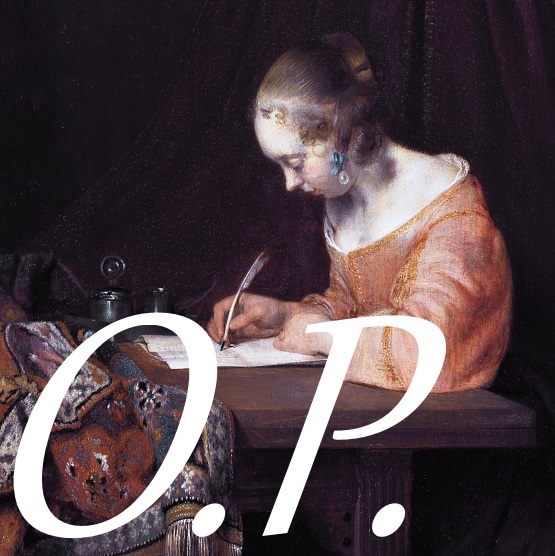
Ordinary Philosophy, Writing a letter *oil on panel *39 x 29.5 cm *signed b.c.: GTB *ca. 1655, assemblage by Amy Cools 2015Greetings to all,

On this New Year’s Day, which also happens to be my birthday and therefore, personally, doubly a day of new beginnings, I’m looking forward to a more expansive, more energetic future for Ordinary Philosophy!

What is Ordinary Philosophy?

It’s a series of explorations founded on the belief that philosophy is an eminently useful endeavor as well as a fascinating and beautiful one, and that citizen philosophers and academic philosophers alike share in making it so. A citizen philosopher myself, I found that my experiences as an avid reader, an artist, a working person, an entrepreneur, a student, and a writer filled my mind constantly with questions and new ideas, spurring me ever on in the search for answers. As I’ve always been a restless and hungry thinker, I fell in love with philosophy, especially, practical philosophy and the history of ideas.

What is Ordinary Philosophy’s mission?

It’s always been to share this love of philosophy and the history of ideas with you. In my explorations, I’ve encountered the most fascinating, innovative, and beautiful ideas from the curious, thoughtful, questing, and inventive world out there, from academic philosophy to science to history to current events to politics to the arts and so, so much more; so much more, in fact, that I can’t possibly process it all on my own.

So here at O.P.’s new home, I’ve broadened the mission.

While there have been occasional guest posts, there will be much more of an emphasis on providing a forum for many more voices at O.P., representing views from all walks of life. O.P. will also publish many more reviews, recommendations, and links directing readers to the great ideas proliferating out there that may be of special interest to O.P.’s audience.

The Traveling Philosophy / History of Ideas series will also expand. Each series will become more in-depth, with more detailed explorations of the life and ideas of each subject and more resources for further exploration and study. The podcast will expand in tandem: new audio recordings of longer pieces published in O.P. for those of you on the go who enjoy the ideas found here but don’t always have the time to sit down and read. As time goes by, I plan to expand the podcast as well to include interviews and a series of downloadable travel guides to accompany the History of Ideas series.

To better accomplish this expanded mission, I’ve moved O.P. here to its new platform: easier to read, use, and share. So if you love great ideas and the pieces you encounter here, please support O.P.’s expanded mission by sharing as widely as you can.

Lastly, dear readers, I appeal to you: Ordinary Philosophy is a labor of love, and depends entirely on your support. I’m determined to keep O.P. ad-free, but can’t do it without you. All financial contributions will be credited by name (unless anonymity is expressly preferred, of course!) on each project funded by their donations, and welcomed with deepest gratitude. Please support Ordinary Philosophy today!

Yours,

Amy Cools, founder and editor of Ordinary Philosophy

*Listen to the podcast version here or on iTunes

The Pope, Climate Change, Morality, and the Politicians

During my lunch break today, I stumbled on an article about the Pope’s upcoming encyclical on climate change.

It reports reactions to the encyclical in which the Pope explains why he accepts human activity is responsible for most of the current climate change and for other ‘situations of environmental degradation’, and in which he calls on all people to fulfill their roles as stewards of God’s creation by changing their wasteful and polluting behavior.

As is usually the case with anything new that comes out concerning climate change and environmental issues, the politicians and pundits quoted in this article approve or criticize his message according to strict party lines. Including (surprise, surprise!) many Catholics.

An aside: the day I see an American Catholic politician change their views even a bit when they don’t accord with the Pope’s, I’ll actually be impressed by their religious sincerity. This Pope has roundly criticized unfettered capitalism and the amassing of great personal wealth, to the discomfiture of many, and has shown other signs of being progressive (or regressive in the sense that his views hearken back to an earlier time, being far more consistent with those of the biblical Jesus than with those of modern conservative politicians). After all, when new and convincing evidence comes along or when a better argument is made, we should all be open to changing our beliefs, right? And who is more qualified to offer these to a Catholic than the Pope? I’m not arguing that Catholics should just blindly agree with everything the Pope says, no one should. At a certain point, though, when you call yourself Catholic but dismiss whatever the Pope says that disagrees with your politics, you might be a ‘cafeteria Catholic’, a pejorative that conservative Catholics traditionally have thrown at liberal and progressive Catholics. I’m just sayin’.

Anyway, the part about how the divide over the pope’s message parallels the party line doesn’t surprise me. What does is that those who reject the Pope’s teachings on climate change and environmental stewardship try to defend their dismissal on the grounds that the Pope’s message is about science and politics and, therefore, they don’t have to listen to him on this matter since he should be ‘focusing on what [he’s] good at, which is theology and morality.’

So what is morality to these people? In the article under discussion, Rick Santorum, Jeb Bush, and Bill Donahue, all three conservative and politically influential Catholics, talk about morality as one thing, and anything having to do with caring for the earth which might have political ramifications another. So how, exactly, is the matter of how and why we should care for the earth not an issue of morality? Do they think that morality consists entirely of things like ‘don’t swear or lie’, ‘go to Church’, or ‘for God’s sake, repress your sexuality until it simultaneously feels super forbidden, barely fun, and only to be enjoyed in the narrowest of circumstances’? These guys are not, by any means, the first people I’ve heard try to narrowly define morality so that it doesn’t interfere with their politicking or whatever other business they’re engaged in. And this sort of thing is not limited to conservatives: liberals and progressives regularly spout that ‘keep your morality to yourself and out of politics’ bit too.

Morality and politics, in fact, are all about the same things and should pursue the same goals: how we go about sharing this world with one another; how we do right by each other while protecting our own rights; how we go about treating everyone with justice, compassion, and integrity.

Hate to tell you this, fellows, but when you talk that way you sound about as foolish as those Heartland Institute people accusing the Pope and the United Nations of being ‘unscientific’ for agreeing with the scientific consensus. And let me tell you, Jeb Bush, the ‘political realm’ ‘ought to be about about making us better as people’. I sincerely hope all these guys were quoted out of context or just misspoke about the relationship between morality and politics.

Because if any politician really believes politics and morality are two separate things, their constituents should be worried, and they are doing the wrong job. In any case, we’ll see if they really believe politics and morality are separate the next time a political issue having to do with reproductive health care comes up.

~~~~~~~~~~~~~~~~~~~~~~~~~~~~~~~~~~~~~~~~~~~
Sources and Inspiration:
Kirchgaessner, Stephanie and John Hooper. ‘Pope Francis warns of destruction of Earth’s ecosystem in leaked encyclical’, The Guardian, June 16 2015. http://www.theguardian.com/world/2015/jun/15/pope-
Neuman, Scott. ‘The Pope Is About To Weigh In On Climate Change. Not Everyone Is Happy’, The Two-Way: Breaking News from NPR, June 17, 2015. http://www.npr.org/sections/thetwo-way/2015/06/17/

On the Josh Duggar Controversy, Part 2

My recent piece on the Josh Duggar controversy was an especially controversial one for many of my readers, as I expected it would be, and here’s a response in answer to the many objections and questions I received in response to it.

To begin with, what do I mean by ‘child’ anyway? Fifteen-year-olds aren’t children, are they? I mean, it’s not like they’re little kids any more! C’mon, they know what they’re doing!

Well, yes and no, They know what they’re doing much more than younger children; but, like younger children, they’re encountering new and often staggering challenges which their not yet fully developed brains are still learning how to handle, especially when it comes to integrating their newfound sexual needs and urges into socially responsible behavior.

When it comes to nailing down an exact age or age range for the category child, I would leave it to relevant experts to decide this as it relates to policy. I consider a child a person who has not yet reached a stage of development in experience and physical maturity (including and especially of the brain) generally capable of practicing reason, forward-thinking, and self-control to the level that mature persons are generally capable of. I expect this age to be somewhere in the range of 17 – 19, though of course this differs from person to person. This might be better determined by a mental health professional when deciding if an offender should be directed to medical treatment or juvenile court or to the adult justice system.

Disgust is also playing a big role in public reactions to this case. Many are uncomfortable with the fact that children often act on their new sexual urges at all, let alone in ways that don’t respect the rights of others, since they lack the relevant social experience and their immature brains lack the structures that adults rely on for self-control. I was recently listening to a talk by the great Martha Nussbaum on how disgust often leads us to act unjustly towards one another; I think that this is happening here in Josh’s case. We all need to remember that sex is just as much a natural part of life as any other, and that to help them get through their life changes, we must react constructively and help children learn how to deal with it all. There are plenty of childhood misbehaviors that infringe on others’ rights: bullying, stealing, selfish refusal to help or share, and so on and so on. It makes no more sense to react hysterically to one than the other.

To single out sexuality in children as an instinct or set of behaviors to be disgusted at or feared more than others is to my mind not only unreasonable but superstitious, since it’s anti-scientific and anti-naturalistic, even inhumane. And to lump all sexual misbehavior in children together as ‘molestation’ and ‘assault’ is not only inappropriate, it’s absolutely wrong. Not only does it cause the public to treat the person slapped with these labels unjustly, it minimizes the injury of those who suffered real assaults or suffered substantial harm. In this case, people are referring to Josh’s unwanted groping or petting in the same terms that people are referring to the rape of children by clergy, for example: they are all being lumped together as ‘child molesters’. There is no moral justification for equating the forcible rape of a younger person by an older person with unwanted groping of one child by another, yet so many people are getting away with doing this very thing in the public debate right now by referring to them all in the same terms.

And it doesn’t make sense to react to the suffering of one child, the target of the undesirable behavior, by treating the misbehaving child unjustly. Whether or not we like it, the process of growing into our mature sexual nature is uncomfortable, complicated, and riddled with mistakes. Sometimes we need to give sexually misbehaving children a talking-to, sometimes we need to punish them, and sometimes we need to separate violent or dangerous children from others until they’ve learned their lesson. But we need to stop trying to sanitize childhood and adolescence, both on the right side of the ideological spectrum and on the left. Conservatives need to stop screeching about the horrors of teens having sex, the dire consequences of sex-ed, and how making contraceptives and the HPV vaccine available to youngsters will cause them all to be sex-addled reprobates. Liberals need to stop self-righteously acting as if children are simultaneously passive receptacles of adult virtues and perfect little angels whose misbehaviors are products of a corrupt society rather than immaturity, that children who cause discomfort or suffering in others must be ruthlessly tried, convicted, and sentenced in public opinion, and most of all, they need to stop promoting a culture of perpetual victimhood. Like I said before, we all need to grow up!

Even in the cases of extreme misbehavior, the future of the offending child should not be ruined by exposing them to a lifetime of media scrutiny, or placing them on a publicly accessible criminal registry for life, or otherwise lynching their reputation. The situation is never helped by heaping injustice upon suffering. And imagine what a society would look like, what a huge and oppressed underclass we would create, if we were to actually punish all children who were caught misbehaving in ways that caused other children suffering, or infringed on others’ rights, by publicizing their misdeeds for life. Today, I’m finding it quite funny (not ‘ha-ha’ funny) how many of the same people who’ve jumped on the ‘Josh Duggar is a child molester’ bandwagon are upset, as they absolutely should be, by Kalief Browder’s unjust punishment for allegedly stealing a backpack as a child of 16. Yet they’re treating Josh as a pariah since he ‘should have known better’ and Kalief as a tragedy because ‘he was just a kid’. Of course, Kalief’s treatment was far more unfair, and had far more dire consequences, than Josh’s. But many lives are ruined forever because of how society sometimes unjustly punishes people for life for offenses they commit as children, by the courts and in the media, and many people are driven to despair and even suicide because of it. And as Human Rights Watch and many other criminal justice reform organizations have found, people treated as Josh is being treated now are often driven to the same desperate lengths as Kalief.

Another thing: it doesn’t matter a tiny bit what Josh Duggar believes as an adult, what his religious or political opinions are, and especially, what his parents’ beliefs are, when it comes to how he misbehaved as a child and how we treat him because of it. I don’t like Josh’s religion, I don’t like the indoctrination brand of homeschooling his family promotes (which I experienced myself, to the detriment of my early education), and I don’t agree with the Duggar clan’s message overall. None of that matters. Neither I nor anyone else has license to do the wrong thing just because we don’t agree with someone’s opinions, even if we think they are being hypocritical. In Josh’s case, if he now promotes Christian moral values and believes we should deal with sexual misbehavior harshly, it has nothing to do with whether he failed to live up to those principles before he was old enough to maturely formulate them. An adult can oppose bullying (rightly!) even if they themselves bullied others as a child, or promote stricter laws against theft even if they stole things as a child. The one has nothing to do with the other when it comes to one’s beliefs; every single one of us have convictions that our childhood behavior doesn’t reflect. We should criticize Josh’s beliefs on their own merits, and not on anything else.

In fact, we all learn right from wrong precisely because we’ve made mistakes: we do the wrong thing constantly as we grow up, and learn not to do it again because of the consequences. Sometimes it’s because we’re corrected or punished by an authority figure, sometimes it’s because we hurt others and feel ashamed, or because our peers strike back or shun us, and so on. It’s not until we’ve had ample opportunity to learn these lessons, and for our brains to develop enough to process and implement them, that we should begin to be held fully responsible for our actions.

One more thing: I would ask my fellow liberals and progressives who are jumping on the ‘Josh Duggar is a child molester’ bandwagon to consider this: would you accept this brand of character assassination based on childhood misdeeds from people on the other side of the ideological divide?

Let’s imagine ourselves in a counterfactual (make-believe or what-might-have-been) world in which Peter Singer, influential philosopher and founder of the modern animal rights movement, was suddenly embroiled in controversy. Suppose an angry neighbor convinced the local police to publish a report revealing that Singer has thrown rocks at the neighbors’ cats when he was fourteen or fifteen, sometimes injuring them a little or causing them fear and distress; sometimes, the rocks missed and the cats didn’t even notice what happened since they were asleep at the time. Then suppose conservatives who oppose animal rights’ legislation started splashing this story all over the press, saying things like: ‘Look what a hypocrite Peter Singer is, that animal abuser!’ and ‘See, I told you so-called liberal values are no good, look how Peter Singer behaves, that just shows what all those animal-rights bleeding-heart liberals who support him are really like!’ If you were not outraged at that injustice, and amazed at the unconscionable behavior of conservatives who reacted to the story this way, I would be just as appalled at the lack of critical thinking, and the willingness to betray ones’ principles to score political points, as I am with the ‘Josh Duggar is a child molester’ crowd. Peter Singer’s principles and beliefs he espouses as an adult has nothing to do with whether or not he misbehaved as a child in that counterfactual world.

In sum: we all need to deal justly with one another, and not stoop to assassinating one another’s characters for bad reasons just because we disagree. If we really believe in truth, justice, tolerance, and the rightness of our cause, we should hold ourselves to the discipline of never taking the moral low ground, because, ultimately, we all lose by doing so.

~~~~~~~~~~~~~~~~~~~~~~~~~~~~~~~~~~~~~~~~~~~~~~~~~~~

Sources nad Inspiration:

Nussbaum, Martha. ‘Same-Sex Marriage and Constitutional Law: Beyond the Politics of Disgust’
Talk at Cornell Law School, Nov 11, 2009 https://www.youtube.com/watch?v=dybhnOZvCvw

Schwirtz, Michael & Michael Winerip. ‘Kalief Browder, Held at Rikers Island for 3 Years Without Trial, Commits Suicide’. New York Times, June 8, 2015 http://www.nytimes.com/2015/06/09/nyregi

Singer, Peter. Animal Liberation. Random House, New York, 1975
https://books.google.com/books?id=2wi8AAAAIAAJ&q=animal+liberation+peter+singer&d

‘US: More Harm Than Good: Exempt Youth Sex Offenders From Registration Laws’. Human Rights Watch, May 1, 2013. http://www.hrw.org/news/2013/05/01/us-more-harm-good

Anecdote and Evidence

I was engaged in conversation the other day with someone I like very much and whose opinions I respect, yet with whom I often disagree. This is a very good thing: these are the sort of discussions that keep us honest. They force us to confront arguments and evidence we hadn’t considered before. They challenge us to recognize our unjustified assumptions, things we’ve long taken for granted and never thought to question. And over time, they instill in us the habit of forming good quality arguments that withstand such challenges, and discard those that don’t. These are valuable lessons which we don’t learn so readily in discussion with like-minded people, in preaching to the choir, so to speak.

That evening, we were mostly discussing politics, history, and social issues. Over the course of the evening, I found my interlocutor often supported his arguments primarily with anecdotes, as we all often do. Anecdotes are invaluable discussion tools: they illustrate what we mean by taking the argument out of the realm of the abstract into concrete reality, or in other words, they bring the argument to life. But over the course of the evening, I found that for nearly every anecdote he presented, I thought of one in support of a counterargument. Now it just so happened that some of the topics under discussion were sensitive issues, and since we were in mixed company and everyone was on holiday, I was loathe to bring up anything that would cause strong discomfort or hurt feelings, so I held back.

But I wish I had asked him to clarify this crucial detail: did he mean to use these anecdotes as illustrations, or as evidence?

If he was using these anecdotes to illustrate the larger points he was making, well and good. If he was using these anecdotes as evidence of how stated facts or general rules were manifested or broke down in particular circumstances, well and good. And if he was using these anecdotes as evidence of how particular circumstances can give rise to unique results, again, well and good.

Yet, the fact that I could easily think of a contradictory anecdote for every one he presented weakened his arguments in my mind as he was making them, in those cases where he was arguing in favor of truth claims about the world as a whole. That’s because he hadn’t made is clear how he was using these anecdotes to support his claims.

We should keep this in mind every time we make an argument: an anecdote, considered on its own, should not be considered evidence when it comes to general rules, facts, or theories.

Generally, we should be hesitant to rely too much on anecdotes when we want to persuade others of the truth of what we’re saying.Why? Well, the world is a complicated place, with innumerable factors to consider when making a judgment on any given situation. So while any one anecdote can show how a particular array of circumstances can lead to a specific outcome, it doesn’t reveal enough about what can happen given another particular set of circumstances, or what usually happens in the world as a whole.

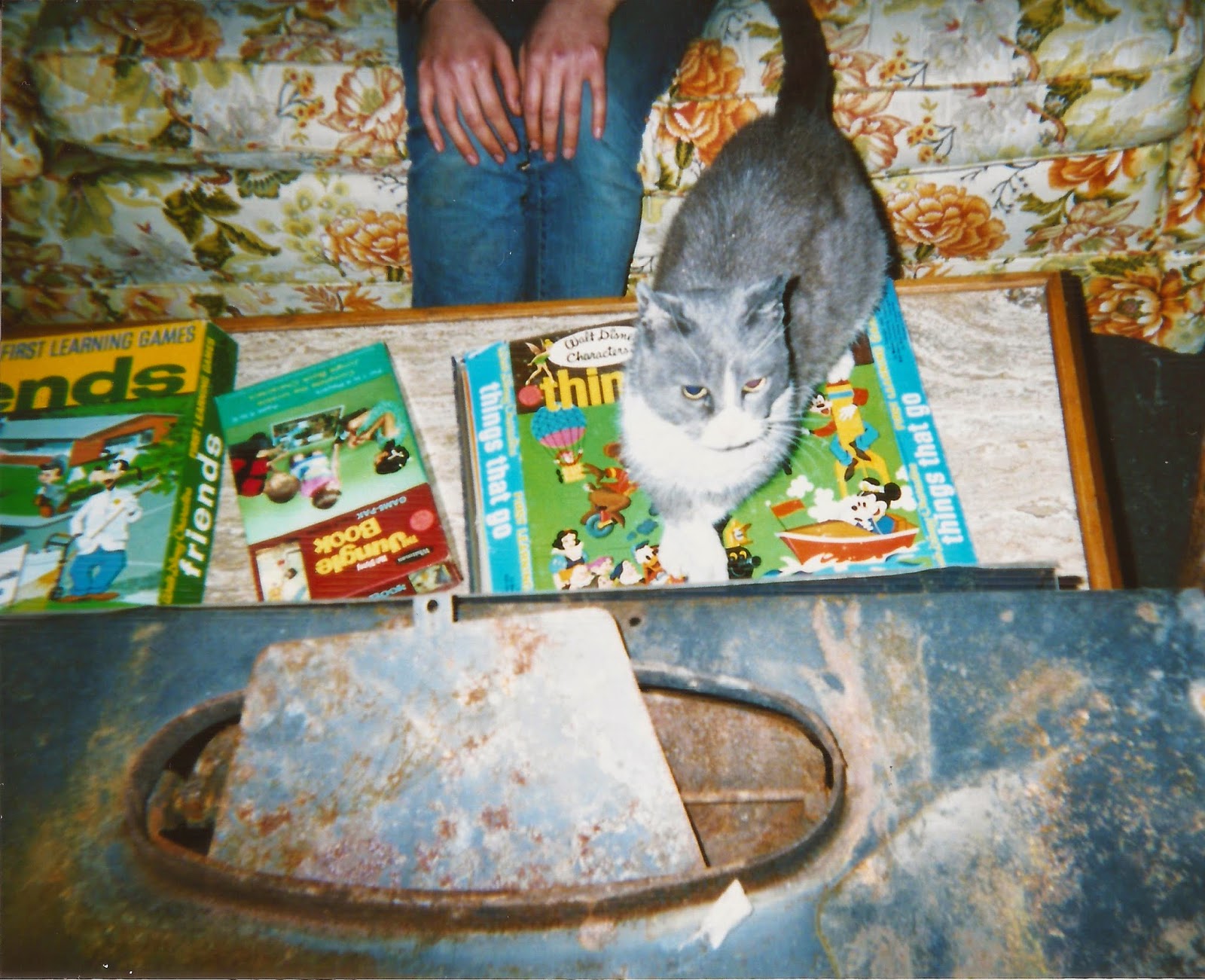
There was a warehouse cat I knew named Stinky, years ago when I worked in a salvage yard and retail warehouse. She was a charmingly decrepit cat, runty and ancient. She purred like an old lawnmower, she had rheumy eyes, and she ate a special diet of soft food because she had no teeth. She had terrible arthritis or some other undiagnosed bone or joint condition, which gave her an oddly rolling gait and caused her to nearly fall over every time she strained her head up around to the side to look at you. She also left a patch of brown dust everywhere she slept because she could not reach around to groom her body. For all of this, she seemed to have a happy life: she was very affectionate, showed few signs of pain or distress for all her maladies, and dearly loved and tenderly cared for by all of us who worked there. (My heart still aches with affection when I remember our dear departed little kitty!)

Now, suppose someone where to discuss cats with me, and based on my close acquaintance with Stinky, I were to argue that cats are slow, ungainly creatures with no teeth, that they are dirty animals that don’t groom themselves, they always weigh less than eight pounds, and if you were to hear a low rumbling sound, you can bet it’s a cat. My interlocutor would justifiably think I’m a little nutty. When it comes to talking about one cat, an anecdote is very revealing. When it comes to talking about the species cat, not so much. In other words: one cat is an anecdote, but lots of cats are evidence.

While all this might appear obvious, it’s natural for human beings to form beliefs and to argue on the basis of what we’re familiar with: we all have our own sets of experiences from which we draw our ideas about the world. Yet, as we grow in knowledge and understanding, it’s important to gather as much information as we can about the world that goes beyond our own experience, since we lead ourselves astray all the time by relying on anecdotes, or in other words, the limits of our own experience. The anecdote can point us in the direction of where to seek for truth, since it reveals facts about the world in that particular time and place, but on its own, can’t tell us much about larger truths or how the world works as a whole.

Statistics are evidence. Meta-studies are evidence. One study can be considered useful evidence if it’s sufficiently large and well-conducted, but given so many variables in the world and the statistical likelihood of getting skewed results in any one given study, it’s better to rely on meta-studies, or a hypothesis or theory supported by many studies and observations over time.

Returning to the anecdote with which I began this piece to illustrate my argument: given the evidence of the many discussions we’ve had over time, I have every reason to believe my interlocutor that evening is an intelligent person, well-informed in many ways. Given my confidence in his abilities, I also believe he’s fully aware of the difference between anecdote and evidence. Yet, since our evolved brains naturally think first in terms of our own experience so that we easily fall into the anecdote-belief trap, we need to keep in mind the difference between anecdote and evidence, use them appropriately, and make it clear to ourselves and our partners in discussion how we’re using each of them to support our arguments and why.

How the Brain Works (and Doesn’t) vs Our Justice System

We’re learning new and surprising things about our brains all the time. Psychologists, behavioral economists, and other scientists have sophisticated new tricks to reveal what’s going on inside our skulls, and their findings are publicized more widely than ever before. We reveal what we think we’re thinking through polls and quizzes, we’re ‘tricked’ into revealing what we’re really thinking through rigged puzzles and tests (exposing our biases, misconceptions, etc), we have easy access to massive databases of recorded human thought, and most amazingly, neuroscientists can now peer inside our brains while we’re thinking. And some of what we’re learning shows us that we’ve been wrong about ourselves in some really important ways.

So: do changes in our understanding of how the brain works mean we have to change, even to overhaul, how our justice system works too?

Our justice system! WHAT?!? Why would we want to change something so equitable, so honorable, it’s defined by the word ‘justice’?

Seriously, though: to many, this question is almost too scary to ask. 

Won’t we send the signal that we’re no longer tough on crime by even proposing such a project? Isn’t our justice system pretty good as it is? Occasional ‘bad apple’ cops, perjuring witnesses, and corrupt prosecutors aside, our justice system is founded on the wholesome principle of personal responsibility: if we do wrong, we pay the price. A central feature of our justice system, after all, is the right to a fair trial by a jury of our peers. And as a society, we’ve taken great pains to ensure that everyone charged with a crime can get a fair trial. Our standards of evidence are pretty high: there must be eyewitness testimony and plenty of it. Forensic evidence is carefully collected and thoroughly analyzed, from blood to fingerprints to DNA to the tiniest of hairs and fibers. Everyone is entitled to legal counsel, even if the taxpayers have to foot the bill. Children and the mentally disabled are, properly, not tried as if they have the same level of responsibility as fully capable adults. The convicted have a right to appeal if they present evidence that their trial was unfair or if they can demonstrate innocence. And so on.

Even granting all of these and setting them aside for now, a common objection to the current justice system in general is that the underlying concept of personal responsibility is a myth. We’re not responsible since everything we think and do is determined by laws of cause and effect. So, we have no free will, and if we have no free will, the whole concept of moral accountability, of responsibility for our actions, doesn’t make sense. The justice system ends up, then, having nothing to rightfully judge or punish. Let’s explore this for a moment.

What do we mean by personal responsibility? We mean that it’s we that did the thing, it’s we who understand that there are alternatives available to us, and it’s we that could, at least conceivably, have done otherwise. This is true even if our personalities, past experiences, and current circumstances make it unlikely we would have chosen otherwise. It’s reasonable to assign responsibility for actions, since it deters us from making bad choices, and motivates us to inculcate better habits in ourselves. Assigning responsibility does not mean we must ruthlessly punish all who do wrong; it means that we can make reasonable demands of one another as the circumstances warrant, be it punishment, recompense, an apology, or an acknowledgement of responsibility.


Who’s responsible for our actions, then? We all are, so long as we are capable of understanding what we should do and why (whether or not we understood at the time), and so long as we could have chosen to do otherwise. Unless immaturity, injury, or illness makes it impossible, or nearly impossible, to control our actions, all persons who are free to make their own choices can and should be held responsible for those choices. (I argue for this more fully in ‘But My Brain Made Me Do It!’)

By the way, that’s why I disagree with many who think that psychopaths shouldn’t be held responsible for their actions. Although it may be more difficult for the psychopath to do the right thing, to respect the rights of others, it’s still in their power to do so, so long as they are capable of reason. We don’t let other people off the hook just because they don’t feel like doing the right thing; and all people, psychopaths or not, often find the wrong thing to do irresistibly attractive, and the right thing difficult. As long as anyone demonstrates sufficient intelligence to understand that the rules apply to them, it doesn’t matter that they wish it didn’t, or feel like it shouldn’t. After all, psychopathy is characterized by lack of empathy, not intelligence. The impartiality that underlies all morality, as in A owes a moral or legal duty to B, so B owes an equal moral or legal duty to A, is a simple and logical equation that any minimally intelligent adult person can grasp, psychopath or not.

So if the concept of personal responsibility, or moral accountability, is generally a good one, and our society is so committed to creating a fair justice system, what’s the problem with it?Here’s one of the main problems: many of our laws and practices are based on a poor understanding of how memory works, and an underestimation of how often it doesn’t work. For example, many of our law enforcement tactics are virtually guaranteed to result in unacceptably high rates of false convictions through their tendency to influence or convince suspects and eyewitnesses to remember details and events that never happened. Police interrogators can and do legally lie to their subjects in the attempt to ‘get them to talk’, under the assumption that false information has little to no effect on the person being interrogated other than to coax or scare the truth out of them. Until very recently, we didn’t understand how malleable memory really is, how easy it is in many circumstances to get others to form false memories by feeding them information. Courts all over the United States, even the Supreme Court, have upheld such deceptive techniques as lawful, yet we have mounting evidence to show these techniques have the opposite of their intended effect – unless, of course, the intended effect is any conviction for crime, not just the true one.

The fact that human memory is as undependable as it it seems counterintuitive, to say the least. It’s true that we can be forgetful, that we trip up on unimportant details such as the color of a thing, or the make of a car, or someone’s height. But surely, we can’t forget the really important things, like what the person who robbed or raped us looks like, or whether a crime happened at all, especially if we’ve committed it ourselves. Yet sometimes it’s the accumulation of small, relatively ‘unimportant’ misremembered details that leads us to ultimately convict the wrong people, and the evidence piling up also reveals that we do, in fact, misremember important things all the time. And people are losing their reputations, their liberty, their homes and money, even their lives, because of it.
 
Before we look at this evidence, let’s explore, briefly, how we think about memory, and what we are learning about it.

Not so long ago, working theories of human memory rather resembled descriptions of filing systems or of modern computers; many still think of it that way. We thought of the brain as something like a fairly efficient librarian or personal secretary neatly and efficiently storing important bits of information, such as memories of things that

happened to us, images of the people and places we know or encounter in significant moments in our lives, and so on, in a systematic way that would facilitate later retrieval, and most importantly, retrieval of reliable information. ‘Unimportant’ memories, or the less significant details of memorable events, were thrown away by forgetting, so that brain power wouldn’t be wasted on useless information. Sometimes we’d find old memories stuffed away in the back of the file or pushed off to a corner somewhere, a little difficult to retrieve after much time had passed, but still accessible with some effort. But important memories were stored more or less intact and discrete from one another, so if we remembered something at all, we’d remember it fairly correctly, or at least, the most important details of it. After all, it wouldn’t make sense for our internal secretary to rip up the memory file into little pieces and stash it all over the place helter-skelter, or to cross out random bits or even doctor the files from time to time, would it? And we certainly couldn’t remember things as if they actually happened to us if they didn’t. It seems all wrong, that evolution (or an intelligent designer, if that’s your thing) would give us an inefficient, inaccurate, dishonest, or mischievous keeper of that most cherished, most self-defining component of ourselves, our life’s memories.

But now we know that memory works differently in many ways than we thought. How do we know this? For one, we’re now looking inside the brain as we think, and brain scans show that the process of recalling looks different in practice than we might have expected if some of our old theories were true. But more revealingly, we’re taking a closer look at our cognitive blunders. Like many other discoveries in science, we find out more and more about how something works, honing in on it so to speak, by examining instances where it doesn’t work as it should if our theories, or common sense, were correct.

As we’re finding out that memory doesn’t work as we thought, we’re also realizing how heavily our justice system relies on memory and on first-person accounts of what happened. We place a very high value on eyewitness testimony and confessions in pursuing criminal convictions, again, based on faulty old assumptions about how memory works, and how accurately people interpret the evidence of their senses. Yet as we’ll see, people have been falsely convicted because of these, even when other evidence available at the time contradicted these personal accounts of what happened. As our justice system places undue faith in memory and perception, despite their flaws, in what other ways is it built on wrong ideas about how the mind works?

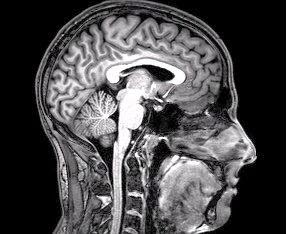
Neuroscience, the quest to understand the brain and how it works, was founded on case studies of how the mind to appeared to change when the brain was injured. Traditionally, the mind was thought of as a unified thing that inhabits or suffuses our brain somewhat as a ghost haunts an old house. If part of the house burns down, the ghost is the same: it can just move to another rooms. But careful observers, early scientists, noticed that an injury to a part of the brain affects the mind itself. When particular parts of the brain were injured, patients lost specific capabilities (to form new memories, for example, or to recognize faces, or to keep their temper). Sometimes, the personality itself would change, like from friendly to unfriendly or vice-versa. Or in the case of split-brain patients, they would simultaneously like and dislike, believe and not believe, or be able and not able to do certain things, depending on how you ask, or sometimes just depending on what side of the body you address them from! Gradually, we came to understand that the mind is something that emerges from a physical brain, from the way the brain’s parts work together, and is entirely dependent on the brain itself for its qualities and for its very existence. 


And as we discussed, it’s not only neuroscientists with their fMRIs that are revealing how the brain works. The criminal justice system has amassed mountains of evidence that shows us how often the human brain does its job and helps us ‘get the right guy’, and how often it fails. With advances in technology, such as DNA testing, more sophisticated firearms testing, expanded access to files and records, and many other newly available forensic tools, we’re discovering an alarming number of false convictions, not only of people currently imprisoned, but sadly, of those we’re too late to help. Most of these are the direct result of basic errors of our own faulty brains. 

(I’ve more briefly discussed the issue of false convictions for crime in an earlier piece, stressing the importance of knowing the ways our criminal justice system fails, and one of the most effective ways society can keep itself informed.)

Two of the main culprits in false convictions are false memory and misperception, the one resulting from errors in recall, the other resulting from bias or the misinterpretation of sense evidence.

For example, let’s consider the case of a rape victim and the man she falsely accused, who went on to work together for reform in certain law enforcement practices. For years, Jennifer Thompson-Cannino was absolutely sure that Ronald Cotton had raped her, and her identification of him led to his conviction for the crime. After all, as she said, and as the court agreed, one couldn’t forget the face of someone who had done this to you, committed such an intimate crime inches away from one’s own eyes, could they? Eleven years later, the real rapist was identified when the original rape kit sample was re-tested to confirm a DNA match. Over time, Thompson-Cannino had convinced herself, honestly by all accounts, that Cotton’s face was the one she originally saw, and each time she looked at it, the more she ‘recognized’ it as that of her rapist, and the more strongly she associated this recognition with the rest of her memories of the crime. Fortunately, she’s one of those rare people who are able to fully admit such an egregious mistake, and she has joined with Cotton to call on police jurisdictions to change the way suspect lineup identifications are conducted. Thompson-Cannino and Cotton learned a hard lesson about the fallibility of memory, and how preconceived notions (in this case, that the police must be right) can withstand the rigors of the courtroom and still lead to very wrong conclusions.

But we can imagine that such a mistake must happen from time to time, as in Cotton’s case, when the supposed criminal looks quite a bit like the real one, and the array of circumstances that led to the whole mix-up were so unusually convoluted. But, surely, a lot of people couldn’t all remember the same crime, or series of crimes, wrongly, and describe it mostly the same way when questioned separately? Well, that happens too
. The McMartin case of the early 1980’s was just the first of a string of cases which resulted in hundreds of people being convicted for the rape and torture of small children, usually entirely based on the purported evidence of the ‘victims’ ‘ own memories, or those of their family members. The ‘victims’, mostly young children, told detailed, lurid, horrific stories of events that most people would consider beyond the imaginative scope of innocent children. Over time, as those convicted of the crimes were pardoned, exonerated, or usually just had the charges dropped without apology (some still languish in prison, or are confined to house arrest, or are barred from being with children, including those of their own family), videos and transcripts of ‘expert’ interviews with these children found them leading their interviewees on. Professional psychologists and interrogators were found to be influencing children to form their own false memories, even planting them whole-cloth, rather than drawing them out as most people thought they were doing. This includes the professionals themselves! Some of these children, now grown, still ‘remember’ these events to this day, even those who now know they never happened.

Okay, now we’re talking about children, and we all know children are impressionable. But usually it’s adults who give evidence in such important cases, and though they might be fuzzy on the details when it comes to what other people did, they know what they themselves did, right? Well, here again, no, not necessarily. In Norfolk, Virginia, eight people were convicted of crimes relating to the rape and murder of one woman, based on the first-person confessions and testimony of four military men. These men, who had tested sound enough of mind and body to join the Navy, were convinced by police interrogators, one by one, to ‘reveal’ that they and several others had, by a series of coincidences, formed an impromptu gang-rape party that managed to conduct a violent crime that lasted for hours, while leaving little destruction or evidence behind. Although these confessions didn’t match the evidence found in the crime scene, didn’t match the other confessions, or were contradicted by alibis, all were found guilty on the common-sense and legal assumptions that sane, capable people don’t falsely accuse themselves.Yet as in the Norfolk case, the case history of our criminal justice system reveals that with the right combination of pressure, threats, assertion of authority, and personality type, just about anyone can be pushed to confess to committing even a terrible crime, and worse yet, become convinced that they did it (as one of the men did in the Norfolk case). The Central Park Five, as they are often called, were five teenage boys, aged 14 to 16, who were convicted of the rape, torture, and attempted murder of a woman in Central Park in New York City. The justifiably horrified public outrage at this crime, combined with frustration over a rash of other crimes throughout the city, put a lot of pressure on law enforcement to solve the crime in a hurry. These five boys had already been picked up by police officers in suspicion of committing other crimes that night, of robbery and assault, among other things, and when the unconscious, severely beaten woman was found, the police hoped they had her attackers in custody already. After hours of intensive untaped interrogation, all five eventually confessed, implicating themselves and each other. They were convicted, despite the fact that the blood evidence matched none of them, and their confessions contradicted each other in important details. 

False memories and false confessions are only two of the ways our fallible brains can lead us astray in the search for truth. Human psychology, so effective at so many things, is also short-sighted, self-serving, and wedded to satisfying and convenient narratives, to a fault. Law enforcement officials in all of these cases were convinced that their theories of effective interrogation were right, and that their perceptions of the suspects were right. The prosecutors were convinced that the police officers had delivered the right suspects for trial. The legislators that made the laws, and the courts that upheld them, were convinced they were acting in the best interest of justice. And as we’ve seen, all of these were wrong.

As just about everyone was who were involved in bringing Todd Willingham to court, and in condemning him to die for the murder of his own children by arson. By all accounts, Willingham didn’t act as people would expect a grieving father to act, especially one who had escaped the same burning house his children had died in. Yet it was one faulty theory after anotherfrom pop psychology and preconceived notions about that ‘real’ grief looks like, from bad forensics to a poor understanding of how an exceedingly immature and awkward man might only appear guilty of an otherwise unbelievable crime, that led to his conviction and execution by lethal injection.

But the problem of false conviction for crime is much, much larger than we might suppose from the cases we’ve considered here: these were all capital crimes, and as such were subject to much more rigorous scrutiny than in other cases. If wrongful convictions are known to happen so often in the case of major crimes, we can reasonably extrapolate a very high number of false arrests, undeserved fines, and especially, false plea deals, in which people innocent of the relatively minor crimes they’re accused of are rounded up, charged, and sentenced. Plea bargaining presents a special problem: suspects are persuaded to plead guilty and accept a lesser sentence than the frighteningly harsh one they’re originally threatened with, and in jurisdiction after jurisdiction, we’re finding that huge numbers of innocent people are sent to prison every year through this method. All of this results from a blind zeal to promote justice, or at least, the appearance of justice in the interest of feeling secure, of more firmly establishing authority, or of fulfilling the emotional need to adhere to comforting social traditions.

So how do we need to change our attitude towards our criminal justice system, in the pursuit of actual justice? A proper spirit of epistemic humility, a greater concern for those who may have been wrongfully convicted, and a real love of justice itself (rather than the mere show of caring about justice that the ‘tough on crime’ too often consists of).

But we still are left with the practical task of protecting ourselves and one another. Positive action must be taken, or crime will run rampant, being unopposed. But that doesn’t mean hold on to old ideas and practices because we like them, because they are familiar and ‘time-tested’, and make us feel safe. This includes the death penalty, which shuts out all possibility that we can remedy our mistakes.

Here’s one general solution: approach criminal justice as we do science itself, where we accept conclusions based on the best evidence at the time, but founded on the idea that all conclusions are contingent, are revisable if better, compelling, well-tested evidence comes along. We need a justice system that assumes the fallibility of memory and perception, and builds in systematic corrections for them.

And we need a system that doesn’t just pay homage to this idea: we need to build one that allows for corrections, and not in such a way that it takes years, if ever, to release someone from prison or clear someone’s name if the evidence calls for it. Many would say that the system already works this way: look at how many appeals are available to the convicted, and how many hundreds of people have already been exonerated of serious crimes. But it doesn’t work that way in almost all circumstances. It takes anywhere from months to several years after actual innocence is established to actually release a wrongfully convicted person from prison. For all those not so lucky as to have their innocence proved: most cases don’t have DNA evidence available to test to begin with, at least that would definitively prove guilt or innocence. And even in the rare cases such evidence is available, most is never re-tested to begin with, since the bar for re-evaluation of evidence is so high. Or, the evidence that was available is destroyed after the original conviction and is unavailable for re-examination. Or, legal jurisdictions are so determined that their authority remain unchallenged that they make it extremely difficult, if not impossible, for prosecutors and law enforcement officers to be held accountable in any way if they make a mistake, and bend over backwards to make sure such mistakes are never revealed. And so on.

In short: we don’t just need a justice system that brings in science to help out; we need a justice system whose laws and practices emulate the self-correcting discipline of science, which, in turn, is derived from the honest acknowledgement of the limitations of our own minds.

*Listen to the podcast version here or on iTunes

* Also published at Darrow, a forum for thoughts on the cultural and political debates of today

~~~~~~~~~~~~~~~~~~~~~~

Sources and Inspiration

‘About the Central Park Five’ [film by Ken Burns, David McMahon and Sarah Burns], PBS.org.
http://www.pbs.org/kenburns/centralparkfive/about-central-park-five/Berlow, Alan. ‘What Happened in Norfolk.’ New York Times Magazine. August 19th, 2007.
http://www.nytimes.com/2007/08/19/magazine/19Norfolk-t.html

‘The Causes of Wrongful Convictions’. The Innocence Project.
http://www.innocenceproject.org/causes-wrongful-conviction

Celizic, Mike. ‘She Sent Him to Jail for Rape; Now They’re Friends’ Today News, Mar 3, 2009.
http://www.today.com/id/29613178/ns/today-today_news/t/she-sent-him-jail-rape-now-th

Eagleman, David. ‘Morality and the Brain’, Philosophy Bites podcast, May 22 2011.
http://philosophybites.com/2011/05/david-eagleman-on-morality-and-the-brain.html

‘The Fallibility of Memory’, Skeptoid podcast #446. Dec 23, 2014.
http://skeptoid.com/episodes/4446

Fraser, Scott. ‘Why Eyewitnesses Get It Wrong’ TED talk. May 2012
http://www.ted.com/talks/scott_fraser_the_problem_with_eyewitness_testimony

Grann, David. ‘Trial by Fire: Did Texas Execute an Innocent Man?’ The New Yorker, Sep 7, 2009
http://www.newyorker.com/magazine/2009/09/07/trial-by-fire

Hughes, Virginia. ‘How Many People Are Wrongly Convicted? Researchers Do the Math’. National Geographic: Only Human, Apr 28, 2014.
http://phenomena.nationalgeographic.com/2014/04/28/how-many-people-are-wrongly-

Jensen, Frances. ‘Why Teens Are Impulsive, Addiction-Prone And Should Protect Their Brains’. Fresh Air interview, Jan 28th, 2015.
http://www.npr.org/blogs/health/2015/01/28/381622350/why-teens-are-impulsive-...

Kean, Sam. ‘These Brains Changed Neuroscience Forever’. Interview on Inquiring Minds, 

Lilienfeld, Scott O. and Hal Arkowitz. ‘What “Psychopath” Means’. Scientific American,
Nov 28, 2007. http://www.scientificamerican.com/article/what-psychopath-means/

Loftus, Elizabeth. Creating False Memories.’ Scientific American, Sept 1,1997. http://faculty.washington.edu/eloftus/Articles/sciam.htm
and ‘The Fiction of Memory’ TED talk. June 2013.
http://www.ted.com/talks/elizabeth_loftus_the_fiction_of_memory?

 
Nelkin, Dana K., ‘Moral Luck’, The Stanford Encyclopedia of Philosophy. Edward N. Zalta (ed.) http://plato.stanford.edu/entries/moral-luck/
 
Perrilo, Jennifer T. and Saul M. Kassin. ‘The Lie, The Bluff, and False Confessions’. Law and Human Behavior (academic journal of the American Psychology-Law Society). Aug 24th, 2010.
https://www.how2ask.nl/wp-content/uploads/downloads/2011/10/Perillo-Kassin-The-Lie

Possley, Maurice. ‘Fresh Doubts Over a Texas Execution’. The Washington PostAug 3, 2014.
http://www.washingtonpost.com/sf/national/2014/08/03/fresh-doubts-over-a-texas-execution/

Robertson, Campbell. ‘South Carolina Judge Vacates Conviction of George Stinney in 1944 Execution’, The New York TimesDec. 17, 2014. http://www.nytimes.com/2014/12/18/us/judge-vacates-convict

Shaw, Julia. ‘False Memories Creating False Criminals’. Interview, Point of Inquiry podcast.
March 2nd, 2015. http://www.pointofinquiry.org/false_memories_creating_false_criminals_with_dr..

‘The Trial That Unleashed Hysteria Over Child Abuse.’ New York Times, Mar 9th, 2014.
and video ‘McMartin Preschool: Anatomy of a Panic | Retro Report’

Science and Philosophy, a Beautiful Friendship: A Response to Michael Shermer

There’s been some very public dig-taking between the science and philosophy camps lately. Lawrence KraussNeil DeGrasse TysonStephen Hawking, and other scientists are saying philosophy’s become irrelevant, little more than an esoteric old boy’s club. On the other hand, philosophers, theologians, politicians, and others criticize ‘scientism‘, the conviction that science, and only science, can and should be the ultimate source for all human knowledge; that all truth claims, that all ethical, metaphysical, and political beliefs, should not only be informed by or founded on, but entirely determined by, empirical evidence.

Michael Shermer’s article ‘A Moral Starting Point: How Science Can Inform Ethics‘ (Scientific American, February 2015) doesn’t dismiss philosophy so directly. He includes philosophy in a list of three other arenas of human thought, with religion and political theory, as those to which most people turn for answers in matters of right and wrong, good and evil. Science can, Shermer says, provide those answers, and goes on to explain why he believes ethics has no better source for them. The history of the human race is rife with slavery, torture, theft, and discrimination, yet all diminish human flourishing. Much of this harmful behavior consists of the group abusing certain of its members for the sake of others. But since it’s individual beings that ‘perceive, emote, respond, love, feel, and suffer’, Shermer says, it’s individual beings that are the ‘fundamental units’ of nature (evidenced by the fact they’re what natural selection targets). The primary purpose of ethics, then, is to promote the flourishing of individual beings, and to denounce all that doesn’t.

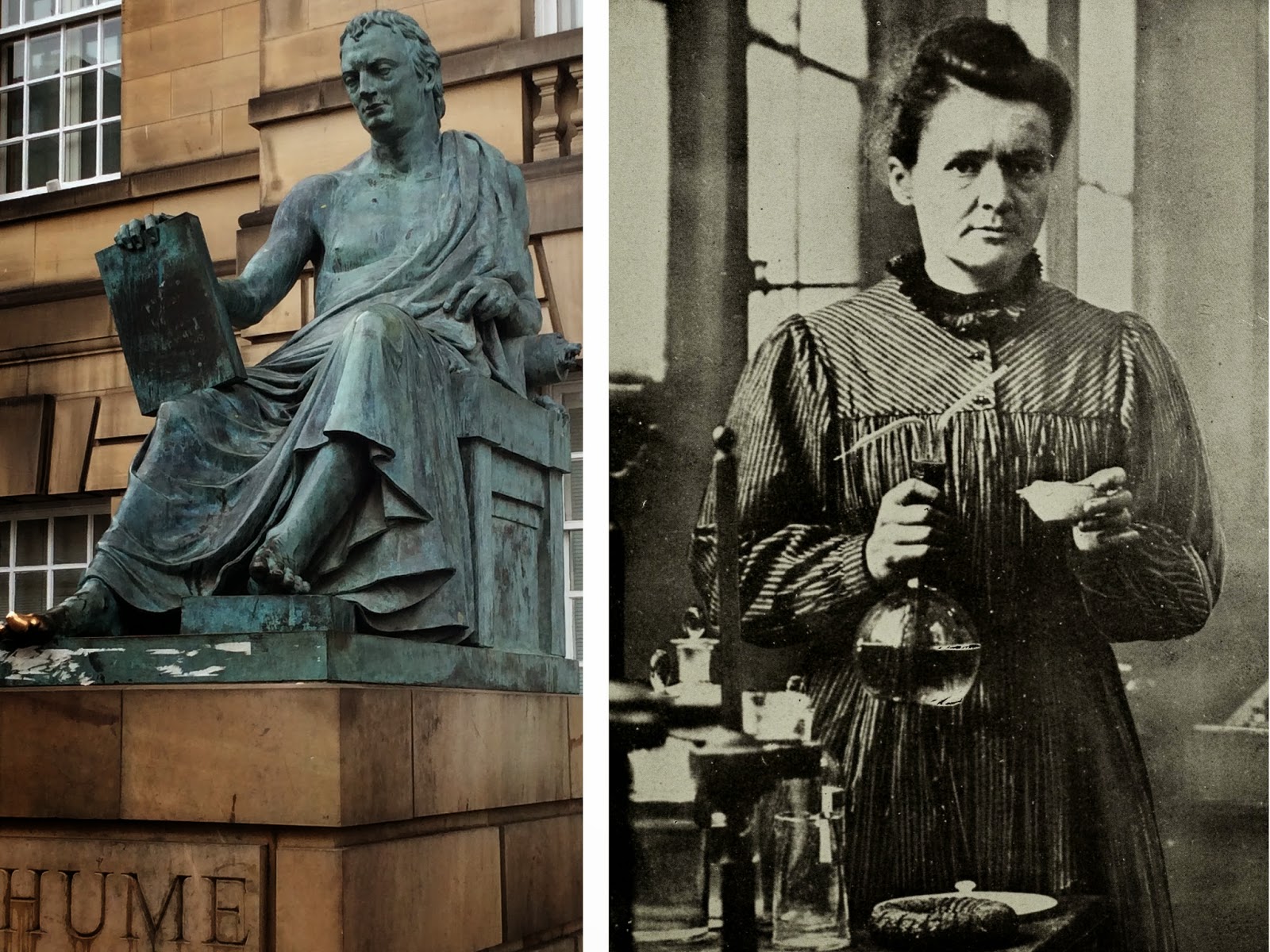
Yet as I read Shermer’s article several times, satisfied as I am that he places high value on the importance of empirical evidence, I find I have some objections. He doesn’t discuss how easy it is to jump to conclusions, inferring the ‘ought’ too quickly from the ‘is’. David Hume is the philosopher most famous for describing how tricky it really is to derive the ‘is’ directly from the ‘ought’, or in other words, the problems with assuming that just because something is a certain way, that means it should be that way. For example, how do we go about deciding that one fact, or one ‘is’, is more important than another fact when determining what ought’ to be done?

I also worry his argument helps perpetuate a certain myth, widely maintained by those who feel the need to erect walls around their respective fields of inquiry. In some cases, like Krauss’s, this whole debate appears to devolve into some sort of intellectual pissing contest. The myth is the claim that there’s a sharp dividing line between each field of inquiry, just as the committed political libertarian perceives the divide between the one and the many, the individual and the group. When Shermer includes philosophy in the list of alternate sources for ethics, and, implicitly, dismisses it as the best candidate, I think that he hints, wrongly, that philosophy is in competition with science generally.

A famous example of leaping too quickly from the ‘is’ to the ‘ought’, or in other words, deriving an ethical system too quickly from a scientific discovery, is eugenics. Many were so enthusiastic about the thrilling new scientific theory of natural selection, derived from observations in nature, that they thought it could be applied to all explanatory theories. Just as it is a fact that nature selects against certain individuals based on the ability to thrive in its environment, so it is that human beings should emulate nature and act as rational arbiters of fitness. In other words, we should select select against those individuals we think ‘degrade’ society by their existence and by their capacity to pass on their ‘undesirable’ qualities.
Scientists widely thought, from the late nineteenth century to the middle of the twentieth, that the human species could be more efficiently ‘perfected’ through the judicious selection of traits to pass on to future generations.

Here, philosophy and science (and yes, even religion) could have done a much better job at working together: arguably, these eugenic ethicists could have used a lot more Hume, philosopher, and a little less Cesare Lombroso, physician and criminologist who thought all bad human traits were physically inherited. It’s not that the physical sciences should not contribute to ethics, not in the least. It’s that more checks and balances between fields of inquiry could have kept so many over-eager scientists from over-applying their discoveries where there are good arguments to show they did not belong. If eugenicist scientists had paid more heed to Hume’s warning that we can’t so readily derive the ‘ought’ (what we should do) from the ‘is’ (the actual state of affairs in the world), perhaps they may have more carefully considered all of the evidence, including human moral instinct and logical arguments in favor of human equality, done a better job of including all available scientific data in their social theories, and restrained themselves from unleashing such a destructive ideology on the world.

 
But shouldn’t ethics be informed by facts about the world? If it isn’t, doesn’t that make ethics too arbitrary, or too abstract, to be applied to the lives of actual, living human beings, as members of a society as well as individuals? I agree with Shermer that it should. But I also think that facts about the world aren’t enough, on their own, to fully determine what we ought to do. In fact, these facts can’t be enough, all on their own. That’s because, for one thing, there are so many ‘is’s’ to consider, many of which indicate an opposite course of action would be best. To return to one of the many problems with eugenics: its promoters considered the ‘is’ of natural selection against ‘unfit’ members as the most important fact to consider in deciding which lives society ‘ought’ to consider worth living. After all, it’s selection against weak and ecologically ‘unfit’ individuals which made their surviving descendants ‘superior’. But there are other ‘is’s’: human beings are naturally disposed to empathize with those who are suffering to help them out, even if they are sickly, disabled, or otherwise more susceptible to an early death. This disposition, this instinct, is itself an evolved trait. It’s also a fact that the same cooperative set of instincts that compel us help the ‘unfit’ survive is the same that drives us, as a species, to help each other live happier, healthier, wealthier, and therefore ‘fitter’ lives in the long run, as individuals as well as members of society.
 
Shermer considers the well-being of individuals the primary goal of ethics, and for scientific reasons. He explains: ‘The singular and separate organism is to biology and society what the atom is to physics—a fundamental unit of nature. The first principle of the survival and flourishing of sentient beings is grounded in the biological fact that it is the discrete organism that is the main target of natural selection and social evolution, not the group. We are a social species, but we are first and foremost individuals within social groups and therefore ought not to be subservient to the collective.’ It’s clear that he, like all rational, well informed thinkers, doesn’t ascribe to the principles of eugenics, now considered not science, but pseudoscience. But it’s not so clear how he’s justified, based on scientifically confirmed facts alone, in saying that because natural selection works on the individual, it’s the individual whose interests should be protected first, and society second. After all, natural selection also works against individuals, culling some for the benefit of the group. So, one could just as well argue that the evidence shows it’s better for individuals, as well as for society, if those who are sickly or more likely to pass on disease and disability to others, should at least be allowed to die off as nature, without our intervention, would have it. Shermer needs more than just an array of facts to show why some, and not others, should inform ethics.
It’s true that, historically, far too much death and destruction have been wrought on individuals when they are perceived as ‘subservient’ to the group. In this, Shermer has much evidence on his side. But it’s also true that much harm results from placing too much emphasis on the rights of individuals over the wellbeing of society. Lax gun regulations make it easy on gun enthusiasts to enjoy their hobby while also making it easy for the murderously criminal and mentally ill to obtain guns too; lax labor laws make is easy for employers to exploit and abuse their workers to the point of disabling injury and death; lax financial regulation allow a few speculators plunge economies into ruin and populations into a state of want; ‘personal belief’ exemptions allow parents not to vaccinate their children, resulting in epidemics of disease and even death; the list goes on and on. Great harm, generally, comes from the attempt to separate individuals and society into two competing camps, or to, as Margaret Thatcher would have it, from acting on the belief that the group, or ‘society’, doesn’t really exist at all.

In our intensely social, emotive, thinking human species, the incredible degree of individualness that individuals can achieve is due at least as much to the contributions of the group, over time, as to the individual’s own efforts. Human beings make art, tell stories, travel, enjoy romance and friendship, build buildings and erect monuments, and create such rich and complex products of thought as history, myth, religion, politics, literature, science, and to my mind the greatest, philosophy (since it overarches and unifies all other systems of thought), precisely because of the level of sociability we have evolved. The rugged, self-reliant individual of American mythology, for example, is precisely that: a myth. No human being could get very far if they didn’t have a society, to help feed, clothe, and equip them with the tools and technology they need to perform their wonderful individual feats, and to restore them to health and pass on their story afterwards. Humans flourish when individuals efforts are promoted and when they’re not allowed to infringe too much on the interests of the group.

The human species, as a whole, flourishes so well because of this two-way dependence between the individual and the group: you can’t have one without the other. The incredible diversity of its individual members should be encouraged and protected because they make our species among the most adaptable, and therefore among the most resilient on earth. When we oppress individuals, when we seek to crush expression of personality, or system of belief, or ability to pursue personal goals and professions, we wrong both the individual and the human species, by undermining individual potential while making the species that much less diverse and therefore, less adaptable. When we undermine the flourishing of society by allowing individuals to pursue purely self-interested whims and goals to the detriment of all, we wrong the individual too. Short-sighted, self-centric market choices leading to mass pollution and climate change, widespread cell phone use while driving, ideologues who keep their children out of the public schools to indoctrinate them in one world view, and one only… when the individual is allowed, by the group, to pursue their own myopic interests to the detriment of all, individuals suffer too.

In all other areas of biological science, it’s essential to understand a species as a whole if you want to fully understand any individual. When you look at an individual being, you see a set of characteristics that could just as well be quirks as traits; when you look at the species as a whole, you recognize which of those characteristics all have in common, and which are necessary for all members of a given species to survive and flourish. Even when it comes to solitary animals, most cats, for example, we consider each one as members of the species cat as well as a particular furry, comfort-loving, furniture-ravaging, mouse-chasing, charmingly mischievous, producer-of-the-cutest-offspring-on-earth-namely-kittens animal. If we didn’t perceive them dualistically in this way, we wouldn’t understand much about any one cat, let alone all cats. If we were to encounter an individual animal with all those traits, and had never encountered or learned about others, we wouldn’t know what to feed them, how we might need to protect the furniture, or why we should keep a video camera handy when they’re around. If we need this dualistic perception of cat as one furry animal and one of many cats in order to understand it, how much more so for a highly social species, such as humans, whose interests and fates are so intertwined. I see no reason, scientific or otherwise, to look at the human species any differently in this regard.

 
This cat example might seem so illustrate such an obvious point as to be silly, but I think we need to remind ourselves of it every time an intellectual tries to divorce fields of inquiry from one another in the general human project of truth-seeking, or an ethicist, politician, or anyone else tries to completely separate the interests of the individual from that of the group. I think both are mistakes that Shermer comes too close to making in this article.
This whole discussion of how easy it is to draw wrong conclusions from scientific evidence can also serve to buttress Shermer’s initial point about ethics, even if it doesn’t support his overemphasis on the divide between the individual and the group. I agree that scientifically verifiable facts about human beings should inform our ethics; the best system of ethics, to my mind, is a naturalistic system. Here’s where we arrive at what Shermer mostly gets right. Looking outwards at the world provides the raw material for any system of thought, as his title ‘A Moral Starting Point’ more than suggests. After all, all knowledge begins with the information we receive through our senses, as Aristotle, Hume, and the other empiricist philosophers point out. There is no reason to think we could think at all if we have never heard, seen, felt, tasted, or smelled anything to think about. And it’s thinking that gets us to do more than just sensing the world as a microbe, a plant, or a clam does, reacting without reflection. Philosophy is the human species’ way of taking the art of thinking as far as it can go: we examine what the information we receive might mean in a larger context. We question, we look for answers restlessly not only because we want to solve problems: we love to do so. Philosophy, after all, literally means ‘love of knowledge/wisdom’, translated from the Greek. And as we ask and as we look, in the interplay between the input of our senses and the organization of information through thought, science affords reality the opportunity ‘to answer us back’, as Rebecca Newberger Goldstein so puts it so well (Plato, p. 34).Philosophy not only provides the impetus and the direction for the inquiry of science: once we find out the facts, it helps us figure out what to make of them. In every step of the way, the formulation of scientific theories relies heavily on philosophy, from the application of the rules of logic to the justification of why we should value or emphasize one set of facts over another. In fact, until very recently, science was a branch of philosophy (natural philosophy) until that general branch of inquiry about the natural world became so large it specialized and branched off, then branched off again into physics, biology, chemistry, and so forth. Those areas of philosophy that didn’t branch off into the sciences and into theology, came to be identified with the arcane varieties of metaphysics, epistemology, ethics, and so on, pursued largely behind the walls of academia today.

But philosophy is not limited to an arcane, highly abstract field of inquiry, as fascinating and valuable as that can be. It’s that approach to life as a perceiving, emoting, responding, loving, feeling, suffering, and thinking being, that every person partakes in, to one level or another. Philosophy, from its very beginnings, originates in the public square. It’s welcoming into ones’ self the whole world of things to sense and to imagine with a curious, critical, and interdisciplinary approach, and engaging in that way of thinking with others. I want to know why, and how, and who, and so on, and not only to know what is, but why I care about it and why others should too. Science is a big part of this. Yet philosophy is prior to, and necessary for, the former. In fact, it was my love of philosophy that led to my fascination with science, to question and replace some of the ideas I was taught in my youth (creationism, the doctrine of original sin, the sacralization of virginity, and so on) with a more naturalist system of inquiry. To separate philosophy from science is as unhelpful as divorcing the individual from the species: one does not function without the other.When it comes to understanding the universe, in fact, there is no such thing as ‘nonoverlapping magisteria’ of thought (as Steven Jay Gould put it when he tries, to my mind unsuccessfully, to justify the separation of theology and science). I think it’s a mistake to engage in the kind of intellectual turf war that science, philosophy, and other fields of inquiry are sometimes engaged in, not only because it sets up mental road blocks to incorporating the full range of evidence and ideas available, it sets a bad example for critical thinking. Shermer does well to remind philosophers, many of whom are sadly remiss in this, that they need science to keep them honest, so that subtle errors in logic, mistakes in self-justification, or over-weddedness to a particular tradition of thought can’t lead them too far astray.

But ‘philosophy-jeerers’, as Newberger Goldstein calls them, make a mistake when forgetting how much science owes philosophy, and how heavily they actually depend on it. For example, at the beginning of the article, Shermer refers to rights theory in philosophy as a popular source of ethics, as a contrast to a scientific view. Yet later on in the same piece, he refers to ‘natural rights’ as a scientific ethical principle. Yet rights theory has always been derived, even if indirectly at times, from the application of reason to observed facts about human beings: that they are rational and feeling creatures, that they are capable of autonomous will, that they seek to live ‘the good life’, and so on. To intimate that rights theory is, or has ever been, an alternative to an empirical view of ethics is either to ignore or to misunderstand what rights theory is and always has been.
Darwin's Ghost be Rebecca Stott, Photo Credit: Goodreads
Remember Aristotle, philosopher extraordinaire, one of the earliest and most famous founders of two (among many) of the most influential fields of philosophy: ethics and natural philosophy (better known today as science). As so delightfully described in Rebecca Stott’s Darwin’s Ghosts, Aristotle didn’t remain in his armchair (did they have armchairs in ancient Greece?), spinning abstract theories straight out of his head, arguing tedious points of logic with his fellow philosophers. He looked to the world to provide the raw material with which to craft his theories on the origins and nature of life, diving for specimens of sea flora and fauna, following animals around and recording their behavior. It was his philosophical mind that drove him to ask the questions and look for answers, and it was nature that provided the predicates, the subjects, of his reasoning.

In the words of Humphrey Bogart, we can see, from accounts of her birth, ‘the beginning of a beautiful friendship’ between Science and her parent, Philosophy. The most intimate kind of friendship, where the dialogue is open and honest and each supports the other, guiding one another away from the pitfalls and wrong turns the other doesn’t see.

So from the very beginning, philosophy has always been there to keep science honest, supplying the discipline of logic and helping it avoid methodological errors. It makes it clear to why there are relatively few direct or easy links from the ‘is’ to the ‘ought’ when formulating principles of ethics. It shows science that finding out how things work doesn’t readily indicate how we should apply that information in our daily lives, that even the best scientist is prone to bias, misunderstanding, and underestimation of that which we don’t yet know, and how science can be used to help and not harm.

There is no honest philosophy without science, and there is no science at all without philosophy.

*Listen to the podcast version here or on iTunes
* A version of this piece is published in Philosophy Now
*Also published in Darrow
~~~~~~~~~~~~~~~~~~~~~~~~~~~~~

Sources and inspiration:

Anderson, Ross. ‘Has Physics Made Philosophy and Religion Obsolete?’ The Atlantic. Apr 23, 2012
http://www.theatlantic.com/technology/archive/2012/04/has-physics-made-philosophy-and-religion

Burnett, Thomas. ‘What is Scientism?’ American Association for the Advancement of Science website.
http://www.aaas.org/page/what-scientism

‘Cesare Lombroso.’ In Wikipedia, The Free Encyclopedia
http://en.wikipedia.org/wiki/Cesare_Lombroso

Fagan, Andrew. ‘Human Rights’. Internet Encyclopedia of Philosophy.
http://www.iep.utm.edu/hum-rts/#H2

Gould, Stephen Jay. “Nonoverlapping Magisteria,” Natural History 106 (March 1997): 16-22
http://www.colorado.edu/physics/phys3000/phys3000_fa11/StevenJGoulldNOMA.pdf

Hume, David. A Treatise of Human Nature, Book III: Of Morals. 1739.

http://www.earlymoderntexts.com/pdfs/hume1740book3.pdf
Nerdist Podcast: ‘Neil Degrasse Tyson Returns Again’. March 17th, 2014
http://www.nerdist.com/pepisode/nerdist-podcast-neil-degrasse-tyson-returns-again/

Newberger Goldstein, Rebecca: Plato at the Googleplex: Why Philosophy Won’t Go Away. 
New York, 2014 http://www.rebeccagoldstein.com/publications/plato-googleplex-why-philosophy-

 
Shermer, Michael: ‘A Moral Starting Point: How Science Can Inform Ethics.’ Scientific American, 
February 2015.  http://www.scientificamerican.com/Stott, Rebecca. Darwin’s Ghosts: The Secret History of Evolution. Random House, New York 2012.
https://books.google.com/books?id=5Lt_MXhNJEoC&pg=PP5&dq=darwin%27s+ghost

Thatcher, Margaret. Quote from interview with Women’s Own magazine, Oct 31st 1987.
http://briandeer.com/social/thatcher-society.htm

Warman, Matt. ‘Stephen Hawking Tells Google “Philosophy is Dead”‘. The Telegraph, May 17th, 2011
http://www.telegraph.co.uk/technology/google/8520033/Stephen-Hawking-tells-Google-philosophy

Welcome to the Podcast Edition of Ordinary Philosophy!

Hello dear readers, and welcome to the
podcast version of Ordinary Philosophy!

You can listen to the podcast here, on Google Play, or subscribe in iTunes.

Like many of you, I’m a big fan of podcasts, mostly because my life is very busy. One day in the future, I hope to have a lot more time to do each task one at a time, to really be present, as they say, as I wash the dishes, straighten the house, do the laundry, and perform all those other tasks that take up time, but not much thought.

But at this time in my life, between my day jobs, my creative projects, and spending time with friends and family (which I don’t do enough of these days, sadly), I don’t have enough time to keep up the world of ideas as nearly much as I’d like to by sitting down and reading. Instead, I keep myself informed and increase my education by listening to lots of podcasts: discussions with my favorite authors and thinkers, audio renditions of books and essays, debates, recordings of classes on my favorite subjects, and so on. I listen to these podcasts while doing those aforementioned chores, and let me tell you: as one who is not fond at all of household chores like doing the dishes and washing the floor, the podcast is a marvelous invention: they transform boring chore time into great opportunities for learning and exploration. I’m also an avid hiker, and it’s a wonderful thing to be able to immerse myself in some fascinating ideas or discussion as I immerse myself in the beauties of nature.

To begin with, this podcast will simply consist of audio recordings of my Ordinary Philosophy pieces. Over time, I may add commentary and who knows, perhaps interviews and discussions with guests. We’ll see how it goes. In the meantime, here’s Ordinary Philosophy in audio form: I hope you find it interesting and enjoyable!

… And here’s episode 2: Is the Market Really the Most Democratic Way to Determine Wages?
Originally published as an essay Feb 6th, 2014

But My Brain Made Me Do It!

Brain illustration from The Principles and Practice of Medicine...' by W Osler, 1904, public domain via Wikimedia CommonsThere’s a common idea which leads many people (myself included) to instinctively excuse our own or others’ less-than-desirable behavior because we were under the sway, so to speak, of one or another mental state at the time. This is illustrated especially clearly in our justice system, where people are routinely given more lenient sentences, given the influence of strong emotion or of compromised mental health at the time the crime was committed. “The Twinkie Defense” is a(n) (in)famous example of the exculpatory power we give such mental states, where Dan White claimed that his responsibility for the murder of two people was mitigated by his depression, which in turn was manifested in and worsened by his addiction to junk food. We routinely consider ourselves and others less responsible for our wrong actions if we’ve suffered abuse suffered as children, or because we were drunk or high at the time, or we were ‘overcome’ with anger or jealousy, and so on.

But when we think about it more carefully, there’s something a little strange about excusing ourselves and others in this way for doing wrong. What we’re saying is, in a nutshell, “But my brain made me do it!”

It’s strange because no matter what we do, our brains always ‘made me do it’.

Perhaps these kinds of excuses are a relic of the ‘ghost in the machine’ variety of traditional belief, in which we are a kind of meat-machine body ‘possessed’ by a soul. In that view, the strong emotion or mental illness, then, could be yet another kind of possession which overrides the rational and moral soul.

Yet, even if one believes that sort of explanation, that’s not a very satisfying justification of why we would accept some mental states as exculpatory and not others. Why does extreme anger, such as that of a wronged lover or a frustrated driver, excuse or partially excuse an attack, but lust does not? Both are powerful emotions that all too often promote the worst behavior. Why is jealousy so often considered an acceptable excuse, but greed is not? And the ramifications of this view go beyond relieving ourselves from the burden of responsibility: it means we can’t take or give credit for our good actions, for the most part. Emotions and states of mental health inspire and make us capable of doing those things, too, in just the same way. But we generally don’t tend to have the same sort of intuitions or apply the same sort of reasoning to credit as we do to blame.

So whatever theory or philosophy of mind we ascribe to, we need to explain why we are so inconsistent on this issue. Of course, much of it is explained in cultural terms: in an honor-driven culture, for example, anger and jealousy result as an affront to one’s honor, so to feel those emotions is just and right for an honorable person. A crime committed under the sway of these emotions, then, is mitigated by the justness and rightness of the feelings, even if they inspired wrong action. On the other hand, greed and lust are not considered a just or right emotional reaction in any case in a culture underpinned by fairness, equality, and individual rights; therefore, any crime committed under their influence would, of course, be contrary to those values and not be mitigated

Yet culturally-derived explanations, of course, aren’t the same as a justification. They just explain why people in different times and places happen to react and feel the way they do; they don’t offer a justification of why anyone should accept one emotional state and not another as mitigating factors, nor do they explain why we should think some emotions somehow make one less responsible or able to control their actions than other emotions do.

The latter, of course, is an empirical question: a neuroscientist may be able to detect that the processes that produce some emotions make it impossible or at least highly unlikely that a person can engage in rational thought, or ‘put on the brakes’, so to speak, when certain provocations occur. But until we find out otherwise, it appears evident, from the fact that most people are generally cooperative and don’t purposefully harm one another, that adult people above a certain basic intelligence level are generally capable of forming good and responsible habits, which makes it unlikely that they would react wrongly or criminally when provoked or titillated. This is especially true when the people involved in their upbringing, and the society in which they live, expect good behavior from all, and hold people responsible for bad behavior.

This is true whether or not behaving in the right way is easy. Many of the excuses offered in defense of people who do wrong sound, to me, simply as evidence that it was harder for the person to behave well than to behave badly at the time. Yet mores and laws don’t exist because it’s always easy for people to get along, respect one another, to help one another and avoid harm. They exist because it’s often hard to be a good person and a good citizen. So many of these excuses, then, do much to illustrate why mores and laws need to exist, and not so much to demonstrate why the offender was less responsible for their own behavior at the time.

The reasons that we can hold people responsible for their own actions, whether or not they occurred in an emotionally stormy moment, are the same reasons that people can be admired and given credit for them. The acts and thoughts which we judge praiseworthy as well as blameworthy are those which the person could conceivably have chosen to do otherwise, even if we grant it’s unlikely that they would have chosen otherwise, and that the person did in the capacity of themself. Personal responsibility is a burden, but even more so, it’s an honor. It means that what you do is you, in a very important sense, since the mind is the author and seat of consciousness, and all of its activity is a form of doing. We, in the sense of being a person, a self, are what our brain does.

The brain is not like a pre-determined computer program; within certain parameters, it can be molded and formed, by influences from others but even more so by our own choices, which over time form habits. So it’s up to each one of us to use our judgments, surround ourselves with good influences, and to form good habits: in any given day, in any given life, each person is faced with myriad options in thought and behavior. For those important matters, we stop and reflect, though there are simply too many to judge carefully for each one; most of the time, it’s best to purposely form good habits so that in those countless reactions we have and choices we make, we’ll tend, more easily, to go for the better rather than the worse.

There are, of course, special circumstances to consider in matters of wrongdoing or crime committed by the young, or by a person with a debilitating mental illness, or a person mature in age with undeveloped mental capacities. All of these involve some diminished or absent capacity for exercising judgment in making a choice, and the degree of consciousness the person possesses. Young people, for example, lack the structures of the physically mature brain which makes it capable of making considered decisions and of putting the brakes on powerful-emotion-driven impulses. The prefrontal cortex, where much of the capacity to exercise self-control resides, doesn’t fully develop until after puberty. It seems, then, to make sense that we generally don’t hold the young as responsible for their actions in the way we do adults. Yet, with all we know about how the brain works, I find it astonishing and often horrifying that in the United States we often try the young as adults, teens and even pre-teens, when they commit particularly heinous crimes. I’d argue not only are they incapable of controlling their emotions and of reasoning as fully as adults are and therefore shouldn’t be considered responsible in the same way, but the very heinousness of the crime is evidence of the lack of maturity, of the ability to make rational judgments, which forms the basis of any coherent concept of personal responsibility. The trying of youths as adults in the courts reveal that all too many people haven’t given enough thought to what personal responsibility really means, and don’t have the proper respect for it.

Since it’s always your brain that makes you do anything, culpability should be assessed according to whether or not your brain is capable of making a different choice, again, even if it’s unlikely you might have done so. That even holds true even in many cases of so-called ‘temporary insanity’ or ‘acting under the influence’. Generally, the brain of an adult person who maintains their own survival and enjoys the liberty of an independent adult is also functioning at a level of responsibility. For example, if you run someone down in your car while drunk or texting on your phone, you are probably also a person capable of arranging for a taxi to take you home from the bar or refusing that last drink, or are aware of the huge amount of very widely published evidence we now have that texting is strongly correlated with auto accidents.

In sum: the issue of personal responsibility should not hinge on whether or not it was easy for us to make one choice, to behave one way instead of another, but on whether we ourselves, always the product of a living brain, are capable of doing otherwise.

Ordinary Philosophy and its Traveling Philosophy / History of Ideas series is a labor of love and ad-free, entirely supported by patrons and readers like you. Please offer your support today!

*This piece, originally published Aug. 6, 2014, was edited lightly on Aug. 5, 2016 for clarity and flow