Science and Philosophy, a Beautiful Friendship: A Response to Michael Shermer

From the archives, two years ago…

Amy M Cools's avatarOrdinary Philosophy

There’s been some very public dig-taking between the science and philosophy camps lately. Lawrence KraussNeil DeGrasse TysonStephen Hawking, and other scientists are saying philosophy’s become irrelevant, little more than an esoteric old boy’s club. On the other hand, philosophers, theologians, politicians, and others criticize ‘scientism‘, the conviction that science, and only science, can and should be the ultimate source for all human knowledge; that all truth claims, that all ethical, metaphysical, and political beliefs, should not only be informed by or founded on, but entirely determined by, empirical evidence.

Michael Shermer’s article ‘A Moral Starting Point: How Science Can Inform Ethics‘ (Scientific American, February 2015) doesn’t dismiss philosophy so directly. He includes philosophy in a list of three other arenas of human thought, with religion and political theory, as those to which most people turn for answers in matters of right and…

View original post 3,485 more words

But My Brain Made Me Do It!

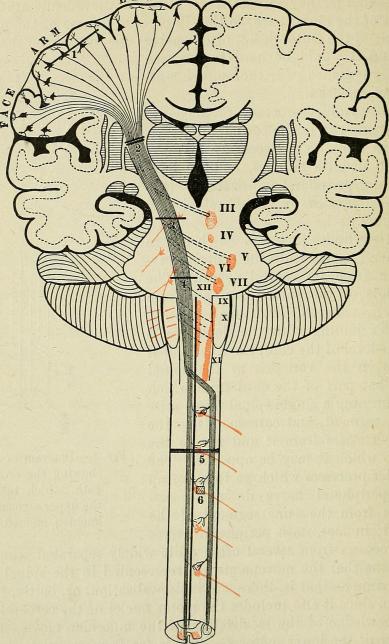
I’m on the home stretch of preparations for the GRE, studying hard in hopes that I only have to take it once. How I long to get in good writing time again and finish my beloved Douglass travel account series! Soon, soon. Until then, here’s a piece I published almost exactly two years ago today, which I just re-edited for clarity and flow, and re-illustrated with a beautiful drawing of a cross-section of brain and spinal column evocative of a flower.

Amy M Cools's avatarOrdinary Philosophy

Brain illustration from The Principles and Practice of Medicine...' by W Osler, 1904, public domain via Wikimedia CommonsThere’s a common idea which leads many people (myself included) to instinctively excuse our own or others’ less-than-desirable behavior because we were under the sway, so to speak, of one or another mental state at the time. This is illustrated especially clearly in our justice system, where people are routinely given more lenient sentences, given the influence of strong emotion or of compromised mental health at the time the crime was committed. “The Twinkie Defense” is a(n) (in)famous example of the exculpatory power we give such mental states, where Dan White claimed that his responsibility for the murder of two people was mitigated by his depression, which in turn was manifested in and worsened by his addiction to junk food. We routinely consider ourselves and others less responsible for our wrong actions if we’ve suffered abuse suffered as children, or because we were drunk or high at the time, or we…

View original post 1,523 more words

Happy Birthday, Omar Khayyám!

By Adelaide Hanscom, from Edward Fitzgerald's The Rubaiyat of Omar Khayyam, 1905, public domain via Wikimedia Commons

Since Edward FitzGerald published his translation of The Rubáiyát of Omar Khayyám in 1859, Omar Khayyám has been known, especially in the western world, first and foremost as a great poet, eloquently expressing the joy and beauty of life and our own struggles to live it with a sense of love and meaning. It’s a humanist work, with Khayyám writing much as an Epicurean or Skeptic here and a Stoic there, freely doubting and wondering at everything, unshackled from the orthodoxy one might expect from a famed teacher and writer of his time and place. Yet Khayyám, a devotee of Avicenna, took his Islamic faith very seriously, and thought deeply about the nature of God and our relationship to him.

Khayyám, born in Persia in 1048, was most famed in his own time as a mathematician, astronomer, and scientist. He wrote some of the most important medieval works in geometry and algebra, and helped reform the calendar, an even more accurate one than the Gregorian calendar we use today. But he was also an accomplished philosopher, and scholars are working on resolving the apparent contradictions between this work and his poetry.

One thing I’ve gotten from my research (which, thus far, is only beginning and therefore not nearly enough): for all his prodigious learning and accomplishments, Khayyám honestly acknowledges the limits of human understanding, and seems to tell us that while the great work of discerning the truths of the universe is a great, noble, even necessary endeavor, we do well to keep in mind that we can never know everything, whether through science or religion. So, Khayyám seems tells us, we do well to work, to wonder, to seek, to do right, but also to live for today:

‘At first they brought me perplexed in this way
Amazement still enhances day by day
We all alike are tasked to go but Oh!
Why are we brought and sent? This none can say’. (Rubā‘iyyāt, Tirtha 1941, 18, from IEP)

‘As Spring and Fall make their appointed turn,
The leaves of life one aft another turn;
Drink wine and brood not—as the Sage has said:
“Life’s cares are poison, wine the cure in turn.” (Sa‘idī 1994, 58, from IEP)

~ Ordinary Philosophy and its Traveling Philosophy / History of Ideas series is a labor of love and ad-free, entirely supported by patrons and readers like you. Please offer your support today!

~~~~~~~~~~~~~~~~~~~~~~~~~~~~~~

Sources and Inspiration

Aminrazavi, Mehdi and Van Brummelen, Glen, ‘Umar Khayyam‘, The Stanford Encyclopedia of Philosophy

Omar Khayaam, 1048–1131‘. The Poetry Foundation

Omar Khayyam‘. In Encyclopædia Britannica.

Omar Khayyam‘. In Wikipedia, The Free Encyclopedia.

Rizvi, Sajjad H. ‘Avicenna (Ibn Sina)‘. The Internet Encyclopedia of Philosophy

‘Umar al-Khayyam (Omar Khayyam)‘. Muslim Heritage

O.P. Recommends: Your Brain on the Scientific Method

Old Medicine Bottles, PublicDomain via Wikimedia CommonsIn ‘Your Brain on the Scientific Method‘, Sara E. and Jack M. Gorman open with a discussion of John Oliver’s recent takedown of scientific sensationalism in the media and its negative impact on the public’s understanding of science and its methods. Just about every day, it seems, there’s a study that comes out which reveals that things science said were bad are actually good for you and vice versa; that some foodstuff, familiar or exotic, was just discovered to be the ‘miracle cure’ for something or other;  some new report or yet another scientist will come out either proving or disproving human-caused climate change; and so on.

But there’s a lot more to the story of public misunderstanding of science, the authors say: the reason we often have trouble understanding science and its methods is the same reason why scientific sensationalism is so effective: science is so contrary to the way our brains generally, instinctively work. Find out why in this excellent piece…

Gorman, Sara E. and Jack M. ‘Your Brain on the Scientific Method‘. Oxford University Press blog, May 17th 2016.

Scientific Studies‘. Last Week Tonight with John Oliver, HBO, May 8th 2016.

~ Ordinary Philosophy and its Traveling Philosophy / History of Ideas series is a labor of love and ad-free, entirely supported by patrons and readers like you. Please offer your support today!

O.P. Recommends: Wired Interviews Sean Carroll on Poetic Naturalism & His New Book The Big Picture

In this interview, Eric Niiler discusses ‘poetic naturalism’, atheism, theism, the universe, our inner lives, and how we can find meaning regardless of the existence of a deity with Sean Carroll, theoretical physicist, Caltech professor, and author, for his new book The Big Picture: On the Origins of Life, Meaning and the Universe Itself.

I’ve enjoyed Carroll’s work before, mostly through podcast interviews, and I’m really looking forward to reading his book on this topic he’s though so much about over the years. The Big Picture is coming out today, May 10th, 2016.

Ordinary Philosophy and its Traveling Philosophy / History of Ideas series is a labor of love and is ad-free, entirely supported by patrons and readers like you. Please offer your support today!

How Can We Answer for Answerability?, by Hannah Tierney

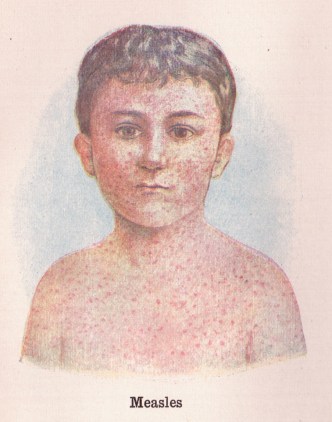
Measles illustration from The Practical Guide to Health by Frederick M. Rossiter, 1908, public domain via Wikimedia CommonsJenny McCarthy is a celebrity in the United States and a prominent anti-vaccine activist. She is the president of Generation Rescue, a non-profit that advocates the view that autism is at least partially caused by vaccines, and has written several books promoting this view. Since 2007, she’s been featured on several media outlets where she’s been asked to defend her views on the relationship between the Measles, Mumps, and Rubella (MMR) vaccine and autism. In many of these interviews, it’s clear that those questioning McCarthy are trying to hold her morally responsible for her view by demanding that she justify her position—by holding her answerable. Despite these numerous calls for McCarthy to justify herself, she hasn’t changed her view on vaccines (Although in a 2010 interview with Frontline, McCarthy clarifies the position of her group). In fact, calling on McCarthy to defend herself in the public sphere arguably only serves to legitimize her views and expose them to larger audiences. Though the CDC determined that measles was eliminated in 2000, due in large part to an increase in the refusal to vaccinate, a record number of measles cases were reported in 2014. If we think that McCarthy’s position on vaccines is incorrect and her advocacy of the position is blameworthy, how can we hold her responsible for her behavior without reinforcing the very behavior we find blam
eworthy?

Cases like these pose a problem for philosophers who work on moral responsibility. Following the work of T. M. Scanlon, many philosophers argue that there is a relationship between moral responsibility and answerability—the demand for justification. Of course, philosophers have argued about how exactly responsibility and answerability relate to each other. But both those who argue that moral responsibility should be identified with answerability (Smith 2012) and those who argue that answerability only captures one facet of moral responsibility (Shoemaker 2011) face a problem.

In many cases, when we attempt to hold someone morally responsible for an action by demanding that they answer for their behavior, the person, rather than see the error in their ways, can become even more confident in their reasons for action and refuse to alter their behavior. This can have quite damaging effects when the behavior in question is dangerous, violent, or qualifies as a public health risk. Such cases place those who defend the relationship between moral responsibility and answerability in a precarious position. If the very means by which we hold people responsible for blameworthy behavior only serves to worsen that blameworthy behavior, then it’s hard to see why we should hold people morally responsible in the first place. And, if the answerability account of moral responsibility can’t easily be operationalized, then perhaps we should look for another theory of moral responsibility. Though those who defend the answerability account have remained relatively silent on how to successfully hold an agent answerable, the behavioral sciences can help address this question. By developing an account of answerability that is informed by this research, answerability theorists can shield themselves from the worry that their view can never be successfully operationalized.

The case of Jenny McCarthy is not an isolated incident. Objecting to people’s beliefs is notoriously ineffective in changing those beliefs. Confirmation bias (Lord et al. 1979)—the tendency to accept evidence that supports one’s previously held beliefs and discount evidence that doesn’t—is a robust phenomena that has been found in a wide variety of contexts. The backfire effect is perhaps even more pernicious, indicating that when given evidence against a belief, people will reject the evidence and hold the original belief even more strongly (Nyhan & Reifler 2010). Asking people to give their reasons for their beliefs is also unsuccessful when it comes to changing their beliefs (Fernbach 2013). But if neither objecting to people’s views nor asking them to provide their reasons causes them to see the error in their ways, how are we to successfully hold people answerable? Is answerability a misguided account of moral responsibility?

Those who defend an answerability account of moral responsibility, whether they think answerability just is moral responsibility or answerability captures only a facet of moral responsibility, remain vague about how we can successfully hold people answerable. Angela Smith argues: “In my view, to say that an agent is morally responsible for some thing is to say that the agent is open, in principle, to demands for justification regarding that thing” (Smith 2012, 578). But we can demand justification in many different ways, and we can do so more or less successfully.  Though asking an agent to respond to arguments against her view or asking her to list her reasons are demands for justification, they are largely ineffective when it comes to getting agents to jettison morally problematic beliefs and curbing morally blameworthy behavior. Are there more effective ways to demand justification from moral agents? This is a question that the behavioral sciences can help illuminate.

One recent study indicates that asking people to explain their beliefs and the policies they endorse is more effective at reigning in extreme beliefs than asking people to respond to objections to their views or listing their reasons for their beliefs (Fernbach 2013). In particular, getting participants to explain the causal mechanisms at play in the political policies they endorse undermines the illusion of deep understanding many participants felt, which makes it more likely for participants to adopt less extreme policy beliefs. Fernbach and his collaborators also found that the call for explanation made it less likely for participants to donate money to organizations that supported their previously held political positions. Not only did the demand for explanation reign in extreme beliefs, it also played a role in changing participants’ behavior.

Answerability theorists may be right that holding people morally responsible should involve a demand for justification. But how we demand justification matters when it comes to altering people’s morally blameworthy beliefs and behavior. Thus, answerability theorists should focus on developing operational views of answerability, which are informed by the behavioral sciences.

~ Hannah Tierney is a Ph.D candidate in the Philosophy program at the University of Arizona. She has broad philosophical interests, but writes mainly on issues of moral responsibility, personal identity, and the self, and is also interested in experimental philosophy and cognitive science

~ Ordinary Philosophy and its Traveling Philosophy / History of Ideas series is a labor of love and is ad-free, entirely supported by patrons and readers like you. Please offer your support today!

~~~~~~~~~~~~~~~~~~~~~~~~~~~~~~~~~~~~

Works Cited

Fernbach, P., T. Rogers, C. Fox, and S. Sloman. 2013. Political extremism is supported by an illusion of understanding. Psychological Science 24: 939-946.

Lord, C., L. Ross, and M. Lepper. 1979. Biased assimilation and attitude polarization: The

effects of prior theories on subsequently considered evidence. Journal of Personality and Social Psychology 37: 2098-2109.

Nyhan, B. & Reifler, J. 2010. When corrections fail: The persistence of political

misperception. Political Behavior 32: 303-330.

Scanlon, T. M.  2008. Moral Dimensions: Permissibility, Meaning, Blame. Cambridge, MA: Belknap

Press of Harvard University Press.

Shoemaker, D. 2011. Attributability, answerability, and accountability: Toward a wider

theory of moral responsibility. Ethics 121: 602-632.

Smith, A. 2012. Attributability, answerability, and accountability: In defense of a unified

account. Ethics 122: 575-589.

O.P. Recommends: The Supreme Court Ruling That Led To 70,000 Forced Sterilizations

Buck v Bell Virginia Historical Marker Q 28, Courtesy of Historical Collections, Claude Moore Health Sciences Library, University of VirginiaFresh Air’s Terry Gross interviews author Adam Cohen about his book Imbeciles, which tells the story of eugenics in the United States and how the Supreme Court upheld many laws which arose from that once influential pseudoscience. Among these laws were those which forced the sterilization and incarceration into ‘colonies’, of the ‘feebleminded’ and ‘unfit’. Cohen makes the story of Carrie Buck central to his discussion in this podcast and to the book. She was a young woman who suffered about as greatly as one could from these policies and was eventually betrayed even by the Supreme Court, supposed to be the last bastion against legislative and democratic excess.

It’s a shocking story, and as Cohen and Gross point out, it’s not discussed nearly often enough today. Not only did such laws and practices harm thousands of American citizens, they influenced the Nazis, who based many of their own policies and tactics on American eugenics programs.

Less directly but important nonetheless, the backlash against that old eugenicist-brand forced confinement of mentally ill, disabled, and so-called unfit helped garner support for the release of huge numbers of people from mental hospitals in the late 1900’s. Intentions may have been good in many circumstances, since overcrowding, understaffing, and ineffective modes of treatment were at times serious problems. However, deinstitutionalization did little to solve them; the problematic institutions were not replaced with sufficient or viable options for patients and their families to continue receiving the treatment and care they needed. To this day, thousands of mentally ill people are arrested every year, incarcerated, and treated, often against their will, in prisons and other correctional facilities instead of hospitals, and only after they’ve committed crimes, victimizing yet more innocent people. And these correctional facilities, like the mental hospitals they’ve ended up replacing, are often overcrowded and ill-equipped to deal with those who should be patients rather than inmates.

Why link this podcast discussion about the failures of eugenics to the modern movement to deinstitutionalize the mentally ill? Because it’s important to remember that since it’s not always clear what the full ramifications of an idea are, we need to look at them more carefully and critically, beyond the obvious, considering the long-term and indirect effects of its influence as well. In the example of eugenics, its failures were so egregious, its lack of regard for the humanity of those it declared ‘unfit’ so ugly, that it became too easy to undermine all sorts of other things, many of them good, simply by finding a way to link them together. In this case, as the same century that saw the rise of eugenics was drawing to a close, all institutionalization of mentally ill people, all requirements that certain people receive treatment, became painted with the same broad eugenicist brush. But here’s the thing with deinstitutionalization: it turns out that a similar lack of regard for the suffering humanity of the mentally ill had more to do with those policies than anything else. This seems clear when we observe that the public debate ended up being about funding more than anything else, and not nearly enough of the savings from shutting down institutions were redirected to help the people who continued to need it. The mentally ill were too often simply abandoned by the state to survive on their own or with the help of their un-equipped families, in a world unnavigable and inhospitable to them, and their plight remains largely unaddressed by legislatures.

This one example shows how lessons to be learned from Carrie Buck’s sad story and from the eugenicist movement, then, are much more far-reaching than just the obvious ‘look how it inspired the Nazis!’ The 20th century was too often characterized by an obsession with progress and economic growth at all cost; all things and persons not seen as contributors were dismissed as superfluous and a drain on the rest of society. Let’s make the 21st century one that values humanity for its own sake, and deem scientific progress, economic policies, and public institutions successful only if they serve and promote humanitarian values, not the other way around.

~ Ordinary Philosophy and its Traveling Philosophy / History of Ideas series is a labor of love and is ad-free, entirely supported by patrons and readers like you. Please offer your support today!

~~~~~~~~~~~~~~~~~~~~~~~~~~~~~

Sources and inspiration

Frontline: The New Asylums May 2005 and The Released April 2009 (documentaries)
http://www.pbs.org/wgbh/pages/frontline/released/view/

Lyons, Richard. ‘How Release of Mental Patients Began.’, New York Times, Oct. 30, 1984
http://www.nytimes.com/1984/10/30/science/how-release-of-mental-patients-began.html

‘The Supreme Court Ruling That Led To 70,000 Forced Sterilizations’, Fresh Air interview
Mar 7 2016. http://www.npr.org/sections/health-shots/2016/03/07/469478098/the-supreme-court-ruling-that-led-to-70-000-forced-sterilizations

In Memory of Hypatia of Alexandria

Detail of the death portrait of a wealthy woman, c. 160-170 AD near modern-day Er-Rubayat in the Fayum, public domain via Wikimedia CommonsHypatia’s birthday is somewhere between 350 and 370 AD; a range of dates indicating great uncertainty, to be sure, but clear original sources this old are hard to come by, especially from a city as turbulent and violence-torn as the Alexandria of her day. The day of her death is better known, sometime in March of 415 AD. Since the latter date is more precise, we’ll break with our tradition here and remember Hypatia in the month of her tragic and violent death instead of on the date of her birth.

She’s a mathematician, astronomer, teacher, and philosopher, who writes commentaries on important works in geometry and astronomy with her father Theon, likely contributing original work of her own. Hypatia is a Neoplatonist, a philosophy with mystical overtones which posits that everything derives its being from the One, an ultimately conscious yet nonmaterial, non-spacial entity which is the pure ideal of everything that is. She is a scholar and teacher in a field and in a world that’s male-dominated, and historians from her day to ours emphasize her extraordinary talents and her femininity with a nearly equal mix of awe and bemusement.

So let us remember and honor Hypatia for her great contributions to human knowledge and to the history of women’s liberation, living proof that women are equals in intellect and courage.

And let us also remember her sad death as a cautionary tale against those who inflame popular sentiment to seize power for themselves. Hypatia meets her death at the hands of a Christian mob caught up in the anti-pagan hysteria of the day; Alexandria itself was caught up in a power struggle between civic and religious authority. The mob of extremists who drag Hypatia from her carriage, torture and kill her with roofing tiles, and defile her body are inspired by their partisanship with theocratic bishop Cyril to kill this pagan philosopher, this mathematician and astronomer (then often equated with sorcerer), this woman who dared teach men, this friend of Cyril’s rival Orestes, civic leader of Alexandria. As Hypatia scholar Micheal Deakin quotes: “Cyril was no party to this hideous deed, but it was the work of men whose passions he had originally called out. Had there been no [earlier such episodes], there would doubtless have been no murder of Hypatia.”

From the current presidential primary race, in which a certain millionaire is whipping up populist support* with extremist racial and religious rhetoric, back to Hypatia’s time and beyond, power-hungry opportunists plead innocence from the very violence they inspire. Yet it appears hard to justify that plea when reason and the lessons of history plainly reveal the nearly inevitable results of fomenting sectarian strife. Extremism in the defense of liberty or anything else is a vice** because of the way it drives away reason and sympathy, and after all, nothing is as liberty-destroying as mob violence and death.

Ordinary Philosophy is a labor of love and is ad-free, entirely supported by patrons and readers like you. Please offer your support today!

~~~~~~~~~~~~~~~~~~~~~~~~~~~~~

Read more about Hypatia:

Deakin, Michael.’Hypatia of Alexandria‘ from Ockham’s Razor radio program of Radio National of Australia (transcript), Sun August 3rd 1997. (click ‘Show’ across from ‘Transcript’)

O’Connor, J J and E F Robertson. ‘Hypatia of Alexandria‘, from the School of Mathematics and Statistics, University of St Andrews, Scotland website.

‘O’Neill, Tim. ‘“Agora” and Hypatia – Hollywood Strikes Again‘. Armarium Magnum blog, Wed May 20, 2009

Zielinski, Sarah. ‘Hypatia, Ancient Alexandria’s Great Female Scholar‘. Smithsonianmag.com, Mar 14, 2010.

…and about Neoplatonism

Wildberg, Christian, “Neoplatonism“, The Stanford Encyclopedia of Philosophy (Spring 2016 Edition), Edward N. Zalta (ed.)

* ‘What If Trump Wins?’ by Jeet Heer in New Republic, Nov 24, 2015

** in reference to the quote ‘Extremism in the defense of liberty is no vice’ from Barry Goldwater’s 1964 presidential nomination acceptance speech 

Is it Ethical to Use Data from Nazi Medical Experiments? by Lynn Gillam

Birkenau (Nazi concentration camp where medical experiments were performed on prisoners) by Scotch Mist - Own work - creative commons license, via Wikimedia CommonsDuring World War II, Nazi doctors had unfettered access to human beings they could use in medical experiments in any way they chose. In one way, these experiments were just another form of mass torture and murder so our moral judgement of them is clear.

But they also pose an uncomfortable moral challenge: what if some of the medical experiments yielded scientifically sound data that could be put to good use? Would it be justifiable to use that knowledge?

Using data

It’s tempting to deflect the question by saying the data are useless – that the bad behaviour must have produced bad science, so we don’t even have to think about it. But there is no inevitable link between the two because science is not a moral endeavour. If scientific data is too poor to use, it’s because of poor study design and analysis, not because of the bad moral character of the scientist. And in fact, some of the data from Nazi experiments is scientifically sound enough to be useful.

The hypothermia experiments in which people were immersed in ice water until they became unconscious (and many died), for instance, established the rate of cooling of humans in cold water and provided information about when re-warming might be successful. Data from the Nazi experiments was cited in scientific papers from the 1950s to the 1980s, but with no indication of its nature.

The original source appears as a paper by Leo Alexander, published in Combined Intelligence Objectives Subcommittee Files. This is an unusual type of publication to be mentioned in a scientific journal, and it’s unclear that it comes from the trial of Nazi doctors at Nurmemberg.

In the late 1980s, US researcher Robert Pozos argued the Nazi hypothermia data was critical to improving methods of reviving people rescued from freezing water after boat accidents, but the New England Journal of Medicine rejected his proposal to publish the data openly.

Use of data generated by the Nazis from the deadly phosgene gas experiments has also been considered, and rejected by the US Environmental Protection Agency, even though it could have helped save lives of those accidentally exposed.

A tricky conundrum

So should the results of Nazi experiments ever be taken up and used? A simple utilitarian response would look to the obvious consequences. If good can come to people now and in the future from using the data, then its use is surely justified. After all, no further harm can be done to those who died.

But a more sophisticated utilitarian would think about the indirect and subtle consequences. Perhaps family members of those who were experimented on would be distressed to know the data was being used. And their distress might outweigh the good that could be done. Or perhaps using the data would send the message that the experiments weren’t so bad after all, and even encourage morally blinkered doctors to do in their own unethical experiments.

Of course, these bad consequences could be avoided simply be making sure the data is used in secret, never entering the published academic literature. But recommending deception to solve a moral problem is clearly problematic in itself.

The trouble is that focusing on the consequences – whether good or bad – of using Nazi data, misses an important point: there’s a principle at stake here. Even if some good could come of using the data, it would just not be right to use it. It would somehow deny or downplay the evil of what was done in the experiments that generated them.

This is a common sentiment, but if it is to hold ethical weight we need to be able to spell it out and give it a solid foundation. A little reflection shows that, as a society, we don’t have an absolute objection to deriving some good out of something bad or wrong. Murder victims sometimes become organ donors, for instance, but there is no concern that is inappropriate.

Paying our debt

So how to decide when it’s all right to derive some good from a wrongdoing? I think the answer lies in considering what society owes ethically to the victims of a wrongdoing. The ongoing investigations into institutional child sexual abuse in a number of Western countries have brought this question sharply into focus.

The wrongs done to victims of abuse are over but that’s not the end of the matter. Victims are ethically owed many things: recognition that what was done to them was indeed wrong, a credible indication that the society takes this seriously, an effort to identify, apprehend and punish the perpetrators, and compensation for their ongoing suffering and disadvantage. But beyond this, we have an obligation not to forget, and not to whitewash.

Victims of Nazi medical experiments are owed these same things. If society’s obligations to them have broadly been met through the Nuremberg trials and the ongoing global abhorrence of the awful things done to people in World War II, then it might be ethically possible to use the data if it could lead to some good.

But this must only be done with absolute openness about the source of the data, and clear condemnation of the way it was obtained. Citation of the Nazi hypothermia data in the medical and scientific literature from the 1950s to the 1980s gives no hint at all about of what is being referred to, and so falls ethically short.

Click here to read more articles in The Conversation’s series On Human Experiments.The Conversation

Lynn Gillam, Academic Director/ Clinical Ethicist, Children’s Bioethics Centre at the Royal Children’s Hospital, and Associate Professor in Health Ethics at the Centre for Health and Society, University of Melbourne

This article was originally published on The Conversation. Read the original article.

O.P. Recommends: Arthur I. Miller on the Convergence of Science and Art

In this fascinating interview, Neil Denny talks to Arthur I. Miller, historian and philosopher of science, about the progress of science and art, how they merged in the 20th century and continue to do so today. As Miller says, ‘… at the beginning of the 20th century, scientists were beginning to think like artists and artists were beginning to think like scientists.’ But this was not a new development even then; as Miller points out, great creative minds like Leonardo da Vinci ‘thought there was no distinction between art, science, and technology.’

The idea that science and art share a close relationship makes sense to me: they’re both ways of interpreting the world so that it makes sense to us; they open up our imaginations to new ways of seeing and change our perspectives by revealing deeper worlds, from the subatomic to the galactic; and great breakthroughs in science happen not only as the result of painstaking observation and experiment, but in great flashes of creative, visionary brilliance. Listen to the podcast discussion here

Ordinary Philosophy and its Traveling Philosophy / History of Ideas series is a labor of love and is ad-free, entirely supported by patrons and readers like you. Please offer your support today!