
O.P. Recommends: Ordinary Language Philosophy, by Melvin Bragg and Guests

Drawing of Ludwig Wittgenstein by Christiaan Tonnism, Pencil on board 1985, Creative Commons via Wikimedia CommonsFrom time to time, like anyone who publishes online, I do an online search for ‘Ordinary Philosophy’ to see what comes up. Without fail, the first results are a list of articles and discussions on ordinary language philosophy. It recently occurred to me that I should discuss ordinary language philosophy with my readers, not only because it’s such an interesting and influential school of philosophical thought, but because it likely influenced the name ‘Ordinary Philosophy’. I say ‘likely’ because, though I have no memory of having ordinary language philosophy on my mind at the time, my familiarity and interest with it no doubt kept the phrase stored in my mind, easily recalled through some sort of unconscious word association.

This school of thought holds that problems and contradictions in philosophy arise chiefly through confusing language as actually used in everyday discourse with technical language, or terms abstracted from ordinary usage and understood to have discrete, consistent definitions. A ready example is eternity. What is eternity?  What do we mean by ‘eternity’? Are these two questions asking the same thing in different ways or are they actually asking two different questions? If, for example, we understand eternity to mean an infinite duration of time, how does this make sense if we know time to have at least one defining boundary, its beginning at the big bang? Do we mean just one thing when we talk about eternity, as in the example of religious doctrines which hold that all souls have eternal life, or does it have a variety of very different but equally valid meanings, such as in this example of a common usage ‘this water is taking an eternity to boil’. If eternity has only has one or a limited set of valid meanings, why is/are these meaning(s) valid and not others?

The brilliant Melvin Bragg, author and radio host and documentarian par excellence (his video series on the history of the English language The Adventure of English is among my very favorite documentary series) discusses ordinary language philosophy with philosophers Stephen Mulhall, Ray Monk, and Julia Tanney on his program In Our Time on BBC’s Radio 4. This discussion is comprehensive and very interesting, and there are few hosts better than Bragg at keeping the discussion clear, orderly, and comprehensive. He makes sure to require his interviewees to define and clarify their terms and provide the necessary background before getting too technical. However, if you happen to find the tone and style of academic discourse rather dry, this discussion may be a little hard to listen to with full attention all the way through. Still, I think it an excellent introduction to ordinary language philosophy, and I’ve included a short list of links below of other very helpful resources for better understanding this interesting and important school of thought.

After all, there are many ways we actually express the same ideas, and some are more effective than others at promoting understanding depending on the listener. So, while some might prefer Bragg’s style of moderated academic discussion, others might find Sally Parker-Ryan’s entry in the Internet Encyclopedia of Philosophy much more clear and enjoyable to read. The variety of ways we express and understand things is among the very problems that ordinary language philosophy may be particularly helpful in figuring out.

~~~~~~~~~~~~~~~~~~~~~

Sources and inspiration:c

Blackburn, Simon. ‘Philosophy of Language: Ordinary Language Philosophy‘. Encyclopædia Britannica

Bragg, Melvin, Stephen Mulhall, Ray Monk, and Julia Tanney.’Ordinary Language Philosophy‘. In Our Time, BBC Radio 4

Magee, Bryan and John Searle. ‘John Searle on Ludwig Wittgenstein‘ video series.

Parker-Ryan, Sally. ‘Ordinary Language Philosophy‘. The Internet Encyclopedia of Philosophy

 

O.P. Recommends: Political Philosophy in the World Part 1: Human Rights, an interview with Samuel Moyn

Eleanor Roosevelt and Human Rights Declaration, public domain via Wikimedia CommonsIn this fascinating interview, The Philosopher’s Zone Joe Gelonesi interviews Samuel Moyn about the political concept of human rights and its utility. As Moyn points out, though we like to talk abut human rights as if they’re evident and sacrosanct, we actually live in a world where many communities and nations still suffer widespread political and economic corruption, implement policies that foster foster inequality of wealth and opportunity, don’t provide adequate healthcare to many or most of its citizens, fail to prevent or mitigate racism, sexism, violence, even slavery, incarcerate huge numbers of its citizens for even minor  (or some might think non-) crimes, and in other ways don’t live up to the ideal of universal human rights as outlined, say, in the U.N.’s Universal Declaration of Human Rights.

So what are human rights and what does it mean to have them? That’s as tricky a question as it ever was. Though we like to think it’s a given, it’s not at all clear that all, or even most, people agree on even the most basic answer to this question. For one thing, ‘human rights’ starts sounding like such an abstract thing once you start trying to define what thye are.  For another, there’s this big conundrum I see in the human rights theory that I think relate directly to Moyn’s comments.

If human rights are something innate, something we’re born with, then why do so many disagree about what are rights and what aren’t, and why do we have to fight for them? But then again, if we we say that everyone is born with them, then we can and should be outraged when human rights are not recognized and protected.

If they’re something we create for ourselves and one another, than how are we justified in saying that everyone should have them, regardless of context or culture? But then again, if we say they don’t naturally exist so we have to create them, then that motivates us all the more to have to come up with excellent justifications for why we think everyone should have them, and forces us to work all the harder to make sure everyone does.

~~~~~~~~~~~~~~~~~~~~~~~~~~~~~~~~~~~~~~~~

Sources and inspiration:

‘Political Philosophy in the World: Human Rights’. Interview with Professor Samuel Moyn by Joe Gelonesi. The Philosopher’s Stone podcast, April 3 2016


O.P. Recommends: Some Pragmatic Considerations Against Intellectualism about Belief, by Eric Schwitzgebel

A Trail in Redwood Park, photo 2016 by Amy CoolsAs you may have noticed, I often recommend pieces by Eric Schwitzgebel; of course, that’s because his work is fantastic, and I’m always looking forward to his new posts.

This one’s about understanding why and how we believe, and especially, what our behavior reveals about the true nature of our beliefs. Schwitzgebel offers a succinct and to my mind, convincing criticism of the idea that we have certain beliefs but just often fail to live up to them. Instead, he places the emphasis on observing behavior as a more reliable and accurate indicator of what we in fact do believe.

This is a sobering thought, since it means that the way we like to comfort ourselves when we don’t behave as we think we should isn’t really valid: ‘I meant well! And I’ll do better next time because I really believe in….’ This kind of excuse it always readily available to us in the intellectualist model of belief as Schwitzgebel describes it, but really, what’s the practical use of saying we believe something something then if we consistently give ourselves this kind of ‘out’?  In this way, it’s closely related to the Socratic argument that there’s no such thing as weakness of will, since if we actually believe something, it makes no sense to think we actually could act otherwise. And it seems to me to go beyond pragmatism: if belief and behavior are considered separately, the former seems to lose a good deal of meaning, seeming a disembodied, impersonal thing that doesn’t seem so much to describe the actual world, or an actual person so much as something very abstract, very removed.

But it’s also an encouraging thought. For one, it helps us be more honest about who we really are and why we do what we do; as Schwitzgebel points out, this understanding of belief makes us more responsible for not only our reactions but our beliefs, and therefore gives us more control over them. Which ties into: this view of belief fits in neatly with the ‘fake it ’til you make it’ approach to self improvement. Perhaps our intellect tells to us that there’s a better way to behave, or that there’s a proposition we should accept since upon consideration, it appears to be the truth, but the way we act so far doesn’t accord with this intellectual discovery. How to resolve this uncomfortable cognitive dissonance? Why, change our behavior! Not only will it change our habits over time, it helps turn our intellectual considerations into conviction, or part of our mental makeup as not only thinking, but believing beings.

Ordinary Philosophy and its Traveling Philosophy / History of Ideas series is a labor of love and is ad-free, entirely supported by patrons and readers like you. Please offer your support today!

~~~~~~~~~~~~~~~~~~~~~~~~~~~~

Sources and inspiration:

Schwitzgebel, Eric. ‘Some Pragmatic Considerations Against Intellectualism about Belief, The Splintered Mind blog, April 07, 2016.

Stroud, Sarah, “Weakness of Will“, The Stanford Encyclopedia of Philosophy (Spring 2014 Edition) Edward N. Zalta (ed.)

O.P. Recommends: The Supreme Court Ruling That Led To 70,000 Forced Sterilizations

Buck v Bell Virginia Historical Marker Q 28, Courtesy of Historical Collections, Claude Moore Health Sciences Library, University of VirginiaFresh Air’s Terry Gross interviews author Adam Cohen about his book Imbeciles, which tells the story of eugenics in the United States and how the Supreme Court upheld many laws which arose from that once influential pseudoscience. Among these laws were those which forced the sterilization and incarceration into ‘colonies’, of the ‘feebleminded’ and ‘unfit’. Cohen makes the story of Carrie Buck central to his discussion in this podcast and to the book. She was a young woman who suffered about as greatly as one could from these policies and was eventually betrayed even by the Supreme Court, supposed to be the last bastion against legislative and democratic excess.

It’s a shocking story, and as Cohen and Gross point out, it’s not discussed nearly often enough today. Not only did such laws and practices harm thousands of American citizens, they influenced the Nazis, who based many of their own policies and tactics on American eugenics programs.

Less directly but important nonetheless, the backlash against that old eugenicist-brand forced confinement of mentally ill, disabled, and so-called unfit helped garner support for the release of huge numbers of people from mental hospitals in the late 1900’s. Intentions may have been good in many circumstances, since overcrowding, understaffing, and ineffective modes of treatment were at times serious problems. However, deinstitutionalization did little to solve them; the problematic institutions were not replaced with sufficient or viable options for patients and their families to continue receiving the treatment and care they needed. To this day, thousands of mentally ill people are arrested every year, incarcerated, and treated, often against their will, in prisons and other correctional facilities instead of hospitals, and only after they’ve committed crimes, victimizing yet more innocent people. And these correctional facilities, like the mental hospitals they’ve ended up replacing, are often overcrowded and ill-equipped to deal with those who should be patients rather than inmates.

Why link this podcast discussion about the failures of eugenics to the modern movement to deinstitutionalize the mentally ill? Because it’s important to remember that since it’s not always clear what the full ramifications of an idea are, we need to look at them more carefully and critically, beyond the obvious, considering the long-term and indirect effects of its influence as well. In the example of eugenics, its failures were so egregious, its lack of regard for the humanity of those it declared ‘unfit’ so ugly, that it became too easy to undermine all sorts of other things, many of them good, simply by finding a way to link them together. In this case, as the same century that saw the rise of eugenics was drawing to a close, all institutionalization of mentally ill people, all requirements that certain people receive treatment, became painted with the same broad eugenicist brush. But here’s the thing with deinstitutionalization: it turns out that a similar lack of regard for the suffering humanity of the mentally ill had more to do with those policies than anything else. This seems clear when we observe that the public debate ended up being about funding more than anything else, and not nearly enough of the savings from shutting down institutions were redirected to help the people who continued to need it. The mentally ill were too often simply abandoned by the state to survive on their own or with the help of their un-equipped families, in a world unnavigable and inhospitable to them, and their plight remains largely unaddressed by legislatures.

This one example shows how lessons to be learned from Carrie Buck’s sad story and from the eugenicist movement, then, are much more far-reaching than just the obvious ‘look how it inspired the Nazis!’ The 20th century was too often characterized by an obsession with progress and economic growth at all cost; all things and persons not seen as contributors were dismissed as superfluous and a drain on the rest of society. Let’s make the 21st century one that values humanity for its own sake, and deem scientific progress, economic policies, and public institutions successful only if they serve and promote humanitarian values, not the other way around.

~ Ordinary Philosophy and its Traveling Philosophy / History of Ideas series is a labor of love and is ad-free, entirely supported by patrons and readers like you. Please offer your support today!

~~~~~~~~~~~~~~~~~~~~~~~~~~~~~

Sources and inspiration

Frontline: The New Asylums May 2005 and The Released April 2009 (documentaries)
http://www.pbs.org/wgbh/pages/frontline/released/view/

Lyons, Richard. ‘How Release of Mental Patients Began.’, New York Times, Oct. 30, 1984
http://www.nytimes.com/1984/10/30/science/how-release-of-mental-patients-began.html

‘The Supreme Court Ruling That Led To 70,000 Forced Sterilizations’, Fresh Air interview
Mar 7 2016. http://www.npr.org/sections/health-shots/2016/03/07/469478098/the-supreme-court-ruling-that-led-to-70-000-forced-sterilizations

O.P. Recommends: Like the Oscars, #PhilosophySoWhite

School of Athens by Raphael [Public domain], via Wikimedia Commons (cropped)Eric Schwitzgebel, who authors the The Splintered Mind blog (a favorite of mine), recently co-wrote this excellent opinion piece about philosophy’s lack of diversity.

Like Hollywood, Schwitzgebel and Myisha Cherry find that there’s a set of preconceptions which underlie the way work is chosen and promoted which, in turn, virtually guarantees philosophy will remain non-diverse. Hollywood has its own set; for academic philosophy, the glorification of obscurantism is a primary factor. Schwitzgebel and Cherry write: ‘We admire philosophers whose central arguments are nearly impossible to understand, or who speak in paradoxes, who accept seemingly bizarre views, or who display dazzling skill with formal logical structures of no practical significance. Kant and Hegel are better loved than understood.’ Seeming smart, the authors explain, has long been confused by too many academics with being smart.

The piece goes on to show how this obscurantism has become the traditional province of white male academics, and is integral to keeping the field of philosophy so exclusionary, and to most people, so irrelevant.

This, of course, would be sad news for Ordinary Philosophy, dedicated as it is to philosophy in the public square, if it were news. But it’s not news, and that’s one of the main reasons O.P. exists. Philosophy should be, like good government, of, by, and for the people. While specialization is key to the development and exploration of complex ideas, obscurantism and jargon, despite assumptions to the contrary, are not necessary to that project. In fact, they accomplish little except ensuring that philosophy is tedious and unpleasant to read, that philosophers end up talking to nearly no-one but each other, and that the field as a whole ends up remaining oh-so-white, oh-so-male, and to most, oh-so-irrelevant.

Ordinary Philosophy and its Traveling Philosophy / History of Ideas series is a labor of love and is ad-free, entirely supported by patrons and readers like you. Please offer your support today!

O.P. Recommends: Arthur I. Miller on the Convergence of Science and Art

In this fascinating interview, Neil Denny talks to Arthur I. Miller, historian and philosopher of science, about the progress of science and art, how they merged in the 20th century and continue to do so today. As Miller says, ‘… at the beginning of the 20th century, scientists were beginning to think like artists and artists were beginning to think like scientists.’ But this was not a new development even then; as Miller points out, great creative minds like Leonardo da Vinci ‘thought there was no distinction between art, science, and technology.’

The idea that science and art share a close relationship makes sense to me: they’re both ways of interpreting the world so that it makes sense to us; they open up our imaginations to new ways of seeing and change our perspectives by revealing deeper worlds, from the subatomic to the galactic; and great breakthroughs in science happen not only as the result of painstaking observation and experiment, but in great flashes of creative, visionary brilliance. Listen to the podcast discussion here

Ordinary Philosophy and its Traveling Philosophy / History of Ideas series is a labor of love and is ad-free, entirely supported by patrons and readers like you. Please offer your support today!

What Ordinary Philosophy’s All About: Clarifying the Vision

People in a Public Square, Image Creative Commons via PixabayIt’s been an especially busy few weeks for me: studying, researching, writing, planning for my upcoming traveling philosophy journey and for the expanded future of Ordinary Philosophy. This year so far, I’ve had the great good fortune to meet some inspiring new people: passionate, thinking, active, and creative. I’ve also gotten to know others better as well, and am opening new doors and making new contacts every day. Our conversations have been inspiring me to think more clearly and deeply about my vision for Ordinary Philosophy, about my hopes, dreams, and goals, and about the wonderful people who will work with me to accomplish them in the future.

So I’ve just been looking over my introductory statement about Ordinary Philosophy, and thought it needed some clarifying and expanding. Here’s my vision as it stands now, best as I can describe it, and it’s beautiful to me. I hope it is to you too!

~~~~~~~~~~~~~~~~~~~~~~~~~~~~~~

Ordinary Philosophy is founded on the belief that philosophy is an eminently useful endeavor as well as a fascinating and beautiful one, and that citizen philosophers and academic philosophers alike share in making it so.

So why the name Ordinary Philosophy?

The ‘Ordinary’ in Ordinary Philosophy means: Philosophy is not only pursued behind the walls of academia.

It’s an ordinary activity, something we can do regularly whatever our education, background, or profession, from our homes, workplaces, studies, public spaces, and universities. It’s applicable to ordinary life, since it’s about solving the problems we all encounter in the quest to pursue a good, happy, and meaningful one.

It’s about seeking answers to the ‘big questions’ we ask ourselves all the time: ‘What’s the right thing to do?’ ‘What’s a meaningful life, and how can I make mine so?’ ‘What’s the truth of the matter, what does truth mean anyway, and how do I know when I’ve found it?’ ‘What does it mean to have rights?’ ‘How did reality come to be as it is?’, and so on.

It’s also just as much about the ordinary, day-to-day questions: ‘Should I take this job, and will it help fulfill my highest aspirations?’ ‘It is wrong to put my interests first this time, even if it will harm someone else?’ ‘What’s the difference between just talking about other people and malicious gossip?’ ‘Why should I go out of my way to vote?’

And in the end, it’s about living philosophy, about philosophy in the public square, and the stories and histories of philosophy as it is realized, personified, lived out by activists, artists, scholars, educators, communicators, leaders, engaged citizens, and everyone else who loves what’s just, what’s beautiful, and what’s true.

All of this is philosophy.

~ Amy Cools, founder and editor of Ordinary Philosophy

O.P. Recommends: Landmark Cases / Injustices, Two Great Works on the Supreme Court

This last couple of weeks or so, I’ve been packing in a lot more learning about the Supreme Court, and is it ever fascinating.
It began when I stumbled on Landmark Cases last month, a C-Span series about 12 Supreme Court cases chosen because they had a dramatic impact on the legal landscape in United States history, and because they likewise had a significant impact on the Court itself, as precedent and on its perceived legitimacy, for good or ill. It can be found as a video series online, but I’ve been listening to the podcast version.
http://landmarkcases.c-span.org/

As I was listening, the discussions reminded me of a book I had heard about a little while ago but had forgotten to read, a book about the Supreme Court’s worst failures, terrible decisions that undermined its legitimacy and had a negative impact on the lives of people for years to come. It’s called Injustices: The Supreme Court’s History of Comforting the Comfortable and Afflicting the Afflicted, by Ian Millhiser. So, I went and picked it up, and just as with the Landmark Cases Series, I’ve been finding it difficult to tear myself away.

Both the Landmark Cases series and Injustices reveal that though sometimes the Supreme Court has been the bulwark against congressional, state, and individual encroachments of freedom, it has also too often betrayed the public trust. While we remember and celebrate such cases as Brown vs. Board of EducationGriswold v. Connecticut, and Obergefell v. Hodges, which brought the blessings of liberty to more of the American people than ever before, we sometimes forget how extensive the history of freedom-crushing Supreme Court decisions really is. The Dred Scott case, Lochner vs. New York, Korematsu vs. United States, and Citizens United v. FEC, for example, allowed employers to exploit desperate workers by cornering the market, fixing wages, and creating terrible working conditions with health-destroying long hours; permitted the government to imprison innocent citizens and allow the looting of their property based on no other consideration than race; and enabled the wealthy few to effectively buy up elections. Millhiser’s view of the Supreme Court’s historical tendency to value states and property rights over civil rights and the public interest is summarized here: ‘If American government truly derives its legitimacy from the consent of the governed, then [the] agenda [of the hardline conservatives] that is so often and so soundly rejected at the polls must not be implemented by one unelected branch of government when there is no constitutional basis to do so.’ (pp 184-85).

The Supreme Court’s conservative justices, joined at times by their otherwise more liberal-minded colleagues, all too often decided their cases according to the view that the Constitution only prescribes and limits federal action, and was not intended to do likewise with state or individual action. But as many other Supreme Court justices observed, especially in its civil rights phase throughout the latter half of the twentieth century, this reading of the Constitution renders it impotent (FDR’s terminology in his second inaugural address) to extend the protections of the Bill of Rights to citizens in almost all arenas of life.

After all, most of one’s life is not spent interacting directly with the federal government or its institutions, but in homes, shops, public squares, workplaces, and so on. If the state, or an employer, or a county sheriff, or a bus driver, or a neighbor, or any other non-federal institution or person uses their liberty to oppress another individual, then the latter can’t actually enjoy the freedoms that the Bill of Rights guarantees*. And surely the founders of our nation didn’t intend the Bill of Rights, demanded as a condition of the Constitution’s passage, to be powerless to protect individual freedoms in most circumstances. This is the principle which drives the more liberal Supreme Court Justices, Millhiser, and commentators on the Landmark Cases series to agree that strict constructionist, hyper-conservative, elitist, and commerce-centric justices have historically imposed opinions on the public that do not serve their interests as idealized in the Bill of Rights, and allowed the the powerful and wealthy few to claim the right to do as they like while trampling the liberties of everyone else. Since the Constitution derives its legitimacy from ‘we the people’, then we the people, in our institutions and as individuals, should be likewise bound by the Bill of Rights.

At times, I think that Milhiser champions too strongly the general principle that unelected judges should get out of the way and allow elected representatives to legislate as their constituents demand. After all, as so many of Milhiser’s examples indicate, legislators historically have been all too happy, too often, to make laws that favor some while trampling the rights of others. The potential value of an unelected judiciary to balance the power of an elected legislature is, I think, revealed more clearly in the Landmark Cases discussions. After all, the will of the majority often runs contrary to the national project laid out in the Preamble of the Constitution and the Bill of Rights, to protect and promote the rights of everyone, especially those in the minority who need protection the most. However, as author Jeffrey Toobin points out in his endorsement of the book, Millhiser’s book does an excellent job of balancing the good history of good Supreme Court jurisprudence with the bad.

Listen to the podcast version here or on iTunes

*For more on the distinction between liberty and freedom, please see my essay Freedom, Liberty, and the Inevitable Interconnectedness of Human Life

Ordinary Philosophy and its Traveling Philosophy / History of Ideas series is a labor of love and ad-free, supported by patrons and readers like you. Please offer your support today!

~~~~~~~~~~~~~~~~~~~~~~~

Sources and inspiration:

Landmark Cases: A C-Span Original TV Series, 2015
http://landmarkcases.c-span.org

Millhider, Ian. Injustices: The Supreme Court’s History of Comforting the Comfortable and Afflicting the Afflicted. New York: Nation Books, 2015.

“One Third of a Nation”: FDR’s Second Inaugural Address, published at History Matters website. http://historymatters.gmu.edu/d/5105/

Welcome to the new Ordinary Philosophy!

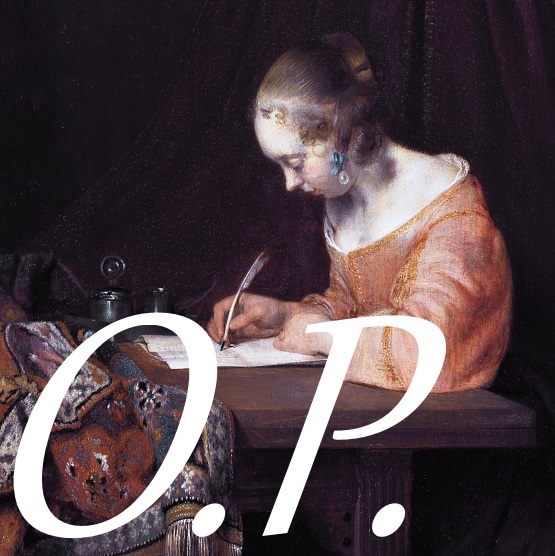
Ordinary Philosophy, Writing a letter *oil on panel *39 x 29.5 cm *signed b.c.: GTB *ca. 1655, assemblage by Amy Cools 2015Greetings to all,

On this New Year’s Day, which also happens to be my birthday and therefore, personally, doubly a day of new beginnings, I’m looking forward to a more expansive, more energetic future for Ordinary Philosophy!

What is Ordinary Philosophy?

It’s a series of explorations founded on the belief that philosophy is an eminently useful endeavor as well as a fascinating and beautiful one, and that citizen philosophers and academic philosophers alike share in making it so. A citizen philosopher myself, I found that my experiences as an avid reader, an artist, a working person, an entrepreneur, a student, and a writer filled my mind constantly with questions and new ideas, spurring me ever on in the search for answers. As I’ve always been a restless and hungry thinker, I fell in love with philosophy, especially, practical philosophy and the history of ideas.

What is Ordinary Philosophy’s mission?

It’s always been to share this love of philosophy and the history of ideas with you. In my explorations, I’ve encountered the most fascinating, innovative, and beautiful ideas from the curious, thoughtful, questing, and inventive world out there, from academic philosophy to science to history to current events to politics to the arts and so, so much more; so much more, in fact, that I can’t possibly process it all on my own.

So here at O.P.’s new home, I’ve broadened the mission.

While there have been occasional guest posts, there will be much more of an emphasis on providing a forum for many more voices at O.P., representing views from all walks of life. O.P. will also publish many more reviews, recommendations, and links directing readers to the great ideas proliferating out there that may be of special interest to O.P.’s audience.

The Traveling Philosophy / History of Ideas series will also expand. Each series will become more in-depth, with more detailed explorations of the life and ideas of each subject and more resources for further exploration and study. The podcast will expand in tandem: new audio recordings of longer pieces published in O.P. for those of you on the go who enjoy the ideas found here but don’t always have the time to sit down and read. As time goes by, I plan to expand the podcast as well to include interviews and a series of downloadable travel guides to accompany the History of Ideas series.

To better accomplish this expanded mission, I’ve moved O.P. here to its new platform: easier to read, use, and share. So if you love great ideas and the pieces you encounter here, please support O.P.’s expanded mission by sharing as widely as you can.

Lastly, dear readers, I appeal to you: Ordinary Philosophy is a labor of love, and depends entirely on your support. I’m determined to keep O.P. ad-free, but can’t do it without you. All financial contributions will be credited by name (unless anonymity is expressly preferred, of course!) on each project funded by their donations, and welcomed with deepest gratitude. Please support Ordinary Philosophy today!

Yours,

Amy Cools, founder and editor of Ordinary Philosophy

*Listen to the podcast version here or on iTunes

O.P. Recommends: Alison Gopnik’s ‘David Hume and the Buddha’

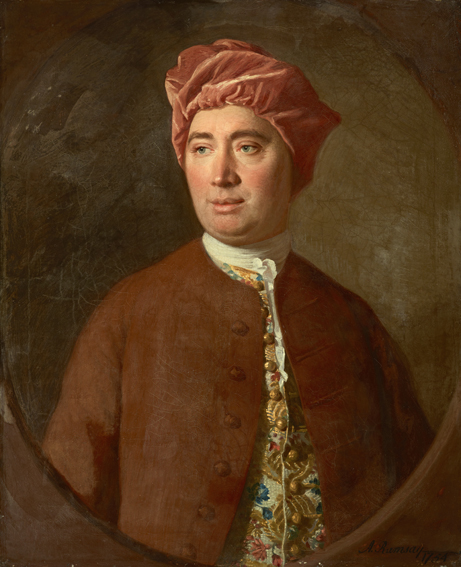
I just read a delightful piece in The Atlantic‘s October 2015 issue which combines three of my favorite things: history of ideas, a detective story, and David Hume. In her article ‘David Hume and the Buddha’, psychology researcher, philosopher, and author Alison Gopnik tells the tale of how she detected elements of Buddhist philosophy in Hume’s A Treatise on Human Nature, and how she set out to discover if he had indeed been influenced by it.

In Hume’s time, mid-1700’s, there was very little access to Buddhist philosophy in Europe, at least in part due to church suppression of its public dissemination. There was, however, some accounts of it buried in private libraries here and there, especially among the Jesuits, travelers, missionaries, and scholars as they were (and are). As Gopnik read up on Buddhist philosophy and European first encounters with it, she stumbled upon more than an ideological link with Hume: a possible way he could have discovered as a young scholar.

Like the 23-year-old Hume, Gopnik had fallen into a depression, but in her case, it was brought on by the changes that so often occur in mid-life: the children have grown up and left home, her marriage had broken up, she moved, and the stress of it all left her unable to work for a time. Hume’s depression was likely brought on by too many years of intense study, too much time spent indoors all alone. His Letter to a Physician of 1734 is a clear and detailed account of what it’s like to suffer a severe bout of depression, and he recognized it, clear-headed naturalist that he was, as an ailment of the physical body, and just as amenable to a cure if only the right one could be found.

Hume found the cure for depression in regular exercise and in enjoying the company of other people; Gopnik found in in a new love and renewed enthusiasm for her favorite pursuits, but first she found it in Hume. After finishing Gopnik’s story, I find myself even more impatient for my next traveling philosophy adventure in the history of ideas. Until then, I’ll continue to be inspired by Hume’s, Gopnik’s, the Buddha’s, and other great thinkers’ work, and heed Thomas Jefferson’s advice: if you keep yourself busy and your mind occupied, depression will be hard pressed to find its way in.

~~~~~~~~~~~~~~~~~~~~~~
Gopnik, Alison. ‘David Hume and the Buddha’. The Atlantic, October 2015 issue.
Published online as ‘How an 18th-Century Philosopher Helped Solve My Midlife Crisis:

David Hume, the Buddha, and a search for the Eastern roots of the Western Enlightenment’.
http://www.theatlantic.com/magazine/archive/2015/10/how-david-hume-helped-me-solve-my-midlife-crisis/403195/