To Achieve Freedom Of or From Religion, Equal Protection is a Better Strategy Than Separation of Church and State

Generally, I’m a big fan of such organizations as the Freedom From Religion Foundation and Americans United for Separation of Church and State.

The former, founded in 1978, is headed by Annie Laurie Gaylor and Dan Barker, enthusiastic and principled atheists who believe that true religious freedom entails freedom from religious interference in matters of government or public goods. They carry out their mission in two main ways: through letter-writing and litigation when the establishment clause of the First Amendment to the Constitution (“Congress shall make no law respecting an establishment of religion…”) is violated, and through public awareness campaigns via social media, network news appearances, a radio show (also available as a podcast; I’m a regular listener), billboards, and ads.

The latter, founded in 1947, is headed by Reverend Barry Lynn, an ordained United Church of Christ minister. The AU pursues many of the same goals as the FFRF, also through legal and public awareness campaigns, and also with the stated mission of upholding the establishment clause. Lynn’s and the AU’s emphasis is more on freedom of religion, pointing out how the creation of a purposefully and innovatively secular government led to less religious persecution and greater freedom of conscience in the United States than had been achieved in any other Western society up to that point.

The FFRF and the AU have done a lot of good, especially when it comes to such matters as the misrepresentation of religion as science in the public school classroom, keeping government representatives from proselytizing in their official roles, and preventing religious views from infringing on certain civil rights. That’s because they do their work in a culture which strongly values religious liberty and within a system of laws that’s designed to protect it, and they do it well. However dominated by Christianity at its outset, our nation’s origins, rife with religious dissenters championing freedom of conscience, led to the United States largely abandoning its religious favoritism and oppression in favor of religious liberty.

Yet, though the religiously non-affiliated, atheists/agnostics, and those critical of political action by religious organizations are a rapidly growing demographic, it seems that the FFRF and the AU still aren’t achieving their goals as effectively as they might. For example, many government meetings still commence with sectarian prayers, private religious opinions can still trump those of the professional medical field when it comes to access to reproductive health care, organized religions can still get special tax breaks and other perks that non-religious organizations can’t get, religious charities (such as adoption agencies) can collect public money while discriminating against some citizens on religious grounds, and American officials still seem required to pepper their rhetoric with pious references to retain public favor.

How can this be? Why do the FFRF and AU fail to achieve many of their goals when our national legal and cultural commitment to religious liberty is so robust?

It’s because of the simple fact that it’s impossible to separate our core beliefs, be they philosophical, scientific, skeptical, religious, or otherwise, from our politics. Politics is how we go about organizing our lives as members of society, which is always composed of people with conflicting interests and beliefs, and the positions we take on how we go about doing this are based on what we believe about justice, fairness, and our purpose in life. It makes no more sense to demand that people keep their religious beliefs out of politics than it is to demand they keep their other beliefs out, because our beliefs, whatever the source, are the catalysts for our opinions and actions. Forcing people to artificially separate only religious belief from political action or speech, then, is a form of unjustified religious discrimination, because it prevents some people, and not others, from public expression of their true beliefs specifically on religious grounds. For those who might object that religiously motivated politics serve to oppress people of other religions or of no religion, I reply that this is no more or no less true than it is of other belief-motivated politics. You can just as well say that liberals are trying to oppress conservatives because they act on their liberal beliefs, or that conservationists are trying to oppress free-market proponents because they act on their conservationist beliefs, and so on.

Well, then, what do we make of the world history of actual religious oppression, when people of some religious beliefs were oppressed by people of other religious beliefs? This, sadly, is not just a part of world history: it continues to this day, though in this country more often by individuals than by government. But I would say the problem has not been caused just by people forcing their religious beliefs on others through law. It’s more that people tried to force everyone to act and believe according to the tenets of only one religion, or of a very few. It’s not religion, per se, that’s the problem. We can recognize this when considering the history of religiously committed people who were the original champions of religious liberty in the United States. It makes no sense to say that religion in politics is always oppressive when it’s often been the case that religion in politics is what led to expanding religious and other civil liberties in the first place. The problem is the exclusivity and favoritism that some religiously-motivated politics call for.

So how do we attain full religious liberty while allowing the free expression of religion in politics?

We start answering this when we consider what religious liberty and religious freedom is is the first place. Freedom both of and from religion requires that people be able to express their beliefs and live according to them except as it limits the freedom of others to do so, and vice versa. Those laws and practices which protect our ability to enjoy religious freedom without infringing on the rights of others determine our religious liberty. While the principle of separation of church and state, which the First Amendment is often interpreted to express, is meant to protect religious liberty, I find that attempt to put this principle into practice often defeats the purpose, which is to achieve real religious freedom. Too many of the efforts to keep religion out of politics cross over or tread too close to the line between separating church from state, and end up unfairly suppressing government workers’ and political candidates’ freedom to publicly express their beliefs in their public life. This not only tramples on their civil rights, it also prevents the public from being informed of the true motivations behind the politics of their representatives.

It seems to me that the equal protection clause of the Fourteenth Amendment (“No State shall…deny to any person within its jurisdiction the equal protection of the laws”) would do a much better job of systematically and effectively protecting religious freedom not only because it doesn’t make the impossible demand of segregating our core beliefs from our politics, but because it’s so straightforward. Does the proposed law take every religious consideration under account, or can it, within reason? If the answer is yes, then it does not infringe on religious freedom. If the answer is no, the law must be rejected, or it must be derived from universal principles only, such as those which all philosophies and religions can generally agree on: justice, fairness, beneficence, and so on.

In other words, the principle of equal protection can generate a clear decision procedure to determine whether a law or practice is commensurate with religious freedom, in a way that the principle of separation of church and state can’t. 

In sum: when it comes to equal protection, what’s good for the goose is good for the gander. If all religions can be represented in a generally applicable law, or receive tax breaks, or be represented by a public monument on public property, well and good. If they can’t all be represented, then none can. Equal protection means: all or none.

There’s a case still under way, in which the legality of a Ten Commandments monument erected on state property is being challenged on the grounds it violates the principle of church and state. While the ACLU is challenging the Ten Commandments monument on establishment clause grounds, Lucien Greaves of the Satanic Temple is making a different argument: the Ten Commandments monument should stay …if, of course, a seven foot bronze statue of Baphomet can go up next to it, along with all other religious monuments people want to erect. It doesn’t take much imagination to picture what a crowded mess public lawns and buildings would become if plaques, statues, engravings, and every other sort of representation of the religious beliefs of all Americans were to be represented in every one. Some argue that pride of place of religious monuments should be given to those that have a special significance in American history. If that case won out (though many of the founding Christians didn’t believe in graven images), public lawns could still become very crowded with Abrahams, Moseses, Virgin Marys, Martin Luthers, Joseph Smiths, crucifixes, angels, innumerable saints, and much, much more. But would that really represent what religious freedom means to us, to give favored and exclusive access to a few religions to the walls and lawns of our public spaces and to our laws? That looks like the bad old religiously oppressive Europe many of our forebears fled from in the first place. No, if the expression of belief is to find a place in the public sphere, it must be universal, representing the myriad disparate beliefs of all, or those which are universal to all.

Now imagine the equal protection principle applied to access to health care, to education, to adoption agencies, and so on. If certain religious individuals or organizations want to influence the outcome of regulations to reproductive health care, they can send lobbyists if representatives of all belief groups have the same opportunity to participate in the discussion (secondary to the relevant medical experts, of course). If these religious individuals and organizations don’t want other views to be represented, then it’s in their interests to prudently withdraw.

Many religious organizations seem to be in a bit of a panic today in the United States, especially those with a long and distinguished pedigree. If they aren’t in a favored position to promote their views in the public square, they seem to think, their very survival is threatened. I think they’re shooting themselves in the foot with these tactics. For one thing, they appear a bit bullying, a bit usurping, and more than a bit desperate, and serve more to alienate people than otherwise. Secondly and most importantly, there’s that overall deep cultural American attachment to religious freedom. So although a number of the more zealous advocate for more government support of their own religion, it appears that most Americans see this as a betrayal of core religious principles (“Give to Caesar that which is Caesar’s…”, “My kingdom is not of this world…”, “But when you pray…pray in secret…”) and of our heritage of ever-more-vigorous religious tolerance.

So while the ‘wall of separation’ might appear a lovely fiction to many, it’s no more realistically or navigably erectable than a gaggle of religious monuments in a town square, not in a nation that believes so strongly in the freedom to think and act on one’s conscience in every sphere of private and public life. It’s best to stick more closely with our more laudable pluralistic tradition and proclaim: as a people, we can either favor everyone’s right to believe, or no-one’s. That’s why all religiously motivated people should freely participate in voting, running for office, and making laws, so long as the laws are applicable to everyone and safeguard the rights of all individuals equally, and they should feel at liberty to say what beliefs motivate them. In fact, that’s invaluable information the electorate shouldn’t be deprived of by contrived, impossible to enforce separation of belief laws.

In the end, forcible separation of the people into a nation of “our beliefs vs. theirs” won’t lead to more freedom of or from religion, but the principle of equality will.

Ordinary Philosophy and its Traveling Philosophy / History of Ideas series is a labor of love and ad-free, supported by patrons and readers like you. Please offer your support today!

~~~~~~~~~~~~~~~~~~~~~~~~~~~~~~~~~

Sources and Inspiration:

‘About Americans United for the Separation of Church and State’. AU website. https://www.au.org/about ‘About FFRF: Welcome to the Freedom from Religion Foundation’. FFRF website. http://ffrf.org/about

Baker, John. ‘Establishment of Religion’, The Heritage Guide to the Constitution.
http://www.heritage.org/constitution#!/amendments/1/essays/138/establishment-of-religion

Christian, Carol. ‘Satanic Temple’s statue of Satanic figure under way for Oklahoma capitol’, Houston Chron.com, May 6, 2014. http://www.chron.com/news/nation-world/article/Satanic-Temple-s-statue….

‘“Nones” on the Rise’, Pew Research Center: Religion and Public Life. Oct 9th, 2012 http://www.pewforum.org/2012/10/09/nones-on-the-rise/

Nussbaum, Martha. “Equal Respect for Conscience: The Roots of a Moral and Legal Tradition” https://www.youtube.com/watch?v=UChBe5sNQbk

What Leaving Religion Has Done for Me

I grew up as a member of a large and generally very religious, very conservative Catholic family. As I describe in an earlier piece, both sides of my family are close-knit and traditional, with a tendency to insularity. When I was much younger, I loved it. Religion, especially in its more traditional and fundamentalist forms, has many upsides: a strong sense of community, a feeling of intimate belongingness in a group that shares a creed, a mythology, a history, and an identity. There are things I remember fondly: the warmth that suffuses family faith-based rituals, like putting on a fresh new dress for Easter morning, or the excitement of Christmas midnight mass, with its rich decorations, solemn rituals, and stirring hymns. We would return and light the tree, a luminous and dream-like vision to a child who just woke up from the wee-hours car ride home. There were pancake breakfasts and coffee socials after Mass, Sunday school friends, singing in the choir, and suppression of giggles as my brother, sisters, and I pulled faces at each other during the hour-plus long service.

I also remember that religious fervor, that soaring feeling, that high, that rush of heart-swelling emotion that would come over me sometimes as I sought connection with the divine. In my mid-teens, Jesus was my ‘drug’ of choice. (Not that I did much in the way of drugs later, ahhh-hem.) The Catholic religion has many elements that suit a romantic temperament: prayers and chants, candles and incense, a baroque artistic sense, a preoccupation with death, suffering, and self-sacrifice, and a deep veneration for martyrdom. And no-one is more romantic than a teenager.

But that feeling of belongingness can also lead to insularity, so that you feel removed to some degree from the broader human community and from the wider world of ideas. There was a feeling of loneliness sometimes, of separation from the world. I remember times when my religious compatriots and I would bad-mouth secular people: their music, clothing, slang, history, practices, and beliefs and ideas (I later learned we were mostly wrong about what they actually think and believe). It felt satisfying, in a way, as it made me feel part of some exclusive club, but it felt a bit mean too. We portrayed the rest of the world to ourselves as a lost, sad, evil place compared with what our religion had to offer. We could rest easy, satisfied that we knew the truth and could lead more meaningful, ‘holy’ lives, here on earth and after death. (Though, oddly enough, I feared death terribly in those years, and thought of it often. Try as I might, the always vague promise of the joys of heaven failed to console me. I thought perhaps God was testing me: tests of faith are an important theme in Catholicism.)

As I approached adulthood, and began to meet people from different backgrounds, with different beliefs, faith faded and gave way to doubt. I’d always been a curious person, but my youthful shyness and anxiety, combined with my insular upbringing, kept me mostly isolated from the world beyond family and church. It wasn’t until I entered the workforce, and then attended junior college, that I discovered the wider world, one of dazzling variety, and found it suited my personality to a T.

Slowly, I began to emerge from my religious shell. I began to let down my guard, thinking: if my religion is true, my faith will survive running the gauntlet of questions, challenges, and opposing ideas, gaining strength along the way. After all, if integrity and love of knowledge are virtues and God is good, God would prefer even an honest atheist to an intellectually lazy believer. So I opened myself up to discovery, to an enthralling diversity of beliefs, ideas, cultures, and practices, a world with a rich and varied history. Science, literature, philosophy, history, art, culture, religion itself, all became available to me to explore, to consider, and to critique, honestly, in its own terms, and on its own merits. There were no more heresies and dogmas: now, there were facts and theories, truth and falsehood, useful ideas and otherwise. There was no more sin and redemption: now, there were systems of ethics and self-improvement, and considered moral judgments derived from considerations of good and bad, help and harm, beneficence and selfishness, virtue and non-virtue. The supernatural gave way to the natural, certitude to a healthy skepticism, blanket acceptance of creed to understanding, faith to belief ‘wisely apportioned to the evidence’.

I came to value the sense of belonging to humanity as a whole over the sense of belonging to a narrower community of belief. My newfound cosmopolitanism broadened my sense of care for and responsibility to my fellow human beings beyond the scope of any one ideology. The world was no longer divided into ‘Us’ (in my case, Catholics) and ‘Them’, the poor benighted souls wandering this world lost, hopeless, and forlorn. Instead, I came to understand that all of these tools we’ve developed, from morality to literature to government to art to religion, are products of the great quest to better ourselves, to attain the happiness and fulfillment that all humans seek. Religion, like culture, language, and so on, I came to understand as a human creation, and no more or less important, sacred, or immune to change and criticism than any other artifact. Religion lost its magic: since humans made religion, humans can reform or unmake it. I could glean the best of what it has to offer, and explore its history, appreciate its role in moral progress, gain insight from its ethical and metaphysical theories, enjoy the creativity which gave rise to its fables and rituals, and discard the rest.

Likewise, the whole of the great treasure trove of human thought became available to me for study and consideration. There is no list of banned books, no heresies. Instead, there are good ideas and bad ideas: theories that better explain the workings of the universe, and those that do not; beliefs that accord with reality and with reason, and those that do not; ideologies that lead people to do good and to lead better lives, and those that do not; literature and art that arouse the best emotions and enrich understanding in us, and those that do not.

Many religions, including the brand of fundamentalist Catholicism in which I was raised, lead many adherents to restrict the education of their children to a cherry-picked, often distorted or flat-out-wrong, circumscribed array of ideas, scientific theories, and historical accounts that accord with the doctrines of their faith. Many of these children remain ignorant of the wider world of human thought and history until something in their experience or personality compels them to look beyond the teachings of their youth. For example, my own dear grandmother, out of love but misguided by her piety, did a disservice to the education of her grandchildren by attempting, and in some cases succeeding, to restrict our education in this way. Her religious beliefs led to her conviction that a broad, liberal education offered too many temptations to disbelief, so she felt compelled keep us from learning anything other than that which would accord with her fundamentalist Catholic faith. As I later discovered, she was right, not for the reasons she thought. Truth, in my opinion, holds fast in the face of challenges; it does not give way as easily as error does. Each new thing I learned, then, was not a temptation: it was a window of opportunity for growing in understanding, and for replacing bad ideas with better ones. Fortunately, I inherited, and was inspired by, her adventurous side, her love of people. Over time, I encountered and fell in love with the wider world of ideas, through the people I came to meet and the broader education I eventually received.

Now, in place of memorizing and reciting the Apostle’s Creed, I immerse myself in Aristotle and Mill, in Hume and Kant, in Wollstonecraft, Rose, Stanton, Jefferson, and Paine, in Avicenna and Aquinas, in Rawls, Pinker, Newberger Goldstein, and Hitchens. I can immerse myself in the teachings of religious founders as well, including the historical Jesus, endlessly more complex, fascinating, and inspiring than the blonde, haloed icon of the Baltimore Catechism. I have the opportunity to explore what all of these thinkers and reformers have to offer, to seek to understand their ideas on their own terms, putting aside those distorted accounts produced by religious rivalry. I can also, without fear of divine censure, explore the bad ideas people have conceived, from belief in witchcraft and satanic possession to the defense of torture, to racist ideologies, to ‘holy war’ and terrorism to social Darwinism (a sadly misleading term, does a disservice to a great thinker by associating his name with eugenics, a pseudoscientific theory contrary to his own ideas). I can try to enter the minds of those who created these dangerous and immoral ideas, in order to really understand how they came up with them, and to better explain why they are so terrible.

These days, I think of myself as a happier, more morally responsible, more intellectually honest, and more informed person than I would have been if I had remained religious. In that, I speak for myself only. Yet I know that this is true for many others, whose accounts celebrate the benefits of their own religious deconversions. It’s my impression that the most joyful, most passionate, and yes, the most resentful converts from religion are those who were brought up in more restrictive, fundamentalist belief systems. Critics say that such people gave up their religion because it was too hard, so they took the easy way out; or, that they just wanted to be able to ‘sin’ freely. I’ve had these accusations thrown at me many times. In a sense, they’re right, but not for the reasons they think. Many of these religions are too hard because their restrictions and demands are contrary to human nature since they’re based on deeply flawed accounts of it, and much of what they deem ‘sin’ is not wrong after all.

Many people attribute their own best qualities, of character, of behavior, of outlook on life, to religion, whether it’s the one they were brought up with or one they converted to. While I recognize the fact that religion can give a deep sense of fulfillment, the evidence indicates religiosity is not more of a predictor for good behavior than secularism. Study after study, personal account after personal account reveal that religious people commit most crimes at about the same rate, are about as generous, and behave about as morally overall than secular people.

My own observation is that people use religion to justify whatever way they are inclined to behave, good or bad. As the physicist Steven Weinberg points out, good people do good things, and evil people do evil things, regardless of religion. Many of the kindest, wisest, and most wonderful people I know are religious, and credit their religion with their moral successes. I’ve also known plenty of religious people use their beliefs to dodge responsibility for their bad behavior with excuses such as ‘the devil made me do it’ and ‘well, of course, I’m just a sinner’. They use this get-out-of-jail-free-card, such as this particular one available to Catholics (but of course, not necessarily endorsed by all Catholics): ‘I’ll just go to Confession later’. Some are otherwise good people who hold what I think are immoral beliefs, because they were taught to believe this way, and threatened with eternal punishment if they don’t. Others aren’t morally praiseworthy people in any sense of the term, and go through life doing only that which serves their own short-term self-interest. Religion, for these, is a matter of convenience or habit.

All of these things are basically true of the non-religious people I’ve come across, including my secular community of friends, family, and co-workers. Some are kinder than others, some are morally committed to doing good, some have a more nihilistic, selfish, or jaded view of the world. Yet here’s why I generally prefer a secular brand of morality over the religious: secular people generally take goodness more for granted. While this might sound counter-intuitive as an indicator of a better moral character or as a way of habituating oneself to better behavior, I think it’s excellent for both.

For example, when complimented on a good deed, a secular response is generally something along these lines: ‘well, obviously, it’s the right thing to do’, or, ‘it just feels right / good’, or, ‘of course, that’s how decent people behave’. These sorts of responses indicate that they see goodness as the default position, as required by reason, as a basic human instinct, or both. After all, human beings go through day to day life being decent to one another: we pay the asking price for the things we want, we step aside to let others pass on the sidewalk, we obey the rules of traffic, we say please and thank you, we lavish food, money, and medical care on strangers as well as family and friends, we spend huge amounts of our time communicating complex thoughts and ideas, and so on and so on. We take all this for granted, to our credit. When we compare the human species with all others, even to our closest relatives the chimpanzees, we find that our level of cooperation, generosity, and tolerance is quite remarkable. In all other species, some combination of predation, raiding, warfare, murder, infanticide, and/or indifference to suffering and the welfare of anyone besides close kin and allies are par for the course. With humans, however, such behavior makes the news.

Since goodness is the default, it’s badness has to be explained: by mental illness, alcohol or drugs, a bad upbringing, a momentary selfishness that overcame one’s better side, or by faulty ideology or culture. Therefore, most good deeds are not terribly remarkable: they are a natural product of sociability combined with reason. Sociability gives us the instincts to cooperate and help others; reason shows us that the more widely we extend our cooperation and good-naturedness, the better off everyone is in the long run.

Since secular people (as well as many liberal and progressive religious people) tend to believe in the basic goodness of human nature, they tend to be liberal in politics and morality, and broad in their conception of human nature. For example: since it’s everyone’s basic duty to help one another out, it’s right and just that we all pay taxes to create public welfare systems for those less fortunate than ourselves. To not institute public welfare systems is to say that it’s right that people should enjoy the benefits of civilized society, while being permitted to shirk their responsibility to care for those whom it hasn’t benefited. Another example: since most kinds of human behavior are good or at least morally neutral, there’s only a narrow range of behaviors that should be prohibited, namely those that actively harm others. Human nature, with its unique combination of advanced intelligence and strong social instincts, has evolved to include a wide variety of ways of being that are not only valid, but worthy of celebration, as they are indicative of the wonderfully fascinating, complex, endlessly inventive creatures that we are.

It’s no surprise, then, that secularists and adherents of the more liberal religions, which share this belief in basic human goodness and the broadness of human nature, have been on the forefront of reform and civil rights movements throughout history. Abolition of slavery, religious liberty, women’s, worker’s, and gay rights, indeed all of the great movements for reform and freedom, originated with the dissidents, the broad-minded, and the humanists. Religion is made for human beings, not the other way around.

An aside: there are certain leading secularists, such as Richard Dawkins and Sam Harris, who claim that the only ‘true’ religious believers are fundamentalists. They argue that liberal and reformed believers just want to pick and choose the ‘nice’ parts and discard the rest, which constitutes a betrayal of their religion. I think this view is not only historically inaccurate, it’s based on a more basic categorical error. Religions are not, and have never been, eternally ‘fixed’ systems that do, or ‘should’, remain constant over time. They are better understood as belonging to a category of things that include culture and language, all of which come gradually into being from thoughts and practices that are products of human nature, and change over time. Culture, language, and religion evolve as human nature evolves and as the totality of human knowledge and wisdom expands and is applied to current circumstances. It’s no more true to say that the only ‘true’ religion is that which remains wedded to a particular holy book or creed established by a synod, or a particular interpretation of these, than it is to say that the only ‘true’ communicator of English language is one who strictly adheres to the first Webster’s dictionary, or considers the Canturbury Tales or the works of Shakespeare as the eternal exemplar of ‘true’ English grammar and style.

Let’s contrast the more liberal, progressive, humanist views of secularists and moderate believers with the views of some of the more fundamentalist and hierarchical religions, usually descendants of tribal belief systems. This includes the brand of conservative Catholicism I grew up with (which is not reflective of all variants of Catholicism, some of which are quite tolerant and emphasize social justice). In these belief systems, humans are born in sin, ‘fallen’, weak and corrupt, and it’s only through the greatest struggle, and never without divine help, that we can achieve goodness. Their view of human nature is narrow: people are created to fulfill one of a number of comparatively few, narrowly defined roles, and behavior and proclivities that aren’t in accordance with these are sinful. Their view of life is one of spiritual warfare: we are beset on all sides by Satan and his agents as they vie with God for dominance over our souls. The way to redemption, then, is a lifetime of constant prayer, diligence, and suffering, battling one’s way to an eventual union with God that relatively few can achieve.

Secularism and the liberal religions, with their naturalist view of morality, emphasize the ordinariness of human goodness and the value of habitual, systematic, readily achievable goodness. The more rigid, fundamentalist religions, on the other hand, emphasize the difficulty of defeating evil and the value of relatively rare exploits of good deeds through heroic self-denial. While the latter may be more romantic and exciting, I think that the secularist and humanist view of human nature has been more conducive to human flourishing overall. It promotes a greater quantity of goodness in the world by making it understandable and accessible. This is readily apparent when we examine the evidence throughout history and up to the present time. Where we find tolerant governments and secular or progressive religious belief systems, we find less warfare, a higher standard of living, and a system of laws that protect all citizens from oppression, from each other as well as from government itself. Where we find civilizations dominated by religious fundamentalism, rigid ideologies, and aristocratic and ‘ordained’ hierarchies, on the other hand, we find the opposite.

In sum: leaving religion behind, for me, has proved not only emancipatory, but has provided a wonderful opportunity for learning, for critical thought, and for personal growth that I may never had had otherwise. I still have a residual distaste for religion, especially for its more ritualistic trappings, as one has a distaste for imbibing a substance one has overindulged in, or for fire after one has been burned. I shy away from churches, am creeped out by rote prayers, and feel depressed when listening to Gregorian chants and solemn hymns. (I feel very differently about other forms of sacred music, and wouldn’t you know it, I never heard any of them in the church of my youth.) Yet I seek wisdom from any source in which it may be found, and since I know that there is much to be found in religious traditions as there is in any arena of human thought, I look for it there, too, despite the inclinations I sometimes have against it. And one day, when my residual aversion to religion has finally worn away, I’ll be that much less in the sway of the kind of bias that blinds the intellect and blunts the understanding.

*Listen to the podcast version here or here on iTunes
*Also published at Darrow http://darrow.org.uk/2015/04/12/what-leaving-religion-has-done-for-me/

Welcome to the Podcast Edition of Ordinary Philosophy!

Hello dear readers, and welcome to the
podcast version of Ordinary Philosophy!

You can listen to the podcast here, on Google Play, or subscribe in iTunes.

Like many of you, I’m a big fan of podcasts, mostly because my life is very busy. One day in the future, I hope to have a lot more time to do each task one at a time, to really be present, as they say, as I wash the dishes, straighten the house, do the laundry, and perform all those other tasks that take up time, but not much thought.

But at this time in my life, between my day jobs, my creative projects, and spending time with friends and family (which I don’t do enough of these days, sadly), I don’t have enough time to keep up the world of ideas as nearly much as I’d like to by sitting down and reading. Instead, I keep myself informed and increase my education by listening to lots of podcasts: discussions with my favorite authors and thinkers, audio renditions of books and essays, debates, recordings of classes on my favorite subjects, and so on. I listen to these podcasts while doing those aforementioned chores, and let me tell you: as one who is not fond at all of household chores like doing the dishes and washing the floor, the podcast is a marvelous invention: they transform boring chore time into great opportunities for learning and exploration. I’m also an avid hiker, and it’s a wonderful thing to be able to immerse myself in some fascinating ideas or discussion as I immerse myself in the beauties of nature.

To begin with, this podcast will simply consist of audio recordings of my Ordinary Philosophy pieces. Over time, I may add commentary and who knows, perhaps interviews and discussions with guests. We’ll see how it goes. In the meantime, here’s Ordinary Philosophy in audio form: I hope you find it interesting and enjoyable!

… And here’s episode 2: Is the Market Really the Most Democratic Way to Determine Wages?
Originally published as an essay Feb 6th, 2014

In Her Own Words: A Defense of Atheism, by Ernestine Rose, 1861

My friends: –In undertaking the inquiry of the existence of a God, I am fully conscious of the difficulties I have to encounter. I am well aware that the very question produces in most minds a feeling of awe, as if stepping on forbidden ground, too holy and sacred for mortals to approach. The very question strikes them with horror, as is owing to this prejudice so deeply implanted by education, and also strengthened by public sentiment, that so few are willing to give it a fair and impartial investigation, –knowing but too well that it casts a stigma and reproach upon any person bold enough to undertake the task, unless his previously known opinions are a guarantee that his conclusions would be in accordance and harmony with the popular demand. But believing as I do, that Truth only is beneficial, and Error, from whatever source, and under whatever name, is pernicious to man, I consider no place too holy, no subject too sacred, for man’s earnest investigation; for by so doing only can we arrive at Truth, learn to discriminate it from Error, and be able to accept the one and reject the other.

No is this the only impediment in the way of this inquiry. The question arises, Where shall we begin? We have been told, that “by searching none can find out God” which has so far proved true; for, as yet, no one has ever been able to find him. The most strenuous believer has to acknowledge that it is only a belief, but he knows nothing on the subject. Where, then, shall we search for his existence? Enter the material world; ask the Sciences whether they can disclose the mystery? Geology speaks of the structure of the Earth, the formation of the different strata, of coal, of granite, of the whole mineral kingdom. –It reveals the remains and traces of animals long extinct, but gives us no clue whereby we may prove the existence of a God.

Natural history gives us a knowledge of the animal kingdom in general; the different organisms, structures, and powers of the various species. Physiology teaches the nature of man, the laws that govern his being, the functions of the vital organs, and the conditions upon which alone health and life depend…. But in the whole animal economy–though the brain is considered to be a “microcosm”, which which may be traced a resemblance or relationship with everything in Nature–not a spot can be found to indicate the existence of a God.

Mathematics lays the foundation of all the exact sciences. It teaches the art of combining numbers, of calculating and measuring distances, how to solve problems, to weigh mountains, to fathom the depths of the ocean; but gives no directions how to ascertain the existence of a God.

Astronomy tells us of the wonders of the Solar System–the eternally revolving planets, the rapidity and certainty of their motions, the distance from planet to planet, from star to star. It predicts with astonishing and marvelous precision the phenomena of eclipses, the visibility upon our Earth of comets, and proves the immutable law of gravitation, but is entirely silent on the existence of a God.

In fine, descend to the bowels of the Earth, and you will learn what it contains; into the depths of the ocean, and you will find the inhabitants of the great deep; but neither in the Earth above, nor the waters below, can you obtain any knowledge of his existence. Ascend into the heavens, and enter the “milky way,” go from planet to planet and to the remotest star, and ask the eternally revolving systems, Where is God? and Echo answers, Where?

The Universe of Matter gives us no record of his existence. Where next shall we search? Enter the Universe of Mind, read the volumes written on the subject, and in all the speculations, the assertions, the assumptions, the theories, and the creeds, you can only find Man stamped in an indelible impress his own mind on every page. In describing his God, he delineated his own character: the picture he drew represents in living and ineffaceable colors the epoch of his existence–the period he lived in.

It was a great mistake to say that God made man in his image. Man, in all ages, made his God in his own image, and we find that just in accordance with his civilization, his knowledge, his experience, his taste, his refinement, his sense of right, of justice, of freedom, and humanity, –so has he made his God. But whether coarse or refined; cruel and vindictive, or kind and generous; an implacable tyrant, or a gentle and loving father; it still was the emanation of his own mind –the picture of himself.

But, you ask, how came it to be that man thought or wrote about God at all? The answer is very simple. Ignorance is the mother of Superstition. In proportion to man’s ignorance he is superstitious–does he believe in the mysterious. The very name has a charm for him. Being unacquainted with the nature and laws of things around him, with the true causes of the effects he witnessed, he ascribed them to false ones–to supernatural agencies. The savage, ignorant of the mechanism of a watch, attributes the ticking to a spirit. The so-called civilized man, equally ignorant of the mechanism of the Universe, and the laws which govern it, ascribes it to the same erroneous cause. Before electricity was discovered, a thunderstorm was said to come from the wrath of an offended Deity. To this fiction of man’s uncultivated mind, has been attributed all of good and evil, or wisdom and of folly. Man has talked about him, written about him, disputed about him, fought about him,–sacrificed himself, and extirpated his fellow man. Rivers of blood and oceans of tears have been shed to please him, yet no one has ever been able to demonstrate his existence.

But the Bible, we are told, reveals this great mystery. Where Nature is dumb, and Man ignorant, Revelation speaks in the authoritative voice of prophecy. Then let us see whether that Revelation can stand the test of reason and of truth.–God, we are told, is omnipotent, omniscient, omnipresent, –all wise, all just, and all good; that he is perfect. So far, so well; for less than perfection were unworthy of a God. The first act recorded of him is, that he created the world out of nothing; but unfortunately the revelation of Science–Chemistry–which is based not on written words, but demonstrable facts, says that Nothing has no existence, and therefore out of Nothing, Nothing could be made. Revelation tells us that the world was created in six days. Here Geology steps in and says, that it requires thousands of ages to form the various strata of the earth. The Bible tells us the earth was flat and stationary, and the sun moved around the earth. Copernicus and Galileo flatly deny this flat assertion, and demonstrates by Astronomy that the earth is spherical, and revolves around the sun. Revelation tells us that on the fourth day God created the sun, moon, and stars. This, Astronomy calls a moon story, and says that the first three days, before the great torchlight was manufactured and suspended in the great lantern above, must have been rather dark.

The division of the waters above from the waters below, and the creation of the minor objects, I pass by, and come at once to the sixth day.

Having finished, in five days, this stupendous production, with its mighty mountains, its vast seas, its fields and woods; supplied the waters with fishes–from the whale that swallowed Jonah to the little Dutch herring; peopled the woods with inhabitants–from the tiger, the lion, the bear, the elephant with his trunk, the dromedary with his hump, the deer with his antlers, the nightingale with her melodies, down to the serpent which tempted mother Eve; covered the fields with vegetation, decorated the gardens with flowers, hung the trees with fruits; and surveying this glorious world as it lay spread out like a map before him, the question naturally suggested itself. What is it all for, unless there were beings capable of admiring, of appreciating, and of enjoying the delights this beautiful world could afford? And suiting the action to the impulse, he said, “let us make man.” “So God created man in his own image; in the image of God created he him, male and female created he them.”

I presume by the term “image” we are not to understand a near resemblance of face or form, but in the image or likeness of his knowledge, his power, his wisdom, and perfection. Having thus made man, he placed him (them) in the garden of Eden–the loveliest and most enchanting spot at the very head of creation, and bade them (with the single restriction not to eat of the tree of knowledge), to live, to love, and to be happy.

What a delightful picture, if we could only rest here! But did these beings, fresh from the hand of omnipotent wisdom, in whose image they were made, answer the great object of their creation, answer the great object of their creation? Alas! no. No sooner were they installed in their Paradisean home, than they violated the first, the only injunction given them, and fell from their high estate; and not only they, but by a singular justice of that very merciful Creator, their innocent posterity to all coming generations, fell with them! Does that bespeak wisdom and perfection in the Creator, or in the creature? But what was the cause of this tremendous fall, which frustrated the whole design of the creation? The Serpent tempted mother Eve, and she, like a good wife, tempted her husband. But God did not know when he created the Serpent, that it would tempt the woman, and that she was made of such frail materials, (the rib of Adam,) as not to be able to resist the temptation? If he did not know, then his knowledge was at fault; if he did, but could not prevent that calamity, then his power was at fault; if he knew and could, but would not, then his goodness was at fault. Choose which you please, and it remains alike fatal to the rest.

Revelation tells us that God made man perfect, and found him imperfect; then he pronounced all things good, and found them most desperately bad. “And God saw that the wickedness of man was great in the earth, and it grieved him at his heart.” “And the Lord said, I will destroy man whom I have created, from the face of the earth; both man and beasts, and the creeping things, and the fowls of the air, for it repenteth me that I have made them.”So he destroyed everything, except Noah with his family, and a few household pets. Why he saved them is hard to say, unless it was to reserve materials as stock in hand to commence a new world with; but really, judging of the character of those he saved, by their descendants, it strikes me it would have been much better, and given him far less trouble, to have let them slip also, and with his improved experience made a new world out of fresh and superior materials. (*see footnote)

As it was, this wholesale destruction even, was a failure. The world was not one jot better after the flood than before. His chosen children were just as bad as ever, and he had to send his prophets, again and again, to threaten, to frighten, to coax, cajole, and to flatter them into good behaviour. But all to no effect. They grew worse and worse; and having made a covenant with Noah after he sacrificed of “every clean beast and of every clean fowl,”–“The Lord smelt the sweet savour; and the Lord said in his heart, I will not again curse the ground any more for man’s sake; for the imagination of man’s heart is evil from his youth; neither will I again smite any more every living thing, as I have done.” And so he was forced to resort to  the last sad alternative of sending “his only begotten son,” his second self, to save them. But alas! “his own received him not,” and so he was obliged to adopt the Gentiles, and die to save the world. Did he succeed, even then? Is the world saved? Saved! From what? From ignorance? It is all around us. From poverty, vice, crime, sin, misery, and shame? It abounds everywhere.Look into your poor-houses, your prisons, your lunatic asylums; contemplate the whip, the instruments of torture, and of death; ask the murderer, or his victim; listen to the ravings of the maniac, the shrieks of distress, the groans of despair; mark the cruel deeds of the tyrant, the crimes of slavery, and the suffering of the oppressed; count the millions of lives lost by fire, by water, and by the sword; measure the blood spilled, the tears shed, the sighs of agony drawn from the expiring victims on the altar of fanaticism; –and tell me from what the world was saved? And why was it not saved? Why does God still permit these horrors to afflict the race? Does omniscience not know it? Could omnipotence not do it? Would infinite wisdom, power, and goodness allow his children thus to live, to suffer, and to die? No! Humanity revolts against such a supposition.

Ah! Not now, says the believer. Hereafter will he save them. Save them hereafter! From what? From the apple eaten by our mother Eve? What a mockery! If a rich parent were to let his children live in ignorance, poverty, and wretchedness, all their lives, and hold out to them the promise of a fortune at some time hereafter, he would justly be considered a criminal, or a madman. The parent is responsible to his offspring–the Creator to his creature.

The testimony of Revelation has failed. Its account of the creation of the material world is disproved by science. Its account of the creation of man in the image of perfection, is disproved by its own internal evidence. To test the Bible God by justice and benevolence, he could not be good; to test him by reason and knowledge, he could not be wise; to test him by the light of the truth, the rule of consistency, we must come to the inevitable conclusion that, like the Universe of matter and of mind, this pretended Revelation has also failed to demonstrate the existence of a God.

Methinks I hear the the believer say, you are unreasonable; you demand as impossibility; we are finite, and therefore cannot understand, much less define and demonstrate the infinite. Just so! But if I am unreasonable in asking you to demonstrate the existence of the being you wish me to believe in, are you not infinitely more unreasonable to expect me to believe–blame, persecute, and punish me for not believing–in what you have to acknowledge you cannot understand?

But, says the Christian, the world exists, and therefore there must have been a God to create it. That does not follow. The mere fact of its existence does not prove a Creator. Then how came the universe into existence? We do not know but the ignorance mind of man is certainly no proof of the existence of a God. Yet upon that very ignorance has it been predicated, and is maintained. From the little knowledge we have, we are justified in the assertion that the Universe never was created, from the simple fact that not one atom of it can be annihilated. To suppose a Universe created, is to suppose a time when it did not exist, and that is a self-evident absurdity. Besides, where was the Creator before it was created? Nay, where is he now? Outside of that Universe, which means the all in all, above, below, and around? That is another absurdity. is he contained within? Then he can only be a part, for the whole indeed includes all the parts. If only a part, then he cannot be the Creator, for a part cannot create the whole. But the world could not have made itself. True; nor could God have made himself; and if you must have a God to make the world, you will be under the same necessity to have another to make him, and others still to make them, and so on until reason and common sense are at a stand-still.

The same argument applies to a First Cause. We can no more admit of a first than a last cause. What is a first cause? The one immediately preceding the last effect, which was an effect to a cause in its turn–an effect to causes, themselves effects. All we know is an eternal chain of cause and effect, without beginning as without end.

But is there is no evidence of intelligence, of design, and consequently of a designer? I see no evidence of either. What is intelligence? It is not a thing, a substance, an existence in itself, but simply a property of matter, manifesting itself through organizations. We have no knowledge of, nor can we conceive of, intelligence apart from organized matter; and we find that from the smallest and simplest insect, through all the links and gradations in Nature’s great chain, up to Man–just in accordance with the organism, the amount, and the quality of brain, so are the capacities to receive impressions, the power to retain them, and the abilities to manifest and impart them to others; namely, to have its peculiar nature cultivated and developed, so as to bear mental fruits, just as the cultivated earth bears vegetation–physical fruits. Not being able to recognize an independent intelligence, I can perceive no design or designer except in the works of man.

But, says Paley, does the watch not prove a watchmaker–a design, and therefore a designer? How much more does the Universe?Yes; the watch shows design, and the watchmaker did not leave us in the dark on the subject, but clearly and distinctly stamped his design on the face of the watch. Is it as clearly stamped on the Universe? Where is the design, in the oak to grow to its majestic height? In the formation of the wing of the bird, to enable it to fly, in accordance with the promptings of its nature? or in the sportsman to shoot it down while flying? In the butterfly to dance in the sunshine? or its being crushed in the tiny fingers of a child? Design in man’s capacity for the acquisition of knowledge, or in his groping in ignorance? In the necessity to obey the laws of health, or in the violation of them, which produces disease? In the desire to be happy, or in the causes that prevent it, and make him live in toil, misery, and suffering?

The watchmaker not only stamped his design on the face of the watch, but he teaches how to wind it up when it runs down; how to repair the machinery when it is out of order; and how to put a new spring in when the old one is broken, and leave the watch as good as ever. Does the great Watchmaker, as he is called, show the same intelligence and power in keeping, or teaching others to keep, this complicated mechanism–Man–always in good order? and when the life-spring is broken replace it with another, and leave him just the same? If an Infinite Intelligence designed man to possess knowledge, he could not be ignorant; to be healthy, he could not be diseased; to be virtuous, he could not be vicious; to be wise, he could not act so foolish as to trouble himself about the Gods, and neglect his own best interests.

But, says the believer, here is a wonderful adaptation of means to ends; the eye to see, the ear to hear, &c. Yes, this is very wonderful; but not one more jot so, than if the eye were made to hear, and the ear to see. The supporters of Design use sometimes very strange arguments. A friend of mine, a very intelligent man, with quite a scientific taste, endeavored once to convince me of a Providential design, from the fact that a fish, which has always lived in the Mammoth Cave of Kentucky, was entirely blind. Here, said he, is strong evidence; in that dark cave, where nothing was to be seen, the fish need no eyes, and therefore has none. He forget the demonstrable fact that the element of light is indispensable in the formation of the organ of sight, without which it could not be formed, and no Providence, or Gods, could enable the fish to see. That fish story reminds me of the Methodist preacher who proved the wisdom and benevolence of Providence in always placing the rivers near large cities, and death at the end of life; for Oh! my dear hearers, said he, what could have become of us had he placed it at the beginning?

Everything is wonderful, and wonderful just in proportion as we are ignorant; that that proves no “design” or “designer”. But did things come by chance? It exists only in the perverted mind of the believer, who, while insisting that God was the cause of everything, leaves Him without any cause. The Atheist believes as little in the one as in the other. He knows that no effect could exist without an adequate cause, and that everything in the Universe is governed by laws.

The Universe is one vast chemical laboratory, in constant operation, by her internal forces. The laws or principles of attraction, cohesion, and repulsion, produce in never-ending succession the phenomena of composition, decomposition, and recomposition. The how, we are too ignorant to understand, to modest to presume, and too honest to profess. Had man been a patient and impartial inquirer, and not with childish presumption attributed everything he could not understand, to supernatural causes, given names to hide his ignorance, but observed the operations of Nature, he would undoubtedly have know more, been wiser, and happier.

As it is, Superstition has ever been the greatest impediment to the acquisition of knowledge. Every progressive step of man clashed against the two-edged sword of Religion, to whose narrow restrictions he had but too often to succumb, or march onward at the expense of interest, reputation, and even life itself.

But, we are told, that Religion is natural; the belief in a God universal. Were it natural, then it would indeed be universal, but it is not. We have ample evidence to the contrary. According to Dr. Livingstone, there are whole tribes or nations, civilized, moral, and virtuous; yes, so honest that they expose their goods for sale without guard or value set upon them, trusting to the honesty of the purchaser to pay its proper price.

Yet these people have not the remotest idea of a God, and he found it impossible to impart it to them. And in all the ages of the world, some of the most civilized, the wisest, and the best, were entire unbelievers; only they dared not openly avow it, except at the risk of their lives. Proscription, the torture and the stake, were found most efficient means to seal the lips of heretics; and though the march of progress has broken the infernal machines, and extinguished the fires of the Inquisition, the proscription, and the more refined but not less cruel and bitter persecutions of an intolerant and bigoted public opinion, in Protestant countries, as well as in Catholic, on account of belief, are quite enough to prevent men from honestly avowing their true sentiments upon the subject. Hence there are few possessed of the moral courage of a Humboldt.

If the belief in a god were natural, there would be no need to teach it. Children would possess it as well as adults, the layman as the priest, the heathen as much as the missionary. We don;t have to teach the general elements of human nature;–the five senses, seeing, hearing, smelling, tasting, and feeling. They are universal; so would religion be were it natural, but it is not. On the contrary, it is an interesting and demonstrable fact, that all children are Atheists, and were religion not inculcated into their minds they would remain so. Even as it is, they are great sceptics, until made sensible of the potent weapon by which religion has ever been propagated, namely, fear–fear of the lash of public opinion here, and a jealous, vindictive God hereafter. No; there is no religion in human nature, nor human nature in religion. It is purely artificial, the result of education, while Atheism is natural, and, were the human mind not perverted and bewildered by the mysteries and follies of superstition, would be universal.

But the people have been made to believe that were it not for religion, the world would be destroyed–man would become a monster, chaos and confusion would reign supreme. These erroneous notions conceived in ignorance, propagated by superstition, and kept alive by an interested and corrupt priesthood who fatten on the credulity of the public, are very difficult to be eradicated.

But sweep all the belief on the supernatural from the face of the earth, and the world would remain just the same. The seasons would follow each other in their regular succession; the stars would shine in the firmament; the sun would shed his benign and vivifying influence of light and heat upon us; the clouds would discharge their burden in gentle and refreshing showers; and cultivated fields would bring forth vegetation; summer would ripen the golden grain, ready for harvest; the trees would bear fruits; the birds would sing in accordance with their happy instinct, and all Nature would smile as joyously around us as ever. Nor would man degenerate. Oh! no. His nature, too would remain the same. He would have to be obedient to the physical, mental, and moral laws of his being, or to suffer the natural penalty for their violation; observe the mandates of society, or receive the punishment. His affections would be just as warm, the love of self-preservation as strong, the desire for happiness and fear of pain as great. He would love freedom, justice, and truth, and hate oppression, fraud, and falsehood, as much as ever.

Sweep all belief in the supernatural from the globe, and you would chase away the whole fraternity of spectres, ghosts, and hobgoblins, which have so befogged and bewildered the human mind, that hardly a clear ray of the light of Reason can penetrate it. You would cleanse and purify the heart of the noxious, poisonous weed of superstition, with its bitter, deadly fruits–hypocrisy, bigotry, and intolerance, and fill it with charity and forbearance towards erring humanity. You would give man courage to sustain him in trials and misfortune, sweeten his temper, give him a new zest for the duties, the virtues, and the pleasures of life.

Morality does not depend on the belief in any religion. History gives ample evidence that the more belief the less virtue and goodness. Nor need we go back to ancient times to see the crimes and atrocities perpetrated under its sanction. Look at the present crisis–at the South with 4,000,000 of human beings in slavery, bought and sold like brute chattels under the sanction of religion and of God, which the Reverends Van Dykes and Raphalls of the North fully endorse, and the South complains that the reforms in the North are owing to Infidelity. Morality depends on accurate knowledge of the nature of man, of the laws that govern his being, the principles of right, of justice, and of humanity, and the conditions requisite to make him healthy, rational, virtuous, and happy.

The belief in a God has failed to produce this desirable end. On the contrary, while it could not make man better, it has made him worse; for in preferring blind faith in things unseen and unknown to virtue and morality, in directing his attention from the known to the unknown, from the real tot he imaginary, from the certain here to a fancied hereafter, from the fear of himself, of the natural result of vice and crime, to some whimsical despot, it perverted his judgment, degraded him in his own estimation, corrupted his feelings, destroyed his sense of right, of justice, and of truth, and made him a moral coward and a hypocrite. The lash of a hereafter is no guide for us here. Distant fear cannot control present passion. It is much easier to confess your sins in the dark, than to acknowledge them in the light; to make it up with a God you don’t see, than with a man whom you do. Besides, religion has always left a back door open for sinners to creep out of at the eleventh hour. But teach man to do right, to love justice, to revere truth, to be virtuous, not because a God would reward or punish him hereafter, but because it is right; and as every act brings its own reward or its own punishment, it would best promote his interest by promoting the welfare of society. Let him feel the great truth that our highest happiness consists in making all around us happy, and it would be an infinitely truer and safer guide for man to a life of usefulness, virtue, and morality, than all the beliefs in all the Gods ever imagined.

The more refined and transcendental religionists have often said to me, if you do away with religion, you would destroy the most beautiful element of human nature–the feeling of devotion and reverence, ideality, and sublimity. This, too, is an error. These sentiments would be cultivated just the same, only we would transfer the devotion from the unknown to the known; from the Gods who, if they existed, would not need it, to man who does. Instead of reverencing an imaginary existence, man would learn to revere justice and truth. Ideality and sublimity would refine his feelings, and enable him to admire and enjoy the ever-changing beauties of Nature; the various and almost unlimited powers and capacities of the human mind; the exquisite and indescribable charms of a well-cultivated, highly refined, virtuous, noble man.

But not only have the priests tried to make the very term Atheism odious, as if it would destroy all of good and beautiful in Nature, but some of the reformers, not having the moral courage to avow their own sentiments, wishing to be popular, fearing lest their reforms would be considered Infidel, (as all reforms assuredly are,) shield themselves from the stigma, by joining in the tirade against Atheism, and associate it with everything that is vile, with the crime of slavery, the corruptions of the Church, and all the vices imaginable. This is false, and they know it. Atheism protests against this injustice. No one had a right to give the term a false, a forced interpretation, to suit his own purposes (this applies also to some of the Infidels who stretch and force the term Atheist out of its legitimate significance). As well we might use the terms Episcopalian, Unitarian, Universalist, to signify vice and corruption, as the term Atheist, which means simply a disbelief in a God, because finding no demonstration of his existence, man’s reason will not allow him to believe, nor his conviction to play the hypocrite, and profess what he does not believe. Give it its true significance, and he will abide the consequences; but don’t fasten upon it the vices belonging to yourselves. Hypocrisy is the mother of a large family!

In conclusion, the Atheist says to the honest conscientious believer, Though I cannot believe in your God which you have failed to demonstrate, I believe in man; if I have no faith in your religion, I have faith, unbounded, unshaken faith in the principles of right, of justice, and humanity. Whatever good you are willing to do for the sake of your God, I am full as willing to do for the sake of man. But the monstrous crimes the believer perpetrated in persecuting and exterminating his fellowman on account of differences of belief, the Atheist, knowing that belief is not voluntary, but depends on evidence, and therefore there can be no merit in the belief of any religions, nor demerit in a disbelief in all of them, could never be guilty of. Whatever good you would do without fear of punishment, the Atheist would do simply because it is good; and being so, he would receive the far surer and more certain reward, springing from well-doing, which would constitute his pleasure, and promote his happiness.

‘A Defense of Atheism’ by Ernestine Rose. Reproduced with permission from Women Without Superstition: No Gods – No Masters, The Collected Writings of Women Freethinkers of the Nineteenth and Twentieth Centuries. Edited by Annie Laurie Gaylor. Madison, Wisconsin 1997.
https://ffrf.org/shop/women-without-superstition-no-gods-no-masters

***************************************************************************

* Note: In the paragraph regarding the story of Noah’s flood, Ernestine Rose could be interpreted as having a negative view of human nature, or she could be satirizing religious views of human nature as intrinsically evil and in need of redemption from some power outside of itself. From her other writings, it appears to be the latter; in her writings overall, she reveals her more positive view of human nature. For example, consider this quote: “I have endeavored to the best of my powers and ability to serve the cause and progress of humanity, to advocate what seemed to be the truth; to defend human nature from the libel cast upon it by superstition…” (Dorress-Worters, Paula. Mistress of Herself: Speeches and Letters of Ernestine Rose, Early Women’s Rights Leader. The Feminist Press at CUNY, 2008, p. 208)

The Consolations of Philosophy, and A Death Free from Fear

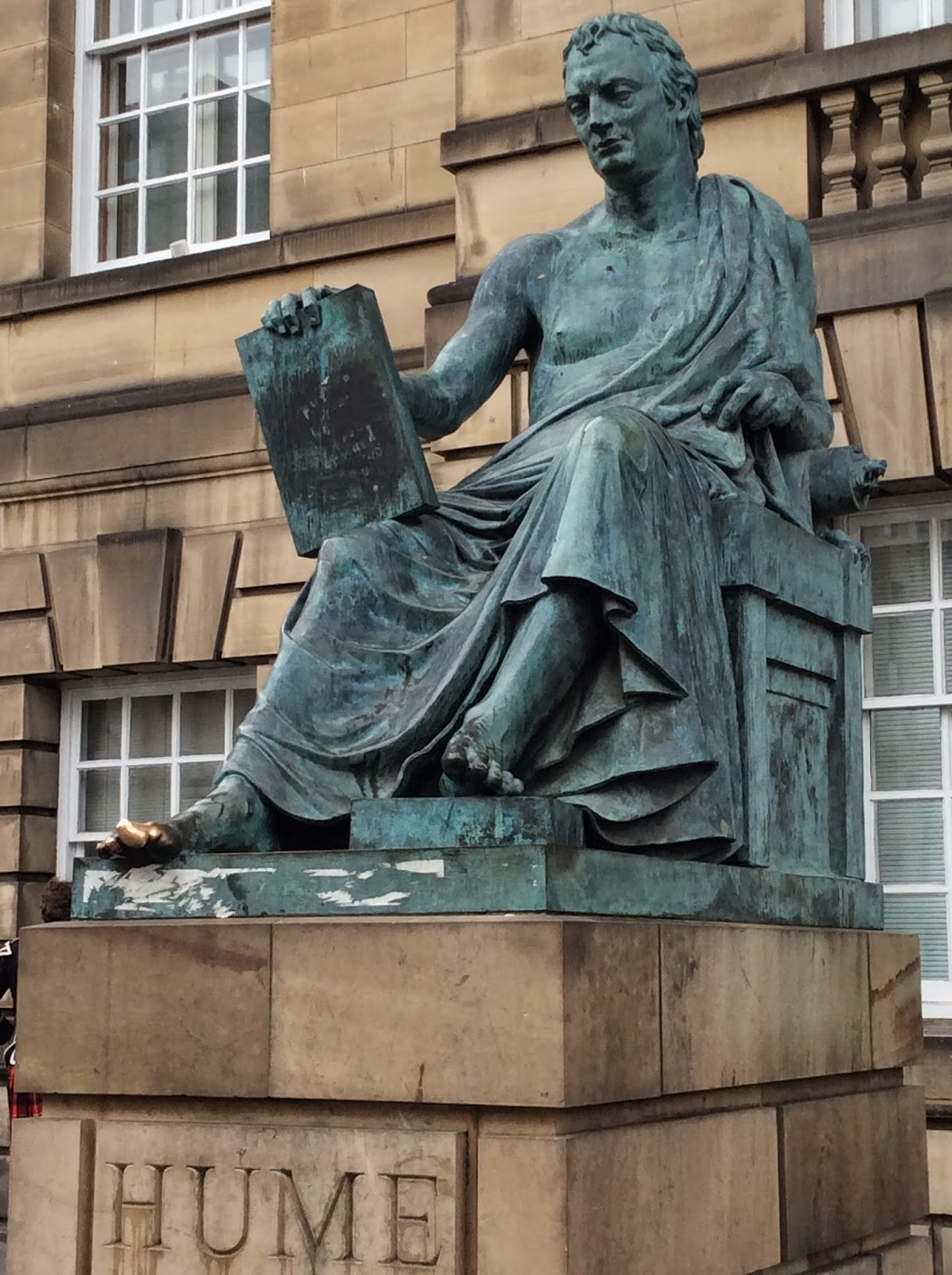
A view of the interior of David Hume's grave monument, Edinburgh, Scotland, 2014 Amy Cools

A view of the interior of David Hume’s grave monument, Edinburgh, Scotland

There is one argument that seldom fails to come up in discussions with religious people who feel the deep need to persuade you to share their beliefs: that religion is the only thing that can bring real consolation, to overcome the fear of death. When I was a child, and through my twenties, I was often seized with that fear; with my grandmother’s death, the first deep grief I’d ever known, it really hit hard for awhile.

Yet it was in those same years that I was religious, or had recently come out of it, that I experienced most of that fear.

I began to wonder: can that association between religion and fear of death be something like smoking? The smoking creates the need to smoke, and then is the only relief for the urge to smoke again. I think there might be something in that idea, at least in the sense that since most religions bring up the subject of death a lot, it’s harder to shake the fear if you’re constantly reminded. But really, people have been afraid of death for at least as long as they’ve been creating art, literature, and religions that express it. The origins of that fear must be a feature of human psychology, or at least a common by-product of it.

The death of Socrates has long been held up as the prime example of a good death, a death faced with composure and courage (if you’ve never read it, I encourage you to discover that moving, fascinating story!) Seneca, Epicurus, and many other great philosophers have shown us, through words and example, how death can be devoid of fear. I turn to a somewhat more modern example: the account I’m reading that Adam Smith wrote, of the death of his close friend David Hume, my favorite philosopher.

Hume was widely considered to be a skeptic and an atheist, and therefore a dangerous person, a corrupting influence. His naturalistic, practical, sensible philosophy revealed the impossibility of miracles and of knowing whether or not imperceptible things exist, and implied the lack of necessity for the existence of god(s). For his own safety and financial stability, Hume’s friends, as well as his own prudence, convinced him not to publish all he actually wrote, including one of his most important works, Dialogues Concerning Natural Religion, until after his death.

Adam Smith’s account of Hume’s death is one such that any us us could wish for. When Hume discovered he (probably) had intestinal cancer, he resigned himself to enjoying the time he had left, and making the best as well as the most, of it. After all, he said, ‘…a man of sixty-five, by dying, cuts off only a few years of infirmities…’ Hume continued to entertain and to visit friends, play cards, travel, write and edit, and do as much as his waning strength would let him. When he could finally no longer get out of bed, sit up for long, or leave his home, he passed the time in his favorite way, by reading, and dictating letters to his loved ones.

Here’s what Smith had to say, regarding how both the habits of a lifetime, and terminal illness, highlighted the true character of his friend Hume:

‘His temper, indeed, seemed to be more happily balanced… than that perhaps of any other man I have ever known. Even …the lowest state of his fortune… never hindered him from exercising… acts both of charity and generosity…. The extreme gentleness of his nature never weakened either the firmness of his mind, or the steadiness of his resolutions. His constant pleasantly was the genuine effusion of good-nature and good humor, tempered with delicacy and modesty… And that gaiety of temper …which is so often accompanied with frivolous and superficial qualities, was in him certainly attended with… the most extensive learning, the greatest depth of thought, and a capacity in every respect the most comprehensive. Upon the whole, I have always considered him, both in his lifetime and since his death, as approaching as nearly to the idea of a perfectly wise and virtuous man, as perhaps the nature of human frailty will permit.’ What a tribute!

David Hume's grave monument, Calton Hill, Edinburgh, Scotland, 2014 Amy Cools

David Hume’s grave monument, Calton Hill, Edinburgh, Scotland

The physician who attended his death wrote:

‘He continued to the last perfectly sensible, and free from much pain or feelings of distress. He never dropped the smallest expression of impatience; but when he had occasion to speak to the people about him, always did it with affection and tenderness…. [H]e died in such such a happy composure of mind, that nothing could exceed it.’

So how does a David Hume, a Socrates, a Seneca, or you, or I, live a life full of joy and virtue and free of the fear of death?

I’m not talking about living a perfect life, here. For one thing, I think the idea of ‘perfection’ is weird to apply to human beings, indeed any biological entity. The concept is too abstract, only applicable to such things as mathematics, logic, and geometry, when describing things such as numbers, and either/or distinctions, and the degree of the angles in a Euclidean triangle. Biological things, most especially human beings, are complicated, full of conflicting emotions, needs, desires, interests, and so on.

But there are ways to get though life that help you achieve happiness and goals worth having, and there are ways that don’t. And there are people (and some other animals, of course!) who exemplify ways of living that are so successful, and so admirable, that it’s an excellent idea to observe them, especially given that we are social creatures who depend on one another for edification and support.

So when it comes to living that life full of joy and virtue, relatively free of that fear of death, I think we would all do well not to look to an ideology, like a religion or some utopian ideal, or some such panacea. I’d look, rather, to a person who lived well, and consider how their character, how their general outlook on life, how their habits contributed to it. This would apply to anyone, secular or religious, anyone. 

But especially to lovers of philosophy. Philosophy, that love of wisdom, has been a love of mine for a long time, much longer than I knew what it was, how to identify it. From the time I was little, i was fascinated by the (mostly theological, sometimes political, sometimes otherwise strictly philosophical) discussions that often went on around the dinner table when the adults got together. And I would badger my dad with endless questions on such matters, my poor patient Dad!

By the time I returned to college the second time, I knew what I wanted to spend my time really getting into these fascinating topics, of how and why the world works, and how we should best go about living in it. And here I am, doing the same thing, but now sharing the discussion with all of you who take an interest, because it’s my firm conviction that philosophy is something pretty much all of us engage in, so often that it’s one of the most ordinary things we do.

But making philosophy a more central part of my life has been one of the most happy-making things in it. There’s a wonderfully titled book by a sixth-century thinker, Boethius, called The Consolation of Philosophy, written when he was going through the worst time of his life, imprisoned, facing execution. It’s such an excellent book title that it’s become an ordinary phrase, usually pluralized (I’ve used it for years before I ever found out where it came from). Like Boethius, like Socrates, like Seneca and Hume, I know that even if I had the great misfortune of facing the loss of the most treasured things in my life: my loving and beloved husband, my family and friends, my health and my possessions, I would have a way to keep my best self intact.

Philosophy is among the greatest ways, if not the greatest, to make sense not only out of day to day realities, it puts you closely in touch with the largest and most important things, and helps you realize your connections to them so deeply, that in a very real way you never fully lose your loves, your family, your friends, and it turns out that while some possessions are wonderful and worth having, they’re never worth so much that the loss of them should destroy you.

Living a life with philosophy now a conscious interest and pursuit has enabled me to live a richer and fuller life, and helps me day to day to figure out ways to make it better, and to overcome those difficulties I still have. I have high hopes that will enable me become at least a bit as admirable as these great people I’ve mentioned here, and many many more whom I have not. And not only does this hope rule my life: fear, including that of death, no longer does.

– Written in the Rare Books Reading Room of the Library of Scotland, Edinburgh, on my David Hume travel writing trip, May 2014

Ordinary Philosophy and its Traveling Philosophy / History of Ideas series is a labor of love and ad-free, supported by patrons and readers like you. Please offer your support today!
~~~~~~~~~~~~~~~~~~~~~~~~~~~~~~~~~~~~~~~
Sources and inspiration:
De Botton, Alain. ‘Seneca on Anger’ from the BBC series Philosophy: A Guide to Happiness, 2000.
 
Hume, David. Life of David Hume. (Includes his short autobiography My Own Life, and a letter from Adam Smith to William Strahan. Printed in London, 1777.
 
Konstun, David. ‘Epicurus’, 2014. The Standford Encyclopedia of Philosophy. http://plato.stanford.edu/entries/epicurus/#4
 
Marenbon, John, ‘Anicius Manlius Severinus Boethius’, 2013, The Stanford Encyclopedia of Philosophy. http://plato.stanford.edu/entries/boethius/

The Value of a Liberal Education, and Two Risks of an Ideologically Narrow One

I grew up in a large, pretty close-knit extended family. There was a lot of dysfunction, as with many families, but a lot of love too. While I was often frustrated by the choices of some relatives (such as the tendency to enable bad behavior by sheltering the ‘sinner’ from consequences, or pretending it wasn’t happening), I was also secure in the knowledge that I belonged to a large, loving circle of people who would never abandon each other.

We were also a very insular family. We mostly hung out with each other and a few close family friends, pretty much all from church and pretty much all holding similar beliefs. Many of us kids, especially the older ones, had little contact with people outside of family and church. Many of us were (and some still are) home-schooled with a very conservative, fundamentalist Catholic curriculum, and many others attended all or mostly religious schools.

Given the state of much of the public school system, at least in the working class neighborhoods where many of us grew up, a part of me sympathizes with this choice. American public schools often leave much to be desired, to say the least. Since we have such a rotten system in America of funding public schools, with funding determined by the local tax base, we create a classist school system where the kids who need the most help don’t get the funding. So much for the non-aristocratic, egalitarian, freedom-of-opportunity ideal of America! But I digress…

But it seemed that the choice to limit our schooling to a strict Catholicism-centric education was usually based less on the concern with education quality as on a concern with raising children to replicate their parent’s beliefs and lifestyles. This makes sense in a certain way: parents want what’s best for their children, and people generally believe their own beliefs are the best, so, it’s logical parents want their children to believe and live as the parents see fit.

But here’s the way in which that doesn’t make sense: children are not replicants of their parents. They have their own thoughts, their own personalities, and their own sets of experiences. The world is full of different beliefs systems and lifestyles, often incompatible with those of the parents, that fulfill people, that suit them and make them happy. Every child, however they were raised, will inevitably confront that fact, and in today’s world of rapid, comprehensive access to data from all over the world, it will not take long.

Many parents recognize these facts, and are comfortable raising their children in a cosmopolitan fashion.

They want to equip their children with all the information they might require to navigate the world successfully in any community they may end up being a part of. To this end, they want children to truly understand not only their own beliefs, but the beliefs of others. While these parents may explain to their children why they think their own beliefs are better, they know that understanding the alternatives strengthens their capacity for critical thought. These patents also understand that their children should be comfortable interacting with people who believe and behave differently than they do, and familiarity with other faiths and cultures is the best way to accomplish this. Last but not least, these parents have the epistemic humility to admit that there’s a possibility that they are wrong, and they want to afford their children the opportunity to discover for themselves if that’s the case.

Such wise parents would agree, as I do, with Daniel Dennett, the philosopher who promotes the idea that a study of world religions should be a basic part of childhood education. Since religion is so central to both private and public life for most inhabitants of the world, he argues, children require this information to be wise and informed citizens. I think the same applies to science, politics, history, literature, and other disciplines relating to how people go about sharing, navigating, and understanding this world together.

For those parents who insist on providing an ideologically narrow education for their children, I’d ask them to consider this questions: when children grow up and confront different beliefs, customs, and lifestyles for the first time, as they inevitably will, what happens? What happens, for example, to the child of Biblical fundamentalists who finds out that almost all scientists, besides the half-dozen quoted in their textbooks, believe the Earth is billions of years old? Or that prayer doesn’t, statistically, prove to be effective in healing people? Or that people of other belief systems often live as harmonious, happy, fulfilled, ‘blessed’ lives as they do? Or even better? What happens to the barely educated woman, married off in her early teens and taught to be submissive to her husband, when she discovers that other women have the opportunity enjoy a rich intellectual life, a successful career, or a partnership with a spouse that respects her as an independent person?
For some children educated in this narrow way, whether their parents’ intentions were benign or otherwise, they will mostly reject alternative beliefs and ideas they come across out of hand. (‘That can’t be true, Dad would never lie to me.’ ‘I feel deep in my heart I know the truth, so I don’t need to question it.’ ‘Those poor Buddhists, they didn’t learn about Jesus. When they do, then they’ll truly be happy.’ ‘That’s the Devil talking, better not listen or I’ll be tortured in hell.’ ‘Liberals don’t believe in anything, but I do, so they must not have anything of value to say.’ ‘Environmentalists should just trust God instead of the government to protect the earth.’) They will grow up to more or less replicate the lives of their parents, happy in the security of knowing that they know the truth, what life’s really all about.
Others (I think very much a minority, but some) will thoroughly question the beliefs they were raised with in light of new ideas they’ve confronted, and in the end retain their parents’ beliefs because, to them, those beliefs ‘held up’ to the scrutiny. They might make some modifications here and there, but overall, stay convinced. These few are among the happiest of people, even happier than the unquestioning believers, I think, because they enjoy not only a sense of security in their beliefs, but intellectual satisfaction.

Still others will end up with a smorgasbord of beliefs, considering some sacred and unquestionable, discarding others, and adopting new ones. (Conservative Catholics derisively call others ‘cafeteria Catholics’ for engaging in this sort of picking and choosing.)

Many more will engage in ‘doublethink’, holding two or more contradictory beliefs at the same time. To take another example from the religion of my childhood, one might believe that it’s ‘spiritually true’ that the body and blood of Jesus is present in the eucharistic wafer, but also believe it’s scientifically impossible for a thing to have all the qualities of bread while simultaneously being composed of human tissue. (The psychological phenomenon of cognitive dissonance, how pervasive it is and the ways we deal with it, is discussed thoroughly and fascinatingly in Carol Tavris and Elliot Aronson’s book Mistakes Were Made, but Not By Me. I highly, highly recommend it.)

But there are two big risks for the hopeful yet, I think, misguided parents who seeks to shelter their children from knowledge that could contradict their own cherished beliefs. And I think parents would do well to consider these risks carefully before embarking on this project of transforming education into something more akin to indoctrination.
Risk #1: Your children might grow up to challenge you on your perceived deception. They will ask: What did you have to hide? Why did you feel you had to shelter me from thinking through these matters in an informed way? If what you taught me was really, evidently true, than why did you go to such lengths to keep me from learning about opposing ideas? And why would you undermine my ability to defend the beliefs you wanted to pass on, by keeping me ignorant of the challenges to those beliefs?
I went through that process myself, resenting my education which as narrow and limited until I took it into my own hands and chose a public college rather then the very conservative one my family would choose for me. Initially, I questioned the motives of my family, and was very angry that I was years behind in many subjects, especially science and history. Over time, I’ve come to realize that it was their tactics, not their motivations, that were at fault. But the damage had been done.

Risk #2: But by fair the largest danger is raising children with the potential to be bigots, even violent ones. While most children brought up to strictly conform to the beliefs of their parents will not turn out that way, of course, too many do. Consider this: what inspires oppression, warfare, and terrorists attacks? They come from the ideologically ‘pure’, from those who think it’s their job to make sure the world conforms to their ideology, from religious dogmatism to racial ideology to political utopianism. And the more isolated people are in their minds from the ideas and beliefs of others, the more sure, the more committed they are, that they are right, so everyone else must be wrong. And if others are wrong, if they are different, they are the enemy.

Since people are rarely convinced to convert to a whole new set of beliefs overnight, the ideologue often resorts to violence as a means of forcibly imposing those beliefs. Ironically, violence, though a popular tool
throughout history for trying to impose change, it’s the least effective, as psychologist Steven Pinker and other researchers reveal. To this day, religiously and politically motivated terror attacks and assassinations continue to make headlines.

Yet despite this, things on that front are getting better all the time. I recently heard Pete Seeger say, pertaining to the environment, that the world will be saved by people working in their communities. I think the world will also be saved by children who grow up in this new era where information about the world is not so easily hidden from them. Despite some parent’s best efforts, children can no longer so easily be sheltered in little bubbles of idealized ignorance, sentimentally dubbed ‘innocence’. Since information flows so freely, children now grow up exposed to media that brings others’ experiences so vividly to life, and are now more comfortable in the presence of people who look and think differently then they do. Familiarity with ‘others’ humanizes them, and communities will come to be determined mostly by shared interests, not by geographic location or ideological isolationism.

So parents, teach your children not only how to be good people, but to be informed citizens of the world. It will be a safer and more wondrous place for them and their progeny, and I bet they’ll thank you for it.

A ‘Light’ That Obscures: The Misrepresentation of Secular Thought in Pope Francis’s First Encyclical

foot-washing-255x212Like many, I’ve found myself pleasantly surprised and impressed by many of the sayings and doings of the new Pope. He emphasizes helping the needy and is critical of over-judgmentalism and of hyper-materialism (he practices what he preaches by driving a cheap car and living in a simple apartment). He also goes out of his way to spend time with ordinary people, be it in a correctional facility, in processions, or on the phone. Often dubbed ‘The People’s Pope’, he’s making the most of his promotion, on a mission to do real good in the world. Catholic or not, most people are thrilled that such an influential person is providing such an excellent example of how to live a life of service and of mercy. 

But I wasn’t quite as pleased the author of an article in the Huffington Post about Pope Francis’ first encyclical Lumen Fidei (The Light of Faith) co-authored with the previous Pope, Benedict XVI. The author says that the encyclical ‘…reflects Francis’ subtle outreach to nonbelievers’. While I consider myself an atheist, I’m a cultural Catholic, brought up with that religion. Since so many of my loved ones are observant Catholics and the Catholic church is so influential in the world, I’m very interested in what goes on in it. The first encyclical of a new Pope is a big deal, and this encyclical does a good job of promoting Catholic teaching with inspirational language and metaphors. However, the authors also resort to bad arguments to make their point. In many instances, they do so by contrasting their doctrines, for positive effect, against ‘straw man’ versions of non-believers’ views. In others, they set up false dichotomies, where they present Catholic doctrine as the only positive alternative to something bleak. I was disappointed that such educated and influential men, willfully or otherwise, so thoroughly mischaracterized attitudes and beliefs of secular people. 

As I’m sure you know, a ‘straw man’ argument is the logical fallacy of first constructing a caricatured or artificial version of an opponent’s arguments, then attacking the false arguments in place of the real ones. A false dichotomy is a related fallacy, where the argument is presented as offering only two possible choices: the (arguer’s) favored position, or an opposing, usually unattractive or unbelievable one. While often effective in politics, these tactics are recognizable as a sign that the arguer finds themselves in a disadvantage. They might find that they can’t understand the arguments of his opponent, they might find that the opponent’s real arguments are so strong that they can’t find a way to answer them, or they might find that they’re worryingly attractive to others so they wish to obfuscate, misrepresent, or conceal them. The first two are less likely in this case as the authors are educated and articulate men. I think something like the latter is what’s going on here. 

I also found that the encyclical promoted some worrying misconceptions about human beings, our nature and how we actually go about thinking, learning, being good, and finding meaning for ourselves. They describe human nature through the lens of a very narrow Catholic conception, which is to be expected, but they ignore, denigrate, or dismiss the validity of other accounts of human nature, informed by the sciences, the liberal arts, and other belief systems. 

It’s especially clear from sections 2 and 3 that the Popes feel the Catholic Church is under attack by the scientific revolution, where evidence and reason are generally prized over tradition and belief. Perhaps this is the origin of the backlash against secularism and naturalism that’s characteristic of the poor arguments throughout the encyclical. The ways they present secular and atheistic thought is not new or unique to these men; they’re commonly held views, a fact very recently highlighted by Oprah Winfrey’s response to a self-professed ‘spiritual atheist’ interviewee. Yet the Popes could have offered a defense and promotion of their doctrines without the bad arguments, and their work would have been much better for it. It’s too bad that here again, the thoughts, motivations, beliefs, and characters of so many, in this case, naturalist, atheist, agnostic, and otherwise secular people, are misrepresented to such a large audience by influential men who I think should know better.

It’s true that there are some non-believers who are so, or become so, out of lack of interest, out of ignorance, or even simply to get out of following the rules of religion. But in my years of reading and research, I think the majority reject religion for worthy reasons. There are plenty of rational and moral reasons why people don’t believe in gods or a God as any religious tradition has conceived them or It. I think most secular people, from those who are personally believers of some sort but who value a society free of religious coercion, to the most ardent atheists, have done a lot of thinking on the matter, and this essay, I’m talking about these people. I’ll refer to them generally as secular thinkers, and to their musings as secular thought.

Here are some specific instances where I think the Popes got it wrong (there are plenty others). All quotes are from the encyclical ‘The Light of Faith’, in order of the sections they appear in, and my response follows directly after each:

From section 2:

‘Slowly but surely, however, it would become evident that the light of autonomous reason is not enough to illumine the future; ultimately the future remains shadowy… As a result, humanity renounced the search for a great light, Truth itself, in order to be content with smaller lights which illumine the fleeting moment yet prove incapable of showing the way. Yet in the absence of light… it is impossible to tell good from evil…’

There are many secular thinkers who feel that reason alone, the deliberative reflection on the nature of reality and what it means for the self and for humankind, is the only way people find truth and meaning. Yet more accept a more nuanced understanding, informed by the findings from more recent research in psychology, evolutionary biology, behavioral economics, and neuroscience. When we look closely at how we think and behave, we find that instinct and emotion play a huge role as well, and in fact, that reason is secondary to and cannot function without these. It’s that emotional part of us, where morality originates and the experience of transcending our individual selves takes place, that also leads us to discover truth, in the various ways it’s defined.

peter-paul-rubens-massacre-of-the-innocents-1611-12-photo-by-ken-thompson-at-the-art-gallery-of-ontario-public-domain-via-wikimedia-commonsSecular people, too, realize this, and by renouncing religion or never joining one, it does not at all mean that they renounce the search for ‘the great light’ of truth. It’s more often the opposite: secular people make the choice to become or to remain free to search for truth without the often seemingly arbitrary limits of dogma. We can go where the evidence leads us, and we can say ‘what if?’ and ‘I don’t know’ without fear of retribution from an inscrutable God. We can give an account of good and evil based on what we learn about human nature and about the natural world as a whole. It could be argued, against Pope Francis, that if there is an unaccountable, unknowable, and unanswerable supernatural, conscious being force that creates and rules the world, it would be impossible to tell whether it was good or evil since whatever it says goes. In one era God could say it’s good to slaughter the infants of enemies (Ezekial, Isaiah), and in another era he might say it’s evil. This argument, often called divine command ethics, is an ancient one, and philosophers generally agree that a conception of the good must exist prior to determining whether something, God or otherwise, is good. It is, in short, not only possible, but necessary, to tell good from evil outside of the parameters of religion. That’s how you can recognize, in the first place, whether a religion is a good one.

From 8 and 10:

‘Faith opens the way before us and accompanies our steps through time. Hence …we need to follow the route it has taken… Here a unique place belongs to Abraham, our father in faith. Something disturbing takes place in his life: God speaks to him… Abraham is asked to entrust himself to this word.’

The story of Abraham and his son Isaac is a strange one to the secular thinker, and not at all a good example for showing how faith is linked to the search for truth. In this story, God demands Abraham do something considered evil by just about any human being, secular or religious, from Abraham’s time to our own: to murder his son. All the while this God is knowing he doesn’t really mean it! Where’s the love of truth here? The sort of faith this deity demanded was the same sort of faith demanded of the suicide bomber, or the parent who denies life-saving medicine to their child because they belong to a faith-healing sect. It’s the sort of faith, that of the blind worshiper, that is deeply alien to one who seeks to understand what they do before they do it, and why they do it, while simultaneously demanding personal accountability from themselves and others.

It’s the ultimate anti-personal-responsibility fable, and was among the earliest religious tales that alerted me to the problems of faith.

From 13:

‘The history of Israel also shows us the temptation of unbelief to which the people yielded more than once. Here the opposite of faith is shown to be idolatry…Idols exist, we begin to see, as a pretext for setting ourselves at the centre of reality and worshiping the work of our own hands. Once man has lost the fundamental orientation which unifies his existence, he breaks down into the multiplicity of his desires… his life-story disintegrates into a myriad of unconnected instants.’

milky-way-by-unsplash-creative-commons-via-pixabay-croppedThis is also a very strange section to a secular thinker. The opposite of faith, the philosopher, the logician, the linguist would say, is non-faith, which precludes worship of anything at all. 13 is a long section of false dichotomies as well as straw man arguments. The thinker who learns from the world itself, through history, biology, psychology, astrophysics, and so on, learns that the universe, humankind, and the self are not a disorienting haze of ‘unconnnected instants’. Things are interconnected and form marvelous patterns throughout the universe, from the forming of stars, elements, galaxies, planets, and solar systems in the cosmos through various forces, to the transition from instinct-only to simpler forms of intelligence to consciousness in the story of human evolution, to the fascinating development over time from simple hunter-gatherers in small groups to complex societies, cultures, beliefs, and knowledge-gathering systems. The history of human thought reveals that human beings, from prehistoric times, throughout history, and up to now, from innocent of religion to pagan to religious believer, have been engrossed with understanding the cosmos, from the blazing sky to the deepest mysteries of their own minds, and all the while have demonstrated rigor and discipline while on their quest for knowledge. Religion is just one of the many human products of that quest.
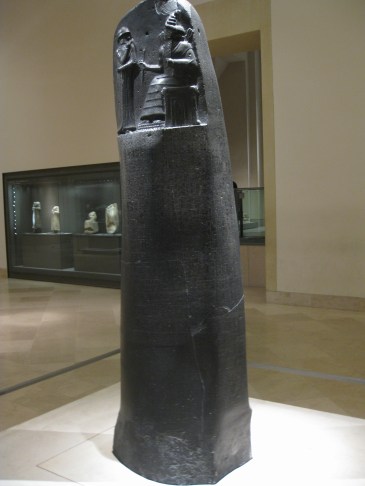
From 19:

‘…The attitude of those who would consider themselves justified before God on the basis of their own works. Such people …are centred on themselves… Those who live this way, who want to be the source of their own righteousness, find that the latter is soon depleted and that they are unable even to keep the law. They become closed in on themselves and isolated …their lives become futile and their works barren…’

This section is focused on a debate within the larger community of believers, but I include it here because of what it implies about those who look to human nature and to their own instincts to find the impetus for goodness. It implies here that human nature, on its own, is essentially isolationist rather than altruistic. By doing so, it ignores nearly everything we know today about human psychology and behavior, about evolution, neuroscience, economics, and so on. Human beings are essentially social with an individualistic streak, and without deeply rooted instincts toward cooperative, generous behavior, we are weak, nearly defenseless against predators and the forces of nature, and are imprisoned by and even defeated in the pursuit of our own shortsighted needs. Goodness and kindness are accounted for with or without religion.

From 25:

‘In contemporary culture…truth is what we succeed in building and measuring by our scientific know-how, truth is what works and what makes life easier and more comfortable… But Truth itself, the truth which would comprehensively explain our life as individuals and in society, is regarded with suspicion… In the end, what we are left with is relativism, in which the question of universal truth …is no longer relevant.’

This section is problematic to begin with in the way that it seems to work with a definition of Truth narrowly defined within the parameters of Catholic doctrine, and from there proclaiming that people no longer care about Truth, just facts about the world that can lead us to make useful products. But people all over the world of no faith or any religious faith, throughout time, have demonstrated restless curiosity and boundless energy in trying to find out the truth about reality, from the most prosaic little problem in everyday life (how can I save time carrying water from the well?) to the greatest mysteries of the universe (what are the stars made of, and do they move on their own or do the gods push them around?). This is as true today as it ever was, regardless of the fact that some people (and I would agree, too many) are overly concerned about personal comfort at any cost and how much nice stuff they can amass for themselves.

It’s also problematic in that this section appears to imply that placing a high value on ‘what works’ leads people to care nothing about what’s truly enriching. The scientist, the naturalist, indeed anyone who finds the universe an utterly fascinating and meaningful thing on its own terms might find this idea very strange. Applying a test of ‘workability’, in fact, shows a great deal of respect for truth, in that the seeker takes great pains to make sure that personal bias, incomplete or misleading information, too small a sample size, etc. are not a source of error. If a theory or received dogma doesn’t ‘work’, doesn’t adequately account for the facts, doesn’t coherently explain how and why something is as it is, or doesn’t successfully make predictions, then, they know, the search for truth must continue.

From 35:

‘Because faith is a way, it also has to do with the lives of those men and women who, though not believers, nonetheless desire to believe and continue to seek. To the extent that they are sincerely open to love and set out with whatever light they can find, they are already, even without knowing it, on the path leading to faith. They strive to act as if God existed, at times because they realize how important he is for finding a sure compass for our life in common or because they experience a desire for light amid darkness, but also because in perceiving life’s grandeur and beauty they intuit that the presence of God would make it all the more beautiful.’

Here, the Popes make the most underhanded move to undermine secular people. They resort to a particularly transparent sort of fallacious argument along the lines of: ‘You’re saying (that), but I know what you’re really thinking, you’re thinking (this), and here’s why (this) is wrong’. This is simply a dishonest argument, and potentially insulting in a most unphilosophical way. The honest philosopher does their best to understand the argument of their opponent, consider it as it if might be true, and then argue against it on its own merits if she disagrees; they do not pretend as if it’s really something else. They do this sneakily, using the phrase ‘those…who’, so that there’s an out: this does not necessarily include the entire class of nonbelievers. But reading carefully, they also set it up so that no one could tell which nonbelievers it includes, since the nonbelievers themselves, ‘without knowing it’, really want to be believers somewhere deep down. So just as easily, they could be referring to all believers, or to none, though presumably they’re referring to some quantity in between. But this doesn’t work. If one is actually a non-believer, it seems incoherent to say that they could also be one who believes that a God is necessary for meaning and beauty. Unless you’re talking about a nihilist of a particular variety. Yet this can’t be so, because they’ve already added the caveat that they are also ‘sincerely open to love’. So either this section is entirely contradictory in its attempt to outline the true nature of believers (at least some), or it’s a veiled attempt to deny that there are really any unbelievers out there. Circular reasoning strikes again.

From 43:

‘Children are not capable of accepting the faith by a free act, nor are they yet able to profess that faith on their own; therefore the faith is professed by their parents and godparents in their name.’

Years back, when my grandfather began to notice that he never saw me at church anymore, he asked me if I was still going. When I said no, he said that that wasn’t acceptable: the promise my parents made for me at my baptism obligated me to go. I said little at the time, being in my late teens and still not comfortable with challenging my grandfather directly. But I was very annoyed at what I thought a most ridiculous notion: that anyone could make this sort of binding promise on another’s behalf.

But that’s not the worst of it: my grandfather was also making the same point the Popes make in this encyclical, that parents can proclaim tenets of faith on behalf of their child. But faith, or belief, is not something that can be simply transferred or put on, like a family heirloom or a piece of clothing. It’s the natural assent of the mind to the matter-of-factness of propositions or circumstances. True, you can ‘fake it ’til you make it’, engaging in a sort of cognitive-behavioral exercise where you decide ahead of time what you want to be true, then make a habit of acting as if it is, then come to believe it. Perhaps the Popes have this sort of thing in mind in this passage, though they don’t describe it that way. But to the secular thinker, this sort of belief-inducement is not an honest one, since it can be used to instill belief in anything at all. Rather, keeping an open mind to the evidence and allowing belief to emerge naturally in response is a much better method if you don’t want to be misled. When the Catholic religion of my early youth no longer offered meaningful, believable answers to so many of my questions, I felt angry at the time, feeling that I had been raised in a bubble, led to assent to all kinds of things without having the relevant information. ‘Faith’ became almost a dirty word for me, as it began to sound more and more as if it really meant something more like indoctrination or even brainwashing. So in the end, raising us to believe only in the strict ‘Truth’ of Catholic teaching without being allowed to question, and without introducing other possible answers, resulted in the opposite of its intended effect.

From 54:

‘Thanks to faith we have come to understand the unique dignity of each person, something which was not clearly seen in antiquity. …Without insight into these realities, there is no criterion for discerning what makes human life precious and unique. Man loses his place in the universe, he is cast adrift in nature, either renouncing his proper moral responsibility or else presuming to be a sort of absolute judge, endowed with an unlimited power to manipulate the world around him.’

I don’t know entirely know how the Popes feel justified making this claim. While it’s true that Bible-based religions caused many converts and believers throughout history to behave much better than they did before or might have otherwise, the opposite is also true. Sometimes it inspired the Christians to have mercy on their enemies, sometimes it led them to torture and kill ‘heretics’, slaughter Jews in pogroms, and to enslave and murder black people and Native Americans. Some may say that people who behave this way are not really of the ‘true faith’, but their actions are justifiable according to certain Biblical principles and commandments. In the Old Testament, unbelievers are to be put to death (and what are Jews and Native Americans to Christians if not unbelievers?). In the New Testament, Jesus says that the fate of towns who don’t accept his disciples’ teaching will be like that of Sodom and Gomorrah, where God put everyone to death (Matthew 10: 13-15, Genesis 19). It seems that, here, the worth of human life is actually often contingent in the Bible, on ‘good behavior’ or on whether they profess the right religion, and not always of value in its own right.

code-of-hammurabai-public-domain-via-wikimedia-commonsIn antiquity, in fact, there were many cultures and belief systems that did place human life and dignity on as high or even higher a plane than did the ‘faithful’ of the Old and New Testaments. Ancient Egyptian literature, the Code of Hammurabi, the Epic of Gilgamesh, and some philosophies and religions of ancient India and Greece, for example, advocate such principles as non-violence and the worth and dignity of the human person, and place strict limitations on harming and killing other human beings, and indeed, other living things that are not human beings. Many of these ideas and belief systems are religious, but many are not.
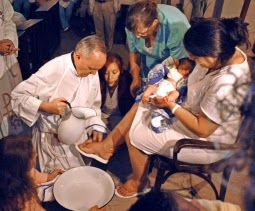

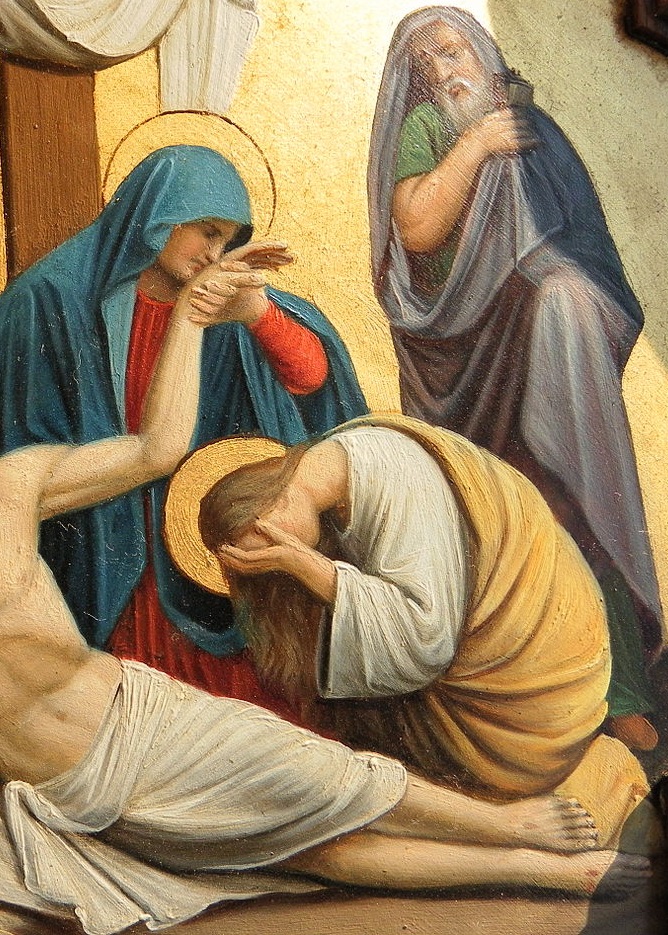
Secular thinkers such as myself find no trouble deriving firm principles and morals from the natural world, and in fact find that taking moral responsibility demands rejecting religious dogma in favor of an understanding of how human nature works and what the actual circumstances require. We don’t find ourselves ‘adrift’ since human morality is based on the social instincts, expanded and universalized through reason, and we’re all in this world to sink or swim together, ultimately. We also don’t consider ourselves ‘absolute judges’. Instead, we hold ourselves accountable not only to ourselves but to each other, to democratic principles, to the consideration of the rights of other people, and to the limits and strictures of the universe itself. In fact, it’s unquestioning acceptance of dogma that can look, to the secular thinker, very much like reneging on one’s moral responsibility.

In sum, the authors of this encyclical and secular thinkers find themselves in agreement on many particular issues, and in disagreement on others. (Of course, I don’t speak for all secular thinkers just as the Popes don’t represent every belief of all individual Catholics. Instead, I represent my own views and those I find generally promoted by secular thinkers who write about philosophy, morality, the physical sciences, psychology, political and legal theory, and the humanities.) Respect for individual rights, a commitment to promoting human health and happiness, justice, equality of opportunity, and so on, are universal human concerns, and have been throughout recorded history, from the atheistic to the pious.

Fortunately, in his public speeches and behavior, Pope Francis I publicly emphasizes the best of his humanistic principles with little or no disparagement of those who do not believe in these principles for the same underlying reasons. In this, I think the good example he provides will far outweigh his theological publications when it comes to his broader influence in the world. But it’s worth having the discussion about the nature of inherited faith versus evidenced-based belief, until secular thought is no longer maligned by those who fear and mistrust it because of the kind of misrepresentation this encyclical exemplifies.

Ordinary Philosophy and its Traveling Philosophy / History of Ideas series is a labor of love and ad-free, supported by patrons and readers like you. Please offer your support today!

~~~~~~~~~~~~~~~~~~~~~~~~~~~~~~

Sources and inspiration: 

Pope Francis I. Lumen Fidei (On The Light of Faith)Encyclical letter, June 29th, 2013

Me and the Pope Against Tea Partiers and Conservatives and Even So Many Catholics! What’s Going On?

I’ve been finding it a bit strange and somewhat funny that for some time now, I’ve been finding myself, a ‘heathen’, ideologically aligned with Pope Francis I, and in opposition to many political and moral views of the larger number of my Catholic and Christian family and friends.

Especially when it comes to topics regarding public life: caring for the poor and needy, materialism, Tea-Party-brand political views, and so forth.

With Pope Francis, I share the general view that preserving the life of and caring for the wellbeing of other people is not something we engage in only privately, individually, or if our religion happens to say so, or if we feel like it at the time, but is a moral imperative for human societies and nations as a whole. I also agree that hyper-individualist ideology is bankrupt, is not only contrary to the best in human nature but an illusion: we are, in reality, intimately tied together, in thought, in action, and in fate.

That being said, I do part ways with the Pope in crucial ways: consider this is a teaser for my next essay. Stay tuned!

Believing in a ‘Grand Plan’ to Comfort Oneself

When facing the news of yet another disaster taking place in the world (a devastating earthquake, a genocide, an epidemic, the murder of schoolchildren, wrongdoers escaping justice, and so forth), who hasn’t heard a thought of this sort follow the initial horrified reaction: ‘Well, we must remember that in the end, it’s all a part of the Grand Design / God’s Plan / The Will of God…’ and so on and so forth. It’s pretty much always implied, and often said, that this means we must resign ourselves, on some level at least, to the situation. And everyone who expresses this sort of explanation seems to find it comforting.

I know I’m not the only one who finds this tendency disturbing, I can’t be the only one who’s discomfited at the idea that so many people think there must be some sort of justification, a ‘grand plan’ that makes all the suffering and death that occur in the world okay, just so they can feel better about it and move on. When someone who’s suffered such a blow themselves, the death of friends or family, the loss of their own health, the destruction of their community, I understand needing an immediate source of comfort to get through the worst of it as they try to carry on living, faced with such burdens. But for others who make such comments, I must ask: is it really a good thing to comfort yourself in this way?

I’ve never found this sort of thing helpful or good. Putting aside the weird idea of ‘choosing to believe’ something (this doesn’t square with my notion of belief as a spontaneous reaction to personal observation, or to an argument, or to scientific evidence, not something I can just adopt like a new style of dress), the very idea of trying to comfort myself in this way seems pretty selfish. I don’t want to feel better about the fact that there’s suffering in the world. I don’t want to think that death and disease and pain have some sort of ultimate moral justification. I want to feel awful about suffering because I want to keep that fire lit under me to spur me to do something about it, even if I can only help in small ways. I want to always feel that I and the rest of humanity can and should do as much about relieving suffering and correcting injustices as we can, because we’ve decided those things are bad. Trying to justify the wrongs in the world as a necessary part of ‘something greater’ can end up sabotaging the best in ourselves, the empathy and righteous anger that we need to drive us to make the world a better place.

That ‘Grand Plan / God’s Will’ excuse, in the end, sounds to me like a trite phrase, a Hallmark-card-worthy empty sentiment, a platitude, little more than a thumb to suck.

The Fetishization of Suffering

In the art on the walls of my childhood home, the theme of suffering was pervasive: crosses with sculptures of hanging, tortured Christs, Marys with torn and bleeding hearts, saints in various imploring poses, as if pleading for relief from the awful plight of living in this world. Suffering also popped up regularly as key to understanding reality. Why do the good and the innocent suffer as well as the wicked? Well, the wicked suffer because they are being punished, of course, but the good and the innocent suffer because they are loved, because it provides a God-given opportunity to conquer it and become even better in the conquering. So to better our characters, us kids were required to endure some sort of self-inflicted suffering from time to time, however mild: to give up candy during Lent, or or to spend an uncomfortably long time on our knees reciting rosaries. This view of suffering was held by many cultures throughout history (remember the Spartans?), and became common in modern Western societies through Christian influence. Suffering, regarded as both the indicator of and the creator of goodness in the world, and eventually became something to be desired and admired for its own sake. It became fetishized. As I grew and began to puzzle over the matter, this glorification of suffering seemed more and more strange, especially as I observed that, while suffering appears to strengthen and nobilify some, many more people tend to be broken down by it, especially if it’s pervasive in their lives, and rendered more desperate, less empathetic, less hopeful, less dignified, more scarred. I began to wonder if, on the whole, it’s a mistake to fetishize suffering.

So why do so many people so often glorify such a seemingly nasty thing as suffering? Well, for one thing, a beloved philosophy professor of mine pointed out once, there’s a distinct difference between suffering of the constructive sort and suffering of the destructive sort. There should be separate terms for different sorts of suffering as there is in ancient Greek. If there was a separate discussion concerning each kind, many of my objections to the fetishization of suffering should be rendered moot. Examples of constructive sorts of suffering is the burning sensation felt in hard exercise and the healing of wounds, the squirming mental misery of trying to finish a paper or book on time and still do quality work, or the tearing pain of bittersweet grief at the loss of a dearly loved one. Destructive suffering, such as the despair of watching children suffer from illness or starvation, the maddening confusion of feeling one’s mental acuity and individuality eroded by Alzheimer’s disease, or the disgust of watching others ruin their own and other’s lives through crime, political machinations, or thoughtlessness, is not so self-evidently beneficial, to say the least. But I don’t remember  this distinction being made clear to me at any point. Any sort of suffering can be explained away as destructive or constructive as conceived in the mysterious, unknowable mind of the creator, for example. This treatment is especially convenient in attempts to resolve the infamous ‘problem of evil’. But for those not satisfied with the ‘mysterian’ explanation and really want to understand the matter, the problem remains: how does one justify the fetishization of suffering via a reliable method of distinguishing between its destructive and constructive forms? 
 
Perhaps the distinction between these forms of suffering exists but is just too hard for individuals to distinguish most of the time because the emotions get in the way. It’s hard to recognize suffering as constructive when you feel compassion for other sufferers, or you feel discouragement or weariness in the face of your own. Or, even more encouragingly for proponents of this view, one type of suffering can be transformed into the other based on the attitude of the sufferer. There is some truth to be found in this characterization of certain experiences of suffering. There does seem to be sorts of suffering that’s unavoidable and necessary given the current state of evolution (or of a fixed human nature, for those who don’t believe in evolution, *sigh*): the helpful warning that pain provides, or the fear of death, strangers, or inexplicable noises that aids in self preservation. But upon reflection, the category of suffering of the entirely beneficial sort is really not very large compared to suffering of the harmful sort or suffering that seems to be some mixture of the two. The pain of exercise and of mental exertion seems to deter far too many people from consistent rigorous physical and intellectual exercise (I’m certainly among these!); the pain of grief leads far too many to resort to such comforting tactics as justifying the injustices of the world with flimsy excuses or to believing in flimsy or patently false metaphysical claims, or to vengeance; and so on. When I consider various sorts of suffering, I’m hard put to find any that most of the time and for most people, the result of experience it is entirely beneficial in the long run.

Perhaps the difference between constructive and destructive suffering is a matter of degree and duration, then, rather than of kind. The kind of suffering experienced in sport or in military training and combat, for example, are experienced in limited blocks of time and have a foreseeable end, allowing hope and the expectation of a better time to come mitigate the potential bad effects of suffering and strengthen the good effects. But this answer isn’t entirely satisfactory either. While it can seem true in some circumstances, it’s not for many others. People can become obsessed with and addicted to suffering, for one thing, as in the case of  over-zealous religious who become sado-masochistically addicted to corporal punishment (sadistic ruler-wielding teaching nuns of yore, anyone?) Or, suffering can burrow deep into a person’s psyche and undermine their entire personality, as in the case of post-traumatic stress disorder suffered by veterans and victims of  sustained bullying. It appears, then, it’s not the degree or duration of the suffering that makes it constructive or destructive: rather, it’s more feasible that the constructiveness or destructiveness is a feature of the effects on the sufferer, not of the suffering itself.
 
I think one of the most important reasons that more kinds of suffering is destructive than not it that it tends to  draw people into themselves and away from others. For example, I’ve noticed this in some athletes: as the pain of exertion accompanies the achievement of higher levels of physical fitness, the pain becomes an addiction, an obsession, and the greater the to suffering, the greater the tendency to self-absorption. This may be an explanation for the behavior of athletes who self-destruct with steroids. I’ve also noticed this, as aforementioned, in some whose religious beliefs hold say that suffering is necessary for redemption, and so attempts to avoid it, for oneself or for others, is fruitless or even evil. Martyrdom is, then, a virtuous state of mind and even the ultimate goal. Yet, I think this tendency to lose oneself in these forms of self-absorption, of attitudes of martyrdom and addiction to suffering, can be antithetical to human flourishing, because human beings are intensely social creatures. Now, it’s true that human beings also have an individualistic side. So some level of self-absorption, some level of obsessive and addictive behavior, is not necessarily negative to the human personality taken as a whole, and when balanced against other personalty traits, can be part of an interesting and dynamic personality. They can even be more sensitive and empathetic. This goes for many creative people, political people, and other idealists. (As a working artist and daydreamer myself, and an enthusiastic fan of the arts, I’m intimately familiar with self-absorption: a certain level of it is necessary for the visions to arise, the ideas to take shape, and the drive to realize them.) It’s also a defining characteristic of “drama queens”, who can be exciting people at some level. But, there’s a real danger that this addiction to suffering, when it starts to dominate, can undermine the social instincts and emotions of a healthy personality. Consider highly neurotic people, for example, whose internal suffering can become so all-absorbing that, after a while, they reach a point where they can’t see much else in the world besides it. Also, consider the aforementioned ‘drama queens’ who sometimes become so addicted to conflict and the suffering that accompanies, it that they end up needing to create conflict and ‘drama’ where none exists. In a very real sense, very neurotic people and other suffering addicts can separate themselves from society, since they eventually find it difficult to identify closely with others, and in fact, end up imposing their need for suffering on others.

So it seems to me that, in the end, the healthiest attitude to have toward suffering is that it’s an evil to be mitigated and avoided if possible, and if neither is possible, it’s the ability to endure it and triumph over it that’s desirable, not the suffering itself. It’s true that suffering accompanies and is even an integral element to many worthy endeavors, such as athletic training, and humanitarian efforts that involve placing oneself in the same horrific surroundings as the sufferers. But it’s best seen as a tool and a means to an end, not an end in itself. It’s just too easy to allow the high that sometimes accompanies it to become an addiction that can lead from obsession and self-absorption to alienation from others, and, far worse, to a complacent attitude towards the suffering other people. Human beings are most generous, most expansive, most supportive, when free from suffering because they are happy, they are unburdened with personal cares and so are able to look outside of themselves and possess the energy to give of themselves to others. By contrast, people who have a more sacrificial, suffering-infused world outlook don’t, in the end, do so well when it comes to helping others, even if the feeling of sacrificing oneself makes it seem more difficult and therefore more virtuous than helping out of an easy-going feeling of well-being. (Daniel Gilbert’s work provides an excellent explanation of the current research on emotion and how it effects human behavior). The habit of viewing suffering as an evil and not a good does far more, overall, to help human beings flourish as the social creatures we are, In the end, I do think it’s a mistake to fetishize suffering.