Political Maneuver or Not, I Think Hillary’s Call for Automatic,Universal Voting Registration Is a Great Idea

As you may know, I am a staunch advocate of voting: I think voting rights should be expansive, that as a nation we should encourage and facilitate voting as much as possible, and that voting is not only a right, it’s responsibility.

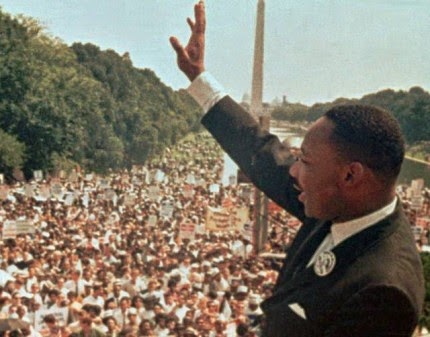
When we don’t vote, we do an injustice to ourselves and our fellow citizens by failing to uphold our democracy, we act as pawns of those who try to limit access to voting (in recent years, these efforts have been especially aimed at minorities, the poor, the elderly, and the young, go figure), and we betray those whose labor and personal sacrifices made it possible for us to vote in the first place. Next time you feel lazy or tempted by Russell-Brand-style ‘principled’ slacktivism, think of Frederick Douglas, Carrie Chapman Catt, and Miguel Trujillo, and imagine how lame you’d sound if you had to stand before them and explain why you’re sitting out on voting day.

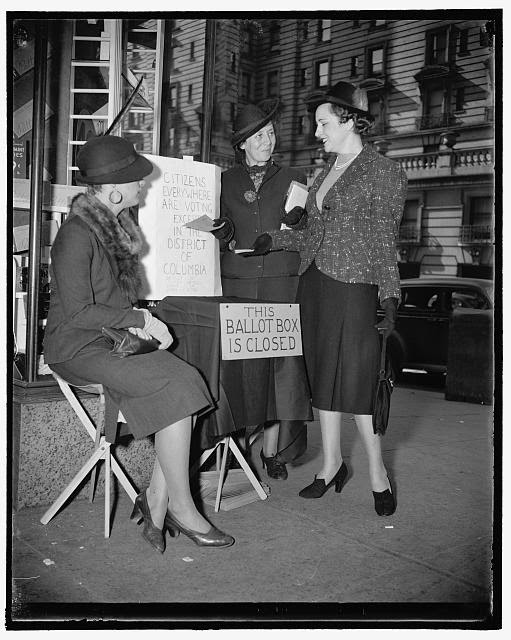
Hillary Clinton’s call for universal, automatic voter registration addresses both the rights and the responsibility aspects of voting, and outlines some concrete steps we can take to support both. Her proposal, to automatically enroll every citizen as a voter when they turn 18 unless they opt out, and to extend the time window for voting, has many things going for it, and few against it:

– it reduces the chance of voter fraud because everyone will be enrolled; if anyone tries to vote more than once, or as an individual who doesn’t really exist, they’ll get caught by the system. While voter fraud is actually very rare nowadays, many people just feel better about elections that are more likely to be as close to 100% free of voter fraud as possible. In recent years, voter fraud been more of a right-wing issue than anything, so honest Republicans should support the idea. And if they object to universal voting registration as being somehow too invasive or imperious, well…

– it’s no more or less invasive than any other ID laws (passports, state ID, etc). Universal voter registration could be done by the federal government, but if this idea is too scary, it could become a national requirement for states take on the responsibility. If each state can be responsible for making sure every adult has an ID, it’s not too much of a stretch that they could tie this into voter rolls.- it makes voting more accessible to working people. Honest Republicans should like this as much as anyone from any other political party, for obvious reasons: it would help the hardworking, taxpaying, . As it is, it’s often very hard for working people to get to the polls on the one day they’re open, often only during work hours and/or the time they drop their kids off and pick them up from school; this is especially true for people working in healthcare, in emergency services, in low-paying jobs where people can ill afford even an hour off, and so on. Universal voter registration would make sure that busy working people are already signed up to vote in case they can grab some time to run down to the polls, and will make it that much easier to create an electronic voting system that will allow everyone to vote when and if they can. (I still think the fact that voting days are not holidays is a shame and an embarrassment to a nation that touts itself as greatest democracy in the world.)

– and voting, generally, makes for a smarter, more just society, since it not only helps ensure that the rights of every citizen are respected, but that information about the circumstances, beliefs, and interests of the entire citizenry, necessary for crafting wise and fair policy, is revealed as fully as possible. The more people who can more easily vote, then, the better. And not just the working people: it should include the poor, the elderly, the disabled, the formerly incarcerated… every single citizen whose fate, like it or not, is intertwined with our own.

Ordinary Philosophy and its Traveling Philosophy / History of Ideas series is a labor of love and ad-free, supported by patrons and readers like you. Please offer your support today!

~~~~~~~~~~~~~~~~~~~~~~~~~~~~

Sources and inspiration:

Keith, Tamara. ‘Returning to Roots, Clinton Lays Out Proposal to Expand Voting‘. It’s All Politics, NPR. June 4, 2015.

Levitt, Justin. ‘The Truth About Voter Fraud.‘ Brennan Center for Justice website, November 9, 2007.

Merica, Dan and Eric Bradner. ‘Clinton calls out GOP opponents by name on voting rights’, CNN website, June 5, 2015 Clinton calls out GOP opponents by name on voting rights

The Pope, Climate Change, Morality, and the Politicians

During my lunch break today, I stumbled on an article about the Pope’s upcoming encyclical on climate change.

It reports reactions to the encyclical in which the Pope explains why he accepts human activity is responsible for most of the current climate change and for other ‘situations of environmental degradation’, and in which he calls on all people to fulfill their roles as stewards of God’s creation by changing their wasteful and polluting behavior.

As is usually the case with anything new that comes out concerning climate change and environmental issues, the politicians and pundits quoted in this article approve or criticize his message according to strict party lines. Including (surprise, surprise!) many Catholics.

An aside: the day I see an American Catholic politician change their views even a bit when they don’t accord with the Pope’s, I’ll actually be impressed by their religious sincerity. This Pope has roundly criticized unfettered capitalism and the amassing of great personal wealth, to the discomfiture of many, and has shown other signs of being progressive (or regressive in the sense that his views hearken back to an earlier time, being far more consistent with those of the biblical Jesus than with those of modern conservative politicians). After all, when new and convincing evidence comes along or when a better argument is made, we should all be open to changing our beliefs, right? And who is more qualified to offer these to a Catholic than the Pope? I’m not arguing that Catholics should just blindly agree with everything the Pope says, no one should. At a certain point, though, when you call yourself Catholic but dismiss whatever the Pope says that disagrees with your politics, you might be a ‘cafeteria Catholic’, a pejorative that conservative Catholics traditionally have thrown at liberal and progressive Catholics. I’m just sayin’.

Anyway, the part about how the divide over the pope’s message parallels the party line doesn’t surprise me. What does is that those who reject the Pope’s teachings on climate change and environmental stewardship try to defend their dismissal on the grounds that the Pope’s message is about science and politics and, therefore, they don’t have to listen to him on this matter since he should be ‘focusing on what [he’s] good at, which is theology and morality.’

So what is morality to these people? In the article under discussion, Rick Santorum, Jeb Bush, and Bill Donahue, all three conservative and politically influential Catholics, talk about morality as one thing, and anything having to do with caring for the earth which might have political ramifications another. So how, exactly, is the matter of how and why we should care for the earth not an issue of morality? Do they think that morality consists entirely of things like ‘don’t swear or lie’, ‘go to Church’, or ‘for God’s sake, repress your sexuality until it simultaneously feels super forbidden, barely fun, and only to be enjoyed in the narrowest of circumstances’? These guys are not, by any means, the first people I’ve heard try to narrowly define morality so that it doesn’t interfere with their politicking or whatever other business they’re engaged in. And this sort of thing is not limited to conservatives: liberals and progressives regularly spout that ‘keep your morality to yourself and out of politics’ bit too.

Morality and politics, in fact, are all about the same things and should pursue the same goals: how we go about sharing this world with one another; how we do right by each other while protecting our own rights; how we go about treating everyone with justice, compassion, and integrity.

Hate to tell you this, fellows, but when you talk that way you sound about as foolish as those Heartland Institute people accusing the Pope and the United Nations of being ‘unscientific’ for agreeing with the scientific consensus. And let me tell you, Jeb Bush, the ‘political realm’ ‘ought to be about about making us better as people’. I sincerely hope all these guys were quoted out of context or just misspoke about the relationship between morality and politics.

Because if any politician really believes politics and morality are two separate things, their constituents should be worried, and they are doing the wrong job. In any case, we’ll see if they really believe politics and morality are separate the next time a political issue having to do with reproductive health care comes up.

~~~~~~~~~~~~~~~~~~~~~~~~~~~~~~~~~~~~~~~~~~~
Sources and Inspiration:
Kirchgaessner, Stephanie and John Hooper. ‘Pope Francis warns of destruction of Earth’s ecosystem in leaked encyclical’, The Guardian, June 16 2015. http://www.theguardian.com/world/2015/jun/15/pope-
Neuman, Scott. ‘The Pope Is About To Weigh In On Climate Change. Not Everyone Is Happy’, The Two-Way: Breaking News from NPR, June 17, 2015. http://www.npr.org/sections/thetwo-way/2015/06/17/

To Washington DC, Virginia, and Philadelphia I Go, In Search of Thomas Jefferson

Hello, friends of Ordinary Philosophy!

From time to time, I take a trip to some corner of the globe, to explore the lives and ideas of great thinkers in the places where they lived and worked. For this series, I follow in the footsteps of thinkers who are no longer alive, since those who are still telling their own stories. But those who are no longer alive in the body live on in the ideas that they pass on, and in the example they provide for us to follow.

I’m pleased and excited to announce my third philosophical-historical themed adventure, this time in Washington DC, Philadelphia, and various sites in Virginia to follow in the footsteps of…. you may have guessed it… Thomas Jefferson!

Thomas Jefferson was born on April 13th, 1743, and in his long life, he accomplished more than most. He was a founding father of the United States, and went from being a young scholar, lawyer, and representative in the Virginia House of Burgesses, to writing the Declaration of Independence and the Virginia Statute for Religious Freedom, to public service as a congressman, as Minister to France, as Secretary of State, as Vice President to friend and rival John Adams, and finally as third president of the United States. Throughout his life, among many other things, he was an inventor, amateur scientist, farmer, avid reader, architect, naturalist, author, founder of the University of Virginia, and of course, philosopher.

He was a fascinatingly complex and contradictory figure: a self-described shy and modest man with a distaste for politics, who time and time again re-entered the strident political arena of his day to eventually reach the highest office in the land; a critic of the national debt and of too much federal power and a strict Constitutional constructionist, who helped create a stronger national government in the first place, and who flouted the Constitution and further indebted the nation to make the Louisiana Purchase; a promoter of personal liberty and a slaveowner; an idealist and a pragmatist.

So off to the east coast I go! There, I’ll visit landmarks associated with his life, and places where he lived, worked, died, thought, wrote, studied, and rested.

I’ll be traveling there from April 18th through the 26th, and will be writing throughout the trip. I’ll be writing not only about his ideas, but about what I can discover about his everyday life in these places, and whatever feeling of the time and place I can capture.

Here’s the story of the trip, and related essays about Jefferson and his ideas:

Brian Williams, Bill O’Reilly, Rush Limbaugh, and Honesty in Public Discourse

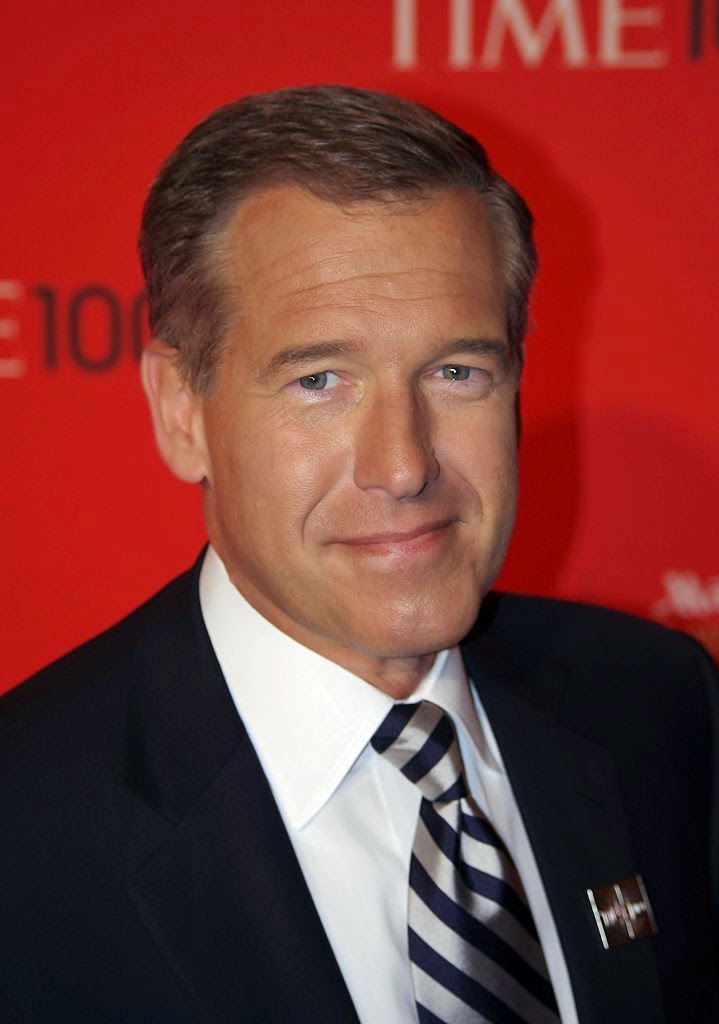
You’re likely aware of the backstory to this piece: well-known news anchorman Brian Williams was caught telling stories. A generous interpretation would portray them as exaggerations; a harsher one a series of self-aggrandizing lies. Williams placed himself in the thick of the action while covering certain news stories, like the shooting down of a military helicopter and the aftermath of Hurricane Katrina, when he was actually at a safe distance. Since his stories were recently debunked, in whole or in part, by others there at the time, he has been widely criticized, shamed, and mocked, and the public debate over the nature and reliability of modern news rages ever more fiercely.

He’s not the only public figure in hot water right now for playing fast and loose with the truth. Bill O’Reilly is also being called out for his history of adding, ahem, some ‘color’ (my term, not his) to his news stories. He’s repeatedly talked (bragged?) about ‘covering four wars with his pen’ (his words), including the war in the Falklands, when he was actually over a thousand miles away from the ‘active war zone’ (also his words, the phrase he used to describe his own location at the time) covering a demonstration in Buenos Aires.

But the O’Reilly case is different! many say. Brian Williams is a trusted news anchor, from whom people expect to get unvarnished facts, and they expect to get them because that’s what he promises to deliver. O’Reilly is a commentator, albeit on a popular news station. Yet he presents himself as a truth-teller, speaking from the ‘No Spin Zone’, constantly referring to his bona fides as a lifelong journalist. So his viewers do expect the same level of honesty from him as from Williams, be it the facts or his true political and moral opinions.

Bill O'Reilly dining with troops, image public domain via Wikimedia Commons

Bill O’Reilly dining with troops, image public domain via Wikimedia Commons

Instead of taking the snarky, self-righteous tone he’s adopted, using tactics of straw-manning and name-calling his critics and trying to obscure his tall tales with lame excuses, O’Reilly could just honestly admit that he used exaggerated or even just colorful language to add a sense of immediacy, urgency, or drama to his stories, and given his self-proclaimed role as a truth teller and ‘non-spinner’, admit that he might have misled his audience.

Rush Limbaugh, another famous commentator who’s often accused of lying and slander, likes to use the same excuse that his fans do when he gets caught: that he’s ‘just an entertainer’. Presumably, then, when he purposefully misrepresents the words, actions, and characters of his ideological opponents, he doesn’t really mean what he says. Or does he?

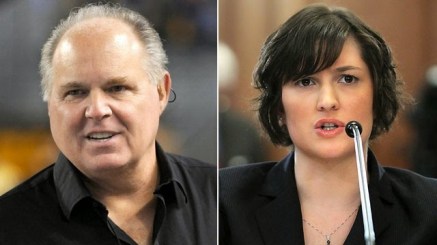
Rush Limbaugh / Sandra Fluke, image public domain via axiomamnesia.com/

One such case was that of Sandra Fluke, a law student and activist who testified before Congress regarding a proposed religious exemption to the government mandate that all health insurance policies must cover contraception. Fluke presented arguments, based on medical evidence and anecdotes of friends with gynecological and hormonal conditions, that birth control is essential preventative and therapeutic health care, especially for women, and as such, should be covered under all plans, public or private.

Limbaugh exploded. He called Fluke a slut and a prostitute and represented her as saying that ‘she must be paid to have sex’, and if so, she should provide sex tapes as public repayment for taxpayer money. Yet if you read Fluke’s own testimony, and read or listen to any of Fluke’s own discussion of birth control, it’s clear that she doesn’t mean any such thing, or says anything that can reasonably be construed as saying that paying for birth control is equal in any way to ‘paying for sex’. This would be as nonsensical as saying that to pay for an emergency room visit for a car crash victim amounts to ‘paying them to drive’ (and therefore they are obligated to be your chauffer?), or to pay for insulin for a diabetes sufferer is to ‘pay them to eat sweets’, or to pay the medical bills for the delivery of baby is to ‘pay for her to have sex’ (after all, that’s how she got pregnant) or ‘pay for her to have children’ (and therefore you have the right to put spycams in the nursery? Or make her child come over to do your chores?). After a storm of protest over his nasty (and pervy) rhetoric, Limbaugh apologized for calling her names and for ‘exaggerations to describe’ her personally. Yet he’s never, so far as I could discover, apologized for distorting and misrepresenting (two commonly used, slightly polite ways of saying ‘lying about’) her views on preventative healthcare on his radio show. Of the two, I argue that the name-calling is by far the lesser of the two: the slurs are unbelievable, and therefore perhaps possibly construed as satire. But the misrepresentation of her views is a lie that harms both her and the public, by slandering her and keeping important information from his audience, replacing it with falsities.

Limbaugh tells his viewers that he’s one of the most ‘honest‘ commentators out there, ‘huge on personal responsibility’ as he said in the same apology broadcast. He also says that he’s a satirist, that he uses ‘absurdity to illustrate the absurd’. It doesn’t appear to me as if he presents his take on Fluke’s testimony as satire: he seems to present it as a corollary of her arguments. The trouble with Limbaugh is that he slides back and forth from what he tries to call ‘satire’ to what he would call ‘the truth’ without any sort of clarification, any sort of signal to his audience so they can tell when he’s being factual, and when he’s uttering an absurdity to make a point. In researching this piece, I read quote after quote, transcript after transcript, of supposed satirical absurdities, facts, and half-truths all scrambled together will-nilly in each sentence, each paragraph, each entire show, generally with no discernible way to tell which was which. This gives him a general ‘out’ when it comes to saying whatever he wants without being called out for lying, which, in turns, makes every statement as credible as any other, which is not at all. Sorry, Rush. You can’t have it both ways.

(When I was doing research to refresh my memory on the case, I found that he had scrubbed his website of all transcripts and recordings of his actual remarks. It may be he was forced to do so as a result of his advertisers fleeing, or it may have been his own ass-covering move. Either way, this scrubbing does not represent evidence of his honesty or belief in ‘personal responsibility and accountability’, to say the least.)

So why bring up this old case again?

It’s to illustrate how and why so many of us are feeling so distrustful, so tired, so saddened, or (I think mostly) so jaded about honesty, and the lack thereof, in our public discourse. These three men, three widely admired, influential public figures present themselves as advocates for and providers of ‘the truth’: the straight newsman, the newsman-turned-commentator-on-a-news-network, and the straight commentator. All of them have been caught lying, some more than others, some more seriously, perhaps, than others. The way these three men have responded to being caught in lies and exaggerations reveal a lot about what they expect of themselves, and what they think we expect of them.

Brian Williams, of the three, has responded the best. He publicly apologized and admitted he made a mistake, admittedly in a rather defensive, perhaps self-excusing way. His inaccuracies may have been half-honest, in a sense, as he exaggerated his stories little by little over time with each re-telling, as human beings commonly do, just as Bill O’Reilly may have done. (I have been researching how memory works for another piece I’m working on, and how easy it is for certain people to create false memories, and to change certain aspects of a memory, especially when recalled and discussed repeatedly over a period of time. Stay tuned for more on that.) But he, like O’Reilly, should also have been fact-checking himself all along when re-telling such an important story after so many years, because that’s his self-imposed job: to stay faithful to the facts in a way the ordinary citizen doesn’t necessarily need to. As his friends and colleagues have stated, however, he alone, of these three, appears appropriately contrite, even ‘shattered’.

It seems clear that he’s aware of the wrong he’s done, and why it was wrong.

O’Reilly and Limbaugh, on the other hand, have been reacting very badly, as we have seen. They simply seem to have a different conception of what truth is, and what their relation to it should be. Is it because they consider themselves commentators first, and reporters of factual information second? Perhaps. But this makes no difference.

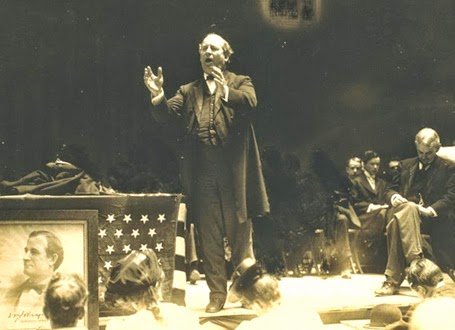
William Jennings Bryant, 1908, image Public Domain

If you promise your audience that you will tell the truth, that you should be trusted, then you have made it your duty to be truthful and trustworthy. I believe, further, that it becomes your duty in these circumstances to be a living example of truthfulness and trustworthiness: conduct discourse in an honest fashion, present your opponent’s views fairly and give them the benefit of the doubt, and debate and discuss their arguments on their own merits. If you want to tell the truth indirectly in satire, make clear what’s satire, and what’s not.

And if you get caught in a lie or an exaggeration, admit it. Your audience will thank you for your honesty, even as you make a mistake, since admitting it without excuses it proves your honesty all the more.

The discussion continues: On Jonathan Webber’s Discussion on Deception With Words: Honesty in Public Discourse Part II

*Listen to the podcast version here or on iTunes
*Also published at Darrow http://darrow.org.uk/2015/04/12/brian-williams-bill-oreilly-rush
*this piece has been lightly edited on June 8th, 2018 for clarity

~~~~~~~~~~~~~~~~~~~~~~~~~~~~~~~

Sources and Inspiration:

Corn, David. ‘Bill O’Reilly Responds. We Annotate’. Mother Jones, Feb 20th 2015
http://www.motherjones.com/politics/2015/02/david-corn-response-oreilly-falklandsFluke, Sandra. Sandra Fluke Yestimony to US Congress, Feb 23, 2012
https://en.wikisource.org/wiki/Sandra_Fluke_testimony_to_US_Congress_%282012_Feb….

Freed, Benjamin. ‘7 Questions for Travis Tritten, Reporter Who Debunked Brian Williams’s Helicopter Story’, Washingtonian, Feb 5th 2015. 
http://www.washingtonian.com/blogs/capitalcomment/media/7-questions-for-travis-tritt…Limbaugh, Rush. ‘Why I Apologized to Sandra Fluke’. The Rush Limbaugh Show, Mar 05 2012
http://www.rushlimbaugh.com/daily/2012/03/05/why_i_apologized_to_sandra_flukeLimbaugh, Rush. Quote: ‘You know I have always tried to be honest with you…’ Wikiquote, from
The Rush Limbaugh Show, Oct 10th 2003 http://en.wikiquote.org/wiki/Rush_Limbaugh

McCoy, Terrance. ‘Brian Williams Perhaps Misremembered Floating Dead Body and Gangs During Katrina Hotel…’ Washington Post Feb 10, 2015

http://www.washingtonpost.com/news/morning-mix/wp/2015/02/10/brian-williams-perhaps

Mahler, Jonathan, Ravi Somaiyia, and Emily Steele. ‘With an Apology, Brian Williams Digs Himself Deeper in Copter Tale’. New York Times, Feb 5, 2015
http://www.nytimes.com/2015/02/06/business/brian-williamss-apology-over-iraq-account-is-

Reeve, Elspeth. ‘Rush Scrubs ‘Slut’ Comment, Demand for Fluke Sex Tapes’. The Wire, Mar 8 2012 http://www.thewire.com/politics/2012/03/rush-scrubs-demand-for-fluke-sex-tapes/49643/

Steel, Emily and Ravi Somaiyia. ‘Brian Willaims Suspended From NBC for Six Months Without Pay’, New York Times, Feb 10, 2015

Uygur, Cenk. ‘Bill O’Reilly Responds To Attacks Over Falkland Islands War Coverage Lies’.
The Young Turks, Feb 23rd, 2015. https://www.youtube.com/watch?v=DiTbq8OAqbM

The Wisdom of Crowds: How Voting Produces a Better Society

It’s easy to feel discouraged in the United States of America sometimes.

Recently, I was chatting with someone who suggested that a meritocracy might be better than the democracy (of sorts) which we have now. A democratic republic, rather, and a degraded one: our government seems more dysfunctional than ever, overrun with ideologues and pawns of a few moneyed interests, and hyperbole and unreason holds sway over public discourse. A meritocracy, where rulers are selected based only on their qualifications, be it education, political experience, or business acumen, might prove a welcome change.
Meritocracy is, pretty much, just a theoretical form of government. I expect everyone believes it would be best to have wise and qualified leaders (if we must have any at all), and most think it’s good to try to put such people in office. No government exists whose constitution specifically requires that only the smartest people rule. But imagine a real meritocracy, with strict laws in place to ensure that only the most able, most knowledgeable leaders are appointed. Perhaps public officials would be selected by undergoing a series of tests, or elected by a panel of experts in relevant fields of knowledge. Wouldn’t this increase the chance that no dummies, however slick, charming, or pandering, would be allowed to hijack the government and, through their incompetence, ruin it for everyone else?
Not all that long ago, this sounded pretty good to me. When I returned to college awhile back and studied political philosophy, I was very much in the mood for it, or something like it. Like just about everyone else, it felt that I was constantly slapping my forehead (as I still do) over the ludicrous statements and bad laws our politicians were cranking out. Wouldn’t it be much better if they all had to take IQ tests, plus general knowledge tests in political and legal theory, history, English, rhetoric, and the rules of basic courtesy before they were allowed to run for office? (I’m willing to bet that no politicians who call for ‘citizenship tests’ for voters also call for ‘leadership tests’ for themselves.) Like you, dear readers, I have a deep respect for learning, and would be thrilled to see more of it make its way into our government and into our political discourse, let alone into our (to my mind) overly-materialist culture.

Yet through the years, the more widely I read, and the more I listen to politicians, scholars, and other influential people discuss and debate any given topic in any given field of expertise, it doesn’t seem likely that anyone exists, however brilliant, who could know or understand enough about any subject to craft public policy on their own. No one mind can hold all the relevant knowledge that should be brought to bear in crafting a good law. It’s not just technical knowledge that’s the problem: an expert in a field could, at least theoretically, access enough of that sort of knowledge on their own, from their colleagues, their library, and the Internet, though it still seems unrealistic that one person could put it all together in a reasonable time frame. The far bigger problem is that no one person could escape their own biases sufficiently to craft laws that are just for everyone.

All societies are made up of people with different personalities, different points of view, different belief systems, different circumstances of life. Each, therefore, has different interests and different responsibilities, and have different rights they hold most dear. It’s not possible for any one mind to fully understand how the rights, responsibilities, and interests of all interact and conflict. Not only that: a wise leader must effectively predict the entire chain of events that might result from enforcement of the law, or system of laws. We might say well, of course, no one knows all these things. So what we need in order to create an effective meritocracy is many leaders, not one or just a few. Between them all, a governing body of a large number of experts should be able to work out these problems as least as well as the public at large, and probably better.
But here we run into problem of numbers. Aside from the inevitable clashes of ego, think of how many ‘meritocrats’ it would take to adequately take all of the relevant knowledge, all the possible outcomes, all the values and interests of all of its citizens into account while crafting legislation. Is it likely that any one group, so unrepresentative as they are of the general population, could create a society in which the rights and interests of all of society, rich and poor, educated and otherwise, men, women, and children, laboring and not, of all races, are fairly and equally represented? Could they do this even in theory, given the facts of human psychology? Almost everyone, almost all of the time, automatically favors their own interests and those of their peers over those of other groups, and it makes sense that they should. For one thing, they understand why their own interests are as they are, because they arise from their own particular life experience. For another, everyone is prone to availability bias: people form beliefs and make decisions based on examples they themselves can readily call to mind. Therefore, we are intellectually hostage, so to speak, to whatever set of information and experience we are privy to. However much we try to expand our knowledge of the world, we are always limited. These, and myriad other quirks of human psychology, make it inevitable that no one human being on their own, or a relatively small group of human beings, could make sufficiently fair, impartial, and fully informed decisions on policies that effect everyone.

Let’s consider pre-Revolutionary France for an extreme example of how a meritocratic but short-sighted few, ruling over a non-participatory citizenry, can bring about societal collapse. France, like other European societies at the time, was ruled by a heritable meritocracy of a monarch and an aristocracy, and an appointed clergy, who all had the wealth and leisure, unavailable to most people, to afford an education. These ruled a populace which they kept in strict subjection, for the people’s own good, of course. Yet these meritocrats could not put themselves into the sabots (wooden clogs of the peasantry) of the majority of the people. (The Estates General, made up of representatives from various classes, advised the king, but had little power to begin with, and it decreased over time; the Third Estate, made up of the poorest members of  French society, had the least power, and the burden of taxation fell almost entirely on them.) As they saw it, the classes of society were properly kept in their place to fulfill their respective roles, and to undermine this structure would be to undermine the delicate balance of a functioning society. They were proven wrong: the intolerable condition of their lives caused the laboring classes to revolt and overthrow their rulers. While the monarch, the aristocracy, and the clergy considered themselves best suited for rule, they lacked the knowledge, the insight available only through the experience of what it takes to make the life of a laboring person not only bearable enough forestall rebellion, but satisfying and remunerative enough to encourage more productivity. They lacked the epistemic humility that wise people have. If the ruling elites were more informed, say, by the input of the people they ruled over, perhaps they could have thought of ways to harness human energy and facilitate creativity as market societies would later do. But since they shut themselves off from the input of the majority of the population, their policies were ill-informed and short-sighted, and their society eventually collapsed. This was the fate of so many undemocratic societies, that it seems most likely to be the fate of all.

‘But wait a minute!’ you may object. Why would we expect better results in a democracy, when it’s at least as likely and probably more, that the average person’s vote is based on just as narrow, less-than-fully-informed self-interest as that of the aforementioned meritocrats?

 
In a democratic system, individual voters don’t have to be fully informed about everything for their votes to be valuable. Since the vote crowd-sources knowledge from the entire population, each person, even if voting out of narrow self-interest, informs society of the things they know most about. Our votes tell each other what we want, and indicate why. By the way people vote, we discover what individuals have learned from their own life experiences, from the work they do, their area of study or expertise, their family and peer groups, and the demands of the environment in which they live. We learn what people believe, what their interests are, how far they’re willing to go to help each other out, and where they want the line drawn to protect themselves. We learn how much people know (and how much they don’t), what values they hold, and what kind of leaders they admire.

So it’s not that the average voter must be wise or fair for their vote to count, though it’s better that they are, since this speeds up the process of creating a better government. What matters most is that society as a whole is well informed. A society can only become knowledgeable enough to create a government that’s well-functioning, impartial, and more conducive to the flourishing of all of its constituents, by this crowd-sourcing of information. Since no one mind, or no few minds, can hold enough information or understand enough points of view to do what’s best for everyone, it’s everyone who must provide the necessary knowledge.

This utilitarian argument, by the way, is not meant to replace moral arguments in favor of democracy: that proper respect for the moral equality of all persons entails the right to vote, or that it’s incumbent on all good citizens to fulfill their social obligations through political participation, and so on. I offer it as one of many excellent reasons to prefer a democratic system of government over any other: not only because it’s morally enlightened, it’s also the most practical. Democracy is best because it works best, and the evidence of history bears this out. In modern democratic societies, for example, war is relatively rare, since the transfer of power from one leader to the next is peaceful. Generally, the burdens of war disproportionately fall on the majority of society while a relative few reap the benefits; very few wars in history were revolutions that benefited the majority the most. For those of us dismayed at how many wars we still wage nowadays, compare the state of the world today with the history of Europe : nearly every time a ruler or rulers died, by fair means or foul, either a war would break out to decide who should rule next, or the new ruler(s) would embark on a war of conquest to prove their supremacy, or the favored religion of the new ruler(s) was forcibly, and bloodily, imposed. Most of Europe was at war most of the time, century after century, until their monarchies, aristocracies, and theocracies were replaced with modern, democratic, and largely secular governments. Modern democratic societies, while sometimes at war with other countries, aren’t at war with each other, and there are far fewer wars overall as a result.

Let’s consider a modern example of how not voting not only leads to more oppression, but to well-intentioned yet bad policy resulting from self-imposed ignorance: the disenfranchisement of convicts. Those convicted of serious crimes are punished with the loss of some of their civil rights, at least for awhile, and this often includes the right to vote. While I understand the deterrent effect of many types of punishment, including the loss of some rights and privileges, the loss of the vote does little good in this respect. Each individual prisoner loses little when they lose the vote, but society loses a lot: as we punish criminals by taking away their right to vote, we undermine our society by making it that much less informed.

As we are only significantly realizing now, our criminal justice system is not only rife with mistakes, but with affronts to human dignity and assaults on human rights. For example, we’re discovering that our ‘common-sense’ reliance on eyewitness testimony and police interrogation techniques has led to an unacceptable rate of false convictions. We’re finally discovering that our ‘tried-and-true’ methods of police interrogation and psychological questioning routinely generate false testimony and false confessions. This includes 20%-25% of exonerations for serious crimes based on DNA evidence (an alarming rate, since relevant DNA evidence is available only in a substantial minority of cases). There are a wealth of examples of people convicted because of the brain’s ability to create false memories, especially if an authority figure or medical ‘professional’ induces them, or because eyewitnesses misunderstand or misremember what they saw. Consider the rash of cases in the 1980’s and 1990’s where scores of childcare workers were falsely convicted of ritualistic child rape and torture. Or the Norfolk, Virgina murder/rape case, in which four grown military men (who had passed mental- and bodily-health tests to join the Navy) were coerced into giving contradictory confessions. The list of problems with our justice system does not end there, not by a long shot: there’s our long history of junk forensic science, prison overcrowding, official indifference to prison rape, solitary confinement-induced mental illness, and law-enforcement policies which generate higher recidivism rates and help turn petty criminals into hardened, violent ones through over-punishment.

Yet if those convicted of crimes had been informing the rest of us, through their votes, of their inside knowledge of the criminal justice system, the sooner we could have had the opportunity to recognize and correct these errors. It took centuries for policy makers and researchers and scientists to discover how prevalent, and how serious, these problems are, or to care enough to find out. Of course, it’s important to be tough on crime, and all members of a society have the right and responsibility to protect themselves and their loved ones. But this interest in self-protection must be balanced against the interests of those who have suffered the ill effects of over-zealous, ‘tough-on-crime’ policies. Every time an innocent person is convicted of a crime, the guilty one remains free to commit more, and every policy that encourages the abuse of prisoners and raises incarceration and recidivism rates, the more injustice we commit, the more criminality we foster, and the more taxes we pay.

None of this is to say that merit doesn’t matter, of course it does. In modern democratic societies, we not only vote directly for specific laws and taxes, we vote for representatives, specialists whose job it is to be better informed on the issues than the average person, or have expert advisers, or have achieved a higher level of education. A democratic republic such as ours can be seen as a type of meritocracy, since the idea is that the people, as a whole, elect representatives based on their merits as well as on the likelihood that they will best represent their constituents’ interests. But even so, the fact that they are voted in by all of the people still ensures that the whole range of interests are represented, and the widest possible range of knowledge is brought to bear.

To return to the degraded state of the United States’ democratic republic: the problem isn’t so much that uninformed voters are dragging the country down, though I think they, too, can impede progress. The bigger problem is that the votes of most people count less than ever, in this era where buying power makes right, and where the interests and values of the majority of people are not adequately represented. For example, we have a problem under-regulation, where powerful financial interests have over-ridden the interests of most of the population. These few financial interests, who have grown to such gargantuan proportions that they hold most of the nation’s capital in their (virtual) vaults, gamble with it freely for the sake their own personal gain, to the detriment of the nation’s economy, and of the world’s.We also have a problem with over-regulation, where special interests of a powerful few successfully hijack government, through financial enticements and pressure on elected officials, for the express purpose of crushing their competition. Here, again, the interests of most of the people are trumped by the outsize influence of a moneyed few.

Here’s my two cents on the matter: VOTE! You matter! Your interests, your input matter! Don’t just throw your hands up in the air, sigh, stay home, and play into the hands of those who have, in recent years, been throwing up roadblocks to keep certain people from the polls, disproportionately effecting the poor, those disabled by age or illness, and otherwise disadvantaged people. After all, do you think it’s likely that such an effort would be made by those in power if voting doesn’t matter? Think about it.

Listen to the podcast edition here or on iTunes

****************************************************************************

Sources and Inspiration:

Berlow, Alan. ‘What Happened in Norfolk.’ New York Times Magazine. August 19th, 2007.
http://www.nytimes.com/2007/08/19/magazine/19Norfolk-t.html

Childress, Sarah. ‘Why Voter ID Laws Aren’t Really About Fraud’. Oct 20, 2014. Frontline.
http://www.pbs.org/wgbh/pages/frontline/government-elections-politics/why-voter-id-laws-arent-...

‘Day-care sex-abuse hysteria’. (2014, December 29). In Wikipedia, The Free Encyclopedia.
http://en.wikipedia.org/wiki/Day-care_sex-abuse_hysteria

‘Estates General (France)’. (2014, October 5). In Wikipedia, The Free Encyclopedia
http://en.wikipedia.org/wiki/Estates_General_%28France%29

Fontevecchia, Agustino. ‘As New York City Crushes the Food Truck Business, Mexicue Pushes a New Model’. Forbes. May 23rd, 2014. ‘http://www.forbes.com/sites/afontevecchia/2014/05/23/...

Fraser, Scott. ‘Why Eyewitnesses Get It Wrong’ TED talk. May 2012
http://www.ted.com/talks/scott_fraser_the_problem_with_eyewitness_testimony

Kahneman, Daniel. Thinking, Fast and Slow. Farrar, Straus and Giroux, New York 2011.
https://books.google.com/books?id=ZuKTvERuPG8C&printsec=frontcover&dq=thinking...

Lightman, David. ‘Wall Street crisis is culmination of 28 years of deregulation’. McClatchyDC. Sept 15th, 2008. http://www.mcclatchydc.com/2008/09/15/52559/wall-street-crisis-is-culmination.html

Loftus, Elizabeth. “The Fiction of Memory” TED talk. June 2013.
http://www.ted.com/talks/elizabeth_loftus_the_fiction_of_memory?

‘Meritocracy’. Wikipedia, The Free EncyclopediaJan 8, 2015.
http://en.wikipedia.org/wiki/Meritocracy

Mills, Steve and Maurice Possley. ‘Man Executed on Disproved Forensics’. Chicago Tribune, Dec 9th, 2004. http://www.chicagotribune.com/news/nationworld/chi-0412090169dec09-story.html#page=1

Perrilo, Jennifer T. and Saul M. Kassin. ‘The Lie, The Bluff, and False Confessions’. Law and Human Behavior (academic journal of tje American Psychology-Law Society). Aug 24th, 2010.
https://www.how2ask.nl/wp-content/uploads/downloads/2011/10/Perillo-Kassin-The-Lie-The-Bluff

Perry, Marvin. Western Civilization: A Brief History, Vol II: From the 1400’s. Boston: Wadsworth, 2009 https://books.google.com/books?id=7SIKAAAAQBAJ&printsec=frontcover&dq=Perry,

Pinker, Steven. The Better Angels of Our Nature: Why Violence Had Declined. New York: Viking Penguin, 2011 https://books.google.com/books?id=J7ATQb6LZX0C&printsec=frontcover&dq=inauthor

Activism is Not Enough: As Long As We Keep Shopping and Don’t Vote, It’s Our Fault Too!

I live in the San Francisco Bay Area, a wonderful place to live. It has a rich culture and a thriving music and arts scene and nightlife. It’s surrounded by great natural beauty in all directions: from oak forests to redwood groves, from chaparral to sandy beaches and sea cliffs. It has a fascinating history, plentiful and delicious food, beautiful architecture, and balmy weather. It’s also a liberal ‘bubble’, with an appetite for activism and, for better and for worse, a penchant for righteous outrage.

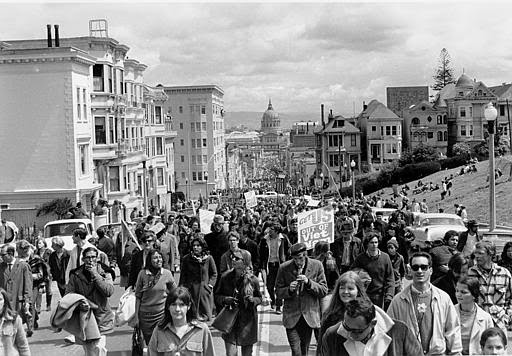
I admire and identify with the history and the culture of activism. Like the reformers of history and of today, the brave people who fight to create a more just world are among the finest the human race has ever produced. But I’ve been feeling something a bit lacking in activist movements lately. They still march in the streets, and we join them there and online by signing petitions for reform, posting blog pieces, and sharing videos bursting with righteous indignation. It’s exciting, it’s attention-getting, it makes the news. Historically, take-it-to-the-streets activism has been key in achieving the most important reforms (and breaking away to form our own nation in the first place!). The Occupy Movement, for one, was inspiring, and exciting, and it appeared that we were finally witnessing a harbinger of real change.

Sadly, it seemed to fizzle out before any substantial reform was achieved. Why? Because it wasn’t followed by practical action, which, of course, is much less exciting. Demonstrations of protest don’t do much lasting good unless they’re backed up by real, widespread change in attitudes, behavior, and civic engagment. Right now, the activist community is mainly pouring its energy into marches, inspiring songs, signs, slogans, and speech, and a few into blocking highways, smashing windows, and taunting riot police. But for actual reform to happen, we need to turn our collective accusatory gaze back on ourselves and realize we are the problem too…

How can we be the problem while we’re working and calling for reform? Because we keep supporting bad business through what we choose to buy, and we’re not reforming government by showing up at the polls.

It’s like protesting an assassination after we pitched in to pay the hit man and did nothing to stop him as he stole the getaway car.

For example, we’ve long known that many of our smartphones, tablets, and other gadgets are made in factories where people work terribly long hours for little pay, in conditions we’d never put up with ourselves. And we know that many or even most of our discarded electronics end up in some country, state, or town unprotected by regulations, or whose ‘recycling’ systems are really not effective in keeping up with the deluge, at keeping toxic heavy metals and chemicals out of the water supply, the ground, and the air. So we’ve signed online petitions and shared testimonies of abused workers on YouTube and Facebook. Yet we buy every new gadget as fast as they come along, throwing away our ‘old’ ones (cracked screen? doesn’t have the new games on it? too thick now since the new ones are 1/4″ thinner?) and buying a new one whether we ‘need’ it or not. When we purchase these things, we fund all operations of the companies that make them, and we send them the signal that we’ll buy them no matter how much their products pollute and how they treat their workers.

We also know, from the wealth of scientific information gathered and presented by the Intergovernmental Panel on Climate Change (IPCC) and our own National Climate Assessment, that we’re polluting our air to levels that present great threats to the health and future food security of ourselves and our progeny. We’ve also seen how air and other pollution causes respiratory ailments and even death in humans and animals, from pre-1970’s, pre-Clean Air Act Los Angeles, California, to Beijing, China of today. So again, we sign online petitions and share videos and speeches, and call on regulators to crack down on corporate polluters, on factories (industrial and farming), auto manufacturers, and the trucking industry. Yet it’s the commuter cars we drive and the emanations from animals we eat every day that pollute the most. We drive everywhere we want to go whether or not we need our car to get there, and gobble up more meat than is healthy for us and for the planet, all the while insisting that gas and meat stay cheap.

And so on, and so on, and so on. We want one thing, but do another. We say we want the world to be one way, but our actions help guarantee it won’t come to pass. It’s a hard pill to swallow, but here it is: we can’t justifiably blame corporations and the government for institutionalized racism, radical income inequality, pollution, climate change, poor wages and working conditions, poverty, and other social ills while at the same time we’re funding their operations, and are too politically apathetic to send more than a symbolic message by voting in the change we want.

There are two main ways we are undermining our own calls for reform:

We are a market-driven society, for better or for worse, and the market will always deliver what we want to buy, eventually. If we keep buying it, it will keep being made, whatever the good it does, or the harm. If we want things that cause harm, they will be made, ever more so as we keep buying them. And if we shop around for the lowest price, down prices will go, whether by benign means (improved technology) or not (driving down wages). Capitalism brings us wonderful things: safer and better machines for all kinds of purposes, warm comfortable clothing and plentiful food, information-sharing devices to educate and entertain, and best of all, technology that can better our lives while reducing waste. But it brings awful things as well: the supply and demand for plastic bottles and convenient packaging is trashing rivers and seas and killing fish; electronics, designed to quickly become obsolete and full of heavy metals, turns into masses of polluting trash our limited recycling systems can’t keep up with; plentiful, cheap meat pollutes the air and water and encourages animal cruelty; cheap fuel drives climates change and wars; cheap goods of all kinds drive down wages, degrades working conditions, and lead to overconsumption and massive waste. We know this, yet keep the demand going by gobbling it all up as quickly as they supply it.

Here’s an aside to my fellow progressives, liberals, and everyone who loves our world and don’t want to trash it: don’t pretend that recycling bins and boutique ‘green’ products will do the trick. Currently, recycling programs are akin to a cheap plastic Band-Aid applied to a gaping wound. Most recycling processes create nearly as much, sometimes even more, pollution than new products and packaging created in the first place. (Read this fantastic article by Andrew Handley: informative, succinct, and eloquent.)

Secondly, we are allowing the few, most moneyed interests to take over our government with scarcely a murmur. The ballot box, historically the most powerful tool for voicing our collective will, is being abandoned. We are voting in fewer and fewer numbers every year, with depressing results. I understand the Russell Brand type of argument, to ‘drop out’ of politics as an act of protest against systemic government corruption. But I don’t agree with his conclusion. It may be the case, as he points out and as we discover anew every voting season, that many or all of the candidates aren’t terribly inspiring. We may find that many of the initiatives won’t seem to do all the good we’d wish. But consider these facts: historically, the reforms sought by the great activist movements mostly became law because they continued their march right to the polls, and either voted in those laws themselves through referendums, and the rest were achieved indirectly, by voting better leaders into office. And think of what happens when we don’t vote. As someone who considers myself politically progressive, I’ve been dismayed as here in California, such laws as Prop 8 passed, banning gay marriage, because more people opposed to this unjust law (later overturned by the courts as unconstitutional) didn’t bother to get to the polls; ideologues, lavishly funded by a few interest groups, voted in droves while believers in liberal and progressive values (including many who held protest signs, I’ll bet) stayed home. For the same reason, capital punishment is still legal in California and marijuana use (other than medical) is not. I was also dismayed by the most recent general election, in which candidates that are aggressively status-quo and anti-reform were elected to office in droves. Why? Again: those who poll in favor of reform did not show up at the polls.

It’s true that too many candidates are overly motivated to please the interest groups that fund them, and don’t pay enough attention to the rights and the will of the average citizen. But that’s not just because of the money (initially provided by us, by the way, via the market): these candidates have been made well aware that we’ve grown a little too comfortable to make the effort to vote them out. So they make speeches to please us, and then we pass them around online and think we’ve done our duty. On election day, we stay home, and the next day, it’s business as usual.

In sum: so long as we put our own ease, comfort, and desire for luxuries ahead of our principles, we are stuck with the world that results. If our political system continues to grow ever more corrupt and our laws fail to protect the vulnerable, the poor, the immigrant, the disenfranchised, and the environment, yet we don’t vote the bad politicians out and the good laws in, we are to blame too. If corporations and other businesses make harmful products, endanger and underpay their workers, funnel all profits to a few at the top, and pollute, deforest, drive species to extinction, and hasten global warming, yet we keep buying their products, it’s our fault too. If police precincts become ever more militarized and continue to employ overly violent and coercive tactics on the streets and in the interrogation rooms, and we don’t vote them or those that appoint them, out of office, then we’re giving our tacit consent. If our political leaders, prosecutors, and judges continue to make, enforce, and uphold laws that are contrary to our constitutional rights, our best interests, and scientific evidence, and we keep putting them in office (or do nothing while special interest groups put them in office), then we aid and abet them with our neglect.

So what do we do about it? Do we all become ascetics, deny ourselves all pleasures that might conceivably cause harm, subsist in ‘hobbit homes’? Do we obsess over politics, wring our hands in despair daily or cast them in air as we give up in hopelessness? This doesn’t seem tenable: we want an easy, pleasant life filled with hope, comfort and plenty for ourselves, our loved ones, our children, for everyone.

Yet if we want our progeny and the rich, vibrant, diverse world of living things to survive and flourish, we need to change our habits. Our main stumbling block is this fact about human psychology: it’s extremely difficult for us to act idealistically when the long-term ramifications of our actions are not emotionally, immediately apparent at the time. But be it easy or be it hard, we need adopt new and better practices, or the world we love will suffer from our neglect. I’m as stuck in bad habits as much as anyone else, so I’m not playing a blame game here. When it comes to consumer waste: I’m lucky in that I worked in a salvage and recycling operation for some years, and that experience turned me off from enjoying shopping for cheap gadgets, and made me more frugal and more likely to preserve the tools I have for as long as I can repair them and make them work. (There’s nothing like working in a resale warehouse, or salvaging quality reusable goods from a mound of broken cheap crap and trash at the dump, to change one’s perspective on material goods. Now, in the rare occasions I go to Target or a department store, I perceive mostly a mound of thinly disguised future garbage.) But I continue to buy too many things with unnecessary packaging, I still drive my car more often than I really need to, and I buy and eat too much factory-farmed meat. When it comes to politics and law enforcement: I usually don’t do nearly enough homework on the issues or on candidates before I vote, and I miss valuable opportunities to make a difference by engaging in local politics, where individuals can have the most influence.

Let’s make a pact to honor our activists, and to join their ranks as true ones, by living out our desired reforms. Let’s stop buying water and drinks in plastic bottles and packaged goods so long as there’s an alternative; if enough people do this, companies will pay heed and provide their goods through better delivery methods. Let’s stop buying so much stuff, period, and divert our money to businesses and institutions that deliver quality goods that last and public goods that all can enjoy. (Less malls and big box and discount retailers, more small businesses, quality goods made to last, public works, humanitarian projects, and museums.) Let’s stop glorifying wealth and the trappings of wealth more than its due. Let’s vote in every election, for candidates and referendums that best represent our values: if we demonstrate that we will only vote for those that deliver on their promises for reform and will vote them out if they fail, the political arena of competition will shift as it favors less corruption.

Let’s put the act back in activism.

*Listen to the podcast version here or here on iTunes

Ordinary Philosophy and its Traveling Philosophy / History of Ideas series is a labor of love and ad-free, supported by patrons and readers like you. Please offer your support today!

~~~~~~~~~~~~~~~~~~~~~~~~~~~~~~~~~~

Sources and inspiration:

Ariely, Dan. ‘The Long-Term Effect of Short-Term Emotions‘. Mar 23, 2010. DanAriely.com

Brand, Russell. ‘On Revolution: “We No Longer Have the Luxury of Tradition”‘ Oct 24, 2013. TheNewStatesman.com

FlorCruz, Jaime. ‘Listen Up Beijing. This is What You Can Learn From Los Angeles About Fighting Smog‘. Dec 9th, 2014. CNN.com

Handley, Andrew. ‘10 Ways Recycling Hurts the Environment‘. Jan 27th, 2013. Listverse.com.

Parsons, Sarah.’Electronics Recycling 101: The Problem With E-Waste‘. Inhabitat.com

Silverman, Jacob. ‘Do Cows Pollute As Much as Cars?HowStuffWorks.com

Welcome to the Podcast Edition of Ordinary Philosophy!

Hello dear readers, and welcome to the
podcast version of Ordinary Philosophy!

You can listen to the podcast here, on Google Play, or subscribe in iTunes.

Like many of you, I’m a big fan of podcasts, mostly because my life is very busy. One day in the future, I hope to have a lot more time to do each task one at a time, to really be present, as they say, as I wash the dishes, straighten the house, do the laundry, and perform all those other tasks that take up time, but not much thought.

But at this time in my life, between my day jobs, my creative projects, and spending time with friends and family (which I don’t do enough of these days, sadly), I don’t have enough time to keep up the world of ideas as nearly much as I’d like to by sitting down and reading. Instead, I keep myself informed and increase my education by listening to lots of podcasts: discussions with my favorite authors and thinkers, audio renditions of books and essays, debates, recordings of classes on my favorite subjects, and so on. I listen to these podcasts while doing those aforementioned chores, and let me tell you: as one who is not fond at all of household chores like doing the dishes and washing the floor, the podcast is a marvelous invention: they transform boring chore time into great opportunities for learning and exploration. I’m also an avid hiker, and it’s a wonderful thing to be able to immerse myself in some fascinating ideas or discussion as I immerse myself in the beauties of nature.

To begin with, this podcast will simply consist of audio recordings of my Ordinary Philosophy pieces. Over time, I may add commentary and who knows, perhaps interviews and discussions with guests. We’ll see how it goes. In the meantime, here’s Ordinary Philosophy in audio form: I hope you find it interesting and enjoyable!

… And here’s episode 2: Is the Market Really the Most Democratic Way to Determine Wages?
Originally published as an essay Feb 6th, 2014

Hume, Aristotle, and Guns

Photo 2014 by Amy Cools

Antique firearms at the Scottish National Museum, Edinburgh

I’ve been mulling over the issue of ‘gun rights’ for some time now. It’s a pressing issue here in the United States, since more people are injured and killed by citizens wielding guns than in any other state with a stable government and a thriving economy.

It’s also a divisive issue, as it’s generally argued in terms of liberty, a core value in our culture and politics. One side emphasizes the right to self-defense, the other the right to freedom from fear and from the pressure to join the arms race. And whether or not people chose to arm themselves, their fellow citizens feel that they are placed under some kind of obligation or burden as a result.

From the anti-gun perspective: if at least some of your fellow citizens are armed, then you are forced into a position where you must arm yourself too whether you’d like to or not, or remain at their mercy. After all, in a moment of greed, anger, zeal, fear, mental illness, hate, or accident, one person with a gun can permanently remove all freedoms that another could ever enjoy, within seconds, with the simple squeeze of a trigger. When another is armed, they have the potential power to wield complete control as to whether you live or die, and to force you to act according to their will, and against your own.

From the pro-gun perspective: if your fellow citizens choose not to arm themselves, you leave all the work of crime deterrence up to gun owners. Not only that: since a gun is the most effective weapon which can be wielded by a person of nearly any degree of strength, it’s the only available method for many who feel the need to defend themselves and others. In other words, it’s the one real equalizer: anyone with a gun has as much power as any other, so long as they know how and when to use it.

What would help us decide how to settle this, since the freedom to live the life we want, and the freedom to live at all, are in direct conflict here? We’re still figuring it out here in the US. Some nations have chosen in favor of individual gun rights, and others have disarmed their citizens, with varying results. While, generally speaking, nations and states with low gun ownership rates have much lower rates of gun violence, there are some exceptions. The gun rights dilemma, therefore, is not simply and immediately solved through legislation designed in favor of one set of rights issues over another.

Putting the conflicting liberty and rights issues aside for the moment, perhaps it would help to consider the relevant moral issues. Here, we can look beyond local, cultural considerations to a broader source of guidance as to what we should do about guns. What does it mean to be a good person, a virtuous person, and how do we cultivate that in ourselves and in each other? How does a society cultivate that in its citizens? Can these and other considerations help us decide what’s right, morally, when it comes to the rights and responsibilities of owning a gun? What should we do about it? Is it right or good for people to hold so much power over life and death? Permissive gun laws, which make it easy for responsible gun owners to trade in guns, also make it easier for members of drug cartels and other criminals to get their hands on them, too; that being known, are those laws right?

I think two of the greatest thinkers on morality and virtue, David Hume and Aristotle, can do much to help us discover some answers to these questions. Let’s explore their ideas, look for some answers there, and see how they fit with modern discoveries in behavioral science, psychology, and neuroscience.

According to David Hume, morality originates in the ‘passions’, or feelings. We can see ourselves as naturally moral creatures, since we come equipped with those emotions, those motivations, that make morality possible. We demonstrate altruistic, ‘pro-social’ (not Hume’s term, a more modern one), even as children, though we develop our moral character as we grow, through life experience, conversation with other moral beings, and by acquiring and developing the use of reason. For example, from the earliest age, we approve of kindness and disapprove of cruelty. We desire happiness, love, and generosity, and detest pain and avoid selfish people; we crave learning, and enrichment, and the approval of others. Those ‘sentiments’ ennoble us, and are responsible for that which is best in our characters. Yet the emotions we come equipped with are not sufficient, in themselves, for a morally developed person. Reason also plays a key role, enabling us to universalize and expand morals, and to apply these needed in any given situation.

Yet morality cannot be founded on reason alone: as Hume points out, reason is the means to means to link one true proposition with another, but cannot, on its own, show us what to value, or make us care about each other or anything else. It’s moral feeling, the passions, that provide the motivations, and provide reason the materials to work with to develop our morality. So as we grow up, we learn to develop our moral instincts, to ‘expand our moral circle‘ through conversation and the use of reason. By spending time with others, by being exposed to diverse ways of thinking and being, we learn that others have emotions and interests just like we do, that are just as important to them as ours are to us. Emotionally, we empathize with others; rationally, we know that what we expect of others is no more or less than what we must demand of ourselves. A very young person has the instincts for morality, but prior to experience of the world and the use of reason, it’s a very limited morality, or can even be considered a sort of proto-morality. Experience of other moral agents, through discourse with them, reveals there are others whose feelings and interests matter just as much to them as ours do to us, and finally reason shows that there is not particular reason to favor oneself over another when determining moral rules and guides of behavior. A morally good person, then, will seek to be pleasant and generous, to make others happy and improve their well-being, to respect and protect their interests as much as possible, just as we desire and expect they will do for us.

Hume’s account of how morality works, combined with the body of knowledge we’ve discovered since his time, reveals that it’s as much a natural part of the makeup of the human personality as any other, as are creativity, romantic passion, mother love, curiosity, and hunger, as well as (sadly!) rapacity and cruelty. A natural explanation of morality does not require a complex suite of arguments to found its origins in logic and reason, nor does it require some cause outside of ourselves, as traditional explanations claimed. To find out what morality is and how it works, we observe human beings, how they act and how they desire themselves and each other to act; we explain how and why morality developed as a natural adaptation for human beings; and we apply reason to determine what kinds of mindsets, rules, and behaviors lead to their flourishing.

Behavioral, biological, and evolutionary sciences have, over the years, lent support to Hume’s explanation of morality. Rebecca Saxe and Alison Gopnik, among others, has closely observed the behavior of infants and very young children over time, and has gathered a large body of evidence that people demonstrate moral instincts from the very earliest age, recognize that others are moral beings with their own interests and emotions just like us, and make moral judgments accordingly. Evolutionary psychology (Darwin considered Hume one of his great influences), in which morality is considered as much an adaptation as our opposable thumbs and long limbs, inherit much from Hume’s account. In fact, Hume is widely considered a founder of naturalistic moral theory, and a father to modern cognitive science.
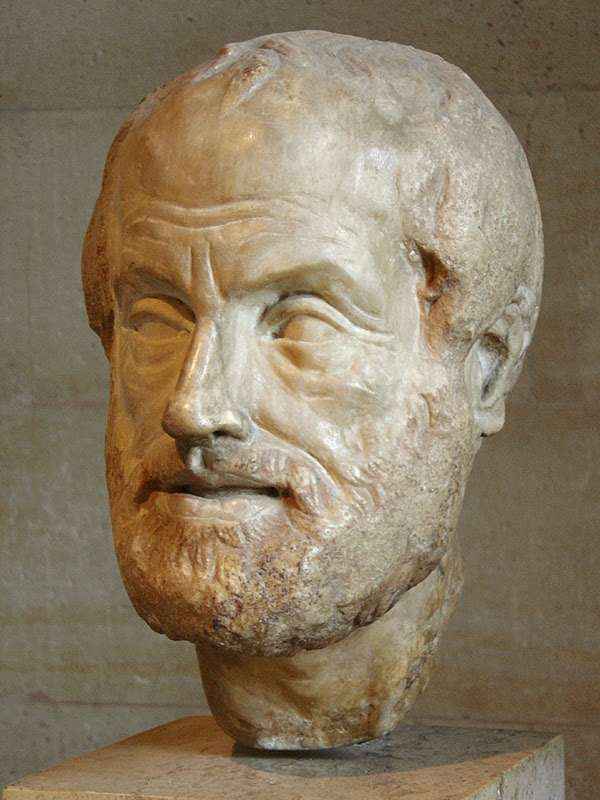
Aristotle’s grounds the origin of morality more on reason, though his theory is founded, like Hume’s, from his observation of the world and how people behave. His elegant ‘function argument’ is the centerpiece of his moral theory. When you consider what something is for, and observe what it does and how it functions, you’ll know where to start. The quality of goodness in material things is closely related to the quality of goodness when it comes to actions and moral feelings. A musical instrument is for making music; therefore, an excellent, or good, musical instrument is that which produces the best music. Further, if we consider a case in which we’re deciding who the musical instrument should belong to, it would be the right thing to do to give it to the best musician. Not to the nicest person, or the one who can pay the most for it, or even to the person who made it; those considerations are irrelevant since none of those have anything to do with the proper function of the instrument.

To Aristotle, reason is the one definitive human trait that no other creature on earth possesses. That’s what we do uniquely, and what we’re best at, or at least, that’s what we do when we’re at our best. So what we should do, the moral thing to do, is what’s most reasonable, what’s most in keeping with our nature as reasonable beings. What helps us recognize that, in turn, is called the ‘Golden Mean’: consider all those traits we have, see how they fall on a spectrum, and we will see that the virtue consists of the happy medium between extremes. For example, bravery would be the virtuous golden mean between cowardice and recklessness, love between disdain and fawning or obsession, and so on. (Fun fact: Hume himself placed great importance on moderation, temperance, and fairness, eschewing divisive party politics, for example, as if it was part of his mission to live out the ideal of the Golden Mean!)

Making the leap from the function of a thing which is an artifact of intentional human creation, to the function of a human being itself, is quite a leap. Aristotle recognized this and sought to address it, but did not yet have the modern knowledge of the theory of evolution, and of evolutionary psychology, and how well they account for the origin and development of moral virtues such as kindness, sympathy, generosity, bravery, and so forth. Nor did Hume, but he did not consider it justified to form conclusions by building a logical case as far removed from original observations as many who followed Aristotle later. Hume saw human beings as much a product of the natural world as any other, and their nature as fully explicable in those terms. So leaving the function argument aside for the time being, let’s consider another important contribution of Aristotle’s to moral philosophy: the importance of habit.To Aristotle, habit is essential to the practice of virtue. By emulating virtue, we habituate ourselves to it. Over time, morality, the practice of virtue, becomes second nature. Here, Aristotle proves himself a keen observer of human psychology, and his emphasis on habit as a central driving force behind human thought and behavior, as well as something which can be deliberately instilled through practice, is confirmed by the findings of modern psychologists and neuroscientists. A recent article in Scientific American outlines some of the ways in which habits are formed, and how necessary they are if we wish to improve our behaviors systematically. Cognitive behavioral therapy, now widely considered among the most effective ways to overcome addiction and anxiety-depression, among other disorders, is also founded on these scientific discoveries.

Here’s where I find a link between these two moral theories: Aristotle’s emphasis on habit works hand in hand with Hume’s account of how moral sentiments arise from human psychology. Whether it be from habit or other mental processes we are naturally equipped with when we achieve consciousness, moral behavior is largely a spontaneous reaction to the situation at hand. Early in our development, as Saxe and Gopnik describe, a basic set of moral instincts are included in human consciousness in its earliest stages. As Hume observes, experience and reason help us expand, develop, and perfect our moral characters over time; the moral character, as Aristotle recognizes, is the set of, and relationships between, the virtuous habits we’ve cultivated through practice.
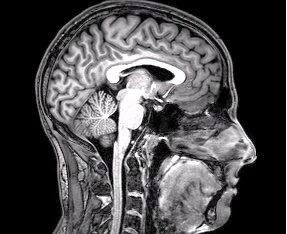
This also consistent with other findings of modern neuroscience and psychology. The way we tend to act in any given situation, the emotions and motivations that arise in us as we respond to stimuli, are formed as we react to circumstances, and by engaging in patterns of action, reactions, thoughts, behavior, we create mental channels, so to speak, or ‘paths of least resistance’, which predict our reactions, our thoughts and behavior, given similar circumstances. We usually act and think in accordance with how we’ve been given to act and think before, and only change when some new consideration(s) arises that makes us stop and consider whether to do something else this time. These considerations, the combination of reason and emotion (how do I act that will make me feel good about it, given the consequences of my actions for myself and others? How did the decisions I made last time the sort of thing came effect me and the world around me? How do others act in these situations, and what are the effects then?) inform how we habituate ourselves to new and improved moral actions and reactions.

Let’s pause for a moment. So far, we have these two thinkers’ descriptions of morality and virtue, supported by the findings of modern psychology and neuroscience.  Hume and Aristotle show us where they think we should look for virtue, how to recognize it, how to describe and explain it, and where it originates. In other words, they are engaged in metaethics. But as you may have noticed, this tells us only how people actually do think and behave; what about telling us what we should do? What are the criteria for deciding what’s right and what’s wrong?

Arete (Virtue)

I think Hume and Aristotle point us in this direction: human beings not only do, but should habituate themselves to those practices which form in us the best moral character. While both men don’t explicitly tell how we can definitely say what’s right and wrong, they go to great lengths to show us what an admirable character looks like, and how they think and behave. I think they do so in order to reveal to us not only how we could be, but how we should be. In his writings as well as by example (he was widely known to have a particularly admiral character), Hume emphasizes such virtuous sentiments as sympathy, sociability, amiability, beneficence, generosity, and so on, and advocates the cultivation of these traits, especially through conversation and spending time in the company of others, especially those who can broaden your understanding of the world, and by avid reading and study of philosophy, literature, and history. Aristotle emphasizes the virtue of moderation in all things, of wisdom, self-control, courage, and nobility. Both men emphasize, to the highest degree, the use of reason, and the value of its careful and consistent application in all matters of life. It appears that they go through all this trouble not only to show us what a good person looks like, but to offer us something to aspire to: the formation of an excellent, moral character, which leads to the best life a person can achieve.

So, finally, we return to the gun issue. What does all this have to do with owning them, and using them? What does this have to do with what we observe in human behavior when people own guns? How about when people value, or even glorify, guns?

Let’s return to the consideration of the evidence, which can reveal how attitudes and practices relating to guns manifest themselves in human behavior; in other words, what habit or habits does a gun-owning society promote?

There are conflicting statistics to when it comes to gun-related behavior. For example, people in the United States own almost twice as many guns per-capita as Canadians and Germans. Canada and Germany, in turn, have a much higher rate of gun ownership compared to most other developed nations. Yet among these three nations, the United States has a far higher gun-related death rate, about four times that of Canada, and about 8 times that of Germany, though the three share many key cultural and political traits: they are democratic, capitalistic, and culturally and historically Christian. There are also examples where lower gun-related death rates correlate with higher per-capita gun ownership. This is the case for some states in the U.S, and for Switzerland, a country that, interestingly, imposes a requirement on all households to own a gun.Yet given such outliers, most states in the US, and most countries in the world, see a strong correlation between lower rates of gun-related death and injury and lower rates of gun ownership. The U.S. ranks near the top in gun-violence rates, just under Mexico’s, a country overrun with trigger-happy drug cartels, and outranked almost entirely by countries with weak, unstable governments, poor human-rights records, and high rates of poverty and income inequality. The very lowest rates of all, by contrast, are enjoyed by those countries who possess a high degree of personal liberty and human-rights protections while at the same time restrictive gun-ownership privileges, or none at all. Even in Switzerland, often cited by gun-rights advocates as an example of how high rates of gun ownership can correlate with low levels of violence, there are 16 times as many gun deaths as in the U.K, and 64 times as many as Japan. The rates are low in Switzerland only as compared with the most violent countries, but not in comparison with the least violent.

Photo 2014 by Amy Cools

Antique long guns at the Scottish National Museum, Edinburgh

Returning to the liberty issue for a moment, it seems that overall, since you must be alive to enjoy any liberty at all, liberty is best served when there aren’t many guns around. When a fight ensues, or the home is broken into, or a child has figured out how to get into a locked cabinet, or a person goes on a violent rampage due to mental illness, few, if any, people actually end up dying or disabled when there’s no guns nearby to reach for. It’s relatively difficult and messy to kill someone with a knife and other non-gun weapons, and the planning that goes into other kinds of homicide, like poisoning, gives people more time to consider the consequences of their action, decreasing the chance they’ll go through with it, or decreasing the chances of success at homicide.

As we’ve seen, however, the liberty issue can’t be the only determining factor in deciding the gun issue, since liberty considerations conflict so sharply when one’s liberty interests run counter to another’s. There are still compelling arguments to be made that individual liberty requires the right for each person to make their own decision in the matter, from the right to self-protection and self-determination. There’s also the fact that there are some states and countries where higher rates of gun ownership do correlate with low gun violence, especially in places where the population is more homogeneous, ethnically, religiously, racially, economically, and so on, even if they are relatively few. Conversely, there’s the liberty considerations of those who wish to be free from the fear of coercion and bodily harm, ever-present dangers that usually result from a heavily armed population, as the statistics reveal.

This is where the law comes in. One main purpose of the law is to defend the rights and liberties of the citizenry at large, and this involves protecting citizens from each other. A population is always composed of people who have conflicting interests, needs and desires, so to keep a society functioning, prosperous, and harmonious as possible, the law (ideally) is crafted to balance the rights, responsibilities, and interests of each citizen, impartially, with the other.Another purpose of the law is to codify, universalize, and enforce the mores of a given society, or at least those that harmonize with the principles of justice, equality, liberty, and so on that are central to the political system of that society.And last but not least, the law encodes a system of rights, responsibilities, and prohibitions, the practice of which is requisite to being a good citizen. In other words, the law is a society’s (in a democracy, the people’s) way to habituate its citizens to those practices which form a virtuous, a good citizen.

Gun law is no exception. Prior to passing laws relating to gun ownership, there are societal attitudes towards guns that people possess, cultivate, and enforce not only through custom and discourse, but eventually through law. Famously, in the 1990’s, the Australian government, with widespread support from its citizens, collected and destroyed a large proportion of the country’s firearms, and imposed restrictive gun laws. These laws were a direct result of the public’s horrified reaction to a series of gun-related mass murders that had happened in the decade prior. The public’s new attitude towards guns was made manifest in the law. It’s still in debate whether the sharp decline in gun violence that followed the new laws were a result of the laws, or vice-versa. It appears most likely that it’s some combination of the two: after all, as we’ve observed throughout history, there’s a feedback loop between the law and a society’s moral progress.
Consider the history of civil rights legislation in the United States: desegregation and other civil rights protections happened gradually, with each disenfranchised group demanding the full rights of citizenship, despite the current will of the majority to keep those groups subjugated and oppressed. Over time, the use of reason (in these cases, legal reasoning) and consideration of the values underpinning the foundational political philosophy and documents (in this case, the Declaration of Independence and the Constitution) led to new laws which not only enforced better practices, but habituated citizens to more virtuous thought and behavior, often in spite of themselves. We see this time and time again in American history: the disenfranchisement and oppression of black people, religious minorities, the poor and non-landowners, women, Jews, gay people, and so on, once common practice, came to be looked upon with righteous distaste, worthy of contempt. In so many of these cases, it was the law that changed commonly held attitudes, more than the other way around, and the change in attitudes and behavior often happened far more quickly than it would have otherwise if the practice of virtue wasn’t inculcated through law.

In sum: Considering the lessons of history, the evidence of the current states of affairs in which high gun-ownership rates correlate strongly with destructive attitudes and behavior when the entirety of the evidence is considered, and how the wisdom of two of the greatest moral thinkers is confirmed by the findings of modern science, I think that laws restricting, even eliminating, gun ownership by most individuals help lead to a wiser, more prudent, more beneficent, more amiable, more free society.

What do you think?

Ordinary Philosophy and its Traveling Philosophy / History of Ideas series is a labor of love and ad-free, entirely supported by patrons and readers like you. Please offer your support today!

– I’d especially like to thank Guy Fletcher, Lecturer in Philosophy at the University of Edinburgh, who kindly gave me some of his valuable time (despite it’s being finals week), invaluable insights, and excellent pointers regarding the subjects covered in this essay, especially in reminding me to make clearer the distinctions between meta-ethics, morality, and ethics.

~~~~~~~~~~~~~~~~~~~~~~~~~~~~~~~~~~~~~

Sources and inspiration:

Aristotle. Nichomachean Ethics. About 350 BC. 

Boseley, Sarah. ‘High gun ownership makes countries less safe, US study finds‘. The Guardian, Sep 18, 2013.

De Waal, Francis. The Bonobo and the Atheist : In Search of Humanism Among the Primates, 2013.

Gopnik, Alison. The Philosophical Baby, 1998.

Haidt, Jonathan. The Righteous Mind, 2013.

Hume, David. A Treatise of Human Nature, Volume III – Of Morals. Printed for Thomas Longman in London, England, in 1740. (I had a glorious time referring to versions published in Hume’s own lifetime during my trip to Edinburgh!) Online version: http://www.gutenberg.org/files/4705/4705-h/4705-h.htm

David B. and Stephen D’Andrilli. “What America can learn from Switzerland is that the best way to reduce gun misuse is to promote responsible gun ownership.” American Rifleman, Feb 1990

Kraut, Richard, ‘Aristotle’s Ethics‘. The Stanford Encyclopedia of Philosophy, 2014 

Morris, William Edward. ‘David Hume‘. The Stanford Encyclopedia of Philosophy, 2009.

Saxe, Rebecca. ‘How We Read Each Other’s Minds‘. TED talk, 2009

Tucker, Abigail. ‘Are Babies Born Good?’ Smithsonian Magazine, Jan 2013.

The Debate Over Government and Freedom

As I read, do research, and reflect during my philosophy-themed travel to Edinburgh, I come across more or less the same issues as I do in contemporary discussions in the United States. David Hume argued in favor of a greater degree of freedom of commerce than was afforded people in his time, because as he observed, trade and its accompanying flow of information was a sure road to greater prosperity and liberty for the people as a whole.

Yet Hume hadn’t had the opportunity to observe how in a free market, the gradual accumulation of capital and the forming of monopolies could also be used to oppress and even enslave people, and rob individuals of fair opportunity and their share of the fruits of their labor. (His friend Adam Smith, however, predicted some of this.) Both correctly described what, in fact, did happen in the free market: it brought people out of serfdom, and led to greater prosperity for a larger number of people than ever before.

Market considerations also created the slave trade and made slavery last as long as it did; it’s causing the despoilation and ruination of the homes and lives of people around the world who live where they have rich natural resources but no political power; it’s causing the US to head towards a state of oligarchy, where misguided conservatives and libertarians are pushing through legislation that allows the rich to effectively buy the government that was intended to represent others as well; it’s destroying the environment through the reckless overproduction and overconsumption by manufacturers and consumers who usually make shortsighted, imprudent decisions, as behavioral economists observe and predict.

The fact that certain individuals and moneyed interests have and do oppress people as much as governments do, is what’s missing from much of the political discourse today. I have an essay in the works regarding government, the people, and liberty, but this fact seems obvious to me: the whole point of the US system of government (as well of those of other free countries in the world today) was that it’s supposed to be us, in a representative sense.

In that case, it shouldn’t be a matter of ‘making government small enough to drown in a bathtub’, or however that Grover Norquist quote goes. If that were the case, slavery never would have ended, for example: it was we the people, through our government, that forced slaveowners and the entrenched moneyed interests that depended on slavery for their profits, to give up some of their power, and freed millions of people to pursue their own happiness. We, via the government, championed human rights against encroachments on the part of both other individuals and government: suffrage for women and minorities, religious freedom, reproductive rights, you name it. Why on earth would we want to drown ‘we the people’ in that metaphorical bathtub? That would destroy individual liberty as surely as crushing the free market would.

Re-read, then take to heart, the intro to the Constitution, Grover.

My solution: take back the government from the few moneyed interests and individuals that are buying it up bit by bit, and make it ‘we the people’ again. Individual freedom, as well as the public interest and most businesses, would thus be best served. Remember, if plurality of interests disappears, swallowed up in mega business and monopolies that end up controlling the majority of resources, we would end up, effectively, just as much in a state of serfdom as anyone was before the free market was invented.

Communitarianism, Writ Large

I listened to Bill Moyers’ discussion with Michelle Alexander recently, about her book The New Jim Crow and her activism against the over-incarceration of black people here in the US. Something she said really struck me, as it relates to a problem I’ve been mulling over for some time. She said:

I realize that as well-intentioned as all that work was, it was leading me to a place of relatively narrow thinking… If I care about a young man serving, you know, 25 years to life for a minor drug crime… If I care about him and care about his humanity, ought I not also care equally about a young woman who’s facing deportation back to a country she hardly knows and had lived in only as a child and can barely speak the language? And ought I not be as equally concerned about her fate as well? Ought I not be equally concerned about a family whose loved ones were just killed by drones in Afghanistan? Ought I not care equally for all? And that really was Dr. King’s insistence at the end of his life. That we ought to care about the Vietnamese as much as we care and love our people at home.’

Alexander’s reflection on her own work illustrates our need not only to grow more expansive in our thinking in order to achieve a more just society not just locally, but globally: we need to witness and internalize the sufferings faced by other human beings who are not like us in appearance and culture, so that our instincts for empathy and for justice expand as well. 

The problems associated with the organization and implementation of an ordered society is the central topic of political philosophy; the problems associated with making societies just is the concern of ethical philosophy. Two philosophers whose work I especially admire in these fields are John Rawls and Michael Sandel. They are both concerned with justice, how to recognize a just society, and how we select the criteria for ethical decision-making. (I’m also a fan of Sandel’s because he’s engaged in a cause that’s dear to my heart: the great project of philosophy is not, and should not be, confined to academia. With his freely accessible lectures and discussions, and his popular philosophy books, he is among those reintroducing philosophy to the public square. Philosophy originated in the public square, after all, and as it addresses the concerns of the whole of humanity, then it should be a concern of, and the conversation should be accessible to, the whole of humanity as well.)

Yet Rawls and Sandel are at odds in some key ways. Among other things, Rawls’ theory of justice is classically liberal, in the tradition of John Locke, and focused on universalizability: a just system is one that must be applicable to all human societies, in all times and places. Sandel focuses more on the importance of community and tradition in matters of justice, and the answers are found more in solutions to ethical dilemmas based on particular society’s evolved norms. Rawl’s famous ‘veil of ignorance’ is his method for discerning whether or not a society is just: if each and every person were to be randomly assigned a role in society and had no way to know ahead of time who they would be (woman, man, CEO, employee, black, white, rich, poor, etc), and knowing this, they had to design a social arrangement, what would they all agree on? Then, we can look at how that veil-of-ignorance social design compares with an actual society to help us assess how just it is, and in turn, help us create s social system that will benefit everyone as much as possible. Seems a method that should obtain pretty fair, democratic results, right? But for Sandel, the veil of ignorance seems incoherent even as a mere thought experiment, since morals originate in, or emerge from, particular societies. Therefore, what is just is derived from how actual societies work, how they’ve grown and evolved to solve their own sets of problems, and cannot be derived from hypotheticals. So Rawls’ and Sandel’s ideas seem, on the face of it, irreconcilable. Who’s right?

Sandel’s views are generally described as communitarian, though he’s not entirely comfortable that characterization in that it can go too far in allowing community to trump the individual in all things moral. According to the Stanford Encyclopedia of Philosophy, ‘…communitarians argued that the standards of justice must be found in forms of life and traditions of particular societies and hence can vary from context to context’. In other words, communitarianism is the philosophy that ethics have more to do with particular societal morals and traditions, so the claim that there can be a universal definition of justice, such as Rawls’, is dubious at best.

When it comes to explaining how cultural traditions evolve to make a society more just, communitarianism has something to offer. For example, it’s among America’s most self-identifiable traditional ideals that individual liberty is of highest value and should be promoted as long as the freely chosen actions of one person don’t infringe on the freedom of another. The ideal of individual liberty has long roots in American society, and evolved and expanded over time through political upheavals, case law, and interpersonal disputes. But when we consider the traditional American ideal of individual liberty (by no means unique to America, of course) and compare it to our social history, it’s clear that it’s not no simple: it’s also been a tradition in the US to enslave other people. When that particular tradition was slowly, painfully overturned, there were many other ways that people, legally or illegally but commonly practiced, infringed on the freedoms of others: by denying women the vote, imposing Black Codes and Jim Crow laws, segregating the military, preventing workers from forming unions, and so on.

So a communitarian could argue that while the moral ideal of freedom is traditional in the US, it’s the broader implementation of it that took a long time as traditional practices caught up.

But how about societies that don’t have traditions of individual freedom, who believe there are some classes of people that should have all the power and wealth, and that it’s proper and right that others live in impoverishment and misery, lacking rights of citizenship, for their entire lives? Such is the caste system of India, for example, or the traditionally influential political philosophy of Aristotle which holds that there ‘natural’ slaves. Are we, then, not to be concerned that people of those cultures are suffering from injustice, if they belong to a community with different traditional views of justice? After all, according to the caste system, and to Aristotle and those communities that hold like views, it is just that certain people are slaves and certain people are not, that some people have power and some do not, that some live in wealth and comfort and others in misery, because all of this is justified by their society’s traditional concept of human nature.

Many people, myself included, have the same problem with communitarianism as I am sure Michelle Alexander does, given her quote which opens this essay: why should our sense of empathy, of moral obligation, be limited to the concerns and traditions of our own communities? That may have been prudent, even necessary, for our ancient ancestors, when human groups became large enough to need to compete for resources, but didn’t have the sophistication or technology to facilitate cooperation on such a large scale.

But now, our situation is very different: people’s ideas and actions, thanks to advanced technologies in communication, production, and travel, can have worldwide consequences, for ill and for good. We have access to centuries of the best products of human thought from disparate traditions all over the world, which are gradually coming to a consensus on some key issues in ethics and politics: the value of individual liberty, the benefits of equality, the necessity of having and fulfilling civic duties, and how to recognize a just society, for example.We have access to centuries of historical evidence which demonstrate the benefits of ever-more widespread cooperation, and the ineffectiveness of violent conflict, so that the immense suffering caused by war ends up wasted and unnecessary. And finally, now that people spend a lot of time ‘face-to-face’ with others from all over the world via computer, we feel a sense of real global community. Familiarity with people of different habits, different appearances, and different interests removes our sense of discomfort, and breeds not contempt, but empathy, compassion, and friendliness.

So perhaps the conflict between communitarian and modern liberal accounts of what constitutes a just society will lessen over time. After all, communitarianism must contain within it the idea that traditions change, grow, and evolve, since there have always been so many different traditions with mutually exclusive ethical codes. (I, too, think that morality is not fixed and eternal; rather, it’s a product of evolving, social, cooperative creatures.) And if the world’s communities are merging into one moral community, than the basic ideas of communitarianism will harmonize ever more with the universalizable ethical goals of liberal thought. While communitarians and liberals might still argue over the origins(s) of morals (tradition? reason? emotions?), our conception of justice, our ethical systems and the political institutions with which we realize them (governments, laws, and so on) will look more and more alike all over the world.

Listen to the podcast version here or subscribe on iTunes

~ Also published at Darrow, forum for ideas and creative commons webzine

~ Re-edited slightly in Feb/Mar 2016

~~~~~~~~~~~~~~~~~~~~~~~~~~~~~~

Sources and inspiration:

Alexander, Michelle. ‘Incarceration Nation’. Interview with Bill Moyers, December 20, 2013. http://billmoyers.com/episode/incarceration-nation/

Alexander, Michelle. The New Jim Crow. 2012. New York: New Press Books.

Anderson, Elizabeth. ‘Tom Paine and the Ironies of Social Democracy‘, University of Chicago Law School Dewey Lecture 2012

Bell, Daniel. ‘Communitarianism‘, Stanford Encyclopedia of Philosophy.

Rawls, John. A Theory of Justice. Cambridge: Harvard University Press, 1971.

Sandel, Michael. Various works and lectures, including his books What Money Can’t Buy: The Moral Limits of Markets and Justice: What’s the Right Thing to Do?

Schneider, Greig and Egon Zehnder, Boston, and Ulrike Krause. ‘Interview with political philosopher Michael J. Sandel’, The Focus magazine. http://www.egonzehnder.com/the-focus-magazine/topics/the-focus-on-family/parallel-worlds/interview-with-political-philosopher-michael-j-sandel.html