O.P. Recommends: The Supreme Court Ruling That Led To 70,000 Forced Sterilizations

Buck v Bell Virginia Historical Marker Q 28, Courtesy of Historical Collections, Claude Moore Health Sciences Library, University of VirginiaFresh Air’s Terry Gross interviews author Adam Cohen about his book Imbeciles, which tells the story of eugenics in the United States and how the Supreme Court upheld many laws which arose from that once influential pseudoscience. Among these laws were those which forced the sterilization and incarceration into ‘colonies’, of the ‘feebleminded’ and ‘unfit’. Cohen makes the story of Carrie Buck central to his discussion in this podcast and to the book. She was a young woman who suffered about as greatly as one could from these policies and was eventually betrayed even by the Supreme Court, supposed to be the last bastion against legislative and democratic excess.

It’s a shocking story, and as Cohen and Gross point out, it’s not discussed nearly often enough today. Not only did such laws and practices harm thousands of American citizens, they influenced the Nazis, who based many of their own policies and tactics on American eugenics programs.

Less directly but important nonetheless, the backlash against that old eugenicist-brand forced confinement of mentally ill, disabled, and so-called unfit helped garner support for the release of huge numbers of people from mental hospitals in the late 1900’s. Intentions may have been good in many circumstances, since overcrowding, understaffing, and ineffective modes of treatment were at times serious problems. However, deinstitutionalization did little to solve them; the problematic institutions were not replaced with sufficient or viable options for patients and their families to continue receiving the treatment and care they needed. To this day, thousands of mentally ill people are arrested every year, incarcerated, and treated, often against their will, in prisons and other correctional facilities instead of hospitals, and only after they’ve committed crimes, victimizing yet more innocent people. And these correctional facilities, like the mental hospitals they’ve ended up replacing, are often overcrowded and ill-equipped to deal with those who should be patients rather than inmates.

Why link this podcast discussion about the failures of eugenics to the modern movement to deinstitutionalize the mentally ill? Because it’s important to remember that since it’s not always clear what the full ramifications of an idea are, we need to look at them more carefully and critically, beyond the obvious, considering the long-term and indirect effects of its influence as well. In the example of eugenics, its failures were so egregious, its lack of regard for the humanity of those it declared ‘unfit’ so ugly, that it became too easy to undermine all sorts of other things, many of them good, simply by finding a way to link them together. In this case, as the same century that saw the rise of eugenics was drawing to a close, all institutionalization of mentally ill people, all requirements that certain people receive treatment, became painted with the same broad eugenicist brush. But here’s the thing with deinstitutionalization: it turns out that a similar lack of regard for the suffering humanity of the mentally ill had more to do with those policies than anything else. This seems clear when we observe that the public debate ended up being about funding more than anything else, and not nearly enough of the savings from shutting down institutions were redirected to help the people who continued to need it. The mentally ill were too often simply abandoned by the state to survive on their own or with the help of their un-equipped families, in a world unnavigable and inhospitable to them, and their plight remains largely unaddressed by legislatures.

This one example shows how lessons to be learned from Carrie Buck’s sad story and from the eugenicist movement, then, are much more far-reaching than just the obvious ‘look how it inspired the Nazis!’ The 20th century was too often characterized by an obsession with progress and economic growth at all cost; all things and persons not seen as contributors were dismissed as superfluous and a drain on the rest of society. Let’s make the 21st century one that values humanity for its own sake, and deem scientific progress, economic policies, and public institutions successful only if they serve and promote humanitarian values, not the other way around.

~ Ordinary Philosophy and its Traveling Philosophy / History of Ideas series is a labor of love and is ad-free, entirely supported by patrons and readers like you. Please offer your support today!

~~~~~~~~~~~~~~~~~~~~~~~~~~~~~

Sources and inspiration

Frontline: The New Asylums May 2005 and The Released April 2009 (documentaries)
http://www.pbs.org/wgbh/pages/frontline/released/view/

Lyons, Richard. ‘How Release of Mental Patients Began.’, New York Times, Oct. 30, 1984
http://www.nytimes.com/1984/10/30/science/how-release-of-mental-patients-began.html

‘The Supreme Court Ruling That Led To 70,000 Forced Sterilizations’, Fresh Air interview
Mar 7 2016. http://www.npr.org/sections/health-shots/2016/03/07/469478098/the-supreme-court-ruling-that-led-to-70-000-forced-sterilizations

Ordinary Philosophy is Pleased to Introduce Eric Gerlach

Eric GerlachHello dear readers,

I’m so pleased to welcome Eric Gerlach as a regular contributor to Ordinary Philosophy!

Eric was my teacher some years ago when I returned to college to study philosophy. I attended his Introduction to Philosophy class, and it very much inspired and influenced me to this day. In the class, he emphasized and explained the connections between human thought in all times and places in a friendly, warm, and easygoing style, and ancient philosophy from all over the world seemed as relatable, timely, and relevant today as it ever was. He still teaches this excellent class, which I very much recommend if you’re ever enrolled at Berkeley City College. I’ve been continuing to enjoy his work at his blog for some years now.

I’m so thrilled that Eric accepted my invitation to lend his voice to Ordinary Philosophy, and I’m sure you’ll find his work as interesting and edifying as I always do. Please join me in extending Eric a warm welcome to O.P.!

~ Amy Cools, creator and editor of Ordinary Philosophy


Confucianism & Daoism: The Basics

The following is a lecture I composed for teaching Confucianism and Daoism to my sister’s 6th grade History class at Star of the Sea School in San Francisco.

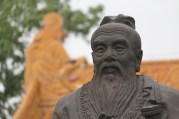
Confucius_Sculpture,_Nanjing

Confucius and Laozi, the philosophers who founded Confucianism and Daoism, lived just before the Warring States Period of ancient China (476 – 221 BCE), a time of war, tragedy and interest in philosophy.  Unfortunately, people’s lives are full of problems, but fortunately problems make people think about their lives, question the answers of authorities and experts, and reason beyond their understandings.

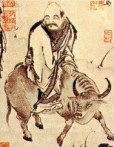
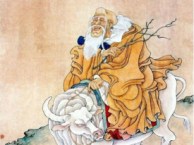
Laozi

Each of us, as individuals, should use both belief and doubt to become better, wiser people, but how should we go about doing this?  Confucianism and Daoism, the two great philosophies of ancient China, gave people opposing ways to gain wisdom.  Many in ancient and modern times used both to compliment and extend each other.

The Confucians say we should build ourselves up to be educated, compassionate and civilized, while the Daoists say we should clear ourselves out to become open-minded, patient and peaceful.  The Confucians say we should learn from others, reason for ourselves, and do what we know to be right.  The Daoists say we should seek less for ourselves and gain perspective beyond our own interests, reasons and actions.

Confucius, the Golden Rule & Learning from Everyone

Confucius Latin

When Catholic Jesuit missionaries arrived in China in the 1600s, they were astounded to find that Confucius, the most influential and central Chinese philosopher, was incredibly similar to Jesus in his sayings and teachings.  First and foremost, like Jesus, Buddha, Muhammad and other revered teachers, Confucius taught what has been called the Golden Rule: Do for others what you would want them to do for you, and do not do to others what you do not want done to yourself.  Confucius said that this was the single thing that should guide one’s life, and that compassion is the central thread running throughout his thinking.

chinese-scholars1

Confucius’ student Zigong once told his teacher, “I do not want to do to others what I do not want them to do to me.”  Confucius replied, “You have not come that far yet”, probably because none of us want others to simply tell us that they are amazing.  Another time, Confucius heard Zigong criticizing other people, and said, “Zigong must have already reached perfection, which affords him leisure I do not possess.”  Confucius is being sarcastic, as he often said that no one is perfect, but anyone can be excellent by continuously working to become better.

confucius-teaching-hillside-painting

Not only can anyone be excellent, but we can each learn from anyone about how to be better ourselves.  Confucius taught that when we see great people, we should seek to be like them, but when we see horrible people, we should seek how we are like them by examining ourselves.  Confucius said, “Put me with any two people at random and they will always have something to teach me, as I can take their qualities as a model and their defects as a warning.  Clearly, Confucius believed that we all share the same set of strengths and faults, no matter how talented (or horrible) we happen to individually be or where our talents are.

emperor-shun-of-china

Because no one is perfect and everyone can learn from anyone, there is no one who is above criticism, not even the prince of the state.  When asked by a duke if there is a single thing that could ruin a country, Confucius said that if the prince is never told when he is in error or contradicted, it could be the ruin of everyone.  About himself, Confucius said, “I am fortunate indeed… Whenever I make a mistake, there is always someone who notices it.”

chinese-painting-inquiring-about-the-dao

Daoism, Perspective & Less is More

laozi-water-buffalo

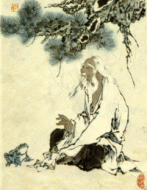
The legendary Daoist sages Laozi, Zhuangzi and Liezi taught that human perspectives are limited, and we should always keep this in mind.  Because we only have partial perspectives, we should keep in mind that others have their own perspectives which may not be the same as ours.  In one famous story, a turtle comes across a frog living in a well, and tells the frog about the sea, water that goes beyond the horizon with no walls in sight.  The frog refuses to believe the turtle, arguing that he has lived in water all his life and knows perfectly well that it comes in wells that are only so wide and have walls.  In Zhuangzi’s book, it says:

frog-with-zhuangzi

You can’t discuss the ocean with well frogs.  They’re limited by the space they live in.  You can’t discuss ice with summer insects.  They’re bound to a single season.  You can’t discuss the greater way of things with cramped scholars.  They’re shackled by their doctrines.  Now you have come out beyond your banks and borders and have seen the great sea, and so you realize how small you are.  From now on it will be possible to talk to you about the greater way of things.

japanese monkey painting

If someone sleeps in a damp place, their back aches and they ends up half paralyzed, but is this true of a carp?  If someone lives in a tree, they are terrified and shake with fright, but is this true of a monkey?  Of these three creatures, which knows the proper place to live?  We eat the flesh of grass-fed and grain-fed animals, deer eat grass, centipedes find snakes tasty, and hawks and falcons love mice.  Of these four, who knows how food ought to taste?  Monkeys pair with monkeys, deer go out with deer, and fish play around with fish.  Men claim that Mao-Qiang and Lady Li were beautiful, but if fish saw them they would dive to the bottom of the stream, if birds saw them they would fly away, and if deer saw them they would break into a run.  Of these four, which knows the standard of beauty for the world?

samurai-on-horseback-statue

Daoists also teach the idea of wu-wei, or non-action.  This does not mean that one should not act at all, but that often doing less is doing more.  Being patient and paying attention can save us from doing too much or having to do things over again.  In a Japanese story that illustrates this well, a local lord has three sons and must decide who should inherit his position.  He tests them by placing a pillow on the door to his room and calling them one at a time.  The eldest son enters and annihilates the pillow in a frenzy of skilled sword strikes.  The middle son draws his sword but sees the pillow in mid-air and catches it.  The youngest son sees the pillow on the door, tucks it under his arm and enters the room to the joy of his father.  The youngest son was paying attention, and so he did not even need to pull out his sword.

walking-in-nature-chinese-painting

There are many passages In the Dao De Jing and Zhuangzi, the two central texts of Daoism, that similarly teach that wanting too much and trying too hard is the wrong way to be:

Sages do not boast, and are thus admired by everyone, do not want to shine, and thus will be enlightened, do not seek excellence, and are thus excellent, and because they do not argue, no one can argue with them.

chinese-mountain-painting-stairs

Those who know do not speak.  Those who speak do not know.

Whoever knows how to lead well is not warlike.  Whoever knows how to fight well is not angry.  Whoever knows how to conquer enemies does not fight them.  Whoever knows how to use others well keeps themselves low.

archer-china

Those who divide fail to divide.  Those who judge are bad at judging.  What does this mean, you ask?  The sage embraces things.  Ordinary people judge between things and parade their judgements in front of others.  So I say, those who judge fail to see.

When you’re betting for cheap prizes in an archery contest, you shoot with skill.  When you’re betting for fancy belt buckles, you worry about your aim, and when you’re betting for real gold, you’re a nervous wreck.  Your skill is the same in all three cases, but because one prize means more to you than another, you let outside considerations weigh on your mind.  They who look too hard on the outside get clumsy on the inside.

~ Ordinary Philosophy and its Traveling Philosophy / History of Ideas series is a labor of love and is ad-free, entirely supported by patrons and readers like you. Please offer your support today!

Is it Ethical to Use Data from Nazi Medical Experiments? by Lynn Gillam

Birkenau (Nazi concentration camp where medical experiments were performed on prisoners) by Scotch Mist - Own work - creative commons license, via Wikimedia CommonsDuring World War II, Nazi doctors had unfettered access to human beings they could use in medical experiments in any way they chose. In one way, these experiments were just another form of mass torture and murder so our moral judgement of them is clear.

But they also pose an uncomfortable moral challenge: what if some of the medical experiments yielded scientifically sound data that could be put to good use? Would it be justifiable to use that knowledge?

Using data

It’s tempting to deflect the question by saying the data are useless – that the bad behaviour must have produced bad science, so we don’t even have to think about it. But there is no inevitable link between the two because science is not a moral endeavour. If scientific data is too poor to use, it’s because of poor study design and analysis, not because of the bad moral character of the scientist. And in fact, some of the data from Nazi experiments is scientifically sound enough to be useful.

The hypothermia experiments in which people were immersed in ice water until they became unconscious (and many died), for instance, established the rate of cooling of humans in cold water and provided information about when re-warming might be successful. Data from the Nazi experiments was cited in scientific papers from the 1950s to the 1980s, but with no indication of its nature.

The original source appears as a paper by Leo Alexander, published in Combined Intelligence Objectives Subcommittee Files. This is an unusual type of publication to be mentioned in a scientific journal, and it’s unclear that it comes from the trial of Nazi doctors at Nurmemberg.

In the late 1980s, US researcher Robert Pozos argued the Nazi hypothermia data was critical to improving methods of reviving people rescued from freezing water after boat accidents, but the New England Journal of Medicine rejected his proposal to publish the data openly.

Use of data generated by the Nazis from the deadly phosgene gas experiments has also been considered, and rejected by the US Environmental Protection Agency, even though it could have helped save lives of those accidentally exposed.

A tricky conundrum

So should the results of Nazi experiments ever be taken up and used? A simple utilitarian response would look to the obvious consequences. If good can come to people now and in the future from using the data, then its use is surely justified. After all, no further harm can be done to those who died.

But a more sophisticated utilitarian would think about the indirect and subtle consequences. Perhaps family members of those who were experimented on would be distressed to know the data was being used. And their distress might outweigh the good that could be done. Or perhaps using the data would send the message that the experiments weren’t so bad after all, and even encourage morally blinkered doctors to do in their own unethical experiments.

Of course, these bad consequences could be avoided simply be making sure the data is used in secret, never entering the published academic literature. But recommending deception to solve a moral problem is clearly problematic in itself.

The trouble is that focusing on the consequences – whether good or bad – of using Nazi data, misses an important point: there’s a principle at stake here. Even if some good could come of using the data, it would just not be right to use it. It would somehow deny or downplay the evil of what was done in the experiments that generated them.

This is a common sentiment, but if it is to hold ethical weight we need to be able to spell it out and give it a solid foundation. A little reflection shows that, as a society, we don’t have an absolute objection to deriving some good out of something bad or wrong. Murder victims sometimes become organ donors, for instance, but there is no concern that is inappropriate.

Paying our debt

So how to decide when it’s all right to derive some good from a wrongdoing? I think the answer lies in considering what society owes ethically to the victims of a wrongdoing. The ongoing investigations into institutional child sexual abuse in a number of Western countries have brought this question sharply into focus.

The wrongs done to victims of abuse are over but that’s not the end of the matter. Victims are ethically owed many things: recognition that what was done to them was indeed wrong, a credible indication that the society takes this seriously, an effort to identify, apprehend and punish the perpetrators, and compensation for their ongoing suffering and disadvantage. But beyond this, we have an obligation not to forget, and not to whitewash.

Victims of Nazi medical experiments are owed these same things. If society’s obligations to them have broadly been met through the Nuremberg trials and the ongoing global abhorrence of the awful things done to people in World War II, then it might be ethically possible to use the data if it could lead to some good.

But this must only be done with absolute openness about the source of the data, and clear condemnation of the way it was obtained. Citation of the Nazi hypothermia data in the medical and scientific literature from the 1950s to the 1980s gives no hint at all about of what is being referred to, and so falls ethically short.

Click here to read more articles in The Conversation’s series On Human Experiments.The Conversation

Lynn Gillam, Academic Director/ Clinical Ethicist, Children’s Bioethics Centre at the Royal Children’s Hospital, and Associate Professor in Health Ethics at the Centre for Health and Society, University of Melbourne

This article was originally published on The Conversation. Read the original article.

Compassion, Emptiness, and the Heart Sutra, by Ryan V. Stewart

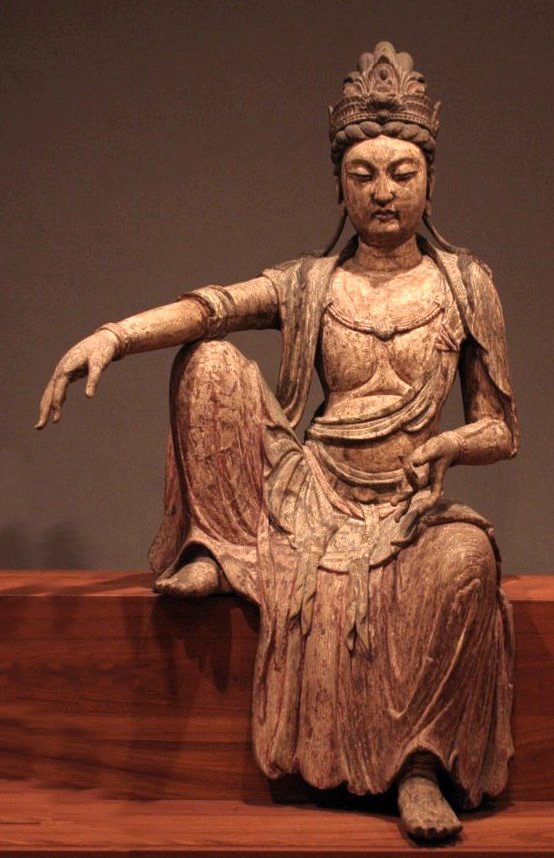
d1185-guanyin252c2bthe2bchinese2bexpression2bof2bavalokiteshvara252c2bnorthern2bsung2bdynasty252c2bchina252c2bc-2b1025252c2bwood252c2bhonolulu2bacademy2bof2barts252c2bpublic2b1One of the chief concerns of philosophy, since time immemorial, has been to properly address the question, “How do I live?” Namely, “How do I live well?” Naturally—for as long as our species has had the wherewithal to question its purpose and condition, the problem of ethics has found itself at the frontiers of human thought. Many moral philosophies have since rushed into that wide gulf between knowledge and truth, systems of understanding and action which attempt to conquer our ethical indecisiveness and color in a void where so much uncertainty exists.

Many traditions prescribe the ideal, virtuous, or noble life. From the ancient, academic, or political—e.g. Epicureanism, utilitarianism, humanism, or libertarianism—to the more mystical or overtly religious—e.g. Jainism, Christianity, or Taoism—many are concerned with how one acts (or can act), or at least how one views oneself in relation to others and to the world at large.

The Buddhist religion—though some prefer to see it as a philosophy—is one such tradition. An ancient and diverse faith, Buddhism is perhaps best known for its thorough and egalitarian moral philosophy. And while it is indeed diverse (containing a huge number of schools, most with their own interpretive methods and styles of meditation and ritual practice), compassion (or karuna) is treated as an important trait of an enlightened being, and a cornerstone of Buddhist thought, in all sects. Thus, throughout the various iterations of Buddhism—from the forest-monk Theravada of Thailand to the Zen habits of Japan—one finds a remarkably consistent system of normative ethics, and a conceptual framework for promoting the wellbeing of all sentient creatures.

That all being said, the ontological concepts which necessitate Buddhist compassion are perhaps most concisely expressed by the Mahayana (“great vehicle”) tradition—one of two or three major branches into which Buddhism is often divided. Buddhism maintains a unique connection between metaphysics and ethics, and the deeply profound philosophies of many Mahayana thinkers, and those presented in a number of the Mahayana sutras (Buddhist sacred texts), can be seen as an attempt to navigate and define that sort of connection.

Where does one begin in exploring such a notion? The corpus of Buddhist literature is impossibly vast, and anyone could spend a lifetime pondering so many mystical works and their commentaries. I would argue, however, that in order to form at least a basic understanding of the Mahayana ethical-metaphysical relationship, we need look no further than the ancient and seminal Heart Sutra.

Written as a dialogue and teaching, the Heart Sutra is a brief monologue on the part of a bodhisattva (an enlightened being who has postponed his or her salvation in order to remain in the world and aid sentient beings) by the name of Avalokiteshvara. Avalokiteshvara (known as Guanyin in China and Chenrezig in Tibet—the latter where the Dalai Lama is considered his living manifestation), whose name roughly translates to “the lord who looks down,”—that is, he looks down upon the world of the unenlightened with charity and love—is a bodhisattva representing perfect compassion. Befitting this disposition, the Avalokiteshvara of the Heart Sutra provides a mortal monk, Sariputra, with a profound teaching, a parcel of great wisdom intended to eradicate the suffering of sentient beings. Avalokiteshvara’s great revelation is that all phenomena are, in fact, “empty.” (Red Pine, p. 3.)

To clarify, the bodhisattva is saying that everything in the world lacks an inherent “self,” or essence. This concept finds its origin in the oldest, pre-Mahayana forms of Buddhism, and the Buddha himself noted that “no-self” is, along with impermanence (anicca) and unsatisfactoriness (dukkha), one of three “marks” which constitute the nature of reality. Anatta, for the historical Buddha, and for the older Theravada school, mostly implies that nothing in the world can be said to be one’s “self,” (atman), and thus identifying anything as representing the essence of oneself—a “self” made up only of non-self parts (cf. Hume’s “bundle theory”)—is delusory. The self-concept, for the Buddha, is an illusion of essence which binds human beings to false worldviews and causes them to misrepresent reality, thus barring them from enlightenment.

The falseness of self-hood forms a bedrock of Buddhist philosophy. In the “emptiness” (sunyata) of the Mahayana, however, we find anatta further developed. (Nagao, pp. 173-174.) We owe this development chiefly to Nagarjuna, a first-century Buddhist philosopher who founded the Madhyamaka school of Mahayana Buddhism, and developed the philosophies (one most notably being sunyata) inherent in the Mahayana Prajnaparamita sutras. In his text, Fundamental Verses on the Middle Way, Nagarjuna famously states, to this effect, “All is possible when emptiness is possible. Nothing is possible when emptiness is impossible.” Thus emptiness, in this sense, is not mere nothingness, but an open space in which all potential exists. Hence one cannot truly differentiate being and nonbeing, total emptiness and total “allness,” infinite nothing and infinite something. One implies, or necessitates, the other. In the Heart Sutra, Avalokiteshvara explains this to Sariputra when he says, “Form is emptiness, emptiness is form; emptiness is not separate from form, form is not separate from emptiness; whatever is form is emptiness, whatever is emptiness is form.” For the Mahayana school, emptiness is not merely the surrogate for essence, and a blank space where one imagines the self, but the numinous nature of all things.

Now, this emptiness implies another notion (this one common to Buddhism on the whole), “dependent origination.” (Pratityasamutpada.) According to this doctrine, all phenomena exist dependently, depending upon one another in order to maintain their existence. (Encyclopedia Britannica, n.p.) Thus, there is no free, permanent, inherent, and individual existence for any beings or objects. Their causes and conditions are inextricably linked to the unending web of phenomena arising and passing away in the universe. One thing cannot be said to be truly separate from anything else when it exists, in time and space, alongside all else, and when it requires for its existence the (falsely!) extraneous forces of nature, matter, and energy. Thomas J. McFarlane, writing in his 1995 essay “The Meaning of Sunyata in Nagarjuna’s Philosophy,” sums this up nicely when he states, “According to Madhyamika, the root of all suffering lies in… the error of mistaking the relative for the absolute, the conditioned for the unconditioned. We take imagined separation as real, supposed division as given.”

An easier, less flowery way to illustrate these three ideas—no-self, emptiness, and dependent origination—in tandem may be to imagine something made up of familiar parts: A tree, for instance. We all know that trees are made of a variety of components—trunk, roots, branches, leaves. Where, then, lies the “treeness” of the tree, in the tree? Is the tree its roots? Is the tree its leaves? No? Why not? One may say, “‘tree’ is the name we give to the sum of the parts of the tree,” but then, of course, “tree” is reduced to a mere name and concept, not a thing-in-itself. Whatever can be called a “tree” is ultimately made up of non-tree parts, and thus there is no “treeness” at all. Similarly, the self, though imagined as one’s essence or “soul,” can be divided into mental phenomena and parts of the body. (All of which are subject to constant change, hence anicca.) There is no “selfness” for this self, only the experience of a very familiar concept by the same name. Thus Avalokiteshvara tells Sariputra, “Whatever is form is emptiness, whatever is emptiness is form. The same holds for sensation and perception, memory and consciousness.”

We now have a grasp on no-self (anatta), and can see how easily it translates to no-essence-anywhere-at-all (sunyata) by analyzing everything down into its (non-) fundamental components, components which themselves are also made up of other components, and so on and so forth. One can continue dividing things and concepts forever, down to an infinitesimal. (Granted, this is a conceptual exercise, and the author omits any claims about concrete physics for lack of sincere knowledge of the subject. Regardless of Planck lengths and fundamental particles, confer “infinite divisibility.”)

But how does emptiness translate into connection, into pratityasamutpada? Let us continue with the metaphor of the tree, and observe how the tree is not only constructed of non-tree parts, but dependent on the conditions of the world at large for those very constructs: A tree, like all lifeforms, requires a number of inputs from its surrounding environment in order to survive and thrive. Water, soil, and sunlight most readily come to mind. Water, for instance, rains down from clouds, which themselves are formed from atmospheric water vapor. Soil is produced over many years by the degradation of organic matter, and organic matter is contained by other lifeforms, which exist by dint of their evolutionary ancestors. Sunlight reaches the Earth from the Sun, which itself was formed billions of years ago from sparse bits of matter produced in the Big Bang.

What sort of philosophical quandary do we run into here, then? For our purposes it is best to put the question this way: “At what point is the tree no longer itself?” That is to say, “At what point is any “one” thing separable from the causes and conditions that give rise to it, or the causes and conditions that it gives rise to?”

If we take this notion—this pratityasamutpada—to its logical conclusion, we come to recognize that we are, in order to exist, dependent upon components and conditions outside of ourselves; that everything, in fact, is; that the entire universe is one integrated system, and in some sense an entity-unto-itself.

One response to such a situation—and an understandable one, at that—may be that of deep compassion: the fact that we are dependent upon all else, and all else upon us, in some sense (and albeit in a small way), gives us reason to care for the world (and other beings especially) as if the welfare of other things and beings was the same as ours… as if we have no “self” apart from that of the world at large, the welfare of which—from crabs to carpenters—is our concern as beings endowed with the capacity for both suffering and empathy. No doubt, it’s this very suffering which binds us to one another. We, knowing our own pain, can experience it vicariously, through others. Philosophers as diverse as Marcus Aurelius, Hume, and Schopenhauer understood the universality of pain and empathy, and thus their importance in morality.

The Buddha, of course, realized the same. And while you may not find a be-all-end-all answer to the big ethical problems in one particular system, opting instead (as many do) for an eclectic approach to moral philosophy, you have to admit that Buddhism provides one of the most intricate (and practical) answers to our moral quandaries.

As long as human beings have questioned the nature of their freedom and manners of life and livelihood, philosophy has helped fill the void inherent in the realms of “good” and “evil” and everything in between. Buddhism presents us with one particularly bright light, helping to illuminate the murky and ever-indefinite realm of philosophical inquiry.

About the author ~ Ryan V. Stewart is a writer and student from Connecticut. He has been actively writing since 2006, and blogs about everything from mysticism and philosophy to environmental issues, the arts, and personal peeves at The Grand Tangent. He’s interested in the intersection of mysticism, comparative religion, and philosophical analysis (among other things). 

~ Ordinary Philosophy and its Traveling Philosophy / History of Ideas series is a labor of love and is ad-free, entirely supported by patrons and readers like you. Please offer your support today!

Bibliography

Red Pine, trans. The Heart Sutra. Washington, DC: Shoemaker & Hoard, 2004. Print.

Nagao, Gajin. Mādhyamika and Yogācāra: A Study of Mahāyāna Philosophies. Delhi, India: Sri Satguru Publications, 1992. Print.

“Paticca-samuppada.” Encyclopedia Britannica Online. Ed. Anonymous. Encyclopedia Britannica, n.d. Web. .

Josh Duggar and Public Hysteria Over the ‘Sex Crimes’ of Children

Sick of hearing about Josh Duggar yet?

I sure am. But it’s not the volume of reporting and public gossip on the story that’s making me sick. It’s the way we simultaneously fear and drool over stories that reveal that children have sexual instincts too. It’s the way our laws and the media punish children, often for the rest of their lives, for this very fact. And it’s the way that far too many of my fellow freethinkers, supposedly enlightened and sex-positive, have jumped on the bandwagon in their zeal to ‘get at’ the Duggars.

In case you haven’t heard, Josh is the 27 year old son of celebrity parents Michelle and Jim Bob Duggar, a conservative Christian couple whose practice of rampant childbearing (19 at this point) made them the subject of a popular reality television show.

It turns out that Josh was a kid like many other kids: as a young teen, he touched other children, some far younger than himself, in a sexual manner. Most of it was light petting, or touching of the genital area through clothing. I couldn’t find evidence that there was any violence or physical coercion involved. At some point Josh went to his parents and confessed, and over time, law enforcement was called in, and all those involved received counseling.

It started out with gossip, then somehow, someone got Arkansas authorities to release the police report, which was splashed all over the news by trashy celebrity-gossip publication InTouch Weekly. While names and pronouns were redacted, it became clear that the report was about Josh, and he and his family ‘fessed up. At the request of one of the recipients of the unwelcome touching, the record was destroyed.

Even my fellow freethinkers and sex-positivists have joined in the fray. While giving half-hearted disclaimers to their spreading Josh Duggar ‘molestation’ tales (a strong term for the type of non-violent, secret petting described) even though he was a child at the time, they’re so eager to get at Michelle and Jim Bob that their scruples have fled them.

Deeply disappointing. While it’s right that children taught to respect the bodily integrity of others and the importance of consent, it’s also true that children are insatiably curious, with immature brains that lack the structures adults rely on for self-control. C’mon, people. Don’t you have any memory at all of what it’s like to be a little bag of hormones lacking a developed prefrontal cortex? Don’t you remember the storms of emotion and urges, which we could hardly make sense of or control, that raged through us and seemed to take over our minds and bodies? Yes, children have bodies with parts, and sometimes they explore their budding sexuality by touching each other on these parts. We need to get over it and grow up, if we are to be the wise and just helpers children need as they grow up.

Whether or not their intentions were protective or self-serving, the Duggar parents did the right thing by shielding their child from the media circus. They probably did the right thing by privately turning to law enforcement to help teach their recalcitrant young son that actions have consequences and that there are personal boundaries that must be respected. They definitely did the right thing by seeking counseling, even if the counseling could have been of better quality. This is not a story, as many are portraying it, that echoes the clergy child abuse scandals of the last few decades. Those were real sexual crimes perpetuated on children by adults who are far more capable of self-control, and who wield a sort of power that children, as Josh was at the time, do not possess.

Correct children for their mistakes, punish them appropriately to discourage unacceptable behavior, but do not pillory them in the media and do not punish them for the rest of their lives for their childhood wrongdoing. This is true even if the person is now an adult. We do not hold adults to account for what they did as children because we believe in accountability and personal responsibility. To gossip about the mistakes and misdemeanors of children now grown is disgusting and morally reprehensible, because it teaches people that it’s no use to try and become a better person if society will always punish you no matter how you better yourself in the future. Shame on you, Rachel Ford of Friendly Atheist, usually such a good forum for critical thinking. Shame on you, Ana Kasparian and company on the Young Turks, for waiting till near the end of your video commentary to make a halfhearted disclaimer that kids’ disciplinary records shouldn’t be made public, after you passed along this gossip in such an unbalanced and salacious manner. And shame on all of you who joined in this witch hunt.

There’s yet another story that I recently heard about a man who was put on a sex offender registry because he, as a child, had sexual contact with another child. The young man in the story did wrong, but he reformed. Yet he and his family are still suffering the consequences, as are thousands just like him (often for offenses as minor as showing a photo of a body part to another minor, consensually or not), and may be suffering for the rest of his life. There’s nothing so cruel as a simultaneously sex-obsessed and sex-fearing society toward a registered ‘sex offender’, regardless of how they got the label. Think of that young man, of Josh, and of how every single one of our lives could be destroyed if our childhood mistakes were held over our heads in perpetuity.

If people want to criticize the Duggar parents for making a circus of their family and exposing their small children to the stress and danger of life in the limelight (think of the Jackson family and how celebrity affected those kids), well and good. But LEAVE THE KIDS OUT OF IT.

Sources:

Bryan, Miles. For Juvenile Sex Offenders, State Registries Create Lifetime of Problems’. All Things Considered, NPR. May 28th, 2015. http://www.npr.org/2015/05/28/410251735/for-juvenile-sex…

Ember, Sydney. ‘Josh Duggar Molested Four of His Sisters, His Parents Tell Fox News’, New York Times, June 4th 2015. http://www.nytimes.com/2015/06/04/business/media/josh-duggar-molested…

Ford, Rachel. ‘What the Rush to Defend Josh Duggar Tells Us About Conservative Christian Morality’, Friendly Atheist blog. http://www.patheos.com/blogs/friendlyatheist/2015/05/27/what-…

‘Josh Duggar Chilling Molestation Confession In New Police Report’, InTouch Weekly, June 3 2015
http://www.intouchweekly.com/posts/josh-duggar-chilling-molestation-confession-in-new-police…

‘Josh Duggar’s Child Molestation History Revealed’, The Young Turks, May 22nd 2015.
https://www.youtube.com/watch?v=_MEjjV_jcCc

Welcome to the Podcast Edition of Ordinary Philosophy!

Hello dear readers, and welcome to the
podcast version of Ordinary Philosophy!

You can listen to the podcast here, on Google Play, or subscribe in iTunes.

Like many of you, I’m a big fan of podcasts, mostly because my life is very busy. One day in the future, I hope to have a lot more time to do each task one at a time, to really be present, as they say, as I wash the dishes, straighten the house, do the laundry, and perform all those other tasks that take up time, but not much thought.

But at this time in my life, between my day jobs, my creative projects, and spending time with friends and family (which I don’t do enough of these days, sadly), I don’t have enough time to keep up the world of ideas as nearly much as I’d like to by sitting down and reading. Instead, I keep myself informed and increase my education by listening to lots of podcasts: discussions with my favorite authors and thinkers, audio renditions of books and essays, debates, recordings of classes on my favorite subjects, and so on. I listen to these podcasts while doing those aforementioned chores, and let me tell you: as one who is not fond at all of household chores like doing the dishes and washing the floor, the podcast is a marvelous invention: they transform boring chore time into great opportunities for learning and exploration. I’m also an avid hiker, and it’s a wonderful thing to be able to immerse myself in some fascinating ideas or discussion as I immerse myself in the beauties of nature.

To begin with, this podcast will simply consist of audio recordings of my Ordinary Philosophy pieces. Over time, I may add commentary and who knows, perhaps interviews and discussions with guests. We’ll see how it goes. In the meantime, here’s Ordinary Philosophy in audio form: I hope you find it interesting and enjoyable!

… And here’s episode 2: Is the Market Really the Most Democratic Way to Determine Wages?
Originally published as an essay Feb 6th, 2014

Virtue Ethics: An Ancient Solution to a Modern Problem, by Peter D.O. Smith

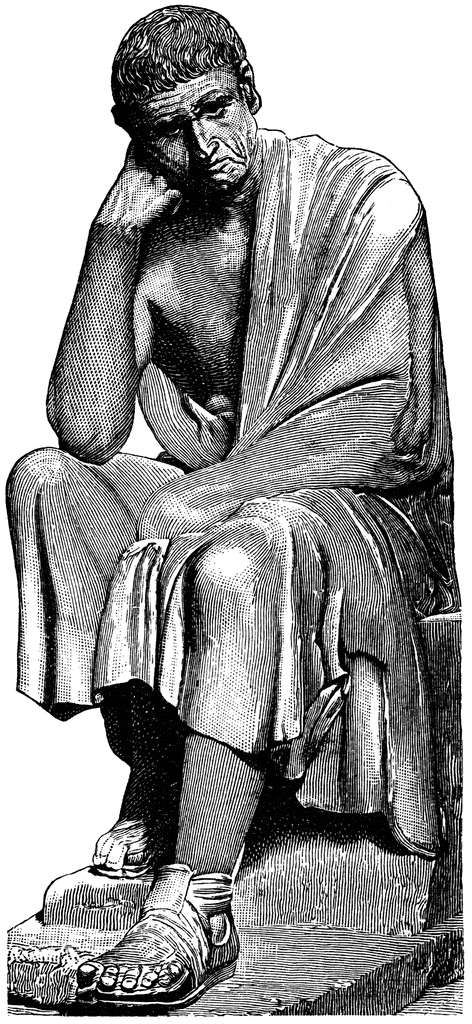
Aristotle

I recently discovered this piece by Peter D.O. Smith in Scientia Salon, a favorite ‘webzine about philosophy and science‘ of mine.

I’m especially interested in philosophy’s attempt to unify ethics, to help bring the various particular ethical systems and local moralities into some sort of accord, or at least to bridge the gaps between them to whatever extent possible. Great harm often results when adherents of different ethical / moral systems come into conflict (religious wars, political gridlock), where instead of seeking common ground in the pursuit of the good, conflicting parties seek to dominate by force and inflammatory rhetoric. Blinded by self-righteousness, these conflicting parties can bring about a situation where at best, no progress is made as each side expends all of their efforts undermining the other, or at worst, inflict death and destruction on each other and on innocent bystanders.
This piece addresses this problem, and offers virtue ethics as an excellent candidate for its resolution.
What do you think? 
~~~~~~~~~~~~~~~~~~~
Introduction

This article is neither a defense of nor an attack against either religion or secularism. It treats them as well established sociological facts and no more than that. I take them as given and argue that a greater moral good can be achieved if the two belief systems find common moral ground in virtue ethics.

Why should we care?

Moral choices infuse most aspects of our life, whether we know it or not. And a great number of these moral choices are bad ones. This is why our prisons are filled to overflowing [1], and recidivism is so high at 66% [2]. This is why we have so many war dead and this is why so many die violent deaths at the hands of murderers or radical ideologues. This is also why we have such an inequitable distribution of wealth. This is why cheating is rampant at schools and universities [3]. We maintain large standing armies to protect ourselves from the bad moral choices of others and on occasion we use it to inflict our bad moral choices on others. This is why we have no qualms in spying on our own citizens [4] or in killing without due process. This is why almost everyone has been the victim of crime, unfairness, injustice, discrimination, bullying [5], sexism, racism, ageism or other forms of bigotry, bias, and discrimination. This is why stalking is commonplace [6].

Bad moral choices touch us all and are the major cause of suffering in today’s world. Every person who has been jilted by a cheating partner has felt that suffering. Marital infidelity is the most common cause of divorce and abuse is another important cause [7]. One in five women are sexually assaulted at university [8]. Even natural disasters such as earthquakes or floods are compounded by moral failures as nations don’t respond adequately. Famines become moral failures when we cannot distribute food where and when it is needed. Our economic systems become moral failures when they turn into instruments of greed. Our political systems become moral failures when they are used for the advantage of the powerful, to exploit or neglect the weak.

The point I am making is that moral suffering is real, pervasive and needs attention. We have made great progress in reducing material suffering, but only some progress in reducing moral suffering. This is the important challenge that faces us today, to reduce moral suffering with the same degree of success that we have reduced material suffering.

What then is the problem?

The problem quite simply is that, in comparative terms, we do not give moral problems much attention at all and that we give it the wrong kind of attention, by creating a growing thicket of rules and regulations [9].

Modern society rewards material progress while neglecting moral progress. We have huge budgets for science research and we give large rewards to outstanding achievers in science. But society allocates far smaller amounts to advance moral interests or to reward moral achievers. As a simple example, of the six Nobel awards, only one (Peace) has a moral dimension [10]. Of the other 21 high-honour prizes, only seven have a moral component [11]. School education has a strong science bias but gives little attention to moral education [12]. Our criminal justice system spends a great deal on addressing the outcome of moral problems but little on addressing the causes of moral problems, with the result we have a recidivism rate of 66% [2]. We punish moral offenses but we do not prevent them. We have resorted to a form of legislated morality with our criminal justice and human rights systems. This is a framework with large gaps that does not address or give guidance to private morality.

We are becoming a rules based society, but the rules have only a weak hold because they lack intrinsic motivation [13]. Perhaps the most dramatic example of this was the collapse of the banking system. Banking is one of the most highly regulated parts of the economy, and yet that does not prevent abuse and exploitation [14]. Without intrinsic motivation the rules become a challenge to find means of evasion. We have reacted by adding more rules but it is only a matter of time before more means are found to evade them too. There has been an explosive growth in criminal laws. For the past twenty-five years, a period over which the growth of the federal criminal law has come under increasing scrutiny, Congress has created over 500 new crimes per decade [9]. Adding to this, the Administration is increasingly relying on mandates and directives.

A modern problem

Western society, for a long time, had a broad consensus on morality that was derived from religion. Indeed religion can be seen, in sociological terms, as society’s way of promoting cohesion through moral consensus [15]. Modernity and the Enlightenment have weakened the hold of religious morality, providing space for alternative conceptions of it to take hold. Modernity introduced a spirit of utilitarianism [16] and this has shaped present day society’s concept of morality. But it was not merely the concept that changed, but also the authority of moral systems. Religious moral systems derived their authority from their concept of God and this helped to provide intrinsic motivation. With the new utilitarian morality a new authority was introduced, the individual. Inevitably this has resulted in a weakened and diffuse moral sensibility that contains many contradictions. This new concept of morality has been accompanied by a shift from intrinsic to extrinsic motivation. Extrinsic motivation is, by its very nature, less effective.

With this new concept of morality came a changed approach to society’s problems. The spirit of utilitarianism has created a tacit assumption that alleviating material need reduces the impetus for moral wrongs. There is a belief that moral wrongs are largely the outcome of material conditions. Thus effort has been directed to solving material problems, which have in any case been shown to have easy solutions, while true moral problems remain intractable and so are neglected. We have been picking the low hanging fruit.

We are divided by differing concepts of morality

With the weakening of religious morality and the widespread adoption of utilitarian approaches a sharp moral divide has opened up in society.

The secular world has adopted a tacit, inchoate form of moral consequentialism. It believes there is no absolute good or bad, only that acts should be judged by their consequences. It rejects the absolute lawgiver and the laws of religious deontology. It makes the individual the final arbiter of his acts.

The religious world, by contrast, believes in absolute good and bad and that acts can themselves be inherently good or bad. It believes there is an absolute lawgiver that has handed down a set of rules for a good life. The religious world rejects moral consequentialism on the grounds that it is a shifting and dangerous moral system that is easily tailored to suit the needs and desires of the moment.

As consequentialism or utilitarianism rose to the fore, reflecting the material and mechanical spirit of the times, challenging long held moral conceptions, Protestant Christianity (and Islam) retreated into a form of hardline deontology. The result is the strong ethical divide we see today.

There is thus a yawning chasm between the moral concepts of the religious and secular worlds. This chasm weakens the ability of society to address common moral problems since it lacks consensus. Society has reacted to this problem with a growing thicket of laws with no end in sight [17]. This has proven to be a poor solution, since adding rules merely invites further evasion if they are not reinforced or accompanied by some form of intrinsic motivation.

The need for a middle ground

We are a common people with common moral problems that affect us all. To solve these problems we need a unifying moral concept that both the religious and secular worlds can accept. For example, schools are a place where we should also give our youth moral preparation for adult life, and schools serve both world-views. This is one example of why it is necessary that we find common ground. Deontology and moral consequentialism are not acceptable to both sides of the divide and so cannot fulfill this need.

Which raises the question: is there a middle moral ground where the secular and religious worlds can meet and agree? Today’s society places a strong emphasis on the concepts of justice and rights. These can be seen as instances of what are known as ‘virtues’ and it is in virtue ethics, the third major branch of ethical philosophy, that I see an important opportunity for finding common ground between the secular and the religious worlds. Virtue ethics shows promise as the means of filling in the gaps of legislated morality. One can think of it as being the soft flesh on the hard skeleton of legislated morality, making a healthy, functioning body that is directed to the purpose of flourishing. Virtue ethics can be seen as an important form of intrinsic motivation that makes the regulated rules of society more effective while providing strong guidance to unregulated, private conduct. It is not accidental that here has been a sharp increase in academic interest in virtue ethics lately [18].

The appeal of virtue ethics

Virtue ethics is an enduring idea with ancient roots. Aristotle, some 2,300 years ago, clearly articulated the ethical philosophy known today as virtue ethics [19, 20]. Cicero, close to the time of Christ, wrote of it as being one of the three main contending moral systems of the day [21]. Catholicism, early on, incorporated it into its teachings where it continues to this day to be a major influence [22]. The last 50 years have seen a marked revival of academic interest in virtue ethics [18, 23], and Alisdair McIntyre’s publication of After Virtue was a landmark in this revival [24].
Virtue ethics looks neither to rules nor to consequences. Instead it considers internal motivations directed at realizing the telos, or end, of a “good” person, and it is in this that the religious and secular worlds can find agreement. In my mind, the appeal of virtue ethics is fivefold.

First, the generally accepted list of virtues is free of religious terminology or implications. This makes the virtues acceptable to the secular world. At the same time the religious world finds them a natural extension of its beliefs. For example, Catholicism has embraced virtue ethics, and both secularists and theists would readily agree on the list of 52 virtues given by the Virtue Project [25]. Theists would add faith, hope and charity to that list while secularists would ignore them, a minor difference. The differences that the many belief systems bring to this are largely ones of terminology and emphasis. It is an ethical system that is neutral about belief systems and can therefore be accepted by all belief systems.

Second, supplying an internal motivation is a better way of obtaining a good outcome, whether of act or consequence. It is widely agreed that intrinsic motivation is more effective than extrinsic motivation (intrinsic motivation refers to doing something because it is inherently interesting or enjoyable, and extrinsic motivation refers to doing something because it leads to a separable outcome[13]).

Third, by supplying intrinsic principles, rather than rules, it is adaptable to a wide range of circumstances. A rules based system can only adapt to new circumstances by adding new rules, something that becomes intolerable in the long run.

Fourth, virtue ethics supplies a means of internalizing and integrating rules into a person’s behavior, making them more effective. It is a powerful way of reinforcing the rules and regulations of society by translating them into intrinsic motivation.

Fifth, virtue ethics can supply a new source of meaning, independent of but complementary to religious belief. It can be an antidote to the angst of modernity. This is a large field that is only touched on here.

In short, virtue ethics is capable of supplying an intrinsic motivation that is acceptable to both the secular and religious worlds. We live in an overwhelmingly rules dominated world. Virtue ethics offers a way of internalizing and then integrating rules such that they become intrinsically motivating. It is a promising field for finding common ground between the secular and religious worlds, to makes rules and regulations more effective, and to provide a source of meaning for the non-religious.

A practical solution

The attraction of virtue ethics is its practicality and simplicity. It can be formulated in simple terms that are appealing to most people. It is independent of belief systems and yet most belief systems can accept it, with only changes in terminology. It can easily be taught at an elementary level while still be challenging at a philosophical level. It is easily incorporated into codes of conduct for organizations.

But it is not just a solution to individual moral concerns. It can also be expanded to any domain of activity as an example discussed by Bruni and Sugden shows in the case of market economics [26]. They describe the market as a practice having a telos of voluntary and mutually beneficial exchanges. They explain: “On the supposition that the telos of the market is mutual benefit, a market virtue in the sense of virtue ethics is an acquired character trait with two properties: possession of the trait makes an individual better able to play a part in the creation of mutual benefit through market transactions; and the trait expresses an intentional orientation towards and a respect for mutual benefit. In this section, we present a catalog of traits with these properties, without claiming that our catalog is exhaustive.” Their catalogue of traits, or virtues, include universality, enterprise and alertness, respect for trading partners, trust and trustworthiness, acceptance of competition, non-rivalry, self-help and stoicism about reward.

Another example is the Character Counts! Coalition for moral education in schools, which uses a virtue ethics framework centered on respect, responsibility, trustworthiness, caring, justice, fairness, civic virtue and citizenship [27].

These examples are intended to show that a virtue ethics framework can readily be adapted to any domain of activity or ‘practice.’ This makes virtue ethics a very flexible approach that can be tailored to all parts of our culture.

The role of secularism

Secularism has defined itself in opposition to theism. Its great achievement was the separation of religion from public life. Going beyond that, some secularists have set themselves the goal of destroying religion. This seems to be an ill advised goal as its chief result has been: to poison the public perception of atheism [28] and to harden the stance of Christian fundamentalism. Religion is a deep seated sociological phenomenon and is not going away. It has been part of human history for at least 40,000 years and remains an important part of all societies. It is far too durable a phenomenon and there is no realistic prospect that it will be ended [29]. The criticisms directed at religion by secularism have prompted strong reforms in religion and so have been useful for that end. The so-called war between secularism and religion is now becoming counterproductive as it obscures the major issue facing society, that of moral suffering. Now it is time that secularism embraces this problem and treats religion as an ally and not an enemy, or at least declares a truce. This does not mean religion should not be criticized when the occasion demands it, and indeed criticism can be a healthy impetus for reform. But attention should be shifted to the real enemy, moral suffering. To overcome this enemy the secular world should make common cause with the religious world. It can do this by embracing virtue ethics and making it the central plank of a morally committed secularism.

A solution to future problems

Population growth and rapid industrialization of the third world will create a situation of resource shortages and ultimately low growth [30]. Coping with this new world will require a major re-adjustment of values away from today’s one of rampant consumerism centered on hedonistic happiness. It will require a strong sense of responsibility and restraint, frugality will become the new watchword. Virtue ethics is our best hope of navigating this challenging new world. As Julia Annas, in Intelligent Virtue [31], explains, the virtues are a template for flourishing, in that to become a virtuous person is to become a flourishing person. It is a move away from hedonistic happiness to the eudaimonia of the virtues. This is a radical move away from the idea of happiness that depends on circumstances or goods, a necessary move in the resource constrained world that lies in our future.

That this goal is not so elusive can readily be appreciated when we compare the levels of positive emotions of some poor countries with those of some rich countries [32]:
Panama 85%, Singapore 46%;
Lesotho 77%, United Kingdom 77%;
Swaziland 76%, Germany, 74%.
_____
Peter D.O. Smith is a foundry metallurgist, quality engineer, software engineer, and corporate manager (recently retired), who lives by the motto fides quaerens intellectum.

[1] US incarceration rate.
[2] Recidivism in the United Sates.
[3] Academic cheating fact sheet.
[4] The Snowden Files.
[5] 44% of children report having been bullied.
[6] Stalking.
[7] Causes of divorce.
[8] Sexual assaults at university.
[9] Revisiting the explosive growth of new crimes.
[10 Nobel prizes, literature, medicine, physics, chemistry, peace, and economics.
[11] Other high honor prizes.
[12] How Moral Education Is Finding Its Way Back into America’s Schools.
[13] Ryan and Deci, Intrinsic and Extrinsic motivation.
[14] Why only One Banker Went to Jail.
[15] Nicholas Wade, The Faith Instinct.
[16] Trends in utilitarianism – Google books Ngram.
[17] Business Ethics: The Law of Rules.
[18] Trends in virtue ethics – Google books Ngram.
[19] Nichomacaen Ethics.
[20] Notes on Nichomachean Ethics.
[21] On Moral Ends, Marcus Tullius Cicero, Julia Annas.
[22] The Cardinal Virtues in the Middle Ages: A Study in Moral Thought from the Fourth to the Fourteenth Century.
[23] Contemporary virtue ethics.
[24] Alisdair MacIntyre, After Virtue.
[25] The Virtues Project.
[26] Reclaiming virtue ethics for economics.
[27] The Six Pillars of Character.
[28] Net rating of religious belief systems.
[29] Growth of Religion.
[30] Paul Gilding, The Great Disruption.
[31] Julia Annas, Intelligent Virtue.
[32] Gallup poll, Positive emotions worldwide.

This piece was originally published on Sept 25th, 2014 at 
http://scientiasalon.wordpress.com/2014/09/25/virtue-ethics-an-ancient-solution-to-a-modern-problem/

Let’s Have an Honest Debate About Abortion

Have you seen the image to the left on social media sites recently?

As an advocacy poster, it’s quite effective, isn’t it? It tugs at the heartstrings, it moves us to feel the best emotions we are capable of: care, sympathy, and protectiveness, as it portrays a tiny human life in a helpless position. It invites you to endorse its message by clicking on the image if you think it says something true, which it does. Abortion ends a life, and that life is human. At a glance, it makes a powerful case for the author’s position.

Now suppose we take another image

…and give it what appears to be nearly the same caption: ‘

Click if You Think Surgical Removal of Undeveloped Twin Ends Human Life.’

This phrase also contains at least some truth. Would it be effective in rallying people in protest against the surgery? The surgery could save the fully developed twin’s life, or at least give them some degree of freedom, opportunity, and good health not possible so long as the undeveloped twin remained attached.

At this point, on whatever side of the abortion-rights debate you are on, you’re probably already protesting against at least one of these. What point would you make, what argument would you use? ‘A fetus is not a human life yet!’? Or, ‘Abortion is not like surgery to remove a parasitic twin: one is meant to end a life, the other to save one!’? Or, ‘That makes no sense, to compare a beautiful human baby to an assemblage of non-functioning human parts!’? Or something else?

(Note: throughout this essay, I’ve decided not to use the terms commonly used by either side in this debate. They’re inaccurate, disparaging, and to my mind represent the dishonesty that pervades mainstream debate. ‘Pro-life’ implies that people who believe in abortion rights are against life generally; ‘pro-abortion’ implies that people think having an abortion is awesome and everyone should go get one recreationally, or as casually as a boob job; ‘pro-choice’ and ‘anti-choice’ imply that the other side thinks people should have no choices at all when it comes to reproduction. Instead of these terms, I’m using the purely descriptive terms ‘anti-abortion-rights’ and ‘pro-abortion-rights’.)

I’ll start by addressing the last of the objections listed above. While it’s true that the two captions imply a comparison between a fetus to a parasitic twin, they do so primarily in the sense that the subject of each shares this characteristic: they are both human life. They are both composed of active, functioning cells, they take in nutrients and excrete waste products, they do not decay. And if a biologist were to put their cells under a microscope, or a geneticist were to sequence their DNA, they would classify them as human and not as any other kind of living thing. Yet, as you undoubtedly realize, they are not alike in many other ways, especially this one: one is (presumably) developing in a manner that has the potential to become a fully functioning human individual; the other has no such potential.

But the human fetus, as well as the human embryo (yes, also human life) and the parasitic sometimes share other circumstances: in some cases, the fetus has some sort of abnormality that will prevent it from having the potential for consciousness or for living much time at all.  And sometimes, the presence of the fetus is deadly or potentially deadly to the mother, as in the case of an ectopic pregnancy, or in cases such as that of the unfortunate Indian woman who died in labor in Ireland a few years ago. In such circumstances, the fetus or the embryo shares this relationship with the mother as the parasitic twin does to the developed one: the one depends for its life on the other, but is also the cause of the other’s debilitation or death.

The contrast between the two images and their captions reveal one of the main problems with the commonly used terms in the debate: the phrase ‘human life’ is used without specifying what’s really being talked about, a sort of  ‘bait-and-switch’ tactic, in which sometimes it means one thing, and sometimes another. Is what’s being talked about in both images ‘human life’? Yes. Are they both referring to the same sort of human life? No.

In the first case, it’s pretty clear that the author means ‘human person’ or at minimum, ‘potential human person’ when he says ‘human life’. This is not at all the same thing as what’s meant when applying the term ‘human life’ to the parasitic twin. The parasitic twin, in the case of the photo above, as well as in most other cases where that term is used, is a un- or mis-developed twin that, if all had gone well, would have been a separate, individually sustaining organism, but as it turned out, lacks the characteristics of what we would normally refer to as a human person. A human person, generally understood, has a brain capable not only of sustaining a body’s basic functions, but of having or achieving some level of consciousness, to even if only to sense its surroundings, feel pain, and have some sort of capacity for instinct or emotion; it also has a body at least mostly capable of sustaining that brain.

The term ‘human life’ is actually very broad category, which the author of first image ignored when creating it. This category contains all of the following: a harvested organ, arecently severed arm, skin tissue grown in a petri dish for reconstructive surgery, sperm, eggs, human cells, a zygote, a  blastocyst, an embryo, a fetus, and last but not least, human persons.

I recognize many believe the last five in the list belong in the same category, so let’s explore that idea, which, in my opinion, is the crux of the debate: What’s the difference between a human person and a human life, if there is any difference?

Some might say it’s the possession of a soul that makes a person, a person. The term ‘soul’ is a nebulous one, generally a religious term referring to a supernatural, life-giving, consciousness-generating substance or principle that inhabits or in some way is enjoined with a human body. It’s also often used euphemistically to refer to consciousness itself, or rationality, or the feeling, emotional, instinctive part of a person. Yet for the purposes of law in a secular, religiously diverse society, we can’t rely on a concept such as ‘soul’ to decide the issue, not only because its existence can’t be proven empirically, but because not everyone is religious. But even if everyone, or most people, were religious, the fact that every religion, and each adherent of each religion, have different ideas about what the soul is and how and when it’s united with the body, renders it too nebulous an idea to derive law and policy from. For example, some believe that the soul enters the body at conception, while others believe it enters later, when the first breath is taken, when ‘quickening’ occurs, or when the brain is developed enough to attain consciousness. No, we must look to nature to inform the law in this matter, which most anti-abortion-rights activists now do.

Is it having unique DNA which makes a human life a person? I hear this argument used most frequently now that the basic science of genetics has become widely known. In my opinion, it’s the strongest argument used against abortion rights, since it’s the least nebulous, and based on strong empirical evidence. It does, in fact, support the idea of the individuality of a human in its earliest stages of life. If an embryo or a fetus is genetically distinct from the mother, aren’t we morally required to consider it a separate human being, and thus, it’s own person?

Yet the more we know about the biology of reproduction, we discover many facts that may undermine this argument. For one, embryos can split and produce twins, separately developing organisms that are genetically identical. Since genetic distinctness is what makes a life unique, should we think of them collectively as somehow one being, at least until later in life when they develop differentiating traits? A little less widely known: two (or more) fertilized eggs sometimes merge and develop as one organism, called a chimera. Genetically, the living product of this process looks like two individuals, with some cells, parts, or organs of the body possessing one set of chromosomes, and others another, yet it functions as a complete, individual organism. So is it two persons, or one, and if one, did one die, did one somehow ‘kill’ the other? And often, as an embryo develops, some cells separate and live on their own for awhile without developing into anything, though they have the capability to become another embryo; if that doesn’t happen, they die off. Was that individual human life a person yet? Many  zygotes never implant and begin development at all, and many embryos and fetuses (estimated as one-third to one-half) never develop to viability; instead, they die off and are absorbed into the mother’s body, or delivered stillborn. Should we be mourning the deaths (and unconscious cannibalism) of massive numbers of people, though such failed attempts at life are a routine feature of human development? The more we learn about reproduction, the more we find out it’s a messy business, full of false starts, blurry divisions, and multiples that become singulars and vice versa. Genetic uniqueness may not be enough, then, on its own, to demonstrate personhood, though it may be an important factor.

Perhaps it’s the potentiality of personhood that demands we should treat a developing human life as already a person. That positions seems a bit shakier: it creates an even larger number of problems when we consider how and why we should treat ‘potential’ things as real things, that do not admit of clear-cut or satisfactory answers. Should male ejaculate be zealously guarded as potential human life as well, and should we be dismayed by ‘nocturnal emissions’ or the removal of a testicle due to cancer? Should women live their entire lives ‘on eggshells’, avoiding all possible dangers to the point of not pursuing their pleasures or interests, as if they were already pregnant, given that they’re carrying all the eggs (potential offspring) she will ever produce inside her ovaries? Is it wrong for people to not be  trying to reproduce at any given moment, given that if a woman’s monthly cycle goes by without a pregnancy, an eggs and sperm die and are wasted? And why should we treat potentiality the same as actuality in reproduction if not in other areas of life? I think it’s difficult, if not impossible, to answer these questions in a way that supports the position that potential personhood is equal to actual personhood; in fact, I think it’s easy to find that most of the logical conclusions of this idea turn out to be ridiculous. If there is a good argument for it, I would be curious to hear it.

To move this debate forward, let’s go ahead Andy grant the idea of embryonic and fetal personhood here, so we can move on and consider the next big question: is it ever permissible not only to destroy non-person human life (such as discarding spare organs, destroying tumors, and excising parasitic twins), but to destroy the lives of human persons?

Most people, I think, would say yes, even if rarely. For example, take self-defense. In defense of one’s own life, or in defense of another innocent person’s life, most would agree that one would be justified in stopping an immediate threat, even if that could only be accomplished by using deadly force. Many others believe it’s permissible for soldiers to kill enemy combatants in a just war, or even if it’s unclear it’s a just war, so long as they don’t target civilians. Others believe it’s justified to take human life if they’re a real but perhaps not an immediate threat, such as assassinating the murderous Hitler or Saddam Hussein. Some would even say it’s permissible in some cases of euthanasia, such as the following: the doctor who painlessly puts to death his terminally ill patients before the approaching Nazis, known for their brutality and torturous human experimentation, can reach them; the slave mother who kills her infant daughter, conceived in rape, so that she will not have to endure the same life of rape, pain, and misery that her mother did; the terminally ill patient who chooses to die rather than endure pain, debilitation, or the knowledge that their family would be impoverished by medical bills. Many believe more mundane cases of euthanasia are okay too, such as ‘pulling the plug’ on a patient who’s entirely dead except for life processes maintained only with machines. A few would even say it’s okay to sacrifice the innocent life of another to save many, as in the famous thought experiment in which you push a very large man over a bridge to stop a runaway trolley, knowing you’ll save several other people further down the track, yet knowing you’ll kill him in the process.

Given, then, that most people think it’s at least sometimes permissible, or even right, to end the lives of human persons in some circumstances, are similar arguments applicable to cases of abortion? Let’s return to the case of the Indian Hindu woman who died in the Irish hospital. If we grant that the lives of two persons were at stake, we are left with the fact that we’re mourning the death of two people, where it might have been only one. In the case of women (and all to often, young girls) who find themselves in a situation where the offspring they’re carrying threatens their lives, would self-defense arguments apply? After all, most of us don’t think that the right of self-defense only applies when the threatener is consciously aware of being a threat: they could be innocent of wrongdoing but still justifiably ‘neutralized’, whether the threat is from someone who is operating in a state of brain damage, insanity, extreme immaturity, or in the case of a fetus, incapababilty of conscious thought.

At this point, we’ve considered many of the key arguments in favor of the anti-abortion-rights position, and raised objections. Let me pause here and critique what I think are problematic arguments commonly made by pro-abortion-rights advocates, a good one and, I think, a silly one:

Let’s start with the stupid one, to get it out of the way: ‘If you’re against abortion, don’t have one, but don’t take away a person’s right to choose.’ If you present say this (with bumper stickers or otherwise) to one who believes that human lives are human persons from the very earliest stages of development, you’re making a statement analogous to this one: ‘If you’re against murder, don’t commit one, but don’t take away a person’s right to choose,’ or, ‘If you’re against child molestation, don’t do it, but don’t take away a person’s right to choose.’ How silly, if not horrifying, do those last two sound? If no one buys the latter arguments, no one should buy the first, whatever side of the debate you’re on. I beg everyone who uses this slogan to please stop, it sounds as thoughtless as it is.

The better one, called the bodily rights argument, holds that a woman’s self-determination, her ability and her right to control her own life and her own destiny, depends on her right not to nurture another body inside of her own against her will. While on the face of it, it sounds compelling, but I must admit: I don’t buy it. I don’t buy it for the same reasons I don’t think it’s permissible to withhold care from any person who depends on you for survival. Human beings are social creatures and all of our lives depend on one another to some degree, especially the lives of children, the disabled, and the very elderly, who are entirely dependent on others. All humans use their own body, in one way or another, to nurture  other lives: it’s a central feature of the human condition. I think it’s a case of special pleading (a logical fallacy) to think we can ‘force’ parents to feed and shelter their offspring using their body only when their offspring are outside the body, and not in all other cases in which they’re entirely dependent. If the argument claims that our independence and integrity is dependent on our not having to nurture others, this makes our responsibility to our children merely a matter of the child’s location, and of which resources we feel like sharing at the time, which seems arbitrary. Unless you almost literally want to throw the baby out with the bathwater, this argument weakens upon examination, at least when used on its own. Human persons are their bodies, and are morally connected and responsible to one another, required to nurture their children, or they’re not. The argument as to whether or not embryos and fetuses are persons, that they have become children who we’re morally and legally obligated to nurture, is a separate one.

Whether or not we’ve made up our minds as to what makes a human life a human person, there are several positions we can take. Here are some:

One: we should refrain from purposefully ending human lives in general. And we probably take this position because we agree with one or more of these propositions, with or without qualifiers: all human life is precious, fragile, and should be intrinsically important to us as a social species dependent on one another for survival. We should protect and nurture all human life insofar as we are able, since, from its earliest stages, it has the potential to develop into a an interesting, unique, and valuable individual, and it’s this potential that makes human life worth protecting and nurturing; when we make exceptions and habituate ourselves to ending human life in its earliest stages, we can become ‘hardened’, over time, a little less disposed to treating human life, in all its forms, as if it’s valuable. This is by no means an exhaustive list, there are many more such propositions in favor of an anti-abortion-rights position. And some of the arguments that support these positions are not only compelling, but true.

Two: we should be circumspect about ending human life while recognizing that nurturing, protecting, and sometimes saving the lives of human persons sometimes necessitates ending human lives that are not persons, and sometimes, if rarely, ending lives of other human persons. We should be honest about the real difficulties and dangers of preserving the lives and liberties of human persons in a world where pregnancy, disease, and other people can threaten the health, life, and liberty of women or their other children, especially in parts of the world where women traditionally have little or no rights of control over their own bodies, and where child poverty, even starvation, is common because birth rates outstrip accessible resources. Even if we have not yet, as a society or as a species, clearly identified the criteria for what makes a human life a human person, we should make the best laws we can based on all of the best information we have, not based on a narrow ideology, and to always make it our concern to err in favor of preserving the lives of persons.

Three: we should not worry too much about whether or not the lives we take are those of human persons, so long as the difficult circumstances we are faced with give us compelling reasons to take those lives, that when we do so we endeavor to minimize suffering, and we have good reasons to put the interests of certain lives first: those of sentient, conscious beings; of members of species in danger of extinction; of members of communities other than our own who presents a danger to us.

This list is not exhaustive, of course there are many more. My own position is closest to the second of these.

However we all disagree on the matter, we must make it our priority to conduct the debate in the most honest way possible. First of all, it’s because we realize that the complexity of the matter make it often extremely difficult to discover what’s the right thing to do given the circumstances. But mostly, it’s because only an honest debate will bring the true facts of the matter, and the actual issues we face, out into the open. Only then do we have any hope of actually resolving this important moral and legal problem. Whatever side of the debate we’re on, human lives, and human happiness, are at stake.

Ordinary Philosophy and its Traveling Philosophy / History of Ideas series is a labor of love and ad-free, supported by patrons and readers like you. Please offer your support today!

~~~~~~~~~~~~~~~~~~~~~~~~~~~~~~~~~

Sources and inspiration:

“Chimera” – http://en.wikipedia.org/wiki/Chimera_(genetics)

“Ensoulment” http://en.m.wikipedia.org/wiki/Ensoulment

“Jury Cites Poor Care in Death of Woman Denied Abortion”
http://www.nytimes.com/2013/04/20/world/europe/jury-cites-poor-medical-care-in-death-of-indian-woman-in-ireland.html?_r=0

“The Twin Inside Me” (documentary) http://www.ovguide.com/tv_episode/extraordinary-people-season-4-episode-5-the-twin-inside-me-609631# (I watched this documentary several years ago, where I first learned of the phenomenon of chimerism)

“The Twin Within the Twin” (documentary) https://www.youtube.com/watch?v=xUrIQiqeTv0 (I watched this documentary several years ago as well)

The Little Way of Goodness

Growing up Catholic, my siblings and I were taught many stories of saints and their heroic exploits in their quest to attain union with God. One of these was Thérèse of Lisieux, a young Frenchwoman who became a nun at 16 and died of tuberculosis at the early age of 24. She was an especially beloved saint of my family; one of my sisters is named after her.

Thérèse was a romantic and an idealist, and as a young girl, admired the glorious deaths of Christian martyrs and wished to emulate them. Realizing that she was unlikely to find herself in a situation where she could likewise be killed for the sake of her religion, she devised her own system for attaining heaven. She called it her “Little Way”, in which she would regularly perform acts of holiness in day-to-day life. The trials and tribulations of ordinary life would be elevated and be made important by virtue of their being endured with patience and good grace, and opportunities for sacrificing oneself for the good of others would be seized and fulfilled to their utmost, in imitation of the life of Christ.

am a philosophical naturalist, and as such, I don’t share Thérèse’s enthusiasm for martyrdom, nor do I consider self-denialism a virtue in the way that she did. I believe that the natural world is all that exists and that the wonder of it consists in the fact that everything that does exist operates according to the same laws of nature everywhere throughout the universe. My sense of awe lies the realization that all of existence is intertwined in the complex interconnectedness of all of its parts, in one great cosmic ‘dance’. When I learn about some new amazing discovery or a wonderfully explanatory new philosophical or scientific theory, or spend time outdoors among the plants and animals or under the stars, I am transported as I never was in any religious service or activity I partook in when I was younger. In short, I find Spinoza’s God, unlike the God of Thérèse, the only admirable and wondrous one that has ever been proposed.

And as a member of an intelligent, hyper-social species, I also believe daily acts of generosity and kindness are not truly instances of self-denial but are a natural product of our psychology. Not only are we are at our best and happiest when we are good to one another, but our very survival is enhanced and more assured. Since we depend for our well-being and our very lives on the cooperation and respect of our fellow humans, kindness and generosity end up, naturally, being self-directed acts as well as acts performed for the sake of others, and vice-versa. I also believe that is wrong to throw away one’s life for the sake of an ideal: not only is life the most wonderful and precious ‘gift’ of the universe to be preserved and treasured, but it doesn’t belong only to oneself. One’s life also belongs to friends, family, and colleagues, and to a lesser but very important extent, to the rest of humanity and other living things. Our lives are not really our own to give, but to live, and I believe there are only very few circumstances in which it is best, or right, to self-immolate. The longer we live, the more opportunity we have to do good in this amazing universe we find ourselves in. That’s my ideal.

Yet I also think that Thérèse hit on something vital. Like Aristotle before her, she realized that habit is essential to the practice of virtue. The more we do good, the more likely we are to do more good. 

In this way, virtue or goodness-as-habit is analogous to the essential role of exercise and nutrition in sculpting and maintaining a strong, healthy body. While we are born with the ability to process food into tissue, to build muscle, to increase endurance, to prolong our lives (some of us with greater genetically-given potential for these than others), these abilities are only expressed and persist based on our daily practices. If they are not maintained, they are lost, and if they are not built up, they languish. For our bodies to perform well, we must exercise, eat nutritious food and not too much of it, drink enough water, moderate our intake of potentially toxic substances, and so on. Without these good health-building and health-sustaining habits, our bodies weaken and gradually wither away; if we have not maintained regular healthy habits, we find ourselves hard-pressed, if at all able, to perform acts of vigor and strength when suddenly called upon to do so. Likewise, a person who is not habitually generous, kind, patient, amiable, companionable, and so forth, will more likely react to daily circumstances much more poorly than if they had made it a habit to act well. 

So I propose that we take the best wisdom of Thérèse, combine it with that of Aristotle and the findings of modern evolutionary biology, neuroscience, and human psychology, and devise a new Little Way. Here, we can substitute ‘goodness’, with our focus on the flourishing and happiness of ourselves and those around us, for ‘holiness’, which is God-centered. We can consciously make goodness a habit, by doing our best to go through daily life choosing to do each thing the best way we can, to be kind, patient, and generous with one another in all the opportunities that daily life presents to us, and to take care of this beautiful world we find ourselves in.

Like Thérèse and I’m sure like many of you, dear readers, I often have idealistic longings to perform admirable, heroic exploits. Wouldn’t it be wonderful to play an essential role in finding the cure for cancer or malaria, or to solve the problems of child poverty, domestic violence, or world hunger, or to liberate women in societies that still subjugate and oppress them? Most of us, sadly, don’t have the money, time, or prodigious talent to accomplish these great tasks. We have the responsibility to earn money for ourselves and for our families, to keep ourselves mentally and physically healthy according to our needs, and to protect, nourish, and support the communities we find ourselves in. So for the most part, we must be content with living more or less ordinary lives.

But our lives can be meaningful and impactful, all the same. We can make one another that much happier and healthier by doing all those little things that all too often we neglect to do when we forget that each choice we make, each action we perform, can really have a big effect. We can make it our habit give a friendly smile to those who catch our eye as we pass them on the sidewalk. When we go out to eat, we can smile and greet our waiter politely, wait patiently when they’re busy and our food arrives a little late, and tip generously, always dining out according to the maxim that if we can’t afford to tip well, then we can’t afford to eat out (especially since in the United States, at least, people in the restaurant industry are poorly paid and depend on us tippers for decent wages). We can thank the salesperson in the store for trying to help us find what we are looking for, and avoid acting ‘entitled’ by taking our disappointment out on them when we think the price is too high or what we wanted is not in stock or available immediately, and we can avoid making a mess when looking through the racks and shelves. We can forgo frittering away quite so much money on luxuries and trifles (while remembering that treating ourselves sometimes is important to self-care), donating some of that money instead to worthy causes. We can do our best to tear ourselves away from Facebook clickbait or watching too much TV or other less important projects to give our loved one a call or drop them a line a little more often (I beg your forgiveness, by own loved ones, this sort of neglect is one of my besetting sins!). We can get to work a little earlier each day (lateness is another one of my besetting sins) and take some of the burden off our colleagues, and try to be as helpful and patient as we can when things get stressful and hectic. As my poor husband can attest, we can all help with the dishes a little more often (one of my most hated chores, so my beleaguered spouse all too often picks up on my slack in this regard). We can be less ‘trashy’ inhabitants of this beautiful world by bringing our own bags and travel cups when going out, buying less packaged goods, and picking up litter we find while out on a walk, hiking, or camping. We can neuter our pets, feed stray ones when appropriate, and always be kind and respectful to animals, as our fellow inhabitant of this rich and fascinating planet we are so lucky to find ourselves on.

By making goodness a habit in our daily lives, even in the little things, we can end up doing more good throughout our lives than we otherwise might have by focusing just on heroic and exciting exploits. And if we do find ourselves in a situation where more heroic action is needed, we will be ready, willing, and able to meet it, with our moral muscles strengthened, our patience of greater endurance, our energy increased and up to the task. The Little Way of Goodness, turns out, in the end, to be really not so little after all.

*Listen to the podcast version here or on Google Play, or subscribe on iTunes

– Dedicated to my sister Therese, our own little flower

Ordinary Philosophy and its Traveling Philosophy / History of Ideas series is a labor of love and ad-free, supported by patrons and readers like you. Please offer your support today!

~~~~~~~~~~~~~~~~~~~~~~~~~~~~~~~~~~~~~~~~~~

Sources and inspiration:

Aristotle. Nicomachean Ethics. Translated by W. D. Ross. 

Kraut, Richard, “Aristotle’s Ethics“, The Stanford Encyclopedia of Philosophy

Martin, Marie-Françoise-Thérèse. Story of a Soul: The Autobiography of St. Thérèse of Lisieux.

Nadler, Steven, “Baruch Spinoza“, The Stanford Encyclopedia of Philosophy