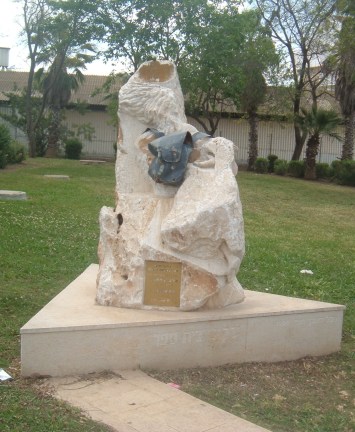
 The school shooting at Oregon’s Umpqua Community College on October 1st, 2015 ended with nine dead and many more injured. The shootings may have been religiously motivated: according to some reports, the gunman commanded some of the students to stand up, asked if they were Christian, and when they responded ‘yes’, he shot them down.
Some have praised these murder victims as Christian martyrs dying for their faith. In one sense, it’s a plausible, and in any sense, an understandable interpretation of what happened: the gunman shot them down after they responded ‘Yes’ to his question ‘Are you a Christian?’ Other survivors tell the story a little differently. In any case, the martyr interpretation is tricky: if it did happen as described above, the murder victims wouldn’t have known ahead of time whether ‘yes’ or ‘no’ was the right answer, as at least one survivor pointed out. Though they may have intended to defy death rather than deny their faith, they could instead have thought that the truthful answer of ‘yes’ would save them from death. Sadly, we can never really know.
I’ve found myself discomfited at the way many have used the horrific murders at Umpqua as a vindication of their own world view, often by portraying it as a tale of heroic martyrdom triumphing over evil. The account of the shooting itself is a very important story to tell: it’s one in a series of so many others in our country and around the world where disturbed young men channel their obsessions and their rage through the barrel of a gun and into the bodies of other people. There are so many similarities between the circumstances and motivations of the shooters that we have no choice, if we’re honest, but to acknowledge there’s a serious problem. We’ve seen too many times that maleness, youth, ideological extremism, mental disturbance, social alienation, and obsession with guns are a deadly mix. But when examples of mass killings and terrorism such as the Umpqua shooting are recast as tales of martyrdom, the motivation they should inspire in us, to do all we can to stop the killing, can for others become lost in the romanticism of idealized self-sacrifice.
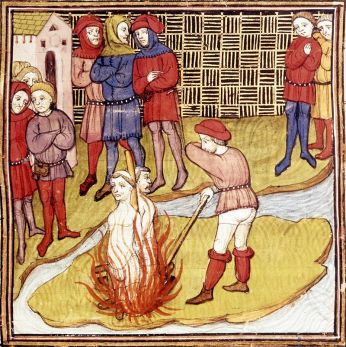 That’s because we’re still under the influence of a very old, even primal idea: that death is rendered not only glorious but a worthy goal if it’s for a cause. Nearly all ideologies and belief systems still prize their martyrs, and we see, worryingly, the resurgence of this idea in some parts of the world are leading to ever more deadly results. Martyrdom has long been such a potent symbol of belief and an effective recruitment tool that if there aren’t any genuine ones to hold up for emulation, it’s a sure bet some will be created. The Umpqua tragedy may be an example of this, of recasting the horrific murder of innocent people as a romantic tale of holy self-immolation in defiance of evil personified. The memory of the lives of the innocents who died there, and the heroism of those who risked themselves to protect others from harm, can become lost in the ideological rhetoric.
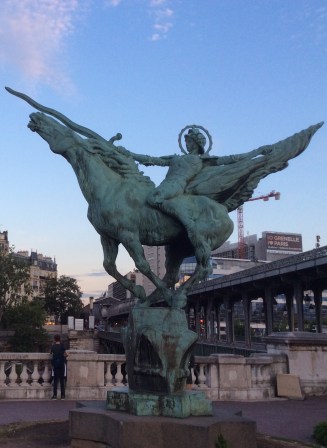
But what of beautiful, inspiring, authentic examples of martyrdom? How about Father Damien of Hawaii’s Molokai Island, who ministered to the leper colony quarantined there until he died from contracting the disease himself? How about Quảng Đức, who immolated himself in protest of the South Vietnamese government’s persecution of Buddhists? How about Joan of Arc (who’s long been an subject of my admiration and fascination), who was executed for refusing to betray her own beliefs about her mission to deliver the French from English rule? How about countless soldiers who have thrown themselves on mines and grenades and dashed through enemy fire to save innocent civilians and their comrades in arms? There are so many moving accounts of people who suffer and die because they will not compromise or allow themselves to speak or act otherwise than their sense of self and honor will allow. I, too, am deeply moved by the beauty and strength of their courage.
 Yet I am simultaneously wary of glorifying these cases of martyrdom for martyrdom’s sake, even when the circumstances of deaths such as these appear most moving, most noble, and most beautiful. That’s because I can’t forget, and I believe none of us can afford to forget, that what makes death or suffering count as martyrdom depends entirely on your frame of reference. My martyr may be your heretic; your martyr may be my traitor who deserved death; my martyr may be the holy warrior who attacked your corrupt and sinful country in the name of all that’s holy and your deadly foe it’s your patriotic duty to destroy. Martyrdom of this sort, understood as the ultimate sacrifice of the death-defying, uncompromising champion of the ultimate good, knows no side and every side. Every side claims their own, and every side who has martyrs to claim (creating them if necessary) treats them as their trump card, the ultimate demonstration of the rightness and superiority of their own beliefs. There’s Father Damien, and there are kamikaze pilots. There’s Quảng Đức, and there are suicide bombers. There’s Joan of Arc, and there are Crusaders, jihadists, those who carried out pogroms, and youth who still flock every day to join the ranks of ISIS and fight to deliver sacred territory from the hated infidels.
But surely there’s a distinction between those whose form of martyrdom imposes death and suffering on others, and those who choose suffering and death for themselves alone?
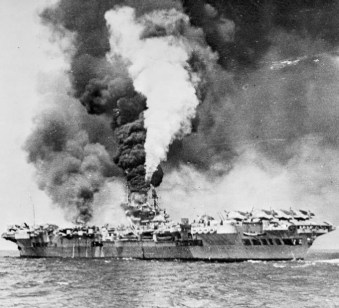 But here’s the problem: if it’s okay to sacrifice one person, even if that person is one’s own self, then it’s more than just a slippery slope to thinking it’s okay to sacrifice others. As we can see in such cases as kamikaze pilots, crusaders, holy warriors, and suicide bombers, the glorification of martyrdom has always had the unfortunate tendency to inspire willingness to sacrifice others along with ourselves. After all, if it’s good to sacrifice one person for the greater good, isn’t it at least as good or even better to sacrifice more people? But self-inflicted martyrdom which simultaneously kills others is generally not driven by this sort of calculation, of each side just upping the ante. When we consider martyrdom, we must also consider the ideologies and belief systems that inspire or at least allow for it. And nearly all not only involve a belief in an afterlife, they believe this world is merely a proving ground for that afterlife, so death counts for little in comparison to eternity. Furthermore, most ideologies and faiths who glorify martyrdom base their beliefs on sacred books in which holy war and violent destruction of the nonbeliever, the godless, the idolator, and the infidel is celebrated as much or even more than personal martyrdom. In the end, we end up with the same old world full of mutually hostile martyr/holy warrior belief systems that have led to centuries of violent religious and ideological conflict and ethnic cleansing.
 And who’s to say who’s right? Which religion, which ideology has the correct view of martyrdom? Which, if any, can be demonstrated to inspire true martyrdom, to the exclusion of others? Bertrand Russell, philosopher and ardent pacifist, is often quoted as saying ‘I would never die for my beliefs because I might be wrong’. Many have described this as cynical or revealing a weakness of character, an inability to form convictions. I think a more fair and charitable interpretation is that Russell believed everyone should practice proper epistemic humility. Especially when it comes to such a momentous question as preserving human life, our own and others: we should do so whenever possible, since whatever our other beliefs, we can all readily demonstrate, whatever our other beliefs, that other human beings suffer grief when we die and that we can surely help others when we’re around to do so. It’s far more difficult to demonstrate, for example, that God likes it even better when we die in his name or that we can help those on earth from beyond the grave, as believers in intercessory prayer or spiritualists hold. Better all around, when it comes to our safety as well as our chances of not believing in things that are terribly wrong, when we’re accountable to one another for the larger consequences of our beliefs.
But how if we take religion and ideology out of it, and consider only those cases where the martyr’s entire cause is the well-being of others? Even in these cases, the problem is a simple matter of justice: it’s difficult to see how one can truly believe that all persons have equal rights and dignity and are therefore deserving of care, and still believe it’s okay to sacrifice one’s own well-being when that sacrifice can be avoided. There are times in which it can’t be: the example of heroic soldiers throwing themselves on grenades to save others comes to mind as a paradigm example of justifiable self-sacrifice, since equal concern for all logically allows for sacrificing one’s self to save many. Others are not so clear: Father Damien was clearly motivated by a noble desire to help his fellow human beings as he ministered to the exiled lepers at Molokai. He made it a point to embrace and kiss the lesions of patients to show a Christlike love, but the ideology of martyrdom that also drove him may have robbed him of an even better opportunity, the opportunity to show that love to more of his fellow human beings by keeping himself alive to serve them. If he had taken reasonable precautions to care for his own well-being and avoid contracting the disease, known in his time to be contagious, he likely would have lived much longer to serve the people who loved and counted on him; kissing of lesions and other reckless exposure to contagion is not an unavoidable requirement for showing our deep concern for others. Martyrdom, though it may not be apparent, involves at least to some degree the inequitable valuing of the lives of persons, at the very least our own.
And this leads us to consider whether martyrdom is really the ultimate altruistic, selfless act it’s so often characterized to be. It’s hard to see how there can be such a thing as truly selfless martyrdom in a world in which human lives are so intertwined. Through death, parents are deprived of a child, children of a parent, siblings of a sibling, friends of a friend, citizens of a fellow citizen, the needy of a benefactor, the world of a unique life that has something to offer. It seems to me, then, our lives are not fully our own: they are given to us by others, are largely sustained by the efforts of others, and provide emotional support for others, and vice versa. There is no human being that doesn’t rely on the support and contributions of others to sustain it and make it secure and happy. As in the case of Father Damien, when we choose death over life, we remove ourselves from the human community of inter-reliance we all belong to. I’m speaking here in the worldly sense; according to many religions, we can help others after death by interceding with God or by providing personal supernatural guidance, such as in spiritualist beliefs. But as we’ve already considered, this view of martyrdom as a holy thing is hard to justify consistently, and even worse, it necessarily values supernatural concerns over worldly ones, allowing for the same disdain for life that underlies all forms of martyrdom, from the self-sacrificer to the jihadist. So even when it appears that a martyr is sacrificing nothing but their own life and happiness, this is rarely if ever the case. And if this is so, our right to sacrifice our own life and well-being appears very tenuous in all but those very special circumstances, such as the case of those grenade-blocking soldiers who can’t help others unless they risk themselves.
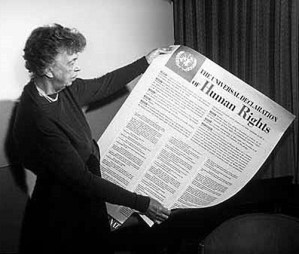 In a world where religiously-, politically-, and ideologically-motivated terrorism and mass shootings are again on the rise, we need to let go of our old cherished ideal of martyrdom as the ultimate holy and noble act. If we want to instill in ourselves and others the value that all lives matter, the glorification of any kind of martyrdom appears as toxic to this as the old belief in the curative powers of bleeding and purging was to health. This seems like a call for rejecting our long-loved heroes, our Joans and Quảngs and Damiens, but I don’t believe it is. We have a robust capacity for understanding that context matters, and just as we can believe George Washington’s doctors did their best to cure him the only (turns out wrong) way they knew how, we can simultaneously revere the courage and conviction of martyrs of the past while believing that in the age of universal human rights and ethics of care, martyrdom is the wrong way to go and should not be glorified, praised, or used as evidence of the superiority of our own beliefs over others.
*Listen to the podcast version here or subscribe on iTunes
Ordinary Philosophy and its Traveling Philosophy / History of Ideas series is a labor of love and is ad-free, entirely supported by patrons and readers like you. Please offer your support today!
~~~~~~~~~~~~~~~~~~~~~~~~~~~~~~~~~~~~~~~~~~~~~~~~~~~~~~~~~~~
Sources and Inspiration:
‘The Death of George Washington‘, The George Washington Digital Encyclopedia
‘Father Damien‘. In Wikipedia, The Free Encyclopedia.
Sidner, Sara and Kyung Lah, Steve Almasy and Ralph Ellis. ‘Oregon Shooting: Gunman was Student in Class Where He Killed 9’. CNN (online), October 2, 2015.
‘The “Werther-effect”: Legend or Reality?’ (abstract). Neuropsychiatr. 2007;21(4):284-90. Source: PubMed.gov http://www.ncbi.nlm.nih.gov/pubmed/18082110
Turkewitz, Julie. ‘Oregon Gunman Smiled, Then Fired, Student Says’
The New York Times (0nline), Oct. 9, 2015
Vanderhart, Dirk and Kirk Johnson and Julie Turkewitz. ‘Oregon Shooting at Umpqua College Kills 10, Sheriff Says’, The New York Times (0nline), Oct. 1, 2015.

 Helicopter parenting is denounced by onlookers (e.g., David Brooks) as babying children who should be self-reliant, a highly valued characteristic in the USA. Children should not need parents but should use their own capacities to get through the day. The notion of a good person is intertwined with this individualistic view of persons and relationships. Good people know how to behave. They stand on their own, with little dependency on others. They are given rules and obey them. Bad people don’t–they are whiny and weak.



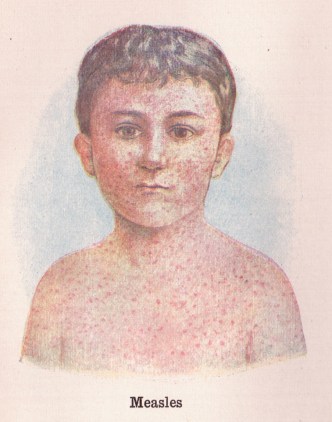 Jenny McCarthy is a celebrity in the United States and a prominent anti-vaccine activist. She is the president of Generation Rescue, a non-profit that advocates the view that autism is at least partially caused by vaccines, and has written several books promoting this view. Since 2007, she’s been featured on several media outlets where she’s been asked to defend her views on the relationship between the Measles, Mumps, and Rubella (MMR) vaccine and autism. In many of these interviews, it’s clear that those questioning McCarthy are trying to hold her morally responsible for her view
  In
In  As you may have noticed, I often recommend pieces by Eric Schwitzgebel; of course, that’s because his work is fantastic, and I’m always looking forward to his new posts.
 Ordinary Philosophy