Say What? David Hume on Religion

‘Convulsions in nature, disorders, prodigies, miracles, though the most opposite to the plan of a wise superintendent, impress mankind with the strongest sentiments of religion; the causes of events seeming then the most unknown and unaccountable.’

~ David Hume, The Natural History of Religion, Section VI, paragraph 3

Ordinary Philosophy and its Traveling Philosophy / History of Ideas series is a labor of love and ad-free, supported by patrons and readers like you. Please offer your support today!

He Died as He Lived: David Hume, Philosopher and Infidel, by Dennis Rasmussen

As the Scottish philosopher David Hume lay on his deathbed in the summer of 1776, his passing became a highly anticipated event. Few people in 18th-century Britain were as forthright in their lack of religious faith as Hume was, and his skepticism had earned him a lifetime of abuse and reproach from the pious, including a concerted effort to excommunicate him from the Church of Scotland. Now everyone wanted to know how the notorious infidel would face his end. Would he show remorse or perhaps even recant his skepticism? Would he die in a state of distress, having none of the usual consolations afforded by belief in an afterlife? In the event, Hume died as he had lived, with remarkable good humour and without religion.

The most famous depiction of Hume’s dying days, at least in our time, comes from James Boswell, who managed to contrive a visit with him on Sunday, 7 July 1776. As his account of their conversation makes plain, the purpose of Boswell’s visit was less to pay his respects to a dying man, or even to gratify a sense of morbid curiosity, than to try to fortify his own religious convictions by confirming that even Hume could not remain a sincere non-believer to the end. In this, he failed utterly.

‘Being too late for church,’ Boswell made his way to Hume’s house, where he was surprised to find him ‘placid and even cheerful … talking of different matters with a tranquility of mind and a clearness of head which few men possess at any time.’ Ever tactful, Boswell immediately brought up the subject of the afterlife, asking if there might not be a future state. Hume replied that ‘it was possible that a piece of coal put upon the fire would not burn; and he added that it was a most unreasonable fancy that we should exist for ever’. Boswell persisted, asking if he was not made uneasy by the thought of annihilation, to which Hume responded that he was no more perturbed by the idea of ceasing to exist than by the idea that he had not existed before he was born. What was more, Hume ‘said flatly that the morality of every religion was bad, and … that when he heard a man was religious, he concluded he was a rascal, though he had known some instances of very good men being religious.’

This interview might show Hume at his brashest, but in the 18th century it remained mostly confined to Boswell’s private notebooks. The most prominent and controversial public account of Hume’s final days came instead from an even more famous pen: that of Adam Smith, Hume’s closest friend. Smith composed a eulogy for Hume soon after the latter’s death in the form of a public letter to their mutual publisher, William Strahan. This letter was effectively the ‘authorised version’ of the story of Hume’s death, as it appeared (with Hume’s advance permission) as a companion piece to his short, posthumously published autobiography, My Own Life (1776).

Smith’s letter contains none of the open impiety that pervades Boswell’s interview, but it does chronicle – even flaunt – the equanimity of Hume’s last days, depicting the philosopher telling jokes, playing cards, and conversing cheerfully with his friends. It also emphasises the excellence of Hume’s character; indeed, Smith concluded the letter by declaring that his unbelieving friend approached ‘as nearly to the idea of a perfectly wise and virtuous man, as perhaps the nature of human frailty will permit’.

Though relatively little known today, in the 18th century Smith’s letter caused an uproar. He later proclaimed that it ‘brought upon me 10 times more abuse than the very violent attack I had made upon the whole commercial system of Great Britain’ – meaning, of course, The Wealth of Nations (1776). Throughout his life, Smith had generally gone to great lengths to avoid revealing much about his religious beliefs – or lack thereof – and to steer clear of confrontations with the devout, but his claim that an avowed skeptic such as Hume was a model of wisdom and virtue ‘gave very great offence’ and ‘shocked every sober Christian’ (as a contemporary commented).

Boswell himself deemed Smith’s letter a piece of ‘daring effrontery’ and an example of the ‘poisonous productions with which this age is infested’. Accordingly, he beseeched Samuel Johnson to ‘step forth’ to ‘knock Hume’s and Smith’s heads together, and make vain and ostentatious infidelity exceedingly ridiculous. Would it not,’ he pleaded, ‘be worth your while to crush such noxious weeds in the moral garden?’

Nor did the controversy subside quickly. Nearly a century later, one prolific author of religious tomes, John Lowrie, was still sufficiently incensed by Smith’s letter to proclaim that he knew ‘no more lamentable evidence of the weakness and folly of irreligion and infidelity’ in ‘all the range of English literature’.

In the 18th century, the idea that it was possible for a skeptic to die well, without undue hopes or fears, clearly haunted many people, including Boswell, who tried to call on Hume twice more after their 7 July conversation in order to press him further, but was turned away. Today, of course, non-believers are still regarded with suspicion and even hatred in some circles, but many die every day with little notice or comment about their lack of faith. It takes a particularly audacious and outspoken form of non-belief – more akin to the Hume of Boswell’s private interview than to the Hume of Smith’s public letter – to arouse much in the way of shock or resentment, of the kind that attended the death of Christopher Hitchens some years ago. (Indeed, there were a number of comparisons drawn between Hitchens and Hume at the time.) The fact that in the 18th century Smith endured vigorous and lasting abuse for merely reporting his friend’s calm and courageous end offers a stark reminder of just how far we have come in this regard.Aeon counter – do not remove

This article was originally published at Aeon and has been republished under Creative Commons.

Dennis Rasmussen is an associate professor in the department of political science at Tufts University in Massachusetts. He is the author of The Infidel and the Professor: David Hume, Adam Smith, and the Friendship That Shaped Modern Thought (2017). (Bio credit: Aeon)

~ Ordinary Philosophy is a labor of love and ad-free, supported by patrons and readers like you. Any support you can offer will be deeply appreciated!

*All views and opinions expressed by guest writers are their own and do not necessarily reflect those of Ordinary Philosophy’s editors and publishers

Happy Birthday, Adam Smith!

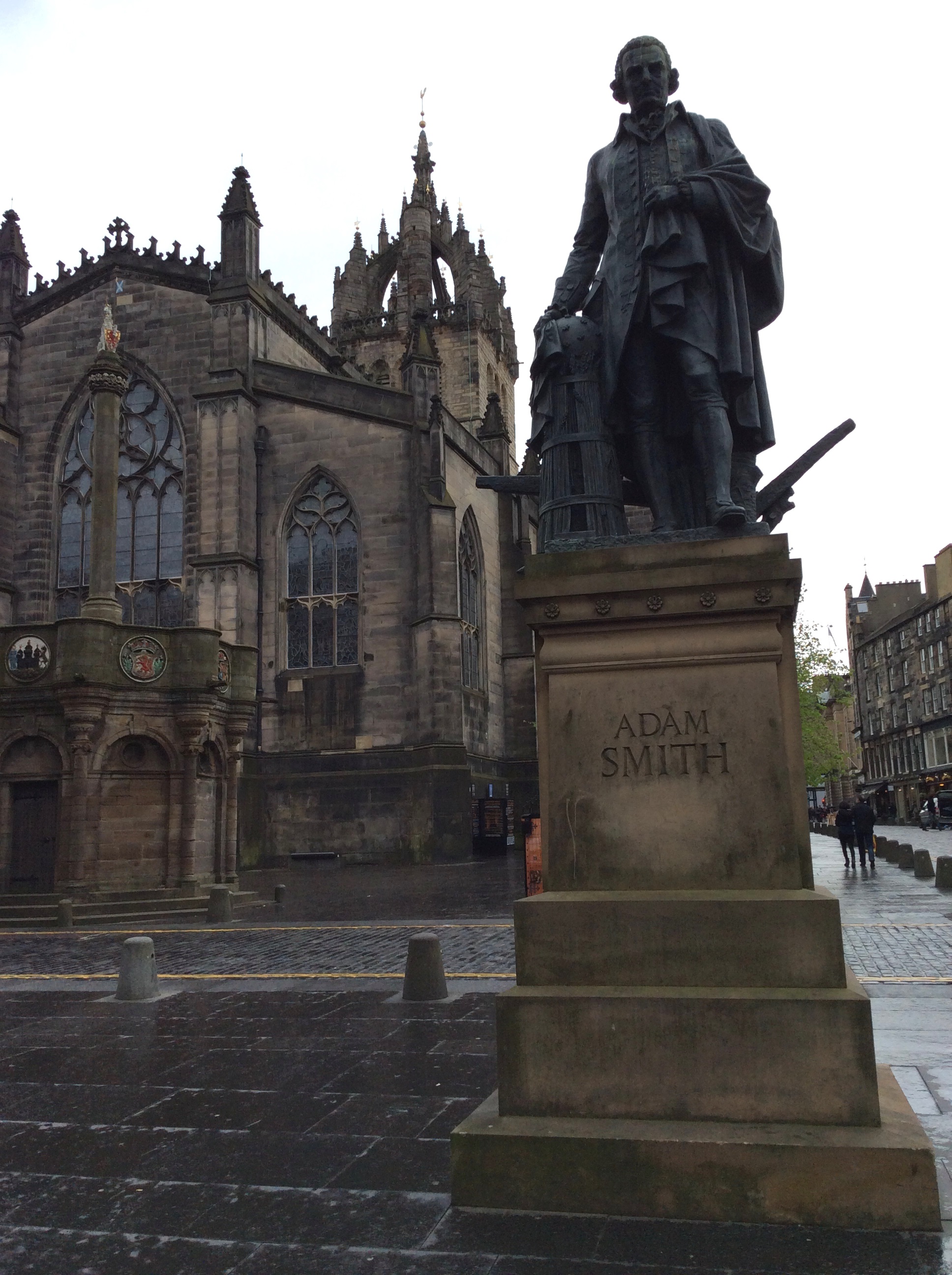
Adam Smith statue on the Royal Mile in Edinburgh, Scotland

Adam Smith was a philosophical disciple and life-long friend of David Hume, and as such, I encountered his ideas regularly while I was following the life and ideas of Hume a few years ago in Edinburgh. Smith wrote a moving account of Hume’s last days.

Smith was baptized and perhaps born on June 5th, 1723 in Kirkcaldy (a fishing village near Edinburgh) and died on July 17, 1790 in Edinburgh, Scotland. He attended university at Glasgow and Oxford, and found the former intellectual milieu more stimulating by orders of magnitude. Glasgow and Edinburgh were vigorous centers of Enlightenment thought in philosophy, natural philosophy (as the sciences were then known), linguistics, history, political theory, mathematics, and more. David Hume, Adam Smith, and their fellow leaders in the Scottish Enlightenment joined the ranks of this philosophical tradition’s greatest and most influential thinkers.

Like pretty much all Americans interested in basic economic theory, I’d heard a lot about The Wealth of Nations, Smith’s treatise on political economy. You likely have as well, since here you are reading a birthday tribute to Adam Smith! The Wealth of Nations is considered the foundational theoretical work on capitalism and therefore, Smith is regarded as a key figure in economic theory. But when I returned to university a few years ago to study philosophy, and when researching the life and ideas of Hume and his contemporaries for my aforementioned project, I spent more time with Smith’s moral philosophy. So I’ll focus this aspect of his thinking here. After all, this was his main arena of inquiry: he was not an economist, but a professor of moral philosophy at Glasgow. His Theory of Moral Sentiments was, and still is to a lesser consent, respected as a major work in moral philosophy. And, I think there are enough people promoting his Wealth of Nations as, like, the best thing ever; you can find plenty to read about that on the internet.

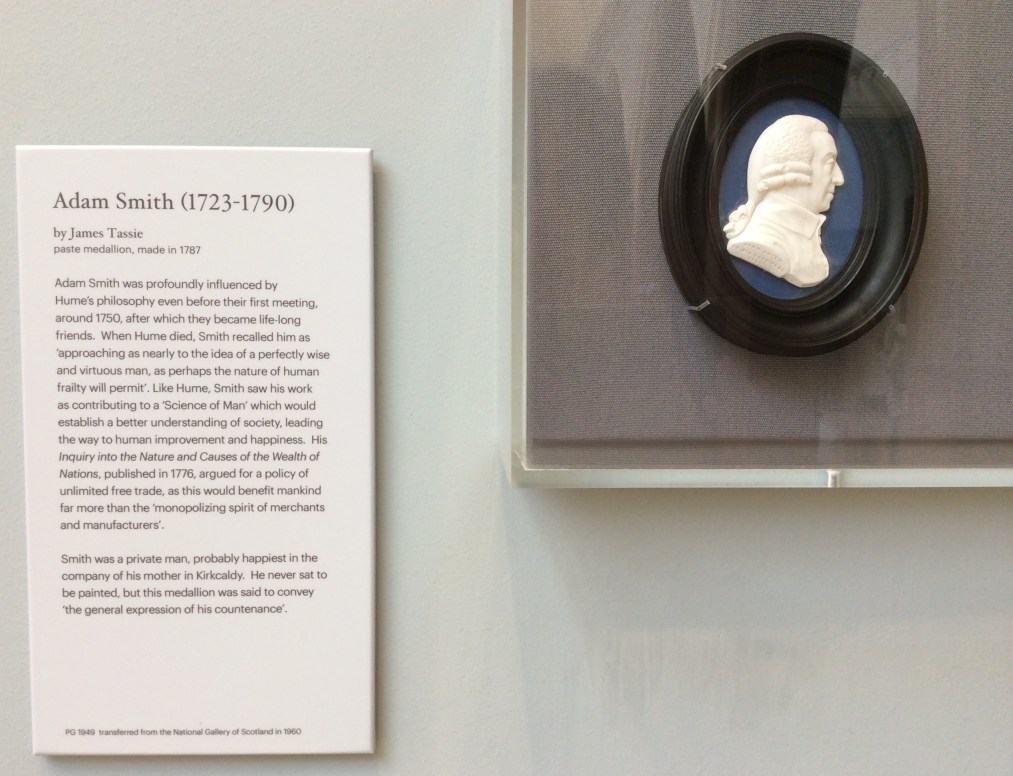
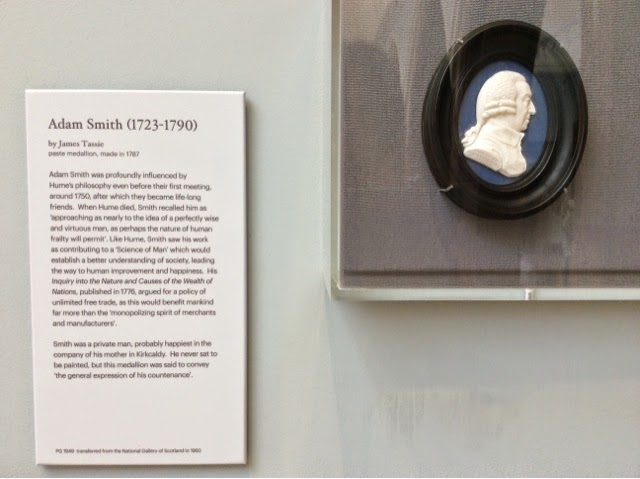
Portrait medallion of Adam Smith by James Tassie at the National Portrait Gallery in Edinburgh, Scotland.

Smith’s Theory of Moral Sentiments merges from a sort of compendium of elements of moral philosophy, in which Smith fuses what he considers the best and most coherent elements of moral philosophy into one compelling system. In it, one recognizes Humian sentimentalism, Kantian-type reason-based morality (Immanuel Kant’s work on this topic came after Smith’s, though the men were direct contemporaries), consequentialism, and Aristotelian virtue ethics. Like Hume, Smith thinks that the emotions play a central role. Before Hume, morality was widely considered to be primarily a matter of reason, and morality required us to quash our emotions, or as Hume put it, passions, because human are naturally and by default selfish, greedy, profane, lazy, and in myriad others way fallen creatures. Hume, however, does not agree. He believes that human beings naturally identify with the pains and joys of others, internalizing them and causing us to want to ameliorate their circumstances, and it’s this direct emotional response that drives the moral sense. Smith largely agrees, but not wholly. He also stresses the importance of sympathy (close to the sense that we’d usually now mean empathy) in making moral judgments. Smith explains that the moral agent is like an impartial spectator who participates in the daily lives, sufferings, and joys of our fellow human beings through our emotional response to their situation.

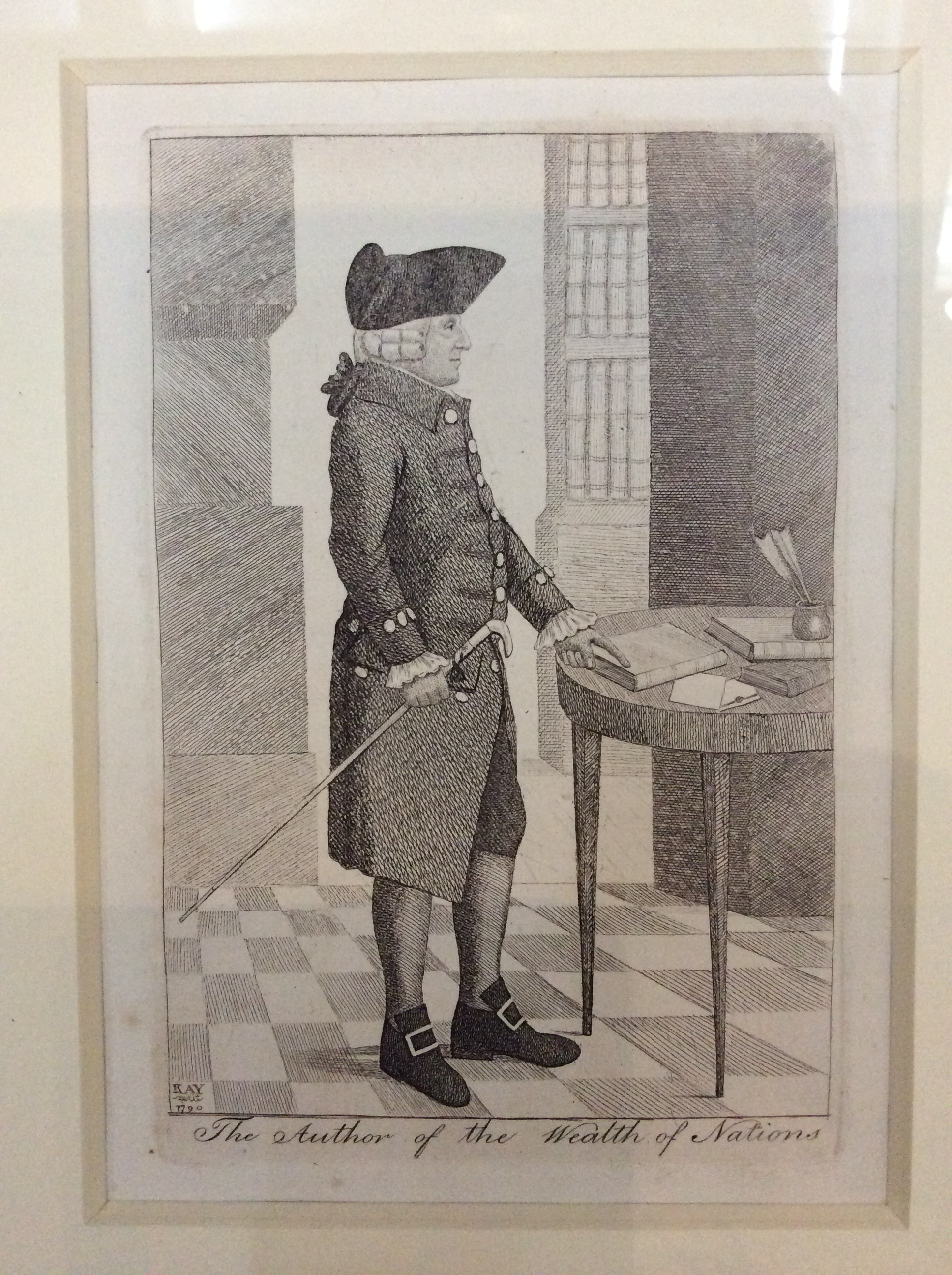
Adam Smith portrait by John Kay from 1790 (the year of Smith’s death), at the National Portrait Gallery, Edinburgh

But Smith also believes that sympathy (empathy) is not enough: our sympathies can and should be corrected by reason since our emotional responses can become inappropriate to the situation, corrupted by ignoble impulses such as greed, ambition, selfishness, and so on. An impartial, uncorrupted spectator would not consider indifference or cruelty, for example, as proper emotional responses to the plight of others. (I see shades of John Rawl’s ‘veil of ignorance‘ here.) One way to help us maintain moral ‘propriety’, as Smith put it, is to apply reason, and one way our reason can help us judge whether our moral sentiments are correct is to consider the consequence of actions we feel inclined to do. While the consequences of our actions don’t determine their rightness or wrongness as they do in consequentialist moral theories, they are an important consideration and in some cases, such as those in which human life hangs in the balance, they should take precedence. And finally, Smith agrees with Aristotle that we can’t rely on a pre-determined, reason-derived, emotionally-detached set of inflexible moral principles to differentiate right from wrong, good from bad, as Kant would have it. Rather, we naturally recognize and respond to virtue when we see it. We admire its beauty and goodness and have the desire to emulate it. Aristotle sees virtue as a perfect balance between opposing qualities in the same sphere: courage is the virtue on the right part of the spectrum between cowardliness and recklessness; temperance between licentiousness and insensibility; friendliness between obsequiousness and cold indifference. Smith likewise stresses the importance of balance in our moral character but focuses more on attuning our sympathies so they are in propriety, thereby driving us to act in the kindest, most honest, and fairest way towards one another as a matter of course.

This is only a very short summary of Smith’s moral philosophy by one who is by no means an expert. To learn more about the great philosopher and economist Adam Smith from those who are (including himelf, he’s an excellent and compelling writer), and for more about the philosophical traditions that influenced him and which he influenced in turn, see:

Adam Smith (1723—1790) – Jack Russell Weinstein for the Internet Encyclopedia of Philosophy

Adam Smith’s Moral and Political Philosophy – by Samuel Fleischacker for The Stanford Encyclopedia of Philosophy

Adam Smith pt. 1 – Specialization and Adam Smith pt. 2 – The Tip of the Iceberg Of Wealth – Stephen West discusses Adam Smith’s political economy for his blog Philosophize This!

Adam Smith on What Human Beings Are Like – Nicholas Phillipson discusses Adam Smith’s view of human beings with Nigel Warburton for Philosophy Bites podcast

Enlightenment – William Bristow for The Stanford Encyclopedia of Philosophy

Moral Sentimentalism – Antti Kauppinen for The Stanford Encyclopedia of Philosophy

The Problem With Inequality, According to Adam Smith – Dennis C. Rasmussen, Jun 9, 2016 for The Atlantic

The Theory of Moral Sentiments – Adam Smith, first published in 1759

~ Ordinary Philosophy and its Traveling Philosophy / History of Ideas series is a labor of love and ad-free, supported by patrons and readers like you. Please offer your support today!

Last Day in Edinburgh, May 13th, 2014

I’m sitting here in James Court, having a pint at the Jolly Judge, under a cozy little overhang, watching the rain fall all around me. It started out as a sunny day, with a brilliant blue sky with scattered big puffy white clouds, probably even a hot spring day by Scottish standards.

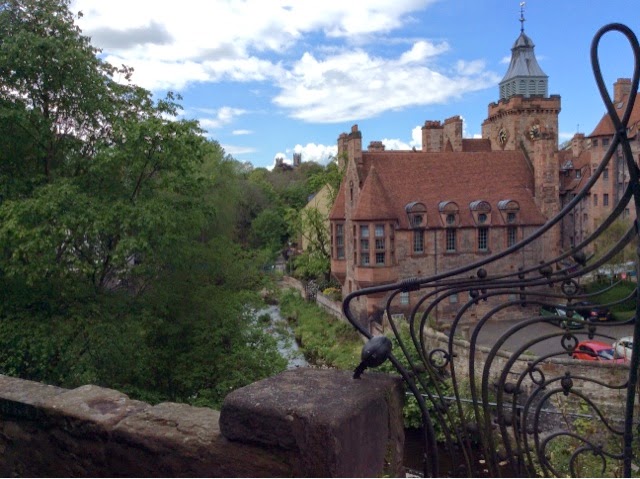
I’ve been wandering Edinburgh all day to say goodbye to the city, and started by walking the length of the Water of Leith again, from Murrayfield Stadium to Canonmills this time; I’ll be adding some more pictures to my photojournal of that lovely place.

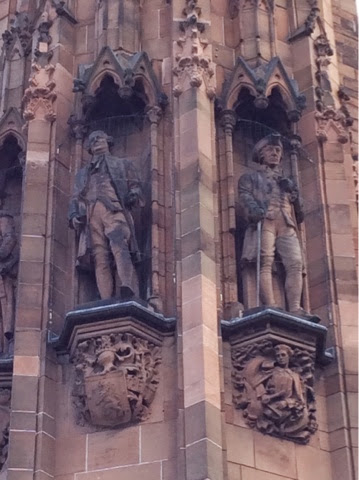
Then I pop by the Scottish National Portrait Gallery, since it’s on my way to the bus stop where I’m to transfer. I had forgotten to take a picture of the sculptures of David Hume and Adam Smith that adorn the southeast tower (which I’ll be adding to my account of that day), and I chat a bit with Sarah at the information desk, such a sweet woman!

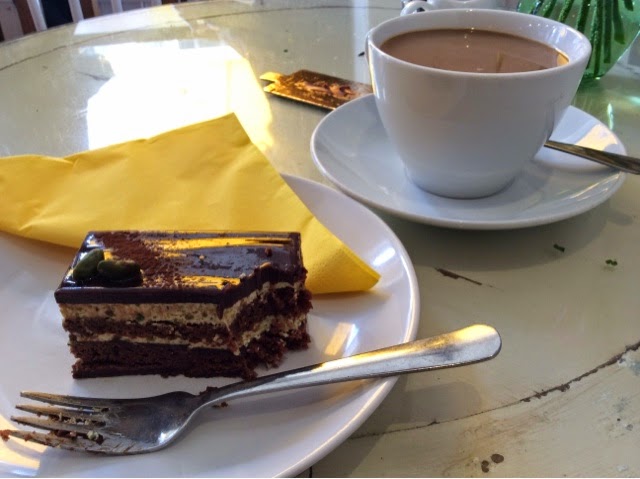
I return to Easter Road to a wonderful bakery called The Manna House, a new favorite haunt, where I celebrate with a piece of chocolate pistachio opera cake and a creamy coffee. If you ever come to Edinburgh, be sure to come here, everything they make is as delicious as it is pretty.

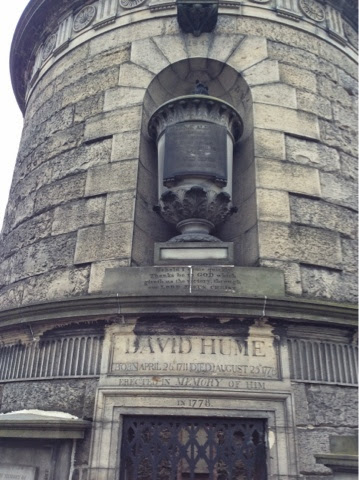
Then over to Calton Hill, to say farewell to the mortal remains of the great thinker I came here to discover in his hometown. As anyone would in my place, I feel  deeply moved, my chest tight, my eyes prickly. Is there someone you deeply admire, where you’ve often felt that bittersweet ache that you so wish you could meet them, knowing you never could except through the artifacts, and more importantly, the words and ideas, they left behind?  Then you know how I’m feeling just now.

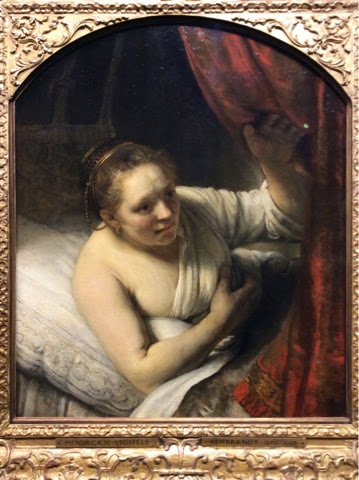
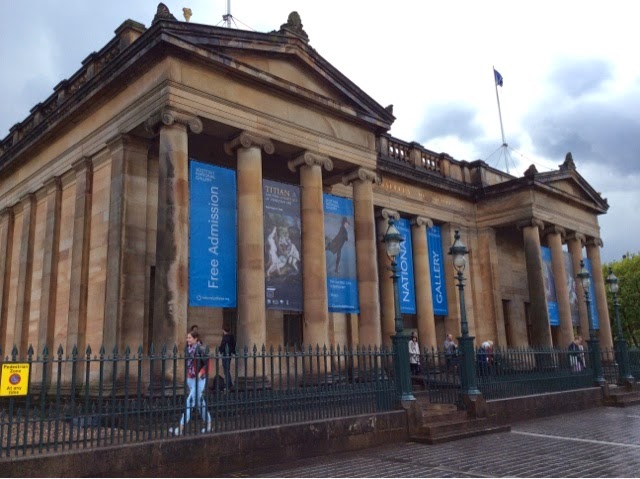
Then to the Scottish National Gallery (not to be confused with National Portrait Gallery) home to some of the great masterpieces of the world. I discover that one of my very favorite Rembrandt paintings here! That cheers me up quite a bit.

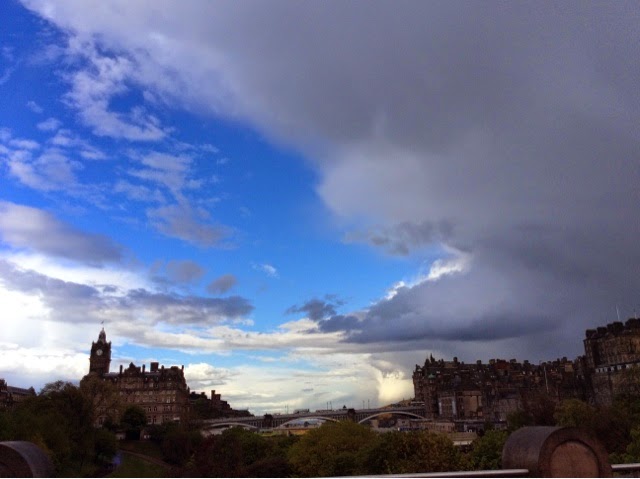
About ten minutes after I go inside, I hear the rain start to pour, and see the lightning flash through the skylight. I decide this would be a good place to linger ’till they close at five. And as soon as I leave, the rain abruptly stops, and I’m greeted to this spectacular sky again:

What a nice place Scotland is in May! The weather is changeable and keeps you on your toes, but it’s exciting in its variety. And I realize I just can’t bring myself to go back to the library and research and write anymore, as much as I intended to. I just have to walk around the city as much as I can in the time I have left, and besides, I’ve gathered a lot of material at this point. More to come on that.

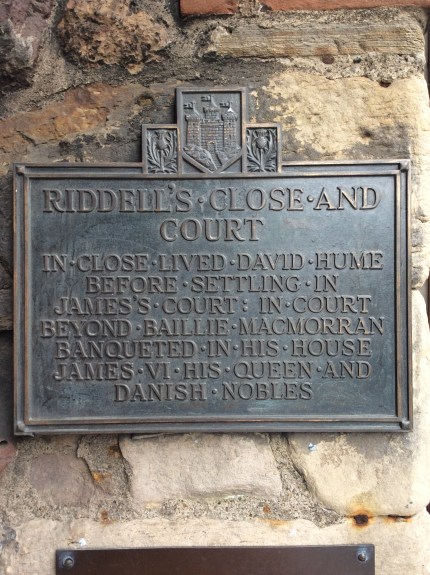
Which brings me again to where I am, the first Hume site I came across when I got here: he lived somewhere in James Court with his sister for a number of years (as I mentioned in my first blog post). I think this was his second house in Edinburgh he lived in as an adult, after his Riddle’s Court sojourn.

Soon, I’ll be having dinner with my kind and friendly hosts, Adam and Krystallenia, and early in the morning getting on a plane to return to my loving husband, my family and friends, and my beautiful California. And as soon as I can, I’ll be back, next time with my Bryan.

Ordinary Philosophy and its Traveling Philosophy / History of Ideas series is a labor of love and ad-free, entirely supported by patrons and readers like you. Please offer your support today!
~~~~~~~~~~~~~~~~~~~~~~~~

Hume Sites and Monuments, Part 3

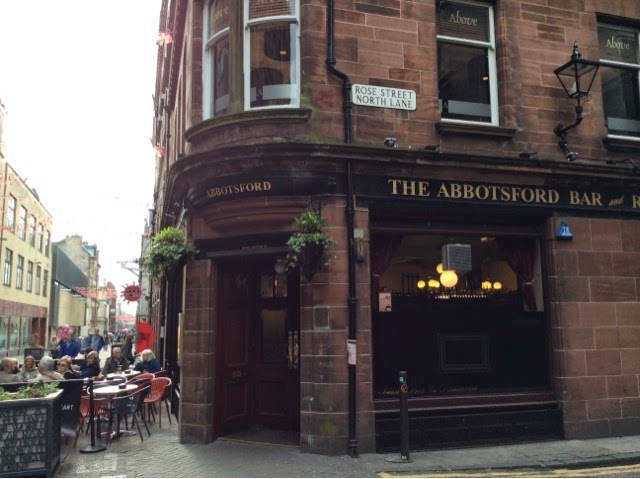
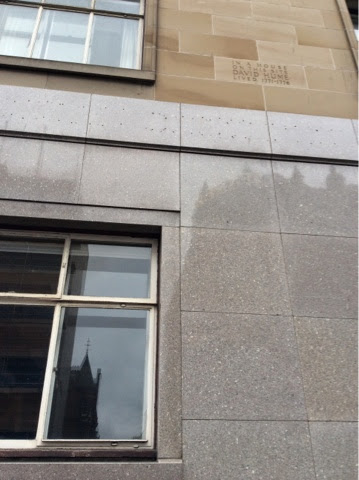
I enjoy a pint at the Abbotsford pub, traditionally a literary hangout, as I begin this account. Here’s hoping I’ll absorb more of that skill!I’m here at the Abbotsford because it’s near the site where I returned a couple days ago, to see if I could find that invisible plaque marking the site of David Hume’s New Town house. I’ve done some more digging in the meantime, and found that I had formed the wrong impression from my original source. I’ve found some photos of the actual plaque, which is actually just carved into the stone of the building, rather than the embossed brass plate I conceive of from the word ‘plaque’. Another traveler’s article I’ve discovered helpfully remarked it’s higher up than one might expect. Also, it’s at what’s now 21 St David’s St and 8 Rose St, which numbers are on different sides of the same building, not 8 St David’s as the address had been numbered once upon a time.

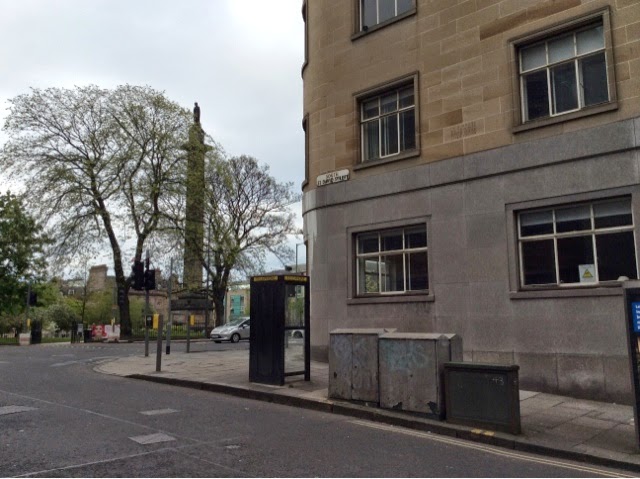
So here’s the plaque, on this building right by pretty St Andrew’s square, right across the street from Jenner’s. Can you see it?
Look up, way up, above the gray stone part of the building, between the windows.
Up, up, up…..
There it is, up there, near the upper right of this photo. It reads ‘On a house in this site David Hume lived, 1771 – 1776’. This is also where he died.
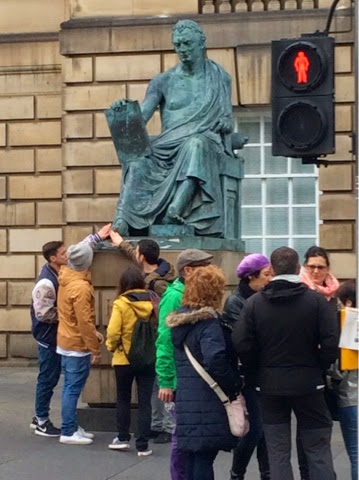
 I also happen to be waiting for someone right across the street from Hume’s statue on the Royal Mile the other day, and while waiting, I decided to snap some photos of passersby rubbing the statues toe for luck, so that some of Hume’s knowledge would rub off on them. I wrote a little essay about that practice.
I’ve been tentatively planning to go to Chirnside, the place where Hume grew up. The house is no longer there, but the gardens are, and the place where the house was is well marked. The fares turn out to be quite expensive, and since the house isn’t there anymore, it seems a lot to pay since I’m traveling on the cheap. I decide to spend the money instead enjoying my remaining time in Edinburgh, immersed in the place, eating locally made delicious food. So I go and have some marvelous pastries at The Manna House instead, planning to visit Chirnside next time I’m here, hopefully on a bike tour.
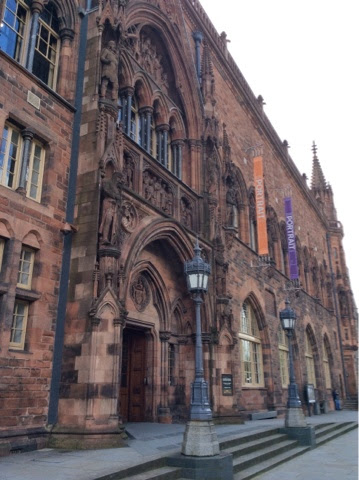
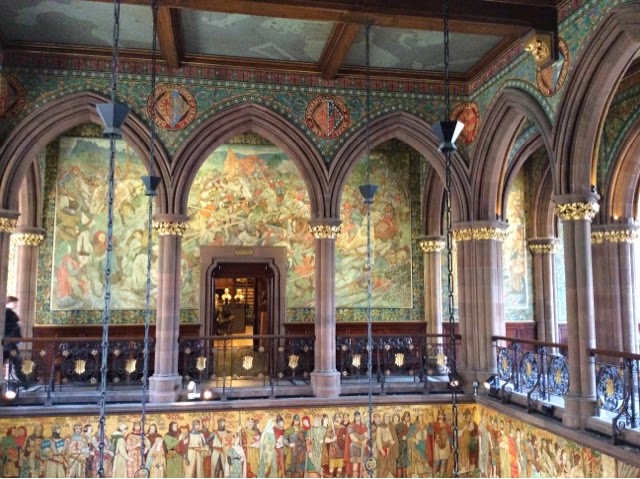
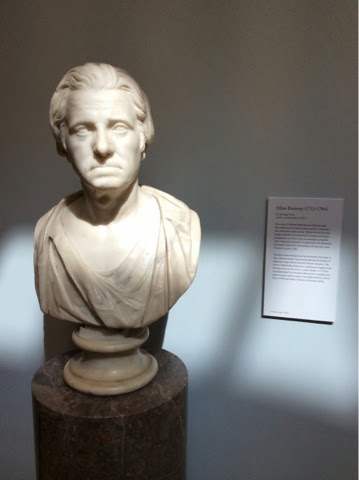
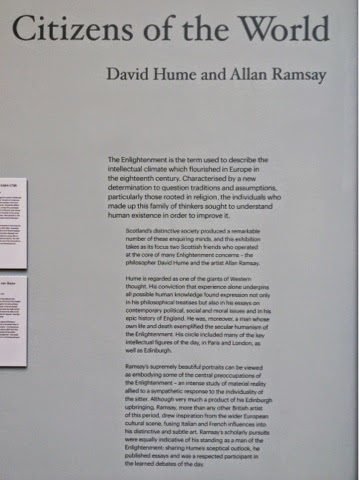
 The last of the David Hume-related sites I visit today is the Scottish National Portrait Gallery. It’s even more beautiful than I expected, inside and out. Sculptures of Hume and his friend Adam Smith, philosopher and economist who wrote The Wealth of Nations and The Theory of Moral Sentiments, adorn the southeast tower.
Photo 2014 by Amy Cools

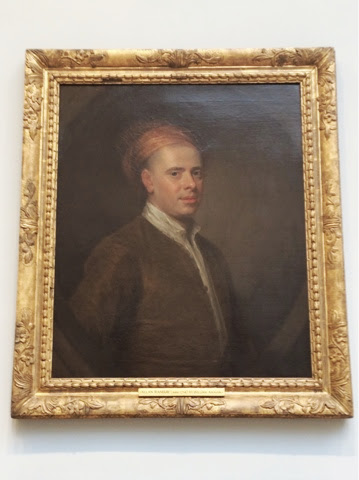
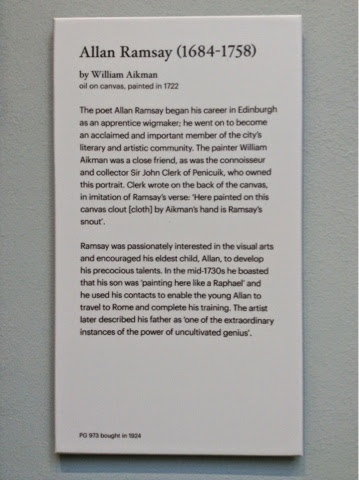
Allan Ramsey as a young man

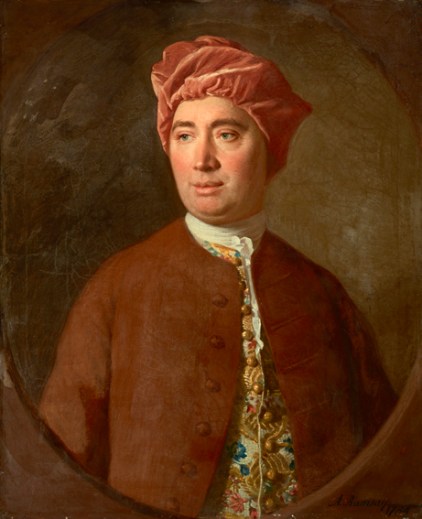
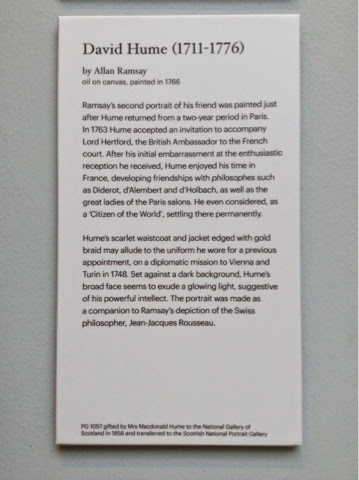
Allan Ramsey’s famous portrait of Hume is here, the portrait where’s he’s facing the artist, wearing a gold-lace-trimmed red jacket. Here’s the artist and some info about him. First, the artist as a young man:

 
Here’s a little more about Allan Ramsey, David Hume, and the Scottish Enlightenment….
And about David Hume and his portrait...

David Hume by Allan Ramsey, 1766, oil on canvas

Definitely a guy I’d like to have dinner and drinks with, and hours of conversation! A genial man who’s seen the world and knows how to eat well, aside from his intellectual achievements.
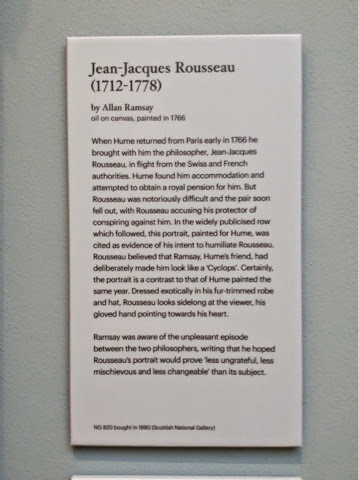
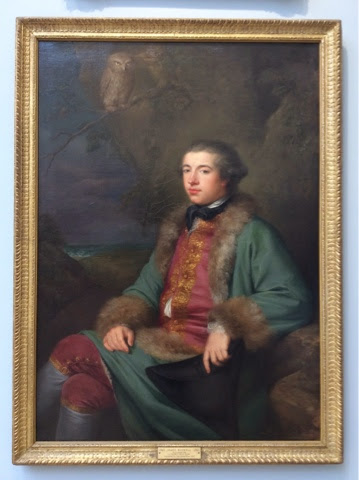
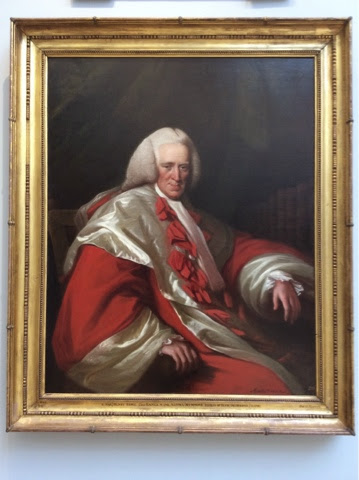
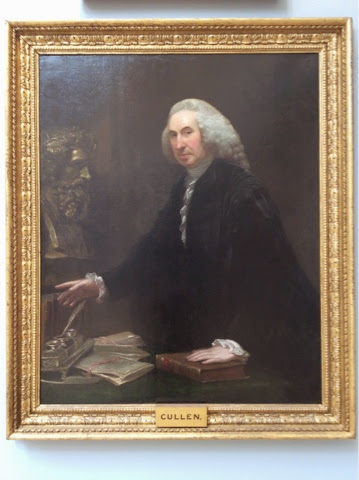
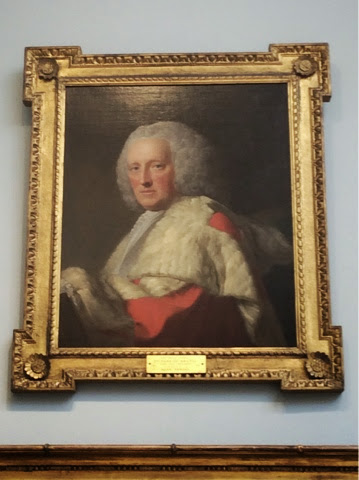
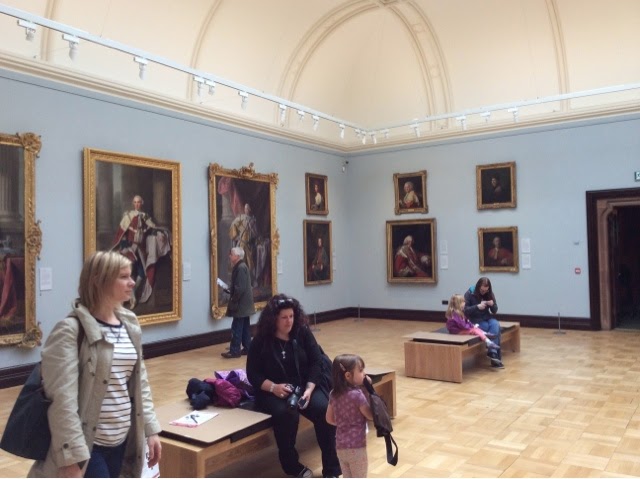
What I hadn’t been expecting to find, when coming here to see this portrait was the sheer number of portraits I’d find of friends, associates, and other people whose lives intersected with Hume’s.
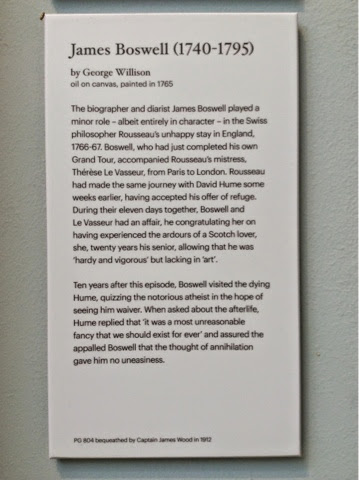
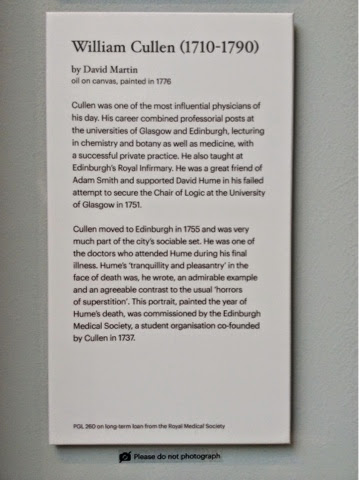
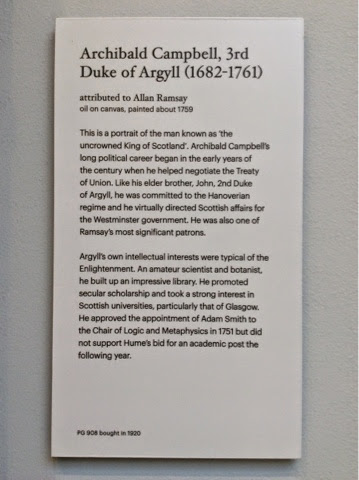
Here’s a series of portraits of these people, preceded by the plaques identifying the subject and the artist, and/or telling the story of their relation to Hume. I’ll start with Adam Smith, a good friend of Hume’s, who was influenced by him, supported him in the difficulties he faced due to his unorthodox views, and can be credited most with providing us the account of his last days:

The Author of the Wealth of Nations [Adam Smith] by John Kaye

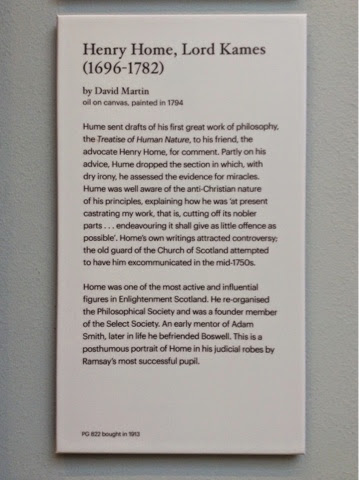
This next guy shares the same name that Hume was born with; Hume changed the spelling of his last name from ‘Home’ because he was writing for an international audience, most of whom would not know from the spelling that the name is pronounced ‘Hume’ in Scotch-English.

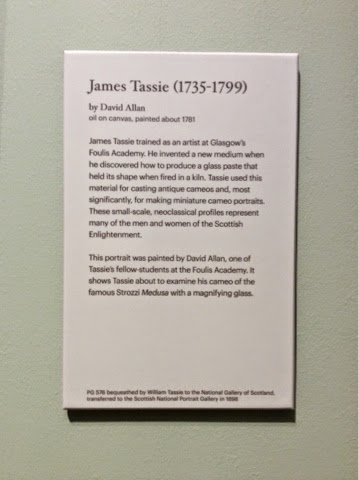
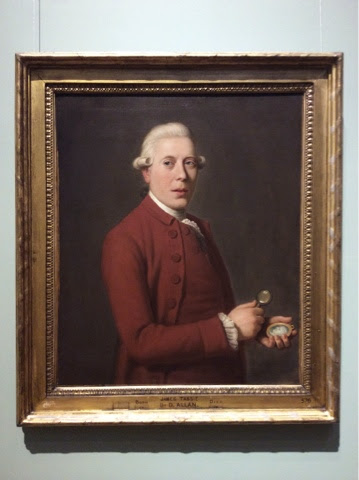
And here’s a last little portrait, a miniature in cameo by this guy…

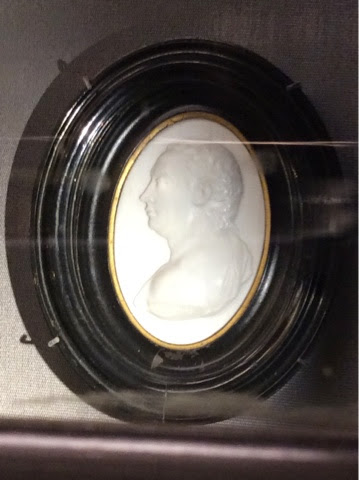
James Tassie, miniaturist who created the cameo portrait of David Hume below

Cameo portrait of David Hume by James Tassie

It’s hard to take a good photo if it because it’s in a glass case high above my head with many other cameo portraits by Tassie. This cameo was completed a few years after Hume’s death.
The Scottish National Portrait Gallery ends up being one of my favorite museums I visit, not only because of the beautiful artwork and fascinating stories I discover, but because the whole building is lovely, the lighting is perfect, and the feel of the place makes you want to linger. I spend much more time here than I planned, the time just flies by….
So I think my Sites and Monuments series will end here; the last couple days I’ll spend researching, writing, and just wandering and admiring. Soon to come: more ponderings on various subjects, inspired by my man Hume.

Ordinary Philosophy and its Traveling Philosophy / History of Ideas series is a labor of love and ad-free, entirely supported by patrons and readers like you. Please offer your support today!

The Tale of the Magic Toe – Superstition? Or What?

I attended a meeting of the Humanist Society of Scotland the other day, and some of us were chatting about my David Hume project. They recommended sites to see and people and ideas to add to my research, and I was telling them what I had seen and discovered so far. They also regaled me with some Hume anecdotes. Such a friendly group of people, so engaged with important issues of the day, and so welcoming and ready to chat and have a good time!

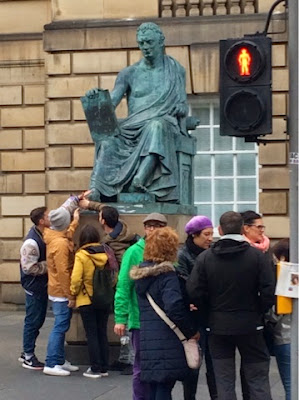
One thing that came up was the classical statue of Hume on the Royal Mile in Edinburgh’s Old Town. I noticed that the left toe of the statue is polished to a bright brassy shine, from the tradition of students and others rubbing it for luck, so as to absorb some of his wisdom.

Some who I was talking to laughed, as if at a friendly little joke, while others took it a little more seriously. What would Hume, the greatest philosopher of the Scottish Enlightenment, skeptic, naturalist, and pragmatist, think about this seemingly superstitious practice? Some thought he would very much disapprove, as Richard Wiseman does.

That’s a very good question, I thought. Although he did not approve of superstitious thinking generally, would he consider the toe-rubbing an example of real superstition? Would he take it seriously?

A few days later, standing in the square across from the statue, I watched the crowd go by as I was waiting. Many paused and looked a little wonderingly at the big shiny toe, while others stopped, usually people who were in groups, and rubbed it, laughing and chatting. There was an Asian couple who did this more solemnly and almost ritualistically, rubbing the toe and than their heads, as if to physically rub in the absorbed knowledge like a salve. The scene, to anyone who is not just a little too grouchy for their own good (I think), was a charming and friendly one.

In thinking it over, I recalled another Hume story recounted, for my benefit, at the HSS meeing. One day, Hume was crossing the bog created by the recent draining of the Nor Loch; he was going from his house in Old Town to check on the progress of the house he was having built in New Town. On the way, he slipped in the mud, and partially because it was slippery and partly because he was a fat man, he couldn’t get up. He asked a passing sturdy fishseller for help, but she knew who he was: a reputed atheist. She refused to help, unless he recited the Lord’s Prayer and the Creed. He obliged, she offered him her hand, and they went on their way. For some time afterwards, this was a favorite funny anecdote of Hume’s, and he referred to her as the most astute theologian that he had ever met.

So I was thinking: would Hume, who recognized the humor, even charm, in the story of the fishseller, really disapprove of the toe-rubbing? He was such a sociable person; he thought that the most virtuous people were the charming, friendly,  conversational, generous people. Sharing a happy time and a laugh is among the best things one person can do for another.

My conclusion: Hume himself would look on the toe-rubbers, smile and laugh, and probably join in, getting great satisfaction out of the joke. I think that sometimes, in the pursuit of reason, some of us can forget the role that the little rituals and talismans we create are a sort of game or story that we engage in to facilitate friendly communication, and play. This can go for astrology, tarot cards, knocking on wood, whatever. I’m not talking about those who sell their services, hoodwinking people into believing that if they pay enough money, their fortunes can be changed. I’m talking about how most people actually engage in these practices. They might say sometimes that they believe, maybe a little, in the magic power of these practices and objects.

But if you observe people closely, most carry on as if they didn’t believe in actual magic. They still go to work, study hard, pay for insurance, and go about the business of life as if it’s up to them to take responsibility for as much of their future as they have control over, whether or not they had just read the tarot or rubbed a brass toe.

People need stories and games, rituals and talismans, and some need these things more than others. it’s as ancient a part of our nature as just about anything else. By taking it all too seriously, committed  rational thinkers run the danger of giving so-called magical thinking too much credit, and too much power. All of these things are human creations, and we should use them only insofar as they help our lives, as opportunities for fun and human bonding.

So as long as your life is not hindered by superstition, play with those cards with the mysterious and pretty pictures, splash around the ‘holy’ water, and touch the ‘lucky’ statue! Chill out, and have a good time, people! I believe this philosopher wouldn’t mind a bit.

~ Ordinary Philosophy and its Traveling Philosophy / History of Ideas series is a labor of love and ad-free, supported by patrons and readers like you. Please offer your support today!

Hume Sites and Monuments, Part 2

117 (2)Thursday, ‎May ‎08, ‎2014

…or more accurately this time, Hume sites and artifacts.

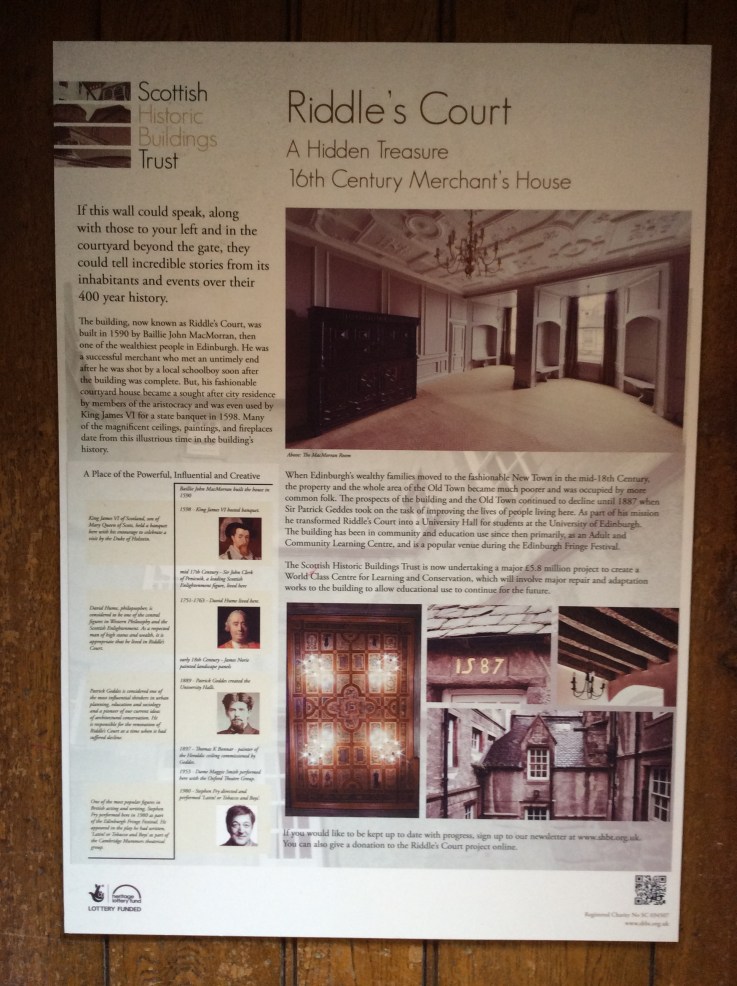
On Thursday afternoons, the Scottish Historic Buildings Trust holds an open house for Riddle’s Court (a small square enclosed by the buildings that surround it), where David Hume bought his first house in the 1750’s. In his time, the building was called a ‘land’, and a floor or suite of the building that comprised the rooms where the tenant lived was called a ‘house’. So a ‘land’ held several ‘houses’, today’s ‘flats’.

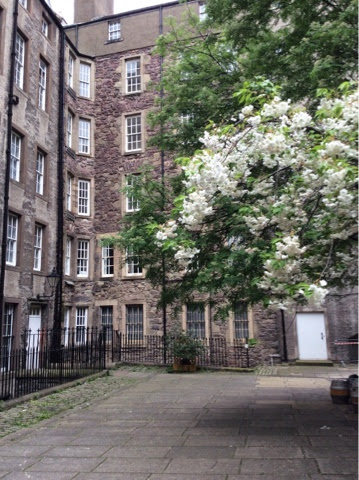
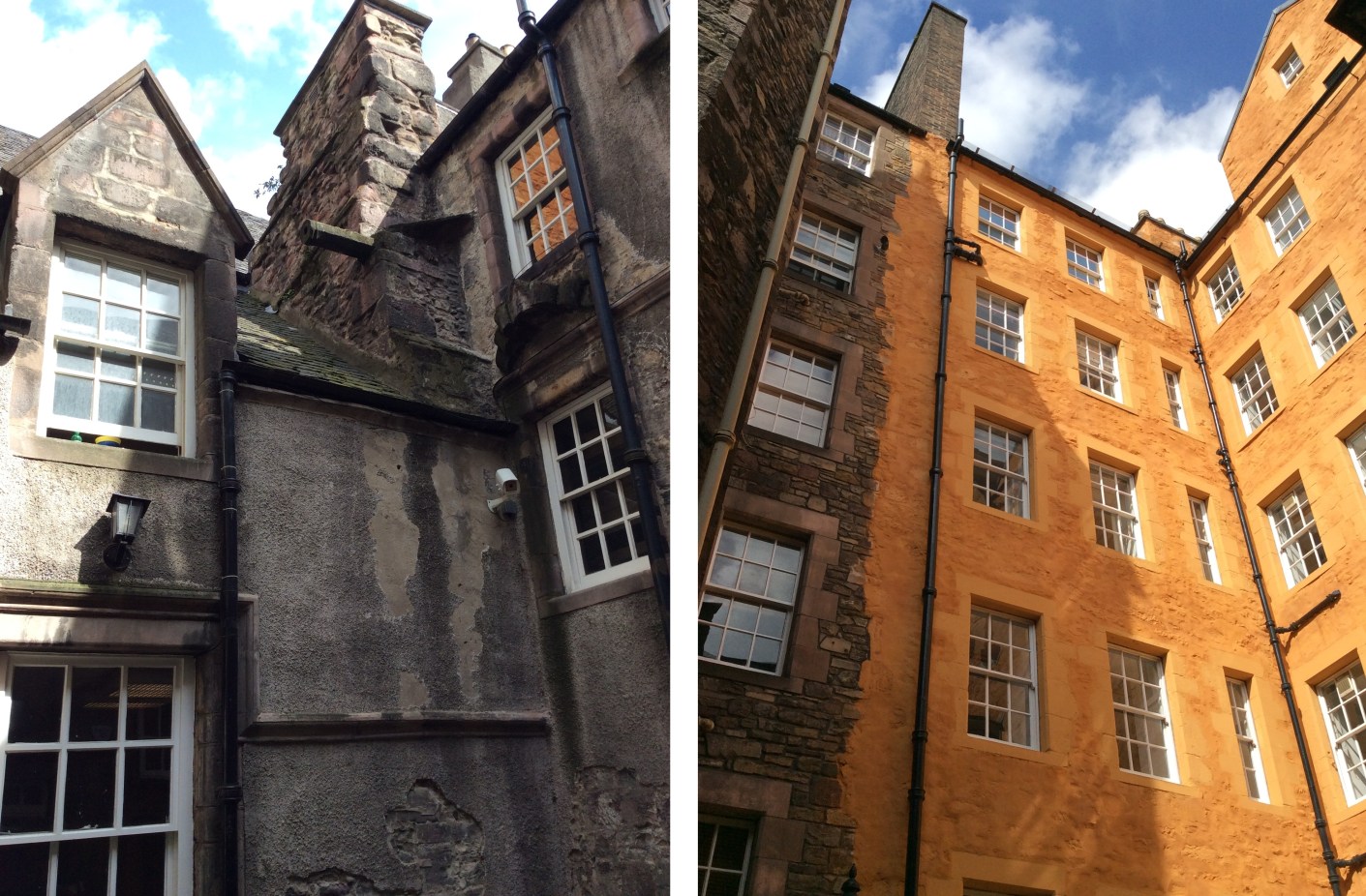
The rooms that are open to the public are on the opposite side of the court from where his house was; records are not clear from the time, but it’s pretty certain he lived in one of the upper houses on the Royal Mile side of the court. I’ll show you where in a moment.134 (2)

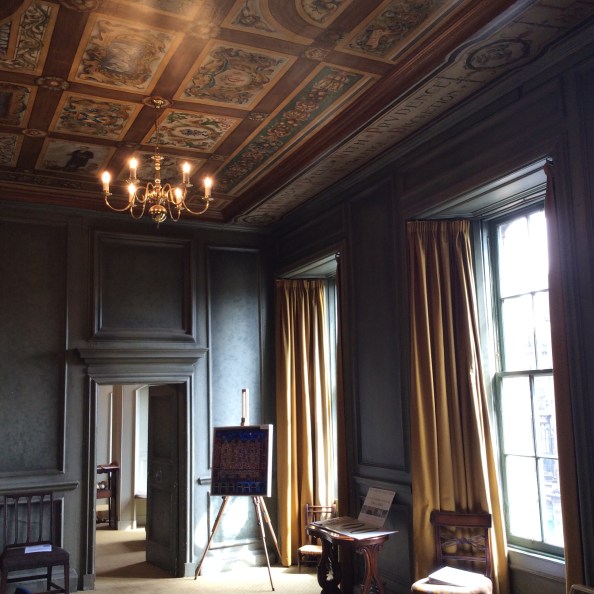
This room with the beautiful ceiling was a drawing room for later inhabitants. You can read about it in the center photo below. The closeup of the ceiling shows David Hume’s monogram, to commemorate his living nearby.779

785777778

Here (above) are views looking upwards from inside the court; the reddish color of the walls at the right is a natural color that they would have used at the time, and he probably lived in one of these upper houses. The photo on the left is at the left of the reddish wall, and I include it ’cause it’s pretty!

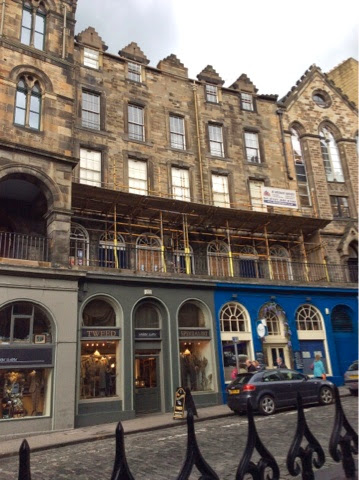
And here’s the view of the building that I’m in, opposite from Hume’s house, from Victoria Street below. Victoria Street was built in the 1830’s, where a steep, narrow footpath used to run through the gardens behind Riddle’s Court and the neighboring houses. My mother-in-law recommended that I visit Victoria Street; coincidentally, I discover that in constructing it, they almost decided to tear down the Riddle’s Court buildings, one of the most important sites I’ve come to visit. Fortunately, someone decided it was best to keep them since the buildings have such a rich history and Patrick Geddes, who was responsible for saving and restoring so many of Edinburgh’s most important historical buildings, turned it into a student center.

Two views in Riddle’s Court, Old City, Edinburgh

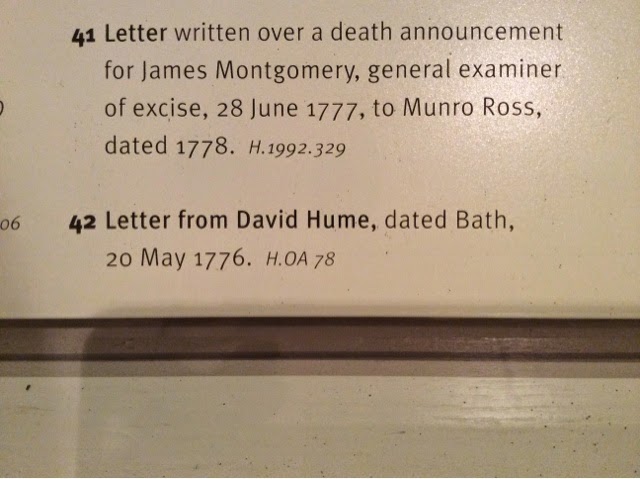
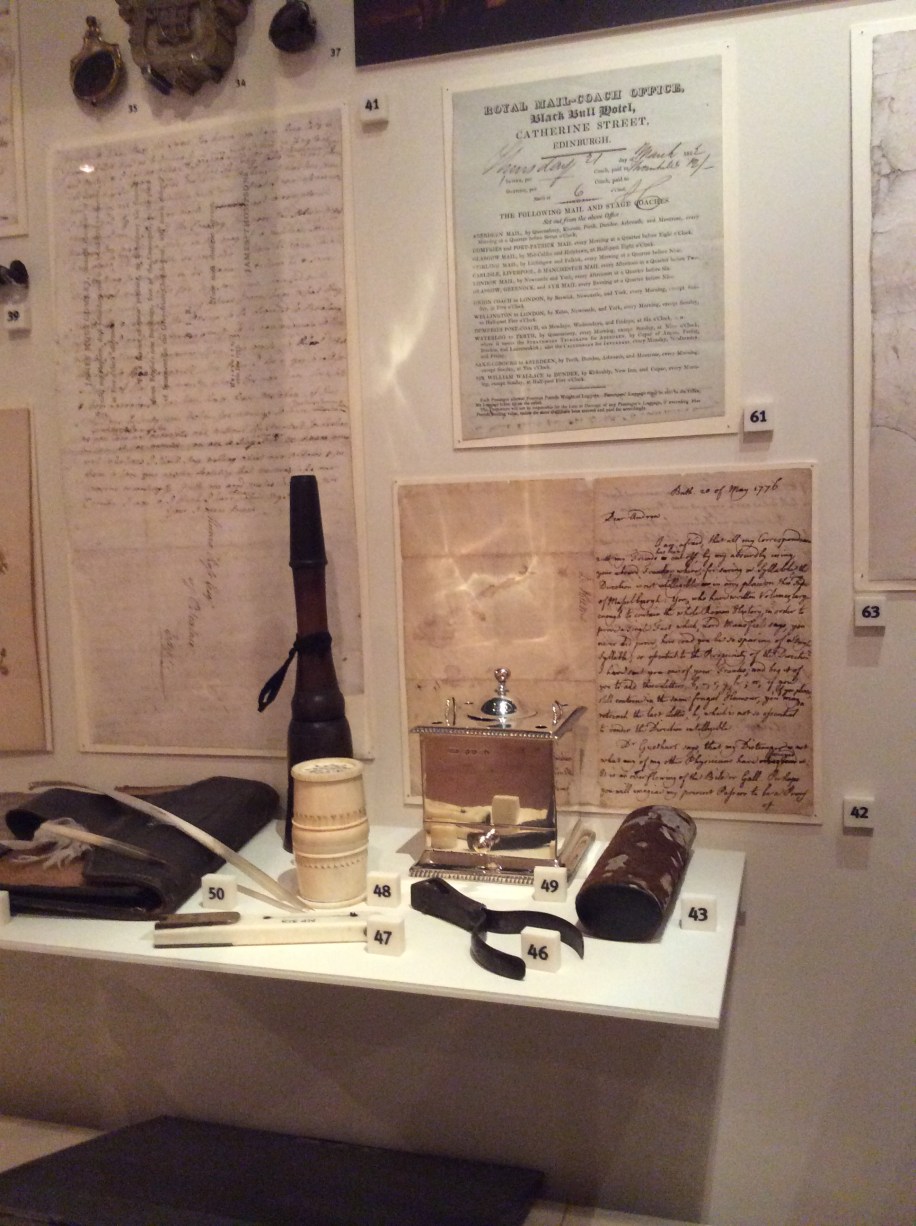
Now I turn to the first artifact I find on this trip that David Hume himself touched: a letter written just a few months before his death. It’s on display at the National Museum of Scotland, where I spend some hours this afternoon gazing at wonderful natural specimens and historical artifacts of Scotland. Hume had gone to Bath in hopes that the mineral springs there would help relieve the symptoms of the intestinal or abdominal disorder, probably cancer, that he died from. In the letter, he’s telling a man named Andrew that he’s feeling better at the moment.

A letter from David Hume to ‘Andrew’ dated May 20th 1776, at an exhibit in the National Museum of Scotland in Edinburgh

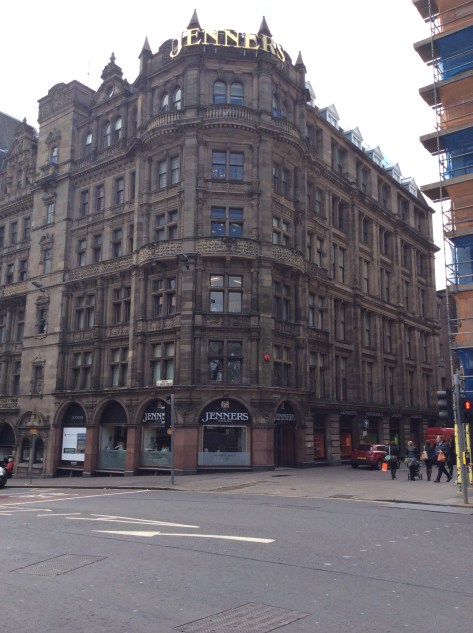
Jenner’s department store off St Andrew’s Square in Edinburgh’s New Town

Note: The following story has an update.

The next day, I set out to find the commemorative plaque at the site where David Hume’s New Town house (apartment) was at 8 South St. David’s St. at Rose. I can’t find the plaque anywhere, but his house may have stood about where this large department store stands now….

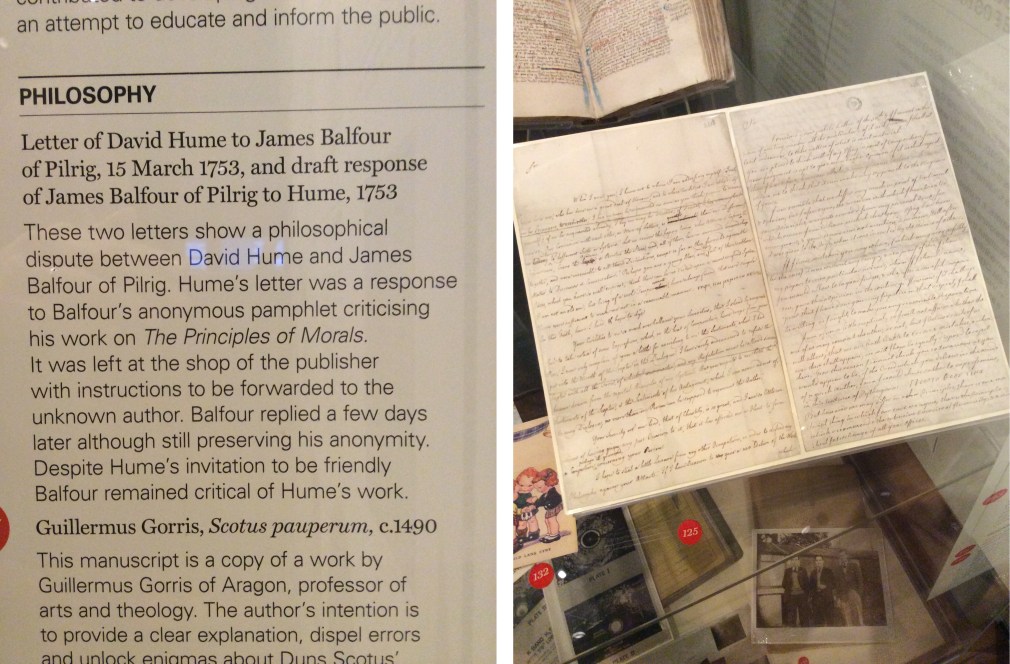
I return to the National Library of Scotland to catch up on my writing and research, and there’s another letter in Hume’s own hand on display just feet away from where I’m writing this post, at an exhibition celebrating the achievements of the Scots people.

David Hume worked for some years in the 1750’s as the librarian for the Advocate’s Library, which eventually became the National Library. Although he had a falling out with the library over their blocking of some ‘undesirable’ books he had ordered, he continued to work for them since he needed access to their collection for the ambitious, multi-volume History of Britain he was working on, for which he was most famous during his lifetime. He donated the small salary that he earned from the Library to a blind poet friend, Thomas Blacklock.

Throughout my trip, I’ve been working intermittently in the Special Collections reading room at the National Library of Scotland, referring to first editions of David Hume’s books, all published in his lifetime, save for a few ‘dangerous’ works that were published shortly after his death. I’m not allowed to take photos of them, but you’ll find them described in my various Hume essays written during and following this trip, in the section that follows each essay, called ‘Sources and Inspiration’ (my informal brand of works cited page that I use for my blog essays). When I’m back home and have more time and my own computer, I’ll look for more information on these books, with links and photos.

Letter from David Hume to James Balfour dated Mar 15, 1753 on exhibit at the National Library of Scotland

The library is closing, so I must go. More on Hume to come!

Ordinary Philosophy and its Traveling Philosophy / History of Ideas series is a labor of love and ad-free, entirely supported by patrons and readers like you. Please offer your support today!

First Day in Old Edinburgh: Hume Sites and Monuments

On Calton Hill with Edinburgh’s Old City in the background.

‎It’s early Sunday afternoon, and I’m recovering from probably the single longest day of walking I’ve ever done, and that’s saying a lot for this avid hiker and walking enthusiast. My hip joints ache, my feet ache, my calves ache, my shins ache. But I don’t care, each of these aches are little tokens of a beautiful day. But let me back up a bit…
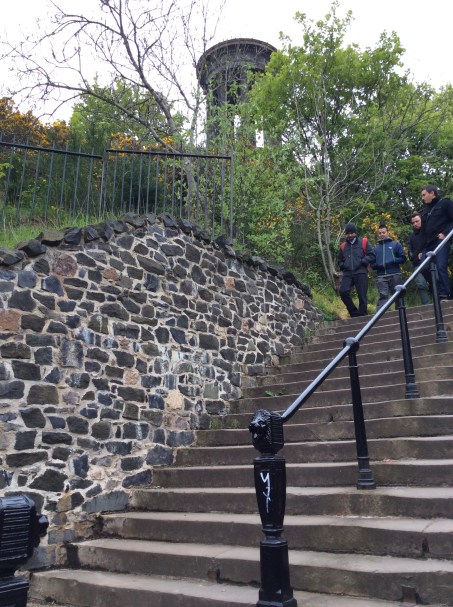
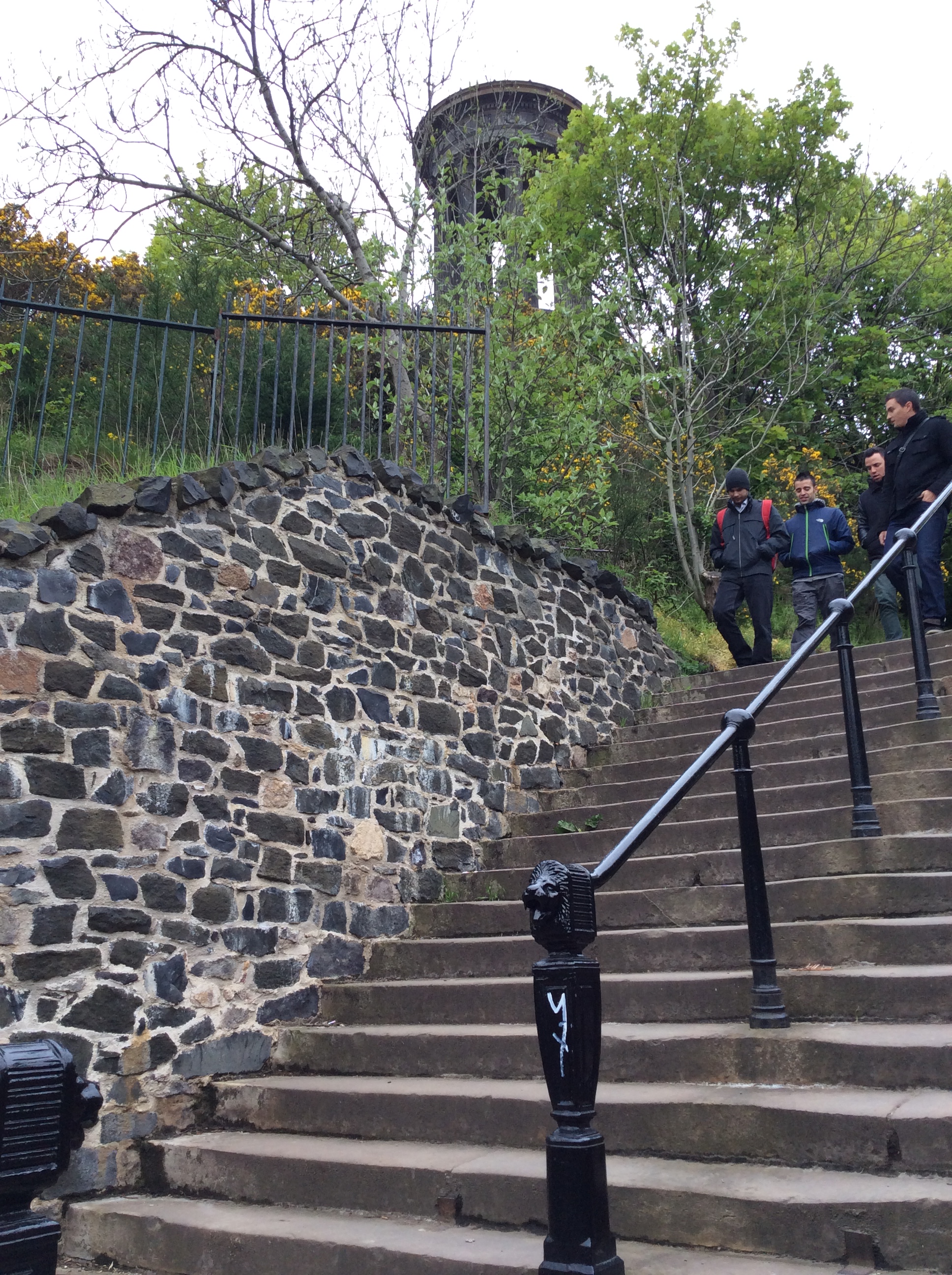
a-stairway-to-the-park-at-calton-hill-edinburgh-2014-amy-cools

Saturday, ‎May ‎03, ‎2014

I started my exploration of the Old City from the other end, where the Castle of Edinburgh overlooks all from its high perch on a craggy rock, along the Royal Mile, which heads east from the castle to Calton Hill and the Palace of Holyroodhouse.

The first half of my day is spent getting my bearings, creating a mental map of how the Old City hangs together, while spontaneously popping into any historic place that looked interesting. That can get expensive, paying entrance fees, but what the hell, it was my first day. Anyway, that’s what keeps these wonderful old places from falling into ruin or turning into tacky gift shops, so it’s worth every penny.) I have my little camera out to keep my hands free and snap a gazillion photos along the way. I don’t have a way to upload those photos and share them with you now, but I will when I get back home in a couple of weeks. The photos you see here are taken on my tablet.

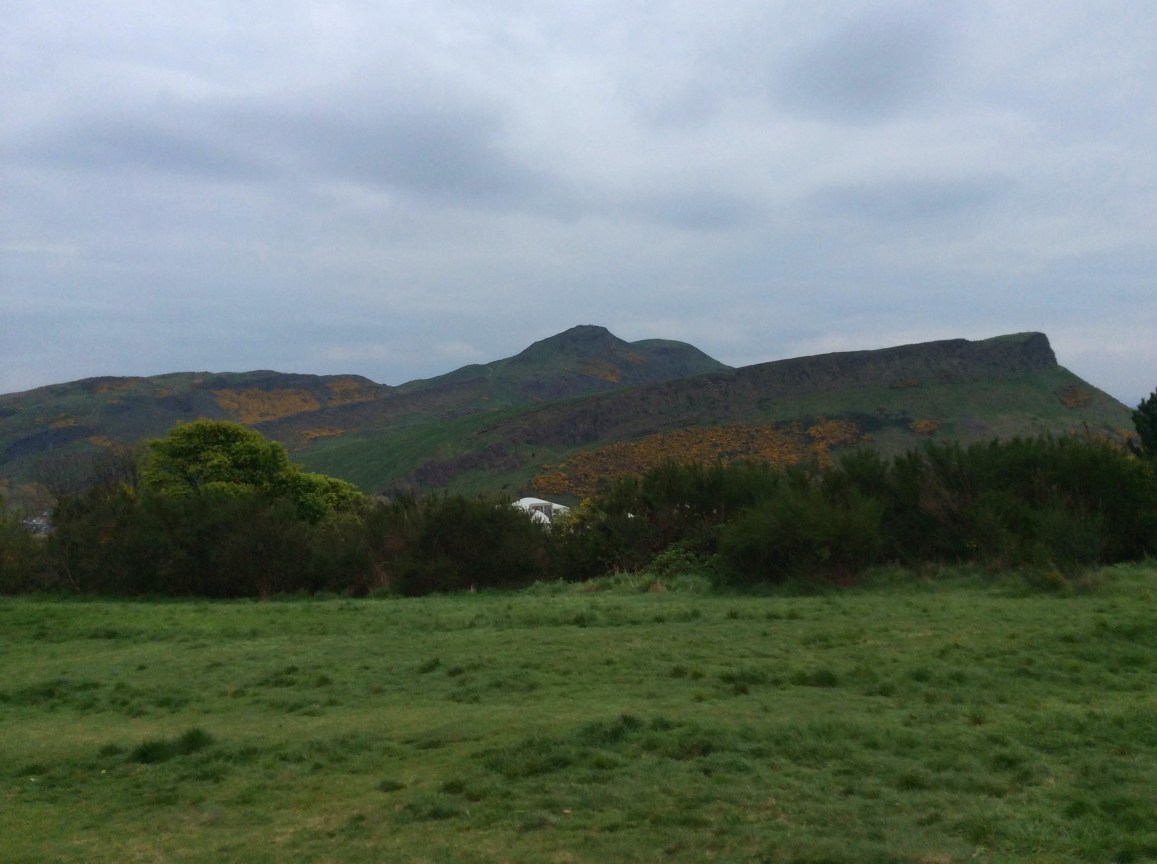
Arthur's Seat as seen from Calton Hill on a gray spring day, Edinburgh, 2014 Amy Cools.JPG

Arthur’s Seat as seen from Calton Hill on a gray spring day

So here I am, overlooking Edinburgh from Calton Hill.

It’s on Calton Hill that my journey following David Hume really begins, though I had looked into some sites associated with his life on the way, that I’ll return to later. It’s here on Calton Hill that he’s buried, and it’s here, I discover, that he caused the first path in Edinburgh to be built dedicated solely to the improvement of mind and body. Here, people would be encouraged to take their exercise by having a lovely place to walk, on this hillside with its spectacular views of the city, the surrounding countryside, and the Firth (estuary), away from the hustle and bustle, the crowds, the dirt, the unhealthy air, and the smells of the city. The first path to be built is named Hume Path in his honor, so of course, that’s the path I choose.
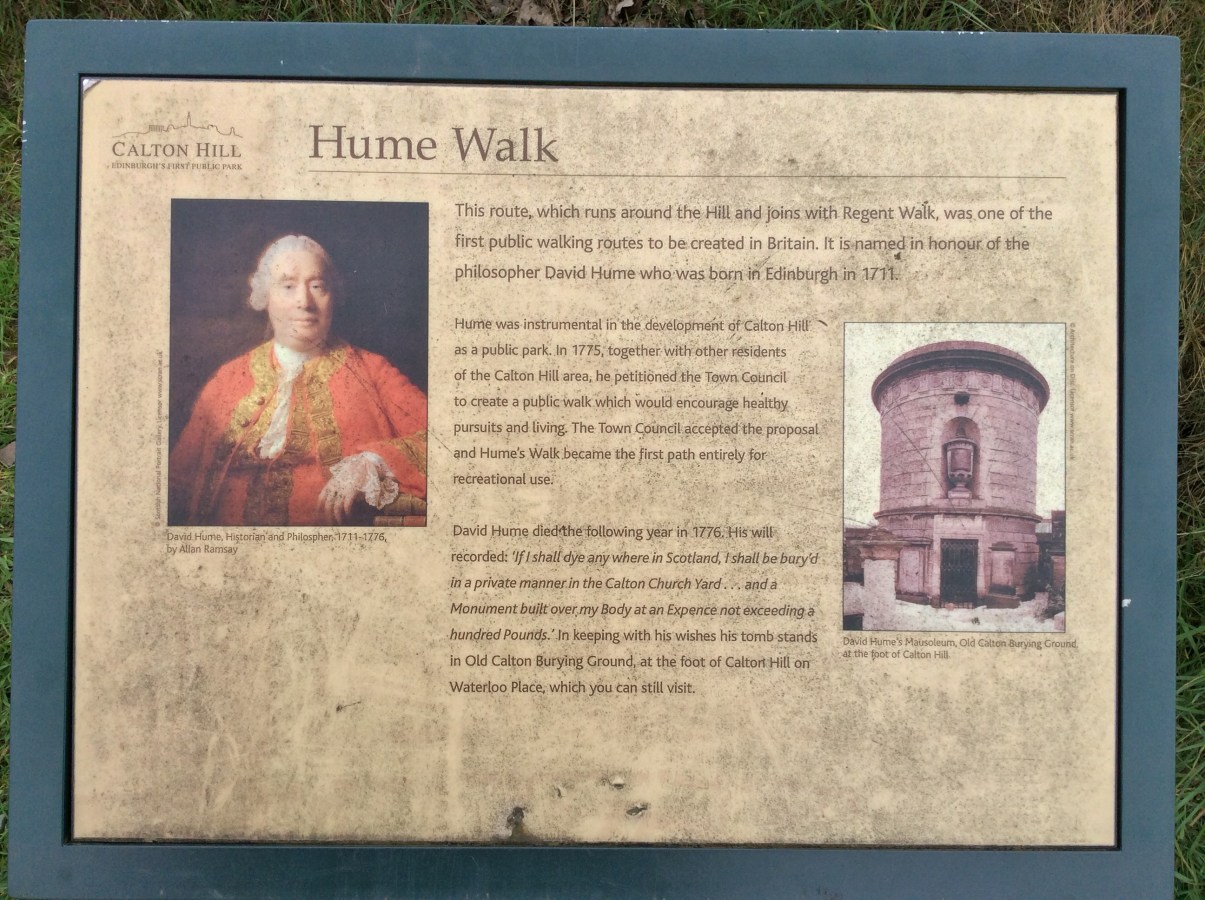
hume-walk-plaque-on-calton-hill-edinburgh-2014-amy-cools

Hume Walk sign, Calton Hill, Edinburgh
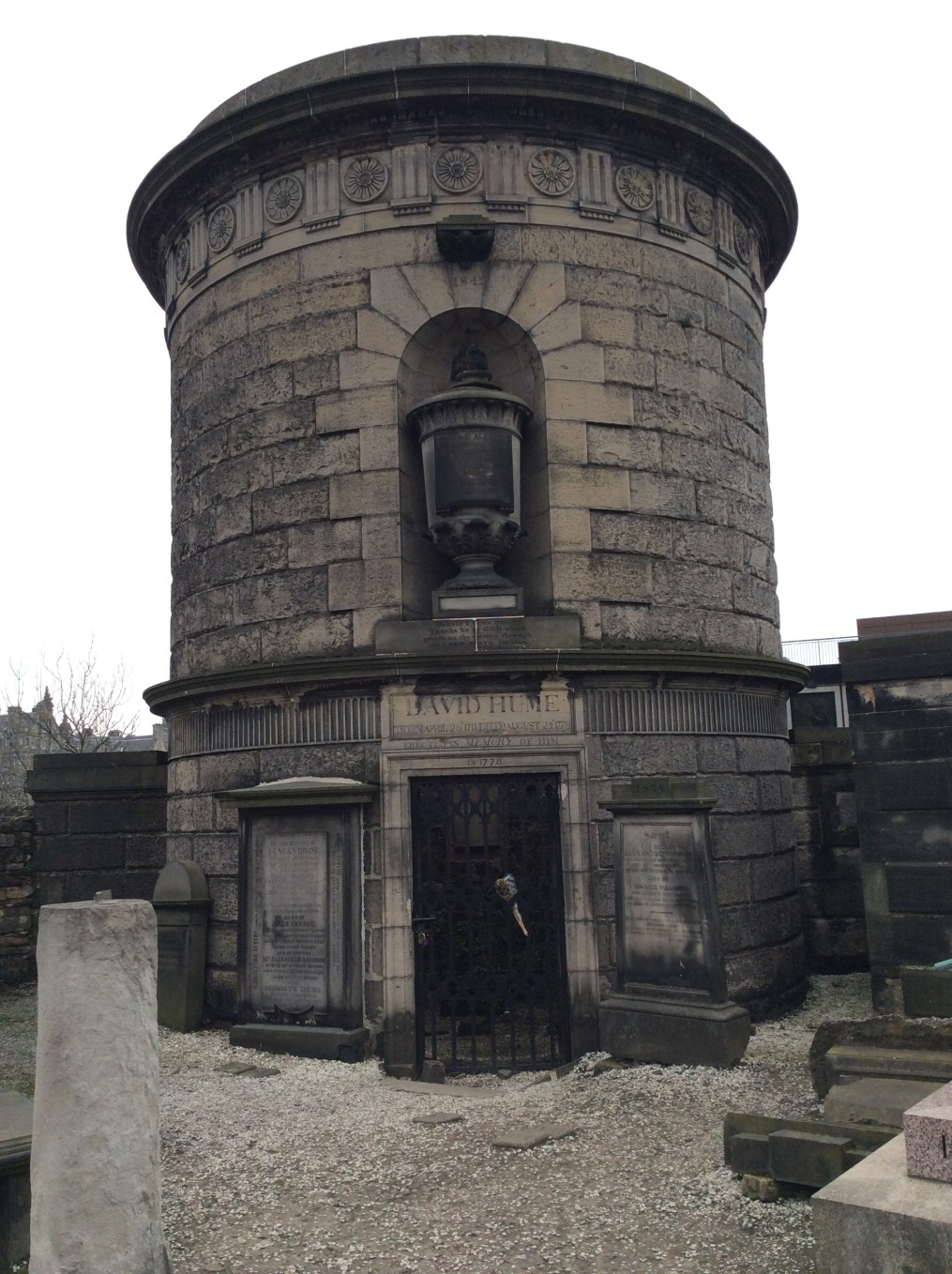
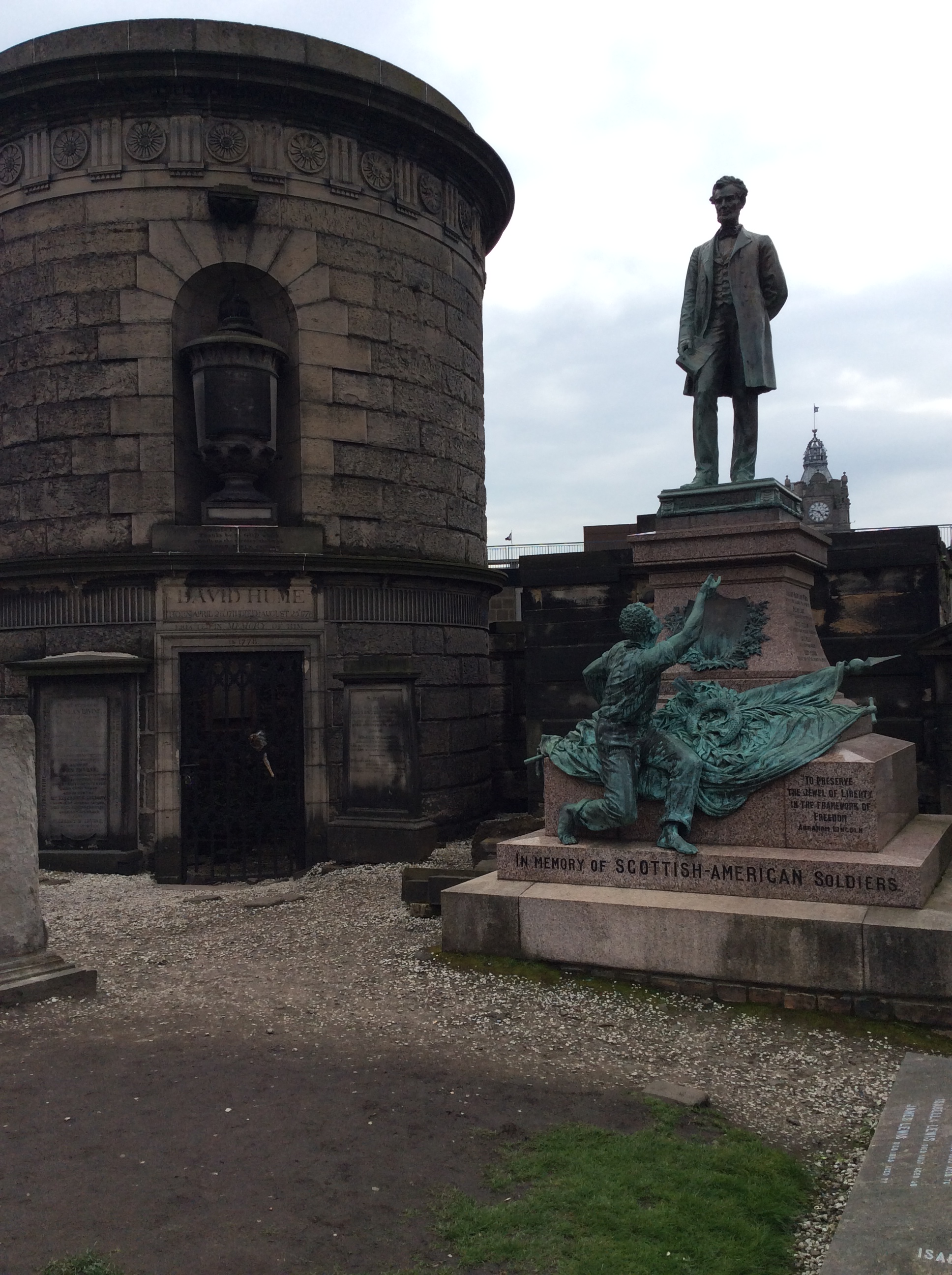
David Hume’s grave monument, Calton Hill, Edinburgh, Scotland
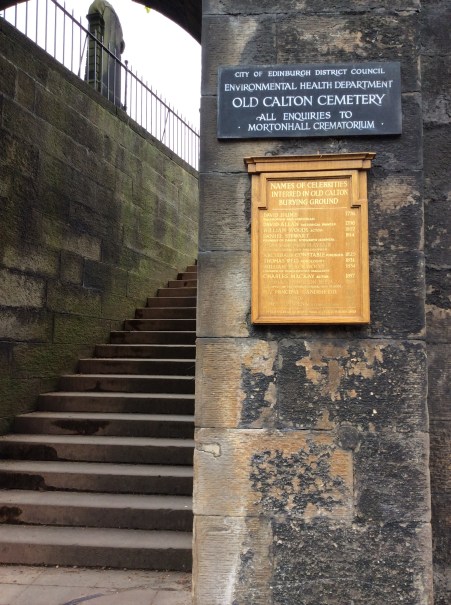
Old Calton Cemetery, Calton Hill, Edinburgh, 2014 Amy Cools.JPGI head back downhill a little from the park at the top of the hill, and Calton Hill Cemetery is on my left. I go through the gate and up the short flight of steps, and a bit ahead to my right, I find Hume’s elegant and rather simple monument and gravesite. I spend a good bit of time here musing: the power of physical objects to really bring things into focus still never fails to surprise me, and my sense of purpose in this journey to Edinburgh is strengthened.

I’ll soon write a reflection on his good and noble death

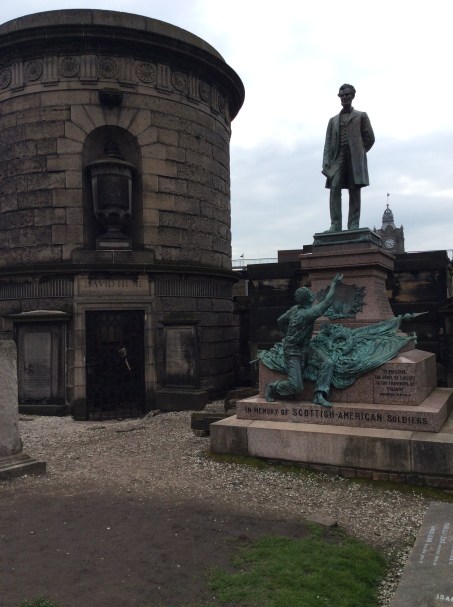
Hume's and Abraham Lincoln Scottish soldier monuments,

Hume and Scottish soldier monuments at Old Calton Cemetery

I’m also moved to discover that a monument to Scottish-American soldiers was erected, featuring a statue of Abraham Lincoln. It seems to me so fitting that these two great heroes of freedom are honored here side by side, one of freedom of person, the other of thought.

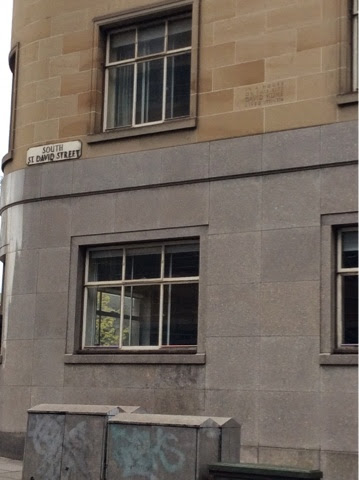
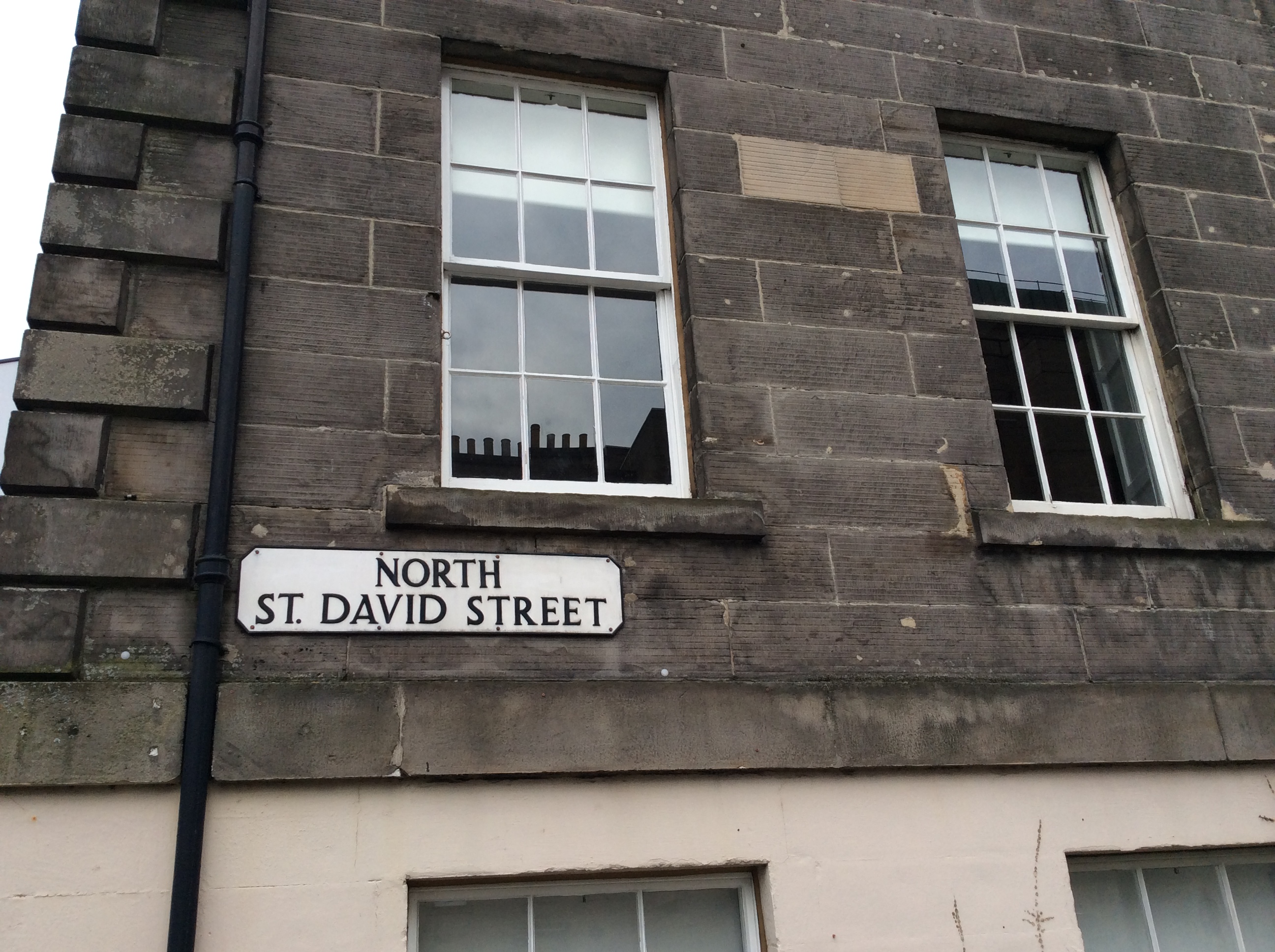
When I leave Calton Hill, I return to the Royal Mile by an alternate route, with a detour along York Place to St. David’s Street. This street got its name from a fond prank by his close friend Nancy Orde, who wrote this little tribute in chalk on the side of Hume’s house. The street bears the name to this day.

My explorations are sure to bring me back to this street since Hume once lived here, so stay tuned. I’ll be back when I’ve gathered more details.
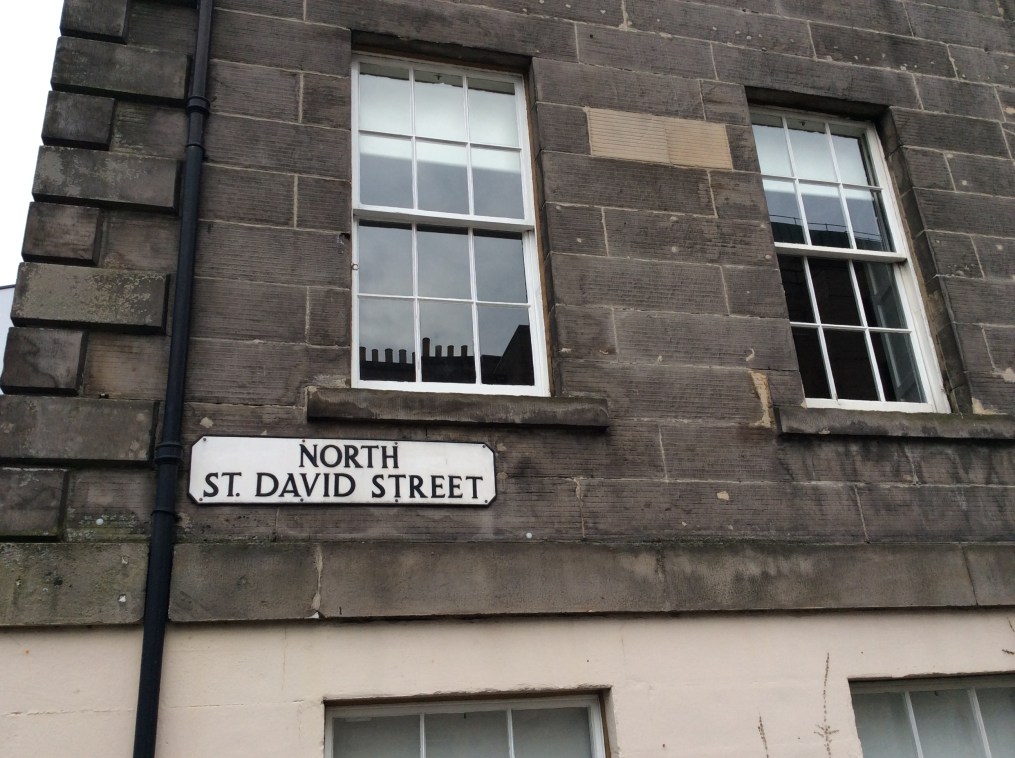
north-st-david-street-sign-edinburgh-scotland-2014-amy-cools

statue-of-david-hume-on-the-royal-mile-edinburgh-2014-amy-cools

Statue of David Hume on the Royal Mile by Sandy Stoddart, 1995

I return to the Royal Mile and this time head west, passing by a grand statue of David Hume, across from St. Giles’ Cathedral. I’m not sure it looks anything like him based on all of his portraits I’ve seen, but it’s a handsome statue, very classical. This bronze Hume probably looks much better with his shirt off than the real man ever did; he was a portly and not terribly good-looking fellow, as much as I admire and respect him. But who knows? Perhaps the younger Hume was a little more fit, before the years of poring over books left him out of shape. The statue’s right toe is polished and very shiny, looks like it’s a tradition to rub his toe for luck.
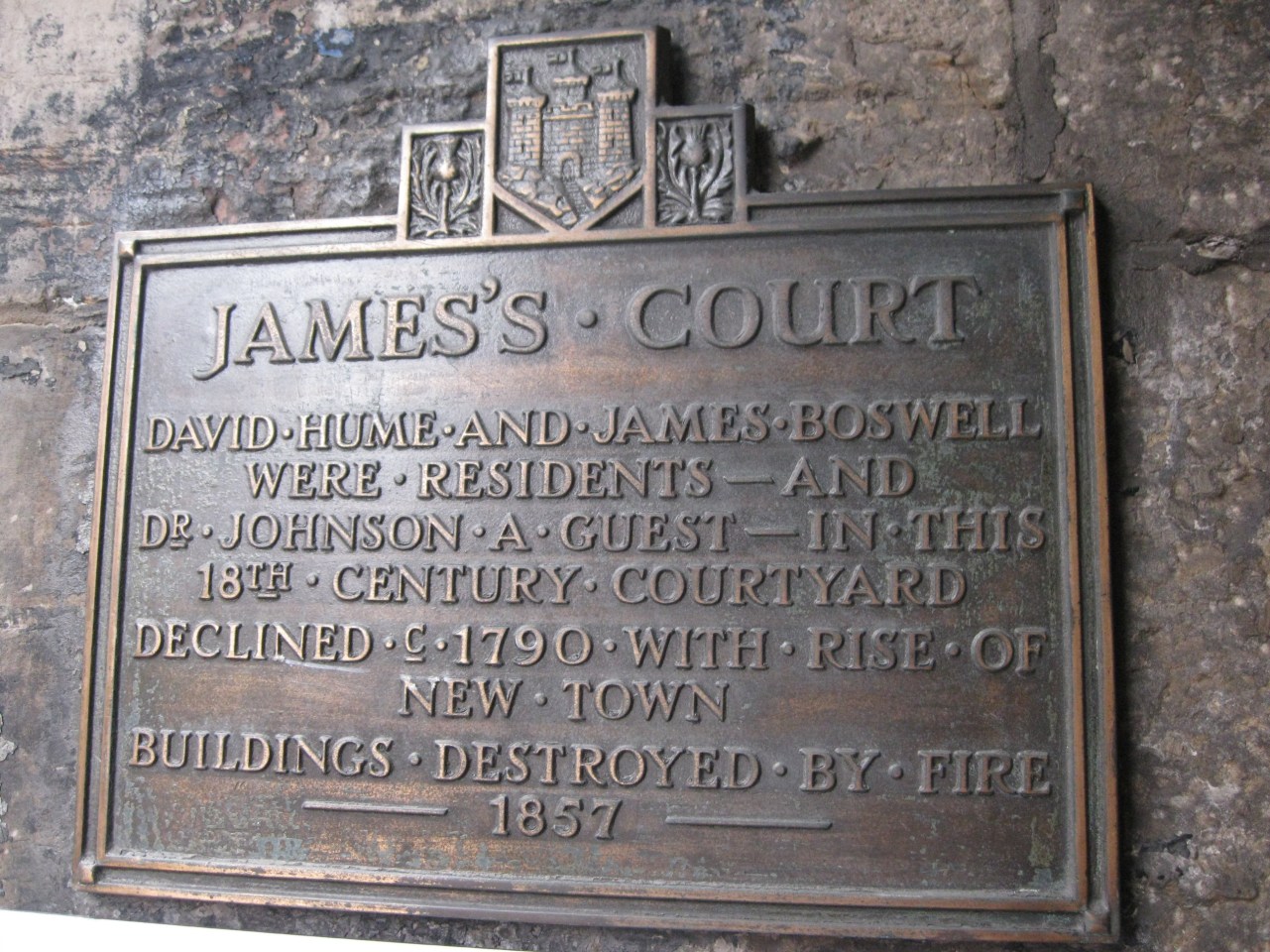
Plaque in close leading to James’s Court, where David Hume lived for a time
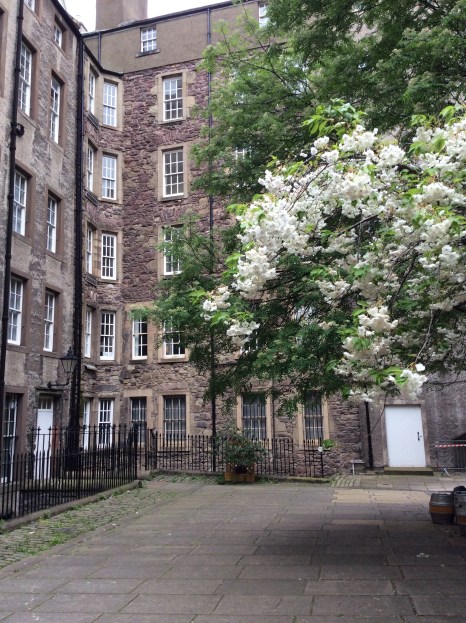
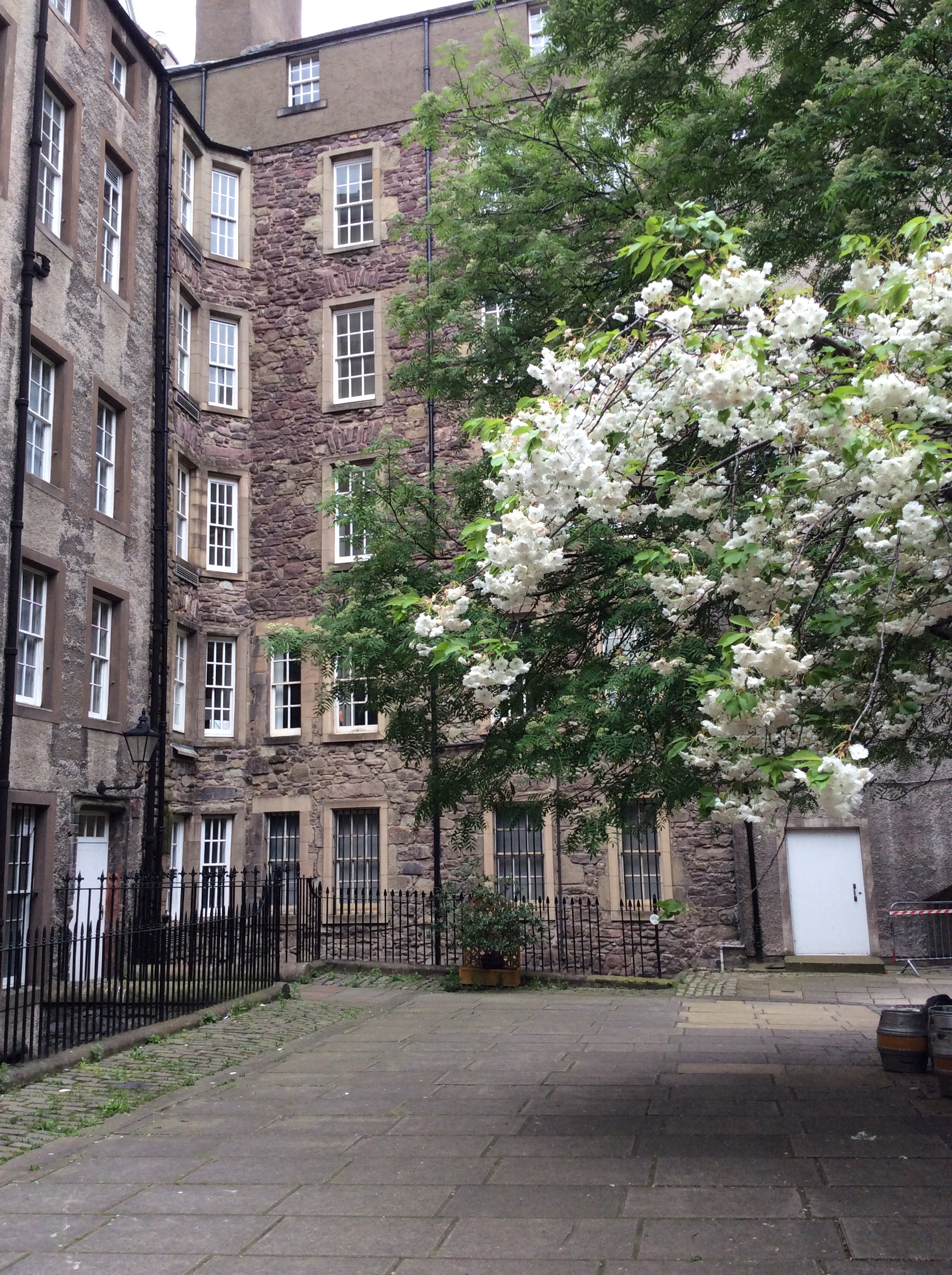
James Court on the Royal Mile, Edinburgh

James Court on the Royal Mile, Edinburgh

I return to James’s Court, where he lived for awhile in a tenement (apartment) with his sister. The original buildings are mostly gone, lost in a fire ages ago. I visited Gladstone’s Land and the John Knox house earlier in the day, two restored tenements from the era, and the Writer’s Museum, the restored home of Lady Stairs, built in 1622 and purchased and decorated by her in the 1700’s, all of which gives me a good idea of what Hume’s place would have looked like generally. James’s Court is a lovely little courtyard reached through a couple of lit

The old city is full of such little closes leading to pretty little courtyards or providing access to who knows where, all nearly irresistible to an American like me, where ancient cities are rare. Each time I see one of those closes, it looks like a little magic portal to some other place and time, and I just have to go through it. I spent much of my day stumbling on interesting corners of the city this way.
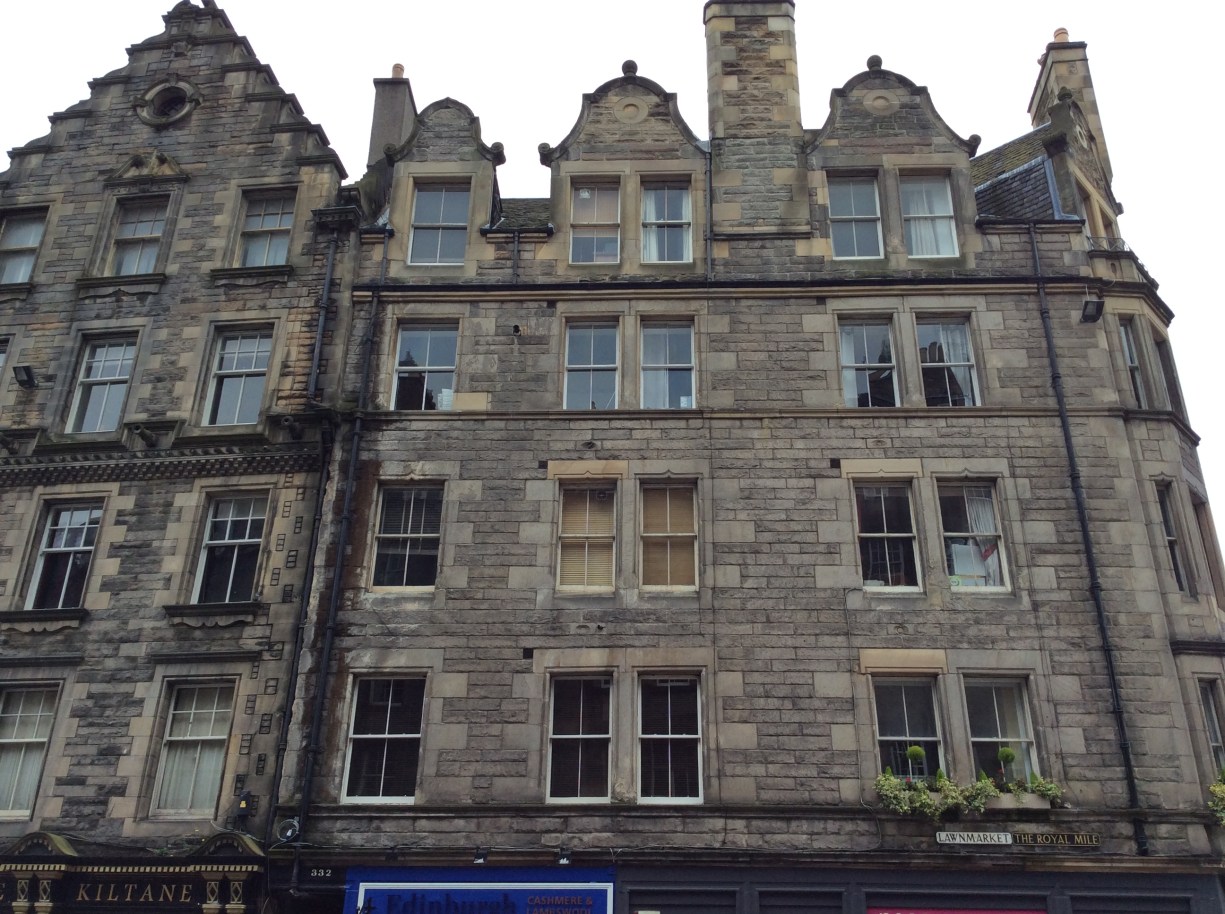
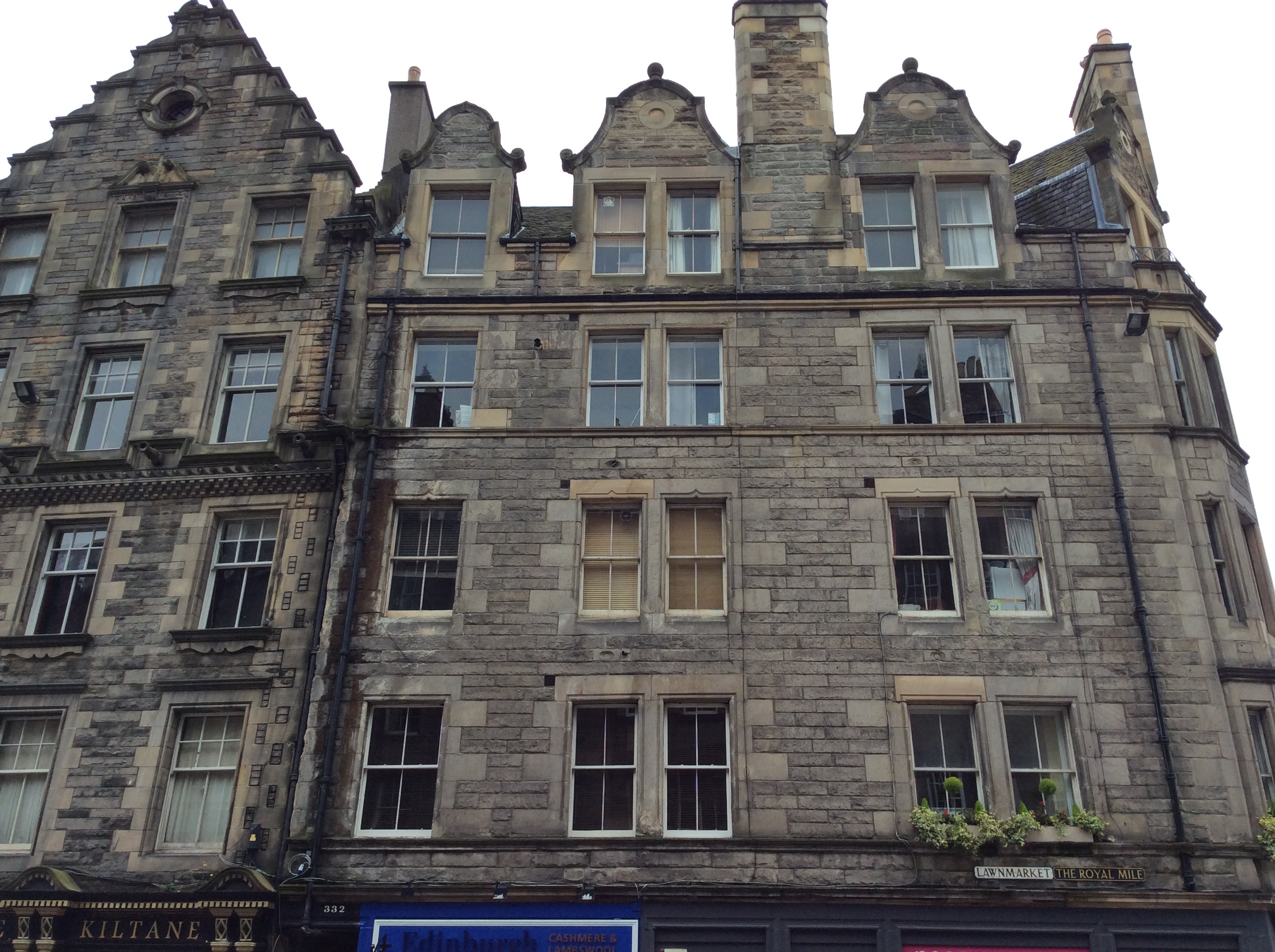
Tenements on the Royal Mile at Lawnmarket. 'Tenements' used to just refer to apartment buildings; the term gained its negative connotation later

Tenements on the Royal Mile at Lawnmarket. ‘Tenements’ used to just refer to apartment buildings; the term gained its negative connotation later
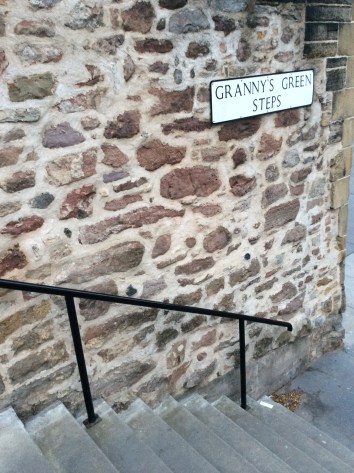
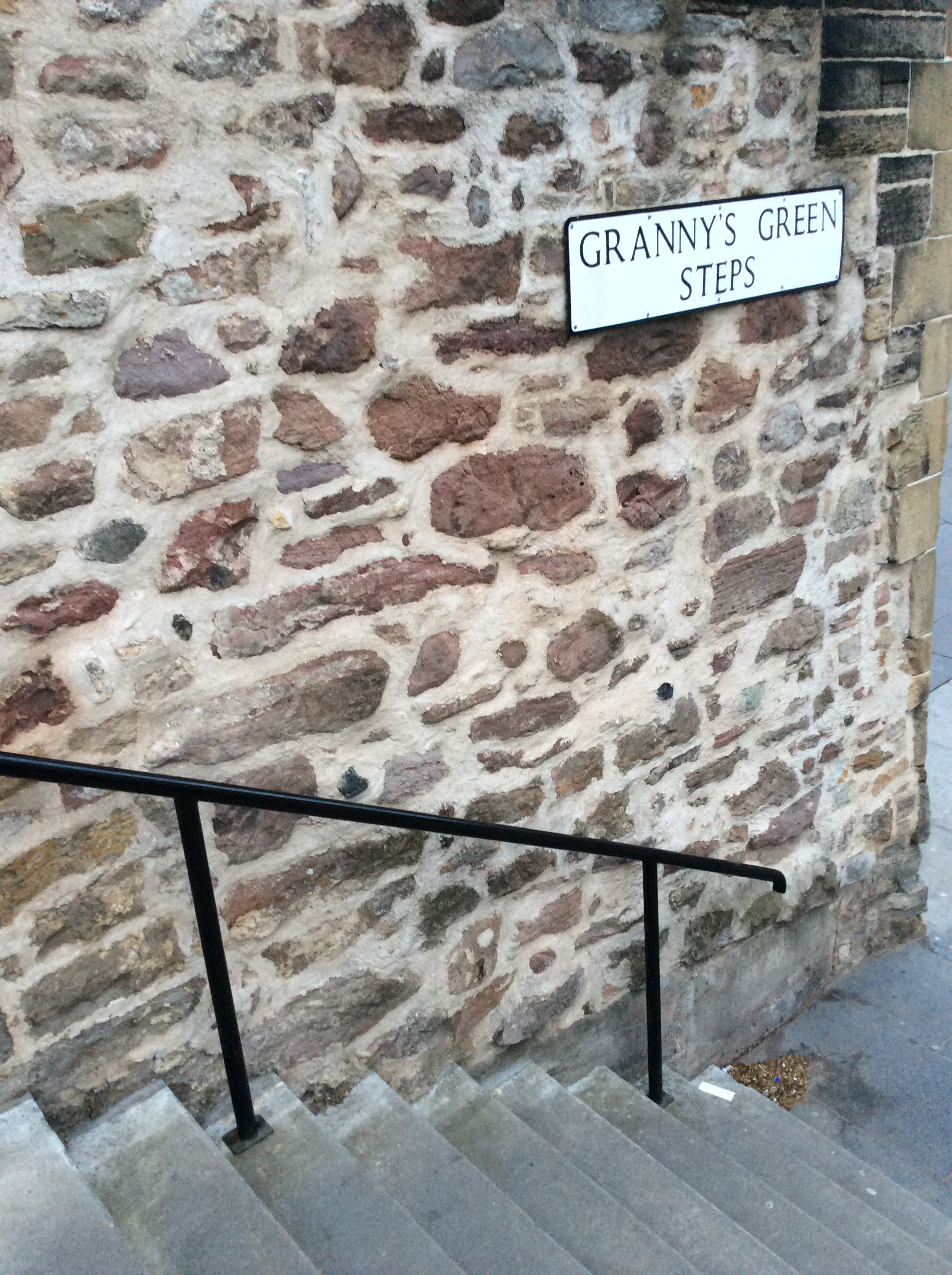
Granny's Green Steps

On the other side of Lawnmarket (the same little neighborhood as James Court) is another stand of tenements across from the castle, in the area where Hume was born in 1711. The original buildings are also no longer there; while most of the tenements that stand today in old Edinburgh are old, most of them date from the mid-1700’s and later. Many of the original tenements were lost in fires, a common occurrence in those days when people depended on open flames for all light, heating, and cooking, and a fire that started in one place would quickly spread. Many of the others were torn down, since after Hume’s time, the tenements became the homes of the poor, where overcrowding and the accompanying disease and filth left them in very poor condition (people and buildings like).

I end my first day of Hume-seeking here, as I suddenly realize I’ve been walking for hours without eating. I eat a meal of the obligatory haggis (it’s delicious, even if it does sit a bit heavy; I suspect it’s not the haggis that the Scots of yore ate, which was boiled. This haggis does not appear to be prepared that way), and I wash down with a pint, of course.

It’s a typical Scottish spring day, cloudy and a little chilly, totally bearable to one used to San Franciso weather. It rains on me just a little during my walk back to my temporary home.haggis-and-a-pint-edinburgh-scotland-2014-amy-cools

Ordinary Philosophy and its Traveling Philosophy / History of Ideas series is a labor of love and ad-free, entirely supported by patrons and readers like you. Please offer your support today!