How a Hackneyed Romantic Ideal is Used to Stigmatise Polyamory, by Carrie Jenkins

There’s no longer anything unusual about wanting an open relationship. Many who consider themselves progressive about sex, gender, love and relationships know this. It’s just that almost nobody in an open relationship wants to be open about it. What’s surprising is that so many people feel the need for secrecy.

I’ve been out as polyamorous for years. Because of this, non-monogamous people who aren’t out often feel able to talk to me about their own situations. When I go to conferences, I can’t help noticing all the philosophers who are in closeted non-monogamous relationships. This discrepancy between reality and socially acknowledged reality can be disorienting; the ‘official’ number of non-monogamous people in the room is almost always one (me).

So what’s going on? No doubt there are several factors at work, but I want to talk about one that’s both powerful and insidious: non-monogamy isn’t considered ‘romantic’.

Romantic love is widely considered to be the best thing life has to offer: ‘failing’ at romance is often construed as failing at life. Amatonormativity is a name for the attitude that privileges lives based around a focal monogamous romantic relationship. What gets called ‘romantic’ isn’t just about classification; it’s about marking out those relationships and lives we value most.

This monogamous ideal is supposed to appeal to women especially. According to the stereotypes, single women are desperate to ‘lock down’ a man, while men are desperate to avoid commitment. There’s nothing new here: monogamy has historically been gendered. Even in situations where marrying more than one woman has been illegal, it has often been normal for men to have mistresses, but different rules have applied to women. This is unsurprising: in a patriarchal society with property inheritance passing along the male line, paternity is key, and enforced female monogamy is an effective way to control it.

Women’s sexuality can also be policed by developing a feminine model that includes a ‘natural’ desire for monogamy, plus social benefits for conforming to that model (and penalties for non-conformity). This model can then be internalised by women as a ‘romantic’ ideal inculcated via fairytales. In a similar vein, rather than allowing only men to have more than one partner, we can instill a subtler cultural belief that men’s infidelity is ‘natural’ and therefore excusable, while women’s infidelity is not.

Our language undermines gender-related optimism about monogamous romantic ideals: there is no word for a male ‘mistress’; romantic comedies are ‘chick flicks’. ‘Romance’ novels are marketed to and consumed by women. Brides are ‘given away’ by men to other men. We never hear about ‘crazy old cat gentlemen’. And how many married men do you know who’ve taken their wife’s surname? These attitudes persist not just in word but in deed: wives in hetero marriages still do more housework than their husbands, even if they earn more (which they rarely do).

Recent growing acceptance of same-sex love as ‘romantic’ has presented challenges to gendered norms. But this has happened alongside another change: monogamy has become an even more powerful ‘romantic’ ideal by including same-sex relationships. And its impact is intensely gendered.

Women who enter voluntarily into non-monogamous relationships are a direct challenge to the idea that women are ‘naturally’ monogamous. They are socially penalised to maintain the status quo. A non-monogamous woman will be portrayed as debased and disgusting – a ‘slut’. When I have discussed my open relationships online, I have been called a ‘cum-dumpster’, a ‘degenerate herpes-infested whore’, and many other colourful names.

My internet trolls focus on sex, partly because presenting non-monogamous relationships as ‘just sex’ makes it easier to degrade them, and partly because women who violate the monogamy norm – whose sexuality is out of (someone’s) control – are a threat to an ancient feeling of entitlement over women’s sexuality and reproductive potential. In contrast, a non-monogamous man is, at least sometimes, liable to be regarded as a ‘stud’.

Apart from monogamy, the only other relationship structure that controls paternity in a similar way is patriarchal polygamy, which is stigmatised in contemporary North America, for reasons including bona fide feminism as well as racism and cultural imperialism. One effect of this is that monogamy is seen as the only fair and liberal alternative.

Actually, there are many alternatives. But to tolerate them is to tolerate widespread social uncertainty about who is having sex with whom. This would extend to everything sex is entangled with, and everything it represents. Our ideals of ‘romantic’ love regulate not just our expectations about sex but also our conceptions of family and the nature of parenthood.

Ultimately, what we call ‘romantic’ is a philosophical issue that touches on the core of who we (think we) are, and what we value. I believe that the ‘romantic-ness’ of romantic love is largely socially constructed, and as such malleable. We collectively write the ‘script’ that determines the shape of the privileged (‘romantic’) relationship style. This script has changed, and will continue to change. But currently that process goes on largely below the radar: we aren’t supposed to see it happening, or realise that we can control it. Romantic love maintains a wholly ‘natural’ image, evading challenge or critical scrutiny by seeming inevitable, incomprehensible and wonderful.

We must get beyond this. We need to question the limits we have placed on what counts as a ‘romantic’ relationship. Freedom to love – the right to choose one’s own relationships without fear, shame or secrecy – is critical, not just for individuals but for us all collectively. Non-conformity is the mechanism that reshapes the social construct to better represent who we are, and who we want to be. Instead of forcing our relationships to conform to what society thinks love is, we could force the image of love to conform to the realities of our relationships.

But it won’t be easy. If the love of a polyamorous triad is seen as ‘romantic’, and hence as valuable as the love of a monogamous couple, then the triad should have the same social and legal privileges as the couple. How could we deny them the right to be co-parents? How could we defend the legal or financial benefits of monogamous marriage, or the lack of legal recourse for anyone fired for being polyamorous? These are the privileges by which we signal to monogamous couples and nuclear family units that theirs are the most socially valuable social configurations.

Nor could we defend the countless ways in which non-monogamous people are stigmatised and rejected. My boyfriend’s father no longer speaks to him about anything but the weather because he is in a polyamorous relationship with me. An extended family member literally prayed over me when she learned that I was non-monogamous, feeling an urgent need to ask Jesus to ‘save’ me from this ‘culture’. Stigma against non-monogamy is beyond a joke: researchers have uncovered assumptions that the non-monogamous are just bad people: less likely to walk their dogs, or floss their teeth.

It’s far easier to pretend that this is not really happening. Or that it’s not really a big deal. Perhaps you feel that way right now: perhaps you’re thinking you don’t know any non-monogamous people. But I wouldn’t be too sure. Until quite recently, an awful lot of people thought that all their friends and relatives were straight.Aeon counter – do not remove

Carrie Jenkins is a writer and philosopher. She is working towards an MFA in creative writing at the University of British Columbia. Her latest book is What Love Is and What it Could Be (2017). She lives in Vancouver. (Bio credit: Aeon)

~ This article was originally published at Aeon and has been republished under Creative Commons.

Listen to Carrie Jenkins discuss romantic love with Joe Gelonesi at The Philosopher’s Zone

~ Ordinary Philosophy is a labor of love and ad-free, supported by patrons and readers like you. Any support you can offer will be deeply appreciated!

*All views and opinions expressed by guest writers are their own and do not necessarily reflect those of Ordinary Philosophy’s editors and publishers


Brian Williams, Bill O’Reilly, Rush Limbaugh, and Honesty in Public Discourse

A piece from two years ago on a timely subject…

Amy M Cools's avatarOrdinary Philosophy

You’re likely aware of the backstory to this piece: well-known news anchorman Brian Williams was caught telling stories. A generous interpretation would portray them as exaggerations; a harsher one a series of self-aggrandizing lies. Williams placed himself in the thick of the action while covering certain news stories, like the shooting down of a military helicopter and the aftermath of Hurricane Katrina, when he was actually at a safe distance. Since his stories were recently debunked, in whole or in part, by others there at the time, he has been widely criticized, shamed, and mocked, and the public debate over the nature and reliability of modern news rages ever more fiercely.

He’s not the only public figure in hot water right now for playing fast and loose with the truth. Bill O’Reilly is also being called out for his history of adding, ahem, some ‘color’ (my term, not his) to…

View original post 1,672 more words

Bad Things Happen for a Reason, and Other Idiocies of Theodicy, by Jason Blum

Ancient of Days by William Blake

Ancient of Days by William Blake

The problem of evil is a classic dilemma in the philosophy of religion. The relative ease with which the problem can be stated belies the depth of the challenge that it presents to traditional monotheism. Roughly, it can be summarised as follows:

If God is omnipotent, then He has the power to create a world without evil.

If God is omniscient, then no moment of evil goes divinely unnoticed.

If God is omnibenevolent, then He has the desire to rid the world of evil.

Therefore, the world should be perfect, or at least free of undeserved suffering. Yet, a cursory glance reveals a world that clearly is not inherently just or free from undeserved suffering.

Hence, the problem of evil: how can a perfect deity allow such injustice and rampant evil in the world that He created?

Many solutions to the problem of evil – called ‘theodicies’ – have been proposed. There is the argument of free will, attributing evil not to God but to humanity’s misuse of its own freedom. Others have argued that certain kinds of moral goodness – compassion, for instance – are not possible in a world without evil, and the value of these types of goodness outweighs the evils on which their existence depends. There is also what I call ‘the big-picture defence’, claiming that evil only appears as such from our limited perspectives. Were we able to see things from the perspective of God, we would see that, in the grand scheme of things, every apparent evil plays a necessary role in making the world more perfect.

The philosopher Gottfried Leibniz’s simple solution was to argue in 1710 that this world is necessarily the best of all possible worlds. Leibniz depicts God assessing in His infinite mind all the various possible worlds that He could create. Because He is a loving God, the one He chooses to create is surely the ‘best of all possible worlds’. Leibniz’s argument suggests that it is ultimately meaningless to complain about this evil or that injustice; because this is the best of all possible worlds. We should take comfort in the fact that everything is, in the final analysis, as good as it can possibly be.

Voltaire derided Leibniz’s solution, writing a book to satirise it. In Candide (1759), the eponymous hero and his companions stumble through the world, constantly beset by bad luck and predations. They witness even greater tragedies in the world around them. Their troubles arise from the uncaring forces of the natural world, but also from the naiveté of Candide, who is constantly assured by his mentor, Professor Pangloss, that this is indeed the best of all possible worlds. In juxtaposing vivid depictions of myriad cruelties and Professor Pangloss’s blind insistence on the ultimate goodness of the universe, Voltaire demonstrates that there is a poignant reality to the experience of suffering that cannot be rationalised away. The claim that justice naturally inheres in the order of things does not bear scrutiny.

There is also a profound moral danger to certain types of theodicy.

The essential difficulty of the problem of evil is how to reconcile its apparent existence with a loving, all-powerful deity. One popular method has been to reassert the inherent justice of the world, implying, if not explicitly claiming, the righteousness of the suffering that we witness throughout it. The result is, essentially, a theological form of victim-blaming.

For example, the American evangelical preacher Pat Robertson explained the 2010 earthquake in Haiti – which killed between 220,000-316,000 people, and injured another 300,000 – as the fault of the Haitian people. The people of Haiti had apparently sworn a pact with Satan in exchange for delivering them from French rule, and the earthquake was divine retribution for that bargain (delivered approximately two centuries later). Robertson similarly suggested that both Hurricane Katrina and terrorism were divine punishment for the fact that abortion is still legal in the United States. Robertson, of course, is not alone. An Iranian mullah has blamed earthquakes on women dressing immodestly; a New York rabbi blamed the advancement of gay rights in the US for another earthquake in 2011; many Burmese Buddhists blamed a 2008 cyclone that killed approximately 130,000 people on bad karma.

The desire that motivates these interpretations is understandable. Natural disasters and terrorist attacks are either random events in a chaotic world, or they are explicable events within a discernible pattern. In the former case, we inhabit an essentially amoral universe: bad things happen to good people, children die premature deaths, and tragedy strikes without remorse, all without rhyme or reason. In the latter case, we inhabit a much more hospitable universe where there is some sort of inherent order: a place where morality is inscribed into the very fabric of things, assuring us that, if only we play by the rules, evil will be punished, goodness will be rewarded, and justice will reign supreme.

It is easy to understand the attraction of that vision. But it has a substantial dark side. Like any theodicy, it cannot simply unmake suffering, and so it instead tries to justify it. The claim that the universe is inherently just then implies that those who suffer deserve it. The existence of a just God and a moral universe is gained at the cost of condemning victims of misfortune as blameworthy. And so, hundreds of thousands of Haitians died because their ancestors made a pact with the devil. Women and homosexuals agitating for equal rights are blamed for deadly natural disasters.

Such a worldview conveniently scapegoats someone, usually whatever population someone wishes to demonise: women, homosexuals, the poor, etc. It also normalises social ills that could otherwise be addressed and meliorated. In a dark irony, holding that the universe is ultimately a just place ends up condoning the suffering and injustice that happens within it, often on the backs of those most in need.

Visions of a just universe need not function this way. Theodicy authorises only the suffering of the less fortunate when it indulges in willful blindness and insists on justice as a foregone conclusion, denying reality in favour of comforting ignorance. Alternatively, when justice is construed as hope – as a vision of what the world could possibly be – it functions as a lodestar. This acknowledges the disturbing realities with which we are surrounded, and refuses to be disillusioned by them. By regarding justice as an ideal rather than a present reality, one’s vision of the inequalities and brutalities of the present moment remains unobstructed, allowing them to be faced. The just universe in which we should believe is the one that can be created only through dedicated effort and real action on our part. But that can happen only if we refuse to take shelter in soothing fantasies. Aeon counter – do not remove

This article was originally published at Aeon and has been republished under Creative Commons.

Jason Blum is a visiting assistant professor on the college writing programme at Davidson College in North Carolina. His first book is Zen and the Unspeakable God (2015). (Bio credit: Aeon)

~ Ordinary Philosophy is a labor of love and ad-free, supported by patrons and readers like you. Any support you can offer will be deeply appreciated!

*All views and opinions expressed by guest writers are their own and do not necessarily reflect those of Ordinary Philosophy’s editors and publishers

Happy Birthday, Watsuji Tetsurô!

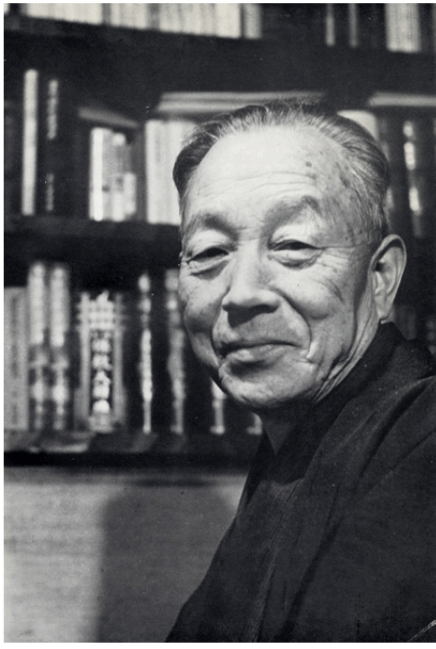
Tetsuro Watsuji, photo via Alchetron, Creative Commons CC BY-SA

Tetsuro Watsuji, photo via Alchetron, Creative Commons CC BY-SA

Let us remember the philosopher Watsuji Tetsurô on the anniversary of his birth, March 1, 1889.

Robert Carter and Erin McCarthy wrire for The Stanford Encyclopedia of Philosophy:

‘Watsuji Tetsurô was one of a small group of philosophers in Japan during the twentieth century who brought Japanese philosophy to the world. He wrote important works on both Eastern and Western philosophy and philosophers, from ancient Greek, to Schopenhauer, Nietzsche, Kierkegaard and Heidegger, and from primitive Buddhism and ancient Japanese culture, to Dōgen (whose now famous writings Watsuji single-handedly rediscovered), aesthetics, and Japanese ethics. His works on Japanese ethics are still regarded as the definitive studies.

Influenced by Heidegger, Watsuji’s Climate and Culture is both an appreciation of, and a critique of Heidegger. In particular, Watsuji argues that Heidegger under-emphasizes spatiality, and over-emphasizes temporality. Watsuji contends that had Heidegger equally emphasized spatiality, it would have tied him more firmly to the human world where we interact, both fruitfully and negatively. We are inextricably social, connected in so many ways, and ethics is the study of these social connections and positive ways of interacting….’ Read the full bio of Watsuji Tetsurô here

… and learn more from and about this great philosopher who wrote extensively about personhood and our place in the world, and one who bridged Eastern and Western thought:

Climate and Culture: A Philosophical Study – by Watsuji Tetsurô

Summary / SUNY Press page for Rinrigaku (Ethics) by Watsuji Tetsuro (translation by Seisaku Yamamoto and Robert E. Carter) – The Cambridge Encyclopedia of Philosophy describes Tetsurô’s Ethics as ‘the premier work in modern Japanese moral theory [which] develops a communitarian ethics in terms of the “betweenness” (aidagara) of persons based on the Japanese notion of self as ningen, whose two characters reveal the double structure of personhood as both individual and social.’ (p 449)

Watsuji Tetsurō: Japanese Philosopher and Historian – in Encyclopædia Britannica

Watsuji Tetsuro – in New World Encyclopedia

Ordinary Philosophy and its Traveling Philosophy / History of Ideas series is a labor of love and ad-free, supported by patrons and readers like you. Please offer your support today!

Happy Birthday, Michel de Montaigne!

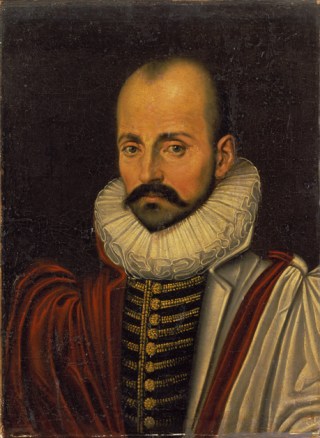
Michel de Montaigne, public domain via Wikimedia Commons

Michel de Montaigne, public domain via Wikimedia Commons

Michel de Montaigne, born on February 28, 1533, was a thinker after my own heart.

Montaigne was a deeply philosophical thinker, though he never developed a complete philosophical system or moral theory. He invented, or at least popularized, a revolutionary way of writing: the essay. In his essays, he wrote about anything and everything he found interesting enough to observe and think deeply about which was …well, just about everything, especially his inner life. His Essays are a rich source of wonderful philosophical and moral insights. As the Stanford Encyclopedia of Philosophy describes: “… under the guise of innocuous anecdotes, Montaigne achieved the humanist revolution in philosophy. He moved from a conception of philosophy conceived of as theoretical science, to a philosophy conceived of as the practice of free judgment’. Judgment, in this sense, involves applying both our cultivated moral sense and our reason, enriched with knowledge, to navigating the complexity and variety of situations we face throughout our lives; it also refers to the expansive, tolerant attitude we should display towards each other and towards the whole of reality.

While Montaigne highly valued education, he also recognized that it can be overemphasized to the detriment of learning from our own experiences. In his day, education often consisted largely, even mostly, of rote memorization of a vast quantity of facts. This learning method can stifle our ability to exercise practical judgment and serve to blunt social skills as well, preventing us from learning from and about each other, which is essential for cultivating moral understanding. We should learn as much about the world and each other as possible, Montaigne thought, through interpersonal interaction as well as through more formal types of education.

Montaigne also thought that sometimes, our big, smart brains can even hinder our quest for wisdom. For example, we can become ashamed, insecure, even hateful of our own bodies when we contrast the refinements of education and the arts to the material, often messy, even disgusting reality of caring for the body and satisfying its needs. This distaste for our bodies is ungenerous and ungrateful, said Montaigne, considering how we rely on our bodies for so much. In fact, even to this Catholic Christian man who believed in the soul, we are our bodies in an essential way. Our bodies are much more than just meat that our souls inhabit, they are intimate partners of souls, and together, they comprise whole human beings. As such, our bodies deserve our compassion, gratitude, love, and respect.

Our big brains can make also make us too proud, unable to recognize wisdom in humble or unexpected places. Those of little or no education, Montaigne maintains, sometimes display more wisdom than the most rigorous scholar. This includes animals, who, especially, are sometimes wiser than we are; for example, they live their whole lives with the natural, unembarrassed, proper attitudes towards their own bodies that allows them to unapologetically enjoy the pleasure of being alive. Montaigne believed that we should learn from them and imitate them in these respects. Those who have the most wisdom to teach us, then, can come from all walks of life, and the wisest person will be receptive to the lessons that can be learned anywhere.

Furthermore, we shouldn’t limit our exposure merely to our own cultures, but should learn about as many other cultures and beliefs as possible. Montaigne, like Confucius, believed that before you can be a philosopher or a moral theorist, you must first be an anthropologist. A wide-ranging education and exposure to the world has two major advantages. First, the information you have to work with will be much more vast, your scope much wider, than if you merely stuck to the received wisdom of your own culture. Secondly, you will cultivate in yourself the very virtues that characterize the wise and moral person: tolerance, benevolence, respect, kindness, generosity, understanding, and so forth. Conversely, narrowness of outlook and xenophobia lead to hatred, violence, and so on, as the horrific stories coming back from the conquest of the New World made him all too aware. Montaigne believed we shouldn’t base our attitudes about right and wrong on habit, which is morally lazy and which a narrow education can easily lead us to do; rather, we should temper our moral attitudes with reason, and our reason, in turn, should be informed by an expansive and ever-expanding body of knowledge.

michel-de-montaigneThis can make Montaigne seem like a moral relativist, but I don’t think that this is so. He was a committed Catholic, which seems to rule that out. Yet he did recognize that some things society traditionally recognized as wrong are in fact both bad and good, sometimes one or sometimes the other depending on the circumstances, sometimes both at the same time. For example, consider drunkenness. It can be bad, such as when it gets you fired or leads you to violence. But, it can also be good, such as promoting sociability or artistic disinhibition. Montaigne recognized that if there are universally true moral maxims, they’re likely to be few. Rather, his approach to philosophy is a skeptical one: he recognized that an attitude of uncertainty and doubt is a fruitful one for gaining wisdom. When you don’t easily accept the first easy answers that come along, when you’re always waiting for more information to come in, when you generally accept that there’s a possibility you are wrong, you are practicing a wise skepticism; otherwise, you cheat yourself out of the opportunity to learn.

Ethically, Montaigne espoused some behaviors as universally preferable: those that are inspired by tolerance, joyfulness, sociability, generosity, benevolence, curiosity, a good-humored attitude towards other people and their varied ways of living, and so on; he specifically denounced cruelty and narrowness in thinking and feeling. He described his ethical theory not by outlining a rigorous system, however, but by enacting and describing a moral attitude that inspired moral behavior in others. In sum, he may or may not have been a relativist when it comes to a specific theory or set of maxims, but he was definitely not relativistic in the overarching value he placed on the art of being a good, complete human being, and on promoting the same in others.

Montaigne’s Essays demonstrate that the most well-reasoned advanced moral theory may never be quite as convincing, effective, or influential when spelled out as that which is lived out. Montaigne showed us how we can all be philosophers, how we can live ethically, and how we can discover it all for ourselves.

Philosophers, if they’re doing it right, will be the happiest of all people since philosophy can and should be a joyful enterprise, and we should all be philosophers.

Listen to the podcast version here or on Google Play, or subscribe on iTunes

~ I wrote this essay in 2012 and edited it substantially for this publication in 2017

Learn more about this great master of introspection here:

Essays – by Michel de Montaigne

Me, Myself, and I: What Made Michel de Montaigne the First Modern Man? – by Jane Kramer for The New Yorker

Michel de Montaigne – by Marc Foglia for The Stanford Encyclopedia of Philosophy

Michel de Montaigne – from The Book of Life

Michel de Montaigne (1533—1592) – by Christopher Edelman for Internet Encyclopedia of Philosophy

Michel de Montaigne (1533-1592) – by Terence Green for Philosophy Now

Michel de Montaigne: French Writer and Philosopher – by Tilde A. Sankovitch for Encyclopædia Britannica

Montaigne on Death and the Art of Living – by Maria Popova for Brain Pickings

Can We Have More Than One Friend? According to Montaigne, No – by Manuel Bermudez

Philosophy: A Guide to Happiness – Montaigne on Self-Esteem – by Alain de Botton

Ordinary Philosophy and its Traveling Philosophy / History of Ideas series is a labor of love and ad-free, supported by patrons and readers like you. Please offer your support today!

Happy Birthday, Angelina Weld Grimké!

angelina-weld-grimke-image-public-domain

Angelina Weld Grimké

El Beso

Twilight—and you
Quiet—the stars;
Snare of the shine of your teeth,
Your provocative laughter,
The gloom of your hair;
Lure of you, eye and lip;
Yearning, yearning,
Languor, surrender;
Your mouth,
And madness, madness,
Tremulous, breathless, flaming,
The space of a sigh;
Then awakening—remembrance,
Pain, regret—your sobbing;
And again, quiet—the stars,
Twilight—and you.   (via Poets.org)

Let us celebrate the memory of the wonderful and far-too-unknown author of this gorgeous poem and so many other wonderful works of art and literature on her birthday!

Alix North of Island of Lesbos writes of Grimké:

Angelina Weld Grimké was born [on February 27th, 1880] in Boston, the only child of Archibald Grimké and Sarah Stanley. Angelina had a mixed racial background; her father was the son of a white man and a black slave, and her mother was from a prominent white family. Her parents named her after her great aunt Angelina Grimké Weld, a famous white abolitionist and women’s rights advocate.

Angelina received a physical education degree at the Boston Normal School of Gymnastics in 1902. She worked as a gym teacher until 1907, when she became an English teacher, and she continued to teach until her retirement in 1926. During her teaching career, she wrote poetry, fiction, reviews, and biographical sketches. She became best known for her play entitled “Rachel.” The story centers around an African-American woman (Rachel) who rejects marriage and motherhood. Rachel believes that by refusing to reproduce, she declines to provide the white community with black children who can be tormented with racist atrocities. “Rachel” was the only piece of Angelina’s work to be published as a book; only some of her stories and poems were published, primarily in journals, newspapers, and anthologies.

Only her poetry reveals Angelina’s romantic love toward women. The majority of her poems are love poems to women or poems about grief and loss. Some (particularly those published during her lifetime) deal with racial concerns, but the bulk of her poems are about other women, and were unlikely to be published for this reason. Only about a third of her poetry has been published to date… Read the complete bio and a wonderful selection of poems here

angelina-weld-grimke…and learn more about Angelina Weld Grimké at:

Angelina Weld Grimké – in Encyclopedia of African American Women Writers, edited by Yolanda Williams Page

Angelina Weld Grimké – by Judith Zvonkin for The Black Renaissance in Washington, D.C.

Angelina Weld Grimké – from Encyclopædia Britannica

Grimke, Angelina Weld (1880-1958) – by Claudia E. Sutherland for Blackpast.org

Grimkè’s Life and Career: The Introduction to The Selected Works of Angelina Weld Grimké – by Carolivia Herron for Modern American Poetry at the Department of English, University of Illinois at Urbana-Champaign

Further reading: Selected Women Writers of the Harlem Renaissance: A Resource Guide – Angelina Weld Grimké 

Ordinary Philosophy and its Traveling Philosophy / History of Ideas series is a labor of love and ad-free, supported by patrons and readers like you. Please offer your support today!

“Why” before “How”

“Why” before “How”

I very much recommend this very thoughtful piece by Steve Rose. This is a particularly timely read for me…

Steve Rose's avatarSteve Rose PhD

“He who has a why to live can bear almost any how.” —Friedrich Nietzsche

Those seeking change look toward the mountain ahead, ambivalent to whether or not they should make the trek. They want to get to the top, but are comfortable and safe. Torn between these two competing desires, one may seek out professional advice on mountain-climbing, buy all the top-notch gear, and painstakingly plan their route, perpetually putting off the climb. This is the danger of putting the “how” before the “why”.

We all know people who’ve procrastinated by planning perfectionist plots, while never getting to the hard work of actually making a change. The problem with this approach is that it continues indefinitely, leaving the person wanting the end-goal, yet not having the level of motivation required to take action. The reason for this lack of motivation is the lack of focus on why one is pursuing…

View original post 322 more words

New Podcast Episode: Margaret Sanger and Race

Dr Dorothy Ferebee - Planned Parenthood as a Public Health Measure for the Negro Race, speech for Birth Control Federation of America, 1942

Dr Dorothy Ferebee – Planned Parenthood as a Public Health Measure for the Negro Race, speech for Birth Control Federation of America, 1942

Listen to this podcast episode here or on Google Play, or subscribe on iTunes

Since the earliest days of her birth control activism, Margaret Sanger has been often accused of being a racist, among other things. To many of her critics, her birth control advocacy must be understood as a nefarious plot to undermine human morals and decency, and any means of twisting her message to convey this are fair game. As I discuss in an earlier piece, a favored method of attack, which persists to this day, is to present a sentence or phrase of Sanger’s out of context to ‘prove’ her ‘true’ beliefs about people of other races. Her detractors even claim that she was on a genocidal mission to reduce or even exterminate black people, Jews, and other immigrant groups by destroying future generations. Never mind that Martin Luther King, Jr. praised her work on behalf of his beleaguered people. Never mind that she worked closely with civil rights leaders such as Mary McLeod Bethune and W.E.B. DuBois. Never mind that she opened clinics to serve black and other minority women because so many existing clinics refused to serve anyone but whites. Never mind that she wrote in 1944:

‘We must protect tomorrow’s Chinese baby and Hindu baby, English and Russian baby, Puerto Rican, Negro and white American babies who will stand side by side… to bring promise of a better future’

Read the written version here

Ordinary Philosophy and its Traveling Philosophy / History of Ideas series is a labor of love and ad-free, supported by patrons and readers like you. Please offer your support today!

There Is a Moral Argument for Keeping Great Apes in Zoos, by Richard Moore

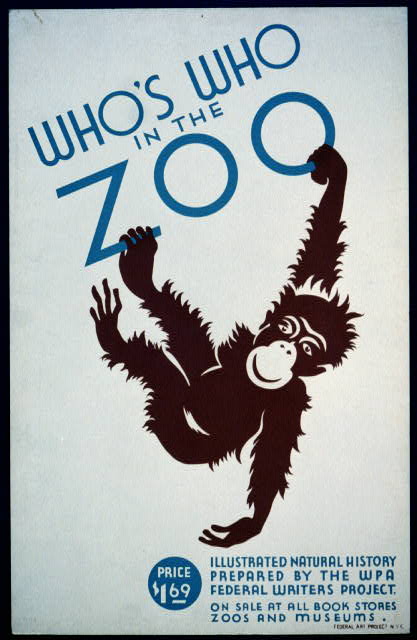
Who's Who in the Zoo Illustrated natural history prepared by the WPA Federal Writers Project, 1937-38, public domain via Library of Congress

Who’s Who in the Zoo Illustrated natural history prepared by the WPA Federal Writers Project, 1937-38, public domain via Library of Congress

I get apprehensive whenever someone asks me about my job. I’m a philosopher who works on the question of how language evolved, I reply. If they probe any further, I tell them that I work with the great apes at Leipzig zoo. But some people, I’ve discovered, have big problems with zoos.

Plenty of philosophers and primatologists agree with them. Even the best zoos force animals to live in confined spaces, they say, which means the animals must be bored and stressed from being watched all the time. Other critics claim that zoos are wrong even if the creatures aren’t suffering, because being held captive for human entertainment impugns their dignity. Such places ‘are for us rather than for animals’, the philosopher Dale Jamieson has written, and ‘they do little to help the animals we are driving to extinction’.

But I want to defend the value of zoos. Yes, some of them should certainly be closed. We’ve seen those terrible videos of solitary apes or tigers stalking barren cages in shopping malls in Thailand or China. However, animals have a good quality of life in many zoos, and there’s a strong moral case for why these institutions ought to exist. I’ve come to this view after working with great apes, and it might not extend to all species equally. However, since great apes are both cognitively sophisticated and human-like in their behaviour, they offer a strong test case for evaluating the morality of zoos in general.

The research my colleagues and I conduct isn’t harmful to the animals and, if it goes well, it will help us get a better grasp on the cognitive differences between humans and apes. For example, we did a study with pairs of orangutans in which we tested their ability to communicate and cooperate to get rewards. We hid a banana pellet so that one orangutan could see the food but couldn’t reach it. The other orangutan could release a sliding door and push the pellet through to her partner, but wasn’t able to take it for herself. They did okay (but not great) when playing with me, and they mostly ignored each other when playing together. We then performed a similar set of studies with human two-year-olds. Compared with the apes, the two-year-olds were very good at getting the reward (stickers) when they played with an adult.

Taken together, these studies tell us something about human evolution. Unlike apes, humans are good at pooling their talents to achieve what they can’t do alone. It’s not that the apes don’t care about getting the food – they got frustrated with one another when things were going wrong, and one orangutan in particular would turn his back and sulk. However, unlike humans, they don’t seem to be able to harness this frustration to push themselves to do better.

The value of research aside, there’s an argument for zoos on the grounds of animal welfare. In the best zoos, such as Leipzig, great apes live in spacious enclosures modelled on their natural habitats, and are looked after by zookeepers who care about them deeply. Large jungle gyms keep them stimulated and stave off boredom; they’re also kept busy with ‘enrichment’ puzzles, which they can unlock with tools to get food. Zoos recognised by the two main accrediting bodies in Europe and the United States are rigorously vetted and required to take part in education and conservation programmes. And there’s no solid evidence that apes living in well-designed enclosures get stressed or disturbed by human observation.

Of course, zoos can’t provide their animals with conditions such as those in an untouched forest. But for the great apes in captivity, there’s rarely a viable alternative. There are estimated to be more than 4,000 great apes living in zoos worldwide. Most of the regions where they are found in the wild – orangutans in Indonesia, chimpanzees and gorillas in Central and West Africa, bonobos in the Democratic Republic of Congo (DRC) – are ravaged by habitat loss, civil war, hunting and disease. As few as 880 remaining mountain gorillas survive, in two small groups in the eastern reaches of the DRC, while orangutan habitats have declined 80 per cent in the past 20 years. While some conservationists dream of rehoming zoo apes in the wild, these vanishing forests mean that it’s rarely feasible. The orangutans in Leipzig are certainly better off than they would be trying to survive in forests razed to make way for palm-oil plantations.

Since zoo apes cannot be returned to their natural environments, specialised sanctuaries are another option. But these require large plots of land that are both safe and uninhabited by existing populations, and such locations are scarce. As things stand, sanctuaries are already struggling to survive because they’re almost exclusively dependent on charitable donations. And most of them are full. In Africa and Indonesia, inhabitants are typically orphans that have been taken from the forest by hunters or palm-oil workers, who kill larger apes and kidnap the babies to sell or keep as pets. Elsewhere, sanctuaries are overflowing with retired lab apes or rescued pets. These institutions lack the capacity to accommodate the thousands of apes currently living in zoos, let alone the money that would be needed to support them.

Given the obstacles and the great expense of rehoming apes, very few places try to do so. Damian Aspinall of Howletts Wild Animal Park in England leads one of the few programmes that release gorillas back into the wild, by taking them to a protected reserve in Gabon. His intentions are heroic and hopefully the plan will succeed. Some gorillas have resettled well. But the results so far have been mixed; in 2014, five members of a family of 11 were found dead within a month of their release. We also don’t really know whether zoo-born apes possess the skills they need to survive, including the ability to retrieve different local foods, and knowledge of edible plants. Young apes learn these skills in the wild by watching the knowledgeable adults around them – but that’s an opportunity that creatures in captivity simply don’t have.

Now, all of this isn’t necessarily an ethical argument for continuing to breed apes in zoos. You might argue that if we can’t save the apes already in captivity, we should at least end breeding programmes and let the existing populations die out. However, captive breeding helps preserve the genetic diversity of endangered species. Moreover, research shows that visiting zoos makes people more likely to support conservation efforts – an effect that’s amplified by more naturalistic enclosures. So first-person encounters in zoos serve to educate visitors about the incredible lives animals lead, and to raise money for wild conservation programmes.

Allowing the ape populations in zoos to wither assumes – without justification – that their current lives are so bad as to be not worth living. It also risks inflicting harm. Boredom is a real risk for zoo animals, and it’s widely believed (although not yet scientifically established) that the presence of infants brings both interest and happiness to the families. Mixed-aged groups create collective dynamics that more closely resemble those in the wild. If we care about the welfare of captive apes, we should allow them to breed – at least in controlled ways.

One day, the prospect of returning captive apes to their natural habitats or housing them in well-funded, spacious sanctuaries might be realistic. Currently, it is not. Instead of condemning zoos, we should dedicate our efforts to supporting them: to pushing bad zoos to reform or close; to funding more research into the welfare of captive animals; and to encouraging all zoos to strive to do more for their inhabitants. That way, perhaps, I will no longer need to shy away from telling strangers what I do.Aeon counter – do not remove

Richard Moore is a post-doctoral researcher at the Berlin School of Mind and Brain. His work has been published in journals including Biology and Philosophy and Animal Cognition. (Bio credit Aeon)

This article was originally published at Aeon and has been republished under Creative Commons.

~ Ordinary Philosophy is a labor of love and ad-free, supported by patrons and readers like you. Any support you can offer will be deeply appreciated!

*All views and opinions expressed by guest writers are their own and do not necessarily reflect those of Ordinary Philosophy’s editors and publishers

Happy Birthday, W.E.B. Du Bois!

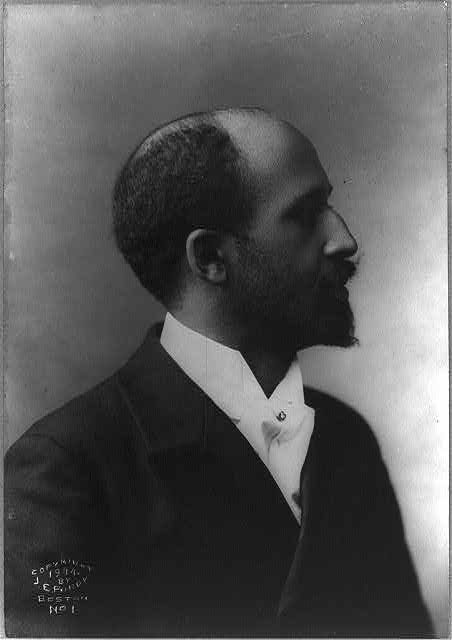
W.E.B. Dubois, Photograph taken by J.E. Purdy in 1904, public domain via Library of Congress

W.E.B. Dubois, photograph taken by J.E. Purdy in 1904, public domain via Library of Congress

Let us honor the life and legacy of the great American writer, historian, journalist, professor, activist, philosopher, and race theorist W.E.B. Du Bois, born on February 23, 1868.

The NAACP (of which he was a founder) writes of DuBois:

‘William Edward Burghardt Du Bois (February 23, 1868 – August 27, 1963) was an American civil rights activist, leader, Pan-Africanist, sociologist, educator, historian, writer, editor, poet, and scholar. He became a naturalized citizen of Ghana in 1963 at the age of 95.

…In 1891 Du Bois got his master of arts and in 1895 his doctorate in history from Harvard. His dissertation, The Suppression of the African Slave Trade to the United States of America, 1638-1870, was published as No. 1 in the Harvard Historical Series. This important work has yet to be surpassed. In 1896 he married Nina Gomer, and they had two children. …[A]t the University of Pennsylvania… he conducted the pioneering sociological study of an urban community, published as The Philadelphia Negro: A Social Study (1899). These first two works assured Du Bois’s place among America’s leading scholars.

Du Bois’s life and work were an inseparable mixture of scholarship, protest activity, and polemics. All of his efforts were geared toward gaining equal treatment for black people in a world dominated by whites and toward marshaling and presenting evidence to refute the myths of racial inferiority’ …

Read his NAACP bio in full here

Donald J. Morse writes of DuBois for the Internet Encyclopedia of Philosophy:

‘W. E. B. Du Bois was an important American thinker: a poet, philosopher, economic historian, sociologist, and social critic. His work resists easy classification. This article focuses exclusively on Du Bois’ contribution to philosophy; but the reader must keep in mind throughout that Du Bois is more than a philosopher; he is, for many, a great social leader. His extensive efforts all bend toward a common goal, the equality of colored people. His philosophy is significant today because it addresses what many would argue is the real world problem of white domination. So long as racist white privilege exists, and suppresses the dreams and the freedoms of human beings, so long will Du Bois be relevant as a thinker, for he, more than almost any other, employed thought in the service of exposing this privilege, and worked to eliminate it in the service of a greater humanity. Du Bois’ pragmatist philosophy, as well as his other work, underlies and supports this larger social aim. Later in life, Du Bois turned to communism as the means to achieve equality. He envisioned communism as a society that promoted the well being of all its members, not simply a few. Du Bois came to believe that the economic condition of Africans and African-Americans was one of the primary modes of their oppression, and that a more equitable distribution of wealth, as advanced by Marx, was the remedy for the situation ….

Read the full IEP bio here

You will find another good short bio and list of DuBois’ writings at The Pennsylvania Center for the Book‘s website

…and click here for pieces about or featuring DuBois at Ordinary Philosophy

Ordinary Philosophy and its Traveling Philosophy / History of Ideas series is a labor of love and ad-free, supported by patrons and readers like you. Please offer your support today!