

Hello, friends of Ordinary Philosophy!
From time to time, I take a trip to some corner of the globe, to explore the lives and ideas of great thinkers in the places where they lived and worked. For this series, I follow in the footsteps of thinkers who are no longer alive, since those who are still telling their own stories. But those who are no longer alive in the body live on in the ideas that they pass on, and in the example they provide for us to follow.
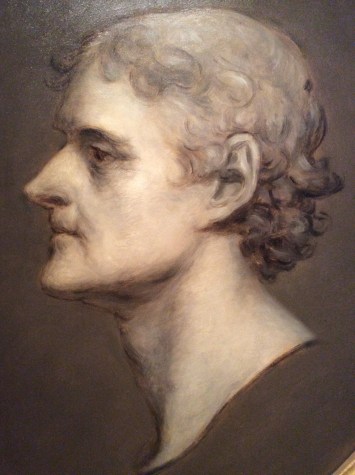
I’m pleased and excited to announce my third philosophical-historical themed adventure, this time in Washington DC, Philadelphia, and various sites in Virginia to follow in the footsteps of…. you may have guessed it… Thomas Jefferson!
Thomas Jefferson was born on April 13th, 1743, and in his long life, he accomplished more than most. He was a founding father of the United States, and went from being a young scholar, lawyer, and representative in the Virginia House of Burgesses, to writing the Declaration of Independence and the Virginia Statute for Religious Freedom, to public service as a congressman, as Minister to France, as Secretary of State, as Vice President to friend and rival John Adams, and finally as third president of the United States. Throughout his life, among many other things, he was an inventor, amateur scientist, farmer, avid reader, architect, naturalist, author, founder of the University of Virginia, and of course, philosopher.
He was a fascinatingly complex and contradictory figure: a self-described shy and modest man with a distaste for politics, who time and time again re-entered the strident political arena of his day to eventually reach the highest office in the land; a critic of the national debt and of too much federal power and a strict Constitutional constructionist, who helped create a stronger national government in the first place, and who flouted the Constitution and further indebted the nation to make the Louisiana Purchase; a promoter of personal liberty and a slaveowner; an idealist and a pragmatist.
So off to the east coast I go! There, I’ll visit landmarks associated with his life, and places where he lived, worked, died, thought, wrote, studied, and rested.
I’ll be traveling there from April 18th through the 26th, and will be writing throughout the trip. I’ll be writing not only about his ideas, but about what I can discover about his everyday life in these places, and whatever feeling of the time and place I can capture.
Here’s the story of the trip, and related essays about Jefferson and his ideas:
http://www.ordinaryphilosophy.com/2015/05/thomas-jefferson-sites-part-2.html
http://www.ordinaryphilosophy.com/2015/05/thomas-jefferson-sites-part-3.html
http://www.ordinaryphilosophy.com/2015/05/thomas-jefferson-sites-part-4.html
http://www.ordinaryphilosophy.com/2015/05/thomas-jefferson-sites-part-5.html
http://www.ordinaryphilosophy.com/2015/05/thomas-jefferson-sites-part-6.html
http://www.ordinaryphilosophy.com/2015/06/jefferson-and-slavery.html
 Ordinary Philosophy