Happy Birthday, Watsuji Tetsurô!

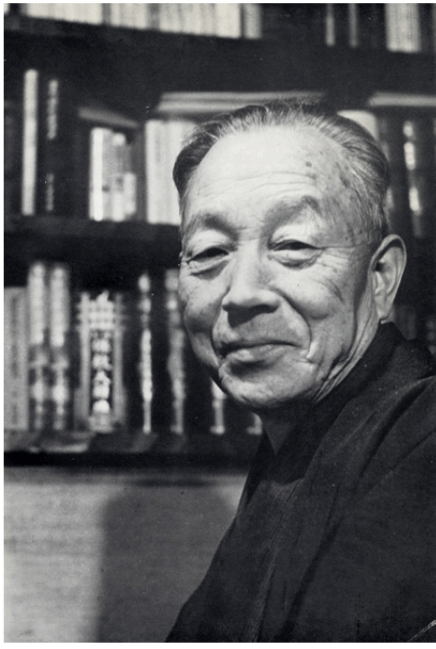
Tetsuro Watsuji, photo via Alchetron, Creative Commons CC BY-SA

Tetsuro Watsuji, photo via Alchetron, Creative Commons CC BY-SA

Let us remember the philosopher Watsuji Tetsurô on the anniversary of his birth, March 1, 1889.

Robert Carter and Erin McCarthy write for The Stanford Encyclopedia of Philosophy:

Watsuji Tetsurô was one of a small group of philosophers in Japan during the twentieth century who brought Japanese philosophy to the world. He wrote important works on both Eastern and Western philosophy and philosophers, from ancient Greek, to Schopenhauer, Nietzsche, Kierkegaard and Heidegger, and from primitive Buddhism and ancient Japanese culture, to Dōgen (whose now famous writings Watsuji single-handedly rediscovered), aesthetics, and Japanese ethics. His works on Japanese ethics are still regarded as the definitive studies.

Influenced by Heidegger, Watsuji’s Climate and Culture is both an appreciation of, and a critique of Heidegger. In particular, Watsuji argues that Heidegger under-emphasizes spatiality, and over-emphasizes temporality. Watsuji contends that had Heidegger equally emphasized spatiality, it would have tied him more firmly to the human world where we interact, both fruitfully and negatively. We are inextricably social, connected in so many ways, and ethics is the study of these social connections and positive ways of interacting…

Read the full SEP bio of Watsuji Tetsurô here

… and learn more from and about this philosopher who thought and wrote so deeply about personhood and our place in the world, and one who bridged Eastern and Western thought:

Climate and Culture: A Philosophical Study – by Watsuji Tetsurô

Summary / SUNY Press page for Rinrigaku (Ethics) by Watsuji Tetsuro (translation by Seisaku Yamamoto and Robert E. Carter) – The Cambridge Encyclopedia of Philosophy describes Tetsurô’s Ethics as ‘the premier work in modern Japanese moral theory [which] develops a communitarian ethics in terms of the “betweenness” (aidagara) of persons based on the Japanese notion of self as ningen, whose two characters reveal the double structure of personhood as both individual and social.’ (p 449)

Watsuji Tetsurō: Japanese Philosopher and Historian – in Encyclopædia Britannica

Watsuji Tetsuro – in New World Encyclopedia

~ Ordinary Philosophy is a labor of love and ad-free, supported by patrons and readers like you. Any support you can offer will be deeply appreciated!

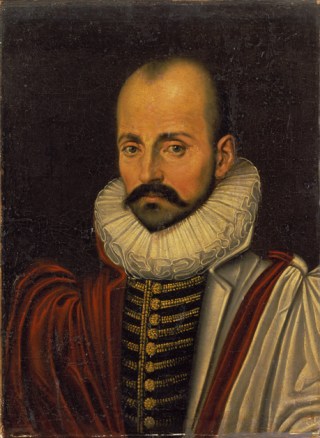
Happy Birthday, Michel de Montaigne!

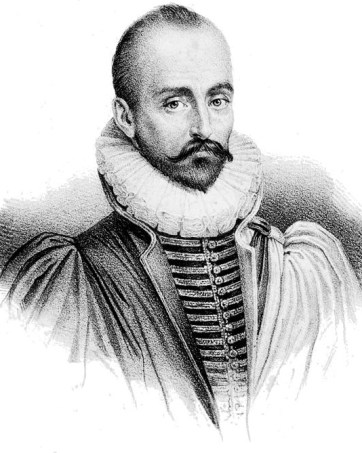
Michel de Montaigne, public domain via Wikimedia Commons

Michel de Montaigne, public domain via Wikimedia Commons

Michel de Montaigne, born on February 28, 1533, was a thinker after my own heart.

Montaigne was a deeply philosophical thinker, though he never developed a complete philosophical system or moral theory. He invented, or at least popularized, a revolutionary way of writing: the essay. In his essays, he wrote about anything and everything he found interesting enough to observe and think deeply about which was …well, just about everything, especially his inner life. His Essays are a rich source of wonderful philosophical and moral insights. As the Stanford Encyclopedia of Philosophy describes: “… under the guise of innocuous anecdotes, Montaigne achieved the humanist revolution in philosophy. He moved from a conception of philosophy conceived of as theoretical science, to a philosophy conceived of as the practice of free judgment’. Judgment, in this sense, involves applying both our cultivated moral sense and our reason, enriched with knowledge, to navigating the complexity and variety of situations we face throughout our lives; it also refers to the expansive, tolerant attitude we should display towards each other and towards the whole of reality.

While Montaigne highly valued education, he also recognized that it can be overemphasized to the detriment of learning from our own experiences. In his day, education often consisted largely, even mostly, of rote memorization of a vast quantity of facts. This learning method can stifle our ability to exercise practical judgment and serve to blunt social skills as well, preventing us from learning from and about each other, which is essential for cultivating moral understanding. We should learn as much about the world and each other as possible, Montaigne thought, through interpersonal interaction as well as through more formal types of education.

Montaigne also thought that sometimes, our big, smart brains can even hinder our quest for wisdom. For example, we can become ashamed, insecure, even hateful of our own bodies when we contrast the refinements of education and the arts to the material, often messy, even disgusting reality of caring for the body and satisfying its needs. This distaste for our bodies is ungenerous and ungrateful, said Montaigne, considering how we rely on our bodies for so much. In fact, even to this Catholic Christian man who believed in the soul, we are our bodies in an essential way. Our bodies are much more than just meat that our souls inhabit, they are intimate partners of souls, and together, they comprise whole human beings. As such, our bodies deserve our compassion, gratitude, love, and respect.

Our big brains can make also make us too proud, unable to recognize wisdom in humble or unexpected places. Those of little or no education, Montaigne maintains, sometimes display more wisdom than the most rigorous scholar. This includes animals, who, especially, are sometimes wiser than we are; for example, they live their whole lives with the natural, unembarrassed, proper attitudes towards their own bodies that allows them to unapologetically enjoy the pleasure of being alive. Montaigne believed that we should learn from them and imitate them in these respects. Those who have the most wisdom to teach us, then, can come from all walks of life, and the wisest person will be receptive to the lessons that can be learned anywhere.

Furthermore, we shouldn’t limit our exposure merely to our own cultures, but should learn about as many other cultures and beliefs as possible. Montaigne, like Confucius, believed that before you can be a philosopher or a moral theorist, you must first be an anthropologist. A wide-ranging education and exposure to the world has two major advantages. First, the information you have to work with will be much more vast, your scope much wider, than if you merely stuck to the received wisdom of your own culture. Secondly, you will cultivate in yourself the very virtues that characterize the wise and moral person: tolerance, benevolence, respect, kindness, generosity, understanding, and so forth. Conversely, narrowness of outlook and xenophobia lead to hatred, violence, and so on, as the horrific stories coming back from the conquest of the New World made him all too aware. Montaigne believed we shouldn’t base our attitudes about right and wrong on habit, which is morally lazy and which a narrow education can easily lead us to do; rather, we should temper our moral attitudes with reason, and our reason, in turn, should be informed by an expansive and ever-expanding body of knowledge.
michel-de-montaigneThis can make Montaigne seem like a moral relativist, but I don’t think that this is so. He was a committed Catholic, which seems to rule that out. Yet he did recognize that some things society traditionally recognized as wrong are in fact both bad and good, sometimes one or sometimes the other depending on the circumstances, sometimes both at the same time. For example, consider drunkenness. It can be bad, such as when it gets you fired or leads you to violence. But, it can also be good, such as promoting sociability or artistic disinhibition. Montaigne recognized that if there are universally true moral maxims, they’re likely to be few. Rather, his approach to philosophy is a skeptical one: he recognized that an attitude of uncertainty and doubt is a fruitful one for gaining wisdom. When you don’t easily accept the first easy answers that come along, when you’re always waiting for more information to come in, when you generally accept that there’s a possibility you are wrong, you are practicing a wise skepticism; otherwise, you cheat yourself out of the opportunity to learn.

Ethically, Montaigne espoused some behaviors as universally preferable: those that are inspired by tolerance, joyfulness, sociability, generosity, benevolence, curiosity, a good-humored attitude towards other people and their varied ways of living, and so on; he specifically denounced cruelty and narrowness in thinking and feeling. He described his ethical theory not by outlining a rigorous system, however, but by enacting and describing a moral attitude that inspired moral behavior in others. In sum, he may or may not have been a relativist when it comes to a specific theory or set of maxims, but he was definitely not relativistic in the overarching value he placed on the art of being a good, complete human being, and on promoting the same in others.

Montaigne’s Essays demonstrate that the most well-reasoned advanced moral theory may never be quite as convincing, effective, or influential when spelled out as that which is lived out. Montaigne showed us how we can all be philosophers, how we can live ethically, and how we can discover it all for ourselves.

Philosophers, if they’re doing it right, will be the happiest of all people since philosophy can and should be a joyful enterprise, and we should all be philosophers.

Listen to the podcast version here or on Google Play, or subscribe on iTunes

~ I wrote this essay in 2012 and edited it substantially for Ordinary Philosophy in 2017

Learn more about this great master of introspection here:

Essays ~ by Michel de Montaigne

Me, Myself, and I: What Made Michel de Montaigne the First Modern Man? ~ by Jane Kramer for The New Yorker

Michel de Montaigne ~ by Marc Foglia for The Stanford Encyclopedia of Philosophy

Michel de Montaigne ~ Melvin Bragg discusses Montaigne’s life and thought with David Wootton, Terence Cave, and Felicity Green (my Intellectual History advisor!) for the BBC’s In Our Time

Michel de Montaigne ~ from The Book of Life

Michel de Montaigne (1533—1592) ~ by Christopher Edelman for Internet Encyclopedia of Philosophy

Michel de Montaigne (1533-1592) ~ by Terence Green for Philosophy Now

Michel de Montaigne: French Writer and Philosopher ~ by Tilde A. Sankovitch for Encyclopædia Britannica

Montaigne on Death and the Art of Living ~ by Maria Popova for Brain Pickings

Can We Have More Than One Friend? According to Montaigne, No ~ by Manuel Bermudez

Philosophy: A Guide to Happiness – Montaigne on Self-Esteem ~ by Alain de Botton

Ordinary Philosophy and its Traveling Philosophy / History of Ideas series is a labor of love and ad-free, supported by patrons and readers like you. Please offer your support today!

Say What? Colin MacLaurin on Evidence, Reason, and Knowledge

Left, logarithmic radial photo of the universe by Pablo Budassi. Right, Isaac Newton’s entry on ‘Furnace’ in his notebook, 1666, Special Collections University of Chicago Library, both public domain via Wikimedia Commons

‘It is not therefore the business of philosophy, in our present situation in the universe, to attempt to take in at once, in one view, the whole scheme of nature; but to extend, with great care and circumspection, our knowledge, by just steps, from sensible things, as far as our observations or reasonings from them will carry us, in our enquiries concerning either the greater motions and operations of nature, or her more subtle and hidden works.’

Colin MacLaurin, An Account of Sir Isaac Newton’s Philosophical Discoveries1748

Ordinary Philosophy and its Traveling Philosophy / History of Ideas series is a labor of love and ad-free, supported by patrons and readers like you. Please offer your support today!
If Work Dominated Your Every Moment Would Life be Worth Living? by Andrew Taggart

Working Woman, public domain via Wikimedia Commons

Imagine that work had taken over the world. It would be the centre around which the rest of life turned. Then all else would come to be subservient to work. Then slowly, almost imperceptibly, anything else – the games once played, the songs hitherto sung, the loves fulfilled, the festivals celebrated – would come to resemble, and ultimately become, work. And then there would come a time, itself largely unobserved, when the many worlds that had once existed before work took over the world would vanish completely from the cultural record, having fallen into oblivion.

And how, in this world of total work, would people think and sound and act? Everywhere they looked, they would see the pre-employed, employed, post-employed, underemployed and unemployed, and there would be no one uncounted in this census. Everywhere they would laud and love work, wishing each other the very best for a productive day, opening their eyes to tasks and closing them only to sleep. Everywhere an ethos of hard work would be championed as the means by which success is to be achieved, laziness being deemed the gravest sin. Everywhere among content-providers, knowledge-brokers, collaboration architects and heads of new divisions would be heard ceaseless chatter about workflows and deltas, about plans and benchmarks, about scaling up, monetisation and growth.

In this world, eating, excreting, resting, having sex, exercising, meditating and commuting – closely monitored and ever-optimised – would all be conducive to good health, which would, in turn, be put in the service of being more and more productive. No one would drink too much, some would microdose on psychedelics to enhance their work performance, and everyone would live indefinitely long. Off in corners, rumours would occasionally circulate about death or suicide from overwork, but such faintly sweet susurrus would rightly be regarded as no more than local manifestations of the spirit of total work, for some even as a praiseworthy way of taking work to its logical limit in ultimate sacrifice. In all corners of the world, therefore, people would act in order to complete total work’s deepest longing: to see itself fully manifest.

This world, it turns out, is not a work of science fiction; it is unmistakably close to our own.

‘Total work’, a term coined by the German philosopher Josef Pieper just after the Second World War in his book Leisure: The Basis of Culture (1948), is the process by which human beings are transformed into workers and nothing else. By this means, work will ultimately become total, I argue, when it is the centre around which all of human life turns; when everything else is put in its service; when leisure, festivity and play come to resemble and then become work; when there remains no further dimension to life beyond work; when humans fully believe that we were born only to work; and when other ways of life, existing before total work won out, disappear completely from cultural memory.

We are on the verge of total work’s realisation. Each day I speak with people for whom work has come to control their lives, making their world into a task, their thoughts an unspoken burden.

For unlike someone devoted to the life of contemplation, a total worker takes herself to be primordially an agent standing before the world, which is construed as an endless set of tasks extending into the indeterminate future. Following this taskification of the world, she sees time as a scarce resource to be used prudently, is always concerned with what is to be done, and is often anxious both about whether this is the right thing to do now and about there always being more to do. Crucially, the attitude of the total worker is not grasped best in cases of overwork, but rather in the everyday way in which he is single-mindedly focused on tasks to be completed, with productivity, effectiveness and efficiency to be enhanced. How? Through the modes of effective planning, skilful prioritising and timely delegation. The total worker, in brief, is a figure of ceaseless, tensed, busied activity: a figure, whose main affliction is a deep existential restlessness fixated on producing the useful.

What is so disturbing about total work is not just that it causes needless human suffering but also that it eradicates the forms of playful contemplation concerned with our asking, pondering and answering the most basic questions of existence. To see how it causes needless human suffering, consider the illuminating phenomenology of total work as it shows up in the daily awareness of two imaginary conversation partners. There is, to begin with, constant tension, an overarching sense of pressure associated with the thought that there’s something that needs to be done, always something I’m supposed to be doing right now. As the second conversation partner puts it, there is concomitantly the looming question: Is this the best use of my time? Time, an enemy, a scarcity, reveals the agent’s limited powers of action, the pain of harrying, unanswerable opportunity costs.

Together, thoughts of the not yet but supposed to be done, the should have been done already, the could be something more productive I should be doing, and the ever-awaiting next thing to do conspire as enemies to harass the agent who is, by default, always behind in the incomplete now. Secondly, one feels guilt whenever he is not as productive as possible. Guilt, in this case, is an expression of a failure to keep up or keep on top of things, with tasks overflowing because of presumed neglect or relative idleness. Finally, the constant, haranguing impulse to get things done implies that it’s empirically impossible, from within this mode of being, to experience things completely. ‘My being,’ the first man concludes, ‘is an onus,’ which is to say an endless cycle of unsatisfactoriness.

The burden character of total work, then, is defined by ceaseless, restless, agitated activity, anxiety about the future, a sense of life being overwhelming, nagging thoughts about missed opportunities, and guilt connected to the possibility of laziness. Hence, the taskification of the world is correlated with the burden character of total work. In short, total work necessarily causes dukkha, a Buddhist term referring to the unsatisfactory nature of a life filled with suffering.

In addition to causing dukkha, total work bars access to higher levels of reality. For what is lost in the world of total work is art’s revelation of the beautiful, religion’s glimpse of eternity, love’s unalloyed joy, and philosophy’s sense of wonderment. All of these require silence, stillness, a wholehearted willingness to simply apprehend. If meaning, understood as the ludic interaction of finitude and infinity, is precisely what transcends, here and now, the ken of our preoccupations and mundane tasks, enabling us to have a direct experience with what is greater than ourselves, then what is lost in a world of total work is the very possibility of our experiencing meaning. What is lost is seeking why we’re here.Aeon counter – do not remove

This article was originally published at Aeon and has been republished under Creative Commons.

Andrew Taggart is a practical philosopher and entrepreneur. He is a faculty member at the Banff Centre in Canada, where he trains creative leaders, and at Kaospilot in Denmark, where he trains social entrepreneurs. His latest book is The Good Life and Sustaining Life (2014). He lives in Santa Fe, New Mexico. (Bio credit: Aeon)

~ Ordinary Philosophy and its Traveling Philosophy / History of Ideas series is a labor of love and ad-free, supported by patrons and readers like you. Please offer your support today!

*All views and opinions expressed by guest writers are their own and do not necessarily express those of Ordinary Philosophy’s editors and publishers

O.P. Recommends: American Philosophical Association Interview with Aaron James

Photo by StockSnap via Pixabay, cropped, free to use under Creative Commons license


Do you like philosophy and surfing and dislike assholes while curious about what makes them tick? Then Aaron James is the thinker for you!

Skye Cleary interviewed Professor James in December for The American Philosophical Association.

Ordinary Philosophy and its Traveling Philosophy / History of Ideas series is a labor of love and ad-free, supported by patrons and readers like you. Please offer your support today!

 

OP Recommends: The Best Philosophy Books of 2017, Recommended by Nigel Warburton at Fivebooks

A view of Edinburgh Central Library’s Reading Room

Now that my papers are done and I have five weeks or so to choose my own reading, I’m heading to Edinburgh’s beautiful Central Library to pick up some books I’ve been itching to get into. One of them was already on my list: Dennis Rasmussen’s The Infidel and the Professor: David Hume, Adam Smith, and the Friendship That Shaped Modern Thought (one of my goals for the year is to learn as much about Scotland’s intellectual history as I can while I’m here). Nigel Warburton has made a list of his five favorite philosophy books of 2017, and Massimo Pigliucci’s book is among them. These are two excellent philosophers in the public square I’ve been following for a long time, and their philosophy podcasts are among my favorites.

Looks like I have four more books to add to my list; better get to it!

Ordinary Philosophy and its Traveling Philosophy / History of Ideas series is a labor of love and ad-free, supported by patrons and readers like you. Please offer your support today!

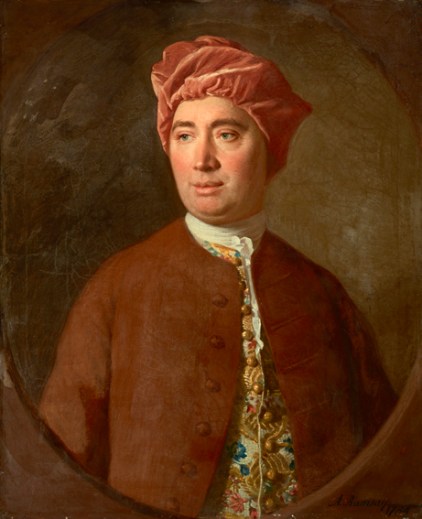
He Died as He Lived: David Hume, Philosopher and Infidel, by Dennis Rasmussen

As the Scottish philosopher David Hume lay on his deathbed in the summer of 1776, his passing became a highly anticipated event. Few people in 18th-century Britain were as forthright in their lack of religious faith as Hume was, and his skepticism had earned him a lifetime of abuse and reproach from the pious, including a concerted effort to excommunicate him from the Church of Scotland. Now everyone wanted to know how the notorious infidel would face his end. Would he show remorse or perhaps even recant his skepticism? Would he die in a state of distress, having none of the usual consolations afforded by belief in an afterlife? In the event, Hume died as he had lived, with remarkable good humour and without religion.

The most famous depiction of Hume’s dying days, at least in our time, comes from James Boswell, who managed to contrive a visit with him on Sunday, 7 July 1776. As his account of their conversation makes plain, the purpose of Boswell’s visit was less to pay his respects to a dying man, or even to gratify a sense of morbid curiosity, than to try to fortify his own religious convictions by confirming that even Hume could not remain a sincere non-believer to the end. In this, he failed utterly.

‘Being too late for church,’ Boswell made his way to Hume’s house, where he was surprised to find him ‘placid and even cheerful … talking of different matters with a tranquility of mind and a clearness of head which few men possess at any time.’ Ever tactful, Boswell immediately brought up the subject of the afterlife, asking if there might not be a future state. Hume replied that ‘it was possible that a piece of coal put upon the fire would not burn; and he added that it was a most unreasonable fancy that we should exist for ever’. Boswell persisted, asking if he was not made uneasy by the thought of annihilation, to which Hume responded that he was no more perturbed by the idea of ceasing to exist than by the idea that he had not existed before he was born. What was more, Hume ‘said flatly that the morality of every religion was bad, and … that when he heard a man was religious, he concluded he was a rascal, though he had known some instances of very good men being religious.’

This interview might show Hume at his brashest, but in the 18th century it remained mostly confined to Boswell’s private notebooks. The most prominent and controversial public account of Hume’s final days came instead from an even more famous pen: that of Adam Smith, Hume’s closest friend. Smith composed a eulogy for Hume soon after the latter’s death in the form of a public letter to their mutual publisher, William Strahan. This letter was effectively the ‘authorised version’ of the story of Hume’s death, as it appeared (with Hume’s advance permission) as a companion piece to his short, posthumously published autobiography, My Own Life (1776).

Smith’s letter contains none of the open impiety that pervades Boswell’s interview, but it does chronicle – even flaunt – the equanimity of Hume’s last days, depicting the philosopher telling jokes, playing cards, and conversing cheerfully with his friends. It also emphasises the excellence of Hume’s character; indeed, Smith concluded the letter by declaring that his unbelieving friend approached ‘as nearly to the idea of a perfectly wise and virtuous man, as perhaps the nature of human frailty will permit’.

Though relatively little known today, in the 18th century Smith’s letter caused an uproar. He later proclaimed that it ‘brought upon me 10 times more abuse than the very violent attack I had made upon the whole commercial system of Great Britain’ – meaning, of course, The Wealth of Nations (1776). Throughout his life, Smith had generally gone to great lengths to avoid revealing much about his religious beliefs – or lack thereof – and to steer clear of confrontations with the devout, but his claim that an avowed skeptic such as Hume was a model of wisdom and virtue ‘gave very great offence’ and ‘shocked every sober Christian’ (as a contemporary commented).

Boswell himself deemed Smith’s letter a piece of ‘daring effrontery’ and an example of the ‘poisonous productions with which this age is infested’. Accordingly, he beseeched Samuel Johnson to ‘step forth’ to ‘knock Hume’s and Smith’s heads together, and make vain and ostentatious infidelity exceedingly ridiculous. Would it not,’ he pleaded, ‘be worth your while to crush such noxious weeds in the moral garden?’

Nor did the controversy subside quickly. Nearly a century later, one prolific author of religious tomes, John Lowrie, was still sufficiently incensed by Smith’s letter to proclaim that he knew ‘no more lamentable evidence of the weakness and folly of irreligion and infidelity’ in ‘all the range of English literature’.

In the 18th century, the idea that it was possible for a skeptic to die well, without undue hopes or fears, clearly haunted many people, including Boswell, who tried to call on Hume twice more after their 7 July conversation in order to press him further, but was turned away. Today, of course, non-believers are still regarded with suspicion and even hatred in some circles, but many die every day with little notice or comment about their lack of faith. It takes a particularly audacious and outspoken form of non-belief – more akin to the Hume of Boswell’s private interview than to the Hume of Smith’s public letter – to arouse much in the way of shock or resentment, of the kind that attended the death of Christopher Hitchens some years ago. (Indeed, there were a number of comparisons drawn between Hitchens and Hume at the time.) The fact that in the 18th century Smith endured vigorous and lasting abuse for merely reporting his friend’s calm and courageous end offers a stark reminder of just how far we have come in this regard.Aeon counter – do not remove

This article was originally published at Aeon and has been republished under Creative Commons.

Dennis Rasmussen is an associate professor in the department of political science at Tufts University in Massachusetts. He is the author of The Infidel and the Professor: David Hume, Adam Smith, and the Friendship That Shaped Modern Thought (2017). (Bio credit: Aeon)

~ Ordinary Philosophy is a labor of love and ad-free, supported by patrons and readers like you. Any support you can offer will be deeply appreciated!

*All views and opinions expressed by guest writers are their own and do not necessarily reflect those of Ordinary Philosophy’s editors and publishers

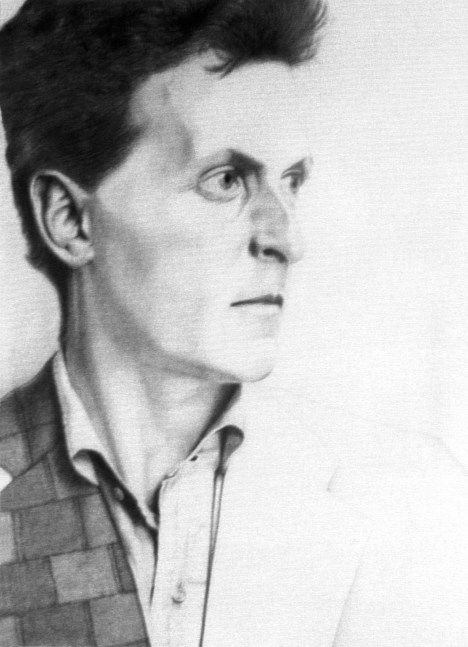
O.P. Recommends: The Relentless Honesty of Ludwig Wittgenstein, by Ian Ground

Drawing of Ludwig Wittgenstein by Christiaan Tonnism, Pencil on board 1985, Creative Commons via Wikimedia Commons

Ian Ground writes:

‘If you ask philosophers – those in the English speaking analytic tradition anyway – who is the most important philosopher of the twentieth century, they will most likely name Ludwig Wittgenstein. But the chances are that if you ask them exactly why he was so important, they will be unable to tell you. Moreover, in their own philosophical practice it will be rare, certainly these days, that they mention him or his work. Indeed, they may very fluently introduce positions, against which Wittgenstein launched powerful arguments: the very arguments which, by general agreement, make him such an important philosopher. Contemporary philosophers don’t argue with Wittgenstein. Rather they bypass him. Wittgenstein has a deeply ambivalent status – he has authority, but not influence.

For the more general reader, Wittgenstein’s status in contemporary philosophy will be puzzling. The general view is that Wittgenstein is surely the very model of a great philosopher. The perception is that he is difficult, obscure and intense, severe and mystical, charismatic and strange, driven and tragic, with his charisma and difficulty bound up with his character and his life. Wittgenstein saw philosophy not just as a vocation, but as a way of life he had to lead. This is perhaps why writers and artists have found him an object of fascination and inspiration. He is the subject of novels, poetry, plays, painting, music, sculpture and films. In the arts and the culture generally, Wittgenstein seems to be what a philosopher ought to be

Read more of this excellent piece in The Times Literary Supplementpart of a TLS series about great thinkers and their ideas called Footnotes to Plato

~ Ordinary Philosophy is a labor of love and ad-free, supported by patrons and readers like you. Any support you can offer will be deeply appreciated!

Happy Birthday, Hannah Arendt!

Hannah Arendt, born on October 14, 1906 in Hanover, Germany, was one of the twentieth century’s leading thinkers about political philosophy and the nature of evil. In the one and only filmed interview with her that survives, Arendt objected to being called a philosopher; she said she doesn’t feel like a philosopher, and that she thinks she has not been accepted in the philosophical community. We’re still hashing out what she meant by these statements to this day: some believe that she didn’t feel, as a woman, that the traditionally male-centric philosophical circle had room for her, so she did her work in another arena of thought; some believe since she emphasizes action and responsibility in her ethics and political thought, she felt this did not fit into the abstract nature of the accepted philosophical canon. However, her latter remark has proved no longer true, if it ever was: she is not only accepted into the philosophical circle, she has earned a prominent place in it.

Arendt completed her doctoral degree in philosophy in 1928. By 1940, she was forced to flee the Nazi’s persecution of intellectuals, first as a refugee to Paris, then to the United States, where she arrived in 1941. She settled in the U.S. for good, became a naturalized citizen, and taught at the University of Chicago and then at New York City’s New School for Social Research. Arendt established herself as a major political thinker with her 1951 book Origins of Totalitarianism, and a controversial one with her series of articles for The New Yorker about the Nazi war criminal Adolf Eichmann’s 1961 trial. She used this series as the basis for her 1963 book Eichmann in Jerusalem.

Among Arendt’s major themes is the idea that evil is not so much the result of an active malevolence but of thoughtless complacency. She distills this idea in her concept the banality of evil, which made people very uncomfortable at that time and ever since. Many hate this idea in part because they detect in it an element of victim-blaming, such as in Arendt’s including in her discussion the supposed cooperation of many Jewish community leaders in the massive and efficient deportation of the Jews to Nazi concentration camps and gas chambers. But I believe people hate Arendt’s concept more because of its implication that it’s so very easy for every single one of us to participate in great evil through our own carelessness and laziness.

Arendt’s philosophy of action and personal responsibility, problematic as it might be in some particulars, presents an important challenge even as it lays on all of us what might feel like an intolerable burden. She demands that we shake off complacency every moment of our lives, that we resist the temptation to thoughtlessly participate in harmful practices and ways of thinking. In an age where mass consumption has become the norm, even the source of meaning and impetus for most of our actions, regardless of its ravages on the beautiful world that gives us life, there are few ideas that are more timely or more important.

Learn about the life and thought of the courageous and brilliant Hannah Arendt:

Hannah Arendt ~ Interview with Gunter Gaus for Zur Person

Hannah Arendt ~ by Maurizio Passerin d’Entreves for The Stanford Encyclopedia of Philosophy

Hannah Arendt ~ Melvyn Bragg talks to Lyndsey Stonebridge, Frisbee Sheffield, and Robert Eaglestone for In Our Time

Hannah Arendt: American Political Scientist ~ by the editors for Encyclopædia Britannica

Hannah Arendt and the Hierarchy of Human Activity ~ by Finn Bowring for The Times Literary Supplement

Film Review: Hannah Arendt ~ Yasemin Sari for Philosophy Now

The Trials of Hannah Arendt ~ Corey Robin for The Nation, May 12, 2015

Why Do Hannah Arendt’s Ideas about Evil and the Holocaust Still Matter? ~ An interview with Michael Rosenthal for the Stroum Center for Jewish Studies at the University of Washington

Various articles ~ by Hannah Arendt for The New Yorker magazine

Various articles featuring Hannah Arendt ~ Maria Popova for Brain Pickings

Ordinary Philosophy is a labor of love and is ad-free, supported by patrons and readers like you. Please offer your support today!

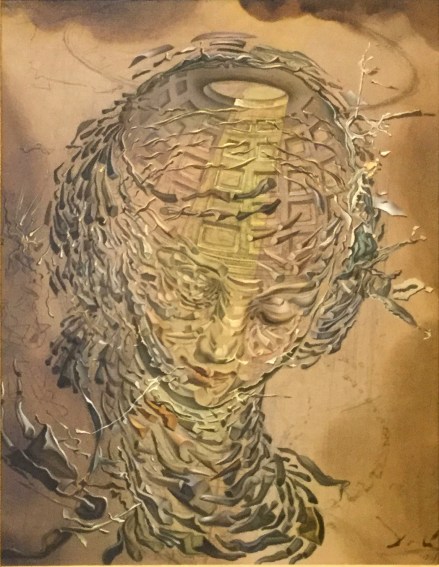
Imagination is a Powerful Tool: Why is Philosophy Afraid of It? – By Amy Kind

Exploding Raphaelesque Head, 1951, Salvador Dali, Scottish National Gallery of Modern Art, Edinburgh, Scotland

Philosophers have a love-hate relationship with the imagination. René Descartes, for one, disparaged it as ‘more of a hindrance than a help’ in answering the most profound questions about the nature of existence. Trying to imagine one’s way towards metaphysical truth, he wrote in Meditations on First Philosophy (1641), is as foolish as falling asleep in the hope of obtaining a clearer picture of the world through dreams.

Yet Descartes also relied heavily on imagination in scientific and mathematical essays such as The World (1633), in which he tried to conjure up the details of the basic building blocks for structures such as humans, animals and machines. According to the philosopher Dennis Sepper at the University of Dallas, Descartes relied upon a kind of ‘biplanar’ imagination, pioneered by Plato, in which one level of reality could embody and display relations that existed on a different level, and vice versa.

The Scottish philosopher David Hume was equally conflicted about the imagination – especially when compared with perception and memory. ‘When we remember any past event, the idea of it flows in upon the mind in a forcible manner,’ he wrote in A Treatise of Human Nature (1738-40). But imagined images and sensations, he continued, are ‘faint and languid, and cannot without difficulty be preserved by the mind steady and uniform for any considerable time’. However, Hume also claimed that humans are most free when they’re engaging in imagination. Perception can show us only the actual, he said, but imagination can go beyond that, to the realm of the maybe, the what-if and if-only. Indeed, ‘nothing we imagine is absolutely impossible,’ Hume said.

What’s behind this apparent tension at the heart of the imagination? Hume put his finger on it when he talked about how our facility for fantasy helps us to move beyond and change our present reality. One need only think of how Leonardo da Vinci’s fantastical flying machines paved the way for the Wright brothers, or how H G Wells’s novel The War of the Worlds (1898) inspired the first liquid-fuelled space rocket, to see the truth of this insight. But imagination is also restricted by the extent of our previous perceptions and experiences, Hume said. ‘Let us chase our imagination to the heavens, or to the utmost limits of the Universe; we never really advance a step beyond ourselves,’ he wrote.

One way to resolve such ambivalence would be to divide the imagination into different kinds. Along these lines, towards the end of the 18th century, Immanuel Kant distinguished two forms of imagination: the productive imagination and reproductive imagination. The productive faculty is what helps to synthesise and transform sensory content into a meaningful whole. So the identification of something with pointy ears and fur, which meows and rubs itself against your legs, is brought together via the productive imagination into the form of a cat. This unifying tendency is implanted in every human mind irrespective of experience. For Kant, our productive imagination is what makes perception possible.

By contrast, the reproductive imagination is largely about recollection. When a story comes on the radio about a long-lost cat who has found its way home, you draw from the many cats you’ve seen before to picture the heartwarming scene; this would be the reproductive imagination at work. Because the reproductive faculty works only with materials previously provided to someone’s senses, it is subject to the kind of limits Hume discussed.

Kant’s bifurcation hints at why philosophers treat the imagination with both despair and delight. Perhaps the kind of imagination we despise is totally different from its more useful cousin. But in accepting this subdivision, we give up on the possibility of seeing the imagination as a unified mental faculty – which is perhaps more how we experience it.

When I think of all the wondrous things we can do with the imagination, I’m inclined towards a different way of unravelling its enigmatic duality. Rather than slicing up the imagination into distinct kinds, we might think about its distinct uses. I like to call these the transcendent and the instructive functions of the imagination. On the one hand, when we pretend, or fantasise, or escape into an engrossing work of literary fiction, imagination can take us beyond the here and now. On the other hand, when we imagine in an attempt to make sense of what other people are thinking, or to problem-solve or to make decisions, our speculations are used to help us understand the here and now. Whereas our transcendent uses of the imagination tend towards whimsy and fancy, its instructive functions point towards the practical and the concrete.

In both these modes, the secret to success seems to lie in the application of a kind of imaginative constraint. But what’s right for one use might not be fitting for the other. Perhaps the reason why philosophers have been conflicted about the imagination is that they haven’t grasped how limitations need to be tailored to circumstances. When we are writing fiction, or playing games of pretend, or making art, arguably we do our best imagining by setting the boundaries widely or removing the shackles entirely. In contrast, when we employ imagination in the context of scientific or technological discovery, or any other real-world problem-solving, we must allow our imaginations to be framed by the situation at hand.

Figuring out where to draw these lines isn’t easy. It can be extraordinarily tricky to know which factors should stay in play, and which should be eliminated. But by looking at how such constraints operate, not only can we see our way towards imaginative greatness – perhaps we can also purge philosophy of its anxiety about the idea. After all, as Hume observed, humans ‘are mightily govern’d by the imagination’.Aeon counter – do not remove

This article was originally published at Aeon and has been republished under Creative Commons.

~ Amy Kind is professor of philosophy at Claremont McKenna College in California. She is the author of Persons and Personal Identity (2015). (Bio credit: Aeon)

Ordinary Philosophy and its Traveling Philosophy / History of Ideas series is a labor of love and ad-free, supported by patrons and readers like you. Please offer your support today!