Me and the Pope Against Tea Partiers and Conservatives and Even So Many Catholics! What’s Going On?

I’ve been finding it a bit strange and somewhat funny that for some time now, I’ve been finding myself, a ‘heathen’, ideologically aligned with Pope Francis I, and in opposition to many political and moral views of the larger number of my Catholic and Christian family and friends.

Especially when it comes to topics regarding public life: caring for the poor and needy, materialism, Tea-Party-brand political views, and so forth.

With Pope Francis, I share the general view that preserving the life of and caring for the wellbeing of other people is not something we engage in only privately, individually, or if our religion happens to say so, or if we feel like it at the time, but is a moral imperative for human societies and nations as a whole. I also agree that hyper-individualist ideology is bankrupt, is not only contrary to the best in human nature but an illusion: we are, in reality, intimately tied together, in thought, in action, and in fate.

That being said, I do part ways with the Pope in crucial ways: consider this is a teaser for my next essay. Stay tuned!

Sources, Influences, Shout-Outs, and all that Good Stuff

As I write these essays for publication in my own blog, I find that it’s liberating not to have to cite my sources in the same formal, painstaking way I would have to if I were writing a student paper or a formal scholarly work. I know that every single thought I have (and this is true not only for myself, but every thinker out there) is almost entirely possible because of other thinkers that came before me, and those who share their thoughts every single day. In this way, it’s actually impossible to really cite all my sources and properly thank all who influence and inspire me, so developing and writing down my thoughts without the added effort of laboriously disentangling those sources which I can consciously identify and those which I can’t remember helps this whole process flow much more freely.

But I also feel a sense of great indebtedness to all those thinkers out there who make the world such a fascinating place. I get to learn and think because, collectively, the human race is so generous when it comes to sharing their thoughts, purposefully altruistic (think Thomas Jefferson: “He who receives an idea from me, receives instruction himself without lessening mine; as he who lights his taper at mine, receives light without darkening me”or otherwise. This great pool of human consciousness, the sum of human thought up to now, in fact, is central to my own concept of transcendence, that ‘mystical’ state of reaching for and belonging to something larger and greater than myself (a topic for another essay that I’ve been plotting for some time). When I’m in the throes of figuring something out, I’m often conscious of the fact that that so many parts of the puzzle have already been worked out by others, and I’ve only gotten to where I’m at because of them. While I’ll continue to link to and quote sources as I write, I probably won’t be thorough about it in this informal setting, so this list serves as a catch-all to what I’ve missed.

So here’s my informal, unscholarly list of my sources and influences, of shout-outs to all of you wonderfully curious, intelligent, creative, witty, and thoughtful creatures out there without whom I couldn’t think much of anything at all, let along write about it. This will be an open-ended blog post, and I’ll add to it as I’m inspired, but it’s in no way exhaustive. It can’t be, because, like everyone, most of the things I ‘know’ I don’t know how I know, because I don’t remember who I learned it from.

In no particular order:

– All human beings who have contributed to the sum of human knowledge and creative thought
– My dad, John Cools, for patiently answering my endless questions throughout childhood and beyond
– My husband Bryan, my lover, best friend, and constant conversational partner
– John Rawls, A Theory of Justice (excerpts)
Randy Newman
– John Stuart Mill, On Liberty, The Subjection of Woman, and excerpts from Utilitarianism and other works
– John Locke, An Essay Concerning Human Understanding, Two Treatises of Government (well, the second one) and excerpts from other works
– Ernestine Rose: feminist, atheist, socialist, Polish, Jew, human rights crusader, incredible in every way
– Montaigne, Essays
– My uncle, Timothy Harrod, for his willingness to regularly engage in honest, no-holds-barred, but respectful and friendly debate (he was my confirmation sponsor – you Catholics know what that is – and he’s been kindly trying to re-convert me and save my soul for years)
– My uncle Mark Cools, for similar reasons, while letting me stay at his house for free when I attended college
The philosophy department and other instructors at Sacramento State University, especially Gregory Mayes, Lynne Fox, Thomas Pyne, Bradley Dowden, Russell DiSilvestro, and Clifford Anderson
– David Hume, An Enquiry Concerning Human Understanding, excerpts from various other works

– Daniel Dennett, Breaking the SpellIntuition Pumps and Other Tools for Thinking, lectures, interviews, and essays
– Susan Jacoby: Freethinkers and The Age of American Unreason

– Eric Gerlach
– Steven Pinker, The Blank Slate, lectures and essays
– Michael Sandel, Justice and What Money Can’t Buy
Jonathan Haidt, The Righteous Mind
– Elizabeth Cady Stanton, fierce feminist and freethinker

– Clay Jenkinson, scholar and podcaster of the Thomas Jefferson Hour
– The various authors of the Bible
Shakespeare
– Leonard Cohen
– Flannery O’Connor, The Complete Stories
– Robert Ingersoll, 44 Lectures
M. Somerset Maugham, Of Human Bondage and The Moon and Sixpence
– Carol Tavris, Mistakes Were Made But Not By Me, interviews and lectures
– Mark Twain, The Adventures of Huckleberry Finn and countless other stories, essays, and quotes
– Neil DeGrasse Tyson, essays, interviews, and lectures
– Bertrand Russell, History of Philosophy and various other works
– Townes Van Zandt
– Gabriel Marquez, One Hundred Years of Solitude 
– The wonderful student heathens at Sac State
– Cervantes, Don Quixote
Christopher Hitchens, God Is Not Great, debates, lectures, and interviews
– Jared Diamond, Guns, Germs, and Steel
Jennifer Michael Hecht, Doubt: A History, interviews 
– Charles Darwin, On the Origin of Species and The Descent of Man (excerpts; one day I intend to read them all the way through)
– Richard Dawkins, The Ancestor’s Tale, interviews, lectures, and essays
– My friend Tracy Runyon, with whom I’ve had so many depthy and exciting discussions

A Bit About Who I Am, and Why I Bother With All This Musing and Writing Stuff

I’ve long been obsessed with ideas and arguments, why people do and say the things they do, why people believe what they do, and so forth., as I’ve already discussed in an earlier piece. This curiosity and drive to understand, at least a little, the workings of the universe outside my own mind has not diminished over the years in the slightest. So a few years ago, when the job market dried up, my business partially failed, and my artistic pursuits provided me with much satisfaction but little income, I decided to more fully immerse myself in one of my greatest loves, philosophy, by going back to college.

It was a dream of mine that I had never seriously pursued in my early youth, though I eagerly attended junior college as soon as I was able. In my family, the goal of pursuing higher education was not discussed much. Most of my closest relatives are honest, hardworking people, generally blue-collar, hand-on work, and that was for the most part true of myself too, though I worked more in customer service jobs that had some sort of idealist or artistic element. I also have a strong affinity for blue-collar work, and really enjoyed the physically labrious aspects of my long-time intermittent job at a salvage yard.

Many of my relatives were and are suspicious of much of higher education too, seeing it as an array of dangerous temptations away from a life immersed in a particularly conservative brand of religious faith. Also, as a woman, higher education was less of a priority in my family. I felt it was always implied, but rarely said outright, that a good girl got married and stayed at home, perhaps after a stint at junior college, even a bachelor’s degree maybe, before settling in to homemaking while still young enough to make lots of babies. That’s it, unless I wanted to become a nun. All that sounds like a lovely, happy, fulfilling life for many, and I am fortunate to be a fond and proud auntie and cousin many, many times over precisely because so many women in my family find this lifestyle right for them. But never felt right for me, and over the years, I felt annoyed and a little resentful that other options were never discussed or encouraged, and that I never had a mentor intellectually. But I also realize that I may very well be unfair in this assessment. For one thing, my dad and other close family members never resented my constantly badgering them with questions and were always willing to answer them fully, and one of my dear uncles and I regularly engage in honest, no-holds-barred. lengthy debate and discussion to this day, and I thank him for that. It was also really entirely up to me to stop gadding around and instead of gleefully following my whims, to focus on the goal of completing a degree, applying the creativity I applied to other pursuits to the task of fundraising for school.

But why not keep all this to myself? Why have I taken this previously mostly internal process and dumping it out into the world? (With the full realization that few, at this point, even read this stuff.) I’ve often gotten the sense that philosophers, amateur and professional, are usually irritating to most other people besides fellow philosophers, and even these pick on each other at least as often as they engage in fruitful debate. (At least, it appears so from the public discourse, but my evidence for this is merely anecdotal.) But I think that this sense of philosophy being this annoying form of snobbery is based only on the archness with which some philosophers deliver their musings, and on a particular perception of what philosophy is. Many professional philosophers display a seemingly protectionist attitude toward their craft, preferring to share their ideas mostly or only with other professionals in highly arcane language. (Arcane: mysterious, secret. Arcane language: jargon) I actually think that this largely closed-off, rarified realm of philosophy is invaluable: it’s a place where ideas can be invented and pursued as far as they can go, by a community entirely devoted to this task. The untold riches that have emerged from this level of discourse is wonderful astounding. I just wish I and most of the public had the ability to fully understand and appreciate it, and the bit I’ve had the good fortune to experience left me amazed and entranced, and humbled.

But I also think that everyone, or almost everyone, engages in philosophical thinking of one sort or another, hence my blog’s byline. We not only react in moral matters but often make some sort of attempt to justify them to others. We all seek to describe or define, at times, the essential nature of reality. When it comes to aesthetics, to visual art and music and literature, we try to add a description of the idea(s) or driving force behind them, placing them within a context, rarely letting works of art speak entirely for themselves. Every one of us who has engaged in conscious reflection on anything has done some philosophy.

When it comes to writing and applying this sort of thinking, curiously enough, I’m almost entirely drawn to most areas of philosophy except philosophy of art. It seems kind of weird for a person who’s always been immersed in the arts, who has been drawing, sewing, sculpting, and so forth, and who loves music, for a lifetime. I think it’s because I do happen to be the sort of artist who likes to let my art speak for itself, and if I try to politicize or contextualize it, than it loses its immediacy and power for me. I’d rather let others do that, to read into my artwork whatever they’re compelled to read into it, or to discover some truths about me that I can’t since I lack the objectivity. But philosophy of science and of law, political and metaphysical, and most of all, moral philosophy… those I just can’t get enough of. And as I touched on in the aforementioned piece I wrote a month or so ago, I’ve been thinking on these things outside of academia for so long that I’m still far more comfortable doing philosophy in laypersons’ terms. But I still need that sharing and expressing of ideas without which a fuller understanding is impossible.

So I keep thinking about how the universe works, based on the information I receive about what’s going on in the world, and keeping writing about the process of figuring it out because it’s fascinating to me for its own sake. But not only that. I really feel a sense of deepest connection to the human family in its entirely, and feel a deep sense of responsibility towards it and gratitude to it. For me, that means I don’t feel satisfied simply by expressing my instinctive reactions to the occurrences and ideas I encounter in the world, such as simple anger, or disgust, or joy, or love. That’s because I don’t feel an isolated individual whose thoughts, feelings, and actions are as worthwhile or interesting on their own as they are within the larger realm of shared human experience.

For example, the blaming, the finger-pointing, the shaming I see going on in the public sphere over political matters seems like a giant room with a lot of people screaming and no one listening, because too many people forget that their ideological opponents are people with needs and interests and beliefs too. I feel the need to explore and explain what’s behind all this as well as expressing righteous approval or indignation because I feel that the screaming is not only not accomplishing anything, it’s just not that interesting, and reveals little about the world besides a very narrow set of facts about human psychology. I think that when we remember to sit back and reflect on why we feel and believe as we do, and patiently explain ourselves in an honest manner, with a generous spirit of always assuming the best of motives in your ideological opponent, it’s only then that we are justified in our beliefs, and have earned the right to feel that we are, indeed, in the right. But of course, this must always be provisional, because as it so happens, so one has all the needed information at any one time to know everything about everything. We must always be ready to acknowledge when we’ve been wrong, and always be ready to learn.

I look forward to what I will continue to learn from all of you out there, and always welcome your thoughts and your honest debate!

The Weird Concept of Nothing in A Universe Full of Somethings

‘Why is there something rather than nothing?’.

Most of us, I think, have been challenged with this question, usually as a preface to an attempt to convert us or to to convince us of the truth of one belief system or another.

But I’ve wondered for quite some time why so many consider this a compelling question. Why assume that ‘nothing’ is the default state in a universe that’s chock-full of ‘somethings’: objects with mass, properties, forces, the space-time continuum, subatomic particles, and so on?

It seems to me that ‘nothing’, unaccompanied by the existence of somethings, is the hypothetical state in need of explanation.

What do you think?

A Mind Like A Dog Endlessly Chasing Its Tail: Confessions of an Obsessive Thinker

I’ve always been a person with a lot of existential anxiety, but in a good way, I think. Ever since childhood, I obsessively think about the things I observe people say and do, about what I see around me, about the beliefs I and other people hold, and so on, and wonder what they mean and what they’re really like outside of my own perception.

I feel this driving urgency to question what I’ve been told, to understand what myself and what other people are really like, what they think, and why they think it (including, especially, our heroes: I want to know their flaws as well as their strengths, otherwise I know what I’m getting is not the full richness of a personality, but a glittering, hollow icon), and what is going on out there that I’m missing out on right now. I’m endlessly curious, and need change and adventure to keep me from becoming miserably restlessness. I like to mix it up, to, and hang out with people who are very different than me, since they present me with new and interesting viewpoints (including disturbing ones!), challenge my assumptions, and broaden my understanding of human nature. I use the dog chasing its tail analogy, in short, because I just can’t seem to stop endlessly evaluating and reevaluating every idea that’s every been in my mind, new or old.

I’m also an obsessive explainer: I find it very difficult to make simple statements of fact or opinion, without fully explaining what I really mean or describing the full set of circumstances surrounding the issue at hand. Although I’ve no doubt the latter is often a source of annoyance for my friends and family (in fact, I’ve been told as much), it’s something I really like about myself. Discovering what this world is like, both within and and without my own mind, is a project that I find endlessly fascinating and fulfilling, and I have no plans to break these habits anytime soon. (I call all of this ‘nerding’.)

But all of this often makes me an uncomfortable companion to have and even, sometimes, a shitty friend. When half your life is an existential crisis and you’re constantly chasing some new ideas around, you end up so scattered that it’s very unlikely you’ll make the decision nearly often enough to sit down and make that phone call, or write that email, or plan that group trip, or invite people over for dinner or a movie or a board game. Which is ridiculous of me, really, because I think that the human race, and its features and products (such as consciousness, and morality, and culture), is the most interesting phenomenon of the whole world! And not just the human race in the abstract: I mean the actual people in my life too. One of these days, I hope to settle down and improve my habits, all you loved ones out there that I neglect, and I am always glad when you’re a good influence on my flibbertigibbet self.

Anyway, I hope I’m reasonably adept at thinking some things through in an intelligent and capable fashion, but not because I’m at all brilliant. If so, I would have come up with some amazing original ideas long before now: the great minds, I’ve often heard, come up with their best ideas before they’re thirty. I’m most definitely nowhere near their league. I’m just hoping that in my case, the constant practice might be fruitful at some point, and in any case, I’ll keep myself busy and amused ’till I die.

One thing I think I’m okay at is explaining, in plain enough language, those complex or obscure ideas that I have managed to wrap my mind around. Another thing I like to do and might not be half bad at sometimes is to put together the disparate things I’ve learned into a larger, coherent picture or narrative, to reconcile or unify those aspects of reality that seem to exist contradictorily. For example, why do human beings, whose evolutionary success is due to highly developed social instincts, so often display such violent tendencies? (Still, like so many others, figuring that one out.)

So that’s what I’ll do: I’ll keep thinking, and thinking, and thinking, but now, since I’ve subjected my thoughts to the discipline of writing them down and sharing them with all of you out there on a regular basis, hopefully, my ideas and scribblings will improve in quality and even, I dare to hope, become useful for something other than my own amusement and satisfaction.

The Fetishization of Suffering

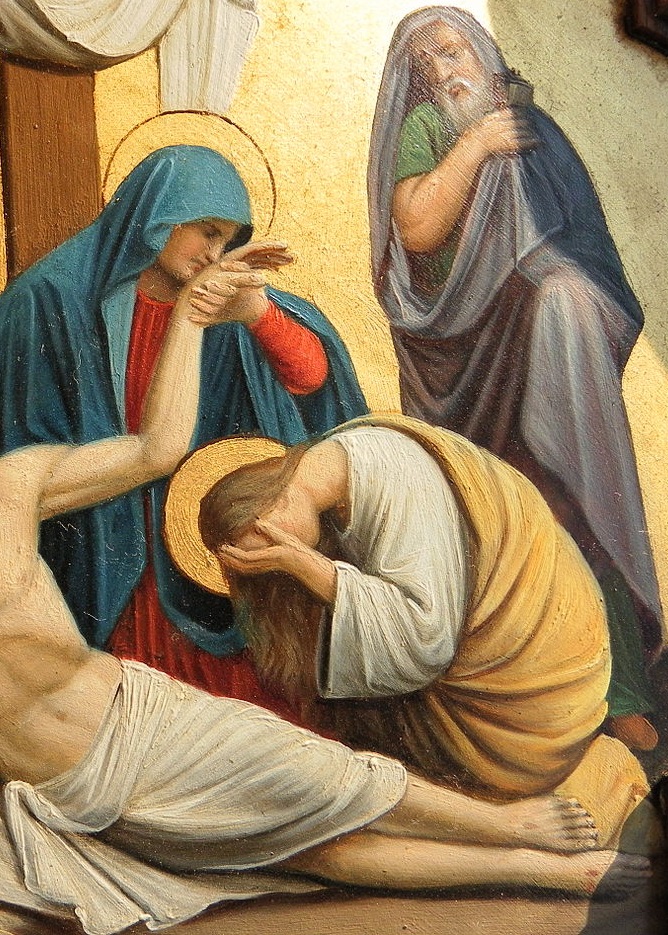
In the art on the walls of my childhood home, the theme of suffering was pervasive: crosses with sculptures of hanging, tortured Christs, Marys with torn and bleeding hearts, saints in various imploring poses, as if pleading for relief from the awful plight of living in this world. Suffering also popped up regularly as key to understanding reality. Why do the good and the innocent suffer as well as the wicked? Well, the wicked suffer because they are being punished, of course, but the good and the innocent suffer because they are loved, because it provides a God-given opportunity to conquer it and become even better in the conquering. So to better our characters, us kids were required to endure some sort of self-inflicted suffering from time to time, however mild: to give up candy during Lent, or or to spend an uncomfortably long time on our knees reciting rosaries. This view of suffering was held by many cultures throughout history (remember the Spartans?), and became common in modern Western societies through Christian influence. Suffering, regarded as both the indicator of and the creator of goodness in the world, and eventually became something to be desired and admired for its own sake. It became fetishized. As I grew and began to puzzle over the matter, this glorification of suffering seemed more and more strange, especially as I observed that, while suffering appears to strengthen and nobilify some, many more people tend to be broken down by it, especially if it’s pervasive in their lives, and rendered more desperate, less empathetic, less hopeful, less dignified, more scarred. I began to wonder if, on the whole, it’s a mistake to fetishize suffering.

So why do so many people so often glorify such a seemingly nasty thing as suffering? Well, for one thing, a beloved philosophy professor of mine pointed out once, there’s a distinct difference between suffering of the constructive sort and suffering of the destructive sort. There should be separate terms for different sorts of suffering as there is in ancient Greek. If there was a separate discussion concerning each kind, many of my objections to the fetishization of suffering should be rendered moot. Examples of constructive sorts of suffering is the burning sensation felt in hard exercise and the healing of wounds, the squirming mental misery of trying to finish a paper or book on time and still do quality work, or the tearing pain of bittersweet grief at the loss of a dearly loved one. Destructive suffering, such as the despair of watching children suffer from illness or starvation, the maddening confusion of feeling one’s mental acuity and individuality eroded by Alzheimer’s disease, or the disgust of watching others ruin their own and other’s lives through crime, political machinations, or thoughtlessness, is not so self-evidently beneficial, to say the least. But I don’t remember  this distinction being made clear to me at any point. Any sort of suffering can be explained away as destructive or constructive as conceived in the mysterious, unknowable mind of the creator, for example. This treatment is especially convenient in attempts to resolve the infamous ‘problem of evil’. But for those not satisfied with the ‘mysterian’ explanation and really want to understand the matter, the problem remains: how does one justify the fetishization of suffering via a reliable method of distinguishing between its destructive and constructive forms? 
 
Perhaps the distinction between these forms of suffering exists but is just too hard for individuals to distinguish most of the time because the emotions get in the way. It’s hard to recognize suffering as constructive when you feel compassion for other sufferers, or you feel discouragement or weariness in the face of your own. Or, even more encouragingly for proponents of this view, one type of suffering can be transformed into the other based on the attitude of the sufferer. There is some truth to be found in this characterization of certain experiences of suffering. There does seem to be sorts of suffering that’s unavoidable and necessary given the current state of evolution (or of a fixed human nature, for those who don’t believe in evolution, *sigh*): the helpful warning that pain provides, or the fear of death, strangers, or inexplicable noises that aids in self preservation. But upon reflection, the category of suffering of the entirely beneficial sort is really not very large compared to suffering of the harmful sort or suffering that seems to be some mixture of the two. The pain of exercise and of mental exertion seems to deter far too many people from consistent rigorous physical and intellectual exercise (I’m certainly among these!); the pain of grief leads far too many to resort to such comforting tactics as justifying the injustices of the world with flimsy excuses or to believing in flimsy or patently false metaphysical claims, or to vengeance; and so on. When I consider various sorts of suffering, I’m hard put to find any that most of the time and for most people, the result of experience it is entirely beneficial in the long run.

Perhaps the difference between constructive and destructive suffering is a matter of degree and duration, then, rather than of kind. The kind of suffering experienced in sport or in military training and combat, for example, are experienced in limited blocks of time and have a foreseeable end, allowing hope and the expectation of a better time to come mitigate the potential bad effects of suffering and strengthen the good effects. But this answer isn’t entirely satisfactory either. While it can seem true in some circumstances, it’s not for many others. People can become obsessed with and addicted to suffering, for one thing, as in the case of  over-zealous religious who become sado-masochistically addicted to corporal punishment (sadistic ruler-wielding teaching nuns of yore, anyone?) Or, suffering can burrow deep into a person’s psyche and undermine their entire personality, as in the case of post-traumatic stress disorder suffered by veterans and victims of  sustained bullying. It appears, then, it’s not the degree or duration of the suffering that makes it constructive or destructive: rather, it’s more feasible that the constructiveness or destructiveness is a feature of the effects on the sufferer, not of the suffering itself.
 
I think one of the most important reasons that more kinds of suffering is destructive than not it that it tends to  draw people into themselves and away from others. For example, I’ve noticed this in some athletes: as the pain of exertion accompanies the achievement of higher levels of physical fitness, the pain becomes an addiction, an obsession, and the greater the to suffering, the greater the tendency to self-absorption. This may be an explanation for the behavior of athletes who self-destruct with steroids. I’ve also noticed this, as aforementioned, in some whose religious beliefs hold say that suffering is necessary for redemption, and so attempts to avoid it, for oneself or for others, is fruitless or even evil. Martyrdom is, then, a virtuous state of mind and even the ultimate goal. Yet, I think this tendency to lose oneself in these forms of self-absorption, of attitudes of martyrdom and addiction to suffering, can be antithetical to human flourishing, because human beings are intensely social creatures. Now, it’s true that human beings also have an individualistic side. So some level of self-absorption, some level of obsessive and addictive behavior, is not necessarily negative to the human personality taken as a whole, and when balanced against other personalty traits, can be part of an interesting and dynamic personality. They can even be more sensitive and empathetic. This goes for many creative people, political people, and other idealists. (As a working artist and daydreamer myself, and an enthusiastic fan of the arts, I’m intimately familiar with self-absorption: a certain level of it is necessary for the visions to arise, the ideas to take shape, and the drive to realize them.) It’s also a defining characteristic of “drama queens”, who can be exciting people at some level. But, there’s a real danger that this addiction to suffering, when it starts to dominate, can undermine the social instincts and emotions of a healthy personality. Consider highly neurotic people, for example, whose internal suffering can become so all-absorbing that, after a while, they reach a point where they can’t see much else in the world besides it. Also, consider the aforementioned ‘drama queens’ who sometimes become so addicted to conflict and the suffering that accompanies, it that they end up needing to create conflict and ‘drama’ where none exists. In a very real sense, very neurotic people and other suffering addicts can separate themselves from society, since they eventually find it difficult to identify closely with others, and in fact, end up imposing their need for suffering on others.

So it seems to me that, in the end, the healthiest attitude to have toward suffering is that it’s an evil to be mitigated and avoided if possible, and if neither is possible, it’s the ability to endure it and triumph over it that’s desirable, not the suffering itself. It’s true that suffering accompanies and is even an integral element to many worthy endeavors, such as athletic training, and humanitarian efforts that involve placing oneself in the same horrific surroundings as the sufferers. But it’s best seen as a tool and a means to an end, not an end in itself. It’s just too easy to allow the high that sometimes accompanies it to become an addiction that can lead from obsession and self-absorption to alienation from others, and, far worse, to a complacent attitude towards the suffering other people. Human beings are most generous, most expansive, most supportive, when free from suffering because they are happy, they are unburdened with personal cares and so are able to look outside of themselves and possess the energy to give of themselves to others. By contrast, people who have a more sacrificial, suffering-infused world outlook don’t, in the end, do so well when it comes to helping others, even if the feeling of sacrificing oneself makes it seem more difficult and therefore more virtuous than helping out of an easy-going feeling of well-being. (Daniel Gilbert’s work provides an excellent explanation of the current research on emotion and how it effects human behavior). The habit of viewing suffering as an evil and not a good does far more, overall, to help human beings flourish as the social creatures we are, In the end, I do think it’s a mistake to fetishize suffering.

The New Pope Says Something Nice About Atheists! Is This Really A Big Deal?

I’ve seen a lot of news stories, opinion pieces, critiques, and other buzz regarding the new pope’s comments about atheists and other non-Catholics, to this effect: that all can do good, and that doing good is what should bring us all together. Sounds nice, right?

While there are many prominent atheists, secular humanists, and others who are gladdened by the pope’s remarks, many others are skeptical or dismissive, as exemplified by participants in a recent online discussion I took part in. They point out that the Pope’s historical positions on many important issues is aligned with the officially systematized bigotry of the church he leads: opposition to gay marriage, women banned from the priesthood, and so on. With this, I agree. They also think it’s a mistake to ‘hope for acceptance’ from the Catholic Church, or that atheists are ‘eagerly’ ‘falling for’ a positive interpretation of the pope’s actual stance on atheism. This is the part of the discussion where I think it veered off into treating some hypotheticals about what the glad atheists are thinking as fact. I think the skeptical reactions may be based on misunderstanding the reasons behind the positive reaction.

My point in the discussion, and my understanding of why there was such a glad reaction to the pope’s comments, was this: the pope’s current tendency to use more peaceful and ecumenical rhetoric is more likely to inspire better behavior in his followers, who generally look to him for an example to follow, not Vatican officials who issue a legalistic statement later. So, even if it’s true that the pope is still a bigot and his church is still an organization that promotes hateful and untrue doctrines, it’s still the case that if the words that come from his mouth are of a more peaceful and ecumenical tone, those who look primarily to him as their role model are more likely to adjust their own attitudes accordingly. That’s one point. There is nothing in this having anything to do with caring whether the pope or any other church members personally approve of atheists, or whether official church doctrine has changed regarding the afterlife and how it pertains to atheists, or any of the other red herrings such as charges of ‘hoping for acceptance’ that came up in the discussion. The positive response of many atheists, especially prominent ones, focus on whether or not the pope’s words signal a positive shift in attitude, and whether his words will provide a good example to his followers.

But another point I didn’t make, which upon reflection I think is more important, is this: the single most influential moral leader in the world just publicly classified atheists (and others) in the same moral category as Christians and Catholics. Christians do good. Atheists do good too. So both are good! Big deal, an atheist, a cosmopolitan, indeed, any reasonably informed or empathetic person might say. That’s as obvious as saying: atheists think and have emotions and are competent language users, therefore, they must be human too! I mean, c’mon! Duh!

But remember: atheists have been distrusted and marginalized for so long, since most Christian religions claim that belief in Christ’s divinity is necessary for deliverance from evil, that the idea that atheists can be good people is a novel one for countless religious people all over the world. Yet these are same people who adjust their beliefs to align with the pope’s, and his words constituted a sort of permission to consider atheists and non-Christians good people too. In my own family there are still those who use the word ‘atheist’ as an epithet for one who’s wicked, stupid, or depraved! The previous pope’s hyper-conservative, dogmatic, and divisive rhetoric did nothing to help matters. This pope’s remarks, by contrast and for the first time at this level of authority and clarity that I’m aware of, places atheists in the same moral category as religious people: those who do good. It humanizes atheists for those who simply don’t understand atheists, who think atheists are evil and have rejected the good since they don’t believe in any gods. And this is important because of what we know about human psychology: people are kinder to others when they identify with them, when they think they’re on the ‘same team’, when they’re humanized and no longer ‘the other’. 

I think that the Pope, with these few remarks, just helped a whole lot of people all over the world to really believe that when it comes to doing good, most human beings believe in the same and most important thing. Thomas Paine described it best: ‘The world is my countryall mankind are my brethren, and to do good is my religion.’ (The Age of Reason, 1794) Whether the Pope himself really shares the conviction that atheists are worthy people, I think his remarks will lead a whole lot of other people to believe so.

Draft – Gun Control Debate in America: Some Double Standards From the Right and From the Left

In the heated debate over gun control, with extremist rhetoric proliferating from those on the liberal left and those on the conservative right, I’m finding that many from each of these two sides hold inconsistent views. (The libertarian arguments on this matter are more consistent, but aside from their devotion to liberty, incorporate some of the worst ideas from both sides, in my view.) To paraphrase the main points of each sides’ position:

From the right: A society is engaged in an moral endeavor when it governs itself, and as the arbiter of social rights and responsibilities, social institutions such as the government, the family, and the native religion(s), are an inherently moral institutions. Morality involves the shared code of behavior that every individual is required to follow. The distinction between ‘morals legislation’ and other laws is, therefore, meaningless, since morality is involved in everything we do. As a member of society, just as in a family, each individual has certain rights and responsibilities. Therefore, it is right and just that the laws enforce and support our moral code, and prohibit those actions which would threaten the survival of our social institutions, be it the family or the state. At the same time, each individual has a personal dignity and inherent worth which must also be protected from harm and from the encroachments of others. For example, it’s right that that law punishes rapists, murderers, child abusers, and thieves, since it is the proper role of law to discourage individuals from transgressing the moral order which is essential for familial and societal cohesiveness. The law also should punish these transgressors since they trample on individual liberties, such as rights to life, personal property, and freedom of speech and belief. Since human beings are fallible and prone to error, our social institutions

But it’s not enough that the law should just prohibit us from doing certain things. Besides imposing punishments on immoral behavior, the law should enforce certain duties, certain moral obligations, we should fulfill in order to deserve and enjoy the benefits of living in a society. For example, the law should require everyone to contribute to the overall welfare by paying taxes, to pay for such essential public goods such as  infrastructure, defense, and some additional degree of support and protection of the most vulnerable members of society, such as children, the disabled, the elderly, and the very poor. It also includes such reasonable obligations as registering ownership of our motor vehicles, obeying traffic laws, and purchasing auto insurance. These legal obligations should not only enforce the moral duty of citizens to fairly contribute to society, they should also enforce some degree of taking responsibility for some of the costs and and hazards we may potentially impose on others in the course of enjoying out personal liberties. For example, driving a motor vehicle is widely considered a personal choice, but it can easily result in harm to others if not enjoyed wisely. Without such legal requirements listed above, for example, a careless or drunk driver could run down and kill or maim innocent bystanders without fear of suffering any consequences. A road full of vehicles driven without traffic laws would result in severe traffic jams, severely impeding each individual’s liberty to travel, let alone the innumerable deadly crashes that would result.

A certain amount of prudent regulation, therefore, is actually necessary for protecting liberties. After all, when an individual exercises their liberty to fire a gun, they can potentially nullify every single liberty of another with a single shot. When the American Constitution says ‘Congress shall make no law… abridging the freedom of speech, or of the press…’ this does not mean that each and every action which could be categorized as speech cannot be limited or regulated if the speech of one can substantially infringe on the liberties of others. For example, Bradley Manning’s right to free speech and Julian Assange’s freedom of the press should be curtailed if their speech substantially threatens the security of other Americans. Therefore, regardless of the literal wording of the First Amendment, there can and should be laws abridging the freedoms of speech and of the press. We recognize that at least some of the Founding Fathers recognized this. For example, President John Adams championed the Alien and Sedition Acts which made it a crime to criticize the government, just a few years after he participated in the formulation of the Constitution.

From the left: Society and its governing institutions are constrained by morality, as is true for the conservative view; the government should never engage in immoral actions, such as infringing on essential liberties of citizens, engage in exploitative and unjust warfare, or be complicit in oppression anywhere in the world. Individuals also have public responsibilities, just as in the conservative view, such as paying taxes and obeying wise regulation. However, it is not the role of government to decide on intimate matters of personal liberty and expression of personality, since such governments have historically oppressed and even killed entire populations of people, such as religious and ethnic minorities, women, and political and other dissenters. Rather, it’s the role of government to protect the life, health, and liberty of individuals from the encroachment of others, such as powerful exploitative monetary interests or religious or ideological orthodoxy. Therefore, government should regulate commerce, since shortsighted financial interests of some can and often do harm the public as a whole, such as environmental polluters and makers of dangerous auto vehicles. But, the government should not not engage in ‘morals legislation’, since this infringes on the rights of individuals to control their own bodies and minds.

Where the right is inconsistent: So American conservatives, like other conservatives throughout the world, agree with the basic principles of political thinker Edmund Burke, who held that a society is a natural, organic institution (rather than a rationally constructed artificial entity), whose traditions must be respected and whose citizens are properly bound by moral duties and prohibitions. Yet, somehow, so many American conservatives argue as if all of these principles evaporate in the matter of gun control. In other parts of the world, the arguments for gun control often come from conservatives, who take the view that morality is the business of society, and people should not have the right to just run around doing whatever they want when and if it’s clear that what they want to do results in a moral wrong. For example, Australia adopted stricter gun control laws following the horrific massacre at Port Arthur, Tasmania, in the mid-nineties, and the arguments in favor of these new restrictions were traditionally conservative ones: the individual has moral responsibilities to society as well as morally determined limits to their behavior. Freedom does not mean people can just do whatever they want and have whatever they want: a responsible, moral member of society expects that some smaller liberties can and should be limited if such limitations lead to an overall more morally sound, liberty-enhancing society. The evidence shows that when weapons proliferate among a population, more people tend to die violent deaths, while populations that are less heavily armed tend to have low homicide rates. For example, consider the low homicide rates in Japan or Great Britain, where private gun ownership rates are also low, compared with the high gun ownership and violent death rates in the United States. Consider also the high death toll of mass attacks in the US, where mentally unhinged people easily possessed themselves of guns capable of killing many people within seconds, compared with mass attacks in China where it’s very difficult to obtain a gun, so the total of deaths and injuries inflicted with far less lethal weapons is a fraction of the US totals. Even if individual gun owners are responsible, the argument goes, it is their moral obligation to give up the particular liberty of owning certain weapons since the proliferation of such weapons undermines the security and stability of society as a whole. Many American conservatives say that individuals owning such weapons should actually make society safer, but this theory is simply not borne out by the evidence. In a morally good society, the right to one’s life is considered prior to and more precious than the right to own property, so the prevention of the moral evil of homicide takes precedence over personal desires to possess powerful weapons.

The American conservative stance against gun control but in favor of proscriptions against birth control and abortion, therefore, is incomprehensible to liberals, who rightly point out that if the right to life and the primacy of the procreative role of sex are greater than all other considerations, then the ‘pro-life’ movement should be at the forefront of the gun control effort, as it is for conservatives in other countries. Yet, the rhetoric of the conservative gun rights movement in the United States centers on a particular reading of the text of the 2nd amendment to the U.S. Constitution and an emphasis on property rights; the pro-life arguments are out the window for conservatives on this one. Therefore, American liberals consider the conservative gun rights position at best inconsistent, and at worst, hypocritical.

Where the left is inconsistent: The liberal left in America, however, does not consider it the primary role of a society and its governing institutions to promote and enforce personal morality. Rather, society’s role towards in the life of individuals is to protect them from harm from one another, and to ensure that each individual enjoys the same opportunities as any other to accomplish their goals and live a satisfying and meaningful life. Yet, arguments against so-called ‘morals legislation’ and arguments in favor of laws that prevent harm and promote equality are all based on moral considerations: that harm is worse than non-harm, that individual liberty is better than oppression, that human rights are sacred and that trespassing on them is wrong. There is no societal rule or proscription that is not derived from one moral precept or another: a human society is an inherently moral endeavor. When American liberals argue for laws that limit gun control but against laws that regulate other activities, such as abortion or sexual behavior, on the grounds that the government’s only task is to prevent harm, the arguments are often so inconsistent on that it’s no wonder that conservatives, in turn, consider liberal arguments to be inconsistent and hypocritical.

Where does the confusion originate? While American conservative arguments are generally based on a foundationalist moral system, which holds that all of morality is derived from a single founding principle (for example, Aristotle’s function-based system, or the divine command theory espoused by evangelicals), American liberal arguments seem to hold that, while the law is based on the foundationalist ethic of utilitarianism, personal behavior is governed by a pluralist moral system, which can differ from society to society. The various and often conflicting values we hold, such as liberty, compassion, beneficence, and so forth, must be weighed and balanced against one another in each matter under consideration. The law and issues of personal morality, then, should be determined separately, because utilitarian considerations are more readily determined and amenable to democratic consensus and evidence than value considerations. For example, it’s easier to find and present evidence regarding rates of gun ownership and crime statistics, and argue that high homicide and suicide rates    by gun reveal that the current system in the United States results in more harm than systems in other countries, or vice versa, than to demonstrate clearly that the value of liberty is more important than the value of safety, or vice versa.

I agree overall with the liberal position that the law should be utilitarian, and that moral pluralism seems to be a fact of human nature: I think that there is more evidence that morality is in fact based on a pluralism of values, and that a utilitarian ethic has done more to inform laws that promote human flourishing than laws based on other moral systems. Yet, American liberals so often argue as if their positions are only about harm and fairness, as Jonathan Haidt points out, when really there is and should be a more rich moral system that informs them (I think that Haidt has too simplistic a view of liberal morality, though I agree with his assessment of most mainstream liberal arguments, taken at face value). It seems to me that the choice of utilitarianism as the dominant theory in law formulation is a moral choice, based on the higher valuation of liberty over obedience, individual freedom from harm over social convenience or enrichment, knowledge over ‘blissful ignorance’ (soon to come: my critique of ‘innocence’ as a prized value), etc. The distinction between the harm/fairness basis of legal utilitarianism and the pluralistic basis of personal morality is, then, an artificial one, and American liberals would be well served to take the moral high ground, proudly trumpeting their commitment to moral excellence and responsibility rather than trying to hide it under the relatively dry and uninspiring rhetoric of mere consent and fairness.


 

Libertarianism and Me

You may perceive in my recent essays and remarks a tendency to argue against libertarian positions. If you’ve known me very long, this may surprise you, since I’ve long taken libertarian arguments very seriously. I’m sympathetic to the libertarian instinct because I share many aspects of it in my personality: I’m very independent, have always liked to go my own way and do my own thing. (To a fault: if something’s popular, if everyone who’s hip is wearing it, listening to it, eating it, etc, I have a strong instinct to immediately run off and do the opposite, since cliques, to me, since childhood, have represented oppressive communities that, in their own way, demand deference to their codes, behaviors, and aesthetics just as thoroughly as the dogmatic and hierarchical religious community I was brought up in. My libertarian instincts are so strong, in fact, they tend run amok, and I have to chase them down to rein them in constantly! Pesky things!)

Yet, as I’ve studied and closely examined my positions and beliefs, I’ve found that many of those arguments I took seriously and even espoused, such as the position that morality is a personal matter and not a societal or governmental one, or that individual considerations are separate from and always take precedence over the desires and needs of the many, are flawed or entirely incorrect. My recent tendency to argue against libertarianism, then, is not based on a desire to pick on this philosophical and political viewpoint, or that I think it’s worse than all others. Rather, I’m sharing with you aspects of my own journey, and where I am so far when it comes to my endeavor of seriously considering each philosophical school and each argument, on its own merits, before I accept it, discard it, or keep in in mind for future consideration if I don’t have enough information on hand to make a sound judgement.

So there you go. I’m very fond of you libertarians in many ways, and agree with you more in instinct and sympathy than I do in logic. It’s a mark of my affection and respect that I wrangle, so often, with your arguments.

IRS Targets Conservative Groups

This story is deeply disturbing to me. 

When any concerned citizens, be it individuals or groups, from Communists to Tea Party subscribers, are harassed or silenced, the people are cheated out of hearing arguments that enrich their understanding of the world and of what moves people to think and act as they do. 


A most invaluable lesson instilled in me, informally through listening to political and philosophical discussions around the dinner table, and more formally in my education in philosophy, is how invaluable it is to always learn the arguments presented in a positive and sympathetic manner, no matter how alien to your own, so that you come away understanding the actual arguments, not some amalgam or distortion infused with your own prejudices. In this way, the position you reach on the matter is likely to be informed, and honest.