What Leaving Religion Has Done for Me

I grew up as a member of a large and generally very religious, very conservative Catholic family. As I describe in an earlier piece, both sides of my family are close-knit and traditional, with a tendency to insularity. When I was much younger, I loved it. Religion, especially in its more traditional and fundamentalist forms, has many upsides: a strong sense of community, a feeling of intimate belongingness in a group that shares a creed, a mythology, a history, and an identity. There are things I remember fondly: the warmth that suffuses family faith-based rituals, like putting on a fresh new dress for Easter morning, or the excitement of Christmas midnight mass, with its rich decorations, solemn rituals, and stirring hymns. We would return and light the tree, a luminous and dream-like vision to a child who just woke up from the wee-hours car ride home. There were pancake breakfasts and coffee socials after Mass, Sunday school friends, singing in the choir, and suppression of giggles as my brother, sisters, and I pulled faces at each other during the hour-plus long service.

I also remember that religious fervor, that soaring feeling, that high, that rush of heart-swelling emotion that would come over me sometimes as I sought connection with the divine. In my mid-teens, Jesus was my ‘drug’ of choice. (Not that I did much in the way of drugs later, ahhh-hem.) The Catholic religion has many elements that suit a romantic temperament: prayers and chants, candles and incense, a baroque artistic sense, a preoccupation with death, suffering, and self-sacrifice, and a deep veneration for martyrdom. And no-one is more romantic than a teenager.

But that feeling of belongingness can also lead to insularity, so that you feel removed to some degree from the broader human community and from the wider world of ideas. There was a feeling of loneliness sometimes, of separation from the world. I remember times when my religious compatriots and I would bad-mouth secular people: their music, clothing, slang, history, practices, and beliefs and ideas (I later learned we were mostly wrong about what they actually think and believe). It felt satisfying, in a way, as it made me feel part of some exclusive club, but it felt a bit mean too. We portrayed the rest of the world to ourselves as a lost, sad, evil place compared with what our religion had to offer. We could rest easy, satisfied that we knew the truth and could lead more meaningful, ‘holy’ lives, here on earth and after death. (Though, oddly enough, I feared death terribly in those years, and thought of it often. Try as I might, the always vague promise of the joys of heaven failed to console me. I thought perhaps God was testing me: tests of faith are an important theme in Catholicism.)

As I approached adulthood, and began to meet people from different backgrounds, with different beliefs, faith faded and gave way to doubt. I’d always been a curious person, but my youthful shyness and anxiety, combined with my insular upbringing, kept me mostly isolated from the world beyond family and church. It wasn’t until I entered the workforce, and then attended junior college, that I discovered the wider world, one of dazzling variety, and found it suited my personality to a T.

Slowly, I began to emerge from my religious shell. I began to let down my guard, thinking: if my religion is true, my faith will survive running the gauntlet of questions, challenges, and opposing ideas, gaining strength along the way. After all, if integrity and love of knowledge are virtues and God is good, God would prefer even an honest atheist to an intellectually lazy believer. So I opened myself up to discovery, to an enthralling diversity of beliefs, ideas, cultures, and practices, a world with a rich and varied history. Science, literature, philosophy, history, art, culture, religion itself, all became available to me to explore, to consider, and to critique, honestly, in its own terms, and on its own merits. There were no more heresies and dogmas: now, there were facts and theories, truth and falsehood, useful ideas and otherwise. There was no more sin and redemption: now, there were systems of ethics and self-improvement, and considered moral judgments derived from considerations of good and bad, help and harm, beneficence and selfishness, virtue and non-virtue. The supernatural gave way to the natural, certitude to a healthy skepticism, blanket acceptance of creed to understanding, faith to belief ‘wisely apportioned to the evidence’.

I came to value the sense of belonging to humanity as a whole over the sense of belonging to a narrower community of belief. My newfound cosmopolitanism broadened my sense of care for and responsibility to my fellow human beings beyond the scope of any one ideology. The world was no longer divided into ‘Us’ (in my case, Catholics) and ‘Them’, the poor benighted souls wandering this world lost, hopeless, and forlorn. Instead, I came to understand that all of these tools we’ve developed, from morality to literature to government to art to religion, are products of the great quest to better ourselves, to attain the happiness and fulfillment that all humans seek. Religion, like culture, language, and so on, I came to understand as a human creation, and no more or less important, sacred, or immune to change and criticism than any other artifact. Religion lost its magic: since humans made religion, humans can reform or unmake it. I could glean the best of what it has to offer, and explore its history, appreciate its role in moral progress, gain insight from its ethical and metaphysical theories, enjoy the creativity which gave rise to its fables and rituals, and discard the rest.

Likewise, the whole of the great treasure trove of human thought became available to me for study and consideration. There is no list of banned books, no heresies. Instead, there are good ideas and bad ideas: theories that better explain the workings of the universe, and those that do not; beliefs that accord with reality and with reason, and those that do not; ideologies that lead people to do good and to lead better lives, and those that do not; literature and art that arouse the best emotions and enrich understanding in us, and those that do not.

Many religions, including the brand of fundamentalist Catholicism in which I was raised, lead many adherents to restrict the education of their children to a cherry-picked, often distorted or flat-out-wrong, circumscribed array of ideas, scientific theories, and historical accounts that accord with the doctrines of their faith. Many of these children remain ignorant of the wider world of human thought and history until something in their experience or personality compels them to look beyond the teachings of their youth. For example, my own dear grandmother, out of love but misguided by her piety, did a disservice to the education of her grandchildren by attempting, and in some cases succeeding, to restrict our education in this way. Her religious beliefs led to her conviction that a broad, liberal education offered too many temptations to disbelief, so she felt compelled keep us from learning anything other than that which would accord with her fundamentalist Catholic faith. As I later discovered, she was right, not for the reasons she thought. Truth, in my opinion, holds fast in the face of challenges; it does not give way as easily as error does. Each new thing I learned, then, was not a temptation: it was a window of opportunity for growing in understanding, and for replacing bad ideas with better ones. Fortunately, I inherited, and was inspired by, her adventurous side, her love of people. Over time, I encountered and fell in love with the wider world of ideas, through the people I came to meet and the broader education I eventually received.
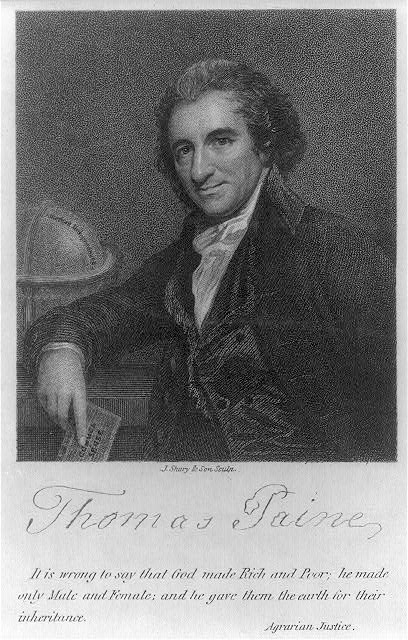
Now, in place of memorizing and reciting the Apostle’s Creed, I immerse myself in Aristotle and Mill, in Hume and Kant, in Wollstonecraft, Rose, Stanton, Jefferson, and Paine, in Avicenna and Aquinas, in Rawls, Pinker, Newberger Goldstein, and Hitchens. I can immerse myself in the teachings of religious founders as well, including the historical Jesus, endlessly more complex, fascinating, and inspiring than the blonde, haloed icon of the Baltimore Catechism. I have the opportunity to explore what all of these thinkers and reformers have to offer, to seek to understand their ideas on their own terms, putting aside those distorted accounts produced by religious rivalry. I can also, without fear of divine censure, explore the bad ideas people have conceived, from belief in witchcraft and satanic possession to the defense of torture, to racist ideologies, to ‘holy war’ and terrorism to social Darwinism (a sadly misleading term, does a disservice to a great thinker by associating his name with eugenics, a pseudoscientific theory contrary to his own ideas). I can try to enter the minds of those who created these dangerous and immoral ideas, in order to really understand how they came up with them, and to better explain why they are so terrible.

These days, I think of myself as a happier, more morally responsible, more intellectually honest, and more informed person than I would have been if I had remained religious. In that, I speak for myself only. Yet I know that this is true for many others, whose accounts celebrate the benefits of their own religious deconversions. It’s my impression that the most joyful, most passionate, and yes, the most resentful converts from religion are those who were brought up in more restrictive, fundamentalist belief systems. Critics say that such people gave up their religion because it was too hard, so they took the easy way out; or, that they just wanted to be able to ‘sin’ freely. I’ve had these accusations thrown at me many times. In a sense, they’re right, but not for the reasons they think. Many of these religions are too hard because their restrictions and demands are contrary to human nature since they’re based on deeply flawed accounts of it, and much of what they deem ‘sin’ is not wrong after all.

Many people attribute their own best qualities, of character, of behavior, of outlook on life, to religion, whether it’s the one they were brought up with or one they converted to. While I recognize the fact that religion can give a deep sense of fulfillment, the evidence indicates religiosity is not more of a predictor for good behavior than secularism. Study after study, personal account after personal account reveal that religious people commit most crimes at about the same rate, are about as generous, and behave about as morally overall than secular people.

My own observation is that people use religion to justify whatever way they are inclined to behave, good or bad. As the physicist Steven Weinberg points out, good people do good things, and evil people do evil things, regardless of religion. Many of the kindest, wisest, and most wonderful people I know are religious, and credit their religion with their moral successes. I’ve also known plenty of religious people use their beliefs to dodge responsibility for their bad behavior with excuses such as ‘the devil made me do it’ and ‘well, of course, I’m just a sinner’. They use this get-out-of-jail-free-card, such as this particular one available to Catholics (but of course, not necessarily endorsed by all Catholics): ‘I’ll just go to Confession later’. Some are otherwise good people who hold what I think are immoral beliefs, because they were taught to believe this way, and threatened with eternal punishment if they don’t. Others aren’t morally praiseworthy people in any sense of the term, and go through life doing only that which serves their own short-term self-interest. Religion, for these, is a matter of convenience or habit.

All of these things are basically true of the non-religious people I’ve come across, including my secular community of friends, family, and co-workers. Some are kinder than others, some are morally committed to doing good, some have a more nihilistic, selfish, or jaded view of the world. Yet here’s why I generally prefer a secular brand of morality over the religious: secular people generally take goodness more for granted. While this might sound counter-intuitive as an indicator of a better moral character or as a way of habituating oneself to better behavior, I think it’s excellent for both.

For example, when complimented on a good deed, a secular response is generally something along these lines: ‘well, obviously, it’s the right thing to do’, or, ‘it just feels right / good’, or, ‘of course, that’s how decent people behave’. These sorts of responses indicate that they see goodness as the default position, as required by reason, as a basic human instinct, or both. After all, human beings go through day to day life being decent to one another: we pay the asking price for the things we want, we step aside to let others pass on the sidewalk, we obey the rules of traffic, we say please and thank you, we lavish food, money, and medical care on strangers as well as family and friends, we spend huge amounts of our time communicating complex thoughts and ideas, and so on and so on. We take all this for granted, to our credit. When we compare the human species with all others, even to our closest relatives the chimpanzees, we find that our level of cooperation, generosity, and tolerance is quite remarkable. In all other species, some combination of predation, raiding, warfare, murder, infanticide, and/or indifference to suffering and the welfare of anyone besides close kin and allies are par for the course. With humans, however, such behavior makes the news.

Since goodness is the default, it’s badness has to be explained: by mental illness, alcohol or drugs, a bad upbringing, a momentary selfishness that overcame one’s better side, or by faulty ideology or culture. Therefore, most good deeds are not terribly remarkable: they are a natural product of sociability combined with reason. Sociability gives us the instincts to cooperate and help others; reason shows us that the more widely we extend our cooperation and good-naturedness, the better off everyone is in the long run.

Since secular people (as well as many liberal and progressive religious people) tend to believe in the basic goodness of human nature, they tend to be liberal in politics and morality, and broad in their conception of human nature. For example: since it’s everyone’s basic duty to help one another out, it’s right and just that we all pay taxes to create public welfare systems for those less fortunate than ourselves. To not institute public welfare systems is to say that it’s right that people should enjoy the benefits of civilized society, while being permitted to shirk their responsibility to care for those whom it hasn’t benefited. Another example: since most kinds of human behavior are good or at least morally neutral, there’s only a narrow range of behaviors that should be prohibited, namely those that actively harm others. Human nature, with its unique combination of advanced intelligence and strong social instincts, has evolved to include a wide variety of ways of being that are not only valid, but worthy of celebration, as they are indicative of the wonderfully fascinating, complex, endlessly inventive creatures that we are.

It’s no surprise, then, that secularists and adherents of the more liberal religions, which share this belief in basic human goodness and the broadness of human nature, have been on the forefront of reform and civil rights movements throughout history. Abolition of slavery, religious liberty, women’s, worker’s, and gay rights, indeed all of the great movements for reform and freedom, originated with the dissidents, the broad-minded, and the humanists. Religion is made for human beings, not the other way around.

An aside: there are certain leading secularists, such as Richard Dawkins and Sam Harris, who claim that the only ‘true’ religious believers are fundamentalists. They argue that liberal and reformed believers just want to pick and choose the ‘nice’ parts and discard the rest, which constitutes a betrayal of their religion. I think this view is not only historically inaccurate, it’s based on a more basic categorical error. Religions are not, and have never been, eternally ‘fixed’ systems that do, or ‘should’, remain constant over time. They are better understood as belonging to a category of things that include culture and language, all of which come gradually into being from thoughts and practices that are products of human nature, and change over time. Culture, language, and religion evolve as human nature evolves and as the totality of human knowledge and wisdom expands and is applied to current circumstances. It’s no more true to say that the only ‘true’ religion is that which remains wedded to a particular holy book or creed established by a synod, or a particular interpretation of these, than it is to say that the only ‘true’ communicator of English language is one who strictly adheres to the first Webster’s dictionary, or considers the Canturbury Tales or the works of Shakespeare as the eternal exemplar of ‘true’ English grammar and style.

Let’s contrast the more liberal, progressive, humanist views of secularists and moderate believers with the views of some of the more fundamentalist and hierarchical religions, usually descendants of tribal belief systems. This includes the brand of conservative Catholicism I grew up with (which is not reflective of all variants of Catholicism, some of which are quite tolerant and emphasize social justice). In these belief systems, humans are born in sin, ‘fallen’, weak and corrupt, and it’s only through the greatest struggle, and never without divine help, that we can achieve goodness. Their view of human nature is narrow: people are created to fulfill one of a number of comparatively few, narrowly defined roles, and behavior and proclivities that aren’t in accordance with these are sinful. Their view of life is one of spiritual warfare: we are beset on all sides by Satan and his agents as they vie with God for dominance over our souls. The way to redemption, then, is a lifetime of constant prayer, diligence, and suffering, battling one’s way to an eventual union with God that relatively few can achieve.

Secularism and the liberal religions, with their naturalist view of morality, emphasize the ordinariness of human goodness and the value of habitual, systematic, readily achievable goodness. The more rigid, fundamentalist religions, on the other hand, emphasize the difficulty of defeating evil and the value of relatively rare exploits of good deeds through heroic self-denial. While the latter may be more romantic and exciting, I think that the secularist and humanist view of human nature has been more conducive to human flourishing overall. It promotes a greater quantity of goodness in the world by making it understandable and accessible. This is readily apparent when we examine the evidence throughout history and up to the present time. Where we find tolerant governments and secular or progressive religious belief systems, we find less warfare, a higher standard of living, and a system of laws that protect all citizens from oppression, from each other as well as from government itself. Where we find civilizations dominated by religious fundamentalism, rigid ideologies, and aristocratic and ‘ordained’ hierarchies, on the other hand, we find the opposite.

In sum: leaving religion behind, for me, has proved not only emancipatory, but has provided a wonderful opportunity for learning, for critical thought, and for personal growth that I may never had had otherwise. I still have a residual distaste for religion, especially for its more ritualistic trappings, as one has a distaste for imbibing a substance one has overindulged in, or for fire after one has been burned. I shy away from churches, am creeped out by rote prayers, and feel depressed when listening to Gregorian chants and solemn hymns. (I feel very differently about other forms of sacred music, and wouldn’t you know it, I never heard any of them in the church of my youth.) Yet I seek wisdom from any source in which it may be found, and since I know that there is much to be found in religious traditions as there is in any arena of human thought, I look for it there, too, despite the inclinations I sometimes have against it. And one day, when my residual aversion to religion has finally worn away, I’ll be that much less in the sway of the kind of bias that blinds the intellect and blunts the understanding.

*Listen to the podcast version here or here on iTunes
*Also published at Darrow http://darrow.org.uk/2015/04/12/what-leaving-religion-has-done-for-me/

On Empathy, Sympathy, and Compassion

I was listening to an episode of Inquiring Minds podcast the other day, and in it, cognitive scientist Paul Bloom discusses his and others’ research on the earliest manifestations of morality in human babies, a hot topic in psychology and neuroscience these days.

Near the end of the (fascinating) interview, Bloom discusses the difference between compassion and empathy, as he sees it:

‘..I’m writing a book on empathy now, and I’m against it. I’m arguing that empathy’s a poor moral guide. And it’s… it’s like saying you hate kittens, or you’re in favor of Ann Coulter… it just sounds really weird. But I would make a distinction between empathy and compassion, where empathy is putting yourself in someone’s shoes and feeling their pain. And I think empathy can do good in the short term, but it tends to distort things. It’s racist and parochial, it’s a lot easier for me …to feel empathy for someone who looks like me and is adorable, than someone who scares me or lives far away and doesn’t look like me.

Empathy is innumerate, it tends to focus on the plight of individuals, not on groups. It’s because of empathy that societies like ours tend to care much more about a little girl stuck in a well than we do about global warming. Because I can empathize with the girl and her family. Global warming is some abstract thing. Yeah, it might kill billions of people, but show me one… and if you can’t, empathy has no moral pull. Compassion is valuing people, it’s valuing human life, and in a distant sort of way. And I think in every possible way, compassion trumps empathy. Even at the local level. So it’s not just contemporary doctors, but it’s actually Buddhist theologians [who] have long pointed out that feeling empathy for suffering people will exhaust you and will burn you out and make you useless, while a more distanced compassion, where they [people] have value, and you care about them and you want them to be better, but you don’t feel their pain, is actually better to be a good person.So I’m a big champion of compassion and very down on empathy.’ – Paul Bloom, ‘Babies and the Origins of Good and Evil’, Inquiring Minds #60, 46:38 – 48:24

I was edified by Bloom’s remarks: a few times over the last several months, I thought over what I’d written in a previous mini-essay, ‘Empathy for Immigrants‘. In it, I appealed to those who take a hard-line stance against amnesty for illegal immigrants, challenging them to imagine having to choose between obeying the law and trying to procure health, safety, and access to a better life for themselves and their children.

While I continue to think it important to be able to put ourselves in others’ shoes, to take their emotional perspective, to realize that their interests are just as important to them as ours are to us insofar as we can feel with them, I’ve been doubting that this is of primary importance. To think it is, is to imply that if we don’t feel emotionally attached to others’ interests, then they might not be important. Empathy, it seems, is too narrow, too dependent on us happening to feel like being good to others. What leads to empathy in the first place?

As I was thinking about it, over time, I realized that what I was really calling for in that piece was more like sympathy, or compassion. But let’s take a moment here to consider an objection that probably already arose in your mind, or was about to: isn’t it just a question of semantics to be picky about the meanings of empathy, sympathy, and compassion? Aren’t they more or less interchangeable terms? Or aren’t they close enough to the same that the differences aren’t worth worrying about?

It’s true that they are often used interchangeably, and in some cases, it doesn’t matter which term is used, if what’s being said comes across clearly enough through context. Other times, though, they’re used interchangeably and confusingly, as in the Wikipedia article which seems to mix up the meanings of ‘sympathy’ and ’empathy’ multiple times in the first paragraph alone, and the Dictionary.com article which contradicts psychotherapist Stephen Crippen. In any case, it’s not the semantics of the words themselves which are so important (though for clarity’s sake it helps to distinguish the differences, and use accordingly), of course: it’s the ideas these terms are meant to convey.

So how do these three terms differ, and why is it important to understand the difference?

Keeping in mind that it’s the ideas behind the words, not the semantics, that are important, I’ll be using the word empathy in the way that academics and researchers such as Bloom, Rebecca Saxe, and Steven Pinker tend to use it, to refer to a state of internalizing anothers’ mental state, of ‘putting yourself in their shoes’, of experiencing, if only for a moment, another’s pain, joy, or perplexities as your own. Sympathy, while a related concept, is more often used (according to my own experience and my admittedly rather perfunctory research) to refer to a state of general concern for or identification with anothers’ experience, without necessarily internalizing it. Pinker describes it as ‘aligning another entity’s well-being with one’s own, based on a cognizance of their pleasures and pains’ (576). In other words, when we sympathize, we still identify with another’s internal experiences and care about them, but it’s enough to know they have them: we don’t necessarily have to feel them ourselves. Sympathy, then, is more like compassion, which is to care about the well-being of others and desire to help them as a result of our convictions, regardless of whether we feel like it at the time.

So to go back to my objection about empathy: it seems too narrow, too contingent, to be more than a starting point, morally speaking. It can give us the original impetus to do good, but doesn’t go far enough. Empathy gives us patriotism, local-sports-team-fandom, a feeling of religious, racial, ethnic, cultural, and ideological identity. These can all be important; David Hume points out how central the passions or ‘sentiments’ are to human morality, including empathy (in his time, termed sympathy). (Book III, Sect 1, Pt 1) Without our empathetic responses first toward our families, then our immediate social circles, then our wider community, morality would probably not exist. Those instincts first show us in life how to care about other people, as it did our earliest pro-social ancestors. Caring about people like ourselves is relatively easy.

That’s because, as Bloom points out and as history shows us, our empathetic response is usually aroused by the cute and the familiar. Just about everyone wants to help big-eyed babies, dimpled little children, good-looking people, and members of our racial, national, religious, cultural, political party, or sports team ‘tribe’.

Yet, empathy does little for us when we encounter people from other groups. We don’t like to think about it, but we rejoice when we watch someone we don’t identify with take a fall; we don’t really want to help them most of the time. This is so common, we take it for granted so much, that we don’t even notice it happening. Gun enthusiasts rejoice when George Zimmerman is set free and mock Trayvon Martin’s defenders, and anti-gun activists feel a thrill when yet another school shooting adds weight to their argument, even as both groups speak regret for the victims. Conservatives gloat over Bengazi and liberals over Iran-Contra, and act as if each occurrence is a ‘proof’ of the rightness of their party and of the evilness of the other; we say little or nothing about the dead unless it serves to bolster our talking points. We beat up fans wearing the wrong sports jersey as we leave the game, ‘our’ team victorious, and we turn up our noses as we find ourselves having to share space with unsophisticated, poor, ‘uncool’, awkward, or otherwise ‘outsider’ people. We can’t, really, imagine what it would be like if ourselves or our children belong to groups who are more routinely beaten, imprisoned, or shot while committing the sort of petty crimes and youthful indiscretions, or having a public outbreak of mental illness, that our group routinely goes through unscathed. We bomb, declare war on, execute, allow to starve and die of illness in refugee camps and across the border, and otherwise treat our fellow human beings with an abundance of neglect and destruction, because we happen to not feel like caring for them. Empathy fails all the time.

It takes that leap of the imagination, inherent in sympathy or compassion, to want to help those who are not like us. Sympathy and compassion make us want to help people not just because we feel like it but because we believe in it for its own sake, for philosophical, religious, or other ideological reasons. Experiencing more kinds of people who are not like us, personally through travel and virtually through media, expands our opportunities and our instincts for empathy to some extent. Hume made this case somewhat controversially in his time, and our experience in our new cosmopolitan, digitally connected world bears this out. Yet sympathy/compassion can extend this capacity orders of magnitude more: it leads us to universalize the kindness and generosity that we naturally extend to our members of our close communities. Sympathy/compassion is the habit of  extending our concern for others based on our beliefs about justice, community, human rights, human flourishing, and so on. When we base our convictions on the right way to treat others on reason at least as much as on our pro-social instincts, we expand our moral characters, and not only increase our sympathy/compassion, we develop and expand our capacity for empathy as well.

*Also published at Darrow, a forum for culture and ideas

Ordinary Philosophy and its Traveling Philosophy / History of Ideas series is a labor of love and ad-free, supported by patrons and readers like you. Please offer your support today!

~~~~~~~~~~~~~~~~~~~~~~~~~~~~~~~~~~~~~

Sources and Inspiration:

Bloom, Paul. ‘Babies and the Origins of Good and Evil‘, Inquiring Minds podcast episode #60

Crippen, Stephen. ‘Empathy, Sympathy, and Compassion 101‘.

Hume, David. A Treatise of Human NatureVolume III – Of Morals (online). Originally printed for Thomas Longman in London, England, in 1740. (I had a glorious time referring to versions published in Hume’s own lifetime during my trip to Edinburgh!) 

Pinker, Steven. The Better Angels of Our Nature: Why Violence Had Declined. New York: Viking Penguin, 2011.

Saxe, Rebecca et al. ‘Finding Empathy‘, Video

Stueber, Karsten, “Empathy“, The Stanford Encyclopedia of Philosophy (Spring 2014 Edition), Edward N. Zalta (ed.)

What is the Difference Between Empathy and Sympathy?‘, Dictionary.com Word FAQs.

Virtue Ethics: An Ancient Solution to a Modern Problem, by Peter D.O. Smith

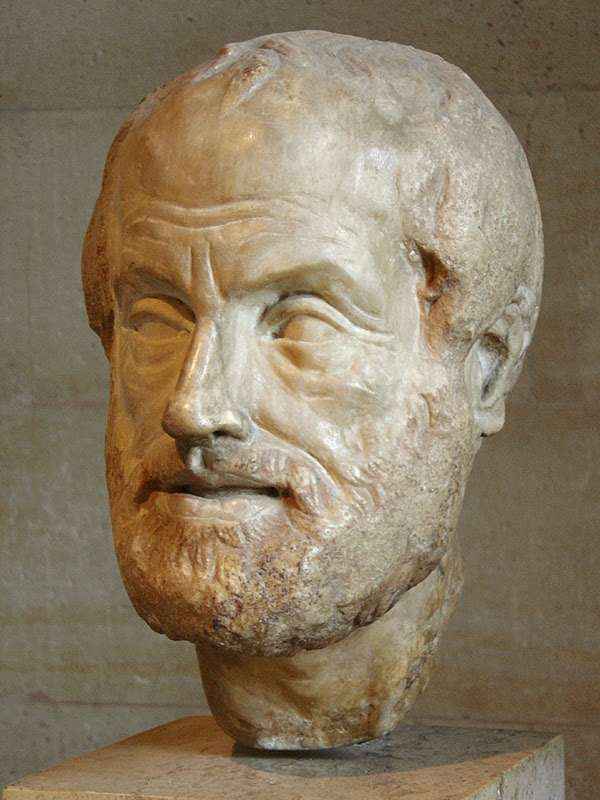
Aristotle

I recently discovered this piece by Peter D.O. Smith in Scientia Salon, a favorite ‘webzine about philosophy and science‘ of mine.

I’m especially interested in philosophy’s attempt to unify ethics, to help bring the various particular ethical systems and local moralities into some sort of accord, or at least to bridge the gaps between them to whatever extent possible. Great harm often results when adherents of different ethical / moral systems come into conflict (religious wars, political gridlock), where instead of seeking common ground in the pursuit of the good, conflicting parties seek to dominate by force and inflammatory rhetoric. Blinded by self-righteousness, these conflicting parties can bring about a situation where at best, no progress is made as each side expends all of their efforts undermining the other, or at worst, inflict death and destruction on each other and on innocent bystanders.
This piece addresses this problem, and offers virtue ethics as an excellent candidate for its resolution.
What do you think? 
~~~~~~~~~~~~~~~~~~~
Introduction

This article is neither a defense of nor an attack against either religion or secularism. It treats them as well established sociological facts and no more than that. I take them as given and argue that a greater moral good can be achieved if the two belief systems find common moral ground in virtue ethics.

Why should we care?

Moral choices infuse most aspects of our life, whether we know it or not. And a great number of these moral choices are bad ones. This is why our prisons are filled to overflowing [1], and recidivism is so high at 66% [2]. This is why we have so many war dead and this is why so many die violent deaths at the hands of murderers or radical ideologues. This is also why we have such an inequitable distribution of wealth. This is why cheating is rampant at schools and universities [3]. We maintain large standing armies to protect ourselves from the bad moral choices of others and on occasion we use it to inflict our bad moral choices on others. This is why we have no qualms in spying on our own citizens [4] or in killing without due process. This is why almost everyone has been the victim of crime, unfairness, injustice, discrimination, bullying [5], sexism, racism, ageism or other forms of bigotry, bias, and discrimination. This is why stalking is commonplace [6].

Bad moral choices touch us all and are the major cause of suffering in today’s world. Every person who has been jilted by a cheating partner has felt that suffering. Marital infidelity is the most common cause of divorce and abuse is another important cause [7]. One in five women are sexually assaulted at university [8]. Even natural disasters such as earthquakes or floods are compounded by moral failures as nations don’t respond adequately. Famines become moral failures when we cannot distribute food where and when it is needed. Our economic systems become moral failures when they turn into instruments of greed. Our political systems become moral failures when they are used for the advantage of the powerful, to exploit or neglect the weak.

The point I am making is that moral suffering is real, pervasive and needs attention. We have made great progress in reducing material suffering, but only some progress in reducing moral suffering. This is the important challenge that faces us today, to reduce moral suffering with the same degree of success that we have reduced material suffering.

What then is the problem?

The problem quite simply is that, in comparative terms, we do not give moral problems much attention at all and that we give it the wrong kind of attention, by creating a growing thicket of rules and regulations [9].

Modern society rewards material progress while neglecting moral progress. We have huge budgets for science research and we give large rewards to outstanding achievers in science. But society allocates far smaller amounts to advance moral interests or to reward moral achievers. As a simple example, of the six Nobel awards, only one (Peace) has a moral dimension [10]. Of the other 21 high-honour prizes, only seven have a moral component [11]. School education has a strong science bias but gives little attention to moral education [12]. Our criminal justice system spends a great deal on addressing the outcome of moral problems but little on addressing the causes of moral problems, with the result we have a recidivism rate of 66% [2]. We punish moral offenses but we do not prevent them. We have resorted to a form of legislated morality with our criminal justice and human rights systems. This is a framework with large gaps that does not address or give guidance to private morality.

We are becoming a rules based society, but the rules have only a weak hold because they lack intrinsic motivation [13]. Perhaps the most dramatic example of this was the collapse of the banking system. Banking is one of the most highly regulated parts of the economy, and yet that does not prevent abuse and exploitation [14]. Without intrinsic motivation the rules become a challenge to find means of evasion. We have reacted by adding more rules but it is only a matter of time before more means are found to evade them too. There has been an explosive growth in criminal laws. For the past twenty-five years, a period over which the growth of the federal criminal law has come under increasing scrutiny, Congress has created over 500 new crimes per decade [9]. Adding to this, the Administration is increasingly relying on mandates and directives.

A modern problem

Western society, for a long time, had a broad consensus on morality that was derived from religion. Indeed religion can be seen, in sociological terms, as society’s way of promoting cohesion through moral consensus [15]. Modernity and the Enlightenment have weakened the hold of religious morality, providing space for alternative conceptions of it to take hold. Modernity introduced a spirit of utilitarianism [16] and this has shaped present day society’s concept of morality. But it was not merely the concept that changed, but also the authority of moral systems. Religious moral systems derived their authority from their concept of God and this helped to provide intrinsic motivation. With the new utilitarian morality a new authority was introduced, the individual. Inevitably this has resulted in a weakened and diffuse moral sensibility that contains many contradictions. This new concept of morality has been accompanied by a shift from intrinsic to extrinsic motivation. Extrinsic motivation is, by its very nature, less effective.

With this new concept of morality came a changed approach to society’s problems. The spirit of utilitarianism has created a tacit assumption that alleviating material need reduces the impetus for moral wrongs. There is a belief that moral wrongs are largely the outcome of material conditions. Thus effort has been directed to solving material problems, which have in any case been shown to have easy solutions, while true moral problems remain intractable and so are neglected. We have been picking the low hanging fruit.

We are divided by differing concepts of morality

With the weakening of religious morality and the widespread adoption of utilitarian approaches a sharp moral divide has opened up in society.

The secular world has adopted a tacit, inchoate form of moral consequentialism. It believes there is no absolute good or bad, only that acts should be judged by their consequences. It rejects the absolute lawgiver and the laws of religious deontology. It makes the individual the final arbiter of his acts.

The religious world, by contrast, believes in absolute good and bad and that acts can themselves be inherently good or bad. It believes there is an absolute lawgiver that has handed down a set of rules for a good life. The religious world rejects moral consequentialism on the grounds that it is a shifting and dangerous moral system that is easily tailored to suit the needs and desires of the moment.

As consequentialism or utilitarianism rose to the fore, reflecting the material and mechanical spirit of the times, challenging long held moral conceptions, Protestant Christianity (and Islam) retreated into a form of hardline deontology. The result is the strong ethical divide we see today.

There is thus a yawning chasm between the moral concepts of the religious and secular worlds. This chasm weakens the ability of society to address common moral problems since it lacks consensus. Society has reacted to this problem with a growing thicket of laws with no end in sight [17]. This has proven to be a poor solution, since adding rules merely invites further evasion if they are not reinforced or accompanied by some form of intrinsic motivation.

The need for a middle ground

We are a common people with common moral problems that affect us all. To solve these problems we need a unifying moral concept that both the religious and secular worlds can accept. For example, schools are a place where we should also give our youth moral preparation for adult life, and schools serve both world-views. This is one example of why it is necessary that we find common ground. Deontology and moral consequentialism are not acceptable to both sides of the divide and so cannot fulfill this need.

Which raises the question: is there a middle moral ground where the secular and religious worlds can meet and agree? Today’s society places a strong emphasis on the concepts of justice and rights. These can be seen as instances of what are known as ‘virtues’ and it is in virtue ethics, the third major branch of ethical philosophy, that I see an important opportunity for finding common ground between the secular and the religious worlds. Virtue ethics shows promise as the means of filling in the gaps of legislated morality. One can think of it as being the soft flesh on the hard skeleton of legislated morality, making a healthy, functioning body that is directed to the purpose of flourishing. Virtue ethics can be seen as an important form of intrinsic motivation that makes the regulated rules of society more effective while providing strong guidance to unregulated, private conduct. It is not accidental that here has been a sharp increase in academic interest in virtue ethics lately [18].

The appeal of virtue ethics

Virtue ethics is an enduring idea with ancient roots. Aristotle, some 2,300 years ago, clearly articulated the ethical philosophy known today as virtue ethics [19, 20]. Cicero, close to the time of Christ, wrote of it as being one of the three main contending moral systems of the day [21]. Catholicism, early on, incorporated it into its teachings where it continues to this day to be a major influence [22]. The last 50 years have seen a marked revival of academic interest in virtue ethics [18, 23], and Alisdair McIntyre’s publication of After Virtue was a landmark in this revival [24].
Virtue ethics looks neither to rules nor to consequences. Instead it considers internal motivations directed at realizing the telos, or end, of a “good” person, and it is in this that the religious and secular worlds can find agreement. In my mind, the appeal of virtue ethics is fivefold.

First, the generally accepted list of virtues is free of religious terminology or implications. This makes the virtues acceptable to the secular world. At the same time the religious world finds them a natural extension of its beliefs. For example, Catholicism has embraced virtue ethics, and both secularists and theists would readily agree on the list of 52 virtues given by the Virtue Project [25]. Theists would add faith, hope and charity to that list while secularists would ignore them, a minor difference. The differences that the many belief systems bring to this are largely ones of terminology and emphasis. It is an ethical system that is neutral about belief systems and can therefore be accepted by all belief systems.

Second, supplying an internal motivation is a better way of obtaining a good outcome, whether of act or consequence. It is widely agreed that intrinsic motivation is more effective than extrinsic motivation (intrinsic motivation refers to doing something because it is inherently interesting or enjoyable, and extrinsic motivation refers to doing something because it leads to a separable outcome[13]).

Third, by supplying intrinsic principles, rather than rules, it is adaptable to a wide range of circumstances. A rules based system can only adapt to new circumstances by adding new rules, something that becomes intolerable in the long run.

Fourth, virtue ethics supplies a means of internalizing and integrating rules into a person’s behavior, making them more effective. It is a powerful way of reinforcing the rules and regulations of society by translating them into intrinsic motivation.

Fifth, virtue ethics can supply a new source of meaning, independent of but complementary to religious belief. It can be an antidote to the angst of modernity. This is a large field that is only touched on here.

In short, virtue ethics is capable of supplying an intrinsic motivation that is acceptable to both the secular and religious worlds. We live in an overwhelmingly rules dominated world. Virtue ethics offers a way of internalizing and then integrating rules such that they become intrinsically motivating. It is a promising field for finding common ground between the secular and religious worlds, to makes rules and regulations more effective, and to provide a source of meaning for the non-religious.

A practical solution

The attraction of virtue ethics is its practicality and simplicity. It can be formulated in simple terms that are appealing to most people. It is independent of belief systems and yet most belief systems can accept it, with only changes in terminology. It can easily be taught at an elementary level while still be challenging at a philosophical level. It is easily incorporated into codes of conduct for organizations.

But it is not just a solution to individual moral concerns. It can also be expanded to any domain of activity as an example discussed by Bruni and Sugden shows in the case of market economics [26]. They describe the market as a practice having a telos of voluntary and mutually beneficial exchanges. They explain: “On the supposition that the telos of the market is mutual benefit, a market virtue in the sense of virtue ethics is an acquired character trait with two properties: possession of the trait makes an individual better able to play a part in the creation of mutual benefit through market transactions; and the trait expresses an intentional orientation towards and a respect for mutual benefit. In this section, we present a catalog of traits with these properties, without claiming that our catalog is exhaustive.” Their catalogue of traits, or virtues, include universality, enterprise and alertness, respect for trading partners, trust and trustworthiness, acceptance of competition, non-rivalry, self-help and stoicism about reward.

Another example is the Character Counts! Coalition for moral education in schools, which uses a virtue ethics framework centered on respect, responsibility, trustworthiness, caring, justice, fairness, civic virtue and citizenship [27].

These examples are intended to show that a virtue ethics framework can readily be adapted to any domain of activity or ‘practice.’ This makes virtue ethics a very flexible approach that can be tailored to all parts of our culture.

The role of secularism

Secularism has defined itself in opposition to theism. Its great achievement was the separation of religion from public life. Going beyond that, some secularists have set themselves the goal of destroying religion. This seems to be an ill advised goal as its chief result has been: to poison the public perception of atheism [28] and to harden the stance of Christian fundamentalism. Religion is a deep seated sociological phenomenon and is not going away. It has been part of human history for at least 40,000 years and remains an important part of all societies. It is far too durable a phenomenon and there is no realistic prospect that it will be ended [29]. The criticisms directed at religion by secularism have prompted strong reforms in religion and so have been useful for that end. The so-called war between secularism and religion is now becoming counterproductive as it obscures the major issue facing society, that of moral suffering. Now it is time that secularism embraces this problem and treats religion as an ally and not an enemy, or at least declares a truce. This does not mean religion should not be criticized when the occasion demands it, and indeed criticism can be a healthy impetus for reform. But attention should be shifted to the real enemy, moral suffering. To overcome this enemy the secular world should make common cause with the religious world. It can do this by embracing virtue ethics and making it the central plank of a morally committed secularism.

A solution to future problems

Population growth and rapid industrialization of the third world will create a situation of resource shortages and ultimately low growth [30]. Coping with this new world will require a major re-adjustment of values away from today’s one of rampant consumerism centered on hedonistic happiness. It will require a strong sense of responsibility and restraint, frugality will become the new watchword. Virtue ethics is our best hope of navigating this challenging new world. As Julia Annas, in Intelligent Virtue [31], explains, the virtues are a template for flourishing, in that to become a virtuous person is to become a flourishing person. It is a move away from hedonistic happiness to the eudaimonia of the virtues. This is a radical move away from the idea of happiness that depends on circumstances or goods, a necessary move in the resource constrained world that lies in our future.

That this goal is not so elusive can readily be appreciated when we compare the levels of positive emotions of some poor countries with those of some rich countries [32]:
Panama 85%, Singapore 46%;
Lesotho 77%, United Kingdom 77%;
Swaziland 76%, Germany, 74%.
_____
Peter D.O. Smith is a foundry metallurgist, quality engineer, software engineer, and corporate manager (recently retired), who lives by the motto fides quaerens intellectum.

[1] US incarceration rate.
[2] Recidivism in the United Sates.
[3] Academic cheating fact sheet.
[4] The Snowden Files.
[5] 44% of children report having been bullied.
[6] Stalking.
[7] Causes of divorce.
[8] Sexual assaults at university.
[9] Revisiting the explosive growth of new crimes.
[10 Nobel prizes, literature, medicine, physics, chemistry, peace, and economics.
[11] Other high honor prizes.
[12] How Moral Education Is Finding Its Way Back into America’s Schools.
[13] Ryan and Deci, Intrinsic and Extrinsic motivation.
[14] Why only One Banker Went to Jail.
[15] Nicholas Wade, The Faith Instinct.
[16] Trends in utilitarianism – Google books Ngram.
[17] Business Ethics: The Law of Rules.
[18] Trends in virtue ethics – Google books Ngram.
[19] Nichomacaen Ethics.
[20] Notes on Nichomachean Ethics.
[21] On Moral Ends, Marcus Tullius Cicero, Julia Annas.
[22] The Cardinal Virtues in the Middle Ages: A Study in Moral Thought from the Fourth to the Fourteenth Century.
[23] Contemporary virtue ethics.
[24] Alisdair MacIntyre, After Virtue.
[25] The Virtues Project.
[26] Reclaiming virtue ethics for economics.
[27] The Six Pillars of Character.
[28] Net rating of religious belief systems.
[29] Growth of Religion.
[30] Paul Gilding, The Great Disruption.
[31] Julia Annas, Intelligent Virtue.
[32] Gallup poll, Positive emotions worldwide.

This piece was originally published on Sept 25th, 2014 at 
http://scientiasalon.wordpress.com/2014/09/25/virtue-ethics-an-ancient-solution-to-a-modern-problem/

The Little Way of Goodness

Growing up Catholic, my siblings and I were taught many stories of saints and their heroic exploits in their quest to attain union with God. One of these was Thérèse of Lisieux, a young Frenchwoman who became a nun at 16 and died of tuberculosis at the early age of 24. She was an especially beloved saint of my family; one of my sisters is named after her.

Thérèse was a romantic and an idealist, and as a young girl, admired the glorious deaths of Christian martyrs and wished to emulate them. Realizing that she was unlikely to find herself in a situation where she could likewise be killed for the sake of her religion, she devised her own system for attaining heaven. She called it her “Little Way”, in which she would regularly perform acts of holiness in day-to-day life. The trials and tribulations of ordinary life would be elevated and be made important by virtue of their being endured with patience and good grace, and opportunities for sacrificing oneself for the good of others would be seized and fulfilled to their utmost, in imitation of the life of Christ.

am a philosophical naturalist, and as such, I don’t share Thérèse’s enthusiasm for martyrdom, nor do I consider self-denialism a virtue in the way that she did. I believe that the natural world is all that exists and that the wonder of it consists in the fact that everything that does exist operates according to the same laws of nature everywhere throughout the universe. My sense of awe lies the realization that all of existence is intertwined in the complex interconnectedness of all of its parts, in one great cosmic ‘dance’. When I learn about some new amazing discovery or a wonderfully explanatory new philosophical or scientific theory, or spend time outdoors among the plants and animals or under the stars, I am transported as I never was in any religious service or activity I partook in when I was younger. In short, I find Spinoza’s God, unlike the God of Thérèse, the only admirable and wondrous one that has ever been proposed.

And as a member of an intelligent, hyper-social species, I also believe daily acts of generosity and kindness are not truly instances of self-denial but are a natural product of our psychology. Not only are we are at our best and happiest when we are good to one another, but our very survival is enhanced and more assured. Since we depend for our well-being and our very lives on the cooperation and respect of our fellow humans, kindness and generosity end up, naturally, being self-directed acts as well as acts performed for the sake of others, and vice-versa. I also believe that is wrong to throw away one’s life for the sake of an ideal: not only is life the most wonderful and precious ‘gift’ of the universe to be preserved and treasured, but it doesn’t belong only to oneself. One’s life also belongs to friends, family, and colleagues, and to a lesser but very important extent, to the rest of humanity and other living things. Our lives are not really our own to give, but to live, and I believe there are only very few circumstances in which it is best, or right, to self-immolate. The longer we live, the more opportunity we have to do good in this amazing universe we find ourselves in. That’s my ideal.

Yet I also think that Thérèse hit on something vital. Like Aristotle before her, she realized that habit is essential to the practice of virtue. The more we do good, the more likely we are to do more good. 

In this way, virtue or goodness-as-habit is analogous to the essential role of exercise and nutrition in sculpting and maintaining a strong, healthy body. While we are born with the ability to process food into tissue, to build muscle, to increase endurance, to prolong our lives (some of us with greater genetically-given potential for these than others), these abilities are only expressed and persist based on our daily practices. If they are not maintained, they are lost, and if they are not built up, they languish. For our bodies to perform well, we must exercise, eat nutritious food and not too much of it, drink enough water, moderate our intake of potentially toxic substances, and so on. Without these good health-building and health-sustaining habits, our bodies weaken and gradually wither away; if we have not maintained regular healthy habits, we find ourselves hard-pressed, if at all able, to perform acts of vigor and strength when suddenly called upon to do so. Likewise, a person who is not habitually generous, kind, patient, amiable, companionable, and so forth, will more likely react to daily circumstances much more poorly than if they had made it a habit to act well. 

So I propose that we take the best wisdom of Thérèse, combine it with that of Aristotle and the findings of modern evolutionary biology, neuroscience, and human psychology, and devise a new Little Way. Here, we can substitute ‘goodness’, with our focus on the flourishing and happiness of ourselves and those around us, for ‘holiness’, which is God-centered. We can consciously make goodness a habit, by doing our best to go through daily life choosing to do each thing the best way we can, to be kind, patient, and generous with one another in all the opportunities that daily life presents to us, and to take care of this beautiful world we find ourselves in.

Like Thérèse and I’m sure like many of you, dear readers, I often have idealistic longings to perform admirable, heroic exploits. Wouldn’t it be wonderful to play an essential role in finding the cure for cancer or malaria, or to solve the problems of child poverty, domestic violence, or world hunger, or to liberate women in societies that still subjugate and oppress them? Most of us, sadly, don’t have the money, time, or prodigious talent to accomplish these great tasks. We have the responsibility to earn money for ourselves and for our families, to keep ourselves mentally and physically healthy according to our needs, and to protect, nourish, and support the communities we find ourselves in. So for the most part, we must be content with living more or less ordinary lives.

But our lives can be meaningful and impactful, all the same. We can make one another that much happier and healthier by doing all those little things that all too often we neglect to do when we forget that each choice we make, each action we perform, can really have a big effect. We can make it our habit give a friendly smile to those who catch our eye as we pass them on the sidewalk. When we go out to eat, we can smile and greet our waiter politely, wait patiently when they’re busy and our food arrives a little late, and tip generously, always dining out according to the maxim that if we can’t afford to tip well, then we can’t afford to eat out (especially since in the United States, at least, people in the restaurant industry are poorly paid and depend on us tippers for decent wages). We can thank the salesperson in the store for trying to help us find what we are looking for, and avoid acting ‘entitled’ by taking our disappointment out on them when we think the price is too high or what we wanted is not in stock or available immediately, and we can avoid making a mess when looking through the racks and shelves. We can forgo frittering away quite so much money on luxuries and trifles (while remembering that treating ourselves sometimes is important to self-care), donating some of that money instead to worthy causes. We can do our best to tear ourselves away from Facebook clickbait or watching too much TV or other less important projects to give our loved one a call or drop them a line a little more often (I beg your forgiveness, by own loved ones, this sort of neglect is one of my besetting sins!). We can get to work a little earlier each day (lateness is another one of my besetting sins) and take some of the burden off our colleagues, and try to be as helpful and patient as we can when things get stressful and hectic. As my poor husband can attest, we can all help with the dishes a little more often (one of my most hated chores, so my beleaguered spouse all too often picks up on my slack in this regard). We can be less ‘trashy’ inhabitants of this beautiful world by bringing our own bags and travel cups when going out, buying less packaged goods, and picking up litter we find while out on a walk, hiking, or camping. We can neuter our pets, feed stray ones when appropriate, and always be kind and respectful to animals, as our fellow inhabitant of this rich and fascinating planet we are so lucky to find ourselves on.

By making goodness a habit in our daily lives, even in the little things, we can end up doing more good throughout our lives than we otherwise might have by focusing just on heroic and exciting exploits. And if we do find ourselves in a situation where more heroic action is needed, we will be ready, willing, and able to meet it, with our moral muscles strengthened, our patience of greater endurance, our energy increased and up to the task. The Little Way of Goodness, turns out, in the end, to be really not so little after all.

*Listen to the podcast version here or on Google Play, or subscribe on iTunes

– Dedicated to my sister Therese, our own little flower

Ordinary Philosophy and its Traveling Philosophy / History of Ideas series is a labor of love and ad-free, supported by patrons and readers like you. Please offer your support today!

~~~~~~~~~~~~~~~~~~~~~~~~~~~~~~~~~~~~~~~~~~

Sources and inspiration:

Aristotle. Nicomachean Ethics. Translated by W. D. Ross. 

Kraut, Richard, “Aristotle’s Ethics“, The Stanford Encyclopedia of Philosophy

Martin, Marie-Françoise-Thérèse. Story of a Soul: The Autobiography of St. Thérèse of Lisieux.

Nadler, Steven, “Baruch Spinoza“, The Stanford Encyclopedia of Philosophy 


Personal Responsibility and Collective Action Problems

In a recent essay, ‘But My Brain Made Me Do It!‘, I argue that many attempts to evade or minimize personal responsibility for one’s actions are misguided. The concept of personal responsibility exists not only to impart personal and societal meaning to human behavior, but to assign accountability. After all, if human beings can not be required to fulfill responsibilities or make retribution for harms done, societies could not function and group living would be impossible. Many attempts to evade personal responsibility only consider the reasons why one might easily have acted one way or another, and ignore two other key factors which lend weight and force to it in the first place: whether the person could have acted otherwise, and whether the person was in fact the one who performed the action. Therefore, attempts to isolate only deliberate intention, and to disregard other factors in matters of personal responsibility, undermine the nature and utility of the whole concept.

In the United States, debates about the meaning and ramifications of personal responsibility surround not only crime and punishment issues, but also public policy dealing with collective action problems, such as pollution, overpopulation, gun control, defense, law enforcement, and access to health care. These types of problems result from individual choices en masse, so that personal responsibility may be difficult to assign to any one individual. Yet, these problems would not exist unless all of those individuals choose to act they way they do. Collective action problems affect so many people, are so complex, and are so expensive, that a solution to them requires mass participation: many individuals each required to take part in solving the problem.

Yet solutions are often difficult to find because of the personal responsibility problem: how do we hold particular people responsible for solving a collective action problem when their individual choice is merely a ‘drop in the bucket’, so to speak? If personal responsibility is so narrowly conceived that one is only held responsible when there is a clear and direct link from the act in question to the entirely of the consequence, and they that they must have (mostly) understood the consequence of their action beforehand, than we must allow that no-one can be held responsible for most collective actions problems. But if we take a more robust view, that people can be held responsible for what they do and the consequences that flow from it, even if the consequences cannot be foreseen or intended, then we do have the right to call on the community to do what they can to fix the problem, be it through contributions of money or effort, through reparations, through accepting (just) punishment, or through other means.

In my ‘Brain’ essay, many of my arguments supporting a robust view of personal responsibility are consistent with a typically American conservative viewpoint, though some of my conclusions relating to particular public policies may differ. (For example, when it comes to criminal justice, I favor a reparative/restorative system over a punitive one, and restraint over zeal in enforcement of all but the most serious crimes, but those are topics for other essays.) When I apply the same arguments to collective action problems, however, the result is more consistent with a progressive approach to public policy as well as to morality.

A robust view of personal responsibility, I find, entails that individuals are morally obligated to contribute, through taxes or otherwise, to programs that preserve and promote the health, protection, and basic well-being of society as a whole. I argue this for two reasons: one, it is individual choices, be it in the aggregate, that create collective action problems (I address this issue in a past essay, in my example of the Dust Bowl crisis in mid-century United States, where the individual decisions of farmers to ‘get rich quick’ created a crisis for everyone, including those others who decided to farm more prudently and responsibly.) Therefore, members of a society should contribute to solutions or to make reparations, for the harms to others that result, directly or indirectly, as a result of their choices, Secondly, individuals, as well as society as a whole, often enjoy wealth, comfort, improved health, and other benefits that are derived from the reduced circumstances of others. A robust view of personal responsibility would also require that those who enjoy these benefits should pay their fair share for them when they have not adequately contributed for them otherwise (for example, in the marketplace).

Consider the issue of health care, and the debate over whether it should be publicly subsidized.

A typically American conservative position on this issue is that health care should be a free market commodity, because it should be a reward for honest work and its contribution to society. If one is personally responsible for their own actions, then if they do their fair share and work hard, they earn the right to access health care. The market is the mechanism, therefore, that limits the access to health care only to those people who have contributed to society through work. People who do not do their fair share, on the other had, should not get health care as a freebie, coercively paid for via taxation, by wage earners. If people feel like freely donating health care to the poor, fine and good, but they should not be forced to do so.

I sympathize with that position to a limited degree. I now work in the health care industry and see people who I have good reason to believe are gaming the system, quite often, in fact. (I address this issue in another recent essay.) If some people are cheating the system, I agree, they oftne are doing the wrong thing, but, I think, not necessarily. Consider this example: a pair of aging parents find their nest egg, carefully scrounged together through a lifetime of hard work, suddenly threatened by the wife’s recent diagnosis of breast cancer. These parents may be faced with this set of choices a) let the wife die without treatment, b) pay for the treatment, wiping out the life savings with which they would have paid for their retirement and the care of their children c) hide their assets to access free public health care assistance. These parents may feel justified making the third choice, since they feel that their primary moral duty is to save the life of their spouse and to care for their children, that their lifetime of hard work contributed enough to society to earn the moral right to this public assistance, and that they do little wrong gaming a system made corrupt and expensive by greed and political chicanery. I, for one, would find it difficult to condemn such a choice, and in some circumstances, may agree that it’s the most morally justifiable choice.

In my work in the medical office as well as in my years in the work force, I’ve seen far more examples of situations that bear a closer resemblance to the hypothetical situation I presented (closely inspired by a real life one) than to simple cheating out of greed or laziness. I work for a good doctor, who is the only local one in his specialty to see low-income patients on public health care assistance. (The reimbursement rates from many public health care assistance programs are very, very low, and physician’s offices have a hard time keeping their doors open at all if they accept many patients with that insurance.) Therefore, our office cares for many of the working poor as well as the suspected cheaters. Every day, I see elderly people who carry the signs of their past lifetime of hard work as well as people who currently work long, hard hours for little pay, whose health care is paid for through taxation because they can’t afford it otherwise. And I think: that’s how it should be.

That’s because all of us enjoy the benefits that come from the hard work of so many low-income people. We get to eat plentiful, cheap food because other people toil long hours with little pay in fields, restaurants, and factories. We get to wear comfortable, well-made clothing and stuff our wardrobes to a degree that no-one but the wealthiest of aristocrats used to enjoy, again, because others work in miserable, boring, depressing conditions working practically for nothing. I live in Oakland’s Chinatown, where I am surrounded by the hardest-working people I’ve seen in my life, other than the (largely immigrant and children of immigrant) people I worked with in the food industry, and these people, too, receive pitiful remuneration for the vast contributions they make to your life and mine.

When you and I pay a few cents for an apple, or a few bucks for a shirt, or a couple hundred for a computer, we do not pay our fair share, to my mind. The market may have driven prices and wages down, but when we’ve purchased those things, we’ve only fulfilled our part of the bargain between the buyer and the seller. We have not, however, fulfilled our personal responsibility towards all those other people who made our wealth possible. We have paid for our own life of comparative wealth and ease in an exchange that buys a life of privation for another.

So when you and I buy that cheap apple, that cheap shirt, that cheap computer, our decision to do so creates an economic situation in which many other people earn poor wages. And those poor wages, in turn, mean that people can’t afford to buy health care, or indeed, enjoy those benefits of society that their work makes possible in the first place. In the long run, it’s our fault, even if indirectly, that other people can’t buy health care, because this situation arises as a consequence of our own choices, our own actions. And this is only one example in which individual actions cause collective action problems. Other examples are pollution, overpopulation, natural resource depletion, systematic racism, traffic jams…. The list goes on and on.

So here’s a question with which I would challenge those who don’t like to feel responsible, or to hold other people responsible, for such collective action problems, including so many American conservatives: why is it that you should be personally responsible for your economic well-being by choosing to do your part and work hard, but you should not be held personally responsible for the consequences of your choices in the marketplace for others who work hard? As an example we’ve already considered shows, we can follow the chain of consequences readily from our own market choices to their collective impact on the lives of others. People, out of self-interest, choose to pay less for food if they can, usually without questioning why it’s cheap. But for food to be cheap, it’s generally because wages are low (in combination with improved technology, which can increase efficiency; but sometimes, new technology means workers have to compete with it, again lowering wages). Individual choices to buy cheaper produce cause wages to be low: they benefit from the reduced circumstances of others. And healthcare, even in more efficient, less corrupt systems than ours, tends to be expensive, because of the high cost of the education of doctors and of research and development, and because it’s labor intensive (each doctor’s visit often requires a significant input of time to be effective), so low wage earners usually cannot afford adequate health care. Therefore, our personal decision to buy cheap produce causes many others not to be able to afford health care. Why, then, would we not be held to any level of responsibility for the consequences of our actions when it comes to access to health care?

We already accept the idea of personal responsibility for individual contributions to collective action problems in many other areas of life. In order to enjoy the legal right to drive, for example, we’re required to purchase driver’s insurance. That’s because our own decision to drive can have debilitating and fatal consequences for others, even if they are entirely accidental. Almost no-one intends to maim or kill another when getting behind the wheel, yet we accept that when we choose to drive, we are still personally responsible, in one way or another, for what happens as a consequence. We also accept that since we desire and enjoy such benefits and freedoms as the right to go our way unmolested by other people, to vote, to travel on public roads and bridges, and so on and so forth, we are responsible for contributing to those institutions that solve collective action problems, and contribute to the maintenance of the military, the police, infrastructure, legal system, and so forth, thorough our tax contributions and otherwise.

As intelligent social creatures, human beings have conceived and developed societies organized according to and supported by robust conceptions of personal responsibility, demonstrated by such human products as morality and law. Instead of operating primarily from a ‘me and mine’ outlook, the most successful and long-lasting, and I argue, the happiest persons and societies operate from a predominantly ‘us and ours’ mentality, with the ‘me and mine’ enjoying even greater benefits than pure self-interest could produce. (The earliest Christian communities adopted this influential philosophy and practice, with great success and to their great credit; consider the tale of Ananias, who, out of greed, did not contribute the same percentage as others towards the welfare of all. Contrast this with the later incarnations of the Church, which retained the rhetoric and abandoned the practice of equal personal responsibility for, and equals enjoyment of, the public good.)

In sum, a robust view of personal responsibility leads us to act more responsibly in our day to day actions and, in turn, to generally behave in such a way that has the best outcomes. We come to act as Immanuel Kant’s categorical imperative would have us do, to ‘Act only according to that maxim whereby you can, at the same time, will that it should become a universal law’. When each of us realizes that our day to day actions often have not only immediate and personal but wide-reaching consequences, our behavior changes. And when we wish that the consequences of our actions are beneficial or at the least not harmful, our behavior changes for the better, our imagination expands, and the world becomes a richer and safer place for us all.

Hume, Aristotle, and Guns

Photo 2014 by Amy Cools

Antique firearms at the Scottish National Museum, Edinburgh

I’ve been mulling over the issue of ‘gun rights’ for some time now. It’s a pressing issue here in the United States, since more people are injured and killed by citizens wielding guns than in any other state with a stable government and a thriving economy.

It’s also a divisive issue, as it’s generally argued in terms of liberty, a core value in our culture and politics. One side emphasizes the right to self-defense, the other the right to freedom from fear and from the pressure to join the arms race. And whether or not people chose to arm themselves, their fellow citizens feel that they are placed under some kind of obligation or burden as a result.

From the anti-gun perspective: if at least some of your fellow citizens are armed, then you are forced into a position where you must arm yourself too whether you’d like to or not, or remain at their mercy. After all, in a moment of greed, anger, zeal, fear, mental illness, hate, or accident, one person with a gun can permanently remove all freedoms that another could ever enjoy, within seconds, with the simple squeeze of a trigger. When another is armed, they have the potential power to wield complete control as to whether you live or die, and to force you to act according to their will, and against your own.

From the pro-gun perspective: if your fellow citizens choose not to arm themselves, you leave all the work of crime deterrence up to gun owners. Not only that: since a gun is the most effective weapon which can be wielded by a person of nearly any degree of strength, it’s the only available method for many who feel the need to defend themselves and others. In other words, it’s the one real equalizer: anyone with a gun has as much power as any other, so long as they know how and when to use it.

What would help us decide how to settle this, since the freedom to live the life we want, and the freedom to live at all, are in direct conflict here? We’re still figuring it out here in the US. Some nations have chosen in favor of individual gun rights, and others have disarmed their citizens, with varying results. While, generally speaking, nations and states with low gun ownership rates have much lower rates of gun violence, there are some exceptions. The gun rights dilemma, therefore, is not simply and immediately solved through legislation designed in favor of one set of rights issues over another.

Putting the conflicting liberty and rights issues aside for the moment, perhaps it would help to consider the relevant moral issues. Here, we can look beyond local, cultural considerations to a broader source of guidance as to what we should do about guns. What does it mean to be a good person, a virtuous person, and how do we cultivate that in ourselves and in each other? How does a society cultivate that in its citizens? Can these and other considerations help us decide what’s right, morally, when it comes to the rights and responsibilities of owning a gun? What should we do about it? Is it right or good for people to hold so much power over life and death? Permissive gun laws, which make it easy for responsible gun owners to trade in guns, also make it easier for members of drug cartels and other criminals to get their hands on them, too; that being known, are those laws right?

I think two of the greatest thinkers on morality and virtue, David Hume and Aristotle, can do much to help us discover some answers to these questions. Let’s explore their ideas, look for some answers there, and see how they fit with modern discoveries in behavioral science, psychology, and neuroscience.

According to David Hume, morality originates in the ‘passions’, or feelings. We can see ourselves as naturally moral creatures, since we come equipped with those emotions, those motivations, that make morality possible. We demonstrate altruistic, ‘pro-social’ (not Hume’s term, a more modern one), even as children, though we develop our moral character as we grow, through life experience, conversation with other moral beings, and by acquiring and developing the use of reason. For example, from the earliest age, we approve of kindness and disapprove of cruelty. We desire happiness, love, and generosity, and detest pain and avoid selfish people; we crave learning, and enrichment, and the approval of others. Those ‘sentiments’ ennoble us, and are responsible for that which is best in our characters. Yet the emotions we come equipped with are not sufficient, in themselves, for a morally developed person. Reason also plays a key role, enabling us to universalize and expand morals, and to apply these needed in any given situation.

Yet morality cannot be founded on reason alone: as Hume points out, reason is the means to means to link one true proposition with another, but cannot, on its own, show us what to value, or make us care about each other or anything else. It’s moral feeling, the passions, that provide the motivations, and provide reason the materials to work with to develop our morality. So as we grow up, we learn to develop our moral instincts, to ‘expand our moral circle‘ through conversation and the use of reason. By spending time with others, by being exposed to diverse ways of thinking and being, we learn that others have emotions and interests just like we do, that are just as important to them as ours are to us. Emotionally, we empathize with others; rationally, we know that what we expect of others is no more or less than what we must demand of ourselves. A very young person has the instincts for morality, but prior to experience of the world and the use of reason, it’s a very limited morality, or can even be considered a sort of proto-morality. Experience of other moral agents, through discourse with them, reveals there are others whose feelings and interests matter just as much to them as ours do to us, and finally reason shows that there is not particular reason to favor oneself over another when determining moral rules and guides of behavior. A morally good person, then, will seek to be pleasant and generous, to make others happy and improve their well-being, to respect and protect their interests as much as possible, just as we desire and expect they will do for us.

Hume’s account of how morality works, combined with the body of knowledge we’ve discovered since his time, reveals that it’s as much a natural part of the makeup of the human personality as any other, as are creativity, romantic passion, mother love, curiosity, and hunger, as well as (sadly!) rapacity and cruelty. A natural explanation of morality does not require a complex suite of arguments to found its origins in logic and reason, nor does it require some cause outside of ourselves, as traditional explanations claimed. To find out what morality is and how it works, we observe human beings, how they act and how they desire themselves and each other to act; we explain how and why morality developed as a natural adaptation for human beings; and we apply reason to determine what kinds of mindsets, rules, and behaviors lead to their flourishing.

Behavioral, biological, and evolutionary sciences have, over the years, lent support to Hume’s explanation of morality. Rebecca Saxe and Alison Gopnik, among others, has closely observed the behavior of infants and very young children over time, and has gathered a large body of evidence that people demonstrate moral instincts from the very earliest age, recognize that others are moral beings with their own interests and emotions just like us, and make moral judgments accordingly. Evolutionary psychology (Darwin considered Hume one of his great influences), in which morality is considered as much an adaptation as our opposable thumbs and long limbs, inherit much from Hume’s account. In fact, Hume is widely considered a founder of naturalistic moral theory, and a father to modern cognitive science.

Aristotle’s grounds the origin of morality more on reason, though his theory is founded, like Hume’s, from his observation of the world and how people behave. His elegant ‘function argument’ is the centerpiece of his moral theory. When you consider what something is for, and observe what it does and how it functions, you’ll know where to start. The quality of goodness in material things is closely related to the quality of goodness when it comes to actions and moral feelings. A musical instrument is for making music; therefore, an excellent, or good, musical instrument is that which produces the best music. Further, if we consider a case in which we’re deciding who the musical instrument should belong to, it would be the right thing to do to give it to the best musician. Not to the nicest person, or the one who can pay the most for it, or even to the person who made it; those considerations are irrelevant since none of those have anything to do with the proper function of the instrument.

To Aristotle, reason is the one definitive human trait that no other creature on earth possesses. That’s what we do uniquely, and what we’re best at, or at least, that’s what we do when we’re at our best. So what we should do, the moral thing to do, is what’s most reasonable, what’s most in keeping with our nature as reasonable beings. What helps us recognize that, in turn, is called the ‘Golden Mean’: consider all those traits we have, see how they fall on a spectrum, and we will see that the virtue consists of the happy medium between extremes. For example, bravery would be the virtuous golden mean between cowardice and recklessness, love between disdain and fawning or obsession, and so on. (Fun fact: Hume himself placed great importance on moderation, temperance, and fairness, eschewing divisive party politics, for example, as if it was part of his mission to live out the ideal of the Golden Mean!)

Making the leap from the function of a thing which is an artifact of intentional human creation, to the function of a human being itself, is quite a leap. Aristotle recognized this and sought to address it, but did not yet have the modern knowledge of the theory of evolution, and of evolutionary psychology, and how well they account for the origin and development of moral virtues such as kindness, sympathy, generosity, bravery, and so forth. Nor did Hume, but he did not consider it justified to form conclusions by building a logical case as far removed from original observations as many who followed Aristotle later. Hume saw human beings as much a product of the natural world as any other, and their nature as fully explicable in those terms. So leaving the function argument aside for the time being, let’s consider another important contribution of Aristotle’s to moral philosophy: the importance of habit.To Aristotle, habit is essential to the practice of virtue. By emulating virtue, we habituate ourselves to it. Over time, morality, the practice of virtue, becomes second nature. Here, Aristotle proves himself a keen observer of human psychology, and his emphasis on habit as a central driving force behind human thought and behavior, as well as something which can be deliberately instilled through practice, is confirmed by the findings of modern psychologists and neuroscientists. A recent article in Scientific American outlines some of the ways in which habits are formed, and how necessary they are if we wish to improve our behaviors systematically. Cognitive behavioral therapy, now widely considered among the most effective ways to overcome addiction and anxiety-depression, among other disorders, is also founded on these scientific discoveries.

Here’s where I find a link between these two moral theories: Aristotle’s emphasis on habit works hand in hand with Hume’s account of how moral sentiments arise from human psychology. Whether it be from habit or other mental processes we are naturally equipped with when we achieve consciousness, moral behavior is largely a spontaneous reaction to the situation at hand. Early in our development, as Saxe and Gopnik describe, a basic set of moral instincts are included in human consciousness in its earliest stages. As Hume observes, experience and reason help us expand, develop, and perfect our moral characters over time; the moral character, as Aristotle recognizes, is the set of, and relationships between, the virtuous habits we’ve cultivated through practice.

This also consistent with other findings of modern neuroscience and psychology. The way we tend to act in any given situation, the emotions and motivations that arise in us as we respond to stimuli, are formed as we react to circumstances, and by engaging in patterns of action, reactions, thoughts, behavior, we create mental channels, so to speak, or ‘paths of least resistance’, which predict our reactions, our thoughts and behavior, given similar circumstances. We usually act and think in accordance with how we’ve been given to act and think before, and only change when some new consideration(s) arises that makes us stop and consider whether to do something else this time. These considerations, the combination of reason and emotion (how do I act that will make me feel good about it, given the consequences of my actions for myself and others? How did the decisions I made last time the sort of thing came effect me and the world around me? How do others act in these situations, and what are the effects then?) inform how we habituate ourselves to new and improved moral actions and reactions.

Let’s pause for a moment. So far, we have these two thinkers’ descriptions of morality and virtue, supported by the findings of modern psychology and neuroscience.  Hume and Aristotle show us where they think we should look for virtue, how to recognize it, how to describe and explain it, and where it originates. In other words, they are engaged in metaethics. But as you may have noticed, this tells us only how people actually do think and behave; what about telling us what we should do? What are the criteria for deciding what’s right and what’s wrong?

Arete (Virtue)

I think Hume and Aristotle point us in this direction: human beings not only do, but should habituate themselves to those practices which form in us the best moral character. While both men don’t explicitly tell how we can definitely say what’s right and wrong, they go to great lengths to show us what an admirable character looks like, and how they think and behave. I think they do so in order to reveal to us not only how we could be, but how we should be. In his writings as well as by example (he was widely known to have a particularly admiral character), Hume emphasizes such virtuous sentiments as sympathy, sociability, amiability, beneficence, generosity, and so on, and advocates the cultivation of these traits, especially through conversation and spending time in the company of others, especially those who can broaden your understanding of the world, and by avid reading and study of philosophy, literature, and history. Aristotle emphasizes the virtue of moderation in all things, of wisdom, self-control, courage, and nobility. Both men emphasize, to the highest degree, the use of reason, and the value of its careful and consistent application in all matters of life. It appears that they go through all this trouble not only to show us what a good person looks like, but to offer us something to aspire to: the formation of an excellent, moral character, which leads to the best life a person can achieve.

So, finally, we return to the gun issue. What does all this have to do with owning them, and using them? What does this have to do with what we observe in human behavior when people own guns? How about when people value, or even glorify, guns?

Let’s return to the consideration of the evidence, which can reveal how attitudes and practices relating to guns manifest themselves in human behavior; in other words, what habit or habits does a gun-owning society promote?

There are conflicting statistics to when it comes to gun-related behavior. For example, people in the United States own almost twice as many guns per-capita as Canadians and Germans. Canada and Germany, in turn, have a much higher rate of gun ownership compared to most other developed nations. Yet among these three nations, the United States has a far higher gun-related death rate, about four times that of Canada, and about 8 times that of Germany, though the three share many key cultural and political traits: they are democratic, capitalistic, and culturally and historically Christian. There are also examples where lower gun-related death rates correlate with higher per-capita gun ownership. This is the case for some states in the U.S, and for Switzerland, a country that, interestingly, imposes a requirement on all households to own a gun.Yet given such outliers, most states in the US, and most countries in the world, see a strong correlation between lower rates of gun-related death and injury and lower rates of gun ownership. The U.S. ranks near the top in gun-violence rates, just under Mexico’s, a country overrun with trigger-happy drug cartels, and outranked almost entirely by countries with weak, unstable governments, poor human-rights records, and high rates of poverty and income inequality. The very lowest rates of all, by contrast, are enjoyed by those countries who possess a high degree of personal liberty and human-rights protections while at the same time restrictive gun-ownership privileges, or none at all. Even in Switzerland, often cited by gun-rights advocates as an example of how high rates of gun ownership can correlate with low levels of violence, there are 16 times as many gun deaths as in the U.K, and 64 times as many as Japan. The rates are low in Switzerland only as compared with the most violent countries, but not in comparison with the least violent.

Photo 2014 by Amy Cools

Antique long guns at the Scottish National Museum, Edinburgh

Returning to the liberty issue for a moment, it seems that overall, since you must be alive to enjoy any liberty at all, liberty is best served when there aren’t many guns around. When a fight ensues, or the home is broken into, or a child has figured out how to get into a locked cabinet, or a person goes on a violent rampage due to mental illness, few, if any, people actually end up dying or disabled when there’s no guns nearby to reach for. It’s relatively difficult and messy to kill someone with a knife and other non-gun weapons, and the planning that goes into other kinds of homicide, like poisoning, gives people more time to consider the consequences of their action, decreasing the chance they’ll go through with it, or decreasing the chances of success at homicide.

As we’ve seen, however, the liberty issue can’t be the only determining factor in deciding the gun issue, since liberty considerations conflict so sharply when one’s liberty interests run counter to another’s. There are still compelling arguments to be made that individual liberty requires the right for each person to make their own decision in the matter, from the right to self-protection and self-determination. There’s also the fact that there are some states and countries where higher rates of gun ownership do correlate with low gun violence, especially in places where the population is more homogeneous, ethnically, religiously, racially, economically, and so on, even if they are relatively few. Conversely, there’s the liberty considerations of those who wish to be free from the fear of coercion and bodily harm, ever-present dangers that usually result from a heavily armed population, as the statistics reveal.

This is where the law comes in. One main purpose of the law is to defend the rights and liberties of the citizenry at large, and this involves protecting citizens from each other. A population is always composed of people who have conflicting interests, needs and desires, so to keep a society functioning, prosperous, and harmonious as possible, the law (ideally) is crafted to balance the rights, responsibilities, and interests of each citizen, impartially, with the other.Another purpose of the law is to codify, universalize, and enforce the mores of a given society, or at least those that harmonize with the principles of justice, equality, liberty, and so on that are central to the political system of that society.And last but not least, the law encodes a system of rights, responsibilities, and prohibitions, the practice of which is requisite to being a good citizen. In other words, the law is a society’s (in a democracy, the people’s) way to habituate its citizens to those practices which form a virtuous, a good citizen.

Gun law is no exception. Prior to passing laws relating to gun ownership, there are societal attitudes towards guns that people possess, cultivate, and enforce not only through custom and discourse, but eventually through law. Famously, in the 1990’s, the Australian government, with widespread support from its citizens, collected and destroyed a large proportion of the country’s firearms, and imposed restrictive gun laws. These laws were a direct result of the public’s horrified reaction to a series of gun-related mass murders that had happened in the decade prior. The public’s new attitude towards guns was made manifest in the law. It’s still in debate whether the sharp decline in gun violence that followed the new laws were a result of the laws, or vice-versa. It appears most likely that it’s some combination of the two: after all, as we’ve observed throughout history, there’s a feedback loop between the law and a society’s moral progress.

Consider the history of civil rights legislation in the United States: desegregation and other civil rights protections happened gradually, with each disenfranchised group demanding the full rights of citizenship, despite the current will of the majority to keep those groups subjugated and oppressed. Over time, the use of reason (in these cases, legal reasoning) and consideration of the values underpinning the foundational political philosophy and documents (in this case, the Declaration of Independence and the Constitution) led to new laws which not only enforced better practices, but habituated citizens to more virtuous thought and behavior, often in spite of themselves. We see this time and time again in American history: the disenfranchisement and oppression of black people, religious minorities, the poor and non-landowners, women, Jews, gay people, and so on, once common practice, came to be looked upon with righteous distaste, worthy of contempt. In so many of these cases, it was the law that changed commonly held attitudes, more than the other way around, and the change in attitudes and behavior often happened far more quickly than it would have otherwise if the practice of virtue wasn’t inculcated through law.

In sum: Considering the lessons of history, the evidence of the current states of affairs in which high gun-ownership rates correlate strongly with destructive attitudes and behavior when the entirety of the evidence is considered, and how the wisdom of two of the greatest moral thinkers is confirmed by the findings of modern science, I think that laws restricting, even eliminating, gun ownership by most individuals help lead to a wiser, more prudent, more beneficent, more amiable, more free society.

What do you think?

Ordinary Philosophy and its Traveling Philosophy / History of Ideas series is a labor of love and ad-free, entirely supported by patrons and readers like you. Please offer your support today!

– I’d especially like to thank Guy Fletcher, Lecturer in Philosophy at the University of Edinburgh, who kindly gave me some of his valuable time (despite it’s being finals week), invaluable insights, and excellent pointers regarding the subjects covered in this essay, especially in reminding me to make clearer the distinctions between meta-ethics, morality, and ethics.

~~~~~~~~~~~~~~~~~~~~~~~~~~~~~~~~~~~~~

Sources and inspiration:

Aristotle. Nichomachean Ethics. About 350 BC. 

Boseley, Sarah. ‘High gun ownership makes countries less safe, US study finds‘. The Guardian, Sep 18, 2013.

De Waal, Francis. The Bonobo and the Atheist : In Search of Humanism Among the Primates, 2013.

Gopnik, Alison. The Philosophical Baby, 1998.

Haidt, Jonathan. The Righteous Mind, 2013.

Hume, David. A Treatise of Human Nature, Volume III – Of Morals. Printed for Thomas Longman in London, England, in 1740. (I had a glorious time referring to versions published in Hume’s own lifetime during my trip to Edinburgh!) Online version: http://www.gutenberg.org/files/4705/4705-h/4705-h.htm

David B. and Stephen D’Andrilli. “What America can learn from Switzerland is that the best way to reduce gun misuse is to promote responsible gun ownership.” American Rifleman, Feb 1990

Kraut, Richard, ‘Aristotle’s Ethics‘. The Stanford Encyclopedia of Philosophy, 2014 

Morris, William Edward. ‘David Hume‘. The Stanford Encyclopedia of Philosophy, 2009.

Saxe, Rebecca. ‘How We Read Each Other’s Minds‘. TED talk, 2009

Tucker, Abigail. ‘Are Babies Born Good?’ Smithsonian Magazine, Jan 2013.

On Morality: Objective or Subjective?

The Good Samaritan by Jean de Jullienne, 1766, after, public domain via Wikimedia CommonsIs morality objective, or subjective?

If it’s objective, it seems that it would need to be something like mathematics or the laws of physics, existing as part of the universe on its own account. But then, how could it exist independently of conscious, social beings, without whom it need not, and arguably could not, exist? Is ‘objective morality’, in that sense, even a coherent concept?

If it’s subjective, how can we make moral judgments about, and demand moral accountability from, people of times, backgrounds, belief systems, and cultures different than our own? If it’s really subjective and we can’t make those kinds of moral judgments or hold people morally accountable, then what’s the point of morality at all? Is ‘subjective morality’ a coherent concept either?

Take the classic example of slavery, which today is considered among the greatest moral evils, but until relatively recently in human history was common practice: could we say it was morally wrong for people in ancient times, or even two hundred years ago, to own slaves, when most of the predominantly held beliefs systems and most cultures supported it, or at least allowed that it was acceptable, if not ideal? Does it make sense for us to judge slave owners and traders of the past as guilty of wrongdoing?

From the objective view, we would say yes, slavery was always wrong, and most people just didn’t know it. We as a species had to discover that it was wrong, just as we had to discover over time, through reason and empirical evidence, how the movements of the sun, other stars, and the planets work.

From the subjective view, we would say no. We can only judge people according to mores of the time. But this is not so useful, either, because one can legitimately point out that the mere passage of time, all on its own, does not make something right become wrong, or vice versa. (This is actually a quite common unspoken assumption in the excuse ‘well, those were the olden days’ when people want to excuse slavery in ancient ‘enlightened, democratic’ Greece, or in certain pro-slavery Bible verses.) In any case, some people, even back then, thought slavery was wrong. How did they come to believe that, then? Was the minority view’s objections to slavery actually immoral, since they were contrary to the mores their own society, and of most groups, and of most ideologies?

Morality can be viewed as subjective in this sense: morality is secondary to, and contingent upon, the existence of conscious, social, intelligent beings. It really is incoherent to speak of morality independently of moral beings, that is, people capable of consciousness, of making and understanding their own decisions, of being part of a social group, because that’s what morality is: that which governs their interactions, and makes them right or wrong. Morality can be also viewed as subjective in the sense that moral beliefs and practices evolved as human beings (and arguably, in some applications of the term ‘morality’, other intelligent, social animals) evolved.

Morality can be viewed as objective in this sense: given that there are conscious, social beings whose welfare is largely dependent on the actions of others, and who have individual interests distinct from those of the group, there is nearly always one best way to act, or at least very few, given all the variables. For example, people thought that slavery was the best way to make sure that a society was happy, harmonious, and wealthy. But they had not yet worked out the theoretical framework, let alone have the empirical evidence, that in fact societies who trade freely, have good welfare systems, and whose citizens enjoy a high degree of individual liberty, are in fact those that end up increasing the welfare of everyone the most, for the society as well as for each individual. So slavery was always wrong, given that we are conscious, social, intelligent beings, because as a practice it harmed human beings in all of these aspects of human nature. Slavery is destructive to both the society and the individual, but many people did not have a reasonable opportunity to discover that fact, other than through qualms aroused by sympathetic observation of so much suffering.

In sum: it appears that in many arguments over morality, where people accuse each other of being ‘dogmatic’, or of ‘moral relativism’, or various other accusations people (I think) carelessly throw at each other, is due to a basic misunderstanding. To have an ‘objective’ view does not necessarily entail one must have a fixed, eternal, essentialist view of morality which does not allow for moral evolution or progress. Likewise, to have a ‘subjective’ view of morality does not entail thinking that ‘anything goes’, or that morality is entirely relative to culture, religion, or belief system. Here, as is the case with so many important issues, simplistic, black-and-white explanations do not lead to understanding, nor to useful solutions to life’s most pressing problems.

* Also published at The Dance of Reason, Sac State’s philosophy blog

Ordinary Philosophy and its Traveling Philosophy / History of Ideas series is a labor of love and ad-free, supported by patrons and readers like you. Please offer your support today!

Money and Deservingness

A little while ago, I took part in a discussion about how medical care is paid for. It took a negative turn, as you would expect, since American health care is the world’s most expensive and the medical insurance field is highly dysfunctional. But the complaints were aimed especially at patients, since a couple of people I was talking to were jaded by observing apparent Medi-Cal fraud too many times over the years

I’ve been working in a medical office for nearly a year now, my first job in the medical field, and for the first time am getting a close look at what goes on behind the scenes at a doctor’s office: how many things can go wrong with skin (it’s a dermatologist’s office), how much patients are cheered and made to feel better by the simple act of talking with someone who can perhaps heal them, the complexities of billing and navigating the disparate requirements of insurance companies, the difficulties of receiving adequate medical care when one is disabled or poor, and so on.

The limits on what one can earn while receiving Medi-Cal, a free (to the patient, of course) state-run health care, are quite low, set at only 138% of the federal poverty level. For a state like California, with its relatively high cost of living, those limits are very much a low-ball estimate of what one can actually live on in an average California city. The qualifying limit on the yearly wage for a household of two, for example, is roughly the same as an average year’s rent alone.

Anyway, in the aforementioned conversation, anecdotes were passed around of people who present with Medi-Cal insurance, yet own expensive smartphones (data plans are not cheap, either!), nice clothes, talk about their vacations and nice cars, have tattoos and elaborate salon hairdos, and so on. This, of course, raised the question: how could they afford these things if they’re actually poor enough to qualify for Medi-Cal? Putting aside obvious objections, that they may have purchased those things before losing their jobs or becoming disabled, or that their family and friends supply the ‘luxuries’ as gifts, etc, the implication was that applying for taxpayer-funded health care should be an option of last resort, only after the smartphone is returned and the data contract expired, the nice clothes worn out, the valuable car sold.

One person proposed this solution: those too poor to afford health care insurance and other necessities of life should be given a one-time check. If they choose fritter it away and don’t spend it wisely, let them suffer the consequences. People who are responsible enough to have the money to pay for health care when they need it, should be the ones who get it; the rest are on their own.

I understand the frustration of those fellow conversationalists. We all know people who chronically don’t (can’t?) ‘keep it together’: they don’t (can’t?) get and keep decent jobs; they squander their money on junk food and useless luxuries and cheap trendy things that don’t last more than a season; they date or marry or make babies with ‘losers’ who drain their finances and don’t contribute; they don’t have a savings account for emergencies, and so on. Those habits are maddening, and don’t endear the possessor to those around them. Many of those habits drive their family and friends crazy, and arouse much resentment in others who end up paying the costs.

But I never hear the opposite argument: some people who have the money to pay shouldn’t get the healthcare resources. We know that some people who have money don’t contribute anything of value to society, and even do a lot of harm. There are some who make their money polluting or from sweatshop labor; there are some who are the lazy, spoiled, entitled children of wealthy parents; there are some who defraud their customers or knowingly sell toxic drugs to addicts; and so on. Why should they get to use up valuable, finite healthcare resources, then, if they, too, have lousy habits and are a drain or a bane to society?

So why the discrepancy? Does having money make one, generally, more deserving somehow? I think the discrepancy in our attitudes toward who should get health care, and who should not, reveal what most of us in the United States implicitly, unquestioningly accept, as a core value of American culture. It’s not so much that might makes right. Cash does. If you have the money to pay for something, you not only should get it, you deserve to get it. Period.

It’s not hard to see why we assume that this is so. We are a capitalist society, founded on the values of our country’s Calivinist founders. Money is the reward for our labor, and a sure sign, described as such in earliest Biblical times, of God’s approval. To accept money-as-deservingness as a core value is to encourage hard work, thrift, and innovation. Money is the surest way that a capitalist society automatically rewards its most productive, contributive members; obviously, those who work hard deserve the most money.

And very often, this is the case: doctors and other healthcare professionals, leaders of industry, civil-rights and defense lawyers as well as prosecutors, scientists, judges, professors and leading public intellectuals, and so on, do vastly important work, and they are, justly, well rewarded.

But wait a minute. How about those examples we just considered, of people who have money that don’t work hard or don’t contribute? There are myriad exceptions to the rule that the most deserving get the most money. A money-centric society also encourages theft, cheating, lying, fraud, ‘let-the-buyer-beware’ selling tactics… the list goes on and on.

And how about all those people we know whose work is among the hardest and most contributive, but who don’t make much money? In our country as in much of the world, for example, we are awash in a wealth of ready accessible, super cheap, delicious, quality food, such as the world has never seen before. That’s largely because masses of people work for subsistence wages, often in harsh conditions, for most of their waking hours, for years if not all of their life. In fact, the health and wealth of our society absolutely depend on these people’s labor, since without it, we are all impoverished, and would have little time and energy to expend in innovation, the arts, all the best things society a society produces, without a steady, high quality food supply.

But of course, the wages of field workers are not mostly determined by deservingness in accordance with the importance or value of the work done or the contribution made, and neither are the wages of most people. Wages are determined by supply and demand, or by how easy it is to replace one worker with another. Laboring in a field requires stamina and the will to work, but not education or highly skilled work experience. There are a seemingly endless supply of people who are willing to work in the fields for low wages in order to escape even worse living conditions or starvation, or increase the chances of success in their children’s future. The same conditions determine wages for myriad other areas of work, such as factories, restaurants, in-home and facility care for children and the elderly, and so on. And of course, there are those who did valuable work all their lives, until advances in technology rendered a lifetime of experience and skill useless. The stenographer, the postal worker, the journalist, the machinist, the autoworker, are seeing their jobs replaced by robots, computers, pundits, and overseas low-paid workers, and they are left middle-aged, suddenly unemployable, with large bills and children still demanding they make decent salaries, to start all over again in a job market that doesn’t need them anymore, with depressed wages for the entry-level work they must now accept when and if they can get it.

In contrast, there are those whose work is in demand because the product of their work is desirable, such as luxury goods, but the people who produce them are in short supply. Designers and developers of video games and movies, including violent and misogynistic ones, can make a great deal of money. Same goes for high-end fashion designers, CEOs of pharmaceutical companies, speculative bankers, plastic surgeons, lobbyists, and so on. The product of these people’s work range from the most beneficial, beautiful, and life-enhancing, to the most useless, harmful, and ugly; either way, the work they do can be highly lucrative, since their work is in high demand.

As we can see, the value of money-as-deservingness may originate from some of our best instincts and desires, such as justice in compensation, the liberty to pursue our own goals, and the drive to better the lives of ourselves and our children. But in the real world, things don’t play out that way, not by a long shot. The cynic, the cheat, the liar, the predator, is all too often more adept at making money than the honest, hard worker. The possession of money is not a reliable reflection of character, nor of the actual value of one’s contribution to society.

So as we’ve just seen, money-as-deservingness is deeply problematic at best, and nearly useless at worst. Money is a tool, nothing more, and the fickleness and vaguaries of the market, not worthiness of the work done, mostly determines who get the most.

So to return to the example we opened with: what conclusions should we have reached in our conversation about health care and who should have access to it?

It’s hard to say, exactly. It seems that collective action problems (the tragedy of the commons, for example) are part-and-parcel of every real-world society, and capitalism is one way around them, as it’s an (ideally) impartial, and therefore fair, way of allocating resources. This may solve many efficiency problems, but to my mind, it doesn’t solve a far too many other, even more important problems, including those that arise from our concern with justice, human flourishing, dignity, the value we place on individual human lives, and so on.

And we haven’t even considered the dilemma of how we are to care for people who are not ‘marketable’: constituted in such a way that they can’t contribute in the ways the market rewards: they don’t have the health, mental capacity, or perceived attractiveness that make them likely to get a decent job, even if they are able to try. Do we return to a society that depends only on elective charities to care for them, reneging on the commitment we’ve made over the years to take their care on as a collective responsibility? Remember, public assistance programs arose precisely because elective charities weren’t doing the job: if they were, there would have been no-one to need public assistance. Do we return to a eugenics-based belief system, where only the ‘fit’ deserve to survive? But this ignores that which makes human beings simultaneously the most intelligent, capable, and successful species: our highly developed social skills, in which we cooperate, pool our resources, and build on on the work and ideas of others to invent language, technology, and culture such as the world had never seen or likely will again if we eventually go the way of the dinosaurs. If we undermine our own moral sense and hard-heartedly ignore and dispose of the ‘unfit’, we blunt our moral sense and head down the path of mutually assured destruction, where it takes more and more qualifications to remain in the category of the ‘fit’. We’ve gone down that slippery slope before, have already caught a glimpse of such a dystopia in mid-century Europe.

My proposed solution? Re-classify and institute healthcare as the same sort of infrastructure as our system of roads and bridges, the military, the water supply, food-safety administration, our currency, and so forth, as all of these are basic necessities of life, communication, and trade. Collective action problems always have and always will exist, in the free market as well as in public welfare systems, and to give healthcare over to the vaguaries of the free market as if it’s an elective luxury, is a failure of our society’s commitment to the value of the life and liberty of each individual person. Our free-market healthcare system, which leaves so many without the care they need, is not a solution, it’s the result of a lack of political will and imagination, and a moral disgrace to boot.

*****************************************************************************

Sources and inspiration:

Ariely, Dan. Multiple works on behavioral economics, including his TED talks, lectures, and articles.
http://danariely.com/

Heath, Joseph. Economics Without Illusions, 2010.
http://books.google.com/books/about/Economics_Without_Illusions.html?id=4V8cvQo1Dw8C

Pornography

Recently, I read a post on Facebook where my cousin’s wife woefully reported that my cousin’s new anti-pornography site had to be taken down due to a huge negative reaction (though he received much support as well). The site is (was?) called ‘Her Name’, and it’s a forum where you assign a name (first name only) to a woman whose dignity had been affronted through pornography: women you know, women you’ve seen but not met, and so on. By naming these women, their humanity, their individual worth is re-affirmed, and all are reminded that each woman a life and a story beyond the simple object of gratification that pornography portrays them as.

That was what I was able to gather from the description of the website and from  my cousin’s wife’s post. But I didn’t find many details of why many objected strongly to the website, in the blog review and discussion of ‘Her Name’ I found on Patheos, nor on Facebook. Nor was I able to discern clear arguments in support of the claim that women are, in fact, dehumanized or injured in other ways by pornography.

Here’s what I gathered about the nature of the angry comments: by providing a forum to name these women, my cousin was (inadvertently, I believe) also creating a handy tool for ideologues to shame women taking part in pornography, or to ‘out’ women who want to keep their porn careers private. And here’s what I gathered from the discussion overall: pornography is bad, especially for women, period.

I’m glad that my cousin feels passionately about the issue insofar as he is concerned with promoting the dignity and freedom of women. And I’m glad that he’s taking part in the public discussion that we should all continue to have about pornography. It’s such a complicated subject, to which the blog reviewer doesn’t do justice: she offers no arguments to support her assertion that porn dehumanizes women. She simply claims that it’s a tool of the devil to destroy souls by denying their existence without explanation as to why or how.

Another thing: the overall characterization of porn, on the site and the blog post, was almost exclusively about the victimization of women, yet both sexes are involved in its production as well as the consumption, to one degree or another. I presume that the assumption is that men are making most or all of the decisions, and the women are all victims and dupes. I have serious doubts about both of these claims, if they really are such. Be that the case, let’s keep in mind that while I offer primarily offer women as examples in the discussion here for consistency’s sake in comparing the arguments, most of the points made apply to all sexes involved.

Based on his replies to the blog review comments, my cousin’s objections also appear to be based primarily on his religious beliefs: lust is sinful, tempting another to lust is sinful, sexual intercourse outside of marriage is sinful, and so on. These claims will have little meaning for those not adherents to particular dogmas. Yet we can infer broader points from what he has to say. For one, the anonymity and secrecy surrounding pornography, of the actors and the viewers, indicate that shame, an instinctive reaction to pornography, indicates there’s something wrong with it. Secondly, porn, by its very nature, dehumanizes the participants by reducing them to a collection of parts that have no purpose other than to gratify sexual desire. And thirdly, supporting the sexual gratification market that is porn, also supports awful practices as sex slavery and rape by validating the general idea that it’s okay to view some women, or all women, as nothing but objects of lust.

Those who subscribe to the ideas of the growing sex-positive movement, however, would not recognize this wholly negative portrayal of pornography. Sexuality, they say, is not only natural, but as valuable a characteristic of the human personality as reason or creativity. It originates from the best parts of human nature: empathy, sympathy, cooperation, our rich emotionality, the urge to create new life. It’s one of the most exciting ways that humans can bring each other joy, and unite in one of the most emotionally intense, intimate ways that we can. In short, sex is beautiful, and the ways in which we enjoy it can be, and should be, as variable as is the range of human personality itself. It’s precisely because of patriarchy and religion, in fact, that human sexuality has been shamed, perverted, twisted, and portrayed as ugly and exploitative in all contexts outside of the confines of male-dominated monogamy. That type of sex-negative religious view, in turn, is a regrettable inheritance from our evolutionary ancestors, who felt the need to exert control of women’s sexuality in the competition to successfully procreate with limited resources. When religion and patriarchy lose their influence, sexuality can again be freely expressed in all its joy and beauty, and the religiously-imposed shame will melt away. After all, as Mark Twain says, ‘Nature knows no indecencies; man invents them.’ 

Pornography, then, in this view, is to sexuality as academia and the scientific community are to intelligence, and sculpture and novels are to creativity: an expression of our sexual nature. There’s bad pornography, and good pornography, just as there are harmful scientific theories such as eugenics, and clunky, tacky, poorly written novels such as ‘Atlas Shrugged’ and ‘Naked Came the Stranger’, and lousy art such as Dan Lacey’s pancake and unicorn paintings (though hilarious!)

So why is sex the one part of the human nature whose expression and gratification we consider most taboo even as it’s most alluring? Why single it out this way? We don’t consider gratifying hunger and thirst as shameful, nor other needs and desires such as art, music, or intellectual stimulation. What is it about sex that engaging in it, and portraying it, is considered dehumanizing in all but the very narrow context of marriage, when it’s such a very human thing for all to do and to desire? Why is considered so good and yet so bad? 

Let’s explore the problem of treating sex differently than other aspects of human nature by considering a rather extreme example. I read an opinion piece the other day about Somaly Mam and her apparently now-dubious credentials as an advocate against sex trafficking. The author makes what I think is an excellent point: Mam would ‘liberate’ sex-workers only to place them in what many might call ‘honest’ work: jobs in the apparel industry, where in Cambodia, as in many other places where sex-trafficking is a big problem, it’s a free-for-all. There are few to no human rights protections or regulations, and the women work long, back-breaking hours for little pay in awful conditions. It’s that, or starve, so there’s no real choice for most of these women. So what makes the sweatshop job more ‘dignified’? In both cases, the women have little to no autonomy, and are treated with contempt (perhaps, one might argue, more so in the sweatshop job, since the woman is not even considered a ‘possession’, and therefore of some personal value to the owner!) Is it the only the fact that it’s there’s sex involved that makes the latter condition of miserable servitude somehow better than the former? We would probably hear many on the anti-pornography side of the argument say that, of course, both are examples of terrible behavior of the slavers and of the sweatshop owners, but I would wager that they would not be impassioned advocates of labor unions, minimum wage laws, and regulations as they might be anti-sex-work activists.

The porn industry does not, for the most part, resemble the terrible practice of sex slavery, so considering them side by side is only useful insofar as it helps us recognize our own often inconsistent attitudes about sex and respect for our fellow human beings. So let’s return to a less dramatic example, where autonomy is not in question. Does the dehumanization lie in portraying a woman in such a way as to present only one aspect of her nature for the satisfaction of the audience, in this case her sexuality? How about when she is ‘reduced’ to another aspect of her person, say her physical appearance? Let’s take the example of a model for fine art, or for fashion photography. She is chosen because she is beautiful (or interesting-looking, for fits the chosen profile, or whatever), and is paid to stay still while the artist captures the outward appearance of her body, and is dismissed when the work is complete. Is she dehumanized then? How about any interaction in which a human being is only considered in the light of the narrow role they play in the other’s life in that moment, the waiter, the conversationalist at the bar, the cashier, the barista, the taxi driver, the person who makes the clothes one buys, the arms dealer? They are anonymous, or will be except during that particular transaction, and they will never be seen again. Are they dehumanized too? Why is it that interacting with another person in only their role as a sexual being more dehumanizig than interacting with them only insofar as they play a different role?

One may reply, that sex is deeply intimate and meaningful, where a painting a portrait is not (necessarily, anyway), nor is ordering food or coffee or buying stuff, nor chatting up a stranger at a bar. But why must sex always be intimate and meaningful? Just as conversation can be intimate and meaningful, it can also be casual, or meaningful but not lasting (that fascinating, intelligent fellow traveler on an overnight flight who shared the best stories and ideas you ever heard which stayed for you for life, while you never see them again), or baby talk that the infant will not remember, or part of the larger conversation a committed pair have over their shared lifetime. Yet all of those types of communication are an important part of a full life. So it goes with all other parts and products of human nature. Just because it can be deeply intimate and meaningful and long-lasting, doesn’t mean it has to be; there’s room for simple, easy, non-committed encounters as well, isn’t there?

Again, what’s so special about sex?

For the last half-dozen paragraphs, I’ve offered arguments and counter-examples from the sex-positive perspective against the anti-pornography view I (admittedly briefly) summarized at the outset. (Since I outlined only those arguments I could muster that have a broader-than-religious applicatio, it was necessarily relatively brief). Intellectually, I sympathize with the latter, since they not only harmonize best with a naturalistic philosophy most informed with verifiable evidence, but are more consistent with the values of autonomy and liberty. Yet anti-pornography advocates makes some valuable points, too, as we shall see.  

Thus far, we’ve considered arguments in favor of anti-pornography and pro-pornography (or at least anti-anti-pornography) ideas. But how do they play out in real life? Is pornography really as nasty, destructive, and shameful as some say, or as pro-human, life-affirming, nature-celebrating as others say? What does porn really look like out there, and what is its actual effect?

Here’s where I think the anti-pornographers have a point: much of the actual, mainstream pornography doesn’t seem to celebrate the same degree of respect for autonomy, diversity, and positive-body-image values that the sex-positive community has. Mainstream porn seems to chew women (and men) up and spit them out in the same way as Hollywood and the tabloids do (and these days, even Fox News and CNN!). The only people that are considered sexy enough to be featured are the hard-bodied, perfectly evenly tanned, straight and/or blonde haired, fake-white-teeth, heavily made up, simultaneously tiny-waisted and big-titted (or -cocked) stars of Barbie and Ken’s dreams. If you want to be a porn star and aren’t born with this set of attributes, under the knife and chemicals you go! There is porn made for people with other body types who wish to act in it, but as of yet, it’s generally of the boutique, Good Vibrations variety (G.V. is like Whole Foods, for the socially-conscious and horny). As of now, the body-positive attitudes celebrated in those wonderful You-Tube manifestos have not yet influenced the mainstream porn industry, just as they have not influenced Hollywood or news outlets.

I wish the porn industry overall actually looked more like the sex-positive activists’ vision, I really do! One day it may, when people grow tired of the monotony of seeing people of a only very few body types represented. Real-girl-next-door, all-natural, widows, Wallendorf Venuses, seniors, divorcees with empty nest syndrome, all of these may one day be represented as widely, and more personally, in mainstream porn as they are in people’s actual day to day fantasies and moments of curiosity. But I doubt it will happen anytime soon, if beauty magazine covers and increasing rates of plastic surgery are any indication. When it comes to body-shaming, it seems the narrow conception of beauty that informs mainstream pornography, as in all those other aforementioned public arenas: the only beauty that is celebrated is of such a rare type, and so many slice and paint themselves to artificially achieve it, that most women and girls are left to feel self-conscious and in some way not valued, since most don’t look like that standard. So they binge and purge, cut and paste, and smash themselves into ill-fitting clothing and tottering shoes.

Yet it’s not all bad news with mainstream pornography. When women are supposedly more dehumanized than ever through its unprecedented consumption as well as its extreme appearance standards, it’s also the era of unprecedented levels of legal protection of pornography actors, and of moral attitudes against the their oppression, in all categories of sex work. State by state, country by country, developed nations are instituting health regulations, labor unions, and laws that protect sex workers from the disease, exploitation, coercion, and violence that plagued them as long as sex work as existed (as the ‘oldest profession’, that’s a long time!). Sex workers, from pornography actors to prostitutes, need to worry less and less that they will be further victimized by the police or by the courts when they report crimes done against them, and sex trafficking, sex with minors, pimping, and other crimes of coercion (and patriarchy!) are less and less morally and legally acceptable than the sex-for-pay itself. 

So on the whole, I find must side with the sex-positive community in the matter of pornography. Their arguments, as I interpret them, are not only more logically consistent with what we observe in human nature and behavior, but are better aligned with what we actually see happening when it comes to protecting and caring for women and everyone else in porn. But we must keep in mind the nastier elements that are still very characteristic of the market overall, that I think my cousin and some others in the discussion recognized. There is a significant level of disrespect for our fellow human beings in the industry at large, and we must keep up the good fight against all manner of body-shaming, violence, exploitation, and coercion that are still endemic in porn.

P.S. It may seem odd that, throughout this post, I never refer to my cousin and his wife by their names, though they made their names public in the blog post discussion. My purpose is (somewhat smart-alecky, my apologies if my little joke offends!) to illustrate the point: perhaps it’s best to let people make their names public when and if they want to, when it comes to such a still-delicate subject. While it’s true that many porn actors have published their names, it’s often with the understanding that the only people likely to notice are in the porn-making and porn-watching communities, not likely to be seen by grandmas and co-workers who may not understand or agree with their choices due to the stigma that remains. The choice should be left to the porn actors publish their names more widely; it’s up to the rest of us to make the public sphere a more welcome, less harmful place to do so.

************************************************************************

Sources and inspiration:

– Thanks to my cousin and his wife for starting such a fascinating and complex discussion of pornography in the context of naming versus anonymity, which brings to bear so many important and practical issues: human nature, sexuality, morality, the meaning of dignity, autonomy, and so much more

– My husband Bryan, whose intelligent conversation inspired and informed this piece throughout, besides being the most beautiful and sexy man I’ve ever had the pleasure to behold both naked and clothed.

– My sister Therese and my dear buddy Kristin, who also offered valuable insights, and patiently put up with my pestering them with counterexamples and devil’s-advocacy

– Dan Savage http://www.savagelovecast.com/

– Greta Christina http://freethoughtblogs.com/greta/

– All whose work I linked to throughout the article

Communitarianism, Writ Large

I listened to Bill Moyers’ discussion with Michelle Alexander recently, about her book The New Jim Crow and her activism against the over-incarceration of black people here in the US. Something she said really struck me, as it relates to a problem I’ve been mulling over for some time. She said:

I realize that as well-intentioned as all that work was, it was leading me to a place of relatively narrow thinking… If I care about a young man serving, you know, 25 years to life for a minor drug crime… If I care about him and care about his humanity, ought I not also care equally about a young woman who’s facing deportation back to a country she hardly knows and had lived in only as a child and can barely speak the language? And ought I not be as equally concerned about her fate as well? Ought I not be equally concerned about a family whose loved ones were just killed by drones in Afghanistan? Ought I not care equally for all? And that really was Dr. King’s insistence at the end of his life. That we ought to care about the Vietnamese as much as we care and love our people at home.’

Alexander’s reflection on her own work illustrates our need not only to grow more expansive in our thinking in order to achieve a more just society not just locally, but globally: we need to witness and internalize the sufferings faced by other human beings who are not like us in appearance and culture, so that our instincts for empathy and for justice expand as well. 

The problems associated with the organization and implementation of an ordered society is the central topic of political philosophy; the problems associated with making societies just is the concern of ethical philosophy. Two philosophers whose work I especially admire in these fields are John Rawls and Michael Sandel. They are both concerned with justice, how to recognize a just society, and how we select the criteria for ethical decision-making. (I’m also a fan of Sandel’s because he’s engaged in a cause that’s dear to my heart: the great project of philosophy is not, and should not be, confined to academia. With his freely accessible lectures and discussions, and his popular philosophy books, he is among those reintroducing philosophy to the public square. Philosophy originated in the public square, after all, and as it addresses the concerns of the whole of humanity, then it should be a concern of, and the conversation should be accessible to, the whole of humanity as well.)

Yet Rawls and Sandel are at odds in some key ways. Among other things, Rawls’ theory of justice is classically liberal, in the tradition of John Locke, and focused on universalizability: a just system is one that must be applicable to all human societies, in all times and places. Sandel focuses more on the importance of community and tradition in matters of justice, and the answers are found more in solutions to ethical dilemmas based on particular society’s evolved norms. Rawl’s famous ‘veil of ignorance’ is his method for discerning whether or not a society is just: if each and every person were to be randomly assigned a role in society and had no way to know ahead of time who they would be (woman, man, CEO, employee, black, white, rich, poor, etc), and knowing this, they had to design a social arrangement, what would they all agree on? Then, we can look at how that veil-of-ignorance social design compares with an actual society to help us assess how just it is, and in turn, help us create s social system that will benefit everyone as much as possible. Seems a method that should obtain pretty fair, democratic results, right? But for Sandel, the veil of ignorance seems incoherent even as a mere thought experiment, since morals originate in, or emerge from, particular societies. Therefore, what is just is derived from how actual societies work, how they’ve grown and evolved to solve their own sets of problems, and cannot be derived from hypotheticals. So Rawls’ and Sandel’s ideas seem, on the face of it, irreconcilable. Who’s right?

Sandel’s views are generally described as communitarian, though he’s not entirely comfortable that characterization in that it can go too far in allowing community to trump the individual in all things moral. According to the Stanford Encyclopedia of Philosophy, ‘…communitarians argued that the standards of justice must be found in forms of life and traditions of particular societies and hence can vary from context to context’. In other words, communitarianism is the philosophy that ethics have more to do with particular societal morals and traditions, so the claim that there can be a universal definition of justice, such as Rawls’, is dubious at best.

When it comes to explaining how cultural traditions evolve to make a society more just, communitarianism has something to offer. For example, it’s among America’s most self-identifiable traditional ideals that individual liberty is of highest value and should be promoted as long as the freely chosen actions of one person don’t infringe on the freedom of another. The ideal of individual liberty has long roots in American society, and evolved and expanded over time through political upheavals, case law, and interpersonal disputes. But when we consider the traditional American ideal of individual liberty (by no means unique to America, of course) and compare it to our social history, it’s clear that it’s not no simple: it’s also been a tradition in the US to enslave other people. When that particular tradition was slowly, painfully overturned, there were many other ways that people, legally or illegally but commonly practiced, infringed on the freedoms of others: by denying women the vote, imposing Black Codes and Jim Crow laws, segregating the military, preventing workers from forming unions, and so on.

So a communitarian could argue that while the moral ideal of freedom is traditional in the US, it’s the broader implementation of it that took a long time as traditional practices caught up.

But how about societies that don’t have traditions of individual freedom, who believe there are some classes of people that should have all the power and wealth, and that it’s proper and right that others live in impoverishment and misery, lacking rights of citizenship, for their entire lives? Such is the caste system of India, for example, or the traditionally influential political philosophy of Aristotle which holds that there ‘natural’ slaves. Are we, then, not to be concerned that people of those cultures are suffering from injustice, if they belong to a community with different traditional views of justice? After all, according to the caste system, and to Aristotle and those communities that hold like views, it is just that certain people are slaves and certain people are not, that some people have power and some do not, that some live in wealth and comfort and others in misery, because all of this is justified by their society’s traditional concept of human nature.

Many people, myself included, have the same problem with communitarianism as I am sure Michelle Alexander does, given her quote which opens this essay: why should our sense of empathy, of moral obligation, be limited to the concerns and traditions of our own communities? That may have been prudent, even necessary, for our ancient ancestors, when human groups became large enough to need to compete for resources, but didn’t have the sophistication or technology to facilitate cooperation on such a large scale.

But now, our situation is very different: people’s ideas and actions, thanks to advanced technologies in communication, production, and travel, can have worldwide consequences, for ill and for good. We have access to centuries of the best products of human thought from disparate traditions all over the world, which are gradually coming to a consensus on some key issues in ethics and politics: the value of individual liberty, the benefits of equality, the necessity of having and fulfilling civic duties, and how to recognize a just society, for example.We have access to centuries of historical evidence which demonstrate the benefits of ever-more widespread cooperation, and the ineffectiveness of violent conflict, so that the immense suffering caused by war ends up wasted and unnecessary. And finally, now that people spend a lot of time ‘face-to-face’ with others from all over the world via computer, we feel a sense of real global community. Familiarity with people of different habits, different appearances, and different interests removes our sense of discomfort, and breeds not contempt, but empathy, compassion, and friendliness.

So perhaps the conflict between communitarian and modern liberal accounts of what constitutes a just society will lessen over time. After all, communitarianism must contain within it the idea that traditions change, grow, and evolve, since there have always been so many different traditions with mutually exclusive ethical codes. (I, too, think that morality is not fixed and eternal; rather, it’s a product of evolving, social, cooperative creatures.) And if the world’s communities are merging into one moral community, than the basic ideas of communitarianism will harmonize ever more with the universalizable ethical goals of liberal thought. While communitarians and liberals might still argue over the origins(s) of morals (tradition? reason? emotions?), our conception of justice, our ethical systems and the political institutions with which we realize them (governments, laws, and so on) will look more and more alike all over the world.

Listen to the podcast version here or subscribe on iTunes

~ Also published at Darrow, forum for ideas and creative commons webzine

~ Re-edited slightly in Feb/Mar 2016

~~~~~~~~~~~~~~~~~~~~~~~~~~~~~~

Sources and inspiration:

Alexander, Michelle. ‘Incarceration Nation’. Interview with Bill Moyers, December 20, 2013. http://billmoyers.com/episode/incarceration-nation/

Alexander, Michelle. The New Jim Crow. 2012. New York: New Press Books.

Anderson, Elizabeth. ‘Tom Paine and the Ironies of Social Democracy‘, University of Chicago Law School Dewey Lecture 2012

Bell, Daniel. ‘Communitarianism‘, Stanford Encyclopedia of Philosophy.

Rawls, John. A Theory of Justice. Cambridge: Harvard University Press, 1971.

Sandel, Michael. Various works and lectures, including his books What Money Can’t Buy: The Moral Limits of Markets and Justice: What’s the Right Thing to Do?

Schneider, Greig and Egon Zehnder, Boston, and Ulrike Krause. ‘Interview with political philosopher Michael J. Sandel’, The Focus magazine. http://www.egonzehnder.com/the-focus-magazine/topics/the-focus-on-family/parallel-worlds/interview-with-political-philosopher-michael-j-sandel.html