Photobook: Marker and Train Station Where Abraham Lincoln’s Body Returned to Springfield, Illinois on May 3rd, 1865

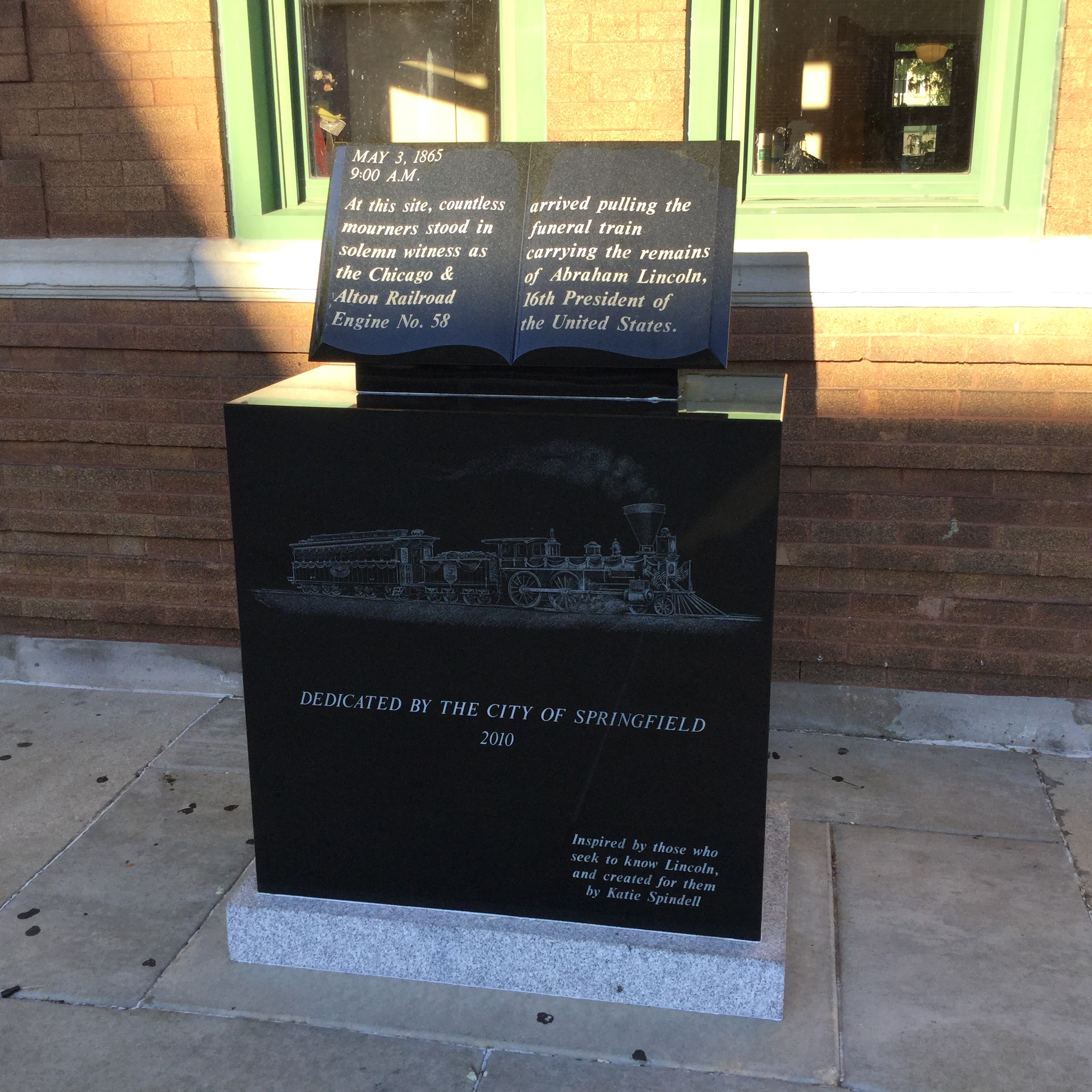
Marker for Lincoln’s funeral train in the summer evening light, at the Springfield Train Station at 100 N. 3rd Street, Springfield, Illinois

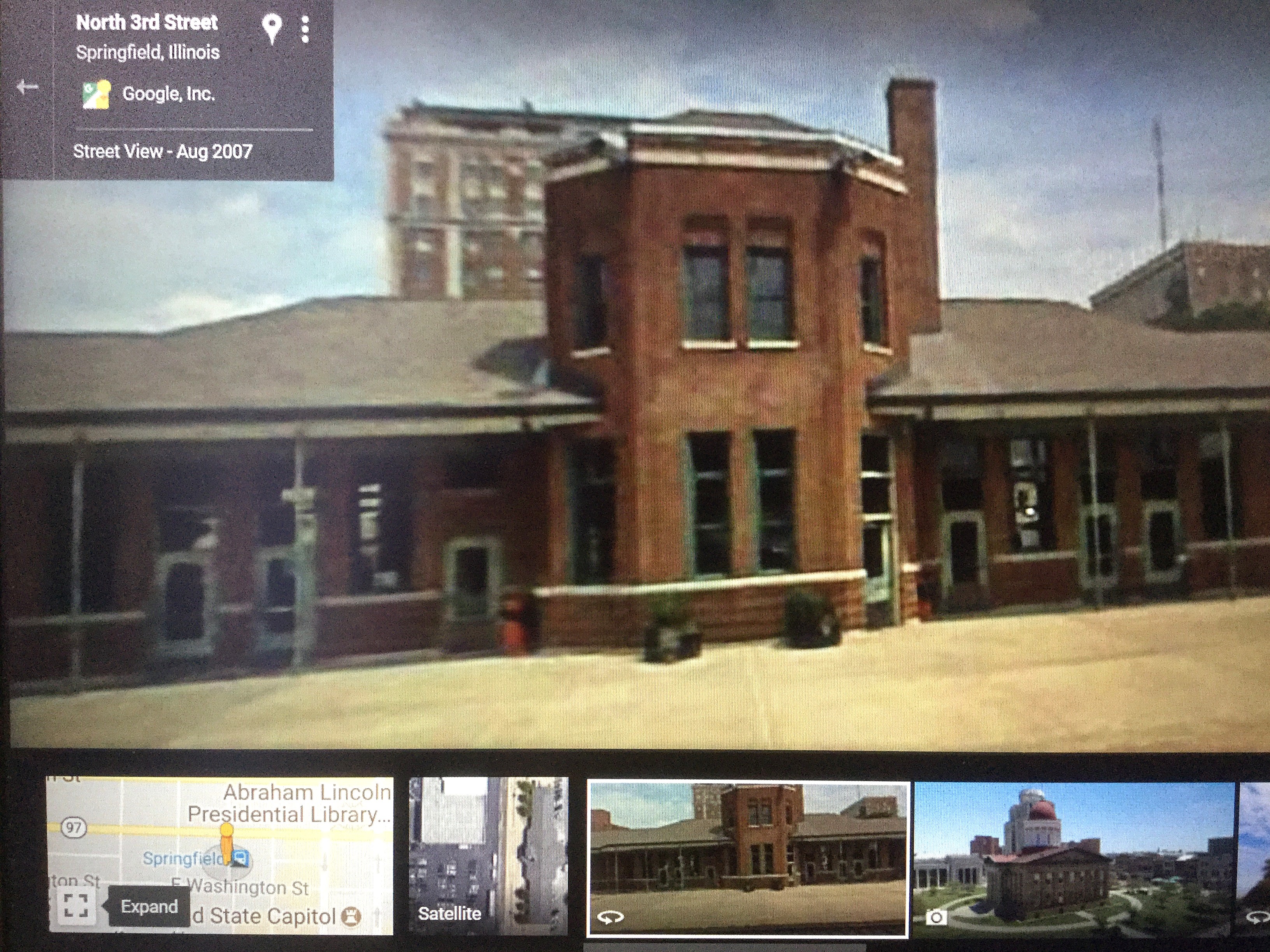
Last year, I visited Springfield, Illinois to follow the life and ideas of Abraham Lincoln while following in his footsteps. The last Springfield site associated with Lincoln that I visited on July 29th, 2017 was the train station at 100 N. 3rd St. The brick station, though plain, has clearly been spruced up since the photos featured on Google Maps, dated 2007, that I find on the day I write this. There’s now a shady porch over the outdoor waiting platform, new paint and benches, and a handsome stone marker signed by Katie Spindell.

The marker commemorates the May 3rd, 1865 arrival of the funeral train carrying Lincoln’s assassinated body. He lies buried at Oak Ridge Cemetery, in the city where he established his legal and political careers, married, and raised a family. Read more about my Lincoln travels in articles linked here, or listen to the podcast versions.

Springfield Train Station at 100 N. 3rd Street, Springfield, Illinois

Screenshot of 2007 Google Maps image of the N. 3rd Street train station in Springfield, IL

~ Ordinary Philosophy is a labor of love and ad-free, supported by patrons and readers like you. Any support you can offer will be deeply appreciated!

Happy Birthday, Niccolò Machiavelli!

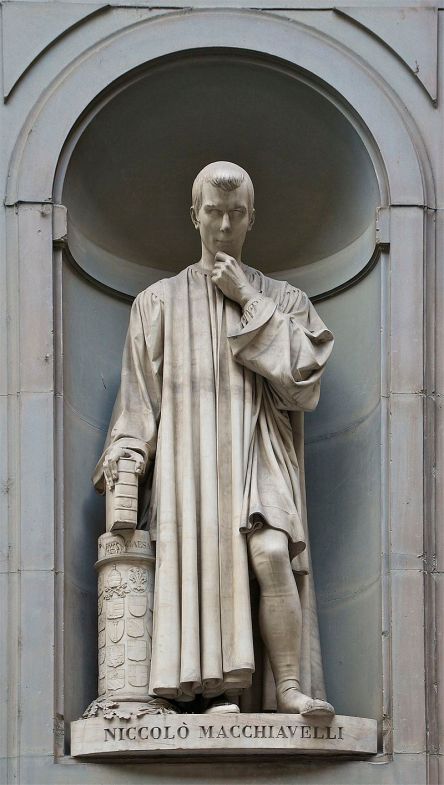
Niccolò Machiavelli statue at the Uffizi

Cary Nederman introduces us to his piece on Niccolò Machiavelli for The Stanford Encyclopedia of Philosophy thusly:

Why an entry on Machiavelli? That question might naturally and legitimately occur to anyone encountering an entry about him in an encyclopedia of philosophy. Certainly, Machiavelli [May 3, 1469 – June 21, 1527] contributed to a large number of important discourses in Western thought—political theory most notably, but also history and historiography, Italian literature, the principles of warfare, and diplomacy. But Machiavelli never seems to have considered himself a philosopher—indeed, he often overtly rejected philosophical inquiry as beside the point—nor do his credentials suggest that he fits comfortably into standard models of academic philosophy. His writings are maddeningly and notoriously unsystematic, inconsistent and sometimes self-contradictory. He tends to appeal to experience and example in the place of rigorous logical analysis. Yet succeeding thinkers who more easily qualify as philosophers of the first rank did (and do) feel compelled to engage with his ideas, either to dispute them or to incorporate his insights into their own teachings. Machiavelli may have grazed at the fringes of philosophy, but the impact of his musings has been widespread and lasting. The terms “Machiavellian” or “Machiavellism” find regular purchase among philosophers concerned with a range of ethical, political, and psychological phenomena, even if Machiavelli did not invent “Machiavellism” and may not even have been a “Machiavellian” in the sense often ascribed to him. Moreover, in Machiavelli’s critique of “grand” philosophical schemes, we find a challenge to the enterprise of philosophy that commands attention and demands consideration and response. Thus, Machiavelli deserves a place at the table in any comprehensive survey of philosophy…’

Learn more about the often contradictory, ever controversial, always fascinating and relevant Niccolò Machiavelli:

The Inverted Advice of Niccolò Machiavelli – by William J. Connell for the Times Literary Supplement

Machiavelli and the Italian City States – Melvin Bragg in conversation with his guests Quentin Skinner, Evelyn Welch, and Lisa Jardine

Niccolò Machiavelli – by Cary Nederman for The Stanford Encyclopedia of Philosophy

Niccolò Machiavelli: Italian Statesman and Writer – by Harvey Mansfield for Encyclopædia Britannica

A version of this piece was previously published at Ordinary Philosophy

~ Ordinary Philosophy is a labor of love and ad-free, supported by patrons and readers like you. Any support you can offer will be deeply appreciated!

Happy Birthday, Santiago Ramón y Cajal!

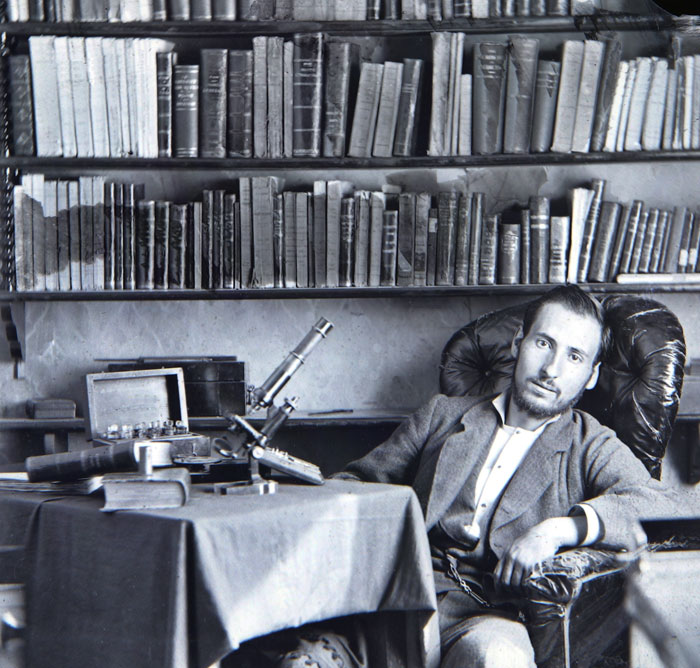
Santiago Ramón y Cajal, estudiante de medicina en Zaragoza 1876: self portrait, public domain via Wikimedia Commons

I discovered the fascinating scientist and thinker Santiago Ramón y Cajal (May 1, 1852 – Oct. 17, 1934) not long ago among the always excellent writings of Maria Popova:

Diseases of the Will: Neuroscience Founding Father Santiago Ramón y Cajal on the Six Psychological Flaws That Keep the Talented from Achieving Greatness – by Maria Popova for Brain Pickings

I don’t think I could improve upon her excellent article at all, so I recommend that to you first. Her article summarizes Cajal’s observations about the ways in which we can so easily defeat ourselves in the pursuit of excellence. I, for one, find that his observations and advice offer very wise guidance, a series of signposts marking pitfalls that can entrap our egos all too easily. Cajal clearly lived by his own advice, and his achievements were marked by hard work and dogged perseverance as well as brilliant insight.

Learn more about Cajal’s life and scientific achievements:

Life and Discoveries of Santiago Ramón y Cajal – by Marina Bentivoglio for Nobelprize.org

Santiago Ramón y Cajal – by Abdellatif Nemri for Scholarpedia

Santiago Ramón y Cajal – Biographical – from Nobel Lectures, Physiology or Medicine 1901-1921, Elsevier Publishing Company, Amsterdam, 1967, at Nobelprize.org

Santiago Ramón y Cajal: Spanish Histologist – by the editors of Encyclopaedia Britannica

~ Ordinary Philosophy is a labor of love and ad-free, supported by patrons and readers like you. Any support you can offer will be deeply appreciated!

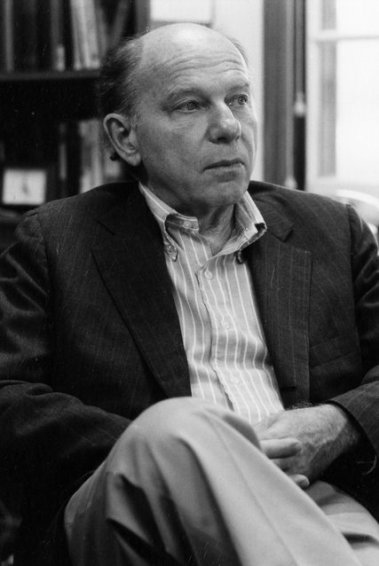
Happy Birthday, Morton White!

Morton White in 1981

The world lost Morton White (April 29, 1917 – May 27, 2016) less than two years ago, and I first learned of him through reading his obituary in The New York Times. As I read, I knew this is a man and an approach to philosophy I must learn more about.

White was a philosopher and historian of ideas. According to the Institute for Advanced Studies, ‘he maintained that philosophy of science is not philosophy enough, thereby encouraging the examination of other aspects of civilized life—especially art, history, law, politics and religion—and their relations with science’. And as William Grimes put it for TNYT, his ‘innovative theory of “holistic pragmatism” showed the way toward a more socially engaged, interdisciplinary role for philosophy’.

I studied philosophy with great love and enthusiasm as an undergraduate, yet I found myself then as now just as curious about other disciplines, especially history and the arts, and have often felt that the lines dividing these areas of study are sometimes artificial and even impediments to understanding. Since then, I’ve been pursuing my studies in the history of ideas more broadly, informally for the past several years, formally now at the University of Edinburgh. No doubt, White has influenced the direction my studies in intellectual history will take in ways I’ll learn as I go along, and in many more ways than I’ll ever know.

Learn more about White and his fascinating ideas:

Holistic Pragmatism and the Philosophy of Culture‘ – chapter 1 of A Philosophy of Culture: The Scope of Holistic Pragmatism, New Jersey: Princeton University Press 2002, in which White summarizes what his holistic pragmatism is all about

Morton White, Philosopher of Holistic Pragmatism, Dies at 99‘ – Obituary by William Grimes for The New York Times, June 10, 2016

Morton White 1917–2016 – His memorial page at the Institute for Advanced Study website, June 08, 2016

And you can find his selected bibliography at Wikipedia

*A version of this piece was previously published at Ordinary Philosophy

~ Ordinary Philosophy is a labor of love and ad-free, supported by patrons and readers like you. Any support you can offer will be deeply appreciated!

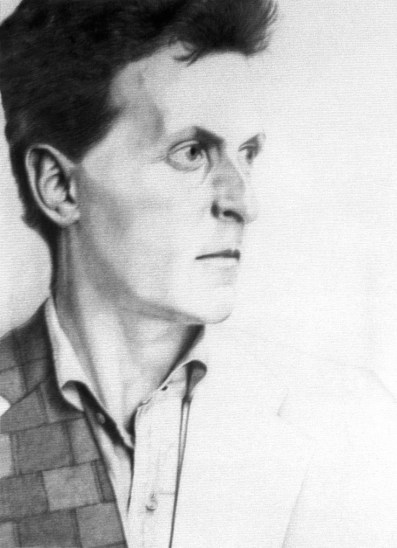
Happy Birthday, Ludwig Wittgenstein!

Drawing of Ludwig Wittgenstein by Christiaan Tonnism, pencil on board 1985, Creative Commons

In honor of Ludwig Wittgenstein’s birthday, Apr 26, 1889, let me share four fascinating discussions about the great philosopher’s life and ideas.

The first is by philosopher Stephen West for his podcast Philosophize This!, in which he discusses ‘…the limitations of language as described by Ludwig Wittgenstein. Considered by some to be the greatest philosopher of the 20th century, Ludwig Wittgenstein played a central, if controversial, role in 20th-century analytic philosophy. He continues to influence current philosophical thought in topics as diverse as logic and language, perception and intention, ethics and religion, aesthetics and culture….’ (this episode is only the first West will create about Wittgenstein)

The second is from the BBC series Great Lives, hosted by Matthew Parris and featuring guests Raymond Tallis and Ray Monk. In this program, Parris, Tallis, and Monk discuss ‘Ludwig Wittgenstein, the fascinating and misunderstood genius who changed the course of philosophy…’

The third is from the BBC series In Our Time, hosted by Melvin Bragg and featuring guests Ray Monk, Barry Smith, and Marie McGinn. In this program, Monk, Bragg, Smith, and McGinn discuss ‘…the life, work and legacy of Ludwig Wittgenstein… Wittgenstein is credited with being the greatest philosopher of the modern age, a thinker who left not one but two philosophies for his descendants to argue over: The early Wittgenstein said, “the limits of my mind mean the limits of my world”; the later Wittgenstein replied, “If God looked into our minds he would not have been able to see there whom we were speaking of”. Language was at the heart of both. Wittgenstein stated that his purpose was to finally free humanity from the pointless and neurotic philosophical questing that plagues us all. As he put it, “To show the fly the way out of the fly bottle.” How did he think language could solve all the problems of philosophy? How have his ideas influenced contemporary culture?…’

The fourth is by Ian Ground for the Times Literary Supplement, an excellent piece I recommended here at Ordinary Philosophy last fall. In it, Ground discusses ‘why writers and artists have found him an object of fascination and inspiration. He is the subject of novels, poetry, plays, painting, music, sculpture and films. In the arts and the culture generally, Wittgenstein seems to be what a philosopher ought to be.’

Enjoy, and be inspired, awed, puzzled, and enlightened!

*A version of this piece was previously published at Ordinary Philosophy

~ Ordinary Philosophy is a labor of love and ad-free, supported by patrons and readers like you. Any support you can offer will be deeply appreciated!

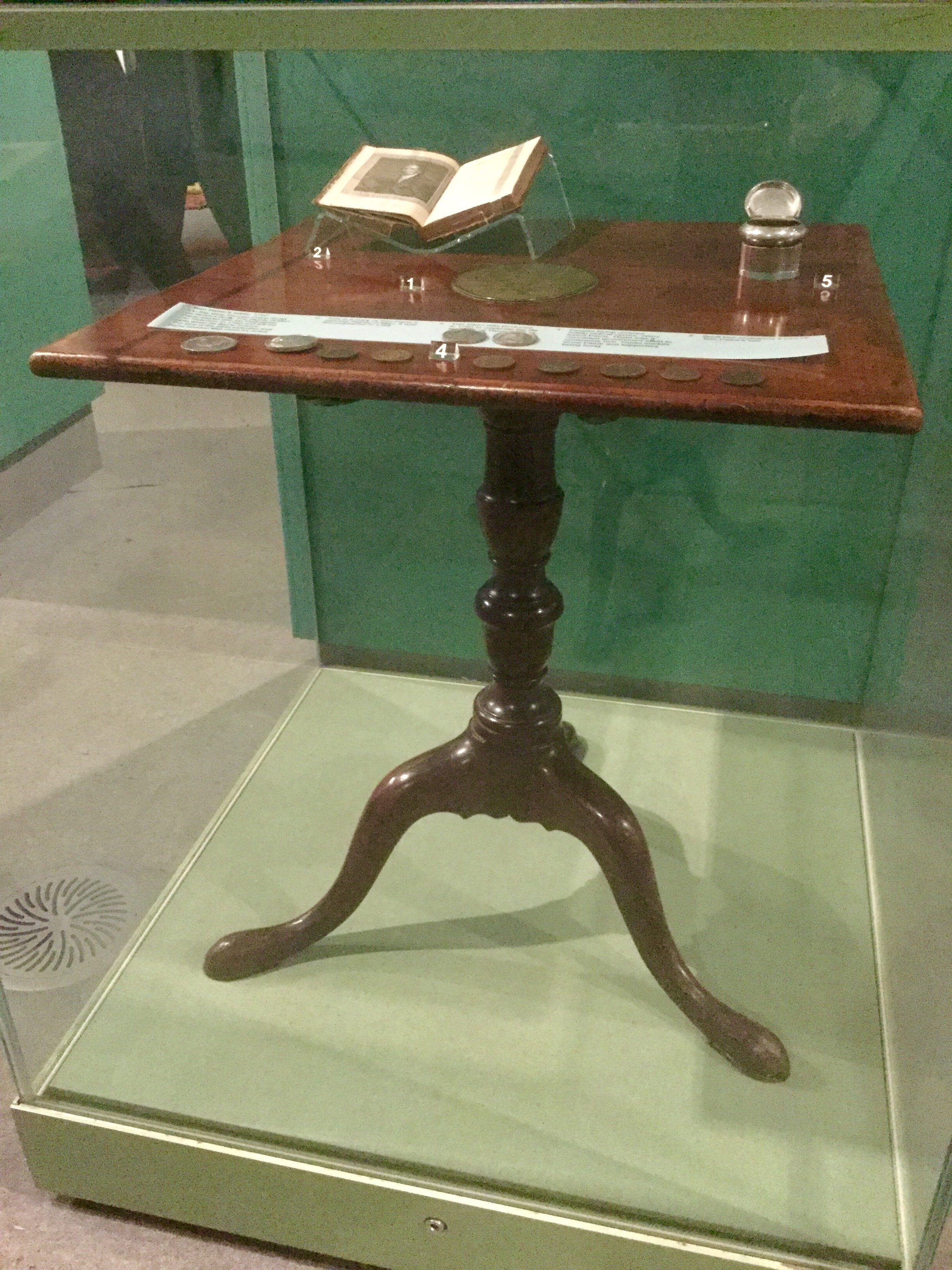
Photobook: Thomas Paine Artifacts at the People’s History Museum, Manchester, England

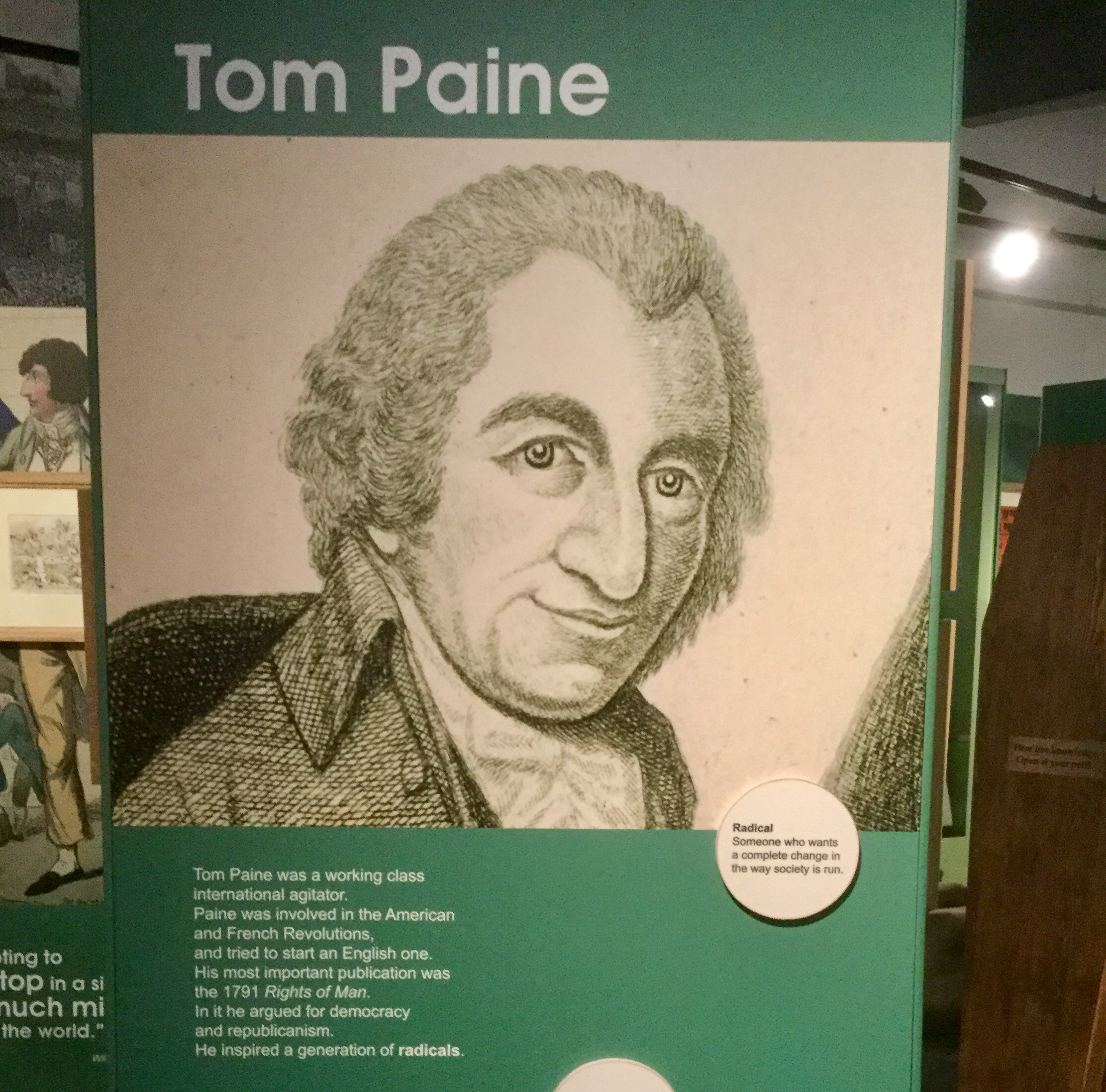
Thomas Paine display at the People’s History Museum, Manchester, England, 2018 Amy Cools

Thomas Paine display at the People’s History Museum, Manchester, England.

Paine’s death mask at the People’s History Museum. As you can see, this great thinker and writer was also a rather homely man.

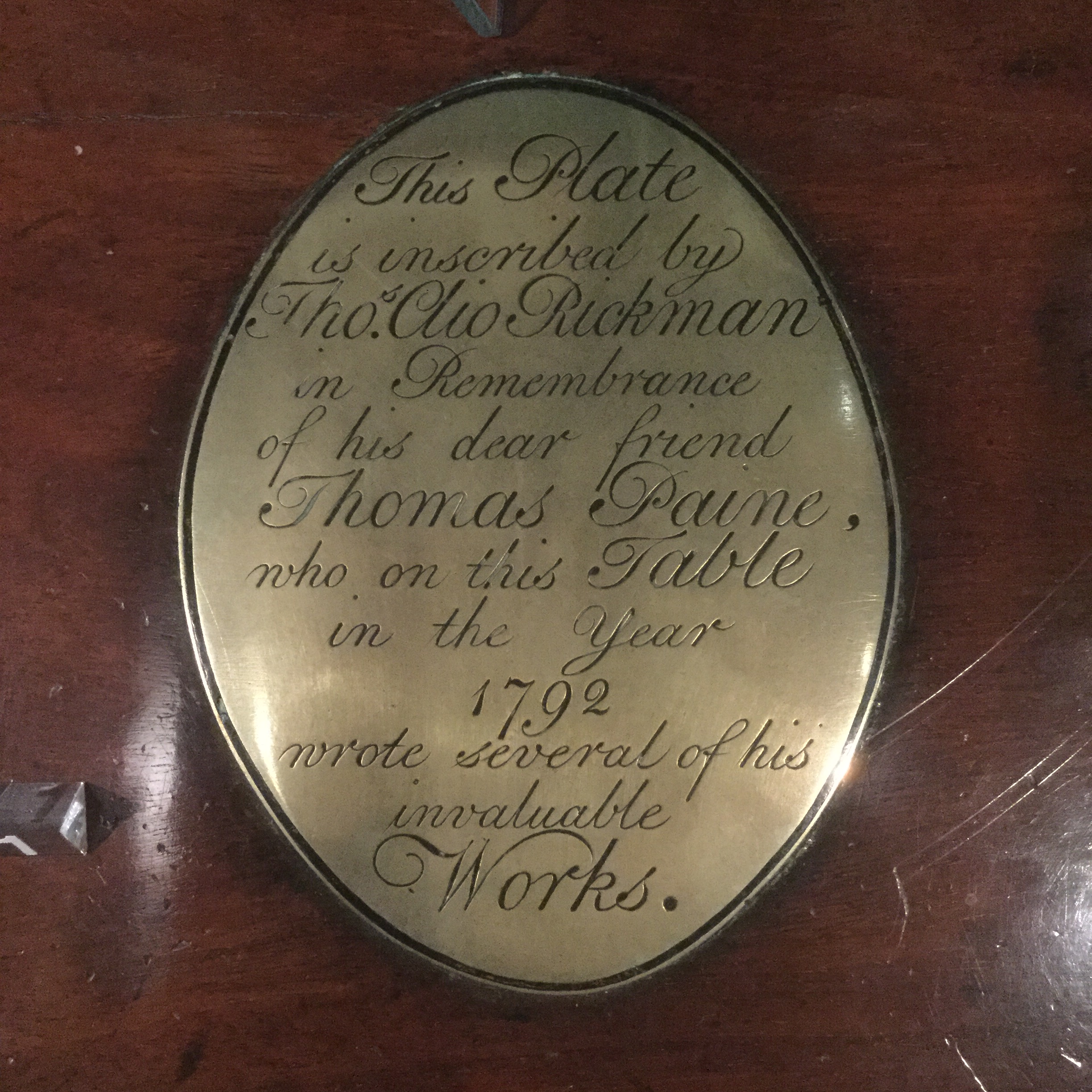
Thomas Paine’s writing table. As the People’s History Museum website explains, ‘The table actually belonged to Thomas Clio Rickman who lived at number 7 Upper Marylebone Street, London and whom Paine stayed with in 1792 before fleeing to France following the publication of The Rights of Man. Rickman would proudly show his visitors the table, now sanctified by his plaque…’

Plaque on the Paine writing table at the People’s History Museum

Lock of Thomas Paine’s hair in a snuffbox

Placard for the Thomas Paine display at the People’s History Museum, Manchester, England

Thomas Paine display placard at the People’s History Museum, Manchester, England, 2018 Amy Cools

Another Paine display placard at the People’s History Museum, Manchester, England

~ Ordinary Philosophy is a labor of love and ad-free, supported by patrons and readers like you. Any support you can offer will be deeply appreciated!

Remembering Margaret Fell

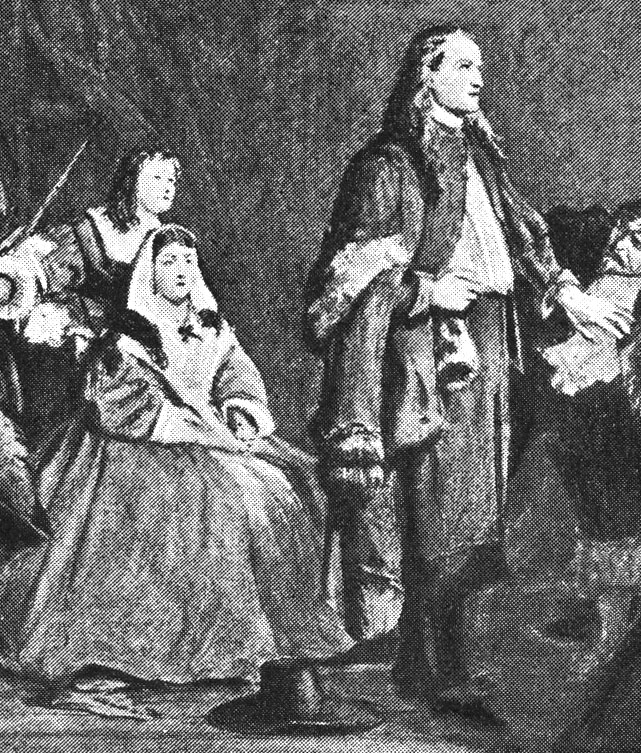
Margaret Fell, with George Fox before the judges, from a painting by J. Pettie 1663, public domain via Wikimedia Commons

Margaret Fell with George Fox before the judges, from a painting by J. Pettie, 1663

Margaret Fell was born on some unknown date in 1614, so let’s take this occasion to remember her on the date of her death, April 23rd, 1702.

Fell’s lived a life as passionate as it was long. She was an unconventional thinker for her time, a zealous and progressive religious activist at times imprisoned for her beliefs, a prolific writer, well-traveled, a mother of eight children and a wife twice.

An early adherent and eloquent promoter of Quakerism, Fell is now considered one of its founders. She converted to Quakerism after hearing a sermon by one of its most charismatic preachers, George Fox, and almost immediately launched into a lifetime of hosting Quaker meetings and speaking out on behalf of her new religion. After her husband died some years later, Fell married Fox, probably more as a co-missionary than as a romantic partner since their work, travels, and imprisonments kept them apart for much of their marriage.

As I’ve had a lifelong fascination with the history of human rights, I’ve long admired the Quakers because, along with Unitarians and Deists, so many have been leaders in the struggle to expand, establish, and promote them. That’s because these faiths emphasize the importance of individual conscience, the primacy of the human mind, God’s rational nature, and the moral equality of all human beings.

Fell believed in the Quaker doctrine of the Inner Light which God has caused to shine equally in the hearts of all beings; all we need do is heed it. Therefore, one does not need ministers, priests, or any other authorities or intercessors to achieve salvation. And because God has created everyone for the same purpose and gave everyone that light, everyone is spiritually equal and capable of understanding and proclaiming the Truth. We can see how this doctrine, central to Quakerism, readily aligns with human rights movements centered on a belief human spiritual and intellectual equality. The right of women to speak in church and write religious texts, in her time limited to men, was a cause particularly dear to Fell’s heart. While Fell’s belief in the equality of women was limited to their role as spiritual beings, Quakerism tended to encourage ever-more progressive beliefs in its adherents. Over time, many Quakers came to be leaders in the abolitionist and pacifist movements, promoting the right of all to receive equal and universal education and for women’s rights in social and political spheres as well.

In light of her achievements as a female religious pioneer, and the human rights advances facilitated by the Quaker faith she helped found, Fell’s contributions should continue to be remembered and celebrated.

*A version of this piece has been previously published at Ordinary Philosophy

~ Ordinary Philosophy is a labor of love and ad-free, supported by patrons and readers like you. Any support you can offer will be deeply appreciated!

~~~~~~~~~~~~~~~~~~~~~~~~~~

Sources and inspiration

Broad, Jacqueline, ‘Margaret Fell‘, The Stanford Encyclopedia of Philosophy, Edward N. Zalta (ed.)

Jacoby, Susan. Strange Gods: A Secular History of Conversion. New York: Pantheon, 2016 (see the chapter on Margaret Fell)

Happy Birthday, John Muir!

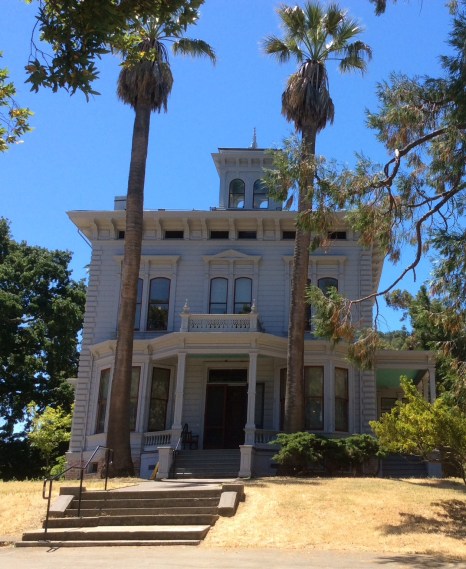
John Muir National Historic Site, his home in Martinez, CA, where he lived the last two and a half decades of his life

In honor of John Muir’s birthday, April 21, 1838, I’ll share the story of my visit to an important place in his life almost two years ago. It was June 26th, 2016, a hot, bright day in Martinez, CA.

The John Muir National Historic Site is just south of the Carquinez Strait, which links San Pablo and Suisun Bays. Benicia, California’s third but short-lived capital city, is just across the strait and was reached by ferry in Muir’s time. A lovely town with a well-preserved historic district, Benicia is well-situated on a waterway that permits easy passage for ships and ferries. In its early years, the strait allowed for easy passage of people, animals, and the products of this agricultural region and later industrial center, so it became a busy, thriving center of commerce. It enjoyed its first big boom with the Gold Rush, as it lay on an easy route between San Francisco and the gold fields.

Martinez was also a hub of Gold Rush activity. The ferry between Benicia and Martinez enjoyed a monopoly on getting all those gold-crazed fortune seekers south to the gold fields and north again to cash in. But Martinez was also an important agricultural town, and this site preserves just a little bit of that aspect of its history. It’s about a thirty-five-minute drive northeast of where I live in Oakland.

Physician, horticulturist, and father-in-law of John Muir, Dr. John Strentzel, among his orchards and vineyards in Martinez, CA. Photo credit: Sierra Club

A ripe peach from the orchards of John Muir National Historic Site, Martinez, CA

The grand house which stands here was first the home of Dr. John Strentzel, a Polish physician who emigrated to the United States in 1840. Like Benicia and Martinez, Strentzel made his early fortune in the Gold Rush, in his case through the practice of medicine. He later took up farming and achieved fame as a horticulturist. Strentzel settled in Alhambra Valley, just south of Martinez, with his wife Louisiana, daughter Louisa, and son John, in 1853. The Strentzels built their final home and grand farm here in Martinez from 1880-1882, with a veritable mansion made comfortable with the most modern amenities as they became available: indoor plumbing, gas lighting, two water closets, and eventually, a telephone and electricity. Louisa, nicknamed Louie, ferried to Benicia daily where she went to school and learned to play the piano expertly. Her brother John died at only nine years old in 1857.

The Martinez house was surrounded by acres and acres of rolling farmland, and several groves remain today. I see grapes, peaches, plums, pomegranates, and much more. Visitors can pluck and eat the fruit freely; the peaches and plums are ripe now, the latter richly red, dripping, and delicious.
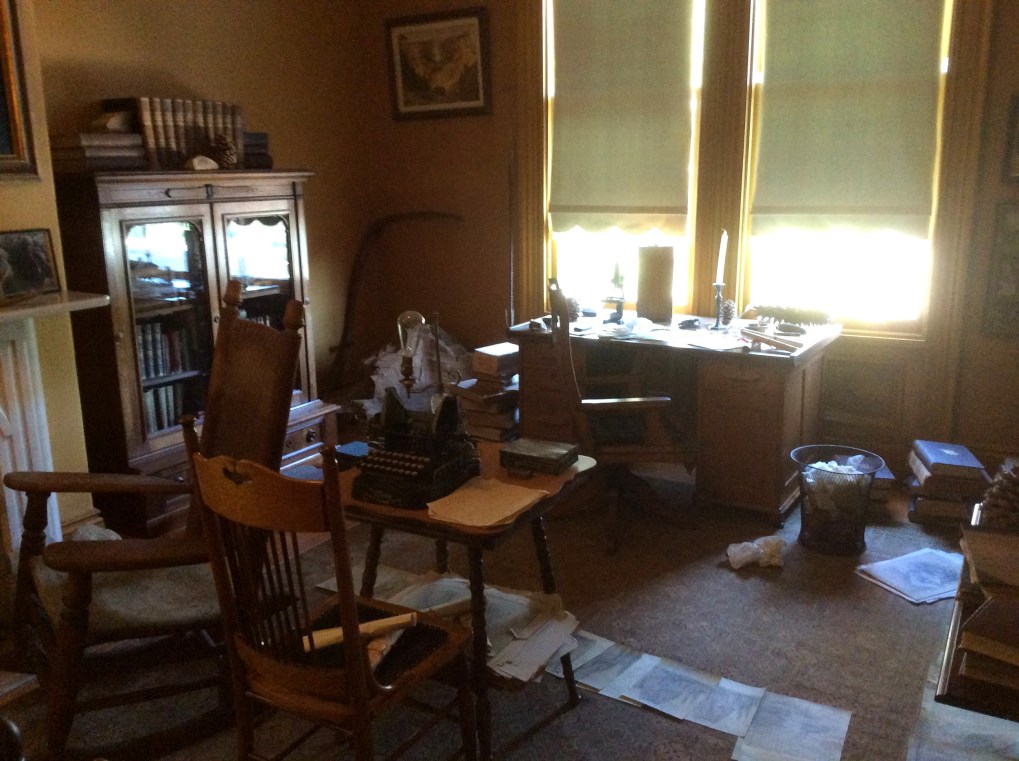
John Muir’s ‘Scribble Den’, John Muir National Historic Site, Martinez, CA

John Muir met the Strentzels in 1874; he was already well known as a naturalist and just beginning his career as a writer. The year before, he moved to Oakland from Yosemite and published articles about California’s natural wonders. He often lamented how slowly his thoughts flowed through his pen though they bloomed as naturally and abundantly in his mind as the wild California flowers he loved.

Parts of Yosemite had already been set aside as public land by the federal government, protected by the state of California for public use and barred from development by private interests. Senator John Conness introduced the park bill in Congress in 1864 which passed quickly, and President Abraham Lincoln signed it that summer. Conness is an interesting and admirable person as well, an Irish immigrant who also got his start in the Gold Rush and remained on the right side of history in his political career. His advocacy for Chinese immigrants and for equal rights eventually destroyed his political career, but in the meantime he was respected as a champion of the ordinary American, native and immigrant, over the interests of the few and the wealthy, and was one of Lincoln’s pallbearers.

Yosemite Falls, Yosemite National Park

Yet the bill setting Yosemite aside as public land did not provide funds or the authority to protect it. It took Muir, another immigrant, to reveal the true sacredness of the natural world to the consciousness of his (now) fellow Americans, which in turn gave rise to the political will to care for it. An accident in the factory he worked at in 1867 damaged his eyes temporarily and he began to wander. He walked from Indianapolis to Florida, a thousand miles, and fell in love with the natural world and the transformative power of walking in nature. Muir heard that there were spectacular natural wonders in California, vast, and in many places still unexplored and unspoiled, and sailed to San Francisco in 1868. He walked to Yosemite and throughout the Sierras, writing a journal as he went. He emerged as a prophet, fearless, tireless, and rendered poetic by his baptism of the wind, trees, stones, wildlife, and water.
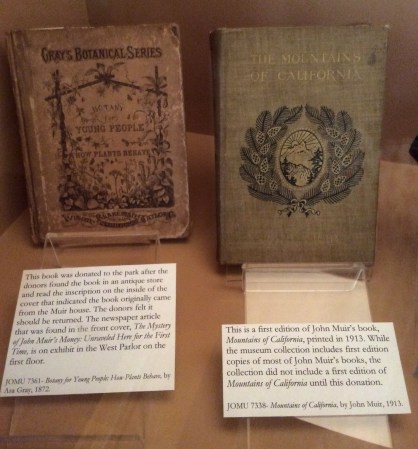
Two books, one written by and one owned by John Muir

But he realized that this great inspiration which transformed and ennobled his life would be unavailable to others if the entrepreneurs trespassing into the Yosemite valley and despoiling it were allowed to continue. So, again like the biblical prophets, Muir emerged from the wilderness to share the good news and cry out against those who defiled the great temples of creation for their own gain. He returned to civilization to spread the word, first through newspapers and then through books. 1874, the year he met the Strentzels at a mutual friend’s home in Oakland, saw his first success as a writer with his ‘Studies in the Sierra’ series. Muir had also discovered the evidence that the formations of Yosemite were created by glaciers, not wind and rain as previously thought, and over time, the scientific community were convinced of the truth of his theory.
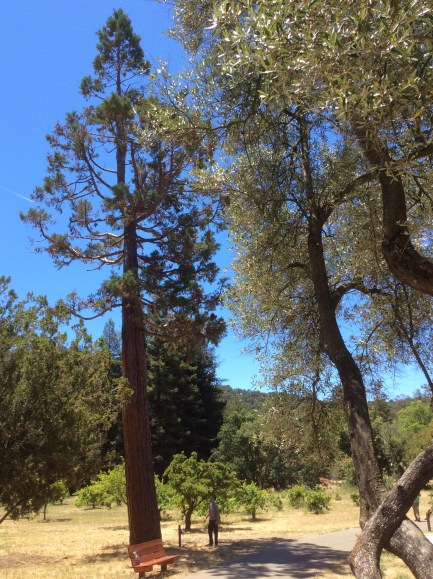
The sequoia that John Muir planted near his home is not doing too well, it’s too warm and dry here. Its natural habitat is in the higher, cooler Sierras

Muir married Louie Strentzel in 1879. Though her father and Muir had become good friends, the couple did not fall in love with each other on their own. Another mutual friend set them up and convinced each, separately, that the other would make a perfect companion for them. Muir began to help Dr. Strentzel run the Martinez farm when his health declined, and when he died in 1890, the Muirs established a life together here as ranchers with their two daughters. Muir turned out to be an excellent rancher and, like his father-in-law, was a hard and skilled worker, gifted at innovation and invention. Though Louie didn’t share Muir’s central passion for the wilderness, the couple were affectionate and generous with one another, and she insisted that Muir get away and spend time alone in his beloved wilderness when he needed it, which was often, and often for extended periods.

Like Muir, I love to walk, especially in nature, and when the weather and daylight hours permit, I go on hikes, long or short, two or three times a week. I would one day love to have the wherewithal, or lacking that, the courage to give up financial security and my belongings to wander the earth awhile in freedom, taking in what the journey has to offer. I am in the process right now of cutting my moorings and setting off on a new course in life, resuming my studies in Muir’s native Scotland and getting in as much walking and traveling as I can beforehand. I’m happy that I’ve walked in many of the places Muir has, or at least nearby: I’ve ascended Mount Diablo, by foot and by bicycle; I’ve done several hikes in Yosemite; I lived in Oakland for over a decade and spent a lot of time in San Francisco; and on that beautiful summer day in June, I explored his old home and strolled through some of his orchards.
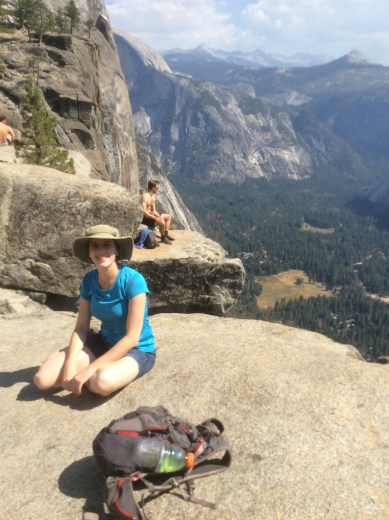
Amy in Yosemite National Park, above the falls on the El Capitan hike

The idea that Americans should own the most beautiful portions of their nation’s land in common is an idea that melds Muir’s belief in the sacredness of nature and Senator Conness’s belief in universal human rights. Each human soul needs and deserves a place of unspoiled beauty to immerse itself in, and everyone, not only the rich, the powerful, and the well-connected, should have the opportunity to fulfill and ennoble themselves this way. The National Parks, then, are among the greatest expressions of this democratic spirit.

*A version of this piece was previously published at Ordinary Philosophy

*Listen to the podcast version here or on Google Play, or subscribe on iTunes

You can find more photos of the John Muir National Historic Site here

~ Ordinary Philosophy is a labor of love and ad-free, supported by patrons and readers like you. Any support you can offer will be deeply appreciated!

~~~~~~~~~~~~~~~~~~~~~~

Sources and inspiration

Burns, Ken. The National Parks: America’s Best Idea documentary series, and ‘John Muir (1838–1914)‘ from the documentary website

City of Benicia: Historic Context Statement, Sep 27, 2010. By City of Benicia Department of Public Works & Community Planning

John Muir National Historic Site: People‘, at NPS.gov

History of Martinez‘. From the Martinez Historical Society website

John Conness‘. In Wikipedia, The Free Encyclopedia.

The John Muir House‘. John Muir National Historic Site: People, at NPS.gov

Sierra Club: John Muir Exhibit, various articles: ‘Chronology (Timeline) of the Life and Legacy of John Muir‘; ‘Dr. John Theophile Strentzel’; ‘John Muir: A Brief Biography‘; ‘Louie Strentzel Muir: A Biography by Steve and Patty Pauly‘; ‘Who Was John Muir?

Thomas, Donna and Peter. Muir Ramble Route: Walking from San Francisco to Yosemite in the Footsteps of John Muir

Walsh, Victor A. ‘John Muir and the Family Ranch in Martinez‘. July 5, 2011. LiteraryTraveler.com 

Happy Birthday, Thomas Jefferson!

Thomas Jefferson by Charles Bird King, 1836, after Gilbert Stuart, at the Smithsonian Portrait Gallery in Washington, D.C. Photo 2016 by Amy Cools

As I rest after completing my term papers, exploring the highlands and islands of Scotland with my dear friends, I find I have little time to write and even less time with good internet connection. So let me share some old things with you, friends, until I can write and record for O.P. again.

In remembrance of Thomas Jefferson (April 13, 1743 – July 4, 1826) on his birthday, here are my tributes to his memory, his life, and his ideas from over the years:

To Washington DC, Virginia, and Philadelphia I Go, In Search of Thomas Jefferson

To Paris, France I Go, In Search of Revolution-Era Thomas Paine, Mary Wollstonecraft, and Thomas Jefferson

and my thrilling interview with Clay Jenkinson, Jefferson scholar, of just over two years ago

Interview with Clay Jenkinson as Thomas Jefferson

I hope you enjoy following me as I followed in the footsteps of Jefferson!

~ Ordinary Philosophy is a labor of love and ad-free, supported by patrons and readers like you. Any support you can offer will be deeply appreciated!

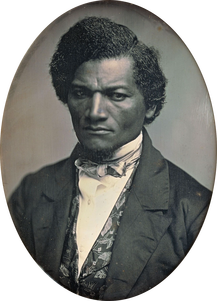
From Oakland to Maryland, New York, and Massachusetts I Go, in Search of Frederick Douglass

As I am in the throes of paper-writing against final semester deadlines, I am sadly unable to write for Ordinary Philosophy at the moment. So let me re-share a story: exactly two years ago today, I caught a plane to return home from an amazing two-week journey following the life and ideas of Frederick Douglass all around the eastern United States. I had long been fascinated by this complex and brilliant man, and what I learned during this journey increased my interest and admiration by orders of magnitude. So here I am living in Scotland continuing my Douglass studies; I am so looking forward to sharing what I find with you in the coming months as I follow his life and ideas around this beautiful country as well. Stay tuned!

Amy M Cools's avatarOrdinary Philosophy

Hello, friends of Ordinary Philosophy!

From time to time, I take a trip to some corner of the globe, to explore the lives and ideas of great thinkers in the places where they lived and worked. For this series, I follow in the footsteps of thinkers who are no longer alive, since those who are still telling their own stories. But those who are no longer alive in the body live on in the ideas that they pass on, and in the example they provide for us to follow.

I’m pleased and excited to announce my fifth philosophical-historical themed adventure, beginning with research and study in Oakland, CA, then off to Baltimore, MD, New York, Washington DC, and other East Coast sites to follow in the footsteps of Frederick Douglass.

Frederick Douglass’s life story is inspiring and humbling in the strength, character, and dazzling intellect he reveals, rising to such…

View original post 723 more words