New Year’s Day, a Resolution, and Writing as ‘Stepping Back’

For some reason, my eyes flew open a little before 8 am this morning, even though I didn’t go to bed ’til 2. I was at a house party with good friends, and spent a good deal of it by the fire pit in the backyard, and my hair smells deliciously like smoke. Bryan’s still sleeping, the house is quiet, and I’m here on the sofa with my coffee, obeying the first of my New Year’s resolutions on my list: to write at least 500 words a day.

I love the New Year holiday, and as I rediscovered when I returned to college a three (or so) years ago, I love writing. So this is an excellent way to start the year!

I feel that I can express myself so much better, sometimes, through writing, even better than with my artwork, and I’m always trying to find a way to communicate better with people. I’m a social person, who needs the feel the love and companionship of others in order to feel happy and satisfied. In fact, I’m very needy in this way. (Funnily enough, even more so than Bryan, who’s perfectly happy and comfortable spending a lot of time alone; he’s very self-possessed. But in social situations, Bryan’s the one who’s most at ease, who can find a way to connect with everyone, so funny and entertaining in conversation, and everyone loves him!) But I’m also very shy, and within the last couple of years, I’ve let many of the good habits I built up in my early 20’s fall away. When I was a child and into my teens, I was extremely shy and awkward, and had few friends, since the strange circumstances of my upbringing kept me somewhat isolated. But when I went to junior college, I enjoyed the company of so many new people and craved it constantly, so I learned how to be social and agreeable, mostly by listening and asking a lot of questions (this was not mere politeness, I was really interested! People are especially fascinating when you’ve spent most of your life rarely getting to know anyone outside of your own family). But in the last couple of years, I’ve become much more introverted in my habits, and have discovered, to my dismay, that there are so many people I care about that I haven’t really talked to at all, or in depth, in a long time. I even find myself retreating into myself when the people I actually want to talk to are right there in the room with me! That will change, I am determined.

So many of my introverted habits, I think, come from trying to figure out who I am and why, and how to be the kind of person I want to be, the kind of person worthy of respect, admiration even. I’ve been immersed in the past couple of years one of those existential crises that fall upon so many in their thirties, when one suddenly finds that they are well on their way through adulthood and there’s just not longer an ocean of time left. While these crises are inevitable and provide a valuable opportunity to take stock, it’s also important not to let them go on too long, since they can lead to that internal, doubt-driven wheel-spinning that impedes action. It’s a time to get it together and pick some goals to pursue and things to excel at, but then the time comes where you need to just get out there and actually do something about it.
Writing is an excellent tool to that end, and a way to really get to know one’s self, what one’s core values are, what are the best uses of one’s time and energy. It’s reflection and action all at once. I often feel that I really don’t know myself that well in many ways, and suspect that, through writing, I’ll be able to discover more. I think it’s often hard to understand oneself, to know certain things about one’s own personality and motivations, because it’s so hard to judge one’s own actions objectively, to see patterns in behavior, to get the ‘big picture’ view. One’s just just too close of an observer, too immersed in the instincts and emotions of the moment, to really ‘get’ why one’s doing, or thinking, or saying, whatever it is, at the time. I think writing is a process very like the ‘stepping back’ I do when creating an artwork or a piece of craft: I take a moment, or a few, to take some steps back from the work, to look at the overall effect, and to see how everything is hanging together, what needs to be changed, and what is working well.

When I write down what I’m thinking, I can get that big-picture view in a way that I rarely can otherwise, except perhaps in depthy conversation. Yet, writing is very like good, depthy conversation, because you’re calling on yourself to explain and describe something to an audience, and you’re conscious of other minds and how they may be perceiving what you have to say. And, you’re calling to mind the things other people have written or said concerning whatever it is you’re writing about. So writing also helps me to figure out what I really think and believe about things out there in the world.

That’s because, through writing, you can put together all those elements to craft a bigger picture, a more complete story, as opposed to just experiencing the daily stream of reactions to what’s going on out there. These reactions are important in themselves, the emotional responses, the internal arguments, the stockpiling of information about the world. But when you write, as when you converse, you’re putting it all together for yourself as well as for the person you’re talking to. What writing has over conversation is that you can go back and look over what you’re saying, and revise it, and perfect it much more thoroughly, and it’s not subject to lapses of memory. You become accountable to the ideas you expressed before, much like politicians are now accountable for those things they do and those words they spout off, since everything’s recorded these days. The more you write, and share what you write, you become more accountable to yourself, and to your readers. It places you firmly on a path of regular self-discipline, and self-improvement, as you strive to improve the quality and cohesiveness of your ideas. This ‘stepping-back’ process can do for your mind what it can do for the things you create: it shows you what’s missing, what you need to do in order to complete a more perfect, more beautiful, more unified whole.

So on this New Year’s morning, I affirm my resolution to be a better writer, and, through that, a better thinker and a better person. And I thank you, dear reader, for participating in this endeavor with me.

 

Healthcare: A Matter of Public Interest, or a Consumer Good?

http://www.learnersdictionary.com/definition/bandage

Looks like this uneasy compromise between private moneyed interests and our national commitment to the life and health of our citizens is off to a rocky start, and I’m afraid it may fail.

I wish Obamacare was the title of a single-payer national healthcare system, or at the very least, a public option (freedom to choose!). Healthcare should be considered essential infrastructure like roads and bridges, or a national defense of the citenzenry like the military, not a mere consumer or luxury good. This is because it is the hyper-social, cooperative side of human nature, where we band together to protect and nourish each other, that makes us a successful species. This, in turn, is what makes the other freedoms we enjoy possible. Remember, we have no freedoms when we’re dead or incapacitated. Human liberty requires human cooperation in order to exist at all.

That is, if we consider preserving human life of greater importance than the license to grab as much money as we want regardless of the harm we cause doing so.

Submit to Ordinary Philosophy!

Hello you thoughtful people out there who also love to write!

Ordinary Philosophy is my little blog that’s all about thinking through the Big Questions that arise from being a conscious, curious being in a vast, fascinating universe, and a social being whose life is filled with ethical quandaries and the ups and downs of cooperation and conflict. Examples of the sort of ‘Big Questions I’m talking about:

‘What is the universe, and is everything that can be talked about a part of it?’
‘What’s it like to feel/think/love/experience this?’
‘What is Beauty / Justice / the Self?’
‘How do we know what we know, and what is “knowing” anyway?’….
‘What is a good life, and how do I go about living it?’

We all confront these questions every day, and I think all of us come up with some pretty deep questions and some pretty interesting answers to them throughout our lives. Some of these we come up with when thinking about situations we personally have experienced or just heard about. Some we derive from the thoughts of others, reading, considering, then responding with our own critiques and defenses.

So I’d like to invite you to share your own essays, critiques, meditations, and so forth. They can deal with all manner of topics, from music and art (aesthetics), to politics and law, to culture and the humanities, to naturalism and theology, to the incredible and the humdrum occurrences of everyday experience. Philosophy is about everything, really. My favorite definition of philosophy I’ve heard (thanks, Daniel Dennett!) was formulated by Wilfred Sellers: “The aim of philosophy… is to understand how things in the broadest possible sense of the term hang together in the broadest possible sense of the term.” 

This is an amateur philosophy blog, though if professional philosophers want to take part, I would be thrilled too! I’m saying amateur in the sense that here at Ordinary Philosophy, the posts are aimed at a non-academic audience, using (mostly) ordinary language, for the edification of anyone who wishes to read it. I’m also (unusually, for philosophy forums) more focused here on original philosophy, with ideas drawn directly from life and from other arenas and disciplines, be it science, the news, politics, theology, arts and culture, and so forth, rather than work derived more from other philosophical works (though I value and would accept for posting the latter too).

Works submitted for publication on this blog must relate to some Big Question(s), and / or offer argument in favor of some position or other (not just mere opinions or preferences). They must demonstrate some good, honest thinking, not name-calling and mud-slinging, and while pieces can be strongly worded as needed for the topic at hand, no ad hominem attacks allowed! (Ad hominem is the name of a logical fallacy where you seek to disprove an argument or position by attacking or undermining the person, not the argument the person is making.) No preaching either, please. And yes, it is my blog, so it’s up to me to decide what to include. That being said, I’m also a very democratically-minded person, so I will be happy to include pieces with content I don’t agree with so long as it’s in line with the aforementioned simple rules. 

So send that good stuff your brain makes my way! 

To: ordinaryphilosophy (at) gmail (dot) com

Getting Lost

The other night, I got lost.

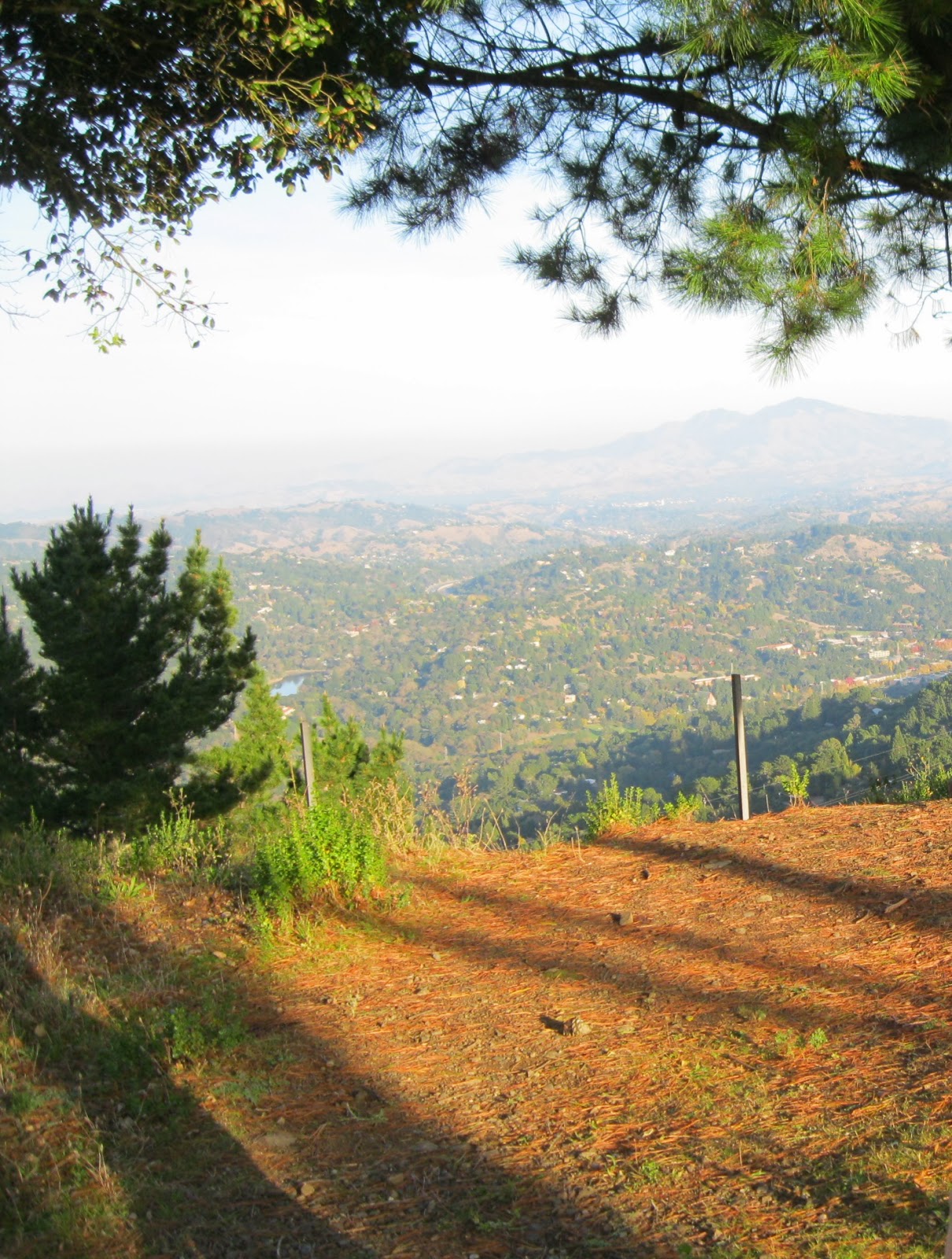
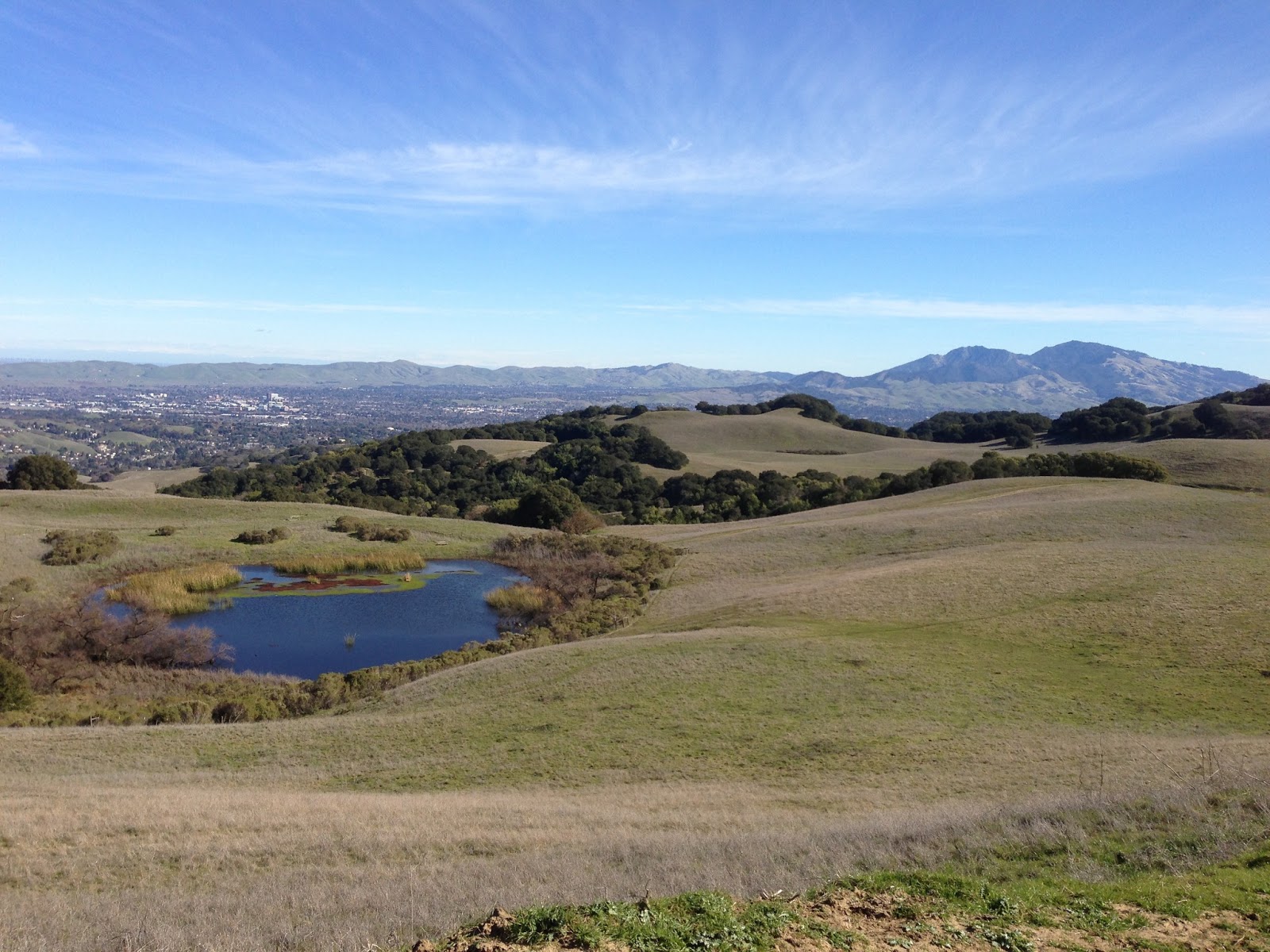
I love hiking, it’s among my very favorite things to do. It combines my love of the outdoors with the wonderfully free feeling of unencumbered limbs and wandering wherever my feet can take me. The other night, I went to Claremont Canyon Regional Preserve, a lovely spot in the hills where Berkeley and Oakland meet, offering amazing views of the bay and nice steep climbs to get the blood really moving.

I discovered this place this summer, have been there several times this summer and fall and thought I was pretty familiar with where it linked up to trails going to Tilden and back around again. What I wasn’t thinking about, though, was the recent the time change, how quickly it gets dark, and how different everything looks when all you can see is darkness interrupted only here and there with the light of a house nestled among the tree, with none of the major landmarks visible to guide me.

So I, carefree (careless?), with some fascinating podcasts loaded up on my Ipod, hiked up the best hills to the place where Grizzly Peak crosses the trail. Off to my right, running along the road, was another enticing looking trail that would likely take me back in the right direction. I found the trailhead across from the entry to the parking lot for the Steam Train. It felt as if I hadn’t been hiking too long, and it seemed there was plenty of daylight life. So I plunged ahead.

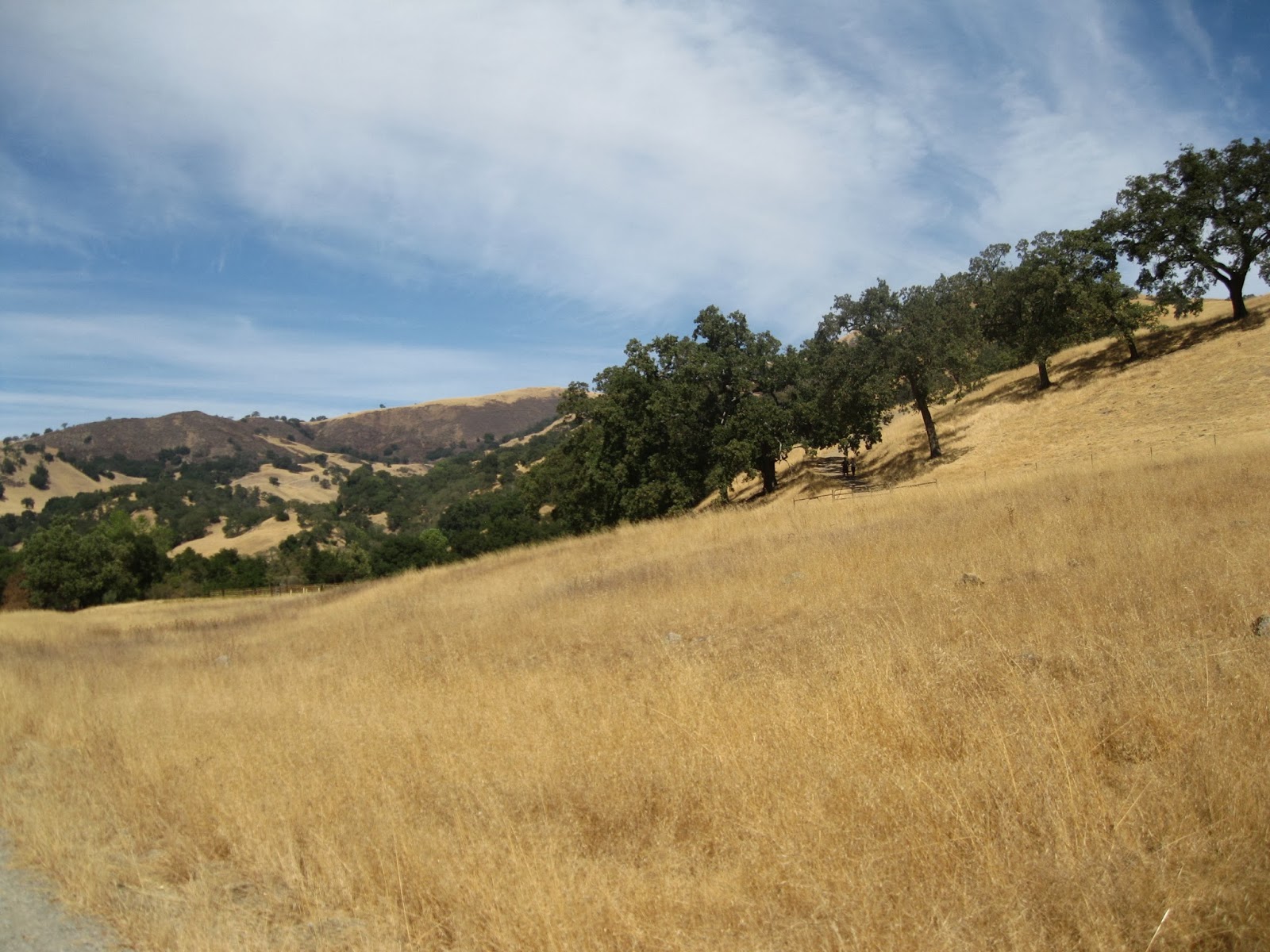
The trail followed the open side of a hill, golden and rolling and scattered with scrubby oaks and deep green shrub, common scenery around here that I find lovely and friendly-looking. I chose the trails that led off to the right as much as possible, knowing I had to end up with Claremont Ave on my left. I crossed a road (Claremont, I thought), and kept on. After a while, hiking fast, I came upon another trail that looked like on I’d been on before, like one that connected back to the (unmarked) main trail that runs down the center of Claremont Canyon. It was beautiful, cocooned in the oak trees and fallen leaves, an enchanting road to mystery in the deepening light.And then I began to really notice that the darkness was not just the shade of the trees in the late afternoon. And I started feeling that leg ache, that I usually enjoy, which told me I had actually been hiking quite a ways. Night was falling fast.A little anxious now, and not yet where I expected to be, I knew I could no longer stay on the trail, and hurried on towards a faint sound of traffic until I came to the road, which was not supposed to be there. I walked along it for a bit, looking over the Bay beginning to sparkle brightly with its lamps turning on under a deepening red sunset, the water gleaming like a fish’s scales, that kinda greenish-bluish-silvery glow with streaks of pink and other colors, like a rainbow-y oil slick on a parking lot.

Bay From Grizzly Peak, Photo credit TLC Fotografie

As I walked down the road, I had the uneasy feeling, then the sinking realization, I was nowhere near where I’d left my car and my phone. Yes, I’d left my phone behind, goddammit! Not such a smart hiker, after all. So I walked up the mostly enclosed driveway in this little cluster of gated, walled, exclusive, very expensive houses, where two men were talking in the driveway. I asked them what I had already realized at this point:

‘Excuse me, am I on Grizzly Peak Road?’

‘Yes’, one of the men said.

I explained that I had been hiking and had gotten lost, and when I described where I had come from and was trying to get back too, one of the men whistled a little.

‘Wow, that was a pretty good hike!’

‘Yes, it was,’ I said, wryly.

The other said, cheerily: ‘Well, I’ll give you a ride, I live in Temescal, and it will be easy to drop you on the way’. (A sweet lie, it was not at all on his way.)

I accepted, of course. I was at least a forty-five minute walk from my car, much of it in total darkness. His car was nice, expensive with its leather interior, had a child’s booster seat in the back and some papers in colorful plastic files. He was dressed professionally.

His name was John (‘That’s my dad’s and my brother’s name!’ I said, to open up the conversation) and he worked in insurance. He told me a bit about his client, a banker (the owner of the house I met them at), and how they had discovered they had both at one time lived in Singapore. He asked if I was a student (I had told him where I was parked, in the hills behind the UC Berkeley campus), and I told him a bit about what I do. We mostly chatted about traveling, and he obviously loves it as much as I do, and had been many places.

When we drew near to the campus, I suggested he drop me at the bottom of the hill, since the drive up is so windy and narrow. He asked, ‘Are you sure?’ I pointed out that it’s a lovely neighborhood where I felt safe, that the streets are narrow and windy and currently half-blocked in places by some construction work (I had barely squeezed my car through earlier), and where I thought I could easily find my way.

I thanked him profusely, and he demurred, ‘No problem! It’s just one of those things we’re all supposed to do for one another!’

I started up the hill, happy and relieved, with that glow on that you feel when you’ve just had the pleasure of re-discovering how lovely human beings can be to each other. But as I walked, I realized that I had never been in this neighborhood at night, there are no street lights to speak of, and I might not be able to find my way so easily after all. Once again, I had underestimated how little light I would have to work with and how hard it is to find your way in a maze-like tangle of narrow streets (just as difficult as trails, it turns out!) in a place you’ve only ever been in the light of day, with no landmarks in view.

Oh man, I thought. What a drag. I think I’m lost again.

So I to avoid the risking, once again, walking in circles all night, I approached a house light where I was happy to see a lady exiting her car in the long, windy, elegantly brick-worked driveway, nestled among the dark trees, glowing brightly against the dark.

‘I’m visiting a friend,’ she said, in a rather thick and lovely accent (like many Americans, I’m a sucker for accents). ‘We’ll go inside and ask her.’ She was smiling and friendly, but had given up trying to understand my rather confused explanation of my predicament.

Her friend, in the meantime, had opened the front door wide, and was waving enthusiastically. Her happy smile shifted to include a surprised but polite welcome. Her name was Sarah, and we shook hands.

‘Come in!’ she said, when she understood that I had somehow lost my car. ‘It happens all the time. It happened to me when I first used to walk in these hills over twenty-five years ago, I never imagined I would live here one day!’

She tried to draw me a map to show me where we were situated in relation to local landmarks and where (she thought) I parked my car, but I explained that it wasn’t a problem of knowing the landmarks (the water tower, the roof of a certain long building), it was a problem of not being able to see them in the dark. I tried to describe where my car was. ‘There’s a small water tower-thing, reddish, and a trail that runs straight up a hill through some trees between houses, that leads up to the park, and a place where people park along the side on the street, and I think there’s a sign that’s painted over, and…’

She pulled her laptop toward us, then thought better of it. ‘I know, I’ll drive you! And I’ll show you how all of it’s connected so you could know your way around up here even in the dark.’

As we wound our way among the dark streets, pausing to point out this street and that, she told me about her job teaching art, to kids from first through eighth grade. She evidently loves her job and her life with her family in the green hills. She talked like a woman full of energy, decisive, who has had a successful, interesting life, and has also traveled a lot (which I discovered in her story of her best lifelong buddy, the visiting friend, comes to be from… Sweden, I think).

‘There’s my car!’ I interrupted. But while I felt relieved at the sight of it, since by that time I was afraid Bryan would be worried about me, I was sorry too. Within a few minutes, I felt I had gotten to know her a little and really liked her, and wished we were on our way to a coffee shop for a chat.

‘I knew it! That little part of the park that sticks out here is called “the Connector”,’ she said. ‘Now you know how you get from the houses up to the park. There’s the water tower at the bottom, and the round red building that’s part of a house up there that looks like another little water tower. Just look for that, and you’ll know where you are!’

We said our goodbyes, and I repeated my thanks. She waved her hand out the back window on her way down the hill.

As she was driving away, I was once again overcome by that glow caused by the kindness of strangers, and thought about how lucky I was to have run into two people who just so happened to be as kind, and helpful, and friendly, as these two, who would drop everything they were doing to help a woman they never met (a foolish, careless one, stinky with sweat and dust!) find her car. But then, I thought, they reminded me of what I really think: however badly people can behave sometimes, coming across a human being who needs help brings out the best in most people. When they feel that they can do something of real benefit, that they can fix the situation, most people want to help, and will. I may very well have made them just as happy as they made me.

Driving back down the hill towards the grocery store and then home, I also realized that many of the best times I’ve ever had were when I was wandering aimlessly, and when I was lost. When I first moved to the Bay Area, I would often take the Bart to a station I didn’t know, or head in a new direction, and just walk, and walk, and walk. More than once, I would find myself totally lost, and a stranger would take the time to help me find my way. I would meet and learn about someone I would likely never have met, sometimes people so different from me that it’s unlikely I would ever have had the opportunity otherwise. One time (and I’ve thought about him many times over the years), a young man, probably no older than twenty, walked me to the Bart station, well over a mile away, to make sure I got there safe, though he was on his way home after a double shift. He didn’t flirt, and acted like a big brother, full sleeve tattoos, half-shaved and greased hair, piercings, cut-off Dickies, wife-beater, and all. He was the most gentlemanly gentleman I could have had the pleasure of meeting, and though I forget his words, his warm and rather shy personality is still vivid to me.

Every time I would get lost, I would not only discover a new place, I would discover something new about people, and fill in all these gaps and connections between the little I did know with new and interesting details, and new ways of seeing things I thought I knew. The broader views that remain are more intricate, more fascinating, more rich, than would I ever have expected and known how to find.

I’m still not quite sure that I really understand those connections, that I could find my way alone up that maze of streets to the water tower, and I still don’t know the name of that trail after trying to find it on a map.

But I may yet put it all together one happy day I’ve gotten lost again.

In An Argument, Give Your Opponent the Benefit of the Doubt and You Will Always Win

….in the sense that, you will be more likely to win your opponent’s trust and respect, your own arguments will be better, and you will surely learn something, even if you fail to convince the other.

Among the feedback to a recent essay (a critique), I came across this sort of statement: ‘well, what do you expect? Of course, the author’s a so-and-so, and therefore, you can expect them to be full of it.’

That’s pure intellectual laziness, let alone empty bigotry. Here’s one of the single most valuable lessons I’ve learned over the years, and practiced and honed in my return to university: always, always listen to your opponent’s arguments carefully and respectfully, and examine them from the viewpoint that they might be right. You will then be in a position to actually understand the argument. And, if it turns out to be wrong, then you will really understand why, and your rebuttal will be more likely to be a quality one, less prone to fallacies.

Generosity pays off for everyone in the end.

O.P. Recommends: Jefferson on Redistribution by Clay Jenkinson

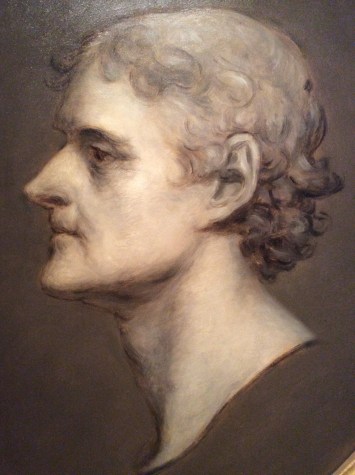
Thomas Jefferson by Charles Bird King, 1836, after Gilbert Stuart, at the Smithsonian Portrait Gallery, 2016 Amy Cools

Thomas Jefferson by Charles Bird King, 1836, after Gilbert Stuart, at the Smithsonian Portrait Gallery

A favorite podcast of mine is the Thomas Jefferson Hour, in which a TJ scholar and historical character actor named Clay Jenkinson holds weekly interviews and discusssions first in the character of Jefferson, then as himself as a scholar on T.J. and as a thinker in his own right. If you’re interested in American history, political philosophy, contemporary politics, and so on, you might really like this show. It’s not just about T.J. himself, but touches on all matter of topics since he lived such a long and influential life and remains such a controversial, brilliant, maddeningly inconsistent, and complex historical figure.

I found the episode on redistribution particularly interesting. Not only is it so relevant to today, but it reveals how Thomas Jefferson, in little-known and rarely cited letters to James Madison, revisits many of his own views in the light of the horrors he witnessed at the onset of the French Revolution.

Listen. You will like it.

Calling All Philosonerds and Philosophriends: Support Philosophy Bites!

Mirrored from http://www.amazon.co.uk/exec/obidos/ASIN/0199694664/virtualphilos-21

One of my very favorite podcasts is Philosophy Bites, by David Edmonds and Nigel Warburton.

In it, they interview philosophers on all manner of topics, which are fascinating and relevant to just about anyone who cares about what’s going on out there in the world and in the life of the mind.
The interviews are concise (10 – 15 minutes) and engaging, yet thorough, and the questions are excellently devised.

They’ve rather recently begun to be funded by private donations only, so I encourage you to pitch in a little and support these awesome guys doing their awesome thing!

If you click the ‘Subscribe’ button at the upper left of the page (under the ‘Donate’ button), it’ll go to Paypal, where you can choose a monthly amount to donate.
(May I suggest 6 pounds/month, about $10, a nice tidy figure that’s totally affordable)

Credits: I borrowed the term ‘Philosophriends’ from my own philosophriend Preston Tillotson. I  made up the term ‘philosonerd’, but I’ve since found that many others have come up with that on their own

Me and the Pope Against Tea Partiers and Conservatives and Even So Many Catholics! What’s Going On?

I’ve been finding it a bit strange and somewhat funny that for some time now, I’ve been finding myself, a ‘heathen’, ideologically aligned with Pope Francis I, and in opposition to many political and moral views of the larger number of my Catholic and Christian family and friends.

Especially when it comes to topics regarding public life: caring for the poor and needy, materialism, Tea-Party-brand political views, and so forth.

With Pope Francis, I share the general view that preserving the life of and caring for the wellbeing of other people is not something we engage in only privately, individually, or if our religion happens to say so, or if we feel like it at the time, but is a moral imperative for human societies and nations as a whole. I also agree that hyper-individualist ideology is bankrupt, is not only contrary to the best in human nature but an illusion: we are, in reality, intimately tied together, in thought, in action, and in fate.

That being said, I do part ways with the Pope in crucial ways: consider this is a teaser for my next essay. Stay tuned!

A Bit About Who I Am, and Why I Bother With All This Musing and Writing Stuff

I’ve long been obsessed with ideas and arguments, why people do and say the things they do, why people believe what they do, and so forth., as I’ve already discussed in an earlier piece. This curiosity and drive to understand, at least a little, the workings of the universe outside my own mind has not diminished over the years in the slightest. So a few years ago, when the job market dried up, my business partially failed, and my artistic pursuits provided me with much satisfaction but little income, I decided to more fully immerse myself in one of my greatest loves, philosophy, by going back to college.

It was a dream of mine that I had never seriously pursued in my early youth, though I eagerly attended junior college as soon as I was able. In my family, the goal of pursuing higher education was not discussed much. Most of my closest relatives are honest, hardworking people, generally blue-collar, hand-on work, and that was for the most part true of myself too, though I worked more in customer service jobs that had some sort of idealist or artistic element. I also have a strong affinity for blue-collar work, and really enjoyed the physically labrious aspects of my long-time intermittent job at a salvage yard.

Many of my relatives were and are suspicious of much of higher education too, seeing it as an array of dangerous temptations away from a life immersed in a particularly conservative brand of religious faith. Also, as a woman, higher education was less of a priority in my family. I felt it was always implied, but rarely said outright, that a good girl got married and stayed at home, perhaps after a stint at junior college, even a bachelor’s degree maybe, before settling in to homemaking while still young enough to make lots of babies. That’s it, unless I wanted to become a nun. All that sounds like a lovely, happy, fulfilling life for many, and I am fortunate to be a fond and proud auntie and cousin many, many times over precisely because so many women in my family find this lifestyle right for them. But never felt right for me, and over the years, I felt annoyed and a little resentful that other options were never discussed or encouraged, and that I never had a mentor intellectually. But I also realize that I may very well be unfair in this assessment. For one thing, my dad and other close family members never resented my constantly badgering them with questions and were always willing to answer them fully, and one of my dear uncles and I regularly engage in honest, no-holds-barred. lengthy debate and discussion to this day, and I thank him for that. It was also really entirely up to me to stop gadding around and instead of gleefully following my whims, to focus on the goal of completing a degree, applying the creativity I applied to other pursuits to the task of fundraising for school.

But why not keep all this to myself? Why have I taken this previously mostly internal process and dumping it out into the world? (With the full realization that few, at this point, even read this stuff.) I’ve often gotten the sense that philosophers, amateur and professional, are usually irritating to most other people besides fellow philosophers, and even these pick on each other at least as often as they engage in fruitful debate. (At least, it appears so from the public discourse, but my evidence for this is merely anecdotal.) But I think that this sense of philosophy being this annoying form of snobbery is based only on the archness with which some philosophers deliver their musings, and on a particular perception of what philosophy is. Many professional philosophers display a seemingly protectionist attitude toward their craft, preferring to share their ideas mostly or only with other professionals in highly arcane language. (Arcane: mysterious, secret. Arcane language: jargon) I actually think that this largely closed-off, rarified realm of philosophy is invaluable: it’s a place where ideas can be invented and pursued as far as they can go, by a community entirely devoted to this task. The untold riches that have emerged from this level of discourse is wonderful astounding. I just wish I and most of the public had the ability to fully understand and appreciate it, and the bit I’ve had the good fortune to experience left me amazed and entranced, and humbled.

But I also think that everyone, or almost everyone, engages in philosophical thinking of one sort or another, hence my blog’s byline. We not only react in moral matters but often make some sort of attempt to justify them to others. We all seek to describe or define, at times, the essential nature of reality. When it comes to aesthetics, to visual art and music and literature, we try to add a description of the idea(s) or driving force behind them, placing them within a context, rarely letting works of art speak entirely for themselves. Every one of us who has engaged in conscious reflection on anything has done some philosophy.

When it comes to writing and applying this sort of thinking, curiously enough, I’m almost entirely drawn to most areas of philosophy except philosophy of art. It seems kind of weird for a person who’s always been immersed in the arts, who has been drawing, sewing, sculpting, and so forth, and who loves music, for a lifetime. I think it’s because I do happen to be the sort of artist who likes to let my art speak for itself, and if I try to politicize or contextualize it, than it loses its immediacy and power for me. I’d rather let others do that, to read into my artwork whatever they’re compelled to read into it, or to discover some truths about me that I can’t since I lack the objectivity. But philosophy of science and of law, political and metaphysical, and most of all, moral philosophy… those I just can’t get enough of. And as I touched on in the aforementioned piece I wrote a month or so ago, I’ve been thinking on these things outside of academia for so long that I’m still far more comfortable doing philosophy in laypersons’ terms. But I still need that sharing and expressing of ideas without which a fuller understanding is impossible.

So I keep thinking about how the universe works, based on the information I receive about what’s going on in the world, and keeping writing about the process of figuring it out because it’s fascinating to me for its own sake. But not only that. I really feel a sense of deepest connection to the human family in its entirely, and feel a deep sense of responsibility towards it and gratitude to it. For me, that means I don’t feel satisfied simply by expressing my instinctive reactions to the occurrences and ideas I encounter in the world, such as simple anger, or disgust, or joy, or love. That’s because I don’t feel an isolated individual whose thoughts, feelings, and actions are as worthwhile or interesting on their own as they are within the larger realm of shared human experience.

For example, the blaming, the finger-pointing, the shaming I see going on in the public sphere over political matters seems like a giant room with a lot of people screaming and no one listening, because too many people forget that their ideological opponents are people with needs and interests and beliefs too. I feel the need to explore and explain what’s behind all this as well as expressing righteous approval or indignation because I feel that the screaming is not only not accomplishing anything, it’s just not that interesting, and reveals little about the world besides a very narrow set of facts about human psychology. I think that when we remember to sit back and reflect on why we feel and believe as we do, and patiently explain ourselves in an honest manner, with a generous spirit of always assuming the best of motives in your ideological opponent, it’s only then that we are justified in our beliefs, and have earned the right to feel that we are, indeed, in the right. But of course, this must always be provisional, because as it so happens, so one has all the needed information at any one time to know everything about everything. We must always be ready to acknowledge when we’ve been wrong, and always be ready to learn.

I look forward to what I will continue to learn from all of you out there, and always welcome your thoughts and your honest debate!

Hate Crime: First Amendment Issue?

mirrored from http://bplolinenews.blogspot.com/2012/11/bpl-archives-opens-robert-e-chambliss.html

Not too long ago, perhaps three or four years past, I was of the opinion that, as a whole, the idea of a ‘hate crime’ was a bad one, mainly as a result of the following argument:

According to the law, we determine the nature of a crime by what was actually done. If we re-classify it as a hate crime, we’re punishing the criminal for the very thoughts in his/her head, or the content of their speech. At the very least, this is a violation of First Amendment rights. At worst, we’re legitimizing the Orwellian idea of ‘thoughtcrime’.

Upon reflection, however, I realized that this argument misses the point of what I think is the most important reason that some crimes should be classified as hate crimes. When the law is applied to an act to determine its criminality, we already do consider the motivations and thoughts of the actor in the case. For example, if one person causes the death of another, we ask whether the act was purposeful, whether it arose from a moment of extreme provocation or planning, and so on. In other words, intent, which is what was going on in the actor’s mind at the time, is essential for determining the criminal nature of the act.

One of the main reasons for this, why, for example, we consider intentional, deliberate violent crimes worse than off-the-cuff or accidental violent crimes, is how much of a threat the criminal presents to the community. The law says that a person who kills someone out of anger upon catching them cheating with a romantic partner, for example, is considered far less dangerous to a community than a person who plans and then executes a shooting spree in a public place. A person who kills someone after planning the crime ahead of time also presents a larger danger to a community than the ‘heat of the moment’ killer, since they reveal themselves capable of killing at least one person even after sustained reflection. While the danger is still mainly confined to a single target, the killer’s still a potential threat to the wider community in this sort of case since they might become homicidally angry at someone else.

A person who commits a hate crime, however, presents a wider danger to the community because their intent or wish to harm is not aimed at a single target. The target of their hate or anger is an entire class of people, as the evidence of their own expressed intent and beliefs reveal. The harm that they do, or intend to do, or wish to do, is likely to be far more widespread.

In this way, the way the law determines whether or not a crime is a hate crime is very similar, or even nearly identical, to the way it determines whether a homicide is first degree murder, second degree murder, or manslaughter. I think this sort of deliberation is necessary and appropriate, and therefore, I think that the separate classification of hate crime is likewise appropriate. We just need to be careful, as a society, that we don’t become hasty or overzealous in over-applying the term to thoughts and speech alone, or to philosophically or morally repulsive but relatively harmless actions.

* Also published at The Dance of Reason, Sac State’s philosophy blog