O.P. Recommends: A Conversation With Michael Ignatieff on Universal Human Rights, Localism, and the Ordinary Virtues at Philosophy 247

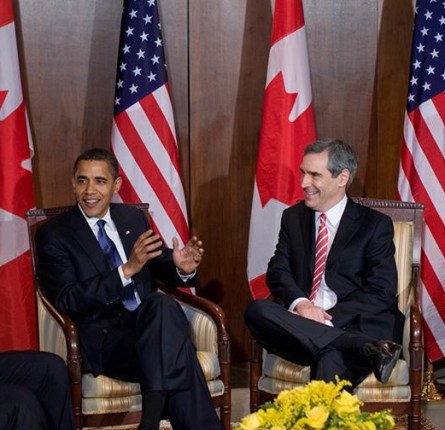
President Obama meets with Michael Ignatieff in Ottawa, Canada on Feb. 19, 2009 (from White House photo by Pete Souza)Ignatieff speaking of people he worked with on his travels to uncover people’s actual and expressed beliefs about human rights:

I first heard about Michael Ignatieff on the Philosophy Bites podcast a few years ago, and found his story of transforming himself from an intellectual to a politician and back again very intriguing. Just last week, I was very interested to hear a discussion between him and David Edmonds, co-host of Philosophy Bites and now host of his own podcast Philosophy 24/7.

This time, Ignatieff talks about human rights, a topic he’s been working on deeply for many years. As part of his preparation and research, he traveled the world to uncover people’s actual and expressed beliefs about human rights. What he says about what he learned really struck me:

‘The Human Rights edifice created since 1945 has had a huge effect on the world in the sense of powering the democratic revolution, the self-determination revolution, the civil rights revolution… On the one hand, you get people saying ‘my voice should be heard’… [The idea of] human rights has been influential in creating the tacit presumption… that their voice mattered… I don’t think without the human rights revolution that would have anchored itself in their souls and conscience as much as it is.

On the other hand… human rights is a form of universalism. It says that all human beings matter, and that we have duties to human beings outside our borders, and that it is the human identity that counts in moral judgment. What struck me very much is that people thought they wanted to make a claim of equality for themselves as citizens but not for other people, so equality of voice within the nation state, but no very strong or increased development of a universalist obligation to people beyond states. And that I think is a surprising result, because if human rights means anything, it is, we have this idea of transnational solidarity to people who are not fellow citizens, and so equality for us, not so much equality for strangers.

And this has, needless to say, huge political implications for a whole range of issues, notably refugees and migration…’

Igniateff then goes on to discuss how this great moral innovation, the idea of universal human rights, squares with what Ignatieff calls ‘ordinary virtues’: those interpersonal moral instincts which impel us to deal justly and kindly with those nearest to us, with those we encounter directly and those who share our culture, our language, our belief system, and our family and local community ties. Ignatieff believes that the ordinary virtues are not only compatible with, but necessary for realizing the ideal of human rights in the world. That’s because localism and the ordinary virtues provide us with a key element, that of triage, which makes these great human rights projects scalable, manageable, and effective within localities in a way that the application of universalist principles can’t on their own.

Does Ignatieff succeed in his attempt to reconcile the universalist conception of human rights with localism and the ordinary virtues? What do you think? Find out by listening to this fascinating and informative discussion at Philosophy 24/7

And learn more about the widely accomplished and ever-energetic Michael Ignatieff at:

Michael Ignatieff: Biography – at his website

Michael Ignatieff – by Michael Ray for Encyclopædia Britannica

Michael Ignatieff on Political Theory and Political Practice – discussion at Philosophy Bites podcast

“I Don’t See the President As An Intellectual at All”: A Q&A with Michael Ignatieff – by Isaac Chotiner for  The New Republic, February 20, 2014

Michael Ignatieff, The Intellectual Who Wanted to Be a Politician – by Jordan Michael Smith

Ordinary Philosophy and its Traveling Philosophy / History of Ideas series is a labor of love and ad-free, supported by patrons and readers like you. Please offer your support today!

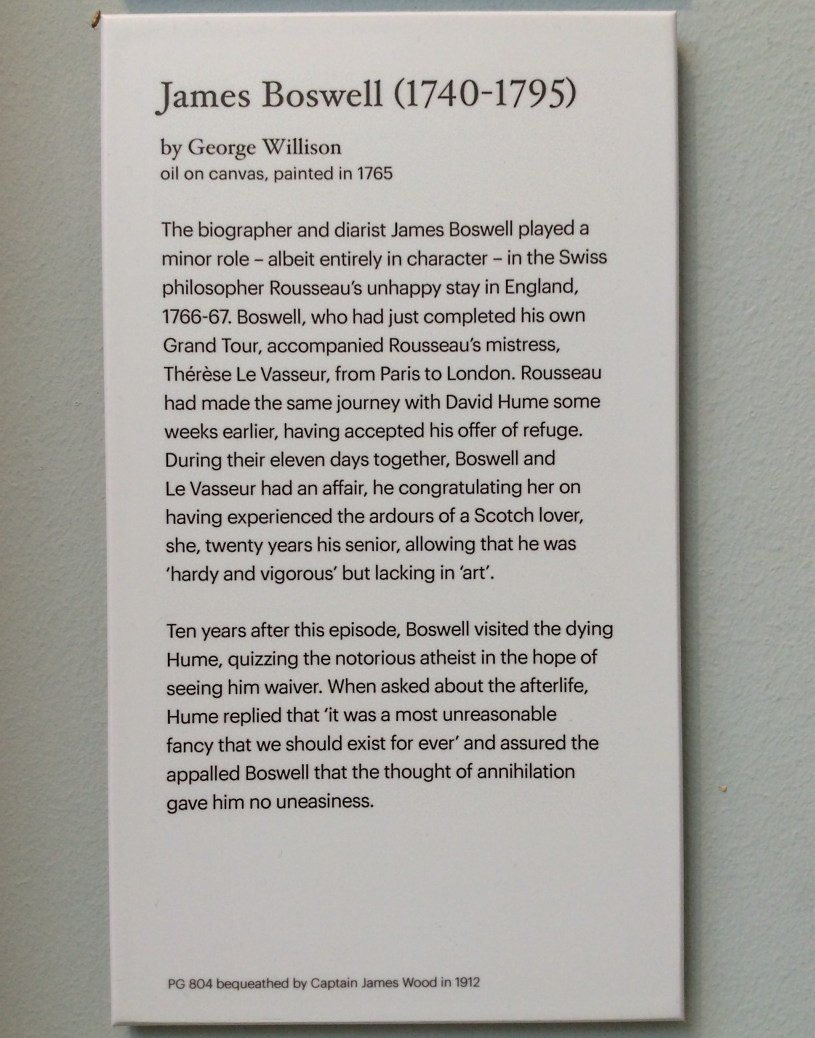
Photobook: Portrait of James Boswell, National Portrait Gallery, Edinburgh

James Boswell portrait in the National Portrait Gallery, Edinburgh, 2014 Amy Cools

James Boswell portrait in the National Portrait Gallery, Edinburgh, Scotland. Boswell’s diary of Samuel Johnson has been called the greatest biography in the English language. I visited this portrait during my journey to Edinburgh in 2014 following the life and ideas of David Hume, my favorite philosopher, if I had to name just one. Boswell sat at the bedside of the dying Hume and marveled at his composure in the face of suffering and death.


Ordinary Philosophy and its Traveling Philosophy / History of Ideas series is a labor of love and ad-free, supported by patrons and readers like you. Please offer your support today!

Happy Birthday, Elizabeth Anscombe!

‘Elizabeth Anscombe, [born Mar 18, 1919] was considered by some to be the greatest English philosopher of her generation. She was professor of philosophy at Cambridge from 1970 to 1986, having already, as a research fellow at Oxford in the 50s, helped change the course of moral philosophy. Also influential in philosophy of mind, she pioneered contemporary action theory, and the pre-eminent philosopher Donald Davidson called her 1957 monograph Intention the best work on practical reasoning since Aristotle. The philosophical world owes her an enormous debt, too, for bringing Wittgenstein, probably the greatest philosopher of the 20th century, to public knowledge…. from Jane O’Grady’s obituary for The Guardian

Let us honor Elizabeth Anscombe on the anniversary of her birth by learning more about this important, influential, and trailblazing philosopher:

G. E. M. Anscombe (1919—2001) – by Duncan Richter for the Internet Encyclopedia of Philosophy

Gertrude Elizabeth Margaret Anscombe – by Julia Driver for The Stanford Encyclopedia of Philosophy

Elizabeth Anscombe – A BBC Programme Woman’s Hour episode in which Sarah Woolman speaks to Dr Rosalinde Hursthouse and Professor Philippa Foot

The Golden Age of Female Philosophy – A recent episode of Philosopher’s Zone which discusses Anscombe’s work along with the work of other great contemporary women philosophers

Anscombe Bioethics Centre – ‘a Roman Catholic academic institute that engages with the moral questions arising in clinical practice and biomedical research’

G.E.M. Anscombe Bibliography – by José M. Torralba for Universidad de Navarra

~ Ordinary Philosophy is a labor of love and ad-free, supported by patrons and readers like you. Please offer your support today!

O.P. Recommends: Hi-Phi Nation Podcast by Barry Lam

A few weeks ago, I discovered this oh-so-enjoyable philosophy podcast, one right up my alley and the alley of anyone who loves philosophy in the public square. It’s called Hi-Phi Nation, ‘a philosophy podcast that turns stories into ideas.’

Created by Barry Lam, its mission is to demonstrate the revelatory power of philosophical thinking through its application to real-life situations, from what soldier-turned-philosopher Mike Robillard calls ‘moral exploitation’ in the military to what constitutes valid scientific inquiry, from the morality of wills and trusts (why should the wishes of the dead ever have priority over the interests of the living?) to what a certain musical subgenre reveals about the nature of art. The latter, in fact, is one of my personal favorite episodes, as philosophy and art are both central in my life.

The style of the podcast is closely modeled on This American Life and other story-driven podcasts. As Lam points out, people love stories, so if one wants to convey philosophical ideas to the public at large, especially complex or subtle ones, there’s no better way to do it than in the context of a good tale. For example, take morality: from Plato and his Republic and Ring of Gyges, to Jesus Christ and his parables, to Louisa May Alcott’s tales of the tribulations and joys of a progressive-minded family living through the Civil War, the most influential moral thinkers and teachers bring their ideas to comprehensible, identifiable, sympathetic life for their audiences.

There are two excellent articles about Lam and the show by Larry Hertz for Vassar Stories (of Vassar College, where Lam is an associate professor), and by Brett Tomlinson for Princeton Alumni Weekly.

Enjoy! I know you will…

~ Ordinary Philosophy is a labor of love and ad-free, supported by patrons and readers like you. Please offer your support today!

Steinbeck Retreat, Monterey Bay and Salinas Valley Region of California, March 4th – 9th, 2017

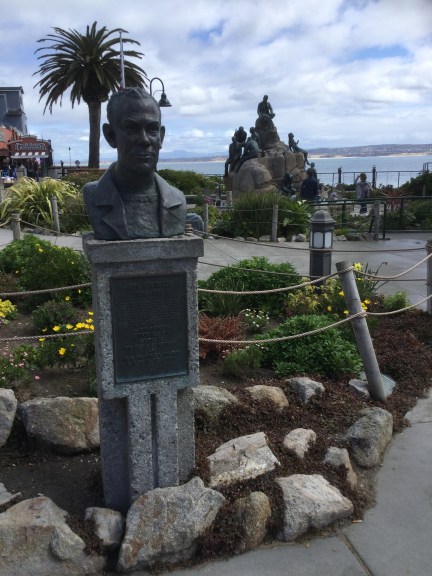
Bust of John Steinbeck and sculptures of the local people who inspired Cannery Row, Monterey, CA

For several days this last week, I’ve been on a literary retreat hosted by Clay Jenkinson, Becky Cawley, and Russ Eagle. You may remember Clay and Becky from the account of my last retreat with them at Lochsa Lodge in the Bitterroot Mountains in January. Clay is a humanities scholar who has been very influential in my own study and thought for the last few years, Becky has worked with Clay for many more years than that co-creating historical, cultural, and literary tours throughout the United States, and Russ Eagle has made Steinbeck a special study for many years as well. At Lochsa Lodge this winter, we read and discussed Walden Pond and Henry David Thoreau’s concept of living deliberately, as well the history of the Native Americans of the Great Plains and the wars of the United States’ expansion into their territories through the 1800’s, and the echoes of those wars and that expansion in the DAPL fight today.

This tour took us to Monterey, Pacific Grove, the Salinas Valley, and the mountains and coastline of this beautiful region of California following the life and work of the great American writer John Steinbeck. It was a special joy for me that this retreat was all about history, literature, and gorgeous scenery from my home state of California. I had read and loved Steinbeck’s novels especially when I was in my late teens to mid-twenties but it had been far too long since I revisited his work. I re-read some of his novels for this occasion, and some were new to me. I found a rich source of beauty and wisdom much more revealing to me with the added benefit of a decade and more of life-years.

Interior of Rocinante, the customized camper truck from John Steinbeck’s Travels With Charley

We read Travels with Charley, Tortilla Flat, Cannery Row, Of Mice and Men, and The Pearl; selections from The Red Pony, The Log from the Sea of Cortez, and East of Eden (though most of us read the latter in full since it’s a general favorite); and read and discussed most in depth what Clay, myself, and many others consider his greatest work, The Grapes of Wrath.

The Grapes of Wrath, as you may know, is the story of the epic journey of the Joad family as they flee the loss of their crops and their family home in the Dust Bowl disaster in Depression Era America. The Joads are a fictional family but their struggles are closely based on the struggles of actual immigrants as they face the life of much-maligned, much-neglected, and much-abused refugees from drought and debt in their own nation. Some members of the clan die in the course of their journey, some strike out on their own, a family friend who accompanied them is murdered by a vigilante trying to break up the worker’s rights movement that he had joined, and one becomes a fugitive after he kills his friend’s assassin. Throughout the novel, Ma Joad is transformed from mother to matriarch as she holds the family together through the terrible hardships they suffer in search of work and a new home. She’s one of my favorite female characters in all fiction in her strength, courage, integrity, wisdom, generosity, and great heart. Others in the family are ennobled and transformed as well: the ex-convict, fugitive son Tom joins the worker’s rights movement after his friend is martyred; the disillusioned, tortured loner and binge drinker Uncle John works until he nearly drops to help save the family from a flood and sends a stillborn infant downstream in a crate, Moses-on-the-Nile fashion, to alert others of the migrant’s wrongs; and narcissistic, immature daughter Rose of Sharon … well, I won’t spoil the powerful, disturbing, beautiful ending in case you haven’t read it yet.

Bust of Ed Ricketts memorializing the spot where he died in Monterey, CA

Over the course of several days, we toured Monterey and the settings of Steinbeck’s Cannery Row, centered around the character of Doc, modeled on his great friend the charismatic biologist Ed Ricketts, and visited one of Steinbeck’s homes in neighboring Pacific Grove, only several blocks away. We visited the aquarium, housing so much of the marine wildlife which fascinated Steinbeck and Ricketts; walked beautiful Point Lobos, well-loved by Steinbeck and where his family held a memorial service for him and spread some of his ashes; hiked in Pinnacles National Park, not directly associated with Steinbeck but linked to the Gabilan Mountain range which Steinbeck describes in such glowing terms in East of Eden; and, on perhaps my favorite outing of all, we climbed Fremont Peak, as Steinbeck did when on a visit to his old home town in Travels With Charley. Fremont Peak itself is beautiful, its chapparal terrain glowing green from the prolonged rains that rescued California from severe drought this winter and spring, scattered with cloud-gray rocks of the perfect size and grippy roughness to scramble around on, and the view from it is just spectacular: sprawling agricultural fields on one side, Monterey Bay on the other.

The rest of the retreat group spent their last day in Salinas at the Steinbeck Center, the Steinbeck House, and the Garden of Memories where Steinbeck and many of his family members are buried. I didn’t make it to Salinas with the group, having to return to work for the day, but I did visit the Steinbeck Center and House earlier on the first day of the trip since I was free. Unfortunately, I ran out of time to make it to the Garden of Memories before I was due to join the retreat.

I didn’t take many pictures during the trip; I was in retreat mode and in the mood to mostly leave my electronics put away so as to lose myself in the beauty and spirit of these places, unfiltered, unmediated. But I did chronicle my own visit to the Steinbeck Center and the Steinbeck House in Salinas and our day touring Monterey and Pacific Grove. Here are a few photos, below, in addition to the ones above.

It was such a lovely week, and I’m still enjoying the afterglow. Thank you, older, newish, and brand-new Odyssey Tour friends! ‘Til we meet again…

* See my profile of Julia Ward Howe, whose Battle Hymn of the Republic provided the title of The Grapes of Wrath, and which is printed in the opening pages of the novel

*Listen to the podcast version here or on Google Play, or subscribe on iTunes

~ Ordinary Philosophy is a labor of love and ad-free, supported by patrons and readers like you. Please offer your support today!

Main Street, Salinas, CA. According to a sign out front, John Steinbeck ate at Sang’s Cafe, in the white building with the blue trim just to the left of Maya Cinemas

Rocinante, the customized camper truck from John Steinbeck’s Travels With Charley. As you may remember, Rocinante was the name of Don Quixote’s horse. At the Steinbeck Center in Monterey, CA.

Steinbeck House, Salinas, CA, where John Steinbeck was born

Ed Ricketts’ Pacific Biological Laboritories, Monterey, CA. Ricketts was an important figure in Steinbeck’s life and work. Steinbeck also studied marine biology at Stanford, but did not receive a degree there. But not for lack of interest in marine biology or learning in general…

Interior of the downstairs lab area of Ed Rickett’s Pacific Biological Laboratories.

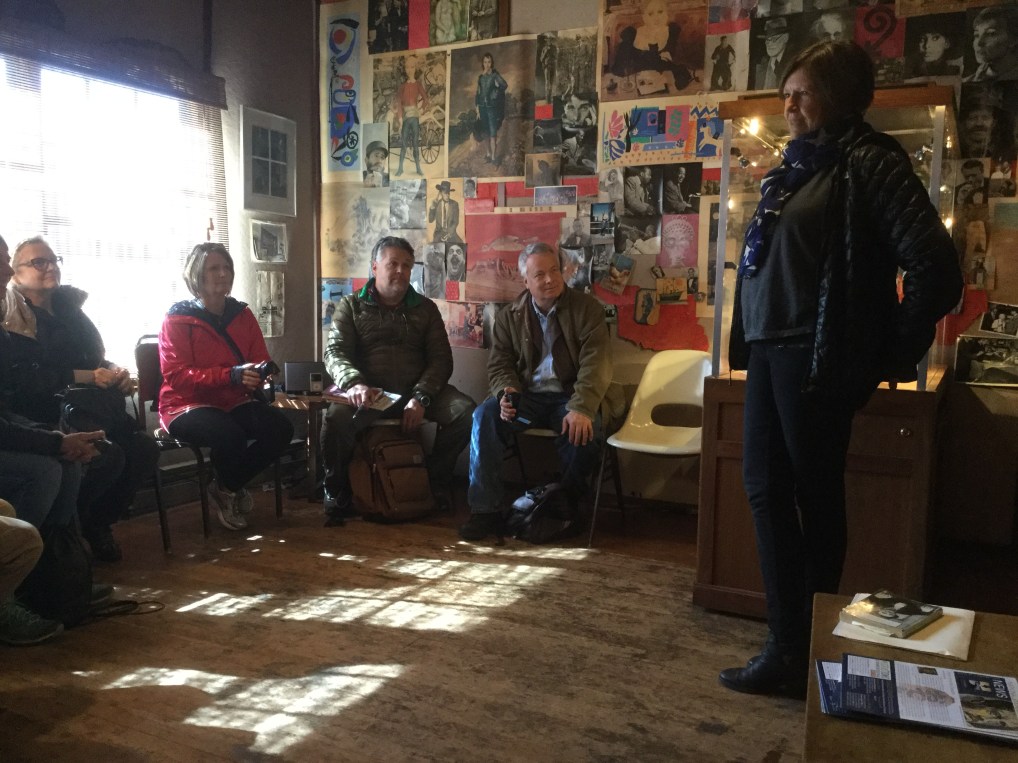
Discussion with Susan Shillinglaw, Steinbeck scholar and writer of books about him and others central to his life and work, upstairs in the Pacific Biological Laboratories, with Clay Jenkinson and Russ Eagle

John Steinbeck’s home and garden at 147 11th Street in Pacific Grove, CA

Monterey and its beautiful Bay with its rich tidepools

Me on Fremont Peak. Thanks for the photo, Larry!

O.P. Recommends: The Ideas That Make Us, with Bettany Hughes

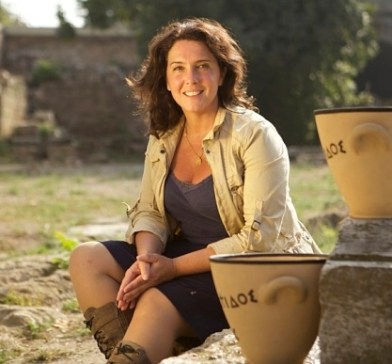
Bettany Hughes is one of my very favorite public intellectuals; from one talk to the next, one documentary series to another, I think, now this is the best ever. Perhaps you can tell from the manner in which I frequently share her work that I have more than a little crush on her: intelligent, wealthy in knowledge, endlessly curious, warm, beautifully spoken, lovely, funny, and always fascinating.

Anyway, as I was doing some filing and other such mindless tasks yesterday afternoon, I began re-listening to The Ideas That Make Us, a BBC 4 series about ‘the history of the most influential ideas in the story of civilisation.’ Hughes, a historian deeply trained in the classics, follows the history of ideas in the Western world, often beginning with the origins of the words we use to refer to them: Virtue, Justice, Peace, Agony, Charisma, and so on, many from the ancient Greek. I particularly love the story of the origin of Idea itself and the appearance of the term in a lyric poem by Pindar (another wonderful discovery); idea derives from the Greek idein, ‘to see.’ Hughes embarks on this story from within an MRI machine, bringing the Idea full circle: to see, in the original sense of the word, on the screen what we have long thought could only be manifested through language.

Follow this and many other fascinating stories of the history of great ideas with Hughes here

~ Ordinary Philosophy is a labor of love and ad-free, supported by patrons and readers like you. Please offer your support today!

In Memory of Hypatia of Alexandria

Detail of the death portrait of a wealthy woman, c. 160-170 AD near modern-day Er-Rubayat in the Fayum, public domain via Wikimedia CommonsHypatia’s birthday is somewhere between 350 and 370 AD; a range of dates indicating great uncertainty, to be sure, but original sources that old are hard to come by, especially from a city as turbulent and violence-torn as the Alexandria of her day. The day of her death is better known, sometime in March of 415 AD. Since the latter date is more precise, we’ll break with our birthday remembrance tradition here and celebrate the memory of Hypatia in the month of her tragic and violent death instead of on the date of her birth.

She was a mathematician, astronomer, teacher, and philosopher who wrote commentaries on important works in geometry and astronomy with her father Theon, likely contributing original work of her own. Hypatia was a Neoplatonist, a philosophy with mystical overtones which posits that everything derives its being from the One, an ultimately conscious yet nonmaterial, non-spacial entity which is the pure ideal of everything that is. She was a scholar and teacher in a field and in a male-dominated world, and historians from her day to ours emphasize her extraordinary talents and her femininity with a nearly equal mix of awe and bemusement.

So let us remember and honor Hypatia for her great contributions to human knowledge and to the history of women’s liberation, living proof that women are equals in intellect and courage.

And let us also remember her sad death as a cautionary tale against those who inflame popular sentiment to seize power for themselves. Hypatia met her death at the hands of a Christian mob caught up in the anti-pagan hysteria of the day; Alexandria itself was caught up in a power struggle between civic and religious authority. The mob of extremists who dragged Hypatia from her carriage, torture and kill her with roofing tiles, and defile her body are inspired by their partisanship with theocratic bishop Cyril to kill this pagan philosopher, this mathematician and astronomer (then often equated with sorcerer), this woman who dared teach men, this friend of Cyril’s rival Orestes, civic leader of Alexandria. According to Hypatia scholar Micheal Deakin, “Cyril was no party to this hideous deed, but it was the work of men whose passions he had originally called out. Had there been no [earlier such episodes], there would doubtless have been no murder of Hypatia.”

From a certain millionaire we all know* who rose to power whipping up populist support throughout his presidential race with extremist racial and religious rhetoric, back to Hypatia’s time and beyond, power-hungry opportunists plead innocence from the very violence they inspire. Yet it appears hard to justify that plea when reason and the lessons of history plainly reveal the nearly inevitable results of fomenting sectarian strife. Extremism in the defense of liberty or anything else is a vice** because of the way it drives away reason and sympathy, and after all, nothing is as liberty-destroying as mob violence and death.

* ‘What If Trump Wins?’ by Jeet Heer in New Republic, Nov 24, 2015

** in reference to the quote ‘Extremism in the defense of liberty is no vice’ from Barry Goldwater’s 1964 presidential nomination acceptance speech 

Read more about the great Hypatia of Alexandria:

Deakin, Michael.’Hypatia of Alexandria‘ from Ockham’s Razor radio program of Radio National of Australia (transcript), Sun August 3rd 1997. (click ‘Show’ across from ‘Transcript’)

O’Connor, J J and E F Robertson. ‘Hypatia of Alexandria‘, from the School of Mathematics and Statistics, University of St Andrews, Scotland website.

‘O’Neill, Tim. ‘“Agora” and Hypatia – Hollywood Strikes Again‘. Armarium Magnum blog, Wed May 20, 2009

Zielinski, Sarah. ‘Hypatia, Ancient Alexandria’s Great Female Scholar‘. Smithsonianmag.com, Mar 14, 2010.

…and about Neoplatonism

Wildberg, Christian, “Neoplatonism“, The Stanford Encyclopedia of Philosophy (Spring 2016 Edition), Edward N. Zalta (ed.)

~ Ordinary Philosophy is a labor of love and is ad-free, supported by patrons and readers like you. Please offer your support today!

~ A version of this piece was originally published here at Ordinary Philosophy one year ago

Happy Birthday, Rosa Luxemburg!

Amy M Cools's avatarOrdinary Philosophy

Rosa Luxemburg, By unknown photographer around 1895-1900 [Public domain], via Wikimedia CommonsRosa Luxemburg, Mar 5 1871 – Jan 15 1919, is the great Marxist theorist, writer, economist, revolutionist, anti-war and anti-capital-punishment activist, and philosopher who was murdered during the German Revolution of 1918–1919.

Though she’s an anti-war activist, Luxemburg is also critical of the idea that a just society can be brought about by incremental reforms through established political systems. If she were to be involved in the 2016 Democratic primary race between Hillary Clinton and Bernie Sanders, she would very likely back Bernie, with his more revolutionary style and rhetoric: she’s sharply critical of the Social Democratic Party of Germany, to which she belongs (in its left wing) for favoring a Hillary-style reformist approach. However, her internationalism takes Marxist thinking beyond the point where leading Marxists of her day had progressed, with their focus on unique formulations of Marxist political theory tailored to their own particular national identities and histories. She would likely find fault, then, with Bernie’s protectionism.

Luxemburg’s other great contribution to…

View original post 148 more words

Brian Williams, Bill O’Reilly, Rush Limbaugh, and Honesty in Public Discourse

A piece from two years ago on a timely subject…

Amy M Cools's avatarOrdinary Philosophy

You’re likely aware of the backstory to this piece: well-known news anchorman Brian Williams was caught telling stories. A generous interpretation would portray them as exaggerations; a harsher one a series of self-aggrandizing lies. Williams placed himself in the thick of the action while covering certain news stories, like the shooting down of a military helicopter and the aftermath of Hurricane Katrina, when he was actually at a safe distance. Since his stories were recently debunked, in whole or in part, by others there at the time, he has been widely criticized, shamed, and mocked, and the public debate over the nature and reliability of modern news rages ever more fiercely.

He’s not the only public figure in hot water right now for playing fast and loose with the truth. Bill O’Reilly is also being called out for his history of adding, ahem, some ‘color’ (my term, not his) to…

View original post 1,672 more words

Happy Birthday, Michel de Montaigne!

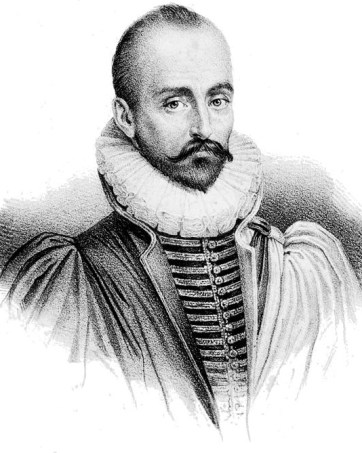
Michel de Montaigne, public domain via Wikimedia Commons

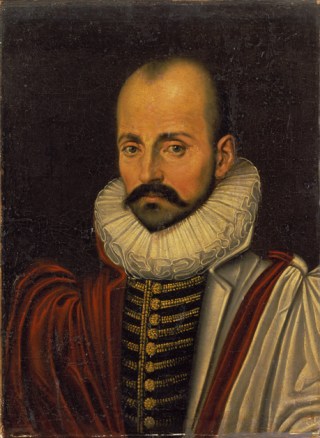
Michel de Montaigne, public domain via Wikimedia Commons

Michel de Montaigne, born on February 28, 1533, was a thinker after my own heart.

Montaigne was a deeply philosophical thinker, though he never developed a complete philosophical system or moral theory. He invented, or at least popularized, a revolutionary way of writing: the essay. In his essays, he wrote about anything and everything he found interesting enough to observe and think deeply about which was …well, just about everything, especially his inner life. His Essays are a rich source of wonderful philosophical and moral insights. As the Stanford Encyclopedia of Philosophy describes: “… under the guise of innocuous anecdotes, Montaigne achieved the humanist revolution in philosophy. He moved from a conception of philosophy conceived of as theoretical science, to a philosophy conceived of as the practice of free judgment’. Judgment, in this sense, involves applying both our cultivated moral sense and our reason, enriched with knowledge, to navigating the complexity and variety of situations we face throughout our lives; it also refers to the expansive, tolerant attitude we should display towards each other and towards the whole of reality.

While Montaigne highly valued education, he also recognized that it can be overemphasized to the detriment of learning from our own experiences. In his day, education often consisted largely, even mostly, of rote memorization of a vast quantity of facts. This learning method can stifle our ability to exercise practical judgment and serve to blunt social skills as well, preventing us from learning from and about each other, which is essential for cultivating moral understanding. We should learn as much about the world and each other as possible, Montaigne thought, through interpersonal interaction as well as through more formal types of education.

Montaigne also thought that sometimes, our big, smart brains can even hinder our quest for wisdom. For example, we can become ashamed, insecure, even hateful of our own bodies when we contrast the refinements of education and the arts to the material, often messy, even disgusting reality of caring for the body and satisfying its needs. This distaste for our bodies is ungenerous and ungrateful, said Montaigne, considering how we rely on our bodies for so much. In fact, even to this Catholic Christian man who believed in the soul, we are our bodies in an essential way. Our bodies are much more than just meat that our souls inhabit, they are intimate partners of souls, and together, they comprise whole human beings. As such, our bodies deserve our compassion, gratitude, love, and respect.

Our big brains can make also make us too proud, unable to recognize wisdom in humble or unexpected places. Those of little or no education, Montaigne maintains, sometimes display more wisdom than the most rigorous scholar. This includes animals, who, especially, are sometimes wiser than we are; for example, they live their whole lives with the natural, unembarrassed, proper attitudes towards their own bodies that allows them to unapologetically enjoy the pleasure of being alive. Montaigne believed that we should learn from them and imitate them in these respects. Those who have the most wisdom to teach us, then, can come from all walks of life, and the wisest person will be receptive to the lessons that can be learned anywhere.

Furthermore, we shouldn’t limit our exposure merely to our own cultures, but should learn about as many other cultures and beliefs as possible. Montaigne, like Confucius, believed that before you can be a philosopher or a moral theorist, you must first be an anthropologist. A wide-ranging education and exposure to the world has two major advantages. First, the information you have to work with will be much more vast, your scope much wider, than if you merely stuck to the received wisdom of your own culture. Secondly, you will cultivate in yourself the very virtues that characterize the wise and moral person: tolerance, benevolence, respect, kindness, generosity, understanding, and so forth. Conversely, narrowness of outlook and xenophobia lead to hatred, violence, and so on, as the horrific stories coming back from the conquest of the New World made him all too aware. Montaigne believed we shouldn’t base our attitudes about right and wrong on habit, which is morally lazy and which a narrow education can easily lead us to do; rather, we should temper our moral attitudes with reason, and our reason, in turn, should be informed by an expansive and ever-expanding body of knowledge.
michel-de-montaigneThis can make Montaigne seem like a moral relativist, but I don’t think that this is so. He was a committed Catholic, which seems to rule that out. Yet he did recognize that some things society traditionally recognized as wrong are in fact both bad and good, sometimes one or sometimes the other depending on the circumstances, sometimes both at the same time. For example, consider drunkenness. It can be bad, such as when it gets you fired or leads you to violence. But, it can also be good, such as promoting sociability or artistic disinhibition. Montaigne recognized that if there are universally true moral maxims, they’re likely to be few. Rather, his approach to philosophy is a skeptical one: he recognized that an attitude of uncertainty and doubt is a fruitful one for gaining wisdom. When you don’t easily accept the first easy answers that come along, when you’re always waiting for more information to come in, when you generally accept that there’s a possibility you are wrong, you are practicing a wise skepticism; otherwise, you cheat yourself out of the opportunity to learn.

Ethically, Montaigne espoused some behaviors as universally preferable: those that are inspired by tolerance, joyfulness, sociability, generosity, benevolence, curiosity, a good-humored attitude towards other people and their varied ways of living, and so on; he specifically denounced cruelty and narrowness in thinking and feeling. He described his ethical theory not by outlining a rigorous system, however, but by enacting and describing a moral attitude that inspired moral behavior in others. In sum, he may or may not have been a relativist when it comes to a specific theory or set of maxims, but he was definitely not relativistic in the overarching value he placed on the art of being a good, complete human being, and on promoting the same in others.

Montaigne’s Essays demonstrate that the most well-reasoned advanced moral theory may never be quite as convincing, effective, or influential when spelled out as that which is lived out. Montaigne showed us how we can all be philosophers, how we can live ethically, and how we can discover it all for ourselves.

Philosophers, if they’re doing it right, will be the happiest of all people since philosophy can and should be a joyful enterprise, and we should all be philosophers.

Listen to the podcast version here or on Google Play, or subscribe on iTunes

~ I wrote this essay in 2012 and edited it substantially for this publication in 2017

Learn more about this great master of introspection here:

Essays – by Michel de Montaigne

Me, Myself, and I: What Made Michel de Montaigne the First Modern Man? – by Jane Kramer for The New Yorker

Michel de Montaigne – by Marc Foglia for The Stanford Encyclopedia of Philosophy

Michel de Montaigne – from The Book of Life

Michel de Montaigne (1533—1592) – by Christopher Edelman for Internet Encyclopedia of Philosophy

Michel de Montaigne (1533-1592) – by Terence Green for Philosophy Now

Michel de Montaigne: French Writer and Philosopher – by Tilde A. Sankovitch for Encyclopædia Britannica

Montaigne on Death and the Art of Living – by Maria Popova for Brain Pickings

Can We Have More Than One Friend? According to Montaigne, No – by Manuel Bermudez

Philosophy: A Guide to Happiness – Montaigne on Self-Esteem – by Alain de Botton

Ordinary Philosophy and its Traveling Philosophy / History of Ideas series is a labor of love and ad-free, supported by patrons and readers like you. Please offer your support today!