Remembering Margaret Fell

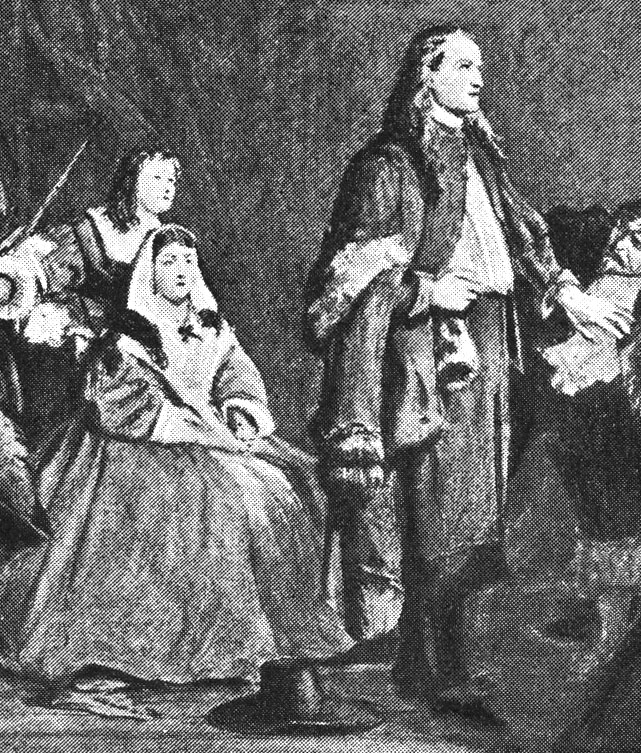
Margaret Fell, with George Fox before the judges, from a painting by J. Pettie 1663, public domain via Wikimedia Commons

Margaret Fell with George Fox before the judges, from a painting by J. Pettie, 1663

Margaret Fell was born on some unknown date in 1614, so let’s take this occasion to remember her on the date of her death, April 23rd, 1702.

Fell’s lived a life as passionate as it was long. She was an unconventional thinker for her time, a zealous and progressive religious activist at times imprisoned for her beliefs, a prolific writer, well-traveled, a mother of eight children and a wife twice.

An early adherent and eloquent promoter of Quakerism, Fell is now considered one of its founders. She converted to Quakerism after hearing a sermon by one of its most charismatic preachers, George Fox, and almost immediately launched into a lifetime of hosting Quaker meetings and speaking out on behalf of her new religion. After her husband died some years later, Fell married Fox, probably more as a co-missionary than as a romantic partner since their work, travels, and imprisonments kept them apart for much of their marriage.

As I’ve had a lifelong fascination with the history of human rights, I’ve long admired the Quakers because, along with Unitarians and Deists, so many have been leaders in the struggle to expand, establish, and promote them. That’s because these faiths emphasize the importance of individual conscience, the primacy of the human mind, God’s rational nature, and the moral equality of all human beings.

Fell believed in the Quaker doctrine of the Inner Light which God has caused to shine equally in the hearts of all beings; all we need do is heed it. Therefore, one does not need ministers, priests, or any other authorities or intercessors to achieve salvation. And because God has created everyone for the same purpose and gave everyone that light, everyone is spiritually equal and capable of understanding and proclaiming the Truth. We can see how this doctrine, central to Quakerism, readily aligns with human rights movements centered on a belief human spiritual and intellectual equality. The right of women to speak in church and write religious texts, in her time limited to men, was a cause particularly dear to Fell’s heart. While Fell’s belief in the equality of women was limited to their role as spiritual beings, Quakerism tended to encourage ever-more progressive beliefs in its adherents. Over time, Quakers came to be leaders in the abolitionist and pacifist movements, promoting the right of all to receive equal and universal education and for women’s rights in social and political spheres as well.

In light of her achievements as a female religious pioneer, and the human rights advances facilitated by the Quaker faith she helped found, Fell’s contributions should continue to be remembered and celebrated.

Ordinary Philosophy and its Traveling Philosophy / History of Ideas series is a labor of love and is ad-free, supported by patrons and readers like you. Please offer your support today!

~~~~~~~~~~~~~~~~~~~~~~~~~~

Sources and inspiration

Broad, Jacqueline, ‘Margaret Fell‘, The Stanford Encyclopedia of Philosophy, Edward N. Zalta (ed.)

Jacoby, Susan. Strange Gods: A Secular History of Conversion. New York: Pantheon, 2016 (see chapter on Margaret Fell)

Photobook: John Muir National Historic Site in Martinez, CA, continued

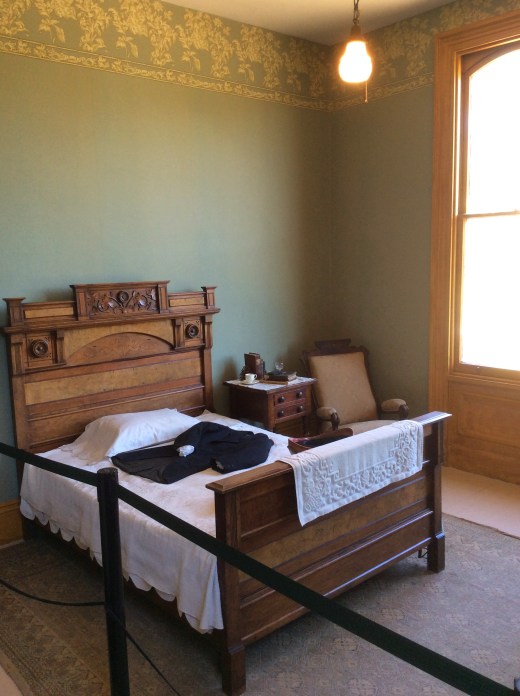
John Muir’s bedroom at John Muir National Historic Site, Martinez, CA

Yesterday, I published a piece in honor of John Muir’s birthday. Muir was the great naturalist and writer who, perhaps more than any other single individual, awoke America’s consciousness to the sacredness and essential value of the unspoiled natural world. Here are a few more photos from my visit to his home at John Muir National Historic Site in Martinez, CA.

Enjoy!

Ordinary Philosophy and its Traveling Philosophy / History of Ideas series is a labor of love and ad-free, supported by patrons and readers like you. Please offer your support today!

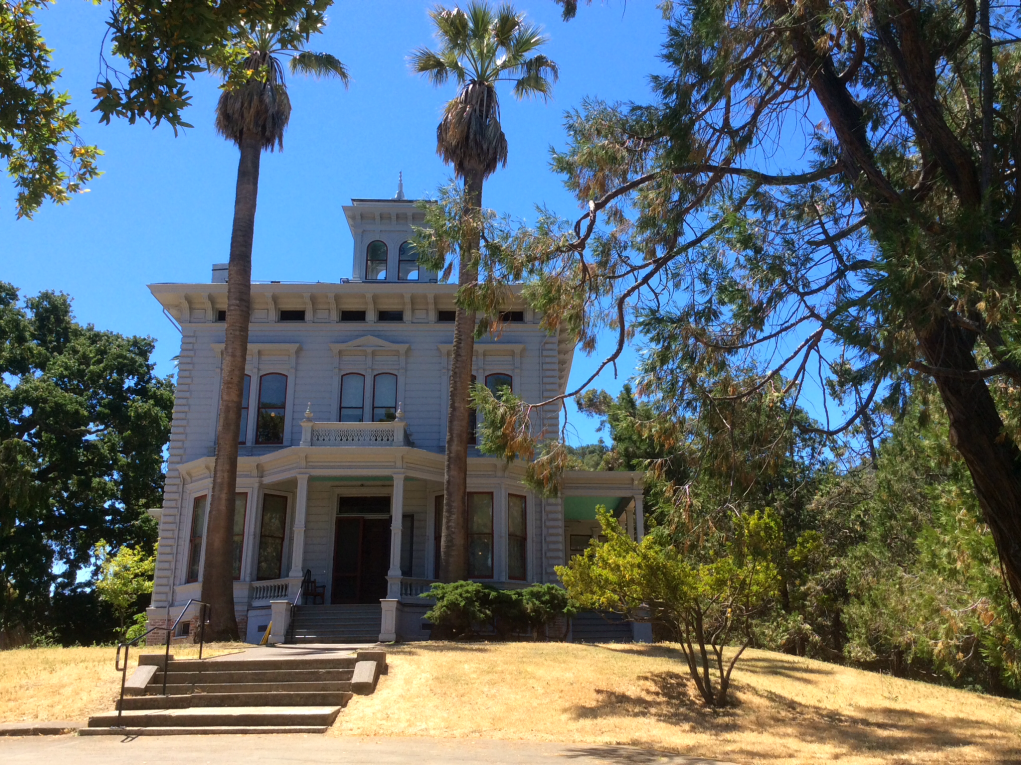
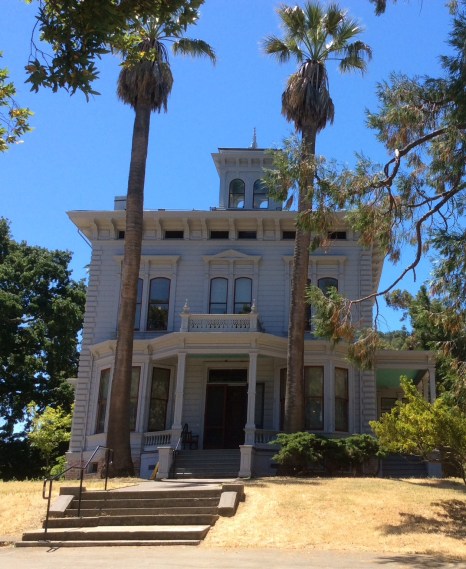
The Muir family home built by Dr. John Strentzel at John Muir National Historic Site, Martinez, CA

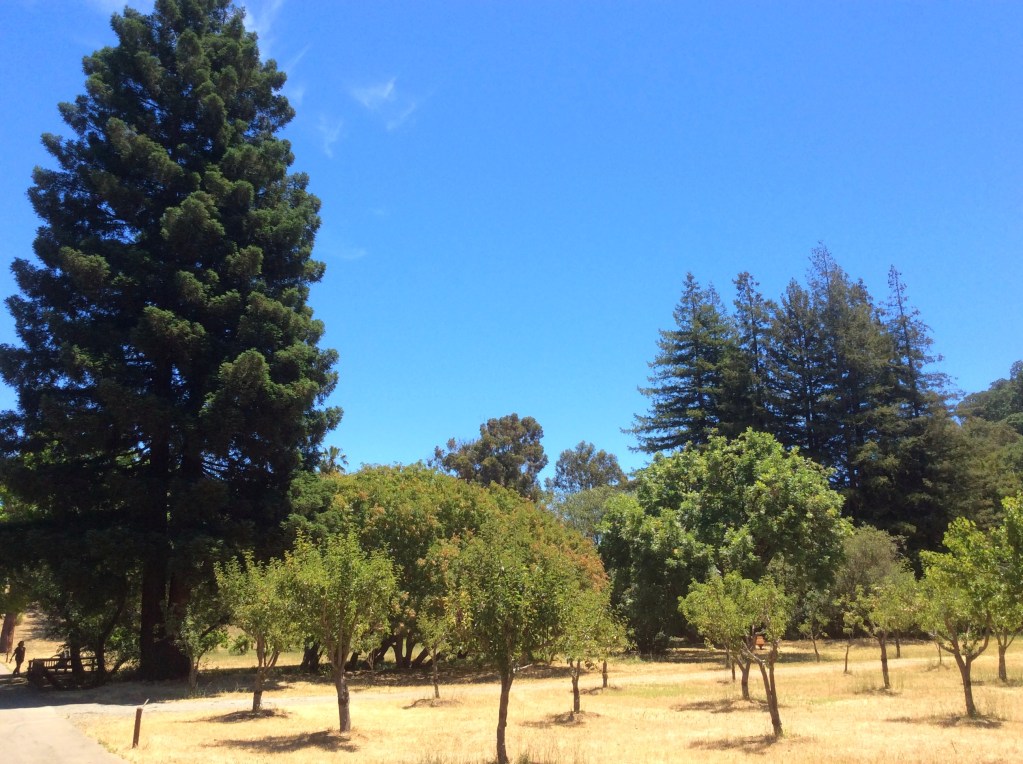
An orchard at John Muir National Historic Site, Martinez, CA. They are beautifully maintained and visitors may wander the orchards and eat the fruit at will.

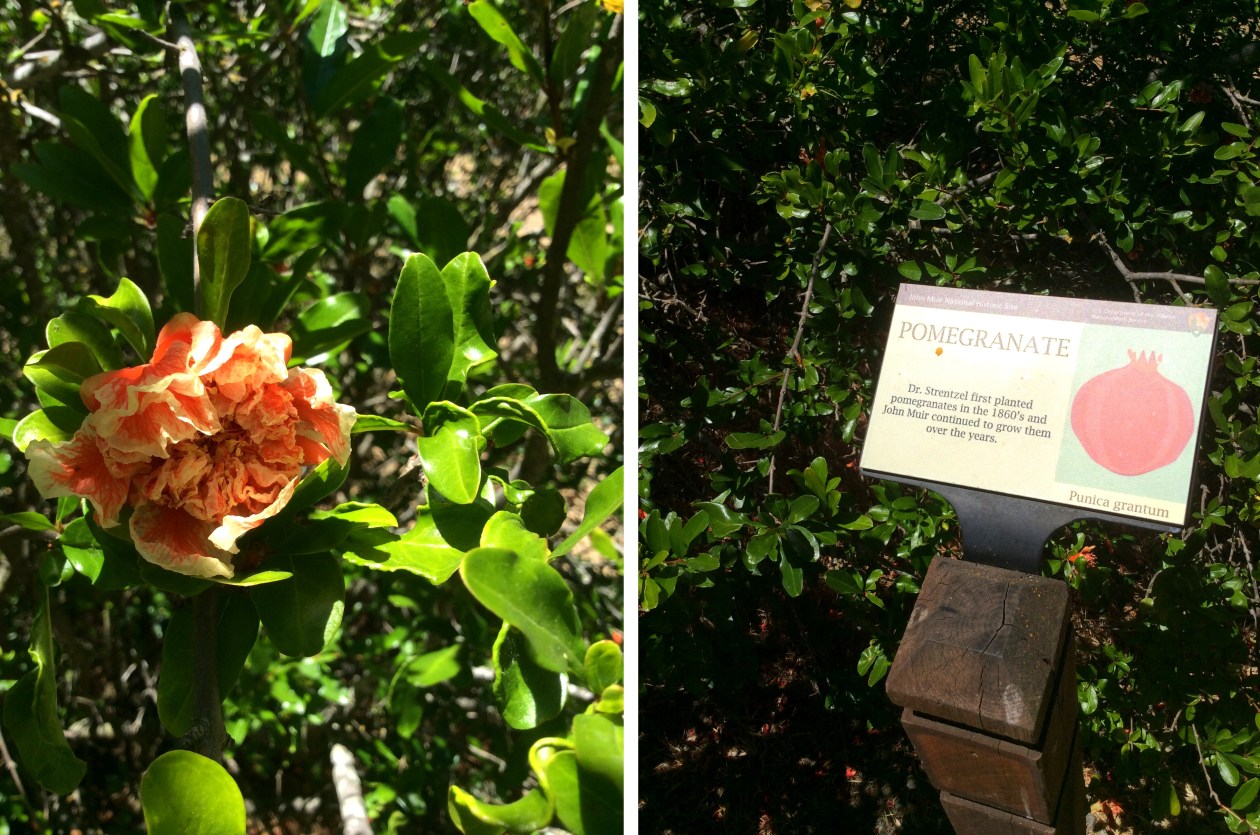
Dr John Strentzel’s pomegranate trees in bloom at John Muir National Historic Site, Martinez, CA

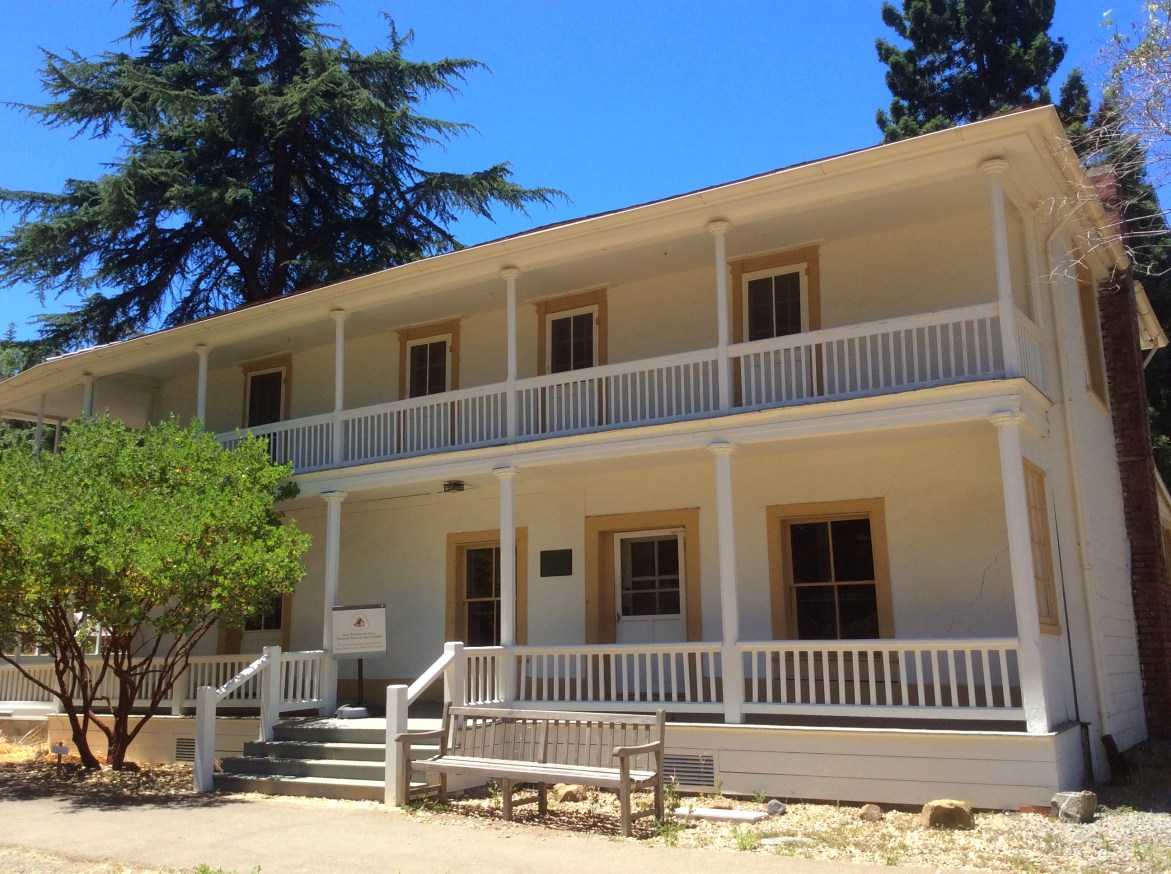
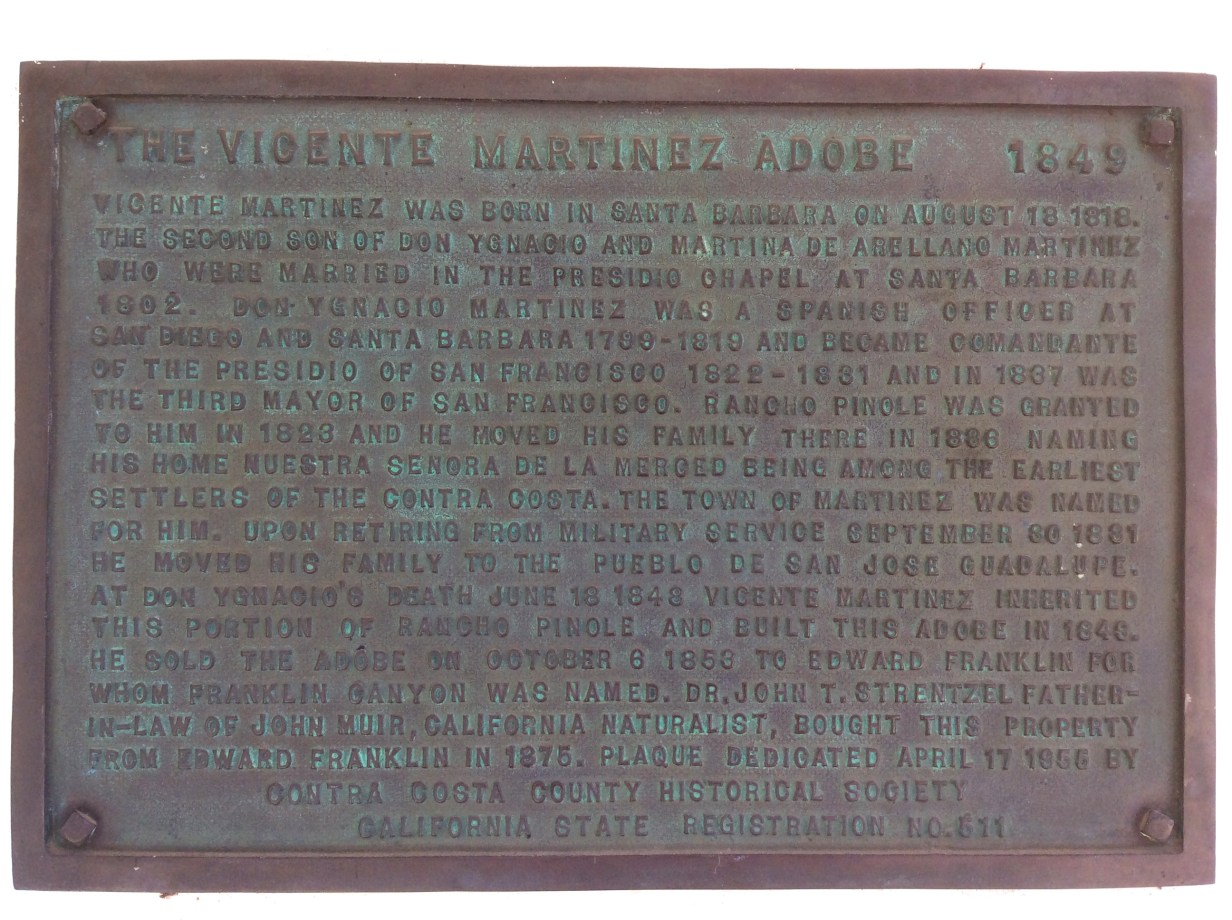
Vicente Martinez Adobe, built in 1849, on the grounds at the John Muir National Historic Site, Martinez, CA

Vicente Martinez Adobe plaque at the John Muir National Historic Site, Martinez, CA

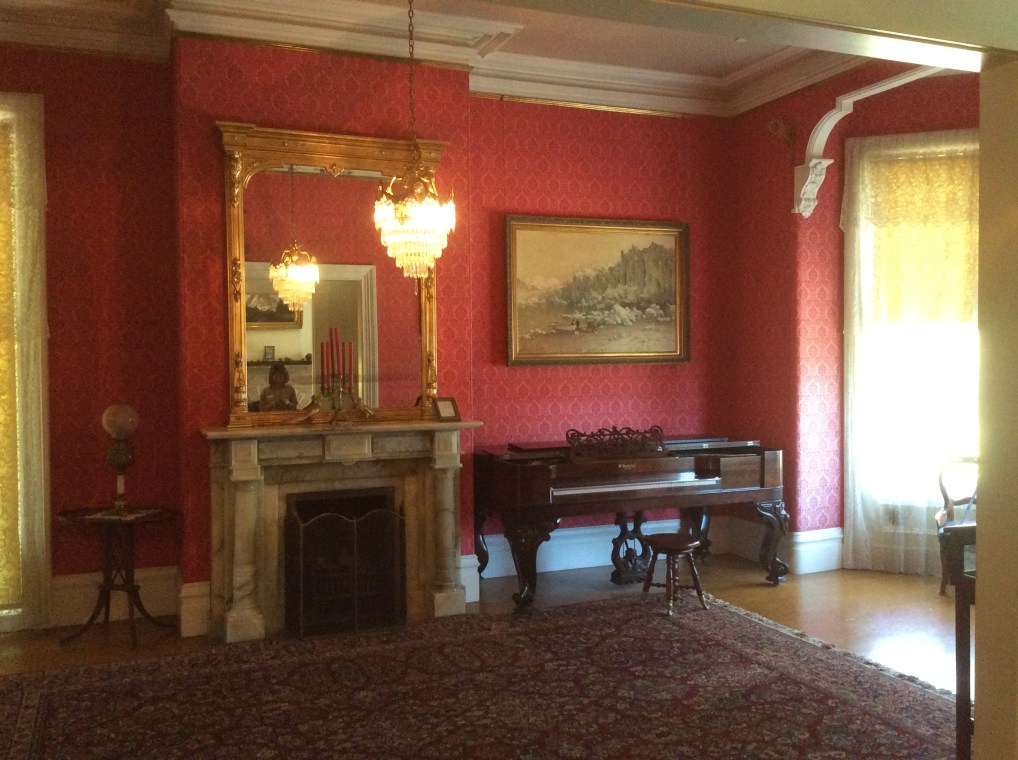
The living room of the big house, John Muir National Historic Site, Martinez, CA. Louie Muir was an expert piano player, having learned as part of her excellent education in lovely Benicia, just across the Carquinez Strait from Martinez

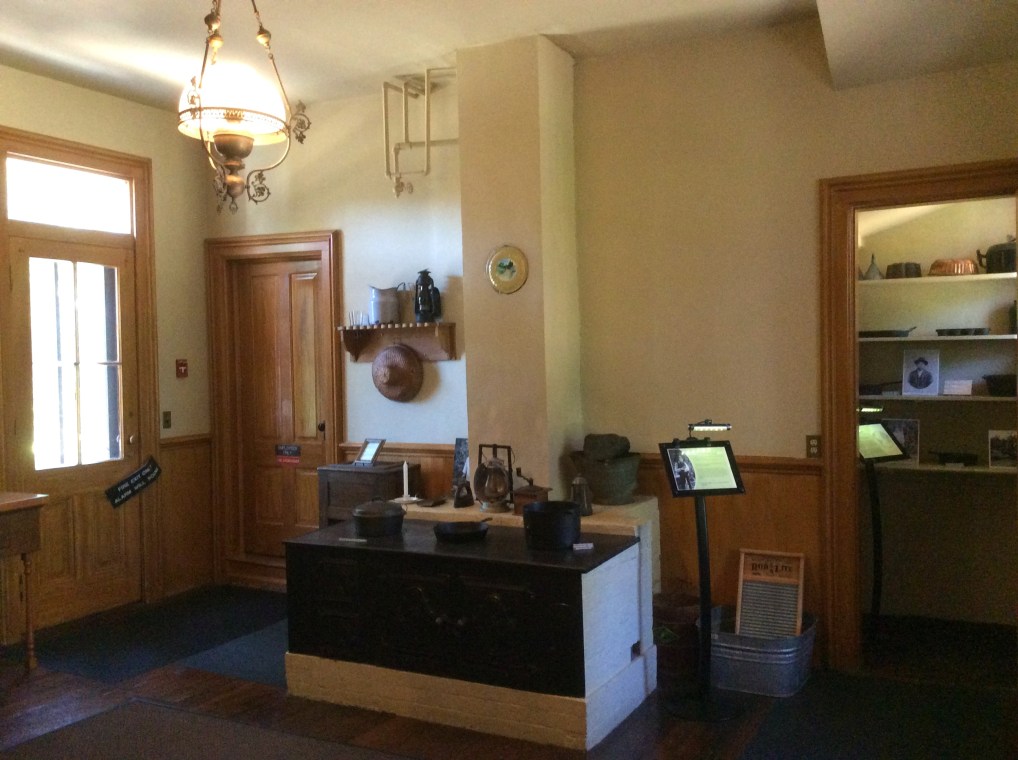
The kitchen at John Muir National Historic Site, Martinez, CA

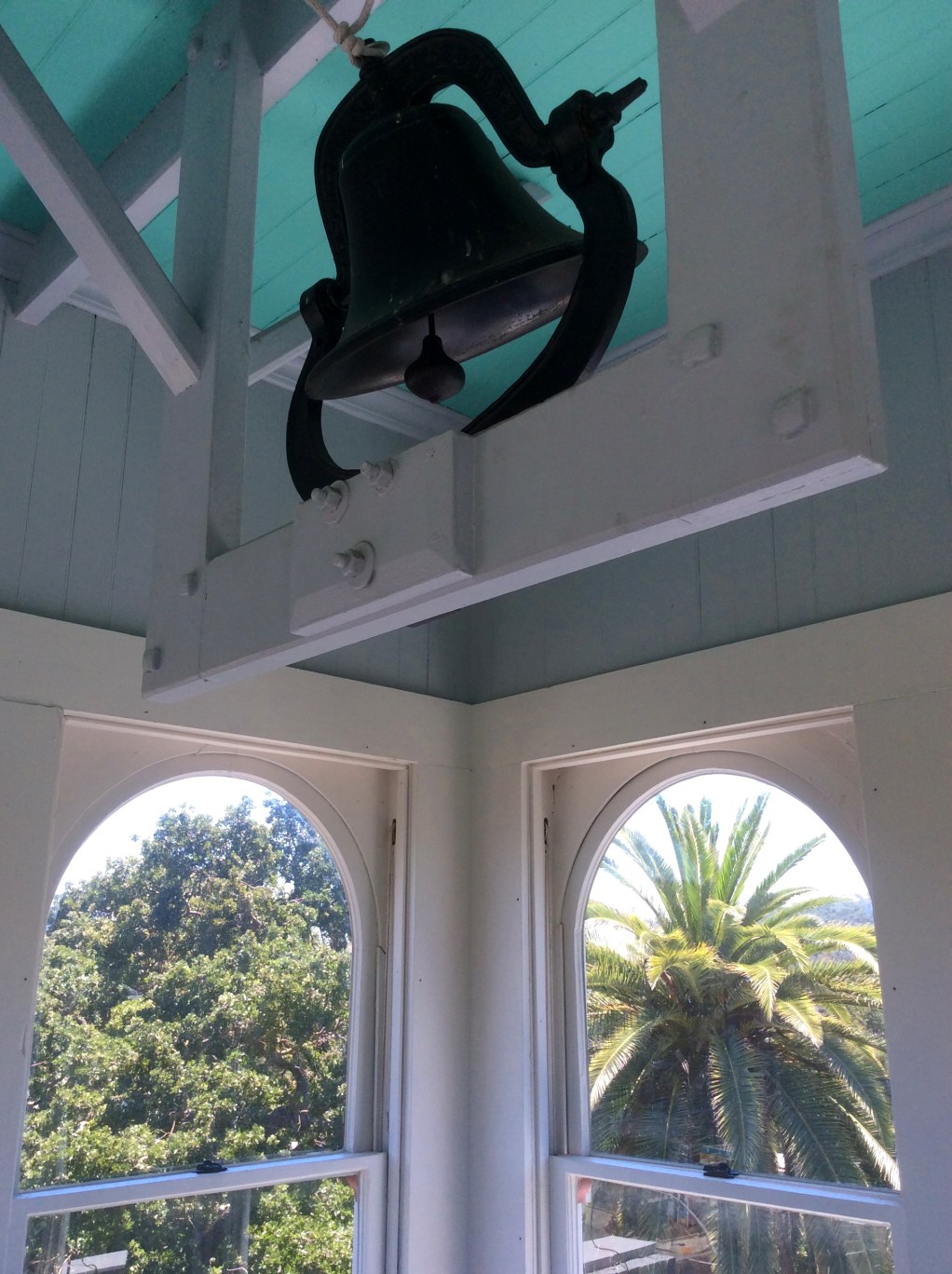
Inside the bell tower of the big house at John Muir National Historic Site, Martinez, CA. From this tower, one has an excellent view of the surrounding orchards.

Happy Birthday, John Muir!

John Muir National Historic Site, his home in Martinez, CA, where he lived the last two and a half decades of his life

In honor of John Muir’s birthday, April 21, 1838, I’ll share the story of my visit to an important place in his life last summer. It was June 26th, 2016, a hot, bright day in Martinez, CA.

The John Muir National Historic Site is just south of the Carquinez Strait, which links San Pablo and Suisun Bays. Benicia, California’s third but short-lived capital city, is just across the strait and was reached by ferry in Muir’s time. A lovely town with a well-preserved historic district, Benicia is well-situated on a waterway that permits easy passage for ships and ferries. In its early years, the strait allowed for easy passage of people, animals, and the products of this agricultural region and later industrial center, so it became a busy, thriving center of commerce. It enjoyed its first big boom with the Gold Rush, as it lay on an easy route between San Francisco and the gold fields.

Martinez was also a hub of Gold Rush activity. The ferry between Benicia and Martinez enjoyed a monopoly on getting all those gold-crazed fortune seekers south to the gold fields and north again to cash in. But Martinez was also an important agricultural town, and this site preserves just a little bit of that aspect of its history. It’s about a thirty-five-minute drive northeast of where I live in Oakland.

Physician, horticulturist, and father-in-law of John Muir, Dr. John Strentzel, among his orchards and vineyards in Martinez, CA. Photo credit: Sierra Club

A ripe peach from the orchards of John Muir National Historic Site, Martinez, CA

The grand house which stands here was first the home of Dr. John Strentzel, a Polish physician who emigrated to the United States in 1840. Like Benicia and Martinez, Strentzel made his early fortune in the Gold Rush, in his case through the practice of medicine. He later took up farming and achieved fame as a horticulturist. Strentzel settled in Alhambra Valley, just south of Martinez, with his wife Louisiana, daughter Louisa, and son John, in 1853. The Strentzels built their final home and grand farm here in Martinez from 1880-1882, with a veritable mansion made comfortable with the most modern amenities as they became available: indoor plumbing, gas lighting, two water closets, and eventually, a telephone and electricity. Louisa, nicknamed Louie, ferried to Benicia daily where she went to school and learned to play the piano expertly. Her brother John died at only nine years old in 1857.

The Martinez house was surrounded by acres and acres of rolling farmland, and several groves remain today. I see grapes, peaches, plums, pomegranates, and much more. Visitors can pluck and eat the fruit freely; the peaches and plums are ripe now, the latter richly red, dripping, and delicious.

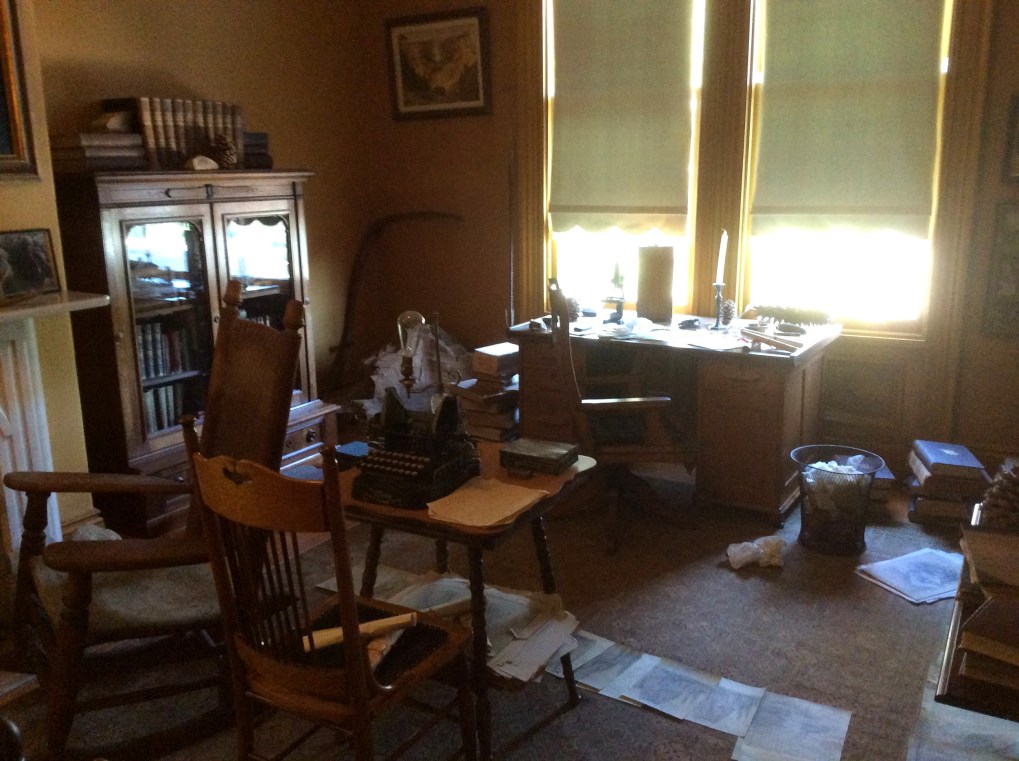
John Muir’s ‘Scribble Den’, John Muir National Historic Site, Martinez, CA

John Muir met the Strentzels in 1874; he was already well known as a naturalist and just beginning his career as a writer. The year before, he moved to Oakland from Yosemite and published articles about California’s natural wonders. He often lamented how slowly his thoughts flowed through his pen though they bloomed as naturally and abundantly in his mind as the wild California flowers he loved.

Parts of Yosemite had already been set aside as public land by the federal government, protected by the state of California for public use and barred from development by private interests. Senator John Conness introduced the park bill in Congress in 1864 which passed quickly, and President Abraham Lincoln signed it that summer. Conness is an interesting and admirable person as well, an Irish immigrant who also got his start in the Gold Rush and remained on the right side of history in his political career. His advocacy for Chinese immigrants and for equal rights eventually destroyed his political career, but in the meantime he was respected as a champion of the ordinary American, native and immigrant, over the interests of the few and the wealthy, and was one of Lincoln’s pallbearers.

Yosemite Falls, Yosemite National Park

Yet the bill setting Yosemite aside as public land did not provide funds or the authority to protect it. It took Muir, another immigrant, to reveal the true sacredness of the natural world to the consciousness of his (now) fellow Americans, which in turn gave rise to the political will to care for it. An accident in the factory he worked at in 1867 damaged his eyes temporarily and he began to wander. He walked from Indianapolis to Florida, a thousand miles, and fell in love with the natural world and the transformative power of walking in nature. Muir heard that there were spectacular natural wonders in California, vast, and in many places still unexplored and unspoiled, and sailed to San Francisco in 1868. He walked to Yosemite and throughout the Sierras, writing a journal as he went. He emerged as a prophet, fearless, tireless, and rendered poetic by his baptism of the wind, trees, stones, wildlife, and water.

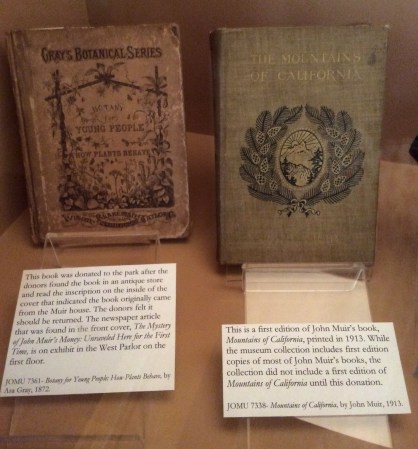
Two books, one written by and one owned by John Muir

But he realized that this great inspiration which transformed and ennobled his life would be unavailable to others if the entrepreneurs trespassing into the Yosemite valley and despoiling it were allowed to continue. So, again like the biblical prophets, Muir emerged from the wilderness to share the good news and cry out against those who defiled the great temples of creation for their own gain. He returned to civilization to spread the word, first through newspapers and then through books. 1874, the year he met the Strentzels at a mutual friend’s home in Oakland, saw his first success as a writer with his ‘Studies in the Sierra’ series. Muir had also discovered the evidence that the formations of Yosemite were created by glaciers, not wind and rain as previously thought, and over time, the scientific community were convinced of the truth of his theory.

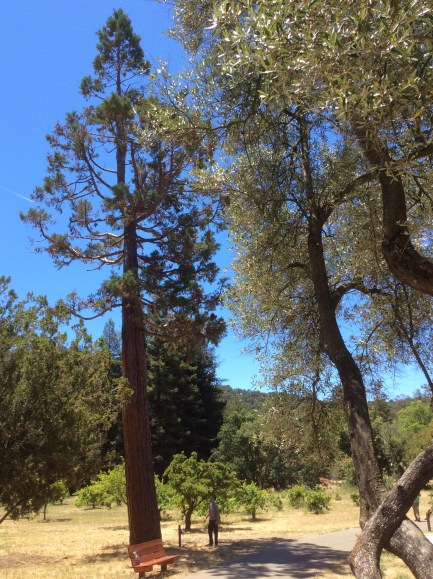
The sequoia that John Muir planted near his home is not doing too well, it’s too warm and dry here. Its natural habitat is in the higher, cooler Sierras

Muir married Louie Strentzel in 1879. Though her father and Muir had become good friends, the couple did not fall in love with each other on their own. Another mutual friend set them up and convinced each, separately, that the other would make a perfect companion for them. Muir began to help Dr. Strentzel run the Martinez farm when his health declined, and when he died in 1890, the Muirs established a life together here as ranchers with their two daughters. Muir turned out to be an excellent rancher and, like his father-in-law, was a hard and skilled worker, gifted at innovation and invention. Though Louie didn’t share Muir’s central passion for the wilderness, the couple were affectionate and generous with one another, and she insisted that Muir get away and spend time alone in his beloved wilderness when he needed it, which was often, and often for extended periods.

Like Muir, I love to walk, especially in nature, and when the weather and daylight hours permit, I go on hikes, long or short, two or three times a week. I would one day love to have the wherewithal, or lacking that, the courage to give up financial security and my belongings to wander the earth awhile in freedom, taking in what the journey has to offer. I am in the process right now of cutting my moorings and setting off on a new course in life, resuming my studies in Muir’s native Scotland and getting in as much walking and traveling as I can beforehand. I’m happy that I’ve walked in many of the places Muir has, or at least nearby: I’ve ascended Mount Diablo, by foot and by bicycle; I’ve done several hikes in Yosemite; I’ve lived in Oakland for over a decade and spent a lot of time in San Francisco; and on that beautiful summer day in June, I explored his old home and strolled through some of his orchards.

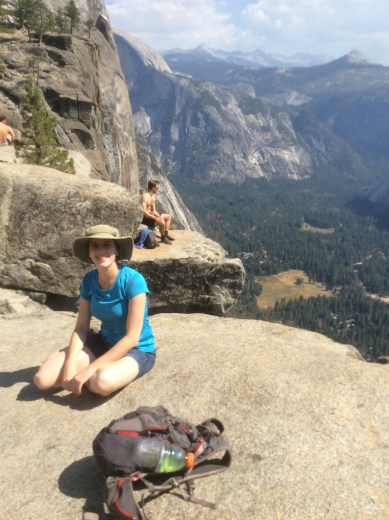
Amy in Yosemite National Park, above the falls on the El Capitan hike

The idea that Americans should own the most beautiful portions of their nation’s land in common is an idea that melds Muir’s belief in the sacredness of nature and Senator Conness’s belief in universal human rights. Each human soul needs and deserves a place of unspoiled beauty to immerse itself in, and everyone, not only the rich, the powerful, and the well-connected, should have the opportunity to fulfill and ennoble themselves this way. The National Parks, then, are among the greatest expressions of this democratic spirit.

*Listen to the podcast version here or on Google Play, or subscribe on iTunes

You can find more photos of the John Muir National Historic Site here

Ordinary Philosophy and its Traveling Philosophy / History of Ideas series is a labor of love and ad-free, supported by patrons and readers like you. Please offer your support today!

~~~~~~~~~~~~~~~~~~~~~~

Sources and inspiration

Burns, Ken. The National Parks: America’s Best Idea documentary series, and ‘John Muir (1838–1914)‘ from the documentary website

City of Benicia: Historic Context Statement, Sep 27, 2010. By City of Benicia Department of Public Works & Community Planning

John Muir National Historic Site: People‘, at NPS.gov

History of Martinez‘. From the Martinez Historical Society website

John Conness‘. In Wikipedia, The Free Encyclopedia.

The John Muir House‘. John Muir National Historic Site: People, at NPS.gov

Sierra Club: John Muir Exhibit, various articles: ‘Chronology (Timeline) of the Life and Legacy of John Muir‘; ‘Dr. John Theophile Strentzel’; ‘John Muir: A Brief Biography‘; ‘Louie Strentzel Muir: A Biography by Steve and Patty Pauly‘; ‘Who Was John Muir?

Thomas, Donna and Peter. Muir Ramble Route: Walking from San Francisco to Yosemite in the Footsteps of John Muir

Walsh, Victor A. ‘John Muir and the Family Ranch in Martinez‘. July 5, 2011. LiteraryTraveler.com 

John Steinbeck Country Part II: Grave Site and Fremont Peak State Park Hike

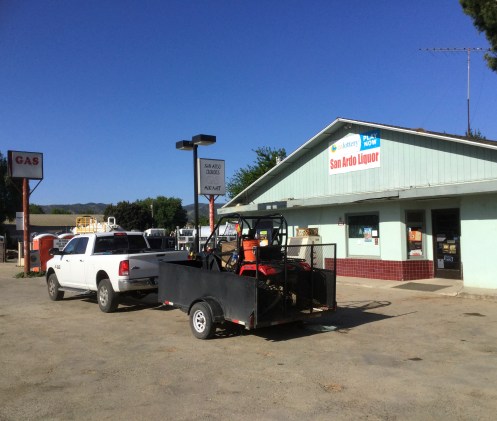
San Ardo Gas and Liquor Store, in San Ardo, off highway 101 in central California

Saturday, April 15th, 2017

I head north from Paso Robles, where I dropped off a troupe of long-distance cyclists this morning, via the 101 back towards the San Francisco Bay Area. My route takes me through Salinas and other old stomping grounds of John Steinbeck. I want to visit one site I missed when I was here last time on a cultural tour following his life and writings, and to revisit another site more thoroughly. On the way, I stop for gas in a little agricultural town called San Ardo, having forgotten to fill up in Paso Robles. I’m glad I have to stop here, because this little town reminds me of happy times visiting so many other small towns rather like this on road trips. I stop into the cafe to fill my thermos with coffee and buy some cookies for the road, and have a chat with the friendly young man who works here, in English and in Spanish.
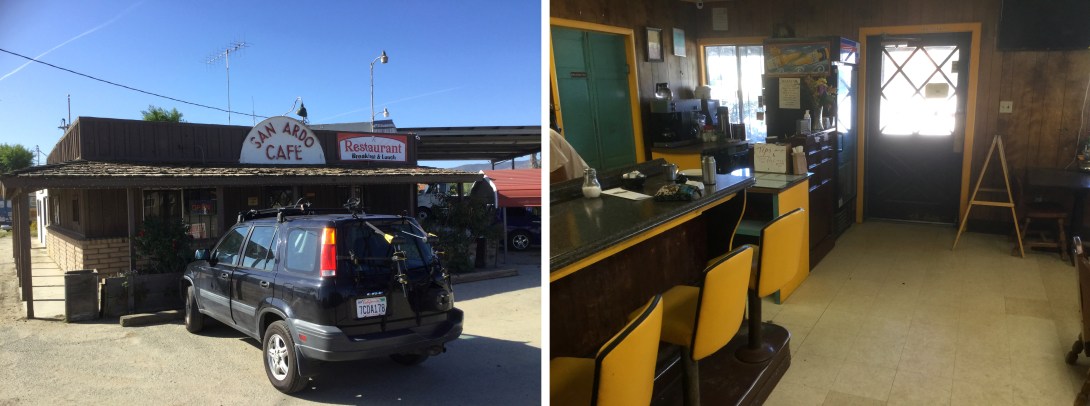
San Ardo Cafe, outside and in, San Ardo, CA, 2017 Amy Cools

The town’s appearance, too, is probably not unrecognizable from Steinbeck’s time. Who knows, he may have passed through here, it’s not far from his old home territory. The people who live and work here are in many ways Steinbeck’s people, those who work the soil so that we can eat but who we have often long neglected and abused. He made it his business for much of his career to illustrate the lives, circumstances, and sometimes desperate plights of these people, often immigrants and refugees fleeing hard times in their places of origin, for the often oblivious American public.
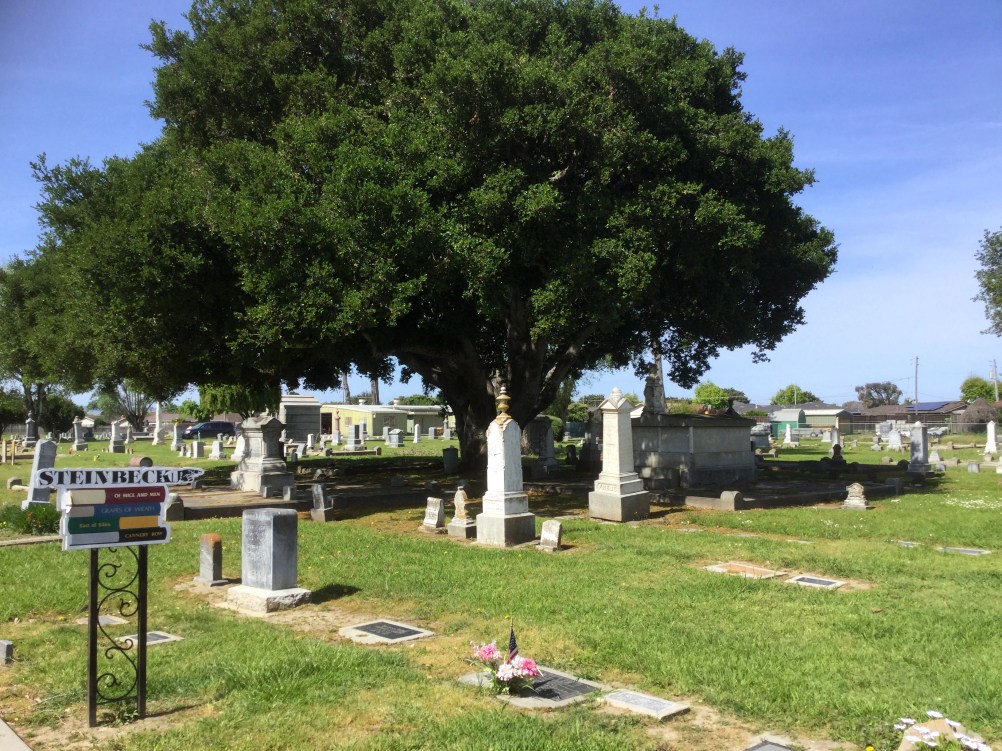
Guide sign to John Steinbeck’s grave in the Garden of Memories, Salinas, CA
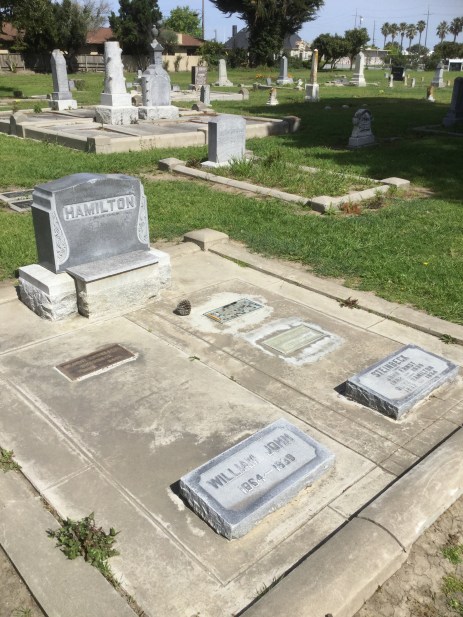
Steinbeck and Hamilton family plot, Garden of Memories, Salinas, CA

I continue an hour north to Salinas, where I visit Steinbeck’s grave in the Garden of Memories at Abbott St and East Romie Ln. Here he lies surrounded by his family. His headstone is the one decorated with tributes: coins, pens, and one pine cone (artfully placed by nature or a fan, I don’t know). You may recognize some of the names from his novel East of Eden: Hamilton, the family name of his mother; John Ernst, the first and middle name of the author and his father; and Olive Hamilton, the schoolteacher daughter of Samuel Hamilton and the author’s mother. It’s pretty here today, very green, with tiny white daisies and various kinds of yellow flowers blooming everywhere.

East of Eden is a double Cain-and-Abel story about two pairs of brothers in which one brother enjoys the love of his father with seeming little effort, and the other is jealous and driven to despair when his strenuous efforts to win that same love are rejected. Steinbeck wrote this novel for his sons and in hopes of creating the Great American Novel. It is an excellent novel, great in parts, but not the Novel. If any of his works are contenders for this mythical status, he had already written it as The Grapes of Wrath.
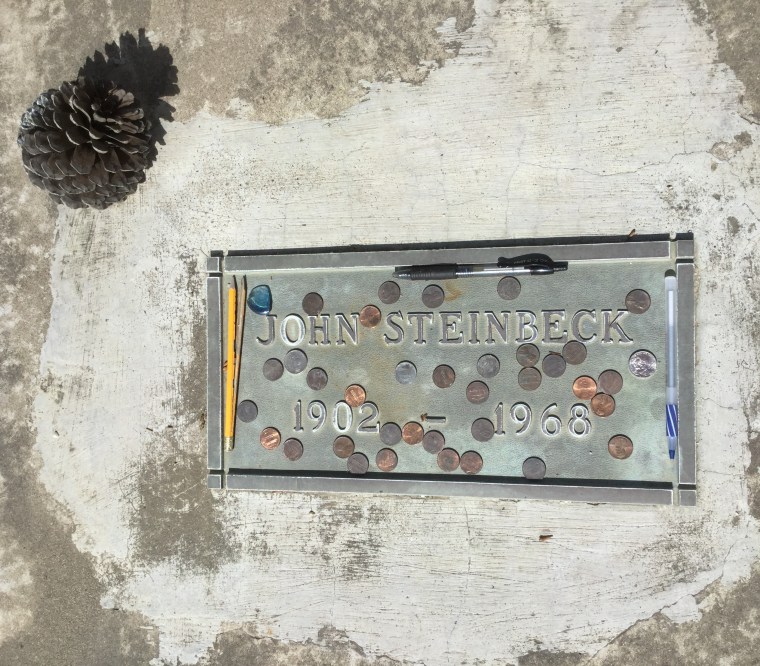
John Steinbeck’s grave marker
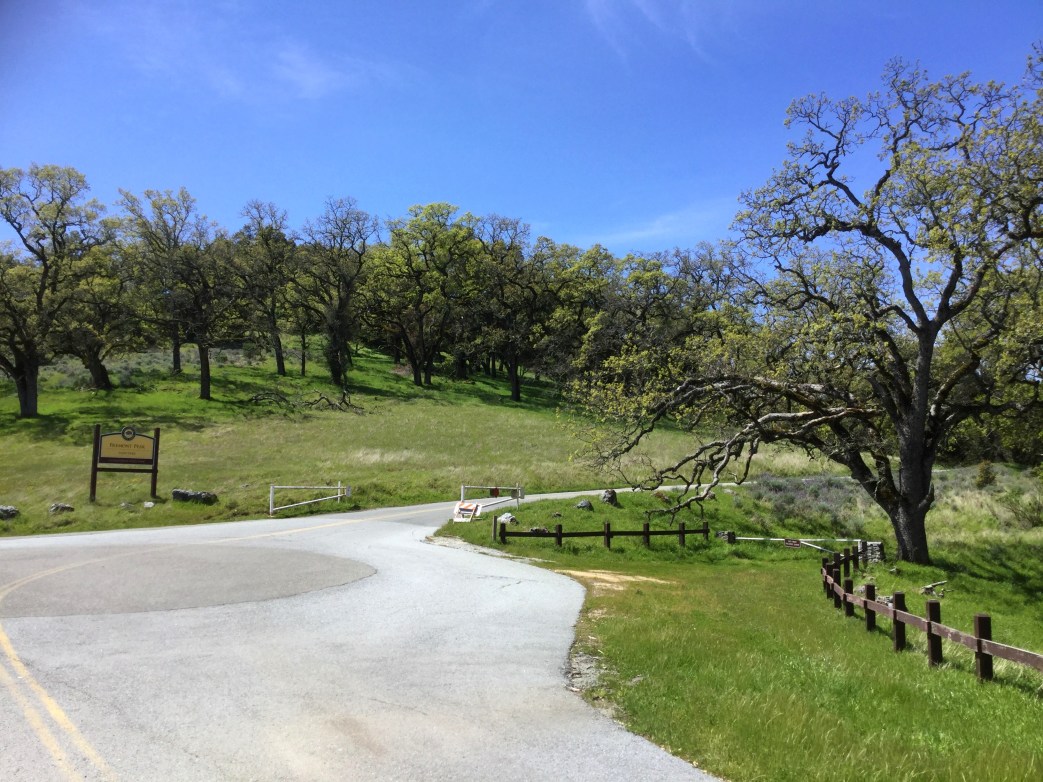
Fremont Peak State Park entrance sign, Cold Springs trailhead is to the right through the gate

Then I return to Fremont Peak, which Steinbeck ascended during his Travels with Charley to take in the broad view of his homeland from above. I plan to climb it from the bottom or as near as I can get to it, but find that Fremont Peak State Park is surrounded on all sides by private property until you’re well up the mountain. It was hard to tell this from Google Maps and from my print California maps. The park brochure, which is available free for visitors at the main parking lot near the center of the park and online, contains the map showing the entire trail system. I decide to walk them all, in an order which will take me winding counter-clockwise all around the park, leaving the loop about two-thirds of the way around for an out-and-back to the peak. I’m guessing Steinbeck would likely not have walked this long way up and around. His health was not great: he had long-term heart problems and was a lifelong heavy smoker, which seems to have aged him more than necessary for his years.
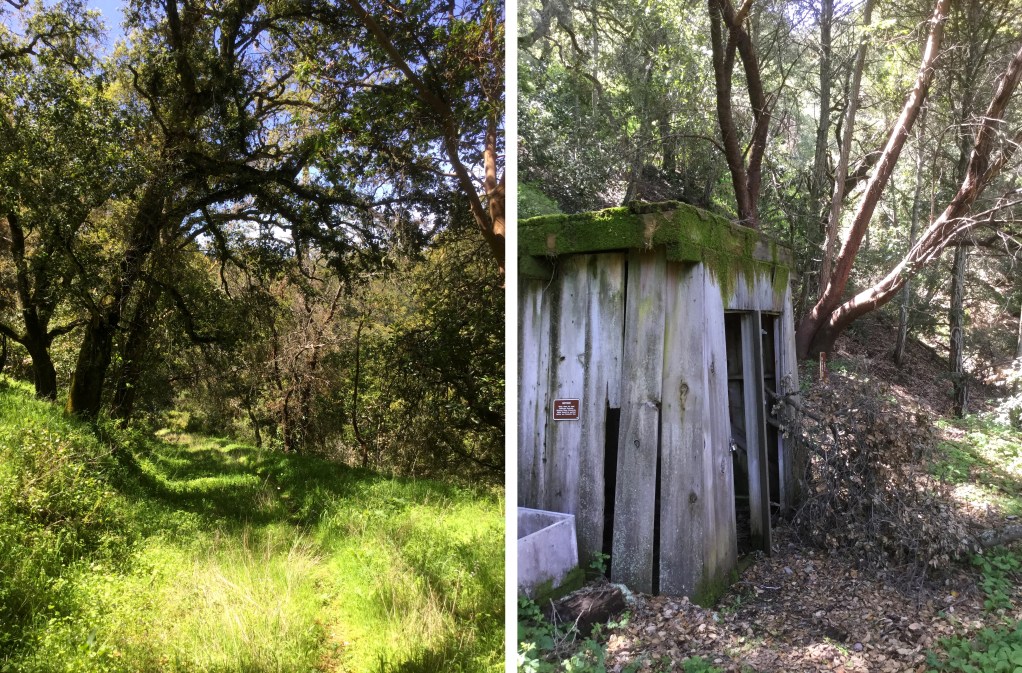
On Cold Springs Trail, Fremont Peak State Park, CA. Left, the windy and narrow under the mossy oaks. Right, a small abandoned shack which on first glance appears to be a two-room outhouse but which contains no signs of plumbing or waste pits. The sign above the trough warns that the water no longer piped here is unsafe for drinking

I backtrack to Doe Flat Day Camp near the park entrance and park my car there. As you’re entering the park on Juan Bautista Road, Doe Flat is to the left of the Fremont State Park entrance sign. The trailhead to Cold Springs Trail, on which I commence my hike, is across the street from the campground and through the gate, unmarked except on the park map. I had missed it when I first entered the park since it lacks a sign and because it’s so overgrown. Only a little, narrow, blurred strip of dirt marks the way that evidently few hikers take. It’s green and lush here, a gift of the winter and early spring heavy rains that ended our drought of the last few years. Miner’s lettuce, wood fern, thistle, various grasses, and maidenhair proliferate and revel in the joy of living. The trail is obliterated in many places by fallen trees, the less fortunate recipients of the storms. At one point, I use my head as a battering ram to get through the branches that my hands are already too full to push aside. I’m grateful for my new red sun hat, broad-brimmed and made of a not too heavy but very sturdy synthetic material. It keeps my hair free from the tangling twigs and my shoulders free from scratches. Its bright color will also serve to mark the site of my remains if I am one of those few Californians that make a meal for a mountain lion every two decades or so, if such an enterprising feline takes advantage of my aloneness on this solitary trail. My shins and ankles, however, are shit out of luck.
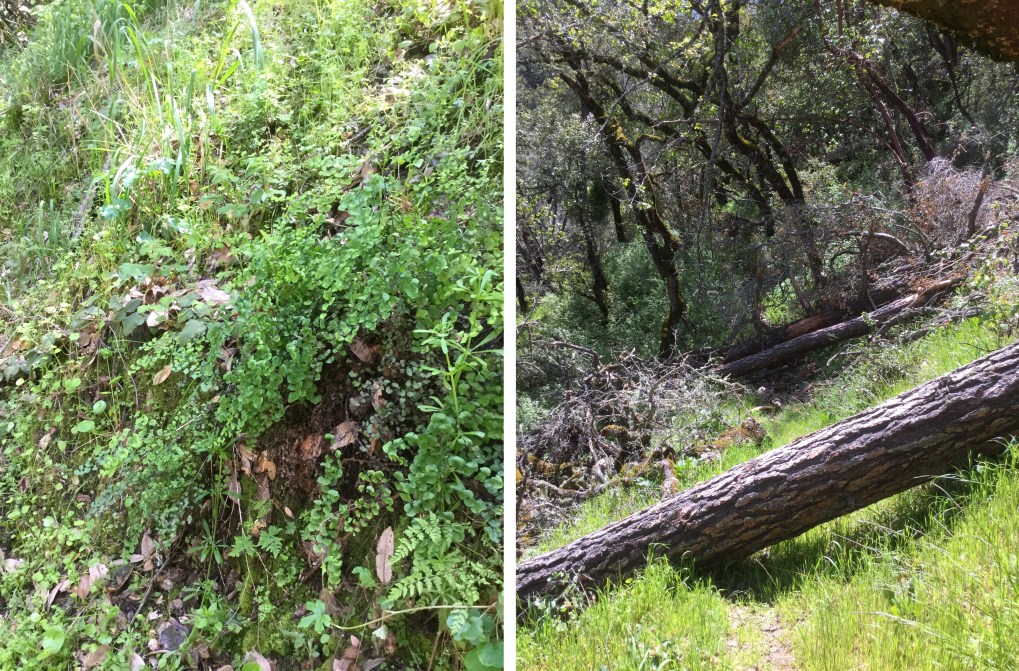
Left: Maidenhair, miner’s lettuce, spiny wood fern, and grasses. Right: Fallen logs. On Cold Springs Trail, Fremont Peak S.P., CA

Except when it comes to poison oak. I keep an eagle eye out for it; I still have scars from the last time I was here. It’s much easier to see now since the leaves have grown in thick and it’s already starting to redden in some places. I’m also alone this time, and hence undistracted.

Suddenly, the path changes. It’s broader and sandier, and the mossy oaks abruptly give way to manzanita, toyon, and coyote brush. Now I can look up and out at the view because the growth is lower and sparser here, and because the poison oak clearly doesn’t like this dry and sunny side of the hill. Soon after the change, I come to a clearing where a signpost marks the beginning of Valley View Trail where Cold Springs ends at a fire road crossing. There are two weathered picnic benches to my left and a beautiful stand of purple lupine to my right. I veer left on the fire road, then right to continue on to Valley View Trail. The oaks have reappeared, interior live, scrub, and poison. I pick my way with great care again, but the trail is so overgrown and the fallen branches so tangled with it that I’m not sure if I successfully avoid all danger. I’ll be sure to take a hot shower with a scrub brush and plenty of soap when I get home.
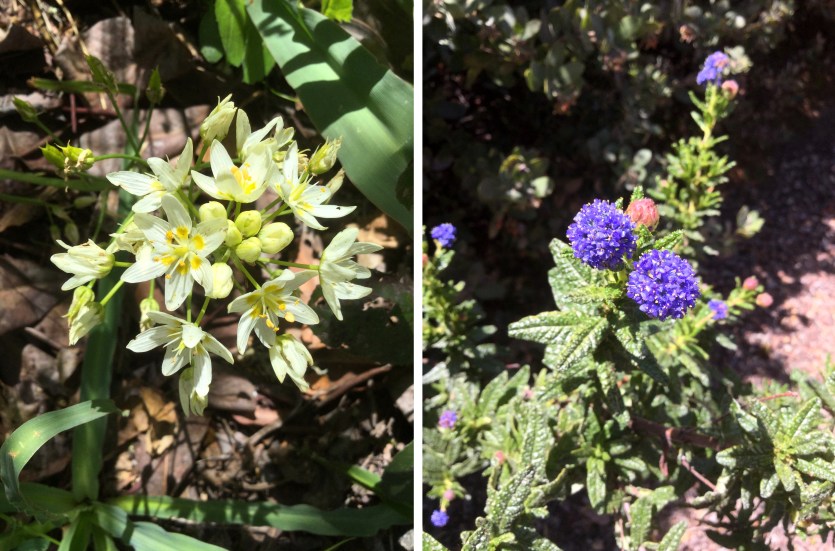
Left: Fremont Star Lily. Right: California Mountain Lilac. Fremont Peak State Park, CA
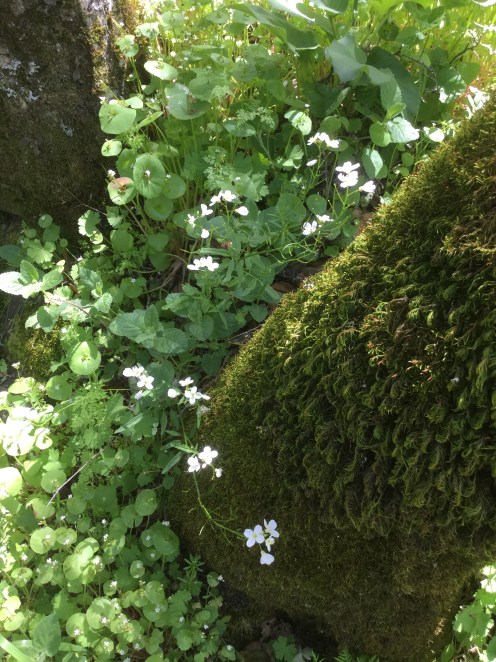
Milk maids and miner’s lettuce in bloom around a mossy trunk, Fremont State Park, CA

The wildflowers are not so thick now in most spots, though I can see the dried and shriveled evidence that they were not long ago. They may soon enjoy a second bloom from the straggler storm that passed through recently. Those still here are just beautiful, white, pink, yellow, purple, and blue. I see waxy yellow California buttercups, blue witch and blue-eyed grass, purple shooting stars and larkspur, golden poppies, white woodland stars, and many, many more. A woodpecker knocks overhead as other birds chatter, squawk, trill, and call with that ‘wheeeeeew’ sound that accompanies old-time comedy scenes.

I cross a little road and Valley View Campground, a sweet little spot. On the other side, Valley View Trail becomes a much wider and well-traveled one, and I start meeting hikers now and again. A pair of lovers frolic and laugh somewhere nearby, fitting in perfectly with the bird chorus. A barbed wire fence running along the right of the trail marks the park boundary.
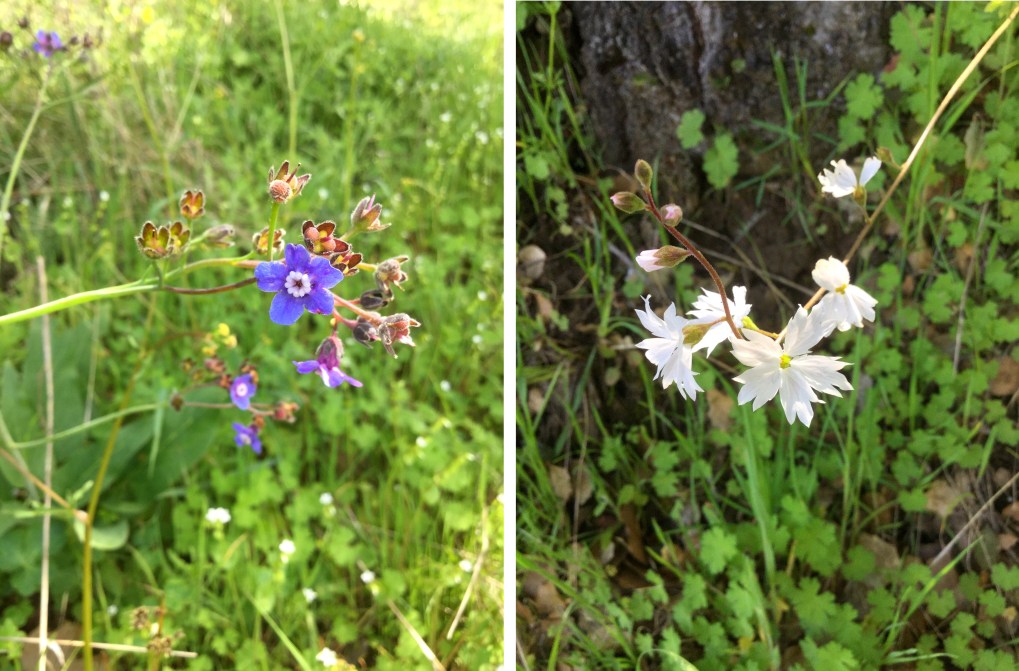
Left: Hound’s Tongue. Right: Woodland Star. Fremont Peak State Park, CA
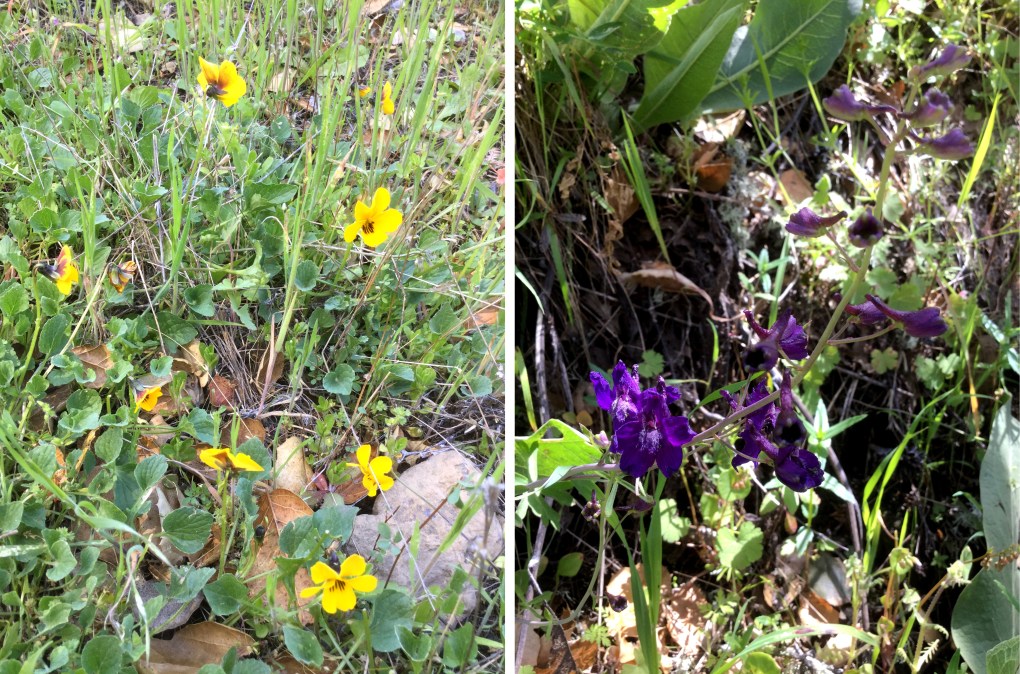
Left: Wild Pansy. Right: Royal Larkspur. Fremont Peak State Park, CA, 2017 Amy Cools
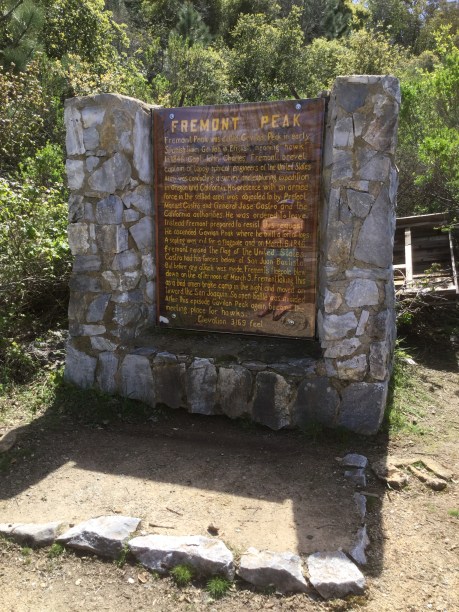
Captain John Fremont 1846 flagpole story sign, Fremont Peak State Park, CA

I arrive at the parking lot near Oak Point Campground where the Peak Trail begins, which I ascended with the John Steinbeck Odyssey Tour group in March. There’s a large sign framed in stone which tells the story of Captain John Charles Fremont’s run-in with Prefect Manuel Castro and General Jose Castro in 1846. It tells it as if it’s a heroic tale on Fremont’s part, but it reads to me like an act of arrogance and a provocation to war, waltzing into another’s country with an army and without a by-your-leave then planting your nation’s flag in their soil. His flagpole blew down, however, and the superstitious general hightailed it out of there with his soldiers before any fighting started. The roof of this monument has likewise fallen and a shirtless beefcake is reflected in the sign as I take a picture. The circumstances of this moment make me chuckle.
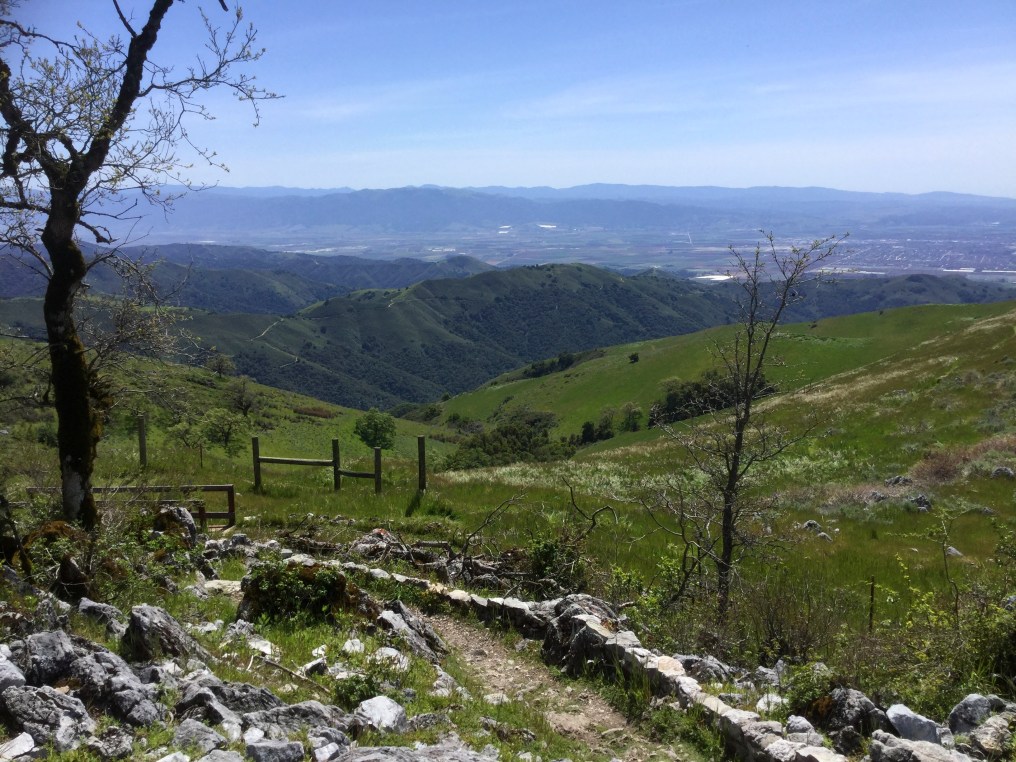
Rocky trail to Fremont Peak
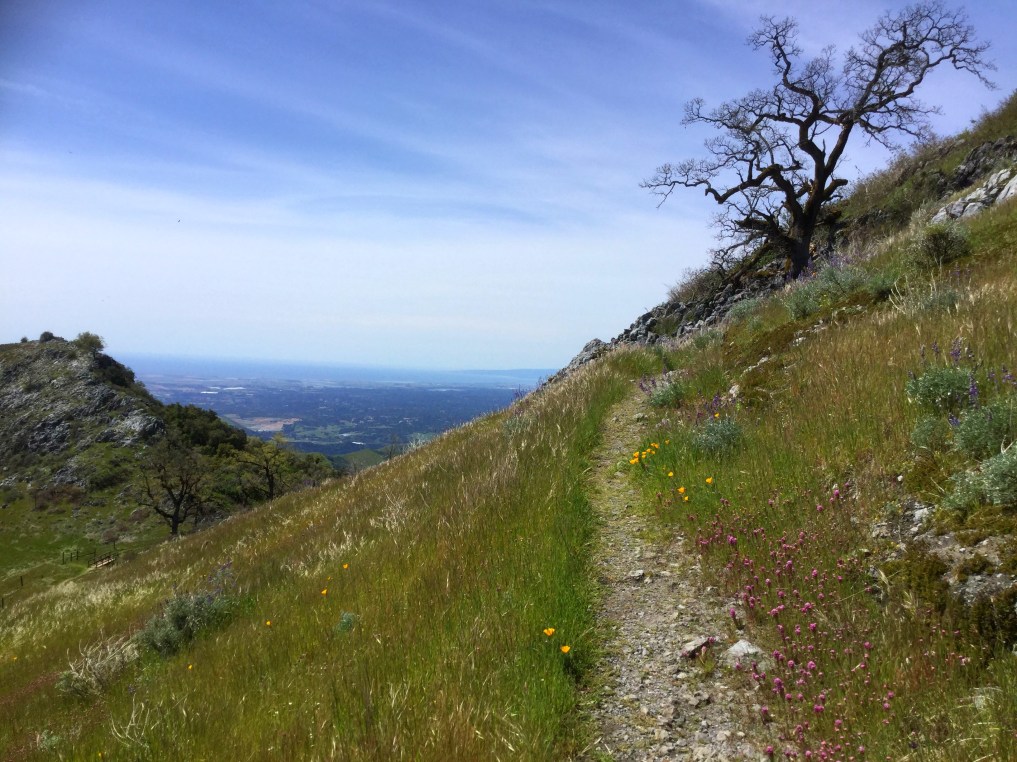
Wildflowers along the grassy hill side of the trail to Fremont Peak
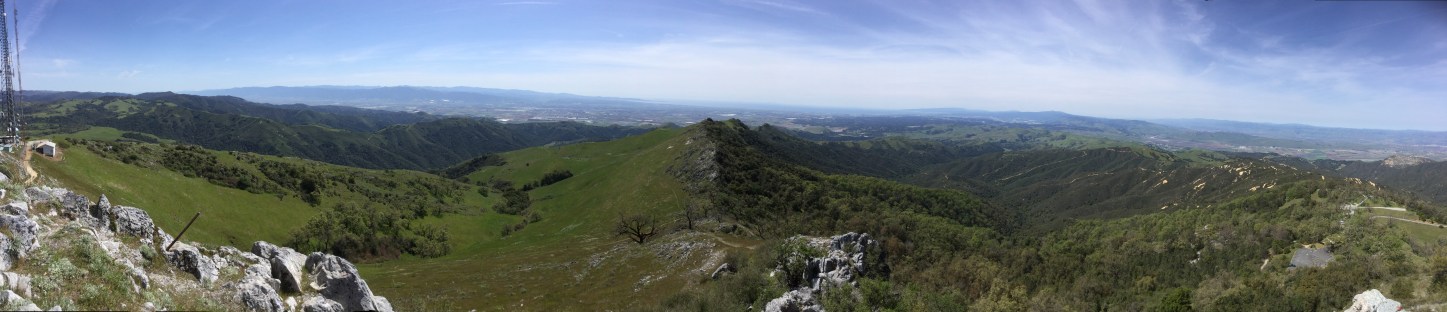
Panoramic view from Fremont Peak
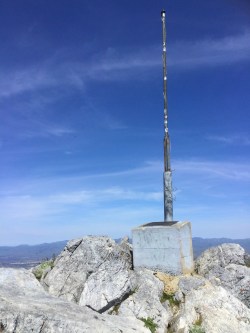
Historical marker and flagpole on Fremont Peak

In all seriousness, though, this is a beautiful spot, conducive to much loftier thoughts and feelings. I climb to the peak, and the view is incredible. It’s even greener than it was in March, and now it’s wildflower season. The Monterey Bay spreads out ahead and a little my left, and the crop fields grow to my right. The Salinas Valley region is one of the most productive agricultural areas of California. The sight of Fremont’s flagpole here at the top has been marked by another, much sturdier one, and a brass plaque set in concrete, which tells the tale even more heroicly. I chuckle again as my reflective mood is broken.

Then I remember my travel companions gathered with me on the last occasion which brought me here, and sigh. I miss them.

At the foot of the Peak Trail, I turn right onto Carmen’s Trail, which zigzags thinly through slopes thickly covered with softest greenery and more thistles, which gently sting my ankles. It’s lovely and cooler here in the shade of taller oaks, which need to reach higher for the sun in this little canyon. The narrow creek bed running along its bottom is already dry. On the other side, the trail ascends a grassy, open hillside, the green just barely beginning its Midas’ touch transformation into the gold of summer. It’s inset with jewel-bright lupine and poppies throughout.
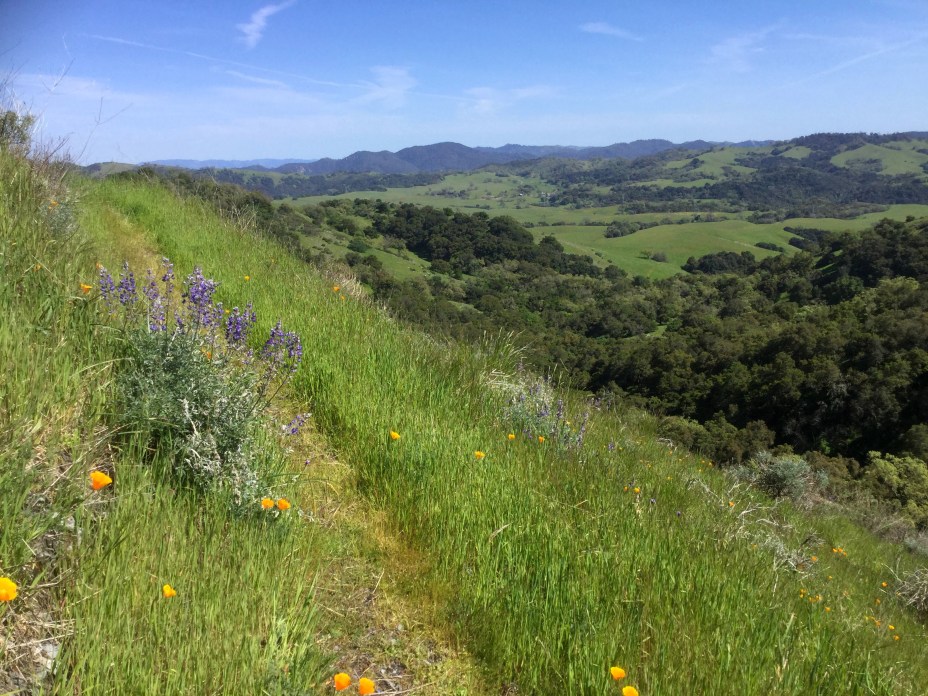
View from Carmen’s Trail, Fremont Peak State Park
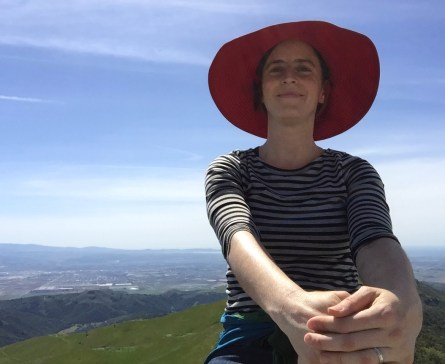
Amy Cools on Fremont Peak

Carmen’s Trail ends at a little pointy shingle-sided building of quality construction, handsomely finished in varnished wood and teal paint, perhaps a cabin. I turn right just before I reach it and take Tony’s Trail, which returns me in short order to Doe Flat. I dine on some leftover pizza which I had set to warm in its foil on the sunny dashboard. It’s more delicious than it was when it was fresh at last night’s dinner.

It’s been a delightful day.

* See my profile of Julia Ward Howe, whose Battle Hymn of the Republic provided the title of The Grapes of Wrath, and which is printed in the opening pages of the novel

*Listen to the podcast version here or on Google Play, or subscribe on iTunes

Ordinary Philosophy and its Traveling Philosophy / History of Ideas series is a labor of love and ad-free, supported by patrons and readers like you. Please offer your support today!

Traveling Philosophy Series, Thomas Jefferson Edition: Prologue

Three years ago today

Amy M Cools's avatarOrdinary Philosophy

As I sit here in the airport terminal in Salt Lake City, waiting for one of my connecting flights to DC, I sleepily munch on French fries and watch the crowd go by. My ever-generous darling awoke with me at three thirty this morning to drive me to the airport, and though I’m almost too tired to think, I can’t sleep either, as is usually the case at the beginning of a trip (I can usually sleep on the way home).

So as I’m watching the crowd, I’ve got Thomas Jefferson in the back of my mind, as I’ve been immersing myself in biographies, lectures, discussions, and author’s talks about his life and thought over the last couple of weeks. On the first leg of my trip, I had just been re-reading the first chapters of Susan Jacoby’s marvelous Freethinkers: A History of American Secularism, in which Jefferson’s Enlightenment philosophy…

View original post 589 more words

Photobook: Benjamin Franklin’s Grave in Old Town Philadelphia, Pennsylvania

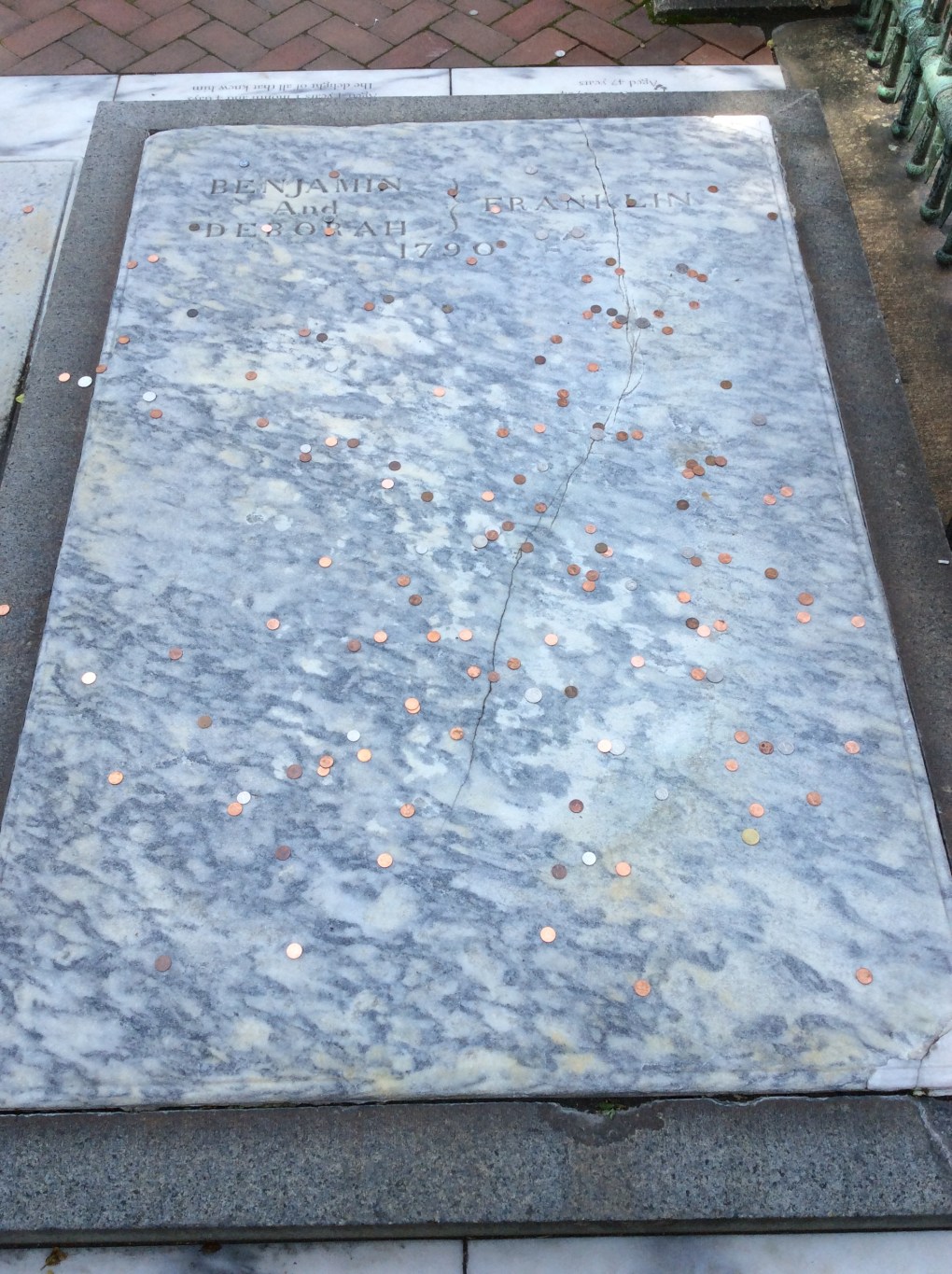
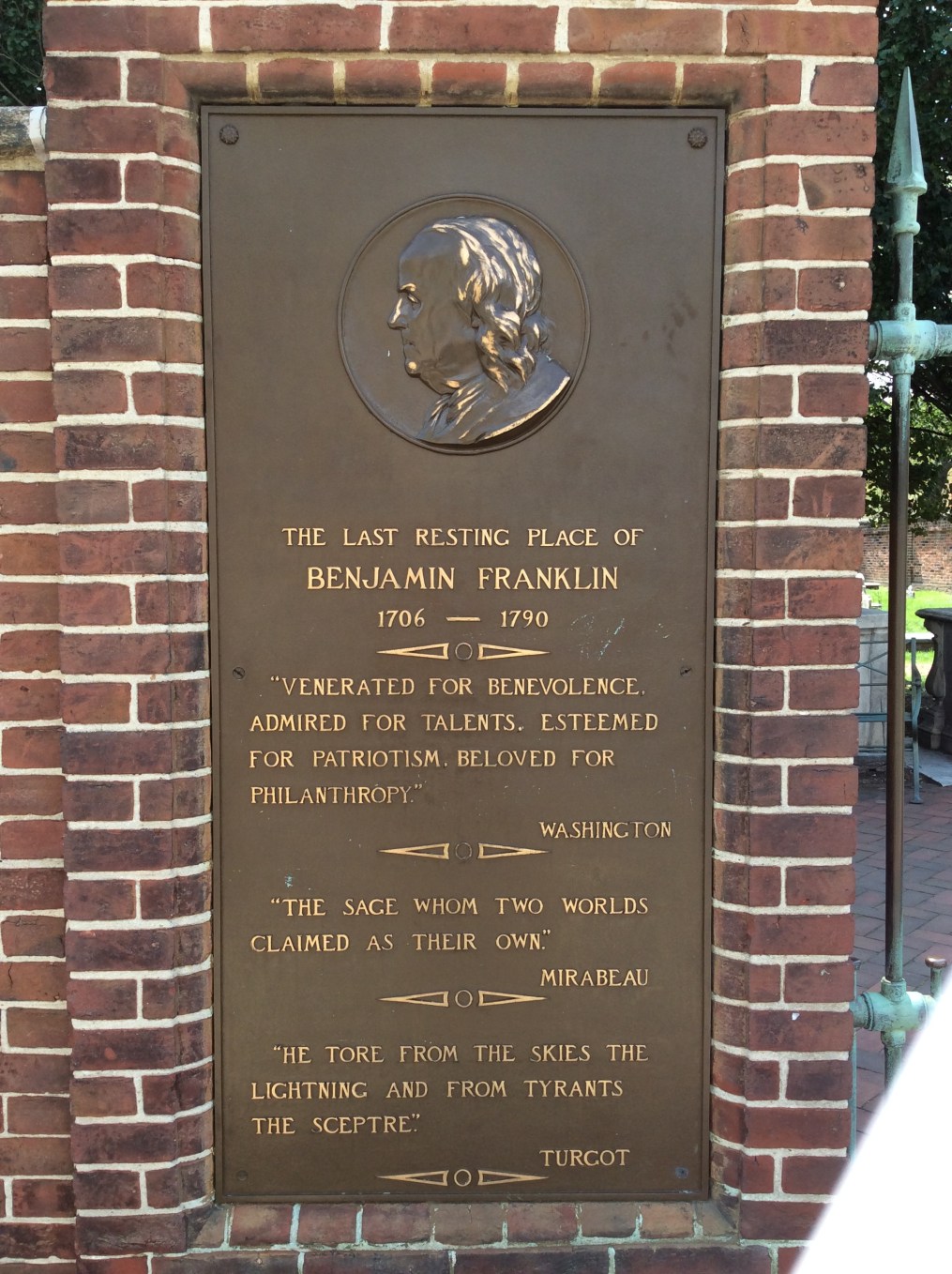
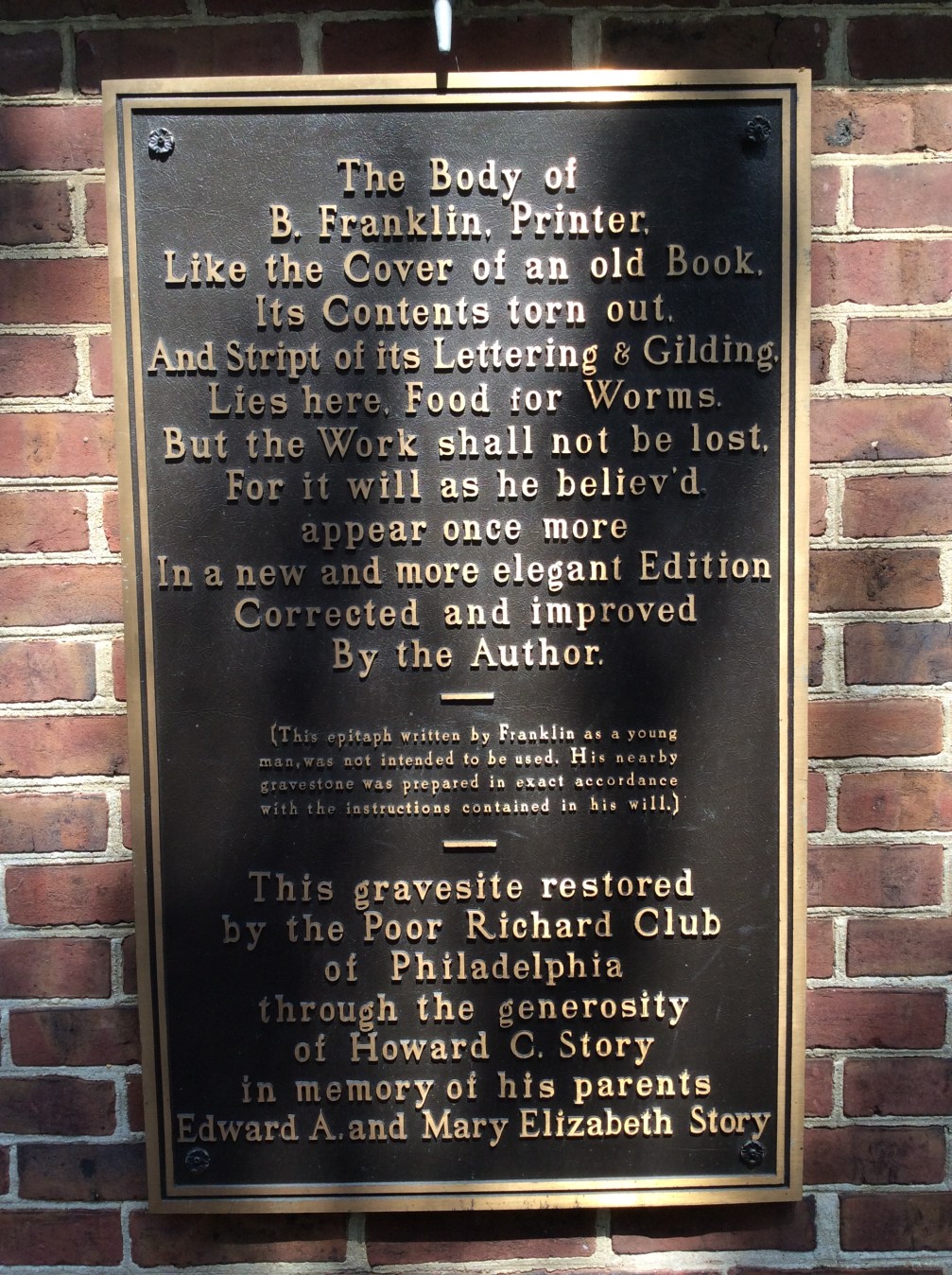
Benjamin Franklin‘s grave in Christ Church Burial Ground at Arch and 5th Streets, Old Town Philadelphia, PA. I took this photo while on the first of my Thomas Jefferson history of ideas tours, 2015. Franklin died on this day, April 17th, in 1790 here in Philadelphia. Scroll down for more…

Ordinary Philosophy and its Traveling Philosophy / History of Ideas series is a labor of love and ad-free, supported by patrons and readers like you. Please offer your support today!
New Podcast Episode: O.P. Recommends: Why Radio’s Feminism as Philosophy, Politics, and Friendship with Guests Gloria Steinem and Suzanne Braun Levine

Gloria Steinem and Suzanne Braun Levine, image via Why? Radio podcast website

Listen to this podcast episode here or on Google Play, or subscribe on iTunes

I was recently thrilled to discover Why? Radio‘s podcast. It’s about time I did, since it’s eight years and more than 100 episodes in. Thanks for the share, Laura of Bismarck, ND!

For the 100th episode this February, host and creator Jack Russell Weinstein interviews Gloria Steinem, co-founder of Ms. magazine, journalist, writer, and feminist extraordinaire; and Suzanne Braun Levine, first editor of Ms. magazine, author, and authority on feminism and gender issues. The topics covered in this episode are summarized in the title ‘Feminism as Philosophy, Politics, and Friendship‘. Weinstein is a Professor of Philosophy at the University of North Dakota and created the IPPL radio show and podcast Why? Philosophical discussions about everyday life for very similar reasons I created Ordinary Philosophy, as you can see from the subtitle…. Read the written version here

Ordinary Philosophy and its Traveling Philosophy / History of Ideas series is a labor of love and ad-free, supported by patrons and readers like you. Please offer your support today!


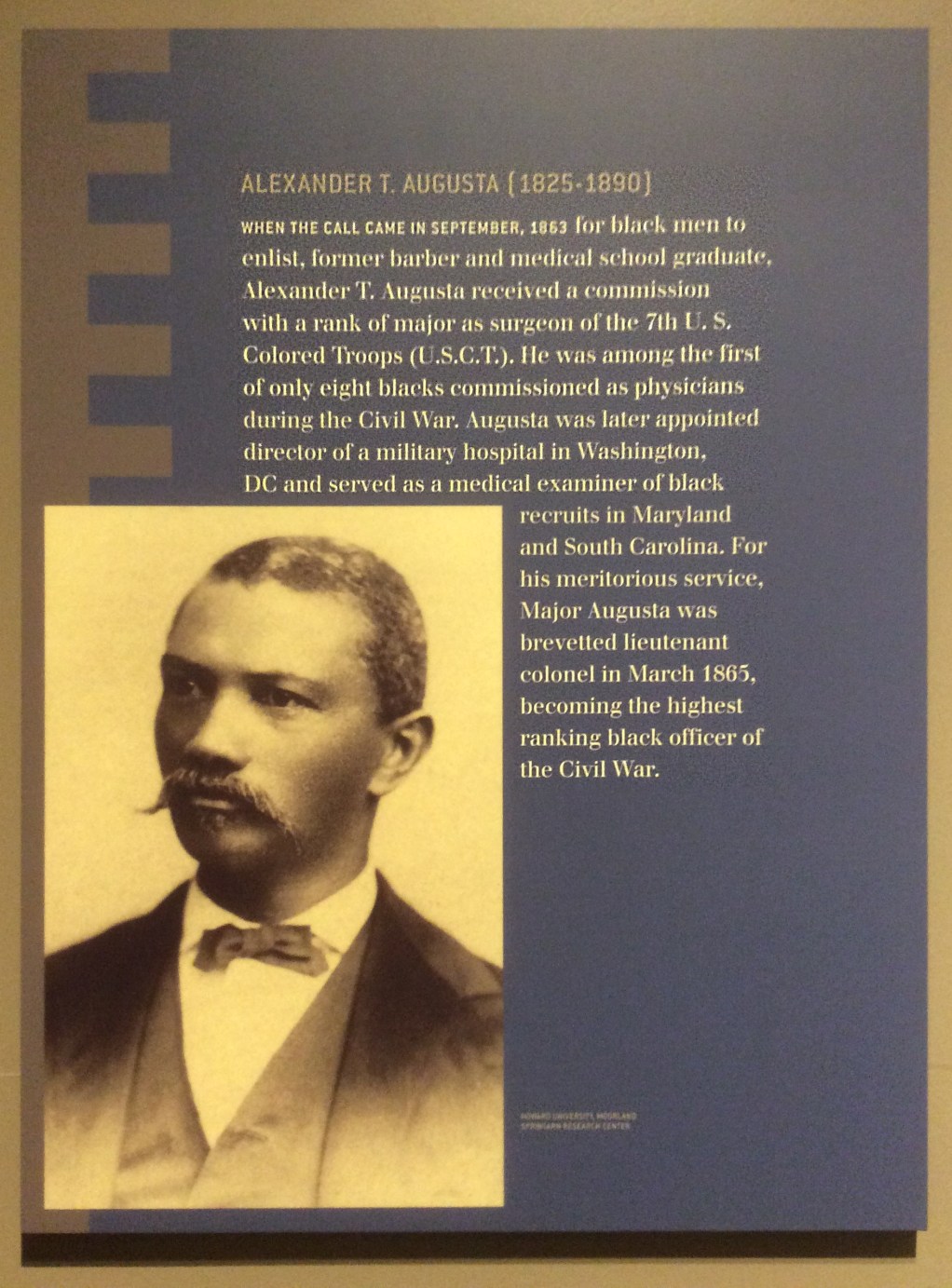
Photobook: Alexander Thomas Augusta, Highest Ranking Black Officer in the Civil War

‘Alexander Thomas Augusta was the highest-ranking black officer in the Union Army during the Civil War. He was also the first African American head of a hospital (Freedmen’s Hospital) and the first black professor of medicine (Howard University in Washington, D.C… On April 14, 1863, Augusta was commissioned (the first out of eight other black officers in the Civil War) as a major in the Union army and appointed head surgeon in the 7th U.S. Colored Infantry’ – Blackpast.org. I took this photo at the Maryland Historical Society in Baltimore, while on my history of ideas travels following the life and work of Frederick Douglass last spring

Happy Birthday, Thomas Jefferson!

Thomas Jefferson by Charles Bird King, 1836, after Gilbert Stuart, at the Smithsonian Portrait Gallery in Washington, D.C. Photo 2016 by Amy Cools

In remembrance of Thomas Jefferson (April 13, 1743 – July 4, 1826) on his birthday, I’ll share my tributes to his memory, his life, and his ideas: my traveling philosophy / history of ideas series

To Washington DC, Virginia, and Philadelphia I Go, In Search of Thomas Jefferson

and

To Paris, France I Go, In Search of Revolution-Era Thomas Paine, Mary Wollstonecraft, and Thomas Jefferson

and my thrilling interview with Clay Jenkinson, Jefferson scholar, last year

Interview with Clay Jenkinson as Thomas Jefferson

I hope you enjoy following me as I follow in the footsteps of Jefferson!

Ordinary Philosophy and its Traveling Philosophy / History of Ideas series is a labor of love and ad-free, supported by patrons and readers like you. Please offer your support today!
O.P. Recommends: Why Radio’s Feminism as Philosophy, Politics, and Friendship with Guests Gloria Steinem and Suzanne Braun Levine

Gloria Steinem and Suzanne Braun Levine, image via Why Radio Podcast website

Gloria Steinem and Suzanne Braun Levine, image via Why? Radio podcast website

I was recently thrilled to discover Why? Radio‘s podcast. It’s about time I did, since it’s eight years and more than 100 episodes in. Thanks for the share, Laura of Bismarck, ND!

For the 100th episode this February, host and creator Jack Russell Weinstein interviews Gloria Steinem, co-founder of Ms. magazine, journalist, writer, and feminist extraordinaire; and Suzanne Braun Levine, first editor of Ms. magazine, author, and authority on feminism and gender issues. The topics covered in this episode are summarized in the title ‘Feminism as Philosophy, Politics, and Friendship‘. Weinstein is a Professor of Philosophy at the University of North Dakota and created the IPPL radio show and podcast Why? Philosophical discussions about everyday life for very similar reasons I created Ordinary Philosophy, as you can see from the subtitle.

My readers may often wonder why my philosophy/history of ideas blog and podcast are at least as devoted to the life and ideas of activists and civil rights leaders as they are to philosophers and theorists. Steinem sums up a conviction I share near the beginning of the interview: ‘To be part of any social justice movement is probably to be on the forefront of philosophy’. Social justice movements are founded on ideas that have not yet been understood and accepted widely enough to be embodied in law and social practice. Many activists, then, can be understood as philosophers in the public square, and activism as philosophy in action. They are part of the same noble tradition, forcing us to consider uncomfortable questions and raising our consciousness, as Socrates’ gadfly questions, awakening his fellow citizens from their ‘dogmatic slumbers‘. I’m also gratified to hear Steinem cite Louisa May Alcott as one of her earliest influences, as she was for me; the story of Alcott’s principled stand at Frederick and Helen Pitts Douglass’ wedding is among my favorite examples of philosophy in action, a perfect demonstration of the right way to think and act towards our fellow human beings.

Steinem also challenges the way that second-wave feminism is often characterized as a middle-class white movement. She points out that polls revealed that black women, especially in the early days of the movement, shared feminist and civil rights convictions in far greater proportions than any other group, and were more likely to demonstrate their convictions through action; it’s just that they were not recognized in the media nor did they have the opportunities that white women, as well as white and black men, had to rise to leadership positions. Steinem shares an anecdote from her participation in the March on Washington, in which a black woman in the crowd angrily points out that not a single black woman was chosen to address the crowd from the stage, which illustrates this paradox.

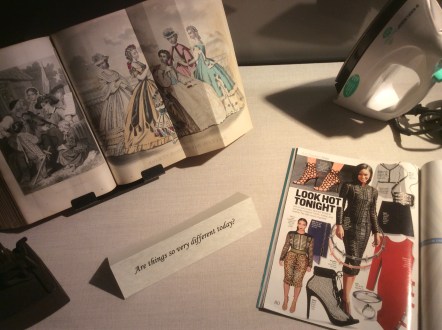
Women are still expected to wear ‘feminine’ clothing that pushes, pulls, and presses their bodies into fashionable shapes, sometimes painfully, and to wear heavy makeup and crippling and uncomfortable shoes in order to be considered well-dressed and sexy, especially for public figures. The problem is not necessarily these fashions themselves, it’s that women are generally required to adorn themselves this way in order to achieve their goals. Photo exhibit at Women’s Rights Historical Park, Seneca Falls, NY.

I also love what Braun Levine says about being a ‘tomboy’ as a young girl; she says it shows she was on the ‘wrong path’. She wasn’t saying that she was wrong to want to play with the boys and wear pants, to the contrary. I interpret her statement as her commentary on how we’ve long divided healthy, active pursuits such as sports and wanting to wear clothing that permits bodily freedom into the category ‘boy’, and daintiness constrained in clothing and shoes that limit bodily freedom into the category ‘girl’. It was only with the hindsight and wisdom made possible by her own evolving consciousness, which she, in turn, awoke in her readers, which made her realize that these ‘boy’ and ‘girl’ qualities, instincts, and preferences, are universal human ones. People of all genders, or of none depending on how you describe it, love to be very physically active or they don’t, like to wear constrictive and elaborate clothing, makeup, and shoes or don’t, and so on.

This wonderful discussion about the history and evolution of feminism, as Steinem and Braun Levine experience it, wraps up with an exchange with two budding activists, eleven-year old Faith and Adina. What a great way to show just how influential these two women are and how the young are moving their cause forward and applying it to the modern world!

*Listen to the podcast version here or on Google Play, or subscribe on iTunes

Ordinary Philosophy and its Traveling Philosophy / History of Ideas series is a labor of love and ad-free, supported by patrons and readers like you. Please offer your support today!