Water of Leith

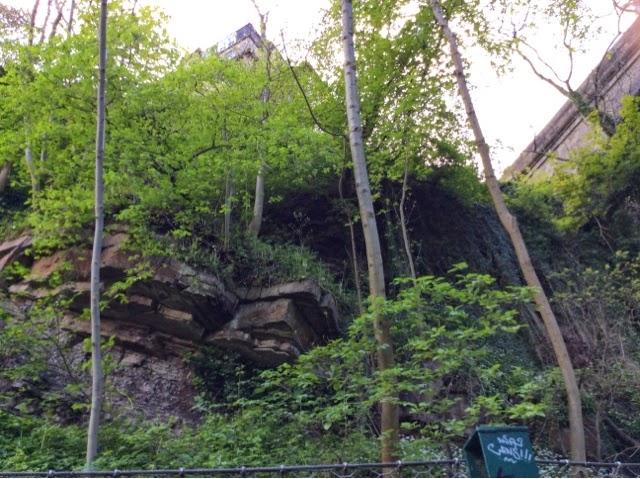
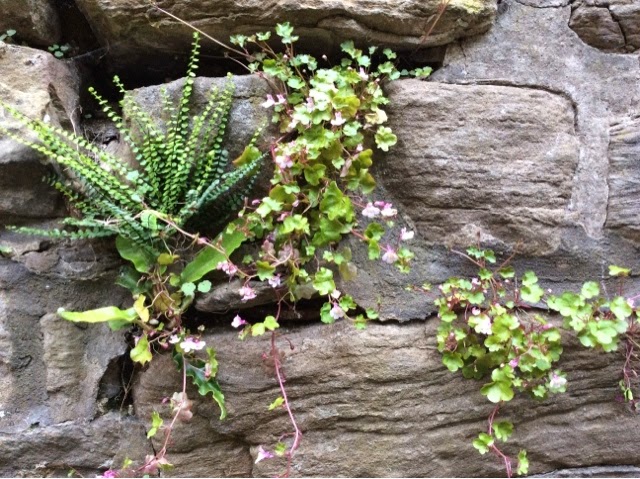
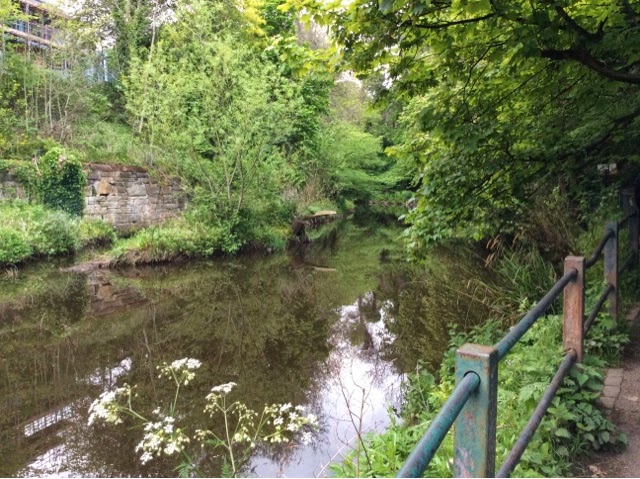
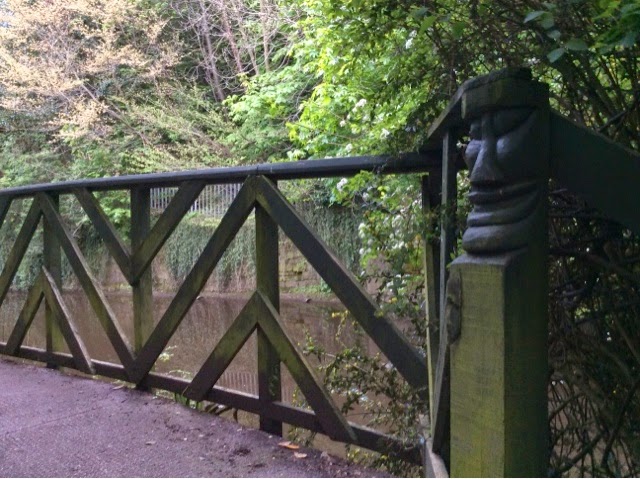
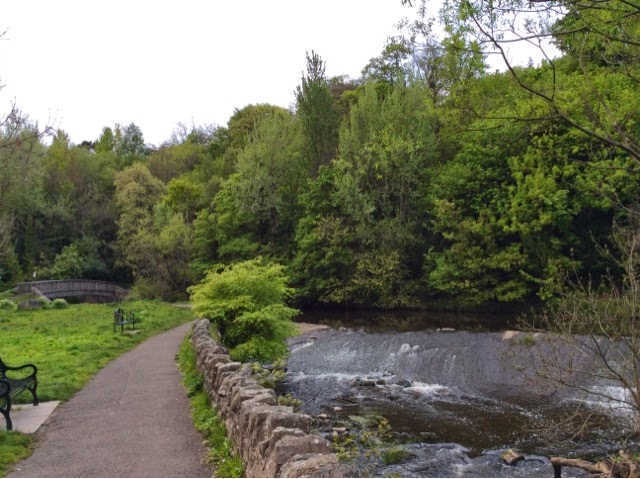
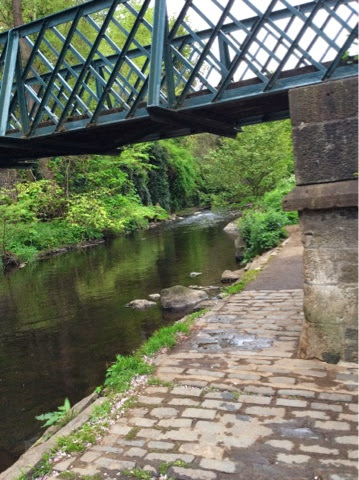
Among my very favorite discoveries in Edinburgh is the walkway along the Water of Leith, a small river that runs through the city a little south of the center of town. You duck down below the city into a little ravine, and as you walk, you find spectacular series of the prettiest views you’ll ever see, so lush and green and full of the sound of rushing water and birdsong. The mills where they ground the town’s flour used to be here, and now and again you can see the remnants of the old structures; look for them in the stone wheels, waterfalls, and other stone artifacts in and near the water.

On Sunday night, I took the very long way home, and walked the river path, which runs mostly uninterrupted, from Stonebridge to Roseburg Gardens, a walk of a few miles. I had visited the river a few times at this point, but this time I wanted to see the length of it all at once. I went again on Tuesday, my last day in Edinburgh, and stretched the route a little, this time starting at Murrayfield Stadium (where I came across the heron) and ending at Canonmills.

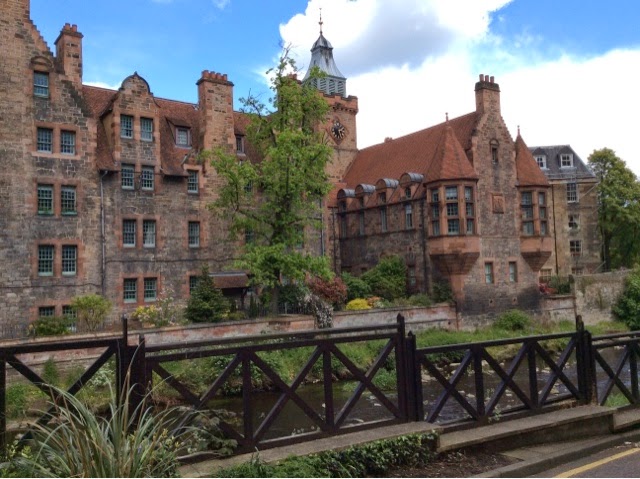
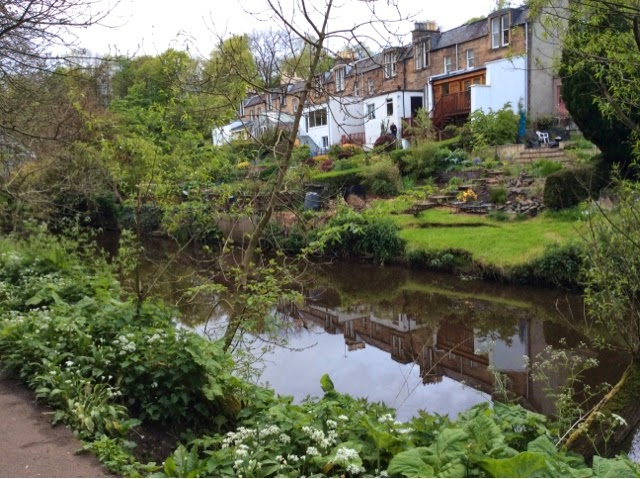
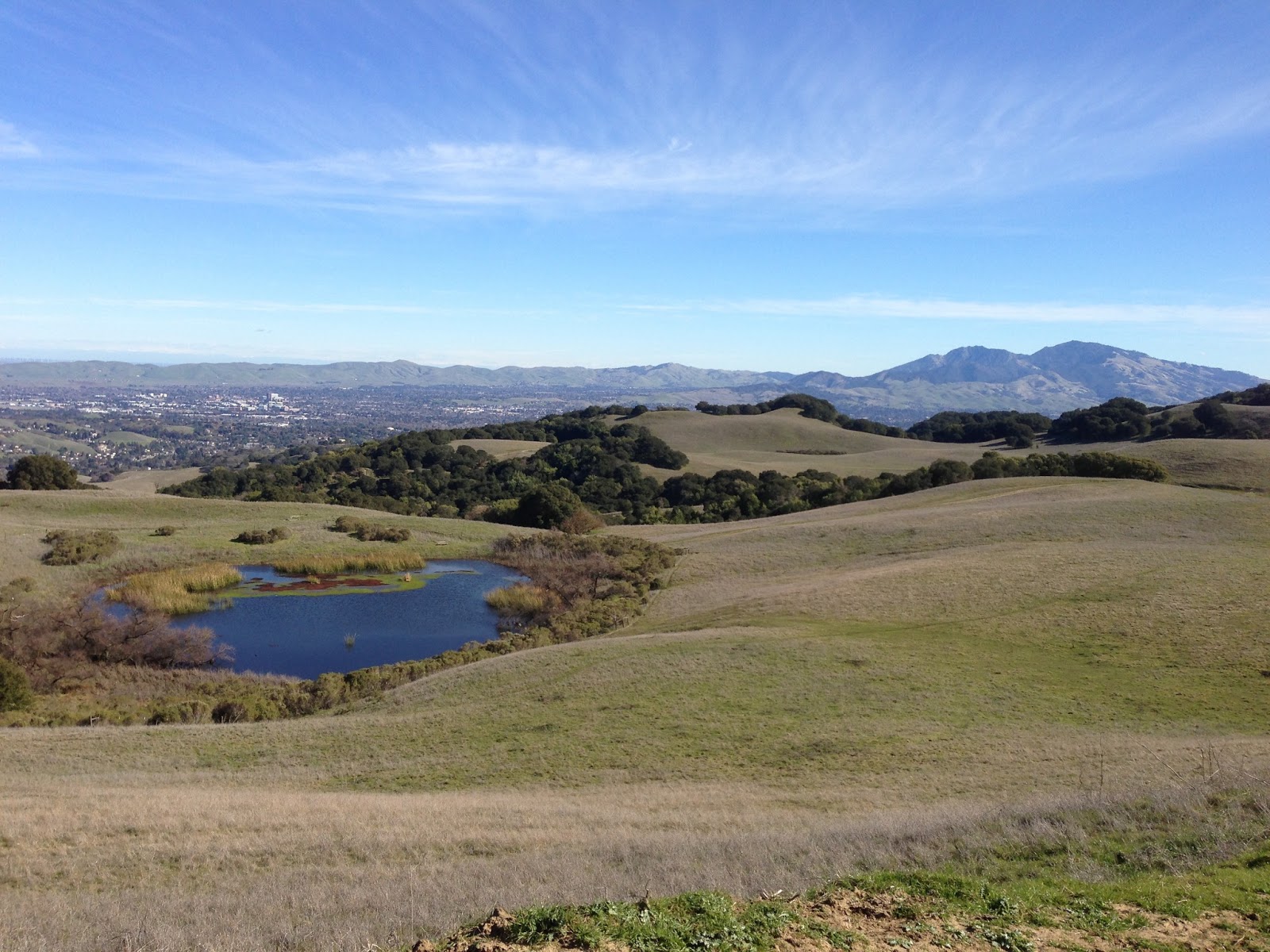
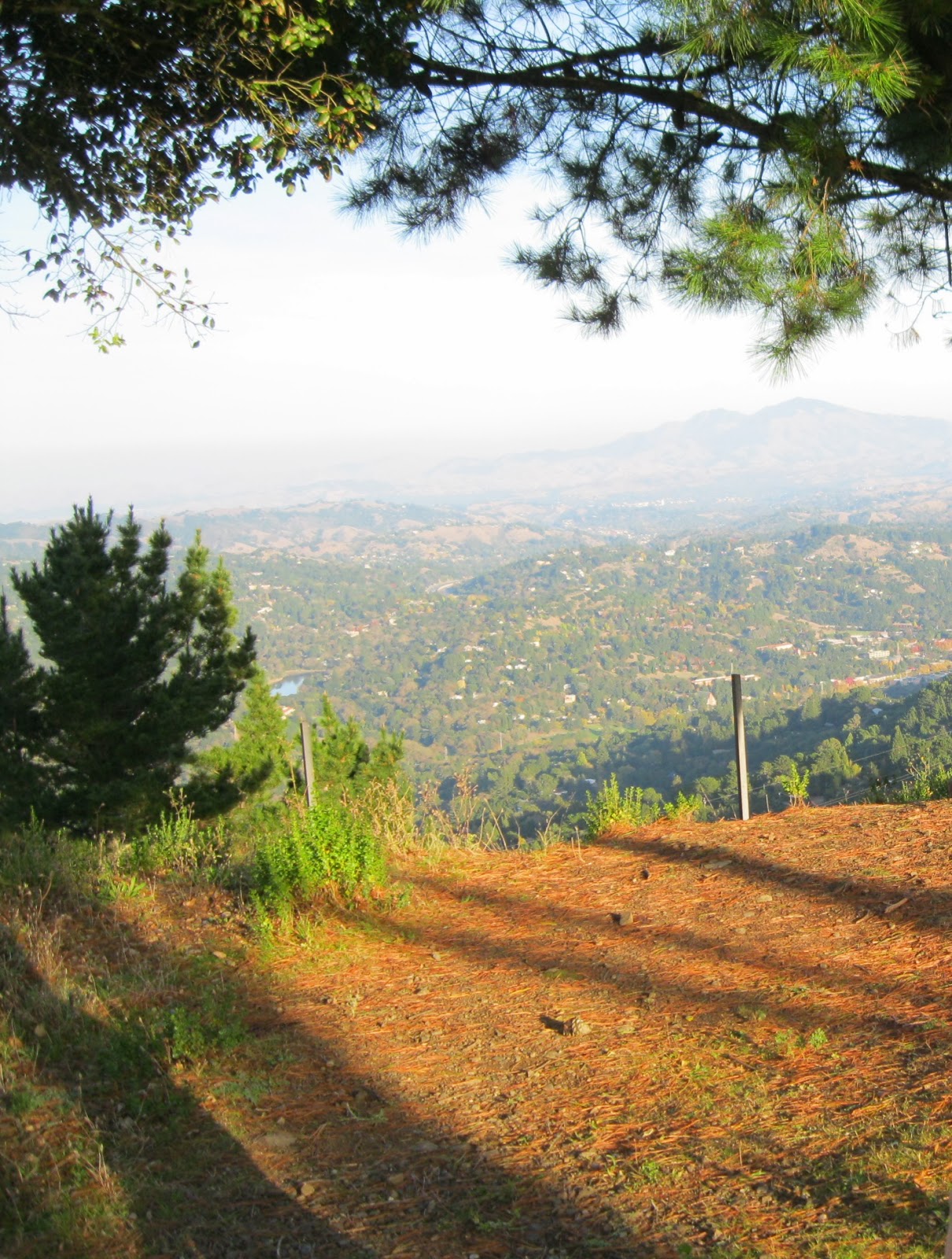
Here’s a series of photos, in no particular order, except for the first few. I first visited the riverside below the Dean Bridge, where there’s a cozy little village that looks like this

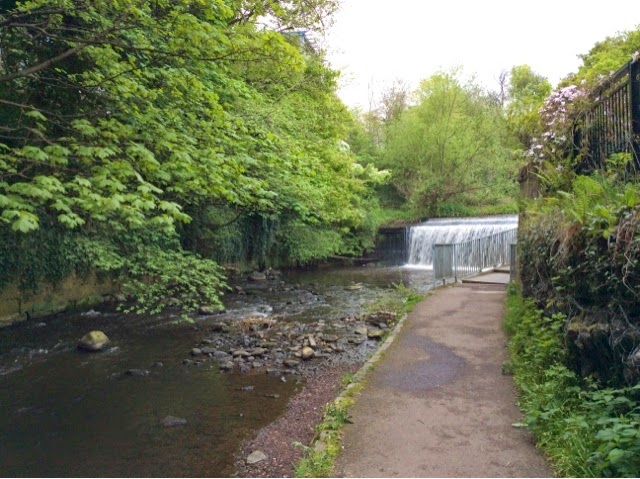
And here it is, the Water of Leith

See the heron?


On Being Part of Something Bigger Than Oneself

Sometimes, I’m carried away by the awesome realization that I’m part of so many things that are larger than myself. In fact, I feel quite mystical at these times.

I’m part of a particular family; part of many communities of friends and of people who share passions and common goals; part of a cultural group; part of the whole human family. I love and am loved in return. I cooperate with my husband, with my family and friends with my coworkers, with the people I interact with everyday, be it in everyday life, in romance, in play; in conversation, in sharing meals, in commerce, in navigating traffic, and in other countless ways. I share in the business of life and in the struggle to survive, which for human beings necessitates this high level of cooperation, because with our relatively weak teeth, slow gait, blunt ‘claws’, big clumsy bodies, and expensive brains, we are much more vulnerable, as individuals, than most other animals to predation and hunger. So I share in this great community of empathy, some to a greater or a lesser degree, and we all do what we can to be good and decent people, at least much of the time.

I’m part of the history of human thought, part of the rich legacy of human curiosity and wonder over the millennia, whose love of learning and of doing our bit more to expand human understanding makes us, as Carl Sagan so beautifully put it, ‘..a way for the universe to know itself.’ And every one of us who takes part of this quest to understand the world get as far as we do only because those before us passed down what they learned and what they invented so we can build on it. No one human being can, on their own, invent languages to create and organize ideas, observe the full vastness of the universe, and form the myriad theories that make up the incredible body of knowledge we can access and enjoy today. But millions of human minds, sharing in this knowledge quest, have achieved a level of understanding that our ancestors could never have dreamed of, and our descendants will do the same. When we think about it, each of our individual minds is filled with the words and ideas created by others, which we rearrange and build on to create our own, which we then pass along. In this sense, it’s hard to tell where our own minds end and others’ begin; we all share in one human stream of consciousness, millennia-old, from which we draw, and into which we contribute, constantly, all of our lives. This is one sense in which we’re immortal.

I’m also a part of the great creative outpouring of humanity. We all participate in this, some as the makers, some as the enjoyers, most of us as both, to some degree or another. I am inspired by the beautiful, interesting, innovative, and curious things others create, which inspires me to create things I think are beautiful as well. I dance to music others make, some of us make our own, and some of us sing along and pass the songs on to our friends and to the next generation. I cry and laugh and smile and immerse myself as I read the stories and hear the jokes and watch the movies that our fantastically, restlessly, endlessly creative species never stops coming up with.

Finally, I’m part of the great workings of the universe, of the great process of evolution, where all the stuff I’m made of was forged in stars and crafted into what eventually became me, by the myriad forces that arranged every molecule in my body, in new formulations in each successive environment through the ages. Every bit of me used to be something else, and I’m intimately related to every single other thing in the universe; every human being, every plant, every insect, every thing that lives and moves is my cousin.

I often hear people expressing discontent, that they’re searching for something that’s missing, that they want to be part of something bigger than themselves. So we join cults, buy self-help books, immerse ourselves in various ‘spiritualities’ and ‘philosophies’, even immolate ourselves and destroy each other for the sake of some extremist ideology, in restless pursuit of that quest. It’s all too easy, in day to day life, to forget the all the amazing, myriad ‘something bigger”s that all of us are a part of just by virtue of existing. 

I’m now in a happy time in my life when I’ve learned to recognize and appreciate this fact more than ever before. These days, I have other ways to more fully participate in these ‘something bigger”s. I have an insatiable hunger for reading and learning in the last few years to a greater degree than any other time in my life, and since I left the stifling religion of my childhood, I’ve found the entire range of ideas available for my consideration, and the whole of humanity and of all living things is my spiritual community. I’ve taken a job in a new field so I’m learning something new every day, I’ve taken up writing and spending more time creating and developing my art, and trying to be more prudent with making and spending money so I can help out my family and travel more. We all have our own ways.

Being a part of something bigger is the simplest thing there is. It’s realizing it that’s the hard part.

The Debate Over Motherhood, and the Human Family. Or, To Have or to Have Not…

…children, that is.

Over the last year, it seems, there’s been a deluge of essays, articles, and other works about the decision of whether or not to have children. The Time cover story on ‘The Childfree Life‘ kicked off quite a bit of controversy, as well as some applause. Many were thrilled to have their choice not to have children finally presented in a positive light in such an influential publication, but many found it distasteful and even insulting. Others, such as Melanie Notkin, criticized the article, in this case not for what it promoted or criticized, but for containing too many assumptions and misinterpretations.

So here’s another take on the subject, from a fond auntie from a very large extended family, who chooses not to have children.

So why all the fuss? Why are we still arguing over all this in a time and place where women, generally, have the right their own persons, to say no to sex, to pursue careers, to engage fully in public and political life?

Although birth control has now been widely and cheaply available for decades, it’s clear that we’re not yet comfortable with our newfound ability to enjoy our sexuality while simultaneously controlling our reproduction. We haven’t yet decided what this means for us. What are the ramifications, economically, morally, legally? Will we be better off overall, or not? Are we to be frightened that people will stop valuing parenthood as a worthy choice, if remaining childless is considered just as good? Or are we to rejoice that the human race may slow its population growth to a sustainable level?

Mark Driscoll is a ‘celebrity’ pastor from the Seattle area, whose view of the whole birth control issue is not positive, to say the least. His essay ‘Who’s Afraid of Pregnant Women?’ first appeared in the ‘On Faith’ blog in December 2013 (now found on FaithStreet). Driscoll’s essay conveys some of the same feeling I sense in many parents, especially women, when they write or share comments and articles that extol full-time motherhood. He expresses a feeling of beleaguerment for parents of large families, and fears that human life has become less valuable to us than other animals, that pregnant women are regularly belittled for being ‘breeders’, and that it is our godly duty to bear and raise children.

I came upon his article weeks ago, and have mulled it over several times: it stuck with me because I recognize some of his ideas and attitudes as very similar, if not identical, to those of many of my own relatives. I belong to a very large, largely conservative Catholic family, and they are huge fans of having children: my father is one of fifteen kids, my mother one of nine. I’m one out of five siblings, and as of last count, I have 70 or so first cousins. Indoor family reunions are out of the question unless we rent a large hall, and when we dance our traditional Virginia Reel, it’s quite a work-out!

I’ve always considered it great fun to be part of such a big family. I’ve had playmates and companions at hand my whole life. It’s fascinating, at family reunions, to see how various family traits pop up, reshuffled and recombined in so many ways; which traits seem to skip a generation and which do not, how a male family member might appear if they were born a woman instead (and vice versa), and so on. (With so many first cousins, the likelihood that there are more close look-a-likes evidently increases.) My extended family is, in fact, just of the sort that Driscoll extols, and is going strong.

I’m also a sucker for babies and children generally. They are adorable in their smallness, with their squeaky voices, their quirky and often hilarious pronunciations and turns of phrase as they learn to speak, in their toddling walk, in their displays of newly acquired, unexpected, and impressive intelligence, and in so many other ways. Of course, I tend to see them at their best: rarely at bedtime, or sick, or throwing tantrums. I see them when they’re on vacation or when they’re excited at the prospect of playing with a visiting auntie (or cousin, or family friend) who’s not worn out from childcare, and who’s easily manipulated into lenience.

So it’s natural that though I’ve chosen not to have children, I wonder once in a while if I’m missing out on something I would actually enjoy, just as I do with other big life choices of the sort where if I choose one thing, it necessarily excludes another. I’ve noticed that many people who choose not to be parents, especially women, are torn, while others feel quite strongly that choosing childlessness is right for them. Having children is a huge responsibility, presents many risks and challenges, and requires giving up one’s current lifestyle, so parenthood appears daunting and even downright unattractive for many. But when it comes to what Mark Driscoll describes as a general modern attitude of ‘contempt for motherhood, I just don’t know what he’s talking about.

I happen to be of an age, my later 30’s, when it’s common to start having children these days, especially where I live, the San Francisco Bay Area. It’s also a place where parenting is a popular choice, despite Driscoll’s claims. I’ll use the place I live as an example, though I suspect that the same is true for other coastal, more urban areas of the US as well, if my friends and acquaintances, media and popular TV shows are any indication. At the same time, it’s true that there’s a comparatively lower birth rate in San Francisco and other large cities than in the US overall. Driscoll attributes this comparatively low birth rate to his ‘contempt for motherhood’ theory, but I don’t think his assumptions are correct.

To begin with, SF proper is an incredibly expensive place to live. When city people have established their careers and met their partners, generally, they move to the suburbs or some smaller town to have their kids, if they haven’t struck it rich and can afford to stay. What I don’t find is that people, generally, love animals to the exclusion of kids. Pets are affordable companions, and need relatively little space, perfect for small city apartments and roommate situations. But children need room, and time, and money for college if you can afford it, so you wait to have them until you have a good job and money put aside.

If you spend much time in the Bay Area, especially as a woman, you find out very quickly, and have it impressed upon you very regularly, that many women here are enthusiastic mothers. They promote the parenting lifestyle vigorously (albeit a particular pure-food-centric, small-family, hands-on, ‘sustainable’ style). The joyous new mothers I know now look at me askance when I answer their inevitable ‘So, when are you having a baby?’ in the negative. After a doubtful pause, sometimes they say, unconvinced by their own words, ‘Well, it’s not for everyone.’ But more often, a knowing nod: ‘…when that clock starts ticking…’ Who knows, perhaps I have a very, very slow clock! Which has been getting slower by the year…..

The whole ‘breeder’ as an expression of contempt-for-mothers thing that Driscoll complains of, I’ll pass over lightly. It’s a tongue-in-cheek term, a response to the eons of dismissiveness and denigration of the gay community as so-called destroyers of the family. (Weird. My gay relatives didn’t in the least bit interfere with the considerable fecundity of my extended family.) The point of that wry, joking term is to criticize the very idea of valuing a human person only in light of their birthing potential, rather than for their own sake as a human being. Yes, the term may be adopted by some who are critical of the decision to have large families in a world where not all kids who are born are cared for, but that’s generally because they see that choice as unsustainable, destructive to future generations. Whether or not you agree with their opinion on the matter, I just don’t see a logical connection to contempt for motherhood in either sense. I think Driscoll could step outside of his own sphere and experience actually talking to members of these communities to understand what they’re getting at.

Driscoll does, however, expressly reveal contempt for people who choose not to have children. He doesn’t address the reasons (other than his assumed ‘contempt’) why people make this choice, so it’s hard to know how he would argue against what would appear to most reasonable people to be excellent reasons. For some, there’s a high probability of risk to their health, as revealed by family and personal medical history. Some are poor and don’t want to give birth to children they can’t afford to feed and educate properly, and some live in dangerous or oppressive areas of the world. Some find that they can best help out their community or extended family by being more available with time and resources than they might be as parents. Some simply feel that having kids to please others, contrary to their own desires and the bent of their personalities, would be irresponsible, let alone selfish. There are many more reasons people decide not to have children, I think usually not for one, but for a variety of reasons (I am among these).

Instead, the contempt Driscoll expresses in his phrase ‘fools’ parade’ seems to be entirely Biblically based. Yet he’s he’s on shaky ground with his particularly narrow interpretations. For one, even if he’s right, that his God exists and literally commanded that humans ‘fill the earth with people’, it seems we did a really good job already, and will continue to do so even if all we did was reproduce at a replacement rate. That commandment does not logically entail that each and every person have as many children as possible, regardless of the circumstances. For another, God may be a ‘good and perfect father to millions’, it’s hard to prove otherwise. But millions of other kids, if his account is correct, are allowed by that same God to die of starvation and disease, and indiscriminate childbearing has never alleviated the problem.

Driscoll leaves no room for the idea that, as a believer in his God, you could also believe that respect for life actually entails prudent childbearing, and that if we are all part of God’s family, that means that there’s a variety of roles in that family other than parents, such as aunts, uncles, grandparents, cousins, and so forth. (While Catholics, especially, promote the big family lifestyle, they also incorporate this interpretation to some degree, with their spiritual roles of celibate ‘sisters’, ‘brothers’, and ‘fathers’.) Parents sometimes need the all-important extra help that non-parent family members are in the best position to provide, and others who wish to rear children but not give birth, such as many gay parents, adopt those children that no one else is caring for. Others invent, build, entertain, and in other ways use all their time and energy to help create a beautiful and more interesting world for all to grow up and flourish in, and so participate indirectly in raising the next generation.

Driscoll seemingly attributes his ‘contempt for motherhood’ to ‘evolutionary thinking’ (he’s not clear on this point), claiming that it leads to thinking of human beings as ‘nothing more than a particular arrangement of cells and matter’. But I fail to see how he makes this assumption, as no evolutionary thinker I’ve met, or whose work I’ve read, thinks this way.

I, too, am an evolutionary thinker, and as such, my sense of the human race as one big family is no spiritual construct, but concrete reality. As an evolutionary thinker, I think it’s absurd that Driscoll parrots that tired old trope that if you accept the scientific theory of evolution, than you must think that humans are nothing more than the sum of their parts, with no point to their existence and with no reason to be good to one another. But why would he assume this? I think it’s unlikely that someone in his position is really that ignorant of the basics of human evolution; rather, I think he feels the need to subscribe to this this false dichotomy of selfish evolutionist or generous deist in order to reach his desired conclusion.

Morality, empathy, altruism: all are key components of human psychology, and they are the very reasons why we are an evolutionary success story. The ‘inevitable’ evils he attributes to evolutionary thinkers, such as genocide and isolation, are directly contrary to the story of how we evolved as one of the most complex, highly social species the world has ever seen. Most other species do not have the same sense of care towards one another as we do, and that’s because most require relatively little cooperation, if any, for their survival, with their short reproductive cycles, sharp teeth, strong limbs, exoskeletons, and so on. Without cooperation, a strong sense of fairness, empathy, and high regard for human life, the few human beings that exist would live lives that are ‘solitary, poor, nasty, brutish, and short‘… in fact, we would not be identifiable as human beings at all.


New Year’s Day, a Resolution, and Writing as ‘Stepping Back’

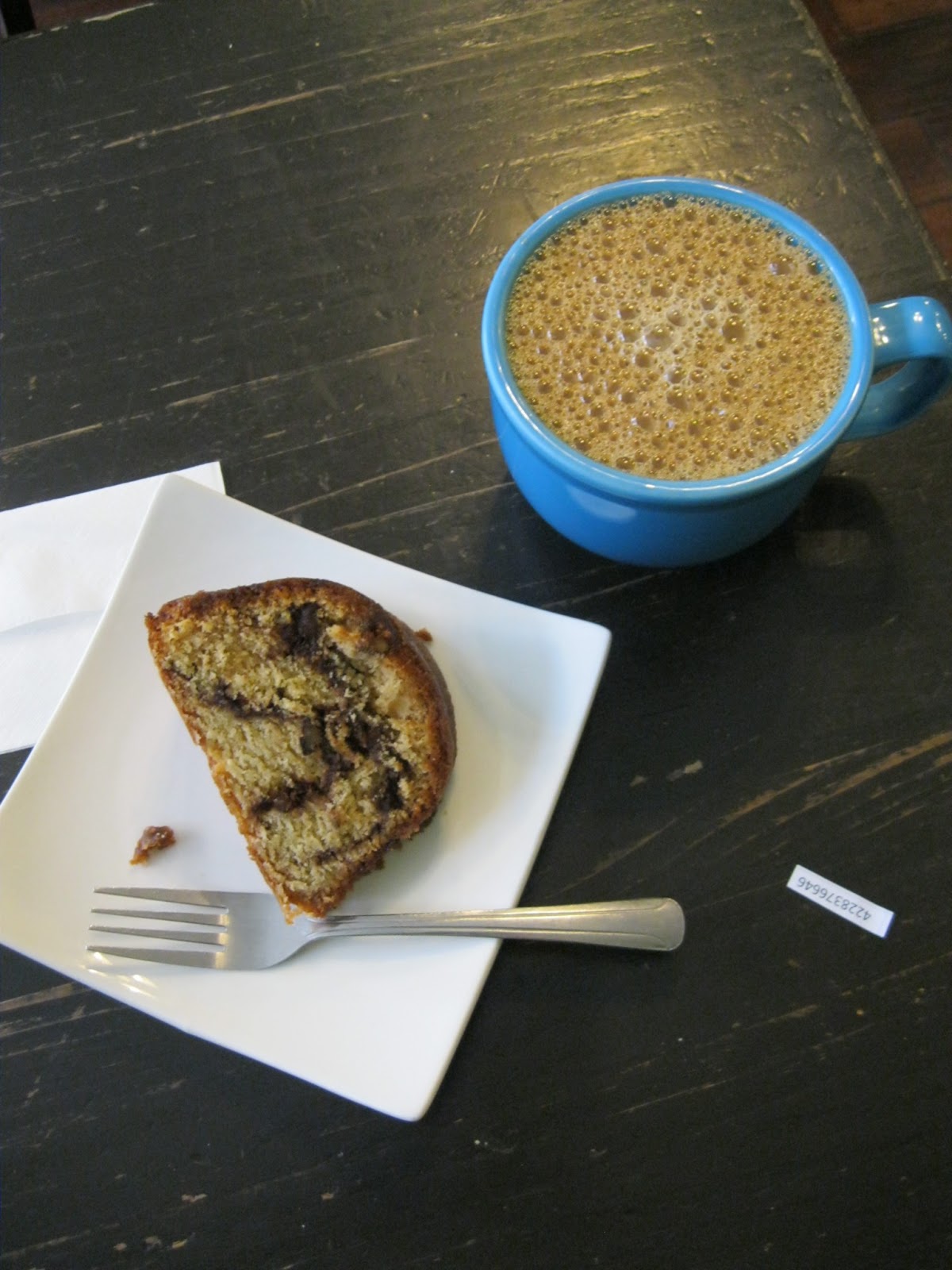
For some reason, my eyes flew open a little before 8 am this morning, even though I didn’t go to bed ’til 2. I was at a house party with good friends, and spent a good deal of it by the fire pit in the backyard, and my hair smells deliciously like smoke. Bryan’s still sleeping, the house is quiet, and I’m here on the sofa with my coffee, obeying the first of my New Year’s resolutions on my list: to write at least 500 words a day.

I love the New Year holiday, and as I rediscovered when I returned to college a three (or so) years ago, I love writing. So this is an excellent way to start the year!

I feel that I can express myself so much better, sometimes, through writing, even better than with my artwork, and I’m always trying to find a way to communicate better with people. I’m a social person, who needs the feel the love and companionship of others in order to feel happy and satisfied. In fact, I’m very needy in this way. (Funnily enough, even more so than Bryan, who’s perfectly happy and comfortable spending a lot of time alone; he’s very self-possessed. But in social situations, Bryan’s the one who’s most at ease, who can find a way to connect with everyone, so funny and entertaining in conversation, and everyone loves him!) But I’m also very shy, and within the last couple of years, I’ve let many of the good habits I built up in my early 20’s fall away. When I was a child and into my teens, I was extremely shy and awkward, and had few friends, since the strange circumstances of my upbringing kept me somewhat isolated. But when I went to junior college, I enjoyed the company of so many new people and craved it constantly, so I learned how to be social and agreeable, mostly by listening and asking a lot of questions (this was not mere politeness, I was really interested! People are especially fascinating when you’ve spent most of your life rarely getting to know anyone outside of your own family). But in the last couple of years, I’ve become much more introverted in my habits, and have discovered, to my dismay, that there are so many people I care about that I haven’t really talked to at all, or in depth, in a long time. I even find myself retreating into myself when the people I actually want to talk to are right there in the room with me! That will change, I am determined.

So many of my introverted habits, I think, come from trying to figure out who I am and why, and how to be the kind of person I want to be, the kind of person worthy of respect, admiration even. I’ve been immersed in the past couple of years one of those existential crises that fall upon so many in their thirties, when one suddenly finds that they are well on their way through adulthood and there’s just not longer an ocean of time left. While these crises are inevitable and provide a valuable opportunity to take stock, it’s also important not to let them go on too long, since they can lead to that internal, doubt-driven wheel-spinning that impedes action. It’s a time to get it together and pick some goals to pursue and things to excel at, but then the time comes where you need to just get out there and actually do something about it.

Writing is an excellent tool to that end, and a way to really get to know one’s self, what one’s core values are, what are the best uses of one’s time and energy. It’s reflection and action all at once. I often feel that I really don’t know myself that well in many ways, and suspect that, through writing, I’ll be able to discover more. I think it’s often hard to understand oneself, to know certain things about one’s own personality and motivations, because it’s so hard to judge one’s own actions objectively, to see patterns in behavior, to get the ‘big picture’ view. One’s just just too close of an observer, too immersed in the instincts and emotions of the moment, to really ‘get’ why one’s doing, or thinking, or saying, whatever it is, at the time. I think writing is a process very like the ‘stepping back’ I do when creating an artwork or a piece of craft: I take a moment, or a few, to take some steps back from the work, to look at the overall effect, and to see how everything is hanging together, what needs to be changed, and what is working well.

When I write down what I’m thinking, I can get that big-picture view in a way that I rarely can otherwise, except perhaps in depthy conversation. Yet, writing is very like good, depthy conversation, because you’re calling on yourself to explain and describe something to an audience, and you’re conscious of other minds and how they may be perceiving what you have to say. And, you’re calling to mind the things other people have written or said concerning whatever it is you’re writing about. So writing also helps me to figure out what I really think and believe about things out there in the world.

That’s because, through writing, you can put together all those elements to craft a bigger picture, a more complete story, as opposed to just experiencing the daily stream of reactions to what’s going on out there. These reactions are important in themselves, the emotional responses, the internal arguments, the stockpiling of information about the world. But when you write, as when you converse, you’re putting it all together for yourself as well as for the person you’re talking to. What writing has over conversation is that you can go back and look over what you’re saying, and revise it, and perfect it much more thoroughly, and it’s not subject to lapses of memory. You become accountable to the ideas you expressed before, much like politicians are now accountable for those things they do and those words they spout off, since everything’s recorded these days. The more you write, and share what you write, you become more accountable to yourself, and to your readers. It places you firmly on a path of regular self-discipline, and self-improvement, as you strive to improve the quality and cohesiveness of your ideas. This ‘stepping-back’ process can do for your mind what it can do for the things you create: it shows you what’s missing, what you need to do in order to complete a more perfect, more beautiful, more unified whole.

So on this New Year’s morning, I affirm my resolution to be a better writer, and, through that, a better thinker and a better person. And I thank you, dear reader, for participating in this endeavor with me.


Getting Lost

The other night, I got lost.

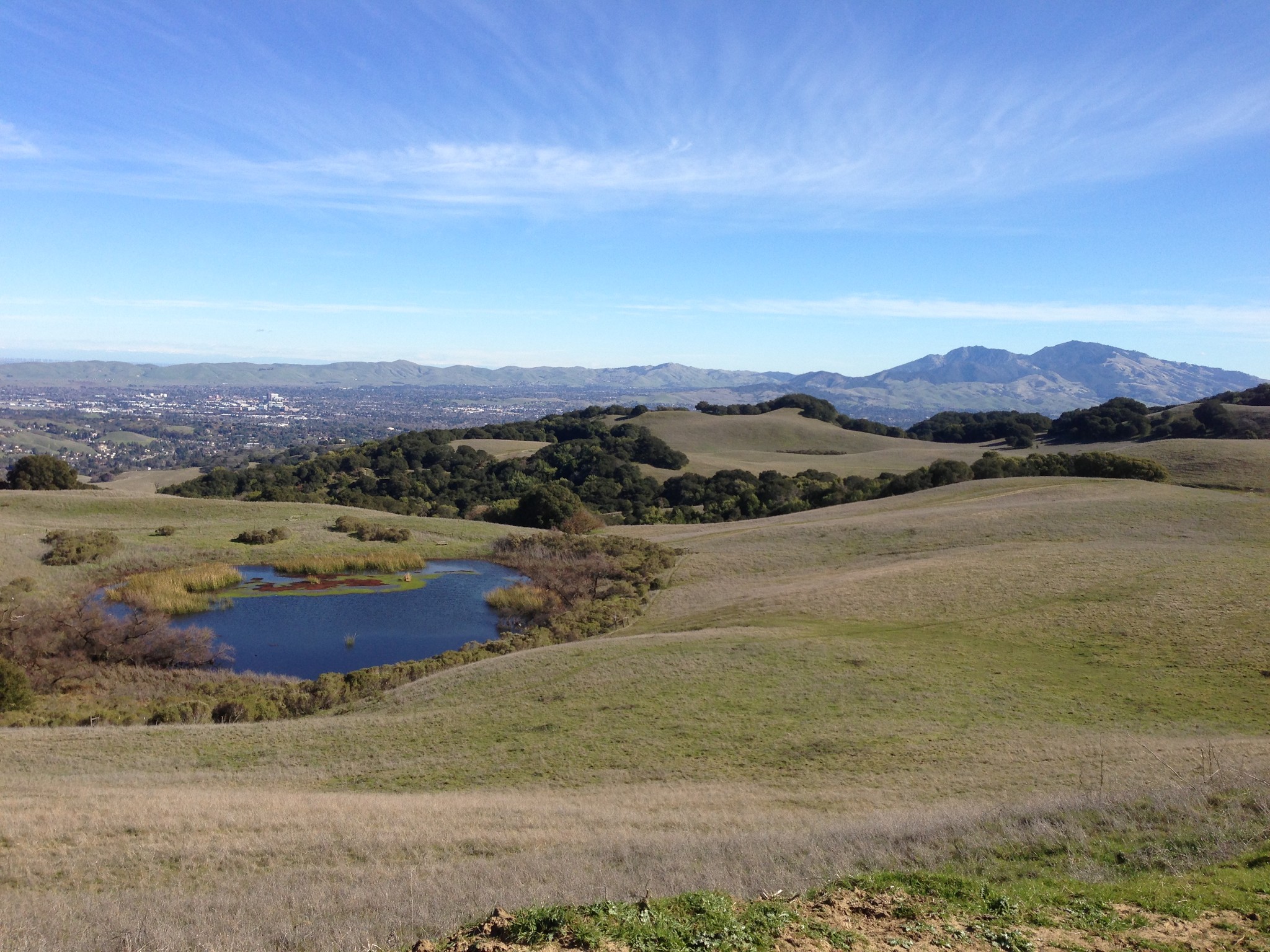
I love hiking, it’s among my very favorite things to do. It combines my love of the outdoors with the wonderfully free feeling of unencumbered limbs and wandering wherever my feet can take me. The other night, I went to Claremont Canyon Regional Preserve, a lovely spot in the hills where Berkeley and Oakland meet, offering amazing views of the bay and nice steep climbs to get the blood really moving.

I discovered this place this summer, have been there several times this summer and fall and thought I was pretty familiar with where it linked up to trails going to Tilden and back around again. What I wasn’t thinking about, though, was the recent the time change, how quickly it gets dark, and how different everything looks when all you can see is darkness interrupted only here and there with the light of a house nestled among the tree, with none of the major landmarks visible to guide me.

So I, carefree (careless?), with some fascinating podcasts loaded up on my Ipod, hiked up the best hills to the place where Grizzly Peak crosses the trail. Off to my right, running along the road, was another enticing looking trail that would likely take me back in the right direction. I found the trailhead across from the entry to the parking lot for the Steam Train. It felt as if I hadn’t been hiking too long, and it seemed there was plenty of daylight life. So I plunged ahead.

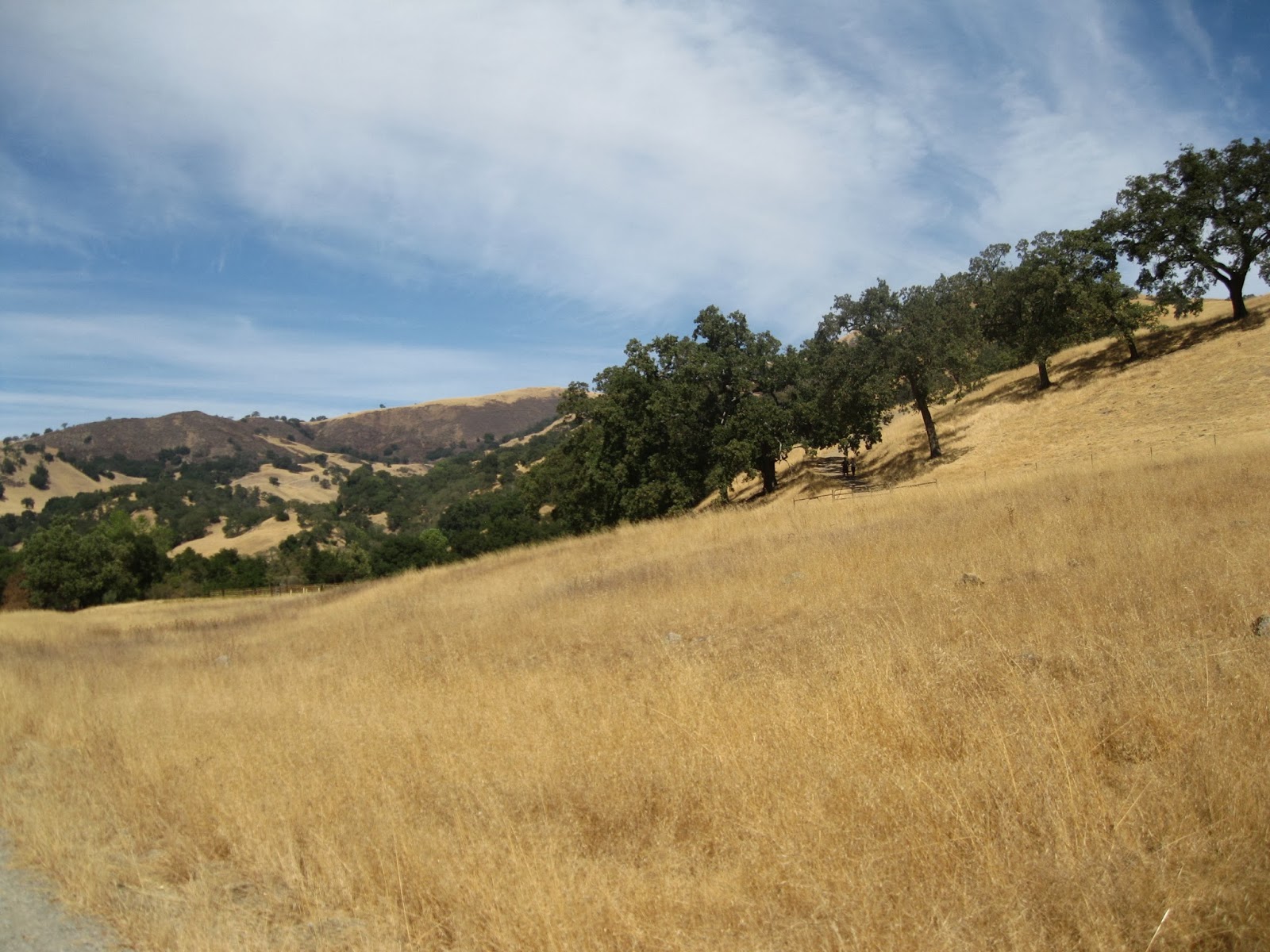
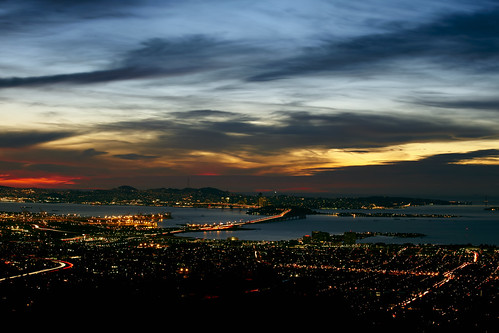
The trail followed the open side of a hill, golden and rolling and scattered with scrubby oaks and deep green shrub, common scenery around here that I find lovely and friendly-looking. I chose the trails that led off to the right as much as possible, knowing I had to end up with Claremont Ave on my left. I crossed a road (Claremont, I thought), and kept on. After a while, hiking fast, I came upon another trail that looked like on I’d been on before, like one that connected back to the (unmarked) main trail that runs down the center of Claremont Canyon. It was beautiful, cocooned in the oak trees and fallen leaves, an enchanting road to mystery in the deepening light.And then I began to really notice that the darkness was not just the shade of the trees in the late afternoon. And I started feeling that leg ache, that I usually enjoy, which told me I had actually been hiking quite a ways. Night was falling fast.A little anxious now, and not yet where I expected to be, I knew I could no longer stay on the trail, and hurried on towards a faint sound of traffic until I came to the road, which was not supposed to be there. I walked along it for a bit, looking over the Bay beginning to sparkle brightly with its lamps turning on under a deepening red sunset, the water gleaming like a fish’s scales, that kinda greenish-bluish-silvery glow with streaks of pink and other colors, like a rainbow-y oil slick on a parking lot.

Bay From Grizzly Peak, Photo credit TLC Fotografie

As I walked down the road, I had the uneasy feeling, then the sinking realization, I was nowhere near where I’d left my car and my phone. Yes, I’d left my phone behind, goddammit! Not such a smart hiker, after all. So I walked up the mostly enclosed driveway in this little cluster of gated, walled, exclusive, very expensive houses, where two men were talking in the driveway. I asked them what I had already realized at this point:

‘Excuse me, am I on Grizzly Peak Road?’

‘Yes’, one of the men said.

I explained that I had been hiking and had gotten lost, and when I described where I had come from and was trying to get back too, one of the men whistled a little.

‘Wow, that was a pretty good hike!’

‘Yes, it was,’ I said, wryly.

The other said, cheerily: ‘Well, I’ll give you a ride, I live in Temescal, and it will be easy to drop you on the way’. (A sweet lie, it was not at all on his way.)

I accepted, of course. I was at least a forty-five minute walk from my car, much of it in total darkness. His car was nice, expensive with its leather interior, had a child’s booster seat in the back and some papers in colorful plastic files. He was dressed professionally.

His name was John (‘That’s my dad’s and my brother’s name!’ I said, to open up the conversation) and he worked in insurance. He told me a bit about his client, a banker (the owner of the house I met them at), and how they had discovered they had both at one time lived in Singapore. He asked if I was a student (I had told him where I was parked, in the hills behind the UC Berkeley campus), and I told him a bit about what I do. We mostly chatted about traveling, and he obviously loves it as much as I do, and had been many places.

When we drew near to the campus, I suggested he drop me at the bottom of the hill, since the drive up is so windy and narrow. He asked, ‘Are you sure?’ I pointed out that it’s a lovely neighborhood where I felt safe, that the streets are narrow and windy and currently half-blocked in places by some construction work (I had barely squeezed my car through earlier), and where I thought I could easily find my way.

I thanked him profusely, and he demurred, ‘No problem! It’s just one of those things we’re all supposed to do for one another!’

I started up the hill, happy and relieved, with that glow on that you feel when you’ve just had the pleasure of re-discovering how lovely human beings can be to each other. But as I walked, I realized that I had never been in this neighborhood at night, there are no street lights to speak of, and I might not be able to find my way so easily after all. Once again, I had underestimated how little light I would have to work with and how hard it is to find your way in a maze-like tangle of narrow streets (just as difficult as trails, it turns out!) in a place you’ve only ever been in the light of day, with no landmarks in view.

Oh man, I thought. What a drag. I think I’m lost again.

So I to avoid the risking, once again, walking in circles all night, I approached a house light where I was happy to see a lady exiting her car in the long, windy, elegantly brick-worked driveway, nestled among the dark trees, glowing brightly against the dark.

‘I’m visiting a friend,’ she said, in a rather thick and lovely accent (like many Americans, I’m a sucker for accents). ‘We’ll go inside and ask her.’ She was smiling and friendly, but had given up trying to understand my rather confused explanation of my predicament.

Her friend, in the meantime, had opened the front door wide, and was waving enthusiastically. Her happy smile shifted to include a surprised but polite welcome. Her name was Sarah, and we shook hands.

‘Come in!’ she said, when she understood that I had somehow lost my car. ‘It happens all the time. It happened to me when I first used to walk in these hills over twenty-five years ago, I never imagined I would live here one day!’

She tried to draw me a map to show me where we were situated in relation to local landmarks and where (she thought) I parked my car, but I explained that it wasn’t a problem of knowing the landmarks (the water tower, the roof of a certain long building), it was a problem of not being able to see them in the dark. I tried to describe where my car was. ‘There’s a small water tower-thing, reddish, and a trail that runs straight up a hill through some trees between houses, that leads up to the park, and a place where people park along the side on the street, and I think there’s a sign that’s painted over, and…’

She pulled her laptop toward us, then thought better of it. ‘I know, I’ll drive you! And I’ll show you how all of it’s connected so you could know your way around up here even in the dark.’

As we wound our way among the dark streets, pausing to point out this street and that, she told me about her job teaching art, to kids from first through eighth grade. She evidently loves her job and her life with her family in the green hills. She talked like a woman full of energy, decisive, who has had a successful, interesting life, and has also traveled a lot (which I discovered in her story of her best lifelong buddy, the visiting friend, comes to be from… Sweden, I think).

‘There’s my car!’ I interrupted. But while I felt relieved at the sight of it, since by that time I was afraid Bryan would be worried about me, I was sorry too. Within a few minutes, I felt I had gotten to know her a little and really liked her, and wished we were on our way to a coffee shop for a chat.

‘I knew it! That little part of the park that sticks out here is called “the Connector”,’ she said. ‘Now you know how you get from the houses up to the park. There’s the water tower at the bottom, and the round red building that’s part of a house up there that looks like another little water tower. Just look for that, and you’ll know where you are!’

We said our goodbyes, and I repeated my thanks. She waved her hand out the back window on her way down the hill.

As she was driving away, I was once again overcome by that glow caused by the kindness of strangers, and thought about how lucky I was to have run into two people who just so happened to be as kind, and helpful, and friendly, as these two, who would drop everything they were doing to help a woman they never met (a foolish, careless one, stinky with sweat and dust!) find her car. But then, I thought, they reminded me of what I really think: however badly people can behave sometimes, coming across a human being who needs help brings out the best in most people. When they feel that they can do something of real benefit, that they can fix the situation, most people want to help, and will. I may very well have made them just as happy as they made me.

Driving back down the hill towards the grocery store and then home, I also realized that many of the best times I’ve ever had were when I was wandering aimlessly, and when I was lost. When I first moved to the Bay Area, I would often take the Bart to a station I didn’t know, or head in a new direction, and just walk, and walk, and walk. More than once, I would find myself totally lost, and a stranger would take the time to help me find my way. I would meet and learn about someone I would likely never have met, sometimes people so different from me that it’s unlikely I would ever have had the opportunity otherwise. One time (and I’ve thought about him many times over the years), a young man, probably no older than twenty, walked me to the Bart station, well over a mile away, to make sure I got there safe, though he was on his way home after a double shift. He didn’t flirt, and acted like a big brother, full sleeve tattoos, half-shaved and greased hair, piercings, cut-off Dickies, wife-beater, and all. He was the most gentlemanly gentleman I could have had the pleasure of meeting, and though I forget his words, his warm and rather shy personality is still vivid to me.

Every time I would get lost, I would not only discover a new place, I would discover something new about people, and fill in all these gaps and connections between the little I did know with new and interesting details, and new ways of seeing things I thought I knew. The broader views that remain are more intricate, more fascinating, more rich, than would I ever have expected and known how to find.

I’m still not quite sure that I really understand those connections, that I could find my way alone up that maze of streets to the water tower, and I still don’t know the name of that trail after trying to find it on a map.

But I may yet put it all together one happy day I’ve gotten lost again.

In An Argument, Give Your Opponent the Benefit of the Doubt and You Will Always Win

….in the sense that, you will be more likely to win your opponent’s trust and respect, your own arguments will be better, and you will surely learn something, even if you fail to convince the other.

Among the feedback to a recent essay (a critique), I came across this sort of statement: ‘well, what do you expect? Of course, the author’s a so-and-so, and therefore, you can expect them to be full of it.’

That’s pure intellectual laziness, let alone empty bigotry. Here’s one of the single most valuable lessons I’ve learned over the years, and practiced and honed in my return to university: always, always listen to your opponent’s arguments carefully and respectfully, and examine them from the viewpoint that they might be right. You will then be in a position to actually understand the argument. And, if it turns out to be wrong, then you will really understand why, and your rebuttal will be more likely to be a quality one, less prone to fallacies.

Generosity pays off for everyone in the end.

Sources, Influences, Shout-Outs, and all that Good Stuff

As I write these essays for publication in my own blog, I find that it’s liberating not to have to cite my sources in the same formal, painstaking way I would have to if I were writing a student paper or a formal scholarly work. I know that every single thought I have (and this is true not only for myself, but every thinker out there) is almost entirely possible because of other thinkers that came before me, and those who share their thoughts every single day. In this way, it’s actually impossible to really cite all my sources and properly thank all who influence and inspire me, so developing and writing down my thoughts without the added effort of laboriously disentangling those sources which I can consciously identify and those which I can’t remember helps this whole process flow much more freely.

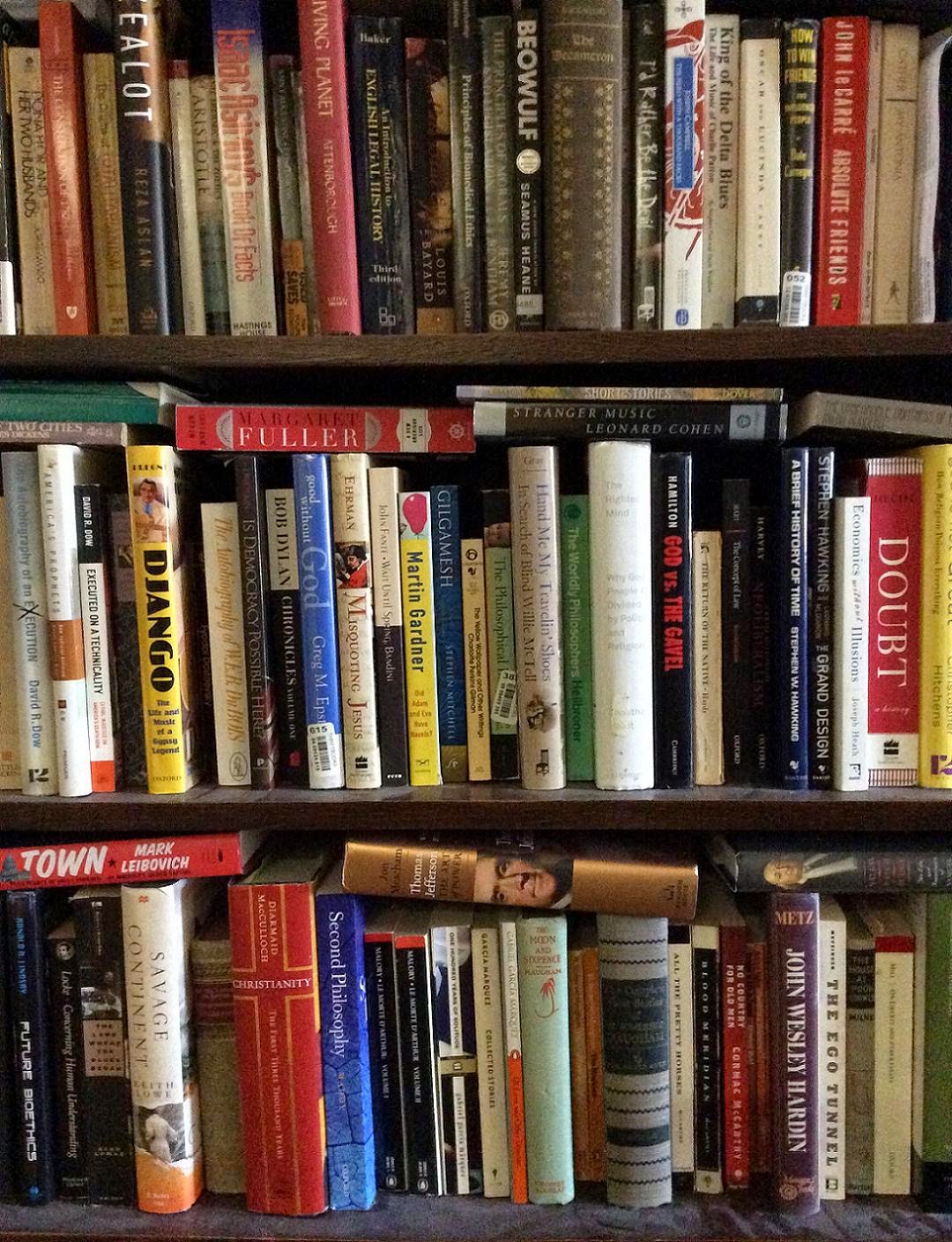
But I also feel a sense of great indebtedness to all those thinkers out there who make the world such a fascinating place. I get to learn and think because, collectively, the human race is so generous when it comes to sharing their thoughts, purposefully altruistic (think Thomas Jefferson: “He who receives an idea from me, receives instruction himself without lessening mine; as he who lights his taper at mine, receives light without darkening me”or otherwise. This great pool of human consciousness, the sum of human thought up to now, in fact, is central to my own concept of transcendence, that ‘mystical’ state of reaching for and belonging to something larger and greater than myself (a topic for another essay that I’ve been plotting for some time). When I’m in the throes of figuring something out, I’m often conscious of the fact that that so many parts of the puzzle have already been worked out by others, and I’ve only gotten to where I’m at because of them. While I’ll continue to link to and quote sources as I write, I probably won’t be thorough about it in this informal setting, so this list serves as a catch-all to what I’ve missed.

So here’s my informal, unscholarly list of my sources and influences, of shout-outs to all of you wonderfully curious, intelligent, creative, witty, and thoughtful creatures out there without whom I couldn’t think much of anything at all, let along write about it. This will be an open-ended blog post, and I’ll add to it as I’m inspired, but it’s in no way exhaustive. It can’t be, because, like everyone, most of the things I ‘know’ I don’t know how I know, because I don’t remember who I learned it from.

In no particular order:

– All human beings who have contributed to the sum of human knowledge and creative thought
– My dad, John Cools, for patiently answering my endless questions throughout childhood and beyond
– My husband Bryan, my lover, best friend, and constant conversational partner
– John Rawls, A Theory of Justice (excerpts)
Randy Newman
– John Stuart Mill, On Liberty, The Subjection of Woman, and excerpts from Utilitarianism and other works
– John Locke, An Essay Concerning Human Understanding, Two Treatises of Government (well, the second one) and excerpts from other works
– Ernestine Rose: feminist, atheist, socialist, Polish, Jew, human rights crusader, incredible in every way
– Montaigne, Essays
– My uncle, Timothy Harrod, for his willingness to regularly engage in honest, no-holds-barred, but respectful and friendly debate (he was my confirmation sponsor – you Catholics know what that is – and he’s been kindly trying to re-convert me and save my soul for years)
– My uncle Mark Cools, for similar reasons, while letting me stay at his house for free when I attended college
The philosophy department and other instructors at Sacramento State University, especially Gregory Mayes, Lynne Fox, Thomas Pyne, Bradley Dowden, Russell DiSilvestro, and Clifford Anderson
– David Hume, An Enquiry Concerning Human Understanding, excerpts from various other works

– Daniel Dennett, Breaking the SpellIntuition Pumps and Other Tools for Thinking, lectures, interviews, and essays
– Susan Jacoby: Freethinkers and The Age of American Unreason

– Eric Gerlach
– Steven Pinker, The Blank Slate, lectures and essays
– Michael Sandel, Justice and What Money Can’t Buy
Jonathan Haidt, The Righteous Mind
– Elizabeth Cady Stanton, fierce feminist and freethinker

– Clay Jenkinson, scholar and podcaster of the Thomas Jefferson Hour
– The various authors of the Bible
Shakespeare
– Leonard Cohen
– Flannery O’Connor, The Complete Stories
– Robert Ingersoll, 44 Lectures
M. Somerset Maugham, Of Human Bondage and The Moon and Sixpence
– Carol Tavris, Mistakes Were Made But Not By Me, interviews and lectures
– Mark Twain, The Adventures of Huckleberry Finn and countless other stories, essays, and quotes
– Neil DeGrasse Tyson, essays, interviews, and lectures
– Bertrand Russell, History of Philosophy and various other works
– Townes Van Zandt
– Gabriel Marquez, One Hundred Years of Solitude 
– The wonderful student heathens at Sac State
– Cervantes, Don Quixote
Christopher Hitchens, God Is Not Great, debates, lectures, and interviews
– Jared Diamond, Guns, Germs, and Steel
Jennifer Michael Hecht, Doubt: A History, interviews 
– Charles Darwin, On the Origin of Species and The Descent of Man (excerpts; one day I intend to read them all the way through)
– Richard Dawkins, The Ancestor’s Tale, interviews, lectures, and essays
– My friend Tracy Runyon, with whom I’ve had so many depthy and exciting discussions

A Bit About Who I Am, and Why I Bother With All This Musing and Writing Stuff

I’ve long been obsessed with ideas and arguments, why people do and say the things they do, why people believe what they do, and so forth., as I’ve already discussed in an earlier piece. This curiosity and drive to understand, at least a little, the workings of the universe outside my own mind has not diminished over the years in the slightest. So a few years ago, when the job market dried up, my business partially failed, and my artistic pursuits provided me with much satisfaction but little income, I decided to more fully immerse myself in one of my greatest loves, philosophy, by going back to college.

It was a dream of mine that I had never seriously pursued in my early youth, though I eagerly attended junior college as soon as I was able. In my family, the goal of pursuing higher education was not discussed much. Most of my closest relatives are honest, hardworking people, generally blue-collar, hand-on work, and that was for the most part true of myself too, though I worked more in customer service jobs that had some sort of idealist or artistic element. I also have a strong affinity for blue-collar work, and really enjoyed the physically labrious aspects of my long-time intermittent job at a salvage yard.

Many of my relatives were and are suspicious of much of higher education too, seeing it as an array of dangerous temptations away from a life immersed in a particularly conservative brand of religious faith. Also, as a woman, higher education was less of a priority in my family. I felt it was always implied, but rarely said outright, that a good girl got married and stayed at home, perhaps after a stint at junior college, even a bachelor’s degree maybe, before settling in to homemaking while still young enough to make lots of babies. That’s it, unless I wanted to become a nun. All that sounds like a lovely, happy, fulfilling life for many, and I am fortunate to be a fond and proud auntie and cousin many, many times over precisely because so many women in my family find this lifestyle right for them. But never felt right for me, and over the years, I felt annoyed and a little resentful that other options were never discussed or encouraged, and that I never had a mentor intellectually. But I also realize that I may very well be unfair in this assessment. For one thing, my dad and other close family members never resented my constantly badgering them with questions and were always willing to answer them fully, and one of my dear uncles and I regularly engage in honest, no-holds-barred. lengthy debate and discussion to this day, and I thank him for that. It was also really entirely up to me to stop gadding around and instead of gleefully following my whims, to focus on the goal of completing a degree, applying the creativity I applied to other pursuits to the task of fundraising for school.

But why not keep all this to myself? Why have I taken this previously mostly internal process and dumping it out into the world? (With the full realization that few, at this point, even read this stuff.) I’ve often gotten the sense that philosophers, amateur and professional, are usually irritating to most other people besides fellow philosophers, and even these pick on each other at least as often as they engage in fruitful debate. (At least, it appears so from the public discourse, but my evidence for this is merely anecdotal.) But I think that this sense of philosophy being this annoying form of snobbery is based only on the archness with which some philosophers deliver their musings, and on a particular perception of what philosophy is. Many professional philosophers display a seemingly protectionist attitude toward their craft, preferring to share their ideas mostly or only with other professionals in highly arcane language. (Arcane: mysterious, secret. Arcane language: jargon) I actually think that this largely closed-off, rarified realm of philosophy is invaluable: it’s a place where ideas can be invented and pursued as far as they can go, by a community entirely devoted to this task. The untold riches that have emerged from this level of discourse is wonderful astounding. I just wish I and most of the public had the ability to fully understand and appreciate it, and the bit I’ve had the good fortune to experience left me amazed and entranced, and humbled.

But I also think that everyone, or almost everyone, engages in philosophical thinking of one sort or another, hence my blog’s byline. We not only react in moral matters but often make some sort of attempt to justify them to others. We all seek to describe or define, at times, the essential nature of reality. When it comes to aesthetics, to visual art and music and literature, we try to add a description of the idea(s) or driving force behind them, placing them within a context, rarely letting works of art speak entirely for themselves. Every one of us who has engaged in conscious reflection on anything has done some philosophy.

When it comes to writing and applying this sort of thinking, curiously enough, I’m almost entirely drawn to most areas of philosophy except philosophy of art. It seems kind of weird for a person who’s always been immersed in the arts, who has been drawing, sewing, sculpting, and so forth, and who loves music, for a lifetime. I think it’s because I do happen to be the sort of artist who likes to let my art speak for itself, and if I try to politicize or contextualize it, than it loses its immediacy and power for me. I’d rather let others do that, to read into my artwork whatever they’re compelled to read into it, or to discover some truths about me that I can’t since I lack the objectivity. But philosophy of science and of law, political and metaphysical, and most of all, moral philosophy… those I just can’t get enough of. And as I touched on in the aforementioned piece I wrote a month or so ago, I’ve been thinking on these things outside of academia for so long that I’m still far more comfortable doing philosophy in laypersons’ terms. But I still need that sharing and expressing of ideas without which a fuller understanding is impossible.

So I keep thinking about how the universe works, based on the information I receive about what’s going on in the world, and keeping writing about the process of figuring it out because it’s fascinating to me for its own sake. But not only that. I really feel a sense of deepest connection to the human family in its entirely, and feel a deep sense of responsibility towards it and gratitude to it. For me, that means I don’t feel satisfied simply by expressing my instinctive reactions to the occurrences and ideas I encounter in the world, such as simple anger, or disgust, or joy, or love. That’s because I don’t feel an isolated individual whose thoughts, feelings, and actions are as worthwhile or interesting on their own as they are within the larger realm of shared human experience.

For example, the blaming, the finger-pointing, the shaming I see going on in the public sphere over political matters seems like a giant room with a lot of people screaming and no one listening, because too many people forget that their ideological opponents are people with needs and interests and beliefs too. I feel the need to explore and explain what’s behind all this as well as expressing righteous approval or indignation because I feel that the screaming is not only not accomplishing anything, it’s just not that interesting, and reveals little about the world besides a very narrow set of facts about human psychology. I think that when we remember to sit back and reflect on why we feel and believe as we do, and patiently explain ourselves in an honest manner, with a generous spirit of always assuming the best of motives in your ideological opponent, it’s only then that we are justified in our beliefs, and have earned the right to feel that we are, indeed, in the right. But of course, this must always be provisional, because as it so happens, so one has all the needed information at any one time to know everything about everything. We must always be ready to acknowledge when we’ve been wrong, and always be ready to learn.

I look forward to what I will continue to learn from all of you out there, and always welcome your thoughts and your honest debate!

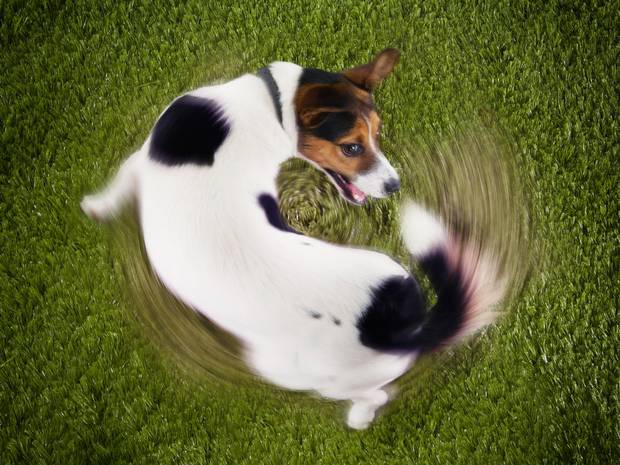
A Mind Like A Dog Endlessly Chasing Its Tail: Confessions of an Obsessive Thinker

I’ve always been a person with a lot of existential anxiety, but in a good way, I think. Ever since childhood, I obsessively think about the things I observe people say and do, about what I see around me, about the beliefs I and other people hold, and so on, and wonder what they mean and what they’re really like outside of my own perception.

I feel this driving urgency to question what I’ve been told, to understand what myself and what other people are really like, what they think, and why they think it (including, especially, our heroes: I want to know their flaws as well as their strengths, otherwise I know what I’m getting is not the full richness of a personality, but a glittering, hollow icon), and what is going on out there that I’m missing out on right now. I’m endlessly curious, and need change and adventure to keep me from becoming miserably restlessness. I like to mix it up, to, and hang out with people who are very different than me, since they present me with new and interesting viewpoints (including disturbing ones!), challenge my assumptions, and broaden my understanding of human nature. I use the dog chasing its tail analogy, in short, because I just can’t seem to stop endlessly evaluating and reevaluating every idea that’s every been in my mind, new or old.

I’m also an obsessive explainer: I find it very difficult to make simple statements of fact or opinion, without fully explaining what I really mean or describing the full set of circumstances surrounding the issue at hand. Although I’ve no doubt the latter is often a source of annoyance for my friends and family (in fact, I’ve been told as much), it’s something I really like about myself. Discovering what this world is like, both within and and without my own mind, is a project that I find endlessly fascinating and fulfilling, and I have no plans to break these habits anytime soon. (I call all of this ‘nerding’.)

But all of this often makes me an uncomfortable companion to have and even, sometimes, a shitty friend. When half your life is an existential crisis and you’re constantly chasing some new ideas around, you end up so scattered that it’s very unlikely you’ll make the decision nearly often enough to sit down and make that phone call, or write that email, or plan that group trip, or invite people over for dinner or a movie or a board game. Which is ridiculous of me, really, because I think that the human race, and its features and products (such as consciousness, and morality, and culture), is the most interesting phenomenon of the whole world! And not just the human race in the abstract: I mean the actual people in my life too. One of these days, I hope to settle down and improve my habits, all you loved ones out there that I neglect, and I am always glad when you’re a good influence on my flibbertigibbet self.

Anyway, I hope I’m reasonably adept at thinking some things through in an intelligent and capable fashion, but not because I’m at all brilliant. If so, I would have come up with some amazing original ideas long before now: the great minds, I’ve often heard, come up with their best ideas before they’re thirty. I’m most definitely nowhere near their league. I’m just hoping that in my case, the constant practice might be fruitful at some point, and in any case, I’ll keep myself busy and amused ’till I die.

One thing I think I’m okay at is explaining, in plain enough language, those complex or obscure ideas that I have managed to wrap my mind around. Another thing I like to do and might not be half bad at sometimes is to put together the disparate things I’ve learned into a larger, coherent picture or narrative, to reconcile or unify those aspects of reality that seem to exist contradictorily. For example, why do human beings, whose evolutionary success is due to highly developed social instincts, so often display such violent tendencies? (Still, like so many others, figuring that one out.)

So that’s what I’ll do: I’ll keep thinking, and thinking, and thinking, but now, since I’ve subjected my thoughts to the discipline of writing them down and sharing them with all of you out there on a regular basis, hopefully, my ideas and scribblings will improve in quality and even, I dare to hope, become useful for something other than my own amusement and satisfaction.

Believing in a ‘Grand Plan’ to Comfort Oneself

When facing the news of yet another disaster taking place in the world (a devastating earthquake, a genocide, an epidemic, the murder of schoolchildren, wrongdoers escaping justice, and so forth), who hasn’t heard a thought of this sort follow the initial horrified reaction: ‘Well, we must remember that in the end, it’s all a part of the Grand Design / God’s Plan / The Will of God…’ and so on and so forth. It’s pretty much always implied, and often said, that this means we must resign ourselves, on some level at least, to the situation. And everyone who expresses this sort of explanation seems to find it comforting.

I know I’m not the only one who finds this tendency disturbing, I can’t be the only one who’s discomfited at the idea that so many people think there must be some sort of justification, a ‘grand plan’ that makes all the suffering and death that occur in the world okay, just so they can feel better about it and move on. When someone who’s suffered such a blow themselves, the death of friends or family, the loss of their own health, the destruction of their community, I understand needing an immediate source of comfort to get through the worst of it as they try to carry on living, faced with such burdens. But for others who make such comments, I must ask: is it really a good thing to comfort yourself in this way?

I’ve never found this sort of thing helpful or good. Putting aside the weird idea of ‘choosing to believe’ something (this doesn’t square with my notion of belief as a spontaneous reaction to personal observation, or to an argument, or to scientific evidence, not something I can just adopt like a new style of dress), the very idea of trying to comfort myself in this way seems pretty selfish. I don’t want to feel better about the fact that there’s suffering in the world. I don’t want to think that death and disease and pain have some sort of ultimate moral justification. I want to feel awful about suffering because I want to keep that fire lit under me to spur me to do something about it, even if I can only help in small ways. I want to always feel that I and the rest of humanity can and should do as much about relieving suffering and correcting injustices as we can, because we’ve decided those things are bad. Trying to justify the wrongs in the world as a necessary part of ‘something greater’ can end up sabotaging the best in ourselves, the empathy and righteous anger that we need to drive us to make the world a better place.

That ‘Grand Plan / God’s Will’ excuse, in the end, sounds to me like a trite phrase, a Hallmark-card-worthy empty sentiment, a platitude, little more than a thumb to suck.