The Comey Firing Reminds Us of a Bigger Danger, by Fareed Zakaria

Zakaria’s analysis of Trump’s presidency is excellent.

Fareed Zakaria's avatarFareed Zakaria

By Fareed Zakaria
Thursday, May 11, 2017

I have tried to evaluate Donald Trump’s presidency fairly. I’ve praised him when he has appointed competent people to high office and expressed support for his policies when they seemed serious and sensible (even though this has drawn criticism from some quarters). But there has always been another aspect to this presidency lurking beneath the surface, sometimes erupting into full view as it did this week. President Trump, in much of his rhetoric and many of his actions, poses a danger to American democracy.

The United States has the world’s oldest constitutional democracy, one that has survived the test of time and given birth to perhaps the most successful society in human history. What sets the nation apart is not how democratic it is, but rather the opposite. U.S. democracy has a series of checks intended to prevent the accumulation and abuse of…

View original post 660 more words

Bertrand Russell Got Stoicism Seriously Wrong, by Massimo Pigliucci

I’m an admirer of Bertrand Russell in some ways, and not in others. For one, I, too, have discovered over time that Russell had gotten some things very wrong about some philosophers and their ideas, and had to overcome some of the prejudices his History of Philosophy had instilled in me. Thanks for the defense of Stoicism, Massimo Pigliucci! This essay serves as a good introduction to Stoicism as well.

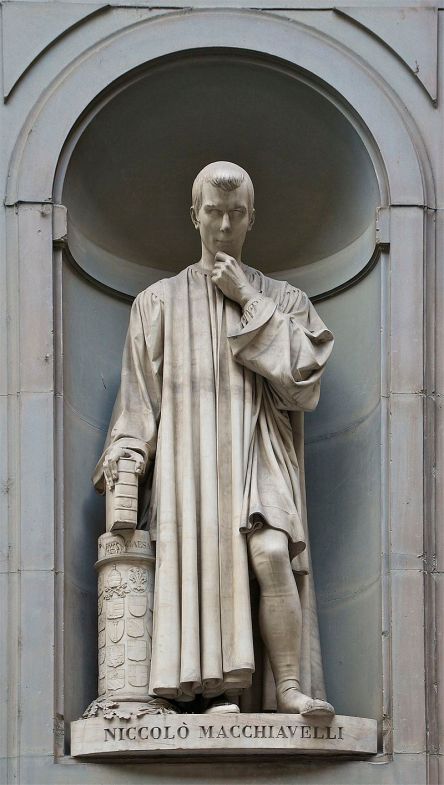
Happy Birthday, Niccolò Machiavelli!

Niccolò Machiavelli statue at the Uffizi

‘Why an entry on Machiavelli? That question might naturally and legitimately occur to anyone encountering an entry about him in an encyclopedia of philosophy. Certainly, Machiavelli [born May 3, 1469] contributed to a large number of important discourses in Western thought—political theory most notably, but also history and historiography, Italian literature, the principles of warfare, and diplomacy. But Machiavelli never seems to have considered himself a philosopher—indeed, he often overtly rejected philosophical inquiry as beside the point—nor do his credentials suggest that he fits comfortably into standard models of academic philosophy. His writings are maddeningly and notoriously unsystematic, inconsistent and sometimes self-contradictory. He tends to appeal to experience and example in the place of rigorous logical analysis. Yet succeeding thinkers who more easily qualify as philosophers of the first rank did (and do) feel compelled to engage with his ideas, either to dispute them or to incorporate his insights into their own teachings. Machiavelli may have grazed at the fringes of philosophy, but the impact of his musings has been widespread and lasting. The terms “Machiavellian” or “Machiavellism” find regular purchase among philosophers concerned with a range of ethical, political, and psychological phenomena, even if Machiavelli did not invent “Machiavellism” and may not even have been a “Machiavellian” in the sense often ascribed to him. Moreover, in Machiavelli’s critique of “grand” philosophical schemes, we find a challenge to the enterprise of philosophy that commands attention and demands consideration and response. Thus, Machiavelli deserves a place at the table in any comprehensive survey of philosophy…’ ~ Cary Nederman, “Niccolò Machiavelli”, The Stanford Encyclopedia of Philosophy 

To introduce yourself to or learn more about the often contradictory, ever controversial, always fascinating and relevant Niccolò Machiavelli, read the Stanford Encyclopedia of Philosophy article linked above and listen to this discussion between one of my favorite broadcasters and public intellectuals Melvin Bragg, and his guests Quentin Skinner, Evelyn Welch, and Lisa Jardine.

Ordinary Philosophy and its Traveling Philosophy / History of Ideas series is a labor of love and ad-free, supported by patrons and readers like you. Please offer your support today!

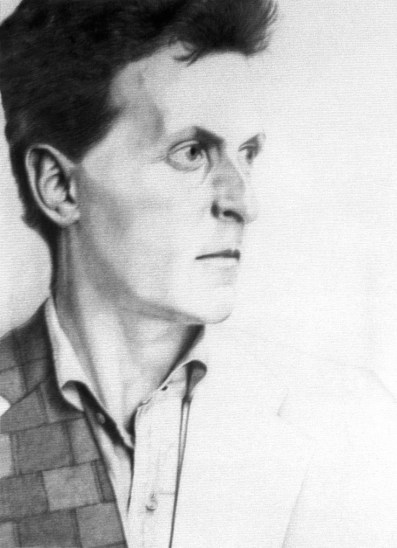
Happy Birthday, Ludwig Wittgenstein!

Drawing of Ludwig Wittgenstein by Christiaan Tonnism, pencil on board 1985, Creative Commons

In honor of Ludwig Wittgenstein’s birthday, Apr 26, 1889, let me share three fascinating discussions about the great philosopher’s life and ideas, one by Stephen West and two for the BBC, one by Matthew Parris and one by Melvin Bragg with their guests.

The first is by philosopher West for his podcast Philosophize This!, in which he discusses ‘…the limitations of language as described by Ludwig Wittgenstein. Considered by some to be the greatest philosopher of the 20th century, Ludwig Wittgenstein played a central, if controversial, role in 20th-century analytic philosophy. He continues to influence current philosophical thought in topics as diverse as logic and language, perception and intention, ethics and religion, aesthetics and culture….’ (this episode is only the first West will create about Wittgenstein)

The second is from the series Great Lives, hosted by Matthew Parris and featuring guests Raymond Tallis and Ray Monk. In this program, Parris, Tallis, and Monk discuss ‘Ludwig Wittgenstein, the fascinating and misunderstood genius who changed the course of philosophy…’

The thirdis  from the series In Our Time, hosted by Melvin Bragg and featuring guests Ray Monk, Barry Smith, and Marie McGinn. In this program, Monk, Bragg, Smith, and McGinn discuss ‘…the life, work and legacy of Ludwig Wittgenstein… Wittgenstein is credited with being the greatest philosopher of the modern age, a thinker who left not one but two philosophies for his descendants to argue over: The early Wittgenstein said, “the limits of my mind mean the limits of my world”; the later Wittgenstein replied, “If God looked into our minds he would not have been able to see there whom we were speaking of”. Language was at the heart of both. Wittgenstein stated that his purpose was to finally free humanity from the pointless and neurotic philosophical questing that plagues us all. As he put it, “To show the fly the way out of the fly bottle”.How did he think language could solve all the problems of philosophy? How have his ideas influenced contemporary culture?…’

Enjoy and be inspired, awed, puzzled, and enlightened!

Ordinary Philosophy and its Traveling Philosophy / History of Ideas series is a labor of love and ad-free, supported by patrons and readers like you. Please offer your support today!

O.P. Recommends: Why Radio’s Feminism as Philosophy, Politics, and Friendship with Guests Gloria Steinem and Suzanne Braun Levine

Gloria Steinem and Suzanne Braun Levine, image via Why Radio Podcast website

Gloria Steinem and Suzanne Braun Levine, image via Why? Radio podcast website

I was recently thrilled to discover Why? Radio‘s podcast. It’s about time I did, since it’s eight years and more than 100 episodes in. Thanks for the share, Laura of Bismarck, ND!

For the 100th episode this February, host and creator Jack Russell Weinstein interviews Gloria Steinem, co-founder of Ms. magazine, journalist, writer, and feminist extraordinaire; and Suzanne Braun Levine, first editor of Ms. magazine, author, and authority on feminism and gender issues. The topics covered in this episode are summarized in the title ‘Feminism as Philosophy, Politics, and Friendship‘. Weinstein is a Professor of Philosophy at the University of North Dakota and created the IPPL radio show and podcast Why? Philosophical discussions about everyday life for very similar reasons I created Ordinary Philosophy, as you can see from the subtitle.

My readers may often wonder why my philosophy/history of ideas blog and podcast are at least as devoted to the life and ideas of activists and civil rights leaders as they are to philosophers and theorists. Steinem sums up a conviction I share near the beginning of the interview: ‘To be part of any social justice movement is probably to be on the forefront of philosophy’. Social justice movements are founded on ideas that have not yet been understood and accepted widely enough to be embodied in law and social practice. Many activists, then, can be understood as philosophers in the public square, and activism as philosophy in action. They are part of the same noble tradition, forcing us to consider uncomfortable questions and raising our consciousness, as Socrates’ gadfly questions, awakening his fellow citizens from their ‘dogmatic slumbers‘. I’m also gratified to hear Steinem cite Louisa May Alcott as one of her earliest influences, as she was for me; the story of Alcott’s principled stand at Frederick and Helen Pitts Douglass’ wedding is among my favorite examples of philosophy in action, a perfect demonstration of the right way to think and act towards our fellow human beings.

Steinem also challenges the way that second-wave feminism is often characterized as a middle-class white movement. She points out that polls revealed that black women, especially in the early days of the movement, shared feminist and civil rights convictions in far greater proportions than any other group, and were more likely to demonstrate their convictions through action; it’s just that they were not recognized in the media nor did they have the opportunities that white women, as well as white and black men, had to rise to leadership positions. Steinem shares an anecdote from her participation in the March on Washington, in which a black woman in the crowd angrily points out that not a single black woman was chosen to address the crowd from the stage, which illustrates this paradox.

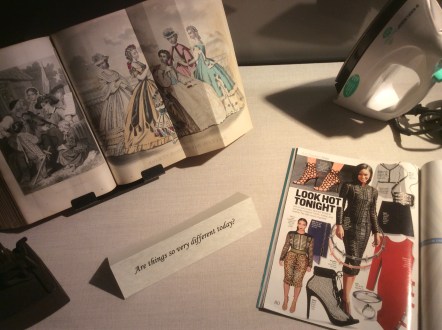
Women are still expected to wear ‘feminine’ clothing that pushes, pulls, and presses their bodies into fashionable shapes, sometimes painfully, and to wear heavy makeup and crippling and uncomfortable shoes in order to be considered well-dressed and sexy, especially for public figures. The problem is not necessarily these fashions themselves, it’s that women are generally required to adorn themselves this way in order to achieve their goals. Photo exhibit at Women’s Rights Historical Park, Seneca Falls, NY.

I also love what Braun Levine says about being a ‘tomboy’ as a young girl; she says it shows she was on the ‘wrong path’. She wasn’t saying that she was wrong to want to play with the boys and wear pants, to the contrary. I interpret her statement as her commentary on how we’ve long divided healthy, active pursuits such as sports and wanting to wear clothing that permits bodily freedom into the category ‘boy’, and daintiness constrained in clothing and shoes that limit bodily freedom into the category ‘girl’. It was only with the hindsight and wisdom made possible by her own evolving consciousness, which she, in turn, awoke in her readers, which made her realize that these ‘boy’ and ‘girl’ qualities, instincts, and preferences, are universal human ones. People of all genders, or of none depending on how you describe it, love to be very physically active or they don’t, like to wear constrictive and elaborate clothing, makeup, and shoes or don’t, and so on.

This wonderful discussion about the history and evolution of feminism, as Steinem and Braun Levine experience it, wraps up with an exchange with two budding activists, eleven-year old Faith and Adina. What a great way to show just how influential these two women are and how the young are moving their cause forward and applying it to the modern world!

*Listen to the podcast version here or on Google Play, or subscribe on iTunes

Ordinary Philosophy and its Traveling Philosophy / History of Ideas series is a labor of love and ad-free, supported by patrons and readers like you. Please offer your support today!

On the Recent Intelligence Squared U.S. Debate About Basic Income

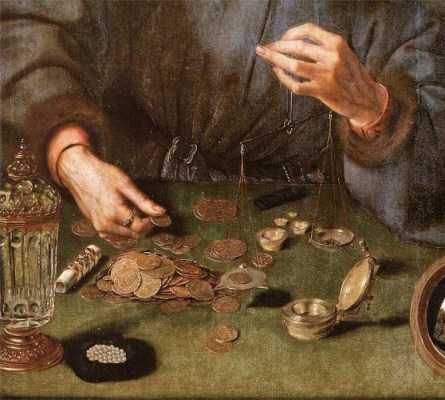
The Moneylender and his Wife by Quinten Massijs (detail)

This weekend, on the BART ride to San Francisco and on the walk to and from my destination there, I listened to this fascinating debate on Intelligence Squared U.S.:  The Universal Basic Income Is The Safety Net Of The Future. (It’s also available as a podcast.) It was so thought-provoking that my walk turned into a rather long one, as I stopped every few blocks to sit down and scribble some notes in response to what I heard.

The debaters in favor of the motion are the libertarian political scientist Charles Murray, infamous in many circles for co-authoring The Bell Curve, and labor leader Andrew Stern. These two make surprising debate partners, but of course, that’s part of the fun!

The debaters against the motion are Jared Bernstein and Jason Furman, both economic advisors to the Obama administration, and both more on the liberal / progressive end of the economic spectrum, which also adds to the interesting contrasts between audience expectations and the arguments made.

Here’s the summary of the debate from the IQ2 website:

Imagine getting a check from the government every month. $600 guaranteed. It’s happening in Finland, where a pilot program is being launched to test what’s known as a “universal basic income.” As technology transforms the workplace, jobs and income will become less reliable. The idea is that a universal basic income could serve as a tool to combat poverty and uncertainty in a changing society, and provide a cushion that empowers workers, giving them latitude to take risks in the job market. But some argue a guaranteed income would take away the incentive to work, waste money on those who don’t need it, and come at the expense of effective programs like Social Security, Medicare and Medicaid. Is the universal basic income the safety net of the future?

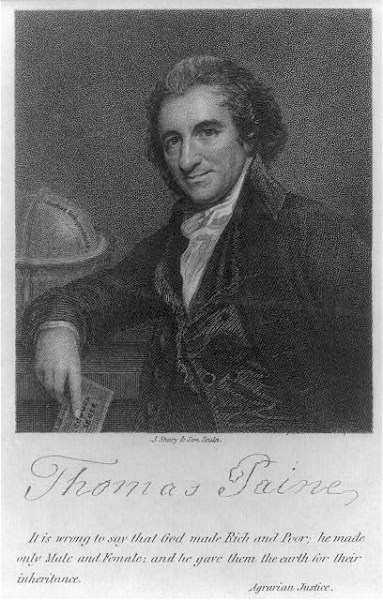
I’ve written about basic income before in light of Thomas Paine’s case for a social welfare system, broadly distributed to the point that we’d call it basic income today, in his pamphlet Agrarian Justice of 1796. I’m broadly sympathetic to the case for basic income especially insofar as I’m convinced by two of his major arguments.

One, Paine argues that the right to private property is not an intrinsic right or derived from nature, or even from moral convictions about deservingness or our duties toward those less fortunate. Rather, property rights are artificial rights we’ve created for efficiency’s sake: it’s a way to incentivize people to be as productive as possible to the benefit of both individual and society. But whatever efficiencies property rights promote, Paine observes just as we observe now, they too often deprive people of the very thing they promise to provide. Economies based on property rights deny most people direct access to the world’s natural resources while sometimes failing to reward them proportionally.

This is true not only of those who produce the most necessary, useful goods and services such as growing and preparing food, building and maintaining our cities, towns, and homes, and caring for the disabled and sick; they are often the ones who receive the lowest wages. In the meantime, others who create such frivolous and even arguably harmful things as casinos, violent video games, and poor quality trinkets that become trash almost as soon as they’re made can often make money hand over fist. Some people are not able to make money even if they were willing: they may be disabled or aged, or the skilled work they’ve done all their lives becomes obsolete. Worst of all, those who raise children, care for the disabled and aged, and otherwise keep the home generally receive no pay, though their work benefits society most of all. The amount of money we can bring in generally determines the resources we have access to, so if we have no money, we have no property. Property rights, then, guarantee us the right to property without any consideration as to whether or not we actually end up be able to obtain or keep any. Therefore, Paine argues, we owe every person compensation for denying them their natural right to equal access to the world’s resources.

Two, Paine argues that a universal income is better than discretionary welfare, such as that based solely on need, because it prevents the inevitable jealousies and complaints of unfairness that can erode social cohesion and undermine mutual trust. If everyone starts out at the same basic level, we may not have all of the same chances in life just as we don’t now, advantages or disadvantages that we can’t do much about: we may have rich parents, poor parents, or none at all; we may be able-bodied or we may not; we may be beautiful, smart, or have other attributes that society rewards. But, we’ll all have the same basic chance that we can give one another: the freedom and well-being guaranteed by a basic level of economic security.

But back to the debate…. Why this digression, you might ask? I return to Paine because he makes the first sustained modern argument (that I’m aware of) in favor of a basic income and because his basic points, or closely related ones, are brought up throughout this debate. In the question and answer session, Andrew Stern refers to the way perceived unfairness, such as Paine discusses, has long politically undermined need-based programs, from publicly-funded unemployment benefits to health care insurance for those with low income. Stern also points out that many people already enjoy ‘undeserved’ basic income, such as those born to parents who can afford to provide it. If we have no problem with those people reaping the benefits of work they didn’t do, why not everyone? Charles Murray adds the element of personal responsibility to the question of perceived unfairness of needs-based welfare. If everyone were given the same basic level of resources, people could no longer justly claim victimhood for not having the same chances as everyone else. If we collectively provide the same benefits to everyone, we can hold people to a basic equal accountability for all who could work and contribute more than they do.

Murray, as you may guess from his emphasis on opportunities for traditional marriage and the preeminence of personal responsibility, is much more conservative than the other participants in the debate, and introduces a free market argument that many political conservatives might like just as well as pro-labor liberals and progressives. This argument is founded on the importance of competition in a well-functioning economy. To harness the benefits of competition, Murray proposes that if people have ‘walking – away’ money, employers will have to compete with one another for employees, and in doing so, they will have to innovate to make jobs appealing. Employers would have to offer good wages, provide a pleasant and safe working environment, and make the work seem meaningful and appreciated. This is a sort of competition that serves drives wages, standards, and productivity up, not sending wages and working conditions spiraling in the race to the bottom that so many unregulated job markets, mostly competing to lower prices, have exhibited throughout the history of capitalism.

Jared Bernstein repeats the argument throughout the debate, like a mantra, that a dollar given to someone that doesn’t need it is a dollar taken away from someone that does. Many in the audience seem to find this argument convincing, but I don’t, at least without much more justification than he provides. For one thing, neither Bernstein nor his debate partner Jason Furman addresses the vast expenditures of time and money of a bureaucracy required to administer large-scale need-based welfare. It’s expensive for government as well as for individuals, who are required to provide proofs of their need, which is multi-dimensional and subjective and therefore difficult and time-consuming to demonstrate. (Murray does address problems with this kind of bureaucracy, but he emphasizes its unpleasantness and the way it re-introduces a form of serfdom, creating a class of people whose freedom is limited by this system.) For another thing, neither Bernstein nor Furman directly addresses the fact that universal basic income would vastly expand the number of people with disposable income for the first time, much more vastly than needs-based programs do. Most of this money, in turn, would go straight back into the economy, rather than into the ever-inflating bank accounts of the ever-fewer, ever-wealthier wealthiest individuals who are now gobbling up an ever-larger share of the economic pie. Our targeted redistribution system has been entirely unable to resolve this inefficiency, and in fact, may exacerbate it.

The side arguing in favor of the motion, which, as I’ve already mentioned, I’m more sympathetic to for aforementioned reasons, does not, in the end, convince the audience. They’re handily defeated, as the side arguing against the motion not only convinces most of the undecided but also wins over some of the basic income supporters. I suspect that Murray hurts his side a bit by spending too much time on arguments that I think are beside the point, such as whether more people could afford to get married (it doesn’t have to be expensive!) and on very subtle, not-very-well expressed arguments that were lost among the rest. But I would like to hear another major debate in which basic income is supported by stronger arguments, more convincing answers to objections, and most of all, better evidence. As Stern points out, there are small-scale and short-term experiments in basic income happening all over, in Alaska, Finland, and Toronto, for example, but the results are not in yet. I agree that such a major social program should be rolled out with some caution, given the potential fallout from unforeseen as well as foreseen potential side effects. But perhaps smaller experiments can’t reveal the benefits that a complete reinvention of a large economy would reveal, especially if effectiveness is entirely a matter of scale. For example, such a well-balanced, sturdy, and beautifully functioning thing as a termite mound couldn’t happen without an incredibly large number of factors contributing, namely the weather, millions of termites, many square miles of dirt, and so on. If you took a small pile of dirt and a small number of termites, a well-functioning termite mound would not result.

Our American re-invention of government was another such experiment founded on the idea that people can govern themselves and on the ideal of universal human rights (the ideal, mind you, not yet the reality). Many societies before and for some time since had tried to correct abuses and oppressions with one reform here, one reform there, or with a wholesale chaotic and violent overthrow after societal cohesion had already collapsed through famine and extreme corruption (such as, famously, the French Revolution). But it took a large number of fair-minded people to come together and lay the foundation for an entirely new system of government based on the ideal that all human beings have the right to life, liberty, and the pursuit of happiness, or as John Locke originally formulated it, life, liberty, and property. Or in the case of universal basic income, to actual property.

Ordinary Philosophy and its Traveling Philosophy / History of Ideas series is a labor of love and ad-free, supported by patrons and readers like you. Please offer your support today!

~~~~~~~~~~~~~~~~~~~~~

Sources and Inspiration:

Labor Theory of Property.” Wikipedia, The Free Encyclopedia

Locke, John. Two Treatises of Government, 1689

Paine, Thomas. Agrarian Justice, 1796.

Paine, Thomas. The Rights of Man, 1791.

The Universal Basic Income Is The Safety Net Of The Future. Intelligence Squared U.S. Debate, March 22, 2017

O.P. Recommends: A Conversation With Michael Ignatieff on Universal Human Rights, Localism, and the Ordinary Virtues at Philosophy 247

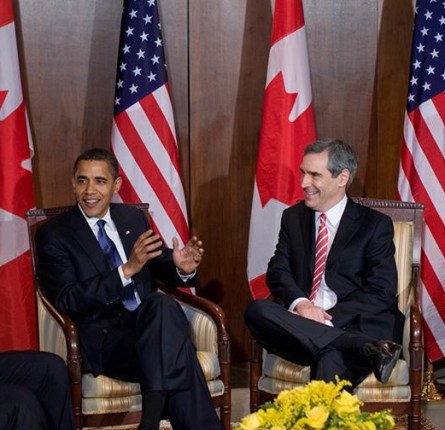
President Obama meets with Michael Ignatieff in Ottawa, Canada on Feb. 19, 2009 (from White House photo by Pete Souza)Ignatieff speaking of people he worked with on his travels to uncover people’s actual and expressed beliefs about human rights:

I first heard about Michael Ignatieff on the Philosophy Bites podcast a few years ago, and found his story of transforming himself from an intellectual to a politician and back again very intriguing. Just last week, I was very interested to hear a discussion between him and David Edmonds, co-host of Philosophy Bites and now host of his own podcast Philosophy 24/7.

This time, Ignatieff talks about human rights, a topic he’s been working on deeply for many years. As part of his preparation and research, he traveled the world to uncover people’s actual and expressed beliefs about human rights. What he says about what he learned really struck me:

‘The Human Rights edifice created since 1945 has had a huge effect on the world in the sense of powering the democratic revolution, the self-determination revolution, the civil rights revolution… On the one hand, you get people saying ‘my voice should be heard’… [The idea of] human rights has been influential in creating the tacit presumption… that their voice mattered… I don’t think without the human rights revolution that would have anchored itself in their souls and conscience as much as it is.

On the other hand… human rights is a form of universalism. It says that all human beings matter, and that we have duties to human beings outside our borders, and that it is the human identity that counts in moral judgment. What struck me very much is that people thought they wanted to make a claim of equality for themselves as citizens but not for other people, so equality of voice within the nation state, but no very strong or increased development of a universalist obligation to people beyond states. And that I think is a surprising result, because if human rights means anything, it is, we have this idea of transnational solidarity to people who are not fellow citizens, and so equality for us, not so much equality for strangers.

And this has, needless to say, huge political implications for a whole range of issues, notably refugees and migration…’

Igniateff then goes on to discuss how this great moral innovation, the idea of universal human rights, squares with what Ignatieff calls ‘ordinary virtues’: those interpersonal moral instincts which impel us to deal justly and kindly with those nearest to us, with those we encounter directly and those who share our culture, our language, our belief system, and our family and local community ties. Ignatieff believes that the ordinary virtues are not only compatible with, but necessary for realizing the ideal of human rights in the world. That’s because localism and the ordinary virtues provide us with a key element, that of triage, which makes these great human rights projects scalable, manageable, and effective within localities in a way that the application of universalist principles can’t on their own.

Does Ignatieff succeed in his attempt to reconcile the universalist conception of human rights with localism and the ordinary virtues? What do you think? Find out by listening to this fascinating and informative discussion at Philosophy 24/7

And learn more about the widely accomplished and ever-energetic Michael Ignatieff at:

Michael Ignatieff: Biography – at his website

Michael Ignatieff – by Michael Ray for Encyclopædia Britannica

Michael Ignatieff on Political Theory and Political Practice – discussion at Philosophy Bites podcast

“I Don’t See the President As An Intellectual at All”: A Q&A with Michael Ignatieff – by Isaac Chotiner for  The New Republic, February 20, 2014

Michael Ignatieff, The Intellectual Who Wanted to Be a Politician – by Jordan Michael Smith

Ordinary Philosophy and its Traveling Philosophy / History of Ideas series is a labor of love and ad-free, supported by patrons and readers like you. Please offer your support today!

O.P. Recommends: Hi-Phi Nation Podcast by Barry Lam

A few weeks ago, I discovered this oh-so-enjoyable philosophy podcast, one right up my alley and the alley of anyone who loves philosophy in the public square. It’s called Hi-Phi Nation, ‘a philosophy podcast that turns stories into ideas.’
Created by Barry Lam, its mission is to demonstrate the revelatory power of philosophical thinking through its application to real-life situations, from what soldier-turned-philosopher Mike Robillard calls ‘moral exploitation’ in the military to what constitutes valid scientific inquiry, from the morality of wills and trusts (why should the wishes of the dead ever have priority over the interests of the living?) to what a certain musical subgenre reveals about the nature of art. The latter, in fact, is one of my personal favorite episodes, as philosophy and art are both central in my life.

The style of the podcast is closely modeled on This American Life and other story-driven podcasts. As Lam points out, people love stories, so if one wants to convey philosophical ideas to the public at large, especially complex or subtle ones, there’s no better way to do it than in the context of a good tale. For example, take morality: from Plato and his Republic and Ring of Gyges, to Jesus Christ and his parables, to Louisa May Alcott’s tales of the tribulations and joys of a progressive-minded family living through the Civil War, the most influential moral thinkers and teachers bring their ideas to comprehensible, identifiable, sympathetic life for their audiences.

There are two excellent articles about Lam and the show by Larry Hertz for Vassar Stories (of Vassar College, where Lam is an associate professor), and by Brett Tomlinson for Princeton Alumni Weekly.

Enjoy! I know you will…

~ Ordinary Philosophy is a labor of love and ad-free, supported by patrons and readers like you. Please offer your support today!

O.P. Recommends: The Ideas That Make Us, with Bettany Hughes

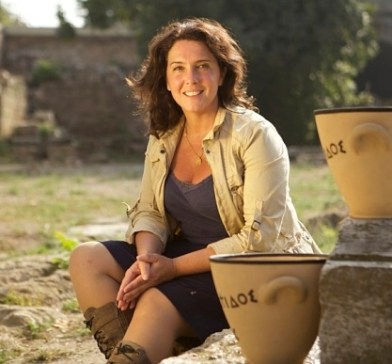
Bettany Hughes is one of my very favorite public intellectuals; from one talk to the next, one documentary series to another, I think, now this is the best ever. Perhaps you can tell from the manner in which I frequently share her work that I have more than a little crush on her: intelligent, wealthy in knowledge, endlessly curious, warm, beautifully spoken, lovely, funny, and always fascinating.

Anyway, as I was doing some filing and other such mindless tasks yesterday afternoon, I began re-listening to The Ideas That Make Us, a BBC 4 series about ‘the history of the most influential ideas in the story of civilisation.’ Hughes, a historian deeply trained in the classics, follows the history of ideas in the Western world, often beginning with the origins of the words we use to refer to them: Virtue, Justice, Peace, Agony, Charisma, and so on, many from the ancient Greek. I particularly love the story of the origin of Idea itself and the appearance of the term in a lyric poem by Pindar (another wonderful discovery); idea derives from the Greek idein, ‘to see.’ Hughes embarks on this story from within an MRI machine, bringing the Idea full circle: to see, in the original sense of the word, on the screen what we have long thought could only be manifested through language.

Follow this and many other fascinating stories of the history of great ideas with Hughes here

~ Ordinary Philosophy is a labor of love and ad-free, supported by patrons and readers like you. Please offer your support today!

Happy Birthday, Karl Marx!

Marx by Sam Kaprielov, 76x61cm, oil on canvas, 2015, image used by permission of the artist

Marx by Sam Kaprielov, 76x61cm, oil on canvas, 2015, http://www.samkaprielov.com/

Born on May 5, 1818, few thinkers have been as influential as Karl Marx. Philosopher, theoretician of history, economist, sociologist, journalist, and revolutionary socialist, he was a prolific thinker and writer, widely lauded, criticized, and misunderstood, all of these especially by those who claim to act in his name.

In honor of his birthday, here’s a series of works about Karl Marx, a recent painting by an artist whose work my good friend introduced me to, and a song that I love.

Karl Marx (1818 – 1883) – a brief bio at BBC: History

Karl Marx, 1818-1883 – by Steven Kreis for The History Guide

Karl Marx – by Jonathan Wolff for The Stanford Encyclopedia of Philosophy

Marx – Melvyn Bragg and guests Anthony Grayling, Francis Wheen, and Gareth Stedman Jones discuss Karl Marx for BBC’s In Our Time podcast and radio series

Karl Marx: Capitalism vs. Communism, Marx and Kierkegaard on Religion Part 1 and Part 2and Austrians and Marx – by Stephen West for Philosophize This!

~ Ordinary Philosophy and its Traveling Philosophy / History of Ideas series is a labor of love and ad-free, supported by patrons and readers like you. Please offer your support today!