Simone de Beauvoir’s Political Philosophy Resonates Today, by Skye C Cleary

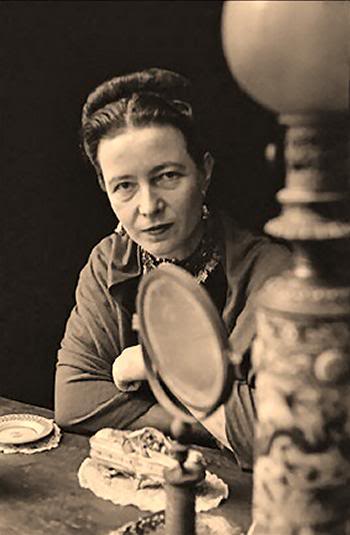
Simone de Beauvoir is rightly best known for declaring: ‘One is not born, but rather becomes, woman.’ A less well-known facet of her philosophy, particularly relevant today, is her political activism, a viewpoint that follows directly from her metaphysical stance on the self, namely that we have no fixed essences.

The existential maxim ‘existence precedes essence’ underpins de Beauvoir’s philosophy. For her, as for Jean-Paul Sartre, we are first thrown into the world and then create our being through our actions. While there are facts of our existence that we can’t choose, such as being born, who our parents were, and our genetic inheritance, we shouldn’t use our biology or history as excuses not to act. The existential goal is to be an agent, to take control over our life, actively transcending the facts of our existence by pursuing self-chosen goals.

It’s easy to find excuses not to act. So easy that many of us spend much of our lives doing so. Many of us believe that we don’t have free will – even as some neuroscientists are discovering that our conscious will can override our impulses. We tell ourselves that our vote won’t make any difference, instead of actively shaping the world in which we want to live. We point fingers at Facebook for facilitating fake news, instead of critically assessing what we’re reading and reposting. It’s not just lazy to push away responsibility in such ways, but it’s what de Beauvoir called a ‘moral fault’.

Since we’re all affected by politics, if we choose not to be involved in creating the conditions of our own lives this reduces us to what de Beauvoir called ‘absurd vegetation’. It’s tantamount to rejecting existence. We must take a side. The problem is, it’s not always clear which side we ought to choose. Even de Beauvoir failed to navigate through this question safely. She adopted questionable political stances: she once, for example, dismissed Chairman Mao – responsible for the murder of over 45 million people – as being ‘no more dictatorial’ than Franklin D Roosevelt. De Beauvoir’s philosophy of political commitment has a dark side, and she personally made some grave errors of judgement, yet within her philosophy, there’s an opening to address this issue.

In The Ethics of Ambiguity (1947) she argues that to be free is to be able to stretch ourselves into an open future full of possibilities. Having this kind of freedom may be dizzying, but it doesn’t mean we get to do whatever we like. We share the earth, and have concern for one another; if we respect freedom for ourselves, then we should respect it for others, too. Using our freedom to exploit and oppress others, or to support the side that promotes such policies, is inconsistent with this radical existential freedom.

With oppressive regimes, de Beauvoir acknowledged that individuals usually pay a high price for standing up to dictators and the tyranny of the majority, but demonstrated concretely – through her writing and political engagement – the power of collective action to bring about structural change. An intellectual vigilante, de Beauvoir used her pen as a weapon, breaking down gendered stereotypes and challenging laws that prohibited women from having control over their own bodies. She authored and signed the Manifesto of the 343 in 1971, which paved the way for birth control and abortion in France. Her most famous work, The Second Sex (1949), sparked a new wave of feminism across the world.

Today more than ever it’s vital to recognise that freedom can’t be assumed. Some of the freedoms that de Beauvoir fought so hard for in the mid-20th century have since come under threat. De Beauvoir warns that we should expect appeals to ‘nature’ and ‘utility’ to be used as justifications for restrictions on our freedom. And she has been proved correct. For example, the argument that Donald Trump and others have used that pregnancy is inconvenient for businesses is an implicit way of communicating the view that it is natural and economical for women to be baby-making machines while men work. However, de Beauvoir points out ‘anatomy and hormones never define anything but a situation’, and making birth control, abortion, and parental leave unavailable closes down men’s and women’s ability to reach beyond their given situations, reinforcing stereotypical roles that keep women chained to unpaid home labour and men on a treadmill of paid labour.

In times of political turmoil, one may feel overwhelmed with anxiety and can even be tempted with Sartre to think that ‘hell is other people’. De Beauvoir encourages us to consider that others also give us the world because they infuse it with meaning: we can only make sense of ourselves in relation to others, and can only make sense of the world around us by understanding others’ goals. We strive to understand our differences and to embrace the tension between us. World peace is a stretch, since we don’t all choose the same goals, but we can still look for ways to create solidarities – such as by working to agitate authoritarians, to revolt against tyrants, to amplify marginalised voices – to abolish oppression. Persistence is essential since, as de Beauvoir says, ‘One’s life has value so long as one attributes value to the life of others, by means of love, friendship, indignation and compassion.’ De Beauvoir is surely right that this is the risk, the anguish, and the beauty of human existence.Aeon counter – do not remove

Skye C Cleary is a lecturer at Columbia University, the City College of New York, and Barnard College, and is the managing editor of the American Philosophical Association’s blog. Her latest book is Existentialism and Romantic Love (bio credit: Aeon)

This article was originally published at Aeon and has been republished under Creative Commons.

~ Ordinary Philosophy is a labor of love and ad-free, supported by patrons and readers like you. Any support you can offer will be deeply appreciated!

*All views and opinions expressed by guest writers are their own and do not necessarily reflect those of Ordinary Philosophy’s editors and publishers

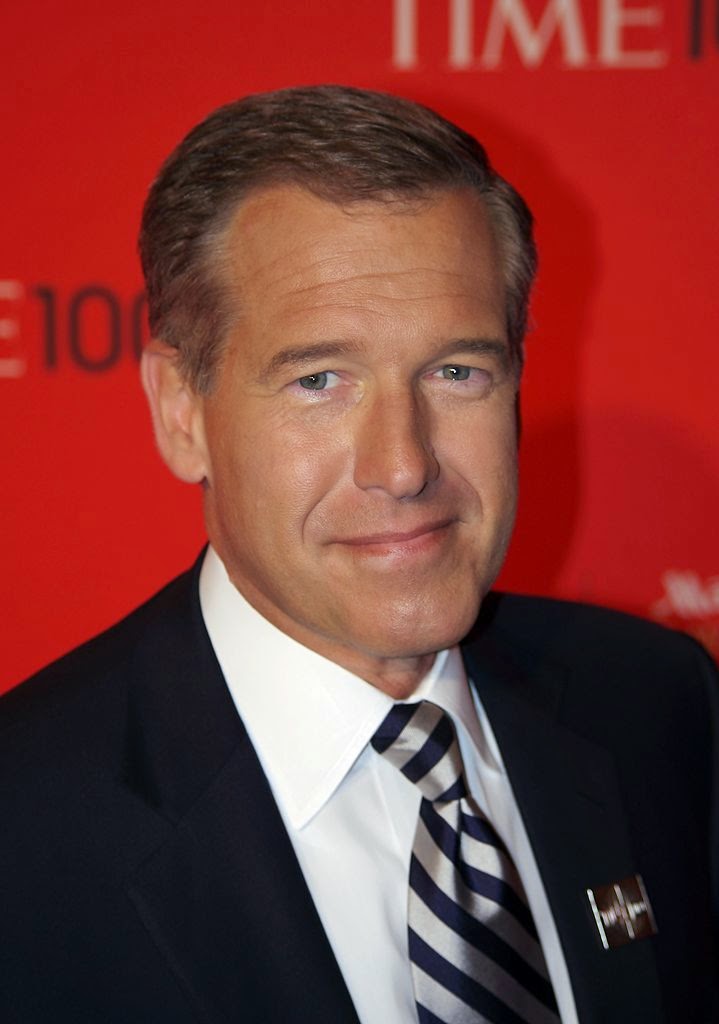
Brian Williams, Bill O’Reilly, Rush Limbaugh, and Honesty in Public Discourse

A piece from two years ago on a timely subject…

Amy M Cools's avatarOrdinary Philosophy

You’re likely aware of the backstory to this piece: well-known news anchorman Brian Williams was caught telling stories. A generous interpretation would portray them as exaggerations; a harsher one a series of self-aggrandizing lies. Williams placed himself in the thick of the action while covering certain news stories, like the shooting down of a military helicopter and the aftermath of Hurricane Katrina, when he was actually at a safe distance. Since his stories were recently debunked, in whole or in part, by others there at the time, he has been widely criticized, shamed, and mocked, and the public debate over the nature and reliability of modern news rages ever more fiercely.

He’s not the only public figure in hot water right now for playing fast and loose with the truth. Bill O’Reilly is also being called out for his history of adding, ahem, some ‘color’ (my term, not his) to…

View original post 1,672 more words

Civil Rights and Healthcare: Remembering Simkins v. Cone (1963), by Ezelle Sanford III

Dr. George Simkins, Jr.

Dr. George Simkins, Jr.

Upon her release from L. Richardson Memorial Hospital’s maternity ward in Greensboro, North Carolina, my grandmother, Ann Wilson Scales, walked a few short steps to her mother’s home with a small baby in hand. She had just given birth to my mother, La Tanya Wilson Sanford, in the city’s Black hospital. It was 1965. Unbeknownst to either of them, a small group of L. Richardson’s physicians, dentists, and patients had waged a quiet war against segregation two years earlier. The city was the site of arguably one of the more consequential yet little-known civil rights battles in American history. No, it was not the beginning of the student sit-in movement initiated by North Carolina A&T students in 1960. Rather, this small contingent fought in district and circuit courts to desegregate U.S. healthcare. At issue was where medical professionals could practice and where patients could access care: in the older, segregated L. Richardson Hospital, or in the newer, more modern (and better funded) Moses H. Cone Memorial Hospital.

In 1962, dentist George Simkins, Jr. unsuccessfully attempted to admit a patient to Moses H. Cone Memorial Hospital, one of two private white hospitals in the city supported by tax dollars. Combining his role as community dentist and President of the Greensboro chapter of the NAACP, Simkins initiated a class-action lawsuit against both Moses Cone and Wesley Long Community Hospitals. The NAACP’s Legal Defense Fund assisted in litigating the test case. Not only were African American patients barred from these institutions, Black physicians were barred from practicing there, even as both institutions received state and federal funds provided by the 1946 Hill-Burton Hospital Survey and Construction Act. Hill-Burton emerged from President Harry Truman’s failed healthcare reform and promised to rebuild and modernize the U.S. healthcare infrastructure. However, this program included a loophole where states that engaged in de jure racial segregation could use the money to build segregated facilities. Cone and Long Hospitals both benefitted from this program and its segregation loophole. This is not to say that segregated hospitals did not exist before the Hill-Burton Program, however; historian Vanessa Gamble chronicles the movement to establish Black hospitals from 1920–1945.

Initially, the district court of North Carolina sided with the defendant hospitals; however, the Fourth Circuit Court of Appeals (and later the United States Supreme Court, which refused to hear the case) deemed that the two hospitals’ policies of racial discrimination for both patient admissions and visiting physician staff privileges violated the fifth and fourteenth amendments of the Constitution.

Last September, the CEO of Cone Health Network, of which Moses Cone Memorial Hospital and Wesley Long Hospitals are now a part, issued a public apology to the last surviving plaintiff of the historic court ruling. Dr. Alvin Blount, 94, graciously accepted the long overdue apology from the health system, initiating local reflections on racial discrimination in healthcare. This is not the first apology issued to acknowledge the long-strained history of race and racism associated with medicine and healthcare. In May 1997, former President Bill Clinton formally apologized for the United States Public Health Service’s “Tuskegee Study of Untreated Syphilis in the Negro Male” (1932–1972). In 2008, the American Medical Association (AMA) officially apologized for its exclusion of Black physicians from membership, an important acknowledgment given that AMA membership became increasingly important for hospital admitting privileges, licensure, and broader steps in professional development. As historian Thomas Ward notes, until the AMA desegregated in 1968, Black physicians were barred from white hospitals and denied opportunities for continuing medical education, thereby justifying their own professional societies and medical schools. All of these apologies were too little, too late, and their legacies continue to influence healthcare to date.

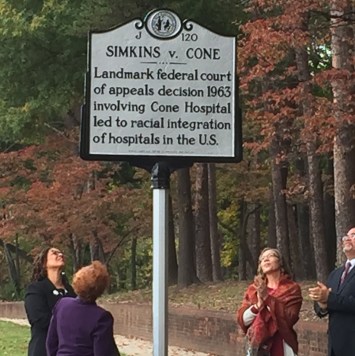
Historical marker for landmark decision of Simkin v. Cone, 1963

Historical marker for landmark decision of Simkin v. Cone, 1963

Cone Health commemorated the legacy of the Simkins decision by allocating $250,000 in scholarship funds for students pursuing healthcare professions. Guilford County commemorated the case by placing a marker outside Cone Hospital and a bronze statue of George Simkins on the grounds of the Guilford County Courthouse. These symbolic gestures speak to the case’s broad importance, defining Simkins not only as a significant battle for civil rights in medicine, but also as a touchstone moment in a much larger movement for freedom and liberation. Simkins was decided only months before the Civil Rights Act of 1964 was ratified; the Title VI of this act and Medicare funding forced the desegregation of healthcare facilities almost overnight, as historian David Barton Smith argues. In a short documentary produced by Cone Health, Dr. Blount recalled that the Simkins case “ended ‘separate but equal’ forever.”

Yet, the Simkins decision does not figure prominently in many popular renditions of civil rights history.1 Contrary to the aforementioned Clinton and AMA apologies, which received national attention, the Simkins apology did not move beyond the local media. In many of these local reflections, the Simkins case was likened to the historic 1954 Brown v. Board ruling. Though both cases ostensibly achieved similar ends, eliminating separate but equal institutions in education and healthcare, respectively, the comparison obscures more than it reveals. Even I am guilty of this shorthand, an easy way to communicate the gravity and significance of this decision. But this shorthand has the unintended effect of perpetuating Simkins’ invisibility.

History plays a role in why Brown lives on in the popular imaginary and Simkins does not. A majority of Americans interacted with both systems as they each cared for the nation’s most vulnerable: children and the infirm. Desegregating American education, however, was a very public battle, as images and video captured the Little Rock Nine or Dorothy Counts (who integrated my high school, Harding University High School in Charlotte, North Carolina) confronting inflamed white mobs. Brown was not simply waged in court; debates around school segregation seeped into American homes and into popular discourse. On the other hand, Dr. Blount remembered that the Simkins plaintiffs wanted to engage in a quiet challenge to segregated healthcare.2Although their fiscal independence allowed some physicians, like T. R. M. Howard, to jump to the fore of a broader movement, others sought to challenge their exclusion from the medical establishment in a more dignified manner.

While the Supreme Court heard Brown, it did not take the Simkins case. Until the Civil Rights Act months later, the lower Circuit Court’s ruling stood as jurisprudence only in the Fourth Circuit’s Mid-Atlantic region. Moreover, the two cases had distinct legal questions at their heart; Brown questioned the separate but equal doctrine established in 1896, while Simkins questioned whether public funding of private institutions counted as “state action.” Undoubtedly, Brown was an essential step leading to the Simkins decision. Without its challenge to the separate but equal doctrine, Simkins may have failed. Finally, the speed by which institutions in the fields of education and healthcare were desegregated differed dramatically. In the words of Chief Justice Earl Warren, school desegregation was ordered with “all deliberate speed,” while the Simkins case, combined with the Civil Rights Act and Medicare legislation, helped to desegregate many hospitals rather quickly. Political scientist and historian David Smith’s The Power to Heal: Civil Rights Medicare, and the Struggle to Transform America’s Healthcare System (2016) recovers this connection and situates health policy implementation in the broader movement for equality, employment, and rights.

Though the Simkins case is lauded for bringing about a swift end to segregation in healthcare, among other things, it led to the decline of Black community hospitals. While some, like Grady Memorial in Atlanta, successfully negotiated the new terrain of race relations, federal monies, power, and increased opportunities for Black medical students and doctors elsewhere, others like Homer G. Phillips Hospital of St. Louis and L. Richardson Hospital shuddered under the burden of increasing medical costs, lack of staff, and changing ideas around the importance of these institutions. In effect, Black hospitals were an anachronism in the post-Simkins era. Where some Black patients could, like my grandmother, walk to and from their community hospitals, such an action is almost inconceivable today given the large, distant campuses of many contemporary urban hospitals and medical centers.

Cone Health’s apology, though overdue, came at just the right moment. Dr. Alvin Blount passed away earlier this year, only months after his former legal foe recognized and applauded his pioneering work. The silences around the Simkins decision demonstrate that more work still needs to be done on our understanding of the history and legacy of Black liberation. Specifically, the nexus between civil rights and health remains fertile ground for scholarly inquiry. We must heed the warning of W. Montague Cobb, physician, anthropologist, editor, activist, and intellectual, “lest we forget.”

This piece was originally published at The African American Intellectual History Society (AAIHS) blog

Ezelle Sanford III is a fourth-year graduate student at Princeton University in the Department of History, Program in the History of Science. He is currently a Visiting Scholar in the Center for Humanities at Washington University in St. Louis working on his dissertation project, “A Source of Pride, a Vision of Progress: The Homer G. Phillips Hospital of St. Louis, MO.” (Bio credit: AAIHS)

~ Ordinary Philosophy is a labor of love and ad-free, supported by patrons and readers like you. Any support you can offer will be deeply appreciated!

*All views and opinions expressed by guest writers are their own and do not necessarily reflect those of Ordinary Philosophy’s editors and publishers

Happy Birthday, Abraham Lincoln!

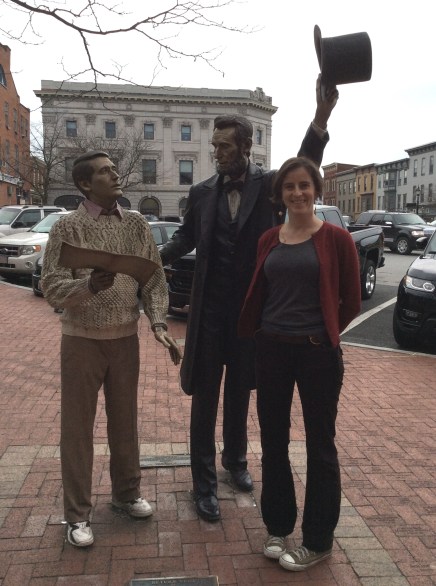
Me with Abraham Lincoln's sculpture near David Wills house where he stayed in Gettysburg, PA, the night before giving his great Address.

Me with Abraham Lincoln’s sculpture near David Wills’ house where he stayed in Gettysburg, PA, the night before giving his great Address.

Let’s remember and salute the great Abraham Lincoln, father of our nation reborn in liberty, on his birthday.

Born on February 12th, 1809, this child of a poor Kentucky farm family was largely self-educated yet rose to become our most revered President since George Washington. He was a hard-working man, from farm laborer and rail splitter to flatboat operator on the Mississippi River, then shop owner, militia captain, postmaster, lawyer, politician, then President of the United States. A popular man revered for his storytelling, conversation, intelligence, and general reputation for high integrity, Lincoln won his second campaign for political office and entered the House of Representatives in 1834. He was a successful and innovative lawyer and revered for his speechmaking. His series of debates with Democratic senator Stephen Douglas in 1858 thrust him into the national spotlight, and while he lost the race to replace Douglas in the Congress that year, his reputation continued to grow, and he defeated Douglas in the presidential race two years later. He won the Presidency as head of the newly formed anti-slavery Republican party.

Lincoln’s antipathy to slavery originated with his flatboat trip to New Orleans, where he witnessed its horrors first hand. Over the years, his political antislavery position fluctuated though it always disgusted him personally. For most of his political career, he advocated the moderate policy of stopping slavery’s spread to the new territories, leaving it in place where it already existed in the expectation that economic factors would naturally lead to its demise. But the intransigence of the slave states and the contingencies of the Civil War, combined with his own moral hatred of slavery, caused him to change his mind. Lincoln’s Emancipation Proclamation of January 1, 1863 freed all slaves in those states in rebellion, and nearly 200,000 freed black men fought for the Union Army, helping to ensure its eventual success.

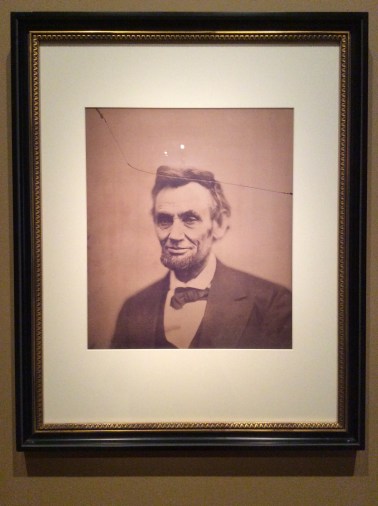
Abraham Lincoln by Alexander Gardner, Feb 5, 1865, National Portrait Gallery in D.C., 2016 Amy Cools

Abraham Lincoln by Alexander Gardner, Feb 5, 1865, National Portrait Gallery in D.C., photo 2016 by Amy Cools

Even more than his childhood poverty and lackof education, I find Lincoln’s success even more remarkable in light of the recurrent and severe depression he suffered throughout his life. While it can be crippling, it can also make sufferers that much more attuned to the suffering of fellow human beings, while deepening the understanding of human nature and increasing the capacity for sympathy. Lincoln was one of these, and his suffering refined his sensitivities and strengthened him, helping to make him the great man he became.

Having led the nation through the trauma and horror of the Civil War, Lincoln was assassinated only a month after his re-inauguration to the Presidency in 1964, shot in the head on April 14th by pro-slavery actor John Wilkes Booth while attending a play at Ford’s Theater.

Here are a few links and images of writings and works of art by, about, featuring, and inspired by Abraham Lincoln, including some of my own work.

Audiobooks of speeches and other writings of Abraham Lincoln at Librivox

Speeches, letters, and other writings by Abraham Lincoln digitized by the Northern Illinois University Libraries

Abraham Lincoln – in Wikipedia

April the 14th, Part I – by Gillian Welch

The Gettysburg Address – by Abraham Lincoln

Lincoln’s Great Depression – by Joshua Wolf Shenk for The Atlantic: Abraham Lincoln fought clinical depression all his life, and if he were alive today, his condition would be treated as a “character issue”—that is, as a political liability. His condition was indeed a character issue: it gave him the tools to save the nation

Abraham Lincoln also featured prominently in Frederick Douglass’s life and ideas which I wrote about in a history of ideas travel series I wrote last year. Here are the pieces which feature Lincoln:

Frederick Douglass Lynn Sites, Part 2: Historical Society & Hutchinson Scrapbook
Frederick Douglass, Rochester NY Sites Day 2
Frederick Douglass Seneca Falls, Canandaigua, Honeoye, and Mt Hope Cemetery Sites
Frederick Douglass Chambersburg and Gettysburg PA Sites
Frederick Douglass Washington DC Sites, Day 1, Part 1
Frederick Douglass Washington DC Sites, Day 1, Part 2
Frederick Douglass Washington DC Sites, Last Day

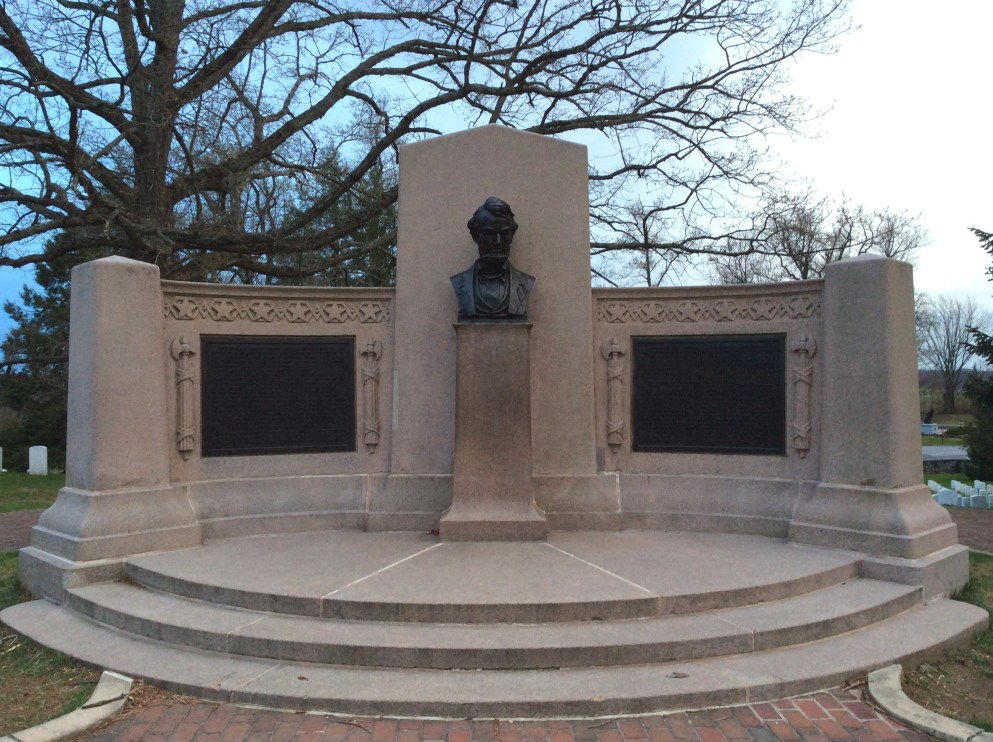
Lincoln's Gettysburg Address Memorial at Soldier's National Cemetery

Lincoln’s Gettysburg Address Memorial at Soldier’s National Cemetery, photo 2016 by Amy Cools

Hume's and Abraham Lincoln Scottish soldier monuments,

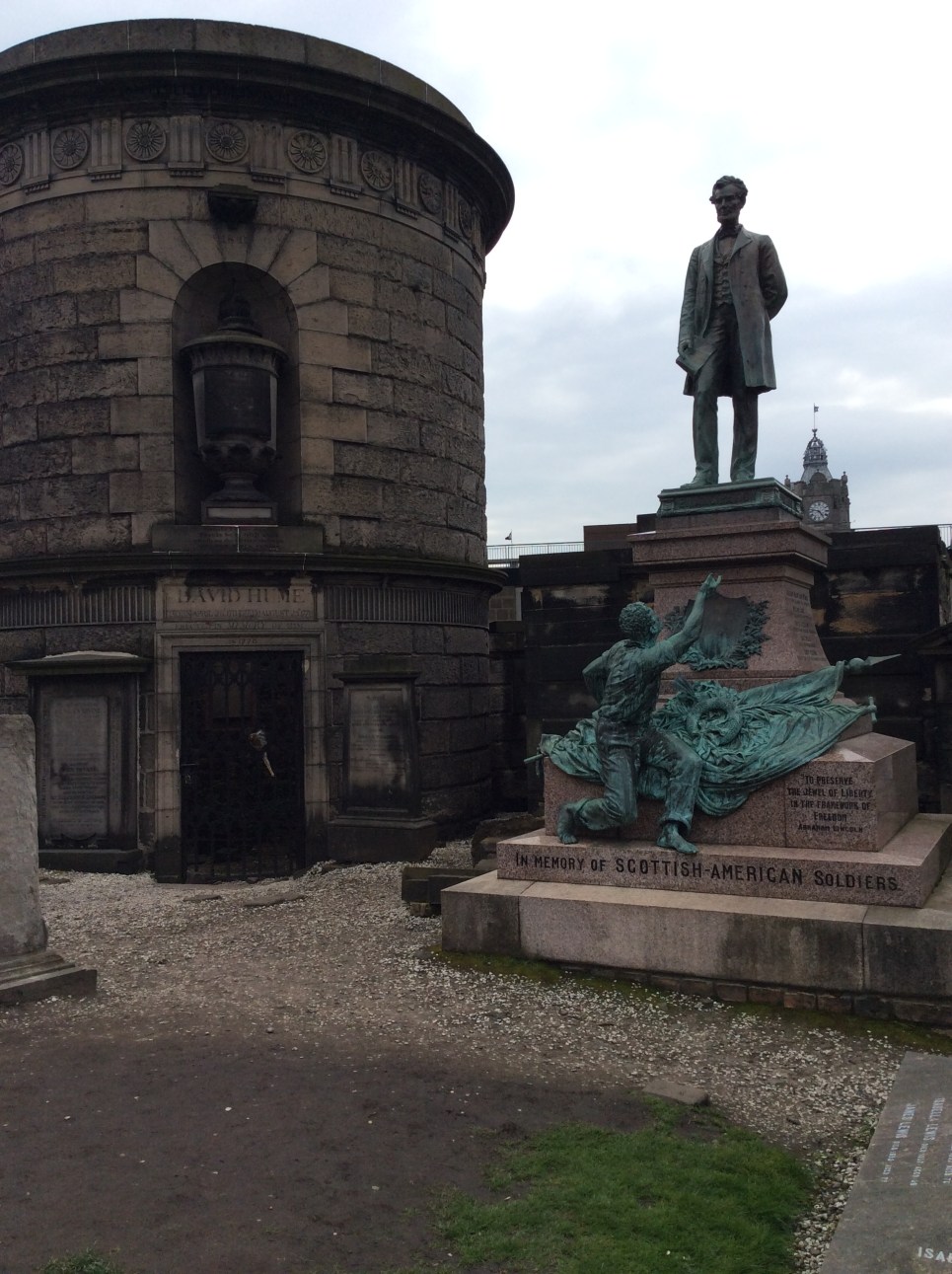
Hume’s grave and Abraham Lincoln sculpture on a monument to Scottish American soldiers, Calton Hill Cemetery, Edinburgh, Scotland, photo 2014 by Amy Cools

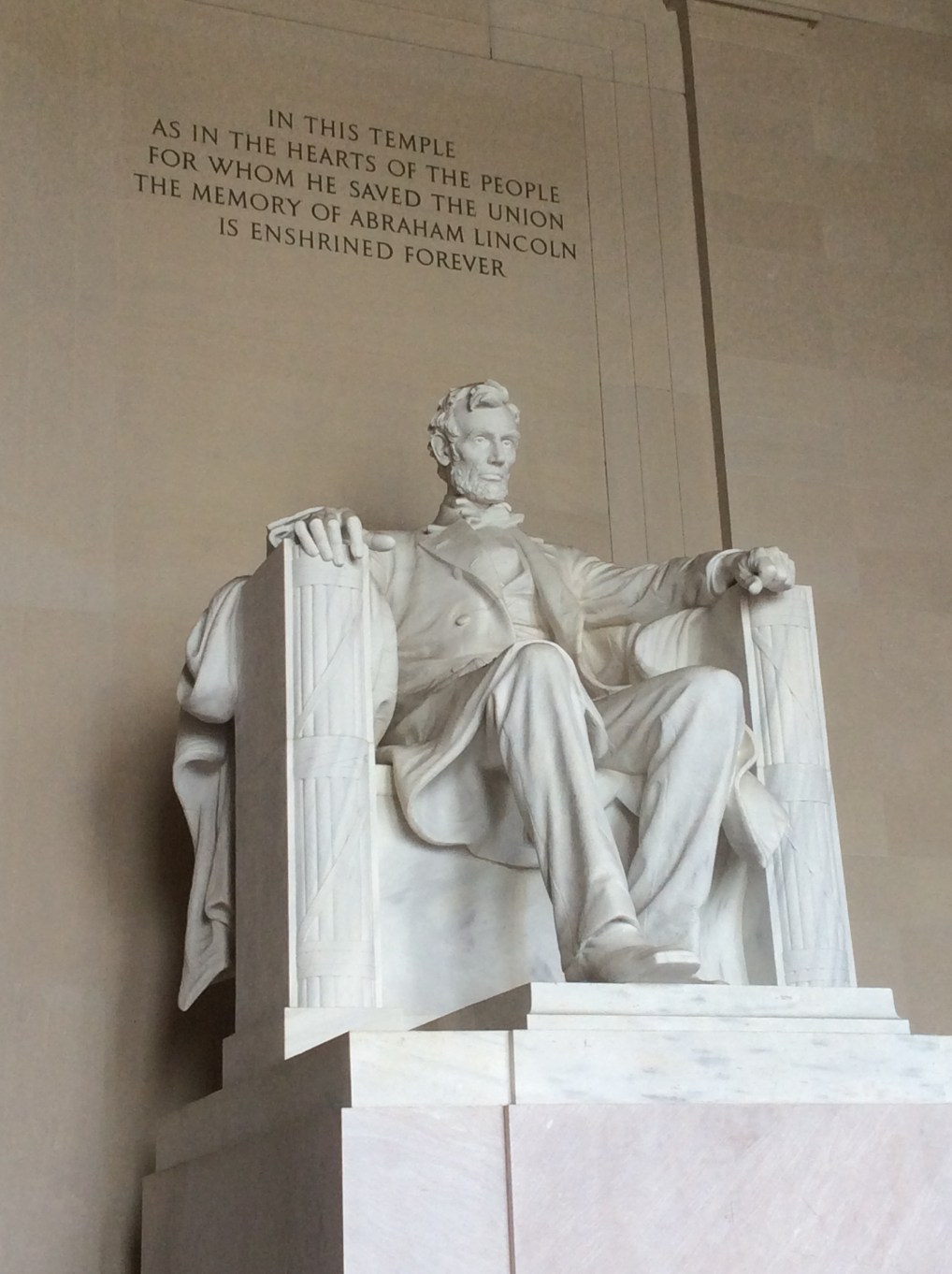
Sculpture of Abraham Lincoln in the Lincoln Memorial, Washington DC, photo 2015 by Amy Cools

Sculpture of Abraham Lincoln in the Lincoln Memorial, Washington DC, photo 2015 by Amy Cools

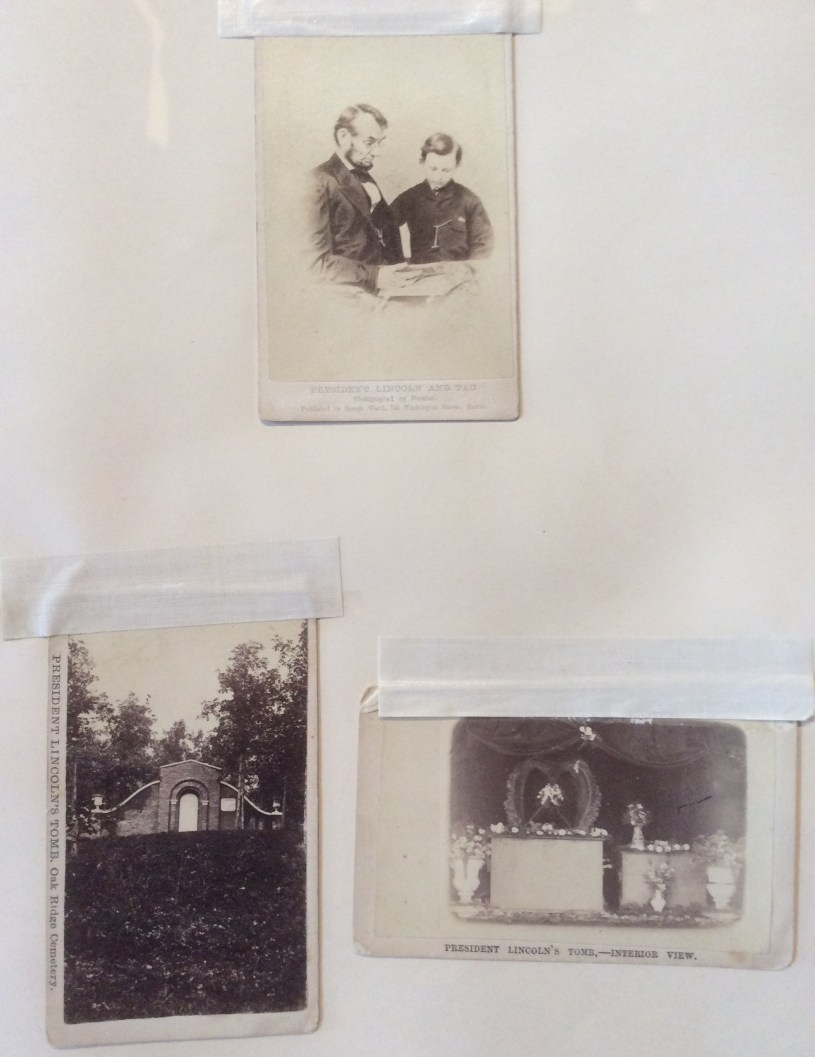
Abraham Lincoln with his son and 2 views of his tomb, from Hutchinson scrapbook at Lynn Museum

Abraham Lincoln with his son and two views of his tomb, from the Hutchinson scrapbook at Lynn Museum, photo 2016 by Amy Cools

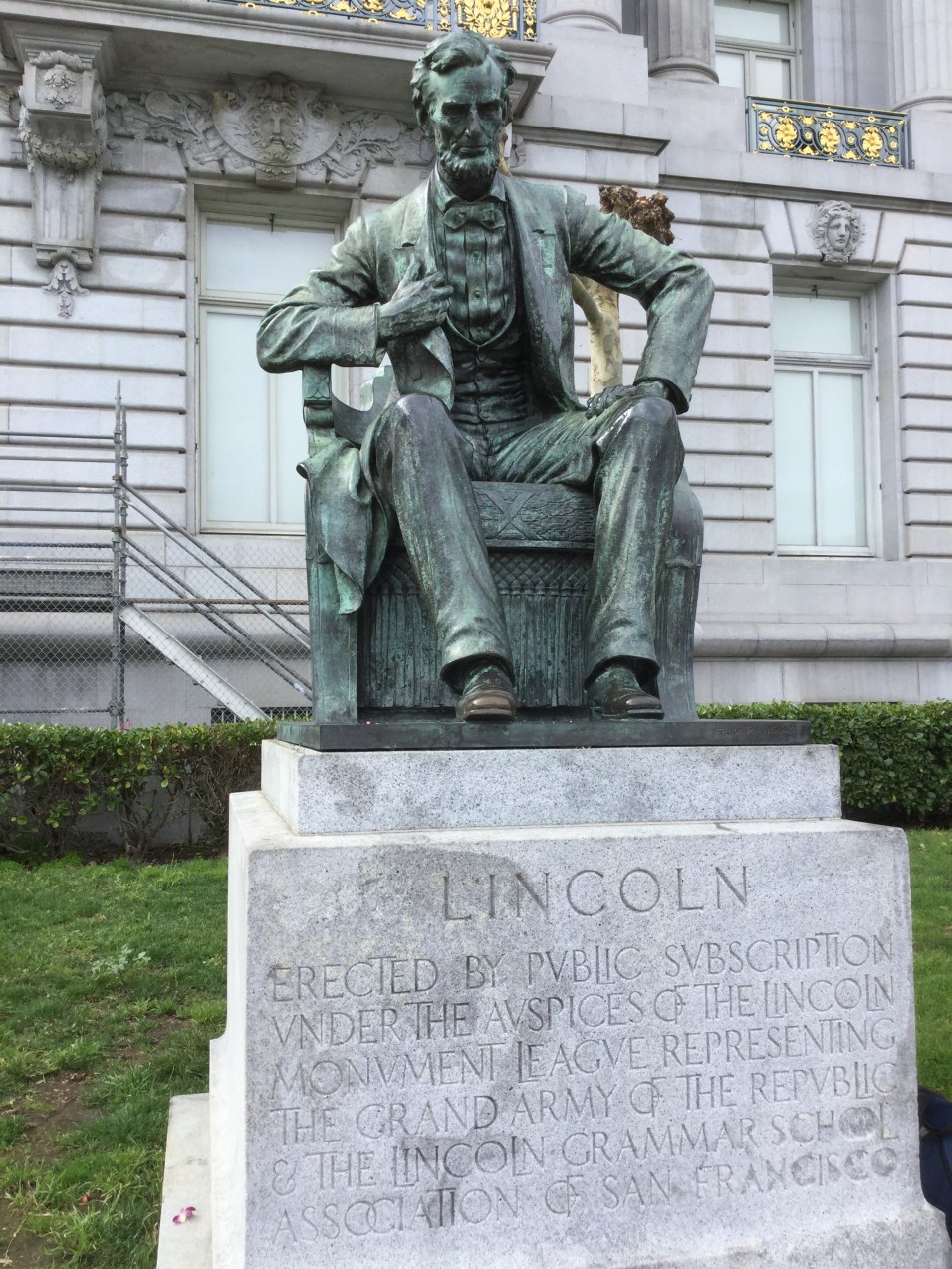
Statue of Abraham Lincoln outside of San Francisco's City Hall, photo 2017 by Amy Cools

Statue of Abraham Lincoln outside of San Francisco’s City Hall, photo 2017 by Amy Cools

Ordinary Philosophy and its Traveling Philosophy / History of Ideas series is a labor of love and ad-free, supported by patrons and readers like you. Please offer your support today!

Anger and Hypocrisy, by Clay Jenkinson

Obamas on Inauguration Day 2013 by P. Souza, Public domain via Wikimedia Commons

Obamas on Inauguration Day 2013 by P. Souza, public domain via Wikimedia Commons

I find it interesting that for eight years the anti-Obama legions kept their eyes open at all times for signs that Barack Obama was “an angry black man.” If at any time he showed the slightest impatience or raised his voice above a certain level, or spoke in something that could be thought to resemble black street English, the conservative punditry accused him of being an “angry black man.” They had slightly better luck with the First Lady Michelle Obama, who seemed to have a slightly more volatile temperament than her famously self-controlled husband. The academic papers of her young womanhood were examined for any sign that she hated white people, hated America, or sought radical revolution. Her statement in Milwaukee on February 18, 2008, that “For the first time in my adult lifetime, I am really proud of my country,” was cited as proof that she hated white America.

That sentence was proof positive to millions of Obama detractors that we had somehow put into the White House a couple bent on destroying America, or at least the America we know and love. Every Obama association, no matter how ancient and no matter how thin–the Reverend Wright, Bill Ayes, Saul Alinsky–was routinely trotted out to prove that the President of the United States was a dangerous radical, and perhaps a treasonist.

Apparently all black men are angry and violent. You can go to Harvard or Princeton, speak in perfect grammar, dress with great elegance, exhibit ceremonial decorum not seen in the White House since Jack and Jackie, write thoughtful and eloquent books (by yourself), and exhibit an analytical capacity that even Bill Clinton rarely exhibited, and still be regarded by the yahoos as a Black Power Radical likely to reveal his core rage at any moment. Apparently, you cannot be a black President of the United States unless you have built up no resentment about the historic and ongoing oppressions of White America, and never reveal anything but a sunny minstrel temperament.That sentence was proof positive to millions of Obama detractors that we had somehow put into the White House a couple bent on destroying America, or at least the America we know and love. Every Obama association, no matter how ancient and no matter how thin–the Reverend Wright, Bill Ayes, Saul Alinsky–was routinely trotted out to prove that the President of the United States was a dangerous radical, and perhaps a treasonist.

Now, in 2016, we elect not just an angry white man, but an almost continuously angry white man. I doubt that a day went by on the two-year campaign in which Donald Trump did not lash out at some one or some group. At times he slavered in his rages. At times he became incoherent as he tried to find words sufficient for the level of anger and denunciation he felt. From the podium he singled out individuals for ridicule and abuse. He heaped abuse on American war heroes, parents of young men fallen in America’s battles, journalists just doing their job, women who had tearfully and reluctantly confessed that he groped them in public.

When was the last time in American politics when a major candidate was so angry, so often, and with such a mean-spirited manner?

If you are a student of history, you can think of only two obvious examples. Remember in 1980 when Ronald Reagan was upset by the logistics of a Republican debate in New Hampshire? His face darkened, and he said, with unmistakable anger, “I am paying for this microphone?” The reason we all remember that minor incident is because it was essentially the only time the even-tempered, genial, and happy Reagan ever lost his temper in public.

The only other modern politician worthy of comparison with Donald Trump is former Alabama Governor George Wallace in the 1960s–with his famous leer and sneer–a vicious southern racist whose every pronouncement during those years was “dripping with the words of ‘interposition’ and ‘nullification,’” as Martin Luther King, Jr., put it.If you are a student of history, you can think of only two obvious examples. Remember in 1980 when Ronald Reagan was upset by the logistics of a Republican debate in New Hampshire? His face darkened, and he said, with unmistakable anger, “I am paying for this microphone?” The reason we all remember that minor incident is because it was essentially the only time the even-tempered, genial, and happy Reagan ever lost his temper in public.

The only other modern politician worthy of comparison with Donald Trump is former Alabama Governor George Wallace in the 1960s–with his famous leer and sneer–a vicious southern racist whose every pronouncement during those years was “dripping with the words of ‘interposition’ and ‘nullification,’” as Martin Luther King, jr., put it.

Think about it. Barack Obama was routinely accused of being an angry black man, but he wasn’t. He was about as gracious a human being as you could ever put into the Presidency (whether you like his policies or not). Donald Trump is perhaps the most angry man ever installed in the Presidency. Barack Obama had a great deal to be angry about: the history of American racism, oppression, racial profiling, segregation, lynching, belittlement. But he was invariably professional and often serene. What does Donald Trump have to be angry about? He has always been one of the most mollycoddled, indulged, and privileged of Americans, a man who can afford to install gold faucets in his homes. (Try as I might, I have never been able to find gold faucets at Home Depot).

Angry White Man with no reason to be angry: OK.

Gracious Black Man with plenty to be angry about, but beyond anger: Dangerous radical.

But as the far right likes to say, “I ain’t racist, ain’t no racism or prejudice in my body.” – CSJ

Originally published at clayjenkinson.com

– Clay S. Jenkinson is the author, educator, and scholar who created The Thomas Jefferson Hour, and is a sought-after historical impersonator, speaker, and media commentator, providing a deep but playful context to today’s events. (Bio credit: The Thomas Jefferson Hour) To discover more about Clay and his work, please visit http://www.clayjenkinson.com/

Ordinary Philosophy and its Traveling Philosophy / History of Ideas series is a labor of love and ad-free, supported by patrons and readers like you. Please offer your support today!

The Right to Be Poor, by Peter Adamson

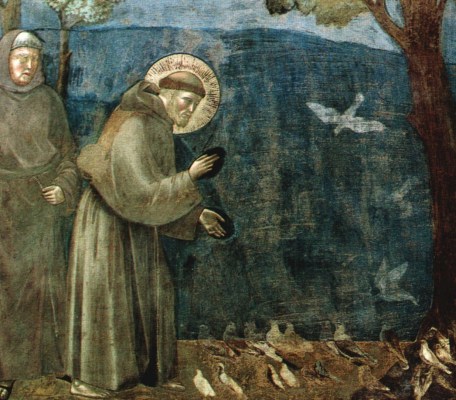
St Francis of Assisi by Giotto

St Francis of Assisi by Giotto

Peter Adamson just published a most fascinating and insightful essay in Philosophy Now about an aspect of the property rights debate that we rarely address: the right to own nothing. It’s an important question, especially in this culture of hyper-consumerism and the conviction that property ownership is essential to personal and political freedom. But as a certain innovative and humble friar realized in the early 13th century, property ownership can also be a burden, alienating us from one another and from the unencumbered pursuit of spiritual perfection. Perhaps Thomas Jefferson, when writing the Declaration of Independence, had a similar insight as St Francis of Assisi and his mendicants when he adapted John Locke’s principle of ‘life, liberty, and property’ as essential human rights as ‘life, liberty, and the pursuit of happiness’.

Adamson writes:

‘One of my favorite things about the history of philosophy is finding out that ideas we now take for granted originally emerged in surprising ways. I can think of no better example than the notion of a right to own property. Not that we can take it for granted that we have such a right, if we consider the history of communism in the Twentieth Century. Still, it seems such an obvious concept that it must surely always have been with us. But you can make a good case that it was first explicitly articulated in the later Middle Ages. And here’s the surprising part: the thinkers who first explored this notion were actually concerned with their right to own nothing.

They were members of the mendicant orders, especially the Franciscans. Following the example of their founder, Francis of Assisi, Franciscans argued that spiritual perfection requires the voluntary embrace of poverty. Like Blanche in A Streetcar Named Desire, they depended on the kindness of strangers, living on charitable donations. Hence the term ‘mendicant’, meaning, ‘given to begging’. Christ and his Apostles, the Franciscans argued, had shown the way by giving up all their possessions. Furthermore, ownership of property is a consequence of the Fall. In a state of innocence there would be no need for possessions, since by generosity of spirit all things would be shared. However, as well as an individual religious commitment, the embrace of poverty amounted to an implicit and sometimes explicit political critique, since the medieval church as an institution most certainly did not embrace poverty. The mendicants’ very existence was a rebuke to the opulence and worldliness of the papal court and the rest of the ecclesiastical hierarchy….’

Read the full article in Philosophy Now

Ordinary Philosophy and its Traveling Philosophy / History of Ideas series is a labor of love and ad-free, supported by patrons and readers like you. Please offer your support today!

A Scot’s Lament fur her American Fellows (Oan their election of a tangerine gabshite walloper), by Lorna Wallace

I read this with such delight, I must share it with you!

Lorna Wallace's avatarWriting by Lorna

America, aw whit ye dain?!
How could ye choose a clueless wain
Ti lead yir country? Who wid trust
A man sae vile?!
A racist, sexist eedjit
Wi a shite hairstyle?

Yet lo, ye votit (michty me!)
Ti hawn’ this walloper the key
Ti pow’r supreme, ti stert his hateful,
Cruel regime.
A cling ti hope that this is aw
Jist wan bad dream.

But naw, the nightmare has come true,
A curse upon rid, white an’ blue,
An’ those who cast oot Bernie
Must feel sitch regret
Fur thinkin’ Mrs. Clinton
Was a safer bet.

So noo we wait ti see unfold
Division an’ intolerance, cold;
A pois’nous bigotry untold
Since Hitler’s rule
As the free world’s hopes an’ dreams
Lie with this fool.

Alas, complainin’ wullnae change
The fact this diddy has free range
Ti ride roughshod ow’r human beings
That fall outside
The cretinous ideals borne of

View original post 182 more words

The Tragedy–and Hope–of African American History, by Robert Greene II

Obamas on Inauguration Day 2013 by P. Souza, Public domain via Wikimedia Commons

Obamas on Inauguration Day 2013 by P. Souza, Public domain via Wikimedia Commons

In 2007, Andrew Sullivan wrote a cover essay for The Atlantic in which he argued that the rise of Barack Obama to the national stage meant an end to the divisive cultural politics that defined American politics since 1968. Sullivan argued at the time, “he could take America—finally—past the debilitating, self-perpetuating family quarrel of the Baby Boom generation that has long engulfed all of us.” Reflecting on the events of the last eight years, it now seems this assumption about Obama’s rise was naïve and misplaced. Now, as we transition from an “Age of Obama” to an “Age of Trump” everyone has spilled much ink—both real and digital—trying to explain how we got here.

A keen reading of African American history, especially intellectual history, offers us much to consider in this debate. The recent Ta-Nehisi Coates essay, “My President Was Black,” offers one of the better meditations on Obama’s presidency and its possible legacy. The responses to it—in particular Tressie McMillian Cottom’s—have all been useful to also think about Obama’s failings and successes in office. Along with this is a reflection among historians and others about what kind of era we’re entering. Indeed, Coates’ body of work—from his essay on Bill Cosby and Black America to this most recent piece—offer a fascinating take on post-1945 African American history. While I will leave that for another post down the road, I do want to tackle the ways in which history is being discussed in the public sphere in 2016.

Historical comparison is a cottage industry unto itself. After November’s election, pundits and historians alike began casting a wide net to make comparisons with the past. Jamelle Bouie compared the events of November 8, 2016 to the backlash to Reconstruction. This comparison soon caught on with other writers. Barret Holmes Pitner, at The Daily Beast, made a similar argument. In concern about potential backlash to racial progress, I can sympathize with this comparison. This reminds me of earlier comparisons made between Black Lives Matter and the Civil Rights and/or Black Power Movements. But I also vehemently disagree with it.

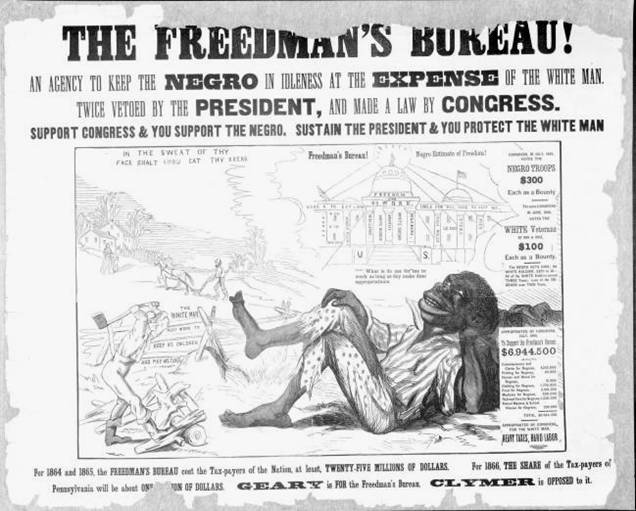
Backlash against racial progress is central to the story of America–as you can see with this political advertisement from 1866. Whether or not it was the reason for Trump’s victory, the interminable problem of racism and democracy in American society remains with us.

Historical analogies are useful, but we also need to recognize how they are limited in speaking to the present moment. Both Bouie and Pitner acknowledge this. History never repeats itself. It doesn’t even necessarily rhyme. But we can “use” history to think harder about the present. History, taught well, teaches us that the present is never easy to understand. There are never any simple answers or quick victories. Historical comparison, of course, is nothing new. C. Vann Woodward, among many others, referred to the Civil Rights Movement as a “Second Reconstruction.” Today, the theologian and activist Rev. Dr. William Barber of North Carolina refers to the present day as a “Third Reconstruction.” Others may also argue that the here and now is a “second Nadir of African American history,” in comparison with the low point in African American history from 1890 to 1930 written about and described as such by Rayford Logan.

The comparison with another nadir is not new. The historian Sundiata Keita Cha-Jua argued, in a The Black Scholar essay in 2010, that Black America was already suffering through a second nadir. There, he argued that African Americans were already in a nadir due to a variety of factors. Most notably, the changes in American political economy since the mid-1970s due to the rise of neoliberalism and its associated policies of austerity—coupled with cultural and political debates over colorblindness and racism—have damaged the progress made by African Americans in the immediate aftermath of the Civil Rights Movement. Cha-Jua argued that events such as the 2000 election (and allegations of voter suppression in Florida), the federal response to Hurricane Katrina, and the collapse of the housing market in 2007-08 (which destroyed the slowly-built up wealth of the African American middle class) were all symbols of the modern nadir. This was all before Obama’s election in 2008—which Cha-Jua argued was “contrasted but not off set by” the events previously mentioned.

I disagreed with this analysis of a “new Nadir” when it first came out. Today, I am tempted to argue that it is the best analysis of the present moment. Economic factors of the damage done to African Americans over the last three decades lend some credence to Cha-Jua’s analysis. And, to be blunt, I worry that any administration in the White House may not provide the answers to helping millions of Americans—regardless of race—recover from the 2008-09 Great Recession. The debate about voter suppression across the country, highlighted by recent events in North Carolina, also make the “new Nadir” take a tempting one.

I still reject a wholesale comparison with that era, for a variety of reasons. But it is not out of any sense that things are fine today. On the contrary. Historical comparisons are not to be discarded. They can and do serve a purpose. Comparisons across historical eras make the present day easier to understand. In that sense, African American history is critically useful. After all, African American history offers a bitterly learned lesson—that democracy and progress are always built in American history on a foundation of sand. Freedom cannot be taken for granted. Most importantly, the whiggish idea of history as a march of progress has been laid bare, once again. Much of human history proves this. For Americans, however, to simply look to the history of African Americans—or, for that matter, Native Americans, women, Hispanics, a multitude of groups—is to realize that “progress” and “hope” are not natural to human history.

And so we plunge into 2017, unsure of the future and groping for lessons from the past to help us. The urge to make historical comparisons is understandable. Just remember that the differences between eras is important too.

~ Originally published at Society for U.S. Intellectual History Blog, on January 1st, 2017

~ Robert Greene II is a PhD. student at the University of South Carolina. He studies American history after 1945 with a focus on the American South, political history, and memory. (Bio credit: S-USIH Blog)

Ordinary Philosophy and its Traveling Philosophy / History of Ideas series is a labor of love and ad-free, supported by patrons and readers like you. Please offer your support today!

Activism is Not Enough: As Long As We Keep Shopping and Don’t Vote, It’s Our Fault Too!

I’m out of town visiting family, and though I’m having a wonderful time, I miss you all and I’m anxious to get some new writing done. In the meantime, here’s a piece I wrote a couple of years ago, I hope you find it of interest!

Amy M Cools's avatarOrdinary Philosophy

I live in the San Francisco Bay Area, a wonderful place to live. It has a rich culture and a thriving music and arts scene and nightlife. It’s surrounded by great natural beauty in all directions: from oak forests to redwood groves, from chaparral to sandy beaches and sea cliffs. It has a fascinating history, plentiful and delicious food, beautiful architecture, and balmy weather. It’s also a liberal ‘bubble’, with an appetite for activism and, for better and for worse, a penchant for righteous outrage.

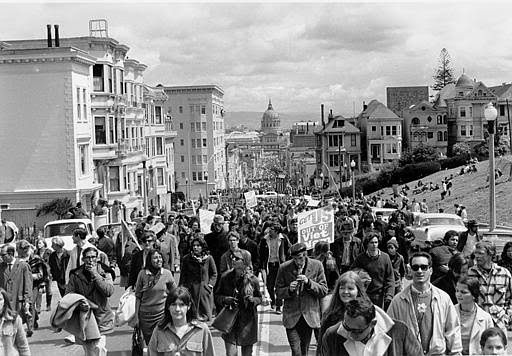
I admire and identify with the history and the culture of activism. Like the reformers of history and of today, the brave people who fight to create a more just world are among the finest the human race has ever produced. But I’ve been feeling something a bit lacking in activist movements lately. They still march in the streets, and we join them there and online by signing petitions…

View original post 2,290 more words