Say What? Francis Bacon Quotes Cicero On Cato and Government

‘Cato means well: but he does hurt sometimes to the State; for he talks as if he were in the republic of Plato and not in the dregs of Romulus.’

– Marcus Cicero, as quoted by Francis Bacon in Wisdom of the Ancients

Ordinary Philosophy and its Traveling Philosophy / History of Ideas series is a labor of love and ad-free, entirely supported by patrons and readers like you. Please offer your support today!

Happy Birthday, Hannah Arendt!

Hannah Arendt, born on October 14, 1906 in Hanover, Germany, was one of the twentieth century’s leading thinkers about political philosophy and the nature of evil. In the one and only filmed interview with her that survives, Arendt objected to being called a philosopher; she said she doesn’t feel like a philosopher, and that she thinks she has not been accepted in the philosophical community. We’re still hashing out what she meant by these statements to this day: some believe that she didn’t feel, as a woman, that the traditionally male-centric philosophical circle had room for her, so she did her work in another arena of thought; some believe since she emphasizes action and responsibility in her ethics and political thought, she felt this did not fit into the abstract nature of the accepted philosophical canon. However, her latter remark has proved no longer true, if it ever was: she is not only accepted into the philosophical circle, she has earned a prominent place in it.

Arendt completed her doctoral degree in philosophy in 1928. By 1940, she was forced to flee the Nazi’s persecution of intellectuals, first as a refugee to Paris, then to the United States, where she arrived in 1941. She settled in the U.S. for good, became a naturalized citizen, and taught at the University of Chicago and then at New York City’s New School for Social Research. Arendt established herself as a major political thinker with her 1951 book Origins of Totalitarianism, and a controversial one with her series of articles for The New Yorker about the Nazi war criminal Adolf Eichmann’s 1961 trial. She used this series as the basis for her 1963 book Eichmann in Jerusalem.

Among Arendt’s major themes is the idea that evil is not so much the result of an active malevolence but of thoughtless complacency. She distills this idea in her concept the banality of evil, which made people very uncomfortable at that time and ever since. Many hate this idea in part because they detect in it an element of victim-blaming, such as in Arendt’s including in her discussion the supposed cooperation of many Jewish community leaders in the massive and efficient deportation of the Jews to Nazi concentration camps and gas chambers. But I believe people hate Arendt’s concept more because of its implication that it’s so very easy for every single one of us to participate in great evil through our own carelessness and laziness.

Arendt’s philosophy of action and personal responsibility, problematic as it might be in some particulars, presents an important challenge even as it lays on all of us what might feel like an intolerable burden. She demands that we shake off complacency every moment of our lives, that we resist the temptation to thoughtlessly participate in harmful practices and ways of thinking. In an age where mass consumption has become the norm, even the source of meaning and impetus for most of our actions, regardless of its ravages on the beautiful world that gives us life, there are few ideas that are more timely or more important.

Learn about the life and thought of the courageous and brilliant Hannah Arendt:

Hannah Arendt ~ Interview with Gunter Gaus for Zur Person

Hannah Arendt ~ by Maurizio Passerin d’Entreves for The Stanford Encyclopedia of Philosophy

Hannah Arendt ~ Melvyn Bragg talks to Lyndsey Stonebridge, Frisbee Sheffield, and Robert Eaglestone for In Our Time

Hannah Arendt: American Political Scientist ~ by the editors for Encyclopædia Britannica

Hannah Arendt and the Hierarchy of Human Activity ~ by Finn Bowring for The Times Literary Supplement

Film Review: Hannah Arendt ~ Yasemin Sari for Philosophy Now

The Trials of Hannah Arendt ~ Corey Robin for The Nation, May 12, 2015

Why Do Hannah Arendt’s Ideas about Evil and the Holocaust Still Matter? ~ An interview with Michael Rosenthal for the Stroum Center for Jewish Studies at the University of Washington

Various articles ~ by Hannah Arendt for The New Yorker magazine

Various articles featuring Hannah Arendt ~ Maria Popova for Brain Pickings

Ordinary Philosophy is a labor of love and is ad-free, supported by patrons and readers like you. Please offer your support today!

The Triage of Truth: Do Not Take Expert Opinion Lying Down, by Julian Baggini

Brain illustration from The Principles and Practice of Medicine…’ by W Osler, 1904, public domain via Wikimedia Commons

The thirst for knowledge is one of humankind’s noblest appetites. Our desire to sate it, however, sometimes leads us to imbibe falsehoods bottled as truth. The so-called Information Age is too often a Misinformation Age.

There is so much that we don’t know that giving up on experts would be to overreach our own competency. However, not everyone who claims to be an expert is one, so when we are not experts ourselves, we can decide who counts as an expert only with the help of the opinions of other experts. In other words, we have to choose which experts to trust in order to decide which experts to trust.

Jean-Paul Sartre captured the unavoidable responsibility this places on us when he wrote in Existentialism and Humanism (1945): ‘If you seek counsel – from a priest, for example – you have selected that priest; and at bottom you already knew, more or less, what he would advise.’

The pessimistic interpretation of this is that the appeal to expertise is therefore a charade. Psychologists have repeatedly demonstrated the power of motivated thinking and confirmation bias. People cherry-pick the authorities who support what they already believe. If majority opinion is on their side, they will cite the quantity of evidence behind them. If the majority is against them, they will cite the quality of evidence behind them, pointing out that truth is not a democracy. Authorities are not used to guide us towards the truth but to justify what we already believe the truth to be.

If we are sincerely interested in the truth, however, we can use expert opinion more objectively without either giving up our rational autonomy or giving in to our preconceptions. I’ve developed a simple three-step heuristic I’ve dubbed ‘The Triage of Truth’ which can give us a way of deciding whom to listen to about how the world is. The original meaning of triage is to sort according to quality and the term is most familiar today in the medical context of determining the urgency of treatment required. It’s not infallible; it’s not an alternative to thinking for yourself; but it should at least prevent us making some avoidable mistakes. The triage asks three questions:

  •  Are there any experts in this field?
  •  Which kind of expert in this area should I choose?
  •  Which particular expert is worth listening to here?

In many cases there is no simple yes or no answer. Economic forecasting, for example, admits of only very limited mastery. If you are not religious, on the other hand, then no theologian or priest can be an expert on God’s will.

If there is genuine expertise to be had, the second stage is to ask what kind of expert is trustworthy in that domain, to the degree that the domain allows of expertise at all. In health, for example, there are doctors with standard medical training but also herbalists, homeopaths, chiropractors, reiki healers. If we have good reason to dismiss any of these modalities then we can dismiss any particular practitioner without needing to give them a personal assessment.

Once we have decided that there are groups of experts in a domain, the third stage of triage is to ask which particular ones to trust. In some cases, this is easy enough. Any qualified dentist should be good enough, and we might not have the luxury of picking and choosing anyway. When it comes to builders, however, some are clearly more professional than others.

The trickiest situations are where the domain admits significant differences of opinion. In medicine, for example, there is plenty of genuine expertise but the incomplete state of nutritional science, for example, means that we have to take much advice with a pinch of salt, including that on how big this pinch should be.

This triage is an iterative process in which shifts of opinion at one level lead to shifts at others. Our beliefs form complex holistic webs in which parts support each other. For example, we cannot decide in a vacuum whether there is any expertise to be had in any given domain. We will inevitably take into account the views of experts we already trust. Every new judgment feeds back, altering the next one.

Perhaps the most important principle to apply throughout the triage is the 18th-century Scottish philosopher David Hume’s maxim: ‘A wise man … proportions his belief to the evidence.’ Trust in experts always has to be proportionate. If my electrician warns me that touching a wire will electrocute me, I have no reason to doubt her. Any economic forecast, however, should be seen as indicating a probability at best, an educated guest at worst.

Proportionality also means granting only as much authority as is within an expert’s field. When an eminent scientist opines on ethics, for example, she is exceeding her professional scope. The same might be true of a philosopher talking about economics, so be cautious about some of what I have written, too.

This triage gives us a procedure but no algorithm. It does not dispense with the need to make judgments, it simply provides a framework to help us do so. To properly follow Immanuel Kant’s Enlightenment injunction ‘Sapere aude’ (Dare to know), we have to rely on both our own judgment and the judgment of others. We should not confuse thinking for ourselves with thinking by ourselves. Taking expert opinion seriously is not passing the buck. No one can make up your mind for you, unless you make up your mind to let them.Aeon counter – do not remove

This article was originally published at Aeon and has been republished under Creative Commons.

~ Julian Baggini is a writer and founding editor of The Philosophers’ Magazine. His latest book is A Short History of Truth (2017). (Bio credit: Aeon)

Ordinary Philosophy and its Traveling Philosophy / History of Ideas series is a labor of love and ad-free, entirely supported by patrons and readers like you. Please offer your support today!

Hume, Aristotle, and Guns

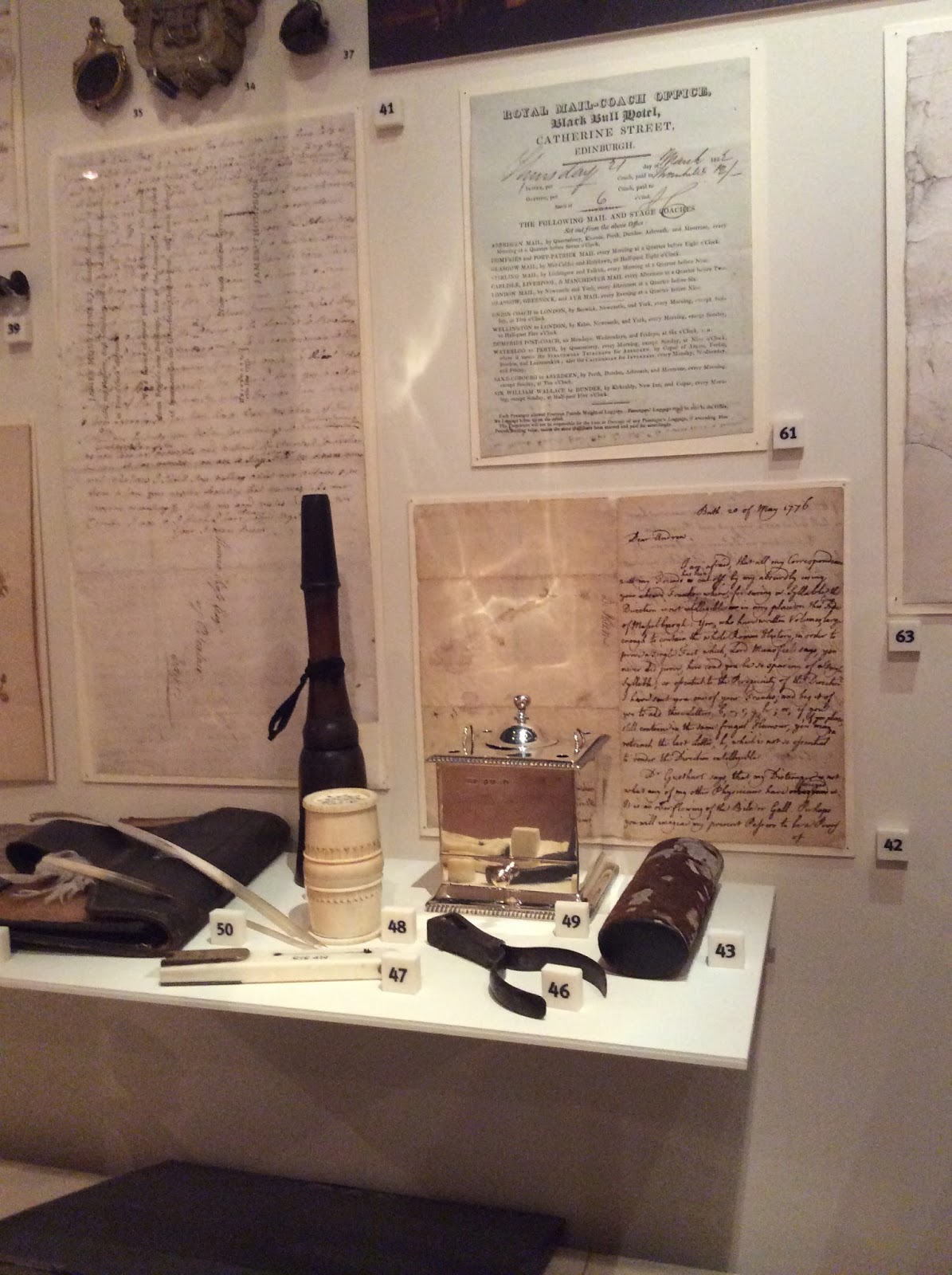
Photo 2014 by Amy Cools

Antique firearms at the Scottish National Museum, Edinburgh

As have many Americans, I’ve been mulling over the issue of ‘gun rights’ quite a bit recently. It’s a pressing issue in the United States since more people are injured and killed by citizens wielding guns than in any other state with a stable government and a thriving economy.

It’s also a divisive issue, as it’s generally argued in terms of liberty, a core value in our culture and politics. One side emphasizes the right to self-defense, the other the right to freedom from fear and from the pressure to join the arms race. And whether or not people chose to arm themselves, their fellow citizens feel that they are placed under some kind of obligation or burden as a result.

From the anti-gun perspective: if at least some of your fellow citizens are armed, then you are forced into a position where you must arm yourself too whether you’d like to or not, or remain at their mercy. After all, in a moment of greed, anger, zeal, fear, mental illness, hate, or accident, one person with a gun can permanently remove all freedoms that another could ever enjoy, within seconds, with the simple squeeze of a trigger. When another is armed, they have the potential power to wield complete control as to whether you live or die, and to force you to act according to their will, and against your own.

From the pro-gun perspective: if your fellow citizens choose not to arm themselves, you leave all the work of crime deterrence up to gun owners. Not only that: since a gun is the most effective weapon which can be wielded by a person of nearly any degree of strength, it’s the only available method for many who feel the need to defend themselves and others. In other words, it’s the one real equalizer: anyone with a gun has as much power as any other, so long as they know how and when to use it.

What would help us decide how to settle this, since the freedom to live the life we want, and the freedom to live at all, are in direct conflict here? We’re still figuring it out here in the US. Some nations have chosen in favor of individual gun rights, and others have disarmed their citizens, with varying results. While, generally speaking, nations and states with low gun ownership rates have much lower rates of gun violence, there are some exceptions. The gun rights dilemma, therefore, is not simply and immediately solved through legislation designed in favor of one set of rights issues over another.

Putting the conflicting liberty and rights issues aside for the moment, perhaps it would help to consider the relevant moral issues. Here, we can look beyond local, cultural considerations to a broader source of guidance as to what we should do about guns. What does it mean to be a good person, a virtuous person, and how do we cultivate that in ourselves and in each other? How does a society cultivate that in its citizens? Can these and other considerations help us decide what’s right, morally, when it comes to the rights and responsibilities of owning a gun? What should we do about it? Is it right or good for people to hold so much power over life and death? Permissive gun laws, which make it easy for responsible gun owners to trade in guns, also make it easier for members of drug cartels and other criminals to get their hands on them, too; that being known, are those laws right?

I think two of the greatest thinkers on morality and virtue, David Hume and Aristotle, can do much to help us discover some answers to these questions. Let’s explore their ideas, look for some answers there, and see how they fit with modern discoveries in behavioral science, psychology, and neuroscience.

According to David Hume, morality originates in the ‘passions’, or feelings. We can see ourselves as naturally moral creatures, since we come equipped with those emotions, those motivations, that make morality possible. We demonstrate altruistic, ‘pro-social’ (not Hume’s term, a more modern one), even as children, though we develop our moral character as we grow, through life experience, conversation with other moral beings, and by acquiring and developing the use of reason. For example, from the earliest age, we approve of kindness and disapprove of cruelty. We desire happiness, love, and generosity, and detest pain and avoid selfish people; we crave learning, and enrichment, and the approval of others. Those ‘sentiments’ ennoble us, and are responsible for that which is best in our characters. Yet the emotions we come equipped with are not sufficient, in themselves, for a morally developed person. Reason also plays a key role, enabling us to universalize and expand morals, and to apply these needed in any given situation.

Yet morality cannot be founded on reason alone: as Hume points out, reason is the means to means to link one true proposition with another, but cannot, on its own, show us what to value, or make us care about each other or anything else. It’s moral feeling, the passions, that provide the motivations, and provide reason the materials to work with to develop our morality. So as we grow up, we learn to develop our moral instincts, to ‘expand our moral circle‘ through conversation and the use of reason. By spending time with others, by being exposed to diverse ways of thinking and being, we learn that others have emotions and interests just like we do, that are just as important to them as ours are to us. Emotionally, we empathize with others; rationally, we know that what we expect of others is no more or less than what we must demand of ourselves. A very young person has the instincts for morality, but prior to experience of the world and the use of reason, it’s a very limited morality, or can even be considered a sort of proto-morality. Experience of other moral agents, through discourse with them, reveals there are others whose feelings and interests matter just as much to them as ours do to us, and finally reason shows that there is not particular reason to favor oneself over another when determining moral rules and guides of behavior. A morally good person, then, will seek to be pleasant and generous, to make others happy and improve their well-being, to respect and protect their interests as much as possible, just as we desire and expect they will do for us.

Hume’s account of how morality works, combined with the body of knowledge we’ve discovered since his time, reveals that it’s as much a natural part of the makeup of the human personality as any other, as are creativity, romantic passion, mother love, curiosity, and hunger, as well as (sadly!) rapacity and cruelty. A natural explanation of morality does not require a complex suite of arguments to found its origins in logic and reason, nor does it require some cause outside of ourselves, as traditional explanations claimed. To find out what morality is and how it works, we observe human beings, how they act and how they desire themselves and each other to act; we explain how and why morality developed as a natural adaptation for human beings; and we apply reason to determine what kinds of mindsets, rules, and behaviors lead to their flourishing.

Behavioral, biological, and evolutionary sciences have, over the years, lent support to Hume’s explanation of morality. Rebecca Saxe and Alison Gopnik, among others, has closely observed the behavior of infants and very young children over time, and has gathered a large body of evidence that people demonstrate moral instincts from the very earliest age, recognize that others are moral beings with their own interests and emotions just like us, and make moral judgments accordingly. Evolutionary psychology (Darwin considered Hume one of his great influences), in which morality is considered as much an adaptation as our opposable thumbs and long limbs, inherit much from Hume’s account. In fact, Hume is widely considered a founder of naturalistic moral theory, and a father to modern cognitive science.
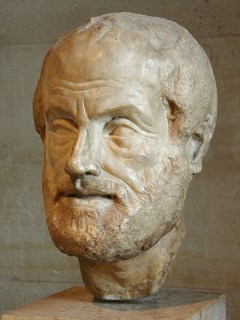
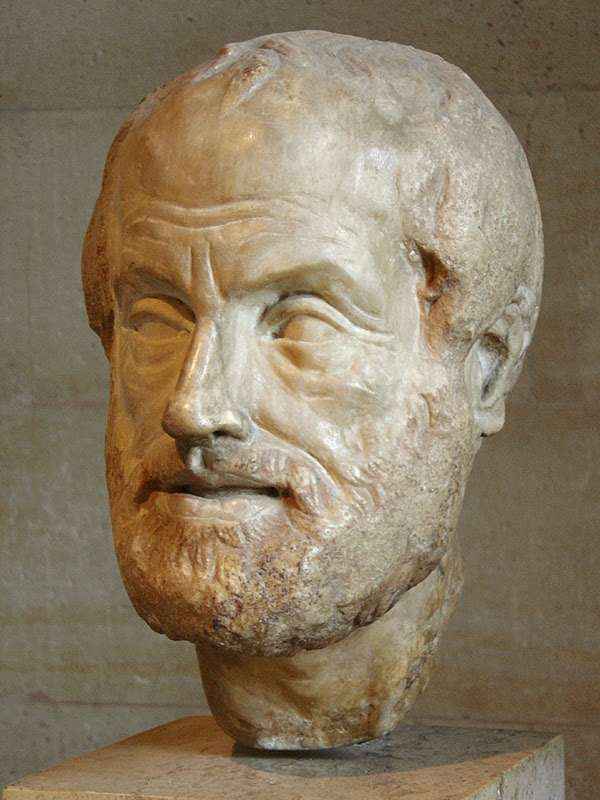
Aristotle’s grounds the origin of morality more on reason, though his theory is founded, like Hume’s, from his observation of the world and how people behave. His elegant ‘function argument’ is the centerpiece of his moral theory. When you consider what something is for, and observe what it does and how it functions, you’ll know where to start. The quality of goodness in material things is closely related to the quality of goodness when it comes to actions and moral feelings. A musical instrument is for making music; therefore, an excellent, or good, musical instrument is that which produces the best music. Further, if we consider a case in which we’re deciding who the musical instrument should belong to, it would be the right thing to do to give it to the best musician. Not to the nicest person, or the one who can pay the most for it, or even to the person who made it; those considerations are irrelevant since none of those have anything to do with the proper function of the instrument.

To Aristotle, reason is the one definitive human trait that no other creature on earth possesses. That’s what we do uniquely, and what we’re best at, or at least, that’s what we do when we’re at our best. So what we should do, the moral thing to do, is what’s most reasonable, what’s most in keeping with our nature as reasonable beings. What helps us recognize that, in turn, is called the ‘Golden Mean’: consider all those traits we have, see how they fall on a spectrum, and we will see that the virtue consists of the happy medium between extremes. For example, bravery would be the virtuous golden mean between cowardice and recklessness, love between disdain and fawning or obsession, and so on. (Fun fact: Hume himself placed great importance on moderation, temperance, and fairness, eschewing divisive party politics, for example, as if it was part of his mission to live out the ideal of the Golden Mean!)

Making the leap from the function of a thing which is an artifact of intentional human creation, to the function of a human being itself, is quite a leap. Aristotle recognized this and sought to address it, but did not yet have the modern knowledge of the theory of evolution, and of evolutionary psychology, and how well they account for the origin and development of moral virtues such as kindness, sympathy, generosity, bravery, and so forth. Nor did Hume, but he did not consider it justified to form conclusions by building a logical case as far removed from original observations as many who followed Aristotle later. Hume saw human beings as much a product of the natural world as any other, and their nature as fully explicable in those terms. So leaving the function argument aside for the time being, let’s consider another important contribution of Aristotle’s to moral philosophy: the importance of habit.To Aristotle, habit is essential to the practice of virtue. By emulating virtue, we habituate ourselves to it. Over time, morality, the practice of virtue, becomes second nature. Here, Aristotle proves himself a keen observer of human psychology, and his emphasis on habit as a central driving force behind human thought and behavior, as well as something which can be deliberately instilled through practice, is confirmed by the findings of modern psychologists and neuroscientists. A recent article in Scientific American outlines some of the ways in which habits are formed, and how necessary they are if we wish to improve our behaviors systematically. Cognitive behavioral therapy, now widely considered among the most effective ways to overcome addiction and anxiety-depression, among other disorders, is also founded on these scientific discoveries.

Here’s where I find a link between these two moral theories: Aristotle’s emphasis on habit works hand in hand with Hume’s account of how moral sentiments arise from human psychology. Whether it be from habit or other mental processes we are naturally equipped with when we achieve consciousness, moral behavior is largely a spontaneous reaction to the situation at hand. Early in our development, as Saxe and Gopnik describe, a basic set of moral instincts are included in human consciousness in its earliest stages. As Hume observes, experience and reason help us expand, develop, and perfect our moral characters over time; the moral character, as Aristotle recognizes, is the set of, and relationships between, the virtuous habits we’ve cultivated through practice.
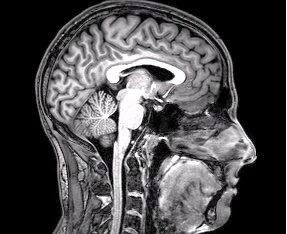
This also consistent with other findings of modern neuroscience and psychology. The way we tend to act in any given situation, the emotions and motivations that arise in us as we respond to stimuli, are formed as we react to circumstances, and by engaging in patterns of action, reactions, thoughts, behavior, we create mental channels, so to speak, or ‘paths of least resistance’, which predict our reactions, our thoughts and behavior, given similar circumstances. We usually act and think in accordance with how we’ve been given to act and think before, and only change when some new consideration(s) arises that makes us stop and consider whether to do something else this time. These considerations, the combination of reason and emotion (how do I act that will make me feel good about it, given the consequences of my actions for myself and others? How did the decisions I made last time the sort of thing came effect me and the world around me? How do others act in these situations, and what are the effects then?) inform how we habituate ourselves to new and improved moral actions and reactions.

Let’s pause for a moment. So far, we have these two thinkers’ descriptions of morality and virtue, supported by the findings of modern psychology and neuroscience.  Hume and Aristotle show us where they think we should look for virtue, how to recognize it, how to describe and explain it, and where it originates. In other words, they are engaged in metaethics. But as you may have noticed, this tells us only how people actually do think and behave; what about telling us what we should do? What are the criteria for deciding what’s right and what’s wrong?
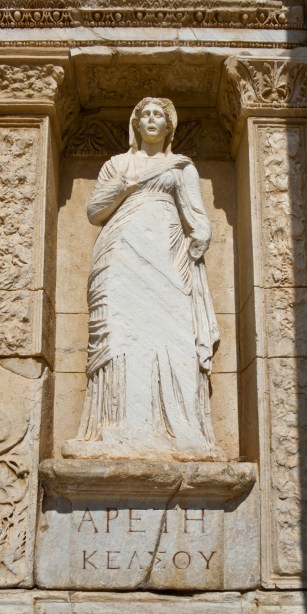
Arete (Virtue)

I think Hume and Aristotle point us in this direction: human beings not only do, but should habituate themselves to those practices which form in us the best moral character. While both men don’t explicitly tell how we can definitely say what’s right and wrong, they go to great lengths to show us what an admirable character looks like, and how they think and behave. I think they do so in order to reveal to us not only how we could be, but how we should be. In his writings as well as by example (he was widely known to have a particularly admiral character), Hume emphasizes such virtuous sentiments as sympathy, sociability, amiability, beneficence, generosity, and so on, and advocates the cultivation of these traits, especially through conversation and spending time in the company of others, especially those who can broaden your understanding of the world, and by avid reading and study of philosophy, literature, and history. Aristotle emphasizes the virtue of moderation in all things, of wisdom, self-control, courage, and nobility. Both men emphasize, to the highest degree, the use of reason, and the value of its careful and consistent application in all matters of life. It appears that they go through all this trouble not only to show us what a good person looks like, but to offer us something to aspire to: the formation of an excellent, moral character, which leads to the best life a person can achieve.

So, finally, we return to the gun issue. What does all this have to do with owning them, and using them? What does this have to do with what we observe in human behavior when people own guns? How about when people value, or even glorify, guns?

Let’s return to the consideration of the evidence, which can reveal how attitudes and practices relating to guns manifest themselves in human behavior; in other words, what habit or habits does a gun-owning society promote?

There are conflicting statistics to when it comes to gun-related behavior. For example, people in the United States own almost twice as many guns per-capita as Canadians and Germans. Canada and Germany, in turn, have a much higher rate of gun ownership compared to most other developed nations. Yet among these three nations, the United States has a far higher gun-related death rate, about four times that of Canada, and about 8 times that of Germany, though the three share many key cultural and political traits: they are democratic, capitalistic, and culturally and historically Christian. There are also examples where lower gun-related death rates correlate with higher per-capita gun ownership. This is the case for some states in the U.S, and for Switzerland, a country that, interestingly, imposes a requirement on all households to own a gun.Yet given such outliers, most states in the US, and most countries in the world, see a strong correlation between lower rates of gun-related death and injury and lower rates of gun ownership. The U.S. ranks near the top in gun-violence rates, just under Mexico’s, a country overrun with trigger-happy drug cartels, and outranked almost entirely by countries with weak, unstable governments, poor human-rights records, and high rates of poverty and income inequality. The very lowest rates of all, by contrast, are enjoyed by those countries who possess a high degree of personal liberty and human-rights protections while at the same time restrictive gun-ownership privileges, or none at all. Even in Switzerland, often cited by gun-rights advocates as an example of how high rates of gun ownership can correlate with low levels of violence, there are 16 times as many gun deaths as in the U.K, and 64 times as many as Japan. The rates are low in Switzerland only as compared with the most violent countries, but not in comparison with the least violent.

Photo 2014 by Amy Cools

Antique long guns at the Scottish National Museum, Edinburgh

Returning to the liberty issue for a moment, it seems that overall, since you must be alive to enjoy any liberty at all, liberty is best served when there aren’t many guns around. When a fight ensues, or the home is broken into, or a child has figured out how to get into a locked cabinet, or a person goes on a violent rampage due to mental illness, few, if any, people actually end up dying or disabled when there’s no guns nearby to reach for. It’s relatively difficult and messy to kill someone with a knife and other non-gun weapons, and the planning that goes into other kinds of homicide, like poisoning, gives people more time to consider the consequences of their action, decreasing the chance they’ll go through with it, or decreasing the chances of success at homicide.

As we’ve seen, however, the liberty issue can’t be the only determining factor in deciding the gun issue, since liberty considerations conflict so sharply when one’s liberty interests run counter to another’s. There are still compelling arguments to be made that individual liberty requires the right for each person to make their own decision in the matter, from the right to self-protection and self-determination. There’s also the fact that there are some states and countries where higher rates of gun ownership do correlate with low gun violence, especially in places where the population is more homogeneous, ethnically, religiously, racially, economically, and so on, even if they are relatively few. Conversely, there’s the liberty considerations of those who wish to be free from the fear of coercion and bodily harm, ever-present dangers that usually result from a heavily armed population, as the statistics reveal.

This is where the law comes in. One main purpose of the law is to defend the rights and liberties of the citizenry at large, and this involves protecting citizens from each other. A population is always composed of people who have conflicting interests, needs and desires, so to keep a society functioning, prosperous, and harmonious as possible, the law (ideally) is crafted to balance the rights, responsibilities, and interests of each citizen, impartially, with the other.Another purpose of the law is to codify, universalize, and enforce the mores of a given society, or at least those that harmonize with the principles of justice, equality, liberty, and so on that are central to the political system of that society.And last but not least, the law encodes a system of rights, responsibilities, and prohibitions, the practice of which is requisite to being a good citizen. In other words, the law is a society’s (in a democracy, the people’s) way to habituate its citizens to those practices which form a virtuous, a good citizen.

Gun law is no exception. Prior to passing laws relating to gun ownership, there are societal attitudes towards guns that people possess, cultivate, and enforce not only through custom and discourse, but eventually through law. Famously, in the 1990’s, the Australian government, with widespread support from its citizens, collected and destroyed a large proportion of the country’s firearms, and imposed restrictive gun laws. These laws were a direct result of the public’s horrified reaction to a series of gun-related mass murders that had happened in the decade prior. The public’s new attitude towards guns was made manifest in the law. It’s still in debate whether the sharp decline in gun violence that followed the new laws were a result of the laws, or vice-versa. It appears most likely that it’s some combination of the two: after all, as we’ve observed throughout history, there’s a feedback loop between the law and a society’s moral progress.
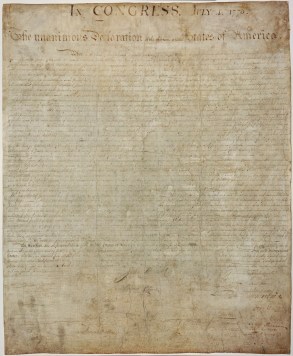
Consider the history of civil rights legislation in the United States: desegregation and other civil rights protections happened gradually, with each disenfranchised group demanding the full rights of citizenship, despite the current will of the majority to keep those groups subjugated and oppressed. Over time, the use of reason (in these cases, legal reasoning) and consideration of the values underpinning the foundational political philosophy and documents (in this case, the Declaration of Independence and the Constitution) led to new laws which not only enforced better practices, but habituated citizens to more virtuous thought and behavior, often in spite of themselves. We see this time and time again in American history: the disenfranchisement and oppression of black people, religious minorities, the poor and non-landowners, women, Jews, gay people, and so on, once common practice, came to be looked upon with righteous distaste, worthy of contempt. In so many of these cases, it was the law that changed commonly held attitudes, more than the other way around, and the change in attitudes and behavior often happened far more quickly than it would have otherwise if the practice of virtue wasn’t inculcated through law.

In sum: Considering the lessons of history, the evidence of the current states of affairs in which high gun-ownership rates correlate strongly with destructive attitudes and behavior when the entirety of the evidence is considered, and how the wisdom of two of the greatest moral thinkers is confirmed by the findings of modern science, I think that laws restricting, even eliminating, gun ownership by most individuals help lead to a wiser, more prudent, more beneficent, more amiable, more free society.

What do you think?

A nearly identical version of this article was originally published at Ordinary Philosophy on July 18, 2014

Ordinary Philosophy and its Traveling Philosophy / History of Ideas series is a labor of love and ad-free, entirely supported by patrons and readers like you. Please offer your support today!

– I’d especially like to thank Guy Fletcher, Lecturer in Philosophy at the University of Edinburgh, who kindly gave me some of his valuable time (despite it’s being finals week), invaluable insights, and excellent pointers regarding the subjects covered in this essay, especially in reminding me to make clearer the distinctions between meta-ethics, morality, and ethics.

~~~~~~~~~~~~~~~~~~~~~~~~~~~~~~~~~~~~~

Sources and inspiration:

Aristotle. Nichomachean Ethics. About 350 BC. 

Boseley, Sarah. ‘High gun ownership makes countries less safe, US study finds‘. The Guardian, Sep 18, 2013.

De Waal, Francis. The Bonobo and the Atheist : In Search of Humanism Among the Primates, 2013.

Gopnik, Alison. The Philosophical Baby, 1998.

Haidt, Jonathan. The Righteous Mind, 2013.

Hume, David. A Treatise of Human Nature, Volume III – Of Morals. Printed for Thomas Longman in London, England, in 1740. (I had a glorious time referring to versions published in Hume’s own lifetime during my trip to Edinburgh!) Online version: http://www.gutenberg.org/files/4705/4705-h/4705-h.htm

David B. and Stephen D’Andrilli. “What America can learn from Switzerland is that the best way to reduce gun misuse is to promote responsible gun ownership.” American Rifleman, Feb 1990

Kraut, Richard, ‘Aristotle’s Ethics‘. The Stanford Encyclopedia of Philosophy, 2014 

Morris, William Edward. ‘David Hume‘. The Stanford Encyclopedia of Philosophy, 2009.

Saxe, Rebecca. ‘How We Read Each Other’s Minds‘. TED talk, 2009

Tucker, Abigail. ‘Are Babies Born Good?’ Smithsonian Magazine, Jan 2013.

In Memory of Lucrezia Marinella

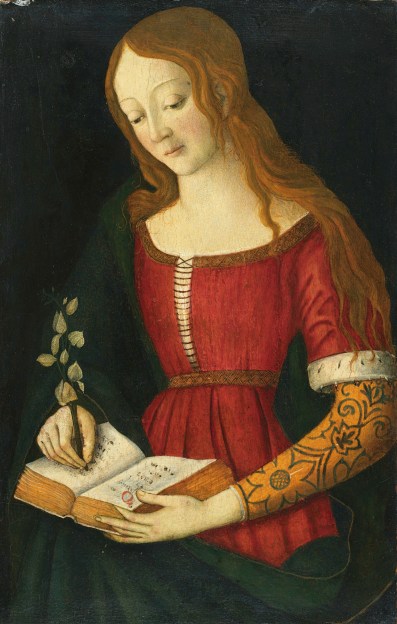
Young Lady Writing in a Hymnal by Giacomo Pacchiarotto, turn of 16th c, Siena, Italy

Lucrezia Marinella was an Italian Renaissance writer of poetry, devotional literature, and philosophy. She was born in Venice on an unknown date in 1571, and lived a richly intellectual, family-oriented, long life there until her death on October 9th, 1653.

She wrote on a wide range of subjects, including Mary, the mother of Jesus Christ, and Mary and her parents’ life family as she imagined it: happy, virtuous, a model for all families to emulate. She identified Mary closely with her beloved native Venice, that lovely city of elegance and refinement, incubator of knowledge and beauty, and welcome refuge to the traveler and those fleeing hardship and strife, referring to both as ‘La Serenissima’ (the Serene) and ‘Star of the Sea.’ Her Life of the Virgin Mary, Empress of the Universe was written two years after her most famous and influential work The Nobility and Excellence of Women and the Defects and Vices of Men, published in 1600. Her book about the natural and superior virtues of women no doubt inspired her, in turn, to write another about the woman who most exemplified Christian and Renaissance ideals of femininity. Marinella’s conception of feminine virtue included those typical of her religion and culture, such as modesty and dedication to home and family, but went far beyond that, as it did later feminist thinkers and activists such as Mary Wollstonecraft and Ernestine Rose.

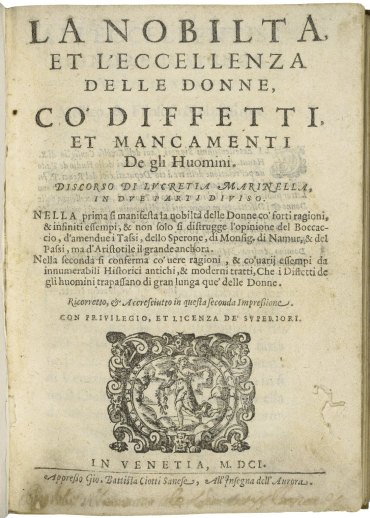
Marinella’s Nobility was a response to Giuseppe Passi’s anti-woman polemic The Defects of Women, published the year before. Anti-woman treatises such as Passi’s had become a literary tradition at that point, but his stood out for its harshness, to the point that he advocated treating women as little better than other animals since they were likewise naturally devoid of reason and self-control. Defenses of womankind against such attacks had, in turn, also become a literary tradition, but Marinella’s stands out for its clarity, systematicity, and intellectual rigor, so much so that it achieved its standing as a foundational work in feminist philosophy.

Title page of 1601 edition of Lucrezia Marinella’s La Nobilita, et L’eccellenza delle Donne

One element of Marinella’s fascinating and innovative defense of femininity that stood out for me was her case for how the female body itself demonstrated the moral and intellectual superiority of women. Many anti-woman polemicists referred to Aristotle for their arguments to demonstrate the natural inferiority of women, and Aristotle bases many of his arguments on women’s supposedly inferior physical makeup. No doubt, such biological arguments stood out for Marinella; she was the daughter, sister, and wife of physicians, and she was an accomplished and virtuous intellectual, a living counterfactual to the negative conceptions of women of Passi, Aristotle, and their anti-woman ilk. So, she was not going to put up with silly arguments based on such demonstrably untrue empirical claims, from Aristotle or from anyone else. She uses Aristotle’s own arguments, invoked by Passi, against both of them, demonstrating how misogynistic ideas about women as the weaker, less rational, and less virtuous component of the human species are both inconsistent with Aristotle’s other arguments and with observable reality.

For example, Aristotle claims that women’s lower average body temperature revealed their weakness and passivity. Yet Aristotle elsewhere associates heat with vices such as anger and rashness. Marinella grants that women’s average temperatures were lower than men’s (we now know that this isn’t necessarily true), but she argues that this doesn’t at all show that women are less virtuous. In fact, according to Aristotle’s own ethical system, that would imply that women are more virtuous: more temperate, moderate, reasonable, and able to control their passions. For another thing, Aristotle argues that financial well-being, physical attractiveness, and other circumstances that promote happiness are important for promoting virtue. Financial security promotes and enables generosity; exterior beauty inspires appreciation of that which is noble, orderly, balanced, good. Well, Marinella replies, women are generally more beautiful than men, as poets and artists attest, and the beauty of their bodies both reflect the natural superiority of their inner natures as expressed by their divine designer, and the love and passion they evoke echo the love and passion of the soul’s for the ultimate Good.

Learn more about the brilliant and fascinating Lucrezia Marinella’s case for the excellence of women, and about her life, ideas, and accomplishments at:

Lucrezia Marinella ~ by Marguerite Deslauriers for The Stanford Encyclopedia of Philosophy

Lucrezia Marinella ~ by Maria Galli Stampino for Oxford Bibliographies

Lucrezia Marinella ~ by Lindsay Smith for ProjectContinua.org

Who Is Mary?: Three Early Modern Women on the Idea of the Virgin Mary ~ by Vittoria Colonna, Chiara Matraini, and Lucrezia Marinella

~~~~~~~~~~~~~~~~~~~~~~~~~

More sources and inspiration:

Bodnar, Istvan, ‘Aristotle’s Natural Philosophy‘, The Stanford Encyclopedia of Philosophy

‘Normal oral, rectal, tympanic and axillary body temperature in adult men and women: a systematic literature review’, by Märtha Sund-Levander, Christina Forsberg, and Lis Karin Wahren. Scandinavian Journal of Caring Sciences, Vol. 16, Issue 2, pages 122–128, June 2002

Parry, Richard, ‘Ancient Ethical Theory‘, The Stanford Encyclopedia of Philosophy

Price, A W. ‘Moral Theories: Aristotle’s Ethics.’ Journal of Medical Ethics, 1985, Vol. 11, p. 150-152

Ordinary Philosophy is a labor of love and is ad-free, supported by patrons and readers like you. Please offer your support today!

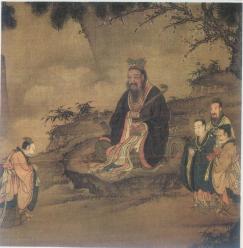
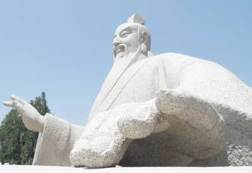
Happy Birthday, Confucius!

Confucius_Sculpture,_Nanjing

In honor of Confucius’ birthday on September 28th, 551 BCE*, I’m republishing a piece originally published here last year by one-time regular contributor Eric Gerlach. Following his interesting piece, you’ll find a list of great online sources and articles for learning about this seemingly timeless sage: so many of his words of wisdom seem as pertinent today as in his own time.

Confucianism & Daoism: The Basics, by Eric Gerlach

The following is a lecture I composed for teaching Confucianism and Daoism to my sister’s 6th grade History class at Star of the Sea School in San Francisco.

Confucius and Laozi, the philosophers who founded Confucianism and Daoism, lived just before the Warring States Period of ancient China (476 – 221 BCE), a time of war, tragedy and interest in philosophy.  Unfortunately, people’s lives are full of problems, but fortunately problems make people think about their lives, question the answers of authorities and experts, and reason beyond their understandings.

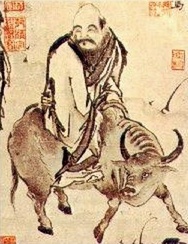
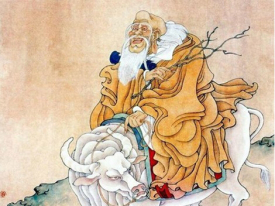
Laozi

Each of us, as individuals, should use both belief and doubt to become better, wiser people, but how should we go about doing this?  Confucianism and Daoism, the two great philosophies of ancient China, gave people opposing ways to gain wisdom.  Many in ancient and modern times used both to compliment and extend each other.

The Confucians say we should build ourselves up to be educated, compassionate and civilized, while the Daoists say we should clear ourselves out to become open-minded, patient and peaceful.  The Confucians say we should learn from others, reason for ourselves, and do what we know to be right.  The Daoists say we should seek less for ourselves and gain perspective beyond our own interests, reasons and actions.

Confucius, the Golden Rule & Learning from Everyone

Confucius Latin

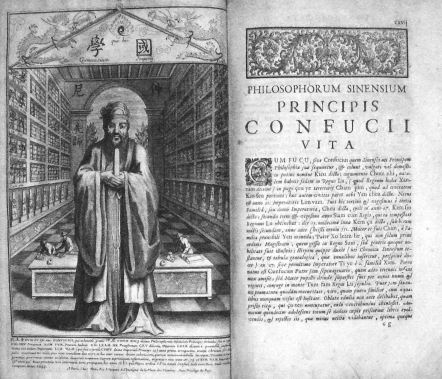
When Catholic Jesuit missionaries arrived in China in the 1600s, they were astounded to find that Confucius, the most influential and central Chinese philosopher, was incredibly similar to Jesus in his sayings and teachings.  First and foremost, like Jesus, Buddha, Muhammad and other revered teachers, Confucius taught what has been called the Golden Rule: Do for others what you would want them to do for you, and do not do to others what you do not want done to yourself.  Confucius said that this was the single thing that should guide one’s life, and that compassion is the central thread running throughout his thinking.

chinese-scholars1

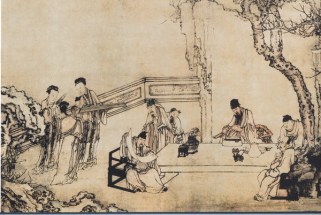
Confucius’ student Zigong once told his teacher, “I do not want to do to others what I do not want them to do to me.”  Confucius replied, “You have not come that far yet”, probably because none of us want others to simply tell us that they are amazing. Another time, Confucius heard Zigong criticizing other people, and said, “Zigong must have already reached perfection, which affords him leisure I do not possess.”  Confucius is being sarcastic, as he often said that no one is perfect, but anyone can be excellent by continuously working to become better.

confucius-teaching-hillside-painting

Not only can anyone be excellent, but we can each learn from anyone about how to be better ourselves.  Confucius taught that when we see great people, we should seek to be like them, but when we see horrible people, we should seek how we are like them by examining ourselves.  Confucius said, “Put me with any two people at random and they will always have something to teach me, as I can take their qualities as a model and their defects as a warning.  Clearly, Confucius believed that we all share the same set of strengths and faults, no matter how talented (or horrible) we happen to individually be or where our talents are.

emperor-shun-of-china

Because no one is perfect and everyone can learn from anyone, there is no one who is above criticism, not even the prince of the state.  When asked by a duke if there is a single thing that could ruin a country, Confucius said that if the prince is never told when he is in error or contradicted, it could be the ruin of everyone.  About himself, Confucius said, “I am fortunate indeed… Whenever I make a mistake, there is always someone who notices it.”

chinese-painting-inquiring-about-the-dao

laozi-water-buffalo

Daoism, Perspective & Less is More

The legendary Daoist sages Laozi, Zhuangzi and Liezi taught that human perspectives are limited, and we should always keep this in mind.  Because we only have partial perspectives, we should keep in mind that others have their own perspectives which may not be the same as ours.  In one famous story, a turtle comes across a frog living in a well, and tells the frog about the sea, water that goes beyond the horizon with no walls in sight.  The frog refuses to believe the turtle, arguing that he has lived in water all his life and knows perfectly well that it comes in wells that are only so wide and have walls.  In Zhuangzi’s book, it says:

frog-with-zhuangzi

You can’t discuss the ocean with well frogs.  They’re limited by the space they live in.  You can’t discuss ice with summer insects.  They’re bound to a single season.  You can’t discuss the greater way of things with cramped scholars.  They’re shackled by their doctrines.  Now you have come out beyond your banks and borders and have seen the great sea, and so you realize how small you are.  From now on it will be possible to talk to you about the greater way of things.

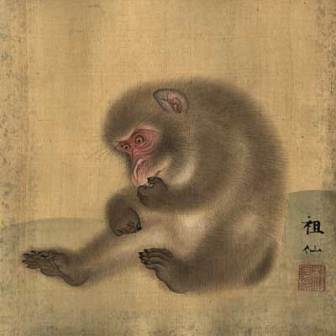
japanese monkey painting

If someone sleeps in a damp place, their back aches and they ends up half paralyzed, but is this true of a carp?  If someone lives in a tree, they are terrified and shake with fright, but is this true of a monkey?  Of these three creatures, which knows the proper place to live?  We eat the flesh of grass-fed and grain-fed animals, deer eat grass, centipedes find snakes tasty, and hawks and falcons love mice.  Of these four, who knows how food ought to taste?  Monkeys pair with monkeys, deer go out with deer, and fish play around with fish.  Men claim that Mao-Qiang and Lady Li were beautiful, but if fish saw them they would dive to the bottom of the stream, if birds saw them they would fly away, and if deer saw them they would break into a run.  Of these four, which knows the standard of beauty for the world?

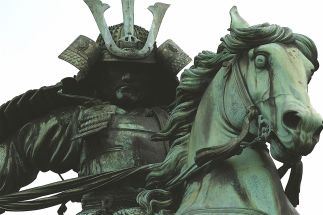
samurai-on-horseback-statue

Daoists also teach the idea of wu-wei, or non-action.  This does not mean that one should not act at all, but that often doing less is doing more.  Being patient and paying attention can save us from doing too much or having to do things over again.  In a Japanese story that illustrates this well, a local lord has three sons and must decide who should inherit his position.  He tests them by placing a pillow on the door to his room and calling them one at a time.  The eldest son enters and annihilates the pillow in a frenzy of skilled sword strikes.  The middle son draws his sword but sees the pillow in mid-air and catches it.  The youngest son sees the pillow on the door, tucks it under his arm and enters the room to the joy of his father.  The youngest son was paying attention, and so he did not even need to pull out his sword.

walking-in-nature-chinese-painting

There are many passages In the Dao De Jing and Zhuangzi, the two central texts of Daoism, that similarly teach that wanting too much and trying too hard is the wrong way to be:

Sages do not boast, and are thus admired by everyone, do not want to shine, and thus will be enlightened, do not seek excellence, and are thus excellent, and because they do not argue, no one can argue with them.

chinese-mountain-painting-stairs

Those who know do not speak.  Those who speak do not know.

Whoever knows how to lead well is not warlike.  Whoever knows how to fight well is not angry.  Whoever knows how to conquer enemies does not fight them.  Whoever knows how to use others well keeps themselves low.

Those who divide fail to divide.  Those who judge are bad at judging.  What does this mean, you ask?  The sage embraces things.  Ordinary people judge between things and parade their judgements in front of others.  So I say, those who judge fail to see.

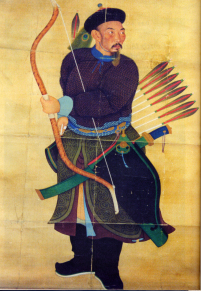
archer-china

When you’re betting for cheap prizes in an archery contest, you shoot with skill.  When you’re betting for fancy belt buckles, you worry about your aim, and when you’re betting for real gold, you’re a nervous wreck.  Your skill is the same in all three cases, but because one prize means more to you than another, you let outside considerations weigh on your mind.  They who look too hard on the outside get clumsy on the inside.

~~~~~~~~~~~~~~~~~~~~~

Learn more about the great Confucius:

Confucius ~ by Jeffrey Riegel for The Stanford Encyclopedia of Philosophy

Confucius ~ by the editors for the Encyclopædia Britannica

Confucius (551—479 B.C.E.) ~ by Jeff Richey for the Internet Encyclopedia of Philosophy

Why Is Confucius Still Relevant Today? His Sound Bites Hold Up ~ by Simon Worrall for the National Geographic, March 25, 2015

*By the way, it may seem rather amazing that we’d have an exact date for Confucius’ birthday. I’m just guessing that there might have been a cultural reason to assign this date to his birth later on. Here’s the source for that date: Confucius: A Guide for the Perplexed by Yong Huang, 2013, p. 3.

~ Ordinary Philosophy and its Traveling Philosophy / History of Ideas series is a labor of love and ad-free, supported by patrons and readers like you. Please offer your support today!

Who is the Expert on Your Well-Being? by Anna Alexandrova

Justice et Inégalité – Les Plateaux de la Balance, by Frachet, 2010, public domain via Wikimedia Commons

Consider a syllogism:

There is now a science of well-being.

Scientists are experts in their field.

Therefore there are now experts on well-being.

I submit this argument is sound–which is to say the premises are true and the conclusion follows validly. But it does not imply that there is a scientific way to live your life and does not imply that science should supersede your own judgment or the judgment of your therapist, rabbi, or wise friend. There are different ways of knowing well-being and none is superior to another in every way.

The “science of well-being” (aka positive psychology, quality of life or happiness studies) applies scientific method to what was previously personal, inscrutable, philosophical–happiness and good life. These scientists say that today measures and methods are so much improved, that happiness and good life are no longer hidden, no longer elusive. They also tout great practical payoffs–typically evidence-based therapies and truly scientific self-help. Increasingly the discoveries of this field are picked up by businesses, human resources managers, life coaches, and indeed governments.

As citizens, employees, and clients we would be wise keep our eye on this new development–knowledge is power and power over happiness is far from innocent. But here I pose the question purely from an individual’s point of view – is it wise to arrange your life in accordance with the findings of this science?

Consider some things scientists of well-being claim to know:

“Unemployment and loss of mate are the hardest to adapt to.”

“Rise in income only predicts rise in well-being in the presence of other factors.”

“Pro-social behavior increases the givers’ subjective well-being.”

If you want to know whether to avoid unemployment and loneliness, pursue better income, volunteer, or do whatever else the science recommends, you need to notice two things. First, these claims are value-laden. Second, they are about kinds of people, not individuals. These two features imply two ways in which this knowledge might fail to fit you – first, because you reasonably disagree with the value judgments these scientists make and, second, because their claims are not about you. Let me take each in turn.

When I say that the claims of this science are value-laden, I mean simply that a value-judgment about good life is needed to identify a questionnaire as valid, or a given data point as relevant. ‘Answers to a life satisfaction questionnaire are valid indicators of well-being’ is a value judgment because it presupposes that it is good for a person to judge her life as living up to some ideal she has adopted.

The process of arriving at a good measure of well-being is the process of making such judgments at many stages: what questions to include, to whom to pose them, which other questionnaires are related, and so on. Following much statistical testing, questionnaires that emerge are complex amalgamations of the factual and the evaluative. This is totally normal and legitimate – there would be no science as we know it if scientists did not use metaphors, analogies, judgments – all seats of commitments about morality, politics, beauty, and culture.

But scientists are not the only authority on values. Judgments about good life are familiar to all of us. My nine year old wants to make YouTube videos and wants help to record his gaming sessions and upload them online. I want to encourage his creativity, but worry about exposing him to the world of ‘likes’ and anonymous comments earlier than need be. Many of my everyday decisions are decisions about well-being: mine, my family’s, my students’. Sometimes I make a mess of things but I still have some expertise about living my life. Classic liberals, such as John Stuart Mill, held the extreme view that only the individual is an authority on their own well-being. This flies in the face of facts – we can be blind to things that people who know and care about us can plainly see. Equally scientists who validate questionnaires of well-being can also make decent value judgments on this matter – clinical researchers usually go to great lengths to ensure that when they measure, say, frailty they define this value-laden concept properly and comprehensively. Most likely there is more than one authority on values, including on well-being.

It follows that claims about validity of a given well-being measure can be challenged by challenging the value judgments on which they depend. ‘You used life satisfaction data in your study, Dr. Scientist, but I have reasons to believe that life satisfaction is not well-being’. No special expertise is necessary to raise such challenges. They need to be made in good faith, with attention to why scientists choose a given measure, and with due reflection, but they can be made. And this is one way in which the claims of well-being science can fail to be relevant you.

The second way stems from the inevitable and justifiable focus on kinds rather than on individuals. My point is not just the familiar idea that scientific hypotheses are about averages and any individual may deviate from average (of course most of us often wrongly believe we are well above it). This is true but unsurprising and can only justify ignoring science if you have strong evidence regarding which side of the distribution you are on. Rather when checking that a given claim of science is properly about us, we should check whether ‘the kind’, that is the class of people, about whom this claim is made, is the kind to which we belong.

Positive psychologists who write books with happiness formulae sidestep this issue and advertise their findings as applying to humans in general – pick a job you love, maintain positive relationships, do your gratefulness exercises, volunteer, find meaning in life. But such vague generalities only take you that far in life. Better grounded is research that zeros in on people in specific circumstances – caretakers of the chronically ill, single mothers on welfare, refugees, adopted children, psychosis patients, and so on. People in these similar circumstances people tend to face similar challenges, or at least more similar than when you consider humanity as a whole. As a result they yield more informative evidence. Clinical research and social work is a treasure trove of knowledge about how to live well with a particular illness, particular disability, or particular challenge. In contrast with positive psychology, these are more modest and more local findings.

To make the same point with pictures, science that promises this:

Is far less reliable for individuals than science that promises this:

Image courtesy of the author.

If there are findings on well-being relevant to the kind to which you belong, good, use them. Nevertheless, because each of us is a member of many different kinds, the authority of these findings will again quickly run. What do you do when you have psychosis and you are a single parent, and when studies exist about well-being of each, but not at the same time? You think for yourself and you ask for advice (of which science is but one source).

Mine is not a criticism, just an observation that well-being as an object of science is not well-being as an object of personal reflection. Living well is as big of a riddle as ever, even in the age of positive psychology.

This article was originally published at OUPBlog

~ Anna Alexandrova is a Senior Lecturer in Philosophy of Science at University of Cambridge and a Fellow of King’s College, having previously taught at the University of Missouri St Louis. She writes on philosophy of social sciences, especially economic modelling, explanation, and the sciences of well-being. She was a recipient of the Philosophy of Science Association Recent PhD Essay Prize. Her book, A Philosophy for the Science of Well-Being has recently been published by OUP.

Ordinary Philosophy and its Traveling Philosophy / History of Ideas series is a labor of love and ad-free, supported by patrons and readers like you. Please offer your support today!

Imagination is a Powerful Tool: Why is Philosophy Afraid of It? – By Amy Kind

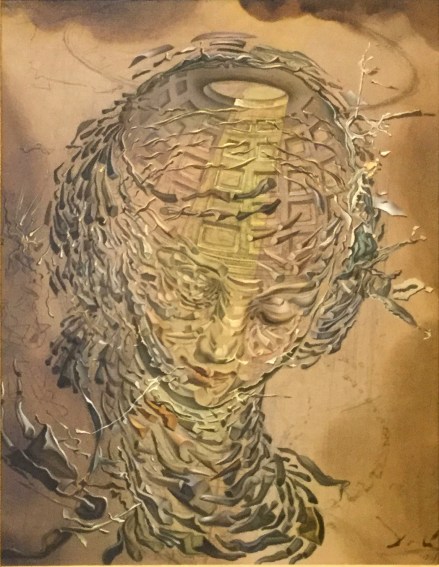
Exploding Raphaelesque Head, 1951, Salvador Dali, Scottish National Gallery of Modern Art, Edinburgh, Scotland

Philosophers have a love-hate relationship with the imagination. René Descartes, for one, disparaged it as ‘more of a hindrance than a help’ in answering the most profound questions about the nature of existence. Trying to imagine one’s way towards metaphysical truth, he wrote in Meditations on First Philosophy (1641), is as foolish as falling asleep in the hope of obtaining a clearer picture of the world through dreams.

Yet Descartes also relied heavily on imagination in scientific and mathematical essays such as The World (1633), in which he tried to conjure up the details of the basic building blocks for structures such as humans, animals and machines. According to the philosopher Dennis Sepper at the University of Dallas, Descartes relied upon a kind of ‘biplanar’ imagination, pioneered by Plato, in which one level of reality could embody and display relations that existed on a different level, and vice versa.

The Scottish philosopher David Hume was equally conflicted about the imagination – especially when compared with perception and memory. ‘When we remember any past event, the idea of it flows in upon the mind in a forcible manner,’ he wrote in A Treatise of Human Nature (1738-40). But imagined images and sensations, he continued, are ‘faint and languid, and cannot without difficulty be preserved by the mind steady and uniform for any considerable time’. However, Hume also claimed that humans are most free when they’re engaging in imagination. Perception can show us only the actual, he said, but imagination can go beyond that, to the realm of the maybe, the what-if and if-only. Indeed, ‘nothing we imagine is absolutely impossible,’ Hume said.

What’s behind this apparent tension at the heart of the imagination? Hume put his finger on it when he talked about how our facility for fantasy helps us to move beyond and change our present reality. One need only think of how Leonardo da Vinci’s fantastical flying machines paved the way for the Wright brothers, or how H G Wells’s novel The War of the Worlds (1898) inspired the first liquid-fuelled space rocket, to see the truth of this insight. But imagination is also restricted by the extent of our previous perceptions and experiences, Hume said. ‘Let us chase our imagination to the heavens, or to the utmost limits of the Universe; we never really advance a step beyond ourselves,’ he wrote.

One way to resolve such ambivalence would be to divide the imagination into different kinds. Along these lines, towards the end of the 18th century, Immanuel Kant distinguished two forms of imagination: the productive imagination and reproductive imagination. The productive faculty is what helps to synthesise and transform sensory content into a meaningful whole. So the identification of something with pointy ears and fur, which meows and rubs itself against your legs, is brought together via the productive imagination into the form of a cat. This unifying tendency is implanted in every human mind irrespective of experience. For Kant, our productive imagination is what makes perception possible.

By contrast, the reproductive imagination is largely about recollection. When a story comes on the radio about a long-lost cat who has found its way home, you draw from the many cats you’ve seen before to picture the heartwarming scene; this would be the reproductive imagination at work. Because the reproductive faculty works only with materials previously provided to someone’s senses, it is subject to the kind of limits Hume discussed.

Kant’s bifurcation hints at why philosophers treat the imagination with both despair and delight. Perhaps the kind of imagination we despise is totally different from its more useful cousin. But in accepting this subdivision, we give up on the possibility of seeing the imagination as a unified mental faculty – which is perhaps more how we experience it.

When I think of all the wondrous things we can do with the imagination, I’m inclined towards a different way of unravelling its enigmatic duality. Rather than slicing up the imagination into distinct kinds, we might think about its distinct uses. I like to call these the transcendent and the instructive functions of the imagination. On the one hand, when we pretend, or fantasise, or escape into an engrossing work of literary fiction, imagination can take us beyond the here and now. On the other hand, when we imagine in an attempt to make sense of what other people are thinking, or to problem-solve or to make decisions, our speculations are used to help us understand the here and now. Whereas our transcendent uses of the imagination tend towards whimsy and fancy, its instructive functions point towards the practical and the concrete.

In both these modes, the secret to success seems to lie in the application of a kind of imaginative constraint. But what’s right for one use might not be fitting for the other. Perhaps the reason why philosophers have been conflicted about the imagination is that they haven’t grasped how limitations need to be tailored to circumstances. When we are writing fiction, or playing games of pretend, or making art, arguably we do our best imagining by setting the boundaries widely or removing the shackles entirely. In contrast, when we employ imagination in the context of scientific or technological discovery, or any other real-world problem-solving, we must allow our imaginations to be framed by the situation at hand.

Figuring out where to draw these lines isn’t easy. It can be extraordinarily tricky to know which factors should stay in play, and which should be eliminated. But by looking at how such constraints operate, not only can we see our way towards imaginative greatness – perhaps we can also purge philosophy of its anxiety about the idea. After all, as Hume observed, humans ‘are mightily govern’d by the imagination’.Aeon counter – do not remove

This article was originally published at Aeon and has been republished under Creative Commons.

~ Amy Kind is professor of philosophy at Claremont McKenna College in California. She is the author of Persons and Personal Identity (2015). (Bio credit: Aeon)

Ordinary Philosophy and its Traveling Philosophy / History of Ideas series is a labor of love and ad-free, supported by patrons and readers like you. Please offer your support today!

On the Value of Intellectuals, by Brad Kent

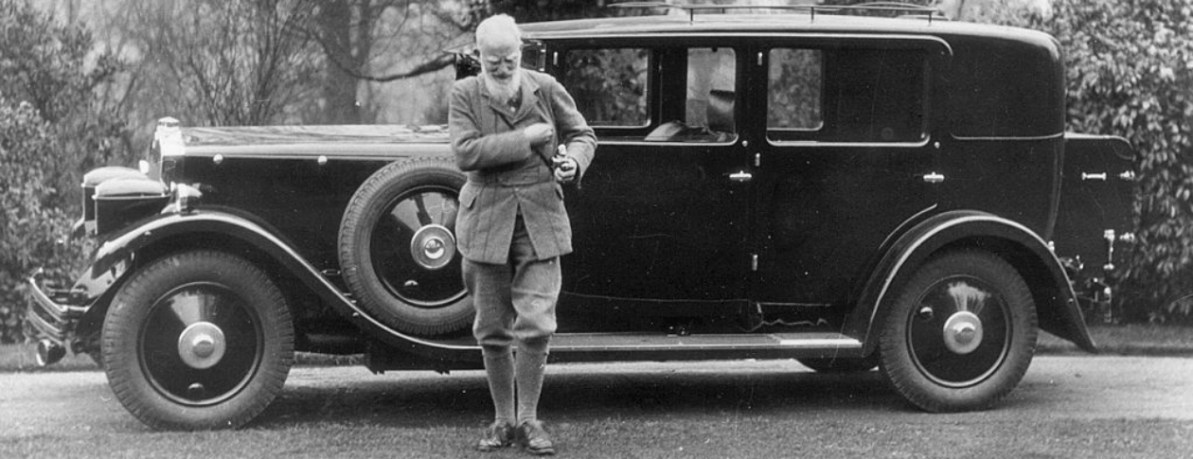
“George Bernard Shaw near St Neots from the Millership collection” from the Birmingham Museums Trust, CC BY-SA 4.0 via Wikimedia Commons.

In times of populism, soundbites, and policy-by-Twitter such as we live in today, the first victims to suffer the slings and arrows of the demagogues are intellectuals. These people have been demonised for prioritising the very thing that defines them: the intellect, or finely reasoned and sound argument. As we celebrate the 161st birthday of Bernard Shaw, one of the most gifted, influential, and well-known intellectuals to have lived, we might use the occasion to reassess the value of intellectuals to a healthy society and why those in power see them as such threats.

Born in Dublin on 26 July 1856 to a father who held heterodox religious opinions and a mother who moved in artistic circles, Shaw was perhaps bound to be unconventional. By age 19 he was convinced that his native Ireland was little more than an uncouth backwater–the national revival had yet to see the light of day–so he established himself in London in order to conquer English letters. He then took his sweet time to do it. In the roughly quarter of a century between his arrival in the metropole and when he finally had a modicum of success, Shaw wrote five novels–most of which remained unpublished until his later years–and eked out a living as a journalist, reviewing music, art, books, and theatre. That eminently readable journalism has been collected in many fine editions, and we see in it an earnest individual not only engaged in assessing the qualities of the material before him–much of which was dreadfully insipid–but eager to raise standards and to cultivate the public. He prodded people to want more and gave them the tools to understand what a better art would look and sound like. And he did so in an inimitable voice that fashioned his renowned alter ego: the great showman and controversialist, GBS.

“George Bernard Shaw, circa 1900” from the Library of Congress, Public Domain via Wikimedia Commons.

Shaw became more widely known as a playwright in late 1904, when King Edward broke his chair laughing at the Royal Command performance of Shaw’s play John Bull’s Other Island. He was no longer a journalist by trade, now being able to live by his plays, but Shaw continued to write essays, articles, and letters-to-the-editor in leading papers to set the record straight, to denounce abuses of power, and to suggest more humane courses of action. When he published his plays, he wrote polemical prefaces to accompany them that are sometimes longer than the plays themselves. These prefaces, written on an exhausting range of subjects, are equally learned and entertaining. Indeed, it has been said by some wags that the plays are the price that we pay for his prefaces.

In many ways continuing his fine work as the Fabian Society’s main pamphleteer in the 1890s, his prefaces suggest remedies for the great injustices of his time. And, what’s more, the vast majority of his prescriptions are as topical and provocative today. For example, if you’re American, should you opt for Trumpcare or Obamacare? Read The Doctor’s Dilemma and its preface and you’ll have a compelling case for neither, but rather a comprehensive and fully accessible public healthcare system, the sort now common in Canada and most European countries. That’s right, people were feeling the Bern–we might say the original Bern–well before Mr. Sanders was born.

Some of Shaw’s opinions came at a great cost. When he published Common Sense About the War, which was critical of both German and British jingoism at the outset of the Great War, he ran too much against the grain of the hyper-patriotic press and government propaganda, thereby becoming a pariah to many. But his star gradually returned into the ascendant as the body count mounted and a war-weary population came to share his point of view. The run-away international success of Saint Joan brought him the Nobel Prize for Literature in 1925 and, as Shaw said, gave him the air of sanctity in his later years.

“George Bernard Shaw with Indian Prime Minister Jawaharlal Nehru, May 1949”, from Nehru Memorial Museum & Library. Public Domain via Wikimedia Commons.

However, Shaw always maintained that he was immoral to the bone. He was immoral in the sense that, as a committed socialist in a liberal capitalist society, he didn’t support contemporary mores. Instead, he sought to change the way that society was structured and to do so he proposed absolutely immoral policies. A good number of these beyond universal healthcare have seen the light of day, such as education that prioritises the child’s development and sense of self-worth, the dismantling of the injustices of colonial rule, and voting rights for women. But those in power continue the old tug-of-war, and the intellectuals of today must be as vigilant, courageous, and energetic as Shaw in the defence of liberal humanist and social democratic values. Witness the return of unaffordable tertiary education in the UK, made possible by both Labour and Conservative policies.  We might recall that Shaw co-founded one of these institutions–the renowned London School of Economics–because he believed in their public good.

Whenever Shaw toured the globe in his later decades–he died in 1950 at age 94–he was met by leading politicians, celebrities, and intellectuals who wanted to bask in his wit, wisdom, and benevolence (Jawaharlal Nehru, Charlie Chaplin, and Albert Einstein are a few such people). Time magazine named him amongst the ten most famous people in the world–alongside Hitler and the Pope. Everywhere he went, the press hounded him for a quote. Yet despite the massive fees he could have charged, he never accepted money for his opinions, just as he had declined speaking fees in his poorer days when he travelled Britain to give up to six three-hour lectures a week to praise the benefits of social democracy. He would not be bought–or suffer the appearance of being bought.

On his birthday, then, we would do well to think of Shaw and maybe even read some of his plays, prefaces, or journalism. We might also cherish the service and immorality of intellectuals. And we should always question the motives of those who denigrate their value.

This piece was originally published in OUPBlog: Oxford University Press’s Academic Insights for the Thinking World

Before You Can Be With Others, First Learn to Be Alone, by Jennifer Stitt

In 1840, Edgar Allan Poe described the ‘mad energy’ of an ageing man who roved the streets of London from dusk till dawn. His excruciating despair could be temporarily relieved only by immersing himself in a tumultuous throng of city-dwellers. ‘He refuses to be alone,’ Poe wrote. He ‘is the type and the genius of deep crime … He is the man of the crowd.’

Like many poets and philosophers through the ages, Poe stressed the significance of solitude. It was ‘such a great misfortune’, he thought, to lose the capacity to be alone with oneself, to get caught up in the crowd, to surrender one’s singularity to mind-numbing conformity. Two decades later, the idea of solitude captured Ralph Waldo Emerson’s imagination in a slightly different way: quoting Pythagoras, he wrote: ‘In the morning, – solitude; … that nature may speak to the imagination, as she does never in company.’ Emerson encouraged the wisest teachers to press upon their pupils the importance of ‘periods and habits of solitude’, habits that made ‘serious and abstracted thought’ possible.

In the 20th century, the idea of solitude formed the centre of Hannah Arendt’s thought. A German-Jewish émigré who fled Nazism and found refuge in the United States, Arendt spent much of her life studying the relationship between the individual and the polis. For her, freedom was tethered to both the private sphere – the vita contemplativa – and the public, political sphere – the vita activa. She understood that freedom entailed more than the human capacity to act spontaneously and creatively in public. It also entailed the capacity to think and to judge in private, where solitude empowers the individual to contemplate her actions and develop her conscience, to escape the cacophony of the crowd – to finally hear herself think.

In 1961, The New Yorker commissioned Arendt to cover the trial of Adolf Eichmann, a Nazi SS officer who helped to orchestrate the Holocaust. How could anyone, she wanted to know, perpetrate such evil? Surely only a wicked sociopath could participate in the Shoah. But Arendt was surprised by Eichmann’s lack of imagination, his consummate conventionality. She argued that while Eichmann’s actions were evil, Eichmann himself – the person – ‘was quite ordinary, commonplace, and neither demonic nor monstrous. There was no sign in him of firm ideological convictions.’ She attributed his immorality – his capacity, even his eagerness, to commit crimes – to his ‘thoughtlessness’. It was his inability to stop and think that permitted Eichmann to participate in mass murder.

Just as Poe suspected that something sinister lurked deep within the man of the crowd, Arendt recognised that: ‘A person who does not know that silent intercourse (in which we examine what we say and what we do) will not mind contradicting himself, and this means he will never be either able or willing to account for what he says or does; nor will he mind committing any crime, since he can count on its being forgotten the next moment.’ Eichmann had shunned Socratic self-reflection. He had failed to return home to himself, to a state of solitude. He had discarded the vita contemplativa, and thus he had failed to embark upon the essential question-and-answering process that would have allowed him to examine the meaning of things, to distinguish between fact and fiction, truth and falsehood, good and evil.

‘It is better to suffer wrong than to do wrong,’ Arendt wrote, ‘because you can remain the friend of the sufferer; who would want to be the friend of and have to live together with a murderer? Not even another murderer.’ It is not that unthinking men are monsters, that the sad sleepwalkers of the world would sooner commit murder than face themselves in solitude. What Eichmann showed Arendt was that society could function freely and democratically only if it were made up of individuals engaged in the thinking activity – an activity that required solitude. Arendt believed that ‘living together with others begins with living together with oneself’.

But what if, we might ask, we become lonely in our solitude? Isn’t there some danger that we will become isolated individuals, cut off from the pleasures of friendship? Philosophers have long made a careful, and important, distinction between solitude and loneliness. In The Republic (c380 BCE), Plato proffered a parable in which Socrates celebrates the solitary philosopher. In the allegory of the cave, the philosopher escapes from the darkness of an underground den – and from the company of other humans – into the sunlight of contemplative thought. Alone but not lonely, the philosopher becomes attuned to her inner self and the world. In solitude, the soundless dialogue ‘which the soul holds with herself’ finally becomes audible.

Echoing Plato, Arendt observed: ‘Thinking, existentially speaking, is a solitary but not a lonely business; solitude is that human situation in which I keep myself company. Loneliness comes about … when I am one and without company’ but desire it and cannot find it. In solitude, Arendt never longed for companionship or craved camaraderie because she was never truly alone. Her inner self was a friend with whom she could carry on a conversation, that silent voice who posed the vital Socratic question: ‘What do you mean when you say …?’ The self, Arendt declared, ‘is the only one from whom you can never get away – except by ceasing to think.’

Arendt’s warning is well worth remembering in our own time. In our hyper-connected world, a world in which we can communicate constantly and instantly over the internet, we rarely remember to carve out spaces for solitary contemplation. We check our email hundreds of times per day; we shoot off thousands of text messages per month; we obsessively thumb through Twitter, Facebook and Instagram, aching to connect at all hours with close and casual acquaintances alike. We search for friends of friends, ex-lovers, people we barely know, people we have no business knowing. We crave constant companionship.

But, Arendt reminds us, if we lose our capacity for solitude, our ability to be alone with ourselves, then we lose our very ability to think. We risk getting caught up in the crowd. We risk being ‘swept away’, as she put it, ‘by what everybody else does and believes in’ – no longer able, in the cage of thoughtless conformity, to distinguish ‘right from wrong, beautiful from ugly’. Solitude is not only a state of mind essential to the development of an individual’s consciousness – and conscience – but also a practice that prepares one for participation in social and political life. Before we can keep company with others, we must learn to keep company with ourselves.Aeon counter – do not remove

~ Jennifer Stitt is a graduate student in the history of philosophy at the University of Wisconsin-Madison. Bio credit: Aeon

This article was originally published at Aeon and has been republished under Creative Commons.

Ordinary Philosophy and its Traveling Philosophy / History of Ideas series is a labor of love and ad-free, supported by patrons and readers like you. Please offer your support today!