O.P. Recommends: Fareed Zakaria on What America Could Learn From Singapore About Racial Integration

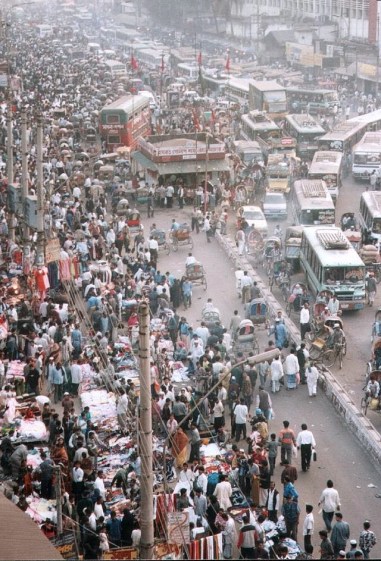
Singapore, Satay stalls along Boon Tat Street next to Telok Ayer Market by Allie Caulfield, Public Domain via Wikimedia CommonsIn thinking recently about the nature of government and its proper roles, I recalled this Fareed Zakaria piece about Singapore’s engineered diversity.

In it, Zakaria praises Singapore’s efforts to reduce racial and religious bigotry by increasing the diversity of its neighborhoods. The government’s tactics to achieve this would be intolerably intrusive to most Americans, and indeed to the citizens of most modern democratic nations. When it comes to race and class, the Singaporean law favors the government’s interest in providing an environment where citizens are brought up in familiarity with people who are different than they are, and therefore less subject to the harmful effects of bigotry, over the rights of individuals to freely choose where to live.

So can Singaporeans be considered more free than Americans when it comes to race and class? What does it mean to be free, in this sense? We struggle here in the United States from the ugly effects of entrenched bigotries, ancient and new, long after we considered it okay to sanction them by law: we live in self-segregated neighborhoods where racial minorities and the less wealthy enjoy a far lower level of health and personal safety, religious minorities (at this moment in our history, especially Muslims, although Quakers, Catholics, Jews, and others have had their turns) are subject to the suspicion and hatred born largely of ignorance, and social mobility is extremely slow. But we can choose to live, at least on paper, wherever we want. Does that really make us more free?

And if we generally agree, as a society, that we believe the end of bigotry is a worthy moral goal, is it right and proper for the government to be the arbiter of that goal? Is morality a governmental concern at all? Or is it the government’s role to keep out while citizens wrangle with important moral questions, interfering only to protect its citizens from bodily harm?

Along with Zakaria, I find much to admire in Singapore’s goal, and its tactics do appear to help foster social cohesion and reduce conflict. Would Americans would ever ‘go for’ anything like that, if our conflicts of race, class, and religion continue to set us against one another? I doubt it. But I don’t think we should kid ourselves that it makes us any more truly free.

*Listen to the podcast version here or on iTunes

~~~~~~~~~~~~~~~~~~~~~~~

Source and inspiration:

Zakaria, Fareed. ‘What America Could Learn From Singapore About Racial Integration’. The Washington Post, June 25, 2015 https://www.washingtonpost.com/opinions/from-singapore-lessons-in-harmony-and-diversity/2015/06/25/86fcbfa2-1b72-11e5-93b7-5eddc056ad8a_story.html

Should A Minor Be Tried as an Adult Due to the Seriousness of the Crime?

Here’s a case, currently in the news, in which a young girl helps murder her mother because her mother was trying to break up her relationship with her much older boyfriend.

In this case, the girl charged is 14 years old. A long series of text messages, along with forensic evidence, the timeline of events, and the girl’s own testimony indicate that she and her boyfriend did in fact commit the murder (though, of course, this must be proved in court).

Here’s what troubles me most besides the cruel and terrible murder itself: the girl is being charged as an adult. And she’s being charged as an adult, apparently, due to the seriousness of the crime, a practice that’s been allowed in many states for decades. The main argument in favor of this practice goes something like this: if the crime is serious, or ‘adult’ enough (whatever that means), the punishment should be proportionate. Adult crimes, in other words, merit adult punishment.

But wait a minute! In what way does the seriousness of the crime indicate that the girl is capable of the level of reasoning, impulse control, emotional maturity, and therefore moral accountability, of a fully functioning adult? It seems to me that in this case, the seriousness of the crime compared with the triviality of the reasons the girl gives for committing the murder indicates that she is not yet capable of an adult level of understanding.

As my regular readers may know, I hold a rather robust view of personal responsibility. But that’s not the same thing as believing that adolescents, lacking the fully developed brain structures of a person in their early 20’s, should be held to the same standard of accountability as an adult. To me, this is piling one injustice on top of another, if we believe that true justice necessarily includes not only the principle of proportionality of crime to punishment, but of punishment to culpability.

What do you think?

How the Brain Works (and Doesn’t) vs Our Justice System

We’re learning new and surprising things about our brains all the time. Psychologists, behavioral economists, and other scientists have sophisticated new tricks to reveal what’s going on inside our skulls, and their findings are publicized more widely than ever before. We reveal what we think we’re thinking through polls and quizzes, we’re ‘tricked’ into revealing what we’re really thinking through rigged puzzles and tests (exposing our biases, misconceptions, etc), we have easy access to massive databases of recorded human thought, and most amazingly, neuroscientists can now peer inside our brains while we’re thinking. And some of what we’re learning shows us that we’ve been wrong about ourselves in some really important ways.

So: do changes in our understanding of how the brain works mean we have to change, even to overhaul, how our justice system works too?

Our justice system! WHAT?!? Why would we want to change something so equitable, so honorable, it’s defined by the word ‘justice’?

Seriously, though: to many, this question is almost too scary to ask. 

Won’t we send the signal that we’re no longer tough on crime by even proposing such a project? Isn’t our justice system pretty good as it is? Occasional ‘bad apple’ cops, perjuring witnesses, and corrupt prosecutors aside, our justice system is founded on the wholesome principle of personal responsibility: if we do wrong, we pay the price. A central feature of our justice system, after all, is the right to a fair trial by a jury of our peers. And as a society, we’ve taken great pains to ensure that everyone charged with a crime can get a fair trial. Our standards of evidence are pretty high: there must be eyewitness testimony and plenty of it. Forensic evidence is carefully collected and thoroughly analyzed, from blood to fingerprints to DNA to the tiniest of hairs and fibers. Everyone is entitled to legal counsel, even if the taxpayers have to foot the bill. Children and the mentally disabled are, properly, not tried as if they have the same level of responsibility as fully capable adults. The convicted have a right to appeal if they present evidence that their trial was unfair or if they can demonstrate innocence. And so on.
Even granting all of these and setting them aside for now, a common objection to the current justice system in general is that the underlying concept of personal responsibility is a myth. We’re not responsible since everything we think and do is determined by laws of cause and effect. So, we have no free will, and if we have no free will, the whole concept of moral accountability, of responsibility for our actions, doesn’t make sense. The justice system ends up, then, having nothing to rightfully judge or punish. Let’s explore this for a moment.

What do we mean by personal responsibility? We mean that it’s we that did the thing, it’s we who understand that there are alternatives available to us, and it’s we that could, at least conceivably, have done otherwise. This is true even if our personalities, past experiences, and current circumstances make it unlikely we would have chosen otherwise. It’s reasonable to assign responsibility for actions, since it deters us from making bad choices, and motivates us to inculcate better habits in ourselves. Assigning responsibility does not mean we must ruthlessly punish all who do wrong; it means that we can make reasonable demands of one another as the circumstances warrant, be it punishment, recompense, an apology, or an acknowledgement of responsibility.


Who’s responsible for our actions, then? We all are, so long as we are capable of understanding what we should do and why (whether or not we understood at the time), and so long as we could have chosen to do otherwise. Unless immaturity, injury, or illness makes it impossible, or nearly impossible, to control our actions, all persons who are free to make their own choices can and should be held responsible for those choices. (I argue for this more fully in ‘But My Brain Made Me Do It!’)

By the way, that’s why I disagree with many who think that psychopaths shouldn’t be held responsible for their actions. Although it may be more difficult for the psychopath to do the right thing, to respect the rights of others, it’s still in their power to do so, so long as they are capable of reason. We don’t let other people off the hook just because they don’t feel like doing the right thing; and all people, psychopaths or not, often find the wrong thing to do irresistibly attractive, and the right thing difficult. As long as anyone demonstrates sufficient intelligence to understand that the rules apply to them, it doesn’t matter that they wish it didn’t, or feel like it shouldn’t. After all, psychopathy is characterized by lack of empathy, not intelligence. The impartiality that underlies all morality, as in A owes a moral or legal duty to B, so B owes an equal moral or legal duty to A, is a simple and logical equation that any minimally intelligent adult person can grasp, psychopath or not.

So if the concept of personal responsibility, or moral accountability, is generally a good one, and our society is so committed to creating a fair justice system, what’s the problem with it?Here’s one of the main problems: many of our laws and practices are based on a poor understanding of how memory works, and an underestimation of how often it doesn’t work. For example, many of our law enforcement tactics are virtually guaranteed to result in unacceptably high rates of false convictions through their tendency to influence or convince suspects and eyewitnesses to remember details and events that never happened. Police interrogators can and do legally lie to their subjects in the attempt to ‘get them to talk’, under the assumption that false information has little to no effect on the person being interrogated other than to coax or scare the truth out of them. Until very recently, we didn’t understand how malleable memory really is, how easy it is in many circumstances to get others to form false memories by feeding them information. Courts all over the United States, even the Supreme Court, have upheld such deceptive techniques as lawful, yet we have mounting evidence to show these techniques have the opposite of their intended effect – unless, of course, the intended effect is any conviction for crime, not just the true one.

The fact that human memory is as undependable as it it seems counterintuitive, to say the least. It’s true that we can be forgetful, that we trip up on unimportant details such as the color of a thing, or the make of a car, or someone’s height. But surely, we can’t forget the really important things, like what the person who robbed or raped us looks like, or whether a crime happened at all, especially if we’ve committed it ourselves. Yet sometimes it’s the accumulation of small, relatively ‘unimportant’ misremembered details that leads us to ultimately convict the wrong people, and the evidence piling up also reveals that we do, in fact, misremember important things all the time. And people are losing their reputations, their liberty, their homes and money, even their lives, because of it.
 
Before we look at this evidence, let’s explore, briefly, how we think about memory, and what we are learning about it.

Not so long ago, working theories of human memory rather resembled descriptions of filing systems or of modern computers; many still think of it that way. We thought of the brain as something like a fairly efficient librarian or personal secretary neatly and efficiently storing important bits of information, such as memories of things that

happened to us, images of the people and places we know or encounter in significant moments in our lives, and so on, in a systematic way that would facilitate later retrieval, and most importantly, retrieval of reliable information. ‘Unimportant’ memories, or the less significant details of memorable events, were thrown away by forgetting, so that brain power wouldn’t be wasted on useless information. Sometimes we’d find old memories stuffed away in the back of the file or pushed off to a corner somewhere, a little difficult to retrieve after much time had passed, but still accessible with some effort. But important memories were stored more or less intact and discrete from one another, so if we remembered something at all, we’d remember it fairly correctly, or at least, the most important details of it. After all, it wouldn’t make sense for our internal secretary to rip up the memory file into little pieces and stash it all over the place helter-skelter, or to cross out random bits or even doctor the files from time to time, would it? And we certainly couldn’t remember things as if they actually happened to us if they didn’t. It seems all wrong, that evolution (or an intelligent designer, if that’s your thing) would give us an inefficient, inaccurate, dishonest, or mischievous keeper of that most cherished, most self-defining component of ourselves, our life’s memories.

But now we know that memory works differently in many ways than we thought. How do we know this? For one, we’re now looking inside the brain as we think, and brain scans show that the process of recalling looks different in practice than we might have expected if some of our old theories were true. But more revealingly, we’re taking a closer look at our cognitive blunders. Like many other discoveries in science, we find out more and more about how something works, honing in on it so to speak, by examining instances where it doesn’t work as it should if our theories, or common sense, were correct.

As we’re finding out that memory doesn’t work as we thought, we’re also realizing how heavily our justice system relies on memory and on first-person accounts of what happened. We place a very high value on eyewitness testimony and confessions in pursuing criminal convictions, again, based on faulty old assumptions about how memory works, and how accurately people interpret the evidence of their senses. Yet as we’ll see, people have been falsely convicted because of these, even when other evidence available at the time contradicted these personal accounts of what happened. As our justice system places undue faith in memory and perception, despite their flaws, in what other ways is it built on wrong ideas about how the mind works?

Neuroscience, the quest to understand the brain and how it works, was founded on case studies of how the mind to appeared to change when the brain was injured. Traditionally, the mind was thought of as a unified thing that inhabits or suffuses our brain somewhat as a ghost haunts an old house. If part of the house burns down, the ghost is the same: it can just move to another rooms. But careful observers, early scientists, noticed that an injury to a part of the brain affects the mind itself. When particular parts of the brain were injured, patients lost specific capabilities (to form new memories, for example, or to recognize faces, or to keep their temper). Sometimes, the personality itself would change, like from friendly to unfriendly or vice-versa. Or in the case of split-brain patients, they would simultaneously like and dislike, believe and not believe, or be able and not able to do certain things, depending on how you ask, or sometimes just depending on what side of the body you address them from! Gradually, we came to understand that the mind is something that emerges from a physical brain, from the way the brain’s parts work together, and is entirely dependent on the brain itself for its qualities and for its very existence. 


And as we discussed, it’s not only neuroscientists with their fMRIs that are revealing how the brain works. The criminal justice system has amassed mountains of evidence that shows us how often the human brain does its job and helps us ‘get the right guy’, and how often it fails. With advances in technology, such as DNA testing, more sophisticated firearms testing, expanded access to files and records, and many other newly available forensic tools, we’re discovering an alarming number of false convictions, not only of people currently imprisoned, but sadly, of those we’re too late to help. Most of these are the direct result of basic errors of our own faulty brains. 

(I’ve more briefly discussed the issue of false convictions for crime in an earlier piece, stressing the importance of knowing the ways our criminal justice system fails, and one of the most effective ways society can keep itself informed.)

Two of the main culprits in false convictions are false memory and misperception, the one resulting from errors in recall, the other resulting from bias or the misinterpretation of sense evidence.

For example, let’s consider the case of a rape victim and the man she falsely accused, who went on to work together for reform in certain law enforcement practices. For years, Jennifer Thompson-Cannino was absolutely sure that Ronald Cotton had raped her, and her identification of him led to his conviction for the crime. After all, as she said, and as the court agreed, one couldn’t forget the face of someone who had done this to you, committed such an intimate crime inches away from one’s own eyes, could they? Eleven years later, the real rapist was identified when the original rape kit sample was re-tested to confirm a DNA match. Over time, Thompson-Cannino had convinced herself, honestly by all accounts, that Cotton’s face was the one she originally saw, and each time she looked at it, the more she ‘recognized’ it as that of her rapist, and the more strongly she associated this recognition with the rest of her memories of the crime. Fortunately, she’s one of those rare people who are able to fully admit such an egregious mistake, and she has joined with Cotton to call on police jurisdictions to change the way suspect lineup identifications are conducted. Thompson-Cannino and Cotton learned a hard lesson about the fallibility of memory, and how preconceived notions (in this case, that the police must be right) can withstand the rigors of the courtroom and still lead to very wrong conclusions.

But we can imagine that such a mistake must happen from time to time, as in Cotton’s case, when the supposed criminal looks quite a bit like the real one, and the array of circumstances that led to the whole mix-up were so unusually convoluted. But, surely, a lot of people couldn’t all remember the same crime, or series of crimes, wrongly, and describe it mostly the same way when questioned separately? Well, that happens too
. The McMartin case of the early 1980’s was just the first of a string of cases which resulted in hundreds of people being convicted for the rape and torture of small children, usually entirely based on the purported evidence of the ‘victims’ ‘ own memories, or those of their family members. The ‘victims’, mostly young children, told detailed, lurid, horrific stories of events that most people would consider beyond the imaginative scope of innocent children. Over time, as those convicted of the crimes were pardoned, exonerated, or usually just had the charges dropped without apology (some still languish in prison, or are confined to house arrest, or are barred from being with children, including those of their own family), videos and transcripts of ‘expert’ interviews with these children found them leading their interviewees on. Professional psychologists and interrogators were found to be influencing children to form their own false memories, even planting them whole-cloth, rather than drawing them out as most people thought they were doing. This includes the professionals themselves! Some of these children, now grown, still ‘remember’ these events to this day, even those who now know they never happened.

Okay, now we’re talking about children, and we all know children are impressionable. But usually it’s adults who give evidence in such important cases, and though they might be fuzzy on the details when it comes to what other people did, they know what they themselves did, right? Well, here again, no, not necessarily. In Norfolk, Virginia, eight people were convicted of crimes relating to the rape and murder of one woman, based on the first-person confessions and testimony of four military men. These men, who had tested sound enough of mind and body to join the Navy, were convinced by police interrogators, one by one, to ‘reveal’ that they and several others had, by a series of coincidences, formed an impromptu gang-rape party that managed to conduct a violent crime that lasted for hours, while leaving little destruction or evidence behind. Although these confessions didn’t match the evidence found in the crime scene, didn’t match the other confessions, or were contradicted by alibis, all were found guilty on the common-sense and legal assumptions that sane, capable people don’t falsely accuse themselves.Yet as in the Norfolk case, the case history of our criminal justice system reveals that with the right combination of pressure, threats, assertion of authority, and personality type, just about anyone can be pushed to confess to committing even a terrible crime, and worse yet, become convinced that they did it (as one of the men did in the Norfolk case). The Central Park Five, as they are often called, were five teenage boys, aged 14 to 16, who were convicted of the rape, torture, and attempted murder of a woman in Central Park in New York City. The justifiably horrified public outrage at this crime, combined with frustration over a rash of other crimes throughout the city, put a lot of pressure on law enforcement to solve the crime in a hurry. These five boys had already been picked up by police officers in suspicion of committing other crimes that night, of robbery and assault, among other things, and when the unconscious, severely beaten woman was found, the police hoped they had her attackers in custody already. After hours of intensive untaped interrogation, all five eventually confessed, implicating themselves and each other. They were convicted, despite the fact that the blood evidence matched none of them, and their confessions contradicted each other in important details. 

False memories and false confessions are only two of the ways our fallible brains can lead us astray in the search for truth. Human psychology, so effective at so many things, is also short-sighted, self-serving, and wedded to satisfying and convenient narratives, to a fault. Law enforcement officials in all of these cases were convinced that their theories of effective interrogation were right, and that their perceptions of the suspects were right. The prosecutors were convinced that the police officers had delivered the right suspects for trial. The legislators that made the laws, and the courts that upheld them, were convinced they were acting in the best interest of justice. And as we’ve seen, all of these were wrong.

As just about everyone was who were involved in bringing Todd Willingham to court, and in condemning him to die for the murder of his own children by arson. By all accounts, Willingham didn’t act as people would expect a grieving father to act, especially one who had escaped the same burning house his children had died in. Yet it was one faulty theory after anotherfrom pop psychology and preconceived notions about that ‘real’ grief looks like, from bad forensics to a poor understanding of how an exceedingly immature and awkward man might only appear guilty of an otherwise unbelievable crime, that led to his conviction and execution by lethal injection.

But the problem of false conviction for crime is much, much larger than we might suppose from the cases we’ve considered here: these were all capital crimes, and as such were subject to much more rigorous scrutiny than in other cases. If wrongful convictions are known to happen so often in the case of major crimes, we can reasonably extrapolate a very high number of false arrests, undeserved fines, and especially, false plea deals, in which people innocent of the relatively minor crimes they’re accused of are rounded up, charged, and sentenced. Plea bargaining presents a special problem: suspects are persuaded to plead guilty and accept a lesser sentence than the frighteningly harsh one they’re originally threatened with, and in jurisdiction after jurisdiction, we’re finding that huge numbers of innocent people are sent to prison every year through this method. All of this results from a blind zeal to promote justice, or at least, the appearance of justice in the interest of feeling secure, of more firmly establishing authority, or of fulfilling the emotional need to adhere to comforting social traditions.

So how do we need to change our attitude towards our criminal justice system, in the pursuit of actual justice? A proper spirit of epistemic humility, a greater concern for those who may have been wrongfully convicted, and a real love of justice itself (rather than the mere show of caring about justice that the ‘tough on crime’ too often consists of).

But we still are left with the practical task of protecting ourselves and one another. Positive action must be taken, or crime will run rampant, being unopposed. But that doesn’t mean hold on to old ideas and practices because we like them, because they are familiar and ‘time-tested’, and make us feel safe. This includes the death penalty, which shuts out all possibility that we can remedy our mistakes.

Here’s one general solution: approach criminal justice as we do science itself, where we accept conclusions based on the best evidence at the time, but founded on the idea that all conclusions are contingent, are revisable if better, compelling, well-tested evidence comes along. We need a justice system that assumes the fallibility of memory and perception, and builds in systematic corrections for them.

And we need a system that doesn’t just pay homage to this idea: we need to build one that allows for corrections, and not in such a way that it takes years, if ever, to release someone from prison or clear someone’s name if the evidence calls for it. Many would say that the system already works this way: look at how many appeals are available to the convicted, and how many hundreds of people have already been exonerated of serious crimes. But it doesn’t work that way in almost all circumstances. It takes anywhere from months to several years after actual innocence is established to actually release a wrongfully convicted person from prison. For all those not so lucky as to have their innocence proved: most cases don’t have DNA evidence available to test to begin with, at least that would definitively prove guilt or innocence. And even in the rare cases such evidence is available, most is never re-tested to begin with, since the bar for re-evaluation of evidence is so high. Or, the evidence that was available is destroyed after the original conviction and is unavailable for re-examination. Or, legal jurisdictions are so determined that their authority remain unchallenged that they make it extremely difficult, if not impossible, for prosecutors and law enforcement officers to be held accountable in any way if they make a mistake, and bend over backwards to make sure such mistakes are never revealed. And so on.

In short: we don’t just need a justice system that brings in science to help out; we need a justice system whose laws and practices emulate the self-correcting discipline of science, which, in turn, is derived from the honest acknowledgement of the limitations of our own minds.

*Listen to the podcast version here or on iTunes

* Also published at Darrow, a forum for thoughts on the cultural and political debates of today

~~~~~~~~~~~~~~~~~~~~~~

Sources and Inspiration

‘About the Central Park Five’ [film by Ken Burns, David McMahon and Sarah Burns], PBS.org.
http://www.pbs.org/kenburns/centralparkfive/about-central-park-five/Berlow, Alan. ‘What Happened in Norfolk.’ New York Times Magazine. August 19th, 2007.
http://www.nytimes.com/2007/08/19/magazine/19Norfolk-t.html

‘The Causes of Wrongful Convictions’. The Innocence Project.
http://www.innocenceproject.org/causes-wrongful-conviction

Celizic, Mike. ‘She Sent Him to Jail for Rape; Now They’re Friends’ Today News, Mar 3, 2009.
http://www.today.com/id/29613178/ns/today-today_news/t/she-sent-him-jail-rape-now-th

Eagleman, David. ‘Morality and the Brain’, Philosophy Bites podcast, May 22 2011.
http://philosophybites.com/2011/05/david-eagleman-on-morality-and-the-brain.html

‘The Fallibility of Memory’, Skeptoid podcast #446. Dec 23, 2014.
http://skeptoid.com/episodes/4446

Fraser, Scott. ‘Why Eyewitnesses Get It Wrong’ TED talk. May 2012
http://www.ted.com/talks/scott_fraser_the_problem_with_eyewitness_testimony

Grann, David. ‘Trial by Fire: Did Texas Execute an Innocent Man?’ The New Yorker, Sep 7, 2009
http://www.newyorker.com/magazine/2009/09/07/trial-by-fire

Hughes, Virginia. ‘How Many People Are Wrongly Convicted? Researchers Do the Math’. National Geographic: Only Human, Apr 28, 2014.
http://phenomena.nationalgeographic.com/2014/04/28/how-many-people-are-wrongly-

Jensen, Frances. ‘Why Teens Are Impulsive, Addiction-Prone And Should Protect Their Brains’. Fresh Air interview, Jan 28th, 2015.
http://www.npr.org/blogs/health/2015/01/28/381622350/why-teens-are-impulsive-...

Kean, Sam. ‘These Brains Changed Neuroscience Forever’. Interview on Inquiring Minds, 

Lilienfeld, Scott O. and Hal Arkowitz. ‘What “Psychopath” Means’. Scientific American,
Nov 28, 2007. http://www.scientificamerican.com/article/what-psychopath-means/

Loftus, Elizabeth. Creating False Memories.’ Scientific American, Sept 1,1997. http://faculty.washington.edu/eloftus/Articles/sciam.htm
and ‘The Fiction of Memory’ TED talk. June 2013.
http://www.ted.com/talks/elizabeth_loftus_the_fiction_of_memory?

 
Nelkin, Dana K., ‘Moral Luck’, The Stanford Encyclopedia of Philosophy. Edward N. Zalta (ed.) http://plato.stanford.edu/entries/moral-luck/
 
Perrilo, Jennifer T. and Saul M. Kassin. ‘The Lie, The Bluff, and False Confessions’. Law and Human Behavior (academic journal of the American Psychology-Law Society). Aug 24th, 2010.
https://www.how2ask.nl/wp-content/uploads/downloads/2011/10/Perillo-Kassin-The-Lie

Possley, Maurice. ‘Fresh Doubts Over a Texas Execution’. The Washington PostAug 3, 2014.
http://www.washingtonpost.com/sf/national/2014/08/03/fresh-doubts-over-a-texas-execution/

Robertson, Campbell. ‘South Carolina Judge Vacates Conviction of George Stinney in 1944 Execution’, The New York TimesDec. 17, 2014. http://www.nytimes.com/2014/12/18/us/judge-vacates-convict

Shaw, Julia. ‘False Memories Creating False Criminals’. Interview, Point of Inquiry podcast.
March 2nd, 2015. http://www.pointofinquiry.org/false_memories_creating_false_criminals_with_dr..

‘The Trial That Unleashed Hysteria Over Child Abuse.’ New York Times, Mar 9th, 2014.
and video ‘McMartin Preschool: Anatomy of a Panic | Retro Report’

Welcome to the Podcast Edition of Ordinary Philosophy!

Hello dear readers, and welcome to the
podcast version of Ordinary Philosophy!

You can listen to the podcast here, on Google Play, or subscribe in iTunes.

Like many of you, I’m a big fan of podcasts, mostly because my life is very busy. One day in the future, I hope to have a lot more time to do each task one at a time, to really be present, as they say, as I wash the dishes, straighten the house, do the laundry, and perform all those other tasks that take up time, but not much thought.

But at this time in my life, between my day jobs, my creative projects, and spending time with friends and family (which I don’t do enough of these days, sadly), I don’t have enough time to keep up the world of ideas as nearly much as I’d like to by sitting down and reading. Instead, I keep myself informed and increase my education by listening to lots of podcasts: discussions with my favorite authors and thinkers, audio renditions of books and essays, debates, recordings of classes on my favorite subjects, and so on. I listen to these podcasts while doing those aforementioned chores, and let me tell you: as one who is not fond at all of household chores like doing the dishes and washing the floor, the podcast is a marvelous invention: they transform boring chore time into great opportunities for learning and exploration. I’m also an avid hiker, and it’s a wonderful thing to be able to immerse myself in some fascinating ideas or discussion as I immerse myself in the beauties of nature.

To begin with, this podcast will simply consist of audio recordings of my Ordinary Philosophy pieces. Over time, I may add commentary and who knows, perhaps interviews and discussions with guests. We’ll see how it goes. In the meantime, here’s Ordinary Philosophy in audio form: I hope you find it interesting and enjoyable!

… And here’s episode 2: Is the Market Really the Most Democratic Way to Determine Wages?
Originally published as an essay Feb 6th, 2014

Personal Responsibility and Collective Action Problems

In a recent essay, ‘But My Brain Made Me Do It!‘, I argue that many attempts to evade or minimize personal responsibility for one’s actions are misguided. The concept of personal responsibility exists not only to impart personal and societal meaning to human behavior, but to assign accountability. After all, if human beings can not be required to fulfill responsibilities or make retribution for harms done, societies could not function and group living would be impossible. Many attempts to evade personal responsibility only consider the reasons why one might easily have acted one way or another, and ignore two other key factors which lend weight and force to it in the first place: whether the person could have acted otherwise, and whether the person was in fact the one who performed the action. Therefore, attempts to isolate only deliberate intention, and to disregard other factors in matters of personal responsibility, undermine the nature and utility of the whole concept.

In the United States, debates about the meaning and ramifications of personal responsibility surround not only crime and punishment issues, but also public policy dealing with collective action problems, such as pollution, overpopulation, gun control, defense, law enforcement, and access to health care. These types of problems result from individual choices en masse, so that personal responsibility may be difficult to assign to any one individual. Yet, these problems would not exist unless all of those individuals choose to act they way they do. Collective action problems affect so many people, are so complex, and are so expensive, that a solution to them requires mass participation: many individuals each required to take part in solving the problem.

Yet solutions are often difficult to find because of the personal responsibility problem: how do we hold particular people responsible for solving a collective action problem when their individual choice is merely a ‘drop in the bucket’, so to speak? If personal responsibility is so narrowly conceived that one is only held responsible when there is a clear and direct link from the act in question to the entirely of the consequence, and they that they must have (mostly) understood the consequence of their action beforehand, than we must allow that no-one can be held responsible for most collective actions problems. But if we take a more robust view, that people can be held responsible for what they do and the consequences that flow from it, even if the consequences cannot be foreseen or intended, then we do have the right to call on the community to do what they can to fix the problem, be it through contributions of money or effort, through reparations, through accepting (just) punishment, or through other means.

In my ‘Brain’ essay, many of my arguments supporting a robust view of personal responsibility are consistent with a typically American conservative viewpoint, though some of my conclusions relating to particular public policies may differ. (For example, when it comes to criminal justice, I favor a reparative/restorative system over a punitive one, and restraint over zeal in enforcement of all but the most serious crimes, but those are topics for other essays.) When I apply the same arguments to collective action problems, however, the result is more consistent with a progressive approach to public policy as well as to morality.

A robust view of personal responsibility, I find, entails that individuals are morally obligated to contribute, through taxes or otherwise, to programs that preserve and promote the health, protection, and basic well-being of society as a whole. I argue this for two reasons: one, it is individual choices, be it in the aggregate, that create collective action problems (I address this issue in a past essay, in my example of the Dust Bowl crisis in mid-century United States, where the individual decisions of farmers to ‘get rich quick’ created a crisis for everyone, including those others who decided to farm more prudently and responsibly.) Therefore, members of a society should contribute to solutions or to make reparations, for the harms to others that result, directly or indirectly, as a result of their choices, Secondly, individuals, as well as society as a whole, often enjoy wealth, comfort, improved health, and other benefits that are derived from the reduced circumstances of others. A robust view of personal responsibility would also require that those who enjoy these benefits should pay their fair share for them when they have not adequately contributed for them otherwise (for example, in the marketplace).

Consider the issue of health care, and the debate over whether it should be publicly subsidized.

A typically American conservative position on this issue is that health care should be a free market commodity, because it should be a reward for honest work and its contribution to society. If one is personally responsible for their own actions, then if they do their fair share and work hard, they earn the right to access health care. The market is the mechanism, therefore, that limits the access to health care only to those people who have contributed to society through work. People who do not do their fair share, on the other had, should not get health care as a freebie, coercively paid for via taxation, by wage earners. If people feel like freely donating health care to the poor, fine and good, but they should not be forced to do so.

I sympathize with that position to a limited degree. I now work in the health care industry and see people who I have good reason to believe are gaming the system, quite often, in fact. (I address this issue in another recent essay.) If some people are cheating the system, I agree, they oftne are doing the wrong thing, but, I think, not necessarily. Consider this example: a pair of aging parents find their nest egg, carefully scrounged together through a lifetime of hard work, suddenly threatened by the wife’s recent diagnosis of breast cancer. These parents may be faced with this set of choices a) let the wife die without treatment, b) pay for the treatment, wiping out the life savings with which they would have paid for their retirement and the care of their children c) hide their assets to access free public health care assistance. These parents may feel justified making the third choice, since they feel that their primary moral duty is to save the life of their spouse and to care for their children, that their lifetime of hard work contributed enough to society to earn the moral right to this public assistance, and that they do little wrong gaming a system made corrupt and expensive by greed and political chicanery. I, for one, would find it difficult to condemn such a choice, and in some circumstances, may agree that it’s the most morally justifiable choice.

In my work in the medical office as well as in my years in the work force, I’ve seen far more examples of situations that bear a closer resemblance to the hypothetical situation I presented (closely inspired by a real life one) than to simple cheating out of greed or laziness. I work for a good doctor, who is the only local one in his specialty to see low-income patients on public health care assistance. (The reimbursement rates from many public health care assistance programs are very, very low, and physician’s offices have a hard time keeping their doors open at all if they accept many patients with that insurance.) Therefore, our office cares for many of the working poor as well as the suspected cheaters. Every day, I see elderly people who carry the signs of their past lifetime of hard work as well as people who currently work long, hard hours for little pay, whose health care is paid for through taxation because they can’t afford it otherwise. And I think: that’s how it should be.

That’s because all of us enjoy the benefits that come from the hard work of so many low-income people. We get to eat plentiful, cheap food because other people toil long hours with little pay in fields, restaurants, and factories. We get to wear comfortable, well-made clothing and stuff our wardrobes to a degree that no-one but the wealthiest of aristocrats used to enjoy, again, because others work in miserable, boring, depressing conditions working practically for nothing. I live in Oakland’s Chinatown, where I am surrounded by the hardest-working people I’ve seen in my life, other than the (largely immigrant and children of immigrant) people I worked with in the food industry, and these people, too, receive pitiful remuneration for the vast contributions they make to your life and mine.

When you and I pay a few cents for an apple, or a few bucks for a shirt, or a couple hundred for a computer, we do not pay our fair share, to my mind. The market may have driven prices and wages down, but when we’ve purchased those things, we’ve only fulfilled our part of the bargain between the buyer and the seller. We have not, however, fulfilled our personal responsibility towards all those other people who made our wealth possible. We have paid for our own life of comparative wealth and ease in an exchange that buys a life of privation for another.

So when you and I buy that cheap apple, that cheap shirt, that cheap computer, our decision to do so creates an economic situation in which many other people earn poor wages. And those poor wages, in turn, mean that people can’t afford to buy health care, or indeed, enjoy those benefits of society that their work makes possible in the first place. In the long run, it’s our fault, even if indirectly, that other people can’t buy health care, because this situation arises as a consequence of our own choices, our own actions. And this is only one example in which individual actions cause collective action problems. Other examples are pollution, overpopulation, natural resource depletion, systematic racism, traffic jams…. The list goes on and on.

So here’s a question with which I would challenge those who don’t like to feel responsible, or to hold other people responsible, for such collective action problems, including so many American conservatives: why is it that you should be personally responsible for your economic well-being by choosing to do your part and work hard, but you should not be held personally responsible for the consequences of your choices in the marketplace for others who work hard? As an example we’ve already considered shows, we can follow the chain of consequences readily from our own market choices to their collective impact on the lives of others. People, out of self-interest, choose to pay less for food if they can, usually without questioning why it’s cheap. But for food to be cheap, it’s generally because wages are low (in combination with improved technology, which can increase efficiency; but sometimes, new technology means workers have to compete with it, again lowering wages). Individual choices to buy cheaper produce cause wages to be low: they benefit from the reduced circumstances of others. And healthcare, even in more efficient, less corrupt systems than ours, tends to be expensive, because of the high cost of the education of doctors and of research and development, and because it’s labor intensive (each doctor’s visit often requires a significant input of time to be effective), so low wage earners usually cannot afford adequate health care. Therefore, our personal decision to buy cheap produce causes many others not to be able to afford health care. Why, then, would we not be held to any level of responsibility for the consequences of our actions when it comes to access to health care?

We already accept the idea of personal responsibility for individual contributions to collective action problems in many other areas of life. In order to enjoy the legal right to drive, for example, we’re required to purchase driver’s insurance. That’s because our own decision to drive can have debilitating and fatal consequences for others, even if they are entirely accidental. Almost no-one intends to maim or kill another when getting behind the wheel, yet we accept that when we choose to drive, we are still personally responsible, in one way or another, for what happens as a consequence. We also accept that since we desire and enjoy such benefits and freedoms as the right to go our way unmolested by other people, to vote, to travel on public roads and bridges, and so on and so forth, we are responsible for contributing to those institutions that solve collective action problems, and contribute to the maintenance of the military, the police, infrastructure, legal system, and so forth, thorough our tax contributions and otherwise.

As intelligent social creatures, human beings have conceived and developed societies organized according to and supported by robust conceptions of personal responsibility, demonstrated by such human products as morality and law. Instead of operating primarily from a ‘me and mine’ outlook, the most successful and long-lasting, and I argue, the happiest persons and societies operate from a predominantly ‘us and ours’ mentality, with the ‘me and mine’ enjoying even greater benefits than pure self-interest could produce. (The earliest Christian communities adopted this influential philosophy and practice, with great success and to their great credit; consider the tale of Ananias, who, out of greed, did not contribute the same percentage as others towards the welfare of all. Contrast this with the later incarnations of the Church, which retained the rhetoric and abandoned the practice of equal personal responsibility for, and equals enjoyment of, the public good.)

In sum, a robust view of personal responsibility leads us to act more responsibly in our day to day actions and, in turn, to generally behave in such a way that has the best outcomes. We come to act as Immanuel Kant’s categorical imperative would have us do, to ‘Act only according to that maxim whereby you can, at the same time, will that it should become a universal law’. When each of us realizes that our day to day actions often have not only immediate and personal but wide-reaching consequences, our behavior changes. And when we wish that the consequences of our actions are beneficial or at the least not harmful, our behavior changes for the better, our imagination expands, and the world becomes a richer and safer place for us all.


Stop Pretending ‘The Law’ is Not Racist!


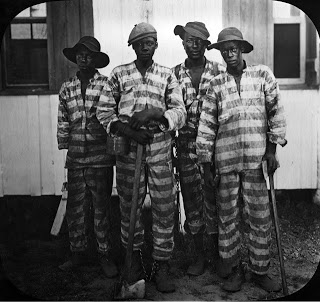
Victims of convict leasing, from an earlier era of selective law enforcement

Everybody’s talking these days about the killing of Michael Brown in Ferguson, Missouri. And the protests following the shooting. And the host of other recent killings and use of force against black people by police officers.

I’ve also heard many pundits, commentators, and counter-protesters (in support of the officer who shot Brown) say that all this controversy is pointless, unfounded, just plain wrong. The laws are not racist, they say. Neither are officers expressly told (most of the time) to target minorities. They also say that they themselves never have trouble with police officers as long as they cooperate and just do what the officer says, as they’re supposed to, which just goes to show that as long as you behave yourself, you have nothing to worry about.

As a generally ‘well-behaved’ (mostly so, but then again, I rarely got caught when I wasn’t) white woman who has never felt unfairly targeted by law enforcement, I say to this second group of people, if you are an adult yet you think the law is ‘color-blind’, either you systematically let your biases filter out too much of the available information out there, you live under a rock, or you’re lying. Or something like one of these.

Because I had never been unfairly targeted by police, I was mostly, blissfully unaware, until my very early adulthood, that such things were still going on. I thought this sort of behavior on the part of the police largely a relic of the past, of the Jim Crow and Civil Rights era that I became so fascinated by in my schoolgirl years (and remain so to this day). We all love hero stories, and I thought of Rosa Parks and Martin Luther King (and my favorite fictional hero, Atticus Finch) as among the greatest, ordinary people who stood up for the oppressed and the outcast, who triumphed against the tyrannical and the cruel, and most of all, the unjust: I always have been rather obsessed with issues of justice. I thought police had mostly changed their racist ways like most of us, and now usually did the right thing, especially because, of course, they make it their mission to stop those who don’t do the right thing.

My rather childish ignorance was first revealed to me when I witnessed my then boyfriend, a young Mexican man, pulled over by a police officer for no good reason at all.  Usually, if we were driving, we were driving together unmolested, but that day, I was following his car in mine because we had met up after work. A police car passed me after a stoplight and to my surprise, I found that his flashing lights and siren were intended for my boyfriend! We were not speeding, and it was daytime so car lights were not an issue… I could not think of a reason he would be pulled over. After the questioning ended and the cop had left, I asked my boyfriend what had happened. He admitted, embarrassed, that this happened to him all the time, it was just a regular part of his life. A young Mexican man in an old car must, necessarily, be up to no good, or if he wasn’t now, he must recently have been or was about to.

I was angry and shocked at the injustice of it all, and tried to imagine what it would feel like, and the effect it would have on my character, if I were regularly treated as a criminal, or a potential criminal, based entirely on what I look like, from the time I was young. I don’t think I could imagine, fully, what it would truly be like, but it seems a reasonable expectation that many people’s moral characters could be damaged from an early age, if many of the adults around them, especially those who set themselves up as authorities and moral leaders, act so unjustly. These young people are taught that ‘the law’ is used to protect others but punish them, that the police are not there to protect them, and that justice has a different meaning depending on what color you are, or worse, that it doesn’t really exist.

As I’ve gone through life, as I’ve had friends, co-workers, and fellow students of many races and ethnicities, as I have followed the news, and have done some study and research on matters of criminal justice, I’ve encountered countless instances of minorities unfairly and systematically targeted by law enforcement. I have a dear friend who used to travel though Colorado and Utah to go visit her family, who had to allow time for the inevitable police stop or two on each trip, no matter how carefully she drove. Yes, as you may have guessed, my friend is black. (My brother regularly travels a route in more or less the same geographical region, and has never had that problem).

These related issues, of racial profiling and selective law enforcement, has bothered me so long that when I had the opportunity a few years ago to take a criminal justice class, I jumped at the chance. I chose this subject  as the topic of my final paper, and my research uncovered a wealth of information on the subject. Study after study, public record after public record, revealed that minorities are pulled over, stopped and frisked, or arrested even for incredibly minor infractions that I had no idea that were ever enforced, at disproportionately high rates, commonly double or more than the rate of white people, in jurisdiction after jurisdiction, all over the United States. And even when minorities and whites are charged with the same or similar crimes, they get very different treatment: whites are shown leniency far, far more often than anyone else: they are, on average, sentenced to fewer years in prison or are routed to treatment instead; they are sent to state courts instead of federal courts. Minorities generally get the book thrown at them.

And in case you’re one of those who think that the law is color-blind, no, the objection you might make, that minorities commit more of the crimes so of course they’re targeted and go to jail more, is not valid. This vast accumulation of evidence that minorities are disproportionately targeted holds true for all kinds of crimes, the ones that whites commit at the same or higher rates, as well as ones that different minority groups commit at higher rates. Especially drug crimes: while whites commit most drug crimes at the same or higher rates than other groups, they are arrested far less, and if caught, don’t tend to be punished nearly as often.

Much of this information, many of these stories, have been featured in news story after news story over the years. This includes the seemingly ever-increasing recent stories in which black people are shot and/or killed for trying to get into their own house they locked themselves out of, or for being mentally ill and having a breakdown in public, or for selling single cigarettes on a street corner, or for having a fight with a bullying wannabe self-appointed ‘lawman’ on his way home. Have these pundits and ‘color-blind’ pollyannas been sticking their fingers in their ears and shouting ‘nah-nah-nah-nah-nah, it’s not happening!’ as black and brown people are being shot, beaten, and arrested, by the score, for the kinds of mistakes and indiscretions that most of us have engaged in at one time or another without permanent repercussion, while minorities are being caged at a rate that puts those old Jim Crow regions to shame?

I would say to these people, especially parents: imagine what would have happened to you, and what the life chances would be for your kids, if you and they were stopped and frisked, pulled over and your car searched, constantly throughout your life. If all those times you were a little naughty and had a drink while underage or too soon before you drove, or you or your friends had a little weed or coke in your car or pocket, or had sassed a cop when you were immature and raging with hormones and gleeful with youthful irresponsibility, or committed a petty theft…. Imagine that instead of getting away with it at the time, as most of us have, you would almost surely be caught and suffer permanent consequences (jail time, a criminal record, or worse) because everywhere you go, you are likely to be followed around by someone who assumes you probably belong in jail because of what you look like, has the power to throw you in there, and in extreme cases, even beat, choke, or shoot you, with impunity.

I and most of the white people that I, and I expect that you, know would all have been arrested or jailed at least once if the laws were enforced equally for everyone. But those of us lucky enough to go through life untargeted probably have forgotten most of the stupid things we’ve done because we haven’t had to suffer permanent harm for it; instead, we grew up, and had the chance to live a decent life, get an education and good housing, and get a decent job because we don’t have a criminal record. I fear for my nephew when I remember that he has to grow up as a young black man in this society, that he has far less wiggle room to make the mistakes that most of us make as we grow up and struggle through life. I got away, and still do, with my indiscretions and mistakes, easily, because I’m not targeted. That is not likely to be the case for my nephew.

Give that a ponder, put yourself in other’s shoes. If you are honest, I think you’ll admit that we still live in a racist, unjust, and all to much un-free society, especially for those of us with darker skin. Stop pretending now, if you are doing so, that racism is over just because the letter of the law is no longer racist. As long as law enforcement is racist, the reforms of the Civil Rights era have very limited practical meaning, and the struggles of our great social reformers continue to be, largely, in vain.

But My Brain Made Me Do It!

Brain illustration from The Principles and Practice of Medicine...' by W Osler, 1904, public domain via Wikimedia CommonsThere’s a common idea which leads many people (myself included) to instinctively excuse our own or others’ less-than-desirable behavior because we were under the sway, so to speak, of one or another mental state at the time. This is illustrated especially clearly in our justice system, where people are routinely given more lenient sentences, given the influence of strong emotion or of compromised mental health at the time the crime was committed. “The Twinkie Defense” is a(n) (in)famous example of the exculpatory power we give such mental states, where Dan White claimed that his responsibility for the murder of two people was mitigated by his depression, which in turn was manifested in and worsened by his addiction to junk food. We routinely consider ourselves and others less responsible for our wrong actions if we’ve suffered abuse suffered as children, or because we were drunk or high at the time, or we were ‘overcome’ with anger or jealousy, and so on.
But when we think about it more carefully, there’s something a little strange about excusing ourselves and others in this way for doing wrong. What we’re saying is, in a nutshell, “But my brain made me do it!”

It’s strange because no matter what we do, our brains always ‘made me do it’.

Perhaps these kinds of excuses are a relic of the ‘ghost in the machine’ variety of traditional belief, in which we are a kind of meat-machine body ‘possessed’ by a soul. In that view, the strong emotion or mental illness, then, could be yet another kind of possession which overrides the rational and moral soul.

Yet, even if one believes that sort of explanation, that’s not a very satisfying justification of why we would accept some mental states as exculpatory and not others. Why does extreme anger, such as that of a wronged lover or a frustrated driver, excuse or partially excuse an attack, but lust does not? Both are powerful emotions that all too often promote the worst behavior. Why is jealousy so often considered an acceptable excuse, but greed is not? And the ramifications of this view go beyond relieving ourselves from the burden of responsibility: it means we can’t take or give credit for our good actions, for the most part. Emotions and states of mental health inspire and make us capable of doing those things, too, in just the same way. But we generally don’t tend to have the same sort of intuitions or apply the same sort of reasoning to credit as we do to blame.

So whatever theory or philosophy of mind we ascribe to, we need to explain why we are so inconsistent on this issue. Of course, much of it is explained in cultural terms: in an honor-driven culture, for example, anger and jealousy result as an affront to one’s honor, so to feel those emotions is just and right for an honorable person. A crime committed under the sway of these emotions, then, is mitigated by the justness and rightness of the feelings, even if they inspired wrong action. On the other hand, greed and lust are not considered a just or right emotional reaction in any case in a culture underpinned by fairness, equality, and individual rights; therefore, any crime committed under their influence would, of course, be contrary to those values and not be mitigated

Yet culturally-derived explanations, of course, aren’t the same as a justification. They just explain why people in different times and places happen to react and feel the way they do; they don’t offer a justification of why anyone should accept one emotional state and not another as mitigating factors, nor do they explain why we should think some emotions somehow make one less responsible or able to control their actions than other emotions do.

The latter, of course, is an empirical question: a neuroscientist may be able to detect that the processes that produce some emotions make it impossible or at least highly unlikely that a person can engage in rational thought, or ‘put on the brakes’, so to speak, when certain provocations occur. But until we find out otherwise, it appears evident, from the fact that most people are generally cooperative and don’t purposefully harm one another, that adult people above a certain basic intelligence level are generally capable of forming good and responsible habits, which makes it unlikely that they would react wrongly or criminally when provoked or titillated. This is especially true when the people involved in their upbringing, and the society in which they live, expect good behavior from all, and hold people responsible for bad behavior.

This is true whether or not behaving in the right way is easy. Many of the excuses offered in defense of people who do wrong sound, to me, simply as evidence that it was harder for the person to behave well than to behave badly at the time. Yet mores and laws don’t exist because it’s always easy for people to get along, respect one another, to help one another and avoid harm. They exist because it’s often hard to be a good person and a good citizen. So many of these excuses, then, do much to illustrate why mores and laws need to exist, and not so much to demonstrate why the offender was less responsible for their own behavior at the time.

The reasons that we can hold people responsible for their own actions, whether or not they occurred in an emotionally stormy moment, are the same reasons that people can be admired and given credit for them. The acts and thoughts which we judge praiseworthy as well as blameworthy are those which the person could conceivably have chosen to do otherwise, even if we grant it’s unlikely that they would have chosen otherwise, and that the person did in the capacity of themself. Personal responsibility is a burden, but even more so, it’s an honor. It means that what you do is you, in a very important sense, since the mind is the author and seat of consciousness, and all of its activity is a form of doing. We, in the sense of being a person, a self, are what our brain does.

The brain is not like a pre-determined computer program; within certain parameters, it can be molded and formed, by influences from others but even more so by our own choices, which over time form habits. So it’s up to each one of us to use our judgments, surround ourselves with good influences, and to form good habits: in any given day, in any given life, each person is faced with myriad options in thought and behavior. For those important matters, we stop and reflect, though there are simply too many to judge carefully for each one; most of the time, it’s best to purposely form good habits so that in those countless reactions we have and choices we make, we’ll tend, more easily, to go for the better rather than the worse.

There are, of course, special circumstances to consider in matters of wrongdoing or crime committed by the young, or by a person with a debilitating mental illness, or a person mature in age with undeveloped mental capacities. All of these involve some diminished or absent capacity for exercising judgment in making a choice, and the degree of consciousness the person possesses. Young people, for example, lack the structures of the physically mature brain which makes it capable of making considered decisions and of putting the brakes on powerful-emotion-driven impulses. The prefrontal cortex, where much of the capacity to exercise self-control resides, doesn’t fully develop until after puberty. It seems, then, to make sense that we generally don’t hold the young as responsible for their actions in the way we do adults. Yet, with all we know about how the brain works, I find it astonishing and often horrifying that in the United States we often try the young as adults, teens and even pre-teens, when they commit particularly heinous crimes. I’d argue not only are they incapable of controlling their emotions and of reasoning as fully as adults are and therefore shouldn’t be considered responsible in the same way, but the very heinousness of the crime is evidence of the lack of maturity, of the ability to make rational judgments, which forms the basis of any coherent concept of personal responsibility. The trying of youths as adults in the courts reveal that all too many people haven’t given enough thought to what personal responsibility really means, and don’t have the proper respect for it.

Since it’s always your brain that makes you do anything, culpability should be assessed according to whether or not your brain is capable of making a different choice, again, even if it’s unlikely you might have done so. That even holds true even in many cases of so-called ‘temporary insanity’ or ‘acting under the influence’. Generally, the brain of an adult person who maintains their own survival and enjoys the liberty of an independent adult is also functioning at a level of responsibility. For example, if you run someone down in your car while drunk or texting on your phone, you are probably also a person capable of arranging for a taxi to take you home from the bar or refusing that last drink, or are aware of the huge amount of very widely published evidence we now have that texting is strongly correlated with auto accidents.

In sum: the issue of personal responsibility should not hinge on whether or not it was easy for us to make one choice, to behave one way instead of another, but on whether we ourselves, always the product of a living brain, are capable of doing otherwise.

Ordinary Philosophy and its Traveling Philosophy / History of Ideas series is a labor of love and ad-free, entirely supported by patrons and readers like you. Please offer your support today!

*This piece, originally published Aug. 6, 2014, was edited lightly on Aug. 5, 2016 for clarity and flow

Our Kids Don’t Want Our Legacy of Bigotry, Thank You Very Much

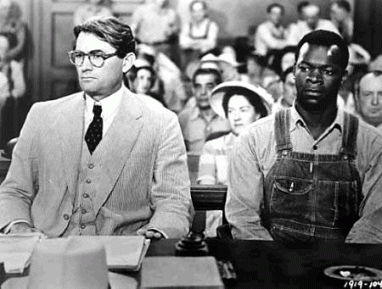
Atticus Finch defends Tom Robinson from false rape charges in To Kill a Mockingbird

I just finished reading Michelle Alexander’s The New Jim Crow: Mass Incarceration in the Age of Colorblindness. It made me good and mad all over again.

I had been reading it a week or so ago when I came across a Facebook post of a young man (I’d guess about 15 years old) who started making videos, on his cell phone, of salespeople following him around in stores. You can make a pretty good guess what color his skin is. In a temper, I made a comment on that post, perhaps an incautious one, in that it could have been interpreted as too broadly accusatory. I called out anyone who was reading it, who might be engaged in that sort of behavior, to just stop it!

The thing is, I could be a target of my own comments. Even though I don’t remember ever following anyone around a store because of their skin color, I know my thoughts and actions are sometimes influenced by unjustly negative biases too, and I’ve caught myself, from time to time, automatically having low expectations of people, based on their appearance, before I’ve spoken with them or had a chance even to observe how they actually behave.

But that makes me mad too. I remember when I was very small, when I first became aware of (often subtly) bigoted comments and attitudes, in some of the grown-ups around me, be it towards people of another race, religion, sex, or sexuality. There was a black family next door, for example, and we played and chatted with those kids blissfully unaware of race issues. Over time, I realized that there was some sort of divide, some awkwardness, between ‘my’ people and ‘their’ people. I won’t say who, but I have quite a few relatives and family friends who are quite bigoted, and many more who are but less so. It made me uncomfortable, and the way the adults answered my questions often sounded dishonest, and were unsatisfying. That may be why, when I was in sixth and seventh grade especially, I was obsessed with the civil rights movement and the whole issues of American racism. I’m sure I checked out every single book in our school library on the subject, and I remember when I was assigned to read ‘To Kill A Mockingbird’ a few years later, I had already read it several times. It’s still one of my favorite books.

So why am I mad at other people when I, too, catch myself in biased thinking? I’m mad on behalf of myself and every single other young person who inherited that unwanted baggage from each previous generation. And I’m willing to bet that, all things being equal, those adults who passed on those bigoted attitudes wouldn’t have chosen to inherit them either, since they are good in other ways.

Although I’m so conscious of that bias that creeps in, I’ll often adopt an exaggeratedly non-bigoted attitude (even if a person of color is behaving suspiciously or badly, I’ll sometimes pretend they’re not, for example), and for all of us who feel a little bigoted against our own wills and fight against it, young people pick up on subtle cues with astonishing insight. They pick up on those awkwardnesses, those little changes in the way you hold yourself, in the way you think and speak, in the presence of different people, and they all too often internalize it, adopting those attitudes themselves over time, even becoming more racist themselves in an attempt to justify those adopted instincts.

I feel that for every one of these kids who inherit racism, their innocence has been violated: not the kind of innocence that, I think, is often just idealized ignorance (like that regarding sex), but the good kind, where people are just people and they’re all equal candidates for companions and playmates. Little kids treat each other more or less the same when it comes to color, once they’ve asked those funny getting-to-know-you questions that, to adult ears, sound racist, though they reflect only honest curiosity (hence the lack of self-consciousness). The racial divide happen later, when the awkwardness creeps in, as you grow and realize that your very thoughts have become tainted with the quality of injustice that is bigotry. In these subtle little ways, people pass on those old nasty habits of thought and behavior, robbing the next generation of that kind of inner peace that justice brings, and of so many opportunities to have a wider circle of friends, companions, and allies.

That’s how I remember it happening.

Going back to the teen and his cell phone videos: while I felt defensive on his behalf, I was also disturbed that he called one of the women following him around ‘bitch’. Then I felt doubly sorry about how this kid is being betrayed: not only are adults around him behaving badly in treating him preemptively, and therefore unjustly, as a criminal, but he’s been inculcated with at least some degree of sexism already, in that he’s comfortable with calling women ‘bitch’. An epithet on his part would be warranted, I grant, but ‘bitch’? That’s as sexist as those women following him are racist.

In every way, as with the one before, and those before that, the older generation is letting this kid down, as we do all other kids we’re subjecting to our bad example.

But I’m hopeful. I think the internet, even as it’s making our kids more sophisticated and worldly-wise than we might be comfortable with, are also bringing kids in constant contact with others of all races and cultural backgrounds, and they’re communicating freely with them clear of adult interference. They’re learning that others, whose bodily appearance may be different, have the same sort of thoughts and emotions that they do, just as we did on the playground. Now, however, the adults are not present to infuse those interactions with their racism, purposefully or not. Mr. Barack Obama was right, when he observed of his daughters and their friends ‘…when I talk to Malia and Sasha and I listen to their friends and I see them interact, they’re better than we are. They’re better than we were on those issues.’

Kids these days: they’re becoming cosmopolitan, in spite of all of those adults around them who justify their own bigotry by trying, unconsciously or not, to pass it on to their kids. Fortunately for the kids, I don’t think that’ll work this time around.


Healthcare: A Matter of Public Interest, or a Consumer Good?

http://www.learnersdictionary.com/definition/bandage

Looks like this uneasy compromise between private moneyed interests and our national commitment to the life and health of our citizens is off to a rocky start, and I’m afraid it may fail.

I wish Obamacare was the title of a single-payer national healthcare system, or at the very least, a public option (freedom to choose!). Healthcare should be considered essential infrastructure like roads and bridges, or a national defense of the citenzenry like the military, not a mere consumer or luxury good. This is because it is the hyper-social, cooperative side of human nature, where we band together to protect and nourish each other, that makes us a successful species. This, in turn, is what makes the other freedoms we enjoy possible. Remember, we have no freedoms when we’re dead or incapacitated. Human liberty requires human cooperation in order to exist at all.

That is, if we consider preserving human life of greater importance than the license to grab as much money as we want regardless of the harm we cause doing so.

Hate Crime: First Amendment Issue?

mirrored from http://bplolinenews.blogspot.com/2012/11/bpl-archives-opens-robert-e-chambliss.html

Not too long ago, perhaps three or four years past, I was of the opinion that, as a whole, the idea of a ‘hate crime’ was a bad one, mainly as a result of the following argument:

According to the law, we determine the nature of a crime by what was actually done. If we re-classify it as a hate crime, we’re punishing the criminal for the very thoughts in his/her head, or the content of their speech. At the very least, this is a violation of First Amendment rights. At worst, we’re legitimizing the Orwellian idea of ‘thoughtcrime’.

Upon reflection, however, I realized that this argument misses the point of what I think is the most important reason that some crimes should be classified as hate crimes. When the law is applied to an act to determine its criminality, we already do consider the motivations and thoughts of the actor in the case. For example, if one person causes the death of another, we ask whether the act was purposeful, whether it arose from a moment of extreme provocation or planning, and so on. In other words, intent, which is what was going on in the actor’s mind at the time, is essential for determining the criminal nature of the act.

One of the main reasons for this, why, for example, we consider intentional, deliberate violent crimes worse than off-the-cuff or accidental violent crimes, is how much of a threat the criminal presents to the community. The law says that a person who kills someone out of anger upon catching them cheating with a romantic partner, for example, is considered far less dangerous to a community than a person who plans and then executes a shooting spree in a public place. A person who kills someone after planning the crime ahead of time also presents a larger danger to a community than the ‘heat of the moment’ killer, since they reveal themselves capable of killing at least one person even after sustained reflection. While the danger is still mainly confined to a single target, the killer’s still a potential threat to the wider community in this sort of case since they might become homicidally angry at someone else.

A person who commits a hate crime, however, presents a wider danger to the community because their intent or wish to harm is not aimed at a single target. The target of their hate or anger is an entire class of people, as the evidence of their own expressed intent and beliefs reveal. The harm that they do, or intend to do, or wish to do, is likely to be far more widespread.

In this way, the way the law determines whether or not a crime is a hate crime is very similar, or even nearly identical, to the way it determines whether a homicide is first degree murder, second degree murder, or manslaughter. I think this sort of deliberation is necessary and appropriate, and therefore, I think that the separate classification of hate crime is likewise appropriate. We just need to be careful, as a society, that we don’t become hasty or overzealous in over-applying the term to thoughts and speech alone, or to philosophically or morally repulsive but relatively harmless actions.

* Also published at The Dance of Reason, Sac State’s philosophy blog