Happy Birthday, Elizabeth Anscombe!

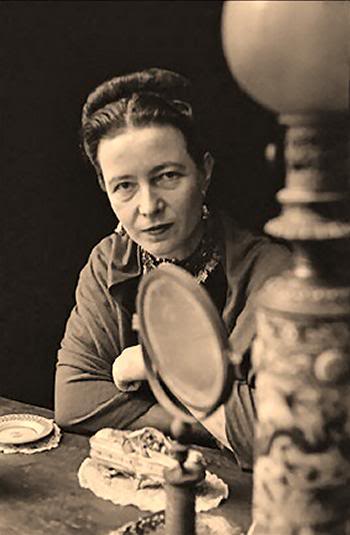
‘Elizabeth Anscombe, [born Mar 18, 1919] was considered by some to be the greatest English philosopher of her generation. She was professor of philosophy at Cambridge from 1970 to 1986, having already, as a research fellow at Oxford in the 50s, helped change the course of moral philosophy. Also influential in philosophy of mind, she pioneered contemporary action theory, and the pre-eminent philosopher Donald Davidson called her 1957 monograph Intention the best work on practical reasoning since Aristotle. The philosophical world owes her an enormous debt, too, for bringing Wittgenstein, probably the greatest philosopher of the 20th century, to public knowledge…. from Jane O’Grady’s obituary for The Guardian

Let us honor Elizabeth Anscombe on the anniversary of her birth by learning more about this important, influential, and trailblazing philosopher:

G. E. M. Anscombe (1919—2001) – by Duncan Richter for the Internet Encyclopedia of Philosophy

Gertrude Elizabeth Margaret Anscombe – by Julia Driver for The Stanford Encyclopedia of Philosophy

Elizabeth Anscombe – A BBC Programme Woman’s Hour episode in which Sarah Woolman speaks to Dr Rosalinde Hursthouse and Professor Philippa Foot

The Golden Age of Female Philosophy – A recent episode of Philosopher’s Zone which discusses Anscombe’s work along with the work of other great contemporary women philosophers

Anscombe Bioethics Centre – ‘a Roman Catholic academic institute that engages with the moral questions arising in clinical practice and biomedical research’

G.E.M. Anscombe Bibliography – by José M. Torralba for Universidad de Navarra

~ Ordinary Philosophy is a labor of love and ad-free, supported by patrons and readers like you. Please offer your support today!

O.P. Recommends: Hi-Phi Nation Podcast by Barry Lam

A few weeks ago, I discovered this oh-so-enjoyable philosophy podcast, one right up my alley and the alley of anyone who loves philosophy in the public square. It’s called Hi-Phi Nation, ‘a philosophy podcast that turns stories into ideas.’

Created by Barry Lam, its mission is to demonstrate the revelatory power of philosophical thinking through its application to real-life situations, from what soldier-turned-philosopher Mike Robillard calls ‘moral exploitation’ in the military to what constitutes valid scientific inquiry, from the morality of wills and trusts (why should the wishes of the dead ever have priority over the interests of the living?) to what a certain musical subgenre reveals about the nature of art. The latter, in fact, is one of my personal favorite episodes, as philosophy and art are both central in my life.

The style of the podcast is closely modeled on This American Life and other story-driven podcasts. As Lam points out, people love stories, so if one wants to convey philosophical ideas to the public at large, especially complex or subtle ones, there’s no better way to do it than in the context of a good tale. For example, take morality: from Plato and his Republic and Ring of Gyges, to Jesus Christ and his parables, to Louisa May Alcott’s tales of the tribulations and joys of a progressive-minded family living through the Civil War, the most influential moral thinkers and teachers bring their ideas to comprehensible, identifiable, sympathetic life for their audiences.

There are two excellent articles about Lam and the show by Larry Hertz for Vassar Stories (of Vassar College, where Lam is an associate professor), and by Brett Tomlinson for Princeton Alumni Weekly.

Enjoy! I know you will…

~ Ordinary Philosophy is a labor of love and ad-free, supported by patrons and readers like you. Please offer your support today!

Steinbeck Retreat, Monterey Bay and Salinas Valley Region of California, March 4th – 9th, 2017

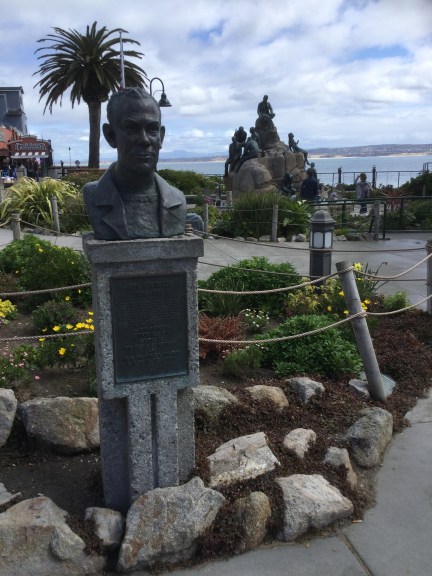
Bust of John Steinbeck and sculptures of the local people who inspired Cannery Row, Monterey, CA

For several days this last week, I’ve been on a literary retreat hosted by Clay Jenkinson, Becky Cawley, and Russ Eagle. You may remember Clay and Becky from the account of my last retreat with them at Lochsa Lodge in the Bitterroot Mountains in January. Clay is a humanities scholar who has been very influential in my own study and thought for the last few years, Becky has worked with Clay for many more years than that co-creating historical, cultural, and literary tours throughout the United States, and Russ Eagle has made Steinbeck a special study for many years as well. At Lochsa Lodge this winter, we read and discussed Walden Pond and Henry David Thoreau’s concept of living deliberately, as well the history of the Native Americans of the Great Plains and the wars of the United States’ expansion into their territories through the 1800’s, and the echoes of those wars and that expansion in the DAPL fight today.

This tour took us to Monterey, Pacific Grove, the Salinas Valley, and the mountains and coastline of this beautiful region of California following the life and work of the great American writer John Steinbeck. It was a special joy for me that this retreat was all about history, literature, and gorgeous scenery from my home state of California. I had read and loved Steinbeck’s novels especially when I was in my late teens to mid-twenties but it had been far too long since I revisited his work. I re-read some of his novels for this occasion, and some were new to me. I found a rich source of beauty and wisdom much more revealing to me with the added benefit of a decade and more of life-years.

Interior of Rocinante, the customized camper truck from John Steinbeck’s Travels With Charley

We read Travels with Charley, Tortilla Flat, Cannery Row, Of Mice and Men, and The Pearl; selections from The Red Pony, The Log from the Sea of Cortez, and East of Eden (though most of us read the latter in full since it’s a general favorite); and read and discussed most in depth what Clay, myself, and many others consider his greatest work, The Grapes of Wrath.

The Grapes of Wrath, as you may know, is the story of the epic journey of the Joad family as they flee the loss of their crops and their family home in the Dust Bowl disaster in Depression Era America. The Joads are a fictional family but their struggles are closely based on the struggles of actual immigrants as they face the life of much-maligned, much-neglected, and much-abused refugees from drought and debt in their own nation. Some members of the clan die in the course of their journey, some strike out on their own, a family friend who accompanied them is murdered by a vigilante trying to break up the worker’s rights movement that he had joined, and one becomes a fugitive after he kills his friend’s assassin. Throughout the novel, Ma Joad is transformed from mother to matriarch as she holds the family together through the terrible hardships they suffer in search of work and a new home. She’s one of my favorite female characters in all fiction in her strength, courage, integrity, wisdom, generosity, and great heart. Others in the family are ennobled and transformed as well: the ex-convict, fugitive son Tom joins the worker’s rights movement after his friend is martyred; the disillusioned, tortured loner and binge drinker Uncle John works until he nearly drops to help save the family from a flood and sends a stillborn infant downstream in a crate, Moses-on-the-Nile fashion, to alert others of the migrant’s wrongs; and narcissistic, immature daughter Rose of Sharon … well, I won’t spoil the powerful, disturbing, beautiful ending in case you haven’t read it yet.

Bust of Ed Ricketts memorializing the spot where he died in Monterey, CA

Over the course of several days, we toured Monterey and the settings of Steinbeck’s Cannery Row, centered around the character of Doc, modeled on his great friend the charismatic biologist Ed Ricketts, and visited one of Steinbeck’s homes in neighboring Pacific Grove, only several blocks away. We visited the aquarium, housing so much of the marine wildlife which fascinated Steinbeck and Ricketts; walked beautiful Point Lobos, well-loved by Steinbeck and where his family held a memorial service for him and spread some of his ashes; hiked in Pinnacles National Park, not directly associated with Steinbeck but linked to the Gabilan Mountain range which Steinbeck describes in such glowing terms in East of Eden; and, on perhaps my favorite outing of all, we climbed Fremont Peak, as Steinbeck did when on a visit to his old home town in Travels With Charley. Fremont Peak itself is beautiful, its chapparal terrain glowing green from the prolonged rains that rescued California from severe drought this winter and spring, scattered with cloud-gray rocks of the perfect size and grippy roughness to scramble around on, and the view from it is just spectacular: sprawling agricultural fields on one side, Monterey Bay on the other.

The rest of the retreat group spent their last day in Salinas at the Steinbeck Center, the Steinbeck House, and the Garden of Memories where Steinbeck and many of his family members are buried. I didn’t make it to Salinas with the group, having to return to work for the day, but I did visit the Steinbeck Center and House earlier on the first day of the trip since I was free. Unfortunately, I ran out of time to make it to the Garden of Memories before I was due to join the retreat.

I didn’t take many pictures during the trip; I was in retreat mode and in the mood to mostly leave my electronics put away so as to lose myself in the beauty and spirit of these places, unfiltered, unmediated. But I did chronicle my own visit to the Steinbeck Center and the Steinbeck House in Salinas and our day touring Monterey and Pacific Grove. Here are a few photos, below, in addition to the ones above.

It was such a lovely week, and I’m still enjoying the afterglow. Thank you, older, newish, and brand-new Odyssey Tour friends! ‘Til we meet again…

* See my profile of Julia Ward Howe, whose Battle Hymn of the Republic provided the title of The Grapes of Wrath, and which is printed in the opening pages of the novel

*Listen to the podcast version here or on Google Play, or subscribe on iTunes

~ Ordinary Philosophy is a labor of love and ad-free, supported by patrons and readers like you. Please offer your support today!

Main Street, Salinas, CA. According to a sign out front, John Steinbeck ate at Sang’s Cafe, in the white building with the blue trim just to the left of Maya Cinemas

Rocinante, the customized camper truck from John Steinbeck’s Travels With Charley. As you may remember, Rocinante was the name of Don Quixote’s horse. At the Steinbeck Center in Monterey, CA.

Steinbeck House, Salinas, CA, where John Steinbeck was born

Ed Ricketts’ Pacific Biological Laboritories, Monterey, CA. Ricketts was an important figure in Steinbeck’s life and work. Steinbeck also studied marine biology at Stanford, but did not receive a degree there. But not for lack of interest in marine biology or learning in general…

Interior of the downstairs lab area of Ed Rickett’s Pacific Biological Laboratories.
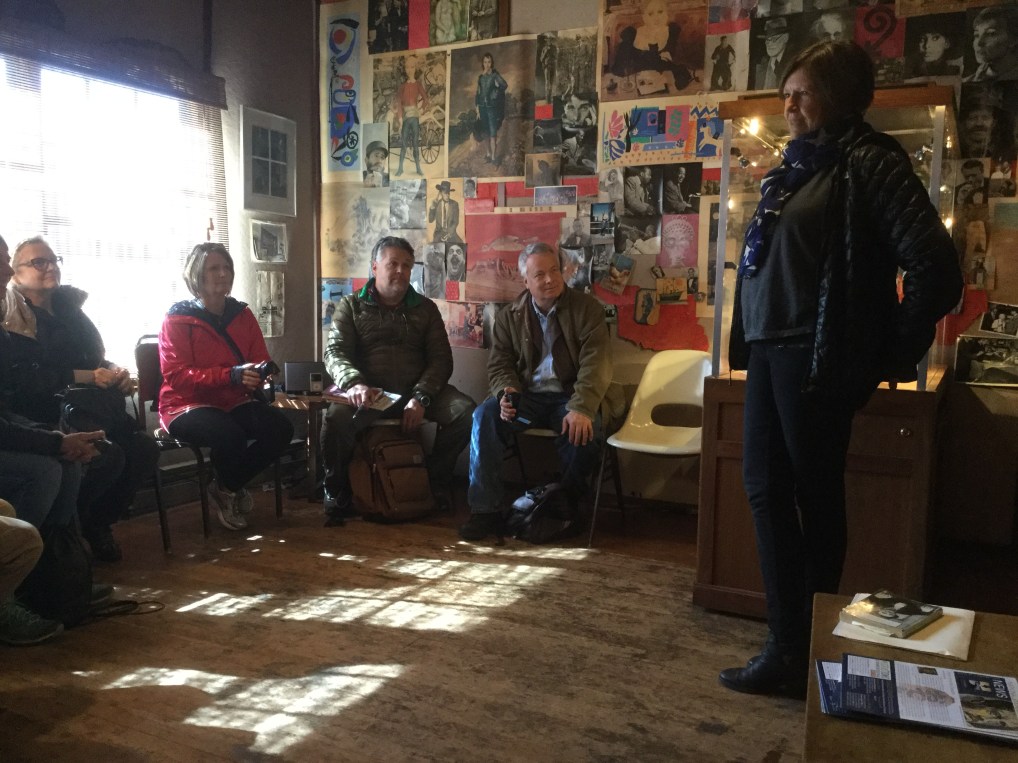
Discussion with Susan Shillinglaw, Steinbeck scholar and writer of books about him and others central to his life and work, upstairs in the Pacific Biological Laboratories, with Clay Jenkinson and Russ Eagle

John Steinbeck’s home and garden at 147 11th Street in Pacific Grove, CA

Monterey and its beautiful Bay with its rich tidepools

Me on Fremont Peak. Thanks for the photo, Larry!

Simone de Beauvoir’s Political Philosophy Resonates Today, by Skye C Cleary

Simone de Beauvoir is rightly best known for declaring: ‘One is not born, but rather becomes, woman.’ A less well-known facet of her philosophy, particularly relevant today, is her political activism, a viewpoint that follows directly from her metaphysical stance on the self, namely that we have no fixed essences.
The existential maxim ‘existence precedes essence’ underpins de Beauvoir’s philosophy. For her, as for Jean-Paul Sartre, we are first thrown into the world and then create our being through our actions. While there are facts of our existence that we can’t choose, such as being born, who our parents were, and our genetic inheritance, we shouldn’t use our biology or history as excuses not to act. The existential goal is to be an agent, to take control over our life, actively transcending the facts of our existence by pursuing self-chosen goals.

It’s easy to find excuses not to act. So easy that many of us spend much of our lives doing so. Many of us believe that we don’t have free will – even as some neuroscientists are discovering that our conscious will can override our impulses. We tell ourselves that our vote won’t make any difference, instead of actively shaping the world in which we want to live. We point fingers at Facebook for facilitating fake news, instead of critically assessing what we’re reading and reposting. It’s not just lazy to push away responsibility in such ways, but it’s what de Beauvoir called a ‘moral fault’.

Since we’re all affected by politics, if we choose not to be involved in creating the conditions of our own lives this reduces us to what de Beauvoir called ‘absurd vegetation’. It’s tantamount to rejecting existence. We must take a side. The problem is, it’s not always clear which side we ought to choose. Even de Beauvoir failed to navigate through this question safely. She adopted questionable political stances: she once, for example, dismissed Chairman Mao – responsible for the murder of over 45 million people – as being ‘no more dictatorial’ than Franklin D Roosevelt. De Beauvoir’s philosophy of political commitment has a dark side, and she personally made some grave errors of judgement, yet within her philosophy, there’s an opening to address this issue.

In The Ethics of Ambiguity (1947) she argues that to be free is to be able to stretch ourselves into an open future full of possibilities. Having this kind of freedom may be dizzying, but it doesn’t mean we get to do whatever we like. We share the earth, and have concern for one another; if we respect freedom for ourselves, then we should respect it for others, too. Using our freedom to exploit and oppress others, or to support the side that promotes such policies, is inconsistent with this radical existential freedom.

With oppressive regimes, de Beauvoir acknowledged that individuals usually pay a high price for standing up to dictators and the tyranny of the majority, but demonstrated concretely – through her writing and political engagement – the power of collective action to bring about structural change. An intellectual vigilante, de Beauvoir used her pen as a weapon, breaking down gendered stereotypes and challenging laws that prohibited women from having control over their own bodies. She authored and signed the Manifesto of the 343 in 1971, which paved the way for birth control and abortion in France. Her most famous work, The Second Sex (1949), sparked a new wave of feminism across the world.

Today more than ever it’s vital to recognise that freedom can’t be assumed. Some of the freedoms that de Beauvoir fought so hard for in the mid-20th century have since come under threat. De Beauvoir warns that we should expect appeals to ‘nature’ and ‘utility’ to be used as justifications for restrictions on our freedom. And she has been proved correct. For example, the argument that Donald Trump and others have used that pregnancy is inconvenient for businesses is an implicit way of communicating the view that it is natural and economical for women to be baby-making machines while men work. However, de Beauvoir points out ‘anatomy and hormones never define anything but a situation’, and making birth control, abortion, and parental leave unavailable closes down men’s and women’s ability to reach beyond their given situations, reinforcing stereotypical roles that keep women chained to unpaid home labour and men on a treadmill of paid labour.

In times of political turmoil, one may feel overwhelmed with anxiety and can even be tempted with Sartre to think that ‘hell is other people’. De Beauvoir encourages us to consider that others also give us the world because they infuse it with meaning: we can only make sense of ourselves in relation to others, and can only make sense of the world around us by understanding others’ goals. We strive to understand our differences and to embrace the tension between us. World peace is a stretch, since we don’t all choose the same goals, but we can still look for ways to create solidarities – such as by working to agitate authoritarians, to revolt against tyrants, to amplify marginalised voices – to abolish oppression. Persistence is essential since, as de Beauvoir says, ‘One’s life has value so long as one attributes value to the life of others, by means of love, friendship, indignation and compassion.’ De Beauvoir is surely right that this is the risk, the anguish, and the beauty of human existence.Aeon counter – do not remove

Skye C Cleary is a lecturer at Columbia University, the City College of New York, and Barnard College, and is the managing editor of the American Philosophical Association’s blog. Her latest book is Existentialism and Romantic Love (bio credit: Aeon)

This article was originally published at Aeon and has been republished under Creative Commons.

~ Ordinary Philosophy is a labor of love and ad-free, supported by patrons and readers like you. Any support you can offer will be deeply appreciated!

*All views and opinions expressed by guest writers are their own and do not necessarily reflect those of Ordinary Philosophy’s editors and publishers

O.P. Recommends: The Ideas That Make Us, with Bettany Hughes

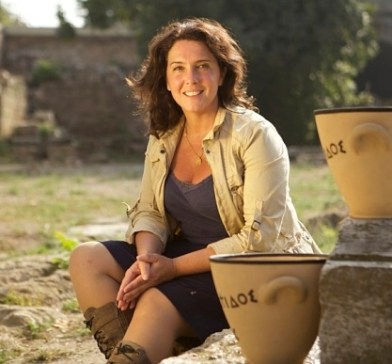
Bettany Hughes is one of my very favorite public intellectuals; from one talk to the next, one documentary series to another, I think, now this is the best ever. Perhaps you can tell from the manner in which I frequently share her work that I have more than a little crush on her: intelligent, wealthy in knowledge, endlessly curious, warm, beautifully spoken, lovely, funny, and always fascinating.

Anyway, as I was doing some filing and other such mindless tasks yesterday afternoon, I began re-listening to The Ideas That Make Us, a BBC 4 series about ‘the history of the most influential ideas in the story of civilisation.’ Hughes, a historian deeply trained in the classics, follows the history of ideas in the Western world, often beginning with the origins of the words we use to refer to them: Virtue, Justice, Peace, Agony, Charisma, and so on, many from the ancient Greek. I particularly love the story of the origin of Idea itself and the appearance of the term in a lyric poem by Pindar (another wonderful discovery); idea derives from the Greek idein, ‘to see.’ Hughes embarks on this story from within an MRI machine, bringing the Idea full circle: to see, in the original sense of the word, on the screen what we have long thought could only be manifested through language.

Follow this and many other fascinating stories of the history of great ideas with Hughes here

~ Ordinary Philosophy is a labor of love and ad-free, supported by patrons and readers like you. Please offer your support today!

In Memory of Hypatia of Alexandria

Detail of the death portrait of a wealthy woman, c. 160-170 AD near modern-day Er-Rubayat in the Fayum, public domain via Wikimedia CommonsHypatia’s birthday is somewhere between 350 and 370 AD; a range of dates indicating great uncertainty, to be sure, but original sources that old are hard to come by, especially from a city as turbulent and violence-torn as the Alexandria of her day. The day of her death is better known, sometime in March of 415 AD. Since the latter date is more precise, we’ll break with our birthday remembrance tradition here and celebrate the memory of Hypatia in the month of her tragic and violent death instead of on the date of her birth.

She was a mathematician, astronomer, teacher, and philosopher who wrote commentaries on important works in geometry and astronomy with her father Theon, likely contributing original work of her own. Hypatia was a Neoplatonist, a philosophy with mystical overtones which posits that everything derives its being from the One, an ultimately conscious yet nonmaterial, non-spacial entity which is the pure ideal of everything that is. She was a scholar and teacher in a field and in a male-dominated world, and historians from her day to ours emphasize her extraordinary talents and her femininity with a nearly equal mix of awe and bemusement.

So let us remember and honor Hypatia for her great contributions to human knowledge and to the history of women’s liberation, living proof that women are equals in intellect and courage.

And let us also remember her sad death as a cautionary tale against those who inflame popular sentiment to seize power for themselves. Hypatia met her death at the hands of a Christian mob caught up in the anti-pagan hysteria of the day; Alexandria itself was caught up in a power struggle between civic and religious authority. The mob of extremists who dragged Hypatia from her carriage, torture and kill her with roofing tiles, and defile her body are inspired by their partisanship with theocratic bishop Cyril to kill this pagan philosopher, this mathematician and astronomer (then often equated with sorcerer), this woman who dared teach men, this friend of Cyril’s rival Orestes, civic leader of Alexandria. According to Hypatia scholar Micheal Deakin, “Cyril was no party to this hideous deed, but it was the work of men whose passions he had originally called out. Had there been no [earlier such episodes], there would doubtless have been no murder of Hypatia.”

From a certain millionaire we all know* who rose to power whipping up populist support throughout his presidential race with extremist racial and religious rhetoric, back to Hypatia’s time and beyond, power-hungry opportunists plead innocence from the very violence they inspire. Yet it appears hard to justify that plea when reason and the lessons of history plainly reveal the nearly inevitable results of fomenting sectarian strife. Extremism in the defense of liberty or anything else is a vice** because of the way it drives away reason and sympathy, and after all, nothing is as liberty-destroying as mob violence and death.

* ‘What If Trump Wins?’ by Jeet Heer in New Republic, Nov 24, 2015

** in reference to the quote ‘Extremism in the defense of liberty is no vice’ from Barry Goldwater’s 1964 presidential nomination acceptance speech 

Read more about the great Hypatia of Alexandria:

Deakin, Michael.’Hypatia of Alexandria‘ from Ockham’s Razor radio program of Radio National of Australia (transcript), Sun August 3rd 1997. (click ‘Show’ across from ‘Transcript’)

O’Connor, J J and E F Robertson. ‘Hypatia of Alexandria‘, from the School of Mathematics and Statistics, University of St Andrews, Scotland website.

‘O’Neill, Tim. ‘“Agora” and Hypatia – Hollywood Strikes Again‘. Armarium Magnum blog, Wed May 20, 2009

Zielinski, Sarah. ‘Hypatia, Ancient Alexandria’s Great Female Scholar‘. Smithsonianmag.com, Mar 14, 2010.

…and about Neoplatonism

Wildberg, Christian, “Neoplatonism“, The Stanford Encyclopedia of Philosophy (Spring 2016 Edition), Edward N. Zalta (ed.)

~ Ordinary Philosophy is a labor of love and is ad-free, supported by patrons and readers like you. Please offer your support today!

~ A version of this piece was originally published here at Ordinary Philosophy one year ago

Why I Am Not Going to Buy a Cellphone, by Philip Reed

by-terimakasih0-public-domain-via-pixabay-croppedIt is mildly subversive and perhaps a little quaint when someone clings to their flip phone and refuses a smartphone. Refusing both kinds of phones is viewed as downright lunacy, especially if the person refusing was born after the mid-1970s. But I’ve never had a cellphone and I’m not going to get one. I have several reasons, and they are good ones.

The first is cost. No cellphone means no monthly bill, no possibility for an upgrade, no taxes, and no roaming charges (whatever those are). In an era of stagnant wages and growing income inequality, it is remarkable that people unthinkingly spend $75 or more per month on something that we hardly knew existed 15 years ago, much less counted as a necessity.

The second is concern for the environment. The manufacture of mobile phones (including raw material acquisition), the power they consume, and the energy used to transmit calls and access the internet all produce significant carbon dioxide emissions. The idea that cellphones are good only for a couple of years is widespread, increasing the number of phones that end up in landfills and leak toxic heavy metals such as copper and lead into the soil and groundwater.

The decisive reason, however, for me to refuse a cellphone is the opposite of everyone else’s reason for having one: I do not want the omnipresent ability to communicate with anyone who is absent. Cellphones put their users constantly on call, constantly available, and as much as that can be liberating or convenient, it can also be an overwhelming burden. The burden comes in the form of feeling an obligation to individuals and events that are physically elsewhere. Anyone who has checked their phone during a face-to-face conversation understands the temptation. And anyone who has been talking to someone who has checked their phone understands what is wrong with it.

Communicating with someone who is not physically present is alienating, forcing the mind to separate from the body. We see this, for example, in the well-known and ubiquitous dangers of texting while driving, but also in more mundane experiences: friends or lovers ignoring each other’s presence in favour of their Facebook feeds; people broadcasting their entertainment, their meals, and their passing thoughts to all who will bear witness; parents capturing their daughter’s ballet performance on their phones rather than watching it live; people walking down the street talking animatedly to themselves who turn out to be apparently healthy people using their Bluetooth.

The cellphone intrudes into the public and private realms, preventing holistic engagement with what is around us. Smartphones only perfect their predecessors’ ability to intrude.

The disembodying and intrusive effects of cellphones have significant implications for our relationships to the self and to others. Truly knowing and understanding others requires patience, risk, empathy, and affection, all of which are inhibited by cell phones. Cellphones also inhibit solitude, self-reflection, and rumination (formerly known as ‘waiting’ and ‘boredom’), which I think are essential for living a good life.

Long before cellphones, human beings were good at diverting themselves from disciplined attention. ‘The sole cause of man’s unhappiness,’ observed the French philosopher Blaise Pascal in the 17th century, ‘is that he does not know how to stay quietly in his room.’ This propensity for diversion was notably confirmed in a recent study where subjects preferred to give themselves electric shocks rather than occupy themselves with their own thoughts for 15 minutes.

Pascal believed that the height of human dignity is thought, and that the order of thought begins with oneself, one’s creator, and one’s end. He linked this kind of thought inextricably to genuine rest and happiness. Avoiding a cellphone allows, for me, space for thinking and so enables a richer, more fulfilling way of life. With fewer tasks to perform and preferences to satisfy, life slows to a pace compatible with contemplation and gratitude.

A cellphone-free life not only helps to liberate the mind, but also the body. The ancient Greek philosopher Anaxagoras presents a different view of human nature from Pascal: ‘It is by having hands that man is the most intelligent of animals.’ We can be pretty sure that Anaxagoras was not anticipating the advent of smartphones. On the contrary, refusing a cellphone enables one to use one’s hands to carry out meaningful activities (playing the piano, gardening, reading a book) in such a way that one is fully absorbed in those activities, so that they reach their height of meaning.

Without a mobile phone, it is easier to concentrate on what is in front of me: my spouse and children, my work, making dinner, going for a walk. I try to choose my activities thoughtfully, so when I do something, I don’t want to be somewhere else. What cellphone users call multitasking does not interest or impress me.

Of course, it’s true that cellphones can be used responsibly. We can shut them off or simply ignore the incoming text. But this takes extraordinary willpower. According to a recent Pew survey, 82 per cent of Americans believe that cellphone use in social situations more often hurts than helps conversation, yet 89 per cent of cell owners still use their phones in those situations. Refusing a cellphone guarantees that I won’t use it when I shouldn’t.

Some people will insist that if I’m going to refuse a cellphone, I should also refuse a regular telephone. It is true that using a landline introduces similar disembodying, mediated experiences as to mobile phones. But there have always been natural and physical limits placed on the use of a regular phone, which is clear from the name ‘landline’. The cellphone’s mobility introduces a radical form of communication by making its alienating effects pervasive. I want to protect what unmediated experiences I have left.

The original meaning of ‘connect’ indicated a physical relationship – a binding or fastening together. We apply this word to our cellphone communications now only as metaphor. The ‘connections’ are ethereal; our words and thoughts reach the upper regions of space next to the cell tower only to remain there, as our devices disconnect us from those with whom we share space. Even though we have two hands, I’m convinced that you can’t hold a cellphone and someone else’s hand at the same time.Aeon counter – do not remove

This article was originally published at Aeon and has been republished under Creative Commons.

Philip Reed is an associate professor of philosophy at Canisius College in Buffalo, New York State. His scholarly interests are in ethics and moral psychology. (Bio credit: Aeon)

~ Ordinary Philosophy is a labor of love and ad-free, supported by patrons and readers like you. Any support you can offer will be deeply appreciated!

*All views and opinions expressed by guest writers are their own and do not necessarily reflect those of Ordinary Philosophy’s editors and publishers

Happy Birthday, Rosa Luxemburg!

Amy M Cools's avatarOrdinary Philosophy

Rosa Luxemburg, By unknown photographer around 1895-1900 [Public domain], via Wikimedia CommonsRosa Luxemburg, Mar 5 1871 – Jan 15 1919, is the great Marxist theorist, writer, economist, revolutionist, anti-war and anti-capital-punishment activist, and philosopher who was murdered during the German Revolution of 1918–1919.
Though she’s an anti-war activist, Luxemburg is also critical of the idea that a just society can be brought about by incremental reforms through established political systems. If she were to be involved in the 2016 Democratic primary race between Hillary Clinton and Bernie Sanders, she would very likely back Bernie, with his more revolutionary style and rhetoric: she’s sharply critical of the Social Democratic Party of Germany, to which she belongs (in its left wing) for favoring a Hillary-style reformist approach. However, her internationalism takes Marxist thinking beyond the point where leading Marxists of her day had progressed, with their focus on unique formulations of Marxist political theory tailored to their own particular national identities and histories. She would likely find fault, then, with Bernie’s protectionism.

Luxemburg’s other great contribution to…

View original post 148 more words

Happy Birthday, Karl Marx!

Marx by Sam Kaprielov, 76x61cm, oil on canvas, 2015, image used by permission of the artist

Marx by Sam Kaprielov, 76x61cm, oil on canvas, 2015, http://www.samkaprielov.com/

Born on May 5, 1818, few thinkers have been as influential as Karl Marx. Philosopher, theoretician of history, economist, sociologist, journalist, and revolutionary socialist, he was a prolific thinker and writer, widely lauded, criticized, and misunderstood, all of these especially by those who claim to act in his name.

In honor of his birthday, here’s a series of works about Karl Marx, a recent painting by an artist whose work my good friend introduced me to, and a song that I love.

Karl Marx (1818 – 1883) – a brief bio at BBC: History

Karl Marx, 1818-1883 – by Steven Kreis for The History Guide

Karl Marx – by Jonathan Wolff for The Stanford Encyclopedia of Philosophy

Marx – Melvyn Bragg and guests Anthony Grayling, Francis Wheen, and Gareth Stedman Jones discuss Karl Marx for BBC’s In Our Time podcast and radio series

Karl Marx: Capitalism vs. Communism, Marx and Kierkegaard on Religion Part 1 and Part 2and Austrians and Marx – by Stephen West for Philosophize This!

~ Ordinary Philosophy and its Traveling Philosophy / History of Ideas series is a labor of love and ad-free, supported by patrons and readers like you. Please offer your support today!

How a Hackneyed Romantic Ideal is Used to Stigmatise Polyamory, by Carrie Jenkins

There’s no longer anything unusual about wanting an open relationship. Many who consider themselves progressive about sex, gender, love and relationships know this. It’s just that almost nobody in an open relationship wants to be open about it. What’s surprising is that so many people feel the need for secrecy.

I’ve been out as polyamorous for years. Because of this, non-monogamous people who aren’t out often feel able to talk to me about their own situations. When I go to conferences, I can’t help noticing all the philosophers who are in closeted non-monogamous relationships. This discrepancy between reality and socially acknowledged reality can be disorienting; the ‘official’ number of non-monogamous people in the room is almost always one (me).

So what’s going on? No doubt there are several factors at work, but I want to talk about one that’s both powerful and insidious: non-monogamy isn’t considered ‘romantic’.

Romantic love is widely considered to be the best thing life has to offer: ‘failing’ at romance is often construed as failing at life. Amatonormativity is a name for the attitude that privileges lives based around a focal monogamous romantic relationship. What gets called ‘romantic’ isn’t just about classification; it’s about marking out those relationships and lives we value most.

This monogamous ideal is supposed to appeal to women especially. According to the stereotypes, single women are desperate to ‘lock down’ a man, while men are desperate to avoid commitment. There’s nothing new here: monogamy has historically been gendered. Even in situations where marrying more than one woman has been illegal, it has often been normal for men to have mistresses, but different rules have applied to women. This is unsurprising: in a patriarchal society with property inheritance passing along the male line, paternity is key, and enforced female monogamy is an effective way to control it.

Women’s sexuality can also be policed by developing a feminine model that includes a ‘natural’ desire for monogamy, plus social benefits for conforming to that model (and penalties for non-conformity). This model can then be internalised by women as a ‘romantic’ ideal inculcated via fairytales. In a similar vein, rather than allowing only men to have more than one partner, we can instill a subtler cultural belief that men’s infidelity is ‘natural’ and therefore excusable, while women’s infidelity is not.

Our language undermines gender-related optimism about monogamous romantic ideals: there is no word for a male ‘mistress’; romantic comedies are ‘chick flicks’. ‘Romance’ novels are marketed to and consumed by women. Brides are ‘given away’ by men to other men. We never hear about ‘crazy old cat gentlemen’. And how many married men do you know who’ve taken their wife’s surname? These attitudes persist not just in word but in deed: wives in hetero marriages still do more housework than their husbands, even if they earn more (which they rarely do).

Recent growing acceptance of same-sex love as ‘romantic’ has presented challenges to gendered norms. But this has happened alongside another change: monogamy has become an even more powerful ‘romantic’ ideal by including same-sex relationships. And its impact is intensely gendered.

Women who enter voluntarily into non-monogamous relationships are a direct challenge to the idea that women are ‘naturally’ monogamous. They are socially penalised to maintain the status quo. A non-monogamous woman will be portrayed as debased and disgusting – a ‘slut’. When I have discussed my open relationships online, I have been called a ‘cum-dumpster’, a ‘degenerate herpes-infested whore’, and many other colourful names.

My internet trolls focus on sex, partly because presenting non-monogamous relationships as ‘just sex’ makes it easier to degrade them, and partly because women who violate the monogamy norm – whose sexuality is out of (someone’s) control – are a threat to an ancient feeling of entitlement over women’s sexuality and reproductive potential. In contrast, a non-monogamous man is, at least sometimes, liable to be regarded as a ‘stud’.

Apart from monogamy, the only other relationship structure that controls paternity in a similar way is patriarchal polygamy, which is stigmatised in contemporary North America, for reasons including bona fide feminism as well as racism and cultural imperialism. One effect of this is that monogamy is seen as the only fair and liberal alternative.

Actually, there are many alternatives. But to tolerate them is to tolerate widespread social uncertainty about who is having sex with whom. This would extend to everything sex is entangled with, and everything it represents. Our ideals of ‘romantic’ love regulate not just our expectations about sex but also our conceptions of family and the nature of parenthood.

Ultimately, what we call ‘romantic’ is a philosophical issue that touches on the core of who we (think we) are, and what we value. I believe that the ‘romantic-ness’ of romantic love is largely socially constructed, and as such malleable. We collectively write the ‘script’ that determines the shape of the privileged (‘romantic’) relationship style. This script has changed, and will continue to change. But currently that process goes on largely below the radar: we aren’t supposed to see it happening, or realise that we can control it. Romantic love maintains a wholly ‘natural’ image, evading challenge or critical scrutiny by seeming inevitable, incomprehensible and wonderful.

We must get beyond this. We need to question the limits we have placed on what counts as a ‘romantic’ relationship. Freedom to love – the right to choose one’s own relationships without fear, shame or secrecy – is critical, not just for individuals but for us all collectively. Non-conformity is the mechanism that reshapes the social construct to better represent who we are, and who we want to be. Instead of forcing our relationships to conform to what society thinks love is, we could force the image of love to conform to the realities of our relationships.

But it won’t be easy. If the love of a polyamorous triad is seen as ‘romantic’, and hence as valuable as the love of a monogamous couple, then the triad should have the same social and legal privileges as the couple. How could we deny them the right to be co-parents? How could we defend the legal or financial benefits of monogamous marriage, or the lack of legal recourse for anyone fired for being polyamorous? These are the privileges by which we signal to monogamous couples and nuclear family units that theirs are the most socially valuable social configurations.

Nor could we defend the countless ways in which non-monogamous people are stigmatised and rejected. My boyfriend’s father no longer speaks to him about anything but the weather because he is in a polyamorous relationship with me. An extended family member literally prayed over me when she learned that I was non-monogamous, feeling an urgent need to ask Jesus to ‘save’ me from this ‘culture’. Stigma against non-monogamy is beyond a joke: researchers have uncovered assumptions that the non-monogamous are just bad people: less likely to walk their dogs, or floss their teeth.

It’s far easier to pretend that this is not really happening. Or that it’s not really a big deal. Perhaps you feel that way right now: perhaps you’re thinking you don’t know any non-monogamous people. But I wouldn’t be too sure. Until quite recently, an awful lot of people thought that all their friends and relatives were straight.Aeon counter – do not remove

Carrie Jenkins is a writer and philosopher. She is working towards an MFA in creative writing at the University of British Columbia. Her latest book is What Love Is and What it Could Be (2017). She lives in Vancouver. (Bio credit: Aeon)

~ This article was originally published at Aeon and has been republished under Creative Commons.

Listen to Carrie Jenkins discuss romantic love with Joe Gelonesi at The Philosopher’s Zone

~ Ordinary Philosophy is a labor of love and ad-free, supported by patrons and readers like you. Any support you can offer will be deeply appreciated!

*All views and opinions expressed by guest writers are their own and do not necessarily reflect those of Ordinary Philosophy’s editors and publishers